Archive for the ‘Rivertown’ Category

Antioch Council hears earful from public upset with El Campanil Theatre sale

Monday, September 14th, 2026
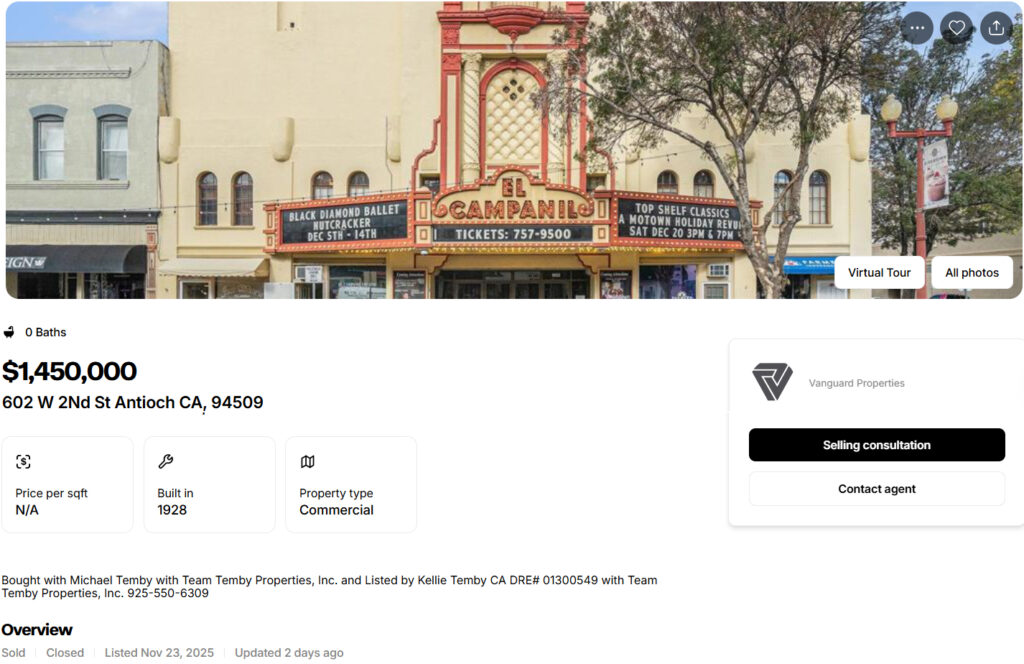
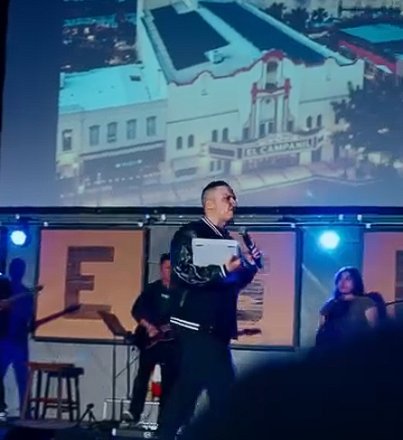
Residents almost filled the seats in the Council Chambers during last Tuesday’s Antioch City Council meeting with 18 of them speaking about the sale of the El Campanil Theatre. Sources: (left) Video screenshot. (right) Screenshot building listing on realty.com 9/2/26.

Following protest march from theater to City Hall.

Mayor called “Satan”, blamed for helping church purchase it which he later refuted; some attacked church, too; Bernal calls false comments “unfortunate”

Council also approved name & title changes to City’s newest department, staff; two additional temp positions; ADU designs; purchased SeeClickFix app software

By Allen D. Payton

Before dealing with the few items on the light agenda during their meeting Tuesday night, the three Antioch City Council members in attendance each heard an earful from members of the public about the pending sale of the El Campanil Theatre to a church. Since the matter was not placed on the agenda even for discussion by the council, residents had to speak during General Public comments at both the beginning and end of the meeting. A total of 18 people spoke in person and one spoke via Zoom. (See 3:30:00 mark of meeting video)

While the seating for the audience was almost full, only the mayor and two council members were in attendance, as Mayor Pro Tem and District 3 Councilman Don Freitas was out of town, as he announced at the end of a council meeting earlier this year, and District 1 Councilwoman Tamisha Torres-Walker was absent due to a migraine. She said due to the light agenda, she felt she could miss the meeting, and her colleagues could handle the items without her, which they did.

Following Public Comments, the council members took action to rename the Public Safety and Community Resources Department to the Community Services Department and the titles for the staff positions, as well as, to use state grant funds for two temporary positions in that department. They also adopted pre-approved Accessory Dwelling Unit plans for residents to use and voted to purchase software for the City’s SeeClickFix app.

About 15 people participated in a protest march from the theater to City Hall before the council meeting. Photos courtesy of Joy Motts.

Public Comments Get Harsh, Include Attacks on Mayor, Council, Church

Following a protest march from the theater to City Hall before the council meeting in which, according to Joy Motts, about 15 people participated holding signs and a banner that read, “Save El Campanil Save Our Stage”, several residents spoke during Public Comments at the beginning of the meeting. They were each allotted the same three minutes to share their thoughts.

Some took out their anger on Mayor Ron Bernal, about the sale by the current, private owner of the theater building and all related equipment, to a church, blaming the mayor for helping make it happen, and for every other problem the City is currently facing. One attempted to tie him to President Trump, the Heritage Foundation’s national Project 2025 agenda and the national MAGA movement. She also labeled the Hispanic pastor and his church members “Christian Nationalists, racist” and “full of hate for everybody that is not White.”

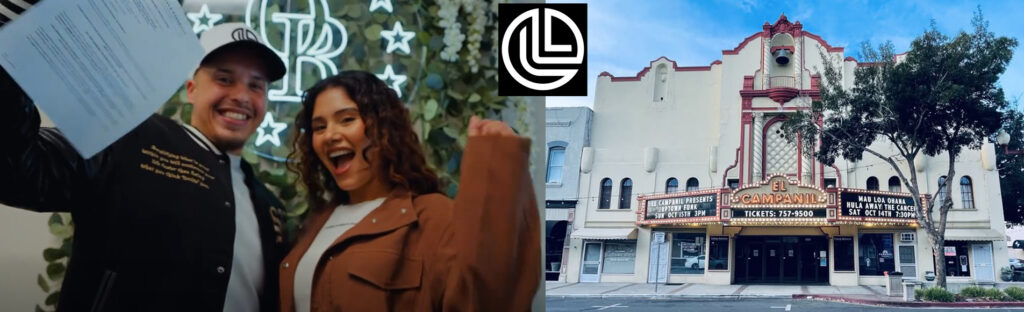
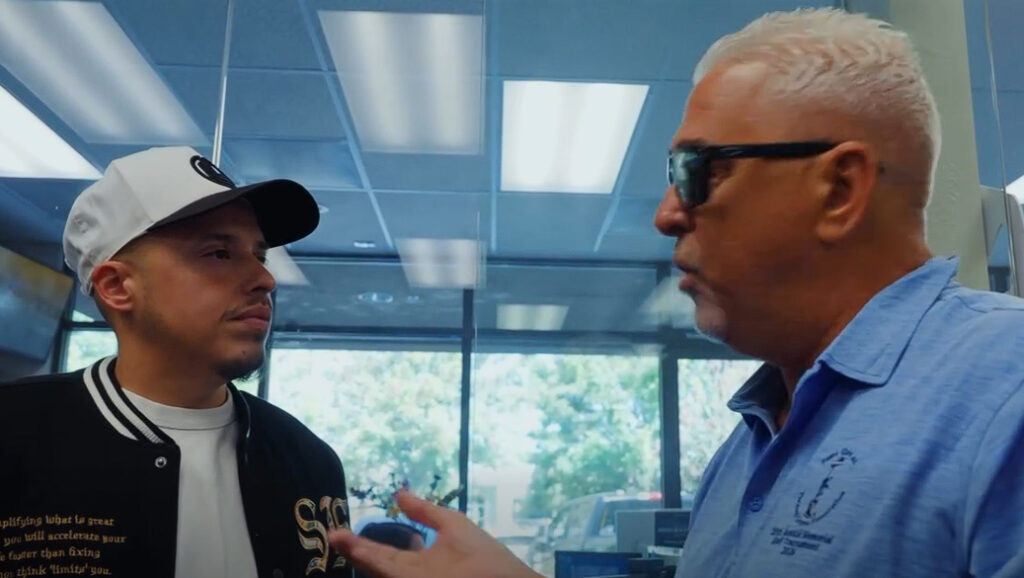
The first person to speak, resident Leslie May, who is a regular council meeting attendee and public speaker, made most of those remarks saying she, “was very disturbed about this El Campanil. I already know for a fact that you were the one, Mayor Ron Bernal, that went and told him,” claiming he spoke with Pastor Eli Herrera of Legendary Movement Church whose purchase offer was accepted by the owner.

However, Bernal refuted that in response to questions from the Herald in an article published on Thursday. Asked if he helped the church purchase the theater, Bernal responded simply, “No.”

May continued with what she’s been “telling these people in person, on Facebook and Instagram about you. I told them you are not for Antioch…you are nothing but Satan. You are.” She then repeated comments posted on Facebook by another resident that Bernal is, “Selling out Antioch for his Project 2025” and a “MAGA cult mayor.”

“You brought him here. You were a member of his church years ago before you broke off. You are friends with him,” May continued speaking of the mayor’s connection to Herrera. However, Herrera is quoted in another Herald article about the theater being sold to his church said, “I’m a very good friend of Ron Bernal, before he was mayor. I served at Cornerstone Christian Center for about a year for their school and youth ministry,” referring to the church where Bernal has attended, but mentioned nothing of the mayor helping him with the purchase.

May then made more unsubstantiated claims saying the church is “Christian Nationalists, are racist, they’re full of hate for everybody that is not White.” However, Herrera is Hispanic as are many if not most of his church’s members.

“They spread falsehoods…because they’re just Satan’s minions. Just like I said, you are,” she continued addressing Bernal. “You guys are wrong. I say prayer works wonders, you guys. Psalm 109, read it over and over again so, we can get rid of you and all your little minions who walk the streets of Antioch, Brentwood, Oakley, whatever.”

The next person to speak was Greg Feere, the “retired vice president of the California State Building Trades,” who said he is “a 40-year resident of Antioch.” He complained about, “An out of area investor wanting to flip it just to make some money. He really doesn’t care about Antioch’s future,” referring to current owner Tung Bui who explained why he purchased it and is now selling it, as did the former executive director and theater board president, Rick Carraher who lined up the sale in 2023, both refuting Feere’s claims. (See related articles here, here and here)

He continued, “Yesterday…I called (State Senator) Tim Grayson and I asked him about whether or not we can put the El Campanil under the historical preservation site and he said, ‘yes.’ He said, ‘but it would have to be coordinated with the City of Antioch.’”

“So, I think you can take the effort and make it the preservation site and keep it exactly what it’s supposed to be. It’s a theater. It’s a great place,” he continued. “And, you know, no offense to the pastor, but, you know, he can stay in Pittsburg and there’s plenty of souls and sinners there to take care of.”

Many speakers mainly said they wanted the theater to remain a place for arts and culture in the city.

The theatre’s current Operations Manager John “Johnny” Hackencamp shared his thoughts saying, “I’m here as a resident, as a longtime employee…for almost 20 years and as a person who’s mad that the building got sold and that the council just continues to sit on their hands, not only in this, but in many, many dealings for decades. Maybe the City should investigate whether or not the sale of the building was actually legal.”

“You guys have an attorney, and I think it’s time that this council decides to do something,” he concluded.

Former Planning Commissioner Kerry Motts said, “I want to encourage the council to explore all options within its rights to explore the delay or cancellation of escrow for a change in the ownership of the El Campanil.”

Antioch Chamber of Commerce Board President Jim Becker said, “I’m here to support the El Campanil, too. The owner said, ‘well, it’s been up for sale for a while.’ But I didn’t learn about this until just about a week-and-a-half ago that, this building was up for sale. So, I reached out to some of my real estate friends and I said, ‘if you’re going to sell a building like this, what do you do?’ They said, ‘we reach out to other like, type organizations just to see if any of them wants to buy it.’ So, I called some that I know. I called The Lesher Center for the Arts (in Walnut Creek), I called Masquers Playhouse (in Point Richmond), I called the California Theatre (in Pittsburg). I said, ‘did anybody reach out to you and tell you this is for sale?’ They said, ‘no’. So, I said, ‘OK, something doesn’t smell right, there.’”

“So, then I said, ‘OK, well, maybe they approached some of the arts foundations,’” Becker continued. “I called Hewlett  Packard, I called the Lesher Foundation, others. Nobody knew the building was for sale.”

“Well, how odd is that, that if the intent is to really, we keep it as an event space, as a theater space, as a culture space, that the folks that are most likely to do that weren’t aware?” he asked rhetorically. “So, that really does bother me a lot, right?”

Becker then ended with, “When churches take over your prime retail space, cities die, economically. We cannot have that happen. We have to preserve our economic vitality in this city. We have to preserve an economically viable downtown, and we have to save our theater.”

Multiple Listing Service Details Overview from the El Campanil Theatre Property Report. Source: Antioch Herald purchase on Sept. 8, 2026.

According to the Property Record report purchased by the Herald, it shows the listing agent, representing the seller, is Kellie Temby, and the buyer’s agent is Michael Temby. But Michael told the Herald when he was contacted last week for more details about this year’s sale, “I have no comments at this time while we’re in escrow. Happy to answer any questions after escrow closes.” According to Herrera, that will be on Sept. 29th.

Reading from prepared notes, Jeanette Rodriguez spoke next saying, “I am back to express my discontent with the handling of El Campanil.” She then read from the City’s Vision and Strategic Plan for 2019 to 2029 and said, “The Vision states, ‘Antioch is a desired destination in the Bay Area: Building on our historic legacy, creating bright opportunities for families to grow, offering places to play, enabling businesses to thrive and cultivating a unique downtown experience.’ Goals 5 and 6 state, ‘Strive to be a Healthy Community’ and ‘Support Historic Downtown Revitalization’.”

“The loss of this historic space directly goes against what our City’s vision is,” Rodriguez continued. “The arts have positive impacts on community well-being, economic development, public safety, youth development and social justice.”

She then took swipes at the church members who attended the community meeting at the theater on Tuesday, Sept. 1st. (See related article)

“I feel let down and I wish there had been more alarms raised, sooner so that the community could have had more time to organize and find a solution, as you see here, now. There needs to be more accountability in the future or else, what is there left to protect in Antioch,” Rodriguez concluded.

Resident Krystl Law spoke next also reading from prepared remarks saying, “So, last year, Tamisha Walker and Don Freitas started to work on the theater with the previous (City) manager Bessie Scott talking about using development impact fees. We have millions just sitting there idle. So, why is it that we can’t we start there?” That question was answered by Torres-Walker and Acting Community and Economic Development Director Kevin Scudero in the Herald’s article published on Thursday, Sept. 10th.

“Why is that we are waiting to the last minute to decide to save something that is clearly dear to everyone’s hearts?” she asked and then launched into a litany of complaints against Bernal. “You are stubborn and set in your ways. You chose to spread lies about Homekey. You chose to retire before the FBI came in to do their investigations. You chose to go after a Black woman city manager who tried to call out inconsistencies with SMI and your friend, Sean McCauley.  You chose not to speak about a Black woman who was hit by an officer. You chose to put everything on the last city council when you were city manager from 2017 to 2021. When will you take responsibility for your actions? You chose to spend $499,000 on sweeps instead of Homekey. You chose to not talk to Ms. Walker and Freitas about the theater.”

That was addressed in Bernal’s comments to the Herald in the article published on Thursday, Sept. 10th. When asked if he was aware the theater was for sale this year before it went public last month Bernal responded, “Yes. As Tamisha may have told you she, Don and Bessie were working together to find out more about it. I was not involved due to obvious Brown Act implications,” referring to the state’s Open Meeting Law preventing a majority of council members from discussing matters that could be on a future council meeting agenda. (See 5th to last section of article.)

“When is it you’re going to take responsibility and step up and be a mayor?” Law asked in conclusion.

Rivertown business owner and citizen Kathy Cabrera spoke next reading from prepared remarks and saying, “I’m here tonight to ask you to do something that future generations of Antioch residents will either thank us for or wish we had done, and that is saving the El Campanil Theatre. It’s a place of Antioch’s history. We spend a lot of time talking about Antioch’s future and we should. But building a better future does not require us to destroy our past. Because once the El Campanil is gone it’s gone forever.”

“It’s easy to build, yet another church,” she continued. “But already have over 100 of those here, in Antioch and we cannot re-create a nearly century-old piece of history.”

“Please don’t let the El Campanil Theatre an old photograph of something we used to have. Take action. Put this sale on hold,” Cabrera exclaimed. “Give this community the opportunity to fight for the El Campanil before you allow anyone to give up on it. Leave this meeting saying, ‘we’re going to do something the community is asking us to do.’ Give Antioch a chance to save its history.”

She mentioned the requests by District 1 Councilwoman Monica Wilson, Torres-Walker and Freitas about preserving the theater and asked, “Why did these requests fall on deaf ears?” That was also mentioned in the Herald article published Thursday, Sept. 10th. (See sub-headline entitled, “One Councilmember Made Requests to Agendize Protection, But Not Purchase of El Campanil Theater”).

Cabrera concluded by saying, “Save the El Campanil Theatre, not just for those of us who remember its past but for those generations who deserve to experience its future. I beg of you to save the El Campanil. And thank you, Monica.”

A resident named Margie Carrell then offered more unsubstantiated claims saying, “Ron, you’ve already made up your mind. You’re not going to listen to these people. You do not care. You’ve already made a deal with your, what is it, your pastor? What does he have on you? What is he hiding? What happened in 2017, let’s see, when you left being our city manager? What did you go into, rehab? Did they pay for it? So, you’re on the books. We got you. So, don’t try to pretend like you really care about what’s going to happen…because you owe your church people.”

Bernal retired as city manager in 2021 following a 36-year career in public service and a 36-career in public service including 23 years with the City of Antioch. (See related article) According to his LinkedIn profile, following his retirement, he started a company in 2022 named Ron Bernal Consulting working as a management consultant, which he still owns and can operate as a part-time elected official.

A resident named Mary Jo Mundy-Bruce who said she “worked at El Campanil in 2023 when it sold,” as the bookkeeper. “Clearly there was some broken down piece that happened. This should not have been sold to a private person. Something was not right,” she stated. “This part I was not aware of. I wish I could go back in time and say, ‘hey, Rick, what are you doing, why are you selling this place?”

“I just think the sale should be put on hold, and some investigation should go into the 2023 sale,” Mundy-Bruce continued. “So, somebody be as passionate as we are. Hello, Ron. Be as passionate as we are. This is your city, right now. Please…do the right thing.”

“Thank you, for what you are doing,” she stated. “But, man, you gotta step it up, guy. Come on, step it up so, we can be like, ‘yay, I voted for Ron. I feel so good he saved this.”

“Put the sale on hold. We don’t need another church. No more churches. We got enough churches,” Mundy-Bruce exclaimed. “I just can’t believe the lack and the apathy of everything sometimes. Why is there so much apathy here? I understand your hands are tied and there’s things and bureaucracy.”

“Please do something,” she concluded.

A woman named Nicole, who said she “goes by Fay”, wearing an El Campanil Theatre Academy logo shirt, said she did “19 years of theater,” and spoke of helping with children at the Academy in 2021. “I was just hoping there would be something there for kids. If we could save it…it would be really good for future generations of kids. Theater is life-saving.”

“I want my kids to be able to go that theater and enjoy it when I have kids. There are so many kids that got to enjoy it and perform on that stage and I want them to be able to do that again,” she added.

Only the mayor and two of the four council members were in attendance during their meeting on Tuesday, Sept. 8, 2026. Video screenshot

Bernal Responds Saying the Council “Can’t Say A Lot” About Theatre Sale

Following public comments and a nine-minute break during which most residents had left the Council Chambers, the council moved on to the matters that were on the agenda including Council Communications and the Mayor’s Comments. Bernal took the opportunity to address the issue of the theater’s sale after thanking “everybody who came out tonight to speak in support of keeping the theater as an arts location and the passion and the unity in the room it’s…great to see.”

“Unfortunately, some folks say things that aren’t necessarily true which is unfortunate. But that happens,” he stated. “The City of Antioch in our current position is not able to speak to what’s happening related to this escrow, that we understand the church currently has the building in contract.”

“And so, we are doing our own research,” Bernal continued. “We are doing everything we can to make sure we’re informed about what’s going on. But we are not able to say anything about that. So, that’s where we stand as a city council and why you’re not hearing us say a lot about the situation right now.”

“But we will be providing updates as we’re able to,” he added.

Proclamations

The Council then voted 3-0 to approve a proclamation honoring the 25th Anniversary of 9-11, Patriot Day and National Day of Service and Remembrance and presented it to Antioch Police Captain Desmond Bittner. (See related article).

Bittner said, “It’s my honor to receive this on behalf of the men and women of the Antioch Police Department and the men and women of the Contra Costa Fire Department who could not be here today and the veterans in both departments. I will share this with them tomorrow.”

They also approved by a 3-0 vote a proclamation recognizing September as Suicide Prevention Month in the city and presented it to Megan Shinkle, Director of Peer Connections Centers with locations in Antioch and San Pablo. She thanked the council and spoke of her organization’s work, providing support to those with mental health challenges, who may or may not be in recovery, as well.  They offer groups to support wellness, one on one support, links to resources, and outings to museums, parks and other points of interest.

The mayor and council members then took photos with each of the recipients.

Screenshot showing the department’s new name on the City’s website.

Name, Title Changes for Newest City Department, Positions

Under item 5 on the agenda, the Council conducted a public hearing and voted 3-0 to rename the Public Safety and Community Resources Department as the Community Services Department and the classification title changes from Public Safety and Community Resources Director to Community Services Director and Public Safety Manager to Community Engagement Manager, subject to completion of applicable labor-relations requirements. Although Wilson had originally voted for the confusing department name, she made the motion to make the change and voted for it.

As previously reported, at the urging of Mayor Pro Tem and District 3 Councilman Don Freitas, during their meeting on Tuesday, May 26, 2026, (under agenda item 10) the Council agreed to correct and clear up confusion of including the words “Public Safety” in the name of City’s the newest department formed by the council in 2022, but is not part of the police department nor deals with fire services and was the brainchild of Torres-Walker using an expanded definition of the term. The councilmembers also voted to change the titles of the department’s staff. (See 6:39:50 mark of meeting video)

The council approved the new department in February 2022 on a 4-1 vote. At that time, Torres-Walker tried to redefine and expand the meaning of public safety. But the department’s name has caused confusion because the majority of people don’t define the term the same as she does.

According to the staff report for the item, “As the department’s responsibilities continued to expand, the City Council also began discussing whether the department’s name accurately reflected its mission and public facing role. During several public and administrative discussions, Council considered various naming alternatives intended to better describe the department’s functions and distinguish its community-based services from the law enforcement responsibilities of the Antioch Police Department.”

Name Already Changed on City Website

As previously reported, the department’s page on the City’s website already had the new name in the header, but not in the text below, still including the word “resources”. That reads, “The City of Antioch’s Department of Community Services Resources is committed to building a safer, healthier, and more resilient community…The Community Services Resources (CSRD) Department works to strengthen community well-being through prevention, intervention, and support services. CSRD houses the City’s Youth Services Network, Housing and Unhoused Services, and Violence Intervention & Prevention Division, providing programs and resources that promote safety, stability, and opportunity for all residents.”

Two Temporary State Grant-Funded Positions for the Renamed Department

Then under item 6, the Council approved on a vote of 3-0 the establishment of two limited-term, grant-funded hourly positions to support the City’s direct implementation of community violence intervention, violence prevention, community outreach, case coordination, resource navigation, and community engagement activities. The proposed positions’ titles also retain the word resources: Community Resources Specialist.

The proposed hourly salary range for each of the positions is $39.54 – $48.07.

According to the staff report, the City has been awarded $2,034,800 through the Board of State and Community Corrections’ California Violence Intervention and Prevention (CalVIP) Grant Program with an authorized grant period through Sept. 30, 2029. The approved grant provides funding for two positions to support implementation of the City’s community violence intervention and prevention activities.

Rendering of a pre-approved ADU design, along with plans, provided to residents for free by the City. Source: City of Antioch.

Consent Calendar – ADU Plans Approved for Accelerator Program That Ends Sept. 30

District 2 Councilman Louie Rocha asked to be removed item item 4.I. on the Consent Calendar agenda regarding pre-approved Accessory Dwelling Unit (ADU) plans developed through the ADU Accelerator program, for discussion and questions for staff.

He mentioned the program at Antioch High School in which students build ADU’s and that he wanted to make sure whatever they’re doing complies with the City’s plans.

However, “these City plans do not supersede any ADU’s that they’re doing as long as they’re compliant with state building code,” Acting Community Development & Economic Development Director Kevin Scudero responded.

With no public comments on the item, the council voted 3-0 to approve the pre-approved ADU plans.

According to the ADU Accelerator Rebate Program information on the City’s website, ADUs are attached or detached residential dwelling units that provide complete independent living facilities for one or more persons on a lot with an existing (or proposed) primary residence.

The State Senate District 7 ADU Accelerator Program, piloted by former State Senator Steve Glazer, is composed of 15 cities in the East Bay of the San Francisco Bay Area, including Antioch.

The program provides individual rebates of up to $7,500 to property owners for new ADU units and up to $30,000 for new ADU units that are deed restricted to low-income households (minimum of 20 years.) As the purpose of the program is to encourage the construction of smaller ADU units, there will be no rebates for units over 1,000 square feet.

The City is matching the low-income rebate amounts with Permanent Local Housing Allocation (PLHA) funding to double the rebates for low-income ADUs to encourage low-income ADU production in Antioch. Antioch homeowners will be able to access up to $30,000 for the construction of a low-income ADU less than 500 square feet.

However, according to the staff report for the agenda item, the rebate program provides individual rebates up to only $15,000 for ADUs that are deed restricted to low-income households (minimum of 20 years.)  An email was sent to City staff asking which is the correct amount.

Acting Community and Economic Development Director Kevin Scudero responded, “The ADU Accelerator Program offered up to $15,000 in rebates for the construction of ADU’s. The City of Antioch also had Permanent Local Housing Allocation Program (PLHA) funds allocated towards ADU’s and chose to provide matching funds for deed restricted affordable ADU’s to further incentivize their production. This is why you see the larger rebate number on our website.”

The City of Antioch was granted $216,228.77 for rebates, which was based upon a per capita calculation, and $50,000 to create free permit-ready or pre-approved plans for public use.

The second component of the ADU Accelerator program is the development and adoption of free pre-approved ADU plans which will be free for residents to use.

While the rebate program has been available to homeowners in Antioch since October 1, 2024, it will close September 30, 2026. Staff were also asked if the termination date is correct and if so, why is the council just now being asked to adopt the pre-approved plans.

Scudero also responded, “Yes, the termination date is correct. In addition to the ADU rebates, the program also provided $50,000 in funding to develop pre-approved ADU Plans. The development of the pre-approved plans was on a dual track with the rebate program. The pre-approved plans are not specific to the ADU’s receiving rebates and will be available to anyone in the future who would like to construct an ADU in Antioch.”

SeeClickFix Application Programming Interface Software Purchase

All other items on the Consent Calendar were approved on a vote of 3-0. They included item 4.H., an increase to the current Agreement with Tyler Technologies Enterprise Permitting & Licensing (EP&L) for recurring Software as a Service (SaaS) fees and additional support services for a total agreement amount not-to exceed $235,000 per year. The council is also being asked to memorializing the recurring SaaS services which automatically renew each year throughout the term of the contract, which is consistent with the Agreement but inaccurately described in the original resolution.

The software serves the City’s SeeClickFix Application Programming Interface (API).

According to the staff report, the Initial approval by City Council in January of 2021 authorized an amount not to exceed $800,000, for a term ending June 30, 2025. The addition of the SeeClickFix Application Programming Interface (API) allows increased functionality for Code Enforcement complaints that are submitted via the SeeClickFix system, improving Code Case creation and response times, and streamlined updates to the public on complaint status via SeeClickFix. We are in the testing phases currently, and plan to fully implement the API by or before the end of this calendar year.

The Council adjourned the meeting at a rare, early 9:14 p.m.

See meeting video.

Former El Campanil Theatre leader says they tried to get City to take over building or form partnership before 2023 sale

Friday, September 11th, 2026
Photo source: El Campanil Theatre

Carraher says he worked to fulfill 2001 Board vote and 2003 commitment to City Council

Yet, all but two on city council, staff, and other theater board and staff in 2022 or 2023 say they didn’t speak to the other side prior to sale

Theater board, staff unaware of 2022 state law that might have prevented first sale to private party

Sale of theater was not made public by board either in 2023 or this year

By Allen D. Payton

In response to reports by the Herald regarding the purchase by a church of Antioch’s 98-year-old El Campanil Theatre building in the City’s historic, downtown Rivertown, members of the public and this reporter have been posing questions to decision makers and city leaders and conducting research on the original funding for the purchase and renovations in 2002 and 2003, and the first sale to a private party in 2023. Now that the City’s website includes copies of council meeting agendas and minutes dating back to 1997, searches have resulted in discovering a commitment made by the then-president of the El Campanil Theatre Preservation Foundation that the building would be “turned over free and clear to the City” if they were “unable to pay their bills” and a foundation board vote in 2001 giving the City “right-of-first-refusal to the building” if the non-profit “corporation is no longer able to function.”

But when the foundation ran into post-COVID financial difficulties, neither the transfer of the almost 11,000 square foot building happened nor is their proof or confirmation that the theater was first offered to the City before it was sold to a private party in 2023.

In addition, according to a resident and confirmed in state law, prior to the disposition of “all or substantially all” of a charitable non-profit organization’s assets, they are required to inform the California Attorney General for his office’s review and satisfaction. But prior to the sale in 2023, that didn’t happen either.

Overview from Property Report dated Sept. 8, 2026.

Summary

Rick Carraher, a former downtown business owner, the former president of the Rivertown Business District Association which initiated the effort to purchase and renovate the building in 2001, a former member of the City’s Economic Development Commission, as well as the theater’s first board president, first executive director, and later, board member, and the visionary behind the effort, made the 2003 commitment to the City Council before they voted to contribute $750,000 in redevelopment funds to help renovate the building and theater inside.

Carraher stated in an interview with the Herald this past week, “And I think in good faith we did that. The City was approached, first and the mayor and city manager knew of the theater’s financial difficulties,” before the 2023 sale, which Carraher also lined up.

By then, he had stepped down as executive director and again served on the board of directors of the foundation. (See related article)

Then in 2009, in a letter to the mayor and council when seeking a guarantee for the loan to replace the theater building’s HVAC system, Carraher disclosed the 2001 vote by the foundation’s board of directors that gave the City of Antioch the right-of-first refusal to the assets of the non-profit corporation if it could no longer function.

Carraher (pronounced “CARE-uh-her”) said the building was sold to the current owner because he was committed to maintaining the venue for the arts, which the owner reiterated. (See related article)

The theater’s visionary also explained in detail what transpired in 2023 sharing that the then-mayor mentioned to the then-board president one million dollars that was possibly available.

“But that never materialized,” Carraher stated. “So, we started looking for private investors.”

However, both of those people said they spoke to each other about the matter after the theater building was sold that year.

Background

The building includes the theater and three retail spaces on W. 2nd Street, and offices inside upstairs. Two of the street-level spaces are leased to local businesses. The foundation leases the rest of the building, using the third, street-level space as the ticket office. According to Carraher the 2023 sale included the building and all the equipment.

According to the History page on the theater’s website, which he wrote, the building was built in 1928, and it and the theater inside were “owned and operated by the Stamm family for 75 Years, or until 2003. In 2001, a small group of local citizens, including representatives of the Rivertown Business District Association, approached the City of Antioch with their desire to find a way to acquire and restore El Campanil, and to convert its use to one supportive of the Rivertown Renaissance plan. The…Association took the lead in securing funding from Calpine for the development of a comprehensive business plan…” That was the $50,000 initial contribution from Calpine, Carraher shared.

The theater’s history continues, “In July 2002, El Campanil Theatre Preservation Foundation was incorporated as a charitable, non-profit 501(c)3 organization. In early 2003, Calpine Corporation and the City of Antioch entered into an agreement whereby the Foundation received a grant to acquire the Theatre. In July 2003, El Campanil Theatre Preservation Foundation purchased the Theatre and began the process of converting the building to a community performing arts venue.”

Calpine granted the foundation $500,000 for purchase of the building from the Stamm family. Prior to the sale, another church, Fortress Christian Center, had previously rented and occupied the building for several years.

Thanks to Herald reader, Michelle Kuslits, who provided a copy of the minutes for the City Council meeting on Dec. 16, 2003, they show that before the 4-0 vote approving $750,000 in City redevelopment funds for renovations to the building, a commitment was made by Carraher, the then-foundation board president. According to that meeting’s agenda, the council was initially asked, “to provide direction to staff regarding funding of (an additional) $500,000 for the purchase of essential equipment and improvements for renovations to the El Campanil Theatre.” Then-mayor and now-Mayor Pro Tem Don Freitas was absent during the meeting but was supportive of both the $500,000 Calpine grant for the building’s purchase and funding from the City for renovations. (As previously reported, Freitas informed the Herald last week he would be unreachable for the following two weeks).

Portions of the minutes of Item 5. on the Antioch City Council meeting agenda for Dec. 16, 2003, which contain the commitment by Rick Carraher in the highlighted section. Source: City of Antioch

Building Was to “Be Turned Over Free and Clear to the City of Antioch”

According to the meeting minutes (see page 6), “Rick Carraher, President of the El Campanil Preservation Foundation, distributed a handout to the Council and gave a slide presentation on the history and the preservation goals of the El Campanil Preservation Foundation.

“Rick Carraher added this theatre would be used by a number of other community groups, including fund raising efforts for other groups. Regarding the City’s investment in this project, Mr. Carraher stated all monies would be dedicated to equipment and other tangible assets only, and would not pay any bills or consultants with the exception of the restoration plan itself which would be critical to the next phase. Furthermore, 100 percent of the monies would be put back into the theatre.

“Mr. Carraher also stated if the Theatre Preservation Foundation should, in the future, become unable to pay their bills, the Theatre would still have a high value, and the investment would be turned over free and clear to the City of Antioch, therefore the building and all of its contents and improvements would transfer to the City thus ensuring the facility would remain a community treasure.”

However, nothing to that effect was included in the motion adopted by the council. It read, “On motion by Councilmember (Jim) Conley and seconded by Councilmember (Brian) Kalinowski, the Council approving the allocation of $750,000 from the Promenade project to the El Campanil project with the stipulation the funds be repaid with RDA monies as they become available.” RDA refers to the City’s redevelopment agency, which no longer exists. The other two council members at that time were then-Mayor Pro Tem Jim Davis and Councilman Arne Simonsen.

For accuracy, minutes of government meetings are not verbatim and without the video of the meeting, which is not currently available on the City’s website, it’s not known what, if anything the council members said about Carraher’s stated commitment.

When reached for comment, Simonsen shared, “The City Attorney was supposed to put conditions on the property so that it would stay a nonprofit.”

While he claims his commitment was not binding on the theater foundation’s board, Carraher said they made the effort to first offer it to the City to take control either through outright ownership or some form of a partnership prior to the 2023 sale.

Letter from Rick Carraher to the City Council on Jan. 7, 2009, regarding the City serving as guarantor for the HVAC loan which, in the highlighted section, mentions the foundation’s board vote in 2001. Source: City of Antioch

2001 Board Resolution Offering City “Right of First Refusal”

However, a commitment was made in writing. After finding it during a search of City files, City Attorney Lori Asuncion (pronounced uh-SUN-shun), on Tuesday, Sept. 8th, provided to the Herald a copy of the City staff report for an agenda item for the council meeting on Jan. 13, 2009, regarding the City guaranteeing the foundation’s loan for the HVAC system replacement that year. It contains a letter on foundation letterhead dated January 7, 2009, from then-executive director, Carraher to then-Mayor James Davis and the city and council which reads, “On March 9, 2001, the Board of Directors passed a resolution that gives the City of Antioch the Right of First Refusal to the Assets of the Corporation in the event that the Corporation is no longer able to function.”

An email was sent on Wed., Sept. 9th to current board president, Sharon Sobel Idul requesting a copy of the 2001 resolution. She responded, “I mentioned it to our board members. We’ll have to go digging in physical files. I’ll let you know if and when we find these items,” also referring to a copy of the 2003 agreement between Calpine and the City of Antioch. As of publication time on Friday, Sept. 11th that has not yet occurred.

City Redevelopment Funds

After redevelopment agencies in California were officially dissolved as of February 1, 2012, the City of Antioch has served as both the Successor Agency and the Housing Successor to the former Antioch Development Agency (ADA), the City’s name for its former redevelopment agency.

Screenshots of questions posed and information provided by reader Michele Kuslits on the Antioch Herald’s Facebook page, beneath the post of the link to the article entitled, “Owner explains reasons for selling Antioch’s historic El Campanil Theatre.”

Public’s Questions About 2023 Sale

A variety of questions were posted in comments on the Antioch Herald Facebook page, by Kuslits, regarding the 2023 sale and she shared information about a law that went into effect on July 1, 2022, requiring notification by the foundation to the California Attorney General at least 20 days prior to the sale.

Kuslits wrote, “There are alot of questions to ask regarding the actions of the El Campanil Preservation Foundation and The City if [sic] Antioch in the 2023 sale and also the use of the grant, redevelopment funds and charitable donations used to renovate it. Those were public funds:” However, the grant was no public funds, as they were given by Calpine, a private company, directly to the foundation. Yet, they were the subject of the agreement between those two parties and the City.

She also asked, “What conditions were attached to the Calpine grant and the City’s redevelopment funds? Were any deed restrictions, public-use requirements, repayment provisions, rights of first refusal or City approval requirements placed on the property? Did the City, former Redevelopment Agency or Successor Agency consent to the Foundation’s 2023 sale of the property to a private, out-of-state purchaser?

“Before or after that sale, did the City investigate whether transferring the property to a nonpublic entity complied with the original grant agreements, redevelopment requirements and charitable purpose for which the property was acquired and renovated?

“Did the 2023 sale trigger any obligation to repay or reimburse the City or its Successor Agency? Was the City notified of the sale, and were any City-held covenants, liens, restrictions or other rights released or terminated?

“This one is very important: ‘Were the California Attorney General’s requirements governing the disposition of a charitable nonprofit’s principal assets reviewed and satisfied?’

“Were the charitable donations raised to preserve the theater subject to restrictions requiring the property, or the proceeds from its sale, to remain dedicated to a community theater or performing-arts purpose? What protections, if any, remain in effect to ensure that El Campanil continues to be available to the public for performing arts and cultural programming?

Kuslits also asked this reporter some of the same questions, writing, “Did you ask the El Campanil Preservation Foundation: ‘Were the charitable donations raised to preserve the theater subject to restrictions requiring the property or the proceeds from its sale to remain dedicated to a community theater or performing-arts purpose?’ and also: ‘Were the California Attorney General’s requirements governing the disposition of a charitable nonprofit’s principal assets reviewed and satisfied?’ The Foundation should be able to produce its Attorney General notice, appraisal and supporting transaction documents and any Attorney General acknowledgment, waiver or correspondence regarding the 2023 sale.”

2022 State Law Might Have Prevented 2023 Sale

Kuslits was referring to California’s AB 900, from the 2021-22 legislative session. According to For Purpose Law Group, “While it was originally written for charitable trusts, it was designed to close a loophole: before AB 900, California already required similar advance notice from officials of 501(c)(3) charitable organizations (California ‘public benefit’ corporations). Nonprofits that are charitable corporations…are considered ‘entities holding assets subject to a charitable trust’ under the statute.”

According to Church LawCenter.com, “In 2021, California lawmakers passed AB 900, which went into effect on July 1, 2022. This law aimed to add a new section to the Probate Code to fix an inadvertent loophole in the reporting requirements for California charities. The law at issue requires charities to give written notice to the Attorney General at least 20 days before selling, leasing, conveying, exchanging, transferring, or otherwise disposing of all or substantially all their charitable assets.

“On June 23, 2023, the Attorney General’s Office published a regulation interpreting certain aspects of the new law. The regulation is Section 328.1: ‘Notice of Transactions Involving All or Substantially All Assets of Charitable Corporation or Trust, or Assets in Charitable Trust Held by a Nonprofit Mutual Benefit Corporation.’

“Section 328.1(a) defines ‘substantially all’ as follows: ‘an asset or assets equal to or exceeding 75% of the value of all assets held by the charitable corporation or trust at the time of the notice or at any time during the six months before submitting the notice. Notice must be provided if the transaction involves ‘substantially all’ assets under either book value or fair market value.”

So, whether the theater’s foundation board had transferred the building and all of its assets to the City, to fulfill Carraher’s 2003 commitment to the council, or sold the building, as they did in 2023, the requirements of AB 900 were to still be followed but were not, mainly due to ignorance of the law.

Source: El Campanil Theatre

THE THEATRE’S SIDE of THE MATTER

Carraher Provides Details

Carraher, who with his wife, Janis, owned Rivertown’s iconic Rick’s on Second restaurant, moved out of state four years ago, but continued to serve on the foundation’s board of directors until last year. He was asked about the 2003 council meeting.

“I remember vividly. My ask was for $500,000 going in,” he stated. “I believe it was Brian Kalinowski, who was very excited about the project, wanted to know what we could do if they gave us an extra $250,000. I was prepared and I pulled out of my satchel and said, ‘we will have the nicest seats inside the theater.’ He had said he had just gone to another theater in the area and came away with duct tape on his backside. We thought it would cost $350,000 for top-of-the-line seats.”

Asked if, in 2023 he had forgotten about his 2003 commitment to the city council Carraher stated, “No, I didn’t forget about it. We had lengthy conversations, for sure, with the city management and it could have been council members. I don’t want to hear anybody say, ‘the city never knew’. We would have never sold that building without letting the city know. Obviously, it was public knowledge, because it was offered to Sean McCauley to whom we made an inquiry.” McCauley owns several buildings in Rivertown and Antioch, and is currently a member of the City’s General Plan Advisory Committee.

“But we were not trying to alert and get the neighbors nervous,” Carraher continued. “When we were raising funds, people were concerned. Since the day I joined, we haven’t stopped raising funds.”

Post-COVID Financial Challenges Led to 2023 Sale

Carraher explained the reason for the private sale in 2023 was due to the post-COVID financial challenges the theater was facing and shared more details.

“After COVID, we lost our major funders,” he stated. “The Hewlett Foundation was consistently contributing $150,000 per year. At one point, they gave us an extra $200,000. We also lost the Lesher Foundation after they looked at our books. They were local so they really dug in. They wanted to make sure we were going to be around in a year. I told them I wasn’t sure we would be. I think they got up to $100,000 per year” in contributions.

“So, our income was $500,000 per year during my time and we stayed afloat,” Carraher continued. “$300,000 came from non-earned income, grants, donations, individual and corporate. Earned income is ticket sales and rentals and hard-earned money. Roughly $100,000 from the $200,000 came from rentals, meaning local, community events and activities, like graduations, the fire department’s bell ringing ceremonies. We had weddings in the theater. We truly were a community theater. The other $100,000 was El Campanil Theatre Presents, like Randy Newman, Debbie Reynolds and more recently, The Association. We had the big bands and In The Mood. Those were in-house productions. We got revenue from ticket sales, primarily, and some sponsors – not a lot.”

“But during COVID, our income dropped and we were heavily dependent on COVID funds,” he explained. “People couldn’t go to the theater, and we had to fight to reopen. Once we did, our attendance had dropped and we continued to have monthly operating costs, like our air conditioning system, our utilities and still had staff to maintain the place. During the lean days our operating expenses were $15,000 a month without putting on shows.”

“We started to get some money but that was used to cover old bills,” Carraher shared. “We didn’t have enough revenue because the attendance was miserable. It took time to get rentals to come. The dance studios were hurting from COVID. They had to ramp back up before they could have recitals, again.”

Asked if that was announced publicly, he said, “People did not know, generally, that the theater was for sale. If you go on social media and tell people, ‘business is crappy,’ and people aren’t coming in, are people going to go there? We weren’t trying to get people to stay away, we were trying to get people to come there. It’s just not how you conduct business. There was a lot of thought that went into this.”

Regarding asking the City, Carraher said, “The meetings were not in a formal setting at council meetings. We let it be known, but there was no response from the City that they would take over the theater. (Then-mayor) Lamar (Hernandez-Thorpe) became aware at that time and he came to the theater and spoke briefly to me and probably Kathie Campbell who was president, and said the City has money to spend on activities, about a million dollars and we thought the City was going to partner with us. Something like federal or block grant funds. But that never materialized. It never came through.”

“We thought, ‘the City doesn’t want us.’ So, we started looking for private investors,” Carraher stated.

Asked again about his commitment to the council during the 2003 meeting Carraher said, “I don’t recall it. But I’m not going to deny I said it. The first offer was to be made to the City. There is no binding agreement.”

Asked about what is written on the History page of the theater’s website about the agreement between Calpine and the City, he said, “I wrote that history. I don’t remember a document, as such.”

“What was discussed at that council meeting was the first offer would be to the City,” Carraher stated. “And I think in good faith we did that. It wasn’t in the documents. It was the spirit and intent of the foundation to the biggest benefactor we had. My term then and it is now they had the right-of-first refusal. If the Lesher Foundation had contributed the most we probably would have approached them.”

“I don’t believe I ever signed anything. It was a spirit of the event,” he reiterated.

Unaware of 2022 Law

Informed of and asked about the requirements of AB 900 Carraher responded, “I wasn’t an attorney with knowledge of non-profit laws. Like most small non-profits, I was familiar with day-to-day operations and requirements. I never received any notice of the bill in question or its revision in 2022.”

The Ownership Timeline from Property Report paid for by the Herald on Sept. 8, 2026, shows who owned the theater building, when it was sold and for how much.

History of Purchase by Foundation

As Carraher wrote on the History page of the theater’s website, “In 2001, a small group of local citizens, including representatives of the Rivertown Business District Association, approached the City of Antioch with their desire to find a way to acquire and restore El Campanil, and to convert its use to one supportive of the Rivertown Renaissance plan. The Rivertown Business District Association took the lead in securing funding from Calpine for the development of a comprehensive business plan for El Campanil Theatre. The business plan outlined the best strategies for moving the project forward and VenueTech Management Group, LLC, was retained to develop the plan.”

Carraher was president of the business association at that time.

“The Calpine funding was negotiated by then-city manager Mike Ramsey because Calpine was looking to place a pipeline through the city in the downtown area,” Carraher explained. “They were considering running it underground and having to tear up city streets. The City said we’ll give you the rights to put it under the water.”

“Calpine gave us the first $50,000 just to do the study in 2001,” he said.

Asked if there was an agreement between Calpine and the foundation, he said, “I think the City had an agreement with Calpine for the grant to the foundation.”

So, the foundation was not party to that agreement? he was asked. “No, we weren’t,” Carraher stated.

Asked about the $500,000 donation from Calpine, he said, “It came the day before the purchase in 2003. That was received by the foundation because we were a corporation by then.”

“I was negotiating with George Stamm, Sr. to purchase the building. He said, ‘I’ll give you two years to come up with the money.’ I called him back and we had a meeting the next week and I said, ‘here’s your check.’ George was stunned.”

“Calpine gave us the donation,” Carraher continued. “The funds were deposited. I remember seeing our bank balance with a half-a-million dollars in it.”

Regarding the City and the 2023 sale he said, “I think we were looking at terms of what would be a partnership. We would be willing to let the City own it and we would operate it for them. We were open to discussions, but it never got to that point.”

Asked who from the City did he speak with about the sale, Carraher said, “I remember being introduced to a city manager out front of the theater.” He was referring to then-City Manager Cornelius “Con” Johnson.

“At that time, the rumor was that the City might be interested. But I was not privy to any discussions. It was handled by the president,” Carraher explained.

In 2022, Ramsey was board president, and for a short time in 2023, Frank Giovanni took on the role before Kathie Campbell, who joined the board that year, and later was elected president. At that time Carraher was on the foundation’s board. “Kathie said, ‘I met with Lamar at a mixer and it came up.’ Very informal. It was conversation not commitment,” he explained.

Campbell served as president until last year. Carraher who said he “got the 2023 sale started while I was still living in Antioch,” left the board last November. Sobel Idul was elected board president last November and Campbell later resigned.

Screenshots show the members of the El Campanil Theatre Preservation Foundation’s Board of Directors and Executive Director in 2022 and 2023. Source: ECTPF tax returns

Former Board President Kathie Campbell Says She Spoke to Mayor After Sale Occurred

When asked about what Carraher shared Campbell responded, “I was not president when the theatre was sold, that was before my time on the Board. I did speak to Lamar after the sale had gone through, to no avail. Rick and the previous board handled the sale. Per Tung’s post, he worked with Rick to buy the building because they had been working together on the cell tower deal.” She was referring to current owner Tung Bui and the Herald article published last week about his reasons for this year’s sale.

Carraher confirmed that, explaining, “I hired him to be our consultant to negotiate the cell tower project with T-Mobile. When looking for a buyer I asked him to consider it and he made the successful bid.” The tower provided additional revenue for the theater.

Former Board President Frank Giovanni Did Not Talk to Anyone at the City, Provides Additional Details

When reached for comment former board member and president, during 2023, Frank Giovanni said, “I had no conversation with any City official.” He also said he was not aware of the 2022 law.

“The theater was in a bad situation where we had money for two months to run it,” he explained. “We got a hold of Sean McCauley who graciously gave us an audience and graciously gave us a bid. We asked everyone for buyers. I reached out to George Lucas (of Star Wars fame). We were trying to save this jewel.”

“We only had the two offers,” he continued. “Tung said to Rick, ‘why aren’t you giving me an opportunity to buy it?’ He came in with a bid that was better. It was a board decision.”

Giovanni previously held the annual Blues Festival benefit concerts for Antioch students at the theater.

“We gave away $10,000 a year to Antioch schools plus, $5,000 per year for scholarships. When we were done, we were over $100,000 to Antioch schools and music,” he shared.

“No one got paid a dime from our non-profit,” Giovanni added.

“Rick did a great thing for the City and the El Campanil,” he stated. “Rick built a wonderful organization with a clientele that was dying out. As new talent came in you would lose the current customer base. But it was something that could never click over. People aren’t going to the theater anymore. That’s one of the reasons the theater was dying.”

“When Rick was in charge, that place was on point. I think there were plenty of good acts there. Rick did a good job,” Giovanni added.

Former Board President Mike Ramsey Says He Didn’t Speak to Anyone at the City in 2022, Shares About 2003 Purchase

Mike Ramsey served as board president in 2022. When asked if he remembered speaking to anyone from the City he said, “No. I didn’t, fortunately, or unfortunately. I do recall I left the board because I was very disappointed the board was ignoring the financial advice Rick was giving them, that they needed to begin the process of paying off the debts so, when they went out of business all the debts were paid off. They were just burying their heads in the sand.”

“I had no conversations along those lines,” Ramsey reiterated. “But whatever Rick has to say about this is the gospel as far as I’m concerned.”

“He was the only one on that board sticking his neck out and pushing that over and over again and no one on the board wanted to listen to them,” he continued. “He’d done his homework and had spreadsheets and saying we could only last a certain number of months.”

About the 2003 purchase of the building Ramsey said, “Calpine came to me when they came to town and said what can we do to get the City’s support for their gas line that was going to run along the waterfront. I asked them ‘what you can do is give the funds to the El Campanil Theatre to get it back as a performing arts theater, again. Part of my mission of being with the City at that time was trying to revive the downtown. That was a big piece of it. I’m sure they talked with the mayor, they talked to Don to get the council’s support.”

“I said to Calpine that City staff would support them and their gas line if they did something beneficial for the city,” Ramsey added.

Asked why the City didn’t retain some form of ownership or have a council member sit on their board, he stated. “It would have been a grant and the City never entered into an agreement about the operations. It was an out and out grant.”

Executive Director in 2022 and Early 2023 Didn’t Speak with Anyone from City Either

Joel Roster was executive director for the theater until a month before the 2023 sale. When reached for comment and asked if he had spoken to anyone at the City before the sale, Roster said, “No, it certainly didn’t happen while I was there. I left, if I recall, in April, following the board’s decision to eliminate the education program. As things got tight the board’s first move was to do that, and I said, ‘I’m moving on’.”

“I was not in any talks about anything with the City,” he continued. “But if they could afford to do it, the best thing would be for the City to take it over.”

About his time as executive director, and specifically about his last year, Roster said, “We were doing really well, with the (COVID) PPE loans and the grants we were able to secure at that time changed everything.”

“It’s a big place to fill with such a limited staff and you need to get the marketing up to snuff,” he stated. “One of the best things they did was put Sharon as the president of the board. She’s great.”

“Everyone that was there and still there loves that place, deeply,” Roster added.

THE CITY’S SIDE of THE MATTER

Former Mayor Hernandez-Thorpe Says He Didn’t Speak with Anyone from Theatre Until After Sale

Former Mayor Lamar Hernandez-Thorpe was informed of Carraher’s comments and asked to provide his view of what happened and why the City did not take over the theater or partner with the foundation to keep it operating and out of private hands.

He responded with, “I only communicated with Joel during the time he served as Executive Director. My primary communication with him concerned the façade improvement program. I wanted him to work on a proposal because I believed the theater would have been an excellent candidate for that funding.”

“I did not learn about the sale of the theater until Kathie informed me, after Joel had arranged a meeting for the three of us. During that meeting, I expressed to both Kathie and Joel that, if another opportunity involving the sale of the theater arose in the future, I hoped they would keep the City in mind as a potential partner,” Hernandez-Thorpe explained.

“I was disappointed to learn that the theater had been sold to an owner from Oregon or Washington. When I learned the sale price, I was even more dismayed because I believed the City could have potentially purchased the theater, protected the property, and made the necessary improvements to transform it into a civic auditorium and/or public theater for the community. At the time we had a significant amount of unallocated ARPA funds which we could have used, along with healthy rainy-day funds (budget stabilization and reserves).” He was referring to the federal COVID-relief funds, from the American Rescue Plan Act of 2021.

“After my meeting with Kathie and Joel, I informed Brad (Helfenberger), who was the Parks and Recreation Director at the time, about the sale. He was also surprised to learn that the theater had been sold,” the former mayor continued. “We discussed what a great opportunity it could have been for the City and the theater’s nonprofit organization to partner on something meaningful for the community.”

“However, all of those discussions were just that, conversations. Nothing formal resulted from them,” he added.

“What I can say with certainty is that, had I known the theater was for sale before it was sold, I would have brought the matter forward for consideration and advocated for the City to explore purchasing it. That would have been consistent with other efforts I championed as mayor, including pushing the City Council to pursue the development of a town square at the former Beede Lumber Yard and advocating for the restoration and reuse of the Mayor’s House as a City Hall annex,” Herandez-Thorpe explained, referring to the Hard House on W. First Street next to the Lynn House and across the street from the Amtrak Station.

“The theater represented the kind of opportunity I believed the City should explore, specifically, preserving an important community asset while creating a lasting public benefit,” he concluded.

Three of the Two Current, Two Former Councilmembers Say They Never Heard from Anyone at the Theater

Questions were also sent to current council members, Monica Wilson and Tamisha Torres-Walker, and former council members Lori Ogorchock and Mike Barbanica, all of whom were on the city council in 2023 before and after the theater was sold. They were asked if any of them had spoken with Carraher or any of the board members about the possible sale before it occurred and if any of them spoke with representatives of the theatre foundation, what was discussed and were any commitments made of City funds.

Barbanica said, “Absolutely not. That theater is something that is important to the city. That would have immediately been addressed. I used to go to movies there as a kid. It was part of the cruise. I grew up going to that theater. I would have immediately jumped on that and addressed it. The history of that theater is incredible. There’s no way we would have let that happen.”

Ogorchock said, “Nobody ever reached out to me from the board with a text, email or phone call. I was surprised it was sold. I had no clue it was up for sale.”

Regarding the 2023 sale Torres-Walker said, “I don’t remember any conversation, anything being brought to my attention, the council, nothing. Maybe they talked to somebody. But I’ve looked through all my emails about El Campanil and nothing dates back to then.”

“We still had the ARPA funds, and we could have used them to expand public services,” she stated. “If they had brought this to the council back then, for real, for real, I would have advocated we used those dollars.”

The only council member from that time to not yet respond is Wilson after several efforts to reach her and after she was given the opportunity to respond to the Herald’s questions by writing them in a post on her official Facebook page to inform the public. But as of publication time that had not yet occurred.

Former City Managers in 2022 and 2023

Cornelius “Con” Johnson was City Manager from Oct. 26, 2022, until March 17, 2023. Community Development Director Forrest Ebbs was then appointed Acting City Manager from March 17 until June 26, 2023, before leaving for a job in another city.

Kwame Reed was Economic Development Director in 2022 and 2023 and was appointed Acting City Manager on June 13, 2023, serving in the position until Oct. 2025. Carraher said, “I never had a conversation with Kwame Reed except when I was on the Economic Development Commission. He didn’t talk to me about the theater.”

Nevertheless, efforts were made to reach Reed to ask him what he knew about the 2023 sale. But this week, he was out of the office from his current position as Contra Costa’s Deputy County Clerk-Recorder, and he did not respond prior to publication time.

UPDATE 1 – 9/12/26: Reed Responds

Reed responded Saturday morning, Sept. 12 writing, “I do not recall being contacted by anyone regarding the theater at that time. Sorry I cannot provide you with any additional details.”

Former Acting City Manager Ebbs Does Not Remember Speaking with Anyone from the Theater, Says “Theaters Are Considered Public Use” and Treated Different Than Historic Homes

In response to questions about the 2023 sale Ebbs responded, “I wasn’t involved with the sale and unfortunately don’t have much to offer for your story.” 

When asked if he remembers meeting with anyone from the theater prior to the sale Ebbs said, “I don’t. I keep racking my brain. I don’t even remember being aware of it. It wouldn’t have come to the City without us being on title. The theater would have had to approach us voluntarily.”

“There should have been a lien against the property,” he continued.

Ebbs then shared examples of other cities with old theaters.

“The City of Tracy owns a historic theater, and they have a foundation and are very hands on,” he stated. “The City of Monterey has one and it’s privately owned but restored with private dollars. They eventually leased it to a church and they were concerned. As a City they stepped in to say they have to allow its use by others.”

“For historic preservation, the interior, the City can have a say,” Ebbs explained. “There are strings attached to that if its federal dollars. Theaters are considered public use. They’re treated different than privately owned historic homes.”

Former City Manager Johnson Says He Didn’t Speak with Anyone from the Theater Prior to Sale

Johnson was asked via email, “since you were city manager from Oct. 26, 2022, until March 17, 2023, and the sale of the El Campanil Theatre occurred in May 2023, prior to the sale, did you remember ever speaking with Rick Carraher, who was on the theatre foundation’s board at the time, or Mike Ramsey, the board president in 2022 and possibly part of 2023, or anyone else from the theater about the City taking it over, to form some kind of partnership or providing funds to prevent a private-party sale?”

“I know for a fact that they didn’t speak to anyone in my office or on my team,” he continued. “That was never an issue for discussion by the city council or the city manager’s office. Any agreement between the city and a private party needs to be vetted by the city council and I know during my tenure, nothing was brought to the city council.”

When informed Carraher said there weren’t any formal discussions Johnson stated, “That doesn’t matter. That’s not official. Anyone can say anything.”

Asked if he was the city manager who Carraher was introduced to Johnson stated, “It wasn’t me. I never heard of anything about the theater. Lamar never introduced me to the director or who you’re referring to.”

To which city manager Carraher was referring Johnson asked, “Was he Black or White?”

When Carraher was asked about the skin color of the city manager to whom Hernandez-Thorpe introduced him in front of the theater prior to the sale, he said, “I believe, Black.” Based on what Carraher said about Reed and who were the city managers during that time, he had to be referring to Johnson.

Questions for Current City Staff, Council Members

Emails were sent to staff, beginning Aug. 28 and to council members last Friday, informing them of “The minutes for Agenda Item 5 of the Antioch City Council’s meeting on Dec. 16, 2023, when the council voted 4-0 to give $750,000 in redevelopment funds to the El Campanil Theatre Preservation Foundation” including Carraher’s commitment.

They were then asked the following questions: “Although, according to the minutes, nothing was included in the motion voted on by the council, which passed 4-0, mentioning the transfer of the building to the City, was that commitment by Mr. Carraher binding? Or was it included in the agreement between the City, the theater foundation and Calpine Corporation, which donated $500,000 to the foundation for purchase of the building? Have you yet been able to locate that agreement from 2003? It’s mentioned on the History page of the theater’s website – www.elcampaniltheatre.com/about-us/the-history

They were then informed, “what is written on that page only includes an agreement between Calpine and the City, and the foundation was not party to it.”

They were then asked, “whether there was any clause requiring a first-right-of-refusal purchase by the City if the foundation board ever decided to sell it? Or was there anything else in that agreement that gave some kind of rights to the City since $750,000 of redevelopment funds were used for the building’s renovation after it was purchased?”

Staff and Freitas, because he was mayor at the time, were also asked if direction from council was given to staff during the 2003 meeting to create an agreement or some kind of document with the additional language of ‘conditions on the property’ as former Councilman Simonsen mentioned.

City Attorney Responds, Finds Some Documents, Office Still Looking for More

Through email and in a phone call with City Attorney Asuncion, she said Tuesday, she had found the staff report for the 2003 agenda item mentioned above and a document mentioning the 2001 foundation board vote. See ECT Preservation Foundation’s 2003 Request to Council

“There is an old document from January 2009,” Asuncion continued. “A staff report showing a guarantee of the loan for the HVAC system replacement. A letter from Rick addressed to Mayor James Davis and council, that on March 9, 2001, the board of the ECT passed something that gave the City the first-right-of-refusal. That’s all I have is that letter attached to the staff report.” See 2009 council meeting document.

Tuesday evening before this week’s council meeting, Asuncion provided the documents via email writing, “Pursuant to our conversation earlier today, attached please find a copy of the December 16, 2003, staff report related to the El Campanil where council provided funding for ‘essential equipment and improvements for renovations.’ I am also attaching a staff report for the January 2009 loan guarantee which is the only document I’ve been provided so far that evidences this action.”

In addition, the City now has copies of the deeds including the 2009 deed regarding the HVAC loan, Asuncion shared.

But she hasn’t “seen anything that documents the (deed) restriction.”

Asked if she or her staff had found the 2003 agreement between Calpine and the City, Asuncion said, “I’m still digging around, as well.”

Portions of the foundation’s 2024 tax return show declining revenue and operating losses. Source: candid.org.

Theatre’s Finances

In a partial response to questions from the public asking, “what happened to the money” the foundation’s 2021-24 tax returns are available on the candid.org website. They show revenue increasing from 2020 through 2022, then sharp decreases in both 2023 and 2024, to just above the level during the first year of COVID when the theater was closed.

The 2021 return shows 2020 total net revenue of $361,299 of which $362,929 was from “Contributions and grants” and total expenses of $313,278 of which $194,059 was for “Salaries, other compensation and employee benefits” and “Other expenses” of $119,219.

It also shows 2021 total revenue increasing to $561,634 and total expenses also increasing to $453,368 of which $265,702 was for employee costs and $187,666 for other expenses including just $896 for fundraising. That resulted in net revenue of $48,021.

The 2022 return shows a significant increase in total revenue to $902,682 of which $402,874 was from donations, and total expenses of $927,073 which included $655,940 for employee costs and $123,432 for fundraising expenses. The theater also ended that year in the black with net revenue of $78,266.

The 2023 return shows total revenue decreased by over $300,000 to $585,573 of which $174,462 from donations. Expenses included $419,508 spent on employees and $267,391 spent on other expenses including only $5,000 on fundraising, for a total of $686,899 resulting in a loss of $101,326.

In 2024, total revenue decreased again by almost $200,000 to $391,222 of which $313,022 was spent on employee costs and $247,295 was spent on other expenses for a total of $560,317 including $28,830 for fundraising resulting in another loss of $169,095.

The “Net assets or fund balance” has continued to decrease since 2022 from a high of $1,099,233 at the beginning of that year to $827,818 at the end of the year, then down to $610,153 at the end of 2022, $460,133 at the end of 2023 and finally, down to $275,972 at the end of 2024.

Asked about the “Secured mortgages and notes payable to unrelated third parties”? mentioned in the tax returns, Carraher said, “The loan was about $300,000 for replacing the HVAC system.” The City’s loan guarantee was for up to $285,000.

The tax returns show at the beginning of 2023 a loan balance of $198,228 and by the end of that year the balance was zero. That’s because the loan was paid off from the sale of the theater, Carraher shared.

“That was one of the big debts that caused us to say we’re going out of business,” he explained who also shared the HVAC system was replaced by Antioch-based Fertado Heating & Air Company.

More About the Current Board President and This Year’s Sale

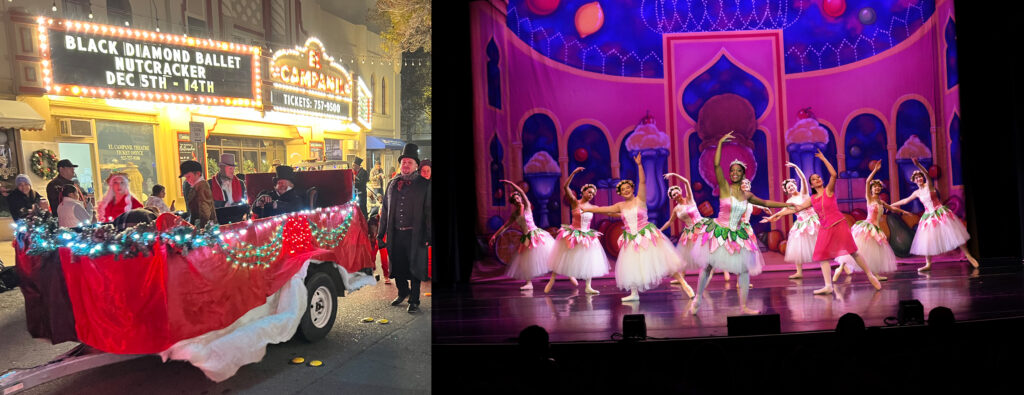
Regarding this year’s sale, additional questions were sent to Sobel Idul last Saturday, asking if she had a position with the theater, other than The Nutcracker performances, before becoming board president, did she serve on the board and was she in charge of marketing before becoming president. But Sobel Idul has not yet responded to those questions as of publication time. As previously reported, “The Nutcracker” is a production of the Pittsburg-based Black Diamond Ballet Company, owned by Sobel Idul.

However, Carraher shared, “Sharon had been on the board once before and she was the biggest renter the theater had. ‘The Nutcracker’ was the greatest funder. She came in and has been doing the marketing. All the social media. She’s a wiz. Then Sharon joined the board while Kathie was still president.”

In response to Sobel Idul’s comments published in a previous article last Friday, Downtown Antioch Association leader and Rivertown business owner, Debbie Blaisure shared that in a podcast last year, with Mike Burkholder of ContraCosta.news published July 15, 2025, Campbell said, “the El Campanil Theatre was in serious financial problems and Sharon knew it. She said Sharon got mad at her and got all the board and employees mad at her as well about it and stormed into the board meeting after she did it. Kathie nominated her for president and left a few weeks later. Sharon was one of their biggest customers with ‘The Nutcracker’ and the Board asked her to assist with marketing then the board. That’s how she got involved with the foundation.”

“When I talked to her (Sharon) and Josh in front of my shop after giving them our $3,000 check, she was in charge of the marketing and Josh does remember it and that she only wanted to advertise the $50k fundraiser and not the full amount they needed,” Blaisure continued. “My statement stands. I don’t think we need to correct it as misinformation.” She was referring to the theater’s then-executive director, Joshua Price.

For Now, Carraher Offered Final Say

“I’m giving you my best recollection. There was no one that was closer to this than me,” Carraher stated after being informed of the comments from the others from the theater, council members and former City staff. “I would have never, ever undertaken the sale if I hadn’t spoken to the City first, as a courtesy if nothing else, especially since they were the guarantors on the HVAC loan.”

Public Must Pressure Wilson to Provide Answers

Until Wilson provides answers to the questions posed to her to inform the public if someone from the theater spoke to her, when and what was said and or committed, the public will have to wait to determine if she knew what actually transpired in 2022 and 2023 prior to the first sale of the theater to a private party.

It’s now up to the public to pressure Wilson, who is still in office and running for re-election, to either respond to the Herald, issue a statement or press release to all local media or post her answers publicly on own social media to clarify matters. It’s the age-old questions asked of government officials: “What did you know and when did you know it?”

Please check back later for any additional updates to this report.

El Campanil Theatre board president responds to concerns, questions, accusations over church’s purchase of building

Saturday, September 5th, 2026
The El Campanil Theatre marquee on Veterans Day, Nov. 11, 2024, (AH file photo) and Foundation Board President Sharon Sobel Idul. Source: LinkedIn

“Our goal remains simple: keep this historic theatre an arts venue for our community and future generations.” – Sharon Sobel Idul

Foundation board down to just three members

Herrera brothers also clarify matters

By Allen D. Payton

In response to concerns and accusations by the public and questions by the Herald about the sale to a church of Antioch’s historic El Campanil Theatre building in downtown Rivertown, the president of the foundation which leases most of the building and operates the theater shared details from the board’s perspective. She also said the board’s membership is now down to just three.

(See related articles here and here)

In a statement issued Aug. 20, 2026, Sharon Sobel Idul, president of the El Campanil Theatre Preservation Foundation Board of Directors, wrote, “We are aware of the potential sale of the property and of fundraising efforts being circulated online by a potential buyer. Those efforts are independent of ECTPF and do not reflect the mission of our organization and it is unlikely that we would be able to continue to provide theatre programming at El Campanil Theatre if they acquire the space.”

According to her LinkedIn profile, since July 2009 Sobel Idul has been the full-time Artistic Director and Founding Director of Black Diamond Ballet in Pittsburg and since 2014, she has also worked as the self-employed CEO, Choreographer and Instructor for the Pittsburg Performing Arts Academy. Her ballet company performs the Nutcracker each year at the theater.

Questions for Board President

In an email sent early Thursday afternoon, Sobel Idul was asked several questions. First, she was asked, beyond the statement, “do you and the board have anything else to say about the sale and possibly working with the new owners after escrow closes, and any response to what others have been saying about you and the board in my articles published this week?”

Sobel Idul was then asked, “When did you become board president? Why didn’t the board inform the public the building was for sale and launch a fundraising campaign for the foundation to buy it back and not just funds for operations? Did you or anyone on the board reach out to the council members to see if the City could help with the purchase?”

She was also informed, “There’s a claim that the council members tried to meet with your board last fall but there were scheduling conflicts and the meeting never happened,” and asked, “Is that correct?”

Sobel Idul was then asked, “What are the board’s long-term plans should the church outgrow the theater building and need to find larger space and sell it in the future?”

Finally, she was asked, “Who are the people currently serving on the board as of today?”

Board President Responds

In her response Friday afternoon, Sobel Idul wrote via email, “Thank you for the opportunity to respond. A few clarifications:

“Board leadership: I joined the Board and was elected President in November 2025.

“Why not purchase sooner? We were aware the property was for sale, but during a period of financial and organizational transition, our first responsibility was stabilizing operations. The seller indicated to us that he was not motivated to sell. Pursuing a $1.5 million purchase before establishing greater financial stability would not have been responsible. We began actively seeking acquisition partners in spring 2026.

“City involvement: Beginning in May, we worked with the City and property owner to explore a pathway toward acquisition. In early July, we were told there were no strong or valid offers and understood we would be kept informed if one emerged.

“On August 9, the owner informed me by phone that he had accepted an offer. Contrary to what was reported, I was not informed of this offer beforehand.

“Last fall’s City meeting: While this occurred before I joined the board, my understanding is the organization was trying to engage the city for a financial sponsorship.

“Working with the potential buyer: Based on the information currently available and public statements made by the Pastor this past Tuesday, if the sale closes, the Foundation would cease operating El Campanil Theatre. The buyer’s intended use and scheduling would directly conflict with the programming necessary for us to continue operating as a community performing arts venue. This was mentioned to the broker when we were first informed of the offer acceptance. 

“This is not the outcome we want. We continue to explore every reasonable path to preserve El Campanil. Our goal remains simple: keep this historic theatre an arts venue for our community and future generations.

“Regarding this week’s reporting: Several statements attribute decisions or motivations to me from summer 2025. I did not join the Board until November 2025 and could not have made or influenced those decisions.

“Specifically, the statement that I ‘didn’t want to scare the public’ and therefore the Board ‘didn’t want to tell the truth’ is inconsistent with the timeline. The financial circumstances being discussed occurred before my tenure. I would appreciate that being corrected or clarified.

“Current Board:
Sharon Sobel Idul  – President
Gail Kean – Vice President/Secretary
Kent Vosburg – Treasurer”

——————————-

Escrow on Sale Closes Sept. 29

As previously reported, Eli Hererra Lead Pastor of Legendary Movement Church, the buyer of the building, said, “We’re in escrow. It closes Sept. 29th. That’s the day we get the key.”

No Seller Carry-Back Financing

Herrera said, “The seller is not carrying the balance. We got a loan.”

Willing to Sell Back Building to Foundation if Church Outgrows Theater Space in Future

Asked if, in a few years, the church outgrows the theater building what are the plans Herrera said, “We’ll have to find a bigger space.” Asked would the church then be willing to sell the building back to the foundation to once again own and operate it as the theater he said, “If in the future the Lord allows that to happen it could be a possibility.”

Clarifications in Response to Social Media Comments

In response to additional questions based on comments posted on social media including that their father was also a pastor and his church bought the former Golf ‘n Games building, Herrera said, “No, our father is not a pastor. My dad did concrete for 30 years.”

His brother, Ruben Herrera, pastor of the Spanish-language church, Palabra de Dios in Antioch, said his church owned the former LaFontana Office Products building at 611 W. 3rd Street in downtown Antioch – after they battled the City which did not want them to locate there but won the right due to the previously reported RLUIPA law. Later, the church purchased and relocated to the former Golf ‘n Games building on Auto Center Drive, after it sat empty for a few years. Ruben’s church has since sold that building and bought the former CVS building on Somersville Road in the same shopping center where the Bank of America and BMO branches are located.

Ruben also said his church is not the source of the approximate $1.2 million loan for the 80% balance of the purchase of the El Campanil Theatre.

Eli said the video of him inside the theater was not AI-generated and that, “The El Campanil staff let us.”

In addition, The Pentacostals of the Bay Area purchased the building that housed the former AMC Deer Valley 16 theaters on Lone Tree Way, which as of 2022 has a Commercial Infill Housing Overlay District on the property and could have instead been another City staff-approved affordable apartment complex. That church is completely separate from and unrelated to the Herrera brothers’ churches and is currently meeting in the Pittsburg Adult Education Center after their church building on Railroad Avenue in Pittsburg was destroyed by fire in May 2022.

Boots & BBQ Festival in Antioch’s downtown Rivertown Sept. 26

Friday, September 4th, 2026

Live Music, Line Dancing, Beer & Wine Garden, Artisan Vendors, Food & Kid Zone

Plus, 6th Annual Delta Rotary Cornhole Tournament

By Celebrate Antioch Foundation

Celebrate Antioch Foundation proudly presents one of our signature events, The Boots & BBQ Festival, Saturday, Sept. 26 from 11 AM to 6 PM. Grab your boots, bring your family and friends, and join us for a day you won’t forget in Antioch’s historic, downtown Rivertown!

Spend the day with us enjoying the Amateur BBQ Cook-Off Competition and Cornhole Tournament while relaxing to the live music featuring the sounds of Houston Ave and Burke.

Select from a variety of local Rivertown Restaurants and BBQ Food Trucks and unwind under our shaded Beer and Wine Garden. There will be a family-friendly Kid Zone with a special guest providing Line Dancing Instruction.

Browse unique creations from our artisan vendors, sip your favorite beer or wine, and enjoy an unforgettable afternoon of entertainment and fun.

Amateur BBQ Cook-Off Competition

Are people always telling you your ribs are the BEST around? Or maybe you are are looking to take your BBQ skills to the next level. Cook up some of your best chicken and ribs and participate in Boot & BBQ Backyard BBQ Competition! Our Boots & BBQ Amateur Backyard BBQ Cook-off Competition on Saturday Sept 26th, 2026, in Antioch’s Rivertown Business District. This amateur contest is intended for the local backyard BBQ enthusiasts, those whose friends and family tell them they create fantastic ribs and chicken at home. Participants can register as a group or as an individual and the cost to enter the contest is $100. The winners will receive a trophy, a cash prize and ultimate bragging rights!

Prizes include Grand Champion Winner $500 & Trophy; 1st Place Chicken & Rib Winner $300 & Trophy; 2nd Place Chicken & Rib Winner $150 & Trophy; 3rd Place Chicken & Rib Winner $75 & Trophy; and, of course, ultimate bragging rights!

6th Annual Cornhole Tournament

This year’s event will feature the Rotary Club of the Delta’s 6th Annual Corn Hole Tournament. The $100 Cornhole Entry Fee is for a Team of 2 People! Divisions will be determined during a Round Robin Style of play that will place you in the backyard or competitive division for the single elimination bracket play.

Your donation will help us to continue to support our local youth programs, senior citizens, veterans and community projects.

Come out and have some good, old-fashioned fun with family and friends. 

Location

The Festival will be located in Antioch’s historic downtown with the bands playing in Waldie Plaza near the waterfront. Mark your calendars, grab your boots and hats, and meet us in Rivertown! See y’all there! 

Registration

Details and Registration for the BBQ Cook Off Competition – Boots & BBQ Amateur BBQ Cook-Off

Register your Cornhole Team of 2 – Rotary Club of the Delta 6th Annual Corn Hole Tournament Tickets

Sign up to be a Vendor – Boots & BBQ Festival Artisan Vendor Application

Thank you to our sponsors: ALMOST THERE TRAVEL • ANTIOCH COMMUNITY FOUNDATION • ANTIOCH HERALD • ANTIOCH ROTARY CLUB • CATHOLIC FUNERAL & CEMETARY SERVICES • CITY OF ANTIOCH • DELTA VIEW PRODUCTIONS • EAST BAY COMMUNITY FOUNDATION • FLYING DUTCHMAN TATTOO • JIM LANTER STATE FARM • WILLOW PARK MERCANTILE • REPUBLIC SERVICES

For more information about Celebrate Antioch Foundation visit our website at www.celebrateantioch.org.

Owner explains reasons for selling Antioch’s historic El Campanil Theatre

Thursday, September 3rd, 2026
Screenshot of El Campanil Theatre building listing on realty.com 09/02/26.

Community meeting gets heated after pastor, congregants invited in; false accusations made of carrying guns; claim of a police report filed

Protest march to City Hall proposed; City staff looking for possible clause in original 2003 purchase agreement

By Allen D. Payton

Following public outcry after learning a church has purchased the 98-year-old building that houses the historic El Campanil Theatre in Antioch’s downtown Rivertown, the current owner shared his reasons for selling. In addition, a community meeting held there, Tuesday night, got heated between residents and the pastor and some members of his Legendary Movement Church who attended unexpectedly.

Sold Because Theater Was Going to Close, Then on Month-to-Month Lease

When reached with questions about his sale of the El Campanil Theatre building, current owner Tung Bui, who lives in Washington state, offered his reasons.

“I bought the theater for the purpose of the arts. I have friends who live in Danville and we go to shows nearby. I am a consultant to Rick on the business side in wireless operations,” he shared, referring to the foundation’s former executive director, Rick Carraher who led the effort to raise the funds to buy and renovate the building, and then led that effort, as well. He and his wife, Janis, were the original owners of Rick’s on Second restaurant that was located across the street from the theater. Rick Carraher served as the theater’s executive director until he resigned in 2021 when the couple moved out of state but remained on the board of directors. He is no longer has a role with the theater or board.

“Since then, they have brought in three different chairs and Sharon is the latest, and have had a lot of staff changes,” Bui said. Sharon Sobel Idul is the current president of the Board of Directors of the El Campanil Theatre Preservation Foundation which leases most of the building and operates the theater.

“Last year I spoke with the foundation board,” he continued. “They’re the ones who said they didn’t have the funds to operate until the end of the year.”

Last October, the theater board began another fundraising campaign to cover the costs of operations without sharing the amount they needed. The board then announced a progress report in March that they had exceeded their $50,000 goal writing, “As of March 25, 2026, a total of $65,190 has been raised from 411 gifts.” They kept going with a “City of Stars – A Dance Gala to Keep the Arts Thriving in Antioch,” in collaboration with Black Diamond Ballet on April 18th. They’re still raising funds through the theater’s website, today.

But the board never informed the public the building was for sale nor held a fundraising campaign to purchase it, to the dismay of members of the public who expressed it during Tuesday night’s meeting and on social media.

“We’re on a month-to-month lease. I don’t want to own a property where the theater isn’t going to be,” Bui stated. “Who runs a commercial building on a month-to-month basis?”

“I gave them free rent for the first year and then gave them a sweetheart deal because I wanted them to recover,” he shared. “I didn’t raise rents for a certain period of time.”

“They told me they were going to shut down by the end of the year,” Bui reiterated.

Asked about the church buying the building he said, “We had several buyers. I turned down a ton of buyers. I didn’t want someone to buy it and tear it down. I wanted a buyer to have a consistent use of the property. The church wanted to keep it the way it is. They’re going to use it for Sunday mornings and Wednesday night Bible study.”

“As a matter of courtesy, I discussed this with Sharon before I accepted the offer. She knew about it,” said Bui.

“I put it on the market with an agent, Michael Temby. I don’t want to own it,” Bui shared. “My agent approached the City early on.”

“Then they (the board) came back to me at the end (of the fundraising effort) and said they can operate it and asked if I would go on a month-to-month. That’s a death sentence,” he stated. “Even if I could back out (of offering it for sale), I couldn’t because I had a contract with a listing for a certain duration.”

Asked if he owned other commercial properties, Bui said, “Not at all. This would be the first and only property I own. I’m not a commercial guy. I only bought it because of my relationship with Rick. I’m an electrical engineer.” 

He then suggested this reporter speak with Temby. However, in response to efforts to speak with the Discovery Bay-based Realtor, he said, “I have no comments at this time while we’re in escrow. Happy to answer any questions after escrow closes.” According to Herrera, that will be on Sept. 29th.

El Campanil Theatre Preservation Foundation Shares Community Update on Potential Sale

UPDATE 2: On August 20th, Sobel Idul emailed a press release about the potential sale of the theater building (which the Herald unfortunately missed until Thursday, Sept. 3rd).

She wrote, “The El Campanil Theatre Preservation Foundation (ECTPF) would like to provide some clarity to our community regarding recent conversations about the future of the El Campanil Theatre property.

“ECTPF is a tenant of the theatre property, which is owned by an out-of-state landlord. We are aware of the potential sale of the property and of fundraising efforts being circulated online by a potential buyer. Those efforts are independent of ECTPF and do not reflect the mission of our organization and it is unlikely that we would be able to continue to provide theatre programming at El Campanil Theatre if they acquire the space. 

“El Campanil Theatre has been part of this community for nearly a century and we understand how deeply people care about its future. We share that commitment. El Campanil Theatre is a historic gem that should remain as an arts and cultural hub. We hope the city, our community, and artists alike can come together to help maintain our mission, if not we will no longer be able to continue our arts management in this space.  

“For now, our focus remains on operating the theatre, welcoming audiences and community organizations, supporting the artists and renters who bring this stage to life, and continuing to be a gathering place for Antioch and the surrounding region.

“Please view a list of our upcoming events here: www.ElCampanilTheatre.com.”

Community Conversation Becomes Confrontation with Congregation

Screenshot of Monday, Sept. 1, 2026, Facebook post promoting the theater’s Save Our Stage Community Conversation.

After Tuesday night’s “Save our Stage: A Community Conversation”, Rivertown business owner Mike Gabrielson, a former Board President of the Antioch Chamber of Commerce, shared a comment about the meeting on the Antioch Herald’s Facebook page, below the post of Tuesday’s article that broke the news the building had sold. He wrote, “I was at the meeting tonight put on by the El Campanil and and it was going great. People were sharing old stories, how much the El Campanil meant to them, sharing how we need to keep the arts alive in our city. Suddenly when the news crew left, the Pastor Eli Herrera from Legendary Church showed up with about 50 people. They barged in and he shared his vision for the El Campanil Theatre which didn’t really include current El Campanil Programing or as he put it ” Legendary plans on putting on it’s own shows and performances and hopes that the El Campanil will stay on as a tenant as long as they can work around their programming…. it’s pretty clear what that means. This is super sad for our community and a final nail in the coffin to our Downtown Economy. Please join us Tuesday Sept 8th 6pm for a friendly protest in front of El Campanil Theatre and a March to City Hall to ask our Council and Mayor to support Saving the El Campanil.. Save Our Stage!”

Screenshot of Mike Gabrielson’s comment about the Community Conversation posted on the Antioch Herald’s Facebook page Tuesday night Sept. 2, 2026, following the meeting.

One person who attended said Jose Cordón, Antioch’s poet laureate tried to prevent the pastor and church members from entering the meeting and they pushed past him and the pastor was acting like he was going to be the savior of Rivertown. Another person who owns a business in Antioch and attended but chose not to be identified said, Cordón was being interviewed by the media outside and invited the pastor into the meeting. That person also said someone came at the pastor and another person in attendance complained that one of the pastor’s men had a gun, that Cordón ended up taking over the meeting and tried to de-escalate things.

Screenshot of Erin Green-Astone’s Facebook post on the Antioch Rants & Raves group page following the Tuesday night meeting.

In a post on the page of the Facebook group Antioch Rants and Raves, another Rivertown business owner, Erin Green-Astone wrote, “I don’t have any words right now. I’m angry that it evolved the way it did. The church members and pastor showed up late to the meeting and shifted the tone greatly. We have passionate folks in Antioch. I hate that it devolved into what it did. I hate more that they brought concealed weapons into the theater and potentially put others at risk. I’m not sure how to heal this community after seeing that.”

Pastor Responds

However, the pastor and the leader of the Downtown Antioch Association who attended Tuesday night’s meeting refuted most of that information, while Cordón confirmed some of it.

Herrera, who said on Tuesday he wasn’t going to attend the community meeting, said Wednesday morning in an audio file sent by text to the Herald, “I’m sure you’re seeing all the news buzzing all over Facebook and online in regards to me and…well, our church goes and prays every Tuesday outside (the theater). I got basically asked and begged to go into that meeting and I said I would do it in a peaceful way. I go in there and it wasn’t peaceful. A guy, named Mr. Cordón, turns the whole audience on me. Very, very misleading. Then in the middle of that, a woman tries to come forward and come at me, physically. Then another man that I found out, named Frank Sterling, comes at me trying to attack me from my back and my men that I had with me. Not only men. I had families, my wife and children were there, all of our families were there. We were there praying outside, and my men stepped up and guarded me. There was no guns. There was no weapons. We have everything recorded.”

“So, I just wanted to share that with you because you’re going to see a lot of stuff buzzing all over the Antioch Rants and all this stuff, which is all lies,” Herrera continued.

“I heard they made a police report after we left. Not sure why they did that. They’re the ones who were attacking us,” he said with a chuckle.

“This is getting out of hand. I wanted to work with the theater operations people. They just, they don’t seem friendly enough to work with,” Herrera stated. “And so, this is very sad.”

Asked about the claims that he and his church members “barged in” and about someone coming at him and that one of his men had a gun, Herrera said, “It was a gentleman who stormed at me. But I just seen he did an apology on Facebook. Frank Sterling.”

“Nobody had a gun,” he emphasized. “We didn’t barge in. We were outside praying and they said, ‘hey, we would love for you to speak.’ So, I got invited into the building. And the 50 people were – we didn’t barge in – it was families. We had kids, mothers, strollers. So, it wasn’t like we barged in to fight. We walked in as family and as a church. It was unfortunate, the whole thing.”

The pastor then reiterated, “For the record, we were invited in by, I believe his name is Jose Cordón, he is a poet, I believe for the city. He is the one that invited us in and said he would love for me to talk and address the crowd and that’s exactly what I did. And then I got attacked and so, then we walked out. We left. We weren’t there to fight. We have footage to prove it. The gentleman came at me, and all our people did was protect their pastor.”

Downtown Antioch Association Leader Offers Her Perspective on Meeting

Asked her perspective on what occurred, Debbie Blaisure, leader of the Downtown Antioch Association, who attended the community meeting at the theater said, “Jose was de-escalating and the pastor came in with members of his congregation. He had his wife and children with him. He was very articulate and very respectful. He was not cocky. He said I am a businessman and a man of God. As a tenant if I have church on Sunday and a performance is on Sunday the church will have priority.”

“I was right there in the front row,” she continued. “He was standing in front of the stage. There was a woman from the audience who said she hadn’t been in the building for 45 years who came at him. That’s what started the whole thing. Some of the pastor’s men from the church stepped in to protect him and then Frank Sterling came from the other side. The congregation circled the pastor. Frank was on the other side. The pastor was the one who was almost attacked. There’s an entire video of the whole thing.”

Asked about others who attended Blaisure shared, “It was a lot of longtime residents telling stories of their experiences with the theater. Someone asked, ‘are they going to shoot old people?’ It was asinine. There was no one with any guns.” 

About the proposed protest march she said, “The City has nothing to do with this.”

Regarding the foundation board’s efforts to raise funds for operations that began last year Blaisure said, “I tried to help them. The DAA gave them $3,000 from the fashion show and I told them I could use it to challenge the other businesses to help raise the rest. The theater needed $350,000. The Historical Society raised $150,000 for the (Unity) Bell. So, we could have raised the money. “ Actually, the amount raised in cash was $85,000 and the total, including in-kind donations, was about $106,000.

“But Sharon didn’t want to scare the public, so the board didn’t want to tell the truth. That would have been an opportunity for fundraising and they didn’t use it,” she stated.

“I’m hoping that the theater and the downtown businesses can work with the new owner and, in collaboration, be included in our new efforts for downtown Rivertown restoration. The pastor said he was going to,” Blaisure added.

Antioch’s Poet Laureate Confirms He Invited in Pastor, “Just a Few” Church Members, Tried to De-Escalate

When reached to verify the information said about him, Cordón said, “I did invite the pastor in for the Community Conversation. I think people should hear his story and what to do. But I also said is I didn’t think all of his members there should have come in. Just a few members. I also did try to de-escalate it.”

“Unfortunately, it became confrontational rather than productive, a conversation and an open dialogue,” he added.

Asked if he thought anything good came out of last night Cordón said, “I think that it can. I think if we sit down and get past it for the benefit of Antioch. If we can demonstrate we can still work together, I think that’s positive. I’m open to continue the conversation to make Antioch.”

“One of the first things that Sharon did was apologize. She recognizes the theater made mistakes. Having some recognition of that is good,” he continued. “What I would love to do is to continue the conversation and figure out how to work together. Whatever is best for Rivertown and Antioch.”

He hosted two shows at the theater, “completely free to the public,” Cordón shared. “I flew in people from out of town. I got them hotel stays at the hotel by Auto Center Drive. ‘Poetic Experience’ was the name of the show.”

Screenshot of Frank Sterling’s Facebook post on Wed., Sept. 2, 2026, apologizing for his behavior at Tuesday night’s meeting.

Regular Council Commenter Apologizes for Behavior

In a post on his Facebook page on Wednesday, Sterling, who regularly speaks during public comments at city council meetings, wrote, “I lost my cool at the meeting last night.. My apologies to everyone. That is not how we should all interact. Whatever/However you see the situation leading up to this moment. It is not the way to handle it. My apologies again.”

Other Comments from Community Members Who Attended Meeting

When reached for comment, former councilwoman and current District 1 council candidate Joy Motts who also attended Tuesday night’s meeting said, “I would have been screaming from the rafters if I knew it was for sale. How did we get here? Why did we not know? Why didn’t the Council talk about this to let us know what was happening here? Nobody knew.”

“There were people crying,” she said about some of those in attendance.

“This is a tragedy for downtown,” Motts continued. “I have nothing against this church. There are so many other vacant, empty buildings in town, than to take away this arts and cultural venue that means so much to so many.”

“People are upset that they didn’t know. I’m upset that I didn’t know,” she stated.

Regarding the building’s seller notifying the foundation’s board chair, Motts asked rhetorically, “Did he give her a chance? Let them know he had an offer to give them the opportunity?”

Screenshots of Sept. 2nd Facebook post by Carla Baker Marymee.

In a post on her Facebook page on Wednesday afternoon, Rivertown business owner and Antioch Historical Society member, Carla Baker Marymee wrote, “I generally don’t rant on Facebook. This time is an exception.

“Last night’s ‘Community Conversation’ at El Campanil Theatre was supposed to be about saving one of Antioch’s most cherished historic landmarks — a nearly 100‑year‑old symbol of culture, community, and riverfront pride. Instead, it became something none of us expected.

“The Antioch Herald reported that a church has already raised $306.500 toward the $1.5 million purchase price, and that the sale is in escrow, closing Sept. 29, 2026. That alone shocked many of us. But what happened inside the theatre was worse.

“Patrons, artists, renters, business owners, and neighbors showed up to ask questions and stand together for the arts in Antioch. We came in good faith. We came to protect a landmark that belongs to the community.

“Then the discussion was interrupted.

“The pastor — the reported buyer — arrived with roughly two dozen members of his congregation. The atmosphere shifted instantly. Tension rose. A confrontation broke out in front of the stage between the pastor, several congregants, and residents. It was chaotic, frightening, and deeply upsetting. I left because I felt unsafe.

“This theatre never should have been sold in the first place.

“El Campanil was purchased in 2003 by the El Campanil Theatre Preservation Foundation with a $500,000 Calpine grant, $750,000 in City redevelopment funds, and $1 million raised under the leadership of Rick Carraher. It was a community triumph — a promise that this building would remain a cultural anchor for Antioch.

“But after COVID, financial struggles led to a quiet sale to an out‑of‑state buyer. Almost no one knew. And now we’re watching a second sale unfold that feels rushed, opaque, and completely out of alignment with what the community wants.

“Let’s be clear: This is not about being ‘against churches’. It’s about protecting a historic cultural space that has served Antioch for nearly a century. There are countless other locations for a church to thrive. This theatre is unique, irreplaceable, and central to Rivertown’s identity.

“A $1.5 million price tag for a building of this significance? That’s not an opportunity — it’s a giveaway.

“If the buyer truly ‘loved Antioch,’ he would understand that forcing this sale through — especially after last night’s confrontation — will leave a permanent scar. The community will not forget what happened. And the building will never be embraced as a church. Because this isn’t about faith. It’s about a real‑estate investment.

“I am praying — truly praying — that local investors step in immediately to save El Campanil and return it to the community that built it, funded it, and loves it.

“Antioch deserves better. Our history deserves better. And this theatre deserves to remain what it has always been: the cultural heart of Rivertown.”

No Seller Carry-Back Financing

While the church has raised the necessary 20 percent downpayment of $306,500, it was reported by the Antioch business owner in attendance at Tuesday’s meeting that someone expressed the belief that the sale can be stopped because it includes seller carry-back financing for the balance of the approximate $1.5 million purchase price.  However, when asked about that, Herrera said, “The seller is not carrying the balance. We got a loan.”

Willing to Sell Back Building to Foundation if Church Outgrows Theater Space in Future

Asked if, in a few years, the church outgrows the theater building what are the plans Herrera said, “We’ll have to find a bigger space.”

Asked would the church then be willing to sell the building back to the foundation to once again own and operate it as the theater he said, “If in the future the Lord allows that to happen it could be a possibility.”

City’s Role

The theater during restoration in 2003. Photo: El Campanil Theatre Preservation Foundation

While some people in the community would like the City to somehow step in and prevent the sale, as previously reported, the City can’t stop the church from buying the building or locating there based on federal law, known as RLUIPA, the Religious Land Use and Institutionalized Persons Act of 2000. That protects “individuals, houses of worship, and other religious institutions from discrimination in zoning and landmarking laws.”

Yet, since Antioch’s current Mayor Pro Tem and District 3 Councilman Don Freitas was instrumental in securing the $500,000 donation from the Calpine energy company to purchase the building back in 2003 when he was mayor, as well as the $750,000 from the City’s redevelopment agency to help renovate the theater, he was asked about the agreement with the foundation’s board. Some people are looking to that as a possible way to nullify the sale, as they, like Marymee, claim the foundation shouldn’t have sold the building to a private party three years ago.

On the History page of the theater’s website it shows, “In July 2002, El Campanil Theatre Preservation Foundation was incorporated as a charitable, non-profit 501(c)3 organization. In early 2003, Calpine Corporation and the City of Antioch entered into an agreement whereby the Foundation received a grant to acquire the Theatre.”

Freitas was asked if he remembers if in that agreement there was a clause that required the foundation to sell the building to the City in some kind of right-of-first-refusal?

“I don’t recall that specific detail (but it certainly would be like me to require it in the agreement),” he responded. “Acting City Manager Ana Cortez told me she understands that may be correct and has been endeavoring to ascertain if it is true. I would suggest you directly contact her regarding this matter.”

Questions were emailed Wednesday night to both Cortez and City Attorney Lori Asuncion asking if such a clause in the agreement exists or if there was anything else in the agreement that gave some form of rights to the City since redevelopment funds were used for the building’s renovation after it was purchased.

Yet, whether or not such a clause exists or rights were retained, the sale of the building by the foundation to a private owner in 2023 might have severed that portion of the agreement.

Efforts to reach Board Chair Sobel Idul for a response to what Bui and others said, were unsuccessful prior to publication time. A call to one member of the Board of Directors, Ron Yarolimek, was also unsuccessful. A voicemail message was left for him requesting a return call, for Sobel Idul’s phone number or for him to pass on this reporter’s phone number to her to call.

UPDATE 1: Yarolimek responded Thursday morning with, “I passed on the information to Sharon. She’s making all public comments for El Campanil” and provided her theater foundation email address.

An email was sent late Wednesday morning to Sobel Idul asking for comment and with questions.

Please check back later for any additional updates to this report.

Historic El Campanil Theatre building sold to church led by Antioch resident

Tuesday, September 1st, 2026
Legendary Movement Church will close on the purchase of El Campanil Theatre building on Sept 29th. Photos: (Left) Legendary Movement Church. (Right) El Campanil Theatre.

Raised enough funds for down payment

“It’s in escrow. It closes Sept. 29th. That’s the day we get the key. We don’t want to be another church in the city. We want to be a church for the city.” – Pastor Eli Herrera

Willing to work with foundation that operates theater

By Allen D. Payton

A church currently based in Pittsburg, whose lead pastor is an Antioch resident, has raised the needed funds to purchase the historic El Campanil Theatre building in the city’s downtown Rivertown. It’s in escrow and closes Sept. 29th, Lead Pastor Eli Herrera shared on Tuesday.

The fundraising effort has had board members and staff of the foundation that operates the theater, as well as Antioch residents, business owners and council members concerned that it will mean the loss of an arts and cultural center in the community.

However, Herrera said he’s willing to work with the El Campanil Theatre Preservation Foundation to continue using it for arts and entertainment.

Recent History

El Campanil was listed for sale with an asking price of $1.5 million, but it’s no longer on either Realtor.com or LoopNet.

The 98-year-old theater building, which also houses two retail tenants on W. 2nd Street, was purchased by the non-profit organization, El Campanil Theatre Preservation Foundation, in 2003, with a grant of $500,000 from Calpine Corporation, an energy company with operations in Antioch and Pittsburg, which then-Mayor and now-Mayor Pro Tem Don Freitas secured. It was improved with $750,000 in City redevelopment funds and an additional $1 million raised under the leadership of then-foundation chairman Rick Carraher. But after running into financial difficulties following COVID, the building was sold a few years ago to an out-of-state buyer who continued to lease it to the foundation to operate as a theater.

Pastor Eli Herrera on stage inside the theater from where he will soon be preaching. Source: Legendary Movement Church video screenshot

New Buyer

Legendary Movement Church, led by Herrera, currently holding services on Sundays at noon inside the Light the Bay Church building at 1210 Stoneman Avenue in Pittsburg.

Posts on the Legendary church’s Instagram and Facebook pages on August 18th read, “ANTIOCH, WE BELIEVE IN YOU. We believe God has given Legendary Movement an opportunity to plant roots right in the heart of the Rivertown District at 602 West 2nd Street, Antioch, California.

“But this is bigger than a building. We see a place that will bless families. A place that will serve those in need. A place that will help the homeless find hope and restoration. A place where children and young people can dream again. A place that will pour life back into our community. A place that will help bring vision, hope, and purpose back to Rivertown. We believe Rivertown can come back to life.

“Right now, we are raising funds for the down payment on what we believe will become the future home of Legendary Movement. Would you consider sowing a seed into this vision? Whether it is $10, $100, $1,000, or whatever God places on your heart, every seed matters. Every gift moves us one step closer. And every person who gives becomes part of what God is building in Antioch.

“We’re not just raising money for a building. We’re sowing into a city. We’re investing in people. We’re believing for Rivertown. We’re believing for Antioch. Let’s see Antioch Rivertown come back to life.”

In addition, a video shows Herrera standing and sitting inside the theater saying he’s an Antioch resident and, “The owner of El Campanil Theatre has been a man who’s so gracious towards us. He’s allowed us time to go ahead and raise the funds necessary for our down payment. Currently what we’re facing is having to raise $306,500.” But Herrera didn’t say by when.

Pastor Shares Plans, Vision

Pastor Herrera speaks during the video from inside the theater.

Asked about the sale, Herrera said, “I think it’s been for sale for about eight months. I began looking at it three weeks ago. We’re in escrow. It closes Sept. 29th. That’s the day we get the key.”

Asked if that’s when the church needs the down payment he responded, “We have it, the twenty percent. That’s been raised really through our ministry, not any donors. The members of our church have been very generous.”

“I heard there were two offers for the building. One was Sean McCauley and another was a ministry from Discovery Bay that serves the unhoused,” he explained. “We came with an offer the seller was looking for and he said, ‘yes.’”

“I’ve seen a lot of the comments and the criticism,” Herrera stated. “I do see the concerns and I hear the concerns. I’m a very good friend of Ron Bernal, before he was mayor. I served at Cornerstone Christian Center for about a year for their school and youth ministry.”

Herrera is also the younger brother of Pastor Ruben Herrera of Palabra de Dios Church in Antioch.

“We know it’s an historic building. But it’s not technically recorded as an historical landmark. We want to make it better. Soma paint and TLC. But changing the style and look of the theater, no,” he shared.

Asked about continuing to allow entertainment and other uses Herrera said, “I already have spoken to a few people who do Christian concerts. That’s part of our vision. We have lots of Christian artists who want to come down, whether it be country, hip-hop. A lot of them have been texting me excited about the opportunity.”

“We want to continue to open it up for graduations. My daughter has performed for Melody’s Dance Studio there. We want to have the recitals,” he added.

Asked about the use of other parts of the building he said, “The offices upstairs, we plan on making those the children’s rooms. I’ve spoken to the barber shop and Ana of Farmer’s Insurance, we are going to continue to lease to them.”

Asked if the church is willing to work with the foundation to rent it for entertainment, such as concerts and other events, Herrera said, “We have a schedule that they would have to work around. I’m not going in there and say, ‘you have to get out.’ As long as it fits around our schedule, I’m willing to.”

“I haven’t been able to have conversations with the foundation,” he continued. “One of the gentlemen there completely refuses to have a conversation with us. Another, I believe is Sharon, who put out a statement and basically said, if we buy it, they are out of business. Now, I can’t control that. The reality is we have a schedule. We have things like rehearsals, youth group, men’s breakfasts, women’s ministries.”

About its impact on the downtown, Herrera shared, “We have a church of 500 people. It’s a full English ministry. They’re talking about foot traffic. We’ll bring foot traffic to Rivertown. I shop local. I eat local at Monica’s, at Guadalajara Taqueria.”

“I’m from Antioch. I love Antioch. So many people from our church are for Antioch. The city is named Antioch after the biblical Antioch. It’s a town that’s dedicated to the Lord,” Herrera exclaimed.

“We don’t want to be another church in the city. We want to be a church for the city,” Herrera stated. “We really have a vision for Rivertown.”

In his video about the theater he said, “Our eyes see what it could become. I believe we will see families gathering, businesses thriving, homeless coming off the streets and that is what we want to do. We don’t want to just be a people in a building we want to be a people that can be outside of the four walls. Legendary Movement Church wants to give back to our community.”

“That’s the vision that we have. That’s our vision for Rivertown,” said Herrera.

“We’re willing to work with anyone in Rivertown, business owners, property owners and the community,” he added.

Pastor Herrera in front of El Camp during the church’s Rivertown Restoration Day on Saturday, Aug. 29, 2026. Video screenshot

Residents, Business Owners Opposed – Don’t want Another Church in Antioch or Rivertown

Several residents and business owners have also been complaining in their comments on social media that neither Antioch nor Rivertown need another church. Rivertown is currently home to at least three other churches, one inside another historic former theater building.

The Restored Life Church – Iglesia Vida Restaurada occupies the former Stamm Theater on the corner of G and W. 10th Streets on the southern edge of what is considered the City’s Rivertown District. Although, technically, it only includes the area north of W. 6th Street. In 1996, when the church bought that historic theater, twenty years younger than El Campanil, some of the alfresco-style murals that lined the walls inside the building, depicting Portuguese fishing men and women, were painted over. It was named for the Stamm family, who were also partners of El Campanil with the Beede family. (That’s the same family whose member, Henry Beede owned the Antioch Lumber Company, building and the empty lot across W. 2nd Street, known as The Yard, where the Rivertown Square is proposed).

Another church, RR Ministries – Ministerios Rey de Reyes (meaning King of Kings), which had 40 laptops stolen from their RR Transitional Housing Learning Center during a June break-in, is located in one of the store fronts on W. 2nd Street between F and G Streets.

A second church, The Ship, holds services inside the Quonset hut-style building at 611 W. 3rd Street, across from the City Hall parking lot, where LaFontana Office Products was once located.

Another building, that originally housed a bank, then most recently occupied by The Worship Center church and is listed for sale at $1.295 million is located at 315 G Street on the corner of W. 4th Street.

In response to the concerns, El Campanil Theatre is hosting a community meeting entitled, “Save Our Stage: A Community Conversation” tonight at 7:00 p.m. Herrera said he does not plan to attend. (See related article)

Federal Law Protects Houses of Worship in Land Use Zoning & Regulation

Some residents were wanting the City government to step in and somehow stop the sale. However, according to the Civil Rights Division of the U.S. Department of Justice, “The land use provisions of the Religious Land Use and Institutionalized Persons Act of 2000 (RLUIPA)…protect individuals, houses of worship, and other religious institutions from discrimination in zoning and landmarking laws. RLUIPA prohibits zoning and landmarking laws that substantially burden the religious exercise of churches or other religious assemblies or institutions absent the least restrictive means of furthering a compelling governmental interest.”

The law reads, “No government shall impose or implement a land use regulation in a manner that imposes a substantial burden on the religious exercise of a person, including a religious assembly or institution, unless the government demonstrates that imposition of the burden on that person, assembly, or institution (A) is in furtherance of a compelling governmental interest; and (B) is the least restrictive means of furthering that compelling governmental interest.”

RLUIPA prohibits zoning and landmarking laws that:

(1) treat churches or other religious assemblies or institutions on less than equal terms with nonreligious assemblies or institutions;
(2)  discriminate against any assemblies or institutions on the basis of religion or religious denomination;

(3)  totally exclude religious assemblies from a jurisdiction; or

(4) unreasonably limit religious assemblies, institutions, or structures within a jurisdiction.”

The U.S.D.O.J. Civil Rights Division explains further, “RLUIPA provides a number of important protections for the religious freedom of persons, places of worship, religious schools, and other religious assemblies and institutions, including:

  • Protection against substantial burdens on religious exercise:

RLUIPA prohibits the implementation of any land use regulation that imposes a “substantial burden” on the religious exercise of a person or religious assembly or institution except where justified by a “compelling governmental interest” that the government pursues in the least restrictive way possible.  42 U.S.C. § 2000cc(a);

  • Protection against unequal treatment for religious assemblies and institutions:

RLUIPA provides that religious assemblies and institutions must be treated at least as well as nonreligious assemblies and institutions.  42 U.S.C. § 2000cc(b)(1);

  • Protection against religious or denominational discrimination:

RLUIPA prohibits discrimination “against any assembly or institution on the basis of religion or religious denomination.”  42 U.S.C. § 2000cc(b)(2);

  • Protection against total exclusion of religious assemblies:

RLUIPA provides that governments must not totally exclude religious assemblies from a jurisdiction. 42 U.S.C. § 2000cc(b)(3)(A); or

  • Protection against unreasonable limitation of religious assemblies:

RLUIPA states that governments must not unreasonably limit “religious assemblies, institutions, or structures within a jurisdiction.”

In addition, according to Church Law Center, RLUIPA “contains protections for a full range of religious assemblies, from churches, religious schools, cemeteries, and faith-based social services provided by religious organizations to individuals holding prayer meetings in their homes. Furthermore ‘religious exercise’ refers to any exercise of religion, whether or not it is central to a system of religious belief. As a result, religious exercise includes actual worship services and may include other religious activities, such as Bible study groups, prayers meetings, and Sunday school classes.”

Aerial video screenshot of El Campanil Theatre. Source: Legendary Movement Church

Councilmembers Have Been Waiting to Learn if City Can Use Developer Fees to Purchase Theater Building

Councilwoman Tamisha Torres-Walker, in whose District 1 El Campanil Theatre is located and is up for re-election, on Monday, Aug. 24 posted a video on her official Facebook page, claiming she and Freitas started having conversations last year about cultural centers in her district. She also said they have “spent months trying to find out what’s going on with the El Campanil Theatre and how could the City step in.”

Torres-Walker then says they had conversations with City Manager Bessie Scott, the consultant, David Storer who later became the Acting Community and Economic Development Director, and Parks and Recreation Director Shahad Wright asking, “is this something we can take on?” She then claims, “we found out the City…has been sitting on millions of development impact fees…and haven’t been used or have been underutilized and we have to spend those dollars.”

“We were informed that those…fees might also be able to be spent on community spaces,” Torres-Walker stated. They asked staff, “could these…fees be used so the City of Antioch could save the El Campanil Theatre?”

“We began to have meetings with the El Campanil Theatre and we were actually trying to create a plan to see how can the City step in,” the councilwoman continued. “Those conversations have wained, and we’re still waiting for legal advice to see if these millions of dollars of impact fees can be used to buy the El Campanil Theatre.”

State Law on Development Impact Fees & Questions for City Staff

According to the California Department of Housing and Community Development, “Local governments levy development impact fees to help fund the expansion of public facilities and infrastructure needed to support new housing development. These revenues support the construction of critical facilities, such as parks, public safety facilities, other civic and community facilities, and transportation infrastructure.” Development impact fees can also be levied on commercial development, such as the regional road fee in East County which helped pay for the Highway 4 (Bypass) extension between Antioch and Balfour Road in Brentwood. But the CDHCD’s website does not offer legal limitations under the definition of “other civic and community facilities.”

Furthermore, state law requires a direct benefit to the development that pays the impact fees, which is referred to as nexus. The CDHCD explains, “Nexus studies are meant to quantify the impact of new development on public facilities and determine the cost of this impact, establishing the maximum fee amount that can be charged on the construction of new homes. They also provide the supporting documentation and justification that is used to establish the legal authority for jurisdictions to charge these fees.”

According to a report by the Kassouni Law firm, there’s a “Two-Part Nexus Test. Under Government Code section 66001, a local agency imposing an impact fee must make two findings. First, the fee must have a reasonable relationship to the burden the development places on public facilities. Second, there must be a reasonable relationship between the fee amount and the cost of the facility attributable to the development.”

Questions were sent to City Attorney Lori Asuncion and current Acting Community and Economic Development Director Kevin Scudero asking if the development impact fees can be used by the City to purchase the El Campanil Theatre building; how much in impact fees collected does the City currently have; why are they sitting there; for what were they collected; what nexus was determined in the study; and if the City can change the use of the funds after the fact. No responses were received prior to publication time. But the matter is moot at this point.

A volunteer from Legendary Movement Church pressure washing the sidewalks in downtown during the Rivertown Restoration Day, Aug. 29, 2026. Video screenshot source: LMC

Legendary Movement Church Holds Rivertown Restoration Day

In a demonstration of their commitment to Rivertown, last Saturday, August 29th from 8:00 a.m. to 12:00 p.m., the church held a Rivertown Restoration Day, described as, “A day of putting our faith into action as we serve through: Community Clean-Up, Sidewalk Washing, Feeding Those in Need, and Prayer & Outreach.”

The message in their social media posts read, “We’re going to BE ABOUT IT Antioch. So, we’re calling EVERYBODY who truly loves this city to show up for RIVERTOWN RESTORATION DAY.

“We’re hitting the streets of Rivertown to clean, serve, restore, love on people, and remind our city that Antioch’s best days are still ahead. If you really love Antioch, I’ll see you there. Don’t just talk about change. SHOW UP and be part of it. LET’S RESTORE RIVERTOWN.” (See video of the day’s event and activities)

Older Brother, Also an Antioch Pastor Supports Effort

Asked about his brother and ministry, Pastor Ruben Herrera said, “They came out of us. They are under our church covering.”

“I actually toured the theater and considered buying it as an investment,” he shared.

“Downtown needs some life,” Ruben continued. “I believe the church will help that and be a blessing for the Rivertown area. We need people like Legendary who are not just holding their services there but building downtown.”

“Rivertown will be a better area with Legendary there,” he stated. “The business owners will see. It will grow, people will shop, people will dine.”

“They will work hand-in-hand with the City to make Rivertown a better place,” Ruben added.

He and his ministry, which Ruben says is the largest Latino church in Antioch, have their own project on Somersville Road in the same shopping center as the Bank of America and BMO branches. More about that is expected to be announced later this month.

About the Church

According to the church’s website, “Legendary Movement, as we know it, was always in God’s divine plan. But before we saw a spirit filled church, our eyes saw only a spirit filled youth group. About 25 youth gathered week after week in the back of an old church building. There was a limit on space and resources, but no limit on faith and passion. After a beautiful encounter on a mountain, God spoke the name ‘Legendary’ into existence and so we adopted the name ‘Legendary Youth’ in 2018. 

“Our vision became more clear as the palpable presence of God became contagious to everyone who was present. Soon, what had been a Friday night youth group became a movement. Lives were being changed, families transformed, prodigals were coming back home. No longer could our services be restricted to only youth when it was evident that God wanted to do something greater than what we could comprehend. And so, in 2020 we changed our name to ‘Legendary Movement’, as this wave of the spirit was to exclude no one from experiencing God’s fullness. 

“Our Friday night services continued to grow but still the Lord wasn’t done, the movement was just getting started. The manifest presence of God was evident but the desire to see and experience more was on the rise. God began to pour out knowledge and strategy, as the remnant interceded for confirmation and clarity. Upon God’s divine will and in his perfect time, we then launched Legendary Movement. Legendary Movement opened its doors Sunday, February 26, 2023. The grace of God has allowed this movement to continue to develop, as we expand into new territories and remain attentive to God’s direction. 

“This legendary move is one that testifies to the faithfulness of Jesus Christ and his love for the Church!”

Now, the church will have a new home inside the historic, El Campanil Theatre building in Antioch.

For more information visit their website at legendarymvmnt.com.

El Campanil Theatre to hold community meeting on building’s future Tuesday

Monday, August 31st, 2026
Photo source: El Campanil Theatre

SAVE OUR STAGE: A Community Conversation

In response to possible purchase by church

By Allen D. Payton

In response to the possibility of a church purchasing the historic El Campanil Theatre in Antioch’s downtown Rivertown, the theater’s board of directors and staff are holding a Community Conversation entitled “Save Our State” Tuesday night, Sept. 1, 2026, at 7:00 p.m.

This year, the 98-year-old theater building was for sale with an asking price of $1.5 million and a local church was raising $300,000 for a 20% deposit. It’s currently not listed on either Realtor.com or LoopNet.

The theater building, which also houses two retail tenants on W. 2nd Street, was purchased by the non-profit organization, El Campanil Theatre Preservation Foundation, in 2003, with a grant of $500,000 from Calpine energy, which then-Mayor and now-Mayor Pro Tem Don Freitas secured. It was improved with $750,000 in City redevelopment funds and an additional $1 million raised under the leadership of then-foundation chairman Rick Carraher. But after running into financial difficulties following COVID, the building was sold a few years ago to an out-of-state buyer.

A post on the theaters’ Facebook page over the weekend reads: “El Campanil Theatre belongs in the heart of this community and we know many of you have questions about what comes next.

“We invite our patrons, supporters, artists, renters, business owners, and neighbors to join us for a short community gathering at the theatre.

“Come:
• Hear an update and ask questions

• Share your El Campanil memories and stories

• Learn how you can support the theatre moving forward

• Connect with others who believe in keeping the arts alive in Antioch

“This is a time to come together, get informed, and talk about what the future of this historic stage could look like.

“Our story here isn’t over.”

The theater is located at 602 W 2nd Street.

Learn more at www.elcampaniltheatre.com.

Disney Days at Willow Park Mercantile in Rivertown Aug. 15-23

Saturday, August 15th, 2026

Willow Park Mercantile is located at 205 G Street in Antioch’s historic, downtown Rivertown. For more information visit Willow Park Mercantile or call 925-732-3877.

Paid advertisement.