Archive for the ‘Government’ Category

Rep. DeSaulnier advances over $46.7 million for local projects in Contra Costa, Alameda counties

Wednesday, April 1st, 2026

Budget requests for infrastructure, transportation, community development, public and environmental health and safety

$1.7 million for Antioch Police Real-Time Operations Center

$10 million for Vasco Road safety & mobility improvements

By Mairead Glowacki, Communications Director, Office of Congressman Mark DeSaulnier

Washington, D.C. – Today, Congressman Mark DeSaulnier (CA-10) announced that he advanced over $46.7 million for 20 projects to benefit Contra Costa and Alameda Counties for consideration by the U.S. House Committee on Appropriations as part of the Fiscal Year 2027 appropriations process. These projects would help to improve quality of life for the people of California’s 10th Congressional District by upgrading infrastructure and transportation accessibility and increasing public and environmental safety. 

“Simply put, my number one priority in Congress is to make life better for the people I represent, and the $46.7 million we are advancing will help to do just that by investing in safety and easing congestion for drivers, bikers, and pedestrians alike, housing, emergency preparedness, crime prevention, and more,” said DeSaulnier. “I am continuously grateful to our local governments and organizations for their thoughtful project submissions, and I look forward to fighting to see the projects through the legislative process to bring this important funding home.”

Infrastructure Upgrades, Transportation Accessibility and Community Development Projects:

  • $5,000,000 for the County of Contra Costa to design a new roadway connection that will improve regional mobility between Contra Costa and San Joaquin Counties using a connector route that shifts interregional traffic from Byron Highway and local roads in the Town of Byron to Vasco Road, to accommodate higher traffic volumes.
  • $5,000,000 for the County of Contra Costa to construct safety countermeasures along a 12.1-mile segment of Vasco Road between Marsh Creek Road and the Alameda County line in unincorporated Byron, California to decrease the number of accidents on this busy thoroughfare.
  • $4,000,000 for the City of Brentwood to construct infrastructure and site improvements to prepare a site to house the Brentwood Agricultural Technology Innovation Center.
  • $2,800,000 for the City of Lafayette to construct the Brown Avenue to Pleasant Hill Road segment of the Aqueduct Pathway, a fully accessible Class I separated bicycle and pedestrian facility located within the East Bay Municipal Utility District (EBMUD) aqueduct corridor in downtown Lafayette, California.
  • $2,000,000 for East Bay Regional Park District to construct a dedicated bus staging and drop-off area designed to accommodate regional transit agencies and other visitors, and remove aging rail infrastructure to replace it with accessible, multi-use pathways as part of the second phase of a project to allow for the Thurgood Marshall Regional Park to be opened up to the public.
  • $2,000,000 for the City of Lafayette to construct a 48-unit development of supportive and affordable housing for individuals with intellectual and developmental disabilities.
  • $2,000,000 for the City of San Ramon to continue buildout and close gaps in the citywide fiber optic network supporting transportation operations, public safety, and future smart city technologies.
  • $1,750,000 to the City of Walnut Creek to install a new traffic signal at the intersection between Treat Boulevard and Arkell Road in Walnut Creek, California, which is currently controlled by stop signs.
  • $1,500,000 for the County of Contra Costa to construct separated wheeled (bicycle, e-bike, and scooter) and pedestrian pathways in the Iron Horse Corridor from Bollinger Canyon Road to Crow Canyon Road in the City of San Ramon to separate wheeled and pedestrian modes and improve user safety.
  • $1,300,000 for the County of Contra Costa to construct a new youth center in Brentwood, California that will provide academic counseling and employment training in the culinary field.
  • $1,296,000 for the City of Orinda to complete pavement rehabilitation work and widening on the Camino Pablo Pathway in Orinda, California to expand and maintain aging infrastructure that currently sees heavy pedestrian use.

Public and Environmental Health and Safety:

  • $5,000,000 for the City of Concord to make improvements to the City of Concord’s Emergency Operations Center (EOC) to ensure that it can continue to function as a critical hub for regional preparedness, response, and recovery efforts during emergencies and disasters.
  • $3,150,000 for Central Contra Costa Sanitary District to add Densified Activated Sludge (DAS) technology to Central San’s existing large-scale Membrane Aerated Biofilm Reactor (MABR) demonstration site and share results with wastewater agencies across the region. DAS and MABR are complementary, cutting-edge technologies that could enhance nitrogen removal and environmental protection while leveraging existing treatment facilities.
  • $2,000,000 for the City of San Ramon to replace the Police Department’s aging Records Management System (RMS), associated software, and supporting equipment. The project will modernize the City’s public safety technology infrastructure by implementing a next-generation RMS, preserving and migrating existing police records, and integrating with electronic files. The project may also incorporate a unified interface that allows officers and investigators to securely access data from multiple regional law enforcement systems within a single platform, improving efficiency, and reducing the need to switch between separate applications.
  • $1,800,000 for the County of Contra Costa to build two mobile communications sites to enhance the resiliency of first responder radio communications in the event of a natural disaster or other widespread threat.
  • $1,684,990 for the City of Antioch to establish a Real-Time Operations Center (RTOC) to serve as the Antioch Police Department’s central hub for intelligence and information-sharing, integrating existing technologies—including gunshot detection, public safety cameras and Computer-Aided Dispatch (CAD)—into a unified, citywide system that enhances crime monitoring, investigative efficiency and officer response.
  • $1,650,000 for the County of Contra Costa to expand Contra Costa County’s ability to prioritize and investigate unsolved nonfatal and fatal violent crime, prevent future crimes, and enhance victim/witness safety through coordinated, data driven investigations, focused prosecution, and survivor support services.
  • $1,000,000 for the City of Orinda to maintain and improve the North Orinda Shaded Fuel Break to reduce the probability of catastrophic fire spread while improving firefighter access and operational effectiveness, specifically by maintaining previously treated areas, conducting hazard tree identification and abatement, and expanding interagency coordination.
  • $936,930 for the Town of Moraga to replace and upgrade existing police radios, a combined total of 65 handheld portable radios and 44 vehicle mounted mobile radios, used by the Lafayette, Moraga, and Orinda police departments.
  • $923,000 for Mt. View Sanitary District to initiate pump station and collection systems upgrades by studying the root causes of system stress and the most efficient and effective repair methods.

“We are grateful to Congressman DeSaulnier for advancing Antioch’s Real-Time Operations Center project for federal consideration. This investment reflects the kind of forward-looking public safety infrastructure cities need to serve growing communities, improve coordination across government functions, and deliver smarter, more effective services to the public,” said Bessie Marie Scott, Antioch City Manager.

“For over 135 years the Iron Horse Trail has connected communities in Contra Costa, with the railroad running from 1891-1978, followed by its use as the much-beloved pedestrian and bicycle trail we enjoy today. This $1.5 million investment in the Iron Horse Trail Double Tracking Pilot is about improving safety and enhancing its use as an active transportation corridor. Creating trail separation allows pedestrians to enjoy their walks on the trail without safety concerns related to faster moving bikes. Bicyclists will be able to use their separated bikeway to get to and from work, school, and transit centers more efficiently,” said Candace Andersen, Contra Costa County Supervisor (District II).

“We are deeply grateful to Mark DeSaulnier for selecting the Downtown Aqueduct Pathway Project for Community Project Funding consideration. The Congressman’s support is instrumental in helping Lafayette advance a transformative project that will create a safe, continuous, and car-free route between neighborhoods, downtown destinations, and regional transit,” said Carl Anduri, Mayor of Lafayette.

“We are deeply grateful to have the Congressman’s support of these projects, which reflect San Ramon’s commitment to modernizing critical infrastructure, enhancing public safety, and investing in technology that improves the daily lives of our residents,” said Mark Armstrong, Mayor of San Ramon. “We value the Congressman’s continued partnership and advocacy on behalf of the San Ramon community and appreciate the opportunity to advance to Committee review of these transformative investments that will strengthen mobility, resilience, and public safety citywide.”

“Thank you to Congressman DeSaulnier for championing innovative solutions to one of the Bay Area’s most critical regulatory challenges: reducing nitrogen discharges to the Bay while keeping costs manageable for wastewater customers. The MABR and DAS Bay Area Regional Demonstration Site will advance technologies aimed at better protecting our beautiful Bay, while potentially saving billions of dollars across our region and beyond. We’re grateful for Congressman DeSaulnier’s vision, leadership, and commitment to clean water infrastructure that benefits our communities and the environment both now and, in the future,” said Roger Bailey, General Manager of the Central Contra Costa Sanitary District.

“Thank you to Congressman DeSaulnier for his leadership and support in strengthening community safety and supporting survivors of violence. The Contra Costa Unsolved Violent Crime & Victim Safety Initiative expands the county’s ability to prioritize and investigate unsolved shootings and increase clearance rates – which is the percentage of crimes that result in an arrest or other official resolution. Moreover, the initiative pairs data-driven investigations with survivor-centered services to keep victims and witnesses safe, rebuild community trust, and make sure families affected by violence received the justice and attention they deserve,” said Diana Becton, Contra Costa County District Attorney.

“We appreciate Congressman DeSaulnier for championing investments that expand opportunities for young people in East County. The Brentwood Youth Center Project will create a new 15,000 square foot facility offering culinary training in healthcare, culinary arts and skilled trades, academic support, and mental health counseling spaces—providing local youth with safe, modern, and accessible resources right in their community. This project strengthens workforce development into career pathways, supports whole person development, and ensures Brentwood’s young residents have the tools they need to thrive,” said Tamia Brown, Executive Director, Contra Costa County Workforce Development Board.

“On behalf of Contra Costa County, I want to thank Congressman DeSaulnier for his steadfast support of Contra Costa County projects that will provide wide-benefits to the community—from transportation safety improvements on Vasco Road and the Byron Highway, to critical investments in youth development, public safety communications, and solutions that strengthen justice for victims and families. His continued partnership ensures we can deliver safer roads, stronger emergency response, expanded youth opportunities, and improved community safety for residents across all of Contra Costa and beyond. We are deeply grateful for his leadership and his commitment to bringing meaningful federal resources home to Contra Costa,” said Diane Burgis, Chair of the Contra Costa County Board of Supervisors.

“We are grateful to Representative DeSaulnier and his team for their support of this critical wastewater infrastructure work,” said Lilia Corona, Mt. View Sanitary District General Manager. “The Next-Generation Pump Station and Collection System Projects will bolster the process of replacing equipment at the end of its service life. We’re excited by this major step forward for sanitary operations in Contra Costa County, which will allow Mt. View Sanitary District to continue delivering exceptional service quality to our customers.”

“We are grateful to Congressman DeSaulnier for supporting these important infrastructure and wildfire mitigation projects. The Camino Pablo Pathway will enhance pedestrian mobility and connect key parts of our community, while the North Orinda Shaded Fuel Break will significantly reduce wildfire risk and strengthen emergency response capabilities across the broader Lamorinda region. These projects represent critical investments in Orinda’s safety, sustainability, and quality of life,” said Brandyn Iverson, Mayor of Orinda.

“We are grateful for the support of Congressman DeSaulnier in advancing the Lamorinda Public Safety Radio Replacement project for funding.  Through replacing and upgrading the radios used by the Lafayette, Moraga and Orinda Police Departments, this project will enhance public safety throughout the region and ensure that law enforcement officers are equipped to address emergency situations, evacuations, and other critical incidents. Congressman DeSaulnier’s efforts are helping to keep our communities and law enforcement officers safe with this critical investment in public safety communications equipment,” said Jon King, Chief of Police for the Moraga Police Department.

“Thank you to Congressman DeSaulnier for supporting our community’s continued efforts to make Vasco Road safer for all who rely on it. The Vasco Road Safety Improvements – Phase 3 Project delivers targeted, community‑supported safety upgrades along the corridor, including proven Federal Highway Administration countermeasures designed to reduce collisions and improve visibility. These improvements will help protect commuters and enhance regional mobility along this critical East County route,” said Warren Lai, Director of Public Works, Contra Costa County.

“We are grateful to Congressman DeSaulnier for his continued leadership and support of vital East County transportation investments,” Lai continued. “The Vasco Road–Byron Highway Connector Project will reduce cut-through traffic in Byron, improve regional mobility between Contra Costa and San Joaquin counties, and enhance safety by providing a more efficient route for commuters and goods movement. This project represents an important step toward long term connectivity and economic opportunity for the region.”

“Brentwood has a robust agricultural history, and a long-standing legacy of providing fresh produce and products from our locally-owned farms to tables across America. This funding investment represents the next chapter in this story and the future of farming. The Agricultural Technology Innovation Center will bring together agriculture, education, and technology to create jobs, support workforce development, and strengthen our nation’s food systems. Federal investment in critical infrastructure is the key to unlocking this opportunity, and we are grateful for Congressman DeSaulnier’s leadership and vision in advancing a project that delivers both regional and national impact,” said Susannah Meyer, Mayor of Brentwood.

“We are grateful to Congressman DeSaulnier for his strong support of Concord’s Emergency Operations Center upgrades. This investment strengthens our ability to protect residents, coordinate a regional response, and ensure our community is prepared when it matters most,” said Laura Nakamura, Mayor of Concord.

“Thank you to Congressman DeSaulnier for his commitment to strengthening public safety and emergency response across the East Bay. The East Bay Regional Communications System – Mobile Communications Sites on Wheels Project will provide deployable, towable mobile towers that ensure backup radio coverage during disasters, domestic terrorism, or large-scale incidents—significantly enhancing the resiliency, reliability, and interoperability of communications for first responders in Contra Costa and Alameda counties. This investment ensures that when emergencies strike, our communities and safety personnel can rely on a stable, redundant system that keeps critical communications operational when they’re needed most,” said David Swing, Executive Director of the East Bay Regional Communications Authority.

“The City of Walnut Creek greatly appreciates Congressman DeSaulnier’s leadership and continued support in advancing safety for our residents. This critical infrastructure project for a new traffic signal will improve the efficiency of regional traffic, emergency vehicle response times, and safety for all modes of transportation,” said Kevin Wilk, Mayor of Walnut Creek.

Selection and submission of projects to the Appropriations Committee is the first stage of the process for Community Project Funding. Each project submitted must meet the criteria set forth by the Committee, which can be found here, and must then be passed in the Committee and by both the House and Senate before it becomes law. The projects are subject to a strict transparency and accountability process, which is detailed here by the Appropriations Committee. Examples of this vetting include certifying that Members have no financial interest in these projects, an audit of a sampling of these projects by the Government Accountability Office, and a requirement for demonstrated community support and engagement for each submission. More information on each project and the certifications of no financial interest can be found here.

MTC, ABAG adopt final Plan Bay Area 2050+ and Environmental Impact Report

Wednesday, March 25th, 2026
Photo source: MTC. Credit: Karl Nielsen

Roadmap toward transit recovery and an affordable, connected, diverse, healthy and vibrant region for all

By John Goodwin, Assistant Director Of Communications & Leslie Lara-Enríquez, Assistant Director, Public Engagement, Metropolitan Transportation Commission

The Metropolitan Transportation Commission (MTC) today unanimously adopted  Plan Bay Area 2050+ and certified the plan’s associated Environmental Impact Report — giving final approval to the Bay Area’s long-range plan for transportation, housing, economic resiliency and environmental sustainability.

Plan Bay Area 2050+ was adopted unanimously by the Association of Bay Area Governments’ (ABAG) Executive Board last week. The votes by both boards cap a nearly three-year process during which over 17,600 Bay Area residents, community organizations, advocacy groups and public sector partners contributed to the development of the new plan, which MTC and ABAG are required to develop jointly. 

Defined by 35 strategies for transportation, housing, the economy and the environment, Plan Bay Area 2050+ lays out a suite of policies and investments that define what it would take to make the nine-county region more affordable, connected, diverse, healthy and economically vibrant for all residents through 2050 and beyond. From housing and transportation strategies that would reduce cost of living and construct more affordable housing to investments in public transit that prioritize service improvements in Equity Priority Communities, the goal of a more equitable Bay Area is interwoven throughout the plan. With a major focus on climate change, strategies also are crafted for resilience, including protection from hazards such as sea level rise and wildfires. 

Source: Plan Bay Area

ABAG Executive Board President and Napa County Supervisor Belia Ramos, who also serves as an MTC Commissioner, acknowledged some of the region’s biggest challenges the plan seeks to address. “Today, our communities face rising costs, widening inequality and persistent housing shortages,” said Ramos. “This is not the future we want for the generations of Bay Area residents to come. Plan Bay Area 2050+ charts a course for how we can bring about our shared vision for a Bay Area where everyone has access to opportunity and a better quality of life.”

Unique to this plan cycle is the parallel Transit 2050+ planning effort, developed in partnership with Bay Area transit agencies, which culminated in the first-of-its-kind plan to re-envision the future of public transportation across the region.

“Plan Bay Area 2050+ will help shape the vital service improvements and funding solutions we need to keep Bay Area transit running, while also making it faster, more frequent, more reliable, safer and better connected,” explained MTC Commission Chair and Pleasant Hill City Councilmember Sue Noack. “Plan Bay Area 2050+ lays the groundwork for how our region can meet the challenges of today, while also advancing a shared vision for an even better tomorrow.” 

Plan Bay Area 2050+’s policy and investment framework has the potential to strengthen the region for decades to come, representing a major step toward a stronger, more resilient future. 

ABAG is the council of governments and the regional planning agency for the 101 cities and towns, and nine counties of the Bay Area. Contra Costa County is represented by District 4 Supervisor Ken Carlson, District 5 Supervisor Shanelle Scales-Preston, El Cerrito Councilwoman Lisa Motoyama and Walnut Creek Councilwoman Cindy Silva.

MTC is the transportation planning, financing and coordinating agency for the nine-county San Francisco Bay Area. Contra Costa County is representatives include Chair Sue Noack Mayor of Pleasant Hill representing the cities of Contra Costa County and District 2 Supervisor Candace Andersen representing Contra Costa County.

Allen D. Payton contributed to this report.

Mayor Bernal to hold Town Hall with State Treasurer Ma, State Senator Grayson April 2nd

Friday, March 20th, 2026

By City of Antioch

Join Mayor Ron Bernal on Thursday, April 2, 2026, for a community conversation with state leaders, featuring State Senator Grayson and California State Treasurer Fiona Ma.

This town hall brings together local and state leadership to discuss issues impacting Antioch and the region. Residents will have the opportunity to hear updates, ask questions and engage directly with leaders working on behalf of our community.

Be part of the conversation and help shape Antioch’s future.

The event will be held at the Antioch Water Park Community Room at Prewett Family Park, 4701 Lone Tree Way from 6:00-7:30 PM.

Link to RSVP: https://bit.ly/COAMTH2026

Antioch Brackish Water Desalination Project receives awards

Wednesday, March 18th, 2026
Source: City of Antioch

BART, three Contra Costa County Public Works projects also honored

By City of Antioch

The City of Antioch’s Brackish Water Desalination Project continues to receive recognition across the engineering and public works community!

The project has been named a 2026 Project Award Winner by the American Public Works Association (APWA) Northern California Chapter. Antioch’s desal plant was one of eight projects in Contra Costa County, including three Public Works projects, honored at the 2026 Project Awards Luncheon in Vallejo on March 5th.

A total of 25 projects were nominated and 15 received an award, including BART and seven others in Contra Costa County. All winners will be moving on to the APWA National at Public Works Expo 2026 in Houston, TX in August for consideration.

Source: APWA Northern California

The APWA Northern California Chapter is a dynamic and engaged community of professionals dedicated to advancing the goals and mission of our association at the local level. The chapter is an integral part of the larger APWA network, representing a vibrant community of professionals in Northern California. We are committed to fostering professional growth, facilitating meaningful connections, and promoting excellence within the industry.

During the ACEC California awards ceremony on Feb. 19, 2026. Photo: ACEC California

ACEC California Engineering Excellence Award

Public Works Director Scott Buenting and Water Treatment Plant Superintendent Marcus Woodland were presented last month with an Engineering Excellence Award from the American Council of Engineering Companies of California (ACEC). Carollo Engineers of Walnut Creek submitted the Antioch project for consideration which received a ACEC California Merit Award.

The ACEC California’s annual Engineering Excellence Awards competition recognizes outstanding achievements in engineering and land surveying projects completed by California firms. Entries are accepted into one of 12 project categories: studies, research and consulting engineering services; building/technology systems; structural systems; surveying and mapping technology; environmental; waste and storm water; water resources; transportation; special projects; small projects; energy; and industrial and manufacturing processes and facilities. 

Projects were recognized for demonstrating an exceptional degree of innovation, complexity, achievement, and value. Twenty projects earned the prestigious Honor Award distinction, twenty-seven were recognized with Merit Awards, and fifteen Commendation Awards were granted.

“We are proud to recognize these ACEC California firms for delivering an exceptional degree of value and technical excellence to our communities,” said Tyler Munzing, Executive Director of ACEC California. “Quality infrastructure—from dependable drinking water to safe, efficient roadways and structurally sound public spaces—is essential to our state’s success. These award-winning projects showcase how our engineering and land surveying firms are passionately building a more resilient and connected California.”

The awards were announced at the Engineering Excellence Awards Banquet on February 19, 2026. The annual celebration is also a fundraiser for the ACEC California Scholarship Foundation 501(c)3, which provides scholarship awards to graduate and undergraduate students who are recognized for their notable and outstanding academic achievements.

These recognitions highlight the expertise and dedication of the team working to deliver safe, reliable water for our community.

Learn more about the awards:

2026 Projects of the Year Award – APWA Northern California Chapter

2026 Engineering Excellence Award Winners – American Council of Engineering Companies of California Allen D. Payton contributed to this report.

Antioch Council votes 4-1 to postpone approving policy for more low-income housing

Thursday, March 12th, 2026

Will instead include proposed Inclusionary Housing Ordinance in General Plan Update process; could come back in “a year or so”

“We need to take a comprehensive view of how all these things are going to impact our community and to do this piecemeal is wrong.” – Mayor Pro Tem Freitas

“Antioch…is still the most affordable place in the East Bay and if we don’t keep it affordable then it won’t be.” – Councilwoman Torres-Walker

By Allen D. Payton

During their meeting Tuesday night, March 10, 2026, the Antioch City Council voted 4-1, with District 1 Councilwoman Tamisha Torres-Walker voting against, to postpone a decision on the proposed Inclusionary Housing Ordinance (IHO) and include it in the General Plan Update process. Since, according to City staff, that process will take one to three years, it could allow enough time for the remaining proposed, new-home subdivisions in the Sand Creek Focus Area to be approved. That’s the part of Antioch where upscale homes have been planned for more than 30 years to meet the higher-end portion of the city’s housing mix.

It’s also the part of Antioch that Mayor Pro Tem and District 3 Councilman Don Freitas said he wants excluded from the ordinance.

The expectations have been the Sand Creek area homes will attract business owners to Antioch to create local jobs and employ residents in the 200-acre East Lone Tree Specific Plan area off Laurel Road near the J.C. Penney store, and allow them to escape the commutes on Highway 4 and Vasco Road. Only four more potential developments on the west side of Deer Valley Road including the Richland Communities-Leung, Zeka Ranch and Oak Hill Park LLC/Richfield-Bridle Hills projects, and one on the east side, referred to as the Chen property, located south of the Kaiser Antioch Medical Center and west of Dozier-Libbey Medical High School, are remaining to be submitted, processed and/or approved.

In addition, two more new single-family housing projects on Somersville Road, known as Rialto Place, and on James Donlon Blvd., known as Sorrento Village, are also in process, and would probably be approved before an ordinance is adopted. That would leave mostly in-fill, single-family housing and multi-family housing projects throughout the city to which an ordinance would apply. Those include five of the 10 Commercial Infill Housing Overlay District affordable apartment projects and multiple other projects, including the currently on-hold Rancho Meadows on the north side of Antioch, that have yet to be built, as well. (See related articles here and here)

Following an hour of the staff presentation and public input, mostly by representatives of out-of-town organizations and a few residents in support, and opposition from one resident, the council then took up the matter for another hour asking questions of staff and the consultant and discussing it before the vote. (See council meeting video beginning at the 5:27:30 mark)

Council Questions, Discussion & Comments

District 2 Councilman Louie Rocha asked if the IHO would apply to developments already approved. Planning Manager Zoe Merideth responded, “This would be for new development moving forward.”

Asked by Mayor Ron Bernal about the point in time when the ordinance would be applicable to a new housing project, she responded, “It would generally be deemed complete also under SB330 if you file a complete preliminary development application, that vests your rights at the time…which are most housing projects at this point.”

Torres-Walker, referring to the comments of local homeless and affordable housing advocate Andrew Becker, was concerned “the ordinance would essentially do nothing based on the developments that are currently in the pipeline.”

“Is it a paperweight?” she asked.

“No,” was the reply from Greg Goodfellow, Associate Principal for PlaceWorks, the consulting firm that helped develop the City’s proposed IHO. “The big picture for me, here is to think of the IHO as one tool in such a large shed of tools for affordable housing.”

“I don’t do things to be symbolic. I want this to mean something,” the councilwoman said.

“My point is it’s not going to do everything,” Goodfellow responded.

Source: City of Antioch

Mayor Pro Tem Freitas then asked about the chart staff provided in their presentation showing that “there are only seven cities listed” that have IHO’s and that most had much lower percentages than the 15 percent recommended by staff and 20 percent requested by some members of the public and organization representatives.

“That’s not all of them. Those were just examples,” the consultant stated. “I don’t know the exact number. I’m sorry.”

Freitas then mentioned, “The City would have to hire three to six individuals to oversee this,” and the fact the City is facing deficits this and next year. “Where would we get the money?” he asked. “Would we get it out of the (IHO) Trust? The Trust can’t pay those fees?”

“No,” Goodfellow responded. “This IHO…could be taken care of with the leadership of existing staff.”

Part of the costs of the annual review for the program would be covered by developer fees Merideth explained.

A discussion over adequate staffing for all housing programs in the city ensued.

Freitas then asked about the need outlined on page 8 of the staff report for “additional building height” to accommodate density increases “required to make rental projects feasible” and “potential parking regulation exemptions.”

“What concerns me is engineering says, even if you approve this project, you are at Level F for traffic. That’s gridlock,” the councilman stated. He was referring to, according to the U.S. Department of Transportation, the Level of service for traffic flow, which measures automobile congestion and travel time delay, on a scale of A, which is the best, to F, which is the worst.

“I’m concerned that the qualify of life in Antioch will deteriorate,” Freitas added. “The citizens of Antioch I know, they don’t want to have high-density, three- and four-story buildings. They don’t.”

“Antioch, historically, since I was born here, has always been a haven for affordable housing,” he continued. “Yes, I know it’s screwed up, now. But is it going to help us or hurt us?”

“We are now going to be doing the General Plan, number one,” Freitas stated. “Number two, we do have Senate Bill 300, Senate Bill 330 and now we have a proposal on inclusionary housing. We need to take a comprehensive view of how all these things are going to impact our community and to do this piecemeal is wrong.”

“The reality is, we do have an issue of affordability,” he said. “My feeling is, this is not the place, tonight to make that decision. Our legal requirement is to do the study. We have fulfilled that. But I believe we fold it in to the General Plan review.”

“I want staff to tell me how are we going to oversee this. How are we going to implement this. We have no plan,” Freitas continued. “It’s just a policy, let’s do it, let’s put it in. That’s irresponsible as far as I’m concerned.”

“It’s an amazing study,” he said. “I just think it would be wrong to approve this tonight.”

Freitas Says Ordinance Shouldn’t Apply to Sand Creek Area Developments

“The other problem to me is….quote, unquote, it is citywide,” Freitas said about another of his concerns with the ordinance. “I spent three years of my life doing the last General Plan (which was adopted in 2003 when he previously served as mayor)…and we consciously made a decision that there are parts of our community we don’t want high rises, we don’t want high-density. We want executive housing primarily in the area which was Urban Area number one, the Sand Creek Area. I don’t think this should be applied citywide.”

“We need to make some qualitative judgments and some areas I don’t think it should apply,” he reiterated. “Because I think cities want the whole gamut…from executive housing to absolutely affordable housing.”

“I guess I’m frustrated with this. I think it’s the wrong approach. I think we need to delay this,” Freitas stated.  “I think we need to fold it into the General Plan and do a much better job of how we’re going to pay for this because it’s not here. Reading this report scares me more than anything with how we’re going to financially do it and the exemptions that are being called out.”

“Thank you for letting me rant and rave,” he concluded to laughter from Torres-Walker and others. “I’m OK. I feel good,” he said with a smile on his face.

Torres-Walker States Her Support

The District 1 councilwoman then said, “I support this. I always have. Antioch…is still the most affordable place in the East Bay and if we don’t keep it affordable then it won’t be. I know there is definitely NIMBYism (Not In My Back Yard) that exists in the city. I know there are places people do not want this kind of housing and we have to figure things out. I think this is important.”

Then speaking of the staffing issue to support the proposed IHO and City’s other housing programs Torres-Walker concluded, “I don’t think residents who are trying to afford to live in Antioch should have to suffer because we haven’t figured out our institutional challenges.”

Wilson Supports Inclusionary Housing “Whenever” Council Votes

District 4 Councilwoman Monica Wilson spoke next saying about Torres-Walker’s comments, “a lot of it I agree with.” Then to Freitas she said, “I get your frustration…but on the other hand we need affordable housing. I hear about people who are either couch surfing, living in their homes, living on the street and they have a job. We need to do something. I get we need to have a plan with programs that are going to work, be successful and be maintainable. We need to do something for housing to be affordable.”

“I support this. Regardless, if we vote on it today or whenever, I’m in support of inclusionary housing,” Wilson concluded.

Rocha Supports “the Concept” But Approving it Now Would be “Winging It”

Rocha spoke next saying, “I support the concept all along. But I have more questions and concerns about…how we do it right, how we structure it.”

“So, if we’re going to vote tonight, my answer would be ‘no’,” he stated. “If we’re going to have staff look at it, get some feedback to look at how we can make it feasible, workable for us, with staffing, with all of the questions that have come up, then I can consider that.”

“Looking at this, tonight, I can’t support this vote, tonight based on so many questions and concerns,” Rocha continued. “Otherwise, I think we’re just winging it.”

Freitas then said, “I’m generally supportive, but, you know, we have to do it right. We all support affordability. In my opinion, this is too critical to screw up.”

Staff Says General Plan Update Will Take “Two to Three Years”

Torres-Walker then asked staff, “How long is it going to take to finish the General Plan?”

Interim Community Development and Economic Development Director David Storer responded, “We’re saying anywhere from two to three years depending on the process.”

Bernal Also Supports Including IHO with General Plan Process

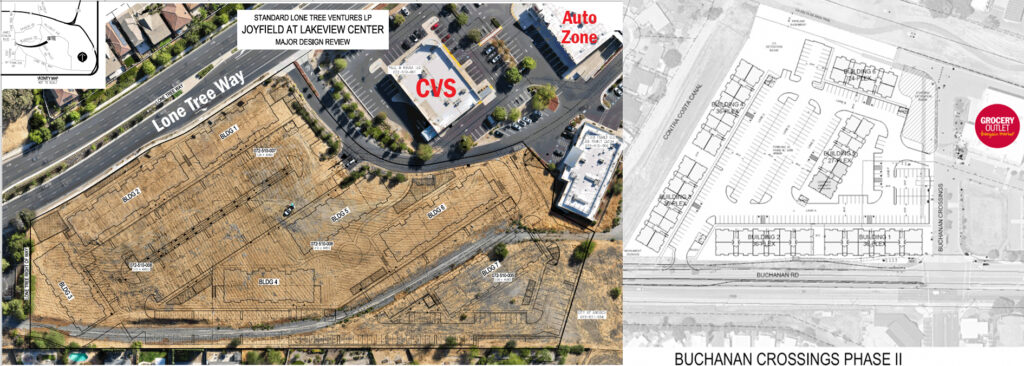
Mayor Bernal then weighed in saying, “My biggest concern with this…is the fact that we’ve been thrown for a loop when it comes to the housing legislation that has come out of Sacramento. We’ve only had two projects approved, we have eight or 10 in the pipeline. We have three-story units going up right in the back of residential on Golf Course Road which is going to be a nightmare firestorm.” He was referring to the Joyfield at Lakeview Center Apartments for extremely-low, very-low and low-income residents.

“So, we don’t even know the impacts of current legislation on our city let alone adding one more moving part to it that’s just going to complicate things,” the mayor continued. “The other part of this, and I keep harping on it, is we need to get our budget under control…in order to know where we’re headed as a city, how we’re going to afford to pay for things like extra staffing.”

“The other thing that has always frustrated me is RHNA (Regional Housing Needs Allocation) numbers are just dumped on us,” Bernal stated. “We’re going after these arbitrary numbers that a group in the larger Bay Area (speaking of MTC & ABAG) has come up with and I don’t know if that’s what’s best for our community.”

“I know it’s what we’re mandated to do but I don’t know if that’s best for our community. That’s where the General Plan comes in and I think that folding this in with the General Plan process…,” concurring with Freitas. “Because what the General Plan process is going to do is tell us how many units we have left in our 25-year building sphere that we’re going to be building, that then we would know how many units we’re going to get out of this. Right now, there isn’t any certainty of that.”

“My point is I think there are a lot more questions than there are answers,” he continued. “I think there are a lot of moving parts, right now, when it comes to Sacramento, development and how it’s going to impact Antioch with so much vacant land and so much residential opportunity, and I just think this would add one more element of complication to it.”

“So, I’m not going to be supportive of moving it to a date certain…because I don’t see the benefit or the purpose of it,” Bernal concluded.

Housing in Land Use Element of General Plan Update Could Be Done in “a Year or So”

Freitas then confirmed with Storer, that the first of seven issues to be dealt with during the General Plan Update is the Land Use Element, which includes housing policy, and said, “Some of the questions we’re all asking…I think we could move that forward…we could bring back the IHO within a year or so for action.”

Bernal then advocated to “bring it back organically when it’s time.”

Freitas then asked City Manager Bessie Scott, “Does the city manager want to offer any words of wisdom?” to which she simply replied, “Um, no,” to laughter from the council members and those still in the audience as it was after 11:50 p.m.

“That’s called a wise city manager,” Bernal stated in jest.

Freitas then made the motion to move the item off-calendar, “with the understanding that the General Plan will prioritize this entire discussion.” Rocha seconded the motion and it passed 4-1 with Torres-Walker voting “no”.

Antioch Water Treatment Plant Superintendent to receive statewide award

Tuesday, March 10th, 2026
Antioch Water Treatment Plant Superintendent Marcus Woodland will be honored next month. Photo: City of Antioch

Marcus Woodland to be honored as Exemplary Operations Supervisor

By Jaden Baird, PIO, City of Antioch

ANTIOCH, CA — The City of Antioch announces that Marcus Woodland, Superintendent of the Antioch Water Treatment Plant (WTP), has been selected by the American Water Works Association (AWWA) to receive the Exemplary Operations Supervisor Award. He will be formally recognized at the Water of the West Conference in San Diego this April.

The award recognizes outstanding leadership, operational excellence, and dedication to public health in water utility operations.

Woodland’s leadership was instrumental during the construction and startup of Antioch’s Brackish Water Desalination Project. Throughout complex upgrades and plant shutdowns, he ensured strict compliance with public health standards, requiring proper disinfection and bacteriological testing before treatment processes were returned to service. His attention to detail and insistence on operational readiness protected both system reliability and water quality for the community.

In one instance, Woodland directed a shutdown and inspection after plant staff noticed abnormal filter flow readings following construction work. A foreign object was discovered lodged in a flow meter, an issue that could have caused long-term performance problems and potential public health concerns if not corrected. His leadership ensured the issue was resolved before the system resumed operation.

Woodland also led improvements that strengthened long-term plant maintenance and reliability. His team implemented design changes to the membrane clean-in-place system to allow multiple tanks to operate simultaneously and accelerated critical repairs to sedimentation basin equipment at Plant B to ensure full treatment capacity during renovations at Plant A.

In addition to operational leadership, Woodland played a key role in hiring, training, and mentoring operators as the facility expanded to include reverse osmosis treatment systems. He worked closely with staff and equipment vendors to ensure operators fully understood new processes and equipment, often requiring additional training to ensure the highest operational standards.

During a complex raw water pipeline tie-in that required the shutdown of both of the City’s treatment plants, Woodland coordinated extensive preparation, including operational testing, distribution system planning, and collaboration with neighboring agencies to secure backup water supplies. His oversight and planning allowed the City to maintain service despite an outage that extended well beyond the planned timeline.

Woodland stepped into the role of WTP Superintendent during the height of the desalination project’s construction—his first appointment as a full-time permanent superintendent. His leadership during this challenging period was widely regarded as a key factor in the project’s successful completion.

“Marcus Woodland’s recognition by the CA-NV AWWA reflects his outstanding leadership and technical expertise,” said Scott Buenting, Director of Public Works. “Marcus has played a pivotal role during the complex construction and startup of the Brackish Water Desalination Project. The success of our Water Treatment Plant is a direct result of his commitment to operational excellence and to providing safe, reliable drinking water to our community. We are proud to see his dedication recognized at the state level.”

The American Water Works Association is an international nonprofit organization dedicated to improving water quality and supply through education, standards development, and professional recognition of water professionals. The Exemplary Operations Supervisor Award honors individuals who demonstrate exceptional leadership in water utility operations and a strong commitment to public service.

Woodland’s recognition highlights the City of Antioch’s continued commitment to protecting public health and investing in reliable, high-quality water infrastructure.

Contra Costa Assessor Kramer won’t seek re-election to 9th term

Saturday, March 7th, 2026
Contra Costa County Assessor Gus Kramer in 2022. Source: Contra Costa County

Announces retirement after 40 years in public office effective Dec. 2026 at end of current term

Supports Assistant County Assessor Vince Robb as his replacement

By Robin Cantu, Assessor’s Customer Services Coordinator, Contra Costa County Assessor’s Office

On Friday, March 6, 2026, Contra Costa County Assessor Gus Kramer announced he would not run for re-election to a ninth term. He first served in public office as the Martinez City Clerk when he was elected in 1986.

The announcement reads, he “will retire from his position as County Assessor in December 2026, concluding more than three decades of dedicated public service to the residents of Contra Costa County

“First elected in 1994, Kramer has been entrusted by the voters of Contra Costa County for eight consecutive terms over the past 32 years. During that time, he has overseen significant modernization and improvements within the Assessor’s Office, working to ensure that property assessments are conducted with fairness, transparency, and efficiency.

“It has been the honor of a lifetime to serve the people of Contra Costa County,” said Kramer. “I am deeply grateful to the voters who placed their trust in me eight times over the past three decades. Their confidence and support have meant a great deal to me throughout my career.”

Kramer also emphasized the contributions of several key members of his leadership team who have played an essential role in strengthening the office’s service to the public. He expressed special appreciation to Vince Robb, Assistant County Assessor; Peter Yu, Assistant County Assessor; and Robin Cantu, Assessor’s Customer Services Coordinator, for their outstanding dedication and leadership.

“Vince Robb and Peter Yu have been exceptional partners in managing the complex responsibilities of the Assessor’s Office, bringing professionalism, expertise, and a strong commitment to public service every day,” Kramer said. “Robin Cantu has also been instrumental in ensuring that our office maintains a high level of responsiveness and service for the public.”

Kramer noted that their leadership—along with the dedication of the entire Assessor’s Office staff—has helped bring the efficiency, professionalism, and public service of the office to an all-time high level.

“I want to thank every member of the Assessor’s Office, past and present, who has worked so hard to serve the residents of Contra Costa County,” Kramer added. “Together we have worked to make the business of property value assessment as simple, transparent, and accessible as possible for the public.”

As he prepares for retirement, Kramer said he is proud of what the office has accomplished and grateful for the opportunity to serve the community.

“Public service has been a privilege, and I will always be thankful for the trust placed in me by the people of Contra Costa County,” Kramer said.

Supports Assistant County Assessor Vince Robb

Asked on Friday if he had groomed someone to take his place, Kramer said, “The Assistant County Assessor, Vince Robb, in my office is a good choice. The other two have never appraised a single property. Nobody has experience or credentials like Vince. He has 20 years’ experience in the Assessor’s Office.”

He was referring to Nick Spinner, whose ballot designation is Senior Systems Engineer in the Contra Costa Elections Division list of candidates for the June 2nd primary election, and Kismat Kathrani, whose designation is Software Technology Entrepreneur.

About Kramer

In the bio on his campaign website which is still up as of Saturday, March 7th, Kramer wrote, “I was born in Contra Costa and raised in East County. My high school was Pacifica High in West Pittsburg (Go Spartans!) and I graduated in 1968.  Back then the area was called West Pittsburg, but now it is called Bay Point. It was a small high school but we played hard in local sports and competed well against larger central county schools.  It closed in 1976 and is now Riverview Middle School on Pacifica Ave. Having a high school of our own, rather than sending kids to Concord or Pittsburg, was a real anchor for the community.

“After high school I attended DVC for a year, then went to mortuary school in San Francisco. Working in mortuary and funeral services is a very specific calling. It is not for everyone, but for those that answer the call it can be fulfilling. It taught me a deep respect for life, caring for the living, and humbleness in the face of the awesome hereafter. Working as an embalmer introduced me to the CC Coroner’s office, and I worked there for several years.  It might be how I keep my sense of humor when things are gloomy.  I continued my education at USF studying public administration at night, while I worked for the county. This began my career in public service.

“I settled and raised my family in Martinez, the County Seat of Contra Costa.  the adopted home town of environmentalist John Muir and the birthplace of baseball hero Joe DiMaggio.  I still live there today.

“Bitten is a strong word for it, so maybe I was nipped by the political bug in the mid-80s in Martinez.  I wanted to be involved in my community, give back, and continue to serve.  I ran for City Clerk and won. As clerk I was not voting on issues like the city council, but I was part of the process and aware of the machinations of local government.  As city clerk I donated my monthly salary to provide scholarships to local students. Education helped my rise up and build a foundation, and I wanted to give back to the community rather than take from it.”

Official County Bio

According to his official 2022 bio on the Contra Costa County website, “Gus grew up in Bay Point, California, and is a graduate of the San Francisco College of Mortuary Science and the University of San Francisco.

His public career in Contra Costa County began in 1974. Kramer embarked on his tenure with the County at the Contra Costa County Sheriff Coroner’s Office, later moving to the Contra Costa County Probation Department, and finally to the Contra Costa County Public Works Department until 1994 when he was elected to the position of County Assessor. In addition to his service to Contra Costa County and its residents, Kramer was also elected to the position of Martinez City Clerk in 1986.

“As County Assessor, Kramer has overseen remarkable improvements to streamline the operations of his office, eliminate backlogs, and achieve higher levels of public service, all while operating substantially under budget.

“The State Board of Equalization acknowledged his office as one of the best managed assessor’s operations in California. Gus Kramer is a member of the California Assessors’ Association and the International Right of Way Association and has more than 43 years as a licensed real estate salesperson.”

He now has 47 years as a licensed real estate agent, Kramer said.

During his work for the County Public Works Department real estate division he shared, “I valued commercial and residential real estate to be purchased for public works projects.”

Future Plans

Asked what his plans are for the future, Kramer exclaimed with a laugh, “I gotta find something to do!”

Seriously, he said he will find something where he can apply his skills, knowledge and experience, probably in real estate.

Just five months on the job City of Antioch’s Community & Economic Development director no longer with City

Tuesday, March 3rd, 2026
Former Antioch Community and Economic Development Director Zach Seal is no longer with the City as of Tuesday, March 3, 2026. Photo source: City of Antioch

Former interim director will return to the position; posting for new assistant city manager will occur soon

By Allen D. Payton

After just shy of six months on the job, the City of Antioch Community and Economic Development Director Zach Seal is longer in the position as of Tuesday, March 3, 2026. As previously reported, he started on Oct. 6, 2025.

When informed of Seal’s possible departure, City Manager Bessie Scott was asked, Tuesday afternoon, if Seal had been terminated and for any details. She did not respond. City PIO, Jaden Baird was asked about the matter, but he was not aware of it and said he would contact Scott.

A portion of the email sent by City Manager Scott to all City employees regarding the leadership change in the Community and Economic Development Department on Tuesday, March 3, 2026. Screenshot courtesy of a resident who chose to remain anonymous.

Then thanks to a resident who shared a copy of it with the Herald at 7:59 PM and chose to remain anonymous, it was revealed that Scott sent the following email entitled, “Staffing Update: Community and Economic Development Department” to “All City Employees” at 5:55 PM:

Hello Team Antioch,

I want to share an important staffing update. As of today, Zach Seal, our Community and Economic Development Director, is no longer with the City. We thank him for his service during the time that he was here and wish him well in his future endeavors.

While leadership transitions are never easy, our focus remains on maintaining continuity in the important work of supporting Antioch’s economic growth and business community. In the meantime, we will be continuing with the ongoing economic development activities that are currently underway while we begin a formal recruitment process for a new Community and Economic Development Director. David Storer will be the Interim Community and Economic Development Director for the time being. 

Economic development remains a top priority for the City. We will continue advancing efforts to attract investment, support local businesses, and position Antioch for long-term economic vitality.

I appreciate the professionalism and dedication our staff brings to this work every day. As we move through this transition, I will keep you informed of next steps in the recruitment process.

Thank you for your continued commitment to serving our community. ~Bessie

Bessie Marie Scott, EMPA, CIG

City Manager

————

However, no announcement was provided to the local media to inform the public.

The following questions were then sent to both Scott and Baird:

“Was he terminated or did he voluntarily resign?

Why after just six months on the job?

Did he not meet expectations?

Was he supposed to accomplish something that he didn’t?

What did he actually accomplish during his brief tenure?”

They were also asked for anything else they could share.

City Limited in What Can be Shared About Personnel Matters

UPDATE 1: In response, Baird wrote, “The City can confirm that Zach Seal is no longer employed with the City of Antioch. As the City Manager shared with staff earlier this evening, we thank him for his service during the time he was here and wish him well in his future endeavors.

“Due to the confidential nature of personnel matters, the City is not able to comment on the circumstances surrounding an employee’s separation, including whether it was a resignation or termination, performance-related matters, or internal discussions.

“Economic development work will continue uninterrupted. David Storer will serve as Interim Community and Economic Development Director while the City begins a formal recruitment process for the position.

“This reflects the information the City is able to provide at this time. Thank you for your understanding.”

Baird and Scott were pressed further and asked, “If he was terminated, did he have a severance clause in his employment agreement, was that triggered and how much is that costing the City?”

New City Attorney Lori Asuncion started on Monday. Asked last week if she had considered, lately hiring an assistant city manager, Scott responded, “Yes! Posting coming out soon.”

Please check back later for any updates to this report.