








Antioch Council approves budget, postpones decision on homeless hotel funds until July 28th
Thursday, June 25th, 2026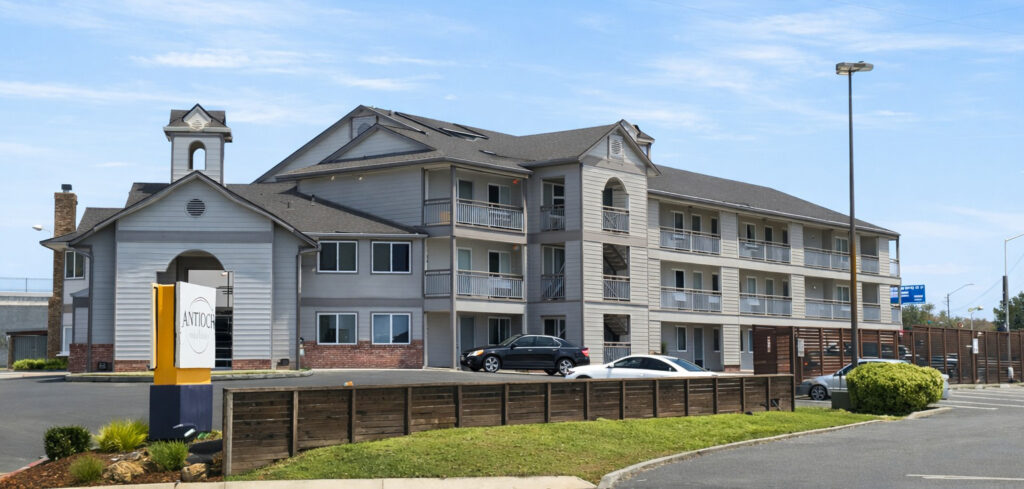
Study Session on Monday, June 29th
Program would spend about $500K to $640K per permanent supportive housing unit
“That hotel is not going to operate as a hotel. It’s going to have a fence around it. People are going to start breaking in and…living there whether you want them to or not.” To her fellow council members: “I have no problem renting vans and dropping people off in front of your homes if we don’t get a solution.”- District 1 Councilwoman Torres-Walker
“I cannot sit here and support committing money we do not have.” – Mayor Ron Bernal
By Allen D. Payton
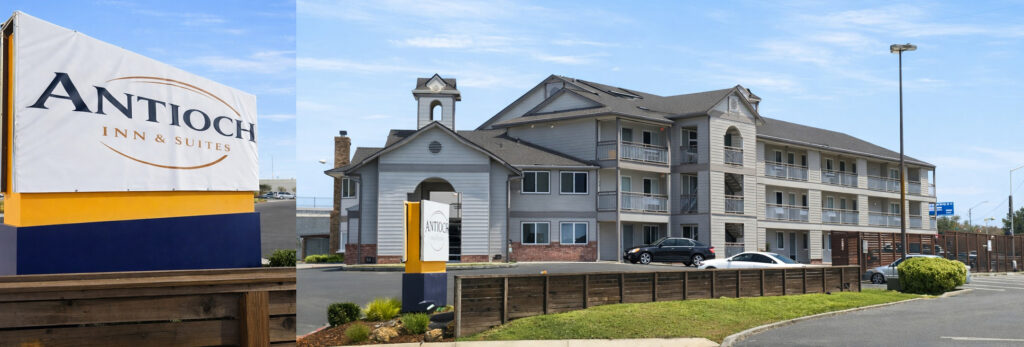
During their meeting on Tuesday night, June 23, 2026, which lasted past midnight, after receiving public comments on both sides of the issue, the Antioch City Council postponed a decision on accepting state funding for the Homekey+ California Supportive Housing (CSH) Mahogany Housing Project. The City would have to commit an initial $750,000 already included in next year’s budget, plus, an additional $1.2 million per year for the next five years. The funds will provide for the acquisition and rehabilitation of the Antioch Inn & Suites, formerly known as the Comfort Inn on Mahogany Way, for approximately 84 to 85 units of permanent supportive housing.
On average, the state and city funds combined would total $41.75 million or about $500,000 per unit over the first five years and approximately $54.4 million or $640,000 per unit over the full 15-year period.
According to the City staff report for Item 9 on this past Tuesday’s agenda, “consistent with the approved Homekey+ application and prior City Council authorization, the City identified a proposed $750,000 contribution to support acquisition and rehabilitation costs associated with the project. The proposed contribution is reflected in the City’s Five-Year Consolidated Plan and Annual Action Plan. Funding for this contribution is included in the proposed FY 2026/27 Housing Successor budget.
Following Council direction at their meeting on May 22, 2025, the City applied for the Homekey+ funding. “The project application assumes ongoing operating assistance averaging approximately $1.2 million annually during the initial five-year period,” for a total of an additional $6 million. “If such funding levels were maintained over the full fifteen-year period, the total potential City contribution could be approximately $18.75 million, from the General Fund.”
“The City would receive the benefit of approximately $34.9 million in State Homekey+ funding,” awarded in May, 2026, “for acquisition and rehabilitation of the project. The City would assume ongoing administrative, monitoring, and compliance responsibilities associated with participation in the program.”
“While the City was a co-applicant and recipient of the award, the City has not executed the Homekey+ Standard Agreement with HCD and has not formally accepted the grant funds. Because the…Agreement has not been executed, the City currently has no contractual obligation to participate in the project. The City would not assume the reporting, compliance, monitoring, or administrative responsibilities associated with the Homekey+ Program.” However, if the Council declines the grant funds, “the City could experience reduced competitiveness for certain future discretionary housing funding opportunities.”
Public Comments
During Public Comments several residents spoke in favor and against the project.
Lynette Clark, who said she’s a 34-year Antioch resident, spoke against the project, specifically its location, regarding “the potential long-term impacts project Homekey could have on Antioch neighborhoods, quality of life and community resources.” She said it “represents a 50-year commitment” and “1.2 million per year. Those funds could be used for youth programs, community services and, yes, economic development.” Clark asked for transparency regarding the results of the “successes and failures of Project Homekey sites throughout California.”
“The proposed location could negatively impact Antioch’s efforts to attract businesses, employers, hotels and redevelopment,” she continued. “It creates a first impression. Economic development depends heavily on public perception, safety, neighborhood appearance and investor confidence.”
“Is this the best location if Antioch’s stated goal is attracting investment, redevelopment and economic growth?” Clark asked.
She mentioned “drug activity, theft, disturbances, increased law enforcement calls” at other HomeKey projects. the facility and her concerns that the Antioch project “will house individuals with significant behavioral health, substance abuse and mental health needs.”
Crystal Law said, “We already spend over $1 million just cleaning up these…encampments and yet, want to argue all this extra stuff. However, when we have people out there, dying in the streets, there’s no question, yes, we absolutely need this site. Yes, we need to do this…for people in the city and the residents of Antioch. But yet, you want to take that $1.2 million…and you want to give it to City employees and incentives. Come on, now. It will help to clean up, down here, it will help to get businesses going…get people off the street…help to get people healthy, again. They’ll have case workers…mental health workers. They’ll have the ability to actually move forward. This is permanent housing, not transitional housing, so, it’s not like they will be in and out and going all over the place.”
A man named Jay who owns the 7-11 store across Auto Center Drive from the hotel said he “invested in here about three years ago. I did everything in my mighty power to clean this place up. It’s turned over a lot, now. But I am, actually, just a little scared of the traffic it’s going to be bringing in. I’m doing everything there in my mighty power every day to stop the theft…get people off that property.” He said, “they give us a hard time” and mentioned “struggling with the turnover. Employees don’t want to work there due to those issues.”
Antioch Police Oversight Commission Vice Chair Devin Williams urged the council to support the project saying, “If we get the…$34 million we can find the solutions. It’s not a complete fix but it’s a start. To turn it away would only put us back more.” He then challenged the mayor and two council members saying, “Ya’ll ran on it in 2024” in last year’s elections. “Ron, you ran on economic development and improvement.
Joe Mitchell said he “is not in support of the project due to the City’s current financial situation” and “the 1.2 million…there’s no guarantee that will cover the support for that facility. You guys had to cut, basically do magic, last year to get the budget down to where it was. Still, we’re facing a $12 million deficit.”
“So, monies that are needed to help the City function, can’t spare anything, right now,” he continued. “Sales tax isn’t going up. Our revenue is not going to go up and we can’t overcommit. I really support efforts to help unhoused folks. But our city can’t afford it. We need a full funded police department. We’re approaching a perfect storm for disaster. So, I think it would be a mistake to make that long-term commitment.”
Both council candidate and former Antioch Police Crime Prevention Commission Chair Sandra White and former Mayor Pro Tem and current Antioch Police Oversight Commissioner Manny Soliz, Jr. spoke against the project. She said, “I am here, tonight to respectfully oppose the proposed HomeKey project because of the financial and public safety challenges our city’s already facing. Antioch is already struggling to provide the level of public safety and city services that residents need.”
She said she’s concerned that, “Antioch taxpayers would pay these costs even though the project will serve unhoused individuals throughout Contra Costa County” and the challenges of the project’s residents “can increase demand on law enforcement…and other City resources.”
“The issue isn’t whether we should we help vulnerable people. The question is whether Antioch…is in the position to take on this additional responsibility, right now,” White concluded.
Soliz said, “I’m speaking on my own behalf as a citizen and long-term resident. I don’t think that the City can afford this program even though I am absolutely an advocate in trying to find a solution and I do have one.”
He suggested spending the money on “the Angelo Quinto program” referring to the City’s Crisis Response Team that’s facing potential budget cuts. Soliz was also concerned the facility wouldn’t just house individuals from Antioch as “they would be coming from anywhere in the county who can qualify to live there. If we’re going to support this as taxpayers let it be for people who are Antioch residents.”
He concluded by saying, “local businesses in the area are up in arms about this project” and “I’ve also heard that there’s a possibility the owner of the property may be having some financial difficulties. You need to look into that.”
A man named Ahmad spoke next saying, “This is a difficult decision for the community. These are the things we actually want to fund that are going to better the people that are living in the city, that are coming to live in the city. I believe people will get out of the situation that they’re in then, begin to sort of pay it forward.”
“I know there’s going to be a lot of work…I’m willing to help,” he concluded.
Additional residents, including local homeless advocates Nichole Gardner and Andrew Becker, who gave impassioned speeches, spoke in favor of the project. He concluded by saying, “Those 84 individuals represent 33 percent of your unhoused community.” Becker also offered to answer any questions from the council members saying he had been involved with and working on the project “for six years” and pointed out its developer wasn’t invited to attend the meeting nor was informed of it by City staff.

Council Discussion & Decision to Postpone
However, after hearing from residents the council members chose to postpone the item until their July 28th meeting.
During their discussion, District 1 Councilwoman Tamisha-Torres Walker, who represents the part of the city the project is planned for, spoke first saying, “Whether we accept or reject HomeKey tonight, like, these political stances on poor, hurting people, it doesn’t hurt me. You’re not going to prevent me from getting a win. This is not what this is about. The biggest challenge I’m having is that we have been waiting 18 months for the mayor to come back with an ad hoc committee to talk about solutions to homelessness and it still has not come back to this council.”
“You want to show up against the solution when you don’t have none,” she continued. “There’s a claim this is not a great location. What is it going to look like for people driving into the city? I can tell you what it look like because I drove around and took pictures myself just so I could be reminded of what it looks like.”
Torres-Walker spoke of fires in empty buildings where homeless Antioch residents locate for shelter.
“No one’s being bussed in here from San Francisco. I have talked to people who said they have lived on the streets in Antioch for 30 years,” she stated. “They grew up here. They mama, here, their cousins, here, they brothers, they aunties and uncles. These are not strangers to Antioch.”
Torres-Walker then spoke of the food giveaways in Antioch to people who have nowhere to cook and it ends up on the street and residents complain about dirty streets.
She spoke of the impacts on business saying, “The business owners that’s calling me are tired of stepping over people every morning just to open up their store fronts. Having to clean feces and urine out from in front of they stores, before they can invite anybody in. They know the City isn’t going to anything about them…so, they feed them themself, they feed them themself, and they move them along so they can do business then let them come back at night because there’s no real solutions.”
“The Executive Inn, I wasn’t a big supporter initially,” Torres-Walker continued speaking of the City’s first homeless hotel. “I was also afraid it was going to create unsafe conditions in the community. But having Opportunity Village (at the hotel) on Cavallo and East 18th has actually made it better. The resources are there, the structure is there and people are getting served.”
“Schools have come here and said people are camping by the schools and we feel unsafe with all of this activity. Help us,” the councilwoman stated. “They haven’t gotten any help. Churches are asking for help as they’re helping and they haven’t gotten any help.”
She then spoke of homeless encampments being visible along the railroad tracks when people drive on L Street and then mentioned “bussing people to (Council) District 4 and District 3 and dropping them off, there so then you could see it because District 2 and District 1, we have to see it, deal with it and navigate around it and find solutions every day that aren’t even supported by this city. I’m just trying to figure it out like everyone else is,” Then speaking of the annual financial commitment Torres-Walker then said. “We have 13 months before the first payment is due for wrap-around services and it’s up to 1.2 million not even the potential of the full cost. But because you want people to fearmonger you, based on a budget rather than not having lazy politicians that don’t want to do the work to figure out how we do cover the costs while reducing the burden on the General Fund just baffles me.” Actually, the staff report reads “averaging approximately $1.2 million” but staff later clarified the amount of the City’s annual commitment.
“Because we can get creative,” she continued. “We have the CDBG (federal Community Development Block Grant fund allocations) coming up for a new five-year cycle. There’s housing and homelessness funds in there. If we can give over one million of that money to outside organizations to help with homelessness that aren’t even based in Antioch, we could give that money to this project.”
“All we’ve been hearing for 18 months is regional conversations,” Torres-Walker stated taking swipes at the mayor. “I haven’t heard one report from a regional conversation, yet where we could find out regionally how if every city is willing to kick in. But you have 13 months to do it. County conversations…you just complain about how the County doesn’t support but you never reach out to anybody in the County. You know how I know that? Because I’ve reached out to them. You know how I know the mayors of Brentwood, Pittsburg and Oakley have not been called…about regional efforts? Because I’ve talked to them.”
“You’re saying what you don’t want to see, that building is going to be blighted,” the councilwoman stated. “That hotel is not going to operate as a hotel, I’m not going to say forever, but for many years after this. It’s going to have a fence around it. People are going to start breaking in and people are going to be living there whether you want them to or not with no resources, no wrap-around services.”
“It’s not illegal to be unhoused but it should be illegal to allow people to be unhoused,” she continued. “So, this might not be the solution. But I haven’t heard one. We have people up here who got elected because they said they would address homelessness. We’ve been waiting 18 months.”
Torres-Walker then offered a suggestion from a member of the community to not reject the HomeKey+ fund but table the discussion until the next council meeting “to give those who actually want to do the work an opportunity to figure out how to relieve the burden off the General Fund.”
She then concluded her remarks by issuing a threat saying, “I’ve said this to the Council. I have no problem renting vans and dropping people off in front of your homes if we don’t get a solution.”
District 2 Councilman Louie Rocha weighed in next saying, “That’s tough to follow” and asked questions of staff of “when does the actual General Fund dollars of up to 1.2 (million) have to be kicked in to move forward” and “if this city council chooses to move forward what happens in four years when another city council chooses not to?”
Community Services Department Director Monseratt Cabral responded, “The 1.2 would happen next year. Right now, we’ll use the 750,000 (dollars) to acquire and then moving forward, 1.2. Why it’s up to 1.2 is because it’s 1.2 for the first five years, then in year six it drops down to 750 or 800,000 for the next three or four years. So, it fluctuates to the maximum of 1.2 until the year 16.”
“I’ve heard there’s a timeline for construction,” Rocha stated. “One of the things I definitely have supported this from the beginning on the application not knowing where we’d be in the budgetary process. We just overcame $54 million from our General Fund over the last two years. But looking forward, it’s like we’re faced with another $54 million or so the next three. So, if we move forward with this…something has to go along the way. I’m just talking about services and programs we may not be able to afford moving forward. It’s going to come at a cost of some General Fund dollars and services. I just want to make that clear.”
Torres-Walker responded, “A lot of the programs people have been advocating for are funded by outside funds, anyway. I think what the community is saying, the concern around sleight of hand…where we’re going to say we can’t afford this 1.2 million annually for this but then we add eight more police officers to the budget…and we’re still in discussion about COLA’s (Cost of Living Adjustments for City staff).”
“HCD (CA Department of Housing & Community Development)…nobody has even talked to the state about what’s going on. We’re just ghosting the state,” she continued then reiterated using CDBG funds to cover the $1.2 million annual cost over the next five years.
“I’m just trying to look at how we can best be stewards of our General Fund and continue to strive to meet the needs of our community,” Rocha stated.
District 4 Councilwoman Monica Wilson spoke passionately, as well, saying, “Thank you to those who have been in our ears for years. The housing alone isn’t enough. But services without stable housing are often not enough, either.”
She concluded by saying, “I’m in agreement if we pass on this the state will not look favorably on us in the future. The state’s going to be like, ‘You know what? Antioch is not that serious.’ I’m going to leave a comma there because I know this discussion is a never-ending one. But I’m going to leave it right there.”
The Council then voted to extend the meeting to 1:00 AM.
Mayor Ron Bernal spoke next saying, “This is obviously a very emotional subject because we’re dealing with…vulnerable people. There’s a need to fund whatever we do in this city. Stepping into a $54 million deficit with no regard to how we were going to sustain it, except we were going to ask for more money from some other agency. The feds aren’t giving it to us. The state isn’t giving it to us. The County has a failed bond measure because they can’t afford to do what they’re doing. (It was actually 0.625% sales tax on the June ballot as Measure B which failed). So, we’ve been working for the past year-and-a-half to get that $54 million two-year deficit…down to $4.5 million this year. When this came before us last May when this came before us, we had a $13 million deficit, and I was the only “no” vote on it…because we could not afford it. This was one more unfunded mandate that we were taking on that we couldn’t afford.”
“We’ve had a year to go talk to County, to talk to our neighbors and to everybody else and nothing has happened,” he stated. “So, here we are today saying we need to go out and talk to everybody and figure out how we’re going to get help on this thing. So, the bottom line is, we are facing next year…I’m just talking about money because that’s what this is, for me, right now. We can’t afford this.”
“Next year it goes back up to $14 million without cost of livings, getting our contracts up to date,” Bernal continued. “It’s probably close to $16, $17, $18 million deficit. That’s a million-and-a-half dollars a month we’re going negative in this city. We cannot afford or sustain that. So, to take on…up to $1.2 million per year for up to 15 years, that’s our maximum commitment. I cannot sit here and support committing money we do not have as we sit here. No matter how important the issues are, we can’t spend, I cannot, in good conscience, spend money that we do not have and hope that we’re going to get money down the road through grants and different things.”
“We spent…$6.8 million in (state) ERF…Encampment Resolution Funding, to house 30 to 50 individuals…moving them from the encampment…into the interim housing and into permanent housing with all the support services,” the mayor explained. “That’s happened in the last year. Our Point-In-Time Count numbers (of homeless residents) went from 240 to 250 last year. That $6.8 million investment did not result in our numbers coming down.”
“We are no closer to answering our financial problems,” he continued speaking of all the unfunded projects such as roofs and liabilities. “I just need to keep us focused on the finances of this. Our revenues are going up $300,000 in two years. That is not enough money to fund all the things we need to do in this community and to keep ourselves going with a vibrant staff that’s going to support all the things we want to do. It’s not going to be able to help us jump start economic development that we desperately need to do. We’re in a tough spot. I’m gonna admit that.”
“But by spending or investing up to $1.2 million for up to 15 years plus, 750 that’s going to have to come from somewhere, hopefully, CDBG, I cannot vote for that, as good of a cause as this project may be. Because I don’t’ believe we can sustain that,” Bernal concluded.
Mayor Pro Tem and District 3 Councilman Don Freitas spoke last saying, “I did ask for this to come back to the council for reconsideration. I voted for this and as we moved off from that original vote, the problem I have with this project is the rumors, the hearsay, the finger pointing, people accusing, people ripping us to pieces in public, making false accusations, lies, distortions and on and on.”
“After I approved it, come to find out, 85 of the units are for housing for the unhoused,” he stated. “The other 40 units…will be for retail. And so, this is a problem. Staff says one thing to us, Andrew Becker says another thing to us, and we’re standing there saying, ‘what’s true? What’s accurate? What’s factual?’ And for 18 months…we don’t know everything. How many times have we asked, ‘what is happening?’ Does it impact the grant?’ We’ve asked this question for months and we still don’t have an answer.”
“Why I brought this back is so, each and every one of us has a legal, fiduciary responsibility,” Freitas continued. “What’s the next step? And I don’t think my questions are out of line. I will not support something without knowing the facts. And I would say to each one of us on this council it is wrong to approve something.”
“We should care for the for the worst. We should provide housing and food and shelter education,” he said. “But there is something that we are responsible for and that is the budget. It looks like we are going to start July 1, 2027, with at least a $15 million budget deficit and…we only have a $100 million budget. That’s 15 percent. So, what department are we cutting out? Our quality of life will deteriorate and deteriorate.
“This is not a simple solution,” the mayor pro tem stated. “But I suggest before anybody makes a decision we have to…get the factual answers. This will not solve all the homelessness issues in Antioch. Let’s not kid ourselves. It may be a step forward but it’s not going to resolve anything. This is frustrating. We’ve been dealing with this for 18 months and frankly, I think we’re more confused with where we’re at and where we’re going. And the $1.2 million does not include all the administrative issues the staff has articulated. So, let’s be real about that.”
“If I had to vote, now I would vote not to go forward because I don’t have the answers to my questions and I am frustrated,” Freitas reiterated. “The human stories, the emotional stories, the tear-jerk stories, they’re real and I see it every day in this city.” Then choking up he continued, “and it tears my heart out. But I do not want to make a problem worse for our community. We are trying to respond to this issue as best we can and unfortunately, our best is not good enough for the last 18 months.”
“So, my issue is to give this one month and bring this issue back,” the councilman said, agreeing with Torres-Walker. “If the vote was tonight, I would vote to rescind. But I believe in hope and without hope, why live? This is not right for prime time. Let’s face it, it’s always an issue of money. I think it’s an obligation to move forward in a responsible manner and we’re not there.”
Torres-Walker then said, “There are deadlines and some we missed and the council was not informed of.” She reiterated the proposal to postpone the discussion and decision until the next meeting, which will be held on July 28th, and made a motion to that end. Before it was seconded, Freitas then asked to have an informal discussion with the developer and state representatives present and suggested a council meeting next week for a “round table”. Rocha suggested a study session. Acting City Manager Ana Cortez agreed and said she would reach out to each of the parties.
Director Cabral said there is a deadline, but Cortez said she didn’t see any deadline in the correspondence she had received.
Torres-Walker added to her motion to hold the study session next Monday, June 29th at 6:00 p.m.
She invited the property owner who was in attendance to speak.
He offered additional details saying, “The owner spent $40 million. The asset has not stabilized. After COVID it…is going downhill.”
In 2024, the property went into foreclosure. The same owner got it back with a different lender,” he explained. This property has had a history of financial challenges.”
“Interest rates for hotels are 10.5% to 12%. Insurance has trickled up. And the clientele we’re getting is not more than $100,” he stated.”
“In May 2025, once the resolution is passed by City it is awarded and the non-profit acquires. I have not heard that once it is awarded it comes back to council for approval. In December of 2025, the Comfort Inn flag was deflagged. It’s almost $3 to $4 million investment into the property again.
Right now, there is a notice of default filed. It is not in foreclosure. So, I think it will not be a problem. I can be there on Monday to answer your questions.”
“The problem is you said, ‘I think’,” Freitas said. “We need the city attorney to advise us.”
“I think there are philanthropic funds out there to get this project to the finish line,” the property owner added.
Freitas then seconded the motion to postpone the discussion and decision until July 28th and hold the study session next Monday at 6:00 p.m. and it passed 5-0.
See Mahogany Housing Project 6/23/26 agenda item details and see 4:41:15 mark of the Council meeting video.
Approves FY26-27 and Revised FY25-26 City Budgets
Then, on quick motions and votes without any member of the public wishing to speak or comments from the members, the Council unanimously approved, under Item 5, the one-year operating budget for fiscal year 2026-27 and revised the fiscal year 2025-26 budget and under Items 6 and 7, adopted the fiscal year 2026-27 budgets and revised the fiscal year 2025-26 budgets for the City of Antioch as Successor Agency and Housing Successor to the Antioch Development (redevelopment) Agency and the Antioch Public Financing Authority (APFA).
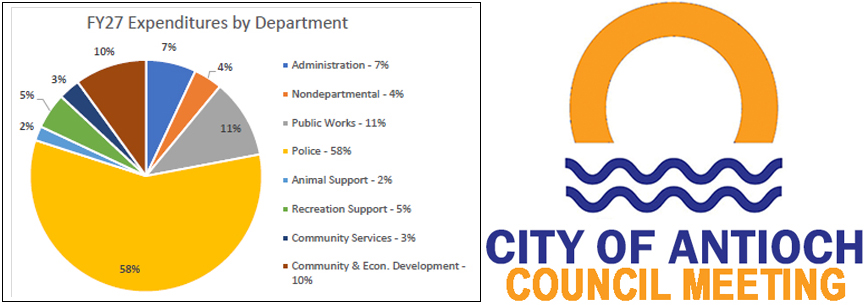
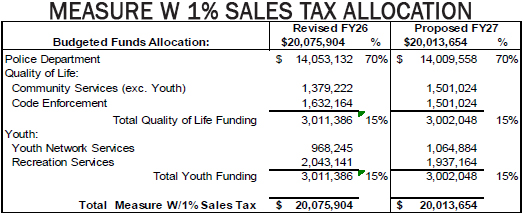
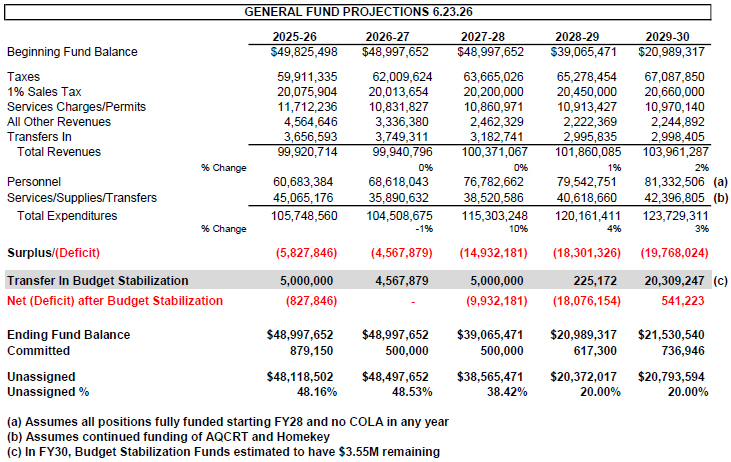
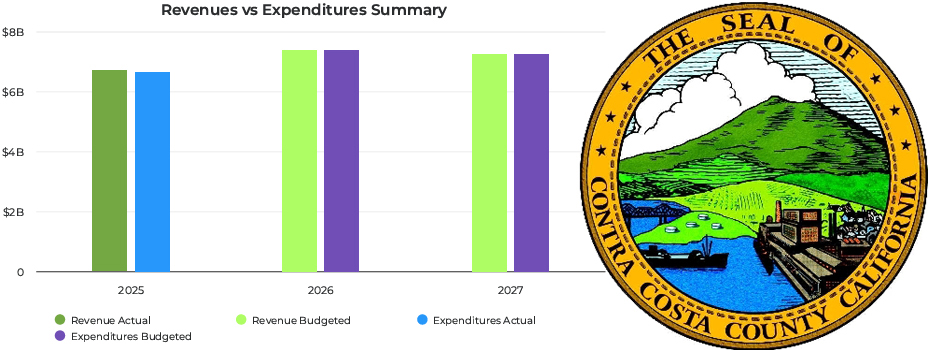
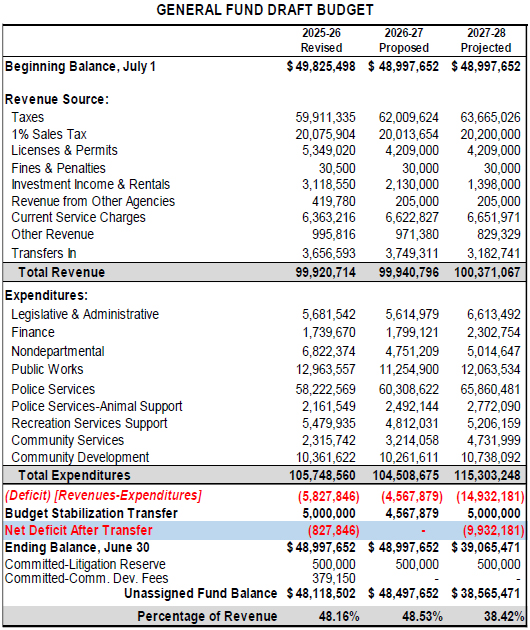
As previously reported, “the fiscal year 2026-27 General Fund budget ended with a net deficit of $4,567,879 which was offset by a transfer from the Budget Stabilization Fund. According to the City staff report, the Council and staff worked to make $7,315,199 in “true” adjustments to the budget, after the City faced nearly a $12 million deficit.
According to the staff report, the Antioch Development Agency (Agency or ADA) was formed June 25, 1974, for the purpose of renovating (redeveloping) designated areas within the City limits. Project areas were designated to receive tax increment funds based on redevelopment formulas. The redevelopment funds were targeted for slum and blight areas. There are currently four former redevelopment areas in Antioch encompassing 2,082 acres, which is 11.6% of the City’s incorporated area.
According to the State Department of Finance, “As part of the 2011 Budget Act, and in order to protect funding for core public services at the local level, the Legislature approved the dissolution of the state’s 400 plus RDAs. RDAs were officially dissolved as of February 1, 2012,” and “property tax revenues are now being used to pay required payments on existing bonds, other obligations and pass-through payments to local governments.”
The City of Antioch elected to become the Successor Agency and Housing Successor to the Antioch Development Agency.
The APFA is a joint powers authority created between the City of Antioch and former Antioch Development Agency as a financing mechanism for real and personal property and improvements. The funds of the APFA are included in the budget document starting on page 304.
Funds of the Successor Agency and Housing Successor encompassing obligations listed on the Recognized Obligation Payment Schedules are included in the budget document starting on page 308.
See 2026-27 Budget.
The Council meeting adjourned at 12:34 AM.