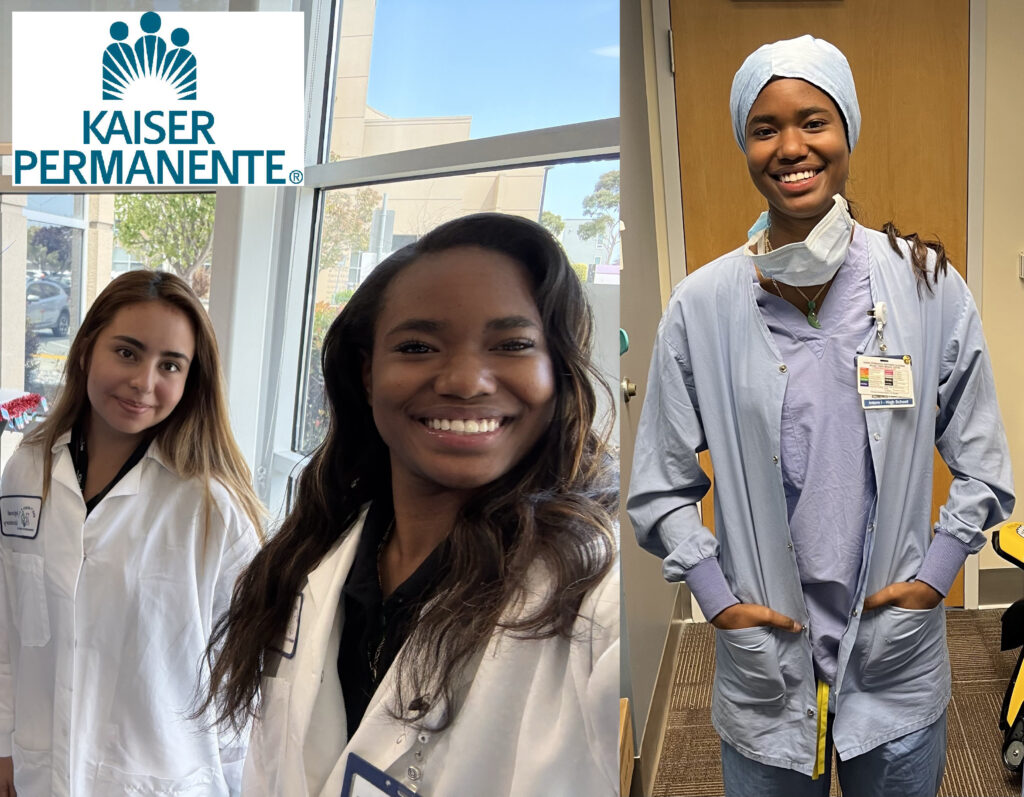
KP LAUNCH Program Coordinator Stephanie Ponce with Summer Intern Jessica Chambers and Jessica in her scrubs at Kaiser Permanente Antioch Medical Center. Photos: Kaiser Permanente
Including Antioch resident, an LMC student
By Elissa Harrington, Senior Media Relations & Public Relations Representative, Kaiser Permanente Northern California
Stephanie Ponce, an Antioch resident and student at Los Medanos College in Pittsburg, spent her summer interning at the Kaiser Permanente Antioch Medical Center.
She applied for the eight-week paid summer internship program, earning $25.09-$29.16 per hour, after taking a college course that piqued her interest in medicine.
“This is an amazing opportunity to see if health care is for you,” said Ponce. “There are many jobs in health care that aren’t just working with patients, but also administrative roles.”
Ponce is one of more than 300 interns who participated in Kaiser Permanente’s KP LAUNCH program. The paid internship gives high school and college aged students exposure to careers in health care at Kaiser Permanente hospitals and medical offices. They learn practical skills and receive mentoring from health care professionals.
Ponce said she did administrative work and had the chance to shadow pediatric nurses. She watched one nurse help a child who was scared to get a shot. “I saw how she comforted the patient during a shot. She stayed there, talked to them, and explained what the medication was and how it was going to work.”
Jessica Chambers is a Program Coordinator for the KP LAUNCH program at the Antioch Medical Center. She helped with scheduling and coordinated with the departments on how to provide opportunities for the interns to learn and grow.
“We educated the interns on a variety of different topics,” said Chambers. “We have different people who come out and tell them a little bit about their departments or their jobs.”
Chambers said it was important to keep the interns engaged every day and provide them with opportunities to develop their skills. “We gave the interns an opportunity to see what it looks like in real life. We also had a variety of different guest speakers, because every journey is not the same,” she said.
Ponce said she has always loved helping people, and this internship confirmed she’s on the right career path: “It reinforced my love for health care and doing a people-facing job like this.”
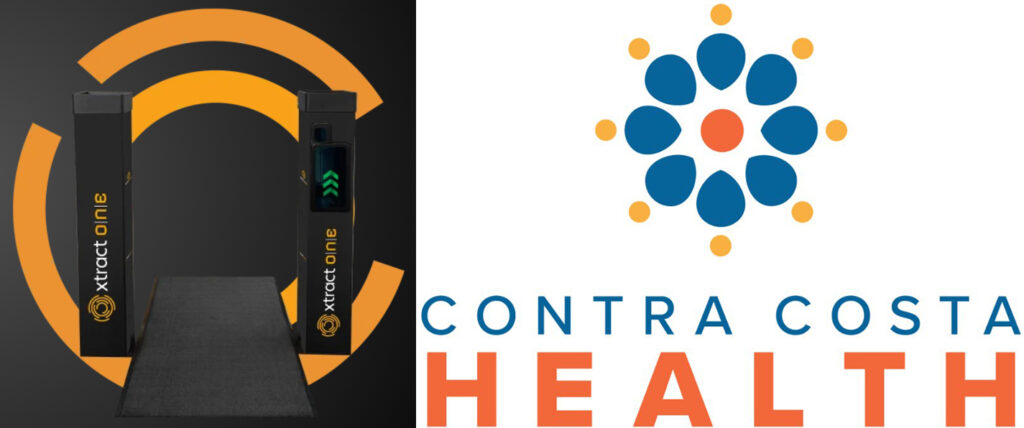
The SmartGateway weapons detector. Graphic source: Xtract-One
Adopts AI-powered weapons detection at medical facilities ahead of state law compliance deadline
By Kristen Aikey, JMG Public Relations
Toronto, ON –Xtract One Technologies(TSX: XTRA)(OTCQX: XTRAF)(FRA: 0PL) (“Xtract One” or the “Company”) announced recently multiple SmartGateway deployments across California healthcare facilities, reflecting growing demand from health systems across the state ahead of the March 2027 compliance deadline for California Assembly Bill 2975. Deployments are underway at Contra Costa Health in Martinez and Hazel Hawkins Memorial Hospital in Hollister, with expected completion by mid-August, in addition to the previous San Mateo Health deployment.
AB 2975 requires hospitals across California to implement enhanced security measures at high-traffic public entrances by March, 2027. The mandate reflects a broader recognition among healthcare administrators and state regulators that emergency departments and other public-facing hospital entrances require dedicated screening to protect staff and patients from weapons-related violence.
“California health systems are making real procurement decisions right now, and the facilities selecting Xtract One are doing so because the technology fits the environment,” said Peter Evans, CEO of Xtract One. “SmartGateway was built for high patient and visitor volumes, diverse populations, and clinical staff who need to focus on care. What we’re seeing across Hazel Hawkins, Contra Costa Health, and San Mateo – and more broadly with healthcare systems in general – is that once an organization sees accurate, high-throughput detection running in a real hospital environment, expanding the solution across the facility becomes an obvious next step.”
Xtract One’s presence in California healthcare predates the AB 2975 mandate. San Mateo Medical Center deployed SmartGateway at its main campus in 2025 following extensive testing of available solutions, with plans to expand to all satellite clinics. The Contra Costa Health deployments build on that established footprint as health systems across the state accelerate their procurement timelines ahead of the March 2027 deadline.
Xtract One’s SmartGateway is designed specifically for high-throughput environments with lower volumes of personal belongings. The system identifies concealed guns and knives while allowing individuals to walk through at a natural pace without divesting personal items, distinguishing it from traditional walk-through metal detectors that alert broadly on any metal object. For healthcare environments where speed and accessibility are
Contra Costa Health, Martinez, CA
Contra Costa Health has also selected three SmartGateway systems for deployment across its main entrance, emergency department, and psychiatric entrance in the primary hospital facility. The deployment is driven by a clear security mandate of detecting and intercepting firearms and bladed weapons before they reach clinical environments. Contra Costa Health has prioritized detection accuracy above all other operational considerations, implementing a bag check protocol alongside SmartGateway screening at its main entrance to ensure the most thorough possible security posture across all three entry points.
Xtract One Technologies is a leading technology-driven provider of threat detection and security solutions leveraging AI to deliver seamless and secure experiences. The Company makes unobtrusive weapons and threat detection systems that are designed to assist facility operators in prioritizing- and delivering improved “Walk-right-In” experiences while enhancing safety. Xtract One’s innovative portfolio of AI-powered Gateway solutions excels at allowing facilities to discreetly screen and identify weapons and other threats at points of entry and exit without disrupting the flow of traffic. With solutions built to serve the unique market needs for schools, hospitals, arenas, stadiums, manufacturing, distribution, and other customers, Xtract One is recognized as a market leader delivering the highest security in combination with the best individual experience. For more information, visit www.xtractone.com or connect on Facebook, X, and LinkedIn.
About Contra Costa Health
Contra Costa Health is the integrated public health system serving Contra Costa County. The system operates a network of hospitals, clinics and public health programs serving hundreds of thousands of residents across the county, with a focus on accessible care for all community members regardless of ability to pay. For more information, visit www.cchealth.org.
About Threat Detection Systems
Xtract One solutions, when properly configured, deployed, and utilized, are designed to help enhance safety and reduce threats. Given the wide range of potential threats in today’s world, no threat detection system is 100% effective. Xtract One solutions should be utilized as one element in a multilayered approach to physical security.
Forward Looking Statements This news release contains forward-looking statements within the meaning of applicable securities laws. All statements that are not historical facts, including without limitation, statements regarding future estimates, plans, programs, forecasts, projections, objectives, assumptions, expectations or beliefs of future performance and customer contracts, are “forward-looking statements”. Forward-looking statements can be identified by the use of words such as “plans”, “expects” or “does not expect”, “is expected”, “estimates”, “intends”, “anticipates” or “does not anticipate”, or “believes”, or variations of such words and phrases or statements that certain actions, events or results “may”, “could”, “would”, “might” or “will” be taken, occur or be achieved. Such forward-looking statements involve known and unknown risks, uncertainties and other factors that may cause actual results, events or developments to be materially different from any future results, events or developments expressed or implied by such forward looking statements. Such risks and uncertainties include, but are not limited to, the risks detailed from time to time in the continuous disclosure filings made by the Company with securities regulations. These factors should be considered carefully, and readers are cautioned not to place undue reliance on such forward-looking statements. Although the Company has attempted to identify important risk factors that could cause actual actions, events or results to differ materially from those described in forward-looking statements, there may be other risk factors that cause actions, events or results to differ from those anticipated, estimated or intended. There can be no assurance that forward-looking statements will prove to be accurate, as actual results and future events could differ materially from those anticipated in forward-looking statements. The Company has no obligation to update any forward looking statement, even if new information becomes available as a result of future events, new information or for any other reason except as required by law
U.S. News & World Report’s annual study rates Kaiser hospitals among nation’s best for providing high-quality, specialized care
Antioch ranked Best Regional Hospital and among best in state
By Elissa Harrington, Senior Media Relations & Public Relations Representative, Kaiser Permanente Northern California
OAKLAND, CA – Kaiser Permanente Northern California’s hospitals are nationally recognized as “high performing” for treating complex medical conditions and procedures including congestive heart failure, pneumonia, and stroke.
U.S. News & World Report’s 2026-2027 Best Hospitals annual study rates Kaiser Permanente Northern California hospitals as among the top 30% of hospitals in the nation for at least one of the 37 measures evaluated.
Approximately 4,500 hospitals participated in the study, which analyzes performance in 14 specialty care areas and 23 procedures and conditions. The “high performing” designation honors those hospitals that deliver high-quality care when treating complex medical conditions, including congestive heart failure, pneumonia, colorectal cancer surgery, stroke, and diabetes.
Kaiser Permanente hospitals are consistently recognized as among the top hospitals in the nation for providing high-quality, safe patient care that leads to improved health outcomes.
“Kaiser Permanente continues to be a national leader in preventing disease, providing world-class treatment, and using evidence-based research to help our patients and members live longer and healthy lives,” said Mike Bowers, FACHE, president of Kaiser Permanente’s Northern California region. “Our clinicians and staff are delivering exceptional care to our patients every day getting them the right care when they need it.”
Top hospitals in California
Eight Kaiser Permanente Northern California hospitals are designated by U.S. News & World Report as “Best Regional Hospitals” and are ranked among the best in the state: Antioch, Richmond, Oakland, San Francisco, San Jose, Santa Clara, Roseville and South Sacramento.
Three Kaiser Permanente hospitals are also ranked among the top 50 in the nation for providing high-quality specialty care:
San Francisco is ranked 34th for cardiology, heart and vascular surgery
Santa Clara is ranked 42nd for cardiology, heart and vascular surgery
Vallejo is ranked 45th for rehabilitation
Kaiser Permanente Santa Rosa is also rated high-performing nationally for its geriatric care.
“Everything we do is centered around making sure our patients receive high-quality and high-value care,” said Maria Ansari, MD, FACC, chief executive officer and executive director of The Permanente Medical Group. “This recognition underscores the strength of our integrated model and the dedication of our physicians, nurses, and care teams, who provide compassionate, evidence-based care for our members and patients every day.”
In its hospital analysis, U.S. News & World Report uses publicly available data such as volume, mortality rates, infection rates, staffing levels, and patient satisfaction rates, among other factors.
The annual ratings and rankings are designed to help patients make informed decisions about where to receive care for challenging health conditions or elective procedures.
About Kaiser Permanente
Kaiser Permanente is committed to helping shape the future of health care. We are recognized as one of America’s leading health care providers and not-for-profit health plans. Founded in 1945, Kaiser Permanente has a mission to provide high-quality, affordable health care services and to improve the health of our members and the communities we serve. We currently serve 12.9 million members in 9 states and the District of Columbia. Care for members and patients is focused on their total health and guided by their personal Permanente Medical Group physicians, specialists, and team of caregivers. Our expert and caring medical teams are empowered and supported by industry-leading technology advances and tools for health promotion, disease prevention, state-of-the-art care delivery, and world-class chronic disease management. Kaiser Permanente is dedicated to care innovations, clinical research, health education, and the support of community health. For more information, go to about.kp.org.
Advice from pediatric experts across Sutter Health on helping children and teens thrive this school year.
By Monique Binkley-Smith, Manager, Media Relations, Sutter Health
The countdown to a new school year has begun. For many families, that means shopping for supplies, filling out forms and preparing for busy schedules. It’s also the perfect time to reset healthy habits.
Pediatricians across Sutter Health share 11 back-to-school tips to help children and teens stay healthy, focused and ready to learn.
Start adjusting sleep schedules now
One of the biggest mistakes families make is waiting until the night before school starts to reset bedtime.
“As the school year approaches, it’s time to start adjusting your sleep routine,” says Dr. Dan Brennan, Greater Central Coast Children’s Service Line medical director with Sansum Santa Barbara Medical Group in Santa Barbara. “In the weeks leading up to the start of school, start moving bedtime up by 15 minutes a night until you get to the expected school-year bedtime.”
Know how much sleep children really need
Adequate sleep helps regulate metabolism, maintain a healthy weight, promote positive mood and behavior, and support memory retention and mental alertness needed for academic success, says Dr. Jessica Tsai, with Sutter East Bay Medical Group in Antioch.
Dr. Rakhi Mehrotra, with Palo Alto Foundation Medical Group in Livermore, also recommends helping kids and teens stay on track by keeping the same bedtime and wake-up time every day, including weekends.
Drs. Tsai and Mehrotra recommend the following hours of sleep by age:
• Preschoolers: 10-13 hours daily, including naps
• Children age 6-12: 9-12 hours nightly
• Teens: 8-10 hours nightly
Fuel kids for learning and growth
Healthy eating habits help children get the nutrients they need for energy, growth, focus and overall well-being, according to Dr. Mehrotra.
She recommends:
• Starting the day with breakfast
• Eating a variety of fruits, vegetables, whole grains, protein and dairy each day
• Choosing colorful fruits and vegetables throughout the week
• Filling half the plate with fruits and vegetables, one-quarter with whole grains and one-quarter with healthy protein
• Choosing healthy snacks such as fruit, yogurt, nuts, vegetables and whole-grain options
Make water the beverage of choice
Hydration becomes especially important as children spend more time outdoors and return to sports.
“With kids outside more, we want to encourage families to provide as much hydration as possible, water being our first choice,” explains Dr. Brennan.
Sugary and caffeinated beverages should be avoided. Caffeinated beverages work against hydration and generally lead to more dehydration, he notes.
Encourage kids to get moving
Physical activity supports both physical and mental health.
“Whether it’s organized sports, riding bikes, walking the dog or playing at the park, daily physical activity supports both physical and mental health,” says Dr. David Tejeda, with Sutter West Bay Medical Group in San Francisco.
For children interested in organized athletics, Dr. Brennan suggests recreational sports leagues and individual activities such as swimming, running, biking, gymnastics, and rock climbing.
Avoid specializing in one sport too soon
Playing the same sport year-round may sound like a path to success, but pediatricians often see the downside.
“I discourage my pediatric patients from specializing in one sport too early,” emphasizes Dr. Brennan. “High-level athletes benefit from cross training that comes with playing a variety of sports.”
He notes that children who play one sport year-round can develop chronic overuse injuries.
Prepare young athletes before the season begins
As children return to practices, tryouts and games, Dr. Anita Juvvadi, with Sutter West Bay Medical Group in San Francisco, encourages families to focus on the basics:
• Increase activity gradually before organized practices begin
• Stay hydrated throughout the day
• Prioritize consistent sleep
• Eat enough to support increased activity
“The body needs time to acclimate to new movement and sustained activity,” she says.
Warm up the right way
Before sports and physical activity, Dr. Liang Xue, with Sutter East Bay Medical Group in Brentwood, recommends active, dynamic warm-ups rather than static stretching.
Dynamic warm-ups use movements such as jogging, skipping, lunges and arm circles to increase blood flow, raise body temperature and prepare muscles and joints for activity.
In contrast, holding static stretches before exercise may temporarily reduce strength and power. Saving static stretching for after activity, when muscles are warm, can help improve flexibility and support recovery.
Protect growing bodies and brains
Protective gear matters, according to Dr. Brennan.
“A helmet when riding a bike, skateboard, or scooter can protect that precious brain, and don’t forget to buckle the helmet,” he advises.
He also cautions parents about e-bikes and electric scooters, which account for a growing number of serious injuries, emergency room visits and hospitalizations.
“When possible, skip the electric version and stick to good old-fashioned pedaling,” he says.
Know the signs of concussion
As children return to school sports, parents should familiarize themselves with concussion symptoms.
Dr. Angela Lumba-Brown, a pediatric emergency medicine physician with Palo Alto Foundation Medical Group in Palo Alto, reminds parents to watch for:
• Worsening headaches
• Repeated vomiting
• Balance problems
• Seizures
• Neck pain
• Unusual behavior
“If a concussion is suspected, children should be removed from play and evaluated before returning to sports,” she says.
Don’t forget vaccines and sun protection
The start of the school year is an ideal time to review routine immunizations.
“Vaccines save lives and keep children healthy by building immunity to many serious viral and bacterial infections,” advises Dr. Brennan.
He stresses the importance of families staying up to date on routine vaccinations and annual flu vaccines.
For outdoor activities, Dr. Yvonne Nicole Lee, with Palo Alto Foundation Medical Group in Santa Clara, recommends broad-spectrum sunscreen with SPF 30 or higher, hats, UV-protective clothing and sunglasses. Sunscreen should be applied 10 to 15 minutes before sun exposure and reapplied every two hours.
The Bottom Line
Healthy school years don’t happen by accident. Good sleep, nutritious meals, physical activity, hydration, injury prevention and routine healthcare all work together to help children learn, grow and thrive.
Whole You, Powered by Spring Health, extends personalized mental health care to more than 245,000 California state employees across 153 departments
By Kristina Piersanti, 5W PR for Spring Health
SACRAMENTO, Calif., — California’s firefighters, police officers, parks departments, correctional staff, and many others spend their careers keeping communities safe and helping people through their worst days. Nationally, first responders develop PTSD at up to ten times the rate of the general population, according to a 2025 meta-analysis published in Clinical Psychology Review[1]. It’s a toll that builds quietly over the routine weight of emergency response and is compounded during high-intensity stretches like fire season.
The California Department of Human Resources (CalHR) is now providing the state’s employees and their families access to Whole You, Powered by Spring Health, CalHR’s new Employee Assistance Program (EAP) offering confidential, personalized support for care, crisis needs, work-life challenges, and everyday wellbeing. A lifelong mental health platform, Spring Health will deliver mental health care to more than 245,000 California state employees across 153 departments, and their eligible family members.
First responders receive the most extensive tier of care under the new program, delivered by trauma-informed providers with direct experience in first responder roles. Support staff within CalFire, the California Highway Patrol and the Department of Corrections and Rehabilitation also receive an elevated level of support, reflecting the higher-stress nature of their roles. The State’s 153,000 administrative or desk-based staff will also receive support under the new program.
CalHR was drawn to Spring Health’s proven outcomes, not just improved access. According to research published in OJPHI and JAMA Network Open, 92% of members reliably improve or recover from depression or anxiety, and members recover 5.9 weeks faster than the leading competitor, with appointments available in less than two days on average, compared to a 48-day average with traditional EAPs.
“First responders put themselves in harm’s way over and over again to protect the communities they serve. That takes a toll not just on them, but on their families too,” said George Michaels, Chief Revenue Officer at Spring Health. “Partnering with CalHR to support more than 245,000 state employees is exactly the kind of large-scale, public-sector commitment we built Spring Health to deliver on, and we’re honored to help deliver the mental health support they and their families deserve.”
“When people go to work, they shouldn’t have to leave their hearts at home,” said Shannon MacGregor, Statewide Employee Assistance Program Manager at the California Department of Human Resources. “Our first responders carry things most of us never have to. Whole You is our commitment that when they need support, it’s there — fast, confidential and built around what they’ve actually experienced.”
Whole You, Powered by Spring Health, is available now to California state employees and their eligible dependents through their department’s benefits resources. For more information on Spring Health’s lifelong mental health platform, visit our webpage.
About Spring Health
Spring Health is a global mental health company built on one AI-native platform so care follows individuals across every job, move, health plan, and life stage. Independently validated by JAMA Network Open and the Validation Institute, with 92% of members reliably improved or recovered from depression or anxiety and employers seeing a 52% reduction in total mental health claims costs, Spring Health provides personalized lifelong mental health support across self-guided tools, coaching, therapy, medication management, and specialty care. More than 170 million people worldwide have access to Spring Health, which is trusted by leading employers, health plans, and channel partners, including Highmark, Target, The Coca-Cola Company, BlackRock, Microsoft, Pfizer, and Wawa.
[1]Arena, A.F., Gregory, M., Collins, D.A.J., Vilus, B., Bryant, R., Harvey, S.B., & Deady, M. (2025). Global PTSD prevalence among active first responders and trends over recent years: A systematic review and meta-analysis. Clinical Psychology Review, 120, 102622.
$1.97 million will benefit Antioch, Oakley to improve commute times, reduce delays and ease congestion
$1.1 million for CC District Attorney’s Office to fight organized retail theft, labor trafficking
By Office of Congressman Mark DeSaulnier
Washington, D.C. – On Tuesday, May 12, 2026, Congressman Mark DeSaulnier (CA-10) announced that he secured over $16 million for community projects across Contra Costa and Alameda Counties. These projects will support public health and safety, transportation accessibility and community development, and environmental protection and sustainability in California’s 10th Congressional District.
Each year, Congress provides Member-directed federal funding to a select number of community projects through the appropriations process. Under this process, each House member is allowed to submit 15 project requests on behalf of their Congressional District to the Appropriations Committee that meet the criteria set forth by the Committee.
“From lowering everyday costs for families to bolstering traffic safety to increasing access to public, recreational spaces, these projects will improve quality of life in our community, and I am proud to have fought for and secured the funding that will make them possible,” said DeSaulnier. “I am grateful for the partnership of our local governments and organizations in developing such thoughtful projects.”
Transportation Accessibility and Community Development Projects:
$1,970,010 for the Contra Costa Transportation Authority (CCTA) to upgrade and develop a network of smart traffic signals between Antioch and Oakley to improve commute times, reduce delays and ease congestion.
$1,200,000 for the Contra Costa County Public Works Department to create a separate bike path to fill a gap in the County-wide bicycle network along Marsh Drive in unincorporated Pacheco, which will improve safety for all road users and access to local commercial centers, recreational centers, and additional connections to the local mass transit system.
$1,000,000 for the Contra Costa County Public Works Department to construct bicycle and pedestrian facilities on Treat Boulevard in the Contra Costa Centre Transit Village in Walnut Creek to close a critical gap along the Iron Horse Regional Trail, which would improve safety for non-motorized road users and improve connectivity for first and last mile connections to public transit and local commercial establishments.
$850,000 for the Town of Danville to install fiber optic cables and construct new conduit and junction boxes for 54 traffic signals in Danville to enable real-time traffic signal optimization to reduce traffic congestion and improve safety, and allow for future implementation of smart city technologies.
$850,000 for the City of Dublin to improve safety and accessibility of Village Parkway by narrowing vehicle lanes, adding lighting, and constructing buffered bike lanes, wider sidewalks, and protected intersections.
$850,000 for the East Bay Regional Park District to construct visitor facilities such as restrooms, drinking fountains, public parking areas, and a turnout lane on Bailey Road to allow for the Thurgood Marshall Regional Park to be opened up to the public.
Public Health and Safety Projects:
$1,915,000 for the Contra Costa County Fire Protection District (Con Fire) to replace and install equipment, including backup generators, shore power plugs, and automatic transfer switches, at radio towers across Contra Costa County that are used for communication between law enforcement, fire, and emergency medical services to improve system reliability during emergencies and disasters that result in the loss of power.
$1,145,144 for the Diablo Water District to provide structural and foundational reinforcements to water infrastructure to mitigate risks associated with major seismic events, safeguard water supply, and contribute to the region’s overall disaster preparedness strategy.
$1,034,487 for the City of Concord to make improvements to the Emergency Operations Center in Concord to ensure its longevity, efficiency, and resilience as it serves as a critical hub for bolstering regional preparedness, response, and recovery efforts during emergencies and disasters.
$1,000,000 for the City of Walnut Creek to purchase 120 body worn cameras, charging docks, and equipment to promote transparency, accountability, and public trust in the police department.
$600,000 for the Contra Costa County District Attorney’s Office to create an Organized Retail Theft (ORT) Prevention and Prosecution Unit with the goal of addressing increased levels of retail theft crimes, helping local law enforcement better confront these types of crimes, and improving public safety.
$500,000 for the Contra Costa County District Attorney’s Office to enhance the identification and referral of survivors of labor trafficking and cases of labor trafficking occurring in the County, increase the capacity of the District Attorney’s Office to investigate cases of labor exploitation and trafficking, and improve the quality and scope of services provided to underserved and marginalized victims of human trafficking.
Environmental Protection and Sustainability Projects:
$2,000,000 to the Central Contra Costa Transit Authority (County Connection) to construct a battery system to allow the agency to charge its zero emission buses overnight, and provide a source of power to maintain operations during emergencies.
$1,092,000 to the Central Conta Costa Sanitary District (Central San) to upgrade the water treatment facility’s ultraviolet (UV) technology to reduce the energy footprint of water treatment and protect public health and water quality in the region.
$273,000 for the Marine Mammal Center to help build scientific literacy and environmental stewardship of the coastal zone for 2,700 students and their teachers in Contra Costa County and to develop a pipeline for the future STEM workforce.
“Federal Community Project Funding for Organized Retail Theft Prevention is an investment in safer communities and a stronger justice system. These resources empower my office to hold offenders accountable, disrupt organized criminal enterprises, and protect the businesses and residents that help our county thrive,” said Diana Becton, District Attorney, Contra Costa County. “Supporting the Healing and Justice for Labor Trafficking Survivors Project honors the resilience of survivors and reinforces the commitment to justice with compassion. This funding will expand critical services, remove barriers to recovery, and ensure that trafficking survivors have the support they need to rebuild their lives with dignity and hope.”
“Thank you to Congressman DeSaulnier for securing this federal investment for the Antioch and Oakley Smart Signals Project. These upgrades will improve safety and make travel more reliable for everyone. They also complement CCTA’s countywide effort to modernize intersections across every city and town in Contra Costa County, building a more connected signal network that helps traffic flow and improves safety regionwide as more locations come online,” said Darlene Gee, Chair of the Contra Costa Transportation Authority (CCTA) Board of Commissioners.
“We are grateful to Congressman DeSaulnier for his leadership and support of our Community Project Funding request, which will allow us to strengthen and modernize the emergency power infrastructure that supports the East Bay Regional Communications System. This investment will fund the replacement and installation of critical equipment at radio tower sites throughout Contra Costa County. These improvements will significantly enhance the reliability of the public safety radio network for firefighters, emergency medical services, and all first responders serving Contra Costa County and northern Alameda County, particularly during emergencies and disasters that include power outages. Congressman DeSaulnier’s continued advocacy helps ensure we have the dependable infrastructure to protect and serve our communities,” said Lewis Broschard, former Fire Chief, Contra Costa County Fire Protection District.
“The Town of Danville is deeply grateful to Congressman Mark DeSaulnier and his dedicated staff for their steadfast support in securing federal funding for our Townwide Fiber Project. This critical investment will modernize our traffic infrastructure, creating smarter, safer, and more efficient streets for everyone in our community. We look forward to continuing our strong partnership to deliver these transformative improvements,” said Mayor Newell Arnerich, Town of Danville.
“Central San is grateful for the leadership and support of Congressman DeSaulnier in securing Community Project Funding for our UV Disinfection Replacement Project. This funding will allow us to modernize critical wastewater infrastructure, improve system resilience, and ensure continued compliance with regulatory standards. By transitioning to a state-of-the-art, energy-efficient UV disinfection system, we expect to reduce energy demand by up to 60 percent while enhancing reliability for the communities we serve,” said Roger Bailey, General Manager of Central Conta Costa Sanitary District (Central San).
“This funding is a powerful investment in the next generation of ocean stewards,” said Jeff Boehm, Chief External Relations Officer at The Marine Mammal Center. “Through our Ocean Ambassadors program in Contra Costa County and beyond, we equip educators and young people with the knowledge, skills, and inspiration to protect our ocean and the wildlife that depend on it. We are deeply grateful to Congressman DeSaulnier for championing this project and for recognizing the critical role education plays in conservation.”
“This $2 million award represents an important step toward a more sustainable and resilient transit system for central Contra Costa County and leverages our state efforts to advance zero-emission infrastructure. We thank Congressman DeSaulnier for recognizing the value of this project and for his strong support of investments that benefit our community,” said Bill Churchill, General Manager of Central Contra Costa Transit Authority (County Connection).
“We are deeply grateful for this grant funding, which will enable us to upgrade our Body-Worn Cameras and strengthen evidence preservation infrastructure. These tools are vital for ensuring transparency, accountability, and public safety. While our department already utilizes Body-Worn Cameras, this upgrade is essential to maintaining cutting-edge technology and best practices in the years ahead. We sincerely thank Congressman Mark DeSaulnier and his team for their support and collaboration in securing this critical investment for our community,” said Ryan Hibbs, Chief of Police, City of Walnut Creek.
“The Marsh Drive Class I bike and pedestrian path will close a critical gap in Contra Costa County’s active transportation network, improving safety and access for people walking and biking in the Pacheco area. We are grateful to Congressman DeSaulnier for championing this project and helping deliver infrastructure that directly benefits the community,” said Warren Lai, Director, Contra Costa County Public Works Department.“The Treat Boulevard Complete Streets project will make a key corridor safer and more accessible for non-motorized users, supporting walking and biking. The project will help connect non-motorized transport users from the high-density housing at the Pleasant Hill BART station with grocery stores and other essential services in Walnut Creek. We appreciate Congressman DeSaulnier’s leadership in securing this funding and advancing transportation improvements that enhance quality of life in Contra Costa County.”
“We thank Representative DeSaulnier for securing critical funding to advance the South of Bailey Road project at Thurgood Marshall Regional Park – Home of the Port Chicago 50,” said John Mercurio, Director, East Bay Regional Park District. “The Representative is a longtime friend of the Park District. This support helps us move forward in opening public access to a landscape of both remarkable natural value and deep historical significance. As we develop the park, the Park District remains committed to honoring the legacy of the Port Chicago 50 and ensuring this important chapter of our nation’s history is remembered and shared with future generations.”
Transparency and Accountability
The projects are subject to a strict transparency and accountability process, which is detailed here by the Appropriations Committee. Examples of this vetting include certifying that Members have no financial interest in these projects, an audit of a sampling of these projects by the Government Accountability Office, and a requirement for demonstrated community support and engagement for each submission. More information on each project and the certifications of no financial interest can be found here.
The City of Antioch has received questions regarding an earthy or musty taste and odor in drinking water. While the taste may be unpleasant to some residents, the water remains safe to drink.
The taste and odor are caused by naturally occurring organic materials in the San Joaquin River, which is Antioch’s primary water source. One naturally occurring compound, called geosmin, can be detected by people at extremely low levels and is commonly associated with the earthy smell after rainfall.
The City’s treatment process neutralizes the bacteria responsible for creating these compounds, though the taste and odor may still remain temporarily.
Among 13 Kaiser Permanente Northern California hospitals named by Newsweek magazine as “America’s Best Maternity Hospitals”
By Elissa Harrington, Sr. Media Relations & PR Representative, Kaiser Permanente Northern California
OAKLAND, Calif. – With a commitment to providing safe, high-quality maternity care to parents and newborns, 13 Kaiser Permanente Northern California hospitals are being recognized by Newsweek magazine as among the best in the nation.
According to Newsweek’s list of “America’s Best Maternity Hospitals 2026,” Kaiser Permanente Northern California hospitals met rigorous standards for maternity care, such as low rates of elective early deliveries and adherence to important safety protocols to protect new parents and their babies.
The 13 hospitals to receive the prestigious honor include: Antioch, Fresno, Oakland, Redwood City, Roseville, San Francisco, San Jose, San Leandro, Santa Clara, Santa Rosa, South Sacramento, Vacaville, and Walnut Creek.
This is the seventh year Kaiser Permanente Northern California hospitals have been recognized by Newsweek.
The national designation was awarded to only 460 hospitals in the United States with 65 of those in California. Kaiser Permanente has a total of 29 hospitals that received the elite designation in California, or about 45% of hospitals recognized in the state.
Newsweek and Statista, one of the world’s leading statistics portals and industry-ranking provider, partnered on this prestigious list, given that maternity care provided from pregnancy through birth and into postpartum is key to the long-term health of newborns and their mothers.
“Our physicians, midwives, nurses, and teams are proud to be recognized for providing comprehensive, patient-centered maternity care,” said Maria Ansari, MD, FACC, chief executive officer and executive director of The Permanente Medical Group. “Kaiser Permanente patients in Northern California are 20% less likely to require a cesarean section than those receiving care elsewhere in the state — a reflection of our use of evidence-based practices and our commitment to honoring each family’s needs and preferences.”
Last year, nearly 40,000 babies were delivered in Kaiser Permanente Northern California hospitals.
A focus on comprehensive maternity care
Kaiser Permanente Northern California’s comprehensive maternity care focuses on safe, high-quality care from prenatal to postpartum, including midwife services, prenatal classes, and support for breastfeeding and mental health.
Members are encouraged to focus on their health even before pregnancy. If a pregnant patient has a high-risk pregnancy or a chronic condition such as high blood pressure or diabetes, we tailor their care – including providing remote monitoring tools – to reduce risks, helping to keep mom and baby safe.
At Kaiser Permanente Northern California, we also partner with new parents to ensure they have the birthing experience they desire through a coordinated birthing plan that addresses everything from their delivery preferences to whether they want to breastfeed.
Support for mental and emotional health is another key component of maternity care at Kaiser Permanente. Regular screenings for prenatal and postpartum depression are part of every care plan, so we can connect those who are struggling with the care and support they need.
About Kaiser Permanente
Kaiser Permanente is committed to helping shape the future of health care. We are recognized as one of America’s leading health care providers and not-for-profit health plans. Founded in 1945, Kaiser Permanente has a mission to provide high-quality, affordable health care services and to improve the health of our members and the communities we serve. We currently serve 12.6 million members in 9 states and the District of Columbia. Care for members and patients is focused on their total health and guided by their personal Permanente Medical Group physicians, specialists, and team of caregivers. Our expert and caring medical teams are empowered and supported by industry-leading technology advances and tools for health promotion, disease prevention, state-of-the-art care delivery, and world-class chronic disease management. Kaiser Permanente is dedicated to care innovations, clinical research, health education, and the support of community health. For more information, go to about.kp.org.