In response to allegations against the late farm workers’ union leader
By Juliet V. Casey Geary, Director of Marketing & Media Design, Los Medanos College
Greetings from Los Medanos College,
In light of recent news concerning César Chávez and allegations of abuse of women and minors, Los Medanos College (LMC) is reorienting the awards that honored his legacy to focus instead on the collective work and values that are being recognized to strengthen community, social justice, labor rights and leadership. Since 1995, LMC has honored generations of activists, service providers, educators, students and more. We are proud of that tradition and will continue to honor the leaders born out of East Contra Costa County’s agricultural community. This year we will offer La Fuerza del Pueblo: Farmworkers’ Movement Legacy Awards.
Honorees will receive recognition at 6 p.m. on Friday, April 3, 2026, in the Student Union Conference Center, 2700 E. Leland Road in Pittsburg. La Fuerza del Pueblo in English means the power of the people. This event recognizes community members who stand as models of service, activism and non-violent social change. This year’s award categories include:
Exemplary Community Service
For long-standing commitment to service to others, sacrifice, helping the most needy, determination, non-violence, acceptance of all people, respect for life and the environment, celebrating community, knowledge, and innovation.
East County Educator Award
For demonstrating a commitment to student success and equity, particularly for students of color and those from low-income families.
La Fuerza del Pueblo Spirit Award
For emerging/student leader(s) who embodies the spirit of the movement, and who within the past year, made a significant impact on the local community in the areas of advocacy and social justice.
Legacy Award Values
Service to Others: Empowering individuals by engendering self-determination, self-sufficiency and self-help, rather than charity.
Sacrifice: Recognizing the obligation every individual has to contribute to their community, despite having to endure great hardship.
Help the Most Needy: Supporting efforts to reach those in need, those dispossessed, and those most forgotten individuals.
Determination: Instilling an attitude that through steadfast commitment, patience, and optimism, people can overcome great adversity.
Non-violence: Achieving social and economic justice and equality through bold and courageous action.
Tolerance: Promoting and supporting ethnic and cultural diversity as a means toward informing and strengthening communities.
Respect for Life: Holding land, people, and all other forms of life in the highest regard.
Celebrating Community: Sharing expressions of cultural identity through art, song and dance.
Knowledge: Pursuing self-directed learning, the development of critical thinking, and constructive problem-solving.
Innovation: Creating strategies and tactics to resolve problems and situations that often seem insurmountable.
About Los Medanos College (LMC): LMC is one of three colleges in the Contra Costa Community College District, serving the East Contra Costa County community. Established in 1974, LMC has earned federal designations as a Minority-Serving and Hispanic-Serving institution. It offers award-winning transfer and career-technical programs support services, and diverse academic opportunities in an inclusive learning environment. With exceptional educators, innovative curriculum, growing degree and certificate offerings, and state-of-the-art facilities, the college prepares students to succeed in their educational pursuits, in the workforce, and beyond. LMC’s Pittsburg Campus is located on 120 acres bordering Antioch, with an additional education center in Brentwood.
2025 Antioch Youth of the Year and Deer Valley High School junior Amanda Brown. Photo: AUSD
Also, congratulates Citizen of the Year Allison Norris who works with students
By Antioch Unified School District
Big congrats to Amanda Brown, who has been named Antioch Youth of the Year.
The Deer Valley High student has a long list of titles and accomplishments, including Senior Class President, Leadership team member, and community volunteer – all while balancing a full course load at DV and dual-enrollment at Los Medanos College.
Amanda gained an even bigger group of admirers during last year’s Special Olympics, where as emcee she showcased her energy, compassion, and natural stage presence. She went on take the lead role of many district events, including the Day of Empowering Girls day-long workshop last fall.
Her influence and commitment to positive change led the DV administrative team to unanimously select her for the Superintendent’s Student Advisory Council.
Said DV’s Mike Green: “Before becoming a vice principal, I had the privilege of teaching Amanda. Even then, it was clear she was a student who stood out. You know when a young person is truly different; someone destined to make an impact. Amanda has always been that student. She represents our school with honesty, insight, and a willingness to celebrate successes while addressing areas for improvement — qualities that embody true youth leadership.”
Also in the winners’ circle is Allison Norris, founder of Snug as a Bug foundation. She has partnered with many AUSD students, including Antioch High and Bidwell, to provide handmade items for youth in distress.
The annual Chamber Gala and Awards dinner is set for March 27 at Lone Tree Golf and Events Center. For ticket info, visit https://antiochchamber.com.
By Juliet V. Casey Geary, Director of Marketing & Media Design, Los Medanos College
We are pleased to announce the call for nominations for the 2026 César Chávez Awards is open. The awards celebrate the life of labor leader and human rights activist César Chávez and recognize East Contra Costa County community members who follow his example of service, activism and non-violent social change.
Nomination form and event details are available on the event web page. Nomination deadline is Wednesday, March 11.
Save the date for the awards ceremony, which this year will be held at 6 p.m. on Friday, April 3 in the Student Union at the LMC Pittsburg Campus, 2700 E. Leland Road. The event is free and open to the public, though space is limited.
Values of César Chávez:
Service to Others: Empowering individuals by engendering self-determination, self-sufficiency and self-help, rather than charity.
Sacrifice: Recognizing the obligation every individual has to contribute to their community, despite having to endure great hardship.
Help the Most Needy: Supporting efforts to reach those in need, those dispossessed, and those most forgotten individuals.
Determination: Instilling an attitude that through steadfast commitment, patience, and optimism, people can overcome great adversity.
Non-violence: Achieving social and economic justice and equality through bold and courageous action.
Tolerance: Promoting and supporting ethnic and cultural diversity as a means toward informing and strengthening communities.
Respect for Life: Holding land, people, and all other forms of life in the highest regard.
Celebrating Community: Sharing expressions of cultural identity through art, song and dance.
Knowledge: Pursuing self-directed learning, the development of critical thinking, and constructive problem-solving.
Innovation: Creating strategies and tactics to resolve problems and situations that often seem insurmountable.
Awards recognize recipients in the following categories:
César Chávez Award for Exemplary Community Service
The César Chávez Award for Exemplary Community Service recognizes a local resident who demonstrates a long-standing commitment to service and who best represents the core values modeled by César Chávez: Service to Others, Sacrifice, Help the Most Needy, Determination, Non-Violence, Acceptance of All People, Respect for Life and the Environment, Celebrating Community, Knowledge and Innovation.
East County Educator Award
The César Chávez East County Educator Award recognizes a member of the educational community who demonstrates the qualities of César Chávez and a commitment to student success and equity, particularly for students of color and those from low-income families.
Chávez Spirit Award
The César Chávez Spirit Award recognizes an emerging student leader who embodies the spirit of César Chávez and who within the past year affected change in the areas of advocacy and social justice.
About Los Medanos College (LMC):LMC is one of three colleges in the Contra Costa Community College District, serving the East Contra Costa County community. Established in 1974, LMC has earned federal designations as a Minority-Serving and Hispanic-Serving institution. It offers award-winning transfer and career-technical programs support services, and diverse academic opportunities in an inclusive learning environment. With exceptional educators, innovative curriculum, growing degree and certificate offerings, and state-of-the-art facilities, the college prepares students to succeed in their educational pursuits, in the workforce, and beyond. LMC’s Pittsburg Campus is located on 120 acres bordering Antioch, with an additional education center in Brentwood.
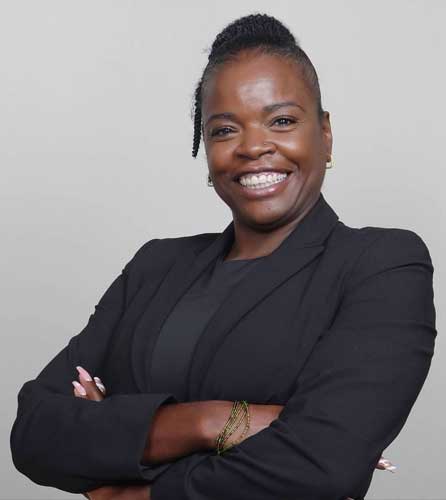
Including Najee Harris’ mother Tianna Hicks for her work through their Da Bigger Picture Foundation
By Juliet Casey Geary, Director of Marketing and Media Design, Los Medanos College
Los Medanos College is pleased to announce the 2026 recipients of our Dr. Martin Luther King, Jr. Awards, recognizing community civil rights and social justice champions, and students whose activism sets them apart as emerging leaders. The event is part of LMC’s yearlong acknowledgement of Black history (BHM 365) and raises support for the LMC Foundation African American Student Scholarship.
The Celebration luncheon begins at 11 a.m. on Thursday, Feb. 26, in the Student Union Conference Center of the Pittsburg Campus, 2700 E. Leland Road.
This year’s honorees:
Emerging Leadership Awards
The Dr. Martin Luther King, Jr. Emerging Leadership Award recognizes an LMC student or alumnus who embodies the spirit of Dr. Martin Luther King, Jr. and, who within the past year, has made a significant difference on the LMC campus or in the local community through advocacy and social justice. Emerging leaders in our community exemplify the principles of Dr. King and affect social change. Dr. King once said, “Life’s most persistent and urgent question is, ‘What are you doing for others?’”
LMC student Mina Jobe
Mina Jobe. All photos: LMC
Mina Jobe is a student leader and youth activist passionate about social justice, especially women’s and Indigenous rights. Drawing from her Irish, Japanese, and Yaqui heritage, she uses writing, art, and advocacy to raise awareness and uplift her community.
Through school projects and outreach, Mina works to create positive change and hopes to pursue a future dedicated to helping others.
Jobe also is an IMS Alumni Artist in Residence, BNV Alumni, and former PHS SLAM Club President. She has poured love, leadership, and selfless service into the Pittsburg Community for over 2 years. Jobe has participated in countless community open mics, been a community spokesperson at the Prodigies Youth Arts Showcase in 2025.
She has been a featured performer at the LMC Umoja / IMS Say it With Youth Chest Open Mic, and most recently was crowned the Prodigies Grand Slam Champion for 2025. Mina’s greatest contributions are the advice, agape love, and presence she offers Pittsburg youth.
LMC student Chijioke Onyeagucha
Chijioke Onyeaguch
Chijioke Onyeaguch was born Antioch California, the fifth of five siblings. His parents both immigrated to the Bay Area from Nigeria and always taught their children to work hard to achieve their dreams. In 2007, Onyeagucha says he was, “raised in the LMC Child Study Center for a little while.”
He returned to LMC in 2023 after graduating high school and competed in track and field for Diablo Valley College. He joined the Honors Program his first year and has served as an officer with the club for three years. Through his involvement with the program, he had the opportunity to study abroad in Paris in 2024.
At LMC he discovered his passion for writing and worked for LMC’s student-run news outlet, LMC Experience. As a journalist, Onyeagucha aims to bridge narrative with strategy, producing ethical journalism while understanding how media institutions evolve and influence public discourse. As a black journalist, he is committed to reshaping narratives that have historically misrepresented and marginalized communities of color. He is completing two associate degrees for transfer in journalism and business administration, while finishing his Honors Scholar Badge.
He recently presented research on modern forms of colonialism in Nigeria at the statewide Honors research symposium at UC Berkeley, which his parents were able to attend. His career goal is to create spaces within the media industry where strategic innovation coexists to uplift and support culture, so future generations can see themselves represented with depth. He also plans on a career in law.
Beloved Community Award
Tianna Hicks, Vice President, Da Bigger Picture Non-Profit Foundation
Tianna Hicks
The Dr. Martin Luther King, Jr. Beloved Community Award is presented to a local resident who has demonstrated a long-standing commitment to service and who best represents the core values modeled by Dr. Martin Luther King, Jr. The Beloved Community Award is inspired by the term popularized by Dr. King – a global vision in which, as noted by The King Center: all people can share in the wealth of the earth; poverty, hunger, and homelessness will not be tolerated; racism and all forms of discrimination, bigotry, and prejudice will be replaced by an all-inclusive spirit of sisterhood and brotherhood; and love and trust will triumph over fear and hatred. At the heart of the quest for the Beloved Community is agape love, which Dr. King described as “understanding, redeeming goodwill for all” – a love “seeking to preserve and create community.”
Tianna Hicks is a co-founder with her son, Najee Harris, and vice president of Da Bigger Picture Non-Profit Foundation, which aims to create access and opportunity for youth through community programs, school partnerships, and events that build confidence. The organization works to support families facing hunger and homelessness, provides resources to families in need with food giveaways, backpack and school supplies giveaways, toy drives, free youth camps, and a clothing closet to support the Antioch Unified School District students in need of interview, prom, graduation or special event attire.
Born in San Francisco, Hicks attended Philip and Sala Burton High School in San Francisco, and Fremont High School in Oakland. She graduated from P.I.M.A. Medical institute in Seattle, Wash., with a certificate of completion in medical assistance. Hicks then worked at Kaiser Permanent as a business representative from 2010 to 2016. She left Kaiser and moved to Birmingham, Alabama. to support her youngest son through college. She worked as a front desk medical receptionist for plastic surgeon, Dr. Michael S. Beckenstein, from 2016 to 2020. After her son graduated from college the pair moved back to California where she and her son formed Da Bigger Picture Non- Profit Foundation. The future goal for Da Bigger Picture is to expand services throughout the community, offering resources for families in need of mental health support groups for men and women.
Visionary Leadership Award
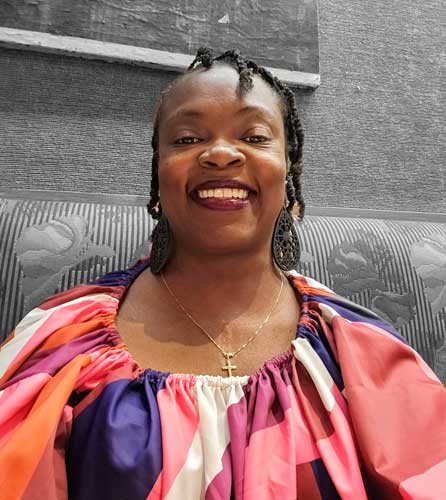
Dennisha Marsh, Executive Director, Parent of African American Achievement Collaborative Team
Dennisha Marsh
The Dr. Martin Luther King, Jr. Visionary Leadership Award recognizes a member of the East Contra Costa County community who demonstrates the qualities of Dr. Martin Luther King, Jr. The Visionary Leadership Award honors individuals who embody Dr. King’s strengths as a transformational, servant leader. Dr. King inspired others to shape the future articulated in his vision. He focused on the well-being, growth, and empowerment of others and the community he served. Dr. King said, “Human progress is neither automatic nor inevitable…Every step toward the goal of justice requires sacrifice, suffering, and struggle; the tireless exertions and passionate concern of dedicated individuals.”
Dennisha Marsh is the executive director of the Parental African American Achievement Collaborative Team (PAAACT), a nonprofit organization dedicated to aligning essential educational and economic resources with underserved families in Contra Costa County.
She serves on several city and county commissions and advisory committees. She is a member and past chair of the Pittsburg Community Advisory Commission, which advises the City Council on community services, including parks, recreation, and public safety issues. Marsh has chaired the Pittsburg Measure M Oversight Committee and the Pittsburg Community Block Grant. She has served as an advisor for the Youth Advisory Commission and Public Safety.
Marsh serves on Los Medanos Health Advisory Committee for Contra Costa County, following her tenure on Los Medanos Health District elected board prior to its transition to county oversight, Library Commission, Measure X, East Bay Regional Park District Advisory Committee and Educational Chair for East County NAACP.
In the Pittsburg Unified School District, Marsh participated as a member of the District Advisory Council, the Bond Oversight Committee, and the Student Attendance Review Board. She was a member of the Economic Opportunity Council and the Racial Justice Task Force.
Marsh has played a crucial role in fostering communication among community stakeholders, leading to the reconstruction of educational facilities and the development of community gardens throughout the Pittsburg Unified School District. She has worked on summer STEM programs for youth and secured new equipment and signage for local schools. Her advocacy has also spurred local road repairs and policies aimed at enhancing community safety, including the installation of street speed bumps and the development of a skateboard park in the City of Pittsburg.
Marsh participated in community advocacy for the name Thurgood Marshall Regional Park, home of the Port Chicago 50, and took part in the Contra Costa Bar Association’s Task Force for the exoneration of the Port Chicago 50.
Marsh and her husband live in the City of Pittsburg, where they have a son who is in college.
Keynote Speaker
Kolette Simonton, Director, City of Pittsburg Department of Recreation
Kolette Simonton
Lifelong Pittsburg resident Kolette Simonton is committed to her community. A product of Pittsburg High School (Class of ’96, Student Body President), she honed her communication skills at CSU Sacramento, graduating in 2001 with a degree in Communications/Public Relations. Her early career included roles with the Pittsburg Chamber of Commerce, Contra Costa and San Jose Newspapers, KRON 4 News, and Changed Life Church, providing a strong foundation for her 18-year tenure with the City of Pittsburg. Today, she serves as the Director of Recreation.
Kolette’s leadership touches all aspects of Pittsburg’s recreational offerings. She oversees the Marina Community Center, Pittsburg Senior Center, and the city’s extensive park system, including Small World Park and Buchanan Swim Center. She spearheads popular events like the Old Town Car Shows, 1st Friday Music Series, and the Pittsburg Jazz, Blues & Funk Festival. Kolette is passionate about providing diverse programs, from youth and adult sports leagues to adaptive sports and fitness, the My Brothers Keeper Initiative, and the Pittsburg Youth Commission.
Kolette was honored as the 2025 recipient of the Los Medanos College Dr. Martin Luther King Jr. Beloved Community Award and was added as a member of LMC Foundation Board.
Kolette’s commitment extends beyond her professional role. She serves on the board and coaches for Full Stride Track Club and is active in the Pittsburg Kiwanis. She is grateful for the support of her husband, Ken, and children, Nayelli and Kenneth IV, in her community endeavors. Kolette’s daily focus is on expanding accessible, engaging, and inclusive opportunities for Pittsburg residents to connect and thrive.
About Los Medanos College (LMC): LMC is one of three colleges in the Contra Costa Community College District, serving the east Contra Costa County community. Established in 1974, LMC has earned federal designations as a Minority-Serving and Hispanic-Serving institution. It offers award-winning transfer and career-technical programs support services, and diverse academic opportunities in an inclusive learning environment. With exceptional educators, innovative curriculum, growing degree and certificate offerings, and state-of-the-art facilities, the college prepares students to succeed in their educational pursuits, in the workforce, and beyond. LMC’s Pittsburg Campus is located on 120 acres bordering Antioch, with an additional education center in Brentwood. For more information visit www.losmedanos.edu.
Feb. 18th Board meeting agenda includes layoffs for 104 teachers, counselors, directors, vice principals and 193 classified staff to save $38 million
By Allen D. Payton
According to Danielle Watson, a parent of a child in the Antioch Unified School District, “as of Friday, Feb. 13, the District is allegedly pink-slipping Admin staff and plans to eliminate over 100+ teachers. They are also discussing proposed cuts to Special Education staffing, including classroom aides and support staff.”
As a result, a “Peaceful Protest is planned for Tuesday morning, Feb. 17 at the school district headquarters.
“Nearly one in five AUSD students has an IEP (Individual Education Plan). Parents are asking the Board to re-evaluate cuts and share a public impact analysis prior to finalizing any decisions at the Feb. 18 Board meeting,” she shared. “They are no longer negotiating with Special Education staff.”
Proposed Cuts on Board Meeting Agenda
The Board’s agenda for Wednesday night’s meeting confirms Watson’s concerns showing a total of 297 staff cuts to save almost $38 million in the annual budget.
The cuts are proposed by Superintendent Dr. Darnise Williams and Associate Superintendent for Human Resources Dr. Camille Johnson. According to the staff report for the items, “In the event classified – and certificated – services need to be reduced or discontinued due to lack of work and/or lack of funds, the Education Code requires that the Board take action to reduce/eliminate positions and that affected employees be provided written notice no later than March 15. The District will consider bumping rights, retirements, resignations, releases, and other attrition and give notice only to those employees who, according to seniority and Board-adopted tiebreak and competency criteria, are appropriate for layoff.”
“I would like for Dr. Williams to break this barrier of distrust among parents, staff and the broad community,” Watson stated. “This is her opportunity.”
Her greatest concern is about the cuts to special education teachers and para-professionals, and the safety of the students, especially those who have already demonstrated behavioral challenges.
“It’s concerning to think about the risk to teachers they’ll be causing, by forcing them to mitigate situations by themselves,” Watson said.
Several parents have sent emails to the Board and Superintendent. But as of today, Monday, February 16th, no response has been received from anyone, she shared.
The protest begins at 10 A.M. at the AUSD offices, 510 G Street, in Antioch’s historic, downtown Rivertown.
Con Fire personnel attend to a Park Middle School student who was struck by a car while walking home in the cross walk of the Lone Tree Way and Putnam Drive intersection, Thursday afternoon, Feb. 12, 2026. Photo courtesy of Ronn Carter, Emergency Spotlight
One near Antioch High, the second near Park Middle
By Allen D. Payton
Traffic accidents injured two minors near two different schools in Antioch Thursday, February 12, 2026. According to Con Fire, a call came in at 7:26 AM about a minor who was struck in front of Antioch High School at 700 W. 18th Street. The second occurred at 2:43 PM in the Lone Tree Way and Putnam Street intersection not far from Park Middle School.
The call for the accident near Antioch High was cleared at 8:56 AM. According to Con Fire PIO Lauren Ono, “we were called for a vehicle accident and transported one person” to a local hospital. Antioch Police Sgt. Rob Green of the Antioch Police Traffic Division, who was not on the scene but in training, today, said the victim “complained of pain and was transported out of precaution.” But he had “no names of involved drivers or pedestrians.”
According to a report by Ronn Carter of the Emergency Spotlight OnScene Team, “No additional details about the circumstances of the collision were immediately released. The driver involved remained at the scene.”
Asked about the incident and if the victim was a boy or girl, for their age and if they’re a student at Antioch High or elsewhere, Police Lt. Mike Mellone responded, “All I know is it was a minor and a vehicle hit the minor, but the injuries aren’t critical.” He said he would ask the officer for additional details.
Source: PulsePoint
SecondCollision
Then Thursday afternoon at 2:47 PM, Carter shared with the Herald, “Another student was just hit at Park Middle School.”
According to Con Fire, the call for that incident came in at 2:43 PM.
About the collision, Carter reported on the Spotlight Facebook page, “a Park Middle School student was struck while crossing Lone Tree Way on her way home from school. The driver involved remained at the scene.”
“The student was transported to a hospital with injuries. The extent of those injuries has not been disclosed,” he added.
The call was cleared at 4:03 PM.
Please check back later for any updates to this report.
Female athletes and others listen as speakers share their opinions during the California Family Council press conference before the CIF’s Federated Council meeting last Friday morning, Feb. 6, 2026. Source: Screenshot of video by CA Family Council.
By Greg Burt, Vice President, California Family Council
LONG BEACH, CA — Outside a Long Beach hotel where the California Interscholastic Federation (CIF) convened its Federated Council meeting last Friday morning, female athletes stood shoulder to shoulder with parents, advocates, and state lawmakers to deliver a clear and urgent message: girls’ sports are for girls.
The 111-year old CIF, according to Wikipedia, is the governing body for public and private high school sports in California.
The February 6 press conference, organized by California Family Council’s Outreach Director Sophia Lorey, ahead of the CIF meeting, marked a significant moment in California’s ongoing debate over fairness and safety in women’s athletics. For the first time, two members of the California State Assembly publicly joined female athletes to confront CIF leadership over policies that allow males who identify as transgender to compete in girls’ sports and access female locker rooms, policies critics argue violate the original intent of Title IX. (Watch the press conference here…)
But the peaceful gathering also revealed the deep political divide surrounding the issue, as a prominent Democrat legislator representing the Long Beach area publicly criticized the presence of Republican lawmakers and dismissed concerns raised by female athletes.
Athletes Speak: “This Isn’t Fair. This Isn’t Safe.”
At the heart of the press conference were the voices of young women whose athletic careers have been directly impacted by CIF policies.
Reese Hogan, a varsity tri-sport athlete in track and field at Crean Lutheran High School, described the toll of repeatedly competing, and losing, against a male athlete in girls’ events.
“Track is not just something I do. It’s who I am,” Hogan said. “I train to push my limits, to compete fairly, and to earn every achievement through hard work. But over the past two years, that fairness has been taken away from me.”
Hogan detailed five separate competitions, spanning from May 2024 to January 2026, in which she lost to a male athlete competing in the girls’ division. One moment, she said, still stands out.
“At CIF finals, I broke my school record in the triple jump,” Hogan explained. “I jumped 37.2, earning a new personal record and breaking my school record. It was one of the proudest moments of my athletic career. That jump should have earned me first place.” Instead, a male athlete who jumped 4 feet farther placed first.
Hogan said the experience was devastating.
“CIF, why won’t you do anything?” she asked. “You are protecting males competing in women’s sports more than you are protecting the women the sport was created for.”
Hogan warned that allowing males into girls’ sports is not merely unfair, but dangerous.
“There is a reason sports are divided by sex,” she said. “It is not a matter of opinion; it’s a matter of fact.”
Locker Rooms and Lost Privacy
Another athlete, Audrey Vanherweg, a senior and four-year varsity athlete at Arroyo Grande High School, spoke about the consequences of CIF policies beyond the field of play.
Two years ago, Vanherweg said, she began hearing rumors that a boy was using the girls’ locker room. At first, she tried to ignore it. But when she learned that the same male student would also compete in girls’ track and field, the issue became unavoidable.
“I wasn’t going to go into a locker room and change in front of a boy,” Vanherweg said. Especially since he “wasn’t changing himself, but simply just watching all of us girls undress.”
Rather than risk her privacy, Vanherweg made a painful decision.
“I decided to go change in my car,” she said. “I’m more comfortable changing in my own car than in my own school locker room, where boys are welcomed to watch girls undress.”
As a thrower, she explained, competing against males also undermines fairness.
“Boys have a strength advantage,” she said, explaining that boys compete with the heavier implements in track and field competitions. “So, if a boy decides to throw as a girl, he not only has the strength advantage, but also a lighter implement.”
Vanherweg said she is speaking out not just for herself, but for future generations of girls.
“I’m speaking out against CIF policy, not only for myself, but for all other girls, girls who are too afraid to speak out, girls who don’t know what’s going on, and girls who haven’t been born yet,” she said.
Lawmakers Step In
Standing with the athletes were Assemblywoman Kate Sanchez (R–Murrieta) and Assemblyman David Tangipa (R–Fresno), the first time multiple Republican legislators have publicly joined female CIF athletes at such an event.
Assemblywoman Sanchez, author of AB 89, the Protect Girls’ Sports Act, said the rejection of her bill in committee last year did not end the fight.
“Politicians killed the bill, but they didn’t kill this movement,” Sanchez said. “And they didn’t silence these athletes.”
Sanchez emphasized that Title IX was designed to guarantee fairness and opportunity for women.
It was “never meant to be controversial,” she said. “It was meant to guarantee girls a fair shot, a fair race, a fair roster, and a fair opportunity to win.”
She warned that those protections are being eroded across California.
Girls “are losing podium spots, losing championships, losing scholarships… and some are even losing the basic right to privacy and safety in their own locker rooms.” Sanchez said. “That is not equality. That is not progress, and we will not pretend it is.”
Assemblyman Tangipa, a former Division I football player at Fresno State, challenged fellow lawmakers to stop referring to those who want female-only sports as Nazis. He also urged fathers to confront the reality facing young women.
“Why or how is it somehow believed [that it’s] Nazi ideology when you just wanna place to dress freely, and why and how is it Nazi ideology when you want to play in your sport freely?” Tangipa asked. “Why do we ignore safeguards and disregard biology and reality, which is insanity?
He urged fathers to step up.
“There are boys in your daughter’s locker room. There are boys in your daughter’s sports,” he said. “Where are you?”
Tangipa pledged continued action, including potential ballot initiatives, to restore protections for female athletes.
A Democrat Arrives—Then Attacks
In an unexpected development, Assemblyman Josh Lowenthal (D–Long Beach), the Speaker pro Tempore and representative of the district where the CIF meeting was held, appeared near the protestors, but not to support their cause.
Instead, Lowenthal criticized the presence of Republican legislators in his district, accusing them of staging a press conference “about trans kids in sports” without notifying him.
“We all know they don’t actually care about women,” Lowenthal said, adding that an upcoming budget vote funding $90 million for “women’s reproductive health, [abortion]” specifically for Planned Parenthood, would prove his point.
Assemblywoman Sanchez later responded by posting a video of Lowenthal’s remarks on X. (Watch this post here…)
“Respectfully,” Sanchez wrote, “I will stand up to protect girls’ sports in any city, and I’ll always stand with these brave women… No man, especially not you, will ever tell me otherwise.”
Sophia Lorey Challenges CIF
After the press conference, Sophia Lorey, Outreach Director for California Family Council and a former four-year CIF varsity athlete herself, addressed the CIF Federated Council directly, issuing a pointed challenge to its leadership. Lorey rejected the claim that CIF’s hands are tied by state law, arguing that the federation has the authority to act now if it chooses to do so.
“You have a policy in place,” Lorey told the board. “Until you remove the policy that allows males to be in female locker rooms and sports, you can’t say your hands are tied by the state. Remove that policy and stand up for these girls.” Lorey emphasized that female athletes should never have to resort to lawsuits to secure basic protections, adding that CIF leaders have a limited window to act. “Silence is no longer neutrality,” she warned, calling on CIF officials to work with advocates and restore fairness and safety in girls’ sports.
Many of the female athletes also went inside to address CIF leadership directly during the public comment period.
For them, the issue is not partisan.
“This isn’t about politics,” Sanchez said. “It’s about principle.” And as the athletes made clear, they are no longer willing to be silent.
“When you sideline girls,” Sanchez warned CIF leaders, “we will stand up. When you ignore them, we will amplify them. And we will not stop fighting.”
About California Family Council
California Family Council works to advance God’s design for life, family, and liberty through California’s Church, Capitol, and Culture. By advocating for policies that reinforce the sanctity of life, the strength of traditional marriages, and the essential freedoms of religion, CFC is dedicated to preserving California’s moral and social foundation.
824,000 students across 1,970 Golden State schools participate in events and activities to raise awareness of education options
By Lauren Forte, Manager of Communications, National School Choice Awareness Foundation
SACRAMENTO– More than 1,970 California schools will host special events this week—all designed to help parents learn more about the K–12 education options available for their children. The events are planned to coincide with National School Choice Week (schoolchoiceweek.com), which runs from January 25–31, 2026.
Events will include open houses, parent information sessions, award ceremonies, service projects, and skill-building contests—each aimed at celebrating students and teachers while helping families discover the many learning opportunities in their communities. To raise statewide awareness, Oakland Enrolls will host a charter school fair at Lazear Charter School in Oakland (1/31/26), and La Unión de Padres will host a school fair at the Santa Ana Zoo in Santa Ana (1/31/26).
National School Choice Week is organized by the nonprofit National School Choice Awareness Foundation and shines a positive spotlight on the benefits of choice and opportunity in K–12 education.
“California offers some education options, particularly public charter, magnet, and online schools, but barriers like limited open enrollment and restrictions on public charter growth continue to curtail options for families,” said Noelle Delaney, the California-based Chief Operating Officer of the National School Choice Awareness Foundation. “As school choice becomes the new normal across the country, our goal is to make sure California parents have timely, accurate, and jargon-free information—so they can understand their options and feel confident navigating them.”
Parents in the Golden State can select traditional public schools, public charter schools, public magnet schools, private schools, online learning, homeschooling and microschooling and mix-and-match learning for their kids.
“California families are actively exploring their education options and looking for learning environments that fit their children’s needs,” said Kimi Kean, CEO of Oakland Enrolls. “We are committed to helping families navigate those choices and feel informed and supported throughout the process.”
To learn more about education options available to families in California, visit the National School Choice Awareness Foundation’s California School Choice website at https://schoolchoiceweek.com/california.
The National School Choice Awareness Foundation (NSCAF) is a 501(c)(3) nonprofit organization. We show parents how K–12 school choice can change their children’s lives, and then guide them through the process of finding schools that best meet their children’s needs. Our three charitable programs––National School Choice Week, Navigate School Choice, and Conoce tus Opciones Escolares––raise equal awareness of the public, charter, magnet, private, online, home, and nontraditional education options available for families. We are nonpolitical and do not advocate for or against legislation at any level of government.