






Archive for the ‘Education’ Category

Antioch schools superintendent sues District, Trustee Rocha, others claiming retaliation, discrimination, harassment, more

Thursday, October 15th, 2026
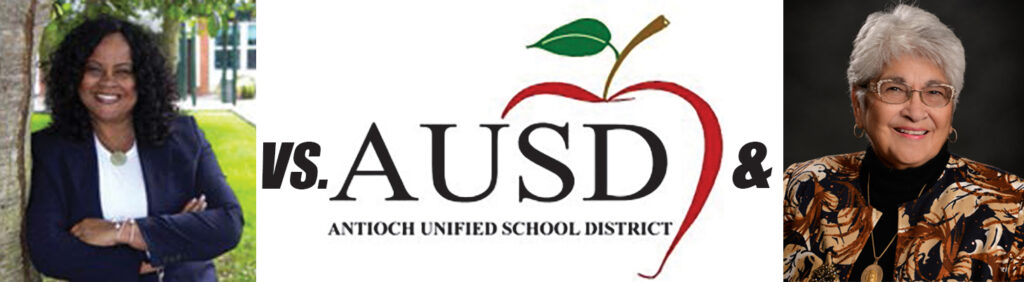
AUSD Superintendent Dr. Darnise Williams is suing the District and Area 5 Trustee Mary Rocha. Photos: AUSD

Dr. Darnise Williams, in her 4th job in the past 6 years, claims a “campaign to remove” her for refusing “to overlook questionable payments” and because she “disclosed fiscal and legal noncompliance to officials empowered to correct it,” plus, “she made an internal complaint concerning discriminatory, biased, harassing, and retaliatory treatment by Board leadership, including conduct directed at her as a Black woman” and makes multiple accusations against Rocha – the only Trustee to vote against hiring her

“I was the only one who didn’t vote to hire her. But on top of it, it takes three votes to get rid of her and she only targets me. Interesting, huh?” – Trustee Mary Rocha

By Allen D. Payton

Embattled Antioch Unified School District Superintendent Dr. Darnise Williams has responded to being placed on paid leave by suing the District, Area 5 Trustee Mary Rocha and unnamed “DOES 1-50” claiming a list of 12 “Damages” including whistleblower retaliation, discrimination, harassment and more. She is seeking a jury trial.

Specifically, the lawsuit, filed in Contra Costa Superior Court on Sept. 23rd, claims race and color discrimination, sex and gender discrimination, age discrimination, plus, Fair Employment and Housing Act (FEHA) retaliation, harassment/hostile work environment, failure to prevent discrimination, harassment and retaliation, breach of written contract, declaratory relief, defamation per se, intentional infliction of emotional distress, and negligence. According to findlaw.com, “Defamation per se means that a false statement was so inherently harmful that further proof of harm isn’t necessary. The statement would have been likely to cause reputational damage regardless of the context.”

Williams doesn’t want punitive damages against the District, just against Rocha.

Background

On a 4-1 vote, with Board President and Area 2 Trustee Dr. Jag Lathan the only school board member to vote “no”, Williams was placed on paid administrative leave on Aug. 25, 2026, after less than 14 months in the job. Williams was hired during the June 11, 2025 School Board meeting on a 3-1 vote with Rocha the lone dissenter and Area 4 Trustee Olga Cobos-Smith absent. This is Williams’ fourth position in the past six years, her starting annual base salary was $353,045, plus contractual benefits, according to the lawsuit, and she was paid $357,234 last school year. (See related article)

The Board agendized the performance evaluation of Williams for that meeting and during three previous meetings, as well.

At their Special Meeting on May 27, which was not live-streamed, the report out reads, “There was no reportable action taken during closed session.”

Then during the August 5 Special Board Meeting, which was also not live-streamed, the report out of Closed Session reads, “The Board took action by unanimous vote of all trustees present to assign Trustee Cobos-Smith with the duty of compiling the Board’s evaluation of the superintendent consistent with Board Policy 2140.”

Finally, during their Regular Meeting on August 19th, the Board again agendized the performance evaluation of the superintendent. But Lathan did not report out from Closed Session any action on the matter.

Cobos Smith was asked ifthe performance evaluation was ever provided to Dr. Williams.

“The evaluation was complete and submitted to her,” she stated in response.

The school board held a special meeting on Oct. 7th during which they met in Closed Session to discuss the lawsuit. Under item A. described as, “CONFERENCE WITH LEGAL COUNSEL—Existing Litigation (Paragraph (1) of subdivision (d) of Section 54956.9) Name of Case: Dr. Darnise R. Williams v. Antioch Unified School District, et al., Contra Costa County Superior Court, Case No. C26-03234.”

Since there was no video of the meeting and the minutes are not  yet available on the District’s website, asked about the results from that Closed Session, Cobos Smith stated, “There was no reportable action and Dr. Lathan did not attend. The attorney just shared the complaint with us so that we would know about it through official channels before it went public.”

Yet Williams claims in her lawsuit that the Board did not conduct the oral and written annual performance review required by her employment agreement. But later in her lawsuit she claims to have received an “unsatisfactory assessment,” but reiterated that the Board “did not provide the contractually required oral evaluation.”
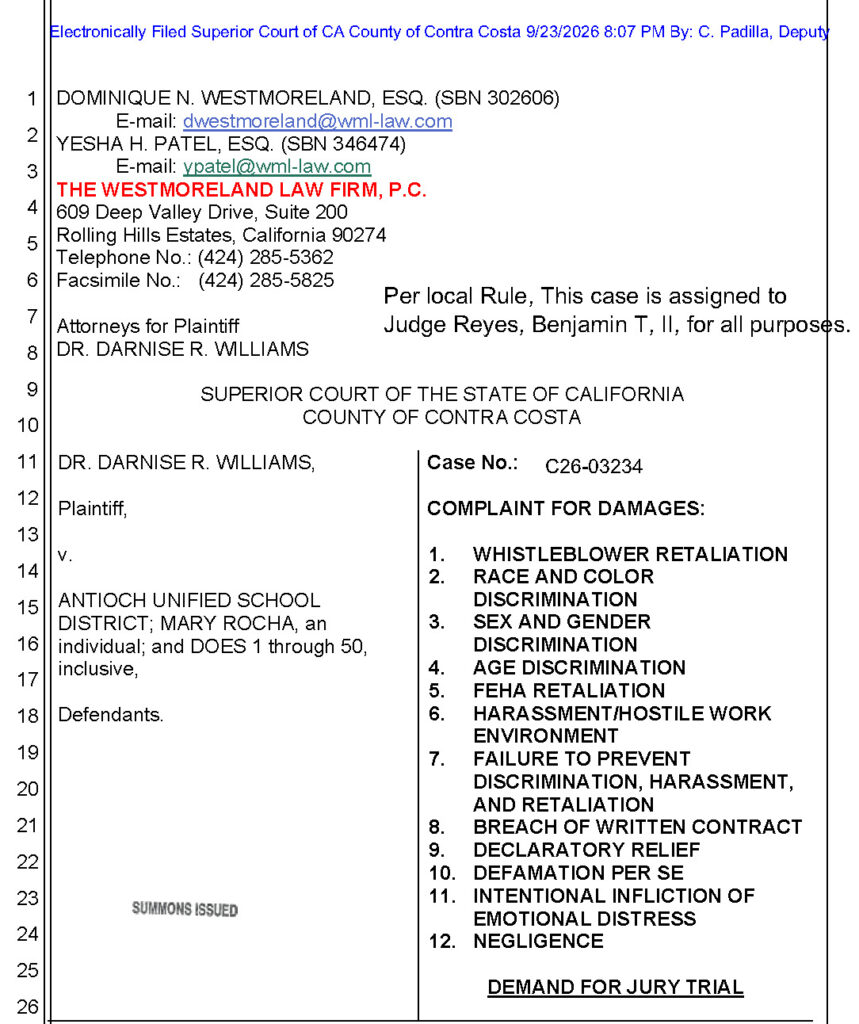
Cover page of Dr. Williams’ lawsuit against AUSD, Mary Rocha, et al.

Lawsuit Details

In the 30-page complaint, Williams shares the fact that she “is a Black and African-American woman over the age of forty…and therefore belongs to protected race and color classes.” The lawsuit also claims, “She was…qualified for and capable of performing the Superintendent position and performed that work successfully.”

The lawsuit explains Williams “timely presented a written claim to the District as required by the Government Claims Act. The District did not act within the statutory period, and the claim was deemed rejected.”

To support Williams’ claims of damages, the lawsuit provides general accusations and details against both the District, i.e. the Board of Trustees and staff, and specifically, against Rocha.

She claims, “Rocha…personally participated in the harassment alleged” and “Each DOE Defendant participated in, authorized, ratified, aided, or failed to prevent the unlawful conduct alleged here.”

The Introduction reads, “1. This action arises from a public school district’s campaign to remove its first-year Superintendent after she insisted that public funds, employee compensation, fiscal controls, and Board governance comply with law. Plaintiff was hired to lead and stabilize the District. She did that work. When she refused to overlook questionable payments and disclosed fiscal and legal noncompliance to officials empowered to correct it, influential trustees turned the scrutiny onto her.

“2. The retaliation followed a recognizable sequence: race- and gender-charged remarks; escalating personal hostility; dissemination of accusations that an outside investigation did not substantiate; manipulation of the contractual evaluation process; a manufactured unsatisfactory assessment untethered to the agreed performance goals; and, ultimately, removal from active duty on paid administrative leave while the District moved immediately toward interim leadership.

“3. The paid leave is nevertheless materially adverse: it stripped her of the duties and authority of Superintendent, impaired her reputation and future employability, denied contractual evaluation and compensation rights, and positioned the District to end her employment.

“4. The District did not conduct the oral and written annual performance review required by Plaintiff’s written employment agreement. After Plaintiff invoked the contract’s notice-and-cure procedure, the District still failed to complete the agreed review. Under the contract, her evaluation therefore became satisfactory and the applicable salary-step increase was due retroactively. The District instead issued a procedurally defective document built on generalized and stereotyped criticisms.

“5. Plaintiff seeks…no punitive damages against the District…only against Rocha based on malice, oppression, or fraud shown at trial.”

Specific Claims – Discovered Illegal Payments to Trustees,

Williams’ lawsuit offers details about multiple matters and claims the following:

First, regarding her claim of whistleblower status, under section B. Protected Disclosures and Opposition the superintendent alleges she “discovered cash-in-lieu health-benefit payments to trustees, including Rocha, that Plaintiff reasonably believed were unauthorized or otherwise inconsistent with governing law and lawful use of public funds…stopped or corrected the…payments…disclosed the issue to persons with authority to investigate, discover, or correct the noncompliance…sought legal guidance and refused to approve or perpetuate payments she reasonably believed unlawful.” Williams “also disclosed other fiscal and governance concerns, including unauthorized compensation or salary placements, failures of internal control, and conduct she reasonably believed implicated open-meeting, labor, or public-fund requirements…to District officials, Board members, counsel, auditors, fiscal professionals, and other persons or public bodies with authority over” her “or authority to investigate and correct the reported violations.”

Her complaint claims, “The District, Rocha, and other decisionmakers knew of Plaintiff’s disclosures and protected opposition before taking the adverse actions.”

Williams’ lawsuit also shares that, “She made an internal complaint concerning discriminatory, biased, harassing, and retaliatory treatment by Board leadership, including conduct directed at her as a Black woman.”

Claims Rocha Wanted a Latino Superintendent, Plus, Racial, Gender and Age Discrimination by District

Under section C. Defendants Violated Plaintiff’s Civil Rights, the lawsuit continues, “Rocha told Plaintiff (Williams) in substance that Plaintiff had not been Rocha’s preferred choice because Rocha wanted a Latino Superintendent. Rocha also invoked the prior Black Superintendent having been run out of the District. These remarks directly revealed race and ethnicity as considerations in Rocha’s view of District leadership.”

Williams also claims to have “challenged payments benefiting Rocha” and “Rocha and aligned decisionmakers repeatedly cast” the superintendent “through racialized stereotypes: angry, aggressive, threatening, bullying, incoherent, and unprofessional.” But Williams claims, “Those labels were not supported by specific contemporaneous facts and were inconsistent with witness accounts and investigative findings.”

She also claims that treatment was unfair and inconsistent as “the District treated white administrators and executives more favorably in evaluations, discipline, succession decisions, workplace complaints, and access to a fair process. White counterparts who exercised forceful leadership, enforced fiscal controls, rejected improper demands, or encountered complaints were not subjected to the same racialized labels, irregular procedures, removal of duties, or accelerated replacement activity. The comparative records are within Defendants’ possession and control.” However, only the superintendent is hired directly by the school board, while all other top district leaders are hired by the superintendent.

Williams’ complaint also claims, “race and color were substantial motivating reasons for those actions, as shown by direct race-based remarks, racialized stereotypes, materially less favorable treatment than similarly situated white counterparts, disparate handling of complaints, failure to follow objective procedures, and the participation of biased decisionmakers” and she was subjected as “a Black woman in the District’s highest executive position, to gendered and intersectional stereotypes” and that she was treated differently than “similarly situated male leaders” and that her “sex and gender were substantial motivating reasons for the altered evaluation, denial of compensation rights, removal of duties, paid leave, and succession activity, independently and in combination with race and color.”

Finally, Williams claims she “was over forty and qualified for the Superintendent position” and that “decisionmakers favored materially younger candidates for interim or permanent leadership, evaluated younger leaders more favorably, and considered Plaintiff’s age when accelerating succession planning” and claims further that her “age was a substantial motivating reason for the altered evaluation, denial of compensation rights, removal of duties, paid leave, and succession activity.”

Yet, after placing Williams on leave, the Board hired a retired superintendent, Jose Banda, who began his education career in 1984, as the District’s interim superintendent which would place his age to be in the mid-60’s.

Alleged Physical Incident with Rocha

Under section D. Manufactured Complaints and a Predetermined Evaluation, Williams claims an alleged physical incident with Rocha was “a brief interaction” in which she “did not yell at, threaten, touch, hit, block, or accost Rocha, and did not shake a phone in her face. Contemporaneous witnesses reported that Plaintiff was not angry and did nothing improper.” Further, the superintendent claims, “Rocha initially indicated that Plaintiff’s phone was not in her face and that she was fine. She later filed a formal complaint portraying the exchange as angry, aggressive, threatening, and physical.”

Williams’ lawsuit also claims that Rocha “later falsely stated as an asserted fact that Plaintiff hit or physically assaulted her” and “knew the accusation was false because no such contact occurred” with which Rocha disagrees (see below), and that, “Rocha advanced the accusation at a critical point in Plaintiff’s evaluation cycle, circulated it within the Board, and used it to advocate for Plaintiff’s removal.”

The superintendent’s complaint further explains, “An outside investigation did not sustain the principal accusation against Plaintiff,” with which Rocha agrees (see below). But Williams states, “The District nevertheless continued to rely on the accusation’s stigmatizing themes and allowed Rocha to participate in decisions affecting Plaintiff.”

Unfair, Incomplete Evaluation, Changed Process, Not Neutral or Done in Good-Faith

In that same section, Williams claims, “Before a fair evaluation was completed, Board members and agents changed the agreed process, marginalized the agreed goals, and relied on generalized complaints that staff felt bullied, that Plaintiff’s communications lacked clarity, that accountability was absent, and that social-media complaints had increased.” Further the superintendent claims the Board, “did not fairly apply the agreed instrument to the mutually established goals, and did not identify concrete facts sufficient to permit meaningful response,” and that “The assessment was signed or supported by persons who had participated in accusations against Plaintiff or had conflicts affecting their neutrality. Other trustees did not sign it. The process was irreconcilable with a neutral, good-faith evaluation.”

Finally in that section, Williams alleges, she “timely submitted a detailed written rebuttal. Defendants did not cure the process or apply the contract’s deemed-satisfactory provision and earned salary increase.”

Alleges Rocha Committed Unlawful Conduct, Made Defamatory Statements

Under section E. Rocha’s Unlawful Conduct and Defamatory Statements, Williams repeats her accusations against Rocha and further claims the Area 5 Trustee, “voluntarily republished the false accusation” that Williams “hit or physically assaulted” Rocha both “orally and in writing to District employees, community members, and other third persons who had no official role in, legitimate need for, or common interest in any such proceeding” and that “Those extrajudicial republications were not made in any official proceeding, were not made to initiate or achieve the objects of any official proceeding, and were not logically related to any such proceeding.”

Williams further claims that Rocha’s accusations, “directly injured Plaintiff in her profession as Superintendent by portraying her as violent, dangerous, and unfit to lead a public school district. It caused presumed and actual reputational, professional, economic, and emotional harm” and “District administrators and supervisory employees knew or reasonably should have known of Rocha’s hostility, bias, escalating retaliation, false accusation, and the foreseeable risk of reputational and emotional harm. They nevertheless failed to use reasonable care to separate conflicted actors, supervise the process, prevent unnecessary dissemination, correct known falsehoods, and conduct a neutral evaluation and investigation.”

Thus, Williams’ lawsuit asserts, “Those operational failures were negligent acts and omissions of District employees acting within the scope of their employment, not a claim that the District is directly liable at common law or liable

for Rocha’s misrepresentation” and their “conduct caused Plaintiff severe emotional distress and the other injuries alleged above.”

Alleges Being Placed on Leave by Board Was “Planned”

Finally, under section F. Paid Administrative Leave and Continuing Harm, Williams’ lawsuit claims that since, for the special Board meeting on Aug. 25th, “the agenda combined Plaintiff’s evaluation, dismissal or discipline, and appointment of interim leadership” the “sequence reflected that the result had been planned before any lawful and fair decision making process was completed.”

Actually, both terms “acting” and “interim” were included on the agenda for that meeting, and the items were options provided to the Board so, that if the second action was taken, they could take the third action and not have to wait to come back at a future meeting to appoint an acting superintendent. The three agenda items read: “A. Public Employee Evaluation – Superintendent; B. Public Employee Discipline/Dismissal/Release; and C. Public Employee Appointment – Acting and/or Interim Superintendent.”

However, it does appear that both individuals to fill the roles of acting and interim superintendent were already lined up. After announcing Williams had been placed on leave, Board President Dr. Jag Lathan reported out that the Board also, “took action in Closed Session by a unanimous vote…to appoint Ed Dacus as Acting Superintendent effective August 26th through August 30th, 20206 and Jose Banda as Interim Superintendent effective August 31st, 20206 through and until his services are no longer needed.”

Williams lawsuit claims, “When immediate termination could not lawfully proceed at that meeting, Defendants relied on a separate electronic-signature allegation as a basis to remove Plaintiff from active duty and open another investigation,” and that “interim or successor activity began before the formal leave decision, further showing pretext and predetermined removal.”

 As a result, she alleges, “The leave nevertheless removed Plaintiff’s authority, duties, access, and professional platform as Superintendent; stigmatized her before staff and the community; interfered with contractual performance; impaired her reputation and future earning capacity; and denied the salary increase due under the agreement,” and she “has suffered and continues to suffer economic loss, lost contractual compensation and benefits, loss of professional opportunities, injury to reputation, humiliation, anxiety, panic symptoms, sleep disruption, headaches, emotional distress, and related harm.”

Finally, Williams complaint claims, “The temporal proximity, shifting explanations, deviation from established procedure, selective investigations, direct bias evidence, and use of unsupported stereotypes demonstrate that Plaintiff’s protected disclosures and protected characteristics were substantial or contributing reasons for the adverse actions,” and “If Defendants terminate her or otherwise reduce compensation, she will seek the resulting back pay, front pay, severance, benefits, retirement losses, and future earning losses.”

Causes of Action

The lawsuit then lists the 12 causes of action:

1. Whistleblower Retaliation — Labor Code §§ 1102.5 and 1102.6 Against District and DOES 1–25

2. Race and Color Discrimination — Government Code § 12940(a) Against District and DOES 1–25

3. Sex and Gender Discrimination — Government Code § 12940(a) Against District and DOES 1–25

4. Age Discrimination — Government Code § 12940(a) Against District and DOES 1–25

5. FEHA Retaliation — Government Code § 12940(h) Against District and DOES 1–25

6. Harassment and Hostile Work Environment — Government Code § 12940(j) Against All Defendants

7. Failure to Prevent Discrimination, Harassment, and Retaliation – Government Code § 12940(k) Against District and DOES 1–25

8. Breach of Written Contract Against District and DOES 1–25

9. Declaratory Relief Against District and DOES 1–25

10. Defamation Per Se Against Rocha and DOES 26–30

11. Intentional Infliction of Emotional Distress Against Rocha and DOES 26–30

12. Negligence — Government Code §§ 815, 815.2, and 820 Against District and DOES 31–50

Relief Sought

Williams seeks the following 11 items as relief:

From the District she wants, “general, special, compensatory, and consequential damages according to proof, including emotional-distress and reputational damages;

“economic damages…including unpaid contractual compensation and benefits, lost professional opportunities, and impaired earning capacity;

“back pay, front pay, severance, lost benefits, retirement losses, and future earnings to the extent such losses accrue and are recoverable; and

“the civil penalty authorized by Labor Code section 1102.5(f); That section is about retaliation and reads, “an employer is liable for a civil penalty not exceeding ten thousand dollars ($10,000) per employee for each violation of this section to be awarded to the employee who was retaliated against.”

Williams also seeks, “declaratory relief determining the parties’ rights and obligations under the employment agreement;

“the District to correct or remove the defective evaluation, honor the deemed-satisfactory and salary provisions, cease unlawful retaliation and discrimination, preserve relevant evidence, and provide other appropriate prospective relief;

“reasonable attorney’s fees; and costs of suit and prejudgment and postjudgment interest as permitted by law.”

From Rocha Williams wants, “presumed and actual damages for defamation per se against Rocha, including reputational, professional, and economic harm; punitive and exemplary damages against Rocha only on the harassment, defamation, and intentional-infliction-of-emotional-distress claims, in an amount sufficient to punish and deter.”

Finally, Williams wants, “other and further relief as the Court deems just and proper.”

Rocha Responds, Doesn’t Have Copy of Lawsuit

Rocha is the only incumbent running for re-election and the only one specifically named in the lawsuit.

When reached for comment Trustee Rocha said, “I was the only one who didn’t vote to hire her. But on top of it, it takes three votes to get rid of her and she only targets me. Interesting, huh?”

“She’s suing me for $5 million, is what I was told,” she added. But the lawsuit does not list any specific total dollar amount that Williams is seeking.

Asked if she attended the Oct. 7th Closed Session meeting Rocha said, “I was there.” Asked if she had to hire her own attorney she said, “No, not under these circumstances since I’m under the school board and the school district attorney represents me, is my understanding.”

Asked if she’s seen the lawsuit or has a copy of it, Rocha said, “I haven’t asked. I haven’t even been bothered with it, right now.” But it was reviewed with her and the other Board members during their Closed Session meeting on Oct. 7th.

Asked about the claim that she told Williams she wanted a Latino superintendent instead, Rocha said, “Yes, it’s true I didn’t vote for her. But that doesn’t mean I’m racist. I told her about the Hispanic candidate and that they were both equal in their background. But majority rules.”

“A majority of students in the District are Hispanic,” she pointed out.

According to the latest California Dashboard statistics about AUSD released Thursday morning, of the 15,159 students in the District, 7,756 or 51.2% are Hispanic.

Rocha also spoke about the incident with Williams when she claims things got physical saying, “It was during one of the meetings at the Deer Valley High theater between the restrooms and the state. “Dee saw it happen and stepped in between us.”

“I filed a letter to put in her file. I have never done that in my life. The attorney found it was no cause,” she added.

“They’re trying to find something to kick me out because they haven’t been able to,” Rocha stated. Then about why she’s running again said, “I want to get back there because I want to clean up things she’s made a mess of.”

“When people look at the disaster in the District, they’re going to think I’m part of it. But I didn’t vote for her. I didn’t vote for the wages. I didn’t vote for a lot of things,” Rocha stated. “I’ve been fighting this all the way, but I didn’t have the other two votes. Then two of them did join me,” referring to Brown and Cobos Smith. She said that occurred following the incident when things allegedly got physical.

Rocha faces one opponent in the November election, which will be held on Tuesday, Nov. 3rd. Lathan chose not to run for re-election for Area 2 Trustee and only Roxanne Reece filed to run.

Mail-in voting has already begun but the voter registration deadline is next Monday, Oct. 19th. For more information visit https://www.contracostavote.gov/election/november-3-2026-general-election/#Election


New California test scores show most students don’t meet standards in math, English or science

Thursday, October 15th, 2026
Third graders at Frank Sparkes Elementary School in Winton. Credit: Zaidee Stavely / EdSource

Proficiency in math, English language arts rose slightly, remains below pre-Covid levels

By Zaidee Stavely, Lasherica Thornton, And Yuxuan Xie for EdSource.org. Republished with permission

Top Takeaways

  • – Student proficiency in math and English language arts rose slightly, though remains below pre-Covid levels, according to newly released California standardized test scores.
  • – Achievement gaps persist between Black and Latino students and white and Asian students.
  • – It’s likely still too early to see improvements from investments in early literacy.

California students’ proficiency in math and English language arts follows the same trend in 2026 as the past few years: incremental improvement from the year prior, with the majority of students below grade-level standards.

The state’s release of 2025-26 student test scores on Thursday showed slight growth in several areas, but California still hasn’t reached the elusive milestone of raising scores back to pre-Covid levels.

In English language arts, 49.3% of students scored proficient or advanced in 2025-26, up just a half percentage point from the previous year, according to the latest standardized test results released Thursday.

In math, the number of students earning a proficient or advanced score increased by 1.2 percentage points, with 38.4% earning proficient or advanced. 

Prior to the pandemic, in 2018-19, 51.7% of California students met or exceeded state standards in English language arts, and 39.7% were proficient in math.

Fewer students — 36% — achieved a proficient or advanced score on the science test, though it was the subject with the most improvement. The portion of students meeting standards in science rose 3.3 percentage points since last year, and 6.1 points since before the pandemic.

“Today’s results tell a story of continued progress, but also of the work that remains ahead,” Linda Darling-Hammond, president of the State Board of Education, said in a statement. “Our responsibility now is to build on this momentum and ensure that progress reaches every student and every community.”

Black and Latino students made larger gains than white and Asian students but yawning racial and ethnic achievement gaps remain. Black students were the only group to surpass pre-pandemic proficiency levels in both math and English. 

While education leaders are often encouraged by academic growth, the pace of growth — half a percent to a little over a percent in most cases — is “unacceptable,” said Troy Flint, chief information officer at the California School Boards Association. 

“It does not suggest that we have the right strategic or operational infrastructure in place to properly support our school districts and county offices of education in accelerating student achievement,” Flint said. “We need serious reforms to state level education governance and operations and assessment, or we will never deliver for our kids at the level that we need.” 

Disparities persist among different racial, ethnic, socioeconomic groups

The number of proficient Black and Latino students remains far below their white and Asian peers, and similar gaps exist between students based on income.

The number of Black students reaching proficiency in English language arts increased 0.9 percentage points from last year to 33.7%. The number of proficient Latino students rose to 39.6%, a gain of 0.8 percentage points from last year. Asian students’ proficiency fell by 0.9 percentage points to 73.5%. About 61.7% of white students scored proficient in English language arts, a figure essentially flat from the prior year. 

In math, about 21.5% of Black students scored proficient, a 1.5 percentage-point improvement from 2025, the highest jump across the four student groups. About 27% of the state’s Latino students scored proficient, 1.2 percentage points higher than 2025. Asian students (70.5% math proficiency) and white students (51.4%) saw more modest growth.

Although socioeconomically disadvantaged students improved in both subjects, most still did not meet standards. About six in 10 (61.1%) did not meet the English standards. Nearly three in four (72.6%) did not meet the math standards. 

The achievement gap between students who are socioeconomically disadvantaged and the rest of their peers remains at about 30 percentage points in both subjects.

Melissa Valenzuela-Stookey, research director at EdTrust West, called the test scores “sobering.”

“Once again, the results show glaring gaps in outcomes for Black and Latino students, Native American students, English learners and students from low-income households, which suggests that our systems still aren’t providing the supports and opportunities they need to reach their full potential,” Valenzuela-Stookey said.

No improvement in early reading yet

The percentage of California third graders who scored proficient or advanced on the English language arts test stayed flat, from 44.2% in 2024-25 to 44.1% in 2025-26.

The state has invested millions in improving how schools teach children to read, but it is likely too soon to see many results from the new policies. Last year, schools began screening all students in grades K-2 for risk of reading difficulties to provide support for kids who need it. 

The children who benefited from that last year won’t take standardized tests until this school year. The State Board of Education only recently approved a list of literacy training programs for districts to use.

“While the state has gotten a lot more focused on improving reading, it’s not surprising it wouldn’t have an impact yet,” said Marshall Tuck, CEO of EdVoice and one of the advocates that pushed for the reading reforms. “The earliest you would see impacts from those policies directly would be this school year.”

English language proficiency

More than 133,000 English learners —15.4% — tested as proficient on the English Language Proficiency Assessment for California (ELPAC) in 2025-26. Under a new state law, those students are now eligible to be automatically reclassified as fluent and proficient in English. The percentage of English learners who achieved proficiency was similar to last school year.

English learners who have not yet achieved proficiency in English tend to do poorly on standardized tests, but once they are reclassified as fluent in English, they often do better on tests than native English speakers.

In 2025-26, 60.9% of former English learners achieved proficiency in English language arts, compared to 53.5% of native English speakers.

Martha Hernandez, executive director of Californians Together, a nonprofit advocacy group for English learners, said the scores show that the state needs to do more work to make sure English learners have full access to the curriculum in all subjects and to move more students to proficiency. 

“Students who become proficient in English do not stop becoming part of the English learner success story,” Hernandez said. 

Dashboard released simultaneously

For the first time this year, the California Department of Education released the test scores at the same time as the “dashboard,” the state’s accountability system. The dashboard measures schools’ improvement over time on test scores and on other measures, such as graduation, college and career readiness, suspension and chronic absenteeism.

The state gives schools a color of the rainbow ranging from red (signaling the least achievement or improvement), orange, yellow, green and blue (signaling the highest achievement).

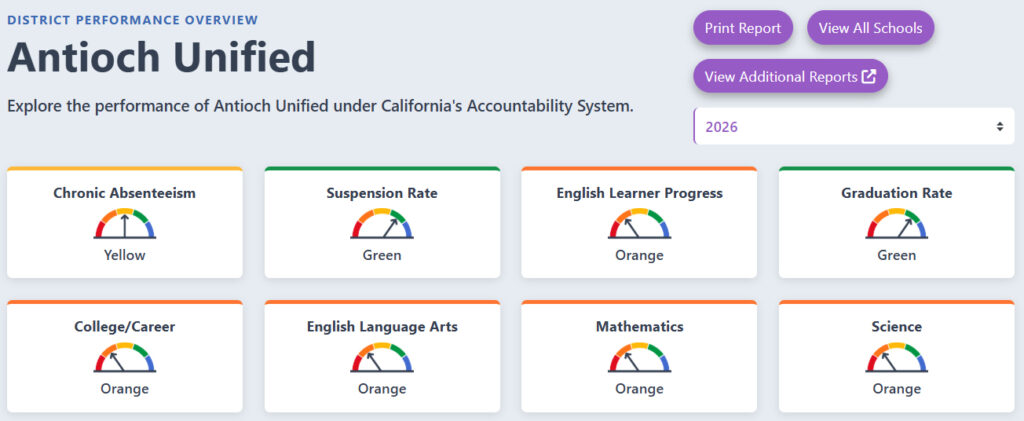
The state gave schools an overall score of orange for English language arts, and yellow for math and science.

Jessica Sawko, director of education at Children Now, advocated for science to be included in the state’s accountability system because she said science helps prepare students for college and career.

She said it was “heartening” to hear that there was improvement in science scores, but the percentage of students achieving proficiency is much too low.

“Here we are at not even 40% of kids achieving proficiency or better. That’s more than half of the kids not there yet, and yet we’re at a yellow?” she said.

Antioch Unified School District’s Performance Overview Chart

Source: California Dashboard

Learn more about the California Dashboard by reading A parents’ guide to understanding the 2026 California School Dashboard  | EdSource.

Antioch’s Delta Learning Center celebrates 50 years of tutoring

Thursday, October 8th, 2026
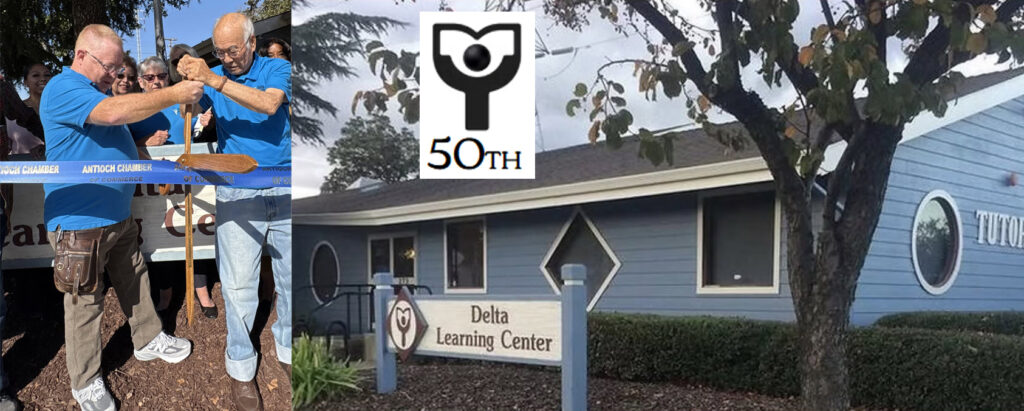
As staff and supporters look on, tutor and acting Executive Director Michael Meyer with Ben Fong, the longest serving tutor who just turned 94, cut the ribbon to celebrate Delta Learning Center’s 50th anniversary on Saturday, Oct. 3, 2026. Photos: DLC

By City of Antioch

An iconic non-profit recently celebrated its golden anniversary with community, staff and its board members.

Held on Saturday, Oct. 3, 2026, the Delta Learning Center hosted a gathering to mark 50 years of tutoring students.

The West Tregallas Road center, across from the Antioch main Post Office, is one of oldest educational resources in East County.

Its mission statement notes it “prides itself on delivering the highest quality credentialed teacher tutoring services at an affordable rate.”

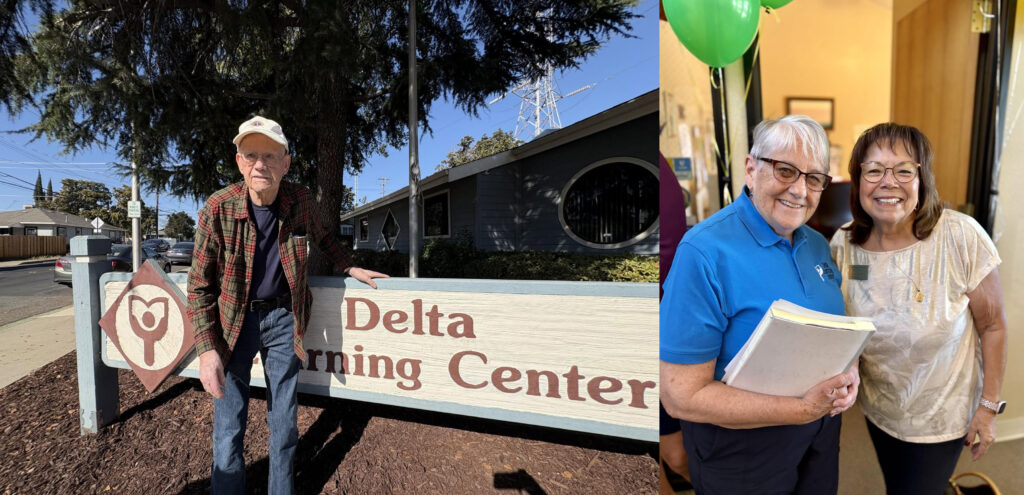
Don Watson, Delta Learning Center’s longest serving board member (left), and DLC Executive Assistant Martha Goralka with Nora von Ubin, Executive Director of An Elderly Wish Foundation which rents a room in the building.

The center offers tutoring for K-12 students by credentialed teachers.

One parent at the event said her daughter, a senior and student leader at an AUSD high school, benefited greatly from DLC.

The Center’s Executive Assistant, Martha Goralka spoke during the ceremony and shared the following prepared remarks.

 “Good morning and welcome to the Delta Learning Center’s 50th Anniversary celebration.  We have come to honor those visionaries who 50 years ago decided that it was imperative that ALL students be given a chance to learn to the best of their abilities.  And honor those visionaries who have supported us with their time, talent and treasure over the past 50 years.

“Retired Antioch Unified school psychologist Julia “Bess” Combs knew that students with learning disabilities needed extra help.  That was a newer concept in the 1970’s.  She recruited her retired teacher friends to start one-on-one tutoring in 1976.  The mission of the Center has expanded to include ALL students of every age; TK through adult.  The Delta Learning Center tutors have only earned minimum wage for their dedicated commitment to our East County students of all ages and all needs.  As you might guess, only the most committed teachers are willing to work for such a low wage.  In fact, over the years, several of our tutors have donated back their wages to our scholarship fund; so, our most needy students can attend.

“In 1989, 13 years after the Center was founded, the board decided that building a building to house the Center would ensure that the Center could avoid rent increases at churches.  It was important that the building not look like a school, but like a whimsical, fun place to come after school, hence the triangle and odd shaped windows.  The Center had moved from Bess Combs garage to church Sunday school rooms to this amazing building built by our entire community with donations, discounts and donated services.

“The longest serving board member in the History of the Delta Learning Center, Antioch Lion’s Club member Don Watson, told me that because Bess was a Soroptimist, that organization took the lead and if the operations account ran low, Ethel Balbi, a Soroptimists from San Rafael would say, “How much do you need?” and would write  a check.  We don’t have those Angels anymore, but we do receive grants and a gift that keeps us going including from an anonymous donor.  We are grateful to the Antioch Community Foundation, St. John’s Luteran church, Keller Canyon fund, local service clubs, including the Soroptimist International of Antioch, GWFC Woman’s Club of Antioch, Rotary Club of the Delta/Antioch, Rotary Club of Antioch, Rotary Club of Brentwood, Rotary Club of Oakley, Antioch Lion’s Club, Delta Advocacy and so many more.  Thank you, East Contra Costa County!  And thank you Rotary Club of Cupertino, that arranged for us to install solar panels so that we can afford PG&E!

“Former board members will tell you what a miracle it is that we have survived all these years.  And so will our miracle working former executive directors.  We are currently working without an executive director.  It is hard to recruit when you are offering just over minimum wage and a list of responsibilities a mile long.

“We are especially grateful for our tutors, Ben Fong, our longest serving tutor who works miracles with Algebra and geometry middle school and high school students, Ben has his 94th birthday on October 7th and plans to work until he is 100 or so; Sonia Spohrer, who works with Spanish speakers learning English and grade school students; Barbara Klein who works with ELA, special ed grade school students;  Lynne Wheelock, who works with K through 4th grade students and Karen Bouskill who works with college, special education and 4th through adult.  Michael Meyer tutors all subjects for High School and adult students including GED – his schedule is always full.  Our administrative assistant, Moriah Green, coordinates our tutoring assignments.  She graduated from Dozier Libbey Medical High School, the Opportunity Junction clerical program and is finishing at Los Medanos College before applying to an Historically Black College. We couldn’t operate without her.

“Our board members are Antonio Hernandez, president (school board member and medical student) Sandra White (Past president of the Rotary Club of Antioch and City Council candidate) Sophia Macha (Secretary and former student, currently studying at UC Davis) Michael Meyer (Tutor and acting executive director) and Martha Goralka (Vice President and acting assistant executive director; currently the longest serving board member – she knew Bess Combs)

Goralka then acknowledges the representatives of elected officials who were able to attend the ceremony including Kayla Turnage with Assemblymember Anamarie Ávila Farías’ office, Theresa Anderson with State Senator Tim Grayson’s office and Dominique King with Congressman Josh Harder’s office.

For more information visit www.deltalearningcenter.org. See more photos from the event on the City of Antioch’s Facebook page posted Wednesday, Oct. 7th.

Allen D. Payton contributed to this report.

Deer Valley High’s Teal & Black Regiment marching band takes 2nd place at 37th Annual Delta Band Review

Wednesday, October 7th, 2026
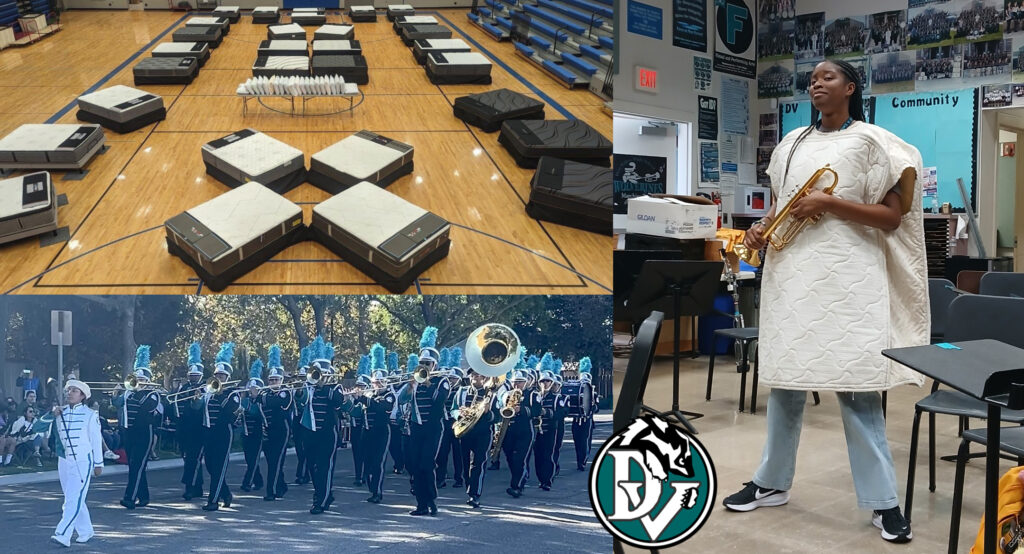
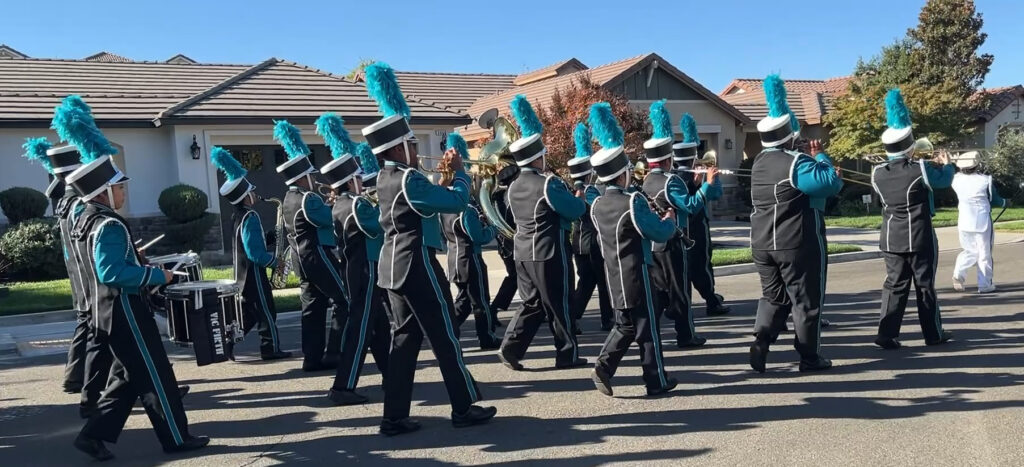
The Deer Valley High School Teal & Black Regiment marching band performs in the parade during the 37th Annual Delta Band Review on Saturday, Oct. 3, 2026. All photos: AUSD

Antioch High hosts Parade, Street Percussion & Jazz Competitions but not eligible for awards

By Antioch Unified School District

It was a hot day but that didn’t stop 24 school music groups from giving great performances.

On Saturday, Oct 3, 2026, the 37th annual Delta Band Review started the day of competition with a parade in front of Antioch Middle School on D Street.


A total of 20 high school marching bands competed. The event also included a jazz contest, with four schools competing.

The Deer Valley High School Teal & Black Regiment marched away with the second place award in the Parade division 2A. The Parade and Jazz Competition awards were presented in Eels Stadium.

Antioch High School’s Pride of Antioch Marching Band and Color Guard kicked off the day but, as event host, wasn’t eligible for awards.

Thanks to the many who made this event so special.

Organized by Antioch Band Backers Association

The Delta Band Review is organized by the Antioch Band Backers Association.

In a letter to “Band Members, Directors, Coaches and Guests, AHS Band Director Brian Allen Hobbs and Association President Johnny Hackenkamp wrote, “On behalf of the Antioch Band Backers Association, it is our absolute pleasure to welcome you to the 37th Annual Delta Band Review!

The Antioch High School Pride of Antioch Marching Band participated in the parade but as hosts, did not compete for the awards.

“Today, we invite you to experience the spectacular sights, sounds, and magic of marching and jazz bands. From the vibrant performances on the streets of Antioch to the captivating sounds inside the Beede Auditorium, this event promises an unforgettable celebration of music and community. The Parade and Percussion competitions will take place at Antioch Middle School and the City Library, while the awards ceremony will be held at Eells Stadium on the AHS campus.

“The success of this event is a testament to the dedication, passion, and support of so many individuals. We extend our heartfelt gratitude to the volunteers, donors, band families, and community members whose hard work has made today possible. Be sure to check out our special thanks page, where we recognize these amazing contributors.

“Once again, welcome to Antioch High School. We are excited to have you here and wish the best of luck to all the bands competing today!

For more information visit www.deltabandreview.com and www.antiochbandbackers.com.

See more photos on the AUSD Facebook page post on Oct. 5th.

Allen D. Payton contributed to this report.

California feeds kids at school. What happens on the weekend?

Monday, October 5th, 2026
Rescued produce sorted at White Pony Express before delivery to community partners in Contra Costa County. Photo: WPE

Guest Commentary

By Tyler McCarthy, Outreach Associate, White Pony Express

On Friday afternoon, for a student who eats breakfast and lunch at school, the dismissal bell does more than end the school day. It starts a 68-hour clock. The last dependable school meal of the week has just been served. The next one won’t arrive until Monday morning.

We hear from our school partners what those hours can mean. As one parent liaison put it: “My thinking was that if I can give them a meal for Saturday, then they only have to get through Sunday. That lessens the need.”

California has done something remarkable. In 2022–23, it became the first state in the nation to guarantee every public school student access to free breakfast and lunch, regardless of family income. Nearly 3.5 billion school meals have been served since the program began.

It works. And at a time when changes to federal nutrition programs are putting additional pressure on some California families, it’s an achievement we must protect.

But hunger doesn’t follow a school calendar.

California’s universal meals program feeds children during the school day. Children still need to eat Friday night, Saturday, Sunday, holidays and school breaks. California has also embraced summer grocery benefits for eligible families, another important piece of the solution. But summer assistance does not solve the gap that arrives every week between Friday afternoon and Monday morning.

For a family already choosing between rent, utilities, transportation, and groceries, those aren’t simply gaps in a schedule. They can be the days the refrigerator runs empty. That’s where White Pony Express makes an enormous difference.

Every day, White Pony Express drivers collect surplus food from grocers, farms, wholesalers, and restaurants – high-quality food that is perfectly good but has nowhere to go. We sort it for quality the same day and deliver it, free of charge, to neighbors throughout Contra Costa County. Of the 135,000 people White Pony Express serves each year, nearly one-third – about 40,300 – are children.

Photo: WPE

Our School Pantry Program brings fresh groceries directly into 23 school communities where 80 percent or more of students qualify for free or reduced-price meals. Families shop at no cost, with no forms and no questions asked.

One pantry coordinator remembers a young mother raising three children alone after losing her husband. She came to the pantry for groceries, including peanut butter and chicken.

“She doesn’t have money to buy much,” the coordinator told us, “but she told me it’s a blessing to have White Pony Express helping us.”

Since the School Pantry Program began in 2015, White Pony Express has delivered more than three million pounds of food to school communities – the equivalent of roughly 2.5 million meals.

The model works because it connects two resources that already exist: good food that would otherwise go unused and trusted neighborhood schools where families already gather.

It also demonstrates something larger. Public programs and community organizations do not have to compete with one another. They can complete one another.

Photos: WPE

California has shown what is possible when we make a public commitment to feed children at school and then build a system capable of doing it at an extraordinary scale. Now we need to look just as honestly at the hours the school cafeteria cannot cover.

More than two million California children still lack reliable access to healthy food. For them, the problem doesn’t begin Monday morning. It begins Friday afternoon, when the bell rings. And that is a gap communities like ours can – and must – close.

To volunteer, donate food, or support the School Pantry Program, visit whiteponyexpress.org.

Deer Valley High music program to host mattress sale fundraiser Oct. 10

Saturday, October 3rd, 2026
Mattresses inside the DVHS gym, the Marching Teal & Black Regiment and First Trumpet Ramiyah Kidd in Mattress Costume in the band room. Photos courtesy of Kathy Barlow

To pay for competitions and equipment

By Deer Valley High School Band Boosters

The Deer Valley High School Instrumental Music Program, an award-winning group of local musicians, invites the community to its second annual Mattress Sale on Saturday, October 10, from 10 am to 4 pm, as the DVHS North Gym is transformed into a professional mattress showroom. Supporters can test and purchase 25+ top brand-name mattresses, adjustable bases, bedding and pillows, while providing funds for the Marching Band – Teal & Black Regiment and Orchestra, to travel and perform throughout California.

“One in four families will buy a mattress each year, and we are thrilled that people can find one at a great price, while supporting music in our school,” said Band Director (and Deer Valley alumnus) Brian Poole. “Through this fundraiser, we hope to make a significant dent in our travel and competition costs and be able to upgrade and repair instruments for our talented musicians,” continued Poole.

Deer Valley High School Marching Teal & Black Regiment.

The sale is backed by a fundraising firm that fills the gym with brand new top mattress brands including Purple, Helix and Beautyrest. The company offers a lowest price guarantee, since it doesn’t maintain a retail store and instead helps local organizations raise money. A full 50% of the profits goes to the music program.

“Young people will love the beanbag chair that transforms into a mattress,” said Band Boosters President Kathy Barlow. “Come support your back with a new mattress and support our kids.”

Financing, delivery, setup and removal of one’s old mattress are offered. And delivery is available throughout the U.S., so that family and friends elsewhere can support the music program.

Photo source: DVHS

Event visitors will enjoy live entertainment provided by The Teal Tones, Deer Valley’s Jazz Band, and its orchestral Chamber Ensembles.

The Deer Valley Music Program has a long history of entertaining the community in local parades and performances and participates in competitions and throughout California.

The Deer Valley HS Music Mattress Sale will take place Saturday, October 10 from 10 am to 4 pm, at the North Gym on its campus at 4700 Lone Tree Way, in Antioch. Just show up at the sale, or RSVP here for a 10% discount coupon: https://sanjose.cfsbeds.com/events/deer-valley-high-school

The Campaign for College Opportunity names Los Medanos College a 2026 Pathway Champion of Placement

Friday, October 2nd, 2026

LMC Latino students excel

Online celebration Oct. 22

By Juliet V. Casey, Director of Marketing and Media Design, Los Medanos College and Loni Swain, Director of Communications, Campaign for College Opportunity

Pittsburg, Calif. – The Campaign for College Opportunity named Los Medanos College a 2026 Pathway Champion of Placement for its Latino Student Success in English. This award recognizes colleges where Latino students are completing transfer-level English at the highest rates, with particular attention to closing racial equity gaps.

“We commend your institution’s commitment to advancing equitable student success and strengthening California’s transfer pathway,” said Jessie Ryan, president of The Campaign for College Opportunity. “This achievement underscores the extraordinary efforts of your faculty and staff to ensure all students, especially those historically underrepresented, have the opportunity to succeed.”

Ryan added that LMC is leading the way, showing what is possible “when equity and excellence go hand in hand.”

LMC will be recognized during the Pathway Champions: Celebrating Colleges Building Seamless Paths to Student Success virtual celebration on Thursday, October 22, 2026, from 11 a.m. to 12:30 p.m., during National Transfer Week.

“Los Medanos College is a culturally rich institution, where more than 45% of the student population identifies as Latinx,” LMC President Ralston said. “We are honored and proud of this recognition.”

Ralston said that as a federally designated Hispanic-Serving Institution, LMC prioritizes improving transfer-level English completion for this population but has not done so in isolation. The college’s Student Equity Plan includes strategies designed to address shared and intersecting barriers to completion of all students, she said.

Morgan Lynn, chair of LMC’s English Department, faculty members have been making student-centered, holistic, and innovative changes to our programming and pedagogy.

“This award is a testament to all of our committed faculty, who have dedicated themselves to truly putting students first,” she said. 

LMC Vice President of Instruction A’kilah Smith applauded the English Department for their notable work.

“I’m especially proud of our English faculty and colleagues who have embraced the opportunity to rethink how we support students, remove barriers, and create pathways to early success in college-level English,” Smith said.

Marisa Johnson, director of policy impact for The Campaign for College Opportunity, said LMC’s approach stands out. During the 2023-2024 academic year, LMC’s overall transfer-level English completion rate within one year of initial enrollment was 69.4% and 65.1% among Latino students, below the threshold to qualify for the award. After implementing its equity plan, which includes targeted initiatives, services, guidance and resources, LMC’s completion rate overall and for Latino students both rose to 72%.

“So, this award really represents closing the equity gap for last year’s English gateway courses,” Johnson said.

Rachel Anicetti, LMC dean of Liberal Arts and Sciences, said the award also reflects LMC’s commitment to equity. 

“I am incredibly proud for our English faculty and their collaborative investment in professional development, learning communities, and equitable teaching practices,” she said.

Pathway Champion awards honor campuses advancing landmark reforms in equitable placement (AB 705 and 1705, Irwin), which maximize student success in transfer level-courses, and the Associate Degree for Transfer (ADT), which streamlines transfer between community colleges and CSUs. Since the passage of AB 705 and AB 1705 (Irwin), California Community Colleges have made historic progress in ensuring students are placed directly into transfer-level courses.

The Campaign for College Opportunity is recognizing 40 Pathway Champions this year.  The 40 honorees include California Community Colleges and CSU campuses.

Source: The Campaign for College Opportunity

About Los Medanos College (LMC): LMC is one of three colleges in the Contra Costa Community College District serving the East Contra Costa County community. Established in 1974, LMC has earned federal designations as a Minority-Serving and Hispanic-Serving institution. It offers award-winning transfer and career-technical programs, support services, and diverse academic opportunities in an inclusive learning environment. With exceptional educators, innovative curriculum, growing degree and certificate offerings, and state-of-the-art facilities, the college prepares students to succeed in their educational pursuits, in the workforce, and beyond. LMC’s Pittsburg Campus is located on 120 acres bordering Antioch, with an additional education center in Brentwood. For more information visit www.losmedanos.edu.

About the Campaign for College Opportunity: The Campaign for College Opportunity is a coalition representing business, labor, civil rights, religious groups and civic organizations working to ensure that California keeps the promise of college opportunity to California’s next generation of students. The coalition is dedicated to ensuring every Californian can attend and succeed in college, building a stronger future for California’s communities and the students who power them.

Antioch Police use EthiCards to strengthen trust through ethical leadership

Wednesday, September 30th, 2026
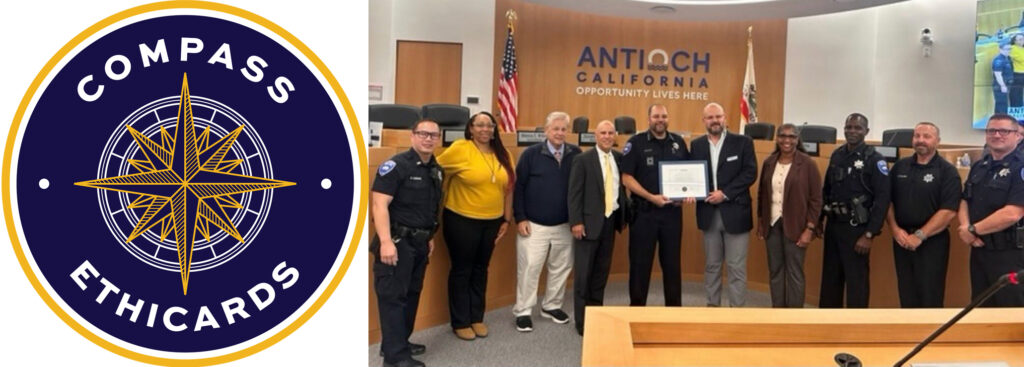
Joined by the council members, Professor Bradley Strawser, Founder and CEO of EthiCards presents Chief Vigil and leaders of the Antioch Police Department, with the “Compass Leader in Ethical Culture” certificate. Photo: Antioch PD

“Developed by military experts, proven in combat zones, adapted for law enforcement.”

“Antioch is a true leader, here, in this space.” – Founder & CEO of EthiCards

By Antioch Police Department

Integrity in policing is built through continuous practice, open dialogue and a commitment to doing what is right every single day.

On Tuesday, Sept. 22, 2026, Lt. Franco Cesar delivered a presentation to the Antioch City Council introducing EthiCards – an innovative, scenario-based ethics training program designed to engage officers across all ranks in regular, real-world ethical problem-solving. (See 1:57:00 mark of meeting video)

EthiCards moves beyond traditional classroom lectures, putting structured ethical dilemmas directly into daily briefings and roll calls to sharpen critical thinking, promote active bystandership, and reinforce procedural justice in the field.

Following the presentation, Founder and CEO of EthiCards, Bradley Strawser, a Professor of Military Ethics and Chair of the Defense Analysis Department at the Naval Post Graduate School in Monterey, honored Chief Vigil and the Antioch Police Department with the “Compass Leader in Ethical Culture” certificate. This award recognizes APD’s outstanding leadership in going above and beyond to prioritize ethics, accountability, and continuous professional development for our personnel.

Strawser told the City Council, “We started this program based on over a decade of research. Most ethics approaches within law enforcement just don’t do much. It’s just sort of a check the box exercise. We’re in about 150 departments across the country, right now which sounds like a lot but it’s not. There are thousands of police departments across the country. So, really Antioch is a true leader, here, in this space.”

EthiCards app example. Video screenshot source: EthiCards.

According to the Compass EthiCards website, they were “Developed by military experts, proven in combat zones, adapted for law enforcement” and “grounded in behavioral science and organizational psychology—research that reveals what actually drives ethical behavior.”

They are “52 expertly crafted cards with real-world policing scenarios, organized into 4 suits with ethical insights from our experts” and offer “Personalized features like marking cards as completed and saving favorites for each team member.” The company also offers access to “Access to the EthiCards app and website for your entire department—not just sworn officers,” and “Annual Deck Updates” with “a brand new set of 52 fresh scenarios to keep discussions current and relevant.”

The company claims the cards have “Reduced Misconduct, Improved Retention,” they “Lower Liability” and are “Proven Globally” and “The result: a healthier, ethical culture built from the inside out.”

Thank you to the City Council and our Antioch community for your continued support as we invest in proactive, high-standard training for our officers!

Allen D. Payton contributed to this report.