Organics? Recycling? Landfill? Republic Services shows what goes where
Thursday, May 23rd, 2024
Paid advertisement.











Paid advertisement.

Possibly $90,000, police seek public’s help
By Acting Sergeant Kristian Palma #6286 Antioch Police Department Investigations Bureau
On Monday, May 20, 2024, at approximately 2:18 AM, Antioch police officers responded to the 2500 block of Somersville Road for the report of an armed robbery.
When officers arrived, they contacted two victims. Officers learned the victims were employees of the Contra Costa County Event Park (Fairgrounds). The Contra Costa County Fair had ended, and two employees were tasked with conducting the night deposit. While conducting the night deposit at the BMO Bank they were approached by an unknown suspect. The suspect robbed the victims of the money and personal belongings at gunpoint.
Other news reports have pegged the amount stolen at $90,000. When asked, a county fair representative offered no comment but didn’t know how that amount was known by other media. Questions were emailed late Wednesday night to Fair CEO Joe Brengle asking if that’s correct, why the deposit was made at that time instead of leaving it in a safe on the fairgrounds and waiting until Monday morning to make the deposit, what is the usual procedure and for any additional information he could share.
We are asking for anyone with information regarding the incident to contact the Antioch Police Department Investigations Bureau. Additional inquiries or information can be directed to Antioch Police Detective Sgt. Palma at (925) 779-6876 or by emailing kpalma@antiochca.gov.
Additional questions were emailed to Brengle Thursday afternoon including:
“Shouldn’t the deposit of such an amount be made with an armed escort, such as staff from the security company, Praetorian hired by the Fair this year or county sheriff’s deputies? Does the Fair have policies and procedures in place for handling deposits? Were they followed? What are they? What amount does the $90,000 (or more) represent of the Fair’s proceeds? Will the Fair’s insurance cover any or all of the loss? What impacts will it have for the Fair’s future?”
Please check back later for any updates to this report.
Allen D. Payton contributed to this report.

While Anello out on medical leave; oversaw internal investigations of bullying complaints
By Allen D. Payton
The Antioch School Board appointed the school district’s Chief Human Resources Officer, Certificated HR, Dr. Robert Martinez as acting superintendent, Wednesday night, May 22, 2024, to serve while Superintendent Stephanie Anello is out on medical leave.
Following their closed session meeting, which also included a performance evaluation of Anello, Antioch School Board President Antonio Hernandez announced, “The Board has selected Dr. Robert Martinez as acting superintendent on a 3-2 vote.”
However, Anello was not in attendance and Hernandez did not mention anything about that agenda item.
Martinez, who goes by Rob, oversaw the recent internal investigations of the complaints against Kenny Turnage by district maintenance employees. The results of the investigations have not been satisfactory to those employees, nor Hernandez who has publicly called for Anello’s resignation in spite of not having provided her with an annual evaluation for at least two years. Two additional investigations of the complaints using outside individuals are underway. Plus, Hernandez has called for a separate, board-led “investigation on the policies, practices, and culture of the Antioch Unified School District that impact our employees and students.” (See related article)
At the beginning of the Superintendent’s Report agenda item of the meeting, Martinez said, “First off, let me just say thank you to the board for the trust that you’ve placed in me to serve as the acting superintendent.in Superintendent Anello’s absence,” Martinez. “I will hold that responsibility with great care, compassion and commitment for all of our students, staff, families and community.”
About Dr. Rob Martinez
According to his LinkedIn profile, “Dr. Robert A. Martinez is currently the Chief of Human Resources for the Antioch Unified School District (in which he has served since June 2022). He previously served as Superintendent/CEO of Griffin Technology Academies, and the Mt. Diablo Unified School District. He was the Assistant Superintendent in the Fairfield-Suisun Communities where he worked for 32 years. Dr. Martinez has continually focused on improving and expanding educational opportunities for students. He strives to advance understanding of resiliency research for all his employees, students, and their families. He seeks to support all District personnel with advancing their personal and professional skills, knowledge, and expertise in working with children as unique individuals with unlimited capacities. He has served as a Board Member of the Association of California School Administrators (ACSA), ACSA President-Elect of for Region 4, Past-President of Solano ACSA Charter, as a Board Member for the California Association of Latino Superintendents and Administrators (#CALSA/Greater San Francisco, Bay Area, Region 1) and is currently the Vice President of Legislative Action for ACSA Region 4. He was awarded ACSA’s most acclaimed Personnel/Human Resources recognition in 2019. Dr. Martinez holds a B.A. in Psychology and an M.A. in Education, both from the University of California, Davis. He is extremely proud to have earned his Educational Doctorate Degree in Educational Leadership and Management with a concentration in Human Resources, from Drexel University.
His new book, “Recipes for Resilience, Nurturing Perseverance in Students and Educators” was recently released and is available on @Amazon. He shares messages from his life and lessons learned. His life’s work has focused on helping others live courageous, resilient lives. He previously authored “The Story of Sparkle and Shine,” a story of positivity and action for good.
He is available to provide keynotes, consultation, and training on building resilient cultures that create powerful safe places for our children and adults to learn, grow and develop in peace. He believes building resilience in each person, in equitable safe places is of paramount importance.
You can follow him @ResiliencyGuy @Twitter, @Instagram, @Facebook @Youtube.
Educator, Superintendent, Past CALSA Board of Director, Past ACSA Board Member, ACSA Region 4 Board Member, Solano ACSA, Life-long Learner, Dr. Rob often says, “Let the lives we help others live be the measure of our success.”
Martinez earned his Master of Arts Degree in Education in 1992 from U.C. Davis and his Doctorate of Education Educational Leadership, Human Resources Concentration from Drexel University in 2013.

Half-off passes on sale now through June 30th only.
Kids don’t want to be stuck at home for the summer, and parents don’t want to be stuck driving everywhere.
Give your kids their own set of wheels with a Summer Youth Bus Pass.
The Summer Youth Pass is the perfect way for youth riders to get around Contra Costa County during the summer. Passholders can take unlimited rides on Tri Delta Transit, West CAT, and County Connection local and express buses for an affordable and discounted price.
For only $30*, youth 6-18 can take unlimited bus rides from June 1 through Aug. 31, 2023 – one of the best summertime bargains for getting around Contra Costa County!
Click here to purchase your pass https://511cc.org/youthpass or come to our office.
*Actual pass price $60. Advertised $30 price reflects a $30 supplement per pass provided by 511 Contra Costa. Passes receiving the 511 Contra Costa supplement are limited in quantity and available only while supplies last.

It’s better to be ticked off than ticked on
By East Bay Regional Park District
Whether you’re hiking in East Bay Regional Parks, venturing into nearby open spaces, or simply relaxing in your own yard, it’s important to be wary of ticks, which are often present in tall grass, brush, and wooded areas. Visitors are encouraged to keep tick safety precautions in mind when visiting East Bay Regional Parks throughout the spring, summer, and fall seasons.
Ticks carry germs that can cause a number of diseases, including Lyme disease. Lyme disease is an infectious disease transmitted by the bite of a tick. It may be treated and cured with early diagnosis, but if not properly treated, it may persist in the body for years. Visit www.bayarealyme.org for more information.
What Does a Tick Look Like? In California, the western black-legged tick is the major carrier of Lyme disease. The adult female is reddish brown with black legs, about 1/8 inch long. Males are smaller and entirely brownish black. Both are teardrop shaped. Most ticks can’t fly or jump. They wait on the tips of grasses and in shrubs along well-used paths. With their front legs outstretched, they easily climb aboard unsuspecting hosts when they brush by.
Tick Safety Tips
What To Do If Bitten By A Tick
Download the Park District’s Living with Ticks brochure. Additional information is available at ebparks.org/safety/wildlife-encounters.
The East Bay Regional Park District is the largest regional park system in the nation, comprising 73 parks, 55 miles of shoreline, and over 1,330 miles of trails for hiking, biking, horseback riding, and environmental education. The Park District receives an estimated 30 million visits annually throughout Alameda and Contra Costa counties in the San Francisco Bay Area.
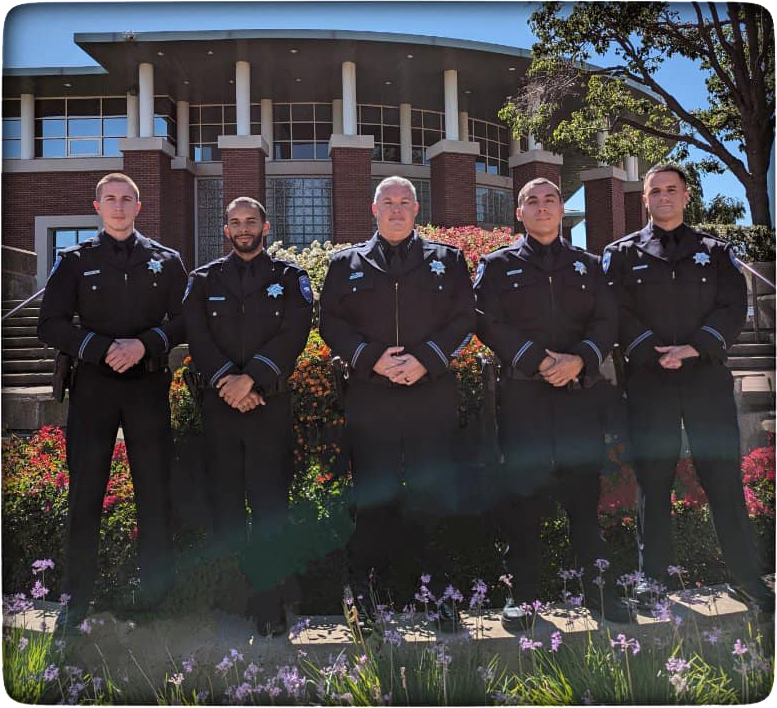
A former Hockey Hall of Famer in Canada, two former youth football players including a Deer Valley High School grad and a father of two
By Antioch Police Department
We are happy to announce the swearing-in of four new Antioch Police officers! Officers Loroño, Jones, Serna, and Church all graduated from Alameda County Sheriff’s Office Regional Training Center. Chief Addington swore them in using the Law Enforcement Oath of Honor and Oath or Affirmation of Allegiance for Public Officers and Employees. We welcome them and wish them the best as they embark on the next part of their careers and start their Field Training Program!
Alejandro Loroño
Alejandro was born in Walnut Creek. He grew up in Brentwood and graduated from Heritage High School. Growing up he played club hockey for the Tri-Valley Blue Devils out of Dublin. During his time playing hockey he traveled all over North America to compete against various teams. During his free time, he enjoys going on motorcycle rides, playing hockey, working out, going to the shooting range, and playing video games. He is extremely excited, blessed and honored to start a career with APD! He also placed third in his class in the Academy.
Fun Fact: He became a former Hockey Hall of Famer for a year after winning a tournament in Canada. Getting his teammates names and his own put into the Hall of Fame!
Trayjen Jones
Trayjen was born and raised in Concord. He graduated from Concord High School in 2021 and then moved to Antioch with his family. Growing up Trayjen played football and ran track in high school. He has a total of six siblings, which consist of five sisters and a stepbrother. Although he grew up in Concord, Trayjen loves the City of Antioch and cannot wait to be able to give back to the city as a Police Officer.
Fun Fact: Trayjen played football for 11 years before graduating high school, he wanted to play in college, but decided to pursue a career in Law Enforcement.
Placido Serna
Placido was born and raised in Stockton. He graduated from Sture Larson High School in North Stockton. He then attended San Joaquin Delta College where he received his Associates Degree in Criminal Justice and Psychology. During his free time, he enjoys spending time with his girlfriend and their two kids, spending time with his friends, and working out.
Fun Fact: On Placido’s 21st birthday neither of his kids were born yet, but on his 22nd birthday both of his kids were already born, and no they’re not twins!
David Church
David was born in Redwood City and raised in Antioch. He attended Deer Valley High School where he played football for the Wolverines. He has worked a variety of jobs including construction, retail management, auto sales, and real estate sales. During his free time, he enjoys working out, playing/ watching sports, going on nature excursions, and traveling to different destinations. He’s extremely excited and honored to serve his hometown of Antioch as a peace officer!
Fun fact: David can slam dunk a basketball.

Sgt. Rob Green returns to Antioch PD’s Traffic Bureau
Antioch, Calif. — During Motorcycle Safety Awareness Month in May, Antioch Police Department would like to remind drivers to always look twice for motorcycles. By practicing safe driving habits and taking shared responsibility on our roads, we can help everyone arrive at their destination safely.
“Motorcycles may be difficult to spot, so be extra careful before changing lanes,” Sergeant Rob Green said. “A simple double take could mean the difference between a safe journey and a tragic crash. Motorcycle riders do not have the same protections drivers and passengers do. Let’s all do our part to keep each other safe out there.”
According to National Highway Traffic Safety Administration data, there were 6,218 motorcyclists killed in traffic crashes in 2022. Motorcyclists were about 22 times more likely than passenger car occupants to die in a motor vehicle crash and four times more likely to be injured.

To help protect you and your family, keep the following tips in mind while driving or riding:
Drivers
Motorcyclists
Lastly, both drivers and riders should never drive/ride distracted or under the influence of alcohol and/or drugs.
Funding for this program is provided by a grant from the California Office of Traffic Safety, through the National Highway Traffic Safety Administration.
In addition, Antioch Police announced the following on their Facebook page on Sunday, May 19, 2024: “We have an exciting update to share! The Antioch Police Department is bringing back our Traffic Unit. Keeping our roadways safe for our residents is a top priority. Sgt. Rob Green is back in our Traffic Bureau. Officers assigned to the Traffic Unit have specialized training in major collision investigations, DUI investigations, and accident reconstruction. The primary goal of the Traffic Unit is to reduce the number of accidents and to encourage traffic safety on our city streets and in our neighborhoods.”
Allen D. Payton contributed to this report.
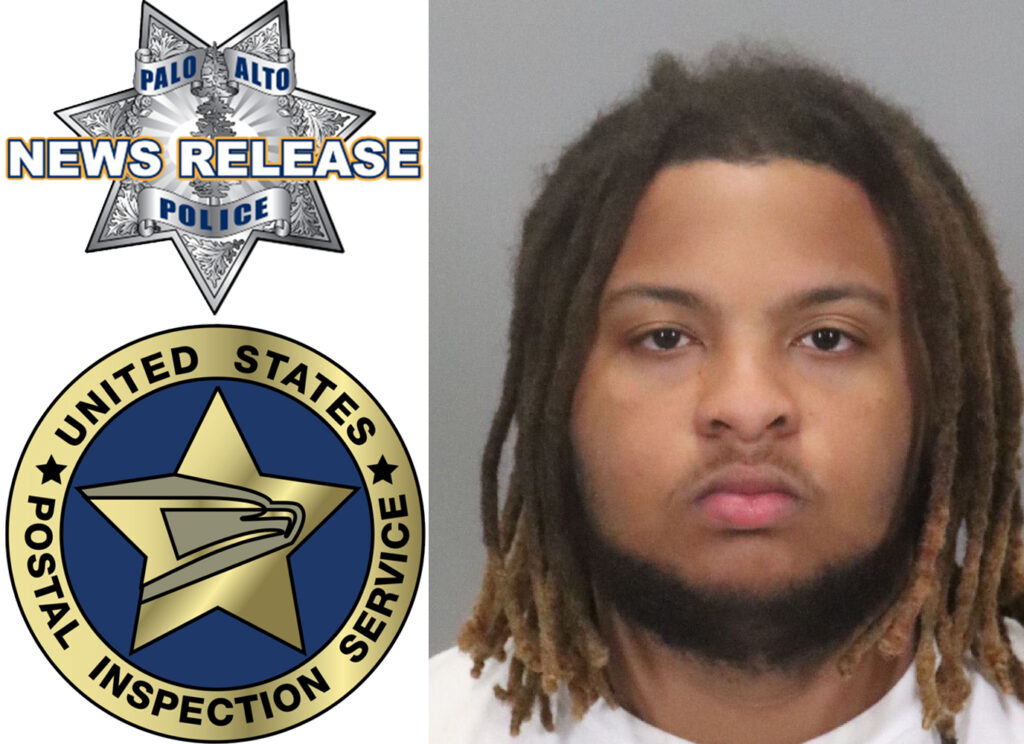
Up to $150,000 rewards offered; may be tied to mail carrier thefts in Antioch, Contra Costa County
By Allen D. Payton
Palo Alto Police Lt. Con Maloney issued the following information on May 14, 2024, announcing the arrests of two suspects for the robberies of two mail carriers:
Police arrested two suspects this weekend after they committed robberies of United States Postal Service mail carriers in Belmont and Palo Alto, and then led officers on a vehicle pursuit in a stolen car before crashing into a tree and fleeing on foot. Police recovered two airsoft pistols and the stolen property.
The incident began around 2:12 p.m. on Saturday, May 11, 2024, when our 24-hour dispatch center put out an alert on the police radio about a strong-arm robbery of a mail carrier that had occurred around 1:30 p.m. in Belmont. The Belmont Police Department described the two suspects and the vehicle they were driving (a black 2013 Infiniti G37 two-door, bearing a stolen license plate that belonged on a Ford).
At about 2:18 p.m., our 24-hour dispatch center received a call from a witness reporting they had just seen two males loitering in the 800 block of Ilima Court. When the males spotted the witness, they quickly walked away and entered a black Infiniti sedan parked on Laguna Avenue. The witness continued to watch them and saw them exit the Infiniti and walk back towards Ilima Court. The witness’ description of the males and their car closely matched the alert from Belmont. Officers began responding to the area to investigate.
A few minutes later, other witnesses called police to report that a mail carrier had just been robbed at gunpoint in the 800 block of Ilima Court by two suspects matching the earlier description.
Responding officers located the suspect vehicle driving northbound on El Camino Real from Matadero Avenue. When officers attempted to make a stop, the suspect vehicle fled at a high rate of speed, leading police on a vehicle pursuit that turned westbound onto Hansen Way. The suspect vehicle lost control and crashed into a tree in a private parking lot in the 3100 block of Hansen Way, and both suspects inside then fled on foot. Officers chased the suspects, arresting them both without incident nearby a short time later.
Both suspects sustained minor injuries as a result of the collision. Personnel from the Palo Alto Fire Department treated and released them at the scene. Neither suspect, nor any officers, were injured during the arrests.
The suspect vehicle sustained major damage from the collision and had to be towed from the scene. It turns out the Infiniti itself had been reported stolen from Alameda on May 1, while the license plate on its rear had been reported stolen from Hayward on May 11.
Inside the vehicle, officers located two sets of stolen postal keys that were later confirmed to be the ones stolen from the two mail carrier victims (one from Belmont, one from Palo Alto). Officers also located two realistic-looking replica handguns; one inside the vehicle, and the other on the ground outside the vehicle.
The Palo Alto robbery investigation revealed that the victim, a mail carrier in his sixties, had been approached by both suspects. One suspect pointed a gun at his head while demanding his postal keys. Both suspects grabbed the victim and forcibly took the keys from him. The victim was not physically injured.
The robbery in Belmont occurred around 1:30 p.m. on May 11 in the 700 block of Old County Road. In that case, the mail carrier was a woman in her forties who received minor physical injuries but declined medical treatment at the scene. No weapon was used.
Police booked 19-year-old Trevionne Levar Williams of Sacramento into the Santa Clara County Main Jail for robbery, assault with a deadly weapon, elder abuse (due to the age of the Palo Alto victim) and committing a felony while out on bail for another felony (all of which are felonies), and also for misdemeanor resisting arrest (for running from the police after the collision). Williams is currently out on bail in Sacramento County for multiple firearms-related violations. Police arrested the second suspect for robbery, assault with a deadly weapon, elder abuse, and vehicle theft (all of which are felonies), and also for misdemeanor evading police (for leading them on the pursuit); as he is a 17-year-old male, police transported him to the Santa Clara County Juvenile Hall. In accordance with our standard release of information procedures, no additional information on that suspect is available since he is under the age of 18. The juvenile was driving the stolen vehicle at the time of the collision.
Palo Alto detectives are working in close collaboration with detectives from the Belmont Police Department, as well as investigators from the United States Postal Inspection Service. Palo Alto detectives are also actively investigating to see if these suspects may also be responsible for a strong-arm robbery of a mail carrier that occurred in Palo Alto in December 2023. For details on that incident, see the news release we distributed at the time. That case is unsolved and remains open.
Robberies of mail carriers for postal keys, which are used to access locked Postal Service mailboxes, are becoming increasingly more common (though this is only the second such case in recent memory here in Palo Alto). Thieves then use the keys to assist them in committing mail theft, which in turn facilitates identity theft, fraud and other crimes.
Unauthorized possession of a postal key is a federal crime, a conviction which can land someone in prison for up to ten years. The United States Postal Inspection Service encourages anyone who knows the location of any stolen postal keys or who has information about any robberies of mail carriers to contact their 24-hour hotline at (877) 876-2455. They offer a reward of up to $150,000 for information leading to the arrest and conviction of any suspects.
According to Postal Inspector Matthew Norfleet of the U.S. Postal Inspection Service, Oakland Team, Palo Alto Police and postal inspectors are investigating another robbery of postal keys from a mail carrier in that city. We are asking residents to report any financial crimes related to theft of U.S. Mail as it may be related to the robbery and assault of postal workers. A reward up to $150,000 is available for information leading to the arrest and conviction of anyone who robbed or assaulted a postal worker.
According to localcrimenews.com, the six-foot, one-inch tall, 290-lb. Williams was also arrested in Sacramento on May 4, 2024, for carrying a concealed weapon in a vehicle and for the manufacture, import and/or sale of a large-capacity magazine of bullets.
Strong-Arm Robbery of Mail Carrier
Then, on Friday, May 17, 2024, Palo Alto Police Lt. David Lee issued the following about the second incident:
Police are investigating a strong-arm robbery of a United States Postal Service mail carrier that occurred yesterday in the Midtown neighborhood. The two suspects are unknown and at large.
On Thursday, May 16, 2024, at about 11:57 a.m., our 24-hour dispatch center received a call from a Postal Service supervisor stating that one of their mail carriers had been robbed of his postal keys about ten minutes earlier in the parking lot of the Southwood Apartments at 2850 Middlefield Road.
The investigation revealed that the victim, a man in his sixties, had been delivering mail when two men approached him and demanded his postal keys. The victim complied and turned over the keys. The men then demanded his wallet and cell phone, and when the victim refused, a fistfight ensued between all three. The suspects knocked the victim to the ground, and then fled on foot towards the parking garage. A short time later, the victim saw a black vehicle drive out of the garage at a high rate of speed to head southbound on Middlefield Road. The victim called his supervisor to report the incident.
The victim described the suspects as Hispanic males in their twenties, both about 5 feet 8 inches tall with average builds and no facial hair. The victim said they were both wearing black hooded sweatshirts with the hoods up. He said that when the suspects approached him, both had one hand reaching into their waistbands. He never saw either of them with a weapon. The victim described the vehicle he saw driving away as an older model Nissan Altima four-door sedan, with paint that looked old.
The victim sustained minor injuries to his face, rib cage, and knee. He declined medical attention at the scene.
Detectives are working with investigators from the United States Postal Inspection Service to conduct follow-up investigation. Palo Alto detectives are also investigating to see if these suspects may also be responsible for a strong-arm robbery of a mail carrier that occurred in Palo Alto in December 2023. For details on that incident, see the news release we distributed at the time. That case is unsolved and remains open. Detectives do not know if there is any connection between yesterday’s case and the arrests made of two individuals over the weekend for mail carrier robberies.
Robberies of mail carriers for postal keys, which are used to access locked Postal Service mailboxes, are becoming increasingly more common. Thieves then use the keys to assist them in committing mail theft, which in turn facilitates identity theft, fraud, and other crimes. Please report any financial crimes connected to the U.S. Mail to postal inspectors, even if the loss was minimal or covered by another institution.
Unauthorized possession of a postal key is a federal crime, a conviction which can land someone in prison for up to ten years. The United States Postal Inspection Service encourages anyone who knows the location of any stolen postal keys or who has information about any robberies of mail carriers to contact their 24-hour hotline at (877) 876-2455. They offer a reward of up to $150,000 for information leading to the arrest and conviction of any suspects.
In light of these robberies, police are asking that the public keep a watchful eye out, remain alert for suspicious behavior around mail carriers, Postal Service vehicles, and common mailboxes, and promptly report any suspicious activity to law enforcement. This could include vehicles and/or individuals appearing to follow mail carriers.
Inspector Unsure if Connected to Robberies in Antioch, Contra Costa
Norfleet was asked if the juvenile suspect is from and if either are suspects in robberies of mail carriers in Antioch or Contra Costa County. He responded, “I am not aware of a specific connection to Contra Costa County in the Belmont or Palo Alto robberies. We are still looking at possible connections between these suspects and any of our open robbery investigations in Contra Costa and Alameda counties. We have seen several Bay Area robberies committed by suspects using cars stolen from the Sacramento area, so we know they are at least passing through Contra Costa, and it’s not unreasonable to suspect the same individuals may be responsible for robberies in Antioch (or Contra Costa). We continue to look for leads on mail thefts throughout Contra Costa County, particularly if they relate to robberies of postal workers.”
Anyone with information about this incident is asked to call our 24-hour dispatch center at (650) 329-2413. Anonymous tips can be e-mailed to paloalto@tipnow.org or sent via text message or voice mail to (650) 383-8984.
Organics? Recycling? Landfill? Republic Services shows what goes where
Thursday, May 23rd, 2024Armed robbery of Contra Costa County Fair funds during bank deposit
Wednesday, May 22nd, 2024Antioch School Board appoints Chief Human Resources Officer as acting superintendent on split vote
Wednesday, May 22nd, 2024Tri Delta Transit offers Summer Youth Bus Pass for unlimited rides June 1 to Aug 31, 2023
Wednesday, May 22nd, 2024Police, postal inspectors arrest two suspects, investigate second theft of mail carriers
Monday, May 20th, 2024




















© 2026 Antioch Herald - Entries (RSS) - Comments (RSS) - Log in
Theme design by Christian Gnoth - 