Bay Area transit agencies are seeking another half-cent sales tax in November. While most of the $980 million a year in new revenue will go to BART, Muni and AC Transit, smaller agencies will also receive extra tax money, evading the need to reform. Contra Costa County will continue to have multiple bus operators, including two sharing the territory east of the Caldecott. Before voters agree to pour more public money into this hodgepodge of agencies, they should ask whether there are opportunities for reform.
Central and Eastern Contra Costa County are currently split between two distinct bus agencies. Tri Delta Transit covers eastern communities like Antioch and Brentwood, while County Connection serves central hubs including Walnut Creek and Concord. Together, they cover a combined service area of more than 800,000 residents. Both feed riders into BART, yet they maintain completely separate executive teams, planning departments, procurement offices, and administrative staff. In 2024, these two agencies spent a combined $79.8 million to deliver 4.1 million bus rides at an average cost of $19.39 per trip—of which passenger fares covered just $1.33, leaving taxpayers to subsidize the remaining $18.07 per ride.
The financial unsustainability of this arrangement is glaring when looking at farebox recovery and utilization. Passenger fares cover just 7.8 percent of operating costs at County Connection and an even worse 5.5 percent at Tri Delta Transit, meaning taxpayers shoulder nearly the entire burden for systems where 40-foot buses frequently circulate with almost no one on board. The redundancy also affects riders, with Tri Delta’s Route 201X running deep into Concord and County Connection’s Route 93X crossing into Antioch. Riders navigating this corridor face separate fare structures and schedules simply to preserve two entrenched bureaucracies where one would clearly suffice.
My recent California Policy Center analysis of the state’s 85 transit operators highlighted the need to consolidate smaller agencies to rein in administrative overhead, a problem acutely visible at County Connection. The agency employs 249 people directly and negotiates with three distinct labor unions, driving salaries and benefits to $28.7 million, which consumes 62 percent of its $46.4 million operating budget. Tri Delta Transit, conversely, demonstrates the fiscal advantages of leveraging private sector efficiencies. Rather than inflating a massive public payroll, Tri Delta contracts its bus operations to a private company, Transdev, keeping its own overhead lean while retaining fleet ownership. Tri Delta has also pioneered microtransit with its Tri MyRide app, recognizing that deploying a shared van is far more sensible than running a near-empty 40-foot bus on a fixed loop through low-density neighborhoods.
The perverse incentives of the current funding model guarantee that meaningful reform will be ignored in favor of demanding more tax revenue. Merging the two agencies under a single general manager and board, while competitively contracting all operations, could save millions in administrative, operating, and capital costs.
It is important to recognize that Contra Costa bus agencies are not providing a meaningful solution for climate change or congestion. Federal transit data cross-referenced with the Department of Energy’s Transportation Energy Data Book reveals that Contra Costa’s highly subsidized buses average just four passengers and burn 8,400 BTU of energy per passenger-mile, which is more than double the energy intensity of a typical SUV and triple that of a passenger car. Furthermore, Google’s Environmental Insights Explorer indicates that buses account for a statistically insignificant 0.31 percent of all trips in the county, meaning that additional bus funding from the new sales tax won’t alleviate congestion on Interstate 680 or Highway 4.
Subsidized suburban transit should be viewed strictly as a social safety net for those who lack alternatives, not as a green infrastructure project or a cure for regional traffic. When voters go to the polls in November 2026, they should firmly reject the new sales tax measure. Until regional planners dismantle these redundant bureaucracies and implement competitive contracting across a unified eastern and central Contra Costa County transit network, taxpayers are merely subsidizing an inefficient status quo.
Positions on Police Oversight, Parks & Recreation and Sales Tax Oversight Commissions, Board of Administrative Appeals, General Plan Advisory Committee
Application deadline: Feb. 27 at 5:00 p.m.
By Allen D. Payton
The Antioch City Council is seeking residents to serve on the following three commissions and one board. Any interested resident is invited to apply for the following vacancies by 5:00 p.m., Friday, February 27, 2026.
Antioch Police Oversight Commission
One (1) Partial Term Vacancy, expiring November 2026
The Antioch Police Oversight Commission shall advise the City Council and Staff on the administration of the Antioch Police Department and public safety issues to ensure that the policies conform to national standards of constitutional policing. The Commission shall promote, encourage, and facilitate community participation and oversight by reviewing and recommending policies that is sensitive to the diverse needs of residents, aiming to inform the community of its rights and responsibilities on interactions with police officers.
Meetings are held at 6:00 pm on the 1st and 3rd Monday of every month, except in July and December, when meetings occur only once, inside the Council Chambers, at City Hall, except for two meetings per year will be held at locations within Antioch for the purpose of increasing community engagement.
The Commission serves in an advisory capacity to the City Council in matters pertaining to parks, recreation functions and policy, as well as engaging the community in programs and services. The Commission also surveys current and future recreation and park needs of the community to provide sound, year-round program for all ages.
Meetings are held at 7:00 pm on the 3rd Thursday of every month in the Council Chambers at City Hall, 200 H Street.
The Sales Tax Citizens’ Oversight Committee shall review the expenditures and report publicly how the funds are being used to address the City Council’s stated priorities of maintaining Antioch’s fiscal stability, police patrols, 911 emergency response, youth violence prevention programs; ensuring water quality/safety; repairing streets; cleaning up parks/illegal dumping; restoring youth afterschool/summer programs; and other essential services. Each year, an independent auditor shall complete a public audit report of the revenue raised and its expenditure. The Committee’s review shall be completed in conjunction with the City’s budget process. The Committee’s report on its review, whether oral and written, shall be considered by the City Council at a public meeting before April 1 of each year. Any written report shall be a matter of public record.
Meetings are held at least twice annually at a location to be determined.
Three (3) Full Term Vacancies, expiring March 2030
One (1) Alternate Vacancy, Two-Year Term
The Board of Administrative Appeals hears appeals regarding administrative decisions by any official of the City dealing with Municipal Code Interpretations.
Meetings are held at 3:00 pm on the 1st Thursday of every month in the Council Chambers at City Hall, 200 H Street.
The City of Antioch encourages residents to become involved in their local community. One way to do so is to serve on various commissions, boards, and committees. Any interested resident is encouraged to apply.
Purpose: The Committee (GPAC) will serve as one of the primary channels for the community to provide input and make recommendations on the General Plan Update. Participation by members appointed to the GPAC is temporary; the roles and responsibilities of its members will terminate with City Council adoption of the General Plan.
Meetings will generally occur once per month, but there may be months when no meetings are held. The first meeting is anticipated to be held April 2026.
GPAC Requirements:
•Must be a resident of the City of Antioch.
•Members are subject to The Brown Act open meeting law.
•Commissioners are required to submit the Fair Political Practices Commission(FPPC) Form 700 (Statement of Economic Interests) upon assuming office, and everyyear thereafter.
•Commissioners are required to complete a 2-hour online AB1234 Ethics course withinone year of their appointment.
•Newly appointed and reappointed Members are required to take an Oath of Office administered by the City Clerk.
To apply visit Boards & Commissions page on the City’s websiteselect the link to download the application. The application will download onto your computer or mobile device and can be emailed directly to the City Clerk’s Office. You can also print and mail/drop off your application to the City Clerk’s Office at 200 H Street Antioch, CA 94509.
The City Council will vote for each appointment at a future council meeting.
Feb. 18th Board meeting agenda includes layoffs for 104 teachers, counselors, directors, vice principals and 193 classified staff to save $38 million
By Allen D. Payton
According to Danielle Watson, a parent of a child in the Antioch Unified School District, “as of Friday, Feb. 13, the District is allegedly pink-slipping Admin staff and plans to eliminate over 100+ teachers. They are also discussing proposed cuts to Special Education staffing, including classroom aides and support staff.”
As a result, a “Peaceful Protest is planned for Tuesday morning, Feb. 17 at the school district headquarters.
“Nearly one in five AUSD students has an IEP (Individual Education Plan). Parents are asking the Board to re-evaluate cuts and share a public impact analysis prior to finalizing any decisions at the Feb. 18 Board meeting,” she shared. “They are no longer negotiating with Special Education staff.”
Proposed Cuts on Board Meeting Agenda
The Board’s agenda for Wednesday night’s meeting confirms Watson’s concerns showing a total of 297 staff cuts to save almost $38 million in the annual budget.
The cuts are proposed by Superintendent Dr. Darnise Williams and Associate Superintendent for Human Resources Dr. Camille Johnson. According to the staff report for the items, “In the event classified – and certificated – services need to be reduced or discontinued due to lack of work and/or lack of funds, the Education Code requires that the Board take action to reduce/eliminate positions and that affected employees be provided written notice no later than March 15. The District will consider bumping rights, retirements, resignations, releases, and other attrition and give notice only to those employees who, according to seniority and Board-adopted tiebreak and competency criteria, are appropriate for layoff.”
“I would like for Dr. Williams to break this barrier of distrust among parents, staff and the broad community,” Watson stated. “This is her opportunity.”
Her greatest concern is about the cuts to special education teachers and para-professionals, and the safety of the students, especially those who have already demonstrated behavioral challenges.
“It’s concerning to think about the risk to teachers they’ll be causing, by forcing them to mitigate situations by themselves,” Watson said.
Several parents have sent emails to the Board and Superintendent. But as of today, Monday, February 16th, no response has been received from anyone, she shared.
The protest begins at 10 A.M. at the AUSD offices, 510 G Street, in Antioch’s historic, downtown Rivertown.
ANTIOCH, CA — The City of Antioch has been awarded a $2,000,000 grant through the California Violence Intervention and Prevention (CalVIP) Grant Program, administered by the Board of State and Community Corrections (BSCC), following approval at the Board’s February 12, 2026 meeting. The funding will support expanded public safety strategies and community-based initiatives focused on prevention, intervention and long-term community stability, including coordinated partnerships and evidence-based services aimed at reducing violence and improving neighborhood safety.
The grant allows the City to initiate program activities beginning April 1, 2026. City staff will work closely with the BSCC to complete the contract process and fulfill all required onboarding and compliance steps associated with the award. Implementation will include structured reporting and performance monitoring to ensure accountability and measurable outcomes.
“This $2 million investment reflects confidence in Antioch’s approach to building safer neighborhoods through collaboration, accountability and data-informed strategies,” said City Manager Bessie Marie Scott. “These funds will allow us to expand programs that address root causes and improve outcomes for our community.”
“This award enhances our ability to deploy focused prevention and intervention strategies that reduce recidivism and improve public safety,” said Chief of Police Joe Vigil. “We will align these resources with evidence-based practices and community partnerships to ensure measurable impact.”
“This grant provides critical support for sustainable, community-centered initiatives,” said Monserrat Cabral, Director of Public Safety and Community Resources. “Our priority will be transparent implementation, performance tracking, and responsible management of these resources to ensure long-term benefits for Antioch residents.”
Additional information regarding program rollout and implementation milestones will be released as the agreement is finalized.
By Contra Costa County Office of Communications & Media
(Martinez, CA) – The Contra Costa County Board of Supervisors is seeking individuals with sound knowledge and experience in the field of public and private finance, to serve on the Treasury Oversight Committee (Committee) for the seat representing the Alternate County Board of Supervisors, Public Representative Seat 1, and Public Representative Seat 2 for term May 1, 2026 to April 30, 2030.
The Board of Supervisors established the Committee on November 14, 1995. The Committee’s duties include reviewing and monitoring the County Treasurer’s Annual Investment Policy, and ensuring an annual audit is conducted to determine the County Treasurer is in compliance with Government Code §§27130-27137.
To be considered, candidates must be County residents, may not be employed by an entity that has contributed to the reelection campaign of the County Treasurer or a member of the Board of Supervisors in the previous three years, may not directly or indirectly raise money for the County Treasurer or a member of the Board of Supervisors while a member of the Committee and may not work for bond underwriters, bond counsel, security brokerages or dealers, or financial services firms with whom the County Treasurer does business, either during his or her tenure on the Committee or for one year after leaving the Committee. (Government Code §27132.3).
The Committee meets bi-annually in March and September on the third Tuesday of the month at 3:00 p.m. at 625 Court St., Room B010, Martinez, CA 94553. Each meeting lasts approximately one hour.
Application forms can be obtained from the Contra Costa County Clerk of the Board by calling (925) 655-2000 or by clicking on the following link: Submit an Application Online. Applications should be returned to the Clerk of the Board, County Administration Building, 1025 Escobar Street, 1st Floor, Martinez, CA 94553 no later than Thursday, March 5, 2026, by 5 p.m. Interviews will be held at the Internal Operations Committee (IOC) meeting, which will be conducted via Zoom at 10:30 a.m. to 12 p.m. on March 23, 2026. More information about the Treasury Oversight Committee can be obtained by visiting the Treasurer-Tax Collector’s website at https://www.contracosta.ca.gov/690/Treasury-Oversight-Committee.
Lori Asuncion was voted to be the new Antioch City Attorney on Tuesday, Feb. 10, 2026. Photo: LinkedIn
Will be paid $288,000 salary per year, $513,028 in total compensation
By Allen D. Payton
After granting her request to postpone the matter during their last meeting, at which only three members were present, the Antioch City Council voted 5-0to hire former Stockton City Attorney Lori Asuncion as Antioch’s new City Attorney. The matter was placed on the agenda for the Jan. 27th meeting, but both Mayor Ron Bernal and District 4 Councilwoman Monica Wilson. Asuncion made a last-minute request to postpone the vote.
This time, both Bernal and Wilson, who arrived at 7:55 p.m., were there for the vote. But Asuncion was not in attendance.
Interim City Attorney Derek Cole introduced the item saying Asuncion is “an exceptional, very talented attorney with city attorney experience…who I’ve known for several years. She has a fantastic reputation.”
He also spoke about SB707 requiring the council to report out of Closed Session, “the compensation package of your key executive and key department heads. It has to be…put on the record in a public meeting.”
Cole then shared Asuncion will receive an annual salary of $288,000 or $24,000 per month, and benefits of $225,028 for total compensation of $513,028 per year.
It’s a 26.7% increase over the compensation she received in Stockton. According to Transparent California, in 2024, Asuncion earned Regular pay of $290,601, Other pay of $15,300 for Total pay of $305,901. In addition, she received $98,700 in benefits for a total compensation package of $404,601 per year.
No one from the council had any questions for Cole or made any comments, nor were there any public comments before the motion to hire Asuncion was made by Mayor Pro Tem and District 3 Councilman Don Freitas and seconded by Wilson. It passed unanimously.
It’s been 13 months since Thomas Lloyd Smith resigned the position on Jan. 17, 2025. Since then, Cole, of law firm Cole Huber, has served as Antioch’s Interim City Attorney on a contract basis. Asuncion was chosen following a statewide search, several closed session meetings with both the consultant, Recruiter Joe Gorton, from the Bob Hall & Associates recruiting firm, and candidates during the recruitment process.
According to a press release sent out by City PIO Jaden Baird immediately following the vote, “Ms. Asuncion brings more than 18 years of dedicated public service to Antioch, most recently serving as City Attorney for the City of Stockton, where she served as a trusted legal advisor on some of the City’s most complex and high-profile matters.
Ms. Asuncion began her tenure with the City of Stockton in 2007 as a Deputy City Attorney, was promoted to Assistant City Attorney in 2018, and appointed City Attorney in 2022. During her service, she played a critical role in shaping key city policies and ordinances, advancing strategic goals and priorities, leading sensitive investigations, and managing complex litigation. She brings deep expertise in land use law, Brown Act compliance, and litigation management.
Following an extensive and competitive recruitment process, the City Council selected Ms. Asuncion based on her depth of experience, leadership background, and demonstrated expertise in municipal law.
Mayor Bernal welcomed the appointment, stating, “With eighteen years of municipal law experience in the City of Stockton, City Attorney Asuncion brings proven leadership and the ability to navigate complex challenges. I am confident she will be a valuable asset as we continue moving Antioch forward.”
Cole expressed strong support for the appointment, stating, “I am excited that Lori Asuncion will be the next Antioch City Attorney. I’ve had the pleasure of working with Lori through our mutual involvement with the League of California Cities. Lori is widely respected in the City Attorney Community. She has nearly two decades of legal experience in a large city attorney office. She is well prepared to work with the City Council, City Administration, and Executive Team to move Antioch forward.”
Reflecting on her selection, Ms. Asuncion stated, “I am honored that the Mayor and Council chose me to serve the City of Antioch and contribute to the success, stability, and resilience of the community.”
Her leadership reflects a strong commitment to public service, transparency, staff support, and community improvement.
Ms. Asuncion has also been actively involved in professional legal organizations. She has served on the California League of Cities City Attorneys’ Department Nominating and Legal Advocacy Committee and has contributed as an editor to the League’s Municipal Law Handbook.
Born and raised in Stockton, Ms. Asuncion earned her Juris Doctor from the University of the Pacific, McGeorge School of Law in 2005 and holds a Bachelor of Arts degree from California State University, Stanislaus, awarded in 2002.
When asked, Baird responded, Antioch’s Human Resources Department has not yet shared Asuncion’s start date.
UPDATE: On Feb. 18th, Baird said, “Our Attorney’s start date is March 2nd.”
Contra Costa Health’s Environmental Health Program is certified by the California Department of Resources Recycling and Recovery (CalRecycle) as the LEA for Solid Waste in the county. The LEA ensures that all solid waste disposal facilities and medical waste generators comply with applicable local, state and federal codes and regulations.
The three-member panel hears matters related to solid waste enforcement, permits and appeals.
County residents who have an interest in public policy and solid waste management are encouraged to apply for this volunteer opportunity. Panelists receive a stipend of $50 on those days on which the panel meets. The County Board of Supervisors will appoint to fill three vacancies for a four-year term ending on March 31, 2030.
Applications should be returned to the Clerk of the Board of Supervisors, County Administration Building, 1025 Escobar Street, Martinez, CA 94553 no later than 5 p.m. on Friday, March 6, 2026. Applicants should plan to be available for public interviews via video conference on Monday, March 23, 2026.
For more information about the LEA Independent Hearing Panel, contact Tim Kraus, Contra Costa County Environmental Health, at (925) 608-5549 or Tim.Kraus@cchealth.org.
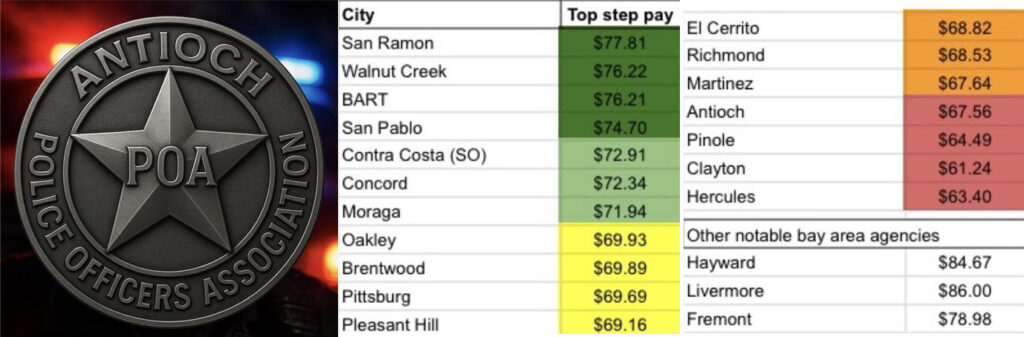
Hourly top step pay comparison among police agencies in Contra Costa County. Source: APOA
Include Dispatchers in public, social media campaign for new contract
“150 days out of contract and no relief in sight.” – APOA
APD Management also out of contract but working under previous one
So far, six Closed Session Conferences with Labor Negotiators held
Share Barbanica’s social media post regarding concerns about City spending more money on another homeless hotel
By Allen D. Payton
Ignoring the advice of City Manager Bessie Scott to the Antioch Police Officers Association, they have continued their public campaign regarding the lack of a contract with the City since the end of August with an added complaint of the difference in pay with other local agencies. They’ve included Dispatchers’ pay in their list of complaints and with posts on their Facebook page and Instagram account as part of their campaign.
Antioch PD Among Lowest Top Step Hourly Pay in County
In a post on the organization’s Facebook page on Friday, Jan. 30, 2025, they show a chart of top step hourly pay for police officers for 17 agencies in Contra Costa County plus, BART Police. It shows Antioch PD has one of the lowest levels of pay. Their contract used to include a requirement that they be paid the second highest in the county, as Antioch is the second largest city by population. But now, 14 other police agencies offer a higher top step pay than Antioch which offers $67.56 per hour. Neighboring agencies pay more with Oakley PD at $69.93, Brentwood PD at $69.89 and Pittsburg at $69.69. San Ramon PD offers the highest top step pay in the county at $77.81 per hour.
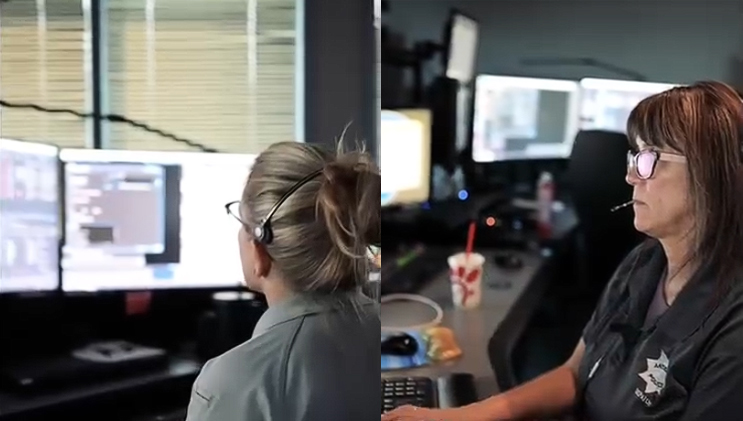
APD Dispatchers are also out of contract. Source: APOA video screenshots
Antioch Dispatchers Also Affected
In a separate post on Saturday, January 31st, the APOA shared a video about Dispatchers’ pay and wrote, “The lack of a contract for the APOA is far more problematic than you may have thought. The pay gap extends to our members in dispatch as well! 150 days out of contract and no relief in sight.”
The video includes an audio narrative with subtitles which reads, “Every call for help in Antioch starts the same way. With a dispatcher answering the phone. But here’s the reality. Antioch police dispatchers are significantly underpaid compared to neighboring agencies.
“Dispatchers at the Contra Costa County Sheriff’s Office and Pittsburg Police earn nine thousand nine hundred dollars more per year than Antioch. Concord dispatchers make twenty-two thousand four hundred four dollars more. Pleasant Hill pays seventeen thousand eighty-eight dollars more. Richmond dispatchers earn twenty-six thousand six hundred seventy-six dollars more annually. Walnut Creek pays seventeen thousand nine hundred seventy-six dollars more. Brentwood pays twelve thousand five hundred sixty-four dollars more. And Martinez pays sixteen thousand forty-four dollars more than Antioch.
“These aren’t small differences. They’re life-changing pay gaps. And they come with real consequences. When experienced dispatchers can earn tens of thousands more by crossing city lines, recruitment suffers. Retention suffers.
“Antioch dispatchers are working understaffed and often work sixteen-hour shifts to cover the empty spots. That means fewer dispatchers, longer wait times, increased stress, and heavier workloads for those who stay.
“If Antioch wants to recruit and retain skilled dispatchers, pay must reflect the responsibility of the job. That means a meaningful contract with competitive salaries. Because when dispatchers leave, everyone in this city feels the impact.”
In addition, APOA has been posting more videos on their Facebook page and Instagram account as part of their campaign.
Antioch Police Management Also Out of Contract
Members of the Antioch Police Sworn Management Association were asked if they have a new contract with the City and if theirs also expired at the end of August. Captain Desmond Bittner responded, “It expired the same time as APOA’s. I had them (the City) add language saying the contract will continue until we worked out a new one.”
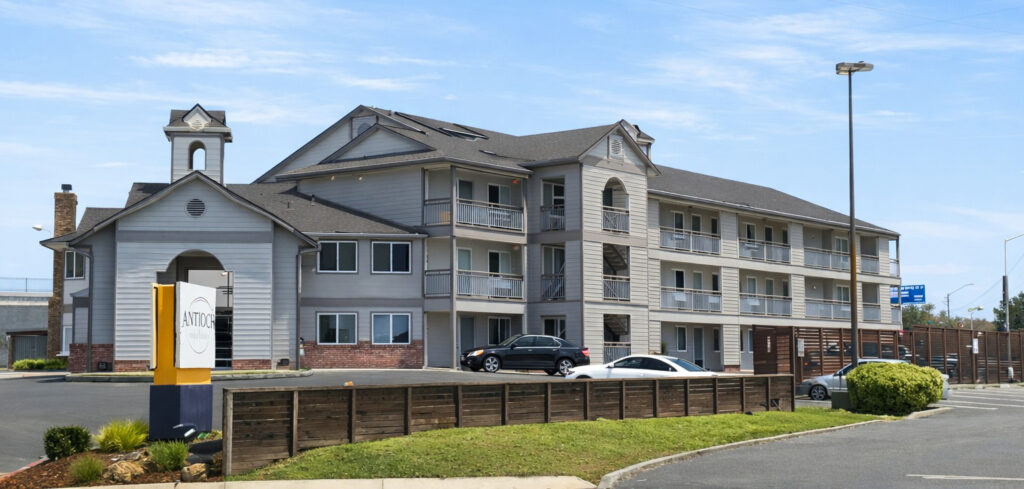
The former Comfort Inn now Antioch Inn & Suites will be used to house the homeless at $1.2 million per year. Photo courtesy of Mike Barbanica
Share Former Councilman Barbanica’s Post About City Expenditures for Homeless
The APOA also reposted comments by former Antioch Councilman Mike Barbanica about the City considering spending funds on another homeless hotel writing, “We want the public to see where their money is going!”
In a post on his “Community Member” Facebook page, Barbanica, a former Pittsburg Police Lieutenant, showed a photo of the now closed Comfort Inn, located on Mahogany Way at Highway 4 and Auto Center Drive and entered the discussion writing, “$1,200,000 potentially every year, local taxpayer funded…up to 15 years…
If other funding falls short, Antioch taxpayers are on the hook!
Transparency note: I didn’t author this from a single document. I reviewed staff reports, press reports, spoke with several people familiar with the proposal, and used AI to help compile a neutral, fact-based outline so the numbers could be seen clearly. The goal here is clarity, not advocacy.
Here’s the total City of Antioch financial commitment for the proposed Homekey+ housing project if it is approved and funded by the state:
1. One-time Local Match – The city would provide a one-time contribution of $750,000 toward acquisition and rehabilitation of the property when the Homekey+ award is received.
2. Annual Operating Subsidy – The City would commit up to $1.2 million per year to help operate the facility.
3. Duration of Operating Support – That annual subsidy is for five years, with two optional extensions of five years each (for a potential total of 15 years of subsidy) if the project continues to meet Homekey+ program guidelines.
4. Overall Total Estimate – Based on the staffing report and Council discussion, the total projected financial commitment over the long term is roughly $18 million–$19 million if you include the operating subsidies plus the one-time match (i.e., ~$1.2 M × 15 years = ~$18 M, plus the ~$750 K match).
Summary of Antioch’s Commitment if Homekey+ is Approved
Component Amount
One-time contribution (acquisition/rehabilitation) $750,000, Annual operating subsidy Up to $1.2 M per year
Duration of subsidy 5–15 years (with extensions), Approximate total over full life ~$18 M–$19 M
Important Notes
This commitment only takes effect if the state awards Homekey+ funding and the City moves forward with the project after award.
The operating subsidy requirements could be reduced if alternative funding sources or partners contribute support, but the report assumes the full amount will initially be covered by the City.
WHAT COULD THIS MEAN?
The $1.2 million per year is a CITY / local commitment, not state money.
Now the break down so there’s no ambiguity.
Who pays what in the Antioch Homekey+ project
State of California (Homekey / Homekey+)
Through California Department of Housing and Community Development:
Pays up-front capital costs: Property acquisition, Rehabilitation / conversion, This is a one-time grant, not ongoing funding,
The state does NOT commit to covering long-term operations.
City of Antioch (local funds)
From Antioch: One-time local match, $750,000 (city funds), Annual operating subsidy, Up to $1.2 million per year, Initially 5 years, With two optional 5-year extensions, Potential exposure: up to 15 years
This money comes from local sources: City General Fund, Measure funds / local housing allocations, Other city-controlled revenue (not guaranteed state funding), The staff reports are explicit that the City is responsible for covering operating shortfalls if other funding does not materialize.
What that means… The state helps buy and convert the building, The city commits to keeping it running, If other funding falls short, Antioch taxpayers are on the hook, That’s why council members and staff describe it as a long-term fiscal obligation, not just a grant.”
—————
Six Closed Session Conferences with Labor Negotiators to Discuss Contracts
To date, the City Council, City Manager Bess Scott and a representative from the City Attorney’s Office have held six Closed Session meetings entitled Conference with Labor Negotiators with representatives of the APOA and City employee groups to discuss their contracts. The first one was held August 12 followed by additional meetings on Aug. 26, Sept. 9, Oct. 14, 2025, and Jan. 13 and 27, 2026.
Questions for APOA, City Staff, CouncilGo Unanswered for Now
Questions were asked of APOA leadership, when did negotiations begin and who represented the organization.
Questions were also emailed on Saturday, January 31st, to City Manager Scott, Mayor Bernal, the four council members and the City Attorney’s Office staff. They were asked, “Why wait so long to begin negotiations when the contracts for at least the APOA and APD Management Association ended on August 31st? Is that usual practice? Why not start sooner? Why didn’t you have meetings before every regular meeting to get things worked out?”
They were also asked, “Besides the APOA and APD Management Association, have the contracts also expire for the other employee groups, including the Management Unit, Treatment Plant Employees’ Association, Operating Engineers Local Union No. 3 and Confidential Unit? If not, when do their contracts expire?”
Finally, the council and staff members were asked, “How long are the new contracts expected to last? One year, two, three or five years?”
The questions were resent to City staff and council members early Tuesday morning, Feb. 3, 2026. But no responses were received prior to publication time. Please check back later for any updates to this report.