







Archive for the ‘Finance’ Category

Contra Costa DA Becton’s campaign announces support for her recall

Wednesday, July 30th, 2025
Source: Diana Becton for District Attorney campaign

CCC Deputy Sheriff’s contribute $50K; Antioch Police Officers Association explains reasons for $5,000 contribution

By Allen D. Payton

In a post on Facebook on Monday, July 28, 2025, the Becton for DA campaign surprisingly announced new support for her recall from the Deputy Sheriff’s Association and two other “major law enforcement associations.” According to recall organizer Gwynn Gabe the other two are the Antioch Police Officers Association (APOA) and Concord Police Officers Association.

“She’s been keeping track of the people who are giving us money,” he added.

The post by “Team Becton” reads “They’ve launched their attack. Now it’s our turn,” in the header with the statement below:

“The recall against District Attorney Diana Becton just escalated.

Three major law enforcement associations, including the Contra Costa County Deputy Sheriff’s Association, just poured tens of thousands into the recall effort—including a single $50,000 donation. Even more telling? They’ve hired the strategist behind the recalls of DAs in San Francisco and Alameda County.

This isn’t just a warning. This is a coordinated, well-funded effort to undo the will of the voters and take Contra Costa backwards.

But here’s the truth they don’t want you to remember: we’ve already won twice. And with your help, we will again, because here’s what they’re underestimating: you. Us. This community.

This is not the time to sit back. We need you on the front lines —because what’s at stake is bigger than any one election. It’s about protecting real public safety solutions, and standing up to those who want to take us backward. DA Becton has stood up for equity, justice, and real public safety. Now we must stand up for her.”

It then offers ways for opponents of the recall to “Take Action Now” including volunteering and donating through the Act Blue campaign fundraising website for Democrats currently under investigation for possible fraudulent political contributions.

The APOA Board issued the following statement about their contribution of $5,000 to the campaign to recall Becton: “The APOA was approached by members of the recall movement who asked if we would be willing to support them in their efforts to recall the DA. After careful consideration, we agreed as a board to support this endeavor in hopes that this would ultimately lead to a more transparent DA’s office that holds criminals accountable and keeps our streets safe. Whatever the outcome, we know the officers represented by the APOA will continue to work hard to keep our community safe and have a great working relationship with the DA’s office.”

Recall organizers have until 5:00 PM on Thursday, September 25, 2025, to submit 72,556 valid signatures to qualify the effort for the ballot.

CHP distributes over $35 million to fight impaired driving

Thursday, July 10th, 2025
Photo by CHP

Antioch PD, Contra Costa Sheriff’s Dep’t among 148 Cannabis Tax Fund Grant Program recipients

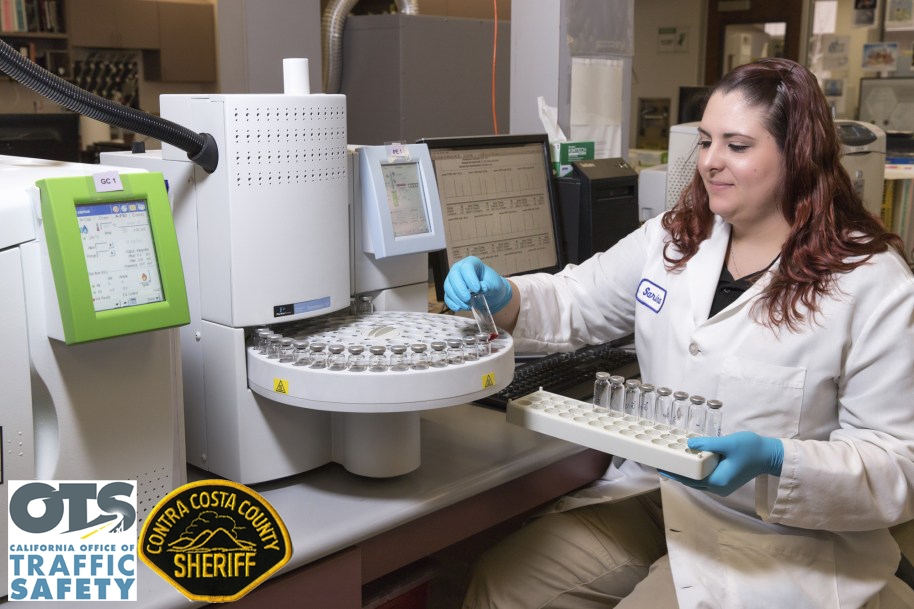
CCC Sheriff Forensic Services Division will use funds for toxicology crime lab

By Tami Grimes, CHP Public Information Officer

SACRAMENTO – The California Highway Patrol (CHP) today announced more than $35 million in grant funding to 148 California law enforcement agencies, crime laboratories, local government agencies and nonprofit organizations to help address the dangers of driving under the influence of alcohol and/or drugs.

“As the legal cannabis market continues to grow, so do the state’s efforts to ensure Californians are recreating responsibly. By supporting the organizations that enforce and amplify our laws on the ground, we can keep everyone safer,” said Governor Gavin Newsom.

The grants from Proposition 64, the Control, Regulate and Tax Adult Use of Marijuana Act, assigned the CHP the responsibility of administering grants for education, prevention and enforcement programs aimed at helping communities tackle impaired driving. Additionally, funds are available for crime laboratories that conduct forensic toxicology testing. The funding for these grants comes from a tax on the sale of cannabis and cannabis products in California.

Source: CHP

“This funding represents a major step forward in our ongoing mission to save lives and prevent impaired driving,”said CHP Commissioner Sean Duryee. “With over $35 million going to nearly 150 public safety partners across the state, we’re expanding our reach like never before. These resources will help those on the frontlines keep California’s roads safer for everyone.”

These funds will go towards a variety of activities. One hundred twenty-six recipients of law enforcement grants will use the funding to combat impaired driving in their communities, including Antioch, Danville, Pinole, Pleasant Hill, Richmond and San Ramon Police Departments. The funds will also support drug recognition evaluator training to improve the identification of drug-impaired drivers, as well as public outreach campaigns, including educational presentations and community events.

Eleven recipients of education grants will use the funds to inform local communities about impaired driving laws while highlighting the dangers of driving under the influence of alcohol and/or drugs.

Source: CHP

Seven recipients of two-year toxicology crime laboratory grants, including the Contra Costa County Sheriff’s Department Forensic Services Division, will use the funds to eliminate backlogs in analyzing forensic science evidence and to purchase or upgrade laboratory equipment to enhance testing capabilities.

Four recipients of two-year medical examiner’s and coroner’s office grants will use the funds to improve and advance data collection in cases involving driving under the influence of alcohol and/or drugs.

With the passage of Proposition 64, the Control, Regulate, and Tax Adult Use of Marijuana Act (AUMA), California voters mandated the state set aside funding for the California Highway Patrol (CHP) to award grants to local governments and qualified nonprofit organizations, as described in Revenue and Taxation Code Section 34019(f)(3)(B).

The Cannabis Tax Fund Grant Program marks an important step toward reducing impaired driving crashes, increasing public awareness surrounding the dangers of impaired driving, and making California’s roadways a safer place to travel.                  

The application process for future grant funding is expected to reopen in early 2026. More information is available on the CHP website at CHP’s Cannabis Tax Fund Grant Program.

 The mission of the CHP is to provide the highest level of Safety, Service, and Security.

Allen D. Payton contributed to this report.

Capital Readiness workshop for Antioch small businesses June 26

Wednesday, June 25th, 2025

Presented by Antioch Business Collaborative and Working Solutions

Calling all entrepreneurs in the City of Antioch!

If you are looking to finance your small business but don’t know where to start, join Working Solutions on Zoom this Thursday, June 26 at 4 PM for a free Capital Readiness workshop! Learn how to access funding with the right mindset and documents, and what makes a business approvable for a loan. Register at bit.ly/antioch-loan-ready.

Working Solutions is pleased to partner with the City of Antioch to deliver financial and technical assistance to Antioch entrepreneurs through the Antioch Business Collaborative. See below for funding opportunities, upcoming workshops, or to get started with one-on-one pre-loan support.

If you’re ready to get started and need loan application support, find us in person at the Antioch Community Center every Tuesday from 9 AM-12 PM. Learn more at workingsolutions.org/antioch.

Antioch Council expected to approve budget Tuesday night cutting $11.5 million, using $12.7 million from reserve funds

Monday, June 23rd, 2025
Source: City of Antioch

Almost half of cuts from Police Department staffing, overtime savings

Plus, $165.3 million 5-Year Capital Improvements budget and $2.4 million in federal community funds

By Allen D. Payton

Following all the special budget session meetings over the past several months, the Antioch City Council, during their meeting Tuesday night, June 24, 2025, is expected to approve the 2025-26 budget with over $11.5 million in spending cuts and using $5 million from the Budget Stabilization Fund. The City was facing a $24.3 million deficit for the coming fiscal year and if the budget is approved as recommended, will have a net deficit of $7.7 million which will be covered from reserves.

Almost half of the savings, $5.5 million, will be in the Police Department budget from Vacancy Savings and Overtime Reductions. UPDATE: That’s due to the current staffing vacancies of approximately 30 sworn officers and the chief informing the council that they expect to add 15 more officers in the next year. So, instead of determining the savings from the staff vacancies during a mid-year budget review and spending the one-time funds on other City budget items, the council chose to account for it in the budget up front to reduce the deficit.

In spite of the cuts, future fiscal years still show the City facing projected deficits of $10,629,642 in 2026-27 and $25,396,400 in 2028-29.

The proposed budget also includes an allocation from the Measure W 1% City sales tax of 70-15-15 or 70% for Police, 15% for Quality of Life and 15% for Youth. (See page 6 of the Budget)

According to the City staff report for item #5, “Since March, City Council and staff have been diligently scrutinizing the budget to close a starting point fiscal year 2026 deficit of $24,270,240. Initially, staff was able to shave $8,603,792 from that number, for a fiscal year 2026 deficit of $15,666,448 as presented at the March 4th budget session. Upon further collaboration with the Council, City Manager and departments as we moved through the exhaustive budget process, and through a series of further adjustments, a General Fund budget with a net deficit of $7,737,331, after a $5M infusion from the Budget Stabilization Fund.”

In addition, under item #3 the Council is expected to approve the Five-Year Capital Improvement Program budget for 2025-2030 for Community Facilities, Parks & Trails, Roadway Improvements, Traffic Signals, Wastewater & Storm Drain System and the City’s Water System. Currently, there are $163.3 million of projects in progress which includes $6,238,209 of projects that the Council added to the list.

Finally, in other budget action, under item #4 the Council will consider approving the recommendations of the City Council’s Community Development Block Grant (CDBG) Subcommittee for a total of $2,369,318 in federal funds for the coming fiscal year. Mayor Pro Tem Louie Rocha, representing District 2, and Councilwoman Tamisha Torres-Walker, representing District 1, served on the CDBG Subcommittee for this funding cycle.

Click here to read the full agenda package.

The meeting begins at 7:00 PM in the Council Chambers inside City Hall at 200 H Street, in historic, downtown Rivertown. It can be viewed via livestream on the City’s website, on Comcast Local Cable Channel 24 or on AT&T U-verse Channel 99.

Contra Costa Water District working to repair canal for $1 billion

Monday, June 9th, 2025
The Contra Costa Water District Canal Replacement Project includes 20 miles of the waterway. Photo: CCWD

Lake Shasta is source of all water, Los Vaqueros Reservoir will not be expanded, CoCoTax members learn

By Allen D. Payton

During the Contra Costa Taxpayers Association Members and Leaders monthly luncheon in May, Contra Costa Water District Board President, Ernesto Avila provided an update on the district’s current work and plans. They include repairing 20 of the 48-mile canal at a cost of $1 billion, keeping water rates as low as possible and expanding service to keep up with growth.

The district includes the Central County cities and communities of Martinez, Pleasant Hill, Concord, Clayton, Pacheco, Clyde, Port Costa and portions of Walnut Creek, and in East County, the cities and communities of Pittsburg, Antioch, Oakley, Bay Point, and portions of Brentwood.

CCWD Board President Ernesto Avila provides an update during the CoCo Taxpayers Association luncheon on May 23, 2025. Photo: Allen D. Payton

Half of the district’s water is provided to treated water customers and the other half to raw water customers, Avila stated and then spoke about ensuring adequate “water supply during disasters such as fire and earthquake emergencies.”

“When PG&E outages occur all of our tanks go full,” he shared. “Water only stays sweet for six to seven days to meet the water quality requirements of the state.”

“Lake Shasta is where we get all of our water from through the Central Valley Project,” he continued. “It’s currently 94% full.”

The district owns Los Vaqueros Reservoir for storage, which is currently 93% full. But “we can’t just draw water whenever we want,” Avila stated. “All of our intakes are screened to protect fish.”

“We are out of our drought,” Avila added. However, “during the drought there were no constraints on water supply for development and growth.”

Source: CCWD

Canal Replacement Program

There have been “landslides on the west side of the canal and repairs can cost millions,” he stated and spoke of the district’s “Canal Replacement Program” which will cost “$1 billion”.

“Nobody likes to raise rates,” Avila continued. “We’ve replaced four miles, so far and have 16 miles to go. It will be a pipeline”

Asked what happens to the pipe during an earthquake he said, “If it’s an older pipe, it will probably crack. We’re looking at a very ductile pipe that can move easily.”

Asked if there will be solar panels over the canl

Click here to learn more about the Contra Costa Canal.

Water Supply

Avila then spoke about providing enough water to meet the demands of residential growth including “redevelopment of the Concord Naval Weapons station” where “15,000 homes” are projected to be built.

“Ten percent of the district’s water is provided through recycling,” he stated. “We want to bump that up to fifteen percent.”

Budget & Water Costs to Users

“Energy costs have been the greatest increases from 2020 to 2024, medical coverage is second greatest,” he shared. Those are followed by “pension and OPEB (other post employee benefit) liabilities.”

“The average customer spends about $3.00 per day for water,” Avila stated. “The cost is 1.3 cents per gallon per day.”

He compared that to EBMUD rates which are at 2.0 cents per gallon.

Contra Costa Water District Production Costs. Source: CCWD

According to the slide show from his presentation, costs to the district for water production include the following:

INVESTMENTS IN INFRASTRUCTURE – Pipeline Renewal, Canal Replacement, Water Treatment Plant Upgrades;

PURCHASED WATER

WATER SUPPLY AND RESOURCE PROTECTION – Water Supply Planning, Watershed Management, Recreation;

SYSTEM OPERATIONS & MAINTENANCE – Water Treatment, Water Delivery, Leak Inspection and Repair;

ADMINISTRATION – Human Resources, Safety, Accounting and Payroll;

CUSTOMER CARE – Customer Service, Billing, Water Efficiency Support, and Public Affairs; and

COMMUNITY EDUCATION AND WORKFORCE DEVELOPMENT K-12 Water Education and Field Trips, and Internships.

The district has an AAA Bond Rating which keeps interest costs on bonds down, Avila shared.

He was then asked about “money going to DEI programs. I this something you should be doing anymore?” Avila responded, “there are three employees dedicated to it. There are 317 employees which is 30-40% of the budget We have one person in Human Resources dedicated to it. We have a $200 million per year budget. Not even one percent is dedicated to it.”

“It’s about trying to enhance the culture for our employees to work together better,” he added. “We review it every six months. Our Master Plan is on the website.”

Asked about “EPA clean water requirements getting tougher each year” Avila spoke about “unfunded mandates we have to comply with. We work with various associations and collaborate on a national level as regulations are mostly at the federal level.”

“Our biggest concern is the issue of diminishing return on conservation,” he explained. “During the drought, people in our area reduced use by 25 percent while Southern California only reduced 2-3 percent.”

According to the chart in Avila’s presentation total water use has actually decreased over the past 17 years even though the population has significantly increased.

Source: CCWD

No Los Vaqueros Capacity Increase Due to Too Much Cost and Regulation, Offline for Too Long

Asked about increasing capacity at Los Vaqueros, Avila said, “The district spent $10 million on raising the…reservoir, for a cost/benefit analysis funded by the state. It was over subscribed with more customer demand than supply, 250,000 versus 120,000 acre feet.”

“But with so many constraints on pumping water into the reservoir, demand dropped to 50,000 acre feet then to zero,” he continued. “The cost increase with inflation went from $800 million to $1.6 billion, mainly from more material and labor cost increases, plus, engineering costs.”

Finally, Avila shared, “Los Vaqueros Reservoir would have had to be offline for six to seven years. It just wasn’t viable. They knew that, going in. The issue was negotiating supply from EBMUD and others” who “couldn’t guarantee any water.”

He also spoke about future supply including the proposed offstream Sites Reservoir project west of Colusa in the Sacramento Valley.

“In California, for every one million acre-feet of storage, there is eight to nine acre-feet of surface storage,” Avila stated.

Finally, in response to a question, he said, “Water from a canal behind a house is not grandfathered in if the home is sold.”

See Avila’s complete presentation slide show.

CoCoTax June Luncheon

The next CoCoTax Members and Board Luncheon will be held on Friday June 27, 2025, at 11:45 AM at Denny’s Restaurant, 1313 Willow Pass Road in Concord, and will feature Oakland Mayor recall leader Seneca Scott as the speaker. Advance registration is available on the CoCoTax website where you can pay online, or bring cash or check on Friday and pay at the door: $25 for members, $30 for guests. www.cocotax.org/event-6189658/Registration

About CoCoTax

Founded in 1937, CoCoTax leads the way in providing fiscal oversight of local government.  We actively resist unwarranted taxes and fees, discriminatory regulations, ill-advised public expenditures and government secrecy, inefficiency and waste. For more information and membership visit www.cocotax.org.

About CCWD

The Contra Costa Water District delivers safe, clean water to approximately 520,000 people in central and eastern Contra Costa County in Northern California. Formed in 1936 to provide water for irrigation and industry, we are now one of the largest urban water districts in California and a leader in drinking-water treatment technology and source water protection. For more information visit www.ccwater.com.

Antioch Council to hold special Thursday meeting on homeless program funding

Wednesday, May 21st, 2025

Will fund conversion of Comfort Inn to rehabilitation project

City commitment required for state funded operating subsidy

By Allen D. Payton

The Antioch City Council will hold another special meeting on Thursday, May 22, 2025. This one will be for discussing a financial commitment for the state’s Homekey+ Program to serve the city’s homeless residents. The matter is time sensitive as the State begins its Award Announcements this month. The meeting begins at 6:30 p.m.

NOFA means Notice of Funds Availability. Source: CA Dept of Housing and Community Development

According to the City staff report for the one-item agenda, “It is recommended that the City Council adopt a resolution approving the submission of an application with California Supportive Housing for the Homekey+ Program and designate City Manager to execute commitments for city capital match up to $750,000 and operating subsidy up to $1,200,000 annually for 5 years with two five year extensions contingent on the property meeting the required Homekey+ guidelines and affordable housing regulatory agreement and authorizing the City Manager or designee to execute the Agreement in a form approved by the City Attorney.”

Will Fund Conversion of Comfort Inn to Rehabilitation Project

“The City Staff is proposing a co-application with the Developer that seeks funding to acquire 2436 Mahogany Way (currently the Comfort Inn) in Antioch and undertake the rehabilitation necessary for the motel rooms to serve as permanent housing for homeless families/individuals with prior behavioral health issues.

“The CSH Mahagony Housing Project will be a rehabilitation project which will turn the current hotel into 60-85 affordable units and one two-bedroom manager unit. Each apartment will have a kitchenette, living room, bathroom, and bedroom. Non-residential conversion of the interior will include a community lounge, property management offices, resident supportive services and case management offices. One existing laundry room and the electrical room will maintain those functions, while rooms will be converted to resident services/case management and property management offices. It is also planned to keep the existing security fences, gates, and trash enclosure. Additional fencing will be added to property.

“Project Developer: California Supportive Housing (CSH) is the Project Developer. CSH is a mission-oriented 501 (c)(3) nonprofit California corporation dedicated to bringing affordable housing to people in need, including homeless, seniors, youth, people with disabilities, and families. The CSH team has over 35 years of experience in affordable housing development and is currently working on a HomeKey project in Oakland which is the conversion and renovation of a motel into 104 permanent supportive housing units for the homeless.”

About Homekey+ Program

According to the California Department of Housing and Community Development (HCD), the state’s Homekey+ Program is funded by Proposition 1, which was “passed by California voters in March 2024…to reduce homelessness and protect our most vulnerable populations through important changes to the Mental Health Services Act and providing up to $6.4 billion in bond funding to develop and expand behavioral health treatment, residential care settings, and Permanent Supportive Housing.”

“Approximately $2 billion of the Proposition 1 bond funds will be administered by the…HCD, in collaboration with the California Department of Veterans Affairs (CalVet) as the Homekey+ program (HK+), expanding upon the successful Homekey model. The remaining $4.4 billion of the Proposition 1 funding will be administered by the California Department of Health Care Services (DHCS) to award competitive grants to construct, acquire, and rehabilitate real estate assets or invest in needed infrastructure to expand the behavioral health continuum of treatment and service resources.”

Learn more about the Homekey+ Program at Homekey Plus Program Overview.

The meeting will be held in the Council Chambers at 200 ‘H’ Street, in Antioch’s historic, downtown Rivertown.

Antioch Historical Society raising funds for 150-year-old church bell display at Museum

Wednesday, May 21st, 2025
Efforts are underway to house the historic First Congregational Church bell in a tower on the Museum grounds. (Right – Example of tower and bricks for foundation). Photos: Antioch Historical Society

“Ring it loud! Ring it proud! Be part of Antioch’s history!”

During Society’s 50th and Museum’s 25th Anniversaries

By Allen D. Payton

The Antioch Historical Society is at it again with another project for the grounds of the Museum. This time they’re raising funds to restore and locate a display of the historic First Congregational Church bell, one of the oldest artifacts in the city.

The effort is being led by Past Board President Dwayne Eubanks and Tom Menasco, a co-founder of the Sports Legends wing and leader of the successful fundraising effort for the Red Caboose display.

Menasco is serving as the marketing and fundraising manager, Director Stan Davis and Ron Bass are serving as construction managers, Eubanks shared.

According to the Historical Society, the bell “was heard more than 150 years ago by early church members, including Antioch’s founders Rev. W.W. Smith and Captain George W. Kimball. It was heard by the church sexton, Thomas Gaines, the first known Black settler in Antioch.”

When reached for comment, Eubanks said, “The church bell is very significant to Antioch as it goes back to the time when the city was incorporated and was heard by people including the first Constable and Mayor, Roswell Hard, William Wiggins Smith, Thomas Gaines, and Adelia Kimball, the community’s first teacher.”

“We’re building a custom bell housing. We paid a company that specializes in designing bell towers back in 2022. But we had to put the plans on the shelf for a few years due to COVID.”

Church bell and tower Fundraising Goal and progress and Elevations. Source: Antioch Historical Society

Antioch resident Joseph Zamora, a member of the First Congregation Church, donated the bell.

“It was in his backyard under a tarp. It’s 700 lbs.,” Eubanks stated.

“We’re hoping the bell will help unite old Antioch and new Antioch. To me, personally, it’s a symbol of unity,” he added.

They’ll build the tower, display the bell, “and it’s going to ring,” Eubanks exclaimed.

Asked how much the Society is raising for the project, he said, “The construction estimate was around $96,000 and we’ve raised $48,000. Part of that came out of our budget. That includes profit and labor. But we’re taking that out as we may get in-kind services and materials that will cut that balance down.”

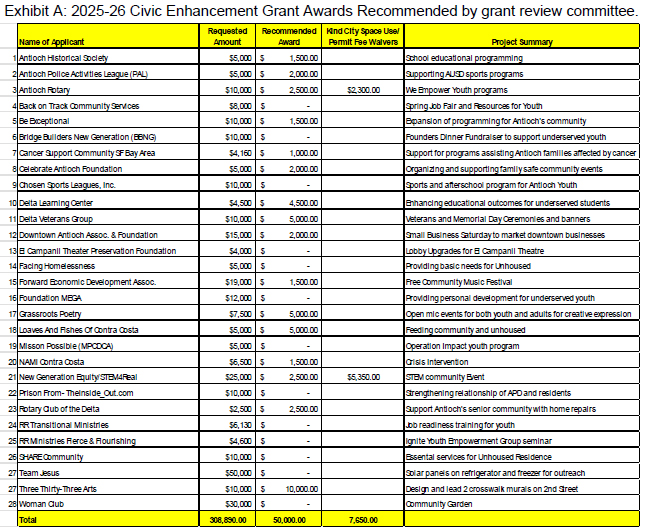
“The City gave us a civic enhancement grant and waived the construction permit fee,” he shared.

“We’re hoping to put this bell and tower in this year as it’s the 50th Anniversary of the Historical Society and 25th Anniversary of the museum in the former Antioch High School and fire department building,” Eubanks mentioned.

“Ring it loud! Ring it proud! Be part of Antioch’s history!Leave a legacy for your children and grandchildren to see, ring, and enjoy. Let’s hear it ring again! Become a sponsor today and your name will be permanently inscribed on the exhibit,” the Society shared on their Facebook page.

To donate online, visit their website at: https://antiochhistoricalmuseum.org/donations/ or see the flyer below. The Museum is located at 1500 W. 4th Street and is open Wednesdays and Saturdays from 1:00 to 4:00 p.m. For more information call (925) 757-1326.

Park District investing $10.9 million to reduce fire fuels in the East Bay

Tuesday, May 20th, 2025
Fire fuels reduction efforts in the East Bay parks. Photos: EBRPD

$8.3 million in grants; $2.6 million in district matching funds

By Dave Mason, Public Information Supervisor, Public Affairs, East Bay Regional Park District

The East Bay Regional Park District is set to spend $10.9 million over the next three years to reduce fire fuels at Anthony Chabot, Tilden, and Wildcat Canyon Regional Parks, Claremont Canyon Regional Preserve, and Carquinez Strait Regional Shoreline. The funding will help reduce wildfire risks by removing dead and dying trees and hazardous vegetation on over 600 acres. Dead trees burn hotter and faster and can cast embers long distances, igniting new fires.

These efforts are in addition to ongoing fuels reduction work districtwide, including large-scale projects at Anthony Chabot Regional Park (544 acres) and Tilden Regional Park (39 acres), a 16-person year-round fuels reduction crew, and annual goat, sheep, and cattle grazing. In 2024, the Park District’s fuels reduction crew removed hazardous fire fuels on 104 acres in 11 parks. Additionally, more than 86,800 acres of parkland are grazed annually by cattle, sheep, or goats.

“The grant funding enhances our ability to protect the public and safeguard our natural landscapes,” said Park District Interim Fire Chief Khari Helae. “Securing the funding is a testament to the Park District’s efforts—from planning to permitting—to manage the detailed grant application process and its proven ability to carry out large-scale fuels reduction projects in support of the community.”

2025 Grant Funding Allocations Map. Source: EBRPD

The $10.9 million for fuels reduction projects includes $8.3 million in grants, with $6.1 million coming from the Federal Emergency Management Agency (FEMA), $2.1 million from the California State Coastal Conservancy, and $100,000 from the U.S. Forest Service. FEMA funding was obtained in partnership with U.S. Sen. Alex Padilla, who secured $1.5 million in the 2023 budget, and U.S. Rep. Eric Swalwell, who secured $1.4 million in the 2024 budget.

An additional $2.6 million comes from required Park District matching funds, which include general funds and voter-approved local revenue measures like Measure FF. These local revenue measures enhance the Park District’s ability to qualify for and secure grant funding by providing required matching contributions.

Fire fuels reduction source of funds. EBRPD

“These projects are vital to reducing wildfire risks in the East Bay,” said Park District General Manager Sabrina Landreth. “We thank FEMA, Sen. Alex Padilla, Rep. Eric Swalwell, the California State Coastal Conservancy, the U.S. Forest Service, and Park District voters for their support and for prioritizing wildfire mitigation in the East Bay.”

For large scale vegetation management projects, the Park District utilizes a climate-friendly carbonizer to dispose of vegetation. The carbonizer burns organic matter at 1,300 degrees Fahrenheit with little oxygen, which produces very low emissions—especially compared to conventional disposal methods such as open pile burning or transporting debris long distances in diesel trucks. The resulting biochar is being used throughout the Park District to enhance soil health, improve water retention, and increase crop productivity, including at the District’s Ardenwood Historic Farm in Fremont.

Photo: EBRPD

The Park District Board of Directors will consider authorizing $1,883,261 in matching funds from Measure FF at their upcoming Board Meeting on Tuesday, May 20, 2025. Measure FF was passed in 2018 by voters in the communities of Alameda, Albany, Berkeley, El Cerrito, El Sobrante, Emeryville, Kensington, Oakland, Piedmont, Richmond, and San Pablo to provide funding to reduce fire risks, improve public access, and restore natural habitat. The Board of Directors previously authorized $500,016 in matching funds in March 2023.

The East Bay Regional Park District is the largest regional park system in the nation, comprising 73 parks, 55 miles of shoreline, and over 1,330 miles of trails for hiking, biking, horseback riding, and environmental education. The Park District receives an estimated 30 million visits annually throughout Alameda and Contra Costa counties in the San Francisco Bay Area.