






Archive for the ‘Education’ Category

Antioch School Board’s Measure B asks property owners for $470 million to pay for $195 million of improvements

Monday, February 12th, 2024
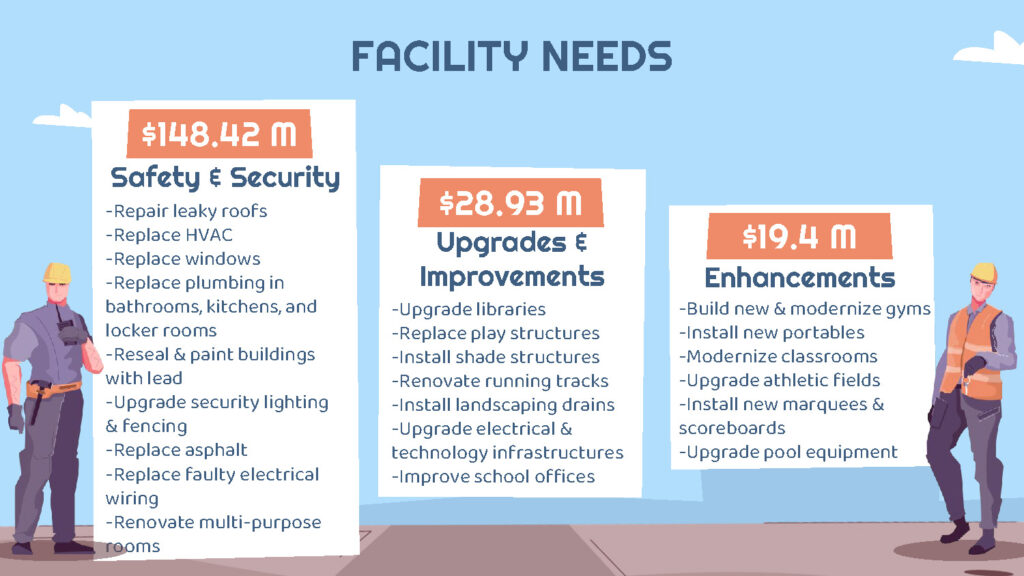
List of proposed improvements from Measure B revenues if passed. Source: AUSD

The difference of $275 million will pay for interest; voters will decide on bonds adding $41 to $48 for each $100,000 in value per year for 35 years; survey shows 75% of voters believe things on wrong track in Antioch area

By Allen D. Payton

Following the narrow defeat of Antioch Unified School District’s Measure T in November 2020 asking voters for $110 million in improvements, this past November, the Antioch School Board voted unanimously to place a $195 million bond on the March 5th ballot. It is listed as Measure B and if passed will generate $13.5 million per year for the next 35 years. According  to Ballotpedia, Measure T lost by less than a half-percent receiving 54.62% of the vote, with 55% required to pass.
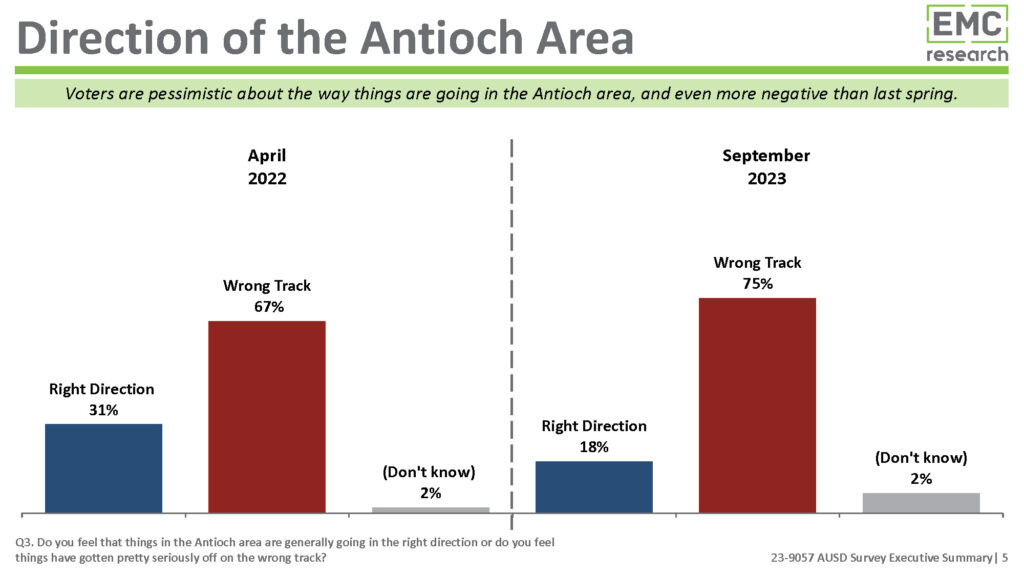
Source: AUSD

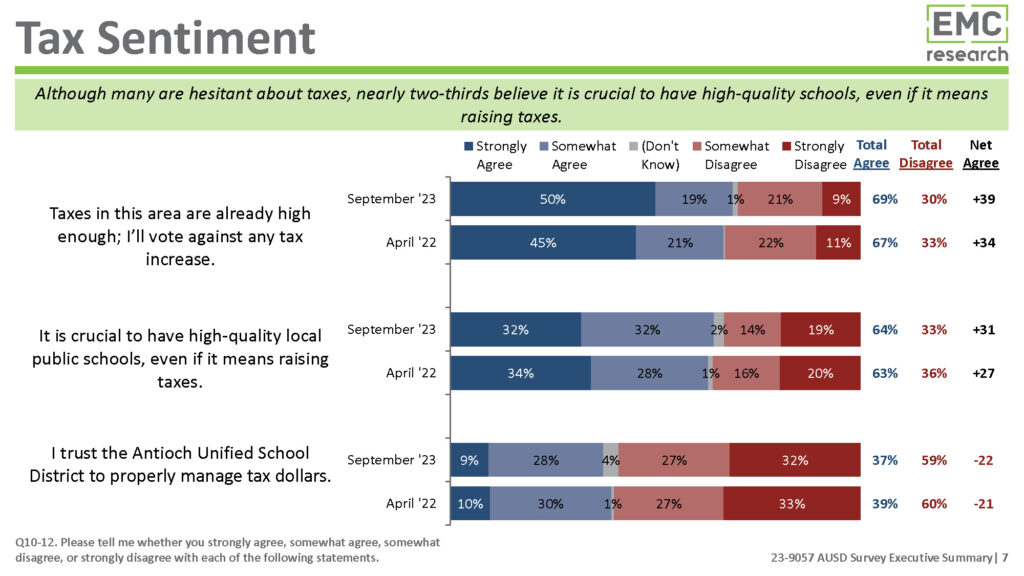
That followed a presentation by EMC research at the board’s October 25, 2023, meeting which showed that a survey of 500 voters of which 400 were likely March primary voters, 75% felt that things in the Antioch area are generally going in the wrong direction, 69% said taxes are too high, 59% don’t trust the AUSD to properly handle tax dollars, but 64% believe it’s important to have high-quality, local public schools even if it means raising taxes and 81% agreed AUSD schools were in need of  more funding.
Source: AUSD

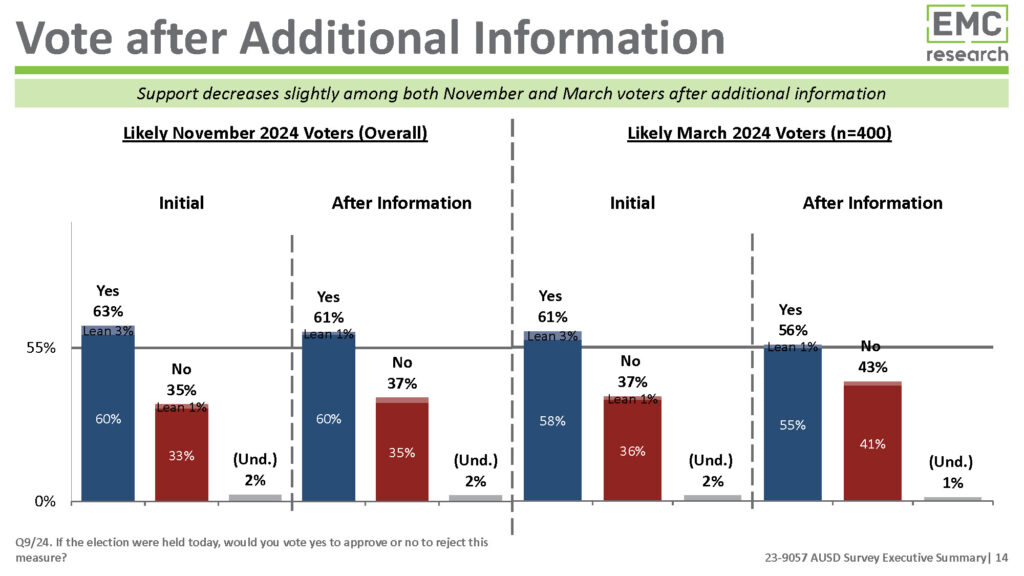
However, the survey also showed just slightly over 55% of voters would support the bond after receiving information about it. Then when read an opposition statement which includes “This would cost the average homeowner $130 per year” the support decreased to just 51%. The recommendation by the survey consultants was for “A strong, independent outreach effort…emphasizing the accountability features if the measure along with how it will provide for necessary and overdue repairs and enhanced student safety.”
Source: AUSD

Official Ballot Language

The official ballot language for the measure reads, “To upgrade classrooms, labs and learning technology, improve school safety and emergency communications, repair leaky roofs and restrooms, upgrade heating, air-conditioning, electrical and plumbing systems, and make accessibility upgrades for people with disabilities; shall Antioch Unified School District’s measure be adopted, issuing $195,000,000 in bonds at legal interest rates, generating an average $13,500,000 annually until approximately 2059, at estimated tax rates of approximately $48 per $100,000 assessed value with annual audits, citizen’s oversight, and all funds staying local?”

According to the Tax Rate Statement for Measure B in the Voter Guide, there are no district-wide bonds currently outstanding that are being paid by taxpayers. However, voters in Antioch’s School Facilities District 1, have approved two separate bonds that remain outstanding including the 2008 Measure C to improve schools in the older part of the district and the 2012 Measure B which was specifically for improvements to Antioch High School. Both measures currently cost property owners $80.10 per $100,000 of assessed value. Measure C bonds will be paid off by the end of the 2035-36 tax year and the 2012 Measure B bonds will be repaid by the end of tax year 2046-47.

The proposed bond will add $41 to $48 per $100,000 in assessed value more per year to property tax bills. That amounts to $143.50 to $168 per year for a home valued at $350,000 and $246 to $288 more per year for a home valued at $600,000.

So, if the measure succeeds, property owners in Facilities District 1 will pay between $125.10 per $100,000 in assessed value for all three bonds through 2035-36, then $70.90 per $100,000 value until 2046-47.

Also, according to the Tax Rate Statement, “the best estimate of total debt service, including principal and interest” over the 35 years “if all the bonds are issued and sold will be approximately $470 million”.
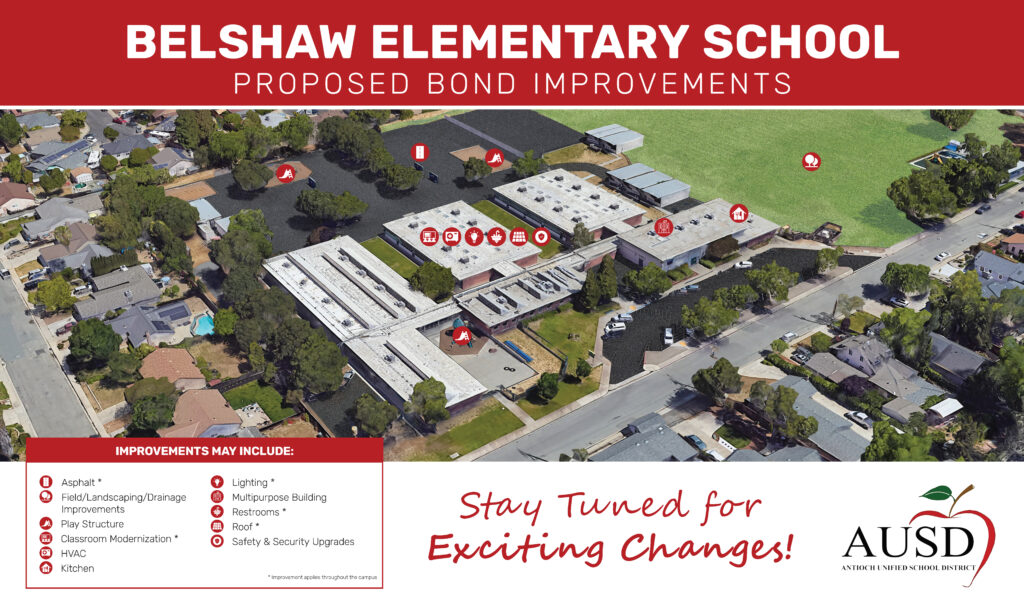
Renderings and lists of proposed improvements to each AUSD school is provided on the District’s website. Source: AUSD

Schools To Be Improved

According to information about this year’s Measure B, on the bond measures page on the AUSD website and the Jan. 24, 2024 Update Presentation the funds generated will be used to improve schools throughout the district. They include: Belshaw, Carmen Dragon, Diablo Vista, Fremont, Jack London, John Muir, Kimball, Lone Tree, Marsh, Mission, Mno Grant, Sutter and Turner Elementary Schools; Orchard Park K-8; Antioch, Black Diamond, Dallas Ranch and Park Middle Schools, as well as Antioch, Deer Valley and Dozier-Libbey Medical High Schools.

Proposed Improvements

The improvements covered by the $195 million include approximately:

$148.42 million for Safety & Security

$28.93 million for Upgrades & Improvements, and

$19.4 million for Enhancements

A message on the bond measures page offers additional details about the proposed improvements. It reads, “Antioch schools do not receive any funds from the state for facility improvements. Constant use and changing education needs require significant upgrades –way beyond our District budget. In the March 2024 election, voters in the Antioch Unified School District will be asked whether to approve a school facilities bond. This page contains information related to the proposed bond measure.

This bond has one goal: Improving the quality of Antioch Schools!!!

While there have been improvements in the quality of our schools over the past few years, the fact remains that our schools are old. Classrooms and restrooms need modernization, electrical systems are outdated, and HVAC and roofs are at the end of their life. Schools built years ago need significant updating.

Many of our schools are 60-70 years old. The Board of Education approved a bond measure to be placed on the ballot in March 2024 to address the most pressing needs of our district:

  • Remove hazardous materials like asbestos and lead paint from school sites
  • Repair or replace old worn-out roofs, floors, walkways, lighting, HVAC, plumbing, and electrical systems
  • Improve school security and emergency communications systems
  • Update instructional technology in classrooms for improved student learning
  • Renovate restrooms to make them accessible for students with disabilities
  • Upgrade and repair physical education facilities and playground equipment to meet current safety standards
  • Make repairs and energy efficiency improvements to all schools
  • Free up resources to improve the quality of classroom instruction in core subjects like reading, math, and science to prepare students for success in college and careers

This bond will update our aging schools, technology, and equipment. It will protect the health, safety, and security of AUSD students and staff. It will also:

  • Add TK-K classrooms at John Muir Elementary
  • Add a new gymnasium and cafeteria at Orchard Park
  • Replace old portables with a new two-story building of classrooms at Park Middle School
  • Modernize the gymnasium at Antioch Middle School”

To see renderings and a list of proposed improvements for each school click, here.

Part of the outreach effort includes a sample letter for principals to send out addressed to parents and neighbors, on the District’s bond measures page. It also includes a mailer sent to homes this week paid for by Improve Antioch Schools/Yes on Measure B. According to campaign committee member, Velma Wilson, they have not yet set up a Facebook page nor website for the effort.

A “yes” vote for Measure B supports authorizing the district to issue the $195 million in bonds for school improvements and levy a property tax and a “no” vote opposes the assessment. There is no organized opposition to the ballot measure and only an argument in favor appears in the Voter Guide signed by Scott Bergerhouse, Christine Pedraza, Louie Rocha and Velma Wilson.

The election is March 5th.
Setting aside local control, legislation would mandate how to teach reading in California

Thursday, February 8th, 2024

Pointing to dismal test scores, veteran lawmaker and a coalition of advocacy groups introduce AB 2222

By John Fensterwald, EdSource.org – Republished with permission

A veteran legislator who taught elementary school for 16 years introduced comprehensive early-literacy legislation Wednesday that would impose requirements on reading instruction and add urgency to the state’s patchwork of reading reforms.

Evidence-based practices, collectively known as “the science of reading,” would become the mandated approach to reading instruction for TK-5, if Assembly Bill 2222, authored by Assemblymember Blanca Rubio, D-Baldwin Park, becomes law.

The bill would shift the state’s decade-old policy of encouraging districts to incorporate fundamental reading skills in the early grades, including phonics, to demanding that they do so. This would depart from the state policy of giving school districts discretion to choose curriculums and teaching methods that meet state academic standards.

Between now and 2028, all TK to fifth-grade teachers, literacy coaches and specialists would be required to take a 30-hour-minium course in reading instruction from an approved list.

School districts and charter schools purchasing textbooks would select from approved materials endorsed by the State Board of Education in a new round of textbook adoption.  

The California Commission on Teacher Credentialing would receive money to add several experts for accreditation of teacher preparation programs in the science of reading. The bill would strengthen accountability for those programs that have not taught effective reading strategies, as required under recent state law.

Rubio and the advocacy nonprofits EdVoice,  Decoding Dyslexia CA, and Families in Schools, the bill’s co-sponsors, argue that another generation of California children cannot wait for districts teaching ineffective techniques using inadequate materials to come around.

“California is facing a literacy crisis,” the first sentence of the bill states. “There are far too many children who are not reading on grade level by the end of third grade and who will not complete elementary school with the literacy skills and language development they need to be successful academically in middle school and high school.”

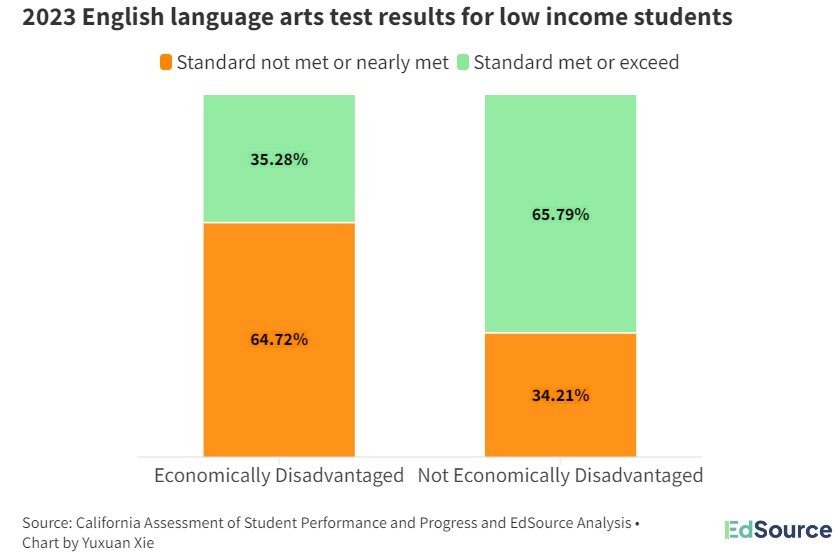
Only 43% of California third graders met the academic standards in the state’s standardized test in 2023. Only 27.2% of Black students, 32% of Hispanic students, and 35% of low-income children were proficient, compared with 57.5% of white, 69% of Asian and 66% of non-low-income students.

“There’s always this delicate balance between local control versus let’s move forward collectively,” said Marshall Tuck, CEO of EdVoice and former candidate for State Superintendent of Public Instruction. “But when we have an issue that the vast majority of lower-income kids, who are disproportionately Black and Latino, are not reading at grade level, it requires urgency to do what we know works as fast as possible.”

Rubio, who recalled being handed coloring books instead of reading lessons in first grade as a non-English-speaking Mexican immigrant, said that data on the effectiveness of the science of reading convinced her to author the bill. However, her own experience as a fourth-grade teacher who previously taught kindergarten and first grade reinforced it. 

“When I have fourth graders that are at first- or second-grade reading, something’s wrong. I can tell you right then and there, if a kid doesn’t know phonics in the fourth grade, we screwed them up somewhere. If they’re not reading in the third grade, they may never recover,” said Rubio, who was first elected to the Assembly in 2016.

A piecemeal approach to literacy changes

The science of reading refers to research from neurology, psychology, and the cognitive and developmental sciences about how children learn to read. In the last decade, 47 states and Washington, D.C., have enacted laws to incorporate elements of the science of reading strategies. Fewer — Mississippi, Connecticut, Tennessee, and Virginia among them — have adopted and funded policies that coordinate multiple key elements: preparing and training teachers, supplying them with aligned instructional materials, testing for learning difficulties like dyslexia and engaging parents.

California is among the 47 states. Within the past three years, Gov. Gavin Newsom and the Legislature enacted discrete pieces of a state policy.

They funded $25 million to the University of California San Francisco to create a screening test for the risk of dyslexia and other learning difficulties; universal screening of K-2 students will begin in 2026-27.

They passed legislation to create a teaching credential for TK-3 that includes new literacy standards grounded in the science of reading; teacher preparation programs must introduce them starting next fall, and teachers will take a performance assessment as part of their new credential.

Newsom included $500 million in the last two state budgets for hiring and training of literacy coaches in the 5% of schools with the most low-income students. The Sacramento and Napa county offices of education, strong advocates of the science of reading, are overseeing the effort.   

At the encouragement of State Board of Education President Linda Darling-Hammond, a professor emerita at the Stanford University School of Education, Newsom included $1 million in the current budget for a “literacy road map,” which will serve as a guide, with online resources, for districts to implement evidence-based reading strategies. Leading that effort are two respected literacy experts, Bonnie Garcia and Nancy Brynelson, whom State Superintendent of Public Instruction Tony Thurmond named the state’s first state literacy co-directors.

Tuck credits the steps taken by the Legislature and Newsom, “who has been an anchor on early education.” But guidelines won’t ensure that students in all districts will receive effective reading instruction —especially high-poverty schools that may be “slower to make adjustments when they’re dealing with so many challenges and so much complexity.”

Megan Potente, co-state director of Decoding Dyslexia CA, points to her 20 years as a teacher, who, as a new teacher frustrated by the ineffectiveness of her reading training, took a course on phonics and fundamental reading skills. “You feel like you’re not good at your job, and you weren’t equipped. And that’s a terrible feeling for new teachers,” she said. “So I went back to school, and I learned what I needed.”

Years later, she became a coach, supporting teachers in districts using balanced literacy that de-emphasizes evidence-based practices. She found it difficult to apply what she knew, she said, “because the curriculum materials didn’t follow the science; the teaching methods didn’t follow the science.”

A piecemeal approach to reading reforms inevitably leads to a game of “whack-a-mole,” former Tennessee Education Commissioner Penny Schwinn, who is credited with implementing successful comprehensive policies in her state during the pandemic, told EdSource.

Newsom did not require nor explicitly encourage districts to use the $20-plus billion they received in federal and state Covid-relief funding on teaching training in the science of reading nor on updating reading texts and materials. Now that the state is heading into a lean budget year, a scarcity of funding, particularly for teacher training, could set back a timeline to implement the bill. Newsom’s proposed budget for 2024-25 includes no significant money for new TK-12 programs.

A spokesperson for the Newsom administration, which usually declines to discuss pending legislation, offered no further comment.

What’s in Assembly Bill 2222

AB 2222 would define evidence-based literacy instruction as “evidence-based explicit and systematic instruction in phonological and phonemic awareness, phonics, vocabulary and oral language development, fluency, comprehension, and writing …  that adheres to the science of reading.” (Phonics are rules that relate letters in words to the sounds of spoken language. A phoneme is the smallest element of a sound within spoken language. Phonemic awareness reflects the ability to understand that words combine multiple phonemes when pronounced.)

The bill sets requirements for three principal elements of literacy instruction:

Teacher training

Starting in March 2026 and no later than June 30, 2028, all teachers in grades TK to 5 must complete an approved professional development and training program satisfactorily. The California Department of Education would appoint one or more county offices of education with expertise in the science of reading and evidence-based literacy instruction to serve as the state literacy expert lead that would select the list of eligible training programs. Districts would have to notify parents if fewer than 90% of the required teachers failed to complete the course. 

Instructional materials

The last state textbook adoption for English language arts and English language development was 2015. The bill would require the State Board of Education to complete the next adoption cycle by Jan. 1, 2026, for TK through eighth grade. The materials would have to adhere to the science of reading. School districts would not be required to replace materials they’re currently using, but they would need a waiver to buy basic instructional materials that aren’t approved.

Textbooks like “Units of Study,” by noted literacy author Lucy Calkins, whose instruction relies on visual cues, including the three-cuing method of reading, would not be eligible for the approved list.

Teacher preparation

The bill would strengthen the accountability requirements of landmark Senate Bill 488, the 2023 law that requires instructing candidates for a TK-5 or elementary credential in evidence-based reading instruction. 

It would require the Commission on Teacher Credentialing to establish a probationary accreditation process for teacher prep programs that aren’t meeting the literacy instruction requirements. Faculty in those programs would have to complete professional development in the science of reading for the program to avoid a loss of accreditation.  

The bill would provide funding for the credentialing commission to hire experts in the science of reading to help with program accreditation. One of the dozen members of the Committee of Accreditation would have to be an expert in the science of reading.  

Golden Hills Christian School to hold open house Jan. 29

Wednesday, January 24th, 2024

Golden Hills Christian School in Brentwood is a TK–8th Grade school, accredited through ACSI and WASC. We’re hosting our annual Open House on January 29, 2024 from 6:00 p.m. to 8:00 p.m. to welcome prospective families to check out the campus and meet the staff. Open enrollment will also begin that day.

This is a great opportunity to meet our teachers, look at the school curriculum, and learn more about the enrollment process. For more info about Golden Hills Christian School you can visit ghcs.org and RSVP below to let us know you’re coming!

The event will be held, and the school is located in the Golden Hills Education Building at 2401 Shady Willow Lane in Brentwood.

Princeton University student from Antioch wins Projects for Peace award

Saturday, January 20th, 2024
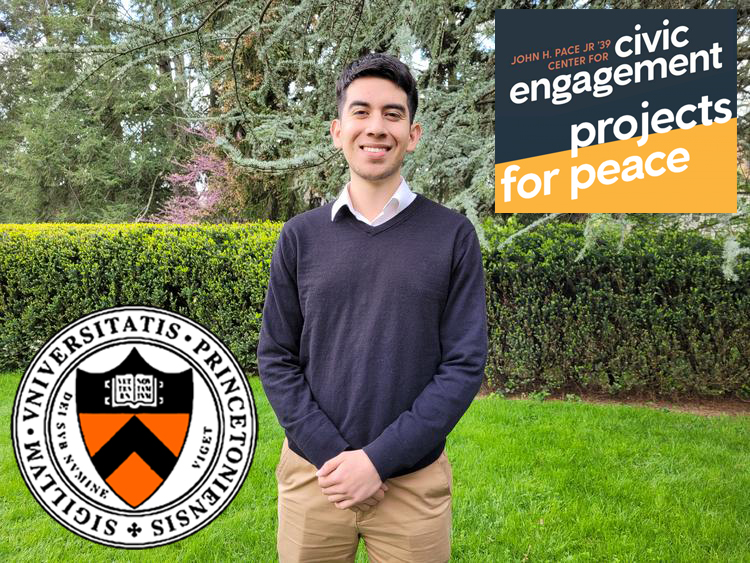
Princeton University senior and Dozier-Libbey Medical High School of Antioch graduate Carlos Cortez, 2023 Projects for Peace grant recipient. Photo by Gwen McNamara.

It takes a village: Carlos Cortez – Class of ’24 – and the people of Zináparo bring music and soccer to their youth

By Lou Chen, Trenton Arts at Princeton Program Manager

Originally published by Princeton University’s Pace Center for Community Service. Republished with permission.

Carlos Cortez ’24 straddles two worlds.

The 2020 Dozier-Libbey Medical High School graduate’s family is from Zináparo, a small rural village in Michoácan, Mexico, where few people have ever heard of Princeton University.

The son of Carlos and Eréndira Cortez is a senior at Princeton University, where few people have ever heard of Zináparo.

But Carlos, the student, had an idea to bring these two worlds together. Last year, with the funding he won as Princeton’s 2023 Projects for Peace award recipient, he started a music and soccer summer camp for Zináparo youth.

Now everyone in Zináparo knows Princeton. And Princeton is just getting to know Zináparo.

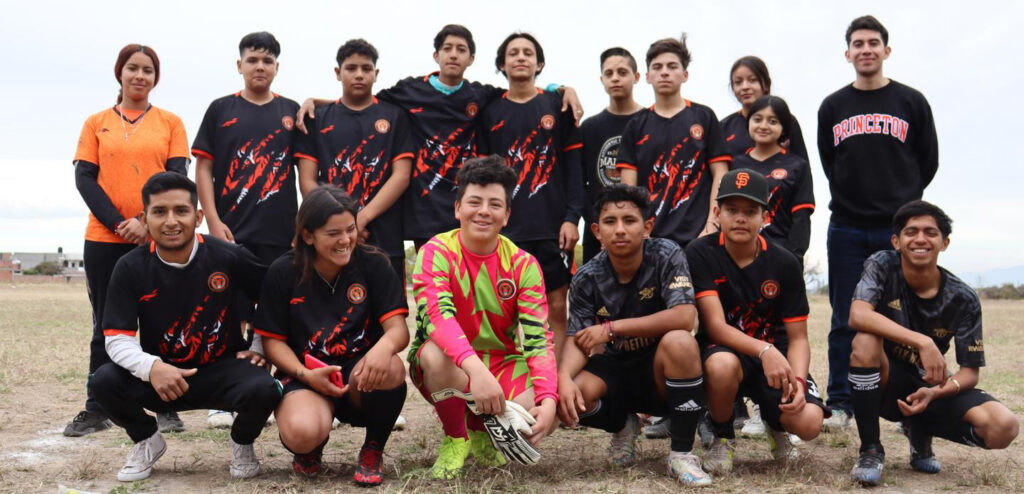
Carlos Cortez (back right) and his soccer team. Photo by Lou Chen.

An Idea

Even though Carlos was born and raised in Antioch, California, he considers his real hometown to be Zináparo, where most of his extended family still lives. Twice every year, he travels to Zináparo to enjoy the balmy summers and festive winters, hiking in the nearby mountains and participating in the annual peregrinación (religious pilgrimage).

Accepted into Princeton as a Questbridge scholar, Carlos chose to major in neuroscience and committed to the pre-med track, supplementing his coursework with research and tutoring jobs. Despite his busy schedule, he felt restless. His thoughts constantly returned to Zináparo.

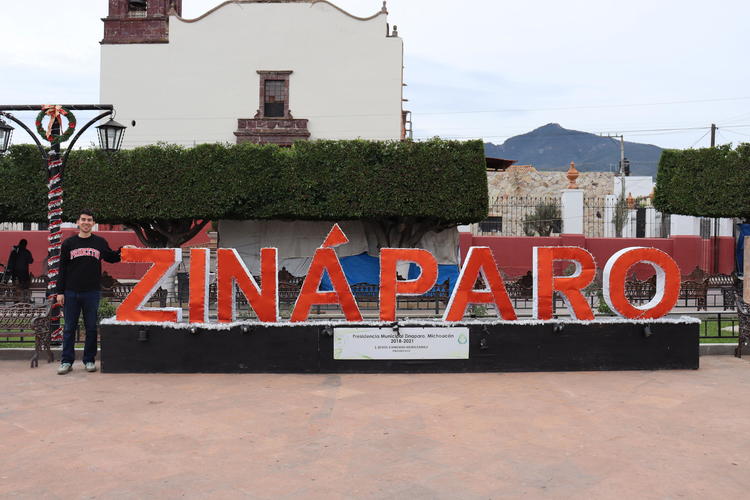
Carlos in Zináparo’s town square. Photo by Lou Chen.

“My dream was to become a doctor and open a pediatric clinic in Zináparo,” he says. “But I realized that it would be many years before I could accomplish this. I didn’t want to wait that long. I wanted a chance to do something now.”

That chance soon arrived. During his junior year, he heard about the Pace Center for Civic Engagement’s Projects for Peace initiative, which provides Princeton undergraduates with a $10,000 award to implement a service project anywhere in the world. With his family’s encouragement, he proposed a music and soccer summer camp for children in Zináparo.

“Growing up in California, music and soccer were very important for me in making community,” he says. “I wanted the kids in Zináparo to have the same experience.”

In the spring of 2023, he won the award.

According to a preview article about his project, “He saw his project as an opportunity to not only influence the youth of his town, but to have positive reverberations for the entire community and surrounding communities as well.

He summarizes this hope as he looks forward to this summer by saying, ‘just like a musical note can travel through both time and space when it is played, I am hopeful of learning how my project’s ideals and goals are going to have transgenerational effects on the future generations of Zináparo and ultimately transcend beyond the borders of my hometown,’ he shared before the project began.”

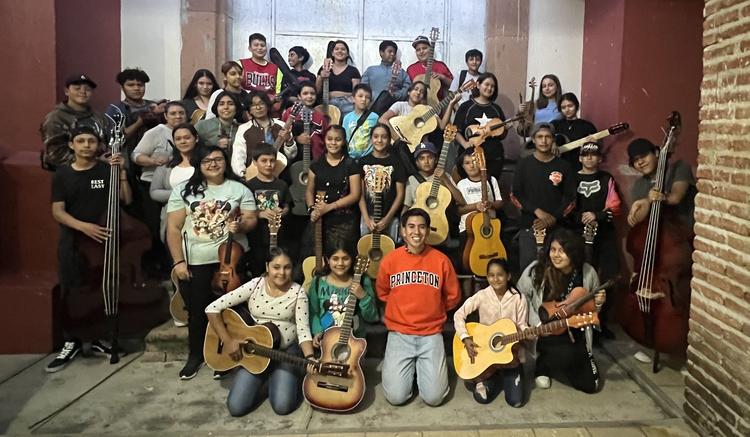
Carlos and his music students. Photo by Adrián Pimentel.

A Village

As any entrepreneur will tell you, the road from idea to execution is a winding one. “Right before arriving in Zináparo, I was feeling that the process would be easy,” Carlos says. “But when I landed in Zináparo, I started to realize that it was going to be a long journey with a lot of challenges.”

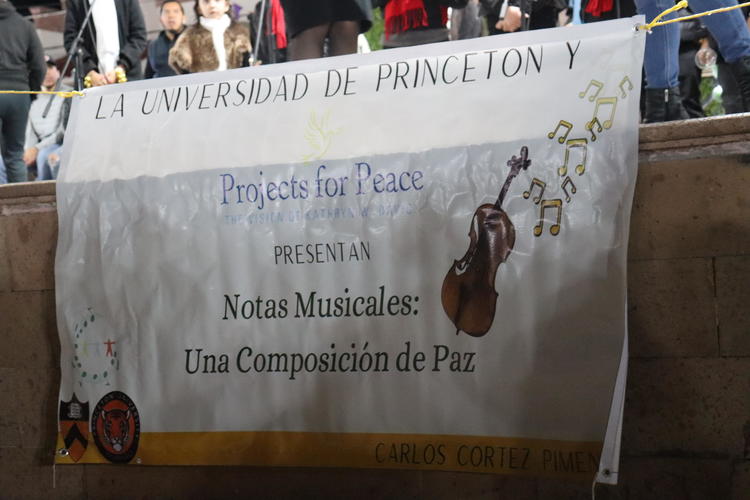
The first challenge was recruiting children for the camp, which Carlos had titled, “Musical Notes: A Composition for Peace.” Even though Carlos was a frequent visitor to Zináparo, he remained an unfamiliar face to many people. It didn’t matter that Princeton was supporting the camp; none of the children knew what Princeton even was. 

He began by visiting the local high school where his aunt Noemí taught history and ethics, going from classroom to classroom and telling students about his new program. He later found out that one of the students called up Noemí, a widely respected community leader in Zináparo, and told her that someone from Princeton University wanted to start a summer camp. “Do you know about this?” the student asked. “Can we trust him?” 

“Of course, you can,” Noemí replied. “He’s my nephew!”

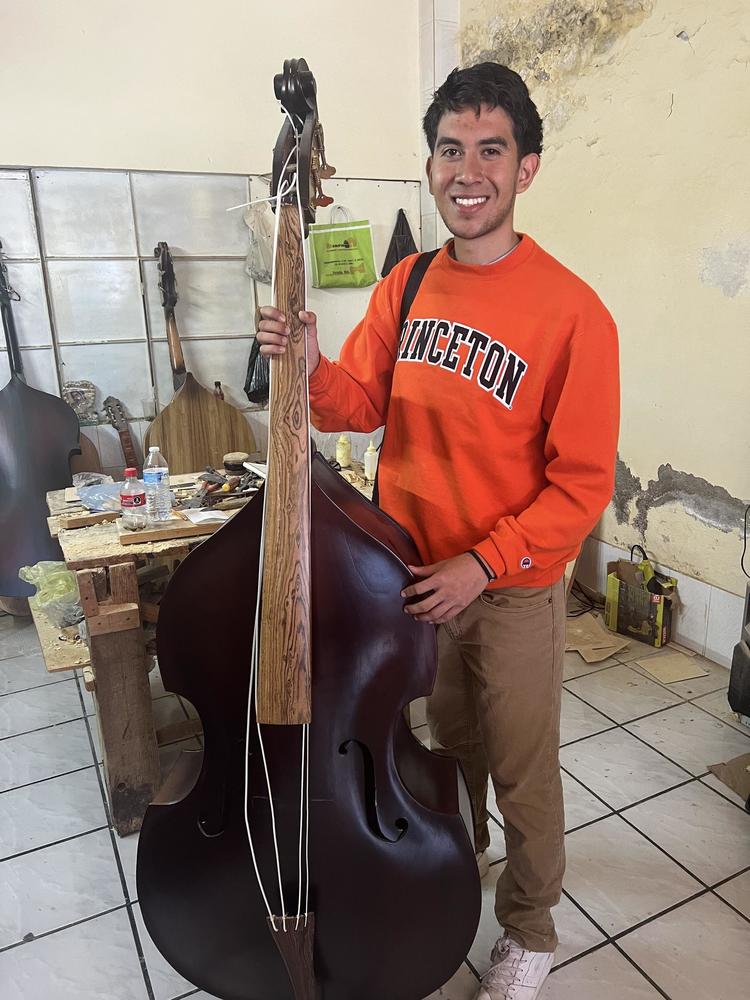
Carlos purchases a bass in Paracho. Photo by Adrián Pimentel.

Another challenge was procuring instruments. Almost 40 kids wanted to learn guitar, violin, or bass—but none of them had their own instrument. One hot summer day, Carlos, his younger sister Natalia, his mother, his uncle Adrián, and his grandfather Guillermo piled into the family van and drove two hours to Paracho, a small town in Michoácan that specializes in making instruments. (Paracho inspired the setting of the Oscar-winning animated film Coco.)

Once in Paracho, they purchased several instruments from a local luthier. Somehow, they crammed one bass, five guitars, and seven violins into a van that already contained five people. “I was pressed up against the side of the van,” says Carlos. “It was definitely an experience.” They made several return trips to Paracho for more instruments, and on one occasion, the aforementioned luthier drove a second bass all the way to Zináparo by himself. 

Carlos was surprised by how enthusiastically the Zináparo community rallied around the camp. Countless people pitched in: the neighbor who let them use his house for rehearsals; the business owner who let them use his shop for a private recital; and Carlos’ 10-year-old student Hector and Hector’s mother Luz, who cleaned up after every rehearsal. “Without everyone’s help, this project would not have been possible,” says Carlos. 

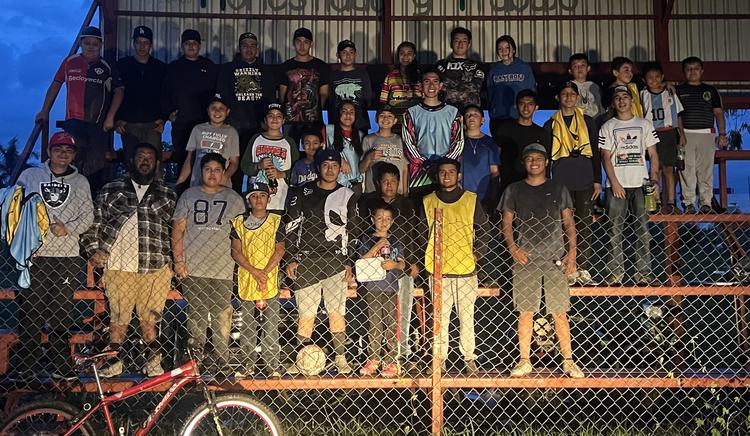
The camp exceeded even Carlos’ wildest expectations. Every Monday through Thursday for two and a half months, almost 100 children aged four to 17 participated in one or more classes: soccer, choir, guitar, and violin/bass. Carlos coached the soccer team and hired teachers for the other subjects. “I wanted teachers who were passionate about working with kids,” says Carlos. “I didn’t want them to treat this as just another way to make money.”

On the last day of camp, his soccer team surprised him with a loud round of applause. One student cried out, “Carlos for president!” Carlos promised to buy them jerseys out of his own money if they continued to practice soccer.

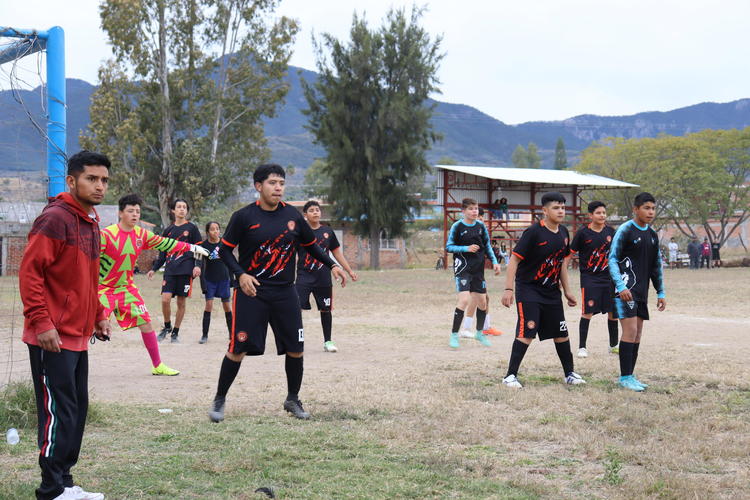
Carlos and his soccer team. Photo by Adrián Pimentel.

Continue they did. Even though Carlos had to return to Princeton for his senior year, he was determined to keep the camp going. He found two people to coach the soccer team on a volunteer basis; they had recently moved to Zináparo and had long dreamed of coaching their own team. He used his leftover Projects for Peace funding to pay for weekly choral and instrumental lessons for his students until December and let them keep their instruments. Noemí took his place as the point person for the program. 

For Carlos, the experience was a blessing. “I just wanted to change the future of even one of the kids,” he says. “I’m seeing that difference already.”

A Debut

On January 7, Carlos woke up with butterflies in his stomach. Today was the debut of Musical Notes: A Composition for Peace. Since the summer, the choir and orchestra (consisting of guitar, violin, and bass) had been rehearsing weekly for a big concert in the Zináparo town square. The entire community had been invited, and Carlos’ extended family in California had flown out to watch. 

Carlos’ soccer team wears their new Princeton-themed jerseys. Photo by Lou Chen.

First, Carlos stopped by the soccer field to observe a match between his team and a team from a neighboring town. He had kept his promise: His team was wearing brand-new orange and black jerseys. Natalia had designed the jerseys, including the iconic image of a Princeton tiger glaring through claw marks.

“In one of our first games, we played against a team from a much wealthier town,” says Carlos. “I could tell how discouraged my students were to see how much nicer [the opposing team’s] field was. I got them jerseys because I wanted them to feel proud to be on this team. I wanted them to feel like they were a part of something bigger…like they had the support of Princeton University.” The new jerseys seemed to do the trick: After putting them on, his team won the next game. 

After the match, Carlos and his parents walked to the town square to set up for the performance. The owner of the local funeral home, whose daughter was in the choir, had donated 150 chairs for the audience—and had even purchased new ones so that there would be enough. 

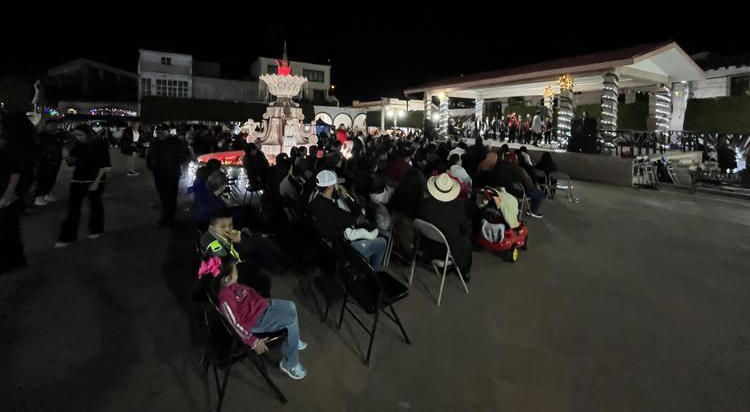
The audience seated (and standing) in the town square. Photo by Lou Chen.

Carlos was worried that not enough people were going to show up to fill the seats. But as people started entering the town square, he realized that he had the opposite problem: He didn’t have enough seats. His family raced to the rehearsal space, grabbed as many chairs as they could, carried them back, and set them up with only minutes to spare. The new chairs were quickly occupied, and latecomers had to stand. At least 350 people were in the audience. 

As Natalia helped tune the guitars, she noticed a student looking forlorn. She asked him what was wrong, and he quietly asked if this was the last day of the program. “Of course not,” Natalia assured him. He smiled.

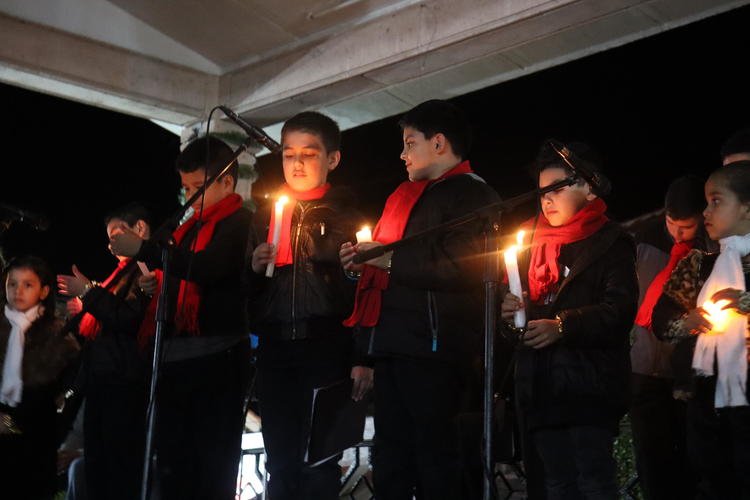
The choir performs “Noche de paz.” Photo by Lou Chen.

The choir opened the concert with six Christmas carols. During “Noche de paz” (Silent Night), they cradled candles in their hands, their faces glowing as if lit from within. For their final song, “Ven a Cantar” (Sing with Us), they rolled up their sleeves, revealing bracelets made of jingle bells. As they clapped their hands, the ringing of bells filled the crisp winter air.

The orchestra was up next, performing two songs that featured a 15-year-old choral student named Andrea. Her voice, initially hesitant and wavering, gradually grew in power. The guitarists kept the orchestra together with their steady strumming, and the violinists trained their eyes on the conductor, determined not to miss their tremolo entrance. In the very back, a student plucked away at the bass that Carlos had brought back from Paracho.

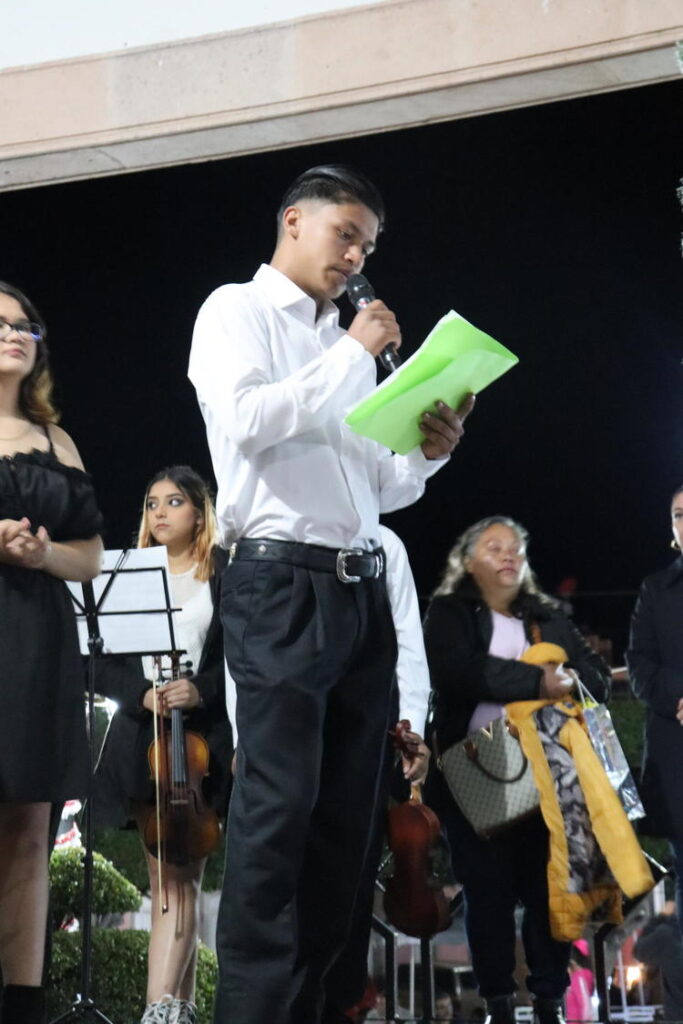
José delivers his speech. Photo by Lou Chen.

After the orchestra finished, Noemí invited Hector and Luz to the stage and thanked them for keeping the rehearsal space clean. She presented them with gifts and embraced a clearly overcome Luz. The crowd cheered.

Next to speak was Carlos’ student José, who at 17 years old was the oldest member of the program. “I want to give a special thank you to Carlos for giving me and the children of this town the opportunity to learn music,” he said. “I hope this continues…Zináparo needs these programs.”

Carlos walked onstage to deliver the concluding remarks. “Thank you to my grandparents for giving me a love of Zináparo,” he said, choking back tears. “I know I wasn’t born here, but this is my home.”

As Carlos left the stage, he was mobbed by students, parents, complete strangers—all of whom wanted to take a picture with him. Grown men were crying and little kids were beaming. “Before this camp, the children of Zináparo didn’t have anything like this,” said Eréndira. “But now, they do.”

Carlos hopes that the camp will take place every summer, with weekly programming throughout the rest of the year. He hopes that someday his music students will be paid to perform or even to teach. (This is already happening: José has been invited by his guitar teacher to perform in a mariachi band, and Carlos wants him to teach for the camp.) He hopes to solicit donations from Zináparo residents who have immigrated to the United States, and to potentially seek funding from the Mexican government. 

Musical Notes: A Composition for Peace. Photo by Lou Chen.

These are all big dreams. It’s a lot for one Princeton student—and soon-to-be-alum—to take on alone. 

But Carlos knows he isn’t alone. “I feel honored to have so many different communities believe in the project,” he says. “It ensures the life of the project, because there are so many people invested in wanting to see the kids succeed.”

To learn more about Musical Notes: A Composition for Peace, follow them on Instagram. Their full debut performance can be viewed on YouTube.

Allen D. Payton contributed to this report.

Antioch schools to hold MLK event Monday, Jan. 15

Tuesday, January 9th, 2024

The event is open to the public.

League of Women Voters to host webinar on election mis-/dis-information Jan. 18

Thursday, January 4th, 2024

Community Conversation moderated by Truth in Common founder, News Guard News Acting Director & Verification Editor

By Gail Murray

Are you feeling overwhelmed by the preponderance of mis- and dis-information, the role of AI and the potential effects on the 2024 election? Join a Community Conversation webinar on Thursday, January 18 from 4 p.m. to 5:30 p.m. titled “Mis/Dis-Information: How to Recognize and Respond to It” to learn how falsehoods spread and how we can avoid them.

The webinar will feature Deanna Troust, founder of Truth in Common, who will moderate the event.  Troust will outline an approach for social change to address this pervasive issue.  She will discuss recent research and skills to deepen our capacity for constructive civil discourse, based on her workshop series titled “Misinformation: How it Spreads and How to Avoid it.” Troust will be joined in the discussion by McKenzie Sadeghi, Acting Director and Verification Editor for News Guard News.

Register for the Zoom link here: https://ccclib.bibliocommons.com/events/65833f5767e8ac3700b79931

Information on how to access the Zoom webinar will be sent to your email address 24 hours before the program. Audience questions will be collected and answered through the Zoom chat.

Community Conversations are sponsored by the League of Women Voters of Diablo Valley, the League of Women Voters of West Contra Costa County, CCTV, and the Contra Costa County Library.

The Library will provide closed captioning for this event and simultaneous Spanish translation.  This program will be recorded and uploaded to the Library’s YouTube channel after the event.

Contact programs@lwvdv.org for more information.

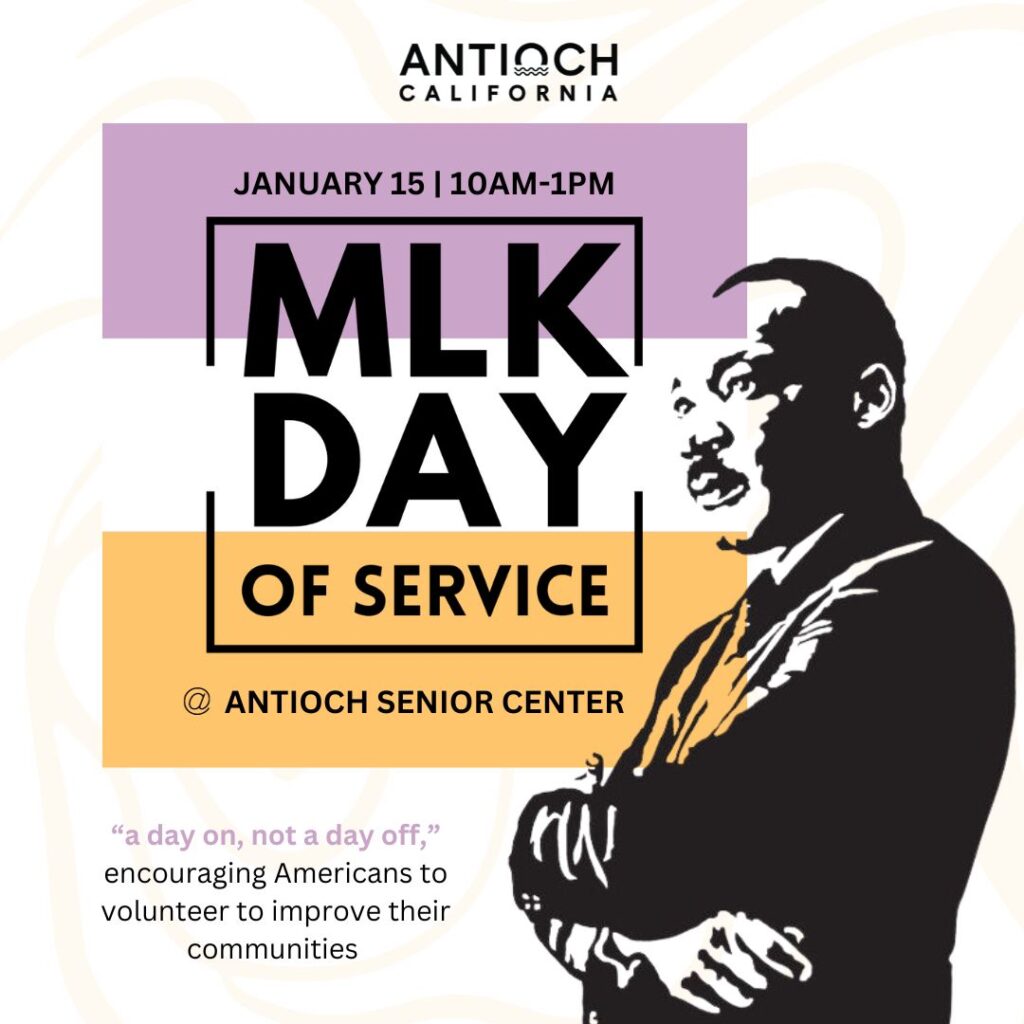
Antioch Martin Luther King, Jr. Day of Service Jan. 15

Tuesday, December 26th, 2023

Includes Mission Elementary School’s 50th Anniversary mural project

Saturday, January 15, 2024, 10:00am-1:00pm

“Life’s most persistent and urgent questions is, ‘What are you doing for others?” – Martin Luther King Jr., Montgomery, Alabama 1957.

Join us this Martin Luther King Jr. Day as we spend “a day on, not a day off,” encouraging all Americans to volunteer to improve their communities.

Let’s work together to build a stronger Antioch!

Join us at the Antioch Senior Center/Nick Rodriguez Community Center

Bring your senior relatives (e.g., grandparents, aunts, uncles, parents, etc.) or neighbors to the Antioch Senior Center and Nick Rodriguez Community Center, at 415 W 2nd Street in Antioch, to take part in a day of engagement with community members of all ages. Experience exciti19ng and engaging activities, be part of thoughtful discussions and enjoy lunch served by school-age volunteers.

#10892: Volunteer and lead an installation/ mural-based project at Mission Elementary School

Sign up and join us to help create a mural at Mission Elementary School at 1711 Mission Drive in Antioch in celebration of their 50th Anniversary.

#10899: Senior to Senior (ages 14-18) (max 30)
We are looking for high school volunteers to have a moderated discussion with Senior citizens about the impact of MLK, equality and equity on our society. Students can also perform spoken word poems and read other MLK related speeches.

#10900: Arts & Crafts (max 20)
Volunteer and lead a Martin Luther King Jr. arts and craft themed project for the community.

#10902: Karaoke (max 20)
If you like to sing and dance, sign up to volunteer to lead karaoke with the community. Music will consist of themes based on MLK, Jr., freedom, community and celebration of life.

#10903: Activities (max 30)
Volunteer to join us for a room full of fun board games, puzzles, and other games. Lead a round of a game or simply take part in playing.

#10904: Lunch Services (max 15)
Volunteer and lead the service of preparing and providing lunch to the community and other volunteers

Register at Martin Luther King Jr. Day of Service – City of Antioch, California.

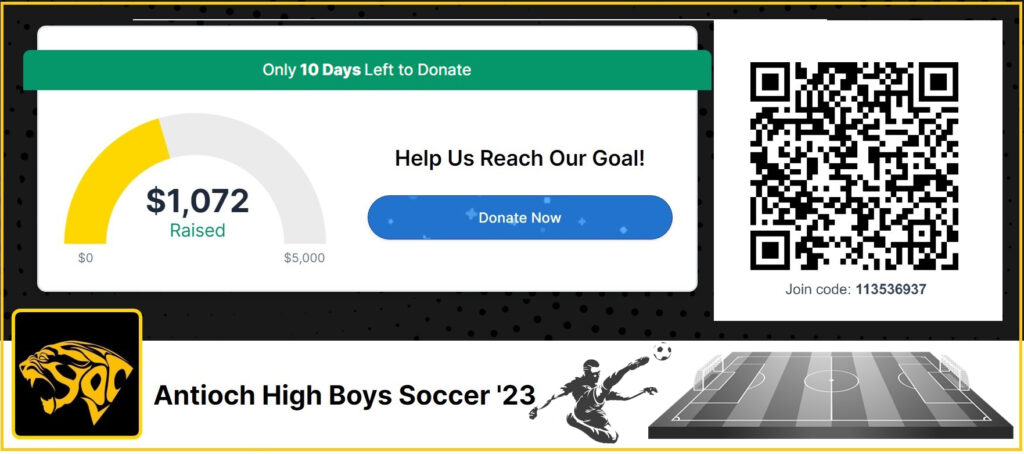
Antioch High Boys Soccer team members averaging 3.5-4.0 GPA’s

Tuesday, December 19th, 2023

Coaches raising funds for current season through Dec. 29

By Coaching Staff, Antioch High School Boys Soccer Program

We are honored to represent our original high school established in 1955, Antioch High School Panthers.

Athletics are huge for a young high school student to develop teamwork, communication, leadership and good work ethics in a positive, structured environment. This encourages the most important part of high school, the academics.

We are proud to announce that our Frosh, Junior Varsity and Varsity teams of 75 student athletes own an average of a 3 to 4 GPA. That is a real winning season!

“These boys are very special positive students with 3.5-4.0 GPA’s, as well as local athletes,” added Coach Conrad Diaz.They will make a difference in our future community.”

Please support our fundraiser for the success of our Antioch youth. The goal is $5,000. To contribute visit https://raise.snap.app/donors/antioch-high-boys-soccer-23-2023

Thank you for your support!