






Investigate the operations of local government officers, departments and agencies
Application deadline: March 13, 2026
By Contra Costa County Grand Jurors Association
The Contra Costa County Superior Court is accepting applications for Civil Grand Jury Service for the Fiscal Year 2026-2027 term.
Contra Costa County’s Grand Jury consists of 19 citizens. A new Grand Jury is impaneled each year. Grand Jurors are officers of the Court, and function as an independent body under the guidance of a Superior Court Judge. Jurors are impaneled in June and are expected to attend a two-week training in June. Each term serves through June of the following calendar year.
Every year, in each of California’s 58 counties, a group of ordinary citizens takes an oath to serve as grand jurors. Its function is to investigate the operations of the various officers, departments and agencies of local government. Each Civil Grand Jury determines which officers, departments and agencies it will investigate during its term of office.
Apart from the investigations mandated by the California Penal Code, each County’s Grand Jury decides what it will investigate. Investigations may be initiated in response to letters from citizens, newspaper articles and personal knowledge.
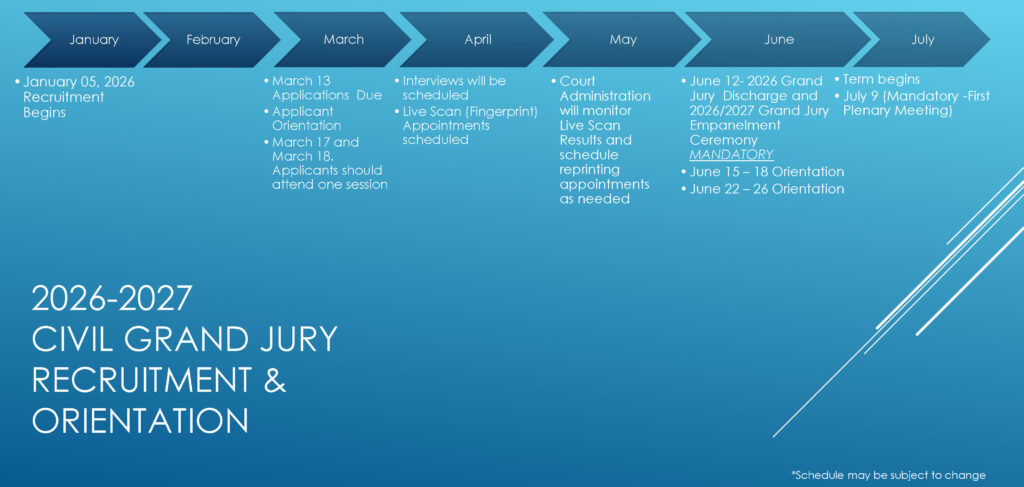
If you are interested in applying, please complete the application and review the timeline below.
By Matt J. Malone, Chief Counsel and PIO, Superior Court of California, Contra Costa County
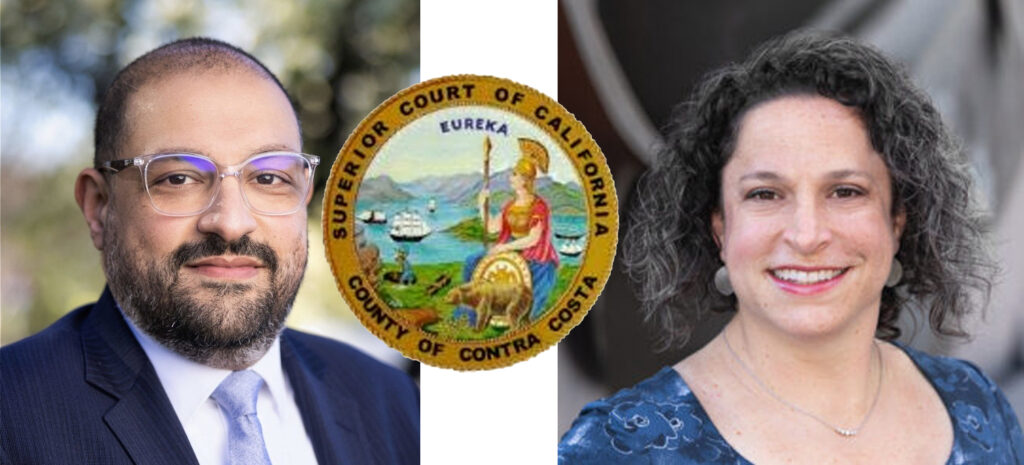
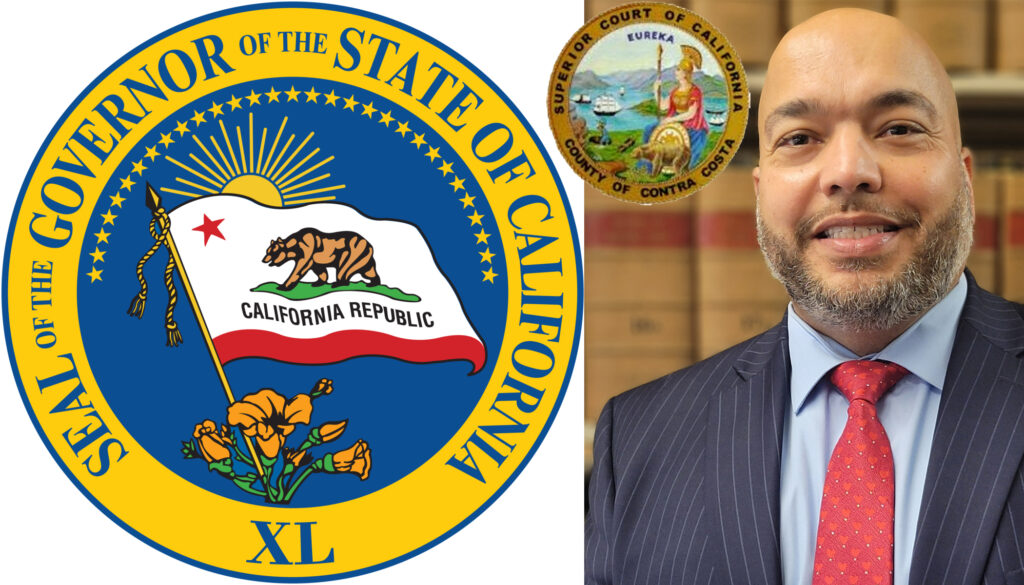
The Contra Costa Superior Court is pleased to announce that Governor Gavin Newsom has appointed Commissioner Andrew R. Verriere as the Court’s newest judge. He assumed his new role today and will preside in Department 11. His first judicial assignment will be at the George D. Carroll Courthouse in Richmond.
Judge Verriere has served the Court as a Commissioner since May 1, 2023, handling traffic, unlawful detainer, small claims, and domestic violence and civil harassment restraining order matters. While a Commissioner, he worked with the California Judges Association on proposed legislation to amend Penal Code section 1050 in infraction cases, helped establish a guardian ad litem roster for defendants in limited jurisdiction civil cases, and worked with the Traffic Committee to provide improved language access for traffic defendants who communicate primarily in languages other than English.
Prior to serving as Commissioner, Judge Verriere worked as a trial and appellate litigator in civil and probate matters. He was most recently a principal at Hartog, Baer, Zabronsky & Verriere APC, focusing on trust and estate litigation, conservatorship litigation, financial elder abuse, related litigation, and appeals. A highly-regarded speaker and instructor, he has presented to numerous trade organizations on topics of fiduciary duty, financial elder abuse, and discovery dispute resolution. Judge Verriere is a past member of the Board of Directors of the Contra Costa County Bar Association.
Judge Verriere graduated from UC Berkeley School of Law and obtained his B.A. from the University of California, San Diego. He fills the vacancy created by the retirement of Judge Brian F. Haynes.
It typically takes over a month for the Contra Costa Superior Court to process filings in limited civil cases. In fact, more like 6 weeks.
This compares badly with other superior courts throughout the state.
In San Diego Superior, for example, I’ve had papers processed within hours. In Marin County Superior Court, I’ve had papers processed within 1 or 2 days.
This is a real problem because justice delayed is justice denied.
This is a ridiculously long time when it only takes a few minutes to do the processing.
Yes, I understand that they have a lot of filings to process…but with a lot of filing don’t they also have a lot of taxpayer funding commensurate with the size of the population of the county?
So why is Contra Costa so much slower than other counties?
399,000 positions paid almost $29 billion in total wages
Includes Contra Costa Superior Court and Cal State East Bay data
SACRAMENTO — State Controller Malia M. Cohen has published the 2023 self-reported payroll data for state departments, superior courts, and California State Universities (CSU) on the Government Compensation in California website. The data covers more than 399,000 positions and approximately $28.87 billion in total wages for those agencies and institutions.
Users of the site can view compensation levels on maps and search by region, narrow results by name of the entity or by job title, and export raw data or custom reports.
The newly published data were reported by:
• 24 CSU institutions (116,235 employees),
• 56 superior courts (20,884 employees), and
• 157 state departments (262,097 employees).
California law requires cities, counties, and special districts to annually report compensation data to the State Controller. The State Controller also maintains and publishes state and CSU salary data. However, no such statutory requirement exists for the University of California, California community colleges, superior courts, fairs and expositions, First 5 commissions, or K-12 education providers; their reporting is voluntary. Two superior courts either did not file or filed a report that was non-compliant, including those in Alameda County and Tuolumne County.
The site contains pay and benefit information on more than two million government jobs in California, as reported annually by each entity.
In addition, the report shares, “This California State University includes payments toward the unfunded liability of the employer sponsored retirement plan.” For more information visit www.csueastbay.edu/hr.
The State Controller’s Government Compensation in California website provides information on employee pay and benefits for approximately 2 million positions at more than 5,000 public employers. Public employers annually report employee compensation to the State Controller’s Office. It allows the public to view and search employee job titles, build charts and graphics, and download custom reports and raw data.
About Controller Cohen
As the chief fiscal officer of California, Controller Cohen is responsible for accountability and disbursement of the state’s financial resources. The Controller has independent auditing authority over government agencies that spend state funds. She is a member of numerous financing authorities, and fiscal and financial oversight entities including the Franchise Tax Board. She also serves on the boards for the nation’s two largest public pension funds. Follow the Controller on X at @CAController and on Facebook at California State Controller’s Office.
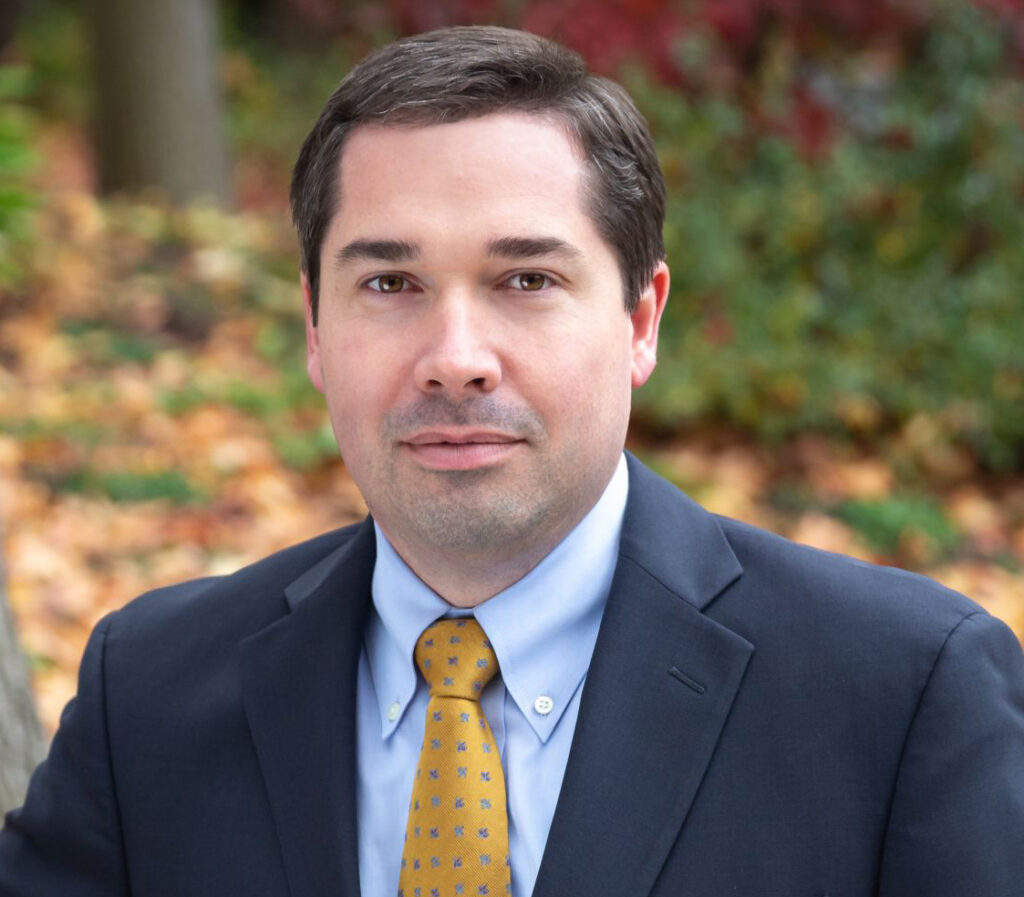
New Contra Costa County Superior Court Judge Michael Nieto. Photo source: Office of the Governor of California
SACRAMENTO – Governor Gavin Newsom announced on Tuesday, June 18, 2024, his appointment of 15 Superior Court Judges, which include one in Contra Costa County; two in Los Angeles County; one in Marin County; one in Napa County; one in Riverside County; one in Sacramento County; three in San Diego County; one in San Francisco County; two in San Joaquin County; one in San Mateo County; and one in Santa Clara County.
Michael Nieto, of Contra Costa County, has been appointed to serve as a Judge in the Contra Costa County Superior Court. Nieto has served as an Assistant District Attorney at the Alameda County District Attorney’s Office since 2022 and has been a Deputy District Attorney there since 1997.
According to his LinkedIn profile, Nieto worked in private practice as an associate attorney for McCutcheon Doyle Brown & Enersen from June 1994 to Dec. 1996 and earned a Bachelors of Arts in Government from Harvard University.
He has served as an Adjunct Professor at the University of California College of the Law, San Francisco since 2013. Nieto earned a Juris Doctor degree from the University of California College of the Law (formerly Hastings), San Francisco. He fills the vacancy created by the retirement of Judge Clare Maier. Nieto is a Democrat.
The annual compensation for each of the judicial positions is $238,479.
Arrested July 2, 2023, following police chase from Concord to Hercules and back to Bay Point
Has history of arrests dating to 2014
By Ted Asregadoo, PIO, Contra Costa District Attorney’s Office
A jury in Contra Costa County convicted an Antioch man on offenses related to a high-speed chase in a stolen vehicle and illegal firearm possession.
The Contra Costa District Attorney’s Office filed a complaint in Superior Court charging 33-year-old Artis Chavez Crenshaw, Jr. (born 2/28/90), on July 6, 2023. The case was prosecuted by Deputy District Attorney Philip Farmer, and on January 18th, a jury in Pittsburg found Crenshaw guilty on four out of five counts. (See charges)
The offenses with which Crenshaw was charged with started on July 1st, when a victim’s vehicle was stolen in Antioch. On July 2nd, peace officers spotted Crenshaw driving the stolen vehicle in
Concord and attempted to pull him over. A high-speed chase ensued between police and Crenshaw that began on Port Chicago Highway near Highway 4. The pursuit continued onto westbound Highway 4 as Crenshaw accelerated to 115 mph while weaving through traffic. Even after the CHP laid down a spike strip at Sycamore Avenue near Hercules to disable the vehicle,
Crenshaw continued to evade officers by driving with a flattened tire onto eastbound Highway 4. He was eventually involved in a crash at the San Marco Boulevard exit in Bay Point and was taken into custody after the collision. The entire pursuit totaled 23 miles and lasted 16 minutes.
During his arrest, officers found an AR style pistol in the stolen vehicle. (See video)
Artis Chavez Crenshaw, Jr.’s sentencing hearing will be on March 1st at 8:30 am in front of Judge John Cope at the Arnason Justice Center in Pittsburg. Crenshaw faces a maximum of four years and four months in state prison.
According to localcrimenews.com, Crenshaw has a history of arrests dating to 2014 by Antioch PD, Napa County Sheriff’s Department, Petaluma PD, Concord PD and the Contra Costa County Sheriff’s Department for crimes including shoplifting, addict and convicted felon in possession of a firearm and other gun and ammunition charges, burglary, grand theft, assault with a deadly weapon likely to cause great bodily harm on a peace officer or fireman, receiving or concealing stolen property, possession of personal identity with intent to defraud, robbery and carrying a switch blade.
According to the Contra Costa Sheriff’s Department, the 6-foot, five-inch, 205 lb. Crenshaw is being held in the Martinez Detention Facility on no bail and his next court appearance is scheduled for March 1, 2024 at 8:30 a.m. in Superior Court in Pittsburg.
Case No. 04-23-01211 | The People of the State of California v. Artis Chavez Crenshaw, Jr.
SACRAMENTO – A federal district court this week upheld Senator Steve Glazer’s Truth in Lending law in a summary judgment that declined to hear a lawsuit filed by a lender organization that argued the law did not apply to them.
Under legislation that Senator Glazer, D-Contra Costa, authored in 2018 (Senate Bill 1235), California became the first state in the nation to give small business owners the same protections that Truth in Lending laws have given consumer borrowers for more than half a century. The law became permanent this year when Governor Gavin Newsom signed Senator Glazer’s follow-up bill, SB 33.
The lawsuit, brought by online financers called the Small Business Finance Association, sought to invalidate regulations that the California Department of Financial Protection and Innovations (DFPI) adopted to implement Senate Bill 1235, which requires lenders and other finance companies to provide clear and consistent disclosures to small business owners when they offer them financing and when they close a deal.
CORRECTION: The court ruled in favor of the DFPI’s motion for preliminary injunction. The summary judgment (Motion for Summary Judgment) concluded that the disclosures required under the Department’s regulations were lawful under the First Amendment and were not preempted by federal law.
In his 14-page order, the judge, R. Gary Klausner of the Central District of California, dismissed the plaintiffs’ arguments and praised state regulations implementing the law for protecting small business owners.
“The disclosures will help small businesses understand the cost of SBFs (Subscription Based Financing) and OECs (Original Equipment Costs) and do comparison shopping … Small businesses have asked for standardized disclosures that uncloak the true cost of financing and highlight useful information like “APR (Annual Percentage Rate), repayment amount, frequency of payments and prepayment penalties. The Regulations mandate such disclosures, thereby helping small businesses make informed credit decisions.”
DFPI Commissioner Clothilde Hewlett called Judge Klausner’s decision a “significant victory for small business owners and consumer protection in the State of California. SB 1235, and the accompanying DFPI regulations, ensure that more than four million California small businesses have protections like those enjoyed by consumers under the Truth in Lending Act for more than 50 years.
Hewlett continued: “These regulations empower small businesses to make informed credit decisions and better understand the cost of small business financing products, including merchant cash advances. The DFPI is committed to advancing opportunities for small business owners to achieve the California dream by ensuring a fair financial marketplace.”
The law is aimed at providing small business owners stronger footing in the rapidly evolving small business finance market, where fast-moving online lenders were replacing traditional banks in a largely unregulated world of loans and more innovative financing options.
“The federal district court agreed with the premise of my law, and that is that small businesses should be protected from abuses that were trapping them in a spiral of debt as the online lending industry evolved,” Senator Glazer said. “This law offers a modest measure – disclosure — to help level the playing field for small business owners. It is making California a leader in protecting the interests of small business owners as they seek the capital they need to grow.”
Previously, state and federal Truth in Lending laws applied only to consumer finance. Even the owners of the smallest companies were left to fend for themselves on the theory that they were sophisticated merchants who understood the world of finance. Increasingly, however, that is no longer true. Today’s small business owners are often immigrant entrepreneurs struggling to get their enterprises off the ground with little knowledge of the finance industry. Others are young people or early retirees with no background in finance.
Under the law, the financer must disclose the following at the time they offer financing of less than $500,000 to a business owner:
Total amount of financing
Total cost of financing
Term length
Frequency and amount of payments
Pre-payment policies
Annualized rate
Editor’s Note: The Herald previously reported in this article, based on incorrect information in a press release from Glazer’s office, that Judge Klausner had granted a preliminary injunction against Opportunity Financial LLC (OppFi). That was in error. Judge Klausner’s summary judgment order contained no such order and no motion against OppFi was before the court.
On Thursday, Oct. 26, 2023, San Francisco District Attorney Brooke Jenkins announced that Delandro Belvine-Brown (22) of Antioch, and Sean Raquel Jevonce Simon, Jr. (24) of Richmond, were each sentenced to three years imprisonment after pleading guilty in San Francisco Superior Court to committing robbery in violation of Penal Code Section 211, in relation to a series of retail thefts occurring in San Francisco.
“Retail theft continues to have a major impact on San Francisco’s business community and the city’s economic livelihood. These crimes demand accountability and we need to send the message to others involved in this criminal enterprise that, with the support of our local law enforcement partners, our office will continue to pursue and prosecute those involved,” said District Attorney Brooke Jenkins. “With San Francisco Police Department receiving $15.3 million dollars and our office receiving $2 million from the Organized Retail Theft Prevention Grant Program, law enforcement agencies in San Francisco will continue to identify, investigate, and prosecute all levels of this criminal enterprise.”
In this case, the People alleged that Mr. Belvine-Brown and Mr. Simon were a part of an organized group which committed a series of snatch-and-grab thefts and robberies from Sunglass Hut, LensCrafters, and Veo Optics stores in San Francisco from November 1, 2021, through July 1, 2022. By employing a consistent brazen theft strategy, Mr. Belvine-Brown, Mr. Simon, and others entered the store as a group, rapidly grabbed numerous expensive sunglasses from display shelves, and quickly exited the store and got in an awaiting car. Investigators from SFPD and Brentwood Police Department conducted a joint investigation as there were similar thefts that occurred in Contra Costa County. Investigators from both agencies examined evidence from multiple sources, including store surveillance videos, social media posts, and mobile phone records to identify the Defendants and their criminal activities.
The case against Mr. Belvine-Brown and Mr. Simon was successfully prosecuted by Assistant District Attorney Conrad Del Rosario with support and assistance from District Attorney Inspector Lessa Vivian and Paralegal Chloe Mosqueda. This case was investigated by the San Francisco Police Department’s Burglary Unit and the Brentwood Police Department’s Investigation Division.
“Individuals who openly commit egregious and brazen retail crimes impact not only the store’s viability to stay open for their community, but also have long lasting effects on store employees and customers who are subjected to this blatant disregard for the law,” said Assistant District Attorney del Rosario. “These cases should serve as notice to those would-be thieves that law enforcement will aggressively investigate and prosecute their criminal activity in San Francisco.”
Belvine-Brown and Simon are currently in custody and will be transported to the California Department of Corrections and Rehabilitation’s custody to begin serving their state prison sentences.