As previously reported, Lydia Stewart, a 12-year-old entrepreneur and 7th grader from Antioch, is the proud owner of Lydia’s Soap. She has successfully secured a spot as one of the 10 finalists in the upcoming Contra Costa Youth Shark Tank Competition. To gear up for the February 6, 2024, event, Lydia is seeking support from her community.
The public is invited to Lydia’s practice event, organized by Antioch resident Dominique King, this Saturday, Feb. 3 at 3:30 p.m. inside TnT Smoothie and Juice Bar, 208 G Street in historic, downtown Rivertown, where attendees can enjoy refreshments, snacks, and explore various youth-run businesses as vendors.
“Let’s come together on a Saturday to celebrate and uplift our young entrepreneurs!” King said.
Shoot for the stars and dribble into a world of excitement! Join our Junior Warriors Co-Ed Basketball League – where teamwork, skill-building, and fun collide! League open to youth in grades K-8th. Sign up now and let the balling adventure begin.
Include non-transit transportation, environment, housing and economy strategy refinements
Will impact Antioch’s BART Station and industrial areas
The Joint Metropolitan Transportation Commission (MTC) Planning Committee with the Association of Bay Area Governments (ABAG) Administrative Committee on Jan. 12, 2024 approved the revised Plan Bay Area 2050+ Draft Blueprint strategies and Growth Geographies. This action enables staff to further study the strategies’ performance in meeting critical regional goals for an affordable, connected, diverse, healthy and vibrant Bay Area for all. Staff are aiming for adoption of the Plan Bay Area 2050+ Final Blueprint in summer 2024.
Given Plan Bay Area 2050’s solid foundation of 35 strategies, the Draft Blueprint phase for Plan Bay Area 2050+ is focusing on making targeted refinements to select plan strategies. These refinements reflect Plan Bay Area 2050’s implementation progress, the post-pandemic planning context and insights gathered during engagement with the public and partners in summer 2023.
What is the Plan Bay Area 2050+ Blueprint?
The Plan Bay Area 2050+ Blueprint will integrate strategies across the four elements of the plan — the economy, the environment, housing and transportation — to create a more equitable and resilient future for all.
Beginning in summer 2023 and wrapping up in late 2024, staff will develop the Blueprint over two phases: the Draft Blueprint and the Final Blueprint. Given Plan Bay Area 2050’s solid foundation of 35 strategies, the Draft Blueprint phase for Plan Bay Area 2050+ will focus on making targeted refinements to select plan strategies.
What are Growth Geographies?
Priority Development Areas — Places nominated by local governments served by transit and planned for new homes and jobs at densities necessary to support effective transit service.
Priority Production Areas — Industrial areas of importance to the regional economy and local communities that support middle-wage jobs.
Transit-Rich Areas — Places near rail, ferry or frequent bus service that were not already identified as Priority Development Areas.
High-Resource Areas — State-identified places with well-resourced schools and access to jobs and open space.
Staff previously shared proposed Draft Blueprint strategy refinements in October and November 2023, detailing which of Plan Bay Area 2050’s 35 strategies were likely to see major, minor or no changes in Plan Bay Area 2050+. This month, the MTC and ABAG committees approved moving forward with revisions for further study and analysis, including:
Non-transit transportation strategy refinements focused on prioritizing equity considerations, adapting to tighter fiscal constraints, promoting active transportation and safety, and expanding pricing strategies;
Environment strategy refinements focused on further reducing greenhouse gas emissions and proactively adapting to climate change; and
Housing and economy strategy refinements focused on addressing pressing challenges of housing affordability, homelessness and access to opportunity.
At this time the Draft Blueprint only includes a handful of modified transportation strategies, pending the development of a fiscally constrained Transportation Project List, which will integrate recommendations from the ongoing parallel Transit 2050+ effort. The complete suite of revised transportation strategies will be integrated as part of the Final Blueprint in summer 2024.
The Joint ABAG and MTC Committee also approved targeted updates to the Growth Geographies that were adopted as part of Plan Bay Area 2050. Growth Geographies are places that Plan Bay Area prioritizes for future homes, jobs, services and amenities and serve as a component of the plan’s housing and economy elements. Specifically, draft Growth Geographies for Plan Bay Area 2050+ will include five new Priority Development Areas (PDAs) and 16 modified existing PDAs nominated by local Bay Area jurisdictions; reflect up-to-date information on transit service, natural hazards and demographics; and integrate areas subject to MTC’s revised Transit Oriented Communities Policy.
The Draft Blueprint approval comes six months after MTC and ABAG kicked off the limited and focused update to Plan Bay Area 2050. In November 2023, staff shared progress-to-date with policymakers, including findings from the first round of engagement, core planning assumptions, the draft Regional Growth Forecast, a financial needs and revenue analyses and proposed strategy refinements.
The next round of public and partner organization engagement activities, which will inform the development of the Plan Bay Area 2050+ Final Blueprint, is planned to begin in spring 2024. MTC and the ABAG Executive Board are expected to approve Final Blueprint strategies in summer 2024.
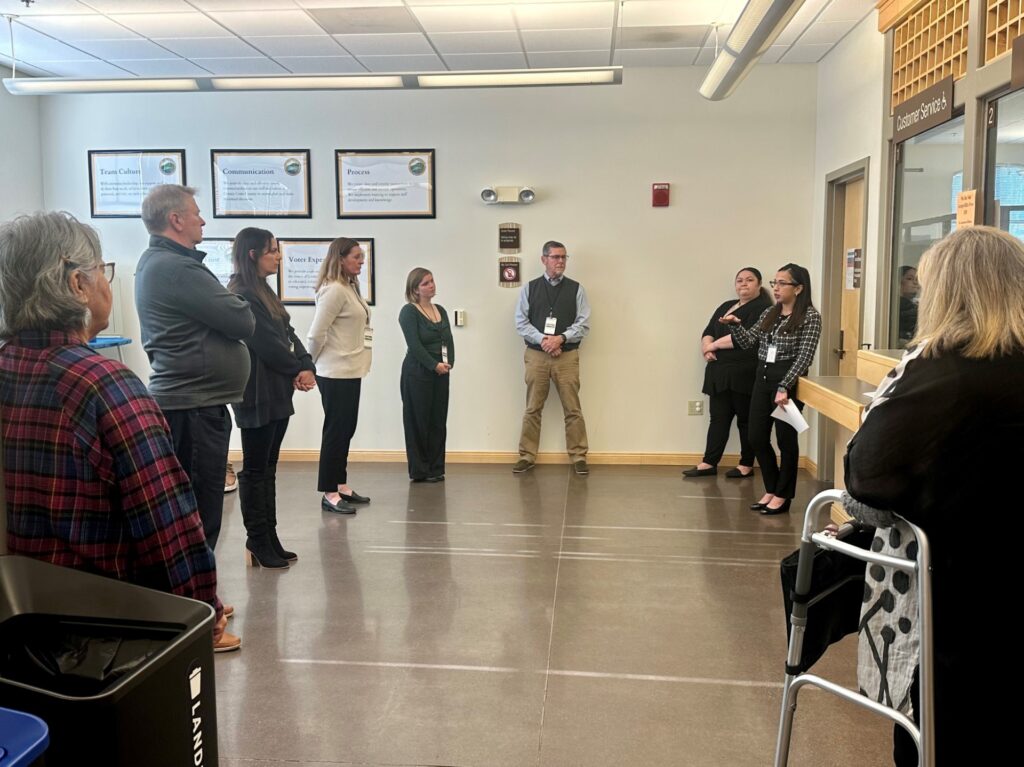
A group of Observers listen to a presentation by Contra Costa County Elections Staff. Photo: CCC Elections
“We’re an open book” – Registrar of Voters Kristin Connelly
By Dawn Kruger, Civic Outreach and Engagement Specialist, Contra Costa Clerk-Recorder-Elections Department
Making good on its commitment to accountability and transparency, the Contra Costa County Clerk-Recorder-Elections Department today welcomes members of the public into its fourth class of the Contra Costa County Certified Election Observer (CEO) Program. The program is open to applicants from the public—anyone can apply to future cohorts. During this election cycle, ten CEOs will participate in a rigorous series of classes and tours at Elections Division headquarters.
“Our county is home to one of the safest, most secure and transparent election systems in the nation,” says Kristin Connelly, Contra Costa Registrar of Voters. “We’re not just saying that—we’ve been recognized by our peers. We ensure all residents can see how we work. That’s why the Certified Election Observer Program is so important—it offers an in-depth look at democracy from start to finish.”
Launched in 2022 and held in advance of every election, Contra Costa County’s CEO program won an Honorable Mention Award from the United States Election Assistance Commission. The program aims to open the elections process up to more county residents and help the community become well-versed in the many steps the county takes to ensure transparency and integrity.
This election cycle’s cohort will start with a comprehensive review of the voter registration process and an introduction to the Department’s leadership. Next, CEOs will participate in poll worker training classes. They will also get a facility tour featuring a detailed review of the public logic and accuracy testing process, where staff confirms that all voting equipment is functioning properly. On the day before the March 5 Presidential Primary Election, they will review the mail-in voting and ballot scanning process. This process consists of collecting ballot envelopes from official drop boxes and the postal service, verifying voters’ signatures against registration records, extracting and scanning ballots, and tabulating the vote.
On March 18, midway through the counting process, CEOs will witness Provisional Ballot processing and ballot review, including resolving damaged or ambiguous ballots. Then, they will watch the 1% manual tally, where officials conduct an audit by hand-counting a random sample of ballots to ensure that the tabulators have counted the votes correctly. Upon completion of the program, CEOs will receive a certificate of achievement at a Contra Costa County Board of Supervisors meeting in April.
“Our office has many opportunities for community participation,” says Dawn Kruger, Civic Outreach and Engagement Specialist. “You can become a poll worker, host a voter registration event, invite us to your organization for a presentation, learn more about how elections work by visiting our website, or engage with us on Social Media.”
Contra Costa County will host another cohort of CEOs for the fall Presidential General Election. Residents interested in receiving a presentation or observing the election process can email outreach@vote.cccounty.us. Those who wish to become a poll worker can visit contracostavote.gov. Voters can track the processing of their own ballot by signing up for California Ballottrax at california.ballottrax.net.
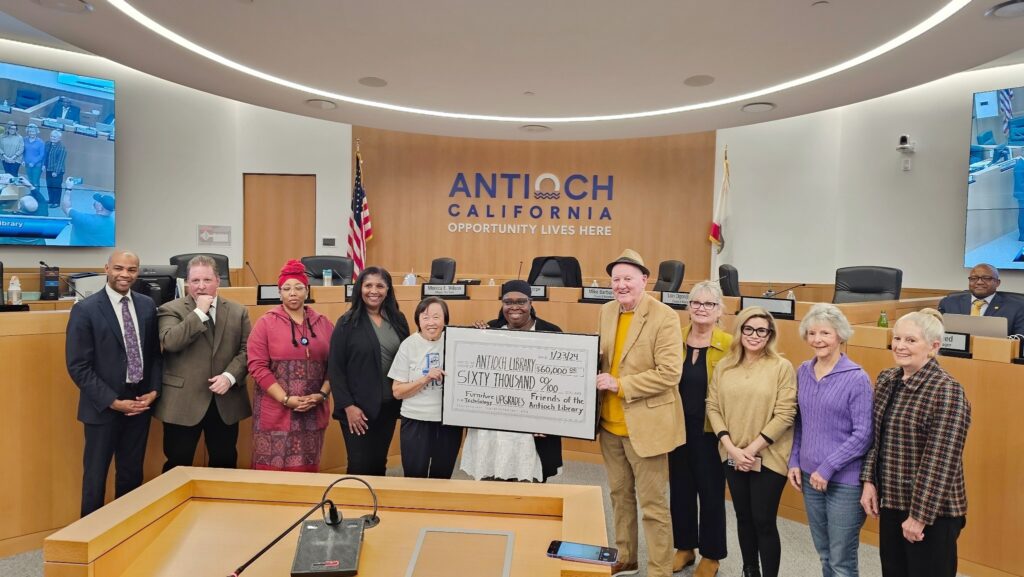
Friends of the Antioch Library present a ceremonial check during the council meeting on Tuesday, Jan. 23, 2024. Standing, left to right, are Mayor Lamar Hernandez-Thorpe, Council Members Mike Barbanica, Tamisha Torres-Walker, Monica Wilson, FOAL Financial Secretary Patty Chan, Antioch Head Librarian Mahasin Aleem (accepting the check); FOAL President Walter Ruehlig, Councilwoman Lori Ogorchock, FOAL Treasurer Tammy Smith, former FOAL Secretary Marian Ferrante and FOAL Vice President Merle Whitburn. Photo: FOAL
By Walter Ruehlig
During the January 23, 2024, Antioch City Council meeting at City Hall the Board of Directors of the Friends of the Antioch Library (FOAL) presented a $60,000 donation for furniture and technology upgrades for the Antioch Library.
Since inception, FOAL has raised some $700K for library improvements through Amazon rare book offerings, used book sales, lobby magazine purchases, estate gifts and membership dues.
Unified mapping and wayfinding features Golden Yellow, Sky Blue, Dark Blue
By John Goodwin & Gordon Hansen, Metropolitan Transportation Commission
Bay Area transit’s ongoing transformation into a more connected, more efficient and more customer-focused mobility network today took another big step forward as transit agency and MTC staff at the January meeting of the Bay Area’s newly formed Regional Network Management Council unveiled design protoypes for a common set of signs to be used by all agencies at all locations — from individual bus stops to major hubs where multiple systems connect. These prototypes will be installed later this year at the El Cerrito del Norte BART station, the Santa Rosa Transit Mall and the nearby Santa Rosa SMART station.
To establish and reinforce a common identity for all Bay Area transit services, the new signage employs a three-color palette of golden yellow, sky blue and dark blue; as well as simple icons to identify service by trains, buses or ferries. These icons are larger and more visually prominent than the logos of the individual agencies providing the services at each location. The modal icons and the three-color palette will be extended to a new mobile-friendly website to which passengers can connect via QR codes at each bus stop, train station or ferry terminal, providing real-time information along with accessibility features such as audio descriptions and language translation.
“The Mapping and Wayfinding initiative is a brilliant example of regional cooperation,” said MTC Chair and Napa County Supervisor Alfredo Pedroza. “Putting customers’ interests first is the cornerstone of our Transit Transformation Action Plan to increase ridership by making transit faster, cleaner, more comfortable, more convenient and easier to navigate.”
More than 90 percent of Bay Area residents polled by MTC in 2021 identified uniform and easy-to-use transit maps and signage as an important priority for improving the region’s transit network. MTC’s Operations Committee in 2022 approved a contract with Applied Wayfinding Inc. to develop a single mapping and wayfinding system for use by all Bay Area transit agencies. Applied has completed similar projects in London; Toronto; Seattle; Cleveland; Vancouver, B.C.; and elsewhere. The design concepts presented today incorporate comments and recommendations from more than 1,000 Bay Area residents — including transit riders and nonriders, people with limited English proficiency and people with disabilities — who participated in MTC-sponsored surveys, workshops and focus groups. New transit signage will include tactile and Braille elements.
The golden yellow in the three-color palette developed by transit agencies, MTC and the design contractor was chosen to represent the Bay Area’s sunshine and golden hills, with the light blue representing clear skies and the dark blue representing San Francisco Bay, lakes, rivers and other bodies of water. MTC and its partners will invite Bay Area residents and visitors alike to share their thoughts about the newly designed transit signs and digital wayfinding tools once the prototypes — which have not yet been fabricated — are installed at the Santa Rosa and El Cerrito locations.
Design prototypes for a consistent set of transit maps will be presented to the Regional Network Management Council later this year. The Council includes top executives from MTC, the San Francisco Municipal Transportation Agency, BART, AC Transit, the Santa Clara Valley Transportation Authority (VTA), Caltrain, SamTrans and the Golden Gate Bridge, Highway and Transportation District as well as three general managers representing all other transit agencies serving Bay Area communities.
MTC is the transportation planning, financing and coordinating agency for the nine-county San Francisco Bay Area.
Plus, 7 other items including Wilson’s gas station moratorium, repealing city cruising ban due to new state law; presentations on homeless services, Community Response Team
By Allen D. Payton
During a special meeting Tuesday night, Jan. 30, 2024, the Antioch City Council will receive three presentations including one on Unhoused Resident Services and discuss eight items requested by council members including a possible ballot measure for infrastructure and/or programs under agenda Item 5. requested by Mayor Lamar Hernandez-Thorpe, and a moratorium on new gas stations, proposed by Mayor Pro Tem and District 4 Councilwoman Monica Wilson.
The meeting will begin at 6:30 p.m. and be held at the Nick Rodriguez Center, 213 F Street in Rivertown.
The other two presentations will be on the City’s Youth Services Network and on the California Violence Intervention and Prevention (CALVIP), the City’s Community Response Team and raising awareness against domestic violence.
On the gas station moratorium discussion under agenda Item. 10, city staff offers basic options that the Council could consider including: a temporary moratorium on approval of new gas stations or a ban on new gas stations. In addition, the City could consider a ban on the expansion of new pumps at existing gas stations.
The other six items requested by council members for discussion and possible placement on a future council meeting agenda for votes include the following items:
4. Discussion on the Antioch Alert System requested by District 2 Councilman Mike Barbanica.
6. The Contra Costa County A3 Miles Hall Crisis Call Center requested by District 1 Councilwoman Tamisha Torres-Walker.
According to the staff report, A3 is the county’s approach to providing behavioral health crisis services to anyone, anywhere, at anytime in the county. Annual Measure X sales tax revenue supports the center, mobile response teams and connection to follow-up care for those in crisis. A3 has grown from a pilot project in 2021 to now operating 24/7. Currently, A3 responds to about 200 calls and dispatches 30 mobile teams per week. They helped over 2,900 callers in 2022 and expect that number to grow to more than 4,500 people this year.
7. Hiring incentives for city employees requested by Hernandez-Thorpe.
8. Permits for landlords renting to family members requested by Barbanica.
9. Discussion on the City’s official poet laureate program requested by Torres-Walker.
11. Repealing the City’s ban on cruising. According to the brief description of the agenda item, staff is recommending that the City Council direct staff to prepare an ordinance to repeal the City’s local ban on cruising, set forth in Section 4-5.1009 of the Antioch Municipal Code (AMC), which is now preempted by State law effective January 1, 2024.
Cruising Now Legal in California
According to the city staff report by City Attorney Thomas L. Smith, “On October 13, 2023, Governor Newsom signed into law AB 436, which amends Section 21100 by removing subdivision (k) “Regulating cruising” from the traffic matters that local agencies may regulate. Effective January 1, 2024, cruising bans adopted by cities are no longer authorized under State law. Therefore, cruising is a legal activity within the State of California. Existing City bans are now preempted by State law.”
State Senator Steve Glazer was absent for the vote but State Assemblyman Tim Grayson, who is running for Glazer’s seat, voted for the bill.
Community Response Team Report Details
According to the Community Response Team report, since Oct. 2022, they have responded to 1,600 Dispatch calls of which they had 51 accompanied the Antioch Police Department, 573 Welfare Checks and 293 for Mental Health Related Services. In addition, most of the calls were made during the hours of 6am-11pm, with 12pm-5pm being the peak hours of conducted services.
No votes will be made during the meeting just direction to staff. See complete meeting agenda.
In less than 30 days to qualify for November 2024 ballot
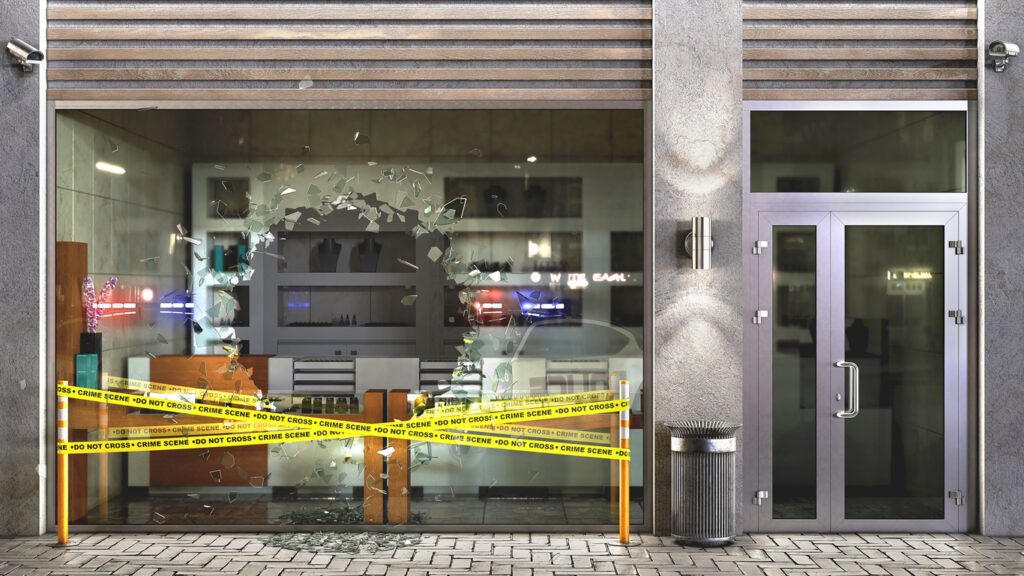
Over 200,000 California voters have signed petitions for measure that will reverse Prop 47 to stop retail theft, fentanyl crimes
Sacramento, Calif. — Californians to Reduce Homelessness, Drug Addiction, and Theft announced on Thursday, Jan. 25, 2024, that in less than 30 days, 214,000 California voters have signed the petition to place the Homeless, Drug Addiction, Retail Theft Reduction Act on the November 2024 ballot.
“We have seen a record number of voters seeking to sign the petition to place this measure on the ballot – sometimes waiting in line to do so,” said campaign chair Greg Totten who is also chief executive officer for the California District Attorneys Association. “This is consistent with polling that has shown that 70% of likely California voters support the Homeless, Drug Addiction, Retail Theft Reduction Act. The measure is commonsense and injects accountability back into our laws for repeat offenders of theft and for crimes involving fentanyl and other serious drug crimes.”
A survey of likely California voters found that 70% of voters support the title and summary of the Homeless, Drug Addiction, Retail Theft Reduction Act. The overwhelming support was consistent across every demographic and geography including the Bay Area and Los Angeles. Furthermore, 89% of likely voters support amending Proposition 47 for stronger penalties for those engaged in repeated retail theft and trafficking hard drugs like fentanyl. The measure also includes incentives to complete drug and mental health treatment for people who are addicted to hard drugs. The survey was conducted online from November 8-November 13, 2023, with a margin of error of +/- 2.28%.
Currently, under Prop. 47, retail theft of less than $950 is charged as a misdemeanor.
To qualify the measure for the November 2024 ballot, the law requires 546,651 valid signatures. The campaign is required to notify the Secretary of State after 25% of the signatures from California voters have been collected.