







Author Archive

The history of Black History Month and 2024 theme: African Americans and the Arts

Monday, February 5th, 2024

ASALH – The Founders of Black History Month

From Association for the Study of African American Life and History (ASALH)

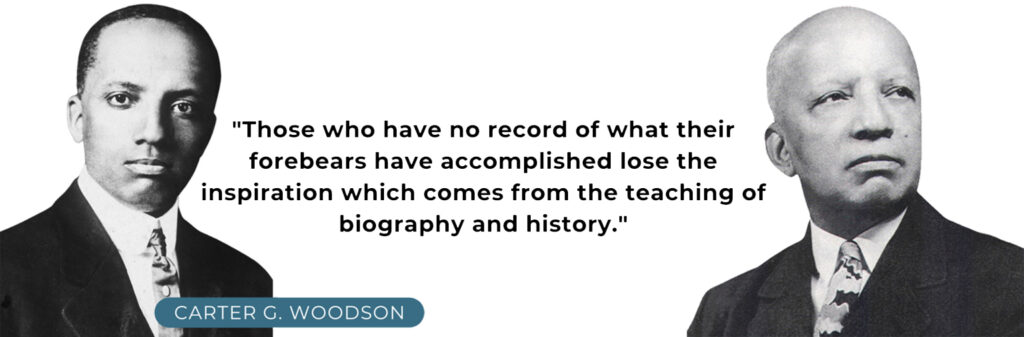
The story of Black History Month begins in Chicago during the summer of 1915. An alumnus of the University of Chicago with many friends in the city, Carter G. Woodson traveled from Washington, D.C. to participate in a national celebration of the fiftieth anniversary of emancipation sponsored by the state of Illinois. Thousands of African Americans travelled from across the country to see exhibits highlighting the progress their people had made since the destruction of slavery. Awarded a doctorate in Harvard three years earlier, Woodson joined the other exhibitors with a black history display.

Despite being held at the Coliseum, the site of the 1912 Republican convention, an overflow crowd of six to twelve thousand waited outside for their turn to view the exhibits. Inspired by the three-week celebration, Woodson decided to form an organization to promote the scientific study of black life and history before leaving town. On September 9th, Woodson met at the Wabash YMCA with A. L. Jackson and three others and formed the Association for the Study of Negro Life and History (ASNLH).

When Woodson established Negro History week in 1926, he realized the importance of providing a theme to focus the attention of the public. The intention has never been to dictate or limit the exploration of the Black experience, but to bring to the public’s attention important developments that merit emphasis.

He hoped that others would popularize the findings that he and other black intellectuals would publish in The Journal of Negro History, which he established in 1916. As early as 1920, Woodson urged black civic organizations to promote the achievements that researchers were uncovering. A graduate member of Omega Psi Phi, he urged his fraternity brothers to take up the work. In 1924, they responded with the creation of Negro History and Literature Week, which they renamed Negro Achievement Week. Their outreach was significant, but Woodson desired greater impact. As he told an audience of Hampton Institute students, “We are going back to that beautiful history, and it is going to inspire us to greater achievements.” In 1925, he decided that the Association had to shoulder the responsibility. Going forward it would both create and popularize knowledge about the black past. He sent out a press release announcing Negro History Week in February 1926.

Woodson chose February for reasons of tradition and reform. It is commonly said that Woodson selected February to encompass the birthdays of two great Americans who played a prominent role in shaping black history, namely Abraham Lincoln and Frederick Douglass, whose birthdays are the 12th and the 14th, respectively. More importantly, he chose them for reasons of tradition. Since Lincoln’s assassination in 1865, the black community, along with other Republicans, had been celebrating the fallen President’s birthday. And since the late 1890s, black communities across the country had been celebrating Douglass’. Well aware of the pre-existing celebrations, Woodson built Negro History Week around traditional days of commemorating the black past. He was asking the public to extend their study of black history, not to create a new tradition. In doing so, he increased his chances for success.

Yet Woodson was up to something more than building on tradition. Without saying so, he aimed to reform it from the study of two great men to a great race. Though he admired both men, Woodson had never been fond of the celebrations held in their honor. He railed against the “ignorant spellbinders” who addressed large, convivial gatherings and displayed their lack of knowledge about the men and their contributions to history. More importantly, Woodson believed that history was made by the people, not simply or primarily by great men. He envisioned the study and celebration of the Negro as a race, not simply as the producers of a great man. And Lincoln, however great, had not freed the slaves—the Union Army, including hundreds of thousands of black soldiers and sailors, had done that. Rather than focusing on two men, the black community, he believed, should focus on the countless black men and women who had contributed to the advance of human civilization.
Source: ASALH

From the beginning, Woodson was overwhelmed by the response to his call. Negro History Week appeared across the country in schools and before the public. The 1920s was the decade of the New Negro, a name given to the Post-War I generation because of its rising racial pride and consciousness. Urbanization and industrialization had brought over a million African Americans from the rural South into big cities of the nation. The expanding black middle class became participants in and consumers of black literature and culture. Black history clubs sprang up, teachers demanded materials to instruct their pupils, and progressive whites stepped and endorsed the efforts.

Woodson and the Association scrambled to meet the demand. They set a theme for the annual celebration, and provided study materials—pictures, lessons for teachers, plays for historical performances, and posters of important dates and people. Provisioned with a steady flow of knowledge, high schools in progressive communities formed Negro History Clubs. To serve the desire of history buffs to participate in the re-education of black folks and the nation, ASNLH formed branches that stretched from coast to coast. In 1937, at the urging of Mary McLeod Bethune, Woodson established the Negro History Bulletin, which focused on the annual theme. As black populations grew, mayors issued Negro History Week proclamations, and in cities like Syracuse progressive whites joined Negro History Week with National Brotherhood Week.

Like most ideas that resonate with the spirit of the times, Negro History Week proved to be more dynamic than Woodson or the Association could control. By the 1930s, Woodson complained about the intellectual charlatans, black and white, popping up everywhere seeking to take advantage of the public interest in black history. He warned teachers not to invite speakers who had less knowledge than the students themselves. Increasingly publishing houses that had previously ignored black topics and authors rushed to put books on the market and in the schools. Instant experts appeared everywhere, and non-scholarly works appeared from “mushroom presses.” In America, nothing popular escapes either commercialization or eventual trivialization, and so Woodson, the constant reformer, had his hands full in promoting celebrations worthy of the people who had made the history.

Well before his death in 1950, Woodson believed that the weekly celebrations—not the study or celebration of black history–would eventually come to an end. In fact, Woodson never viewed black history as a one-week affair. He pressed for schools to use Negro History Week to demonstrate what students learned all year. In the same vein, he established a black studies extension program to reach adults throughout the year. It was in this sense that blacks would learn of their past on a daily basis that he looked forward to the time when an annual celebration would no longer be necessary. Generations before Morgan Freeman and other advocates of all-year commemorations, Woodson believed that black history was too important to America and the world to be crammed into a limited time frame. He spoke of a shift from Negro History Week to Negro History Year.

In the 1940s, efforts began slowly within the black community to expand the study of black history in the schools and black history celebrations before the public. In the South, black teachers often taught Negro History as a supplement to United States history. One early beneficiary of the movement reported that his teacher would hide Woodson’s textbook beneath his desk to avoid drawing the wrath of the principal. During the Civil Rights Movement in the South, the Freedom Schools incorporated black history into the curriculum to advance social change. The Negro History movement was an intellectual insurgency that was part of every larger effort to transform race relations.

The 1960s had a dramatic effect on the study and celebration of black history. Before the decade was over, Negro History Week would be well on its way to becoming Black History Month. The shift to a month-long celebration began even before Dr. Woodson death. As early as 1940s, blacks in West Virginia, a state where Woodson often spoke, began to celebrate February as Negro History Month. In Chicago, a now forgotten cultural activist, Fredrick H. Hammaurabi, started celebrating Negro History Month in the mid-1960s. Having taken an African name in the 1930s, Hammaurabi used his cultural center, the House of Knowledge, to fuse African consciousness with the study of the black past. By the late 1960s, as young blacks on college campuses became increasingly conscious of links with Africa, Black History Month replaced Negro History Week at a quickening pace. Within the Association, younger intellectuals, part of the awakening, prodded Woodson’s organization to change with the times. They succeeded. In 1976, fifty years after the first celebration, the Association used its influence to institutionalize the shifts from a week to a month and from Negro history to black history. Since the mid-1970s, every American president, Democrat and Republican, has issued proclamations endorsing the Association’s annual theme.

What Carter G. Woodson would say about the continued celebrations is unknown, but he would smile on all honest efforts to make black history a field of serious study and provide the public with thoughtful celebrations.

Daryl Michael Scott, ASALH Former National President

Read more about the origins of Black History Month.

Learn about and watch the 2024 Black History Month Virtual Festival – ASALH.

Annual Themes

For those interested in the study of identity and ideology, an exploration of ASALH’s Black History themes is itself instructive. Over the years, the themes reflect changes in how people of African descent in the United States have viewed themselves, the influence of social movements on racial ideologies, and the aspirations of the Black community.

The changes notwithstanding, the list reveals an overarching continuity in ASALH – our dedication to exploring historical issues of importance to people of African descent and race relations in America.

2024 Theme

African American art is infused with African, Caribbean, and the Black American lived experiences. In the fields of visual and performing arts, literature, fashion, folklore, language, film, music, architecture, culinary and other forms of cultural expression, the African American influence has been paramount. African American artists have used art to preserve history and community memory as well as for empowerment. Artistic and cultural movements such as the New Negro, Black Arts, Black Renaissance, hip-hop and Afrofuturism, have been led by people of African descent and set the standard for popular trends around the world. In 2024, we examine the varied history and life of African American arts and artisans.

For centuries Western intellectuals denied or minimized the contributions of people of African descent to the arts as well as history, even as their artistry in many genres was mimicked and/or stolen. However, we can still see the unbroken chain of Black art production from antiquity to the present, from Egypt across Africa, from Europe to the New World. Prior to the American Revolution, enslaved Africans of the Lowcountry began their more than a 300-year tradition of making sweetgrass baskets, revealing their visual artistry via craft.

The suffering of those in bondage gave birth to the spirituals, the nation’s first contribution to music. Blues musicians such as Robert Johnson, McKinley ‘Muddy Waters’ Morganfield and Riley “BB” B. King created and nurtured a style of music that became the bedrock for gospel, soul, and other still popular (and evolving) forms of music. Black contributions to literature include works by poets like Phillis Wheatley, essays, autobiographies, and novels by writers such as David Walker and Maria Stewart. Black aesthetics have also been manifested through sculptors like Edmonia Lewis and painters like Henry O. Tanner.

In the 1920s and 30s, the rise of the Black Renaissance and New Negro Movement brought the Black Arts to an international stage. Members of the armed forces, such as James Reese Europe, and artists such as Langston Hughes, Josephine Baker and Lois Mailou Jones brought Black culture and Black American aesthetics internationally, and Black culture began its ascent to becoming a dominant cultural movement to the world. In addition to the Harlem Renaissance, today we recognize that cities like Los Angeles, Chicago, and New Orleans also were home to many Black artists.

The 1960s continued this thread through the cultural evolution known as the Black Arts Movement, where artists covered issues such as pride in one’s heritage and established art galleries and museum exhibitions to show their own work, as well as publications such as Black Art. This period brought us artists such as Alvin Ailey, Judith Jamison, Amiri Baraka, Nikki Giovanni and Sonia Sanchez. The movement would not have been as impactful without the influences from the broader Black world, especially the Negritude movement and the writings of Frantz Fanon.

In 1973, in the Bronx, New York Black musicians (i.e. DJ Kool Herc and Coke La Rock) started a new genre of music called hip-hop, which comprises five foundational elements (DJing, MCing, Graffiti, Break Dancing and Beat Boxing). Hip-hop performers also used technological equipment such as turntables, synthesizers, drum machines, and samplers to make their songs. Since then, hip-hop has continued to be a pivotal force in political, social, and cultural spaces and was a medium where issues such as racial violence in the inner city, sexism, economic disinvestment and others took the forefront.

The term Afrofuturism was used approximately 30 years ago in an effort to define cultural and artistic productions (music, literature, visual arts, etc.) that imagine a future for Black people without oppressive systems and examines how Black history and knowledge intersects with technology and science. Afrofuturist elements can be found in the music of Sun Ra, Rashan Roland Kirk, Janelle Monáe and Jimi Hendrix. Other examples include sci-fi writer Octavia Butler’s novels, Marvel film Black Panther, and artists such as British-Liberian painter Lina Iris Viktor, Kenyan-born sculptor Wangechi Mutu, and Caribbean writers and artists such as Nalo Hopkinson, and Grace Jones.

In celebrating the entire history of African Americans and the arts, the Association for the Study of African American Life and History (ASALH) puts into the national spotlight the richness of the past and present with an eye towards what the rest of the twenty-first century will bring. ASALH dedicates its 98th Annual Black History Theme to African Americans and the arts.


Antioch City Council finally conducts nationwide search for city manager

Friday, February 2nd, 2024

Creates new position of Community Engagement Coordinator, plus recruiting new City PIO

Offering new CM $251-$305K per year; woman-owned Illinois-based firm hired for executive search; council majority continues to expand size of city government

Barbanica wants transparent process, says council might need to wait until after Nov. elections

By Allen D. Payton

After over 10 months with an interim city manager and following two closed session meetings by the Antioch City Council to discuss the hiring process, a search began on Tuesday, Jan. 30, to fill the position. A post on the City’s Facebook page on Thursday, Feb. 1 reads, “The City of Antioch has initiated an open recruitment process for the position of City Manager. This is an exciting opportunity to play a key role in guiding the future of our community. Interested candidates can apply at antiochca.gov/city-manager-recruitment.”

This time the council opted to hire a search firm and conduct a nationwide search, unlike in September 2022 when the council majority simply promoted their friend, Con Johnson, from Acting City Manager to the permanent position. But no press release was issued to announce the current hiring process nor inform the public that a search firm was hired to recruit for the position.

The city manager is one of only two positions hired by the city council. Once a new city manager has been hired, then that person can hire for the positions currently filled with other city employees including Acting Assistant City Manager, Acting Police Chief, Acting Community Development Director and Acting Public Works Director.

According to District 3 Councilwoman Lori Ogorchock, who was absent for the meeting, the council made the decision to hire an executive search firm during their closed session meeting on Nov. 14, 2023, under the agenda item entitled, “PUBLIC EMPLOYMENT – Recruitment of City Manager”. But City Attorney Thomas L. Smith merely reported out that night, “Direction was provided to the human resources director and city attorney.” Another closed session meeting was held before the regular council meeting on Jan. 9th in which the “Recruitment of City Manager” was discussed. But again, Smith merely reported out that, “the city council gave direction to the city attorney and human resources director.”

The post on the City’s website shows the position includes an annual salary of $251,328 to $305,460 depending on qualifications, with benefits including: “Cafeteria Plan (City of Antioch pays 100% of Kaiser rate, up to family tier), Retirement: CalPERS Classic Members 2.7% @ 55, New PEPRA Members 2% @ 62, 457 Deferred Compensation: 5% of Base Salary (Executive Management), Life Insurance: 2X The employee’s base salary (max of $250,000) and a $450 monthly car allowance.

All applications must include a cover letter, resume, and five professional references (who will not be contacted without prior notice). For questions, call Ryan Cotton 847-380-3240, Ext 114. Applications are confidential until permission is given and the application deadline is February 28, 2024.”

Questions for City Staff, Council

Questions were emailed Friday afternoon to Antioch Human Resources Director Ana Cortez, Acting City Manager Kwame Reed, City Attorney Smith, as well as the mayor and council members asking if an executive search firm was hired to assist in the effort, and if so, who it is. They were also asked if multiple firms were interviewed before selecting one and if so, why wasn’t it done in open session of the council. Finally, they were asked how much the firm is being paid for their work.

Barbanica Told Search Firm He Wants Transparency

District 2 Councilman Mike Barbanica said he had requested during a council meeting last fall that all the recruiting process for the city manager be done in open session. But that did not occur.

“I also want an interview with the public being able to view it and the public being involved, some way because I want the transparency,” he stated.

Asked if the council should wait until after the November election to hire a new city manager Barbanica said, “If we get close to the time of the election, then my stance would most likely be to wait for a new council. But we’re 10 months away. It just depends how long this process takes. If it takes an extended period of time, then the new council should make the decision. But if it takes a few months, then yes, the current council should make the decision. We don’t want to go through it twice plus, pay a severance which would be expensive. It really depends on how quickly we get a list of qualified candidates.”

“I told the recruiting firm, what I’m looking for is transparency to council members, but to the public, too,” Barbanica continued. “I’m looking for someone who is a strong leader, someone who has experience and is not afraid to make tough decisions. That’s what I’m looking for in a city manager.”

“I don’t want to see the new administration coming in stonewalling the council members and stonewalling the press. The public has a right to know what is occurring in the city,” he stated. “Everything is a secret in this city and that’s what I’ve been banging my head against the wall about. It’s ridiculous.”

“We need very open dialogue between the staff, between the council, between the mayor and the public. That’s what I’m looking for in this position. If that’s not what they’re going to do coming into this position they won’t have my support,” Barbanica added.

Woman-Owned Illinois Search Firm Hired

Both Reed and Barbanica shared that the firm hired for the search is GovHR USA MGT. According to the Illinois-based company’s website, “GovHRUSA is a certified woman-owned business that provides comprehensive executive recruitment, interim staffing, human resources consulting and organizational analysis consulting services for local governments, intergovernmental organizations, school districts as well as other governmental and non-profit entities.”

In addition, the website reads, “GovHR and GovTemps have combined with MGT! This combination allows us to expand and enhance our ability to provide executive recruitment, interim staffing, human resources consulting, and organizational analysis to our government clients across the country.”

According to MGT Consulting’s LinkedIn profile, it “is a public sector consulting firm.”

Other City Positions Open

In addition to the recruitment for a permanent city manager, the same Antioch webpage on governmentjobs.com shows several other positions the City has available. They include the new Community Engagement Coordinator with an annual salary of$87,780 to $106,692; Assistant City Attorney with an annual salary of $177,000 to $215,136; a Public Information/Communications Officer with an annual salary of $107,388 to $130,524; part-time Doctor of Veterinary Medicine with hourly pay of $78.81 – $95.80; a part-time Animal Care Attendant with an annual salary of $35,484.80 – $44,366.40; and several police positions.

New Community Engagement Coordinator Position

The Community Engagement Coordinator will be part of the aforementioned Public Safety and Community Resources Department, which does not include the Police Department, that the city council majority created last year, as part of their repeated actions that has increased the size and scope of the city government.

The information about the new position on the governmentjobs.com website reads as follows:

The City of Antioch is currently accepting applications for the Community Engagement Coordinator  position located within the Public Safety and Community Resources Department’s Violence Intervention and Prevention Division. The…duties may include promoting and coordinating specific activities within Violence Intervention and Prevention Programs and/or Social Justice Programs; promoting and collaborating in Community-Based Organizations such as juvenile justice agencies; coordination of program events, and creating the marketing materials including news releases, flyers, schedules of events, pamphlets and brochures; budget management; staff and volunteer supervision and training.

Competitive Compensation Package:

Monthly Salary DOO/E: $7,315 – $8,891  (Next Salary Increase of 3% Scheduled for October 2024)  | Collective Bargaining Unit Representation: Confidential BU | Tentative Agreement  | Benefits 

  • Benefits: Cafeteria Plan (City of Antioch pays 100% of Kaiser rate, up to family tier)
  • Retirement: CalPERS Classic Members 2.7% @ 55, New PEPRA Members 2% @ 62
  • 457 Deferred Compensation Option
  • Life Insurance

Under general supervision, to plan, organize, promote, facilitate and coordinate various community engagement, social, cultural, and youth activities. May exercise technical/functional supervision of subordinate and volunteer staff.  Perform related work as required.

Examples of Duties

The following duties are typical for this classification. Incumbents may not perform all of the listed duties and/or may be required to perform additional or different duties from those set forth below to address business needs and changing business practices.

  1. Plan, organize, promote, facilitate and coordinate regularly scheduled activities, special events and services.
  2. Train and provide technical/functional supervision for subordinate and volunteer staff.
  3. Prepare and maintain records and reports on activities.
  4. Evaluate program effectiveness and provides recommendations for improvement or modification.
  5. Assist in the development and implementation of the Division’s goals and objectives, policies, procedures and work standards.
  6. Act as City staff liaison to outside boards, groups and committees, and the public regarding program offerings and coordination of services. May hold community meetings and organize outreach events to increase engagement with programs and initiatives.  
  7. Promote and coordinate specific activities within violence intervention and prevention programs; prepare program events and facility marketing material including news releases, flyers, schedules of events, pamphlets and brochures; promote communication with the community about crisis intervention resources.
  8. Promote participation and collaboration in violence intervention and prevention efforts from local stakeholders including City departments, Community-Based Organizations (CBO), juvenile justice agencies, and faith-based organizations.
  9. Participate in the preparation and administration of the Public Safety and Community Resources program budget for assigned area; submit budget recommendations; monitor expenditures; oversee and monitor grant programs and subcontracted services.
  10. Participate in the selection of staff for assigned area; provide or coordinate staff training; work with employees to correct deficiencies; implement discipline procedures.
  11. Respond to inquiries and concerns regarding programs and activities; research and resolve conflicts as required.
  12. Effective engagement and interaction with the community, youth, City’s personnel, partner organizations and allied agencies.
  13. Maintain records and develop reports concerning new or ongoing programs and program effectiveness; maintain and file assigned programs, records and reports; prepare statistical reports as required.
  14. Cultivate relationships across diverse communities to provide resources and new opportunities for community members.  
  15. Assist with the writing, editing, and review of program development and implementation documents.
  16. Facilitate meetings with service providers and community groups related to coordination of services within the jurisdiction, identification of needs and priorities for new or expanded services, and other items pertinent to assisting with management of the City’s response to violence intervention and prevention.
  17. Provide updates on programs and activities to the community, City Council, Community Based Organizations, and state and federal agencies; and prepare and submit progress reports for grant programs. 
  18. Perform related duties as required.

No responses were received about the process for hiring the search firm nor how much the City paying them prior to publication time. Please check back later for any updates to this report.

In Memoriam: Co-owner of Dad’s BBQ in Antioch, real estate broker Dietra King passes at 60

Thursday, February 1st, 2024

Dietra was born in Biloxi Mississippi on November 6, 1963, at historical Biloxi Memorial Hospital to Dennis Ray, Sr. and Etta Hicks. Her dad moved the family to East Oakland, California when she was three years old alongside her siblings. She attended Brookfield Elementary, Madison Junior High, and in 1981 graduated from Castlemont High School with a 3.0 GPA. Dietra was a “widow twice in one life” In November 1983-January 5, 1984 to Jimmie Rideout – (child Delitha Henson, mother-in-law Martha (Bob) Thornton) and August 11, 1990-August 23, 2020 to Eric Rowland-King – (children Eriesha Holmes, Eric King, Derek King).

Dietra was a resident of Antioch, California for over 30 years with her late husband Eric King, where the remainder of her life was lived. She attended and visited several congregations in Antioch and throughout California. During her adult life, she worked for the Internal Revenue Services, Naval Supply Center, VA/HUD Real Estate Loan Department, real estate agent for CJ Patterson Red Carpet Realty, Oakley Morning Star Real Estate Properties and the family-owned Dad’s BBQ Restaurant.

In 2005, she became co-owner/partner and manager of Dad’s BBQ and in 2006 obtained her real estate Broker License.  She launched and opened her entrepreneurial real estate agency, called Hearts Realty. Her motto was “Heart to Heart, Home to Home,” and the home sale yardage sign was in the shape of a heart. From 2006-2008, Hearts Realty was growing and flourishing financially. Since Dietra’s businesses were being blessed, she wanted to give back the blessings by depositing a percentage of all home sales into an account funded for those in need and her 10 agents. Dietra educated and provided families the opportunity to own their own home and making sure her children owned a home before she departed which was a goal for her that was accomplished, even during her illness and fighting days. In 2008, the housing market collapsed, which caused millions of people to lose their jobs and many businesses went bankrupt but God Sustained Heart’s Realty and even during the 2020-2021 pandemic Dad’s BBQ was blessed to continue servicing their community. For the past several years, Dietra was a mentor to real estate agents, while training the family’s next generation to work and manage Dads BBQ. Dietra enjoyed traveling, reading, listening to gospel music, going to gospel and comedy concerts, hosting family and community gatherings. Over the past several years, Dietra was working on a book writing as a self-published author, her unique life’s memoir; to be released in the future. 

Dietra Letitia Hicks-King departed her earthly life peacefully the early morning of January 7, 2024, at the age of 60, in the home of her daughter, Eriesha (De’Andre) Holmes and grandchildren. She was surrounded and supported by her loving family and hospice support during the last days of her life.

Dietra touched and supported so many lives throughout her short, yet very memorable and special life’s journey. According to man, she is gone too soon; but it was God’s will that she departs from all those who loved and spent time with her. Dietra was ready to be offered, and the time of her departure was at hand. She fought a good fight, finishing her course for God’s purpose and glory, leaving a legacy.

Dietra was a Christian and her life lived was close to her Lord and Savior. Keeping the faith, being steadfast on her morals and values during her journey in life, confirmed that her goal was to live a life to please her Lord.  Dietra’s life offered quality and quantity time for all those she touched. There are no goodbyes, because to have had the opportunity to enjoy the fellowship with Dietra and all the special memories will never be gone but live in our hearts and minds forever.

Dietra was preceded in death by her late husband Eric King, Sr.

Dietra is survived by her parents – Dennis and Etta Hicks, mother-in-law Clarice King, her children – Delitha (Van) Henson, Eriesha (De’Andre) Holmes, Eric King, Derek King, five grandchildren that called her “GrandD,” Jimmie’, Gizelle, D’Andre’, Dezmond, and Nyoko, and Godchildren – Deandrea Johnson and Dominic Woods. Her brothers – Dennis Ray, Jr., Cedric (Nina) Hicks, sisters – LaMonica (Ronnie) Samuel, and Amelia Hicks.

“Auntie” Dietra created a home where a host of her nephews and nieces spent quality time, had lots of fun, spreading contagious laughs and lifetime memories. A host of brother/sister in-laws, cousins and surviving aunts and uncles. Dietra’s “heart to heart and home to home” open door gathering environment for family, friends, employees and colleagues was to spur one another on toward love and good deeds, by encouraging and inspiring one another. Her one-of-a-kind sense of humor, realness and sincerity will be cherished forever in our hearts and minds.     

Dietra, rest in peace with eternal life and may an angels’ chorus greet you in heaven. Your footsteps can never be filled, nor your love ever forgotten, because a spiritual journey doesn’t end with death. You were the cornerstone in so many lives, beautiful melody in the rhythm of our lives and the music of your life will live on. Your life well lived and spent; a powerful work of art. Beautifully created and remembered by all who loved and knew you. The hours and minutes tick by slowly, and it’s finally time to say goodbye to no more of your beautiful smile, hugs and moments on this side of eternity; yet the beautiful memories bring comfort from the disbelief/heartache. You will be so dearly missed!

“The Lord gives strength to his people; the Lord blesses his people with peace.” -Psalm 29:11

“Praise the Lord. Praise the Lord, on my soul.  I will praise the Lord all my life; I will sing praise to my God as long as I live.” – Psalms 146:1-2

“Give thanks in all circumstances, for this is God’s will for you in Christ Jesus.” – 1Thessalonians 5:18

Viewing – Dans Scales Funeral Services
107 W. 8th Street, Pittsburg, CA 94565
Friday, February 2, 2024
4pm-6pm

Funeral – Solomon Temple Ministries
655 California Avenue, Pittsburg, CA 94565
Saturday February 3, 2024 at 11am 

Watch Dietra’s service via livestream on YouTube.

If you would like to send flowers please send them to Solomon Temple Ministries Saturday morning by 10am Thank you!

Repast to follow!

Antioch Police seek help identifying Jan. 3 shooting suspect

Thursday, February 1st, 2024
Surveillance camera video screenshots of shooting suspect. Source: Antioch Police

Near Sycamore Square

By Lt. Rick Martin, Antioch Police Investigations Bureau

The Antioch Police Department needs your assistance identifying this individual who is a person of interest related to a recent shooting on January 3, 2024, at 8:37 p.m. in the 1000 block of Sycamore Drive near the Sycamore Square shopping center.

If you have any information that could identify this individual or his whereabouts, please contact Detective Duffy at 925-779-6884 or aduffy@antiochca.gov.

Antioch man convicted of firearm possession, stealing vehicle, reckless driving

Thursday, February 1st, 2024

Arrested July 2, 2023, following police chase from Concord to Hercules and back to Bay Point

Has history of arrests dating to 2014

By Ted Asregadoo, PIO, Contra Costa District Attorney’s Office

A jury in Contra Costa County convicted an Antioch man on offenses related to a high-speed chase in a stolen vehicle and illegal firearm possession.

The Contra Costa District Attorney’s Office filed a complaint in Superior Court charging 33-year-old Artis Chavez Crenshaw, Jr. (born 2/28/90), on July 6, 2023. The case was prosecuted by Deputy District Attorney Philip Farmer, and on January 18th, a jury in Pittsburg found Crenshaw guilty on four out of five counts. (See charges)

The offenses with which Crenshaw was charged with started on July 1st, when a victim’s vehicle was stolen in Antioch. On July 2nd, peace officers spotted Crenshaw driving the stolen vehicle in

Concord and attempted to pull him over. A high-speed chase ensued between police and Crenshaw that began on Port Chicago Highway near Highway 4. The pursuit continued onto westbound Highway 4 as Crenshaw accelerated to 115 mph while weaving through traffic. Even after the CHP laid down a spike strip at Sycamore Avenue near Hercules to disable the vehicle,

Crenshaw continued to evade officers by driving with a flattened tire onto eastbound Highway 4. He was eventually involved in a crash at the San Marco Boulevard exit in Bay Point and was taken into custody after the collision. The entire pursuit totaled 23 miles and lasted 16 minutes.

During his arrest, officers found an AR style pistol in the stolen vehicle. (See video)

Artis Chavez Crenshaw, Jr.’s sentencing hearing will be on March 1st at 8:30 am in front of Judge John Cope at the Arnason Justice Center in Pittsburg. Crenshaw faces a maximum of four years and four months in state prison.

According to localcrimenews.com, Crenshaw has a history of arrests dating to 2014 by Antioch PD, Napa County Sheriff’s Department, Petaluma PD, Concord PD and the Contra Costa County Sheriff’s Department for crimes including shoplifting, addict and convicted felon in possession of a firearm and other gun and ammunition charges, burglary, grand theft, assault with a deadly weapon likely to cause great bodily harm on a peace officer or fireman, receiving or concealing stolen property, possession of personal identity with intent to defraud, robbery and carrying a switch blade.

According to the Contra Costa Sheriff’s Department, the 6-foot, five-inch, 205 lb. Crenshaw is being held in the Martinez Detention Facility on no bail and his next court appearance is scheduled for March 1, 2024 at 8:30 a.m. in Superior Court in Pittsburg.

Case No. 04-23-01211 | The People of the State of California v. Artis Chavez Crenshaw, Jr.

Allen D. Payton contributed to this report.

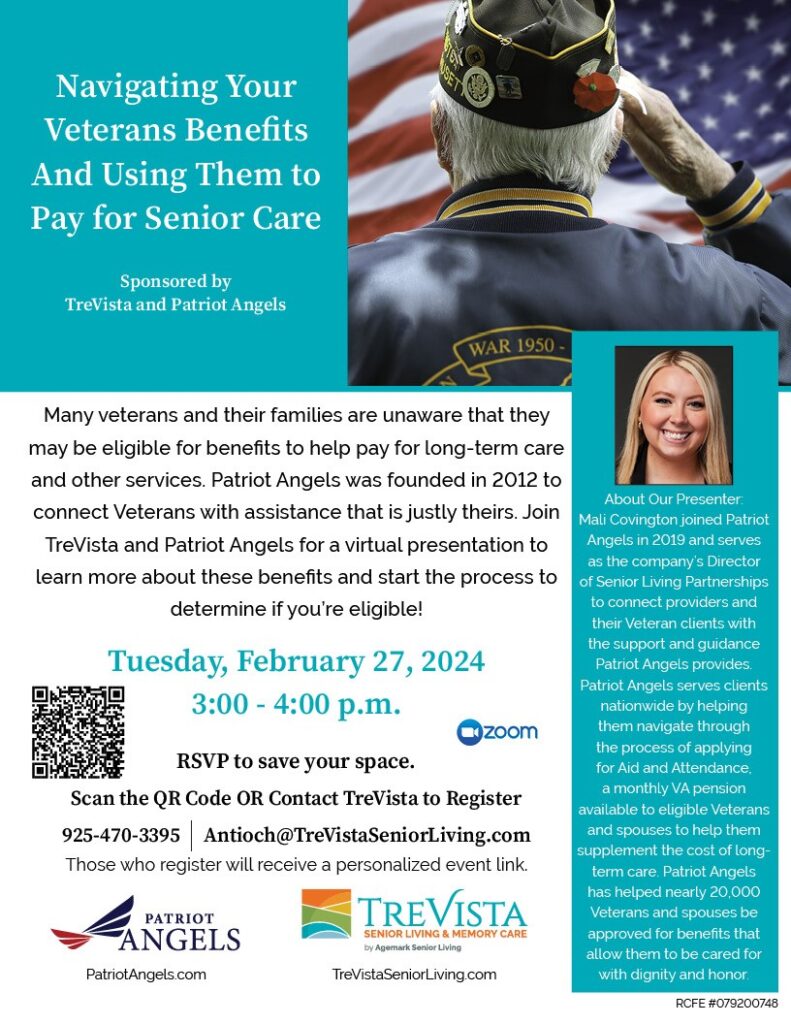
Learn about senior care for veterans from TreVista Antioch Feb. 27

Thursday, February 1st, 2024

Buying tickets to the Super Bowl? Don’t get scammed! 

Wednesday, January 31st, 2024

Ticket prices range from $6,059 to $56,448 each on resale sites

By Alma Galvan, Regional Communications Manager, Better Business Bureau

San Francisco, CA – With the San Francisco 49ers securing a spot at this years big game, many are traveling to Las Vegas, Nevada to experience this event in person. The National Association of Ticket Brokers (NATB) and the Better Business Bureau (BBB) are teaming up to ensure fans, including passionate supporters of the San Francisco 49ers, have a winning game day experience. With the rise of digital ticketing and the increasing risk of scams, consumers are urged to be extra careful when purchasing tickets for one of the most anticipated sporting events of the year. 

Securing tickets to popular sporting events and concerts has become more challenging, especially when many venues are only accepting digital tickets. This creates opportunities for scammers to take advantage of sporting fans. In the past year alone, the BBB received over 140 reports on BBB Scam Tracker related to ticket scams for various events.

To assist fans in making safe and informed decisions, the BBB and NATB offer the following tips for purchasing tickets to the big game:

  1. Purchase from the Venue: Whenever possible, buy tickets directly from the official venue. 
  2. Verify the Source: Understand the differences between professional ticket brokers, ticket scalpers, and scammers. 
  3. Use Trusted Vendors: Buy only from trusted vendors you know and trust. Avoid clicking through from emails or online ads.
  4. Understand the Refund Policy: Only purchase tickets from sellers that provide clear details about the transaction terms. Sellers should disclose seat locations and shipping details before purchase.
  5. Payment Protection: Always use a credit card for ticket purchases to have recourse if the tickets are not as promised. Avoid using debit cards, wire transfers, or cash transactions, which can be risky.
  6. Be Wary of Advertisements: Exercise caution when encountering online advertisements for cheap tickets. 
  7. Verify Tickets if Unsure: If uncertain about the legitimacy of purchased tickets, visit the event venue’s customer service (“Will Call”) and verify the tickets’ authenticity.

As the countdown to the big game begins, the BBB is committed to raising awareness and educating fans, including loyal supporters of the San Francisco 49ers, on the smartest ways to buy tickets. 

For more information or to report potential scams, please visit BBB.org and VerifiedTicketSource.com

ABOUT BBB: The Better Business Bureau has empowered people to find businesses, brands, and charities they can trust for over 110 years. In 2022, people turned to BBB more than 250 million times for BBB Business Profiles on more than 5.3 million businesses and Charity Reports on about 12,000 charities, all available for free at BBB.org. The International Association of Better Business Bureaus is the umbrella organization for the local, independent BBBs in the United States, Canada, and Mexico. 

Deadline today for Kaiser Permanente’s low-income health care program

Wednesday, January 31st, 2024

Applications for its Community Health Care Program are due by January 31, 2024.

There’s a new option for people struggling to find affordable health care coverage, and the deadline to apply for this Kaiser Permanente program this year is fast approaching. Kaiser Permanente’s Community Health Care Program provides comprehensive, affordable health care coverage for qualified low-income adults and children in California who don’t have access to other public or private health coverage.

If eligible, you’ll receive comprehensive health coverage from Kaiser Permanente including preventive services, without paying a monthly premium. You also won’t need to pay copays or out-of-pocket costs for most care at Kaiser Permanente facilities.

“Even with the expansion of Medi-Cal to all low-income residents regardless of immigration status this year, there are still people who don’t have access to health care coverage,” said Yvette Radford, vice president, External and Community Affairs, Kaiser Permanente Northern California. “The Community Health Care Program is part of Kaiser Permanente’s commitment to make health care more affordable for everyone.”

Who is eligible for the Community Health Care Program?

The program is designed for applicants who meet the following criteria:

  • total household income of 138% to 300% of the federal poverty level (Example: $20,122 to$43,740 for an individual and $41,401 to$90,000 for family of 4 in 2023)
  • not eligible for any other health coverage, including Medi-Cal, Medicare, a job-based health plan, or Covered California
  • must live in a Kaiser Permanente California service area

Individuals do not have to be U.S. citizens to qualify. Applications must be submitted by January 31, 2024.

How to apply

You can apply online at www.kp.org/chcp. Click the “apply now” button at the top of the website for a link to the application. If you need assistance, click the “get help” button for a list of community agencies that can provide help, or call Kaiser Permanente Member Services at 1-800-464-4000 (TTY 711).