







Archive for July, 2026

Antioch Council approves current investment policy, appoints committee to develop “woke” restrictions

Thursday, July 2nd, 2026
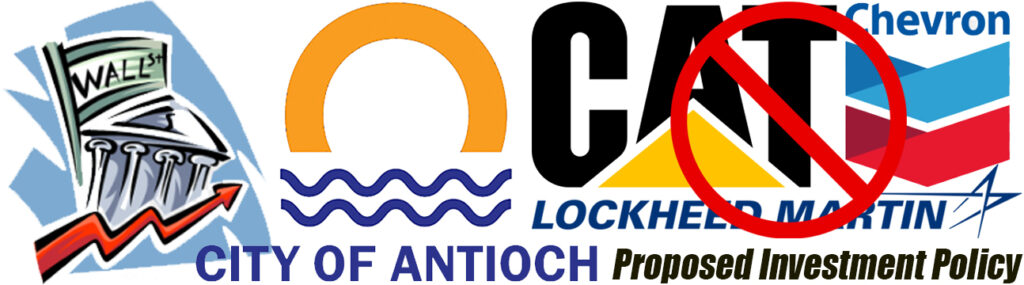
Public speakers – not all from Antioch – name four companies the City should divest from or not invest in claiming they’re part of Israel’s “genocide” in Gaza; if investments sold now there would be a loss

Work group to bring back proposed policy additions in 6 months with progress report in 3 months, as world’s two largest investment firms abandon them

By Allen D. Payton

During their meeting on Tuesday, June 23, 2026, the Antioch City Council unanimously agreed to move forward for future consideration liberal activist or “woke” practices in the City’s investment policy. The proposal was brought back after the council members failed to adopt the current investment policy on a 2-2 split vote during the June 9th Council meeting. Mayor Ron Bernal and Mayor Pro Tem and District 3 Councilman Don Freitas voted in favor, Councilwomen Monica Wilson and Tamisha Torres-Walker voted against, and District 2 Councilman Louie Rocha was absent.

Referred to as Socially Responsible Investing (SRI) or Environmental, Social and Governance (ESG) Investing, the practice would, according to the City staff report for the item, #8 on the agenda, “filter out and exclude sectors and/or companies the City does not want to invest in. The current Policy includes two such prohibitions in Section V.3:a. which reads, ‘The City will not invest in any companies that produce alcohol for public consumption or tobacco products.’”

During the June 23rd meeting, the council directed staff to meet with a group, that has labeled itself Divest Contra Costa, to further develop proposed language, despite the world’s top two investment firms moving away from the practice that limits in which companies they can invest.

The group, which has no website, social media presences or a list of members, proposed the following language it wants added to the City’s investment policy:

“The City of Antioch will strive to invest its funds in ways that promote the wellbeing of our communities and our environment, favoring investment in entities that support the needs of peacetime daily life, in companies that offer renewable energy and other climate mitigation strategies, in companies with a strong environmental, labor, and social records, or in socially responsible community projects within our City.

“The City will refrain from investment in harmful industries such as tobacco, fossil fuels, mass incarceration or immigrant detention, and weaponry of any kind, or in companies with a consistent record of direct involvement in severe human rights violations such as slavery and prison labor, war crimes, illegal military occupation, racial segregation or apartheid.”

The challenge is how each of those categories will be defined and by whom, and the effort has specifically been to divest from companies based in Israel as the Left considers that country’s actions in Gaza an “illegal military occupation.”

In addition, space related companies use fossil fuels to power their rockets, and the Left is opposed to the world’s first trillionaire, Elon Musk, the founder of SpaceX, which just issued its first public offering. Such a policy could prevent the City from investing in that or other similar companies and enjoying returns on investment from its growth.

According to the National and Legal Policy Center (NLPC), the world’s largest asset manager, “Blackrock was one of the pioneers of ESG investing, but in early 2025 abandoned “the ‘woke’ policies.” It was “the biggest sign yet that the vibe has shifted against liberal activism in the private sector.” In addition, NLPC reported in May 2026, “Vanguard, the second-largest index fund manager with approximately $10 trillion in assets under management, has similarly retreated in public posture while its index funds.”

According to the City staff report, while “there is no cost to adopt the draft policy attached, should the City choose to adopt an ESG investment practice, additional investment advisory fees could be incurred.

During Public Comments several speakers wore keffiyeh scarves and some members of the gallery held up a large poster. Video screenshots

Public Comments

During Public Comments, all who spoke supported adding such language to the City’s investment policy, with some wearing black-and-white checkered Palestinian and other keffiyehs, which are traditional head scarves worn in the Middle East and North Africa. They offered more details about the companies they don’t like, “in solidarity with Palestinians” and spoke against Israel’s military actions in Gaza as well as the U.S. military industrial companies that manufacture the arms being used. Others in the gallery held a Palestinian flag and wore a shirt with Palestinian flag colors. Three people held up a large poster showing a photo of children with the words, “Stop Investing in Our Genocide.” A speaker, who said his “family came from the West Bank where they currently reside” and runs a non-profit for Palestine, claimed those in the photo were in an orphan camp in Gaza.

“As a concerned world citizen, I have an obligation to stand up to injustice,” another speaker said.

A resident, who said he was “of Palestinian decent,” spoke of “specific exclusions” and mentioned companies he claimed “are tied to harm” that include some based or with operations in California: aerospace and defense contractor Lockheed Martin, manufacturer of construction and other equipment, Caterpillar, BP (British Petroleum) and Chevron, which relocated its headquarters from San Ramon to Houston, Texas at the end of 2024, due to the unfavorable government policies and opposition from those on the Left. He said his group wants the City instead “investing in” other projects such as the Homekey homeless hotel. That project will actually cost the City money and offer no return on investment for its portfolio.

The final man to speak and for a second time on the item, said he was from Concord and implored, “I think you need to realize that the litmus test for our humanity is what’s happening in Gaza and we’re funding it as well as Israel. Antioch has the choice…the chance the lead the way.” He said the Concord City Council “voted it down right away.”

Council Discussion and Decision

Mayor Pro Tem and District 3 Councilman Don Freitas asked staff about the amount the City receives from its investments. He mentioned a little over $2.1 million that the City will be receiving from “investments and rentals” in Fiscal Year 2027.

“That’s just in the General Fund,” City Finance Director Dawn Merchant responded. “All funds have investment income. But…every month the City Treasurer submits a Treasurer’s Report that lists all the investments, the security transactions and interest for that month, and a presentation twice a year from our investment advisor that gives portfolio earnings…year-to-date and from inception.”

“So, anyone who wants very detailed information about our investments they can look at our agenda, tonight?” the councilman asked. “Yes,” she stated.

District 1 Councilwoman Tamisha Torres-Walker then asked about the current investments in three of the companies mentioned during Public Comments.

“The total, I assume this is cash value…Caterpillar, Chevron and Lockheed Martin…if the investments were sold there would be a loss. What is the total amount the City is making from these three investments…would it be a significant loss?” she asked.

“That’s the market value versus what the trade value would be,” Merchant responded. “There would be a loss.”

“There are two specific holdings for Caterpillar,” said the City’s investment advisor, Justin Resuello, Institutional Sales and Relationship Manager of PFM Asset Management (PFMAM). “The par value of both is…a little over $1.6 million and those mature in August 2028 and February 2029. Those currently present losses of approximately $1,274 and $17,103.”

“The two Chevron positions…both have a part of a little over $1.3 million,” he continued. “One matures Feb. 2028 and August 2028.” If sold now the City would lose about $500.

“The last position is one holding with Lockheed Martin that matures August 2028 with a par of about $600,000 and a current unrealized loss of about $5,000,” Resuello shared.

“So, these are all in that three-year end strategy. We’re pretty close to maturity,” he explained. “Our preference is still that the holdings are not sold at a loss. But…if that is what the Council wishes to do, we’ll act on your decision.”

“These amounts can change daily,” Finance Director Merchant interjected.

Torres-Wallker then said, “I think the question is, is the loss significant enough to not consider.”

“That’s up to Council discretion,” Merchant responded. “Any loss no matter what the amount, especially in our financial position. However,..if Council doesn’t want these investments…then that’s what we’re going to do.”

Torres-Walker then asked, “Is it possible to add additional language” to the section already prohibiting investments in tobacco and alcohol manufacturers. “I think this has already come up that we will not invest in companies that are involved in war crimes.”

“For the analytics that is used by investment companies, there’s no metric to say this company is involved in war crimes,” Merchant explained. “The language…that talks about apartheid, there’s not metric where they would be able to identify that. So, that’s where it gets a little bit tricky.” She then stated that the council could add sections from the proposed restrictions to the policy.

“As explained, this is not something that happens overnight. It’s taken some agencies up to a year to dial down on these investment strategies,” Merchant shared. “So, I don’t want to assume what the council majority will decide tonight.”

“I’m not saying that would be the direction of the council because it’s been a year people have been coming…asking,” Torres-Walker responded. “Your recommendation is that we take more time to develop a p policy. People are asking we immediately divest.”

“The recommendation would be to include language that investments that…fall from an exclusions list are either held until there is no loss or maturity, whichever occurs first,” Merchant stated.

Freitas then repeated what a member of the public said, who, “articulated what I think is part of the challenge for the city council…to adopt a clear, ethical investing policy, that we need to establish standards, that we need to have accountability. The word that I would use is making it doable.”

The councilman spoke of serving on the Contra Costa Water District Retirement Committee “back then in the “70’s, 80’s and 90’s apartheid was the issue. We needed to develop a policy…that can be followed…for accountability.”
“Sometimes, one person’s opinion is not necessarily factual,” Freitas stated. “The investor needs to have clear, articulated standards so that he or she does not get crosswise with the council. Time and time again, people would come with their interpretation of some of the things. Some are very easy to understand what the situation is.”

“This is not an easy policy,” he continued. “It’s not finger pointing and saying, ‘no,’ to you and ‘yes,’ to you.’ It’s much more difficult. Because as a city council we have a legal and a fiduciary responsibility with regards to investments.”

“So, frankly, I believe…adopting a clear, ethical investing policy that has standards and accountability and from my perspective, doable…that should be the direction to City staff, to PMF (PFM) and I think Divest should identify two or three people on a periodic basis that there are discussions, so we hear some of the concerns…and those are taken into consideration…to develop a policy that we can live with.”

“I do think this is a situation that we need to take a look at. But we should not do it quickly,” Freitas stated. “I think we should do it methodically, I think it should be inclusive. I think this is a very, very important issue.”

District 4 Councilwoman Monica Wilson asked, “Can you add to that, a working group?”

“Two weeks ago, I suggested the City Manager, the Director of Finance, PFM and representatives from Divest,” Freitas responded. “That was, to me, a working group…so, they know what’s happening, questions can go back and forth and I have to believe a good, workable policy will have to come back to the City of Antioch.”

District 2 Councilman Louie Rocha said, “I think the City Treasurer should be part of this collaborative.”

“I agree,” Freitas said.

“I would like to know…what makes the most sense for the City of Antioch and what aligns with what we heard tonight,” Rocha continued. “There’s the SRI option and…the ESG option. One’s more complex than the other.”
“What was suggested to me, was that we adopt the Treasurer’s Report, but that we are open to hearing, looking into and adopting some of the policies that have been discussed tonight. So, I think we would want to do a blend.”

Mayor Ron Bernal then asked City Treasurer Jorge Rojas, Jr., “to give us his thoughts on the policy.”

Rojas said, “We have the two options from PFM. We never said anything regarding potentially adopting an ethical investment policy. Pretty much Council is the one that makes that decision. We either wait for maturity dates, take the loss right now and go from there.”

Bernal asked him, “What would be your recommendation?”

Rojas responded, “My recommendation would be to adopt the policy that was recommended, last meeting, the investment policy, and like Louie was saying, take a look at it. Get back to it, revise it, perhaps…have that committee, take a look it perhaps every six months or so and then go from there.”

Torres-Walker then said, “I’m also getting the sense from the community, we’re under the gun, we need to pass this right now. I believe the council was made to believe there would be some outside penalties and that was clarified there are not any outside penalties and we do have discretion.”

“I do agree that the language we really want, and I hope the community agrees with this, and that is we do move forward with the recommendation, and we pass the (existing) policy,” the councilwoman continued. “Because it’s the City’s ordinance and we can change it any time.”

“There’s a legal requirement by the State that we have a Statement of Investment Policy with guidelines that meet State mandates,” Merchant explained.

“I do agree with putting some group together,” Torres-Walker stated. “I also agree with passing the policy as is while this group works together. But I will say government often pacifies people with ad hoc committees and work groups that lead nowhere. We can be back here in a year, two years, three years with still no…ethical investment language…no…policy and with no intent to ever have done so and that is not a process that I want to agree to tonight, if it is not something that City staff is going to commit to move forward and actually work with the community on because it would be doing a disservice to the residents and the public who showed up here, tonight.”

“So, I guess I’m curious to understand is there an intent to come back with a timeline…that things will start to move?” she asked. “So, that this is not just a way to get them out of the room.”

Freitas responded, “Let me just take a crack it” and made a motion to adopt a resolution to approve the Statement of Investment Policy, form the committee to start developing an ethical investment policy, and the council receives quarterly reports and at the end of six months, it comes back as a presentation to the city council, “where are we at, what are the issues and how do we move forward.”

Torres-Walker then asked to add to the motion, “I hear six months.”

“Quarterly, that’s what I meant,” Freitas said.

Rocha then seconded the motion.

“Select your three folks, and immediately, I mean tomorrow morning send an email saying these are our representatives that we would like to meet. Do not let this sit,” Torres-Walker implored those in the audience.

Without further discussion, the motion passed unanimously to applause from the public.

See complete Agenda Item 8.

Watch from the 3:32 mark of Council meeting video.

BART to run Sunday schedule for America’s 250th Independence Day July 4th

Thursday, July 2nd, 2026

Offers tips for those attending SF’s fireworks show off the Golden Gate Bridge

By BART Communications

For Fourth of July on Saturday, July 4, BART will be running a Sunday schedule (8am-midnight). We will run 5-line service until 8pm and then 3-line service after 8pm.

5-line service means all lines will be running, including the Green and Red lines, which provide direct service into San Francisco. 

Extra trains may be added in case of crowding after fireworks in San Francisco. The fireworks show in San Francisco will be from the Golden Gate Bridge beginning at 9:30pm. The best viewing spots are at Crissy Field, Marina Green, and Pier 39. 

Muni is providing a Marina Fireworks Shuttle from Powell Street BART Station and a Pier 39 Embarcadero Fireworks Shuttle from the Embarcadero BART Station. Muni’s F-Line also serves Embarcadero to Pier 39. See Muni’s webpage with information. People looking to take BART home, should immediately return to BART to catch the last trains of the evening. The Muni shuttle service could take up to 60 minutes to connect to a BART Station. 

The last train to run through downtown San Francisco stations towards the East Bay (with connections to all stations) is at around 12:25am. The last train to run through downtown San Francisco stations towards Daly City/Millbrae is at around 1:10am (this train does not stop at SFO Station). The last train to run through downtown San Francisco that will stop at SFO Station is at around 12:40am.   

Planning and paying for your trip 

Plan your door-to-door trip using BART’s Trip Planner. Itineraries will include key transfer information. You can also check Real Time Departures for the stations you use.

Parking at BART stations (except Milpitas and Berryessa stations) is free on weekends.  

Every BART station has restrooms except Pittsburg Center, 12th St./Oakland City Center, Civic Center, 16th St. Mission, 24th St. Mission, and the Oakland International Airport Station (Coliseum Station has a restroom). 

All Bay Area transit, including BART, accepts contactless debit or credit cards and mobile payment methods such as Apple Pay and Google Pay for adult fare payment. No setup is required. Just Tap and Ride. Each person needs their own card or device. Clipper cards are also accepted.   

Riders who use more than one transit agency in a single trip (e.g., BART to VTA) will only be charged full fare on the first operator. A transfer discount of up to $2.85 will apply on any additional transit agency the rider uses within a two-hour window. Transfer discounts are calculated automatically using Tap and Ride or Clipper for accounts that have been upgraded to the next generation system (click here to upgrade your card). 

BART Resources 

System Map 

Trip Planner 

Real Time Departures from each station 

Tap and Ride contactless payment

Download the BART Watch App 

Text BART Police to report concerns at 510-200-0992 

Dine at Celia’s before the parade and fireworks on America’s 250th Independence Day July 4th

Thursday, July 2nd, 2026
Paid advertisement

Contra Costa Superior Court resumes Juvenile Dependency Mediation Program

Thursday, July 2nd, 2026

By Matt J. Malone, PIO, Contra Costa County Superior Court

The Contra Costa County Superior Court is pleased to announce the return of its Juvenile Dependency Mediation Program effective July 1, 2026.

Dependency mediation is a confidential, voluntary process that offers families and other participants an opportunity to resolve issues outside of a contested court hearing. The program is facilitated by specially trained, neutral mediators who do not make decisions or determine case outcomes. Instead, mediators guide productive discussions, help participants identify areas of agreement, and support the development of informed, mutually acceptable resolutions that prioritize the safety, well-being, and best interests of the child while also considering the safety of all family members.

As a program of the Juvenile Court, dependency mediation provides a collaborative forum where parents, child welfare professionals, and other involved parties can openly discuss concerns, explore potential solutions, and work toward agreements. Any agreement reached through mediation is submitted to the judicial officer for review and approval. Once approved, the agreement becomes an enforceable court order.

By encouraging communication and cooperative problem-solving, dependency mediation helps reduce conflict, promotes meaningful participation by all parties, and often resolves matters more efficiently than a contested hearing. The process also minimizes the emotional impact of litigation on children and families by focusing on the family’s strengths and supporting long-term collaboration in addressing the child’s needs.

Click for more information about Juvenile Dependency | Superior Court of California | County of Contra Costa.

Notice: All Contra Costa County Superior Court locations will be closed on Friday, July 3, 2026, in observance of Independence Day. Regular court operations will resume on Monday, July 6, 2026.

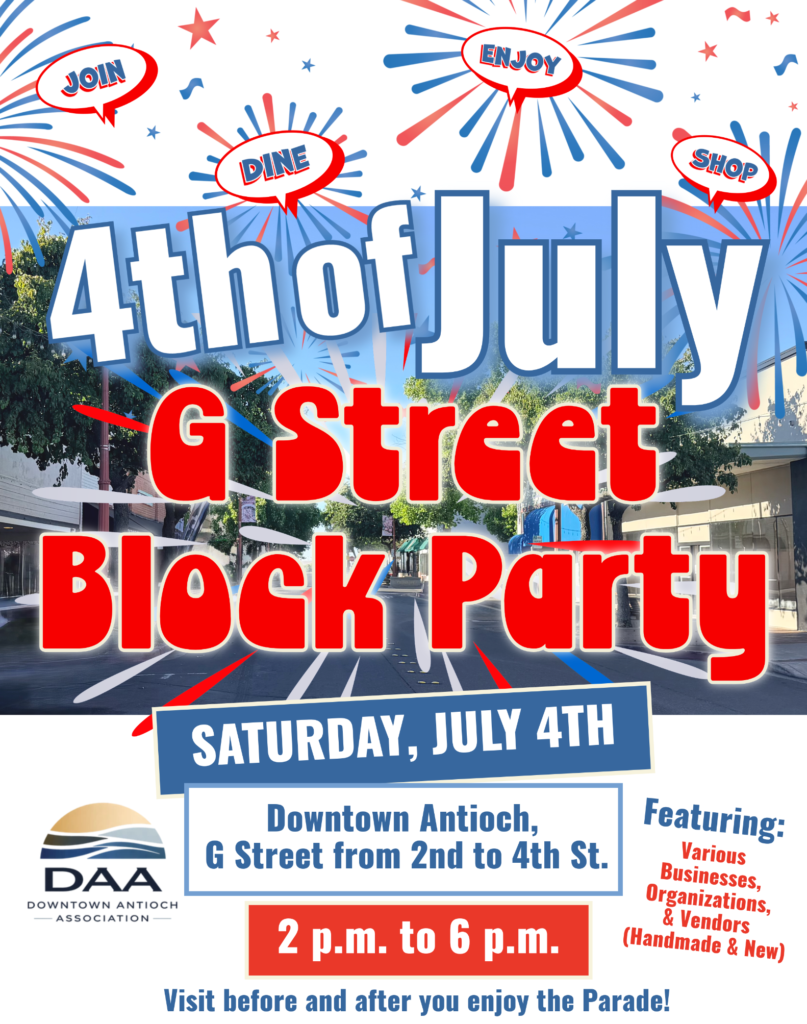
Celebrate America’s 250th at the July 4th G Street Block Party in Antioch’s downtown Rivertown

Wednesday, July 1st, 2026

During the annual Independence Day Celebration

Paid advertisement

MTC announces Connect Bay Area half-cent sales tax transit measure qualifies for Nov. 2026 election

Wednesday, July 1st, 2026
Photos: MTC

Will appear on Bay Area ballots across five counties including Contra Costa

By Jeff Cretan, West Advisors

SAN FRANCISCO BAY AREA — The Metropolitan Transportation Commission (MTC) has announced that the Connect Bay Area regional transit funding measure has officially qualified for the November 2026 ballot after elections officials confirmed the campaign submitted enough valid signatures across Contra Costa, Alameda, San Francisco, San Mateo and Santa Clara counties.

The announcement follows the Connect Bay Area campaign’s submission of more than 305,000 signatures in May, far exceeding the 186,000 valid signatures required to qualify the measure. The MTC’s official certification sent on June 30 declared that the registrars of voters across the five counties each conducted their individual county counts and submitted the results to the MTC and the total submitted far exceeded the qualification threshold. 

The measure if adopted would increase the sales tax in Contra Costa, Alameda San Mateo and Santa Clara counties by a half cent and one cent in San Francisco County for 14 years. As previously reported, the measure would generate approximately $980 million annually across the five counties.

The success of this effort was built on one of the largest grassroots transit organizing efforts the region has ever seen and unprecedented support from business, labor, and community organizations across the Bay Area.

The Connect Bay Area five-county sales tax measure would provide long-term operational funding for major Bay Area transit agencies while supporting projects to strengthen and better connect transit systems across the region. It will protect major transit agencies like BART, Muni, Caltrain and AC Transit from devastating service cuts, help VTA grow to better serve residents, workers, and businesses, and provide direct support to counties for transit improvements. 

Connect Bay Area also strengthens accountability for transit agencies. SB 63 – the legislation authored by Senators Scott Wiener and Jesse Arreguín that enabled Connect Bay Area – requires independent financial reviews, continued efficiency improvements, and stronger regional coordination before the measure even appears on the ballot.

The five counties that would be included in the tax measure vote. Source: Connect Bay Area

Unprecedented Grassroots, Labor and Business Support

The Connect Bay Area campaign has grown in support over the last several months with more than 80 elected officials and more than 90 labor, business, and advocacy organizations signing on in support. Major businesses from across the region helped raise more than $5.5 million to qualify the measure and prepare for the November election.

Since launching in January, Connect Bay Area mobilized more than 1,000 volunteers and advocates across Alameda, Contra Costa, San Francisco, San Mateo, and Santa Clara counties. Supporters gathered signatures at transit stations, farmers markets, community events, neighborhood meetings, and major public gatherings throughout the Bay Area.

The overwhelming signature total that led to the measure’s qualification for the ballot reflects broad public support for transit and growing awareness of the urgency surrounding the future of Bay Area public transportation.

Without sustainable transit funding, the Bay Area could face catastrophic service reductions:

  • BART: Up to 15 station closures, elimination of two lines, and service cuts of up to 70%
  • Caltrain: Hourly train service, no weekend service, and weekday shutdowns after 9 p.m.
  • Muni: At least 20 bus routes eliminated and service reductions of 30% or more
  • AC Transit: Service cuts of at least 16%

The campaign will now turn its full attention toward the November election, building on the unprecedented coalition of volunteers, businesses, labor organizations, transit riders, and community advocates who helped qualify the measure.

About Connect Bay Area

The Connect Bay Area campaign is a five-county Regional Transit Measure on the November 2026 ballot. The measure would establish a 0.5% sales tax in Alameda, Contra Costa, San Mateo, and Santa Clara counties and a 1% sales tax in San Francisco to provide additional support for Muni. It would provide long-term operational funding for major Bay Area transit agencies while supporting regional projects that strengthen transit throughout the region.

The Regional Transit Measure will:

  • Protect and improve service on BART, Muni, Caltrain, SamTrans, VTA, and AC Transit.
  • Prevent catastrophic transit service cuts across the Bay Area.
  • Reduce traffic congestion and emissions while supporting California’s climate goals.
  • Support the Bay Area economy by strengthening downtown recovery and regional mobility.

The measure includes strong accountability and oversight provisions, including independent financial reviews for every transit operator, regional coordination requirements to ensure systems work better together, and a citizen oversight committee to monitor spending and performance. A recent independent study required under SB 63 found Bay Area transit agencies have already achieved approximately $1 billion in operational efficiencies while identifying additional opportunities to improve service and reduce costs.

The Connect Bay Area Transit Committee is comprised of labor, business, and transit advocates, including Bay Area Council, SEIU 1021, ATU 1555, South Bay Labor Council, SPUR, and SAMCEDA, alongside an advocacy council of more than 20 organizations representing transit, housing, environmental, equity, senior, and disability organizations.

For more information about the Connect Bay Area campaign or to get involved, visit connectbayarea.com.

Celebrate America’s 250th Independence Day at Monica’s Riverview July 4th

Wednesday, July 1st, 2026

Best view of the fireworks in Antioch! DJ and live entertainment

By Monica Barajas

Come Celebrate America’s 250th Birthday with us all day long this 4th of July.

Brunch & Lunch until 5pm.

Cucos Tacos & Mexican Hot Dogs 5pm -9pm.

Full bar all day.

DJ starts at 5pm. Live entertainment at 8pm.

Exclusive outdoor seating on the river to view the fireworks at 9:20pm!! Bring a chair! Chairs and tables are limited.

Entry is $10 for adults, $5 for kids (includes a beverage ticket).

Monica’s Riverview is located at 1 “I” (Eye) Street on the pier in Antioch’s historic, downtown Rivertown.

For menu and reservations go to www.visitmonicas.com.

Paid advertisement

Antioch Council switches, approves public financing for controversial low-income apartment project

Wednesday, July 1st, 2026
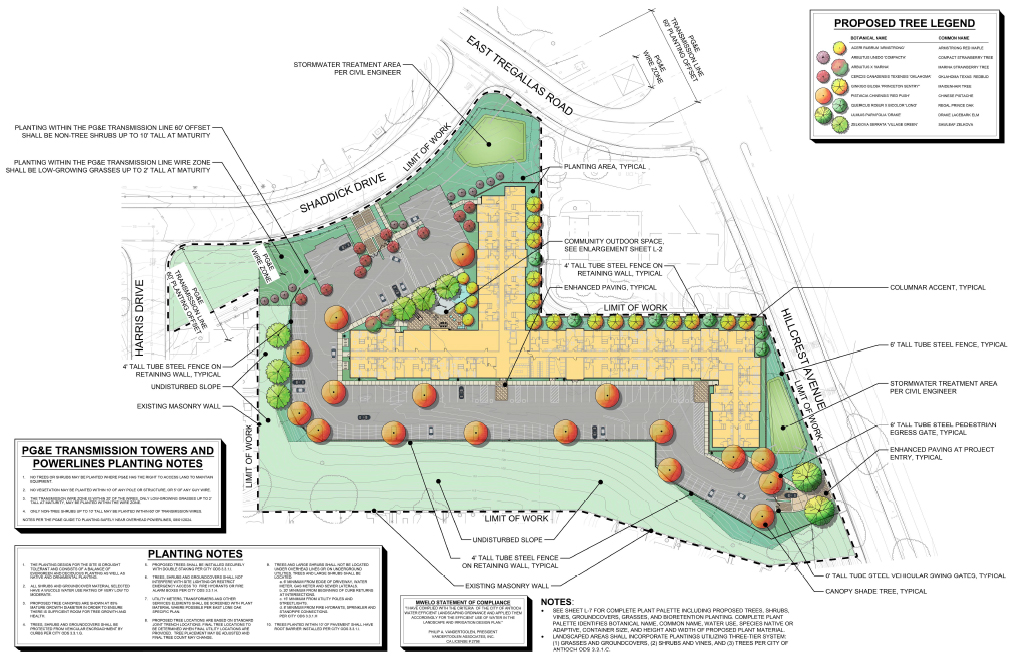
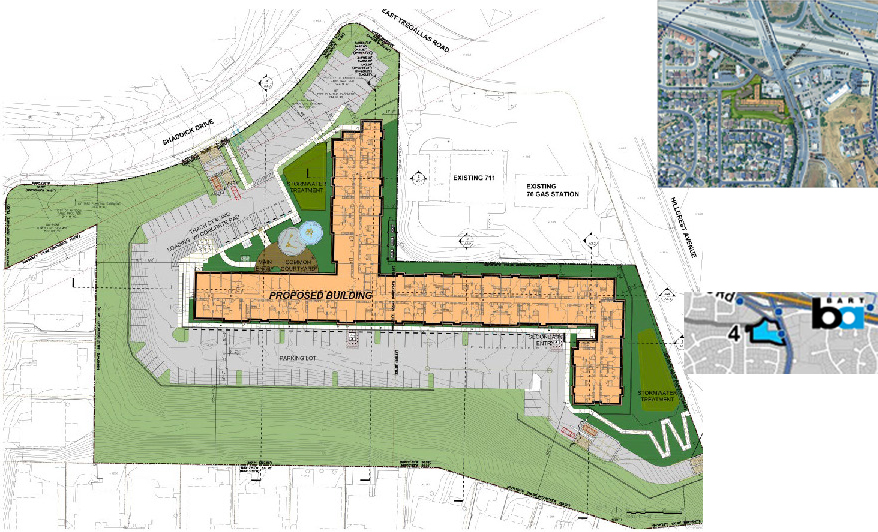
Hillcrest Summit Apartments Overall Site Plan. Source: City of Antioch

Forced to approve by state law, but without any changes to project since denying it in April

“The City will not have financial or legal obligation regarding the repayment of the debt.” – Planning Manager Zoe Merideth. But City will receive $15K in bond fees.

Freitas again rants against project saying, “It’s ugly.”

By Allen D. Payton

After denying public financing for the Hillcrest Summit Apartments on a 2-2-1 vote in April, the Antioch City Council changed course and voted 5-0 to approve it during their meeting on June 23, 2026. That’s despite the developer not making any changes to address concerns of the council members, including the proximity to the adjacent gas station, convenience store and car wash, as well as the project’s aesthetics. New concerns were shared about traffic impacts and lack of parking, due to new state law because of its location near the BART Station.

The project is one of the 10 Commercial Infill Housing (CIH) Overlay District parcels the council rezoned in 2022 that will allow extremely-low, very-low and low-income apartment complexes throughout the city. (See related articles here and here)

The 165 apartments, complete with 145 parking stalls and site improvements, are planned to be built immediately adjacent to the 76 gas station and 7-Eleven that has a 24-7 carwash on the corner of Hillcrest Avenue and E. Tregallas Road. Mayor Pro Tem and District 3 Councilman Don Freitas wanted the project to be redesigned with the apartments located on the other side of the 4.9-acre parcel. Mayor Ron Bernal was concerned about how the four-story apartment buildings would look. But due to the rezoning vote in 2022, the City Council has no say, and all of the CIH projects only require staff-level, administrative approval without any public input. The Hillcrest Summit Apartments project has already been approved by City staff.

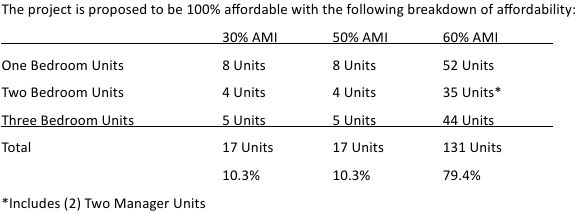
The project is proposed to be 100% affordable with the following breakdown of affordability:

Hillcrest Summit Apartments AMI figures. Source: City of Antioch

No City Financial Obligation

During the brief staff presentation for the agenda item, #4, Planning Manager Zoe Merideth explained, “The City will not have financial or legal obligation regarding the repayment of the debt.” But the Tax Equity Fiscal Responsibility Act of 1982 (“TEFRA”) and the Internal Revenue Code of 1986 require the Council to hold a public hearing and vote to approve the financing for the project to receive the funds.

“This is a private loan with the borrower and the bank,” Meredith added. “Again, such adoption is solely for the purposes of satisfying TEFRA, Internal Revenue Code and California Government Code.”

According to the City staff report, the tax-exempt revenue bonds in an aggregate principal amount not to exceed $50,000,000 to be issued by the California Municipal Finance Authority (CMFA) will be used to finance or refinance the acquisition, construction, improvement and equipping of the project and pay certain expenses incurred in connection with the issuance of the bonds.

Hillcrest Summit Apartments site and location maps. Source: City of Antioch

Public Comments & Proponents’ Responses

A representative of the developer, Los Angeles-based Cypress Equity Investments, LLC, Garrett Borges, Vice President of Real Estate Development, and Jarod Suzuki, Financial Advisor for the CMFA, the bond issuer, said they were available to answer any questions.

During public comments, with three residents in favor and one against the project, Suzuki responded reiterating, “The City is not party on the transaction. As a part of our policy, we share 25 percent of our fees with the host city. It’s just a CMFA policy. We just give away some of our fees.”

According to the CMFA website, “The CMFA shares 25% of all issuance fees directly with its member communities.  In addition, a grant equal to 25% of the issuance fee is made to the California Foundation for Stronger Communities (‘CFSC’) to fund charities designated by the member communities.”

Borges further explained, “These projects pay all of our impact fees as part of the development for the project…to help with the schools.”

“We hope that us developing this and providing these affordable units for the community is where the police officers and the teachers and those types of folks within the community that need a little help on their housing can come and be a part of the community,” he added. “So, hopefully a benefit to the community rather than a perceived blight.”

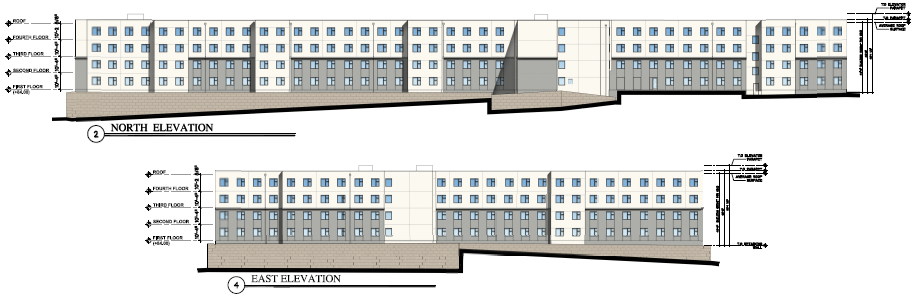
Hillcrest Summit Apartments Elevations – views of the north and east sides from E. Tregallas Road and Hillcrest Avenue. Source: City of Antioch

Council Questions, Concerns About Traffic Impacts, Lack of Parking Allowed by State Law

Freitas was first to speak saying, “It’s never been, for me, about providing affordable housing or providing this type of housing. But how did we get to this point? The public needs to understand what this project may or may not have.”

Planning Manager Meredith explained the project is one of the CIH sites and it “was administratively approved in the fall of 2025.”

“So, this property is zoned commercial?” the councilman asked.

“It could be either,” Meredith said. The underlying zoning is still commercial, but the CIH Overlay District allows for multi-family housing, she explained.

Freitas then asked about the “money coming back to the City of Antioch” and “the amount that will be.”

Bond-issuer representative Suzuki said, “Right now it’s roughly $15,000.”

Freitas then asked, “Can the City require police services on this parcel?”

Meredith responded, “The developer does pay impact fees and the City has a Community Facilities District for police.”

“Roughly, how much are we talking about? Would it pay for one officer,” Freitas asked.

Assistant City Attorney Kevin Kundinger responded, “I believe the CFD is about $300 per unit paid on a yearly basis.” That would amount to $49,500 per year total.

Freitas then mentioned his concerns that he shared with the developer “six or eight months ago” including the driveway access off Hillcrest Avenue.

“When I looked at this project, the first thing for me was safety,” he stated. “The traffic congestion is a Level F and just like high school, F means failure.”

Meredith pointed out there are two entrances and exits, with the other one on Shaddick Drive off E. Tregallas Road.

Freitas then asked, “Are there 165 parking spaces?”

“This project has 145 parking stalls,” Meredith shared.

“If one or two people have a car, there are not enough parking spaces, here to actually facilitate the people who live here and park there,” Freitas stated, then asked, “So, where are they going to go? They can’t park on Hillcrest. They cannot park on East Tregallas. The only place that they can park is Shaddick. So, what’s going to happen is the overflow cars are going to go into the neighborhoods. We will have residents coming down, screaming at us, ‘what’s wrong with you idiots, why did you ever approve this project? It has ruined our quality of life.’”

He also mentioned St. John’s Lutheran Church, which is across Shaddick Drive from the project saying, “They’re not going to be happy because their parishioners are going to have a difficult time finding parking.”

However, because the complex is located within a mile of a transit station, specifically the BART Station, state law allows for new multi-family housing developments to not include any parking.

Freitas then repeated his concern about the proximity of the project to the neighboring gas station, 7-11 and carwash saying, “The property line is a couple of feet from the commercial area. So, there will be fumes…noise, twenty-four-seven. You think the people living there are going to come to the council and scream at us? Yeah, they will.’ He then mentioned children living there and his concerns about walking into traffic or to the gas station.

“When I met with the representative, I shared these and a lot more issues,” the councilman continued. “Instead of building the project next to the property line, flip it over and there is room. ‘No, no. We don’t want to do that. That would be too expensive.’”

Freitas said he asked the developer about not providing enough parking. “Well, that’s what’s required. That’s what we’re going to do.”

“The area in blue, that is for the children,” he stated. “That little area, right next to cars that are going to be parking in that particular area. As a parent, that would scare me.”

“So, I made lots of recommendations and the expectation that as a good builder, that they would consider some of those suggestions, and they never, ever called me back,” Freitas stated.

“Now, how did we get here? It is state law,” he explained. “And we did create this and it was approved in 2022 (by the previous council) and we are stuck with it.”

“So…in April when the council basically said, ‘no’ to this…we get a letter from the Department of Housing and Community Development from the State of California,” Freitas stated. “Basically, because we’re now dealing with the mandates from the State of California to the local jurisdiction, that you all need to build a lot more affordable housing and if you do not approve this then, guess what? You will be out of compliance in your approved housing element.”

“What impact would that be to the City of Antioch if we did not have an approved housing element?” he asked Planning Manager Meredith.

“You would be subject to the builder’s remedy, for example, which would allow housing to be built anywhere in the city,” she explained. “You could be subject to fines and also increased scrutiny by HCD, for example.”

“I want to make sure you heard that,” Freitas then said to those sitting in the gallery. “A developer could come into the city and build whatever she or he wanted and none of us, here could raise an objection. What kind of projects do you think we’re going to get?”

Freitas then shared concerns about the height of the four-story project saying, “So, here we are at one of the most important entrances to the City of Antioch. You’re going to have a gas station and right behind that… you’re going to have a four-story…structure. It is so ugly. I do not want that monolith, there…and the color scheme is usually brown or a deep, deep grey. It is ugly, it is ugly, it is ugly. It is not something that I would embrace.”

“It’s not just coming before us and asking us to approve this funding,” he continued. “This project should never have been allowed. But it is and the State of California has basically said to us…we don’t care what you like or dislike. If you don’t do it, that shotgun we have at your head, we’ll pull the trigger.”

“So, tonight, frankly, we have no choice,” Freitas stated. “Because the alternative is even worse than this and that’s the tragedy from my perspective. Frankly, there’s ten of these projects, people…and I think it’s disgusting and I think it’s wrong.” (Actually, only five have been so far approved by staff. The council could rezone the other five CIH Overlay District parcels).

“Who am I holding responsible?” the councilman asked. “The State of California.”

District 1 Councilwoman Tamisha Torres-Walker, who voted for the overlay districts, spoke next asking, “So, are we voting to avoid a lawsuit? Do we need a motion or what are we doing?”

Freitas responded, “We have no choice.”

District 4 Councilwoman Monica Wilson, who also voted for the overlay districts, spoke next saying, “I agree whole-heartedly with…Mayor Pro Tem Freitas.” She then asked Acting City Manager Ana Cortez, “Is this even going to fulfill any of our RHNA requirements?”

She was referring to the Regional Housing Needs Allocation which, as previously reported, requires the City of Antioch to approve 3,016 more housing units between 2023 and 2031. They include 792 Very Low Income units (less than 50% of Area Median Income), 456 Low Income (50-80% AMI), 493 Moderate Income (80-120% AMI) and 1,275 Above Moderate Income (greater than 120% AMI) units based on the Area Median Income in the San Francisco Bay Area.

Meredith responded, “Yes. These count towards RHNA.”

Then repeating a question asked during public comments, Wilson asked staff, “Is it going to benefit…Antioch workforce residents…who are struggling, or first come, first served?”

Developer’s representative Borges responded, “We try to give priority where we can to Antioch residents. We’re obviously bound by fair housing laws. Those are very strict as far as how we are allowed to give preference.”

“We were happy and excited to fulfill what we thought was the council wishes to bring affordable housing to this site,” he continued, in response to the concerns raised by Freitas. He also said the City did a traffic study “and one of the ways we mitigate the impacts is paying a traffic impact fee which goes to the City to improve these intersections.” Regarding parking Borges said, “Because of our proximity to BART the State states, actually that we don’t have to have any parking as part of the project. We, as good developers, who will own and operate this, don’t think that that’s prudent or wise. So, we’ve fit as much parking as we could on the site.”

District 2 Councilman Louie Rocha then said, “To clarify, this item is not to approve or deny the project. This is a TEFRA hearing. Should we vote this down…they can also go to the County, I believe, or to the State and get the bonds elsewhere and we would be subject to the consequences you alluded to, earlier,” directing his comments to Freitas.

“So, I’m not crazy about the project for the reasons you stated,” he continued. “But we are here to talk about the bonds being issued, yes or no. Not about whether we are accepting or denying the project. I am in favor of affordable housing because it’s necessary in the community.”

Rocha then made the motion to approve the bonds.

But before a second was entertained, Mayor Ron Bernal asked if “the applicant had addressed the issues” raised at the council meeting in April

“I believe the applicant is willing to work with us on the aesthetics, including the siding, to make it a neutral green, rather than the grey,” Meredith responded. “I have some driveway improvements on Hillcrest, as well.”

Freitas then seconded the motion saying, “I’m going to second because we have to,” and it passed 5-0.

See staff report and project details. See project plans. Watch the Council meeting video of the item beginning at the 2:34:40 mark.