Archive for the ‘Sports’ Category

Want to Improve? Attach the “Weight” to the Good Shot

Friday, May 4th, 2012

Webster’s II New Revised Dictionary 2nd definition for Psychology: The emotional characteristics and behavior associated with an individual.

Simple tip in concept this month, but the application is the hard part I find for many a student, and on occasion this author. So much of the improving in this game comes down to a “healthy” psychology.

The game is so fantastic, so many facets to enjoy and cherish in so many different ways. A path filled with ups and downs. But often, I see students get stuck in their “down”. The down being a shot, a club, the last round, rounds, practices, a slump, or over time an overall game. Often, this “down” becomes what their golf is about. If any of this sounds familiar.

I’d like to first point out that I don’t think you are getting the enjoyment out of the game that you should. And that might be rubbing off on your playing partners? (Sorry to point this out).

Secondly and very simply, I’d like to challenge you on how you think and in particular, “What do you attach your emotion too?” Where you attach your emotion is where your memory is going to go and seriously impacts your Psychology. I’ll give you an example.

Beginners, particularly ladies, are often afraid to hit down on the ground. So they top a lot of shots one right after the other because they blade the ball. As an instructor I will take them out to longer rough cut grass and tell them to brush the grass more or take a small divot, learning how to hit down on the ball which is what will get it up in the air and what we want. The grass creates the feel we are looking for.

But from experience with these students I know what is soon to come is a shot where they do brush down, but they do it before the ball and they hit it fat. When this happens within the first few balls, I reach over and give them a high five. Why? Because they met our goal of brushing the grass and trying to hit down.

Now if that new golfer went by the results of the golf ball, chances are they are going to feel bad about themselves and not get anywhere. But did she do what we wanted her to? Yes. So I give it some positive emotion so the learning takes hold.

The next thing I will do with the new student is tell her to do the exact same thing but keep their eye on the back of the ball so they meet it first. Guess what? Clubface hits down on ball first, loft on clubface puts ball into the air, then the club brushes the grass! Succesful airborne shot! Yes!

If that new golfer, got stuck feeling bad about hitting the fat shot, we would have never learned and gotten the positive one! So what about you? It doesn’t matter if you are a new player or a lifetime player. Are you stuck, or your emotions stuck giving weight to the misses? The downs?

Give a try to attaching your emotions to the successful attempts, shots, holes, rounds. Really put some strong, positive emotion to it. Celebrate. Bring back the high five and just let the downs drift on by not giving them any weight at all. See what happens to your golf Psychology and your golf game. Chances are it can only help.

Tryouts for Antioch’s Delta Skimmers Swim Team Start This Saturday

Wednesday, March 21st, 2012

Antioch Delta Skimmers invites you to come and try out for the 2012 swim team.  For ages 4-18, Swim try-outs and sign-ups will be held at the Los Medanos College Pool.  2700 East Leland Rd, Pittsburg.  Dates for tryouts are:   March 24th and April 7th, from 10:00am to 1:00 pm.  Parents must accompany child and show proof of age when signing up. Don’t forget a towel, a swim cap and goggles! Go to www.antiochdeltaskimmers.com for more info!

Play the Percentages

Wednesday, February 8th, 2012

Course management tips to help your scoring

How often do you go out on the course and you have your “A” game? If you play several times a week you probably have your best game more frequently then the once or twice a month player. But even the frequent golfer, has their “A” game 20-30% of the time? 40% at most? Golf has so many different facets so it is tough to get them all going at once. But often, golfers manage their game as if they were playing with their “A” game always and because of this, they run into trouble. I would suggest some of the following course management tips that offer “higher percentages” for successful shots and thereby help keep you away from trouble and higher numbers.

  • Play your strike zone. Be familiar with your shot pattern and where you tend to miss. When you have you’re “A” game the ball goes where you want it to, but when you don’t there is generally a common miss you need to recognize and play for. When you hit your driver do you fade or draw? Think in terms of a baseball pitcher. If his pitches generally curve left to right, he is aiming at the left side of the plate and the ball moves into the strike zone. If your tee shot moves the same way, you should tee up on the right side of the tee box and aim at the left rough edge, thereby letting your tee shot curve towards the fairway target. Players with right to left curve conversely tee up on the left side of the tee box, aim at the right edge of rough and let the ball curve back towards the fairway target. This way, you have given yourself the entire width of the fairway to work with and doubled the size of your target area compared to aiming straight down the middle.

  • Take enough club when hitting into greens. The next time you are out, look at where all the trouble is when you hitting your approach shots. The sand traps are generally in front of the green, or a water hazard, or a grass bunker. Often the greens are elevated so even though the player is at the 150 yard marker the elevated green requires an extra 5-10 yards of carry. You may hit a #8 iron 150 yards with your “A” game, but with the trouble in front and your “B” or “C” swing being around 70% of the time or more, hit the #7 iron (more club), get enough carry and stay out of the trouble.

  • Forget the pin and aim for the fat. Also when approaching the greens, notice where the “fat” part of the green is. Usually this is the center of the green. Play a round and forget about going after the pins and aim for the fat of the green and the center. Chances are, with this in mind, your are going to hit more greens in your round which will help your scoring. This tip was one that the great Ben Hogan often kept in mind.

  • When chipping, keep the ball on the ground as much as possible. Often times, when a player misses the green the chip that you face is on fairway mown grass and still doesn’t have to carry over rough but more fairway or fringe. In this situation, use the Texas wedge (putter), a hybrid or fairway metal, or your #7 iron and make a firm putting motion and keep the ball rolling along the ground. When you have your “A” game, you feel like you can wedge it perfect, but when you are a little off with the wedge, you can get a fat “short” or thin “long” and you are chipping once again and the score is going up. You’ll find this running shot is never “chunky”. With a little bit of practice and imagination you will gain confidence and this shot which will keep double bogeys or worse at bay.

  • When putting, think speed not line. Players who over focus on line often get the speed wrong and leave themselves a tough second putt. With “A” game taking the day off, really just focus on trying to get the speed of your first putt right so that you leave the ball by the hole for a tap in. Imagine a big hula hoop around the cup and try and lag your 1st putt into it. This way you aren’t trying to be too aggressive and ram the ball in, but also you are thinking in terms of enough acceleration to get the ball to the hole so you get the ball there. Many higher handicappers’ 3- putts occur from hitting the first putt too soft.

On the days your game is just a little bit off, try these course management tips. You should find more favorable percentages for success with your shots and scores that become more consistent. Email any questions that you have to RonParish@lonetreegolfcourse.com. To learn more about golf at Lone Tree, visit www.LoneTreeGolfCourse.com.

Schooner’s Hosts Annual Super Bowl Party on Sunday

Saturday, February 4th, 2012

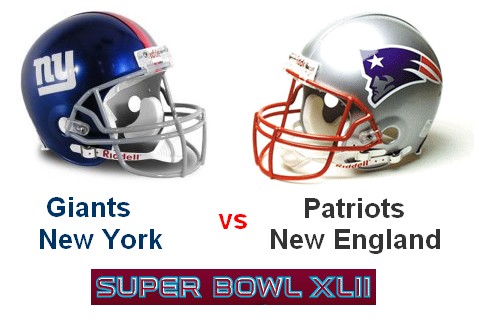
If you’re looking for some place to enjoy the Super Bowl between those two East Coast teams that most people in Antioch don’t really care about, then Schooner’s has just the party for you. Hang out with your friends, watch the commercials and even the Half-Time show with Madonna.

Always great on-site brewed, award-winning beer, plus great food to enjoy while watching the game on four TV’s. Game time is 3:30 p.m. so get there early for the best seats.

Schooner’s Grill & Brewery is located at 4250 Lone Tree Way in Antioch, near the Deer Valley Theaters. For reservations call 776-1800.

See their ad on the right side of this page and in the February issue of the Antioch Herald for more events this month! For more information visit www.SchoonersBrewery.com.

Enjoy the Super Bowl at Humphrey’s on the Delta

Saturday, February 4th, 2012

Once again, Humphrey’s on the Delta will be hosting it’s annual Super Bowl party on Sunday, February 5. Enjoy great food and drinks, including $2 chicken fajita tacos throughout the game, plus contests and prizes.

Kick-off is at 3:20 p.m., so get there early for a good seat to watch the game on one of four TV’s including the big screen.  Bring the family and enjoy the best part – the commercials (since the Niners didn’t make it).

Humphrey’s is located at 1 Marina Plaza, at the foot of L Street in Antioch’s historic downtown Rivertown. For reservations call 778-5800 and for more information visit www.HumphreysontheDelta.com


Watch the Niners vs Giants at Humphrey’s on Sunday

Sunday, January 22nd, 2012

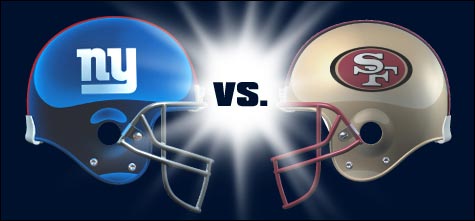
Join the fun and your fellow 49er fans at Humphrey’s on the Delta and watch the Niners play (beat) the New York Giants in the playoffs, on Sunday, January 22 at 3:30 p.m.  Humphrey’s is located at 1 Marina Plaza, at the foot of L Street, overlooking the river in Antioch’s historic downtown Rivertown. Get there early to watch the Ravens vs. Patriots game at Noon (to see who the Niners will face in the Super Bowl) for the best seats, have lunch, watch both games, then stay for a victory dinner!

Three Resolutions for 2012 to Help Keep the Game Great

Sunday, January 15th, 2012

By Ron Parish

You enjoy the game. Whether the economy is good or bad you golf. You play. You practice. You watch it on TV. Most likely you watch the golf channel late at night and sometimes at the start of the day. Don’t forget the perusal of the top industry magazines that are kept by your bedside.

Beside those are a few dozen instructional books that you’ve collected over the years. Five fundamentals. Golf My Way. Little Red Book. Pelz putting, and more. When the British Open is on TV in the summer you will get up at 6AM to watch it live right? Yes. You know who you are. The game is part of who you are and whether you shoot good or bad you are a part of it.

You are what we call a CORE golfer. The courses count on you. The casual golfer isn’t teeing it up right now. Things are too tight. So that makes you important to the game and to the industry. So I ask a question with an obvious answer, “Do you want to help keep the game great?” Of course you do.

So the following are three simple “Resolutions” for 2012 from your Pro here at Lone Tree. These will help keep the game great and help others enjoy the game we love:

#1: Give an invite and bring someone new to the game. Be honest,when was the last time you did this? This year? Five years ago? The courses need ambassadors to grow the game and you are a perfect fit for the job. You’ve got someone at work, next door, a family member, or friend from church, that you can easily help get into the game. It means a lot to them. They may want to already be playing but they don’t know where to start and most likely are intimidated about finding out (no one wants to look foolish). Chances are they already know you are a golfer and you can help them get going. They would love to get an invite. It can be simple:

• Ask them to come out to the range and hit a bucket of balls with you. They can find out what it is like to hit a golf ball, (often getting an “Oooo” or “Awww” experience for them which is memorable for you to be a part of). You can also give them a few pointers while you are out and pick up information about instructional programs. Lone Tree’s range has just added lights so the evening hours are an option now for area golfers to give this invite.

• Ask them to join you in a league of some kind. Couples golf, Ladies league, Wednesday games, Men’s club, Senior’s day, Junior programs (“The First Tee” at Lone Tree), or recently formed our Tuesday Night Range league. Leagues are simple and great vehicles to give an invite and get someone new into the game and meeting others who golf.

• Ask them to play in a scramble with you. What better way to bring someone in the game. Scrambles (select the best shot of all shots hit from the tee, pick up the others and play in the same manner for the next shot and until the ball is holed). This takes the pressure off of a new golfer but gets them exposed to the excitement of being a part of a team and posting a score. Usually scrambles are the format of play for many fundraising tournaments, so you can support a cause while introducing them to the game. Take a look around your golf shop or ask the Guys at the counter. They’ll know about events you can sign up for.

• Ask them to come out late in the afternoon to play a round. The course isn’t crowded at this time, and it is the perfect time for a new golfer to get acquainted. Most courses offer “Super Twilight” rates that keep this as affordable as ong to see a movie.

#2: Keep a good pace of play: Nothing makes people want to go bowling more than a 5 hour+ round. We got to pick up the pace CORE golfers because for the last few years more people have been leaving the game then taking it up. From my position of managing a golf course, only a small percentage of CORE golfers really know what it is to keep a good pace, I would estimate 20%. Some tips for the pace challenged CORE golfers to help pick up the pace are as follows, but please remember this, the number of swings don’t really matter when it comes to pace it is the habits that are in between the swings that are slowing things up.

Tips are:

• Get out of the cart. Sitting in the cart and watch your buddy hit his shot. Golfers should leave their buddy at his ball and either drive over to your ball to hit your shot or grab three clubs and walk over to hit your shot.

• Quicken the pace around the green.

o When your playing partners are putting, put your ball on your mark if it is not on his line and get ready for your turn to putt. Especially take a look at your line from behind your ball while he is putting; don’t wait until it is your turn. Figure things out while playing partners are putting and be ready.

o Story time is not while everyone is putting. Save the jokes and the quips until your are leaving the green, or while riding the cart to the next tee. There will be plenty of time to get a “zinger” in, but while on the green keep things moving and take care of business.

• Hit a provisional: For Serious competitions and you think your ball might be out of bounds or lost? Hit a Provisional ball. Declare the ball provisional to your playing partners and remember you can’t hit a provisional for water hazards. But take advantage of this rule that helps with pace of play and, if you find your original ball, guess what? You got an extra practice swing in during your round allowed by the rules of golf (hmmm J).

• Skip the honors: The Guy who hit it tight and is putting for birdie is often the last one to putt and leave the green. The first Player in a foursome to putt out should head to the cart, while the others in the foursome are putting out, find his/her driver and start working their way to the next tee. As soon as the Guy putting for birdie has hit his putt, you’re the first to arrive to the next tee and you are swinging away as soon as you are there. Let’s take the “wait” out of the game.

• Don’t mark the scores on the scorecard until you are at the next tee. Drive cart to next tee first, mark scores second. If you sit and wait by the putting green, so does your partner and you are delaying both of you.

• Put your clubs in the bag at the next tee. Out of the box here. Come off the putting green, keep the clubs in hand, and drive to the next tee. When you get the driver out at the next tee put your putter and wedges away. Seem extreme? Try it and you will start to recognize how much time is lost by the greens while golfers put their clubs back in the bag.

• Learn from Senior Amateurs and get it done with your swing routine. We host 4 different NCGA Senior Amateur tournaments per year at Lone Tree and the Senior amateurs blaze the course when it comes to pace of play. They have learned that being decisive to a target is the best thing you can do to hit a good shot. These Senior Am’s take one practice swing (some just a ½ swing/waggle), walk in briskly and set up to their target and hit. They get it done.

• Let groups play through if you can’t keep up. If you are more then half a hole behind the group you teed off behind, and you can’t catch back up so you are within a half a hole, allow following faster groups to play through and then stay within half a hole of those groups.

• Change your thinking and get rid of the dilly dally. In the USA we often think of a good pace at 4 hours, or 4.5 hours; if that is where we set the bar, then no wonder we get a 5 hour plus round when a little trouble pops up. To a degree, we have lost respect for our fellow golfers by not putting enough priority on pace. In Scotland an acceptable pace is 3.25 to 3.5 hours at most; and the Scots are generally walking. What do they know that we don’t? They take pace of play more serious and they don’t dilly dally.

I often go out in the late afternoon with an assistant from the golf shop or two, and we will play nine holes in 60-70 minutes. Yes the course is wide open, but we are trying to get our holes in and we just keep moving. Nobody is running. We have conversation. We have a good time. We keep things moving. If you are the first tee time of the day, challenge your playing partners to see if you can play the round in 3 hours. I bet you can and you will enjoy yourselves. Let’s change our thinking and it starts with the first tee time.

#3: Honor the number of players on your reservation and call the golf shop as soon as you know you have fewer players. Core golfers play with other Core golfers. It’s a great thing. And standing tee times are a common practice, that’s one of the ways the golf course honors your loyalty and patronage. But if you are the Friday game at noon and you always have three tee times, but you found out at 10:00 am that one foursome isn’t going to make it. Call the course to let them know you are only two tee times as soon as you know instead of waiting to get to the course to let them know. This really makes a difference. The same goes if you are a foursome and you are only going to have two players. The tee sheet is all a golf course has to sell and it is a limited resource. If you book four and only show two, you cost the course as much money as you made it. With technology these days, golf courses can fill vacant tee times in literally minutes. And starters keep waiting lists and field phone calls all day long as to openings that pop up. Courses in this economy are having a tough time financially so just give a call and help them out. It makes a difference for them and will probably help keep affordable golf for you.

Core golfers thank you for all you do for the game. Know that the industry needs you in 2012 and be sure to extend an invite, keep things moving on the course, and give the shop a call right away to adjust that tee times when needed. Easy resolutions that can make a difference for this game we love. Let me know your thoughts or comments at ronparish@lonetreegolfcourse.com.


Roethlisberger Gives K-9 to Antioch

Friday, January 13th, 2012

Pittsburgh Steelers’ Super Bowl Quarterback Ben Roethlisberger announced the seventh grant of the 2011-12 season from the Ben Roethlisberger Foundation at The Giving Back Fund. The Foundation will be distributing a grant to the Antioch Police Department.

The Antioch Police Department will purchase a dual purpose canine, trained in patrol procedures and narcotics detection, so that an 11-year-old veteran canine can retire.

Antioch Chief of Police Allan Cantando said, “We are truly honored to have been selected by the Foundation as a grant recipient and are excited about the long-term benefits this grant will allow our canine unit, the Antioch Police Department and the City of Antioch to enjoy for the years to come.” Cantando added, “These grant funds will be used to purchase a new dual purpose canine to ensure the continued success of the unit.”

During the 2011-12 NFL season, The Ben Roethlisberger Foundation will be distributing grants to K-9 units of police and fire departments in the cities and surrounding communities of each regular season away game for the Steelers.

The Foundation will also distribute several grants to the Pittsburgh area and will consider grants to any two cities in the United States if the Steelers make the playoffs. The Ben Roethlisberger Foundation invited police and fire departments across the country to submit proposals detailing their needs.

This marks the fifth season that the Ben Roethlisberger Foundation has distributed grants to K-9 units. The Ben Roethlisberger Foundation seeks to support K-9 units of police and fire departments throughout the United States with a particular emphasis on support for service dogs in Pittsburgh, PA.

In commenting on why the mission of the foundation is so important to him, Roethlisberger said, “We’re very fortunate to be in the position that we are able to help these K-9 units. The work that is performed by the dogs and their handlers as well as the bond that is formed is incredible. We’re just thrilled to do our small part.”

For more information about the Ben Roethlisberger Foundation or The Giving Back Fund, please contact Stephanie Sandler or visit www.bigben7.com or www.givingback.org.

About Ben Roethlisberger
Ben Roethlisberger is in his eighth season as quarterback for the Pittsburgh Steelers, and already has secured his place in the record books. At 6-foot-5 and 245 pounds, he is aptly referred to as Big Ben, and has become known for big performances and a humble approach. Roethlisberger is one of only 10 starting quarterbacks to win two or more Super Bowls. In 2009, he led the Steelers to a 27-23 victory over the Arizona Cardinals in Tampa with a thrilling touchdown pass in the final seconds. In 2006, Roethlisberger became the youngest starting quarterback to win a Super Bowl, defeating the Seattle Seahawks 21-10 in Detroit. Roethlisberger was voted to the Pro Bowl in 2007, and already holds most of the passing records for the Steelers. He is the only quarterback to lead his team to the conference championship game in each of his first two seasons. He was the unanimous Rookie of the Year in 2004, breaking Dan Marino’s rookie records for completion percentage and passer rating, and was the first quarterback in NFL history to compile a 13-0 regular season record as a rookie.
Roethlisberger was raised in Findlay, OH and was a three-sport star at Findlay High School. He went on to set nearly every quarterback record at Miami University (Ohio) prior to foregoing his senior season and becoming the 11th overall pick by the Pittsburgh Steelers in the 2004 NFL Draft. Roethlisberger resides near Pittsburgh with his wife Ashley and his two dogs, Zeus and Hercules.

About The Giving Back Fund
The Giving Back Fund (GBF) is a national public charity that creates and professionally manages charitable foundations and other philanthropic programs for athletes, entertainers, business entrepreneurs, and corporations. Since our founding in 1997, GBF has created an important niche in expanding and diversifying philanthropy, particularly among young people, women and people of color. Our unique structure allows donors to direct more of their charitable dollars to causes they care about and less to administrative overhead. To date, The Giving Back Fund has provided philanthropic consulting, management and programming to more than 200 athletes, entertainers, entrepreneurs, and other high net worth individuals. GBF has overseen the distribution of more than $30,000,000 in charitable grants within the United States and other countries, and has developed dozens of unique scholarship, mentoring, medical, arts, and other philanthropic programs. For additional information, please visit www.givingback.org.