







Archive for the ‘News’ Category

Kaiser’s Medicare plan receives highest rating for the 6th year

Saturday, September 18th, 2021

NCQA rated Kaiser Permanente Northern California among highest for consumer experience, prevention, and treatment

By Antonia Ehlers, PR and Media Relations, Kaiser Permanente Northern California

OAKLAND, CA – For the sixth year, Kaiser Permanente Northern California’s Medicare health plan is rated 5 out of 5 stars, making it the highest rated plan in the region – and among the highest rated in the country.

In the National Committee for Quality Assurance (NCQA) Health Plan Ratings 2021, published today, Kaiser Permanente’s Medicare health plan in Northern California received 5 stars and its commercial health plan received 4.5 stars. Kaiser Permanente’s Southern California region received the same ratings – making the two plans among the highest rated in California and the nation.

“Kaiser Permanente continues to be recognized nationally for what matters most to our members and patients: high quality care and exceptional service,” said Carrie Owen Plietz, FACHE, president of Kaiser Permanente’s Northern California region. “We are proud to be a leader in health care delivery and these ratings, which are so consistent over time, demonstrate our commitment to putting our patients and their health at the center of all we do.”

“This recognition is a tribute to the dedication and expertise of our highly-skilled physicians, nurses, and staff,” said Richard S. Isaacs, MD, FACS, CEO and executive director of The Permanente Medical Group. “Through our innovative, personalized, and technologically advanced approach to health care, we continue to transform care delivery while having a positive and often life-changing impact on the health and well-being of our members and patients.”

NCQA analyzed over 1,000 health plans in the nation  private, Medicare, Medicaid  for quality and service. Only 17 health plans in the country, or about 1.6 percent, were rated 5 out of 5 stars. In all, Kaiser Permanente has six of those highest rated plans.

NCQA is a national, private not-for-profit organization that surveys health plans for performance in a wide range of clinical service measures including consumer experience, prevention and treatment. All Kaiser Permanente health plans were rated 4 stars or higher. For the sixth year in a row, all Kaiser Permanente Medicare health plans were rated highest (or tied for the highest) in the areas they serve. Kaiser Permanente serves more than 12.5 million members in eight states and the District of Columbia.

The NCQA’s Health Insurance Plan Ratings are based on combined scores for health plans in Healthcare Effectiveness Data and Information Set®, commonly called HEDIS; the Consumer Assessment of Healthcare Providers and Systems®, or CAHPS; and NCQA Accreditation standards scores.

The ratings and methodology are posted on the NCQA’s website at www.ncqa.org.

About Kaiser Permanente

Kaiser Permanente is committed to helping shape the future of health care. We are recognized as one of America’s leading health care providers and not-for-profit health plans. Founded in 1945, Kaiser Permanente has a mission to provide high-quality, affordable health care services and to improve the health of our members and the communities we serve. We currently serve almost 12.5 million members in 8 states and the District of Columbia. Care for members and patients is focused on their total health and guided by their personal Permanente Medical Group physicians, specialists, and team of caregivers. Our expert and caring medical teams are empowered and supported by industry-leading technology advances and tools for health promotion, disease prevention, state-of-the-art care delivery, and world-class chronic disease management. Kaiser Permanente is dedicated to care innovations, clinical research, health education, and the support of community health. http://about.kaiserpermanente.org

State Senate Election Committee Chair Glazer calls for recall system reform

Friday, September 17th, 2021

Senator Glazer calls it “flawed” “broken” in spite of only two recalls of governor in state history; joins Assembly member Berman, Assembly Election Committee Chair to hold hearings to examine needed changes in wake of recently concluded recall election

By Scott Harmon, Policy Analyst/Communications, Office of Sen. Steve Glazer

State Senator Steve Glazer. (D-7-Orinda)

Sacramento – Following Tuesday night’s recall election of the governor, only the second one to qualify for the ballot in state history, the California Legislature’s two leading members on election issues on Wednesday announced a coordinated effort to examine reforms to California’s recall election system.

Senator Steve Glazer (D – Contra Costa) and Assemblymember Marc Berman (D – Menlo Park) and said they are determined to fix a broken system in the wake of the 2021 gubernatorial recall election, which raised questions about whether a system designed in the early 20th century has enough checks and balances to ensure democratic and fair elections.

Berman, Chairman of the Assembly Committee on Elections, and Glazer, Chairman of the Senate Committee on Elections and Constitutional Amendments, will hold a series of bipartisan joint hearings in the coming months to begin a statewide discussion regarding potential improvements to California’s recall laws. The intent is to produce a proposal that will be taken up in the Legislature during the 2022 legislative session.

“Now that the recall is over, I believe it is time to re-evaluate and update California’s recall process,” said Senator Glazer.  “The voters want to see a more democratic process put in place that keeps elected officials accountable but, prevents political gamesmanship of the rules.  We hope to work with policy experts and stakeholders of different political perspectives on a viable solution that ultimately makes sense for a modern-day California.”

The recall process is one of four ways the state’s voters can have direct impact on the legislative and governing process, which also include electing representatives, as well as the referendum and initiative. (See CA Constitution Article II) Under the leadership of then Gov. Hiram Johnson came into office proposing the three major populist changes, bringing direct democracy to California. According to Ballotpedia, “Johnson and the new Progressive majority in the legislature made the most sweeping governmental changes ever seen in the history of California. Among these were the introduction of initiativereferendum, and recall at both the state and local levels. Voters ratified these amendments in a special election on October 10, 1911.”

At that time, Johnson said, “they do give to the electorate the power of action when desired, and they do place in the hands of the people the means by which they may protect themselves.”

According to the Secretary of State’s website, “Since 1913, there have been 179 recall attempts of state elected officials in California. Eleven recall efforts collected enough signatures to qualify for the ballot and of those, the elected official was recalled in six instances.” Of those 179, 55 were attempted recalls of the governor, two qualified for the ballot, Grey Davis and Newsom, and only Davis was successfully recalled.

The committees will evaluate recall laws in other states, and will invite experts to examine California’s recall process, including issues such as grounds for removal; signature gathering requirements; process of succession if a governor is recalled; and other issues. The process will be open to the public in an effort to maintain the utmost transparency, and the committees also hope to include the expertise of elections officials, political scientists, legal experts, and others.

“While the recall is an important tool for voters to address misconduct or corruption by elected officials, yesterday’s election highlighted the fundamentally undemocratic nature of California’s existing recall process,” said Assemblymember Berman. “California law should not allow someone else to be recalled and replaced by a candidate who receives far fewer votes. I look forward to hearing from a bipartisan group of experts about how California’s recall process should be reformed.”

Senate President pro Tempore Toni G. Atkins said that she supports examining recall reform.

“A thorough review of California’s recall law is timely and worthy of debate, and I would like to thank Senator Glazer and Assemblymember Berman for spearheading the efforts to start this important conversation,” Atkins said.

Assembly Speaker Anthony Rendon said, “It is totally appropriate to begin discussion of reforming the recall process. We came far too close to having a governor elected by a tiny fraction of eligible voters. While that is no way to pick the leader of the most populous state in the nation, it would be equally wrong to make any changes without a thorough study of alternatives. I look forward to hearing the discussion.”

The recall process was adopted in California almost 110 years ago but, has been used sparingly for most of the state’s history. More than 70% of the attempts to recall elected state officials that have qualified for the ballot, including the only two statewide recall elections in California history, have occurred in the last 27 years. Each of California’s last nine Governors has faced multiple recall attempts, though only two of those attempts have qualified for the ballot.

Two recent polls, conducted by the Public Policy Institute of California and by the Institute of Government Studies at the University of California, Berkeley, have found that a majority of voters favor keeping but reforming the recall process.

Allen Payton contributed to this report.

Acting U.S. Attorney announces major law enforcement initiative to combat violence, drug distribution by La Nuestra Familia gang

Friday, September 17th, 2021

Map of La Nuestra Familia’s Areas of Criminal Influence. Source: FBI San Francisco

“Operation Quiet Storm was one of the largest gang takedowns in FBI San Francisco division’s history,” charges 55 defendants, some from Antioch

Acting U.S. Attorney Hinds emphasizes focus on community engagement to root out drivers of violent crime

SAN FRANCISCO – Acting United States Attorney Stephanie M. Hinds held a press conference Thursday to announce the unsealing of federal charges filed against 55 defendants, many of whom were members of, or affiliated with, the Nuestra Familia prison gang and its subservient street gangs.  Acting U.S. Attorney Hinds was joined in making the announcement by Federal Bureau of Investigation Special Agent in Charge Craig D. Fair, Drug Enforcement Administration Special Agent in Charge Wade R. Shannon, California Department of Corrections and Rehabilitation Chief Office of Correctional Safety Derrick Marion, Santa Clara Sheriff Laurie Smith, and San Jose Deputy Chief of Police Elle Washburn.

The focus of the press conference was the unsealing of 17 charging documents, including 14 indictments and 7 criminal complaints, setting out a broad array of charges against the defendants.

According to an FBI San Francisco tweet on Thursday, “Operation Quiet Storm was the culmination of more than 5 years of complex investigative work. The gangs targeted in this case are responsible for much of the illicit drug distribution and violent crime that has plagued areas throughout CA.”

“No single defendant is responsible for all the conduct I am describing,” said Hinds. “The charges against each defendant are described in a charging document that is unique to each defendant. By disrupting gang leadership, we reduce violence on our streets.  By removing violent actors and crime drivers from the streets, we make our neighborhoods safer.”

According to the documents unsealed today, La Nuestra Familia – Spanish for “Our Family”– was a prison gang operating in the California state prison system. Falling under the gang’s supervision are Norteño street gangs established in numerous cities and counties, and in jails and prisons, throughout Northern California and elsewhere. Several of the charging documents unsealed Thursday describe various aspects of the gang.  For example, one indictment (here (Leadership)) describes the largely-incarcerated leadership, while another (here (SJG)) describes the activities of a street gang called the San Jose Grande and yet another (here (EHP)) describes a group referred to as El Hoyo Palmas Street Gang. The picture that emerges is one of a violent and structured organization that finances its activities through crime and encourages its members to visit violence upon anyone who threatens the gang’s existence, including members who break gang rules, members who attempt to leave the gang, and rival gang members.

According to the documents unsealed Thursday, of the 55 defendants, 28 individuals were charged with racketeering crimes, while the remaining individuals were charged with drug trafficking and firearms offenses. Conspiracies alleged in the indictments include agreements to distribute drugs including heroine, methamphetamine, and cocaine; to commit armed robberies; and to commit murder.  Additional defendants were charged with other related crimes ranging from drug distribution to armed robbery.

According to a San Diego Union-Tribune report, “Prosecutors said 36 of the defendants were already in state prison and have been moved to federal holding facilities. Authorities have not said how many of the 19 remaining defendants were arrested in law-enforcement sweeps this week.”

Acting U.S. Attorney Hinds emphasized the goal to “fish with a spear, not a net.”

“Working with our federal and state, local, and tribal law enforcement partners, as well as impacted communities, our law enforcement efforts have focused on addressing violent crime-driven by gangs,” said Hinds.  “We will continue to work with our law enforcement partners, as well as members of our community, to identify and address the drivers of crime in our neighborhoods.  We intend to continue to deliver results by focusing on the needs of our communities.”

“Operation Quiet Storm was one of the largest gang takedowns in FBI San Francisco division’s history,” said FBI San Francisco Special Agent in Charge Fair.  “The coordinated efforts of this operation were done with one goal in mind: to disrupt the communications and organizational structure of a criminal network who has terrorized our neighborhoods for far too long.”

“Today’s operation strikes a substantial blow to Nuestra Familia leadership. This investigation revealed the wide-ranging influence of the gang that extends far beyond prison walls. It is clear they have hard and fast rules, and those who run afoul are met with intimidation and violence that spills into our communities,” said DEA Special Agent in Charge Shannon. “We will continue to look at these organizations structurally to disrupt and dismantle them.”

An indictment merely alleges that crimes have been committed, and the defendants are presumed innocent until proven guilty beyond a reasonable doubt.

This case is being prosecuted by the Organized Crime Strike Force of the United States Attorney’s Office for the Northern District of California.  The prosecution is the result of an investigation by the FBI (San Francisco, Sacramento, and Phoenix Divisions) and the DEA, with the assistance of the Santa Clara County Sheriff’s Office, the California Department of Corrections and Rehabilitation, the U.S. Bureau of Alcohol, Tobacco, Firearms, and Explosives, the Santa Clara County District Attorney’s Office, and the San Jose Police Department, as well as the support of the Alameda County Sheriff’s Office, Antioch Police Department, Campbell Police Department, Fremont Police Department, King’s County Sheriff’s Office, Monterey County Sheriff’s Office, Mountain View Police Department, Sacramento Police Department, Salinas Police Department, Menlo Park Police Department, Santa Clara County Parole Department, Santa Clara County Probation Department, Santa Clara Police Department, Santa Cruz County District Attorney’s Office, Santa Cruz County Sheriff’s Office, Modesto Police Department, San Francisco Police Department, and Stanislaus County Sheriff’s Department, and Sunnyvale Department of Public Safety.

This investigation and prosecution are part of the Organized Crime Drug Enforcement Task Force (“OCDETF”), which identifies, disrupts, and dismantles the highest-level drug traffickers, money launderers, gangs, and transnational criminal organizations that threaten the United States by using a prosecutor-led, intelligence-driven, multi-agency approach that leverages the strengths of federal, state, and local law enforcement agencies against criminal networks.

Mexican prison gang Nuestra Familia’s leaders, members, associates charged with racketeering

Friday, September 17th, 2021

Description of indictment by USDOJ against Nuestra Familia leaders, members and associates on Aug. 25, 2021.

Indictment describes the gang’s nexus of power overseeing thousands of members throughout California including Contra Costa County; Antioch Police Department assist in investigation

Involved in plots to murder 14 victims, plus robbery, drug trafficking and money laundering

SAN JOSE – A federal grand jury returned an indictment charging 17 defendants with racketeering conspiracy, including acts involving murder, robbery, drug trafficking, and money laundering, and charging five others with drug trafficking-related crimes.  The indictment handed down on August 25, 2021, and unsealed Thursday, September 16, 2021 catalogues a litany of crimes allegedly directed by the Nuestra Familia’s command structure incarcerated in California prisons.  The charging announcement was made by Acting United States Attorney Stephanie Hinds, Federal Bureau of Investigation Special Agent in Charge Crag D. Fair, and Drug Enforcement Administration Special Agent in Charge Wade R. Shannon at a press conference this morning. Also appearing at the press conference were Chief of the Office of Correctional Safety for the California Department of Corrections and Rehabilitation Derrick Marion, Santa Clara Sheriff Laurie Smith, and San Jose Deputy Chief of Police Elle Washburn. DOJ NF indictment 082521

“The indictment charges all seven of the members who make up the Nuestra Familia’s ruling body: the General Council,” said Acting U.S. Attorney Hinds. “While the physical movement of this leadership was restricted by prison walls, the indictment alleges their power and influence were not so constrained. By disrupting gang leadership, we reduce violence on our streets.  By removing violent actors and crime drivers from the streets, we make our neighborhoods safer.”

“The arrests made yesterday, most significantly the arrests of the Nuestra Familia leadership, will severely cripple the ability of this criminal enterprise to continue to facilitate crimes in communities throughout the state and help break a decades-old cycle of violence,” said FBI San Francisco Special Agent in Charge Fair.

“Today’s operation strikes a substantial blow to Nuestra Familia leadership. This investigation revealed the wide-ranging influence of the gang that extends far beyond prison walls. It is clear they have hard and fast rules, and those who run afoul are met with intimidation and violence that spills into our communities,” said DEA Special Agent in Charge Wade R. Shannon. “We will continue to look at these organizations structurally to disrupt and dismantle them.”

According to the indictment, the 17 racketeering defendants were members and associates of the Nuestra Familia (“NF”) prison gang, a violent and lucrative organization formed in the 1960s.  The NF is alleged in the indictment to be a criminal enterprise that was created to organize, protect, discipline, profit from, and maintain the allegiance of gang members on the streets of and within custodial facilities in California.  As outlined in the indictment, membership in the NF involved a process of sponsorship, approval, and indoctrination.  The perpetration of violence and other crimes was ordinarily a prerequisite to entrance, continued membership, and advancement in the organization.  Once membership was achieved, this membership was for life.  The indictment alleges an NF oath provides: “If I lead, follow. If I stumble, push me. If I fall, avenge me. If I betray you, kill me.”

The indictment also describes the NF’s organizational structure and, in particular, the gang’s governing body: a seven-member “General Council,” made up of three Generals and a four-member Inner Council, which makes significant decisions and oversees the activities of the NF and its subservient gangs.  The indictment outlines each position according to the NF Constitution.  According to the NF Constitution, the Street Regiment General oversees the NF’s “overall street operations.”  The General of the Prisons is responsible for the NF’s “overall pinta [prison] functions,” and the General Advocates Office is the NF’s “justice department.”  Tiered just below these three NF Generals was the Inner Council, which consisted of four senior NF members who served as “advisors” to the Generals and provided a system of checks and balances.  All seven members of the NF’s General Council led the NF organization while incarcerated in the California prison system.  Each is charged in this indictment.

Further, the indictment describes the appointment by these leaders of NF members to positions of power over hierarchical and paramilitary structures called “regiments,” imposed on its gang members operating on the streets in California.  While the NF was composed of a relative few, it exercised control and wielded influence over thousands of subordinate gang members in counties and prisons throughout Northern California using such regiments.  These regiments primarily guaranteed the NF’s vast influence and control over its own and its street gang members, ensured avenues to direct violence and other illicit activity, and secured means for the NF to make money through the commission of criminal activity.

The NF oversaw such regiments in Contra Costa County, Santa Clara County, Monterey County, Santa Cruz County, San Benito County, San Francisco County, San Mateo County, Alameda County, Solano County, San Joaquin County, Fresno County, Kings County, Tulare County, Madera County, Merced County, Kern County, Sacramento County, Yolo County, Humboldt County, Shasta County, Lassen County, Tehama County, Butte County, Yuba County, Sutter County, Lake County, Placer County, and Sonoma County, as well as in Salinas Valley State Prison, Pelican Bay State Prison, Pleasant Valley State Prison, California State Prison – Solano, California State Prison – Sacramento, and High Desert State Prison.

According to the indictment, NF members and associates were involved in plots to kill 14 victims between April 2013 and July 2019 as part of the charged racketeering conspiracy.  The defendants charged in the alleged racketeering conspiracy include the following:

Defendant Age Charges Maximum Statutory Penalty
DAVID CERVANTES aka “DC” 73 18 U.S.C. § 1962(d) – Racketeering Conspiracy Life
ANTONIO GUILLEN aka “Chuco” 55 18 U.S.C. § 1962(d) – Racketeering Conspiracy Life
JAMES PEREZ aka “Conejo”


67 18 U.S.C. § 1962(d) – Racketeering Conspiracy Life
SAMUEL LUNA aka “Sammy”


46 18 U.S.C. § 1962(d) – Racketeering Conspiracy Life
GUILLERMO SOLORIO aka “Capone”


42 18 U.S.C. § 1962(d) – Racketeering Conspiracy Life
TRINIDAD MARTINEZ aka “Trino”


41 18 U.S.C. § 1962(d) – Racketeering Conspiracy Life
GEORGE FRANCO aka “Puppet”


56 18 U.S.C. § 1962(d) – Racketeering Conspiracy Life
STEVEN TRUJILLO aka “Esteban”


56 18 U.S.C. § 1962(d) – Racketeering Conspiracy Life
SALVADOR CASTRO aka “Gangster”


51 18 U.S.C. § 1962(d) – Racketeering Conspiracy Life
BRYAN ROBLEDO aka “Turtle” 48 18 U.S.C. § 1962(d) – Racketeering Conspiracy Life
ALEX YRIGOLLEN aka “Sleepy”


52 18 U.S.C. § 1962(d) – Racketeering Conspiracy Life
JUAN SOTO aka “Drifter”


38 18 U.S.C. § 1962(d) – Racketeering Conspiracy Life
EDGARDO RODRIGUEZ aka “Big Evil”


41 18 U.S.C. § 1962(d) – Racketeering Conspiracy Life
ROBERT MALDONADO aka “KJ”


46 18 U.S.C. § 1962(d) – Racketeering Conspiracy Life
ERIC ZARATE aka “Baby G”


43 18 U.S.C. § 1962(d) – Racketeering Conspiracy Life
ROCKY BRACAMONTE aka “Fox”


37 18 U.S.C. § 1962(d) – Racketeering Conspiracy Life
JOSHUA CORTEZ aka “Buddah”


28 18 U.S.C. § 1962(d) – Racketeering Conspiracy 20 years

Also charged in the indictment are defendants who allegedly participated in two conspiracies to possess and distribute methamphetamine, one in May of 2019 and the other in September 2020 to March 2021.  The charges pending against these defendants are as follows:

Defendant Age Charges Maximum Statutory Penalty
WILLIAM RODRIGUEZ aka “Negro” 34 21 U.S.C. §§ 846, 841(a)(1), (b)(1)(B) – Conspiracy to Distribute and Possess with Intent to Distribute Methamphetamine At least 5 years, up to 40 years
MARVIN RODRIGUEZ 34 21 U.S.C. §§ 846, 841(a)(1), (b)(1)(B) – Conspiracy to Distribute and Possess with Intent to Distribute Methamphetamine


At least 5 years, up to 40 years
CRISTIAN MORA aka “C-Fresh” 28 21 U.S.C. §§ 846, 841(a)(1), (b)(1)(B) – Conspiracy to Distribute and Possess with Intent to Distribute Methamphetamine


At least 5 years, up to 40 years
MARTIN JOSEPH RUPPEL JR. 42 21 U.S.C. §§ 846, 841(a)(1), (b)(1)(B) – Conspiracy to Distribute and Possess with Intent to Distribute Methamphetamine


At least 5 years, up to 40 years
ANAELISA CUEVAS 35 21 U.S.C. §§ 846, 841(a)(1), (b)(1)(B) – Conspiracy to Distribute and Possess with Intent to Distribute Methamphetamine At least 5 years, up to 40 years

The court also may order additional terms of supervised release, fines, and restitution.  Nevertheless, any sentence following conviction would be imposed by the court only after consideration of the U.S. Sentencing Guidelines and the federal statute governing the imposition of a sentence, 18 U.S.C. § 3553.

An indictment merely alleges that crimes have been committed, and the defendants are presumed innocent until proven guilty beyond a reasonable doubt.

The defendants are scheduled to make initial federal court appearances before U.S. Magistrate Court Judge Nathanael Cousins and U.S. Magistrate Court Judge Sallie Kim today.

This case is being prosecuted by the Organized Crime Strike Force of the United States Attorney’s Office for the Northern District of California.  The prosecution is the result of an investigation by the FBI (San Francisco, Sacramento, and Phoenix Divisions), the DEA, the U.S. Bureau of Alcohol, Tobacco, Firearms, and Explosives, and the U.S. Marshal Service, with the assistance of the Santa Clara County Sheriff’s Office, the California Department of Corrections and Rehabilitation, the Santa Clara County District Attorney’s Office, and the San Jose Police Department, and with support from the Alameda County Sheriff’s Office, Antioch Police Department, Campbell Police Department, Fremont Police Department, King’s County Sheriff’s Office, Monterey County Sheriff’s Office, Mountain View Police Department, Sacramento Police Department, Salinas Police Department, Menlo Park Police Department, Santa Clara County Parole Department, Santa Clara County Probation Department, Santa Clara Police Department, Santa Cruz County District Attorney’s Office, Santa Cruz County Sheriff’s Office, Modesto Police Department, San Francisco Police Department, the Stanislaus County Sheriff’s Department, and Sunnyvale Department of Public Safety.

This investigation and prosecution are part of the Organized Crime Drug Enforcement Task Force (“OCDETF”), which identifies, disrupts, and dismantles the highest-level drug traffickers, money launderers, gangs, and transnational criminal organizations that threaten the United States by using a prosecutor-led, intelligence-driven, multi-agency approach that leverages the strengths of federal, state, and local law enforcement agencies against criminal networks.


Fire fighters protest COVID-19 vaccine mandate at Contra Costa Supervisors meeting

Thursday, September 16th, 2021

Goes into effect tomorrow, Sept. 17; Board supports LAFCO consolidation of fire departments

By Daniel Borsuk

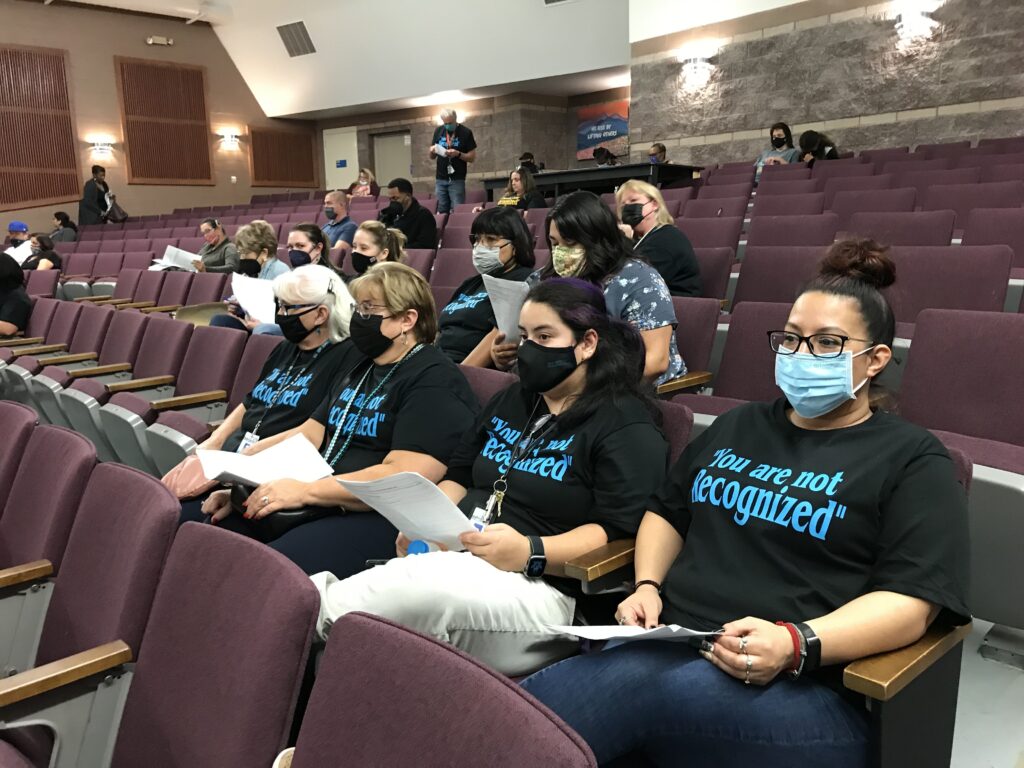
With the clock ticking, a battalion of upset Contra Costa County Fire District fire fighters remotely protested before the Contra Costa County Board of Supervisors that they refuse to obey a “draconian” August 13 Contra Costa Health Services order requiring county first responders to be fully vaccinated or face termination.

The county health order that goes into effect Friday, Sept. 17 was drafted by Contra Costa County Health Officer Dr. Chris Farnitano and adopted by the board of supervisors in a closed session because of its employment ramifications for many veteran fire fighters and sheriff deputies and other first responders who might refuse to take the vaccine for personal, political or religious reasons.

Dr. Farnitano claims the tough vaccine employment order for first responders arises at a time the number of COVID-19 patients in county hospitals is on the rise.

But a check with the Contra Costa Health Department’s COVID-19 website shows there are 154 COVID-19 patients in county hospitals. That is down 9.3 percent over the past two weeks, the CCCHD website showed.

In addition, the county health department reported 2,421 active COVID-19 cases. That is down 45.9 percent from two weeks ago.

Nearly 85 percent of Contra Costa residents are vaccinated, county health department data shows. The national vaccination rate is 73.9 percent.

The new vaccine employment edict applies to fire department and sheriff office personnel. There were no personnel from the sheriff’s office who protested against Dr. Farnitano’s vaccination/employment order.

Nearly 40 firefighters, many with more than 20 years in service, from all ranks including engineers, firefighters, and captains, protested against the county health officer’s order.

“This is an infringement of our freedom of choice,” said Collin Spencer, a fire fighter/paramedic.

Upon opposing the vaccine mandate, fire fighter Nick Sandburg, a father of two with a “pregnant wife” commented, “I don’t think the vaccine is effective. I oppose the vaccine mandate. Just give us universal testing.”

“None of us took this lightly,” said District 4 Supervisor Karen Mitchoff. “This is about protecting the public.”

District 2 Supervisor Candace Andersen was more direct commenting “I am really shocked about the misinformation that our fire fighters have about the COVID-19 vaccine. Somewhere there is a big disconnect.”

It’ll be interesting what the fire fighters will do when the Sept. 17 deadline arrives. The county could be in a major fire crisis if large numbers of well trained, experienced fire fighters are let go especially during the start of the county’s peak fire season.

In the past month, there were 206 vegetation fires that CCCFD responded to and in one day there were seven structure fires, reported Contra Costa County Fire Department Chief Louis Brousard III.

Board Supports LAFCO Consolidation of Fire Departments

Supervisors, serving as commissioners of the Contra Costa County Fire District, pushed along on a 5-0 vote to have the Contra Costa Local Agency Formation Committee (LAFCO) to act on consolidating the Contra Costa County Fire Protection District and financially struggling East Contra Costa Fire District.

ECCFD board member Joe Young told supervisors he will oppose the consolidation at the district’s board meeting on Sept. 16 because the consolidated district will continue to inadequately fund fire services in Oakley, Brentwood, and Discovery Bay. Young not elaborate at the supervisors’ meeting.

“There are a lot of details that have yet to be addressed on consolidation,” admitted CCCFPD Fire Chief Broussard. “We’ll bring leaders from both organizations to make this a successful annexation.”

While giving Board Chair Diane Burgis credit for being a key player in the merger of the two districts, District 1 Supervisor John Gioia said the newly enlarged fire district will draw fire protection upgrades especially with equipment and personnel once “millions of dollars of Proposition X sales tax funds” pour into the district. Gioia was a big backer for the Prop. X ballot measure to appear on last November’s election ballot.

A proposal to consolidate the Rodeo-Hercules Fire District into the enlarged CCCFPD was not considered by the supervisors. That proposal was dropped.


Man in stolen truck from Antioch leads CHP on wrong-way pursuit, arrested Tuesday

Thursday, September 16th, 2021

Stolen Antioch truck heads the wrong way on the eastbound Hillcrest Avenue offramp of Hwy 4 on Tuesday, Sept. 14, 2021. CHP video screenshot.

By CHP Golden Gate Division Air Operations

Stolen truck on railroad tracks in Pittsburg on Tuesday, Sept. 14, 2021. CHP video screenshot.

On the morning of September 14 2021, CHP airplane A-31 was returning to the Napa airport, when it’s onboard sensors detected a stolen vehicle in the Antioch area due to a LoJack stolen vehicle recovery system that utilizes GPS to locate users’ vehicles. A-31 began a search of the area, eventually locating the vehicle on city streets. (See video)

When ground units were requested to make an enforcement stop, the truck fled at a high rate of speed. The driver drove wrong way on surface streets and the freeway, entering Hwy 4 at the eastbound Hillcrest Avenue offramp. He exited the freeway on the eastbound onramp at Lone Tree Way, crossed under the overpass and re-entered westbound Hwy 4 in the correct direction. The driver then exited at Loveridge Road in Pittsburg. At one point, the truck became lodged on railroad tracks just north of the Antioch-Pittsburg Hwy aka W. 10th Street.

Driver and occupants flee stolen trucks on Tuesday, Sept. 14, 2021. CHP video screenshot.

Eventually the occupants fled from the vehicle in a residential neighborhood and A-31 was able to track the driver to a backyard where he was apprehended.

Allen Payton contributed to this report.


Allen Payton contributed to this report.


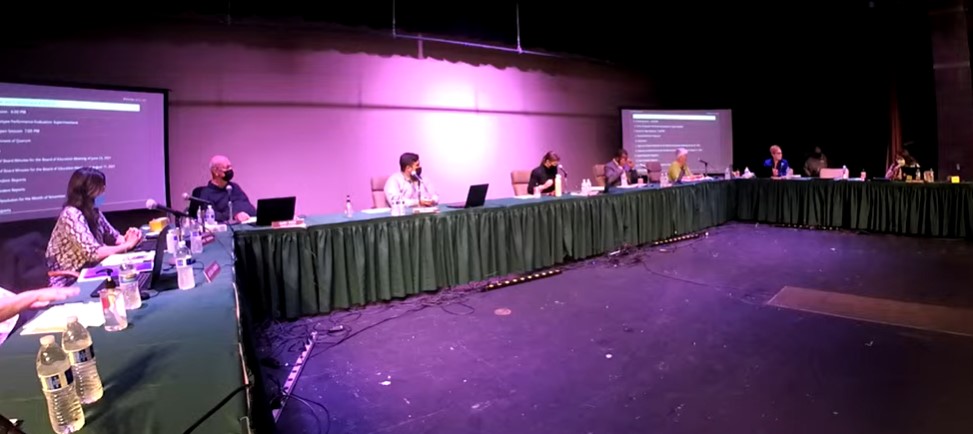
Contra Costa college board places chancellor on paid administrative leave on split vote

Wednesday, September 15th, 2021

After less than one year in the position; hired before new board members elected; passed on 3-0-1 vote with one trustee absent; no details provided; appoints Executive Vice Chancellor of Education and Technology as acting chancellor

Contra Costa Community College District Chancellor Dr. Bryan Reece. Source: 4CD

By Allen Payton

After less than a year in his new position, Contra Costa Community College District chancellor, Dr. Bryan Reece was placed on paid administrative leave effective immediately by a 3-0-1 vote of the governing board, during a special meeting Tuesday night. Ward 1 Trustee John Márquez voted to abstain, and Ward 5 Trustee Fernando Sandoval was absent, as he was out of town on vacation.

Reece started on Nov. 1, 2020 after he was chosen by the board in September, not long before two new trustees were elected, including Sandoval and Board Vice President and Ward 2 Trustee Dr. Judy Walters, the latter of whom voted for Tuesday’s board action. The board approved his contract last October, which includes a base annual salary of $315,000, with performance-based incentives. Later that month, three new trustees were elected to the board, two of whom voted for in support of the action. (See related articles here and here)

The decision was made in closed session under the subject “Public employee discipline / dismissal / release / complaint (Government Code Section 54957)” that began at 5:05 p.m. and lasted for four hours.

Mojdeh Mezhdizadeh. Photo: 4CD

According to the minutes of the meeting, “Mr. Li reconvened the public session at 9:05 p.m.  Mr. Li reported out on motion of Dr. Walters, seconded by himself, with one aye vote from Ms. Barrett, one abstention from Mr. Márquez, and Mr. Sandoval was absent for the vote, the GB (governing board) approved paid administrative leave for the Chancellor, effective immediately.  Mr. Li then adjourned the meeting at 9:06 p.m.  The next regular meeting of the GB will be held on Wednesday, October 13, 2021, at 6:00 p.m.”

However, when reached for comment, Board President and Ward 3 Trustee Andy Li said, “we didn’t say anything during open session because it was a personnel matter. I made the statement, reporting out of closed session, since I’m the board president, informing the public of the decision.”

“Then a letter was sent out to the district employees, this morning,” he added.

In that letter, Li announced the action against Reece and the appointment of Mojdeh Mehdizadeh, who currently serves as Executive Vice Chancellor of Education and Technology for the college district, as acting chancellor. (See related article)

Li’s Letter to District Staff

The following letter from Li was to district staff via email:

“This message is being forwarded on behalf of Governing Board President Andy Li

Begin forwarded message:

From: “Li, Andy” <ali@4cd.edu>

Subject: Governing Board Decision

Date: September 15, 2021 at 8:14:15 AM PDT

To: “Li, Andy” <ali@4cd.edu>

Dear 4CD Community,

At our special meeting last night, the Governing Board placed Chancellor Bryan Reece on administrative leave with pay due to personnel matters. The Governing Board has appointed Mojdeh Mehdizadeh to serve as Acting Chancellor until further notice.

We ask for your support of Mojdeh during this time.

Thank you.

Andy Li

ALi@4cd.edu
(860) 263-9540

President, Contra Costa Community College District Governing Board”

————–

Please check back later for any updates to this report.

Contra Costa DA’s Office appoints Arnold Threets as Chief of Inspectors

Wednesday, September 15th, 2021

Arnold Threets is given his oath of office as the new Chief of Inspectors by Contra Costa District Attorney Diane Becton on Tuesday, Sept. 14, 2021. Source: CCDA

By Bobbi Mauler, Executive Assistant to the Contra Costa County District Attorney

New CCDA Chief of Inspectors Arnold Threets. Source: CCDA

District Attorney Diana Becton announced Tuesday, that the Contra Costa County District Attorney’s Office appointed Arnold Threets as the new Chief of Inspectors. He initially joined our Office in 2019 as the Assistant Chief of Inspectors and was sworn in today as our new Chief.  Please welcome him as the new Chief of Inspectors and below is his impressive bio:

Arnold is an experienced executive leader with almost 30 years of law enforcement experience. Prior to coming to the District Attorney’s Office, he spent the preceding 25 years with the Richmond Police Department where he served, managed, and lead various patrol, investigative, tactical, and administrative units. Arnold served with distinction, retiring from the Richmond Police Department as a Police Captain in November 2018.

Arnold has a strong operational background in field and investigative operations. This led to his selection as the founding Commander of RPD’s Special Investigative concept where he led the effort to reduce violent gang crime, by working closely with the City of Richmond’s Office of Neighborhood Safety on a community driven, police-involved, focused deterrence model of preventing violent gun crime. This approach has become a national model for reducing violent gun crime, albeit without alienating the community we’re sworn to protect.

“I have known Chief Threets since I was a judge in Richmond and he was a young detective. I was always impressed with his demeanor, candor, and commitment to justice,” Becton shared. “I have watched his career as he rose all the way through the ranks of the Richmond Police Department, retiring as a Captain. Arnold continues to help our Office modernize and embrace new technologies and strengthen our protocol investigations.”

While at RPD, he developed an appreciation for the role technology could play in keeping our communities safe. He led RPD’s transition to a new computer aided dispatch (CAD)/Records Management System (RMS), as well as their adoption of Axon body worn cameras. This interest and experience with technology made him a natural fit to lead the Office’s expansion of the use of Evidence.com with our law enforcement partners throughout the County.

He joined the District Attorney’s Office in June of 2019 as the Assistant Chief of Inspectors. Since coming to the Office, he’s played a key role in the development, training and implementation of DA Becton’s new internal Protocol investigative process. At the request of the Contra Costa County Chiefs of Police Association, he partnered with former Chief Assistant Venus Johnson to train County law enforcement personnel on the changes to the law regarding the use of deadly force, as well as the updates to our internal investigative process.

Threets considers himself to be the ultimate ‘late bloomer’ in that he didn’t finish his formal education until he was in his 40’s. He has a Bachelor’s Degree in Criminal Justice Management from The Union Institute and University in Ohio and a Master’s Degree in Criminology, Law and Society from UC Irvine. He graduated from CA POST Command College Class 56 and the Senior Management Institute for Policing (SMIP) Class 66.

“This is a position with significant responsibilities and I’m thankful to DA Becton for the confidence and trust she has placed in me,” Threets said. “I’ve been working in this community for over 27 years and it’s an honor to continue serving the citizens of Contra Costa County.”

He is a proud veteran of the United States Marine Corps and he and his wife, Tessa, have three adult children.