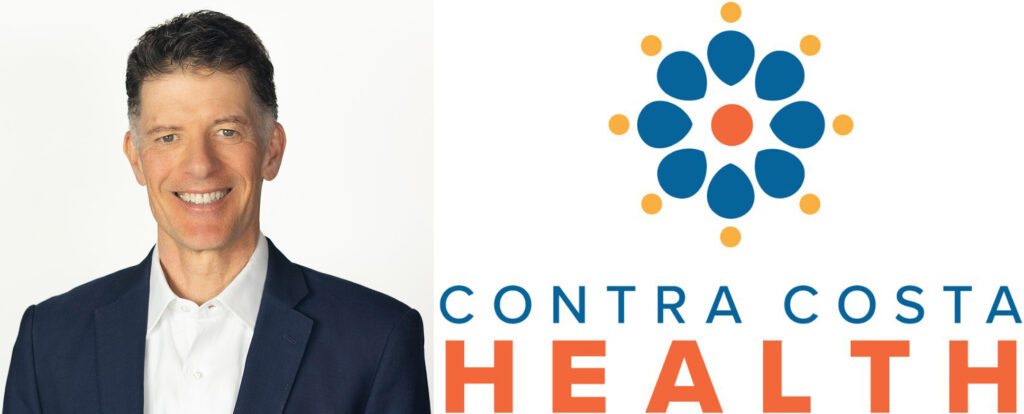








Dr. Colfax brings decades of experience in health leadership and a deep commitment to health equity, innovation, and community-centered care. He most recently served as the Director of Health for the City and County of San Francisco, where he guided one of the nation’s most robust local responses to the COVID-19 pandemic. He previously served as Director of the White House Office of National AIDS Policy during the Obama administration and as Director of HIV Prevention and Research at the San Francisco Department of Public Health.
While in San Francisco, Dr. Colfax led a 9,000-person health department with a $3.2 billion budget, overseeing an acute care hospital and Level 1 trauma center, behavioral health, primary care, detention health, and population health.
He holds a Bachelor of Science in Biology from Harvard College and a Doctor of Medicine from Harvard Medical School.
“We are thrilled to welcome Dr. Colfax to Contra Costa County,” said Board Chair Candace Andersen, District 2 Supervisor. “His visionary leadership and deep understanding of public health systems will be invaluable as we work to expand access to care, address longstanding health disparities, and support the overall well-being of our communities.”
Dr. Colfax replaces Dr. Ori Tzvieli, who served as interim director during the executive search and will remain Contra Costa County’s Health Officer.
“We thank Dr. Tzvieli for his steadfast leadership during this time of transition, and I want to express my gratitude that he will continue as the County’s Health Officer,” Supervisor Andersen added.
Dr. Colfax will oversee a comprehensive integrated health system that includes a nationally recognized public hospital, regional health centers, behavioral health services, emergency medical services, environmental health, and public health operations serving over 1.2 million county residents.
“I am honored to join Contra Costa Health and to serve a community that values collaboration, compassion, and equity,” said Dr. Colfax. “I look forward to working with the incredible staff and partners across the County to improve outcomes and ensure that every resident—regardless of background or circumstance—has access to quality, dignified care.”
The cost to fund the Director of Health Services for the remainder of the fiscal year is about $619,000. Annual ongoing costs are estimated at about $708,000. These expenses are budgeted for the 2025–26 fiscal year.
Asked about those figures Contra Costa County PIO Jourdan responded, “That $708,000 figure includes salary plus benefits. The $619,000 is what’s available given the time left in the fiscal year.”
About Contra Costa Health
Contra Costa Health (CCH) is a comprehensive county health system committed to providing high-quality services with a focus on equity and access. From its nationally ranked Contra Costa Regional Medical Center and Health Centers to its innovative Behavioral Health, Public Health, and Emergency Medical Services divisions, CCH serves as a cornerstone of wellness for more than a million residents across the county.
Every trip matters! No matter if you’re driving to work, catching BART, biking to school, or strolling your neighborhood, we have a plan to make traveling around our county easier, safer, and smarter.
The Contra Costa Transportation Authority (CCTA) is updating your Countywide Transportation Plan (CTP), and we’re asking residents to weigh in on the next 25 years of investments that will keep our communities moving smoothly and sustainably.
What’s on the Table?
In 2024, CCTA surveyed residents to find out what transportation solutions were most needed in their Contra Costa community — and thousands of you responded! Public engagement in early 2025 identified strategies for improving transportation
Based on your feedback, CCTA has created a series of Transformative Visions — bold project and program ideas that are visionary and will bring safer streets, more reliable transit, cleaner air, and more access to good transportation options for every corner of Contra Costa County. Your feedback will help us refine these ideas and decide which deserve top priority.
These visions are:
Create People-First Transportation Spaces: Redesign streets to put people first, making everyday travel safer, easier, and more comfortable.
Provide a Complete, Reliable Transit Network: Expand fast and reliable bus, shuttle, rail, and ferry services that come more often and connect you to key places.
Provide Reliable Freeway Travel: Keep freeways moving smoothly by reducing backups from crashes, better using existing travel lanes, and fixing bottlenecks.
Build Vibrant Communities: Revitalize and create places where people can live, gather, and connect to natural and community destinations.
Learn more about these Transformative Visions. Complete this brief survey to tell us which best fits YOUR vision for Contra Costa County. Your feedback will help us refine and update these Transformative Visions to show what the Plan’s focus should be for transportation investments in the next 25 years.
Why Take the Survey?
Influence real projects. Your answers guide where billions in transportation funds are spent.
It’s quick. The survey is mobile-friendly and takes just a few minutes.
Perks! Complete it and you can enter a drawing to win one of five $100 virtual Visa gift cards—the sooner you participate, the more chances you’ll have to win.
Survey window. The questionnaire is open through September 30, so don’t wait.
We greatly appreciate your feedback. Individuals who complete this survey may enter a drawing to win one of five $100 virtual VISA gift cards. Winners’ names will be drawn throughout the survey period, so the earlier you take the survey, the more chances you will have to win! The survey is open through September 30.
David Milburn was arrested by the CHP for two shootings. He tossed his gun during the pursuit which was later recovered by officers. Photos: CHP
33-year-old David Milburn held on $1 million bail; one victim in hospital
By CHP – Contra Costa
VALLEJO, Calif. – California Highway Patrol (CHP) officers arrested a 33-year-old Antioch man early Wednesday, July 23, 2025, after two freeway shootings spanning Contra Costa, Alameda, and Solano counties.
Officers took David Milburn (born 1/25/92) into custody around 1:35 AM. after spotting his white Chrysler Crossfire on eastbound Interstate 80 near Midway Road between Vacaville and Dixon. Milburn refused to stop, leading officers on a short pursuit before being arrested without incident. During the chase, officers saw him throw a firearm and two high-capacity magazines from the vehicle.
The arrest came after two other shootings just hours earlier. Around 8:07 P.M. Tuesday, a man was admitted to John Muir Hospital in Walnut Creek with a gunshot wound, stating he was shot while driving westbound on Highway 4 near Willow Pass Road. About five hours later, at 12:52 A.M. Wednesday, another driver reported his vehicle had been hit by gunfire on eastbound Highway 24 near Highway 13.
Detectives from CHP’s Golden Gate Division Special Investigations Unit linked all three incidents to Milburn with help from the Traffic Management Center, Communications Center, and Flock Safety data.
Milburn was booked into the Martinez Detention Facility on charges including attempted murder, assault with a deadly weapon, shooting at a vehicle, and multiple counts of being a felon in possession of a firearm and ammunition.
“Swift work by CHP personnel across the Bay Area directly led to the apprehension of another dangerous criminal who chose to endanger the general public with his reckless and careless behavior,” said CHP Golden Gate Division Chief Don Goodbrand. “From officers in the field to detectives and dispatchers, incredible teamwork is the key to successful outcomes in these investigations, and I applaud all of them for their hard work.”
This investigation is ongoing, and anyone with information or who may have been involved in incidents with a white Chrysler Crossfire is asked to call the CHP investigative tip line at (707) 917-4491.
The mission of the CHP is to provide the highest level of Safety, Service, and Security.
According to the Contra Costa Sheriff’s Department, the five-feet, eight-inch tall, 180-pound Milburn is listed as Non-Hispanic but also as Black and is being held on $1 million bail.
In annual Assessment Roll; shows Antioch with $16.3 billion in property value
By Allen D. Payton
In a letter to the Contra Costa County Board of Supervisors, county Assessor Gus Kramer informed them of this fiscal year’s Assessment Roll for the purpose of collecting property taxes and the net value has increased by almost $12 billion over last year.
The report shows San Pablo and Danville had the greatest increase while Concord and Pittsburg had the least, as well as an increase of 1,342 parcels due new development in the county.
Source: Contra Costa County Assessor’s Office
Kramer’s letter reads:
“Dear Members of the Board of Supervisors,
I am pleased to report the completion and official delivery of the 2025–2026 Contra Costa County Assessment Roll to the County Auditor-Controller, as required by law.
This year’s assessment roll reflects a total net assessed value of $290.66 billion, an increase of $11.67 billion—or 4.18%—over the previous year. This represents the highest total assessed value in the County’s history. Cities with the highest percentage increases in assessed value include San Pablo with 5.81%, and Danville with 5.28%. Cities with the most modest growth include Concord at 3.10%, and Pittsburg at 2.96%.
The total number of assessed parcels now stands at 382,022, an increase of 1,341 parcels compared to the previous year. This growth reflects ongoing development and investment throughout Contra Costa County.
I would like to take this opportunity to express my sincere appreciation to the staff of the Assessor’s Office for their professionalism, dedication, and tireless efforts in preparing an accurate and timely assessment roll for the 2025–2026 fiscal year.
Invasive Aedes aegypti mosquitoes have been detected in our community—these pests can spread diseases like Zika, dengue, and yellow fever.
The Contra Costa Mosquito and Vector Control District invites Antioch residents to attend a community meeting at Harbour Park or Mountaire Park on Saturday, June 28th, from 10 a.m. until 2 p.m.
District staff will be available to answer residents’ questions about the latest detection of invasive Aedes aegypti mosquitoes, which are capable of transmitting the viruses that can cause Zika, dengue fever, yellow fever, and chikungunya.
We look forward to talking to residents about what the District is doing to control this dangerous mosquito and how residents can help our public health agency.
Ask questions.
Get informed.
Learn how to protect your family.
Together, we can stop the spread and keep Antioch safe.
Contra Costa D.A. Diana Becton (Herald file photo) and Recall organizers. Source: Recall of District Attorney Diana Becton
Says she “has taken bold actions to protect our communities” recall “misrepresents her record”
Recall supporters claim Becton “publicly opposed Proposition 36”; “failed to provide the justice” and for “disgraceful treatment of…families of…crime victims”
By Allen D. Payton
Although she had seven days to respond to being served with recall papers on St. Patrick’s Day, March 17, 2025, just four days later, on March 21, 2025, Contra Costa District Attorney Diana Becton provided her answer to the effort against her
She signed the letter written in third person which reads:
“The recall against DA Becton is an effort to undermine the will of the people of Contra Costa County. In 2018 and 2022, the voters decisively chose DA Becton because they agreed with and trust her steadfast dedication to public safety, fairness, and justice for all.
DA Becton has taken bold actions to protect our communities – aggressively prosecuting violent offenders, addressing organized retail theft, human trafficking, hate crimes, and eliminating backlogs of untested sexual assault kits. Becton expanded victim support services and pioneered proactive crime prevention programs, to reduce crime before it happens. This recall is not about safety – it’s a politically motivated attack that misrepresents her record and undermines the will of Contra Costa voters. DA Becton’s approach balances accountability with smart, evidence-based policies that reduce crime and keep our neighborhoods safe. DA Becton remains committed to justice, transparency, and creating communities where all residents can thrive. We urge you to reject the recall and stand with DA Becton in continuing to build a safer, more just Contra Costa County. NO on the recall. Let’s move forward together.
Diana Becton
—————-
Although not a required step in the process, in response to Becton’s answer, recall supporters sent the following letter to her, today, signed by Gwyn Gabe, the father of Alexis Gabe, the young Oakley woman who was murdered by her ex-boyfriend in 2022:
April 15, 2025
Dear District Attorney Diana Becton,
This letter serves as our response to your Answer to our Notice of Intent to Recall you from office.
Your claim that the Recall is a politically motivated attack against you is false. I am a democrat, just as you are, and I even voted for you when you ran for District Attorney in 2017. I believed that you would excel as the District Attorney of Contra Costa County, but you have proven that not to be true. The recall effort against you is not about your political affiliation; it is solely focused on your abysmal performance in office. Your failure to enforce our laws has increased crime and endangered our community.
You publicly opposed Proposition 36 which created felony accountability for drug and theft offenses, proving your troubling alignment with criminal interests. Proposition 36 was passed in Contra Costa County by an overwhelming majority of the voters. Clearly, your policies which encouraged crime are not in line with the will of the voters in Contra Costa County. Additionally, your lack of transparency concerning crime rates in our county and your efforts to keep criminals out of jail to commit more crimes have left many residents disillusioned. We stand with crime victims who have been victimized during your administration, who are frustrated with the lack of accountability for criminals, and who are hopeless in their quest for justice. And we stand with the business owners who face rampant on-going thefts and burglaries from repeat offenders while you ignore the issue.
Your disgraceful treatment of my family, and the families of other crime victims, violated our constitutional Marsy’s Law Rights and failed to provide the justice we rightfully deserve. However, our decision to pursue this recall is not driven by a desire for revenge. Our only goal is to ensure that you are removed from office and prevented from continuing to deny justice to other families in the future. We deserve a District Attorney who shows compassion for victims while holding criminals accountable for their actions. We stand united to ensure that your time in office comes to an end.
Sincerely,
Gwyn Gabe
(Father of Alexis Gabe)
Organizer & Proponent for the Recall of District Attorney Diana Becton
Process
According to the California Secretary of State’s Procedures for Recalling State and Local Officials, the next step in the recall process for local officials requires the proponents to prepare the recall petition for circulation.
Recall organizers said, “we expect to learn this week whether our second submission of the Petition to Recall has been approved, allowing us to begin collecting signatures.”
Once the petition is approved, the organizers will then have 160 days to gather about 730,000 signatures of registered voters in the county. (See related article)
“…as a response to a lot of the breakdowns that were happening in the community as a response to the racist text message scandal.” – Dr. Kerby Lynch, Lead Project Manager.
County claims racism is cause for “disproportionate rates of preventable chronic illnesses such as heart disease, obesity, cancer as well as most recently, COVID-19” among African American residents.
Will seek other cities as partners in JPA
By Allen D. Payton
A new African American Holistic Wellness and Resource Hub has the unanimous support of the city council as of their meeting on Tuesday, April 8, 2025, and an Antioch location is being considered for its future home. The resolution supports the initiative “affirming Antioch’s willingness to explore opportunities for collaboration and reinforcing the City’s commitment to racial wellness equity.”
While there are no currently known costs to the City for the Hub, according to the staff report, “early-stage participation by the City of Antioch could include in-kind support such as:
• Temporary space-sharing during mobile service deployment
• Coordination with the Angelo Quinto Community Response Team (AQCRT)
• Youth internship placements via RISE and other City programs
• Cross-referrals with City-funded providers”
Source: Ceres Policy Research presentation to Antioch City Council on April 8, 2025.
Also, according to the staff report, “Contra Costa County, in partnership with Ceres Policy Research and the (County’s) Office of Racial Equity and Social Justice (ORESJ), has completed a feasibility study for the development f the African American Holistic Wellness and Resource Hub (AAHWRH). The Hub is a community-rooted initiative designed to address long-standing racial disparities in health, housing, reentry support, and economic opportunity for Black residents across the county. The study was informed by over 4,000 survey responses, 16 listening sessions, and district-based town halls, including input from Antioch residents.
“The AAHWRH will provide culturally responsive, trauma-informed, and wraparound services in a phased approach—beginning with mobile and satellite services and transitioning to a permanent site. The County has identified 1650 Cavallo Road in Antioch, a county-owned facility in District 1, as a leading candidate for the Hub’s future home. A final decision is expected by the Board of Supervisors on April 15, 2025.”
The County Board of Supervisors appointed a 13-member ad hoc Steering Committee in 2023 “to guide the Feasibility Study planning effort through a representative, inclusive, and extensive community engagement process” and provide “input and collaboration to County staff and the contracted Feasibility Study developer, ensuring the community voice is represented through the process and the outcomes.”
According to the County’s Request for Proposal seeking agencies or organizations to pursue and operate the Hub, “Currently, in Contra Costa County, African Americans represent approximately 8.7% of the population. Racism, inequity, injustice, and harm exist…in Contra Costa County, have created and maintained conditions for African Americans such that they continue to experience disproportionate rates of preventable chronic illnesses such as heart disease, obesity, cancer as well as most recently, COVID-19. Racial and ethnic disparities in health outcomes, the criminal justice system, educational achievement, and social service metrics in Contra Costa County have been well documented in reports issued by the Contra Costa Racial Justice Task Force/Oversight Body, First Five Contra Costa, Kaiser Permanente, Contra Costa Health Services, Contra Costa Continuum of Care, Contra Costa Employment and Human Services Department, and others.
According to the U.S. Census Bureau, Black residents make up an estimated 19.7% of Antioch’s population as of July 1, 2024.
“For the last several years, members of the community have been advocating and leading the effort in the County for the creation of an African American Holistic Wellness and Resource Hub and the urgent need for expanded support services that address the pain, trauma, and other related challenges that exist in under-resourced, under-served African American communities,” according to the County.
On December 12, 2023, the Board of Supervisors allocated $1 million in Measure X funds “to support and expand current programs and services as an immediate, intermediary step until the Hub is established, and is the source of funding.” Then “on April 23, 2024, the Board of Supervisors allocated an additional $7.5 million of Measure X funds towards the actual establishment and operation of” the “Hub and implementation of services and activities.”
Funds will be spent “for services/programming targeting African American communities of any region of Contra Costa County” and those “serving East County’s most vulnerable and impacted communities will be prioritized.”
“Priority service/program categories to be funded are: ▪ Behavioral health supports ▪ Food and/or housing insecurity services ▪ Maternal and infant health services ▪ Youth development support services ▪ Community healing supports, particularly from trauma due to police violence.”
Oakland-based Ceres Policy Research was selected by the Supervisors in July 2024 as the contractor to facilitate the establishment of the Hub. Dr. Kerby Lynch, its Director of Research and Facilitation and Lead Project Manager for the Hub initiative, provided the presentation to the City Council. According to the organization’s website, she “conducts social science research on community reinvestment, racial equity analysis, and reparations policy implementation.” She is described as “a critical Black studies scholar of human geography, political economy, and intellectual history. She holds a BA in African American Studies with a concentration in Gender and Sexuality and most recently completed her Ph.D. in Geography, both from the University of California at Berkeley.”
According to her LinkedIn profile, Dr. Lynch’s “Research Specialization” is in “African Diaspora studies, queer diasporas, Black queer studies, theatre/performance studies, ethnography, Black feminist thought, post-colonial studies, settler colonial studies, transnationalism, archival theory, psychoanalysis, urban issues, visual culture.”
Lead Project Manager Dr. Kerby Lynch of Ceres Policy Research provides information on the proposed Hub during the Antioch City Council meeting on April 8, 2025. Video screenshot
Presentation
In beginning her explanation about the hub, Dr. Lynch said, “Really the purpose of this presentation is to inform you about the process. It was a response to community demand for transparency and accountability, which was really started by a lot of the community, here in East County, particularly Antioch, as a response to a lot of the breakdowns that were happening in the community as a response to the racist text message scandal.”
“There’s a lot of great alignment in the county, right now for this type of project,” she continued.
Her presentation offered the results of the survey which showed Community Violence Impact in which 70% experience police/community violence and the Most affected: TAY (transitional age youth defined as 18-25), men, women of child-bearing age and unhoused. The Top Support Needs for Healing include community healing/restorative justice, mental health services, legal advocacy support, trauma-informed counseling and public safety discussion forums. The Top 3 Wellness Challenges include lack of accessibility to healthcare services, housing stability and lack of mental health resources. Finally, the Biggest Barriers to Services include time constraints, limited availability, high cost, lack of transportation and the need to travel long distances.
Thus, the Mission & Vision is to be “A holistic, community-led, culturally competent Hub addressing systemic disparities. Not duplicating services, but coordinating & expanding existing efforts (e.g., grassroots, local, state and federal). Key Service Areas will be, Health & Wellness, which will include preventive and primary healthcare, Black maternal health services (doulas, prenatal care, postnatal support) and culturally competent mental health services; Housing & Economic Stability including housing navigation services, eviction prevention, workforce development and a Black entrepreneurship incubator; Community & Cultural Healing Spaces, including intergenerational mentorship, arts and cultural programming, and legal advocacy and re-entry support for justice impacted individuals.
“It doesn’t mean we’re creating something new, here,” Lynch explained. “It’s about coordinating existing efforts across all levels of partners. How do we actually start to increase service utilization of our Black community and increase the satisfaction levels when they experience these services and really coordinate that across the county.”
Antioch resident Andrew Becker was the only member of the public to speak following the presentation and wasn’t happy with the proposed location. He said, “As the County explores these opportunities and invests in communities, I wonder, how do we get to the point where they propose this beautiful new building in Brentwood and this beautiful new youth center in Brentwood, ground-up construction, buy land that they didn’t even own. And then when we get to an incredible need like this, how can we use an older building that we have here and maybe share some space.”
He suggested instead locating the Hub near the Antioch BART station to be more centrally located in the city.
“…to make these services a little bit more trauma-informed and really rooted in transparency, accountability and even a call for abolition. Abolition, you know, people want to feel freedom, they want to feel liberated from just years and legacies of oppression. That’s what’s really important about this Hub…”
– Dr. Kerby Lynch
Q&A on Proposed Hub
Before discussing the Resolution of support under the agenda Item #10, City Manager Bessie Scott said she had sent Lynch “a list of questions” including, “who will receive the services, who are left out of the services, what does the human-centered, culturally responsive design look like and what is your framework?”
“I think the council will benefit from knowing,” she continued. “I know you met with Councilmember Torres-Walker and each one of the council members has asked separately about this information. I know Councilman Freitas asked for the feasibility study. It was a lot.”
Scott further asked Dr. Lynch, “what we’re on the hook for so the council can decide if they want to adopt a resolution supporting this effort.”
Then turning to the council she said, “I will tell you, operationally, we would need to figure out where this fits. A place for it would be under Public Safety Community Resources or in the city manager’s office, as well as all the operational scaling would have to be at the executive level.”
Lynch responded, “I’m just a consultant for the feasibility study. After the Board of Supervisors decide what they want to do. It will probably then be coordinated with the Office of Racial Equity and Social Justice and other departments and agencies at first, to figure out where they want to collaborate…to do the mobile deployment. Because all this is about urgent services to the community.”
“Our biggest recommendation was a JPA (joint powers authority) because of the scale,” she continued. “We know that Antioch, Richmond, Pittsburg, Brentwood, Oakley, San Pablo, El Cerrito. There’s so many different jurisdictions, Pinole, Hercules, have all been a part of this process and they all are working on various health equity efforts.”
“You’re designing with and not for residents. It really is a for us, by us model,” said Lynch. “We do believe in Black-led governance structures. What does it mean to have Black-led organizations or providers really giving their wisdom from the field?”
“In our report you will get some recommendations from frontline workers on how to make these services a little bit more trauma-informed and really rooted in transparency, accountability and even a call for abolition,” she stated. “Abolition, you know, people want to feel freedom, they want to feel liberated from just years and legacies of oppression. That’s what’s really important about this Hub, is that we’re trying to be really overt about the reason for the season and how we got here, which is because all of the community demand for addressing the trauma.”
“What do we need from the City of Antioch?” Lynch asked. “That’s a preliminary conversation. In the short term while we’re starting this up, it’s that in-kind contribution. Is it possible to use an existing City-building for initial operations? Can we maybe have our street team maybe have a few hours at a facility? We’re going to have these, potentially, vans. Staffing time. What staff can be dedicated to this initiative is going to be important.”
“Then, just overall, alignment with work that you all have going on,” she explained. “Things that everyone wants to contribute not duplicate or take away from you. It’s just increase your resources to serve more people.”
“In the long-term if the County feels that a JPA is the suitable structure…we wouldn’t want you to be the sole city to be a part of it,” Lynch stated. “Again, doing more county-wide initiatives for the Black community.”
Source: Ceres Policy Research presentation to Antioch City Council on April 8, 2025.
Public Comments on Resolution
During public comments about the Resolution, all eight speakers offered support for the Hub, including former Antioch City Manager Cornelius “Con” Johnson and Antioch School Board Trustees, Dr. Clyde Lewis and Deborah Vinson.
“I think, as a city, we need the opportunity to come together and have conversations where we can constructively resolve some of the long-standing issues that have been present,” Lewis stated. “I think this hub provides a space for us to do that in addition to…all those other services that have been mentioned.”
“…making sure that we are prioritizing residents, then the voices of people impacted by racism, white supremacy and state sanctioned violence. Because that is by which the context the advocacy started just behind the wellness hub.”
– Councilwoman Torres-Walker
Council Comments and Vote
Mayor Pro Tem and District 2 Councilman Louie Rocha was first to comment saying to Lynch, “I was really impressed with your presentation and the comments that were made following your presentation. I think about the community there’s been a lot of communication of how we can come together…to move forward. The research that you’ve done…is to be commended. So, thank you for what you’ve done to bring us to this point. I think it will benefit all. I think it’s really important we take care of everybody in our community.”
District 1 Councilwoman Tamisha Torres-Walker spoke next saying, “The reason why I continued to ask for a resolution to support this effort early on, as a city, is because…we have many residents who’ve come here all the time and said, we’re property owners, we’re taxpayers, like these are our tax dollars…we have a right to this. Well, Measure X dollars is absolutely our tax dollars. But with 90% of our tax dollars going to the County and only 10% retained here, in the city, we were still passed up for a youth center that residents also advocated for to be built, here…and it still ended up one in Brentwood and one in Bay Point.”
She then spoke about the need for resources for those returning from prison saying, “I think we have one re-entry service provider in the city.”
“I think the biggest disadvantage is around the issue of economic development and finding those opportunities for re-enfranchisement,” the councilwoman continued. “Because when people can’t access resources, how do we make them, how can they become productive members of society?”
“How is the hub going to fill in the gaps for individuals in East County or West County, whether Black, brown or indifferent around economic stability and growth?” Torres-Walker asked.
She then thanked the organizations and Antioch residents who have provided input and support for the establishment of the hub saying, “Everybody who came together to really drive home this conversation around African American wellness in the county. But making sure that we are prioritizing residents, then the voices of people impacted by racism, white supremacy and state sanctioned violence. Because that is by which the context the advocacy started just behind the wellness hub.”
Torres-Walker then spoke of reports released by the County showing “great racial disparity in this county” and one in which “the County of Contra Costa declared racism a public health issue in our county.”
“So, you can’t declare a public health issue but then not provide the dollars behind it to address the public health issue that you just declared,” she stated. “We have a significant opportunity, here. How do we hold the County accountable to our 90%?”
About Measure X Torres-Walker said, “This has been a six-year process. We get to be here, again as Antioch and say, we will not be looked over again.”
“When you serve your most vulnerable folks, you serve everybody,” she continued. “Particularly, when you serve Black people, you serve everybody. It makes people feel uncomfortable when you say that you only want to serve Black people. So, you got to say it’s going to serve everybody. I think that’s always been the intent of Black people is that if we can get served then everybody can get served. But what has historically happened, even on the hills of fights for social justice and civil rights across this country, everything that Black people have fought for to access, we have yet to access it and that includes the American dream.”
“I hope we can support, at the least with a resolution, right now, to show the County that…we support it,” Torres-Walker concluded. “As far as resources and accesses and space…I think that’s a further down the road conversation.”
District 4 Councilwoman Monica Wilson then said, “I’m going to keep it short because Councilwoman Torres-Walker was saying everything that I was thinking. I definitely support this. I heard about this wellness center probably sometime last year. I thought it was an excellent idea. Because I do believe if you help your most vulnerable then your whole community is strong.”
“One area I hope you guys will address, the amount of human trafficking that goes on throughout Contra Costa County and especially in East Contra Costa County,” she continued. “Hopefully, that can also be addressed. Because…nine times out of 10 we meet somebody on the street…and we can’t get them someplace because there’s no place for them to go in the County because we have no housing. Because we have no housing for survivors of human trafficking…for our unhoused…for somebody who is going through a crisis…or a shelter for them to go to. So, if we can also address that issue, as well, I think it would be very important.”
“But I definitely, wholeheartedly support this. I wish this had more teeth and we can do more here,” Wilson concluded.
However, there is a location in East County that provides shelter for women and children who are victims of abuse, as well as experiencing homelessness and addiction.
District 3 Councilman Don Freitas speaking to Lynch, said, “As someone who read the entire 126 pages…it’s clear it’s needed. Eastern Contra Costa County has been the stepchild of Contra Costa County government. Historically, the County advocates JPA’s and cities resist and the marriage between the two are very, very difficult to overcome. I absolutely agree with you it cannot be a JPA with just the County and Antioch.”
“My advice is, OK, fight for the JPA but don’t let it deter you,” he continued. “But have plan B in the back pocket. So, good luck. Because the dynamics of the politics, it’s unfortunate that they’re there. Hopefully, our two county supervisors who represent our community will focus not only on this but other issues bringing County services to us, locally. It is long, long overdue.”
Mayor Ron Bernal spoke last saying, “I really appreciate your grasp and understanding to communicate the need here. I just want to make sure we’re continuing our relationship with the County. It’s struggled in the past. I see this as another place we can work with the County hopefully.”
“I guess the one thing that I’m most hopeful of is that this is a unique model,” he continued. “Building a model that is something that’s special and unique and can be a model for other places. So, I’m supportive of the resolution.”
Torres-Walker offered the last word on the matter saying, “Thank you, again for identifying Cavallo. People said, like, ‘you know it’s dangerous’ in the community. If you keep saying a community isn’t safe but we do nothing to make it safe we’re just spinning our wheels.”
The council members then voted 5-0 to adopt the resolution which included the following three clauses:
NOW, THEREFORE, BE IT RESOLVED, by the City Council of the City of Antioch that the City hereby expresses its formal support for the concept and continued development of the African American Holistic Wellness and Resource Hub as an equity centered and community-rooted initiative led by Contra Costa County;
BE IT FURTHER RESOLVED that the City of Antioch recognizes the County’s dedication to addressing long-standing racial disparities in health, wellness, and access to culturally responsive services through this initiative; and
BE IT FURTHER RESOLVED that the City of Antioch affirms its willingness to explore potential opportunities for collaboration and coordination—including non-binding agreements, in-kind support, and service alignment—to advance healing-based resources for communities impacted by trauma.