







Author Archive

California is not East Berlin. A wealth tax in the Golden State would expedite the exodus

Wednesday, January 24th, 2024

By Jon Coupal

Note: This column first appeared in The Press-Enterprise. Republished with permission.

Daily news reports on the great “California Exodus” are not just from conservative outlets. Left-leaning publications such as the Los Angeles Times and San Francisco Chronicle have recently reported on the outmigration of upper-income citizens who, even if not billionaires, still generate a lot of income tax revenue.

Earlier this month the California Legislature held a hearing on Assembly Bill 259 which would lay the foundation for the imposition of a wealth tax. The companion legislation to AB 259 is a proposed constitutional amendment that would, among other things, effectively sweep away Proposition 13’s limits on taxing property.

Fortunately, the idea that California would be the first in the nation to impose a highly unpopular wealth tax is so radical that the proposal was rejected by Democrats as well as Republicans on the Assembly Revenue and Taxation Committee. It didn’t take long for the Democrat chair of the committee to shuffle the bill to the “suspense” file where bad legislation goes to die.

Coincidentally, the wealth tax hearing occurred on the same day that Gov. Newsom released his proposed budget. Things got a little sparky during the presentation with Newsom pushing hard against the Legislative Analyst’s figure of a $68 billion deficit. Newsom contends that the deficit is “only” $38 billion. (But hey, what’s a $30 billion difference between friends).

Newsom saved his most animated criticism for those who highlight the state’s shortcomings, including the significant outmigration of California’s most productive citizens. He especially targeted the editorial page of the Wall Street Journal, which has never been reticent about commenting on the state’s well-deserved reputation for anti-business bias.

But to his credit, Newsom rejected the notion of a wealth tax – at least for now. For taxpayers, it matters little whether the governor’s stance is motivated by politics or a sincere policy position. Either way, we’ll take it.

The problems with the wealth tax proposal – even as half-baked as it is – are legion. But one issue should be especially troubling to anyone who believes both in fiscal restraint and basic constitutional freedoms. That is, could a wealth tax be applied to people who voluntarily leave the state for the specific purpose of avoiding California’s highest-in-the-nation income taxes? AB 259 contains a provision that applies the wealth tax to every “wealth-tax resident,” defined as someone who “is no longer a resident, and does not have the reasonable expectation to return to the state.”

The question here is not whether a resident of another state can be taxed when they have a “nexus” to California, for example income earned in California or owning property in the state. Rather, what about someone who no longer has any connection to California? The proposal to tax wealth on such people would likely be deemed to violate the U.S. Constitution’s Commerce Clause.

More fundamentally, an “exit tax” could be construed as an impairment to the right to travel. The U.S. Supreme Court affirmed in 1958 in Kent v. Dulles that citizens have a liberty interest in the right to travel: “[t]he right to travel is a part of the ‘liberty’ of which the citizen cannot be deprived without due process of law under the Fifth Amendment …”

Setting aside the practical and legal problems with this or any wealth tax proposal, a fundamental problem is the signal it sends to all productive California taxpayers as well as those in other states who might consider moving here.  California already has a horrible reputation for its treatment of taxpayers and businesses, why would we even consider another punishing tax?

The proponents of the wealth tax need to be reminded that, as much as they might want to prevent citizens from leaving, California is not East Berlin. The U.S. Constitution will not allow the state government to build a wall to keep citizens in, and then shoot tax bills at them when they try to escape.

Jon Coupal is president of the Howard Jarvis Taxpayers Association.

Want to serve on the Contra Costa Measure X sales tax Community Advisory Board?

Wednesday, January 24th, 2024

February 23 deadline to submit application

The Contra Costa County Board of Supervisors is seeking applicants for appointment to the Measure X sales tax Community Advisory Board. The Measure X Community Advisory Board (MXCAB) was established on February 2, 2021, following passage of the countywide sales tax measure providing general purpose revenue for County programs.

The Supervisors are seeking diverse representation from individuals with broad experience with programs that align with the Measure’s voter-approved purpose “to keep Contra Costa’s regional hospital open and staffed; fund community health centers, emergency response; support crucial safety-net services; invest in early childhood services; protect vulnerable populations; and for other essential county services.”

The main responsibilities of the Measure X Community Advisory Board are:

  • Providing input on the scope and methodology of the regular written assessment of community needs and priorities;
  • Using the assessment findings to develop general funding priorities to be recommended to the Board of Supervisors on Measure X net revenues available for allocation;
  • Receiving annual status reports on the implementation, milestones, impact, and outcomes of Measure X funded programs;

Appointments for seven (7) At-Large and five (5) At-Large Alternate seats will be considered at the Board of Supervisors Finance Committee, with public interviews scheduled March 4, 2024 at 9:30 a.m. To have your application considered at the March Finance Committee meeting, please submit an application online by February 23, 2024, at 5:00 p.m.

For further information, please call Emlyn Struthers, Deputy County Administrator, at (925) 655-2045 or Emlyn.Struthers@cao.cccounty.us.

Garamendi introduces bill to address California’s affordable housing crisis

Wednesday, January 24th, 2024

HOME Investment Partnerships Reauthorization and Improvement Act would fund new units throughout state

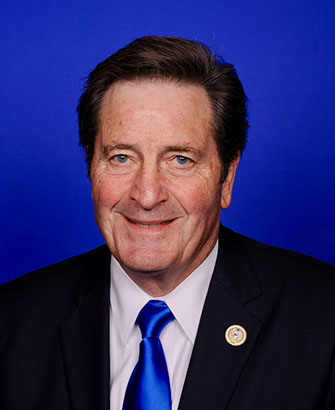
Rep. John Garamendi. Official photo.

WASHINGTON, DC – Today, Wednesday, Jan. 24, 2024, U.S. Representatives John Garamendi (D-CA08) and Joyce Beatty (D-OH03) reintroduced updated legislation to help address the affordable housing crisis. Their HOME Investment Partnerships Reauthorization and Improvement Act would significantly increase the amount of federal funds available for affordable housing across the country. Companion legislation is being introduced in the U.S. Senate by Senator Catherine Cortez Masto (D-NV).  

“Hardworking Californians face a drastic shortage of affordable housing options,” said Congressman Garamendi. “Minimum wage workers have to work an 88-hour week on average to afford a modest one-bedroom rental at a fair market rate. This legislation reauthorizes the HOME Investment Partnership Program for the first time since 1994 to bring this crucial program into the 21st century and provide states and local governments with the funding to construct and rehabilitate affordable rental housing as well as provide homeownership opportunities for working families. I’m thankful to Senator Cortez Masto for introducing the companion legislation in the Senate, and we will work tirelessly until this legislation becomes law.” 

“Families across Ohio and the United States are facing a daunting affordable housing crisis that demands creative, collaborative solutions,” said Rep. Beatty. “For more than three decades, the HOME program has provided essential gap funding for states and communities across the nation to address their most pressing housing challenges. I am proud to join Senator Cortez Masto and Congressman Garamendi in leading this legislation to authorize ample funding for HOME for the next five years and to make critical improvements to the program that will ensure more American families have access to safe, affordable housing.” 

“We have to do more to address our affordable housing crisis and increase the supply of affordable homes for Nevada families,” said Senator Masto. “The HOME program delivers critical funding to help communities build new housing units, support rental assistance, and support new homebuyers – but it needs to be updated to meet today’s needs. My legislation reauthorizing, improving and expanding this vital program will ensure more Nevadans have a quality, affordable place to call home.” 

The HOME Investment Partnerships Program (HOME) is the largest federal affordable housing block grant and is HUD’s flagship affordable housing production program. Since 1990, HOME has helped state and local housing agencies support a wide variety of housing needs, from financing new construction and home repairs to funding down payment and rental assistance. It also provides additional funding to housing developments financed by the Low-Income Housing Tax Credit, helping the program serve more extremely low-income people including seniors, veterans, those experiencing homelessness, and people with disabilities. Since 1992, the HOME program in California has: 

  • Invested $5.27 billion into housing across the state;
  • Built or preserved 121,727 homes;
  • Given rental assistance to 43,840 families;
  • Supported 277,318 jobs; and
  • Generated $19.2 billion in local income.

The program was last re-authorized in 1994 and needs critical updates to better address today’s housing crisis. Garamendi’s HOME Investment Partnerships Reauthorization and Improvement Act would reauthorize the HOME program and make several much-needed improvements. Specifically, it would: 

  • Authorize $5 billion in HOME funding for fiscal year 2024 and boost the funding for the program by five percent annually through 2028. Garamendi’s legislation would address chronic underfunding of the affordable housing investment program, which received only $1.5 billion in 2023;
  • Improve HOME’s ability to provide downpayment assistance to homebuyers and home repair assistance to homeowners; 
  • Enable HOME funds to support Community Land Trusts and other shared equity homeownership programs; and
  • Increase access to HOME funds for nonprofits and provide state and local governments loan guarantee options that would allow them to leverage their future HOME funds for investments today. 

The legislation is cosponsored by Representatives Suzanne Bonamici (D-OR), Shontel Brown (D-OH), André Carson (D-IN), Emanuel Cleaver (D-MO), Bonnie Watson Coleman (D-NJ), Dwight Evans (D-PA), Sylvia Garcia (D-TX), Glenn Ivey (D-MD), Dan Kildee (D-MI), Annie Kuster (D-NH), Barbara Lee (D-CA), Eleanor Holmes Norton (D-DC), Ilhan Omar (D-MN), Andrea Salinas (D-OR), Emilia Sykes (D-OH), Brad Sherman (D-CA), Dina Titus (D-NV), Rashida Tlaib (D-MI), Nikema Williams (D-GA), and Juan Vargas (D-CA) and Senators Tina Smith (D-MN), John Fetterman (D-PA), and Jacky Rosen (D-NV). It is also supported by the National Council of State Housing Agencies, Council of State Community Development Agencies, Enterprise Community Partners, Institute of Real Estate Management (IREM), Grounded Solutions Network, National Multifamily Housing Council, Local Initiatives Support Corporation, National Association of Local Housing Finance Agencies, National Community Development Association, National Association of Hispanic Real Estate Professionals (NAHREP), National Association of Realtors (NAR), National CAPACD, Habitat for Humanity, National Apartment Association and National Association for Community Economic Development Associations. 

Representative Garamendi has spent his entire career advocating for affordable housing, robust homeowner protections, and rental assistance programs. As California’s first-ever elected Insurance Commissioner, Garamendi successfully implemented Proposition 103, which reformed the homeowner insurance industry and lowered homeownership insurance rates. Last year, Garamendi and Rep. Zoe Lofgren (D-CA) led members of California’s congressional delegation in sending a letter to California Insurance Commissioner Ricardo Lara urging him to use his power under state law to protect homeowners in the face of an insurance crisis. During his congressional tenure, Garamendi worked with Habitat for Humanity to establish a financing mechanism that utilized existing funding to build new veteran housing units. Garamendi originally introduced the HOME Investment Partnership Reauthorization Act in 2020 and has continued to champion the legislation in Congress. He is also a cosponsor of the Affordable Housing Credit Improvement Act, which would support the financing of more affordable housing by expanding and strengthening the Low-Income Housing Tax Credit.  

Golden Hills Christian School to hold open house Jan. 29

Wednesday, January 24th, 2024

Golden Hills Christian School in Brentwood is a TK–8th Grade school, accredited through ACSI and WASC. We’re hosting our annual Open House on January 29, 2024 from 6:00 p.m. to 8:00 p.m. to welcome prospective families to check out the campus and meet the staff. Open enrollment will also begin that day.

This is a great opportunity to meet our teachers, look at the school curriculum, and learn more about the enrollment process. For more info about Golden Hills Christian School you can visit ghcs.org and RSVP below to let us know you’re coming!

The event will be held, and the school is located in the Golden Hills Education Building at 2401 Shady Willow Lane in Brentwood.

Two men shot, 41-year-old dies in Antioch Tuesday night

Wednesday, January 24th, 2024

City’s 2nd homicide this year

By Lt. Rick Martin, Antioch Police Investigations Bureau

On January 23, 2024, at approximately 10:53 pm the Antioch Police Dispatch center began receiving multiple calls of shots fired with a subject injured in the unit block of Bryan Avenue. Officers arrived and located two victims, a 41-year-old male and a 59-year-old male, both from Antioch each with multiple gunshot wounds. Officers rendered first aid to both victims. Contra Costa Fire Department and Paramedics arrived a short time later and transported both victims to local hospitals.

The 41-year-old male victim succumbed to his injuries at the hospital and was pronounced deceased. The second victim has life threatening injuries.

Antioch Police Detectives were notified and have taken over the investigation. We are withholding the names of the victims until proper family notifications have been made. No further information will be provided at this time.

It’s the city’s second homicide of the year. As previously reported, the first homicide occurred on Jan. 10th when a 43-year-old man was shot.

Anyone with information is asked to call Detective Gragg at (925) 779-6889 or the Antioch Police Department non-emergency line at (925) 778-2441.

Allen D. Payton contributed to this report.

Antioch Council to consider new type of residential development Tuesday night

Monday, January 22nd, 2024
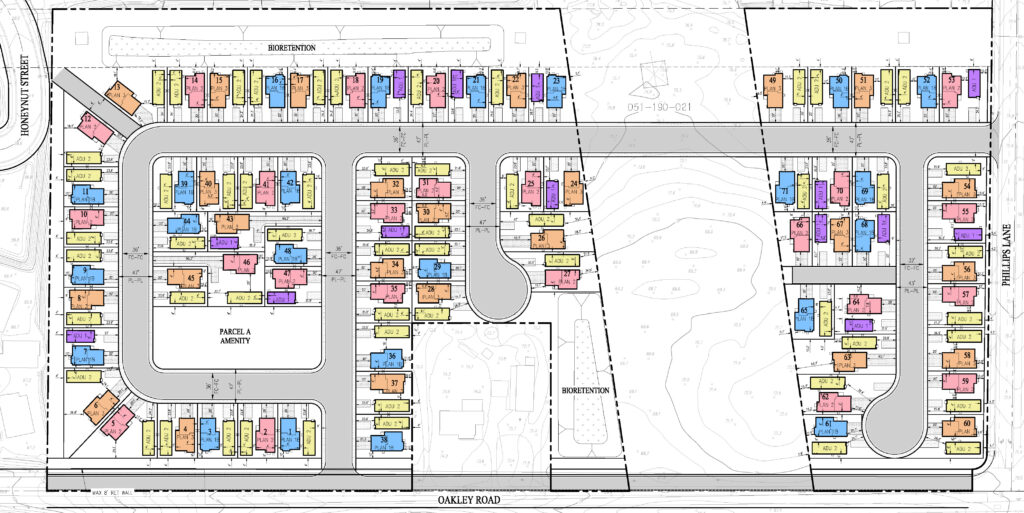
Proposed Vineyard Crossing Preliminary Development Plan. Source: City of Antioch

Vineyard Crossing Preliminary Development Plan includes 71 homes, 70 ADU’s

By Allen D. Payton

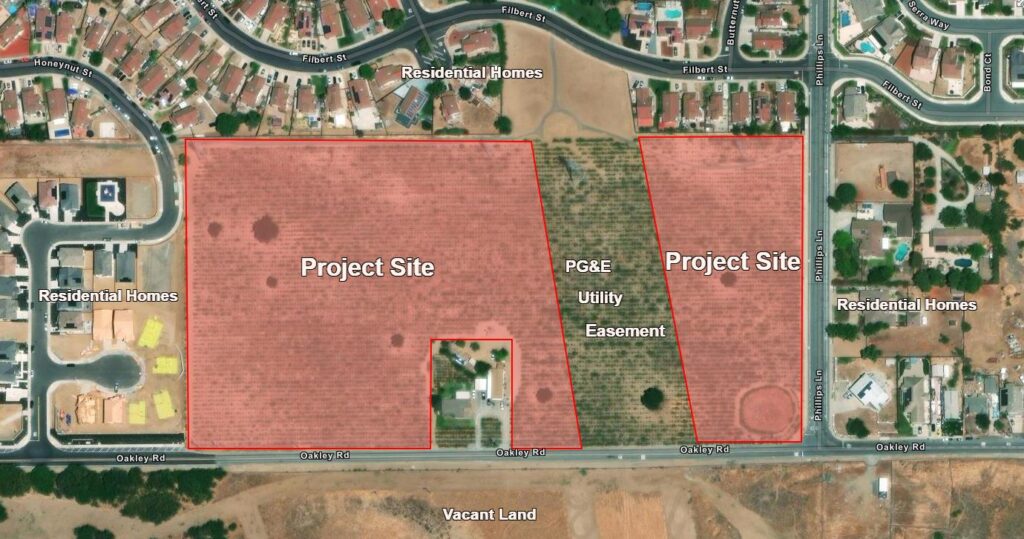
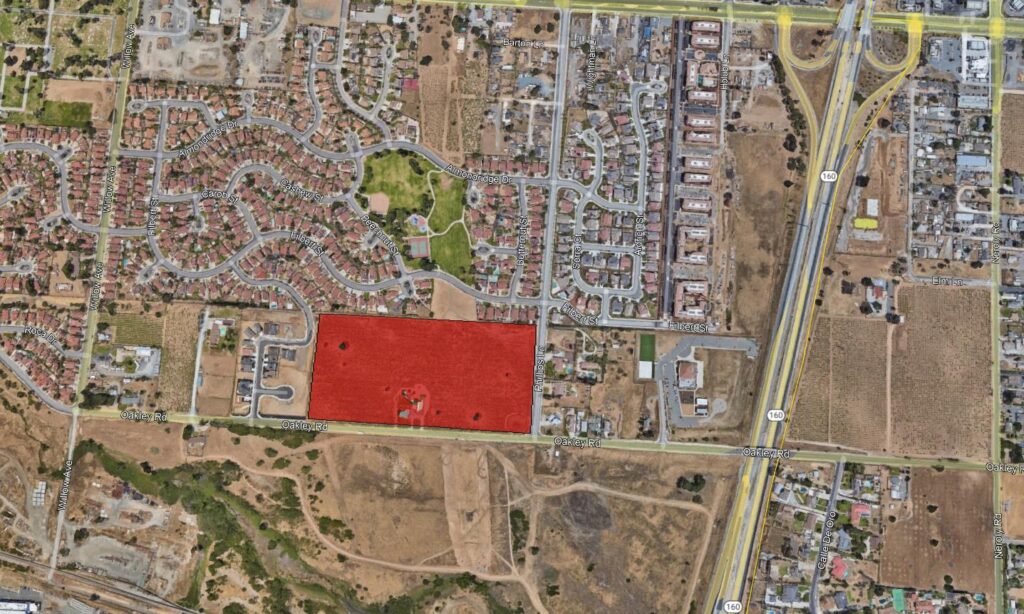
During their meeting on Tuesday, Jan. 23, 2024, the Antioch City Council will consider a new type of residential development consisting of 71 single-family residences (SFRs) and 70 accessory dwelling units (ADUs) on 71 residential lots. The 14.6-acre project site is located north of Oakley Road and west of Phillips Lane. ADU’s, formerly referred to as “in-law units” or “granny units” have become a significant form of in-fill development in the past two years following approval of new state legislation.

According to Selna Partners law firm, “In 1982, California allowed the construction of ADUs statewide, but gave local governments control over where to locate and how to regulate them. That changed in 2016 when the State Legislature approved bills requiring cities and counties to allow ADUs on most residential lots, preempting local zoning. More than 24,000 ADUs were permitted in 2022, up from 1,000 in 2016. State data indicates that currently 20% of the housing units built annually in California are ADUs, which is the equivalent of 20,000 new homes.”

Furthermore, “in 2022, the Legislature passed yet another round of bills to combat local resistance. The most impactful were those that enabled ‘mandatory’ ADUs: structures that met specific, basic criteria essentially could not be denied by a local government. 2022 bills, AB 2221 and SB 897 resulted in amendments to the California Government Code dictating that an ADU with the following characteristics, must be approved by the local planning and building department(s) with no discretion from a zoning board or planning commission:

  • A detached structure that does not exceed four-foot side and rear-yard setbacks for a lot with an existing or proposed single-family dwelling.
  •  800 square foot floor area limit.
  • 18-foot height limit, plus two feet for a single family residential zoned parcel to accommodate a roof pitch aligned with the pitch of the existing house.”
Vineyard Crossing home designs. Source: City of Antioch

According to the City staff report on the agenda item #, “The proposed unit mix includes three different SFR floor plans that range in size from 1,492 to 1,697 square feet (sf) and two different ADU floor plans that range in size from 603 to 750 sf. Each SFR included in the proposed project would have an attached two-car garage with a driveway and each ADU would include a driveway for one vehicle parking space.”

Vineyard Crossing site map. Source: City of Antioch

Also according to the City staff report, “The Preliminary Development Plan (PDP) the council will review is a non-entitlement action and does not require environmental review. The future project application review would require compliance with the California Environmental Quality Act (CEQA). The purpose of a PDP is to gather feedback from the Planning Commission and others in order for the applicant to become aware of concerns and/or issues prior to final development plan and tentative map submittal. As standard practice, preliminary plans are not conditioned; rather a list of needed items, information, and issues to be addressed is compiled for the applicant to address prior to submitting an entitlement application.”

Vineyard Crossing project area map. Source: City of Antioch

The meeting begins at 7:00 p.m. in the Council Chambers inside City Hall at 200 H Street following a 5:30 p.m. Closed Session on four legal matters. See the complete meeting agenda. The meeting can be viewed online via livestream on the City’s website or on Comcast local cable channel 24 or AT&T U-verse channel 99.

Tickets and sponsorships available for An Elderly Wish Foundation’s annual Heart to Heart Benefit

Monday, January 22nd, 2024

For more information visit www.elderlywish.org.

Contra Costa County Fair Queen Scholarship Pageant seeks participants

Monday, January 22nd, 2024

Information meeting Jan. 24; application deadline Feb. 2

Contra Costa County Fair Queen serves as a role model for young women in our community.

The pageant is seeking young women who are intelligent, articulate, charming, talented, sincere and healthy (in mind and body) with warm outgoing personalities.

The winner and her court will reign for one year.

Closing date for Application is Friday, February 2nd, 2024.

Contestants must be between the ages of 17 – 21 years old, on the day of the pageant (May 16th, 2024).
Contestant must be female, single, have never been married nor is planning to be married until after her reign, and have never given birth to a child.

Pageant Information Meeting:

Wednesday, January 24th at 6pm, to assist and answer any questions regarding the pageant,

completing the application form and the required activities.

Location: Fair Administration Office

1201 West 10th Street, Antioch

For more information contact Devon Baldocchi, Pageant Director at office@ccfair.org or (925) 783-2275.

2024 Fair Queen Application

Visit www.contracostafair.com for Contra Costa County Fair updates on shows, exhibits, entertainers, fair-time sponsors, fair maps, promotions, ticket sales and more!