








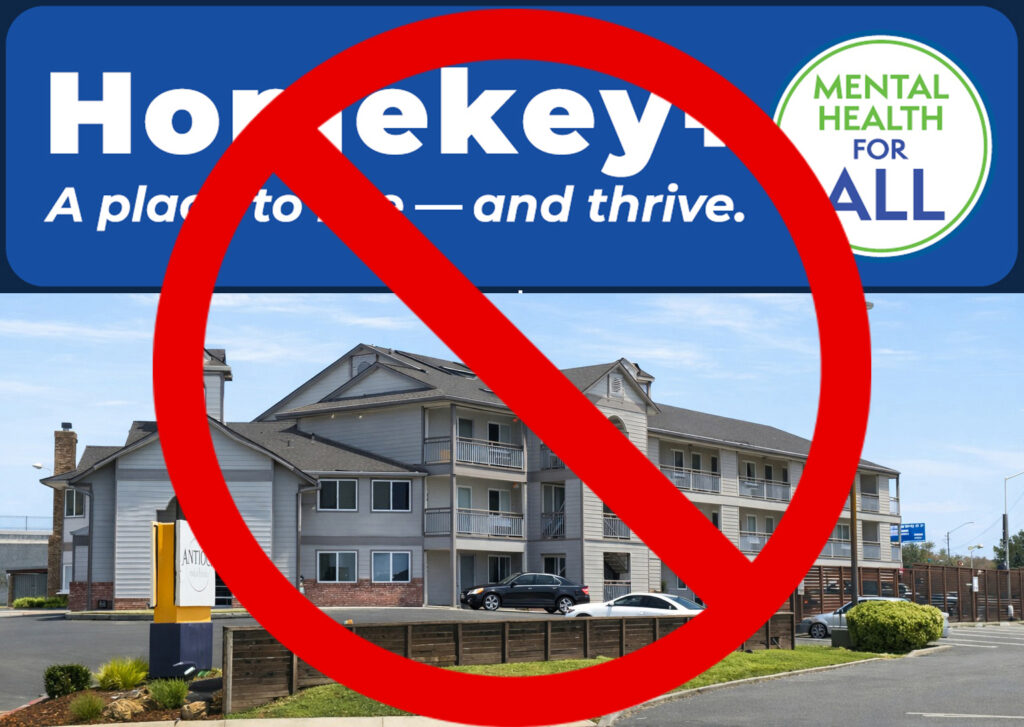
Antioch Council rejects state funding for permanent supportive housing project
Takes action with Torres-Walker absent who was not allowed to attend via Zoom due to apparent staff mistake
“To say there’s no plan is wrong. We are not doing nothing.” – Mayor Bernal
By Allen D. Payton
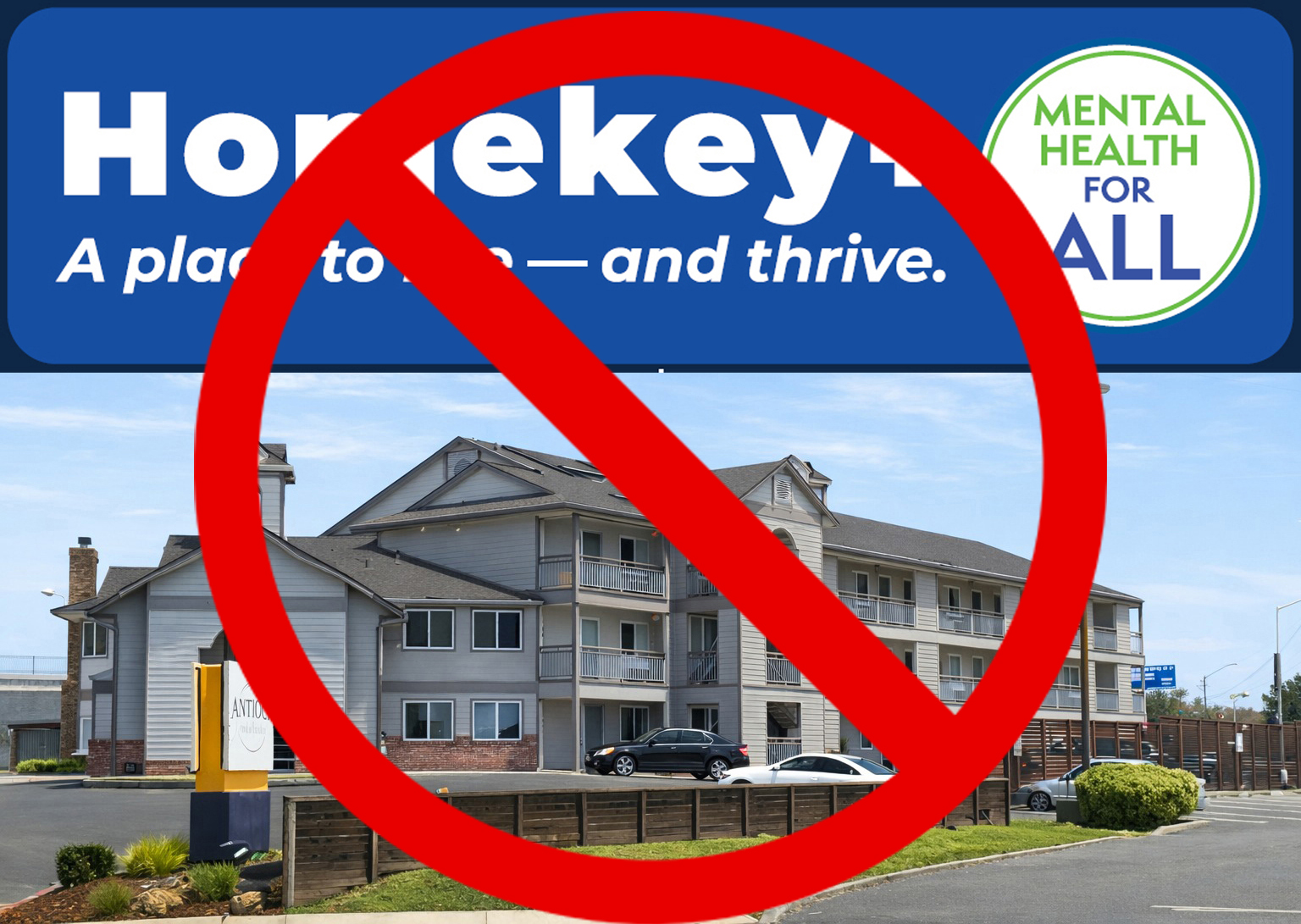
Following multiple meetings on the matter, the City being awarded nearly $35 million in state Homekey+ grant funds and voting to approve the purchase and conversion of the hotel for the program, during their meeting on Tuesday, July 28, 2026, the Antioch City Council voted 3-1, to reject the funding and withdraw from the project. The funds would have been used to convert the 123-room Antioch Inn & Suites to 84 units of permanent supportive housing for veterans and homeless residents from Antioch and throughout the county. But it would have required a significant financial commitment from the City for five to 15 years which the mayor and two councilmen said Antioch can’t afford following two years of budget cuts and future deficits looming on the horizon.
District 4 Councilwoman Monica Wilson was the lone vote against the motion and Councilwoman Tamisha Torres-Walker, in whose District 1 the project would have been located, was absent and unable to attend via Zoom due to an apparent staff mistake.
A new state law allows council member participation and public comments via Zoom which requires council members to submit information prior to the meeting. Earlier in Tuesday night’s meeting residents said Torres-Walker had informed her fellow councilmembers and Acting City Manager Ana Cortez she would miss the meeting and sent the necessary information to participate remotely. But something happened that prevented the councilwoman from participating in the meeting. Resident Leslie May called it, “sabotage” and as a result, she and local homeless advocate Nichole Gardner called for the agenda item to be postponed so Torres-Walker could be in attendance. But that didn’t happen and the councilwoman called in later during public comments on the matter to offer her thoughts in support of the project.
The Primary Issue: City Financial Commitment
While one of the issues was that all those housed on the property would not have been from Antioch, the primary issue for the three councilmen was the City’s financial commitment. To accept the state funding, it would have required ongoing operating assistance from the City averaging up to approximately $1.2 million annually during the initial five-year period, for a total of up to an additional $6 million. Over the full fifteen-year period, the total potential City contribution could have been approximately $18.75 million, primarily from the General Fund.
On average, the state and city funds combined would total $41.75 million or about $500,000 per unit over the first five years and approximately $54.4 million or $640,000 per unit over the full 15-year period.
Competing Views Offered During Public Comments
Following a brief staff presentation on the agenda item, #7, during public comments some residents spoke against while most spoke in favor of the project.
A woman asked, “Why Antioch? Antioch is the poster child for low-income housing. There is no guarantee it will house Antioch residents. It can go on for 55 years.”
Patrick Scott said he opposed the project, “primarily for economic reasons. This project will increase the deficits. We’ve already spent more than $25 million on homeless programs and services. In spite of these services, we still face homeless in front of our businesses, on our streets and shuttered businesses.”
He spoke of growing “encampments along the railroad tracks and in downtown.”
“Neither of our neighbors to the west or the east are experiencing the problems we have,” Scott stated.
He then spoke of the City’s projected budget deficits over the next few years and the $1.2 million annual cost for the project.
Resident Leslie May said, “The place is located in District 1. Most of the people who stand and speak against it don’t live in District 1. The railroad tracks are not the responsibility of the City of Antioch. Unless you live in District 1 and have to work with the people who are unhoused…you don’t understand what it is. It is humane to give these people a clean place.”
“Antioch residents will definitely have first choice,” she explained. “They reason they’re not in Pittsburg, Oakley and Brentwood is because they pushed them all here.”
“The City of Antioch is already spending $1.2 million a year to do these sweeps, so why not spend the money on this…up to $1.2 million,” she concluded.
“Why would the council even consider adopting the Homekey project in Antioch? It’s ludicrous,” said Evelyn Scott. “Especially with the current budget shortfalls.”
“Residents can come from anywhere in the county,” she continued. “You cannot continue to dip into reserves…especially when you’re taking prime properties.
Cielo Martinez spoke next saying, “I’m 29 years old. I’ve been homeless for almost seven years. I work myself. I don’t do drugs. I don’t do alcohol. I work every day. So does my husband. I can’t afford a home, right now. The rent out here is crazy.”
Rebecca B. said, while choking back tears, “I’ve been on the streets for 15 years. We need homes. A lot of us don’t want to be out here. This is not a choice. We’re not getting better. We’re getting bitter. A lot of us want to work but we can’t work. I’m diabetic. I don’t have teeth. I can’t get a job because you want to judge me by my teeth, by my face, by my dog. I want a home. How much more in life am I supposed to take? It’s not my duty, it’s not my job. It’s your job. Please, help us. We don’t want to be out there.”
Local real estate broker Mark Jordan spoke next saying, “This is an incredibly emotional discussion. However, the City of Antioch only has one option and that’s Option B. Because the contract price is not a realistic price…of $15.1 million.”
“This particular property has a 17% occupancy rate. This property uses revenue to determine value,” he explained.
“There’s no appraisal for this property to the public,” Jordan continued. He cited state government code that it requires one unless it’s a gift.
California Penal Code…section 424 makes it a felony if an elected official overpays for a property and commits waste. Protect yourself, protect the city. The property is in foreclosure. Buy it at the foreclosure price.”
A woman who referred to herself as a reverend said, “It’s not just a fiscal issue. Housing is the most essential thing you can spend your money on. I think you can find the money. There are grants you can apply for. The amount of money you are spending on homeless people already would be offset. We can’t tolerate what’s going on in the Bay Area anymore. Even wealthy, middle-class people are struggling to pay their rent. I pray you…make the right decision.”
Joey Flegel-Mishlove, Policy Manager for the Bay Area Housing Mission, said, “Starting from the human question of what it’s like to sleep in the cold, the heat or the rain. Homelessness…as elected officials it is the most important issue. It is a fiscally sound choice to enter into this contract.”
“How in a deficit can we turn down the largest grant the State of California has ever offered us?” he asked. “Partners have been offering to help us. I hope you can say, ‘we can get this done. We will get this done.”
Former Councilman Ralph Hernandez said, “The Homekey thing, I don’t think we can afford it. You’re taking…something that is income generating for the community. They pay tax monies to the city.”
“I’m not saying deny the money from the state. Is there another way that it can be used?” he asked.
“Financially, the City cannot afford it and the homeless need to understand that,” Hernandez concluded.
A woman named Pastor Phillips said, “I’m for the housing…for the people to get housed. I’m praying that God touch your heart. It’s necessary. Give them somewhere to live. All things are possible through Christ. Have a heart. Help these people then you can clean up the community.”
Resident Joe W. said, “It’s very cut and dry. If you have money coming in you can help the deficit. If you give people a place to stay you help the community. You ain’t got no worry to get a felony off this.”
As members in the audience wouldn’t quiet down at the direction of the mayor, the council took a five-minute recess. Following the break, the council then voted to extend the meeting until 11:30 p.m.
Joe W. continued his comments saying, “You literally have the money to invest in a program. It’s a fiduciary responsibility of the committee to make a sound decision. The community of District 1 is very supportive of this. The money is there. You also need to look inside yourself. The city council is supposed to solve problem. You have wasted $25 million trying to move it away. Basically, you have a decision to invest in your people.”
Another speaker was Ankit Panchal who formerly managed and works with the owners of the hotel said, “Let’s clarify some of the false narratives. There was an appraisal that was done by the City in 2025. Cost to build a room? $300,000 for a brand, new hotel room. So, this is a bargain. This project was conditionally approved and signed by the City. If the City pulls out, will it cost the city thousands or millions?”
“The City of Antioch has a golf course,” he stated offering a funding option. “40,000 rounds of golf times four is 160,000. I believe each golfer can afford $5 extra for around of golf. That’s $800,000 per year. There’s your funding, right there.”
Former Antioch School Board Trustee Diane Gibson-Gray who said, “You’re deficit spending. So, you’re living on savings. We’re going to be sued if there’s fights.”
“What happens if the operator goes out of business?” she asked. “If you want to spend $14,500 per unit, spend it here in Antioch. I’m sure there’s some good things you could do with that money. “
Torres-Walker spoke via Zoom as a resident saying, “Wow. Tonight, has been very interesting. We have a city that is divided on a moral issue. We have months if not years to address this issue. The city invested in Opportunity Village…in clearing encampments. You have a large moral dilemma.”
She spoke of the City not having a strategy for economic development or staffing.
“I don’t know what the solution is, tonight.” Torres-Walker continued. “If I was there tonight and had the opportunity to vote, I would vote to move forward.”
Opportunity should live here in Antioch for everybody,” she stated.
“Whatever decision you make tonight…think about me and my neighbors who have to live with them every day. Support Homekey,” she concluded.
The council again voted to extend the meeting, this time for another hour until 12:30 AM. It passed 4-0.
All other public comments were in favor of the project.
Council Questions, Discussion and Decision
District 2 Councilman Louie Rocha was first to speak saying, “When this process started, I supported this application….because of the significant dollars from the state coming to our city for permanent, supportive housing.”
He spoke of the federal Community Development Block Grant (CDBG) funds that help keep people in their homes.
“I thought the $34.9 million would come to the City to offset our costs. But in time I learned that would go to the property for rehabilitation,” he continued.
“There’s no disagreement to do what we can to help our neighbors, the unhoused community,” Rocha stated. “What I think about is being a steward of taxpayer dollars.”
“I was thinking 84 beds, that would be about a third of our homeless. But the…system has a wait list throughout the county. It’s a regional problem, not just here in Antioch,” he shared. “We’re not in a position to take on a long-term commitment of taxpayer dollars,”
“What I’ve heard is partnering with neighboring communities. But that hasn’t transpired.”
“What I’m hearing from residents in District 2 and beyond, is do something with funding…but when it comes down to taxpayer dollars, that’s the part I’m struggling with.
“I don’t see money coming in to offset the deficits next year and the years that follow,” he concluded.
District 3 Councilman Don Freitas spoke next saying, “There isn’t a simple solution to many of the problems and questions asked tonight. When the council did decide to go forward it was based on the information we had at that time. We thought the information was complete and comprehensive. I voted for it. Although, unfortunately, afterwards a lot of questions came up and more and more, without answers. Our regional partners have tried to respond and give us answers.”
“A lot of speakers say, ‘it’s $35 million. What’s you’re problem? Just accept it.’ Fiscal responsibility is not a negative thing. Bankruptcy is not a wonderful thing,” he continued. “We have to make decisions individually and collectively for the 120,000 people we represent.”
“Let’s spend millions of dollars on this project knowing it’s irresponsible, knowing some future city council will have to declare bankruptcy,” Freitas stated. “We took no pleasure in cutting…and using reserves, $5 million last year, $5 million this year…and with a $15 million deficit for the next fiscal year. That’s why we’re so concerned…in August, we will begin to focus on the budget so the City will not go into bankruptcy.”
“Having receivership is not something we would welcome in this community,” he continued.
“I would love to address the homelessness in the City of Antioch. This Homekey project doesn’t guarantee it,” Freitas stated. “We can go ahead and spend $19 million for the next 15 years and the impact that we will have to spend money to oversee how we’re spending money. I just can’t understand why there’s such a fight in this community and division, and frankly, a lot of hatred…coming to us, because we want fiscal responsibility.”
“I agree with what Nichole Gardner said. ‘If not this, what are we going to do to figure this out?’ For me, Homekey+ application is not it,” he stated.
“We’re going to spend $15 million to buy a property that’s in foreclosure. Really?” the councilman asked. “We could go through all of this and not one homeless Antioch person would be helped. Not one. That is not acceptable to me. This is not the right project at the right time with the consequences. So, I believe the prudent response is the second option.”
Some in the audience then erupted into chants of “Fight, fight, fight. Housing is a human right.”
“Not helpful,” Freitas responded.
“This report, if you read it in its entirety, you’ll see it’s not a good project,” he added.
District 4 Councilwoman Monica Wilson said, “I need to hear from staff, particularly the city manager, why Councilwoman Torres-Walker wasn’t in this meeting tonight. She’s been the number one advocate here and we did not hear her voice, tonight and I find it very disrespectful. She let staff know over a month ago.”
“If we don’t do this, what are we going to do?” she asked “What we’re currently doing is not working. It’s a crisis on the street. We need to figure something out because people email us every day. People call us every day. They’re concerned about homeless, because they don’t want to see it. We can’t turn our backs on this population…because other cities have pushed their problems. I refuse to be a problem pusher.”
“Somebody bought that hotel and fixed it up. But we didn’t help it. We didn’t utilize it,” Wilson continued and then mentioned it’s going to be fenced in and boarded up.
“I’m probably going to be the only one to still support Homekey,” she concluded.
Mayor Ron Bernal spoke next saying, “In 2021, the city council developed and adopted policies how we’re going to help homeless. Those still stand. In December 2023…it provided specific tactics and strategies how staff was going to help homeless in the City of Antioch. We spent $500,000 to develop those plans. To say there’s no plan is wrong. We are doing aspects of that plan, with ERF (state Encampment Resolution Funds) to help 30 or 40 homeless off the streets. We are not doing nothing.”
“Let me thank staff for doing that, because it wasn’t council,” Wilson interjected.
“Yes. It was staff,” Bernal responded.
“Other cities do not use their General Fund monies for these programs,” he continued. “When this program came forward it required General Fund monies which are very precious. We faced a $54 million budget…I didn’t think we could commit $1.2 million per year. At that time, I was the only ‘no’ vote. So, I’ve been the bad guy which is fine. Because I don’t think we can add…to our deficit. That’s with 15 vacancies…deferring all of our $4 million in roof project. We have a building across the street that’s going to cost…I don’t know why we have that.”
“We as a city do not have the resources at this time to make a long-term commitment…up to $18 million in the future,” Bernal stated.
“We have a permanent housing element that with discussion with regional opportunities…I’ve reached out to other cities and there is not an appetite…for people to commit money to what people often believe is Antioch’s problem,” he shared.
“This project is not going to solve homelessness in Antioch,” Bernal continued. “This is a very expensive proposition which is going to help people, but Antioch does not have the funds.”
“My position is to rescind the Homekey funding,” he concluded.
Bernal then made the motion to rescind the prior authorization and withdraw from the project. Rocha seconded the motion and it passed 3-1 with Wilson voting against and Torres-Walker absent.
(For more background on the project see related articles here, here, here and here).
Torres-Walker Speaks During Public Comments at End of Meeting
Torres-Walker then called in again during the Public Comments at the end of the meeting.
“In advance of the meeting, I submitted all the necessary documents to participate,” she said. “It speaks to the disfunction. This is in no way a sleight to Acting City Manager Cortez. So, I don’t blame Ms. Cortez for not posting my location within 72 hours before the meeting.”
“Ms. Scott is not coming back, and we are in desperate need of quality leadership,” the councilwoman added.
the attachments to this post:
No Homekey+ funding