



Archive for the ‘Transportation’ Category

State allocates $10.2 million for Contra Costa transportation improvements

Monday, May 27th, 2024

Nearly $2 billion in statewide investments to improve, protect state’s infrastructure

By Edward Barrera, Division Chief of Public Affairs, California Department of Transportation 

SACRAMENTO — Earlier this month, the California Transportation Commission (CTC) allocated $1.9 billion to support transportation infrastructure projects that play a starring role in powering the world’s fifth largest economy. The approved funding provides significant investments for bridges, roadways, transit and improved facilities for people who walk and bike.

The latest allocations also include nearly $430 million from the federal Infrastructure Investment and Jobs Act of 2021 (IIJA) and $740 million via Senate Bill (SB) 1, the Road Repair and Accountability Act of 2017. 

A total of $10.183 million was allocated for improvements in Contra Costa County with most of it for 20 miles of BART track and $3.6 million for I-680 in San Ramon and Danville. 

Among the efforts spurred by the $1.9 billion commitment include several projects prioritizing the state’s vital bridge network, highlighted more than $4 million to repair bridge damage along Interstate 80 in Alameda County.

Also included are projects that will build or renovate shoreline embankments, bus, bicycle and pedestrian infrastructure, and railroad overcrossings. 

“California’s transportation infrastructure is critical to the economic and cultural lifeblood of our state, and this funding provides key support in our mission to provide a safe, equitable and sustainable transportation system for all users,” said Tony Tavares, Caltrans Director.

Contra Costa County Projects

  • $6 million allocation for BART Expansion and Contraction of Steel Rail in Contra Costa County which will destress twenty miles of rail track within the BART operating corridor that has been identified as being affected by such conditions in Contra Costa County. (Funding description and source: Locally-Administered Local Transportation Climate Adaptation Program Project off the State Highway System – Resolution LTCAP-A-2324-04)
  • $3.6 million allocation for I-680 in San Ramon and Danville, from Alcosta Boulevard to north of Diablo Road. Rehabilitate pavement, upgrade guardrail, and upgrade facilities to Americans with Disabilities Act (ADA) standards.
  • $500,000 allocation for the Pavement Resurfacing Project, which will focus on applying pavement rehabilitation treatments in various streets located in the southeast area of the City of Martinez to improve the City’s overall pavement condition index and reduce on-going maintenance. Project will also include ADA curb ramp improvements, restoration of vehicle detection sensors at signalized intersections, striping restoration, and green infrastructure improvements. (Funding description and source: Locally-Administered SB 1 Local Partnership Program (LPP) (Formulaic) Projects Off the State Highway System – Resolution LPP-A-2324-38)
  • $83,000 allocation for the Morello Avenue sidewalk gap closure in Martinez will address gaps of concrete sidewalk on the east side of Morello Avenue, south of Village Oaks Drive; and the east side of Morello Avenue, north of Arnold Drive. Improvements will also new curb and gutter, and a new ADA curb ramp at the southeast corner of Morello Avenue/Village Oaks Drive. (Funding description and source: Locally-Administered SB 1 LPP (Formulaic) Projects Off the State Highway System – Resolution LPP-A-2324-38)

The Contra Costa projects funded are among multiple approved projects in District 4 – Bay Area / Oakland which includes Alameda, Contra Costa, Marin, Napa, San Francisco, San Mateo, Santa Clara, Solano and Sonoma counties.

IIJA, known as the “Bipartisan Infrastructure Law,” is a once-in-a-generation investment in our nation’s infrastructure to improve the sustainability and resiliency of our energy, water, broadband and transportation systems. Since 2021, California has received more than $42 billion in IIJA funds, including more than $29 billion for transportation-related projects.

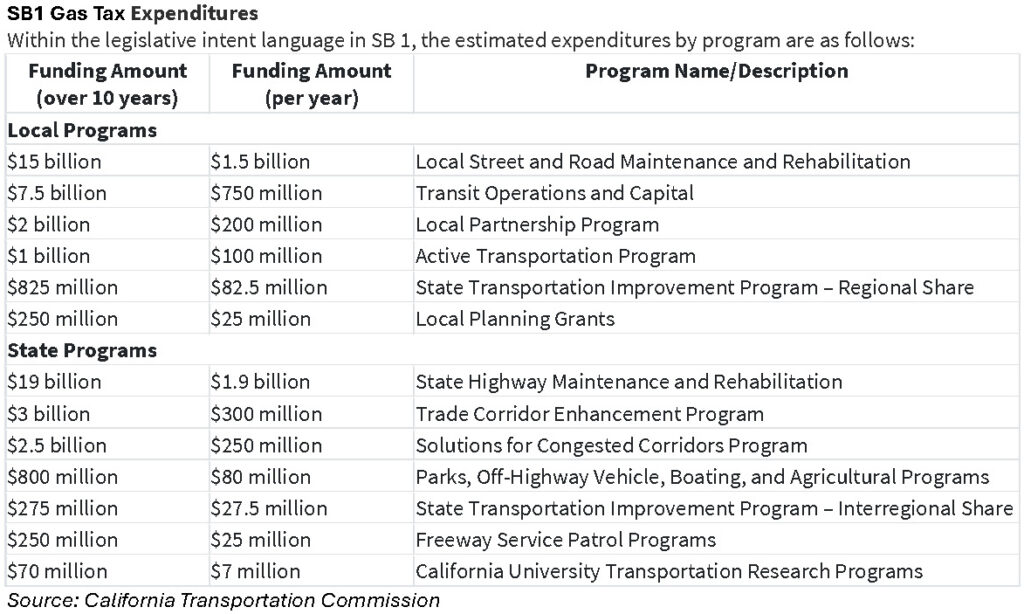
In addition, SB 1 provides $5 billion in transportation funding each year that is shared between state and local agencies. Road projects progress through construction phases more quickly based on the availability of SB 1 funds, including those partially funded by SB 1. 

See the complete list of the latest CTC-approved projects in each of the other nine Caltrans Districts in the state:

District 1 – Eureka (Del Norte, Humboldt, Lake and Mendocino counties)

District 2 – Redding (Lassen, Modoc, Plumas, Shasta, Siskiyou, Tehama and Trinity counties)

District 3 – Marysville / Sacramento (Butte, Colusa, El Dorado, Glenn, Nevada, Placer, Sacramento, Sierra, Sutter, Yolo and Yuba counties)

District 5 – San Luis Obispo / Santa Barbara (Santa Barbara, San Luis Obispo, Monterey, San Benito and Santa Cruz counties)

District 6 – Fresno / Bakersfield (Kings, Tulare, Fresno, Madera and Kern counties)

District 7 – Los Angeles (Los Angeles and Ventura counties)

District 8 – Riverside and San Bernardino counties

District 9 – Bishop (Inyo, Kern and Mono counties)

District 10 – Stockton (Alpine, Amador, Calaveras, Mariposa, Merced, San Joaquin, Stanislaus and Tuolumne counties)

District 11 – San Diego (San Diego and Imperial counties)

District 12 – Orange County

For more information about California transportation projects funded by IIJA and SB-1, visit RebuildingCA.ca.gov and www.build.ca.gov.

Allen D. Payton contributed to this report.

Public asked to participate in CalTrans test on DeSaulnier’s per mile “Road Charge” to replace gas tax

Sunday, May 26th, 2024
Video screenshot source: Caltrans

Due to purchase and use of hybrid and electric vehicles

Receive up to $400 in gift cards for 6-month Pilot program beginning Aug. 2024

By Allen D. Payton

Caltrans has launched a test on the proposed per mile Road Charge to possibly replace the state’s current gas tax and invites the state’s drivers to participate. The Pilot program will last six months and participants can earn up to $400 in gift cards.

With the passage of Senate Bill 1077 introduced in 2014 by then-State Senator (now-Congressman) Mark DeSaulnier, California began investigating a long-term, sustainable transportation funding mechanism as a potential replacement to the gas tax, known as a “road charge” due to the advent of hybrid and electric vehicles. As of 2022, state officials estimate that there were about 1.1 million electric cars and 1.3 million hybrids on California roads.

Source: Caltrans

Taking direction from the Legislature, California completed the largest road charge research effort to date piloting more than 5,000 vehicles that reported in excess of 37 million miles over a nine-month duration. According to the program’s report, the statistics only serve to reinforce Californians’ desire for mobility, a safe and reliable transportation system, and an improved overall quality of life. Below please find the California State Transportation Agency’s release of the California Road Charge Pilot Program final report.

History of Transportation Funding

According to the Road Charge Pilot Program Summary Report, Nearly all of the 350 billion miles driven each year on California’s highways and roads are  powered by gasoline or diesel fueled vehicles. Historically, the taxes on those fuels provided the majority of the revenue required to maintain and operate our transportation network. As future consumption of gasoline and diesel fuel declines, due to increased fleet efficiency, California will be challenged to sustain its $2.5 trillion economy. Continuing to depend on a consumption-based transportation model, while at the same time adopting policies to increase vehicle fuel efficiency and promote the reduction of vehicle miles traveled, puts into question the long-term viability of the gas tax as a sustainable revenue model.

Source: Caltrans

Historically, transportation funding has been impacted by two main factors: inflation and vehicle fuel efficiency. Until this year, with the passage of the Road Repair and Accountability Act of 2017 (Senate Bill 1), the state gas tax had not been adjusted for inflation since 1994, which significantly reduced its purchasing power. Senate Bill 1 adjusted fuel rates for past inflation and includes future inflation adjustments: hence, solving the inflation issue and delaying the expected transportation funding shortage by a decade or more. However, the impact of improving vehicle fuel efficiency remains an issue, especially as new vehicles sold in the coming decades are expected to be much more fuel efficient.

The report claims, “Without Senate Bill 1’s inflation adjustments, the transportation funding shortfall would be quickly approaching. The new Senate Bill 1 revenues, as illustrated in Figure 1, stabilize the state’s short-term transportation infrastructure funding needs and provides time to explore alternatives to continued reliance on fuel taxes.”

Source: Caltrans

How Transportation Funding Works

Currently, it costs approximately $8.5 billion annually to maintain California’s roads.

  • Approximately 80% of highway and road repairs are funded by a tax on gasoline charged at the pump when you buy gas. The more gas you buy, the more you pay in gas taxes and the more you contribute to highway and road repairs.
  • On average, Californians pay about $300 a year in state gas taxes.
  • Various state fees also support transportation. Trucks pay weight fees and zero-emission vehicle owners pay $118 each year, and all vehicle owners pay a transportation improvement fee.
  • Some counties also charge a local sales tax to further invest in road and transit needs or have tolls on bridges or certain highways.
  • The public may also pass state bonds to invest in additional transportation needs.

What is Road Charge?

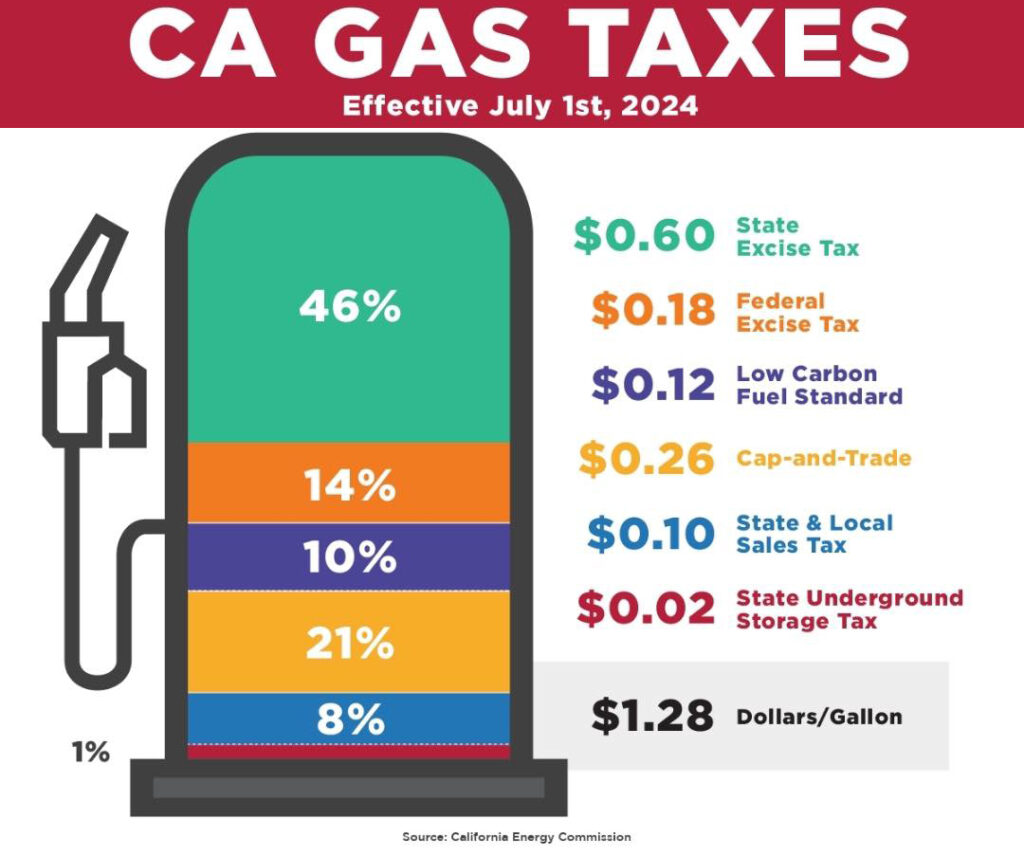
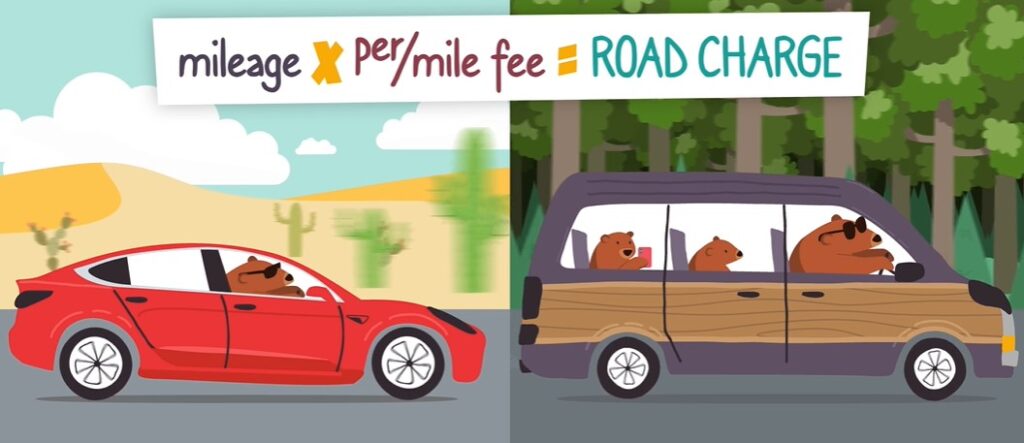
California relies on gas tax and other fuel tax revenues to fund its roadway maintenance and repairs. But as cars get more fuel efficient or use other energy sources, such as electricity and hydrogen, the gas tax will no longer fund the infrastructure California needs. California is researching a potential gas tax replacement that’s both sustainable and equitable: road charge. A road charge is a “user pays” system where all drivers pay to maintain the roads based on how much they drive, rather than how much gas they purchase. Under a road charge, all drivers share roadway maintenance and repair costs based on what they actually use. (https://dot.ca.gov/programs/road-charge)

  • California could replace the gas tax with a mileage-based user fee charged to drivers who use the roads. The more you drive, the more you pay for highway and road repairs. The less you drive, the less you pay.
  • Everyone would pay their fair share for road repairs based on how much they drive, not the kind of car they own.
  • California is working to develop a road charge program that is fair, transparent, and sustainable so that it meets our road maintenance needs now and in the future.

Most States Pursuing Vehicle Miles Traveled Taxes

According to the Tax Foundation, most states are taking steps toward a vehicle miles traveled (VMT) tax. “Oregon was the first state to begin research into VMT taxes in 2001 and was the first to implement a program in 2015. Four states now have active programs for passenger vehicles and four other states have active programs targeting heavy commercial vehicles (Oregon has both), with pilot programs carried out in 16 states. Only Hawaii has a mandatory program, which requires EVs to participate by 2028 and all light vehicles by 2033.”

Video screenshot source: Caltrans

Calculator Compares Road Charge vs. State Fuel Tax Costs

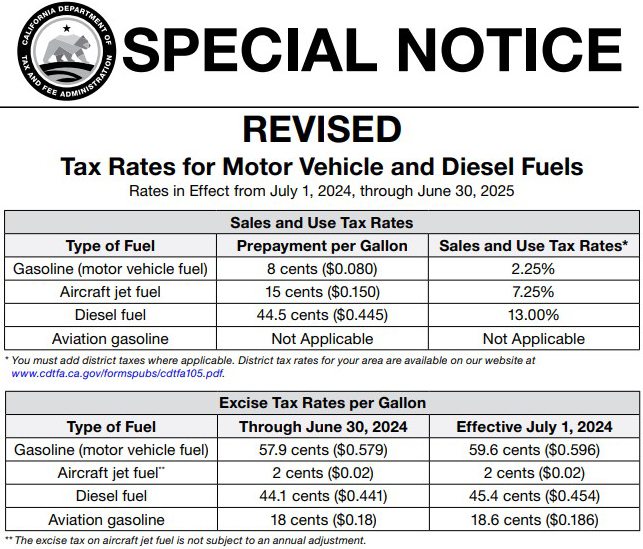
The “Road Charge” vs. gas tax calculator for a sample cost comparison of paying the current gas tax of $0.579 per gallon as of July 1, 2023, versus a per mile road charge offers options of $0.02, $0.03 and $0.04. At two cents per mile the Total Monthly Road Charge would be less than the Total Monthly State Fuel Tax for a gas-powered vehicle. But at three cents per mile, the monthly cost of the Road Charge would be greater than the current fuel tax.

For a 2024 Chevrolet Equinox EV driven an average of 1,000 miles per month the Road Charge annual costs would be $240 at two cents, $360 at three cents and $480 at four cents per mile versus the current $118 annual fee. The calculator “Does not include any federal or local taxes” and shows, “Rates are hypothetical and would be set by the California Legislature.”

Video screenshot source: Caltrans

Participate in 2024 Road Charge Collection Pilot

The Road Charge policy idea is still being explored and developed. The public’s input and ideas can help inform what the best way might be to implement a program in California. Drivers are asked to participate in the 2024 Road Charge Collection Pilot and earn up to $400!

  • Receive up to $400* in gift cards
  • Participate for 6 months; Aug 2024 – Jan 2025
  • Pay road charges each month
  • Gas tax refunded end of pilot
  • Take 2 surveys to tell us about your pilot experience

*Complete all required activities throughout the Pilot and earn up to $400: $100 distributed in September 2024 and up to $300 will be distributed in February 2025.

To learn more and participate in the pilot program visit https://caroadcharge.com/engage/contact-us-pilot/, call (916) 619-6283 toll-free or email info@caroadcharge.com.

Tri Delta Transit offers Summer Youth Bus Pass for unlimited rides June 1 to Aug 31, 2023

Wednesday, May 22nd, 2024
Source: Tri Delta Transit

Half-off passes on sale now through June 30th only.

Kids don’t want to be stuck at home for the summer, and parents don’t want to be stuck driving everywhere.

Give your kids their own set of wheels with a Summer Youth Bus Pass.

The Summer Youth Pass is the perfect way for youth riders to get around Contra Costa County during the summer. Passholders can take unlimited rides on Tri Delta Transit, West CAT, and County Connection local and express buses for an affordable and discounted price.

For only $30*, youth 6-18 can take unlimited bus rides from June 1 through Aug. 31, 2023 – one of the best summertime bargains for getting around Contra Costa County!

Click here to purchase your pass https://511cc.org/youthpass or come to our office.

*Actual pass price $60. Advertised $30 price reflects a $30 supplement per pass provided by 511 Contra Costa. Passes receiving the 511 Contra Costa supplement are limited in quantity and available only while supplies last.

WETA includes Antioch ferry stop in 2050 Vision

Friday, May 10th, 2024
Source: WETA

“A Vision for Water-Based Transportation and Emergency Response on the San Francisco Bay”

By Allen D. Payton

The Bay Area’s Water Emergency Transportation Authority (WETA) board adopted the 2050 Service Vision and Expansion Policy during its meeting on Thursday, May 9 and the plan includes a future, possible station for Antioch, as well as one each in Pittsburg, Martinez and Hercules. Also included is an additional route for the existing terminal in Richmond, which currently offers WETA’s only ferry service in Contra Costa County.

The plan includes two tiers, with the four additional Contra Costa terminals in Tier 2 which will be added based on demand and current, technological barriers to service. The Vision includes one route between the San Francisco Ferry Building to the Hercules terminal and a separate route to and from the Antioch, Pittsburg and Martinez terminals.

The Vision explains that first, “WETA will enhance existing route frequency to continue growing markets for all-day service.” Then, “WETA will expand by implementing the Tier 1 projects from the map including regional priority projects such as those included in regional plans – including Mission Bay and Treasure Island to the San Francisco Ferry Building, Berkeley to San Francisco, and Oakland to Redwood City.”

That will be followed by WETA exploring “development of Tier 2 projects from the map to further expand the reach of the ferry system as market demand matures and technologies evolve to overcome current barriers to operating service.”

In the plan, “WETA will provide at minimum three types of service on the ferry network: Local service consisting of short distance trips connecting dense urban hubs; Regional service consisting of medium and long-distance trips connecting activity centers; and Special Event service to major venues with existing terminals.”

In addition, “WETA will electrify the ferry system to reduce greenhouse gas emissions.”

According to their website, “Water transit is a vital part of life in the San Francisco Bay Area. WETA has been developing a shared vision of the San Francisco Bay Area ferry system in 2050, including the level of service and extent of WETA ferry operations and emergency response.

This ‘Service Vision’ informs how WETA operates in the future and what changes will need to be made to get there. The vision will serve as the foundation of WETA’s Business Plan, which will present the specific strategies and actions required to achieve the 2050 Service Vision. Strategies and goals are divided across six Focus Areas.

This service visioning effort is a unique opportunity to re-imagine water transit and address emerging priorities concerning the environment, equity, economic development, emergency response and quality of life throughout the Bay Area.”

According to the staff report for the agenda item #11, the plan was “developed to define a long-term service vision based on input from agency stakeholders, the public, and other parties with an interest in the future of the agency. The goal of this project is to create clear direction for the agency and its staff concerning future expansion efforts, prioritize the use of limited funds, identify resource needs, and help build a broad coalition to advocate for future investment in the regional ferry network. The WETA Board received a presentation on a draft Policy at its last meeting in April 2024. Following that meeting, staff incorporated comments from Directors into the final 2050 Service Vision and Expansion Policy—including more detailed information about emergency response and first/last mile connections.

During an initial stakeholder and public outreach effort in 2021, staff identified six focus areas

for consideration in the Business Plan. These include:

1. Regional Ferry Network

2. Emergency Response

3. Environmental Stewardship

4. Community Connections

5. Organizational Capacity

6. Financial Capacity

At Business Plan Workshop #1 held in August 2022, the Board identified a set of network expansion concepts for consideration in defining a 2050 Service Vision. Staff undertook a technical evaluation of these concepts and conducted broad stakeholder and public engagement to create a proposal to develop a draft 2050 Service Vision that was presented to the Board during Workshop #2 in April 2023.

Upon receiving direction from the Board to look more broadly at opportunities to expand the ferry network, staff worked with its consultant team to incorporate this feedback into an updated draft 2050 Service Vision and set of feasibility criteria for future expansion projects.

The draft service vision and feasibility criteria were refined upon review with key project stakeholders, the Community and Business Advisory Groups, and the WETA Business Plan Subcommittee. A consistent source of feedback during the outreach process was support for a WETA pilot program to test the feasibility of new technologies and emerging markets. The product of this process is the final 2050 Service Vision and Expansion Policy.”

The Vision also includes Terminal Rehabilitation & Replacement, improvements to Terminal Access, encouraging Transit-Supportive Land Uses in close proximity to eachcandidate ferry terminal, and Emergency Response. “WETA serves as the coordinator of water-based emergency response activities in the Bay Area in the event of a major disaster or disruptive event. In this capacity, WETA will work closely with the California Office of Emergency Services and/or the United States Coast Guard and will be directed to perform activities coordinated on a regional and state-wide basis. These include deploying WETA’s fleet resources to evacuate dangerous areas, to move first responders, and to deliver needed supplies. WETA will coordinate with other regional maritime partners to add to this fleet response, and terminal facilities must have sufficient capacity and facilities to accommodate these partner vessels. All new expansion terminals must be designed and built to Essential Facilities Standards. Emergency service to individual terminals will be guided based on state and regional direction.”

In addition to Thursday’s meeting, WETA held a public Board of Directors workshop on the 2050 Service Vision in April. The service vision evaluation memo and presentation slides are available, here:

Here’s the public survey summary report, first published in May 2023.

To learn more about the project, visit Bay Ferry 2050 microsite where you can subscribe to updates, share your feedback and more.

Autonomous vehicles take center stage at annual Contra Costa Redefining Mobility Summit

Thursday, May 9th, 2024
Glydways and BEEP automated vehicles were on display at the summit. Photo (left) and video screenshot by CCTA.

Transportation leaders gathered in San Ramon to share strategies to build public trust, redefine mobility & develop future workforce of transit

Glydways vehicles offer wheelchair access. Photo: CCTA

On Tuesday, May 7, 2024, the Contra Costa Transportation Authority (CCTA), GoMentum Station and Bay Area LEEDS joined forces to host the ninth annual Redefining Mobility Summit. Transportation officials from regional, state and federal agencies gathered with private industry innovators, local youth and workforce development experts in San Ramon’s Bishop Ranch business park to share vital information aimed to advance mobility. Autonomous vehicles took center stage as Glydways, BEEP and May Mobility unveiled transit options of the future in the Demonstration Exhibit Zone.

“This year’s panel topics: fostering public trust for new innovations like autonomous vehicles, connecting communities through technology, building the workforce of the future, and solving the challenges of our transportation systems are the very touchstones CCTA embraces every day to improve the quality of lives for those who live and work in Contra Costa County,” said CCTA Vice Chair and Antioch Mayor Lamar Hernandez-Thorpe.

The summit included a youth showcase where high school aged students shared their STEM projects and the midday Demonstration Exhibit Zone, which was powered by smart, clean generators supplied by Richmond-based Moxion. All the day’s activities connected the dots between innovation and future benefits not just for transportation but for the region.

“Innovation in transportation leads to improved productivity, enhanced trade, infrastructure development, increased regional commerce and job creation—all of which contribute to economic growth,” Contra Costa Supervisor Candace Andersen said.

April is Distracted Driving Awareness Month

Saturday, April 6th, 2024
Source: NHTSA

The laughs aren’t worth the risk. Put the phone down and just drive

By National Highway Traffic Safety Administration

Distracted driving has become a deadly epidemic on our roads. Cell phone use — specifically, texting, talking, and social media use — has become the most common distraction. Other risky actions include adjusting the radio or GPS, applying makeup, eating and drinking. By driving distracted, you’re robbing yourself of seconds that you may need to avoid a close call or deadly crash.

Drive Responsibly

In 2021, distracted driving killed 3,522 people.  April, which is national Distracted Driving Awareness Month, is a good time to regroup and take responsibility for the choices we make when we’re on the road. Follow these safety tips for a safe ride: 

  • Need to send a text? Pull over and park your car in a safe location.
  • Designate your passenger as your “designated texter” to respond to calls or messages.
  • Do not scroll through apps while driving. Struggling not to text and drive? Put the cell phone in the trunk, glove box, or back seat of the vehicle until you arrive at your destination.

The Consequences

During a portion of Distracted Driving Awareness Month, from April 4 through 8, you may see increased law enforcement on the roadways as part of the national paid media campaign Put the Phone Away or Pay. This campaign reminds drivers of the deadly dangers and the legal consequences – including fines – of texting behind the wheel.

Take Action

  • Remind your friends and family: If you’re in the driver’s seat, it’s the only thing you should be doing. No distractions. 
  • If your driver is texting or otherwise distracted, tell them to stop and focus on the road.
  • Ask your friends to join you in pledging not to drive distracted. You could save a life. Share your pledge on social media to spread the word — #JustDrive.

Opening of Mokelumne Trail Bicycle and Pedestrian Overcrossing in Brentwood celebrated

Wednesday, March 20th, 2024
Pedestrians and a bicyclist cross the recently completed Highway 4 Mokelumne Trail Overcrossing in Brentwood on March 20, 2024. Photos: CCTA

Transportation, city officials were joined by dozens of cyclists and pedestrians to cut the ribbon, make the inaugural walk over new $13 million bridge 

BRENTWOOD, CA – Almost two years to the day of the groundbreaking, as of today, Wednesday, March 20, 2024, the Mokelumne Trail Bicycle and Pedestrian Overcrossing in Brentwood is officially open to the public.

Officials of the Contra Costa Transportation Authority (CCTA), City of Brentwood, State Route 4 Bypass Authority, Contra Costa County and Metropolitan Transportation Commission cut the ribbon to ceremonially open the recently completed bridge across Highway 4 between Lone Tree Way and Sand Creek Road.

Transportation and city officials, and former Brentwood Mayor Bob Taylor (in yellow) who first proposed the project, cut the ribbon for the opening of the Mokelumne Trail Overcrossing on March 30, 2024. Photo: CCTA

They were joined by dozens of eagerly awaiting bicyclists and pedestrians to make the inaugural bike and walk on the overcrossing. The bridge now provides safe access to bicyclists and pedestrians for commuting and recreational travel and as part of the Mokelumne Coast to Crest Trail which includes the Delta de Anza Regional Trail that runs through Antioch and Oakley.

The 850-foot bridge structure includes a wider trail-width of 16 feet to accommodate bicyclists and pedestrians using the trail or accessing a potential future transit station. The bridge also meets Americans with Disabilities Act (ADA) standards to support use by all community members. The overcrossing will also provide access to the future Brentwood Transit Center and BART Station.

“The opening of the Mokelumne Pedestrian Overcrossing marks a significant milestone for alternative and innovative transportation in Contra Costa County,” said CCTA Board Chair Newell Arnerich. “The bridge was designed for the future in mind: access to future development in Brentwood as well as creating a wider pathway to someday accommodate many forms of environmentally friendly travel, including autonomous shuttle vehicles.”

Bicyclists, including advocate Bruce Ohlson (grey beard) and CCTA Executive Director Tim Haile (in blue vest) prepare to ride across the Mokelumne Trail Overcrossing following the ribbon cutting on Wed., March 20, 2024. Photo: CCTA

The overcrossing also provides a connection to the planned Innovation Center at Brentwood, a 200+ acre parcel that city officials have zoned for employer and development partners to create a workplace community.  

“The City of Brentwood is proud to have partnered with CCTA on this important project, which brings greater connectivity for bicyclists and pedestrians in Eastern Contra Costa County,” said Mayor Joel Bryant. “The project complements the City’s emphasis on innovation, safety and being financially wise – no city funds were used to construct the overcrossing.”

The cost to design and build the bridge was approximately $13 million, with funding provided through Measure J taxpayer dollars, the State Route 4 Bypass Authority and Bay Area Toll Authority (BATA) bridge toll funds. 

Mokelumne Trail Overcrossing partner agencies.

“Closing the gap between the Mokelumne Trail by constructing a bridge to span Highway 4 was a priority project for CCTA as the overcrossing allows safe access to cyclists and pedestrians for commuting and recreational travel,” said CCTA Executive Director Tim Haile who spoke while wearing a helmet as he said  rode his bike to the event and rides his bike to work every day. “This project represents CCTA’s commitment to improving mobility and furthering safe and accessible transportation for all.” 

Learn more about the overcrossing by clicking here: Mokelumne Trail Bicycle/Pedestrian Overcrossing.

About the Contra Costa Transportation Authority: 

The Contra Costa Transportation Authority (CCTA) is a public agency formed by Contra Costa voters in 1988 to manage the county’s transportation sales tax program and oversee countywide transportation planning efforts. With a staff of 23 people managing a multi-billion-dollar suite of projects and programs, CCTA is responsible for planning, funding, and delivering critical transportation infrastructure projects and programs that connect our communities, foster a strong economy, increase sustainability, and safely and efficiently get people where they need to go. CCTA also serves as the county’s designated Congestion Management Agency, responsible for putting programs in place to keep traffic levels manageable. More information about CCTA is available at ccta.net.

Allen D. Payton contributed to this report.

Antioch selected as one of first host sites of Economic Recovery Corps

Friday, February 23rd, 2024
Source: City of Antioch

Matched with “non-binary” Fellow to run program to support new Crossroads to The Delta Project to revitalize the local economy, address commuter challenges, promote a sustainable business ecosystem

The City of Antioch announced on Wednesday, Feb. 21, 2024, it has been selected as a host site of the first cohort for the Economic Recovery Corps (ERC). The ERC is a new, collaborative initiative designed to accelerate recovery from the COVID-19 pandemic in distressed communities and regions throughout the U.S. by connecting organizations with the talent and capacity needed to advance new ways of doing economic development that promote economic resilience and transformative change. The ERC is working in partnership with the U.S. Department of Commerce’s U.S. Economic Development Administration and the International Economic Development Council.

The ERC Program has the potential to shift the practice of economic development nationwide in an unprecedented manner.

Utilizing strategic partnerships, innovative industry development and data-driven planning, the project addresses issues such as lengthy commutes, limited local job opportunities and underutilized city resources. The challenges posed by the COVID-19 pandemic include a disbanded public safety office, staff shortages, struggling small businesses, and an underused waterfront. The ERC Fellow will research, audit, manage, or develop up to six key initiatives, covering areas like district-based associations, OceanTech, advanced manufacturing, supplier diversification programs, and assessing small business grant impact. The project aims to contribute to Antioch’s economic recovery and sustainability, fostering a resilient and vibrant community.

About the Fellow

The City also introduced ERC Fellow Gaby Seltzer who was matched with the Antioch community. Seltzer will play a pivotal role in revitalizing the local economy, address commuter challenges, and promote a sustainable business ecosystem. Gaby will be living and working in our community for the next 2.5 years.

The ERC’s website provided background about Antioch’s fellow in the program.

“Gaby is passionate about building community wealth and power through sustainability initiatives. ‘Their’ professional background is in grassroots food systems work, including managing a social enterprise program that increased access to healthy foods at corner stores in Washington, DC’s food apartheid neighborhoods. Through this work, ‘they’ helped locally-anchored businesses build resilient partnerships with residents, governments, academic institutions, and industry groups.

Witnessing the power of local networks to foster sustainability and social justice led Gaby to Presidio Graduate School, where ‘they’ honed ‘their’ cross-sector organizing skills through an MBA and MPA in Sustainability. While pursuing these degrees ‘they’ consulted for several economic resilience organizations. ‘They’ also served as an Environmental Defense Fund Climate Corps Fellow twice: first designing a data portal to drive climate investments to frontline communities at the City of Seattle, and next building datasets and learning materials to drive climate adaptation programming at Pacific Gas & Electric Company.

In ‘their’ spare time, Gaby enjoys spending time outside and hosting gatherings.”

Asked if there is just one or more fellows, how Seltzer was matched with Antioch and in which city department the fellow will be working, Antioch Economic Development Manager Bret Sweet responded, “There was only one fellow, Gaby Seltzer. Gaby has asked us to use ‘they’, ‘them’ and ‘their’ in reference.”

“I applied for the program and went through a fairly intensive pitch process along with (Acting City Manager and Economic Development Director) Kwame (Reed),” he explained. “Once we were selected, we formed a panel of city and county employees to interview multiple candidates. As it worked out, we scored the highest and Gaby ranked Antioch the highest, so we were matched. There are 65 fellows in the program and only two were sent to California. As I learned at the kick-off last week in Portland, apparently ‘more than half the candidates asked to work on the Antioch project’.”

“Gaby works in the Economic Development Department here and will also work a bit with the Economic Development Department at the county,” Sweet added.

About the Project

Asked about the name of the project, Sweet shared, “Crossroads to the Delta project is the name we designed for the six initiatives we asked applicants to work on. Here is the project as it appeared to applicants: Crossroads To The Delta

“It was the name of the project for the ERC. It is not something established by the council,” he continued. “It was named crossroads to highlight Antioch’s positioning between San Francisco, Palo Alto, Stockton and Sacramento.”

“Gaby and I worked all last week at the kick-off in Portland to update the project goals based on feasibility, bandwidth and resources. We will probably have the page updated by next month,” Sweet said.

Learn more about the ERC program and the various projects across the US and stay up
to date on the ERC’s happenings by signing up for updates at www.iedconline.org/ERC_Updates.

Allen D. Payton contributed to this report.