







Archive for the ‘Technology’ Category

East Bay Parks use groundbreaking technology to reduce wildfire risks

Saturday, October 28th, 2023

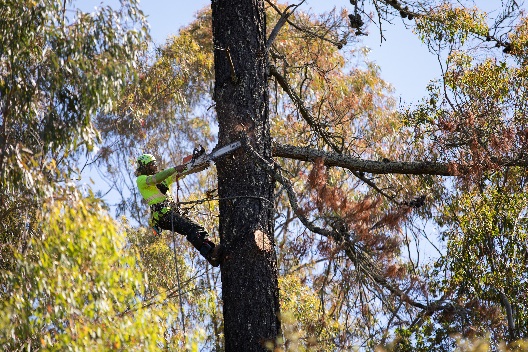
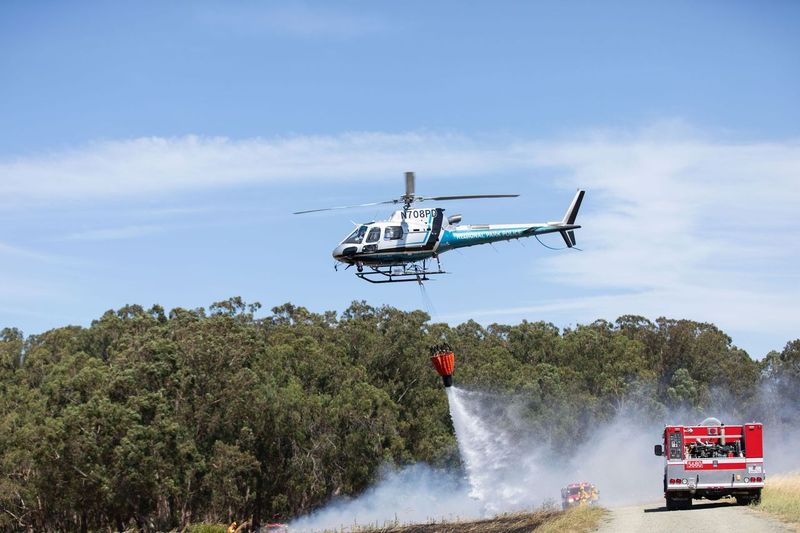
As part of fuels reduction work for fire suppression a tree is removed then burned in a low-emission Tigercat 6050 carbonator machine, resulting in biochar used to enrich soil in the East Bay parks. Photos: EBRPD

Thinking Outside the Box: Leading the Way on Wildfire Protection for the Community

By Dave Mason, Public Information Supervisor, East Bay Regional Park District
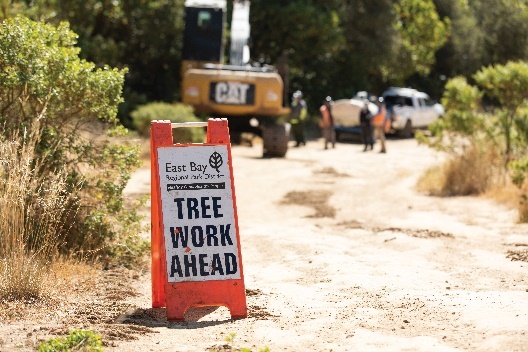
The East Bay Regional Park District held a special briefing and tour at Anthony Chabot Regional Park on Tuesday, Oct. 24, 2023, highlighting a first-of-its-kind fuels reduction project (365 acres) in the East Bay hills. The Park District’s wildfire fuels reduction project uses an innovative and climate-friendly carbonator to dispose of vegetation with extremely low emissions, rather than conventional open-pile burning or transporting it long distances in diesel trucks.

In the fall of 2020, while conducting ongoing vegetation management work, Park District staff noticed significant tree die-off in its parks. Further investigation identified over 1,500 acres of tree mortality within Regional Parks, mostly eucalyptus, but also bay and pine. While there are many contributing factors, the overarching cause is believed to be drought-stress due to climate change.

“We were facing a crisis,” said Park District General Manager Sabrina B. Landreth. “I directed staff to assess the situation quickly and come together with a plan of action, including obtaining the necessary funding to begin addressing the die-off.”

The Park District spans Alameda and Contra Costa counties in the San Francisco Bay Area and manages 73 parks, 1,330 miles of trails, and over 125,000 acres. The District has its own fire department and fuels management crew.
“As the largest regional park district of its kind in the nation and a local wildfire prevention leader, we knew we needed to lead the way in finding solutions,” added Landreth.

Much of the identified tree die-off was within the Park District’s approved Wildfire Hazard Mitigation and Resource Management Plan, which meant environmental approvals for fuels reduction work were already in place. However, significant funding was needed.

In 2021, shortly after discovery of tree die-off, the District approached state officials for help addressing the situation, and the state responded with a critical $10 million direct appropriation from the legislature through Senator Nancy Skinner, D-Berkeley, and then-Senator Bob Wieckowski, D-Fremont. The total cost estimate to address the tree die-off issue is over $30 million.

 “For a public agency to get a $10 million direct appropriation in the state budget for a specific purpose is extraordinary,” said Landreth.

Groundbreaking, Environmentally Friendly Tool for Fuels Reduction

As efforts to secure funding proceeded, estimates also soared for removal costs and the amount of organic material (biomass) that would need to be disposed of. Adding to the complexity of the situation was the fact that removing so much dead and dying vegetation by traditional means required hauling it in trucks to plants that would burn it for fuel. Transporting the dead trees was cost-prohibitive, disruptive to the residential areas, and potentially dangerous. It would also create greenhouse gases and pollution, causing some of the same environmental factors leading to increasing wildfire risks and perhaps even tree die-off itself.

The innovative solution the Park District found for processing large amounts of biomass was a carbonator. The carbonator machine, a Tigercat 6050, resembles a trucking container with a box-like metal chamber. The device burns organic matter with very little oxygen and at very high temperatures (about 1,300 degrees Fahrenheit), which breaks down the molecules of organic matter into a smaller material called biochar. The process creates extremely low emissions.

The resulting biochar – essentially elemental carbon – provides benefits, such as enriching soil by improving its water retention or pH, accelerating composting of green waste, and filtering toxins from water. The carbonator, having never been used in a metropolitan area for biomass disposal at this scale, was tested as part of an 80-acre pilot project at Anthony Chabot Regional Park in 2022, with the lessons learned being shared with the state and other partner agencies facing similar challenges. When completed in March 2023, the pilot project proved to be a net positive, with only a tiny fraction of emissions compared to open-pile burning or hauling off-site.
“As a large regional park district with a full-time fire department and biologists and ecologists on staff, we can do work that other agencies can’t,” said Park District Fire Chief Aileen Theile.

“The carbonator is another tool for our toolbox to reduce wildfire risks and combat climate change. Going forward, up to half of the biomass removed from parks could be converted into biochar,” said Park District Assistant Fire Chief Khari Helae.

Based on the success of the pilot project, a major fuels reduction project is underway at Anthony Chabot Regional Park on 365 acres and including the use of a carbonator for biomass disposal. The project is using $7.5 million of the $10 million direct appropriation from the state legislature, plus federal funds of $1.5 million secured by U.S. Senator Alex Padilla (D-Calif.).

The 365-acre project currently underway at Anthony Chabot Regional Park involves heavy equipment, including a felling team removing trees from the top down and a mastication team thinning vegetation and trees from the ground up. The resulting biochar is being used at the Park District’s Ardenwood Farms in Fremont to enhance soil health, improve water retention, and ultimately increase productivity.

The innovative, strong partnership approach to securing funding, the use of the carbonator in a pilot project and its subsequent use in a large-scale effort to reduce wildfire danger, and our desire to find a sustainable science-based solution in East Bay Regional Parks “is being seen as a model statewide, as well as nationally,” said Landreth.

“By doing this work now, we will gain a more sustainable eco-system in the long-term to benefit generations to come. We are working and planning for both now and the future, and we’re committed to playing the long game,” said Landreth.

The Park District’s leadership team, firefighters, scientists, park rangers, and dedicated staff across departments continue to focus on wildfire mitigation strategies and the innovative, large-scale fuels management program, all while seeking new partnerships and ways to protect the community.

Read the full-length feature article at www.ebparks.org/sites/default/files/carbonator-feature-article.pdf.

The East Bay Regional Park District is the largest regional park system in the nation, comprising 73 parks, 55 miles of shoreline, and over 1,300 miles of trails for hiking, biking, horseback riding, and environmental education. The Park District receives more than 25 million visits annually throughout Alameda and Contra Costa counties in the San Francisco Bay Area.


Better Business Bureau warns of spooky risks during National Cybersecurity Awareness Month

Tuesday, October 17th, 2023
Source: BBB

October is National Cybersecurity Awareness Month, and the Better Business Bureau (BBB) is sounding the alarm on digital ghouls and cyber predators that could haunt the corners of our everyday digital lives. Recent data from the BBB Scam Tracker reveals concerning statistics, emphasizing the urgency for consumers to be vigilant and take proactive steps to protect themselves.

One of the most alarming threats is the rise of social media scams, where scammers exploit consumer trust, with a staggering 91% engagement rate and 53% resulting in financial loss. “Social media platforms are full of suspicious characters,” warns Lori Wilson, President and CEO of BBB serving the San Francisco Bay Area and Northern Coastal California. “Be especially careful if you spot offers in your social media channels that look too good to be true – scammers often lure victims that way.”

Another menacing threat is the proliferation of hacked “smart” devices, exposing households to potential intrusions by cybercriminals. The “Internet of Things” has expanded to include an array of devices, ranging from cars to refrigerators, becoming potential security and privacy vulnerabilities. Intruders can exploit these devices, turning them into conduits for unauthorized access.

Phishing attacks also pose a danger, where individuals and organizations fall victim to disguised evildoers posing as trusted contacts, resulting in data breaches and financial losses. Additionally, the rapidly growing cryptocurrency markets have become a playground for tricksters, making it vital for consumers to exercise caution and conduct thorough research before considering any investments.

The BBB offers several essential cybersecurity tips to protect against these ominous threats:

  • Be cautious with social media ads that seem too good to be true and research companies before making purchases.
  • Safeguard smart devices by using anti-malware, encrypting WiFi, and regularly updating software.
  • Verify the identity of online contacts to mitigate the risk of phishing attacks.
  • Educate yourself about cryptocurrency and verify information before investing to avoid scams.

For more cybersecurity tips and resources, visit BBB.org/cybersecurity.

ABOUT BBB: Better Business Bureau is a non-profit organization striving to advance marketplace trust. For over a century, BBB has been fostering an ethical marketplace where buyers and sellers can trust each other. BBB sets standards for ethical business behavior and monitors compliance. BBB helps consumers identify trustworthy businesses and those that aren’t and encourages its Accredited Businesses to uphold these standards.

Grayson cryptocurrency regulation bill signed into law

Monday, October 16th, 2023

Assembly Bill 39 will establish a licensing process for crypto exchanges and provide consumers with needed protections. Senate Bill 401 will establish safeguards for crypto kiosks. 

(SACRAMENTO, CA) – On Friday, Oct. 13, 2023, Assembly Bill 39, authored by Assembly Banking and Finance Chair Timothy Grayson (D-Concord) and co-authored by Senate President pro Tempore Toni G. Atkins (D-San Diego), Senate Banking and Financial Institutions Chair Monique Limón (D-Santa Barbara), and Assemblywoman Cottie Petrie-Norris (D-Irvine), was signed by Governor Gavin Newsom. AB 39 will establish a licensing program for crypto assets within the Department of Financial Protection and Innovation (DFPI) to protect Californians from bad actors and foster responsible innovation. The bill represents a major victory for responsible innovators and California consumers.

AB 39’s lead author, Assemblymember Grayson, released the following statement:

“Today California is taking the necessary step to regulate a market that is volatile, risky, and, in some cases, deliberately rigged against everyday consumers. Because of today’s action, Californians can be confident that crypto businesses, like any other company in financial services, must follow reasonable rules that will protect consumers and their money. Thank you to Governor Newsom for helping ensure that our state leads in fostering responsible innovation.”

Assembly Bill 39 is a companion bill to Senate Bill 401 (Limón and Atkins), which will set a regulatory framework for crypto kiosks, a part of the crypto industry rife with fraud and abuse. Crypto kiosks are ATM-like machines that allow consumers to purchase cryptocurrencies such as Bitcoin. However, these machines charge exorbitant fees and are hubs of criminal activity, scams, and consumer fraud.

“With the important frameworks established by AB 39 and SB 401, California will begin the challenging task ahead of us to regulate cryptocurrency and ensure that no Californian falls prey to scams, investment related fraud, or high-fee asset withdrawal schemes,” said California Senate President pro Tempore Toni G. Atkins. “Failures in crypto markets in recent years have emphasized the need for regulatory frameworks that have the backs of consumers, and Assemblymember Grayson and Senator Limón have led the way in doing just that.”

“California is taking a step in the right direction to protect California consumers from fraud, unnecessary risk, and potentially criminal activity with the signing of SB 401 and AB 39,” said Senator Monique Limón. “I am grateful that Governor Newsom sees the benefits to establishing a clear framework that allows for innovation without harming California consumers.”

Senate Bill 401 was signed into law, along with Assembly Bill 39. 

“The Consumer Federation of California thanks Governor Newsom for signing these two important bills protecting consumers in the crypto marketplace,” said Robert Herrell, Executive Director of Consumer Confederation of California. “California now retakes its rightful position near the top of states protecting consumers in the crypto market. We also profoundly thank Assemblymember Grayson and Senators Limón and Atkins for their perseverance on these issues. Consumers will be better protected in crypto thanks to these new laws.” 

With the Governor’s signature of these measures, crypto companies and crypto kiosk operators must obtain or apply for a license by July 1, 2025, to continue doing business in California. Additional information and the text of both bills can be found here

Personal flying electric vehicle tested at Byron Airport

Thursday, October 12th, 2023
Pivotal’s eVTOL “Opener” was tested at Byron Airport. Video screenshot.

The new eVTOL goes on sale in 2024

By Contra Costa County District 3 Supervisor Diane Burgis

George Jetson would feel right at home if he visited Byron Airport.

That’s because in recent years, companies like Pivotal have been testing their innovative personal flying electric vehicle prototypes at Byron. (See video) Last week, Pivotal unveiled the Helix, a new eVTOL (electric vertical takeoff and landing) vehicle in development since 2011. The Helix will be priced at $190,000 when it goes on sale in 2024.

Pivotal’s Helix personal aircraft will be available for purchase next year. Source: Office of Supervisor Burgis

Testing innovative technologies at Byron was our goal when I worked with the Contra Costa County Airports Division to partner with the University of Alaska Fairbanks, the Federal Aviation Administration and other agencies to make our Contra Costa County airports official unmanned aerial system test sites. Byron Airport and Buchanan Field are in perfect locations to test drones because of the open testing areas and their proximity to the various aviation companies headquartered in the Bay Area (Pivotal is based in Palo Alto). Learn more about our Bay Area Test Site, a.k.a. “Drone Town USA” on the Contra Costa County Airports website or by watching the video.

Having groundbreaking testing facilities in Contra Costa County is just the first step. In the medium and long term, we’re working to have the vehicles of the future developed and even manufactured locally. In the meantime, I’m proud to have products tested in District III ready for sale to aviators everywhere.

Social media experts warn parents of horrifying content from Hamas following terrorist attacks in Israel

Wednesday, October 11th, 2023

CEO of the Organization for Social Media Safety says Hamas has put your kids at great risk online, parents should lock down or take away kids’ devices  

By Bridget Sharkey, Prime Media Management via prnewswire.com

Social media has long been used as a weapon by terrorist groups like Al Qaeda. Now Hamas is using the power of the Internet to terrify, confuse, and demean its victims.  

“Hamas is planting videos on sites like X that show gory and horrific acts of violence, including mass murders and defiled corpses,” said social media safety expert Marc Berkman, CEO of theOrganization for Social Media Safety (OFSMS).   

According to their website, the organization “is a nonprofit, consumer protection organization focused exclusively on social media. We protect against all social media-related dangers through a comprehensive approach that includes education, advocacy, and technology development. We are available to provide expertise for your story on social media-related dangers.”

Berkman says that these videos have millions of views, despite only being recently uploaded.  

“Terrorist groups often use social media platforms to disseminate hate and extreme violence,” he continued. “Parents around the country are receiving alerts from schools and elected officials over concerns that terrorists plan to disseminate distressing videos, including of hostages, through social media. These officials urge parents to delete TikTok and Instagram from their children’s devices as a protective measure.”

Berkman and the OFSMS concur, saying now is a good time to make your kids log off. He also agrees that major social media platforms, including X, Facebook, YouTube, Reddit, and Discord, may be used as weapons of war, spreading graphic violence and hateful messaging.  

“This is not a concern limited to TikTok and Instagram,” said the social media expert. “Many platforms already contain graphic, violent videos produced by terrorists. In the past, we have also seen videos of extreme violence shared through social media messaging-based platforms like Snapchat.”  

The Organization for Social Media Safety urges all social media platforms to block or immediately remove any content disseminated directly by a terrorist organization. Berkman and the OFSMS share the following tips for parents:  

  • Consider pausing children’s social media access to protect their mental health and well-being. 
  • Talk with your children about what to do if they come across violent content (We strongly recommend teaching your child about blocking and reporting.) 
  • Consider third-party safety software, like our endorsed choice, Bark, that can alert you if dangerous content, like extreme violence, is shared on your child’s social media account. 

“We all have a responsibility to protect our community from the dangers of social media,” Berkman concludes. “Report and block! Don’t keep scrolling.”

Tech Tips Workshops for Seniors in Rivertown in July & August

Saturday, July 1st, 2023

Presented by TreVista Antioch Senior Living & Memory Care and City of Antioch

Paid advertisement.

Tech Tips Workshop for Seniors in Rivertown May 24

Friday, May 5th, 2023

Get Off Your Apps. April is Distracted Driving Awareness Month

Thursday, April 6th, 2023

By California Office of Traffic Safety

In the smartphone age, people are more connected than ever before, but also attempting to stay connected when they shouldn’t: behind the wheel. And it is not just cell phones. Distracted driving is anything that takes your eyes or mind off the road or hands off the steering wheel – especially when texting or using your phone.

Using your cell phone while driving is not only dangerous, but also illegal. In California, you cannot use a cell phone or similar electronic communication device while holding it in your hand. You can only use it in a hands-free manner, such as speaker phone or voice commands, but never while holding it. Any driver under the age of 18 is prohibited from using a cell phone for any reason.

Because engaging in distracting behaviors with a phone like dialing, talking, or texting is so dangerous (it increases the risk of getting into a crash by three times), The California Office of Traffic Safety started the “Put Your Phone Down. Just Drive” public awareness and education campaign. Like the “Silence the Distraction” campaign that started in 2015, it is intended to appeal to the smartphone culture and younger audiences – specifically those between the ages of 16 to 24. The youngest and most inexperienced drivers are most at risk when driving distracted. The campaign emphasizes that all functions of a phone can be distracting: using an app, shuffling through music or playing videos, looking at social media, maps or photos. They are all dangerous and illegal when you are driving, and the safest thing drivers can do is put down the phone and just drive.

And remember. Other serious driver distractions such as eating, grooming, reading, reaching for objects on the floor, changing clothes or talking with passengers are just as dangerous and can result in a “reckless driving” or “speed unsafe for conditions” ticket.

The “Put Your Phone Down. Just Drive.” PSA, along with tips, facts and other information about distracted driving laws and prevention, can be found at gosafelyca.org.

Additional information, programs and resources on distracted driving:

California’s Cell Phone Laws

Focus on the road, not your status. That phone call, text or email can wait. Put down the phone and just drive. Our roads are safer when they are distraction-free.

  • California has a hands-free cell phone law, which prohibits drivers from holding a phone or other electronic device while behind the wheel.
  • Drivers under the age of 18 may not use any mobile communications device at all, whether hands-free or hand-held.
  • Starting July 1, 2021, violations that occur within 36 months of a prior conviction for the same electronic device violation is subject to a point against a driver’s record.
  • If you need to make a call or send a text, pull over and park at a safe location.
  • Avoid the temptation of using the phone while driving altogether! Put the phone in the glove box, trunk, or back seat; anywhere you cannot reach.
  • Other distractions: deep conversations with passengers or fussy children in the back seat. If you find yourself in any of these situations, find a quiet, safe place to park and address the distraction!

#justdriveCA