Archive for the ‘Politics & Elections’ Category

BART’s $3.5 billion bond measure for repair, maintenance and upgrades of system on November ballot

Monday, July 11th, 2016

BART photo

By Allen Payton

In June, the BART Board voted 9-0 to place a $3.5 billion bond measure on the November ballot to provide funding for repair and maintenance of and upgrades to the existing system. The measure will appear on ballots in the three counties of Contra Costa, Alameda and San Francisco that make up the BART District, and requires a two-thirds vote to pass.

The system improvements will take 21 years to complete, according to the brochure about the measure. To see the brochure, click here: BetterBART_Brochure

“BART anticipates that the 2016 System Renewal Program Plan will be implemented over the course of twenty-one years, commencing in Fiscal Year 2017 and concluding in Fiscal Year 2038. Projects will be accelerated as practical to maximize the benefit of planned improvements as quickly as possible.”

However, the bonds will take as long as 50 years to pay off.

“We’re not likely to sell $3.5 billion of bonds in the first year or even the first 10 years,” stated BART Director Joel Keller, who represents Antioch and Eastern Contra Costa County.  “There are laws that require you spend bond proceeds before you issue more bonds. What we’ll do is sell the bonds in what’s called tranches. Let’s say the first tranche is $1 billion and it takes us five to 10 years to spend that money. That tranche will last 30 years. If we do that three or four times, that could take the final payment out years. That’s really an unknown. It could take 40 to 50 years. It will be 30 years after the last bond is sold.”

It’s similar to the Antioch Mello-Roos bonds, which were to be paid off 20 years after the last bond was sold, the final bonds of which are finally being paid off, this year.

Annual Cost Per Property

According to a BART press release, “Estimates show the bond will cost Alameda, Contra Costa and San Francisco county homeowners less than a pack of gum a week.” More specifically, the cost will increase the average property tax bill by $37.21 per year in Contra Costa County if the measure is approved, according to Keller.

The annual cost is based on the appraised of property values, both residential and commercial, similar to the BART earthquake retrofit bond measure, which is what property owners are currently paying on their property tax bills.

For the BART Earthquake Safety Measure, which voters approved in 2004 and totaled $980 million, the projected annual cost was between $4.85 and $12.65 per $100,000 of assessed value. However, the actually cost was $2.60 to $9 per $100,000 of assessed value.

“It’s an ad valorem tax with a fixed cost to pay off the bonds,” Keller explained. “So, if property values increase, the cost per $100,000 will decrease.”

The 2016 bond measure is projected to cost $8.98 per $100,000 of assessed value. So a property in Contra Costa County with an average value of $414,399 will be assessed $37.21 per year.

Use of Bond Proceeds

The use of funds from the bond measure is split into two categories, according to the BART System Renewal Program Plan 2016.

Repair and Replace Critical Safety Infrastructure – $3.165 billion, 90.43%

“We want to upgrade our computer equipment from Pong-era technology to a modern train control system—which means less waiting for trains on crowded platforms and less frustration from delays. New maintenance facilities will keep the maximum number of cars out serving customers, so that fewer cars clog our congested highways,” from “The Plan” brochure about the measure.

This category is further divided into six sub-categories, with explanations in the brochure.

Renew Power System – $1.225 billion, 35%

Replacing Worn Track – $625 million, 17.85%

Waterproofing & Repairing Tunnels & Structures – $570 million, 16.29%

Modernizing & Replacing Train Control – $400 million, 11.43%

Renovating Stations – $210 million, 6%

Renewing Mechanical Infastructure – $135 million, 3.86%

Safer Station Access – $335 million, 9.57%

Design Future Projects to Reduce Crowding & Reduce Traffic Congestion – $200 million, 5.71%

Expand Opportunities to Safely Access Stations – $135 million, 3.86%

The bond measure brochure clearly states No general operating expenditures: The proceeds of the bond measure cannot be used to support BART’s general operating needs, but must be dedicated to the capital program outlined in this Program Plan.” Therefore none of the funds can be used for employee salaries or benefits.

According to a press release from BART:

The bond measure is a key funding component of BART’s plan to rebuild and renew its aging system, which faces increasing problems as various physical parts of the 44-year-old railway reach the end of their useful lives.  The plan replaces and repairs 90 miles of deteriorating tracks and other aging infrastructure in order to maintain BART’s excellent safety record and protects our environment by keeping thousands of cars off the road.

“This bond measure is practical; it’s dedicated to fixing what we have,” said Board President Tom Radulovich. “We have a responsibility to keep our system safe and reliable while getting the maximum value out of taxpayers’ investment.”

Over the past year, BART’s community outreach department has held over 230 community meetings with local stakeholders and civic groups to ensure widespread understanding of BART’s needs, and to hear the public’s thoughts about its capital reinvestment program.

Due to record-breaking ridership, BART has been able to find funding for many of the solutions needed to increase capacity, meet modern demand, relieve crowding, and upgrade the system.  That includes the newly arriving Fleet of the Future, the Hayward Maintenance Complex, and some of the groundwork for a cutting-edge train control system.

However, the cost of the capital projects needed to repair, fix, and replace worn rail, leaking tunnels, unreliable track circuitry, and failing power transmission equipment outpaces revenue growth.  BART’s plan is to dedicate funds from the bond measure solely to fixing what we have first – without earmarks, pet projects, or frills.

If voters choose to pass the measure in November, great care will be taken to ensure the public’s money is protected and spent wisely.  An independent audit committee will be commissioned to publish regular, transparent reports on how the money is being spent, with open, frequent and public meetings.

BART has proven itself to be a prudent and effective steward of public bond funds in the past, executing its 2004 Earthquake Safety and Retrofitting effort under budget with better and more robust results than expected.

Public transportation continues to be at the intersection of many of the great issues facing cities in the 21st century – and voters were wise in choosing to build such an extraordinary work as BART back in 1962.  Since then, BART has been a staple of this region’s culture, workforce, and values. As both riders and service providers, BART appreciates and is deeply grateful for the opportunity to connect residents to the people and places they care about.

Kerry Hamill, Government Relations Manager for BART offered additional comments regarding the cost and length of the bond measure, in response to an editorial by Dan Borenstein published in the East Bay Times:

The East Bay Times editorialist’s headline – that our bond measure will cost double what we are saying – is flatly incorrect, a conclusion drawn from a selective interpretation of our analysis. In order to assist BART’s Board of Directors in making an informed executive decision, a variety of scenarios were created with different variables relevant to particular presentations. The East Bay Times piece incorrectly appropriated data from these scenarios, resulting in an inaccurate characterization of the bond’s effects. BART has long taken care to illustrate the repayment structure of this bond in a standardized way; we have been doing so through all our exhibits and resolutions since the Board discussions began in earnest this past February.

The editorial also takes issue with how staff described the bond to the Board of Directors and the public, claiming we provided inaccurate information out of either incompetence or deceit – a charge which has absolutely no merit. Bonds are issued over time in subsets called tranches, each lasting 30 years (hence the name ’30-year bond’). This is done to coordinate the timing of bond issuance as closely as possible with construction progress payments, which minimizes interest costs and keeps the annual tax rates as low as possible – a prudent and responsible financial management practice. The editorialist was given this point of clarification multiple times as he repeatedly misrepresented the meaning of a ’30-year bond’ to mean the total span of time property owners would be paying – a false claim BART has never made. We were disappointed to see the author’s misunderstanding make the final printing, despite our best efforts.

The bond measure is projected to cost between $0.80 and $17.49 per $100,000 of a property’s assessed value, for a weighted average of $8.98 per $100,000 over the life of the bond – and for further explanation, that minimum and maximum range is based on the structure of BART’s projected debt service. The editorial’s repeated point that BART made a mathematical error in not compounding the increase in AV is also flatly incorrect, based on a misunderstanding of how the cost of bonds increase or decrease over time. The more the District’s assessed value increases (as housing supply, ownership changes, improvements increase), the lower the rate property owners would pay as the cost is spread over a larger base of assessed values. Furthermore, our models and estimates are built on the assumption of a 4% yearly increase in assessed value. $3.5B Scenario C Tax Rate At 4% AV Escalation

This is not our first bond – when the Earthquake Safety measure went before voters in 2004, the District projected that rates would vary between $4.85 to $12.79 per $100,000 of a property’s assessed value. Since approval, the actual annual cost has ranged between $2.60 (current year) and $9.00 per $100,000 of assessed value. Contrary to popular opinion, we have a proven track record of responsible fiscal stewardship. $3.5B Bond Financing

Concerned property owners are encouraged to do their own math for the sake of accuracy: $8.98 per $100,000 of assessed property value. When we provide averages for particular scenarios, we run the risk of appearing to conceal changes in amounts due to the many variables that can be introduced. Our goal is to provide people with a general understanding of a complex issue based on the best information available, which we have done and will continue to do. We are a transparent organization with deep ties to the community, and have held hundreds of meetings to ensure people understand what this bond is and how it will work. In that vein, we appreciate the opportunity to draw attention to our plan to rebuild the core of the BART system for improved safety, reliability, and traffic congestion relief.

Complete details of what is in the bond and how it relates to safety, reliability, and relief of traffic congestion can be found at bart.gov/betterbart.

Voter fraud discovered in Contra Costa, officials blame Secretary of State decision

Saturday, July 9th, 2016

Elections Division officials discover 113 voters successfully cast two ballots in June election

As a result of an emergency accommodation to the California Secretary of State’s office, the Contra Costa County Elections Division has discovered that 113 registered voters voted twice and had both ballots counted during the June 7th Presidential Primary Election.

The Contra Costa Elections Division plans to send those voter fraud cases to the Contra Costa District Attorney’s office, Registrar of Voters Joe Canciamilla said.

Elections Division staff will also send recommendations to the Secretary of State’s office requesting a change in their practices for surrendering vote-by-mail ballots.

Contra Costa County’s long standing practice in administering state Election Code 3016 has been to issue provisional ballots to all vote-by-mail voters who surrender their ballots at a polling place. Part of the reason this practice is in place is to prevent voter fraud.

The process of surrendering a ballot as it is currently written does not provide a means of detecting or preventing this type of fraud until it is too late.

The County is urging Secretary of State Alex Padilla to seek urgency legislation or work with counties to eliminate this vulnerability in the election process for the November election.

Supporters of initiative for downtown Antioch park and event center on lumber company lot submit signatures

Thursday, July 7th, 2016

By Allen Payton

According to Antioch City Clerk Arne Simonsen, the Save The Yard initiative proponents turned in 214 petitions with 5,139 signatures on Tuesday, July 6th.

The initiative, formally labeled the “Rivertown Town Square Ordinance,” would require the Antioch City Council to preserve as a park and event center, the former Antioch Lumber Company lot, between West Second, West Third and E Streets in downtown instead of a planned, mixed-use development with both townhomes and retail space.

There were 44,365 registered voters as of March 5th when the proponents submitted their paperwork to start the process. That means they need 4,437 valid signatures of registered Antioch voters for the initiative to be placed on the ballot.

“We tossed out the ones from people who live outside the city,” Simonsen said.

He submitted the petitions to the County Elections Office on Wednesday morning. According to County Clerk and Registrar of Voters, Joe Canciamilla his office has 30 business days to count and verify the signatures.

The deadline for placing items on the November ballot is August 12th so the verification process could take it beyond that date which would place the Antioch initiative on the November, 2017 ballot instead.

There are three other initiatives that have been received before and are in front of Antioch’s, two from Richmond and one from San Ramon. Plus, they have a large quantity of voter registration cards to process, some from Antioch but mostly from Richmond.

“We’re going to be bringing extra help on board to process those on a parallel track,” Canciamilla stated.

Asked if he believes his office will be able to count all the signatures and new voter registrations by the August 12th deadline, he responded “That’s our goal.”

Signature gatherers for the initiative petitions are required to be registered voters in the county. Asked if he knew about the signature gatherers who worked on the Antioch initiative, Canciamilla responded, “I would think the firm that hired them would know that. But, I haven’t seen the petitions and I haven’t talked to the staff about them, yet. So I don’t know what they look like.”

Then he spoke about the size of the November ballot.

“We have 17 statewide ballot measures confirmed, there are still two in the hopper,” Canciamilla shared. “Plus, we have two regional measures, from BART and CCTA.”

“The potential of the state voter handbook could be 200 plus pages,” he continued. “Our local handbook we expect to be 100 plus pages.”

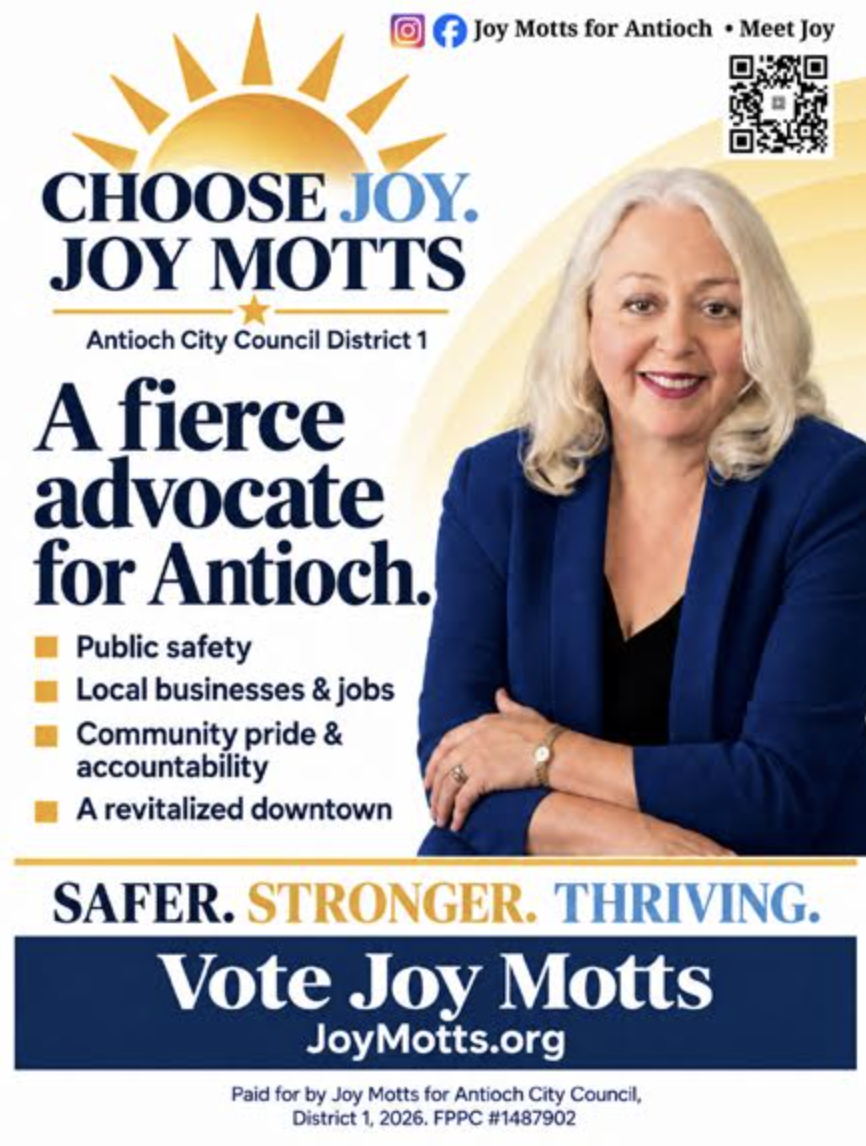
Save The Yard initiative leader Joy Motts was not available for comment prior to publication time.

To read the language of the ballot initiative, click here: Final Initiative Ordinance

Ken Turnage withdraws from Antioch City Council race

Wednesday, July 6th, 2016
Ken Turnage II

Ken Turnage II

By Allen Payton

After announcing in March that he would be a candidate for the Antioch City Council, this year and holding a campaign kick-off event on Monday, June 27th, Ken Turnage has instead withdrawn from the race.

In a Facebook post on his campaign Facebook page on Wednesday afternoon, July 6th, Ken Turnage wrote:

Hello,
With much thought I have come to a decision that I will not be running for City Council. Due to a personal decision I will not be able to continue at his time. It is my full intent once this has taken its course that I will run in the future.

I want to thank you for your support and generous donation to help me along the way. I do apologize if I had caused any inconvenience.

Those that have donated will be getting a check sent to you as re-imbursement. I will close this page tomorrow thank you

Sincerely,

Ken Turnage II

A call to Turnage for further comment was not answered or returned.

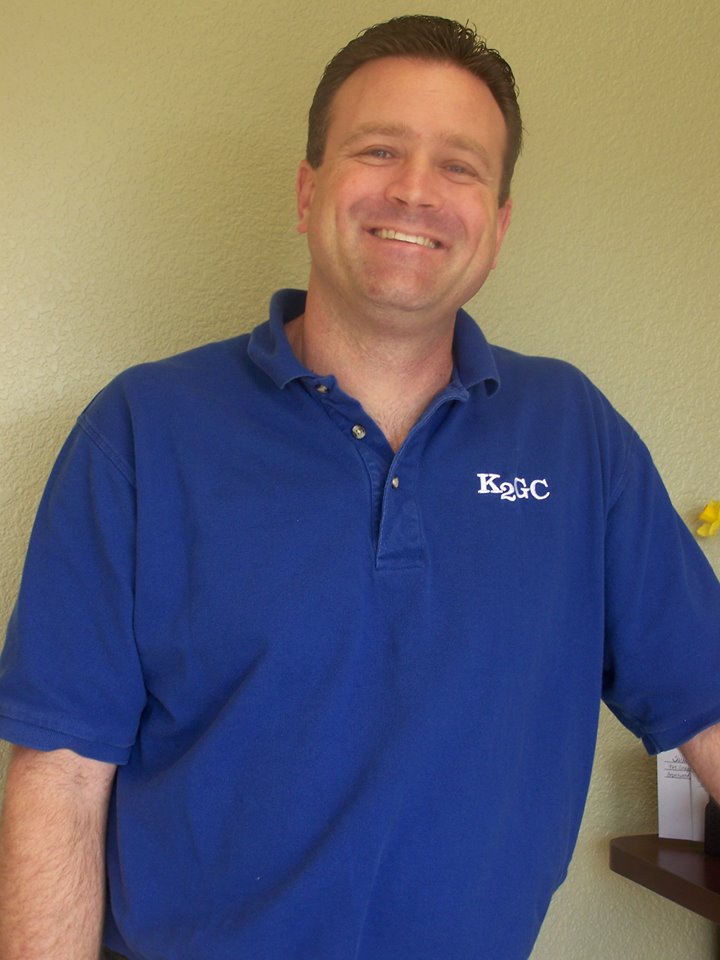
Turnage is the owner of K2GC, Inc. a general contractor in Antioch and was the chair of the Antioch July 4th Parade on Monday.

Analysis: Antioch voters reject Council’s direction on ballot measures

Thursday, June 16th, 2016

By Allen Payton, Publisher

Last week, the people of Antioch voted the complete opposite of the intent and desire of the Antioch City Council by overwhelmingly passing one measure and rejecting the other, that the council placed on the June ballot. Measure E passed and Measure G failed, both by about two-to-one margins.

Measure E passes

First, Measure E, which made changes to the city ordinance on card rooms, and now requires an election for a second one, passed by 67.04% to 32.96%, according to the latest figures. Of course it helped that the owner of the California Grand Casino in Pacheco spent over $310,000 (almost all of it out of town) to eliminate additional competition for himself in Antioch.

Yet, only three of the council members actually put some of their money where their mouths were by helping pay for a newspaper ad and a few campaign signs. Councilwoman Monica Wilson abstained on the vote to place the measure on the ballot, after having signed the petition to force the council to either adopt the language or send it to the ballot. So, I didn’t expect her to do anything to help defeat it. But, after talking tough, saying “we will not be bullied” Mayor Wade Harper didn’t do a thing to help defeat it. That reminds me of his tough, but hollow campaign slogan in 2012 of “Zero Tolerance for Crime.” While three of the council members spent a total of $415 of their own money, that was it. Neither they nor the mayor raised money from any of their supporters, or even wrote a letter to the editor to try to help defeat it.

I urged the mayor and council members to step up and lead the charge. But, they left it up to the family members who own Kelly’s – which was the target of the measure – to form the committee and financially back the No on E campaign. The family spent about $9,000 of their own money (most of it in Antioch) to try to defeat the measure, in spite of the fact they’ve pretty much been out of business for years.

Even the local front person for the Yes on E campaign, Lamar Thorpe, didn’t contribute even $100 or raise any money to help pass his pet measure, based on the campaign finance reports. So, he didn’t put his money where his mouth was, either. Now, I guarantee you he will try to use the issue to help him run for City Council, this fall saying how he helped protect the people of Antioch. All he did was let that Pacheco casino use him to advance their cause of eliminating more competition. Antioch won’t be any safer as a result of the passing of Measure E. We were lied to. Plus, what a hypocritical message for him and his campaign to say “stop the expansion of gambling” by using money from a casino.

Measure G fails, again

The other item on the ballot was Measure G, another attempt by the City Council on a 5-0 vote, to turn the elected position of City Treasurer into an appointed one. Once, again the voters said “no” loud and clear by defeating it, according to the latest figures, by 63.17% to 36.83%. We sent them the same message just four years ago in June, 2012 when we voted to oppose changing both the City Treasurer and City Clerk to appointed positions by 70.85% to 29.15%.

Here, again, the council members did nothing to help pass the measure. They didn’t form a campaign committee, raise any money, pay for any signs, advertising or mailers, or even send one letter to the editor in support of the measure. Two of them were too busy running for higher office and raising money for that, to bother putting any effort into fulfilling their current positions – serving the people of Antioch.

It’s time that the current city council members and treasurer, Donna Conley, as well as all future council candidates and city treasurers got the message that we the people want a separate, independent set of eyes on the city’s books. That’s needed now, more than ever with the way Measures C and O monies are being collected and spent.

It’s also time the City Council gave back the necessary responsibilities and authority to the treasurer’s position to be the check and balance we want and need, and will hold the city staff and council accountable.

In fact, one thing the council should and can do immediately is create a seat on the Measure C Citizens Oversight Committee for the city treasurer, to help be a watchdog over the city’s finances.

But, even if the council doesn’t return any power to our elected city treasurer, the person who holds that position can still use it as a bully pulpit to keep us informed with clear explanations of how our money is being spent and/or wasted.

According to County Registrar of Voters, Joe Canciamilla, his department “provided the City of Antioch with a cost estimate range for these two measures of between $2.00 – 2.50 per registered voter in the City of Antioch.  We won’t have final billing information to them with the exact amount until August.  With some 48,677 registered voters as of the 15 day close of registration this would put the cost at between $97,374 and $121,692.”

So, basically, the results of the June election are as follows: First, the voters will now get to vote on approving a second card room in Antioch; second, the city treasurer will continue to be an elected position; and third, they sent a message to the mayor and council, clearly repudiating their lack of action which wasted as much as $120,000 of taxpayer money by placing both measures on the ballot, then doing little to nothing to pass or defeat them. If they weren’t going to make a serious effort to defeat Measure E, they could have just adopted the ordinance, instead. While it only cost a bit more to have Measure G on the ballot, it’s still our money that was wasted, since no campaign effort was mounted to pass it.

Note to current and future council members: if you’re going to spend taxpayer dollars to place a measure on the ballot, you need to be willing to mount a serious campaign to pass or defeat it. It’s one thing to talk tough. It’s another to actually take action.

McNerney to face Amador for Congress, again in November General Election

Monday, June 13th, 2016

By Allen Payton

In a rematch of the 2014 election for Congress in District 9, Democrat Representative Jerry McNerney will face retired U.S. Marshall Tony Amador in the November election.

After entering the race on the last day possible, Amador edged out fellow Republican candidate, Stockton Police Sergeant Kathryn Nance, who had been campaigning for over a year, by 2.9% of the vote.

“I want to thank those who supported me,” Amador said. “We’re going to need the help of independent and Democrat voters, and Kathryn’s supporters, as well.”

“I want to congratulate her for fighting the fight,” he added.

The latest vote count, as of Friday, June 10th at 6:47 p.m., McNerney had 50,144 votes or 55.7%, Amador had 19,644 votes or 21.8%, Nance had 16,975 votes or 18.9% and Libertarian Alex Appleby had 3,218 votes or 3.6% of the vote.

District 9 includes most of Antioch and the rest of far East County in Contra Costa County, as well as most of San Joaquin County, plus Galt in Sacramento County.

Amador is leading Nance by only 435 votes in San Joaquin County where they both live, but in the Contra Costa portion of the district he’s leading her by 1,907 votes. Amador is leading Nance by 327 votes in Galt.

To see the the election results as they’re updated, visit the California Secretary of State’s website at: http://vote.sos.ca.gov/returns/us-rep/district/9/


Glover, Avila Farias in November run-off in race for District 5 Supervisor

Friday, June 10th, 2016

By Allen Payton

While the County Elections Office continues to count ballots and provide updates, it’s clear that both Supervisor Federal Glover and Martinez Councilwoman Anamarie Avila Farias have taken the top two spots in the race for District 5 Supervisor, and will be in the November run-off.

County Elections Office staff stated they had 56,000 ballots in the county left to count as of Wednesday, not including 19,000 provisional ballots nor those ballots that were postmarked by Tuesday and received by today.

As of the Thursday afternoon vote count update, Glover holds the top spot with 10,443 votes which is 35.26% of the votes and Avila Farias is in second with 9,197 votes which is 31.05%. Trailing in a distant third is former Martinez Mayor Mike Menesini with 4,339 votes or 14.65%, Hercules Mayor Dan Romero with 3,930 votes or 13.27% and then Conrad Dandridge with 1,604 votes or 5.42%.

Avila Farias received a large boost of support from both the firefighters and the deputy sheriffs in the county, with over $68,000 spent on her behalf.

The Elections Office has 28 days to certify the election and is expected to provide another update, later today and more next week, as the remaining ballots are counted. District 5 includes most of the portion in Antioch north of Highway 4.

Following are the results from the County Elections website as of Thursday, June 9, 4:04 p.m.:

ANAMARIE AVILA FARIAS   9,197   31.05%
CONRAD DANDRIDGE   1,604     5.42%
MICHAEL MENESINI   4,339   14.65%
FEDERAL GLOVER (I) 10,443   35.26%
DAN ROMERO   3,930   13.27%
WRITE-IN      107     0.36%
Total 29,620

Barr, Burgis expand leads in Thursday’s District 3 Supervisor race vote count update

Thursday, June 9th, 2016

By Allen Payton

An update on the Contra Costa County Elections Office website on Thursday, June 09, 2016 at 4:04 p.m. shows Brentwood City Councilman Steve Barr expanding his lead over East Bay Regional Parks District Board Member Diane Burgis, to 1,930 votes. Burgis expanded her lead over Oakley Councilman Doug Hardcastle to 1,227 votes, with about an additional 4,000 votes counted.

Barr has secured his place in the November run-off. If the trend continues as the remaining ballots are counted, Burgis will have secured her place, as well, as the top two finishers face off in the General Election.

The latest vote counts and percentages are as follows:

ODESSA LEFRANCOIS 1,787 5.73%
DIANE BURGIS 7,044 22.57%
STEVE BARR 9,014 28.88%
MONICA E WILSON 2,798 8.97%
DOUGLAS F. HARDCASTLE 5,817 18.64%
WADE HARPER 4,684 15.01%
WRITE-IN 66 0.21%
Total 31,210