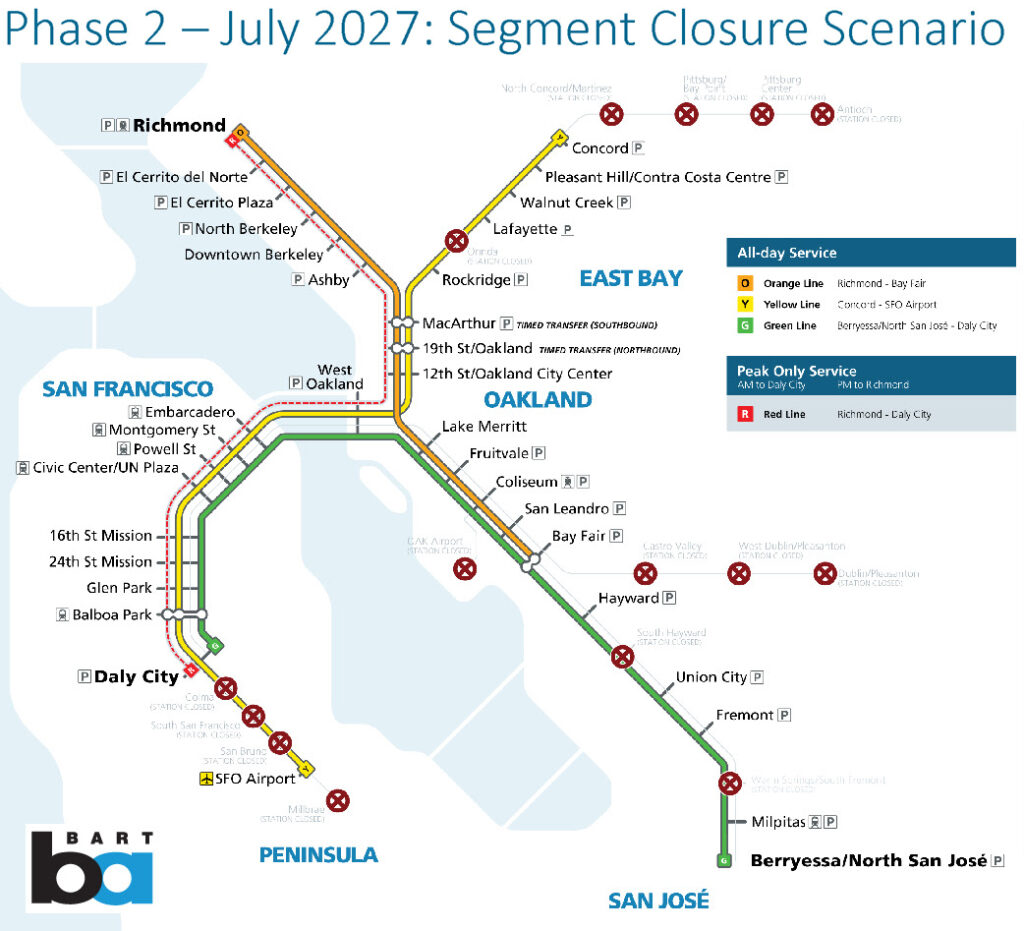








1 Civil Engineer, 1 Electrical Engineer and 1 Certified Public Accountant
By San Francisco Bay Area Rapid Transit District
BART is recruiting volunteer candidates to fill three vacant seats on the Measure RR Bond Oversight Committee. The committee provides diligent and public oversight of the expenditure of funds from bond sales associated with Measure RR, which is a $3.5 billion bond measure approved by BART District voters in 2016 to rebuild the system’s core infrastructure. Members of the Bond Oversight Committee represent a diversity of expertise, geography, and demographic characteristics. BART is looking for candidates to fill the electrical engineer, civil engineer, and Certified Public Accountant seats on the committee. All committee members are unpaid volunteers.
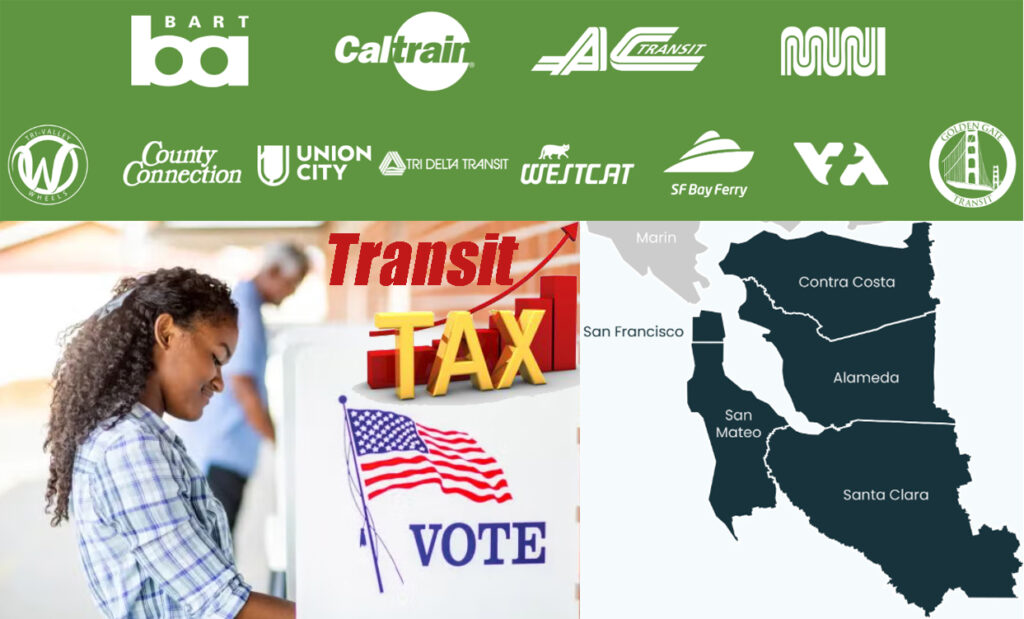
Candidates must live in either Alameda County, Contra Costa County or San Francisco City and County.
Source: BART
About Measure RR
Voters approved Measure RR, a $3.5 billion bond, in November 2016. The bond proceeds fund a portfolio of projects including replacing 90 miles of severely worn tracks, repair tunnels damaged by water intrusion and upgrade the aging train control system. Learn more at bart.gov/rebuilding/projects.
About the Committee
The independent Measure RR Bond Oversight Committee consists of five professionals in the areas of engineering, auditing, public finance, construction project management, and two members from the League of Women Voters. Learn more at bart.gov/bondoversight.
Committee Responsibilities
Members of the Committee are responsible for the following:
• Assess how bond proceeds are spent.
• Assess that work is completed in a timely, cost effective and quality manner.
• Communicate its findings and recommendations to the public.
• Publish an annual report.
Source: BART
Time Commitment
The minimum time commitment is about 10 to 15 hours per year. There are typically four in person meetings annually, which are open to the public
Compensation
Committee members are volunteers. However, BART will compensate members for their travel on BART to and from meetings.
Source: Diana Becton for District Attorney campaign
CCC Deputy Sheriff’s contribute $50K;Antioch Police Officers Association explains reasons for $5,000 contribution
By Allen D. Payton
In a post on Facebook on Monday, July 28, 2025, the Becton for DA campaign surprisingly announced new support for her recall from the Deputy Sheriff’s Association and two other “major law enforcement associations.” According to recall organizer Gwynn Gabe the other two are the Antioch Police Officers Association (APOA) and Concord Police Officers Association.
“She’s been keeping track of the people who are giving us money,” he added.
The post by “Team Becton” reads “They’ve launched their attack. Now it’s our turn,” in the header with the statement below:
“The recall against District Attorney Diana Becton just escalated.
Three major law enforcement associations, including the Contra Costa County Deputy Sheriff’s Association, just poured tens of thousands into the recall effort—including a single $50,000 donation. Even more telling? They’ve hired the strategist behind the recalls of DAs in San Francisco and Alameda County.
This isn’t just a warning. This is a coordinated, well-funded effort to undo the will of the voters and take Contra Costa backwards.
But here’s the truth they don’t want you to remember: we’ve already won twice. And with your help, we will again, because here’s what they’re underestimating: you. Us. This community.
This is not the time to sit back. We need you on the front lines —because what’s at stake is bigger than any one election. It’s about protecting real public safety solutions, and standing up to those who want to take us backward. DA Becton has stood up for equity, justice, and real public safety. Now we must stand up for her.”
It then offers ways for opponents of the recall to “Take Action Now” including volunteering and donating through the Act Blue campaign fundraising website for Democrats currently under investigation for possible fraudulent political contributions.
The APOA Board issued the following statement about their contribution of $5,000 to the campaign to recall Becton: “The APOA was approached by members of the recall movement who asked if we would be willing to support them in their efforts to recall the DA. After careful consideration, we agreed as a board to support this endeavor in hopes that this would ultimately lead to a more transparent DA’s office that holds criminals accountable and keeps our streets safe. Whatever the outcome, we know the officers represented by the APOA will continue to work hard to keep our community safe and have a great working relationship with the DA’s office.”
Recall organizers have until 5:00 PM on Thursday, September 25, 2025, to submit 72,556 valid signatures to qualify the effort for the ballot.
The Contra Costa Taxpayers Association (CoCoTax) invites you to attend a Board and Members Meeting Meeting at Denny’s Restaurant at 1313 Willow Pass Road, Concord, on Friday June 27, 2025, at 11:45 am. Please register in advance on the CoCoTax website where you can pay online or bring cash or check on Friday and pay at the door: $25 for members, $30 for guests.
MEET OUR SPEAKER: SENECA SCOTT
Seneca Scott moved to Oakland in 2012 to work as the East Bay Director for SEIU Local 1021, representing and negotiating improvements to wages and working conditions for thousands of workers in East Bay cities, most notably Oakland. He also co-founded community groups Bottoms Up Community Gardens and Oakhella.
In 2020, Seneca ran for City Council to bring a voice to his neighbors that he felt was being ignored.
He later led the successful effort to recall Mayor Sheng Thao and started the YouTube channel Gotham Oakland. He also frequently posts on X about the failures of Oakland’s progressive leadership.
Seneca has worked as a Labor leader and community organizer for over 20 years. He earned his B.S. from Cornell University’s School of Industrial and Labor Relations.
Oakland’s Crisis and Its Implications for Other Cities and Counties
Despite levying high taxes, Oakland suffers from high crime, business closures, blight, and uncontrolled homeless encampments. The City has also faced repeated fiscal crises in recent years.
As Seneca will discuss, the explanations for Oakland’s problems include public corruption and the dominance of a progressive ideology which sounds noble but does a disservice to most residents.
We’ll also learn what lessons Oakland’s troubles might hold for neighboring cities, and whether we in Contra Costa County have anything to worry about
Contra Costa D.A. Diana Becton (Herald file photo) and Recall organizers. Source: Recall of District Attorney Diana Becton
Says she “has taken bold actions to protect our communities” recall “misrepresents her record”
Recall supporters claim Becton “publicly opposed Proposition 36”; “failed to provide the justice” and for “disgraceful treatment of…families of…crime victims”
By Allen D. Payton
Although she had seven days to respond to being served with recall papers on St. Patrick’s Day, March 17, 2025, just four days later, on March 21, 2025, Contra Costa District Attorney Diana Becton provided her answer to the effort against her
She signed the letter written in third person which reads:
“The recall against DA Becton is an effort to undermine the will of the people of Contra Costa County. In 2018 and 2022, the voters decisively chose DA Becton because they agreed with and trust her steadfast dedication to public safety, fairness, and justice for all.
DA Becton has taken bold actions to protect our communities – aggressively prosecuting violent offenders, addressing organized retail theft, human trafficking, hate crimes, and eliminating backlogs of untested sexual assault kits. Becton expanded victim support services and pioneered proactive crime prevention programs, to reduce crime before it happens. This recall is not about safety – it’s a politically motivated attack that misrepresents her record and undermines the will of Contra Costa voters. DA Becton’s approach balances accountability with smart, evidence-based policies that reduce crime and keep our neighborhoods safe. DA Becton remains committed to justice, transparency, and creating communities where all residents can thrive. We urge you to reject the recall and stand with DA Becton in continuing to build a safer, more just Contra Costa County. NO on the recall. Let’s move forward together.
Diana Becton
—————-
Although not a required step in the process, in response to Becton’s answer, recall supporters sent the following letter to her, today, signed by Gwyn Gabe, the father of Alexis Gabe, the young Oakley woman who was murdered by her ex-boyfriend in 2022:
April 15, 2025
Dear District Attorney Diana Becton,
This letter serves as our response to your Answer to our Notice of Intent to Recall you from office.
Your claim that the Recall is a politically motivated attack against you is false. I am a democrat, just as you are, and I even voted for you when you ran for District Attorney in 2017. I believed that you would excel as the District Attorney of Contra Costa County, but you have proven that not to be true. The recall effort against you is not about your political affiliation; it is solely focused on your abysmal performance in office. Your failure to enforce our laws has increased crime and endangered our community.
You publicly opposed Proposition 36 which created felony accountability for drug and theft offenses, proving your troubling alignment with criminal interests. Proposition 36 was passed in Contra Costa County by an overwhelming majority of the voters. Clearly, your policies which encouraged crime are not in line with the will of the voters in Contra Costa County. Additionally, your lack of transparency concerning crime rates in our county and your efforts to keep criminals out of jail to commit more crimes have left many residents disillusioned. We stand with crime victims who have been victimized during your administration, who are frustrated with the lack of accountability for criminals, and who are hopeless in their quest for justice. And we stand with the business owners who face rampant on-going thefts and burglaries from repeat offenders while you ignore the issue.
Your disgraceful treatment of my family, and the families of other crime victims, violated our constitutional Marsy’s Law Rights and failed to provide the justice we rightfully deserve. However, our decision to pursue this recall is not driven by a desire for revenge. Our only goal is to ensure that you are removed from office and prevented from continuing to deny justice to other families in the future. We deserve a District Attorney who shows compassion for victims while holding criminals accountable for their actions. We stand united to ensure that your time in office comes to an end.
Sincerely,
Gwyn Gabe
(Father of Alexis Gabe)
Organizer & Proponent for the Recall of District Attorney Diana Becton
Process
According to the California Secretary of State’s Procedures for Recalling State and Local Officials, the next step in the recall process for local officials requires the proponents to prepare the recall petition for circulation.
Recall organizers said, “we expect to learn this week whether our second submission of the Petition to Recall has been approved, allowing us to begin collecting signatures.”
Once the petition is approved, the organizers will then have 160 days to gather about 730,000 signatures of registered voters in the county. (See related article)
Americans feel concerned about the growing partisanship in our country and the difficulty it has created in communicating with one another. Join a Community Conversation webinar on February 20, 2025, from 4 p.m. to 5:30 p.m. titled Bridging the Gap through Respectful Conversation.
People are looking for tools to help them have civil and respectful conversations with one another. Expert panelists will offer resources, skills, and opportunities for individuals to help build bridges across divides in our families, communities, and country.
· Ellie Sears, Braver Angels organization · Dick Patterson, Braver Angels organization · Kristin Connelly, Contra Costa County Clerk-Recorder-Registrar · Cheryl Graeves, National Institute for Civil Discourse
Information on how to access the Zoom webinar will be sent to your email address 24 hours before the program. Audience questions will be collected and answered through the Zoom chat.
Sponsors include the League of Women Voters of Diablo Valley, the League of Women Voters of West Contra Costa County, the Contra Costa County Library and Contra Costa TV.
The John A. Nejedly Bridge in Antioch. Photo: BATA
Last of three voter-approved increases takes effect Jan. 1st; failed in Contra Costa
BATA board also voted last week to increase tolls to $11.50 by 2030 for bridge maintenance and repairs
By John Goodwin, Assistant Director of Communications & Rebecca Long, Director, Legislation & Public Affairs, Metropolitan Transportation Commission
The Bay Area Toll Authority (BATA) reminds drivers that tolls at the region’s seven state-owned toll bridges will go up by $1 next Wednesday, Jan. 1, 2025. This will be the third of the three $1 toll increases approved by the California Legislature in 2017 through state Senate Bill 595 and by voters through Regional Measure 3 (RM3) in June 2018 which passed by 55.07% to 44.93%. The first of these toll hikes went into effect on Jan. 1, 2019, and the second on Jan. 1, 2022. It funds $4.45 billion slate of highway and transit improvements but did not include bridge maintenance and repairs.
Regular tolls for two-axle cars and trucks (as well as for motorcycles) at the Antioch, San Francisco-Oakland Bay, Benicia-Martinez, Carquinez, Dumbarton, Richmond-San Rafael and San Mateo-Hayward bridges will rise to $8 from the current $7 on Jan. 1, 2025.
Tolls for vehicles with three or more axles also will rise by $1 on Jan. 1, 2025, at all seven of the state-owned toll bridges: to $18 for three axles, $23 for four-axles, $28 for five axles, $33 for six axles, and $38 for combinations with seven or more axles.
Contra Costa Voters Opposed Ballot Measure
According to Ballotpedia, RM3 raised bridge tolls in the Bay Area—excluding tolls for the Golden Gate Bridge—by $3 over six years to fund the Bay Area Traffic Relief Plan, including a $4.5 billion slate of transportation projects. It was on the ballot for voters in the city and county of San Francisco and the following counties: Contra Costa, Alameda, Marin, Napa, San Mateo, Santa Clara, Solano and Sonoma.
Voters in two of the counties most affected by the bridge tolls rejected RM3. The vote in Contra Costa County was 44.54% opposed to 55.465 in favor and Solano County voters overwhelmingly opposed it 30.03% to 69.97%. But voters in the other seven counties approved the measure. Alameda County where voters and commuters are also most affected by bridge toll increases passed RM3 by 53.89% to 46.11% The vote margin was closest in Napa County, where voters approved the measure 50.7 percent to 49.3 percent.
Source: Ballotpedia
Regional Measure 3 continues the peak-period toll discount for motorcycles, qualifying carpools and qualifying clean-air vehicles crossing any of the state-owned toll bridges on weekdays from 5 a.m. to 10 a.m. and from 3 p.m. to 7 p.m. The discounted toll will rise to $4 on Jan. 1 from the current $3.50. To qualify for this discount, carpoolers, motorcyclists and drivers of clean-air vehicles must use FasTrak® to pay their tolls electronically and must use a designated carpool lane at each toll plaza.
Senate Bill 595 and Regional Measure 3 also established a 50-cent toll discount for two-axle vehicles crossing more than one of the state-owned toll bridges during weekday commute hours of 5 a.m. to 10 a.m. and 3 p.m. to 7 p.m. To be eligible for the toll discount, which is to be applied to the second toll crossing of the day, motorists must pay their tolls electronically with FasTrak®. Carpools, motorcycles and qualifying clean-air vehicles making a second peak-period toll crossing in a single day will qualify for an additional 25-cent discount off the already-discounted carpool toll.
New FasTrak® customers can obtain toll tags at Costco warehouse stores and select Walgreens stores around Northern California. A complete list of participating locations — as well as an online enrollment and registration feature — is available on the FasTrak® Web site at bayareafastrak.org. Customers also may enroll in the FasTrak® program by phone at 1-877-229-8655; by calling 511 and asking for “FasTrak” at the first prompt; or in person at the FasTrak® customer service center at 375 Beale Street in San Francisco. FasTrak® can be used in all lanes at all Bay Area toll plazas.
Major projects in the Regional Measure 3 expenditure plan include improvements to State Route 37 in the North Bay, freeway interchange improvements in Alameda, Contra Costa and Solano counties, the purchase of more new BART cars, extension of the BART system from Berryessa to downtown San Jose and Santa Clara, extension of the Caltrain corridor to the Salesforce Transit Center in downtown San Francisco, expansion of Muni’s transit vehicle fleet, expansion of San Francisco Bay Ferry service and more frequent transbay bus service, an improved connection between northbound U.S. 101 and the Richmond-San Rafael Bridge in Marin County, upgrades to the Dumbarton Bridge corridor, and extension of the SMART rail system to Windsor and Healdsburg in Sonoma County.
In Addition to Recently Approved Toll Hikes Beginning Jan. 1, 2026
The Regional Measure 3 toll hike that takes effect next week is separate from the 50 cents per year toll hikes approved by BATA earlier this month, which will be phased in over five years, beginning Jan. 1, 2026, to pay for the maintenance, rehabilitation and operation of the seven state-owned toll bridges. It will increase tolls by 2030 to $11.50 for those who don’t use FasTrak and $10.50 for those who do. BATA this month also approved updates to the policies for high-occupancy vehicles on approaches to the state-owned bridges, which will similarly go into effect on Jan. 1, 2026. (See related article)
BATA, which is directed by the same policy board as the Metropolitan Transportation Commission (MTC), administers toll revenues from the Bay Area’s seven state-owned toll bridges. Toll revenues from the Golden Gate Bridge are administered by the Golden Gate Bridge, Highway and Transportation District, which joined with BATA to operate a single regional FasTrak® customer service center in San Francisco. MTC is the transportation planning, financing and coordinating agency for the nine-county San Francisco Bay Area.
Would you look at that! Prop 36, VOTED ON BY YOU, is making immediate impacts on the community!
Yesterday, Thursday, Dec. 19, 2024, Target called 9-1-1 to report a sneaky thief was inside shoplifting! The man arrived in a white Escalade and was stealing multiple items inside the store! Officer Pedreira was quick on scene with a response time of 1 minute and 5 seconds! The would-be pilferer was located placing the stolen items in the vehicle! He was detained and thanks to Prop 36 and his history of theft, his misdemeanor is now a FELONY! He was transported and booked into jail!!
Photos: Antioch PD
Last week, this habitual swindler’s five-finger-discount would have earned him a citation, today it earned him a Felony charge and a trip to jail!
We even took his car-to-car jail for its role in the crime!
Increases penalties for shoplifting and certain drug crimes
On Dec. 13, California Attorney General Rob Bonta issued an Information Bulletin to all law enforcement agencies in the state about Proposition 36 which passed overwhelmingly in November and went into effect on Wednesday, Dec. 18th. The bulletin highlights the statutory changes and additions made to current law under the proposition known as “The Homelessness, Drug Addiction, and Theft Reduction Act.”
“Ultimately, our success in combating organized retail crime hinges on our ability to work together, innovate, and remain steadfast in our commitment to protecting our neighborhoods and businesses,” said Attorney General Bonta. “Let us harness the strength of our partnerships, the power of new legislation, and the collective resolve of our community to create a safer and more secure environment for everyone. My office is committed to fighting organized retail crime head on.”
Proposition 36 modifies existing law and adds substantive charges and enhancements to areas of the Penal Code and Health and Safety Code regarding theft, property damage, and drug-related crimes. The changes include the creation of new felony theft and drug crimes targeting recidivist offenders, removal of eligibility for the sentences of certain offenses to be served in county jail pursuant to Penal Code section 1170(h) as opposed to state prison, and alignment of the punishment for crimes involving fentanyl with that of other similar controlled substances.
Following is Bonta’s Information Bulletin:
TO: ALL CALIFORNIA LAW ENFORCEMENT AGENCIES PROPOSITION 36: “The Homelessness, Drug Addiction, and Theft Reduction Act”
On November 5, 2024, California voters passed Proposition 36, known as “The Homelessness, Drug Addiction, and Theft Reduction Act.” Proposition 36 takes effect on December 18, 2024.
Proposition 36 modifies existing law and adds substantive charges and enhancements to areas of the Penal Code and Health and Safety Code regarding theft, property damage, and drug-related crimes. The changes include: (1) the creation of new felony theft and drug crimes targeting recidivist offenders; (2) removal of eligibility for the sentences of certain offenses to be served in county jail pursuant to Penal Code section 1170(h); and (3) alignment of the punishment for crimes involving fentanyl with that of other similar controlled substances.
The purpose of this bulletin is to highlight the statutory changes and additions made by Proposition 36.
CHANGES UNDER PROPOSITION 36 RELATING TO THEFT AND PROPERTY DAMAGE
Penal Code section 490.3 (Aggregation of Losses in Multiple Thefts): Proposition 36 creates a new Penal Code section 490.3 which permits aggregation of the value of property or merchandise stolen during multiple thefts to meet the $950 threshold for a felony without having to prove that the various crimes were motivated by one intention, one general impulse, and one plan. This new section applies to theft or shoplifting, including, but not limited to, violations of Penal Code sections 459.5, 484, 488, and 490.2.
Penal Code section 490.3 applies “notwithstanding any other law,” and is therefore broader than other laws such as Penal Code section 487, subdivision (e) and the new Penal Code section 12022.10,1
1 which would permit aggregation only in limited circumstances, such as if the acts were motivated by one intention, one general impulse, and one plan, or only if there was a common scheme or plan, respectively.
Penal Code section 666.1 (Felony Crime of Theft with Two Prior Thefts): Penal Code section 666.1 is a new, recidivist felony offense of committing petty theft or shoplifting while having two or more prior misdemeanor or felony convictions for specified theft-related crimes. A first conviction under Penal Code section 666.1, subdivision (a)(1) is punishable in county jail pursuant to Penal Code section 1170(h), second or subsequent convictions are punishable in county jail or state prison. Other notable aspects of Penal Code section 666.1 include:
There is no “washout” timeframe on the prior convictions that qualify a defendant to be charged with a violation of Penal Code section 666.1(a)(1)—all prior convictions qualify, regardless of when they occurred.
Although Penal Code section 666.1 does not mandate that the two or more specified prior convictions be alleged in the accusatory pleading, existing authority suggests that the prior convictions must be alleged and proved at preliminary hearing so a defendant can be held to answer on a Penal Code section 666.1 charge. (See People v. Casillas (2001) 92 Cal.App.4th 171.)
Section 666.1 applies “notwithstanding any other law,” meaning that it will apply even if a defendant could alternatively have been prosecuted for a misdemeanor theft-related charge pursuant to another statute.
Upon arrest on a Penal Code section 666.1 charge, subdivision (c) requires judicial review prior to release from custody to make an individualized determination of the arrestee’s risk to public safety and likelihood to return to court.
Penal Code section 12022.6 (Excessive Takings Enhancement): Proposition 36 re-enacts and modifies several aspects of the Penal Code section 12022.6 enhancement, which was repealed at the end of 2017 because of a sunset date. Penal Code section 12022.6 applies when an offender takes, damages, or destroys property in the commission or attempted commission of a felony, or commits a felony in violation of Penal Code section 496 (possessing/receiving/selling stolen property). This enhancement must be pled and proved. The enhancements are as follows:
One-year enhancement – loss or property value over $50,000
Two-year enhancement – loss or property value over $200,000
Three-year enhancement – loss or property value over $1 million
Four-year enhancement – loss or property value over $3 million
One-year enhancement for every additional loss or property value of $3 million (imposed in addition to the four-year, $3 million enhancement)
The enhancements may be imposed if the combined losses to the victims or the combined property values from all felonies exceed the threshold amounts and arise from a common scheme or plan. The enhancement permits the court to impose a Penal Code section 12022.6 enhancement and another enhancement on a single count, including an enhancement pursuant to new Penal Code section 12022.65 (acting in concert to take, damage, or destroy property—see below). Thus, a defendant may be punished for both acting in concert (Pen. Code § 12022.65) and for taking or damaging property valued at more than $50,000 (Pen. Code § 12022.6). The punishment specified in Penal Code sections 12022.6, subdivisions (a)(1) and (a)(2) will continue to apply where Penal Code section 186.11 has been charged, as it previously did.2
Penal Code section 12022.65 (Theft or Property Damage In-Concert Enhancement): Penal Code section 12022.65 is a new enhancement that applies when an offender acts in concert with two or more persons to take, attempt to take, damage, or destroy property, in the commission or attempted commission of a felony. This enhancement has a range of one, two, or three years and must be pled and proved.
CHANGES UNDER PROPOSITION 36 RELATING TO CONTROLLED SUBSTANCES
Health and Safety Code section 11369 (Warning to Dealers of Hard Drugs): Proposition 36 creates a new section 11369 in the Health and Safety Code section 11369 which requires the trial court to advise anyone convicted of a violation of Health and Safety Section 11351, 11351.5, 11352, 11378, 11378.5, 11379, 11379.5, or 11379.6 involving a hard drug,3 that distributing, selling, furnishing, administering, giving away, or manufacturing any drug is extremely dangerous and deadly to human life, and if the conduct continues, the defendant can be charged with homicide, up to and including murder.4 The admonishment must be given to the defendant in writing and the court record must reflect that the admonishment was given.
Health and Safety Code section 11370.1 (Possessing a Drug While Armed with a Firearm): Health and Safety Code section 11370.1 is modified by Proposition 36 to expand the felony crime of unlawfully possessing a specified substance while armed with a loaded, operable firearm to include any substance containing fentanyl. Health and Safety Code section 11370.1 continues to apply to substances containing cocaine, cocaine base, heroin, methamphetamine, or phencyclidine, and continues to provide punishment of two, three, or four years in state prison.
Health and Safety Code section 11370.4 (Controlled Substance Weight Enhancement): Health and Safety Code section 11370.4 is modified by Proposition 36 by adding a new subdivision (c), which provides a range of enhancements for a violation of Health and Safety Code sections 11351, 11352, or a conspiracy to violate either section, involving fentanyl.5 The following chart breaks down the nine new weight enhancements for fentanyl in specific quantities:
Source: Office of the CA Attorney General
New subdivision (e) provides that notwithstanding Penal Code section 1170, subdivision (h)(9), a defendant convicted of an underlying violation specified in Health and Safety Code section 11370.4 (e.g., Health & Saf. Code §§ 11351, 11351.5, 11352, 11378, 11378.5, 11379, and 11379.5) who admits a weight enhancement or for whom a weight enhancement is found true for any of the listed controlled substances, is punishable in state prison and not county jail pursuant to Penal Code section 1170, subdivision (h).
Health and Safety Code section 11395 (“Treatment-Mandated Felony Act”): Proposition 36 creates Health and Safety Code section 11395, a new, recidivist felony offense of possessing a “hard drug” and having two or more prior felony or misdemeanor convictions for specified drug-related crimes. A violation of Health and Safety Code section 11395 is punishable in county jail pursuant to Penal Code section 1170(h) for a first conviction. Subsequent convictions are punishable in state prison. Both first and subsequent convictions are wobblers and eligible for probation unless otherwise prohibited. Other notable aspects of Health and Safety Code section 11395 include:
Section 11395 applies “notwithstanding any other law,” meaning that it will apply even if a defendant would have been eligible for a misdemeanor drug possession charge (e.g., Health & Saf. Code § 11350 or 11377), Penal Code section 1000 drug diversion, or probation for a non-violent drug possession offense pursuant to Penal Code section 1210.1.
The two or more prior convictions of specified crimes within Health and Safety Code section 11395, subdivision (c) may be either misdemeanor or a felony convictions.
There is no “washout” timeframe on the prior convictions that qualify a defendant to be charged with a violation of Health and Safety Code section 11395—all prior convictions qualify, regardless of when they occurred.
Prior convictions must be pled and proven. (Health & Saf. Code, § 11395, subd. (c).)
Upon booking for a violation of Health and Safety Code section 11395, subdivision (f) requires judicial review prior to release from custody to make an individual determination of the arrestee’s risk to public safety and likelihood to return to court.
Health and Safety Code section 11395 also provides an option for treatment in lieu of incarceration for its offenses. Health and Safety Code section 11395, subdivision (d) provides that a defendant may choose treatment instead of county jail, state prison, or a grant of probation with county jail as a condition of probation.6 Upon successful completion of the treatment program, the positive recommendation of the treatment program, and a motion by the defendant, the court shall dismiss the Health and Safety Code section 11395 charge. (Heath & Saf. Code, § 11395, subd. (d)(3).)
Penal Code section 12022, subdivision (c) (Drug Crimes While Personally Armed with a Firearm): Proposition 36 amends Penal Code section 12022, subdivision (c) to provide that the enhancement for individuals convicted of specified drug offenses and who are personally armed with a firearm, must serve the additional term in state prison instead of county jail. Subdivision (c) is further amended to provide that, notwithstanding Penal Code section 1170, subdivision (h)(9), a defendant convicted of a specified underlying violation who admits a Penal Code section 12022, subdivision (c) firearm enhancement or has such an enhancement found true, is punishable in state prison even if the underlying offense is a section 1170, subdivision (h) county jail offense.
Penal Code section 12022.7 (Great Bodily Injury (GBI) Enhancement For Drug-Related Injury): Proposition 36 amends Penal Code section 12022.7 to add subdivision (f)(2), which explicitly provides that “a person who sells, furnishes, administers, or gives away a controlled substance is deemed to have personally inflicted great bodily injury when the person to whom the substance was sold, furnished, administered, or given suffers a significant or substantial physical injury from using the substance.” This creates a great bodily injury enhancement that can be charged when the person to whom an offender supplies a drug suffers a serious injury from using the drug, including death.7
1 Penal Code section 12022.10 is a new enhancement created by Senate Bill 1416, effective January 1, 2025, for selling, exchanging, or returning for value, property acquired through one or more acts of shoplifting, theft, or burglary from a retail business. It also applies to attempted selling, exchanging, or returning, and has a sunset date of January 1, 2030. By contrast, Penal Code section 490.3 does not address the aggregation of sales of stolen property.
2 Assembly Bill 1960, effective on January 1, 2025, adds a Penal Code section 12022.6 excessive taking enhancement that is almost identical to that in Proposition 36. The non-substantive difference is that AB 1960 contains a sunset date of January 1, 2030, and Proposition 36 does not contain a sunset date.
3 “Hard drug” means a controlled substance listed in Health and Safety Code section 11054 or 11055, except that it does not include substances listed in Health and Safety Code section 11054, subdivisions (d) and (e), or, with the exception of methamphetamine, any other substance listed in Health and Safety Code section 11055, subdivision (d). (Health & Saf. Code, § 11369, subd. (d).)
4 Vehicle Code section 23593 similarly provides that, upon conviction of certain Vehicle Code provisions, courts are required to give an advisement about the dangers of drinking and driving, and warn that if someone is killed, the offender can be charged with murder.
5 Health and Safety Code section 11370.4, subdivision (a)(1) removes fentanyl from the list of controlled substances. The modification to Health and Safety Code section 11370.4 puts fentanyl in its own subdivision (c)(1) and lowers the quantity thresholds because fentanyl is more lethal than other substances in small doses. Health and Safety Code section 11370.4, subdivision (a)(1) still applies to heroin, cocaine, and cocaine base and does not change the quantities or punishment for those substances.
6 Section 11395 is a deferred entry of judgment program, in which the defendant must plead guilty or no contest before going into treatment; it is not a diversion program.
7 This new language abrogates the California Supreme Court’s decision in People v. Ollo (2021) 11 Cal.5th 682, which held that furnishing a drug that causes death does not necessarily qualify as personal infliction of great bodily injury.