Archive for the ‘News’ Category

Supervisors approve major Buchanan Airport mixed-use project, more airport projects planned

Wednesday, April 11th, 2018

Sheriff-Coroner awarded $400,000 in grants

By Daniel Borsuk

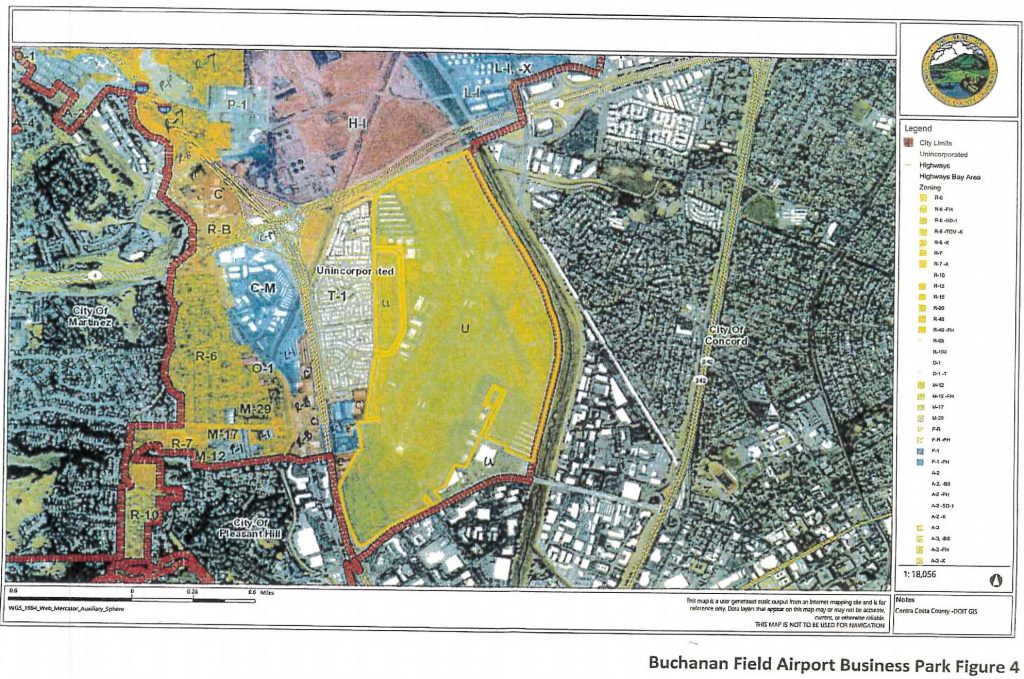
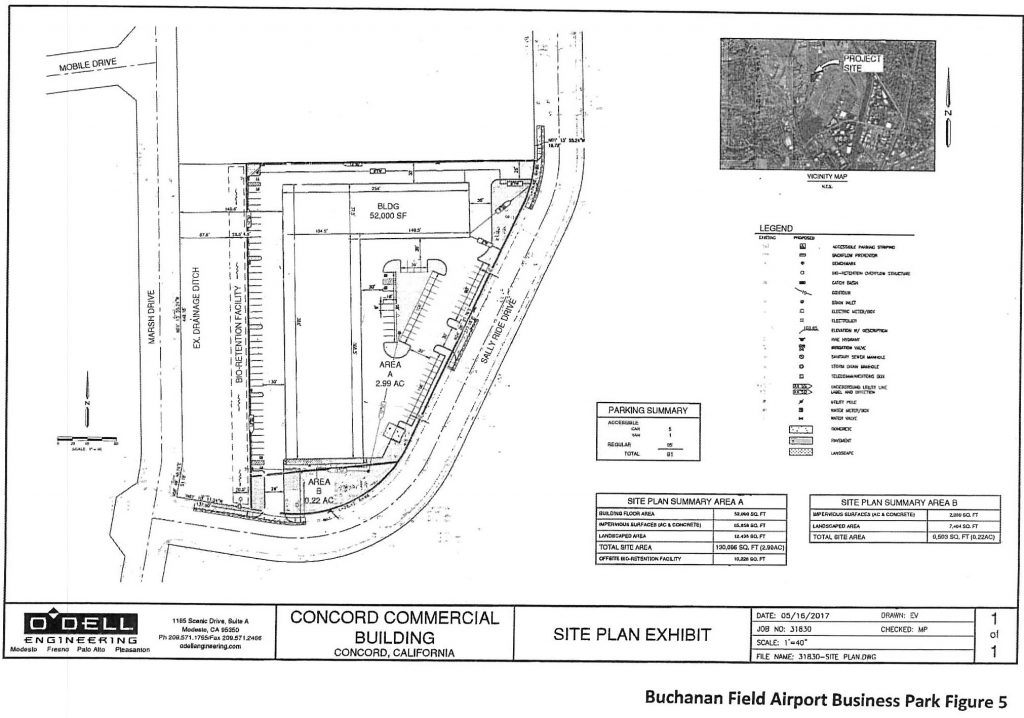
Contra Costa Supervisors flashed the green light on Tuesday for county airport officials to ink a long-term lease with a Southern California developer to build a 52,000 square foot, single story mixed-use building at 550 Sally Ride Drive near Buchanan Field Airport in Concord.

The supervisors’ 4-0 action serves as a signal that more commercial and aviation related developments are in the pipeline on county owned property adjacent to the county’s two airports – Buchanan Field Airport and Byron Airport.

District 3 Supervisor Diane Burgis was not in attendance because she was at a business meeting representing the supervisors.

The supervisors’ action on the consent agenda item means that Airports Director Keith Freitas can proceed to execute a long-term lease with Montecito Commercial Group, LLC for the lease of about 3.21 acres of unimproved county-owned property at the south end of Sally Ride Drive.

As part of the supervisors’ action, the developer will receive a mitigated negative declaration attached to the project’s environmental impact report.  During the EIR procedure, the Contra Costa Water District submitted a letter about the developer’s water usage and an easement issue.  Both issues were resolved according to the CCWD.

The county can expect to cash in on the proposed single-story office-warehouse-distribution building.  During the two-year construction period, the county will be paid $1,000 per month, but once construction is completed monthly rent will increase to $4,247 and will be adjusted every year on April 1 based on the Consumer Price Index.

The Montecito lease calls the one-year period beginning April 1, 2022, 2023, 2024, 2025, 2026 any adjustment will not be greater than 75 percent of the CPI factor.  For the one period beginning on April 1, 2028, throughout the lease term, any adjustment to ground rent based on CPI may not be more than 4 percent of ground rent then in effect.

The Montecito development serves as an indication more projects near the county’s two airports are on their way for future supervisors’ review and action, Assistant Airports Director Beth Lee said.  Supervisors are expected to soon consider two large developments proposed for the Byron Airport.  One is a proposed building for aviation use and the other building is for non-aviation use, Lee said.

Lee noted the developer has yet to complete design and other procedural work before the Montecito project can get underway.

Before the Montecito -Buchanan Field development, the last development constructed on county airport property occurred in 2012 at the Byron Airport when the Patriot Jet Team building was constructed, said Lee.

When asked if real estate developers are finally recognizing how county airport projects can generate ideal real estate deals, Lee responded: “We sure hope so. This could mean a major new source of revenue for the county.”

Two State Grants Approved for Sheriff-Coroner

Supervisors approved two major state grants for the Sheriff-Coroner’s Office.

A $300,000 grant from the California Division of Boating and Waterways was awarded to the Sheriff-Coroner for the removal of abandoned vessels and the vessel turn-in program on county waterways.  The grant goes into effect beginning Oct. 1, 2018 and remains in effect when grant funding runs out.  Ninety percent of the funding comes from the state and 10 percent is an in-kind match.

Supervisors also approved a $97,100 grant for the Sheriff-Coroner from the Office of the Attorney General, California Department of Justice, Division of Law Enforcement Tobacco Law Enforcement Grant Program.  The grant will be used from June 1, 2018 through June 30, 2020 to decrease juvenile access and use of tobacco products.

Both grants were approved as consent items.

City of Antioch gives notice of abatement of homeless encampment on 6th Street

Wednesday, April 11th, 2018

They must vacate the site before Monday, April 16

The City of Antioch has become aware of a substantial encampment on the private property near the intersection of 6th Street and McElheney Road in the area immediately east of downtown. As the City is obligated to enforce the Antioch Municipal Code and a series of State and federal regulations, an abatement process will commence in the coming days. The City of Antioch has secured an Abatement Warrant and will post a 72-hour notice no sooner than Thursday, April 12 that will direct the occupants of the encampment to vacate the site before Monday, April 16 when the abatement is expected to occur. The Abatement Warrant authorizes the City of Antioch to take all necessary measures to correct the violations and pursue compliance with all applicable laws.

Based on currently available information, the City of Antioch finds that the accumulation of garbage, human waste, hazardous materials, and similar conditions associated with this encampment violate local zoning laws that prohibit blight and preclude a tent encampment in this zoning district. Further, these conditions may violate regulations relating to the protection of local waterways, as the site is immediately adjacent to a flood control area that discharges to the San Joaquin River. As this is private property, the City will pursue reimbursement for the cost of the abatement from the property owner through its ordinary process.

As part of the abatement process, the City will coordinate its efforts with the Antioch Code Enforcement Division, the Antioch Police Department Community Engagement Team (CET), City of Antioch Animal Control, as well as the Contra Costa County Health Services Community Outreach Referral and Engagement (CORE) team and Contra Costa County Mental Health Services. The Antioch CET routinely works within the community to refer persons experiencing homelessness towards County or non-profit resources for assistance. The CORE team establishes relationships with clients through regular communication and visits to encampments and shelters and serves as a point of contact and referral for many social services. The Antioch Code Enforcement Division has also notified local outreach groups of the upcoming abatement but cannot confirm that any such groups will be actively involved with the abatement process. Any questions regarding this effort may be directed to Forrest Ebbs, Community Development Director, at febbs@ci.antioch.ca.us or Curt Michaels, Code Enforcement Manager, at cmichaels@ci.antioch.ca.us.

Frazier not happy So Cal water district voted to fund Delta twin tunnels plan

Wednesday, April 11th, 2018

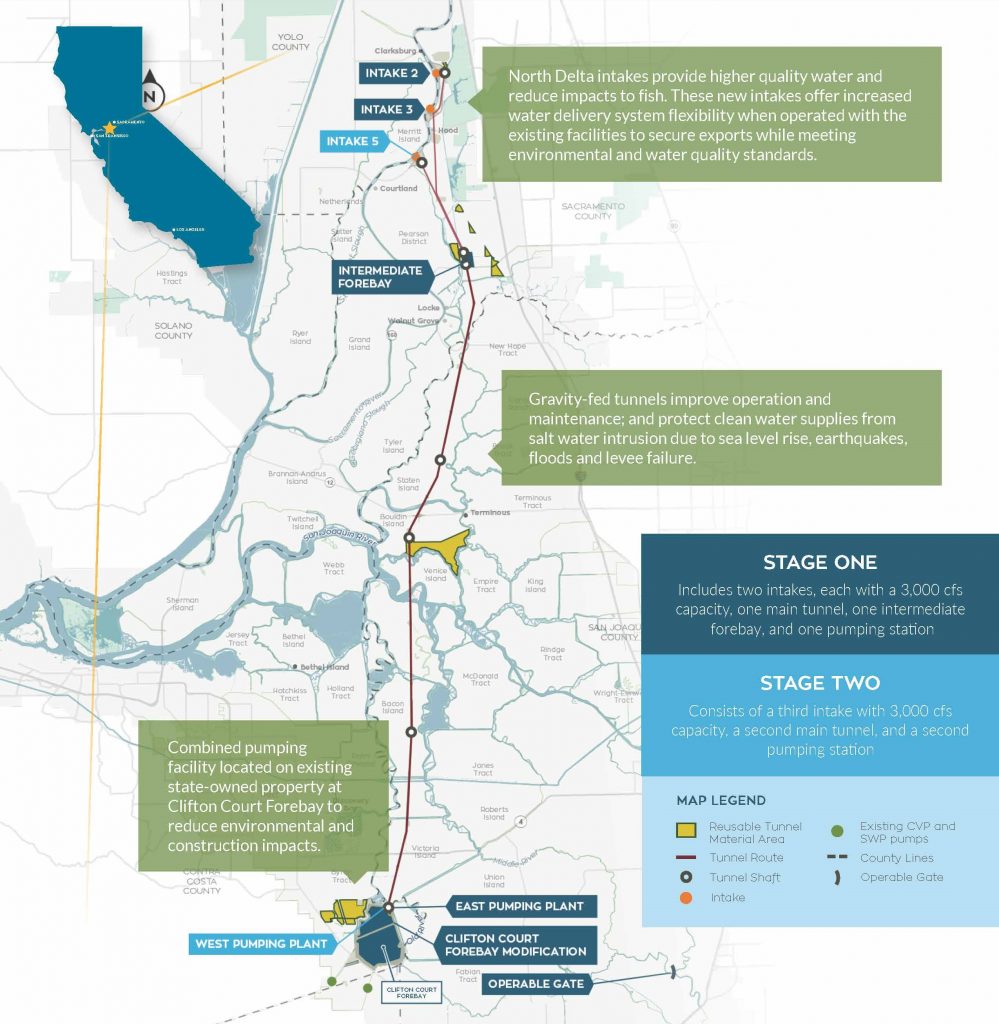
California WaterFix Delta bypass twin tunnels route map. From californiawaterfix.com.

SACRAMENTO – Assemblymember Jim Frazier (D-Discovery Bay) issued the following statement on Wednesday, April 11 after the Metropolitan Water District of Southern California’s Board of Directors voted to finance the majority of the proposed $11 billion Delta twin tunnels plan,  known as the California WaterFix:

“Californians deserve comprehensive 21st century water management solutions in light of climate change and more frequent and devastating droughts, not a decades old plan that creates no benefit and picks the pockets of hard-working people.

The vote by the Metropolitan Water District of Southern California shows that proponents of this project have been deceitful the whole time. There’s never been a “statewide” approach as they’ve claimed. It’s never been about sustainability but a foolhardy plan to overdraw the Delta to sell a limited and precious natural resource to the highest bidder.

This boondoggle uses antiquated methods for water delivery to degrade the water quality for all Californians and places greater burdens farmers in the Delta and Central Valley.

Just like the Colorado River Compact, this project is built on false pretenses of water availability. Met has already proven they are bad actors by overcharging San Diego for water many times. Given this history, my concern is Met may try to overcharge Central Valley farmers too.”

A press release issued Tuesday explaining their action, it stated, the board of directors of the Metropolitan Water District of Southern California voted today to provide the additional financing necessary to allow for the construction of the full California WaterFix project.

The board authorized $10.8 billion for the project to modernize the state’s aging water delivery system, making Metropolitan the primary investor in the project and more than doubling the agency’s initially planned investment to ensure the project is completed as originally proposed and studied.  “For decades, we have sought a solution to the problems of the Bay Delta, problems that put Southern California’s water supply at risk,” Metropolitan board Chairman Randy Record said. “We finally have that solution, California WaterFix. We simply could not jeopardize the opportunity to move this long-sought and much-needed project forward.”

WaterFix will be paid for by the people and businesses that use the water it helps deliver via the retail water agencies and cities that serve those customers. Metropolitan’s financing of the full project is expected to cost households on average up to $4.80 a month, though that average cost would be reduced as Metropolitan recoups some of its investments from the agricultural sector. Metropolitan will be selling or leasing capacity in the tunnels to allow water deliveries or exchanges for other parties.

About 30 percent of the water that flows out of taps in Southern California comes from Northern California via the Sacramento-San Joaquin Delta. But the Delta’s delivery system is badly outdated, its ecosystem is in decline and its 1,100-mile levee system is increasingly vulnerable to earthquakes, flooding, saltwater intrusion, sea level rise and environmental degradation.

Attempts to help the Delta have led to regulatory restrictions that have reduced water exports from the region. California WaterFix would modernize the state’s water delivery system by building three new water intakes in the northern Delta and two tunnels to carry the water under the Delta to the existing aqueduct systems in the southern Delta that deliver water to cities and farms.

In October 2017, Metropolitan’s board initially voted to participate in WaterFix and contribute up to 26 percent of its $17 billion cost, or about $4.3 billion.  But the majority of federal agricultural contractors who also import supplies via the Delta have yet to commit to investing in the project, leaving part of the project’s costs unfunded. In February, the state proposed building the project in stages instead–starting with two intakes and one tunnel, with a capacity of 6,000 cubic feet per second. An additional intake and tunnel would be added when funding allowed.

In today’s action, Metropolitan’s board chose between supporting this staged construction of the project or helping finance the full 9,000 cfs project all at once, with the hope of recouping the investment from agricultural interests once the project is completed. Staging the project also would result in potential permitting delays associated with the change in approach.

Under the staged approach, the cost of building one tunnel would be about $11.1 billion, with Metropolitan’s share of those capital costs coming in at $5.2 billion. The board ultimately voted to support building the full project all at once at an estimated cost of $16.7 billion, with Metropolitan’s investment at about  $10.8 billion in today’s dollars.

“Two tunnels better accomplishes WaterFix’s co-equal goals of improving the environment and securing supply reliability,” said Metropolitan General Manager Jeffrey Kightlinger. “With them, we’re better able to capture the high flows of big storms that climate change is expected to bring. We’ll better address the reverse flows that disrupt the Delta’s ecology. And we’ll have more flexibility to operate the water delivery system.”

Kightlinger added that investing in WaterFix does not change Metropolitan’s commitment to local supply development and conservation.

“This investment is just one part of ensuring Southern California and its $1.3 trillion economy has a reliable water supply in the age of climate change,” he said. “We need a diverse portfolio, including water recycling, storm-water capture, and increased conservation. We will continue to work hard and invest in those projects.”

The Metropolitan Water District of Southern California is a state-established cooperative of 26 cities and water agencies serving nearly 19 million people in six counties. The district imports water from the Colorado River and Northern California to supplement local supplies, and helps its members to develop increased water conservation, recycling, storage and other resource-management programs.

Council approves 35-home in-fill project by Discovery Builders on split vote

Tuesday, April 10th, 2018

Thorpe, Wilson oppose

By Allen Payton

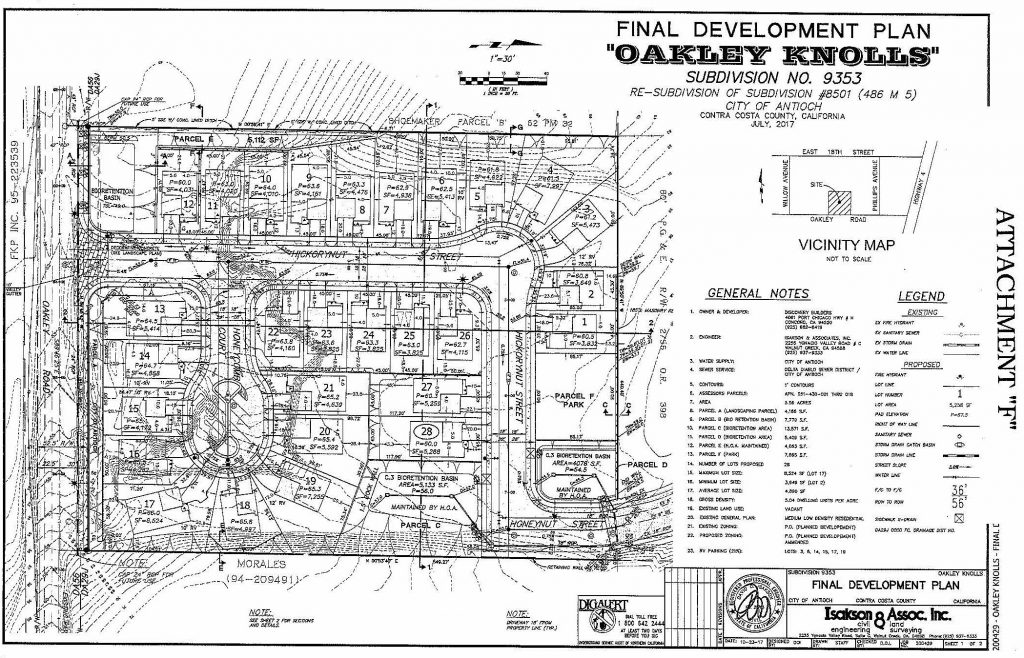
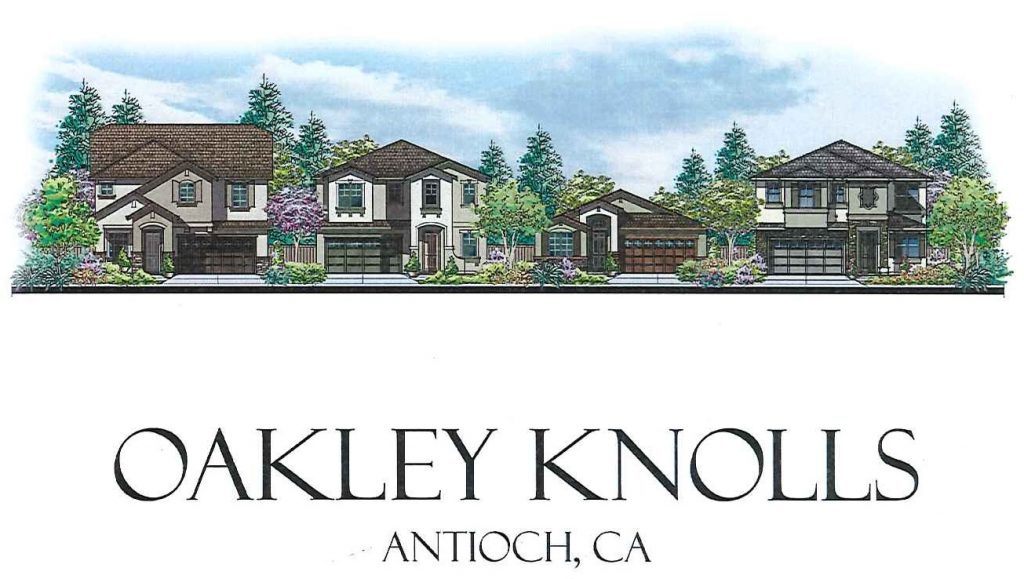
In other action at their Tuesday, April 10th meeting, the Antioch City Council split on the approval of a 35-home in-fill development project by Discovery Builders, known as the Oakley Knolls. The subdivision will be located off Oakley Road between Willow Avenue and Phillips Lane, next to the Almondridge subdivision in the northeast portion of the city. See the entire staff report and agenda item, here: Oak Knolls Project 04-10-18

Community Development Director Forrest Ebbs offered the report on the project and said staff recommended approval.

Mayor Pro Tem Lamar Thorpe expressed his surprise with the application for the project in light of the lawsuits filed by the same developer against both the city and DeNova Homes with a recently approved project in Antioch. DeNova Homes in turn submitted a letter to the city on Tuesday, with a copy of their lawsuit against Discovery builders.

“The audacity of Discovery Builders,” Thorpe said. “I can’t believe what I’m looking at. I sat down with Seeno, Jr. He was fine with everything. We’re trying to move forward this city…and there’s Discovery Builders standing in the way. It’s almost insulting.”

“The lawsuit Discovery Builders has with DeNova Homes…piece mealing the environmental,” he said to the developer’s representative.

“I’m not sure what you’re referring to,” he responded. “I got this letter three hours ago.”

Interim City Attorney Derek Cole interjected, “We have one developer who has filed a lawsuit against a city…then challenged another developer. Now they’re before the city asking for entitlements.

They’re making arguments that are inconsistent with that. For purposes of your actions, tonight those should be based on the merits.

Councilwoman Monica Wilson said, “I too am perplexed by this proposal. Talk to me about the EIR (Environmental Impact Report). I don’t see that in this process. They’re also asking for a lot of exceptions on this.

Ebbs responded saying, “They’ve determined that every impact can be mitigated. A mitigated negative declaration can be arrived at if they’re going to address each impact. Generally, a neg dec is appropriate for a project of this size. It would not normally trigger an EIR.”

Tiscareno had some questions on setbacks, then said, “I understand the confusion by some of my council mates. We received this same email this afternoon.”

Ebbs responded, “when the lawsuit is against us, we have to defend our own actions.”

The council then discussed and debated Councilwoman Lori Ogorchock’s idea to have more lots allowing for RV parking. They ultimately decided to leave it as was proposed to six lots.

The council then voted 3-2 to approve the project with Mayor Sean Wright, Councilmembers Tony Tiscareno and Ogorchock in favor, and Thorpe and Wilson voting against.

Antioch Council districting workshop results in changed Quadrants map, gets heated at the end

Tuesday, April 10th, 2018

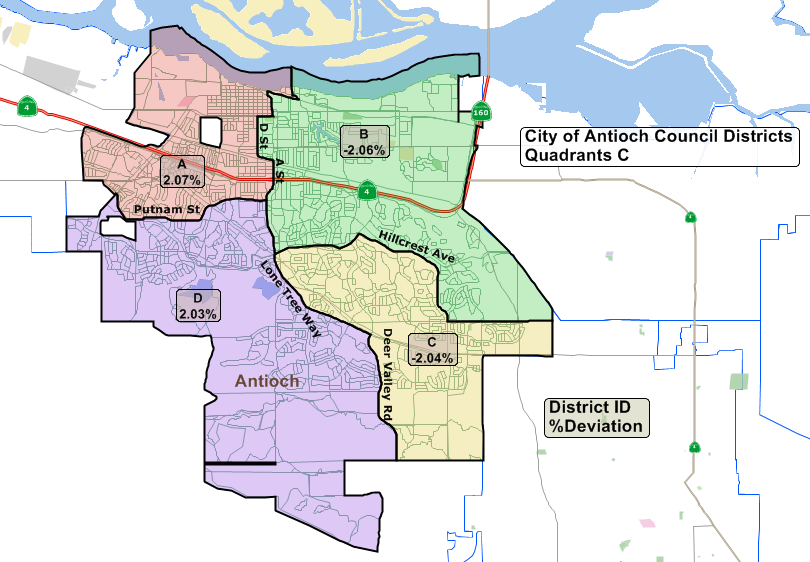
The revised quadrants map finalized at the council workshop on Tuesday, April 10, 2018.

By Allen Payton

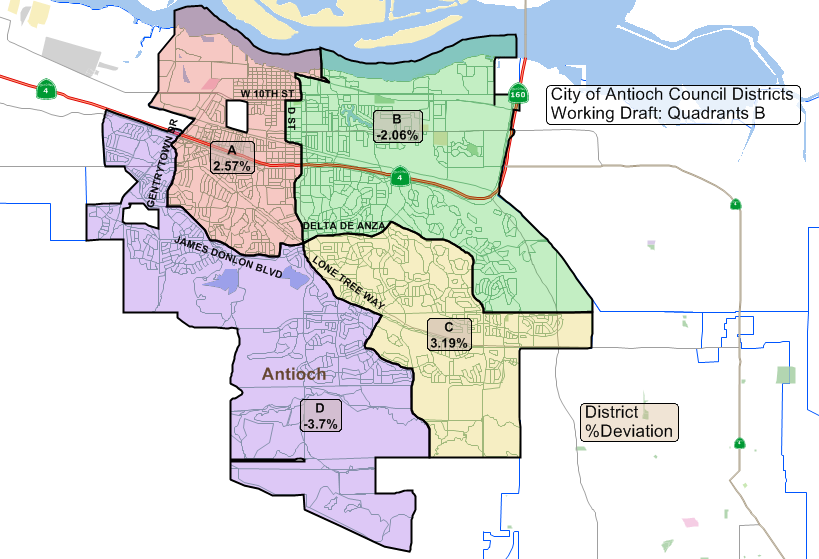
During the special workshop of the Antioch City Council on the maps for the district elections on Tuesday evening, April 10, they made changes to the Quadrants B map. It also got a bit contentious among the council members at the end. Fewer than 25 members of the public were in attendance.

The council considered realigning the Quadrants B map along the current congressional district boundaries. Councilman Tony Tiscareno and Mayor Sean Wright offered the most proposals for moving the lines to that map.

There was a discussion about the population growth since the 2010 Census, which the council must use for the basis of dividing the city into districts. One argument was that the population grew more on the south side of Highway 4. However, Mayor Pro Tem Lamar Thorpe disagreed.

“We can’t assume all the growth went to south and southeast Antioch,” he said. “I don’t put a lot of stock in the difference between 102,000 and 114,000 population. Many of the homes were empty.”

Interim City Attorney Derek Cole said, “Quadrants A would address the issues of illegally diluted voting. It didn’t really respect communities of interest.”

Wright offered some changes to the quadrants map, which the consultants from Q2 made.

Councilwoman Monica Wilson said, “It seems to be the changes that were made…we’re splitting communities of interest.”

Tiscareno said “I’ve gotten many calls.”

Thorpe said, “I’ve gotten many calls over on Hillcrest and Deer Valley. People looked at me like I was crazy when I proposed the quadrants.”

Cole then suggested the council rename the revised Quadrants B map to Quadrants C.

The revised map uses major thoroughfares on the south side of Highway 4 as the dividing lines, such as Putnam Drive, Lone Tree Way and Deer Valley Road, as well as the Delta DeAnza Trail on the west side of the city.

Public Comments

Marty Fernandez was the first member of the public to speak.

“I favor that C, now in the districting,” he said. “If one council member is good for downtown, two would be better, right, Lamar? No one has mentioned how this would affect Viera Lane. How many people live out there? How much is this going to cost the city? Let’s have some transparency, here.”

Garry Holman introduced himself as “a former two-term member of the city’s Economic Development Commission.”

“The city government has promoted or professed to promote a common interest,” he said. “Avoid the creation of a wrong side and a right side of the tracks, namely Highway 4. I don’t think Antioch is big enough for district elections.”

Holman said it will create “clear balkanization.”

“I oppose Working Draft 1,” he stated. “Working Draft 1 will only codify the right side and wrong side of town.” He concluded his remarks saying he supported the quadrants map giving downtown two council members.

Former Councilman Ralph Hernandez said he opposes districting and submitted a letter about his views.

“This started out as a racial threat, based on the Latino vote of other cities,” he said. “It does not represent Antioch. I’m very angered that the Latino community is being used for a lawsuit against Antioch. “

Former Councilwoman Norma Hernandez spoke next, saying “Looking at the maps to me that’s gerrymandering. The city attorney can only advise you. The decision is your own and the consequence is your own.”

“This totally disenfranchises the voters of Antioch,” she added. “A house divided against itself you know that can’t stand.”

Jeffrey Klinger was the last to speak saying, “I haven’t heard anything that’s changed my opinion of districting. It’s difficult to feel good about it as a citizen. But you had my sympathies.

My personal preference would be Quadrants C. I have a visceral reaction to using Highway 4 as the dividing line.”

Cole said the council will bring back the final decision on May 8 and you would bring back two maps.

“What I need tonight is do you want one map or two maps? he asked. “We have to publish these maps in the paper. We’re kind of at a critical juncture, here.”

Accusations of Self-Serving Gerrymandering by Councilmembers

The council members then discussed the matter, and it got a bit heated.

Thorpe said “this is costing us something and the public should know how much. Marty, I would agree with you that North Antioch deserves two council people. When you look at B section what you see there’s a lot of people who live in that area. If you’re an incumbent in that area you won’t be going anywhere for a very long time. The voting pattern…dilutes the voting power for north Antioch. What these maps don’t do, in any of these maps, it doesn’t create a Latino majority district. We won’t be creating a majority minority district. We’re a pretty integrated community. Your comments about downtown Antioch I couldn’t disagree more. I think it’s interesting how everyone uses Highway 4, uses this as a demarcation line. The survey we took the people north of the freeway are very unsatisfied with the city of Antioch. Two-thirds of the people in southeast Antioch were satisfied. People are not happy in north Antioch. Some of that has been caused by the continued expansion in south Antioch. We didn’t look at other cities, we looked at Antioch and that’s how we learned of the racially polarized voting.”

Councilwoman Lori Ogorchock said, “I too went out and walked. I went to the C Street area…showing them the maps. Most of them didn’t know we were doing the districting. I left over there and went to Beede Park. The majority of them I got signatures wanted Quadrants B. Several of them from C Street wanted Quadrants B. We are listening to what everyone is saying. We got several emails that were boilerplate emails. They’re talking about the school districts. They’re going to have five districts. So, what the school district does has nothing to do with what the city does. I know it’s a hard thing. We talk about Rivertown. It’s not everything below Highway 4.”

Tiscareno then said, “This is a very difficult situation. I had the pleasure to meet with some of the constituents, especially those who support Working Draft 1 and heard their stories. A lot of people did get a hold of me in regards to the Quadrants map. There are three maps that we’re looking at. This was really rushed…put toward us in a manner we might be making rash decisions. I thought we were going to have an ordinance on this. Putting forth a map before we have an ordinance is an oxymoron to me. We’re back down to two. If that’s what we’re doing, then I would love to hear from the public. The ones who are adamant…I heard you. But there’s 116,000 people in the community and I want to hear from others. Working Draft 1 and Quadrants C.”

Wilson then said, “I haven’t put out my preference. I haven’t touched any of the maps. I’m uncomfortable with C because I feel like a little gerrymandering was going on. I too have been out in the community. The majority is Working Draft 1. At the end of the day moving the line there’s a preference to you.”

Wright weighed in saying, “I’m still against this. But we’ve been told by our attorney that if we fought this we would probably lose. We have to be responsible with the fiscal. How do we keep Antioch the best that we can over the long-run. I’m OK with Quadrants C.”

He then defended the changes he made to the quadrants map saying, “When you gerrymander you draw crazy lines to make sure you have the people in your district. When drawing the lines, I went down the major thoroughfares. I didn’t look at which family is where. I’m in favor of Quadrants C going forward and Working Draft 1.”

Thorpe said, “she’s not referring to the changes that Mayor Wright was doing. She was referring to the area over here (pointing to the change in lines between Districts A and D of the Quadrants map). This is why I hate this process. It shouldn’t be in the hands of politicians. Don’t dismiss the people who are trying to participate in the process. Whether they are signing a petition or signing someone else’s letter. I find that particularly unfortunate.”

Tiscareno was not happy saying, “when pointing toward the Gentrytown are, when looking at Working Draft 1 or Quadrants B the Gentrytown area remains intact. Quadrants B or C go against me. Working Draft 1 actually benefits me. But I’m doing this for the benefit of the community. I do take some offense that (others were saying) gerrymandering is taking place.”

Cole then said, “either Working Draft 1 or Quadrants C, legally speaking either map would be sufficient if enacted…in compliance with the Voting Rights Act. I feel I have direction from council to move forward with Working Draft 1 and Quadrants C.”

The workshop adjourned and the council went into regular session.

The council meeting for deciding on which map the council will adopt was moved to May 8 from the special meeting that was previously scheduled for Monday, April 23. According to City Manager Ron Bernal the council can’t adopt an ordinance at a special council meeting and the City Attorney got permission from the other attorney threatening the lawsuit to extend the deadline to complete the process.


Antioch Council to hold special workshop to finalize district elections map before regular meeting Tuesday

Monday, April 9th, 2018

By Allen Payton

On Tuesday night, April 10, 2018 the Antioch City Council will hold a special workshop at 5:30 p.m. prior to their regular meeting at 7:00 p.m. to consider finalizing the drawing of the map for district elections. The council is considering two maps, one which creates a district north of the freeway known as Working Draft 1 and a second, known as the Quadrants which splits the north side of the freeway into two different districts.  The council will make efforts to redraw the Quadrants map but decided at their last meeting to leave the Working Draft 1 map as it is. Please see related article, here.

During their regular meeting, the council will hold a public hearing on and vote whether or not to even move forward with district elections. See complete agenda by clicking, here.

If so, then at a special meeting on Monday, April 23 the council will vote on which map they will use and finally, whether to implement district elections in 2018 or 2020.

The meeting is held in the Council Chambers at 200 H Street in Antioch’s historic, downtown Rivertown. It can be viewed on local TV channel or via livestream on the city’s website at http://www.ci.antioch.ca.us/CityGov/citycouncilmeetings.htm.

Los Medanos College to hold groundbreaking ceremony for new Brentwood Center

Monday, April 9th, 2018

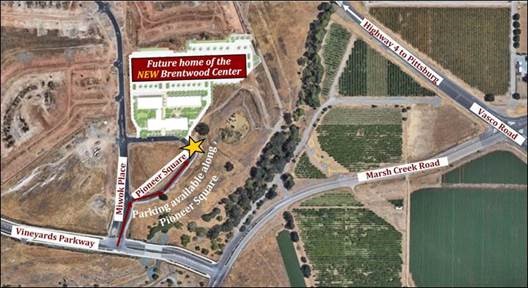
Los Medanos College (LMC) will be holding a groundbreaking ceremony for its new Brentwood Center on Wednesday, April 18, at 1:00 p.m. at the site of the future facility.  The new site is located at Pioneer Square and Miwok Place in Brentwood (near the intersection of Vineyards Parkway and Marsh Creek Road, just off of Highway 4).  The public is welcome to attend and the event is free; RSVPs are not required, and complimentary parking will be available.

This groundbreaking ceremony celebrates upcoming construction of a permanent Brentwood Center, which will expand and enhance learning opportunities for LMC students and Contra Costa County residents in the easternmost part of the College’s service area.  The new one-story Center, designed by Ratcliff Architects, will be approximately 55,000 square feet.  The project will be constructed on a 17.5 parcel purchased by Contra Costa Community College District (CCCCD) in 2011.  It will feature instructional classrooms, science labs, student support services, library resources, tutorial labs, bookstore and food service areas, “linger and learn” space, faculty/staff offices, and more than 700 parking stalls.  The current Brentwood Center, located in a leased facility at 101A Sand Creek Road in Brentwood, first opened in 2001.  The existing space consists of 22,000 square feet and serves approximately 2,800 students – accounting for about one-third of LMC’s enrollment.

The permanent $65 million facility is made possible through funding from CCCCD Bond Measures A (2006) and E (2014), thanks to support from voters in Contra Costa County.  Construction is expected to be completed in 18-24 months, with the new Brentwood Center projected to open in Spring 2020.

For more information, please contact Jennifer Adams, jadams@losmedanos.edu or (925) 473-7302.

Couple sees what appears to be a UFO over Antioch Wednesday morning

Friday, April 6th, 2018

Antioch resident, Paris Price and her fiancé witnessed and took a video of what appeared to be a UFO over Antioch, early Wednesday morning, April 3.

“I feel a little weird doing this but, I’ve never experienced something so fascinating,” she wrote. “I was referred to find an editor to see if anyone else can come forward to this event. Or have witnessed similar experiences in our area. The object came close in contact nearly landing while my fiancé was driving. It was no ball of light up close. I know what I saw. Happened Tuesday (night, Wednesday morning) at 12 AM around Country Hills and Deerfield.

Did anyone else see the phenomenon?