Archive for the ‘News’ Category

BBB warns of San Francisco Giants fake ticket scams

Tuesday, October 12th, 2021

By Alma Galvan, Marketing & Communications Manager, BBB of the Golden Gate

With the excitement that the San Francisco Giants are once again in the MLB playoffs. The Better Business Bureau (BBB) of The Golden Gate is warning fans that scammers might be selling fake playoff game tickets online. “Thanks to the internet, there are countless ways for consumers to find tickets and connect with online marketplaces, ticket sellers, and resellers,” said Lori Wilson, President of BBB serving The Golden Gate.

BBB is warning consumers to be smart when searching for and purchasing tickets, and to ensure that they are purchasing from a trustworthy source. The BBB has received hundreds of complaints on BBB Scam Tracker about ticket scams related to sporting events, concerts, theatre, and more.

Here are some tips for buying tickets online:

  • Purchase from the venue whenever possible.
  • Consider your source. Know the difference between a professional ticket broker (a legitimate and accredited reseller), a ticket scalper (an unregulated and unlicensed ticket seller), and a scammer selling scam tickets.
  • Check out the seller/broker on BBB.org
  • Buy only from trusted vendors.
  • Know the refund policy.
  • Always use a credit card whenever possible.
  • Be wary of advertisements promoting cheap tickets.
  • If you’re unsure, verify your tickets. Pay a visit to the arena where the event will be held. Present your ticket to “Will Call” (customer service) and they can verify if your ticket is legitimate and show you how to tell if a ticket is fake.

Go to BBB.org to look up online marketplace business profiles, file a complaint, or write a customer review.  Visit BBB Scam Tracker to research and report scams.


Antioch Council to consider redistricting, two more cannabis business areas Tuesday

Monday, October 11th, 2021

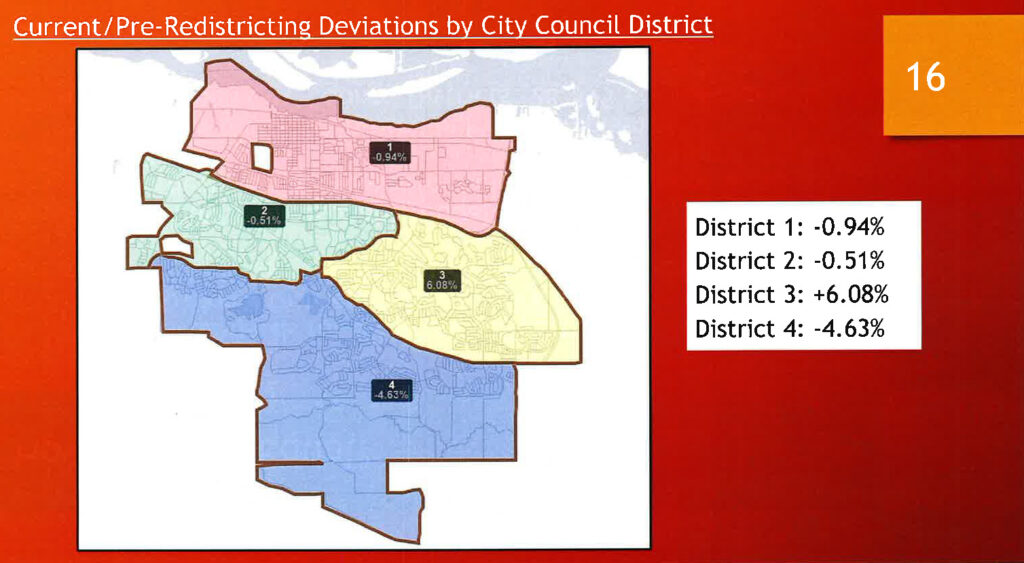
Current Antioch City Council districts approved in 2018 and population deviations from average based on 2020 Census data. Source: Q2 Data & Research presentation.

Antioch population grows from 102,372 in 2010 to 115,580 in 2020

By Allen Payton

During their meeting, Tuesday night, Oct. 12, 2021, the Antioch City Council will consider approving two more areas for cannabis business overlay districts, including historic, downtown Rivertown and the Somersville Road area. If approved only retail cannabis businesses would be allowed in the new areas. The regular meeting begins at 7:00 p.m. Cannabis Business Areas ACC101221

In addition, during a special meeting/study session at 5:30 p.m., the council will consider and discuss the criteria, data and process for redrawing the four council districts based on the 2020 Census population figures. The current districts are based on the 2010 Census. Since then, the city has grown from a population of 102,372 to 115,580. That results in the ideal population of 28,895 residents per district with a +/-5% allowed deviation or +/-1,545 people per district. Council Redistricting Study Session ACC101221

The City has hired the same consultant, Karin Mac Donald of Q2 Data & Research who assisted with the 2018 council district formation, as well as the state’s redistricting processes in both 2011 and this year.

Viewing

Members of the public can watch the meeting at https://www.antiochca.gov/live_stream, on Comcast Channel 24, or AT&T U-Verse Channel 99.

Public Comments

Members of the public wishing to provide public comment may do so one of the following ways (#2 pertains to the Zoom Webinar):

  1. Fill out an online speaker card by 3:00 p.m. the day of the Council Meeting located at: https://www.antiochca.gov/speaker_card.
  1. Provide oral public comments during the meeting by clicking the following link to register in advance to access the meeting via Zoom Webinar: https://www.antiochca.gov/speakers

– You will be asked to enter an email address and a name. Your email address will not be disclosed to the public. After registering, you will receive an email with instructions on how to connect to the meeting.

– When the Mayor announces public comments, click the “raise hand” feature in Zoom. For instructions on using the “raise hand” feature in Zoom, visit: https://www.antiochca.gov/raise_hand. When calling into the meeting using the Zoom Webinar telephone number, press *9 on your telephone keypad to “raise your hand”. Please ensure your Zoom client is updated so staff can enable your microphone when it is your turn to speak.

  1. Email comments to cityclerk@ci.antioch.ca.us by 3:00 p.m. the day of the Council Meeting. The comment will be read into the record at the meeting (350 words maximum, up to 3 minutes, at the discretion of the Mayor). IMPORTANT: Identify the agenda item in the subject line of your email if the comment is for Announcement of Community Events, Public Comment, or a specific Agenda Item number. No one may speak more than once on an agenda item or during “Public Comments”.

All emails received by 3:00 p.m. the day of the Council Meeting will be entered into the record

for the meeting.

Speakers will be notified shortly before they are called to speak.


CHP secures grant to increase motorcycle safety awareness

Monday, October 11th, 2021

By Jaime Coffee, Information Officer II, California Highway Patrol

SACRAMENTO, Calif. –To help save lives and reduce the risk associated with riding a motorcycle, the California Highway Patrol (CHP) will implement a new, federally funded grant campaign promoting motorcycle safety in California from October 1, 2021, through September 30, 2022.

The goal of the Get Educated and Ride Safe (GEARS) IV grant is to decrease the number of motorcycle-involved crashes and victims through education and enforcement campaigns.  In federal fiscal year (FFY) 2018-19, there was an approximate 10 percent decrease in motorcycle-involved crashes in California, followed by a 20 percent drop the following year based on provisional data.  Even with the decline, there were 6,849 motorcycle-involved crashes resulting in 306 deaths and 6,118 injuries within CHP jurisdiction in FFY 2019-20.

“While the decrease in the number of crashes is encouraging, there is still work to be done,” said CHP Commissioner Amanda Ray.  “The GEARS IV grant will support the Department’s efforts to increase motorcycle safety through education and enforcement.”

During this grant period, the CHP will participate in traffic safety education campaigns, such as “May is Motorcycle Safety Awareness Month.”  These campaigns will promote the use of U.S. Department of Transportation-compliant helmets for all riders and raise motorists’ awareness of sharing the road with motorcyclists.  The CHP will also increase enforcement efforts in areas with a high number of motorcycle-involved crashes, which were a result of speed, improper turning, and driving under the influence of alcohol and/or drugs.

Funding for this program was provided by a grant from the California Office of Traffic Safety, through the National Highway Traffic Safety Administration.

The mission of the CHP is to provide the highest level of Safety, Service, and Security.


Getting ready for 2022 Medicare Annual Enrollment

Sunday, October 10th, 2021

Tips for navigating plan options during the COVID-19

By Rick Beavin, Desert Pacific Medicare President at Humana

The annual Medicare Advantage and Medicare Prescription Drug Plan enrollment period is approaching. From October 15 to December 7, millions of people eligible for Medicare can sign up, switch or leave a health care plan to fit their coverage needs for 2022. Due to the ongoing COVID-19 pandemic, Medicare information and resources are available to help you choose the plan that’s right for you while staying safe. Websites, online educational events and one-on-one meetings with sales agents are all great ways to learn about your Medicare plan options. At the same time, it’s important to access Medicare resources online while protecting your personal information and avoiding fake offers and other scams.

Here are some tips for how to prepare for the Medicare annual enrollment period:

  1. Use an online tool

Go to the Medicare Plan Finder on Medicare.gov to compare plans, benefits and get an estimated cost for each plan based on an average member. If you are interested in Medicare Part D, which helps cover the cost of prescription medications, you can also enter the names of prescription medications you take to ensure those medications are covered by the plan you are considering.

On Medicare.gov, you can also learn about and enroll in Medicare Advantage plans, sometimes called Part C or MA Plans, and visit an insurance company’s website to understand more about what they offer. Insurance companies that offer Medicare Advantage plans can provide detailed information about their plans and services, plus prescription pricing information and other benefits. You can also check whether your primary care physician or other providers are in-network with the Medicare Advantage plan.

  1. Connect with experts

Many insurance companies are offering online workshops to review 2022 Medicare Advantage plan options. Also, check to see if you can schedule a one-on-one meeting with an insurance company sales agent in-person or by phone or video chat. Before you attend an education event or meeting, it’s a good idea to prepare a list of questions so that you can ensure you get the information you need. Does the plan include vision, hearing and dental coverage? Will telehealth services be covered? Is transportation to your medical appointments included?

  1. Protect yourself against Medicare scams

The federal Medicare agency has warned that scammers may try to use the pandemic to steal Medicare beneficiaries’ Medicare numbers, banking information or other personal data. Scammers may try to reach out to you by phone, email, text message, social media or by visiting your home. Only give your Medicare number to your doctor, pharmacist, hospital, health insurer or other trusted health care provider. Do not click links in text messages and emails from unknown sources, and hang up on unsolicited phone calls.

If you are not comfortable accessing plan information online, you will have the option to meet in-person with an agent this year. Or Medicare.gov has an option for setting up a phone call. To learn more, go to Medicare.gov or call 1-800-MEDICARE (800-633-4227).


Contra Costa Transportation Authority awarded $400,000 to develop effort to reduce vehicle miles traveled

Saturday, October 9th, 2021

Source: CCTA

The Contra Costa Transportation Authority (CCTA) has been awarded $400,000 to develop a Vehicle Miles Traveled (VMT) Mitigation Framework that will ultimately help Contra Costa County fight climate change. The more miles vehicles travel, the more greenhouse gases and air pollution are emitted into the atmosphere. The VMT Mitigation Framework project is aimed to help CCTA better define, analyze, and develop options to mitigate the environmental effects of projects throughout Contra Costa.

With funding made possible through a California Department of Transportation Sustainable Planning Grant, one element of the study will explore allowing developers and transportation agencies–whose projects contribute to VMT increases–to offset emissions through payment into a “VMT Mitigation Program.” The VMT Mitigation Program funds could then support green projects that help reduce overall VMT in Contra Costa County, generating a positive impact on climate, the environment and public health.

“This groundbreaking study will set out a framework for a more holistic approach to analyzing future development and transportation projects that will not only help local agencies like ours plan for a more sustainable future but could serve as a model for agencies across the state,” said CCTA Executive Director Timothy Haile.

California Senate Bill 743 (SB 743) reformed the process for the California Environmental Quality Act (CEQA) to require that local jurisdictions evaluate traffic impacts of new development by measuring VMT, so that transportation-related environmental impacts are tracked for alignment with state greenhouse gas emission reduction goals. Undertaking this study is just one way that CCTA is working to mitigate the impact of vehicles miles traveled to reduce harmful pollutants and greenhouse gas emissions countywide.

CCTA is also lending their expertise to the SB 743 Implementation Working Group, a consortium of forward-thinking agencies providing thought leadership for the State on the topic of VMT mitigation.

About the Contra Costa Transportation Authority

The Contra Costa Transportation Authority (CCTA) is a public agency formed by Contra Costa voters in 1988 to manage the county’s transportation sales tax program and oversee countywide transportation planning efforts. With a staff of twenty people managing a multi-billion-dollar suite of projects and programs, CCTA is responsible for planning, funding and delivering transportation infrastructure projects and programs throughout the County. CCTA also serves as the county’s designated Congestion Management Agency, responsible for putting programs in place to manage traffic levels. More information about CCTA is available at ccta.net.


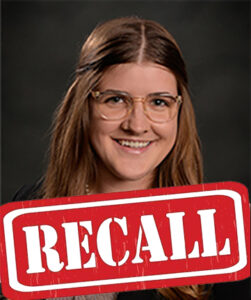
Embattled Antioch School Board president served with recall notice

Saturday, October 9th, 2021

Proponents include parents, teachers, staff and a principal

“the students of Antioch Unified School District were no longer the focus of the Board of Education and drastic action was needed” – David and Lindsey Amezcua

Second Antioch official to currently face potential recall including the city’s mayor

By Allen Payton

On Friday afternoon, Oct. 8, 2021, Antioch School Board President Ellie Householder was served with a notice of recall by David Amezcua, a registered voter and resident of the school district. She was served in the parking lot of her home at 4:41 p.m. according to Amezcua’s wife, Lindsey who was with him.

Householder is the second Antioch official to currently face potential recall including the Mayor Lamar Thorpe. But unlike the mayor, who tossed his recall notice on the ground, twice, when served with his papers, the embattled trustee accepted them and simply said, “Beautiful,” Amezcua shared. (See related article)

The notice includes a list of 20 registered voters who reside within the district and are parents, teachers, staff and a principal.

“The decision to initiate a recall was not made lightly. We discussed the seriousness of taking this action for several months before we decided to act,” the Amezcaus said on behalf of the signers. “It became apparent to us that the students of Antioch Unified School District were no longer the focus of the Board of Education and drastic action was needed to correct the direction we are headed.”

“When the Vote of No Confidence (by AUSD faculty and staff) wasn’t enough to get the trustees to vote to remove Householder as president, we decided to start this process. We are a group of parents, teachers, staff, and administrators that know AUSD needs a leader that wants to work with our educators to achieve collective goals, a leader that is supportive, a leader that wants to effect change in a constructive manner,” they added. “As has been the rally cry for several years, #WeAreAUSD and we demand better.” (See related article)

The notice offers the reasons for the recall including abuse of power and violations of state Education Code and federal law, which are cited in the notice.

“NOTICE OF INTENTION TO CIRCULATE RECALL PETITION

TO THE HONORABLE Elizabeth Householder: Pursuant to Section 11020, California Elections Code, t he undersigned registered qualified voters of the Antioch Unified School District (AUSD), in the State of California, hereby give notice that we are the proponents of a recall petition and that we intend to seek your recall and removal from the office of AUSD Trustee, Antioch, California, and to demand election of a successor in that office.

The grounds f or the recall are as follows:

You are disrespectful of Board Members, Staff and Public who disagree with you during AUSD Board meetings. You have committed Brown Act violations by blocking/deleting comments on Social Media (eliminating equal access). You assert the president must not only collaborate on, but approve, the board agenda. (Ed. Code/Board Policy does not require board president’s approval); You abuse your authority by calling and/or adding agenda items at special meetings that were neither urgent nor necessary. You violated the Family Educational Rights and Privacy Act (FERPA), by publicly posting an unauthorized video of students without permission. You have committed numerous Robert’s Rules of Order Violations during meetings presided over by you: Allowed a substitute motion on a non-debatable “motion to table”; Ongoing efforts to limit or eliminate public comment by removing agenda items without consensus of the board; Stopping public comments midstream when you felt it wasn’t appropriate or directly related to the agenda item; Requesting staff to use personal judgement on which public comments should be entered into public record and which should not; and Abused presidential authority by not recognizing staff / board members’ requests to speak/provide input during a public meeting.”

Recall Proponents

The 20 signers of the recall petition include Lindsey Amezcua, John Muir Elementary School Principal Michael Flosi, former Antioch Council Member and current Planning Commissioner Martha Parsons, former Antioch Planning Commission Chair Janet Rossini Zacharatos, Contra Costa County 2021 Humanitarian of the Year Velma Wilson, and Allison Pantell, April Scott-Garrett, Baltazar and Celestina Perez, Daniel and Denise Rundall, Elizabeth Rieger, Gregory Andelin, Jessica Fernandez, Jessie Allen Lee Wison, Joshua David Isenbarger, Kathleen Cabrera (who served Thorpe his recall notice), Kelsey Martinez, Lakisha Monique Jarvis, Laura Young, Leslie and Robert Scudero, Mary-Ann Bellante, Nancy Mauri, Norma Barela, Shanae Nicole Souza, Susan Jimenez, Tamara Daste, Victoria Lee Virgen.

Recall Process

Householder’s term ends in December 2022, and she currently lives in Area 1 which is represented by Trustee Antonio Hernandez. So, unless the board decides to redraw the current trustee area lines to move her into Area 2, during this year’s redistricting process, Householder will not be able to run for reelection. Householder is also Antioch’s elected city clerk serving in a term that continues through December 2024.

She has seven days to offer a written response to the notice which will be included with the reasons and printed on the petitions which will be used to gather signatures. The district includes all of Antioch and portions of both Oakley and Pittsburg. Householder was elected in 2018 and serves in an at large seat representing the entire school district. (See  map)

According to the Procedure for Recalling State and Local Officials on the California Secretary of State’s website, and the Guide for Recalls on the Contra Costa County Elections website, organizers must gather the signatures of at least 15% of registered voters in the Antioch Unified School District, if the registration is between 50,000 and 100,000, to qualify the recall for the ballot. There are approximately 70,000 registered voters in the district which requires organizers gather approximately 10,500 signatures within 160 days or about 66 per day on average. (Actual figures cannot be determined until the County Elections office reopens on Monday.)

The notice also includes the following details for the recall process:

The original notice and proof of service will be filed with the Contra Costa County Clerk/Recorder.

Elections Code section 11023. (a) Within seven days after the filing of the notice of intention, the officer sought to be recalled may file with the elections official, or in the case of a state officer, the Secretary of State, an answer, in not more than 200 words, to the statement of the proponents.

(b) If an answer is filed, the officer shall, within seven days after the filing of the notice of intention, also serve a copy of it, by personal delivery or by certified mail, on one of the proponents named in the notice of intention.

(c) The answer shall be signed and shall be accompanied by the printed name and business or residence address of the officer sought to be recalled.

Efforts to reach Householder for comment were unsuccessful prior to publication. Please check back later for any updates to this report.

Antioch councilwoman claims city attorney told all council members former police chief interfered with investigation of December incident with her sons

Friday, October 8th, 2021

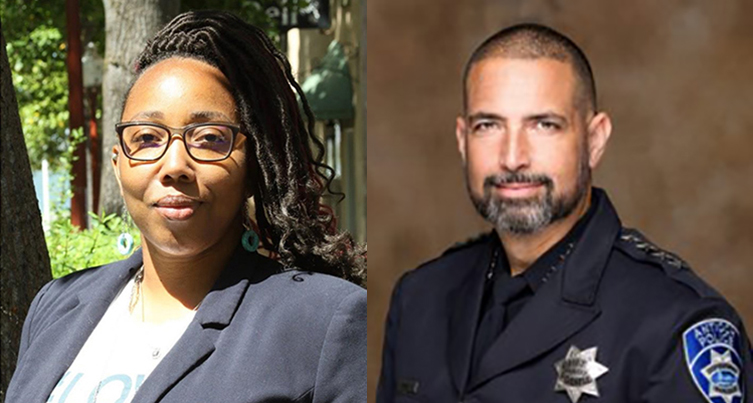
Antioch District 1 Councilwoman Tamisha Torres-Walker and Antioch Police Chief Tammany Brooks.

“…the first initial communication from the city attorney’s office to the full Council notifying us all that the chief had it [sic] in fact interfered in the outcome of at least one or two of the final findings.” – Councilwoman Torres-Walker

City staff has called for a new investigation due to a recently discovered impropriety and to avoid unfairness

Resident claims city attorney email to “city leaders” was “released” and she read it

Staff, other council members and Brooks can’t or won’t answer questions about allegations against him

By Allen Payton

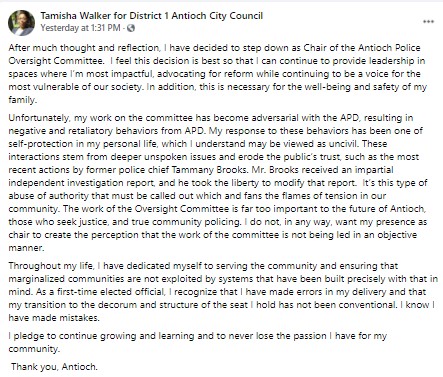
In announcing her resignation as chair of the Antioch City Council’s Police Oversight Standing Committee on Tuesday, District 1 Councilwoman Tamisha Torres-Walker claimed that former Police Chief Tammany Brooks “took the liberty to modify the report” of the outside investigation of the incident involving police officers, her sons and her last December. They were riding an ATV and dirt bike illegally on city streets. Her younger son was stopped, but the older one drove off, went home and returned with the councilwoman. (See related articles here and here)

She demanded an independent investigation of the incident, making several accusations against the officers. The executive summary of the report from the investigator showed all Torres-Walker’s claims were either unfounded or not sustained. (See related article)

However, last Friday, Oct. 2nd, the City of Antioch announced that a second independent attorney will be hired to investigate her complaint due to “recent evidence” and to avoid “impropriety”. (See related article)

In a portion of the Tuesday announcement on her official Facebook page, Torres-Walker wrote: “Mr. Brooks received an impartial independent investigation report, and he took the liberty to modify that report. It’s this type of abuse of authority that must be called out which and [sic] fans the flames of tension in our community.”

Torres-Walker’s post on her official Facebook page on Tuesday, Oct. 5, 2021.

Claims City Attorney Informed All Council Members of Brooks’ Interference in Investigation

In an email late Wednesday night, Councilwoman Torres-Walker was asked, how do you know the details of what happened with the first investigation and reasons for the need for a second? Was that information shared with you by city staff? Was it Ron Bernal, Thomas Lloyd Smith or someone in the Antioch Police Department? Was it shared in closed session with all council members since it’s a personnel matter? Also, were you given a copy of the complete report from the first investigation?

She responded Thursday morning, writing, “First, I had decided to step down as chair long before my colleagues made the request given what I know regarding Chief Brooks’ interference in the first investigation.

No, I was not allowed in closed session to be debriefed on all the details of how Chief Brooks interfered, but I was involved in the first initial communication from the city attorney’s office to the full Council notifying us all that the chief had it [sic] in fact interfered in the outcome of at least one or two of the final findings.

I never requested a second investigation I think it is a waste of city dollars. What I would like and what I wanted was the original report to be released so that we could move on.”

Questions for City Staff, Brooks

In an email sent late Wednesday night, City Manager Ron Bernal, City Attorney Thomas Lloyd Smith, Acting Police Chief Tony Morefield and Chief Tammany Brooks (who is still in his position through Saturday) were asked the following: Is what she wrote (in her resignation announcement) correct? Is that the impropriety that occurred that was recently discovered and the basis for the call for a second outside investigation?

If so, how does she know the details of what happened with the first investigation and reasons for the need for a second? Was that info only shared with her, or all council members?

Was it shared in closed session since it’s a personnel matter? If so, did the councilwoman violate closed session regulations by revealing it publicly?

Also, was she given a copy of the complete report from the first investigation? If what she wrote isn’t correct, can you please clarify for the public and respond to what the councilwoman wrote?

No Response from Staff, Questions Resent, Council Members CC’d

No response had been received as of 6:00 p.m. Thursday. The questions were then resent to the same individuals, as well as all five council members. The following additional questions were also asked: Did Chief Brooks modify the report from the investigation of her complaint, as she claimed? Is that what the impropriety was, and unfairness referred to in the press release about the need for a second investigation? If not, what was it?

Ogorchock responded Thursday night with, simply, “I’m not at liberty to say at this time.”

More Questions for Staff, Council

Torres-Walker’s response and the following, related questions were sent to the same staff members and all five council members Thursday night: Is that true that Attorney Smith said that to the council about Chief Brooks? If so, when was Chief Brooks informed of the allegations against him, and was he given an opportunity to respond and share his perspective with the council members?

Did Chief Brooks consult with Attorney Smith prior to responding to the draft or preliminary report of the investigation?

Two Council Members Respond But Can’t Comment

In response, District 3 Councilwoman Lori Ogorchock said, “It’s a personnel matter, so I can’t comment.”

“I can’t comment on any of that, as it’s a personnel issue and with confidentiality at stake, I can’t comment,” District 2 Councilman Barbanica also said in response.

Resident Claims She’s Read Email from City Attorney to Council Members

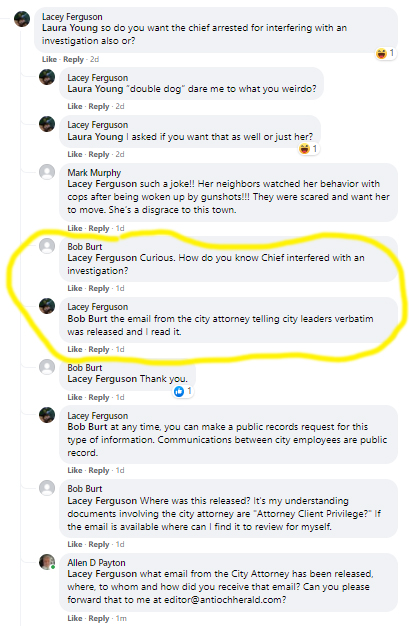
Antioch resident Lacey Brown’s comment on Torres-Walker’s official Facebook page below the post about her resignation as chair of Police Oversight Standing Committee on Tuesday, Oct. 5, 2021. (See highlighted section)

A comment was made by Antioch resident Lacey Brown (aka Ferguson on Facebook) on Torres-Walker’s official council page on Tuesday, below the post about the councilwoman’s resignation as chair of the Police Oversight Standing Committee. In response to the question in another comment, “How do you know Chief interfered with the investigation?” Brown/Ferguson claims “the email from the city attorney telling city leaders verbatim was released and I read it.”

That information, a screenshot of the conversation and additional questions were then emailed to city staff and council members, including: what email is she referring to, an email from Attorney Smith to the council members? To whom was it released? Who shared it with Ms. Brown/Ferguson for her to read?

Attempts to reach Brown asking her what email from the City Attorney has been released, where, to whom and how did she receive that email, were unsuccessful prior to publication.

As of Friday, Oct. 8 at 3:00 p.m. no one on city staff, Mayor Thorpe, Mayor Pro Tem Wilson nor Brooks had responded.

Please check back later for any updates to this report.

Governor signs Senator Glazer’s key local proposals

Friday, October 8th, 2021

Small wineries can open two off-site tasting rooms     

Local governments gain new tools for overseeing short-term rentals

Thousands of acres of East Bay wilderness to be preserved

By Steven Harmon, Policy Analyst/Communications, Office of Sen. Steve Glazer

State Senator Steve Glazer. (D-7-Orinda)

Governor Gavin Newsom has signed three long-standing proposals advanced by Senator Steve Glazer, (D-7-Orinda), that will have a direct impact on residents of Contra Costa and Alameda counties.

“It’s very gratifying to see important legislative priorities for my district signed into law,” Senator Glazer said. “These are bills and proposals that I’ve been working on with partners, in some cases, for years. I’m thankful to Governor Newsom for ushering them across the finish line with his signature, a nice reward for all the hard work put in by key allies and friends.”

The three proposals that Gov. Newsom signed were:

Winegrowers: Offsite Tasting Rooms (SB 19)

SB 19 will allow licensed winegrowers or brandy manufacturers to operate two off-site tasting rooms under their winegrower licenses. This bill will particularly help small and family-owned wineries to operate as California continues to recover from the Pandemic.

Approximately 55 wineries are located in Senator Glazer’s district, including in Livermore, Oakley, Brentwood, Byron and Moraga.

“Small and family-owned wineries have struggled the most among wineries, because they rely heavily on visitors and direct sales,” said Senator Glazer. “With tourism taking a terrible hit from the pandemic and consequences of the wildfires, I’m glad that Governor Newsom recognized that these wineries are in need of that additional outlet to provide tastings and sales to their customers.”

Prior to the current tasting room closures caused by the COVID-19 pandemic, many wineries viewed additional off-site tasting rooms as a significant benefit. This was even more pressing for many small wineries looking to expand business opportunities, especially those wineries that produce their wine in an agreement to use the facility and equipment of a second (usually larger) winery.

Steven Kent Mirassou, owner and winemaker of Steven Kent winery, part of the Livermore Valley Wine Country Association, said SB 19 will make a difference to the industry, but also to wine enthusiasts.

“The ability to take care of people – which is the true center of hospitality and wine – is important at all times,” Kent Mirassou said. “It is especially crucial during the pandemic when we are all striving to maintain connections with our larger circle of friends and patrons, that small wineries remain open and thriving. I am so appreciative of the hard work and perseverance that Senator Glazer and his staff have shown in helping us continue to add joy and richness to peoples’ lives.”

With the COVID-19 pandemic, tasting rooms have been required to either close or significantly alter their operations for tastings, but can continue to operate sales for curbside pickup or delivery. Tourism has become almost nonexistent and is not expected to recover for several years. As a result, the impact from COVID-19 to the wine industry is estimated to be $5.9 billon, with a $3 billion loss in tasting room sales.

In addition, the 2020 wildfires had a substantial impact on the wine industry. According to the Wine Institute, the estimate of damage from 2020 wildfires amounts to $3.7 billion, including a loss of $41 million in tasting room sales and $57.6 million in lost winery structures.

Allows Increased Fines on Short Term Rental Violations – to Rein in House Parties (SB 60)

Under SB 60, cities and counties can now impose increased penalties on short-term rental hosts who violate local property rental laws – an attempt to rein in house parties, sometimes violent, that have been occurring at short term rentals because of lax oversight of these properties. SB 60, which took effect immediately, authorizes localities to impose fines up to $5,000 for a violation of a short-term ordinance.

“These large gatherings have made some short-term rental properties the sites of underage drinking, brawls, noise complaints, and violence,” Senator Glazer said. “I’m grateful to Governor Newsom for signing this bill so that local governments have the tools to ensure the safety of those who want to continue to use short-term rentals, and of our residents who live nearby these properties.”

The legislation was sparked by a spate of violence at short-term rental properties, most notably a mass shooting in Orinda, where five people were killed. Other abuses at short-term rentals occurred in Los Angeles and other locales in Northern California, including a party at a Sunnyvale rental where a teenager was shot and killed in August after violence erupted at the gathering. (See related articles, here, here, here and here)

Smaller fines were proving to be ineffective in deterring violations. Hosts were able to charge so much rent for big houses that the fines, if they occurred, were just seen as a cost of doing business.

“Violence and destructive behavior at short term rentals has become a true public safety issue in cities throughout California, as residents of Orinda know all too well,” Orinda Mayor Amy Worth said. “I am thankful that mayors like me will now have the ability to impose fines at a level high enough to get the attention of property owners who operate short term rentals to ensure the safety of our residents. Senator Glazer has been a true champion of this issue, and we are thankful for his hard work on making this California law.”

The use of short-term rentals has skyrocketed by 105 percent over just the past three years, according to vacation rental data compiled by AirDNA. Though short-term rentals offer a way to improve tourism and earn owners some extra money, their recent proliferation has allowed bad actors to use the platform to advertise and secure homes for large parties, oftentimes in violation of local ordinances.

The Covid-19 pandemic led to an increase in people using short-term rentals to evade public health restrictions on large public gatherings. Noise complaints as a result of parties have tripled since the start of the pandemic, according to Host Compliance, which tracks legal compliance among short-term rentals for 350 cities and counties in the U.S.

In the last half of 2019, 42 people were shot inside or just outside a short-term rental property nationwide and 17 people died.
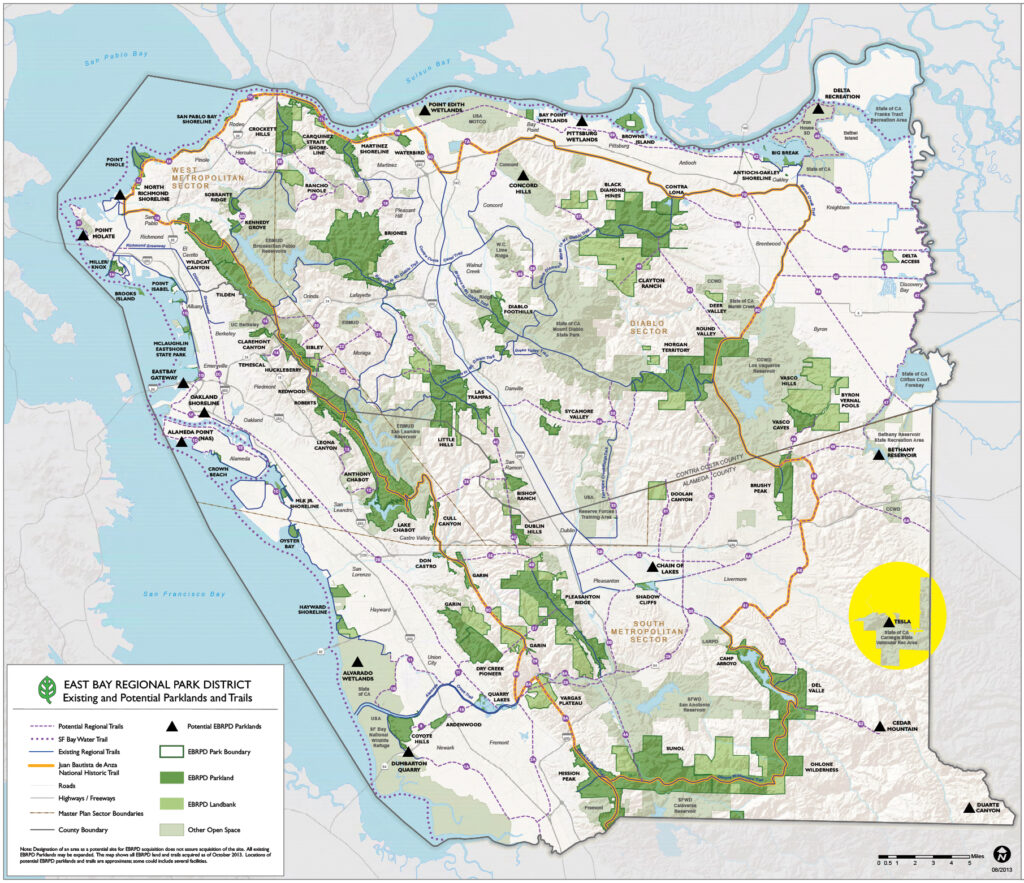
East Bay Regional Park District 2013 Master Plan Map designating Tesla site (yellow area) as a potential regional preserve. Source: EBRPD

Tesla Land Preservation (Budget)

Thousands of acres of East Bay wilderness threatened by the expansion of an off-highway vehicle park will instead be preserved. (See related article)

The legislation, approved in the Governor’s recent budget bills and took effect immediately, ends plans to expand the Carnegie State Vehicular Recreation Area into the 3,100-acre Tesla parcel in the southeast corner of Alameda County, which scientists have described as a biologically unique habitat and Native Americans have long considered to be a sensitive historical site.

That land will now become a new state park closed to motorized recreation. The state will reimburse the Off-Highway Vehicle fund for the purchase price of the land, its appreciation in value, and the money spent planning the expansion, which was opposed from the start 20 years ago by nearby residents and public agencies. That money will go toward the purchase and development of an off-road park at another location.

“Our community and region will preserve this natural and cultural treasure, leaving it pristine for future generations to enjoy,” Senator Glazer said. “Meanwhile, off-road enthusiasts will be able to keep their current park and receive funding to develop another park on land that’s more suitable to that kind of recreation. I appreciate the hard work that so many key individuals played in moving this critical environmental and cultural issue to the Governor’s desk, and, of course, for the Governor to work with all the players to sign this important agreement.”

Senator Glazer partnered with Assembly member Rebecca Bauer-Kahan, the Sierra Club, Friends of Tesla Park and other environmental organizations and individuals in getting the final approval from the governor’s office. Earlier, former Assembly member Catharine Baker worked with Senator Glazer on the same issue.

Nancy Rodrigue, a leading member of the Friends of Tesla Park steering committee and Livermore resident, said she was proud that years of hard work and persistence paid off.

“A very special thank you goes to Senator Glazer and Assembly member Rebecca Bauer-Kahan for the many years of work on this special project,” Rodrigue said. “Tesla Park will now be a reserve with no motorized recreation. Instead, the future holds Tesla as a protected native landscape for hikers, history buffs, nature lovers, researchers and educators.

“Saving Tesla Park has been a long, difficult, and now a rewarding journey, and we are grateful for the tremendous work of so many for saving Tesla as a legacy for future generations,” Rodrigue continued. “We are looking forward to planning the next phase of Tesla Park as a nature and cultural preserve, providing passive recreation and education to the community of the Bay area, the San Joaquin Valley, and Northern California.”