Archive for the ‘News’ Category

Antioch school board to meet in person, discuss performance evaluation of superintendent, vote on censure of board president Wednesday night

Wednesday, October 27th, 2021

District-wide use of force policies and procedures also on agenda

By Allen Payton

The Antioch School Board will meet in person, tonight for the first time since early 2020. During a closed session beginning at 6:00 p.m., the board will once, again discuss the performance evaluation of Superintendent Stephanie Anello-Cantando. This is the third time the board has held a meeting on the superintendent performance evaluation or for her discipline/dismissal/release in the past two months. (See related article)

2:15 PM UPDATE: The board has yet to hold the annual performance evaluation of Anello-Cantando and has requested her to a hire a consultant to help them with the process. (See agenda item 12.E.) Yet, they’re having the evaluation, tonight before the consultant has been hired. Questions were sent Wednesday afternoon to all five trustees and the superintendent asking them why the board is holding the evaluation of the superintendent, tonight, before they’ve hired the consultant to assist them with the process, which is on the agenda and who requested the closed session agenda item. In addition, a Public Records Act request was submitted for all emails amongst the trustees and between all the trustees and the superintendent regarding tonight’s meeting agenda.

Two items on the regular agenda, beginning at 7:00 p.m., are the censure of Board President Ellie Householder and a board policy on the use of social media by trustees. Both were requested by Trustee Mary Rocha. The censure vote was also requested by members of the public, including the leaders of the recall against Householder, following her repeated, unilateral actions removing from meeting agendas a vote to remove her as board president, violating Robert’s Rules of Order and not recognizing trustees and the superintendent when they tried to speak on agenda items, as well as Householder’s posting of a video of a student being restrained by security and Antioch Police officers at Antioch High School. (See related articles here, here, here and here)

The meeting will be held in the Deer Valley High School Theater at 4700 Lone Tree Way in Antioch.

Also, on the agenda under item 12 Items for Information/Discussion/Action by Board are three items requested by Householder, which include, F. Policy Regarding Law Enforcement Interaction with Students, G. Bullying Prevention Policy, and H. Agenda Setting. There has been some dispute, lately as to who gets to place items on a meeting agenda, if just the board president or the superintendent, or if it requires both, following their meeting and discussion of the draft agenda.

In addition, on the agenda are District-wide Use of Force Policies and Procedures and Board of Education Notification Policies and Procedures, plus, as mentioned above, the possible hiring of a Board Governance Consultant to assist the board in governance and the evaluation of the superintendent.

The board will also receive an update on COVID-related policies and procedures including the mandate for all district staff to show proof of being fully vaccinated or undergo regular testing, at least weekly, as of Oct. 15th.

Those members of the public or district staff who wish to speak either during general public comments at the beginning or end of the meeting, or on a specific agenda item are asked to complete and submit a speaker card.  To watch the meeting online click here. (See complete meeting agenda)

Please check back for any updates to this report.


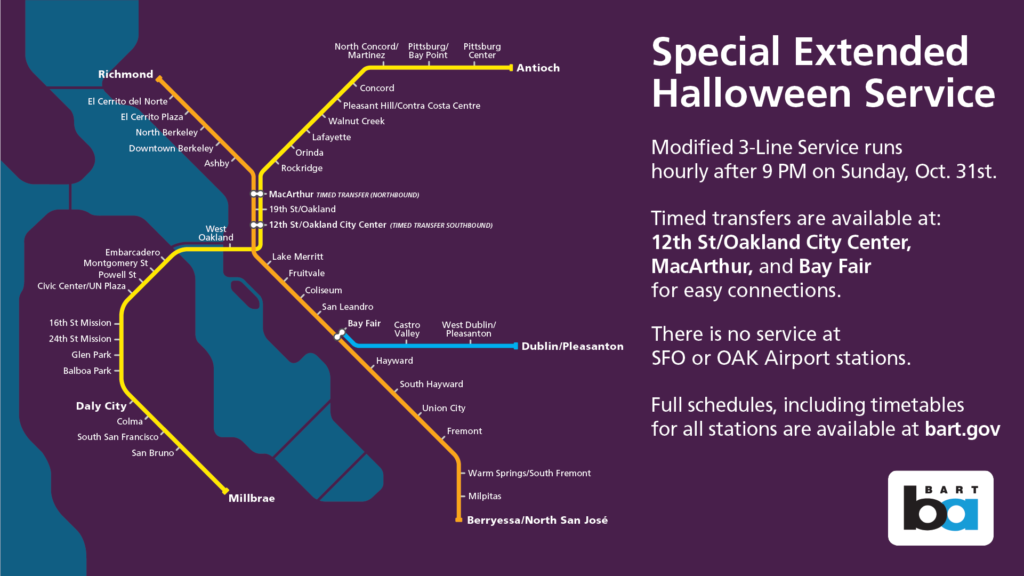
BART to offer special extended service for Halloween

Tuesday, October 26th, 2021

Source: BART

In anticipation of what is likely to be a high-ridership weekend BART will be offering special hourly late-night service on Sunday, October 31, 2021, beyond 9 pm.

Late night service will be a huge benefit for those who will be celebrating Halloween or attending the final day of the Outside Lands concert in San Francisco.

Details of special hourly service after 9pm on Sunday October 31

We will operate one transbay 10 car train an hour which will be timed to meet up with two other trains across the system to serve 48 out of our 50 stations. Trains will not serve the airport stations (OAK and SFO) but will stop at all other stations.

Extended service details:

  • Only the Yellow line (Millbrae to Antioch) will run transbay. Riders heading from San Francisco towards Richmond, Berryessa, and Dublin will need to transfer. The train will not serve SFO.
  • Southbound Yellow line (Antioch to Millbrae) trains will run to Millbrae, stopping at all stations except SFO.
  • The Blue line will operate from Bay Fair to Dublin only (If travelling from San Francisco, Dublin-bound riders need to transfer at 12th Street to a Berryessa (Orange line) bound train and then transfer to a Dublin (Blue line) train at Bay Fair to complete their trip. These transfers will be timed meets to reduce travel time.
  • The Orange line (Richmond to Berryessa) will also run hourly to coincide with the other trains. Riders coming from San Francisco who need to transfer to a Richmond-bound train will do so at MacArthur; riders who need to transfer to a Berryessa-bound train (or Dublin) will do so at 12th Street. These transfers will be timed meets to reduce travel time. BART to OAK service will not be operating after regular BART hours.

Please note, this service will be operated using train operators taking voluntary overtime shifts and therefore it is subject to availability. BART will also ask for volunteer shifts to add event trains to the schedule to have even more service after 9pm. These trains could be brought in as large crowds for Outside Lands arrive at Civic Center Station after 9pm. But these extra trains will be subject to available train operators.

BART is in the process of adding these trips to the BART Trip Planner. We will make the special schedule available to third party apps, but we can’t guarantee third party apps will upload the special service schedule. All added trips will show up in Real Time Departures on bart.gov and the official BART app.

Background on midnight service and why we currently close at 9pm on Sundays

BART has been offering service until midnight Monday through Saturday since August 2, but those extended hours have not been in place on Sundays. BART has already committed to bringing midnight service back to Sundays permanently in February 2022.

BART service has been operating only until 9pm on Sundays throughout the pandemic. BART has used the earlier closing time on Sundays to advance critical rebuilding projects including the replacement of traction power cables in the heart of downtown San Francisco to ensure trains have a reliable source of electricity.

More Halloween Fun

Check out our BART themed pumpkin carving stencils.

On Thursday, October 28, 2021, the BART Police Department will be hosting its annual Trunk or Treat Halloween event at the North Berkeley BART Station parking lot between 4-7 p.m. Children can trick or treat in a safe environment.

Kaiser Permanente’s Antioch Mental Health Services celebrates 10 years at Hillcrest location

Tuesday, October 26th, 2021

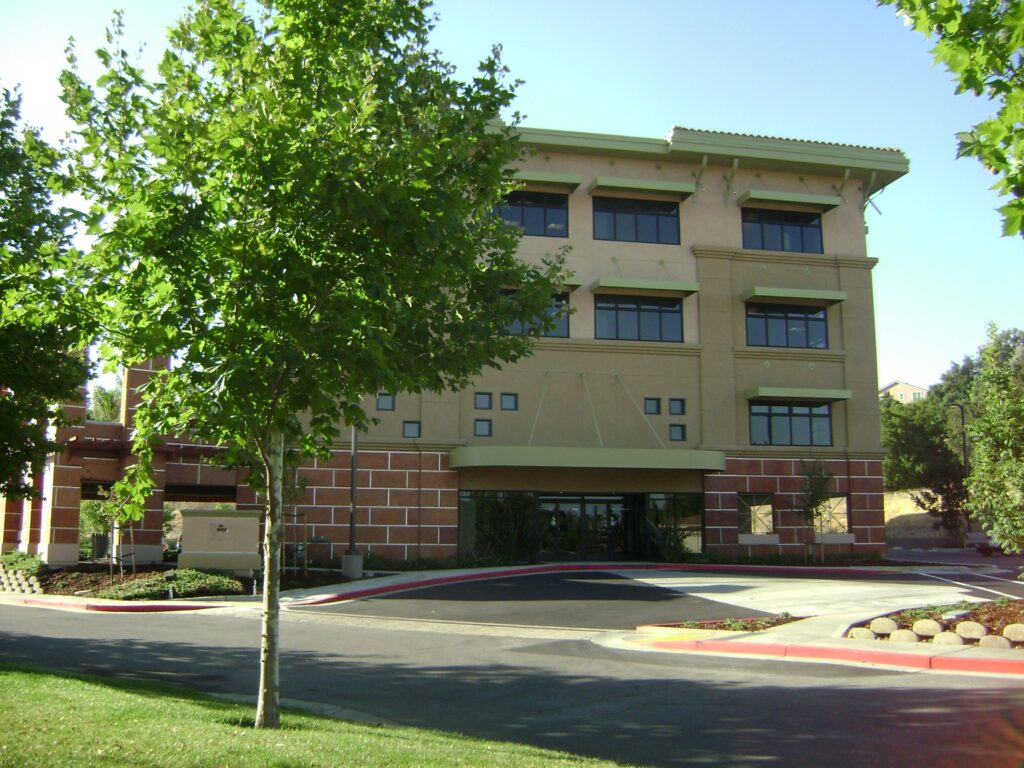
Th building at 3454 Hillcrest Avenue which houses the Antioch location for Kaiser Permanente’s Department of Mental Health and Addiction Medicine.  Source: Kaiser

By Antonia Ehlers, PR and Media Relations, Kaiser Permanente Northern California

Kaiser Permanente’s Department of Mental Health and Addiction Medicine at their location on Hillcrest in Antioch is currently celebrating its 10th year of service. Mental health services are more important than ever, especially since the COVID-19 pandemic.

“We’ve definitely noticed an uptick in patients accessing our services,” said Director of Addiction Medicine Curtis Arthur, MFT. “Everybody is dealing with increased stress. People often turn to various substances to deal with that stress. It’s so important to engage in care during this very difficult time.”

It can be scary and intimidating to ask for help. However, Arthur and his team assure people of this: They meet people of all ages where they are, without judgment.

“Treatment for addiction can range from educational therapy to intensive therapy,” Arthur noted. “We know that the disease of addiction affects not only individuals, but also the family members who care about that person. We educate those family members and connect them to others who are affected in the same way.”

During the past year and a half, virtual appointments have significantly increased.

“Virtual care has made things so much more accessible,” Arthur said. “We are offering the latest technology and expertise, so patients can choose how and when they want to access their care.”

One of the key advances in recent years is the ability to diagnose various mental health conditions earlier and more accurately. According to the Director of Mental Health at Kaiser Permanente Antioch, Natasha Quackenbush, Psy.D , the demand for mental health services continues to grow, year after year.

“We’re encouraged that more and more people are reaching out for help, particularly because of the COVID-19 pandemic,” she said. “We’re also seeing more people from various community groups – particularly African American, Asian and Latino communities – reach out for help.”

Every person’s needs are unique and every Kaiser Permanente member who seeks support receives a care plan tailored to their mental and physical needs, drawing on a range of available services. A patient’s individual treatment could include outpatient psychiatric services, individual therapy, group programs, medication management, crisis intervention, intensive outpatient programs, and inpatient psychiatric care.

“It’s wonderful that as a society today, we are making progress to destigmatize mental health issues,” Quackenbush added. “They are, in fact, medical conditions. We don’t judge, because it would be the same as judging someone who has cancer or diabetes. There is hope. Mental health conditions can be treated, and our dedicated clinicians genuinely want to make a difference in our patients’ lives.”

For more information about Kaiser Permanente Mental Health Services, visit www.kp.org/mentalhealth

PG&E crews respond to damage, power outages from atmospheric river storm

Monday, October 25th, 2021

Source: PG&E

100’s of electric and tree crews, 1,000’s of employees and contractors assessing damage, making repairs and restoring power safely and as quickly as possible

Strongest storm to hit the area in more than a decade begins to move out of southern portion of PG&E’s service area

“gusts…exceeded 70 mph across Contra Costa”

Since Saturday, crews have restored nearly 580,000 customers impacted by the early-season storm

SAN FRANCISCO, CA – Pacific Gas and Electric Company’s (PG&E) Emergency Operations Center and hundreds of crews continue assessing damage, making needed repairs and restoring power in the aftermath of a major atmospheric river storm that delivered damaging winds, record rain totals, flooding and debris flows over the course of the weekend and Monday. The storm was one of the most potent to hit Northern and Central California in over a decade.

Since the storm began early Sunday, approximately 630,000 customers lost power which is about 10% of the utility’s 5.5 million electric customers.

As of 5 p.m. Monday evening, power has been restored to approximately 92% or 580,000 of those customers. Approximately 50,000 customers remain impacted.

PG&E continues to respond with approximately 3,000 electric and tree personnel on the job, including distribution and transmission line crews and troublemen and women, who are the utility industry’s first responders to an outage. Hundreds more employees are staffing the storm centers, performing safety duties, delivering needed equipment to PG&E yards and more.

While crews were pre-positioned to be in key locations in advance of the storm, they are now being moved and redeployed to the hardest areas of damage such as Sonoma, San Mateo and Santa Clara counties which were ground zero for much of the damage.

Mutual Aid assistance crews from San Diego Gas & Electric are expected to arrive Tuesday.

Record Rain and Wind

The record-breaking rain combined with strong winds produced the most storm-related impact seen in the PG&E territory in the month of October dating back to 2009. Downtown Sacramento at 5.44 inches broke a rainfall record that dated back to 1880. Blue Canyon received 10.4 inches of rainfall surpassing a record that dated back to 1964. Mount Tamalpais received 17 inches of rain. The strongest wind gust recorded was 92 mph in Alameda County. There were a number of other gusts that exceeded 70 mph across Contra Costa, Santa Clara, Marin, Plumas, Placer, San Mateo, Butte, and Napa counties.

PG&E’s stand is simple, that everyone and everything is safe. With that in mind, crews will continue to work overnight Monday and into the week until all customers are restored.

Keeping Customers Informed

While the storm has moved out of many areas, it is still impacting areas like Fresno, Bakersfield and San Luis Obispo.

PG&E knows how important it is to keep its customers informed. Customers can view real-time outage information on its website outage center and search by a specific address, by city or by county. This site has been updated to include in-language support for 16 languages.

Additionally, customers can sign up for outage notifications by text, email or phone. PG&E will inform customers about the cause of an outage, when crews are on their way, the estimated restoration time, and when power is restored.

Storm Safety Tips

  • Never touch downed wires: If you see a downed power line, assume it is energized and extremely dangerous. Do not touch or try to move it—and keep children and animals away. Report downed power lines immediately by calling 9-1-1 and by calling PG&E at 1-800-743-5002.
  • Avoid floodwaters that could have down wires or electrical equipment in them. If a customer’s home or business is threatened by rising waters, turn off all gas appliances, or close gas appliance valves with a one-quarter turn. If you are unable to shut gas appliances off, turn your gas service off at the meter by using a wrench or other suitable tool to give the valve a one-quarter turn in either direction until it is perpendicular to the pipe. To shut off electricity, locate the main switch at the electric panel and turning the switch off. Never touch electrical equipment with wet hands or while standing in water.  Once floodwaters recede, PG&E will restore gas and electric service to the community. When returning to their homes, customers should not attempt to turn on their gas or electricity. They should contact PG&E at 1-800-743-5000 to request that their services be restored
  • Use generators safely: Customers with standby electric generators should make sure they are properly installed by a licensed electrician in a well-ventilated area. Improperly installed generators pose a significant danger to customers, as well as crews working on power lines. If using portable generators, be sure they are in a well-ventilated area.
  • Use flashlights, not candles: During a power outage, use battery-operated flashlights, and not candles, due to the risk of fire. And keep extra batteries on hand. If you must use candles, please keep them away from drapes, lampshades, animals, and small children. Do not leave candles unattended.
  • Have a backup phone: If you have a telephone system that requires electricity to work, such as a cordless phone or answering machine, plan to have a standard telephone or cellular phone ready as a backup. Having a portable charging device helps to keep your cell phone running.
  • Have fresh drinking water, ice: Freeze plastic containers filled with water to make blocks of ice that can be placed in your refrigerator/freezer during an outage to prevent foods from spoiling. Blue Ice from your picnic cooler also works well in the freezer.
  • Secure outdoor furniture: Deck furniture, lightweight yard structures and decorative lawn items should be secured as they can be blown by high winds and damage overhead power lines and property.
  • Turn off appliances: If you experience an outage, unplug, or turn off all electrical appliances to avoid overloading circuits and to prevent fire hazards when power is restored. Simply leave a single lamp on to alert you when power returns. Turn your appliances back on one at a time when conditions return to normal.
  • Safely clean up: After the storm has passed, be sure to safely clean up. Never touch downed wires and always call 8-1-1 or visit 811express.com at least two full business days before digging to have all underground utilities safely marked.

Other tips can be found at www.pge.com/beprepared.

About PG&E

PG&E, a subsidiary of PG&E Corporation (NYSE:PCG), is a combined natural gas and electric utility serving more than 16 million people across 70,000 square miles in Northern and Central California. For more information, visit pge.com and pge.com/news.


ABAG, MTC adopt final Plan Bay Area 2050 and Environmental Impact Report

Monday, October 25th, 2021

“$1.4 trillion vision for a more equitable and resilient future for Bay Area residents” in thareas of housing, the economy, transportation and the environment

“Roadmap toward a more affordable, connected, diverse, healthy and vibrant region for all”

Includes “strategies that would produce more than 1 million new permanently affordable homes” and will “Implement a statewide universal basic income” to “provide an average $500 per month payment to all Bay Area households”

The Association of Bay Area Governments (ABAG) and the Metropolitan Transportation Commission (MTC), during their joint meeting Thursday evening, Oct. 21, 2021, unanimously adopted Plan Bay Area 2050 and its associated Environmental Impact Report. The unanimous votes by both boards cap a nearly four-year process during which more than 20,000 Bay Area residents contributed to the development of the new plan.

All six representatives from Contra Costa County, including Supervisors Candace Andersen and Karen Mitchoff, Richmond Mayor Tom Butt and San Ramon Councilman Dave Hudson, who serve on ABAG, as well as Supervisor Federal Glover and Contra Costa City Representative Amy Worth, Mayor of Orinda, who serve on MTC, voted to adopt the plan.

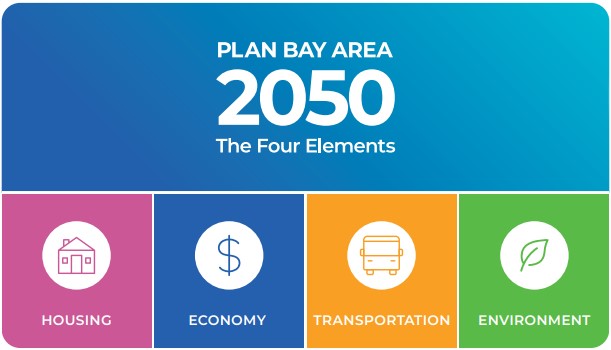
Defined by 35 strategies for housing, transportation, economic vitality and the environment, Plan Bay Area 2050 lays out a $1.4 trillion vision for policies and investments to make the nine-county region more affordable, connected, diverse, healthy and economically vibrant for all its residents through 2050 and beyond. From housing strategies that would produce more than 1 million new permanently affordable homes by 2050 to transit-fare reforms that would reduce cost burdens for riders with low incomes and paths to economic mobility through job training and a universal basic income, the goal of a more equitable Bay Area is interwoven throughout the plan. With a groundbreaking focus on climate change, strategies also are crafted for resilience against future uncertainties, including protection from hazards such sea-level rise and wildfires.

It is a long-range plan charting the course for the future of the nine-county San Francisco Bay Area. Plan Bay Area 2050 will focus on four key issues—the economy, the environment, housing and transportation—and will identify a path to make the Bay Area more equitable for all residents and more resilient in the face of unexpected challenges. Building on the work of the Horizon initiative, this new regional plan outlines strategies for growth and investment through the year 2050, while simultaneously striving to meet and exceed federal and state requirements. The Metropolitan Transportation Commission and the Association of Bay Area Governments are expected to adopt Plan Bay Area 2050 in fall 2021.

“Plan Bay Area 2050 reflects a shared vision that can’t be implemented by any single agency,” explained ABAG Executive Board President and Berkeley Mayor Jesse Arreguín. “To bring all these strategies to fruition will require ABAG and MTC to strengthen our existing partnerships and to form new ones — not just with our cities and counties and the state government, but also with the federal government, businesses and nonprofits.”

What will Plan Bay Area 2050 do? What won’t it do?

Plan Bay Area 2050 outlines a roadmap for the Bay Area’s future. While it pinpoints policies and investments necessary to advance the goal of a more affordable, connected, diverse, healthy and vibrant Bay Area, Plan Bay Area 2050 neither funds specific infrastructure projects nor changes local policies. Cities and counties retain all local land use authority. Plan Bay Area 2050 does identify a potential path forward for future investments – including infrastructure to improve our transportation system and to protect communities from rising sea levels – as well as the types of public policies necessary to realize a future growth pattern for housing and jobs.

Ultimately, Plan Bay Area 2050 reflects a shared vision – one that cannot be implemented by any single organization or government agency. Only through partnership with local, state and federal governments – as well as with businesses and non-profit organizations – will the Plan’s vision come to fruition. Before the Plan is adopted in 2021, MTC and ABAG, along with partner organizations, will create an implementation plan that will advance the strategies outlined in Plan Bay Area 2050.

MTC Chair and Napa County Supervisor Alfredo Pedroza acknowledged the work ahead. “Building and preserving affordable housing. Adapting to sea level rise. Getting more people closer to their jobs and more jobs closer to the people. Sharing prosperity equitably. All of these are big lifts. But the new plan can serve as a north star for the Bay Area’s journey to 2050.”

Among the features that distinguish Plan Bay Area 2050 from previous regional plans is an associated Implementation Plan that details the specific actions ABAG and MTC can take in the next five years to put the new plan into action.

“The Implementation Plan is a commitment to do hard things, not just think about them,” said ABAG-MTC Executive Director Therese W. McMillan. “Even if these steps have to be taken incrementally, they will lead us to a more equitable and resilient Bay Area.”
Housing Strategies

Costs for housing are estimated at $468 billion, with $237 billion budget to preserve existing affordable housing by acquiring “homes currently affordable to low- and middle-income residents for preservation as permanently deed-restricted affordable housing”. An additional $219 billion is budgeted for new, deed-restricted affordable housing and $2 billion to “further strengthen renter protections beyond state law” by limiting “annual rent increases to the rate of inflation, while exempting units less than 10 years old.”

Economic Strategies

The total cost for economic strategies in the plan is $234 billion. Of that amount $205 billion is budgted to “Implement a statewide universal basic income” and “provide an average $500 per month payment to all Bay Area households to improve family stability, promote economic mobility and increase consumer spending.”

Transportation Strategies

The plan projects to spend a total of $578 billion is projected to be spent on transportation over the next 20 years, with most of that, $389 billion, to “restore, operate and maintain the existing system”. An additional $81 billion will be spent to “expand and modernize the regional rail network” to “better connect communities while increasing frequencies by advancing the Link21 new transbay rail crossing, BART to Silicon Valley Phase 2, Valley Link, Caltrain Downtown Rail Extension and Caltrain/High-Speed Rail grade separations, among other projects.” The third largest budget item for transportation is $32 billion to “enhance local transit frequency, capacity and reliability. Improve the quality and availability of local bus and light rail service, with new bus rapid transit lines, South Bay light rail extensions, and frequency increases focused in lower-income communities.”

Environmental Strategies

A total of $108 billion is programmed for Environmental Strategies. The largest portion of that is $30 billion to “modernize and expand parks, trails and recreation facilities”. An additional $19 billion is budgeted to “adapt to sea level rise” by protecting affected “shoreline communities…prioritizing low-cost, high-benefit solutions and providing additional support to vulnerable populations.

In addition, the plan includes $18 billion to “fund energy upgrades to enable carbon neutrality in all existing commercial and public buildings” through “electrification and resilient power system upgrades”, and another $15 billion to “provide means-based financial support to retrofit existing residential buildings.” To “protect and manage high-value conservation lands”, an additional $15 billion is included in the plan.

The adopted final Plan Bay Area 2050, the EIR, and all the supplemental reports accompanying the new plan are available online at planbayarea.org/finalplan2050.

ABAG is the council of governments and the regional planning agency for the 101 cities and towns, and nine counties of the Bay Area. MTC is the transportation planning, financing and coordinating agency for the nine-county San Francisco Bay Area.


Maintenance work on Vasco Road postponed until Nov. 1-4

Monday, October 25th, 2021

Source: CCC Public Works

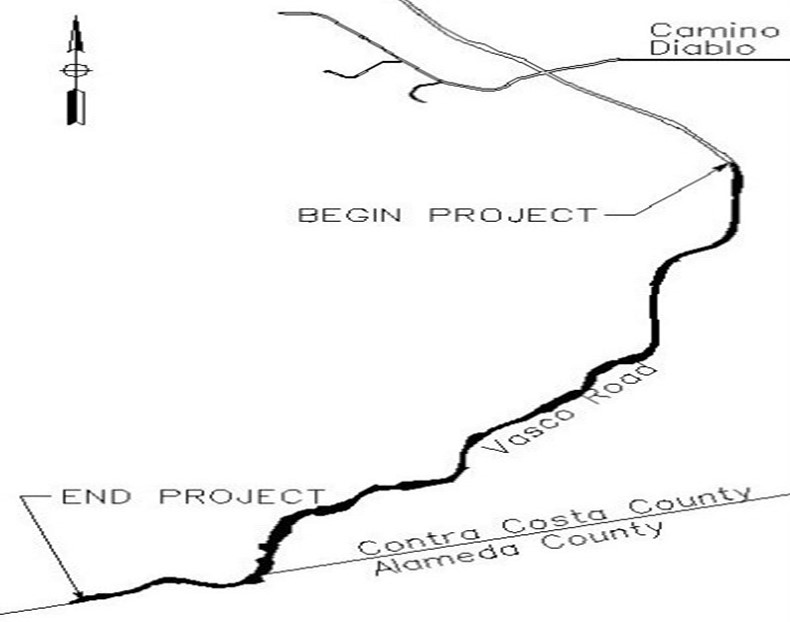
Contra Costa County Public Works Department will clean-up debris and replace delineators to enhance safety on Vasco Road. The work will occur approximately 1 mile south of the Camino Diablo/Vasco Road intersection to the Alameda County Line, a length of approximately 7.5 miles, and will include a rolling lane closure. The work is scheduled for Monday, November 1, 2021 through Thursday, November 4, 2021, barring unforeseen circumstances. Work will take place between 9:00 a.m. – 4:00 p.m., weather permitting. Drivers should expect delays. Message boards will be placed in advance to advise drivers of work and expected delays. This is essential work required for the public’s safety.

East Bay Regional Park District honored with 2021 Global Citizen Award

Monday, October 25th, 2021

By Dave Mason, PIO, East Bay Regional Park District

The East Bay Regional Park District has been awarded the prestigious 2021 Global Citizen Award by the United Nations Association USA, East Bay and Silicon Valley Chapters. The virtual Award Ceremony was held on Sunday, October 24, 2021 as part of the 16th annual UN Day Celebration. Park District Board President Dee Rosario and General Manager Sabrina B. Landreth will be accepting the award on behalf of the Park District.

“We are honored to be recognized for our contribution to physical health, stress relief, and mental well-being during the COVID-19 pandemic,” said Park District Board President Dee Rosario. “Parks have provided an essential public service. We are proud that when the public needed us most, we answered the call and kept parks open and safe. During this time, we have continued to restore habitats and marshlands and even opened two new parks – Judge John Sutter Regional Shoreline in Oakland and Dumbarton Quarry Campground on the Bay in Fremont – to better serve the 2.8 million residents in Alameda and Contra Costa counties.”

The award recognizes the Park District’s leadership role in providing essential services during the pandemic as well as our alignment with the UN 17 Sustainable Development Goals. In 2015, the United Nations adopted the 17 Sustainable Development Goals as a roadmap to build a world that is more equitable, inclusive, safe, and sustainable for all peoples. Since the Park District’s founding in 1934, the District has steadfastly enhanced the quality of life for residents in the East Bay as well as for the natural environment and wildlife.

The East Bay Regional Park District is the largest regional park system in the nation, comprising 73 parks, 55 miles of shoreline, and over 1,300 miles of trails for hiking, biking, horseback riding, and environmental education. The Park District receives more than 25 million visits annually throughout Alameda and Contra Costa counties in the San Francisco Bay Area. For more information visit www.ebparks.org.

Antioch’s Markstein Sales Company president Laura Markstein honored for work on “Distributors Against Human Trafficking Initiative”

Monday, October 25th, 2021

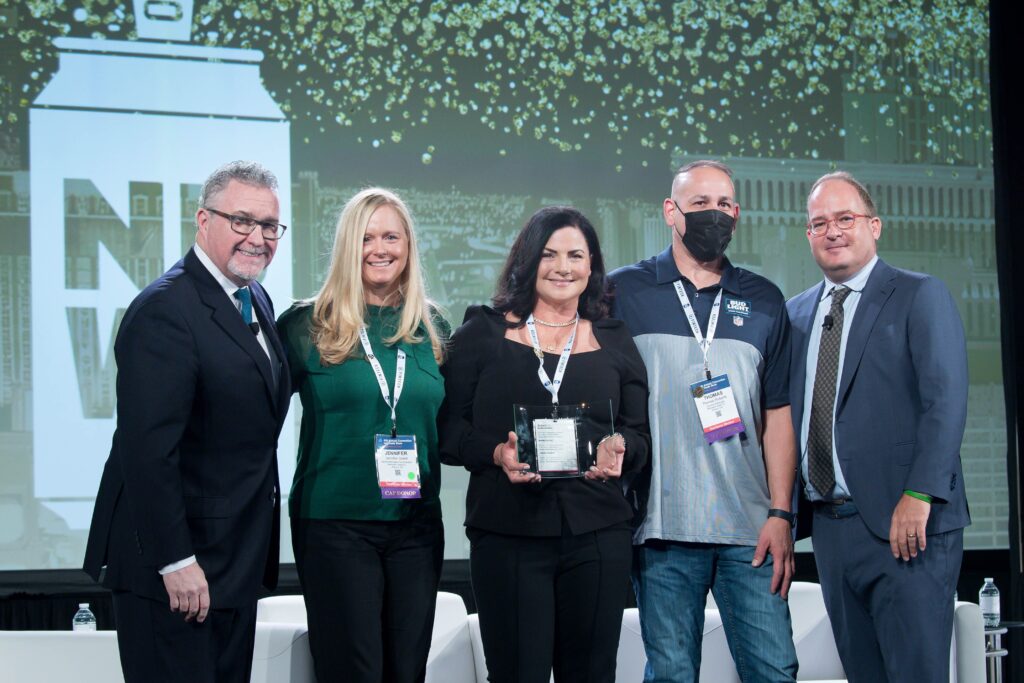
Laura Markstein (center) is honored with the Public Affairs Award at the 84th Annual National Beer Wholesalers Association Convention Oct. 3-6, 2021 and joined by (L-R) NBWA President and CEO Craig Purser, Markstein General Manager Jennifer Grant, Markstein Director of Operations Tom Roberts, and new NBWA Chairman of the Board Peter Heimark. Photo: Markstein Sales Company

The company has worked relentlessly both locally and nationally to combat human trafficking with programs and promotions aimed at stopping this heinous crime

Markstein Sales Company, the largest woman-owned and operated wholesale beverage distributor in Northern California, announced that its president, Laura Markstein, has been awarded the esteemed Public Affairs Award by the National Beer Wholesalers Association (NBWA) for her company’s work helping to end human trafficking in the United States. This award, given to one individual per year, if given at all, was announced at the NBWA 84th Annual Convention earlier this month. As a long-time supporter and sponsor of the local New Day for Children organization that provides funding to help American children who have been recovered from sex trafficking, Markstein took her efforts to a national level during 2021 when her company joined the NBWA’s Distributors Against Human Trafficking Initiative.

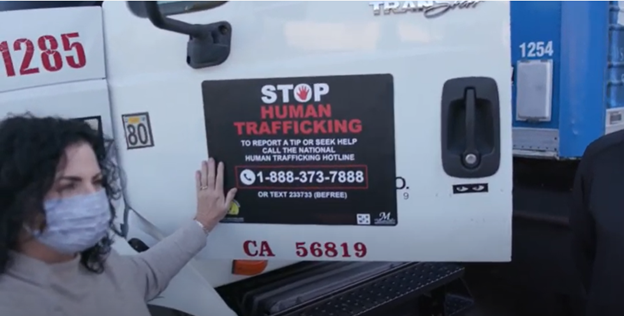
As part of its effortsMarkstein installed signage on all of its 75 vehicles that are typically on the roads of Contra Costa and Alameda Counties 14 hours per day, six days per week. The goal of these signs was to raise awareness locally and to provide easy access to hotline information for people that suspect, or know of, human trafficking cases. Markstein also provided personalized training, leveraged from both NBWA and New Day for Children, for all truck drivers and merchandisers so they know what to look out for on their daily routes and in the businesses they serve. Complementing these efforts, Markstein also regularly appealed to other companies around the country to join in the fight to end human trafficking. (See related article)

Owner Laura Markstein places a sign on one of the company’s trucks. Herald file photo.

“Once we learned that our beer and beverage drivers had a unique visibility to many of the prime locations where traffickers often exploit victims, we wanted to leverage our position and do all we could to help fight this tragedy,” said Laura Markstein, CEO of Markstein Sales Company. “While we are proud of the work we have done to help this cause, this is a growing problem in our country and it needs every company and American citizen to do their part to help – whether that be company sponsored programs or simply a watchful eye in someone’s everyday life. These efforts make a tangible difference and we can all do our part to help.”

Human trafficking is a growing problem in the U.S., with more than 11,500 human trafficking cases reported in 2019 alone. California has consistently had the highest human trafficking rates in the United States with 1,507 cases reported in 2019.

“We chose Laura for this award because her company exemplifies what every beer and beverage distributor in the U.S. could be doing to help stop human trafficking,” said Craig Purser, President and CEO of NBWA. “If every member in every state across the country also contributes their part to help spot human trafficking while on their daily routes, we can make significant progress towards ending this criminal activity.”

The NBWA Initiative

In 2020, the National Beer Wholesalers Association launched Distributors Against Human Trafficking, to help combat human trafficking in the United States. Working alongside state attorneys general, NBWA created an awareness training video to help more than 140,000 beer distribution employees in the U.S. recognize and report signs of human trafficking. To date, NBWA has successfully trained nearly 24,000 beer distributors from 207 companies, surpassing its initial goal to train 10,000 distributors by the end of 2021. Beer distributors are uniquely positioned to help fight this heinous crime given their level of access to locations often unseen by the public as they visit around 600,000 licensed retail locations across the country.

About Markstein Sales Company

Markstein Sales Company is a fourth-generation, woman-owned and operated wholesale beverage distributor based in Antioch, Calif. Founded in 1919 with just a horse, a wagon and six cases of beer, Markstein is now in its 102nd year and distributing over four million cases annually to 2000 retailers in the Bay Area. The company’s portfolio is composed of multiple world-class beers including the Anheuser-Busch InBev and Constellation Brands family of beers, several high-quality craft beers and many others, as well as non-alcoholic beverages. Markstein is known for outstanding customer service, dedication to their employees and commitment to the community. The company continues to rank as best in class by retailers and is one of the top ten largest Woman Owned Businesses in the Bay Area. More information can be found at https://www.marksteinsalescompany.com