






Archive for the ‘News’ Category

Planning for proposed 4-lane State Route 239 between Brentwood and Tracy moves forward

Friday, January 7th, 2022
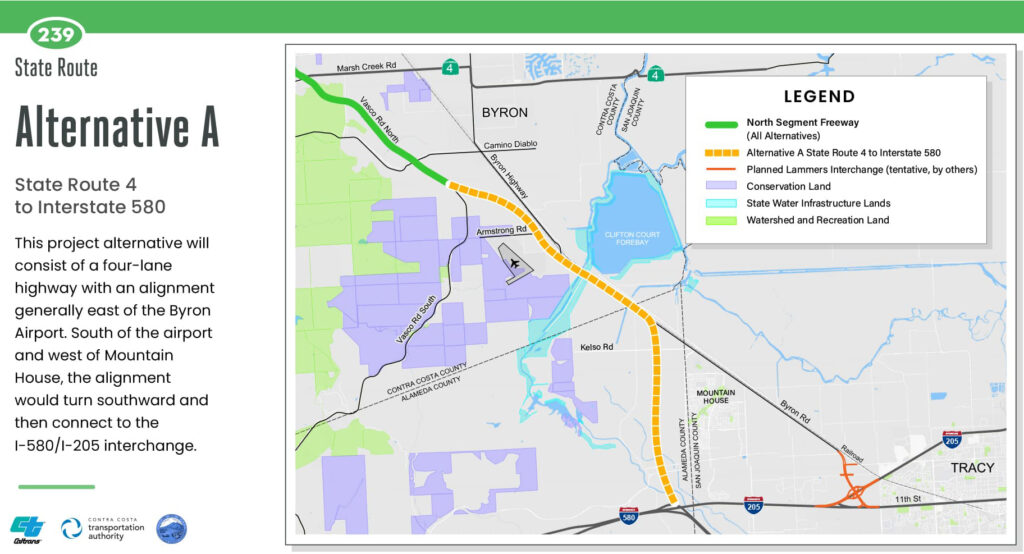
Proposed State Route 239 Alternative A alignment. Source: Caltrans/CCTA

Public input requested; legislatively designated for over 62 years

The proposed State Route 239 Project will provide a new, four-lane highway from State Route 4 at Marsh Creek Road in Contra Costa County to Interstate 580 in Alameda County or Interstate 205 in San Joaquin County. This new state route will ultimately improve the transportation network for an area that has few viable north-south roadway connections in this approximately 17-mile stretch between eastern Contra Costa and the Central Valley.

This project is sponsored by the Contra Costa County Transportation Authority (CCTA) in partnership with Contra Costa County and the California Department of Transportation (Caltrans) – District 4. The proposed State Route 239 Project is critical to the region and needed to provide relief from increasing commute traffic through the town of Byron, enhance mobility in eastern Contra Costa, and improve access to the Byron Airport.
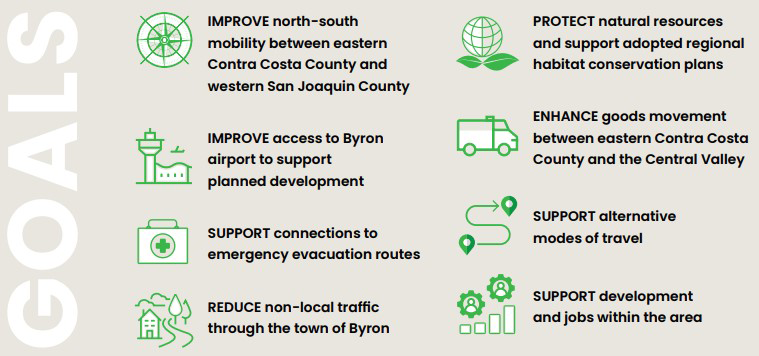
Source: Caltrans/CCTA

Brief History

State Route 239 has been a legislatively designated route since 1959. In 2005, Contra Costa County secured federal funds to initiate a feasibility study and a project initiation document (PID). The PID was completed in 2015 and the environmental study phase has been initiated.

Why Now?

Supporting the growing communities of eastern Contra Costa County and providing mobility options for the area are two key reasons to implement this corridor. It will serve as an important backbone for the region while helping people who live and work in eastern Contra Costa County (including Pittsburg, Antioch, Brentwood, Oakley, Byron, and Discovery Bay) and western San Joaquin County (including Tracy and Mountain House) connect, move and prosper.
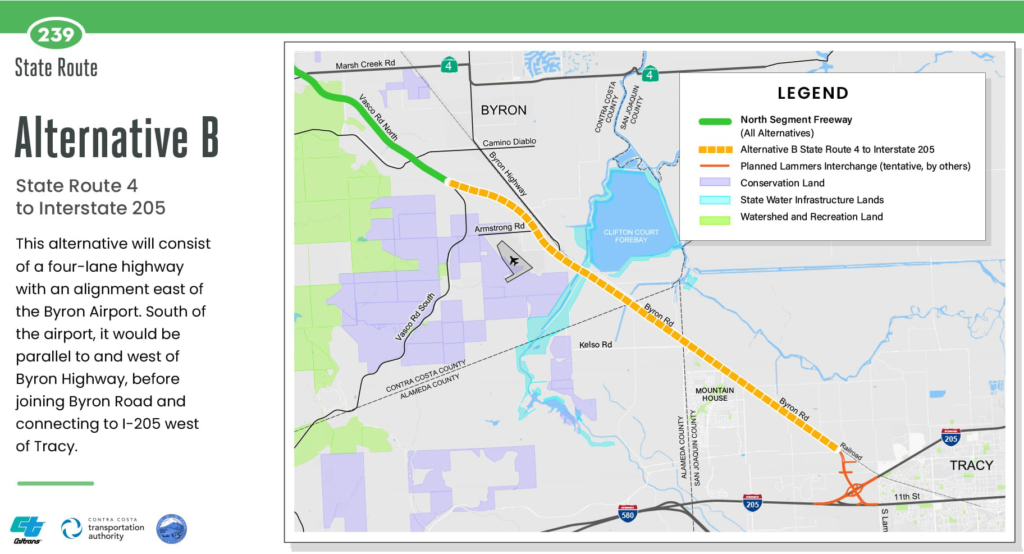
Proposed State Route 239 Alternative B alignment. Source: Caltrans/CCTA

Considerations

During the study phase of this project, which occurred between the spring of 2012 and the winter of 2013, a variety of stakeholder meetings were held, and several important themes emerged, including consideration of how a new route in eastern Contra Costa might affect conservation areas, agricultural lands, bird flight paths, and growth in the area. These considerations are still important, today and have set the stage for continued outreach during future project development phases.
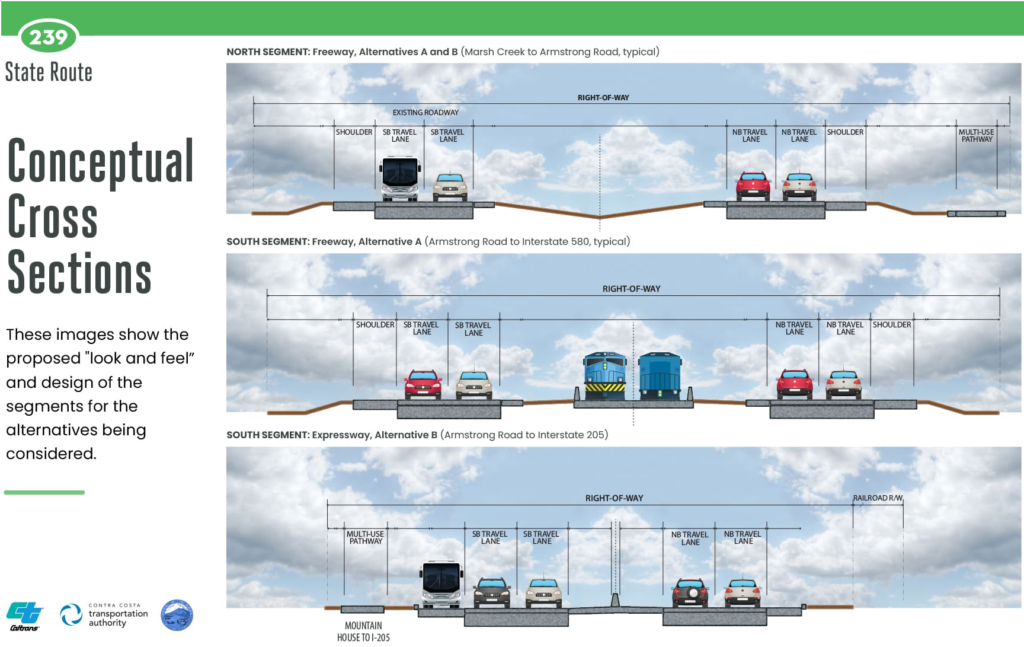
Proposed State Route 239 cross section. Source: Caltrans/CCTA

Environmental Phase

Caltrans and CCTA are currently engaged in the environmental phase of the project development process for the State Route 239 Project. During this phase, the team will study and analyze all environmental impacts for the project area and will prepare a Draft Environmental Impact Report/ Environmental Impact Statement (EIR/EIS) for public review and comment in 2023.

The public is invited to join the conversation about the environmental scoping phase of the State Route 239 Project during the public comment period.

COMMENT PERIOD: DECEMBER 17, 2021- FEBRUARY 4, 2022

The State Route 239 Project is offering an environmental scoping virtual open house. The purpose of environmental scoping is to identify the environmental topics that the project team should study to assess the potential environmental impacts of a construction project. Public input on this project will be critical for ensuring the SR 239 project team’s studies are comprehensive and thorough. Within the website you will be able to review informational materials about this phase of the work.

Please use the online comment form provided to send your thoughts and questions to the project team.

Virtual Environmental Scoping Meeting

Live presentation and Q&A session scheduled for January 20, 2022 at 5:30 p.m.

Recorded scoping presentation will be posted on the page on January 21, 2022.

On January 20, 2022, please visit the website for a link to the interactive virtual scoping meeting that will start at 5:30 p.m. Visitors will be permitted to join the meeting 15 minutes before the start time. The team will make a presentation about this project and a panel of experts will be available to answer your questions about State Route 239.

For additional information about this project, please contact Stephanie Hu – Director, Projects at stephanieh@ccta.net.
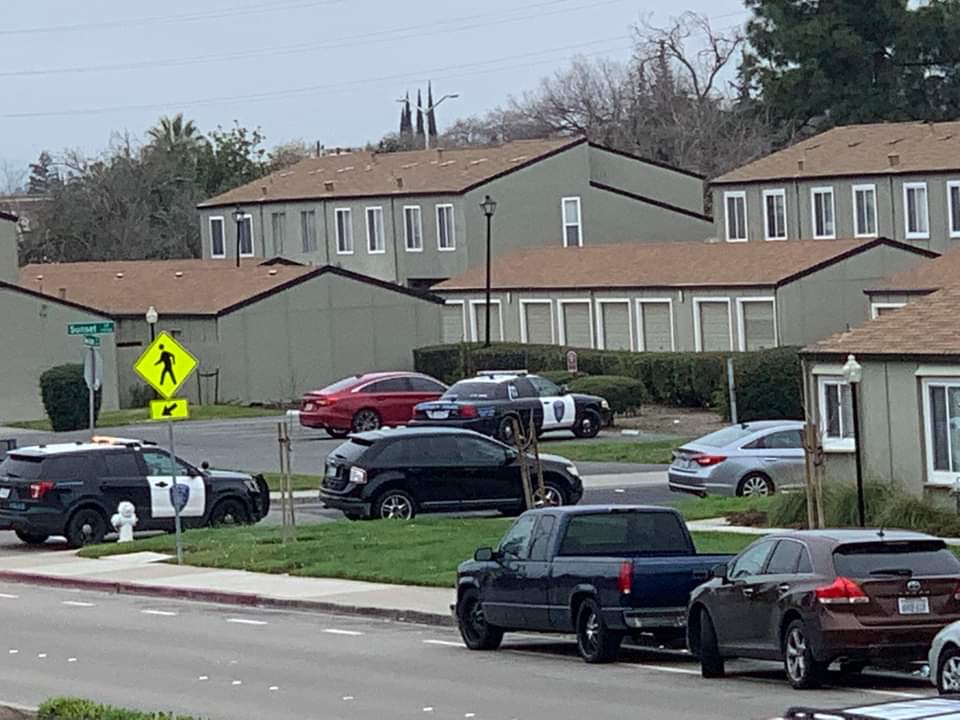


Antioch Police arrest man for firing gun in attempt to get methadone clinic client to leave property

Thursday, January 6th, 2022

Antioch Police vehicles on the scene of the shooting on Rainier Lane at Davison Drive. Thursday, Jan. 6, 2022. Photos by Antioch resident who chose to remain anonymous.

More Antioch Police vehicles near the scene of the shooting on Rainier Lane at Davison Drive on Thursday, Jan. 6, 2022.

By Allen Payton

According to Antioch Police Corporal Colley, on Thursday afternoon, a client of the BAART methadone clinic located next to the 7-11 on Sunset Lane at Davison Drive went and sat on an air conditioning unit outside a residence on Rainier Lane. A resident told him to leave and went back inside the residence, grabbed a gun and shot it into the air. That man was arrested by Antioch Police for discharge of a firearm in a negligent manner, brandishing a firearm and criminal threats.

No one was shot and there was no property damage, Colley added.

BBB Alert: Want a COVID-19 test? There’s a scam for that

Thursday, January 6th, 2022

By Better Business Bureau

The US Food and Drug Administration is warning people of fraudulent coronavirus tests, vaccines, and treatments as the pandemic continues. According to the Centers for Disease Control, since the arrival of the Omicron variant, the increase of testing for COVID-19 has become a concern. Scarcity often leads to potential scams for a product that doesn’t exist, the compromise of personal identifiable information, or the increase of deceptive advertising.

The Federal Bureau of Investigation (FBI) issued a warning last year about potential fraud related to the antibody tests. Scammers are selling unapproved COVID-19 antibody tests, which can give inaccurate results. In doing so, they are also collecting personal information, such as Social Security numbers and dates of birth. They may also be stealing health insurance or Medicare information that can be used in future schemes.

How the scam works

Robocalls are sent out to consumers directing them to a website that looks like a clinic or medical supply company offering COVID-19 tests. These tests allegedly identify if a person has been infected with coronavirus – even if they’ve  recovered. Some even promise results in 10 minutes. However, to receive a test, a credit card or a form needs to be completed with personal information.

In some cases, the test involves an easy at-home testing kit. Other times, the tests are allegedly offered through a clinic. But in all versions, the person or website selling the test is short on details. They aren’t willing or able to provide any information about how the test works, where it is sourced, and what laboratory processes it.

Don’t fall for it! These tests are not US Food and Drug Administration approved and will not give accurate results. In fact, requestors may never even receive an actual test kit. Either way, scammers will have made off with the money and personal information.

In a new twist, Newsweek reports that scammers appeared at a testing site in Florida and conducted fake tests to people standing in line, as a ruse to get their personal information.

How to avoid fake coronavirus tests and related scams

  • Want a test? Talk to your doctor. Reach out to your healthcare provider. They can help figure out if the test will be covered by insurance and where to find a legitimate clinic.  If you don’t have a primary care physician, check out the official website of your local health department for more information on testing availability.
  • Research before buying. Scammers put pressure on people to buy or commit without giving them time to do further research. Before agreeing to anything, investigate first. Research any claims the company makes. Start with searching BBB.org to see they are BBB Accredited, have good reviews, and if there are complaints or scam reports associated with their business name. In addition, review the warnings on FBIFederal Trade CommissionAttorney General’s office, and BBB ScamTracker.
  • Understand all options: The Center for Disease Control and Prevention has a detailed guide to testing for COVID-19. Understand the different tests available.
  • Never share your personal information with strangers. Only make purchases and share your personal information with people and companies you know and trust. Be wary of anyone approaching you in line; ask for credentials if necessary. If you suspect  your personal information has been compromised, report it to identitytheft.gov
  • Check claims of FDA approval. Per the FBI, “Not all COVID-19 antibody tests have been approved by the U.S. Food and Drug Administration (FDA), and their efficacy has not been determined.” Check the FDA website for a list of approved tests and testing companies.

For More Information

BBB has additional tips for avoiding scams on BBB.org/spotascam and the BBB news feed.

If you’ve been the victim of a scam, please report it on the BBB.org/ScamTracker. Your report can help others to stay alert and avoid similar scams.


Free At-Home COVID-19 Test Kits available at drive-thru event in Oakley Thursday

Thursday, January 6th, 2022

Source: Supervisor Diane Burgis

Contra Costa County District 3 Supervisor Diane Burgis. Official photo.

While supply lasts

The spread of the omicron COVID-19 variant after the holidays has caused widespread demand for COVID testing kits. CVS and Walgreens are now limiting how many at-home tests customers can buy.

The lack of availability is prompting Contra Costa County Supervisors to take action.

This week, Supervisor Diane Burgis’ office is distributing at-home test kits for free to those who have struggled to find them. The test kits will be distributed on a first-come-first-served basis.

Due to the high demand, we are limiting the test kits to two per family (four tests – each kit contains two tests). We will continue to distribute the COVID-19 test kits as long as supplies last.

Burgis has distributed thousands of COVID tests so far, delivering to local businesses, restaurants, and churches in District 3, and is hoping the supply from the county’s health services can keep up with the demand.

District 3 is working with the City of Oakley to help distribute the at-home test kits at a drive-through event at the Oakley Recreation Center on O’Hara Ave., the event will be held Thursday, January 6, 2022, from 1-4 pm (or while the supply of test kits lasts).

Free At-Home COVID Test Kits – Drive Through Event

Oakley Recreation Center

1250 O’Hara Ave in Oakley

Thursday, January 6, 2022

1:00PM – 4:00PM

Violation penalties lowered on 7 Bay Area toll bridges

Thursday, January 6th, 2022

San Francisco – Oakland Bay Bridge East Span. Photo: MTC

Retroactive to Jan. 1: Cost for Initial Notice Drops to $5 from $25; Second Notice to $15 from $70; affects all but Golden Gate

The Bay Area Toll Authority (BATA) today announced a sharp reduction in the penalties associated with toll violation notices sent by the FasTrak® customer service center to customers with unpaid invoices for toll bridge crossings.

Effective immediately — and retroactive to all violation notices since Jan. 1 of this year for outstanding tolls at the San Francisco-Oakland Bay, Antioch, Benicia-Martinez, Richmond-San Rafael, Carquinez, Dumbarton and San Mateo-Hayward bridges — the penalty for first violation notices drops to $5 from the previous $25 and the penalty for second violation notices falls to $15 from the previous $70.

Bridge customers who paid toll violation penalties earlier this year will receive a refund for the difference between the amount(s) they paid and the amount(s) due under the new policy. Distribution of these refunds is expected to begin in February 2022 and continue over the next several months, after which a claim process will be posted at www.bayareafastrak.org for customers who believe they are owed a refund and did not receive one.

The new policy toward violation penalties was approved by BATA at its October 2021 meeting and marks the first policy change adopted as part of its Bay Area tolling equity action plan unveiled in May 2021. BATA at its November 2021 meeting approved several additional policy changes slated to become effective in the spring of 2022. These include dropping the cost of the FasTrak toll tag deposit for new customers who choose not to link their account to a credit card to $5 from the previous $20; crediting $15 to the prepaid toll accounts of existing customers who paid a $20 tag deposit; reducing the minimum opening balance for a FasTrak account for customers who pay with cash or check to $25 from the previous $50; and eliminating transaction fees for customers who replenish FasTrak accounts or pay violation penalties at a cash network location. BATA and the FasTrak customer service center in the coming months are expected to implement additional recommendations designed to make enrollment in the FasTrak electronic toll payment system more convenient, accessible and affordable. The toll payment system is fully automated for FasTrak customers, with the cost of each crossing automatically deducted from their accounts, allowing them to avoid invoices, violation notices and penalties altogether.

FasTrak customers already account for about three-quarters of all crossings at the Bay Area’s state-owned toll bridges. BATA encourages customers who do not already have FasTrak to open accounts online at www.bayareafastrak.org or by phone at 1-877-229-8655 (BAY-TOLL). Customers also may obtain FasTrak tags at select Costco and Walgreens stores. A map of retail locations at which FasTrak tags are available may be found at https://www.bayareafastrak.org/en/howitworks/retailmap.html. Tags purchased at Costco or Walgreens must be registered online. Drivers who would rather replenish their FasTrak accounts with cash can do so at more than 100 Cash Payment Network locations, now including Walmart stores. A map of these locations may be found at https://www.bayareafastrak.org/en/tolls/cashLocationsMap.html.

Drivers also may open a License Plate Account, which is a pay-as-you-go option that links a license plate to an account and charges that account whenever the vehicle crosses a toll bridge; or make a one-time payment, which allows the customer to pay a toll online up to 30 days in advance of a bridge crossing or within 48 hours afterwards. There are no fees for either of these services. More information about License Plate Accounts and one-time payments is available at www.bayareafastrak.org.

Customers who do not have FasTrak or a License Plate Account — and who do not use the online one-time payment option — are required to return invoices with payment within 21 days. Customers who neglect to return payment by the due date on the invoice will receive a “Notice of Toll Evasion” with a $5 penalty for each toll crossing. Customers who do not return payment by the due date on the “Notice of Toll Evasion” will receive a “Second Notice of Delinquent Toll Evasion” with a violation penalty of $15 per crossing. Customers who do not return payment after a second notice may have a hold put on their vehicle registration by the DMV or have the amount owed referred to a collection agency.

BATA administers all toll revenues from the region’s seven state-owned toll bridges.


Following CDC, state guidelines Contra Costa shortens isolation and quarantine periods to 5 days

Wednesday, January 5th, 2022

With negative COVID-19 test

Starting Thursday, Contra Costa County will align with state guidance and CDC guidance issued on Dec. 27, that recommends shorter isolation and quarantine periods for people infected with or exposed to COVID-19.

Under the state guidance, anyone who tests positive for COVID-19, regardless of vaccination status, can end their isolation period after five days if they subsequently test negative and don’t have symptoms or their symptoms are improving. The test must be done on or after day 5 of isolation. Previously, the isolation period for positive cases was 10 days.

Quarantine periods for people exposed to someone with COVID-19 have also been shortened to five days under certain circumstances. For unvaccinated people and those not up-to-date on their COVID vaccinations (eligible for a booster but haven’t gotten one), quarantine can end after day 5 with a negative test.

People who have gotten a booster shot or are up-to-date on their COVID vaccinations—meaning they’re fully vaccinated but not yet eligible for a booster — do not have to quarantine following an exposure. However, they should get tested 5 days after they were exposed to be safe.

Over-the-counter antigen tests can be used to end isolation and quarantine. Even if people test out of quarantine or isolation, they should wear a well-fitting mask around others for a total of 10 days, especially in indoor settings.

People unable to get tested during quarantine or isolation should remain at home for up to 10 days.

These state guidelines are for the general public and not healthcare workers, who have their own isolation and quarantine guidanceK-12 students and workers should also check with their schools and employers about requirements for returning to school or work since state guidance may differ for those settings.

“The state’s new guidelines for the community strike a good balance between protecting public health while minimizing disruptions to our essential workforce,” said Dr. Ori Tzvieli, deputy health officer for Contra Costa County. “Aligning with the state guidelines also minimizes confusion so there aren’t different rules in Contra Costa than what is being recommended by the California Department of Public Health.”

The County will be rescinding its previous local isolation and quarantine orders and aligning with the state’s isolation-and-quarantine guidance starting Thursday, Jan.6 at 12:01 a.m.

Allen Payton contributed to this report.

Save Mount Diablo expands free Discover Diablo hikes and outings program for 2022

Wednesday, January 5th, 2022

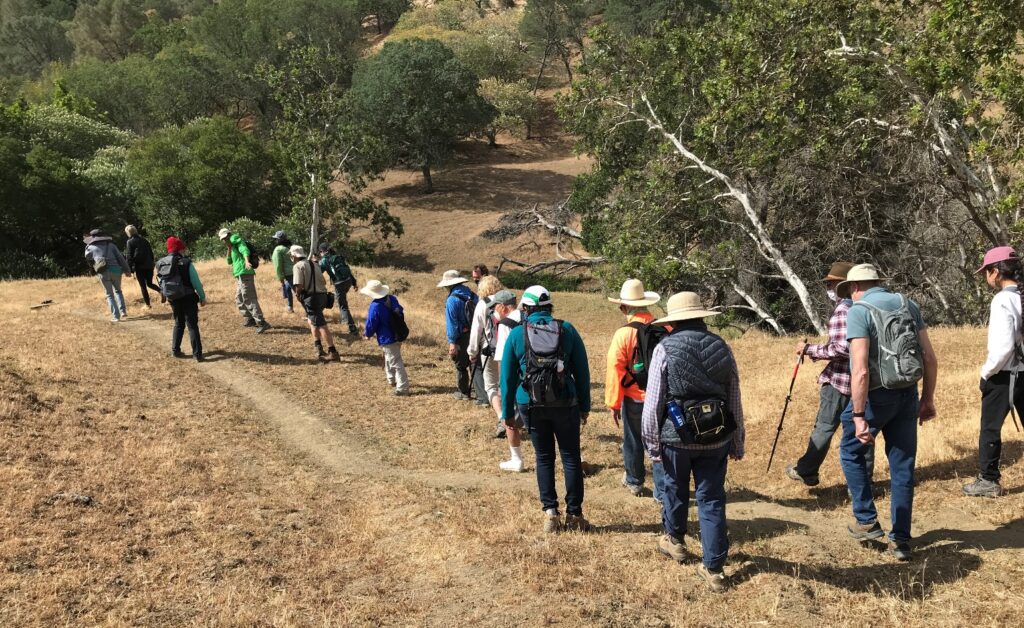
Hikers trekking through Curry Canyon Ranch in May 2021. Photo by James Fong.

By Laura Kindsvater, Communications Manager, Save Mount Diablo  

Explore some of the East Bay’s premiere hiking spots with Save Mount Diablo in 2022, including areas rarely open to the public. The Discover Diablo hikes and outings series offers guided hikes and themed walks; mountain biking, rock climbing, and trail running events; and property tours, all free to the public. Trailblazers of all ages and skill levels are welcome.

In response to growing demand, Save Mount Diablo is offering hikes as well as new activities in the series for a total of 36 excursions. New offerings will include a plein air painting walk and a trail run.

The ever-popular tarantula walk will be offered twice, and we are offering three meditation hikes in 2022. We will also be offering rock-climbing and mountain-biking events, and bilingual hikes in Spanish and English.

Generously sponsored by the Martinez Refining Company, the 2022 Discover Diablo free public hikes and outings series will begin on January 22nd.

“Through the Discover Diablo series, people are fortunate to be able to explore and discover the beauty of Mount Diablo with experienced guides,” said Ann Notarangelo, Community Relations Manager for the Martinez Refining Company. “Our refinery has sponsored these hikes since 2017 in the hopes people will enjoy learning more about the mountain, while spending quality time with family and friends.”

The Discover Diablo program was started by Save Mount Diablo in 2017 to connect local communities with the amazing natural world of the Mount Diablo area and to build awareness about land conservation.

Hikes take place on one of Save Mount Diablo’s conserved properties or on a collaborating partner’s land that Save Mount Diablo helped to protect in years past. These include Mount Diablo State Park, East Bay Regional Park District, and Walnut Creek Open Space Foundation lands.

Discover Diablo hikes are guided by experts steeped in the natural history and lore of the region, who both educate and entertain while emphasizing the breathtaking beauty that the Diablo Range has to offer.

Save Mount Diablo hopes the Discover Diablo series will spark a passion for the Diablo Range and deepen people’s connections to the land and nature. All Discover Diablo hikes are subject to, and will honor, all applicable COVID-19–related restrictions then in place for our area.

According to Ted Clement, Executive Director of Save Mount Diablo, “It is the goal of the Discover Diablo program to build connections between people, Save Mount Diablo, and the land, helping our communities develop a strong sense of place and a deepened appreciation for our collective backyard. Most importantly, we want to cultivate a love of the land in participants, as that is what it will take to ensure the precious Mount Diablo natural area is taken care of for generations to come.”

There is something for us all to discover in the nooks and crannies surrounding Mount Diablo, so be sure to hit the trails in 2022 and find your own individual inspiration!

RSVP required. To ensure everyone has an equal opportunity to attend, registration for hikes and outings in March onward will open two months prior to each hike’s date.

See our full schedule of upcoming hikes and outings; view and RSVP online here: bit.ly/Discover-Diablo-Hikes-Calendar

You can also download and print a flyer of the schedule here: http://bit.ly/DiscoverDiablo

Antioch woman is 2022 Contra Costa Humanitarian of the Year, to be honored at MLK event Jan. 18

Wednesday, January 5th, 2022

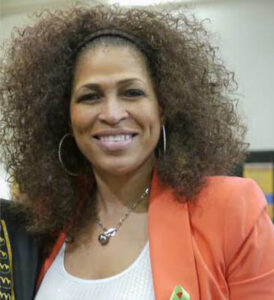
Adult Humanitarian of the Year, Gigi Crowder of Antioch

Student Humanitarian of the Year, Ygnacio Valley High senior Kaia Morgan of Pittsburg

2022 MLK Humanitarian of the Year Gigi Crowder.

Contra Costa County will commemorate the life and legacy of Dr. Martin Luther King, Jr. at the 44th Annual Ceremony in 2022.  The Board of Supervisors invites the public to the ceremony on Tuesday, January 18, 2022, at 11 am. This year’s theme is “One People, One Nation, One Dream.”

“Together, we will commemorate Dr. King and commit to improving the lives and future of our children and community members,” said Board Chair, Supervisor Diane Burgis. “We look forward to having you join us at the event to come together and work toward a common vision and goals of acceptance, tolerance, and respect.”

Countywide recognition will be given at the ceremony to the Adult Humanitarian of the Year, Gigi Crowder, Executive Director of National Alliance on Mental Illness (NAMI) Contra Costa and a 19-year Antioch resident, and the Student Humanitarian of the Year, Pittsburg resident Kaia Morgan, a senior at Ygnacio Valley High School in Concord. Honorees will be recognized for their leadership, advocacy, and service to Contra Costa County, its residents and communities in the spirit of Dr. King’s work and achievements.

About Gigi Crowder

Gigi R. Crowder, L.E. a native of Oakland, CA. is the mother of two biological children; 30-year-old twin sons and has served as a foster mom and mentor to many more through divine interventions. Gigi served for over nine years as the Ethnic Services Manager for Alameda County Behavioral Health Care Services and has worked in the Behavioral Health Care field for more than 32 years after completing her studies at the University of California, Berkeley. As a family member of several loved ones who have received private and public mental health services, she is a strong advocate for promoting culturally responsive behavioral health services for all peers and family members. She is unapologetic about focusing efforts to address the needs of African Americans who she deems as the most harmed and neglected due to systemic racism. She created, Black Minds Matter 2! which has given her opportunities to speak across the nation.

Gigi is the Executive Director for NAMI Contra Costa, having accepted this position in January 2018, after serving in a consultant role as their Fund Developer. She is also the FaithNet Coordinator and has advanced efforts statewide to reduce mental health stigma by training Faith Leaders using the Mental Health Friendly Communities training curriculum she co-designed. Gigi promotes utilizing natural resources such as those found in faith/spiritual communities and works hard to advocate for the use of community defined strategies for all, with particular focus on better addressing the needs of unserved, underserved and inappropriately served ethnic and cultural communities. Her current focus is addressing the needs of those living with mental illness who are often criminalized for living with a medical condition.

Highlights of her career are being inducted in the Alameda County Women Hall of Fame for her work in developing programs to enhance employment opportunities for individuals with psychiatric challenges, receiving the 2013 MHAAC Mental Health Achievement Award. She also received the 2016 Multi-Cultural Outreach Award from NAMI California, the 2020 “Making a Difference Award,” from the Interfaith Council of Contra Costa County. Gigi is also credited for positioning NAMI CC to beat out 600 other NAMI Affiliates and win the NAMI 2021 Multicultural Outreach Award.

2022 MLK Student Humanitarian of the Year Kaia Morgan.

About Kaia Morgan

According to a tweet by the Contra Costa County Office of Education, Morgan is being honored, “for her commitment and hard work in leading the charge to change the mascot for Ygnacio Valley High” from the Warriors to something else. Following the lead of a teacher at the school, Morgan started an online petition which gathered 750 supporters.

Kaia is a senior at Ygnacio Valley High School. She is an International Baccalaureate student and a cheerleader at her high school, as well as a dancer. She became interested in confronting social issues after gaining awareness of them online and quickly became passionate about addressing injustices against minorities. In February of 2020, she was inspired by a class lesson on the harm of Native mascots to use her voice to speak out against racism on a more local level, starting with the Native mascot at her own high school. She started the Change the Mascot Committee at Ygnacio Valley High School that month, and as of December 2021, their mascot is now the wolves. Kaia currently lives in Pittsburg, CA with her loving parents and two siblings. She plans to attend college in the fall and study psychology.

This is the third year in a row a woman from Antioch has been named the county’s Humanitarian of the Year, with Velma Wilson honored, last year, and current District 1 Councilwoman Tamisha Torres-Walker was honored the year before. See the entire list of past honorees.

To learn more about the Dr. King Ceremony, visit www.contracosta.ca.gov/5307 on the Contra Costa County website.