






Archive for the ‘News’ Category

Antioch Police Chief pledges full cooperation with CA DOJ, announces acceptance into new Trust Building Campaign with 25 Key Policies

Thursday, May 11th, 2023
Source: IACP

By PIO Ashley Crandell, Antioch Police Department Community Engagement Unit

On May 10, 2023, California Attorney General Rob Bonta announced the Department of Justice (DOJ) has launched a civil rights investigation into the Antioch Police Department. Chief Steven Ford welcomes this investigation and pledges full cooperation with DOJ officials, just as we have done with the joint FBI-Contra Costa DA investigation already taking place. We understand the importance of ensuring our policies, procedures, and practices are in line with expectations of 21st Century Policing.

In furtherance of our commitment toward meaningful reform, the Antioch Police Department is pleased to announce that we have joined other progressive policing agencies across the United States (and globally) in pledging to enhance trust and collaboration between police and the community we serve. The pledge is part of an initiative called the Trust Building Campaign which was started by the International Association of Chiefs of Police (IACP), the world’s largest and most influential professional association for police leaders. In joining the Trust Building Campaign, the Antioch Police Department has pledged to implement 25 key policies and leading practices within a 36-month period.

As we complete the Trust Building Campaign pledge, the Antioch Police Department will prioritize actions encouraging positive community-police partnerships within six focus areas (bias-free policing, use of force, leadership and culture, recruitment, hiring, and retention, victim services, and community relations). These areas and their associated key practices are designed to promote safe, effective interactions, create strategies to prevent and reduce crime, and improve the wellbeing and quality of life for all.

In a world where information is spread so quickly, it is critical, now more than ever, that law enforcement have the trust of the community that they will provide truth, transparency, and justice.

Through the Trust Building Campaign, the IACP is committed to addressing these, and other issues, on a national and international level.

Statement from Chief Steven Ford:

“We are excited to announce this partnership with the IACP Trust Building Campaign. This initiative aligns with our Strategic Plan goals that we have been progressively implementing during our Public Safety Partnership and emphasizes our commitment to advancing public safety practices through community engagement, transparency, and bias-free policing. We look forward to collaborating with our community stakeholders, justice partners, and industry experts to ensure success in meeting the goals of this campaign.”

For more information about the Trust Building Campaign, visit the IACP’s website at https://www.theiacp.org/iacp-trust-building-campaign.

25 Key Policies and Promising Practices

1. Establish a policy on bias-free policing.

2. Increase transparency and accountability of police use of force. Publish use of force and complaint process policies.

3. Provide officers with training and coaching on cultural responsivity.

4. Train officers on the unique makeup and needs of their communities based on country of origin, religious and cultural practices, etc. which may conflict with local laws.

5. Adopt the elements of the National Consensus Policy on Use of Force into the agency’s policies and procedures. Publish use of force policy

6. Provide regular training on the agency’s use of force policy. Training should include scenario-based exercises that incorporate de-escalation techniques.

7. Document all use of force beyond handcuffing in agency records. Review these records on an annual basis to identify trends that need to be addressed in policy and training.

8. Participate in the National Use of Force database.

9. Establish an agency policy or statement that recognizes the sanctity of life and the importance of preserving human life during all encounters. Adopting the IACP Oath of Honor will meet this requirement.

10. Participate in accreditation, certification, or credentialing process that has an independent organization that reviews an agency’s policies and procedures.

11. Ensure training and policy reflect a culture of equity, diversion, inclusion, accountability, and that promote procedural justice for community members and employees alike.

12. Establish an employee wellness program that includes both physical and mental health.

13. Conduct a culture assessment of the organization, with steps taken to address areas of concern.

14. Provide body armor to officers and require the wearing of soft body armor while on uniformed patrol.

15. Embrace the guardian officer rather than the warrior mindset in recruiting and training.

16. Establish minimum educational standards or equivalency requirements that can be met by prior life experience. Provide officers with the opportunity for advanced education and training opportunities.

17. Verify potential hires with the national decertification database before hiring experienced officers.

18. Include measures of problem-solving, trust-building, and cultural responsivity in metrics of officer performance.

19. Train officers in Trauma-Informed Responses.

20. Train officers on best practices, resources, and tools for communicating with community members who do not speak English or whose ability to communicate is impaired.

21. Establish partnerships to provide for mental health, substance abuse, and youth deflection/diversion resources in their community.

22. Educate communities on the dynamics of policing and set reasonable expectations for their police. Establish shared expectations of the role police have in the community and solicit review and input from the community on agency policies and procedures.

23. Establish a clear and timely complaint process that does not require written or sworn statements to submit. Complaint processes and policies should be accessible to all.

24. Conduct a regular recurring survey of the community to measure the level of trust in the police.

25. Establish written strategies to engage with youth and marginalized groups in the community to develop positive relationships with police officers and how to interact safely with police.
Annual count shows slight increase in homelessness in Contra Costa County

Thursday, May 11th, 2023
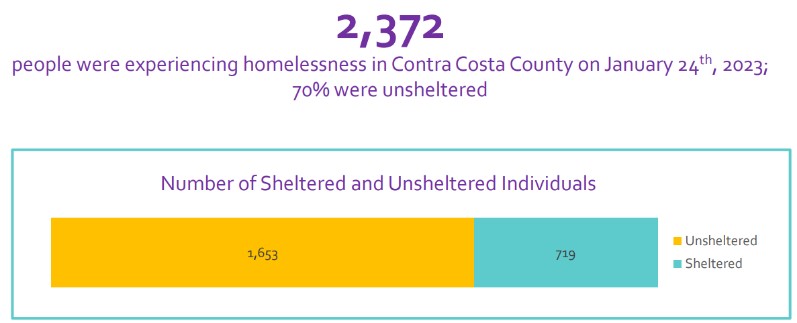
Contra Costa County Point In Time Homeless County on Jan. 25, 2023. Source: H3

95 more homeless residents than in 2020

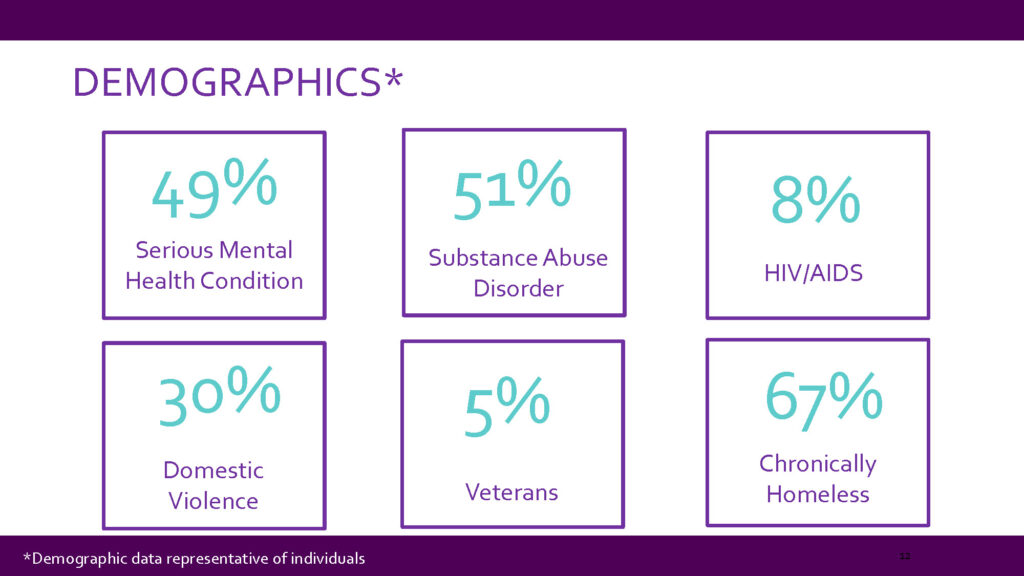
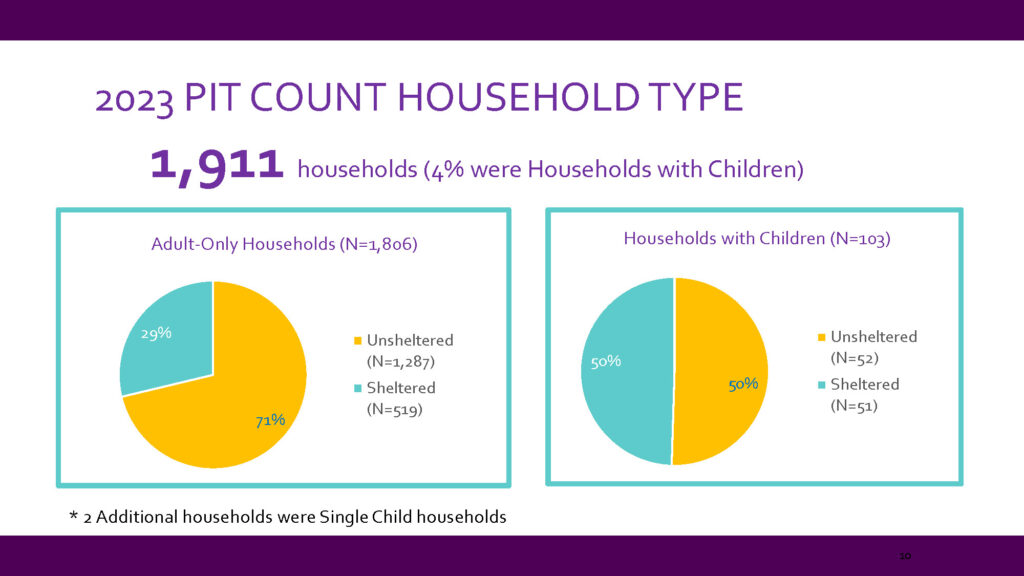
Contra Costa County’s annual survey to document people experiencing homelessness showed a four percent increase overall in 2023 compared to 2020, according to a report released by Contra Costa Health’s Health, Housing and Homeless Services team (H3).

H3 and its community partners, including more than 200 volunteers, canvassed across the county to count the number of people living in emergency shelters or outdoors on Jan. 25, 2023 and released preliminary findings of the 2023 Point in Time count (PIT) this week.

The PIT provides a one-day snapshot of homelessness in Contra Costa. It impacts funding, includes important data and demographics, and helps inform how Contra Costa Health (CCH) can most effectively provide services to people experiencing homelessness. (See Powerpoint presentation)

The preliminary findings show that 2,372 people were without housing during that 24-hour period, including 1,653 people who were unsheltered. That is a 4% increase from the 2020 PIT, which counted 2,277 people experiencing homelessness.

“There’s no one reason why people lose their housing,” said John Gioia, Chair of the County Board of Supervisors. “We are working hard on many fronts to create more housing opportunities with supportive services, including investing $12 million per year in a newly established Housing Trust Fund. Contra Costa County is also working with other counties statewide to reform the homeless system of care in California to link funding with accountability for outcomes.”

Since 2020, bed capacity in the county increased by over 560 beds and CCH opened Delta Landing thanks to the state’s Homekey program, which added critically needed services in East County.

“This year’s PIT count shows that homelessness rates in the county are relatively stable and similar to pre-pandemic numbers,” said H3 director Christy Saxton. “This is a testament to the services we work to provide to people who are experiencing homelessness in our communities, but there is more work to be done.”

The full PIT report, expected to be completed in June, will include additional geographic and demographic data. Visit cchealth.org/h3 for more information on homeless services and resources.

Torres-Walker’s absence from council meeting leaves Antioch tobacco product sales ordinance ban in place

Thursday, May 11th, 2023
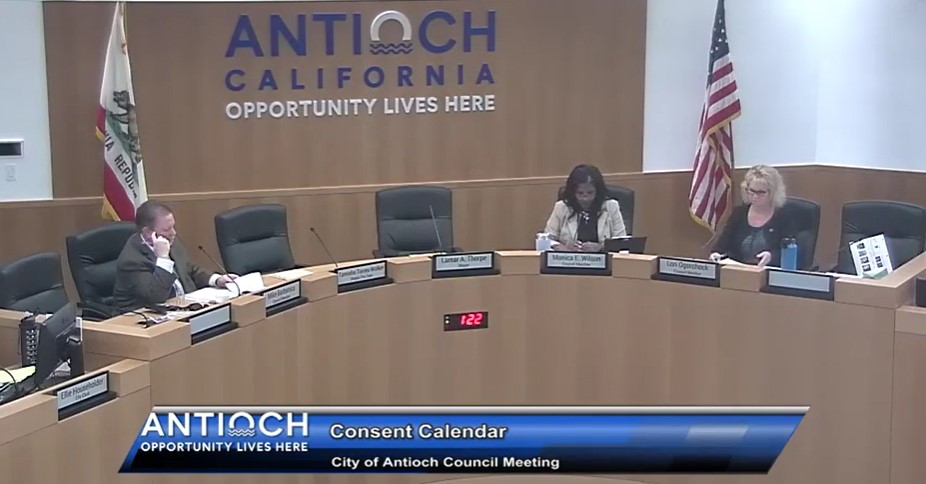
Mayor Lamar Thorpe and Mayor Pro Tem Tamisha Torres-Walker were absent from the May 9, 2023 council meeting during the Consent Calender portion. Thorpe arrived an hour late. Video screenshot.

After Ogorchock switched positions in March; Thorpe hour late to meeting without explanation

By Allen D. Payton

With the final vote to revise the Antioch tobacco products sales ban ordinance on the Consent Calendar during Tuesday night’s meeting, Mayor Pro Tem Tamisha Torres-Walker was absent and Mayor Lamar Thorpe was an hour late to the meeting. That left the vote up to the other three council members, including District 4 Councilwoman Monica Wilson who opposed the changes. During the March 28th meeting District 3 Councilwoman Lori Ogorchock reversed her previous support for the entire ban, joining Torres-Walker and District 2 Councilman Mike Barbanica. The motion to adopt the revised ordinance failed on a 2-1 vote with Wilson voting against.

According to the staff report on the agenda item, Section C. of the current ordinance reads, “No tobacco retailer shall sell, offer for sale, possess with the intent to sell, offer in exchange for any form of consideration, or provide at no cost any of the following: (1) Any package of fewer than twenty little cigars; (2) Any package of fewer than six cigars; and (3) Any package of cigarettes, little cigars, or cigars at a price that is less than ten dollars per package, including applicable fees and taxes.”

Retailers had complained to the city council that they were unfairly targeted and there wasn’t a level playing field with retailers in neighboring cities. As a result, that section was removed in the revised ordinance which the council passed 3-2.

But the failure of the second reading of the ordinance leaves that section in place and any revisions to the ordinance requires the council to start the process again.

A separate effort to remove the ban on the sale or transfer to family members of tobacco retailers in the city was sent back to the Planning Commission for review and a recommendation vote. That will return to the city council for a decision at a future meeting.

New Poll: Overwhelming support for more police on BART, greater focus on cleanliness, stronger enforcement of rules 

Wednesday, May 10th, 2023
Source: Bay Area Council

San Francisco—BART riders and others who have stopped using the system or reduced their use dramatically say they would return in significant numbers if crime, safety and cleanliness issues are addressed, according to new polling released today by the Bay Area Council. Concerns about crime far outweigh remote work as the reason they are not riding. The findings offer an encouraging path forward for a system that is teetering on the brink of a fiscal cliff as BART ridership hovers at historic lows following the pandemic. 

A Bay Area Council analysis of the poll findings suggests that by taking a much stronger and swifter approach to crime, safety and cleanliness, BART could see up to 300,000 more trips over the course of the workweek, pushing ridership above 50% of pre-pandemic levels. 

Key Findings 

  • 79% say they feel more comfortable riding BART when there is a uniformed police officer or security present 
  • 73% say BART should prioritize adding more uniformed police on trains and in stations 
  • 62% say BART should improve fare gates to prevent fare evaders; 66% want fare gates to fully enclose station entrances 
  • 79% say BART should eject people from the system that violate the passenger code of conduct, which prohibits drugs, smoking, drinking and other illegal or unacceptable behavior 
  • 65% say BART should focus on core operations and leave social service issues to other public agencies 
  • 90% put high priority on more frequent cleaning 
  • 74% feel things in the Bay Area have gotten pretty seriously off on the wrong track

Riders and residents overall are crystal clear about what the main barriers are for them to returning to BART. Among all respondents, including those that never or rarely ride BART, 78% said they would ride BART more often if it was significantly cleaner and safer. This number is particularly striking when compared to the far fewer 46% of respondents who stated they would ride BART more often if they had to commute to work or school more frequently. 

There is similar enthusiasm for returning to BART among the 37% of respondents who were regular BART riders before the pandemic but have since dramatically curtailed their use of the system or dropped off completely. These riders may represent BART’s best opportunity to bring more riders back to the system more regularly, with 59% saying they would ride BART a lot more often with safety and cleanliness improvements. But they also generally harbor much stronger levels of dissatisfaction with the system than others who are not BART riders. 

“There can be no higher priority for BART and the future survival of the system than to direct every ounce of energy and resources into making the system safer and cleaner,” said Jim Wunderman, President and CEO of the Bay Area Council, which was instrumental in the creation of BART in the 1950s and has long been a champion for the system. “We specifically call on BART to immediately and significantly increase police and security personnel on trains, vigorously enforce the rider code of conduct, and install new fare gates within a year. BART must treat this like a crisis, because it is a crisis. BART is the mass transit backbone of our region and there’s too much at stake for BART and our region not to be more aggressive in addressing the reasons legions of riders are staying away. BART deserves credit for recent moves to increase police presence and ramp up cleaning, but riders and others are saying they must do more and they must do it now.” 

See the BART poll findings>> 

Read the full BART poll questionnaire>> 

The concerns about safety and cleanliness are reflected in overall sour views of the system, with 49% giving BART an unfavorable rating compared to 30% for SF MUNI, 23% for AC Transit and 15% for Caltrain. The poll by EMC Research surveyed 1,000 residents in Alameda, Contra Costa, San Francisco and northern San Mateo counties encompassing BART’s service area. The poll has a margin of error of +/-3.1 percentage points. 

Having a more visible police presence across the system is critical to bringing riders back. A vast majority of all those surveyed say they want more police officers on trains and in stations, they want more frequent cleaning of train cars and stations, and they want BART to strictly enforce an existing code of rider conduct which outlaws gate-hopping fare cheats, drinking and smoking, drug use and other illegal and dangerous behaviors. 

These attitudes shouldn’t come as a big surprise. According to the poll, 53% of residents know of someone who has been a victim of crime on BART, 46% say they have witnessed crime on BART, and 18% say they personally have been a victim on crime on BART. Meanwhile, 44% of BART riders said they have never or rarely seen a police officer. 

CA Attorney General Bonta launches civil rights investigation into Antioch Police Department

Wednesday, May 10th, 2023

Review comes amidst allegations of bigoted text messages and other potentially discriminatory misconduct 

OAKLAND — California Attorney General Rob Bonta today announced initiating a civil rights investigation into the Antioch Police Department (APD). The investigation will seek to determine whether the law enforcement agency has engaged in a pattern or practice of unconstitutional policing amid deeply concerning allegations relating to bigoted text messages and other potentially discriminatory misconduct. If, through this investigation, the Attorney General’s Office determines that unlawful activity or practices took place, the office will also determine what potential actions are needed to ensure comprehensive corrective action takes place at APD.  (See related articles here and here)

“It is our job to protect and serve all of our communities,” said Attorney General Bonta. “Police departments are on the front lines of that fight every day as they work to safeguard the people of our state. However, where there are allegations of potentially pervasive bias or discrimination, it can undermine the trust that is critical for public safety and our justice system. It is our responsibility to ensure that we establish a culture of accountability, professionalism, and zero tolerance for hateful or racist behavior, on or off duty.”

Under the California Constitution and California Civil Code section 52.3, the Attorney General is authorized to conduct civil investigations into whether a law enforcement agency has engaged in a pattern or practice of violating state or federal law. As opposed to a criminal investigation into an individual incident or incidents, a pattern or practice investigation typically works to identify and, as appropriate, compel the correction of systemic violations of the constitutional rights of the community at large by a law enforcement agency. With regard to the Antioch Police Department, the Attorney General has made no determinations at this time about specific complaints, allegations, or the agency’s overall policies and practices. The Attorney General’s independent investigation of APD is separate from ongoing or potential administrative or criminal investigations at the local and federal levels.

As interaction and cooperation with the community is at the core of law enforcement’s work to provide public safety and create public trust, the Attorney General encourages anyone with information relevant to this investigation to contact the California Department of Justice’s Civil Rights Enforcement Section at Police-Practices@doj.ca.gov. Members of the public may also send information to the California Department of Justice in other languages. During the course of the investigation, attorneys and special agents at the California Department of Justice will work diligently to consider all relevant information, including from community members and organizations, local officials, oversight entities, Antioch Police Department, and individual officers.

Attorney General Bonta is committed to strengthening trust between local law enforcement and the communities they serve as one key part of the broader effort to increase public safety for all Californians. In February, Attorney General Bonta launched an investigation into allegations of excessive force at the Riverside County Sheriff’s Department. Last year, the Attorney General assumed responsibility for the Los Angeles County Sheriff’s Department’s investigation related to contracts awarded to a local nonprofit. He worked with authorities in San Francisco to help ensure the continuation of local oversight efforts related to officer-involved shootings, in-custody deaths, and severe uses of force. Attorney General Bonta also opened a pattern or practice investigation into the Santa Clara County Sheriff’s Office. In 2021, the Attorney General launched an independent review of the Torrance Police Department and secured a stipulated judgment against the Bakersfield Police Department requiring an extensive range of actions to promote public safety. Attorney General Bonta also established the Racial Justice Bureau within the Civil Rights Enforcement Section to, among other things, help address issues of implicit and explicit bias in policing.

Antioch Police to hold annual community meeting on use of military equipment Thursday

Wednesday, May 10th, 2023
The APD Rescue Vehicle, a Mine-Resistant Ambush Protected (MRAP) vehicle, is an example of military equipment periodically used by the department. Herald file photo.

By PIO Ashley Crandell, Antioch Police Department

On Thursday, May 11, 2023 at 4:00 p.m. the Antioch Police Department is hosting a community meeting pertaining to Assembly Bill (AB) 481 – Military Equipment Policy (#706) Annual Report.

This meeting allows the community the opportunity to discuss and ask questions regarding the annual military equipment report and the law enforcement agency’s funding, acquisition, or use of military equipment.

Please refer to the meeting’s agenda.

Antioch Unified awarded $500K California Serves Grant

Tuesday, May 9th, 2023

To promote access to effective civic engagement and service learning for 12th graders

AUSD is pleased to announce that we have been awarded the California Serves Grant, a total of $499,911.00 in grant monies. The 2022 California State Budget established the California Serves Program (California Education Code [EC] Section 51475), a collaboration between the California Department of Education (CDE) and CaliforniaVolunteers. The California Serves Program will promote access to effective service learning for students in grade twelve, with the goal of expanding access for high school graduates in obtaining a State Seal of Civic Engagement through service learning.

According to the CDA website, “On September 10, 2020, the State Board of Education adopted criteria and guidance to award a State Seal of Civic Engagement to California students who demonstrate excellence in civics education and participation, and an understanding of the United States Constitution, the California Constitution, and the democratic system of government.” (Note: California has a Republican Form of Government, as required of all states to be admitted to the Union, and is guaranteed by the U.S. as written in Article IV, Section 4 of the U.S. Constitution).

AUSD California Serves Grant Plan

The Learning through Serving project will implement a new two-course sequence to engage all AUSD students in meaningful civics education that incorporates high-quality democratic education, civic-mindedness, community engagement, and experiential learning through an evidence-based approach. The initiative will expand access and promote equity by allowing all AUSD 12th-grade students to complete the State Seal of Civics Education – a credential to which AUSD students currently do not have access.

With Learning through Serving, AUSD will finalize implementing a new course sequence for the senior year of high school, starting in the 2024-2025 school year. This sequence includes a newly approved Ethnic Studies course that pushes students to think more deeply about the world around them, including race, culture, interaction, civic engagement, and inspirational action to improve society. We will also create a new capstone project course to build onto the Ethnic Studies course, creating a year-long sequence for all Antioch seniors.

This new course sequence would become a required component of the program of study, with all AUSD 12th grade students completing the courses. Over the three-year project, an estimated 2,788 students will complete the courses across three high schools. Through increased engagement and opportunities for meaningful reflection, AUSD will indirectly address student connectedness, motivation, and participation. Additionally, the combination of professional development, education, training, and expanded course delivery will increase district-wide capacity to support long-term improvements in student academic, personal, and social-emotional outcomes.

Allen D. Payton contributed to this report.

Overnight Hwy 4 (bypass) closure for Mokelumne Trail overcrossing postponed until May 12 & 13

Friday, May 5th, 2023

Between Lone Tree Way and Sand Creek Road

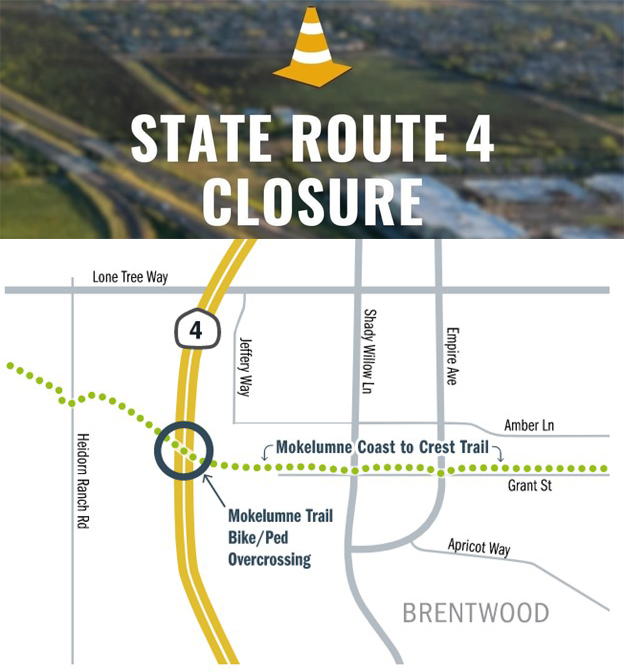
The overnight closure of State Route 4 between Lone Tree Way and Sand Creek Road in Brentwood originally planned for Friday, May 5 through Saturday, May 6, 2023 has been postponed one week to Friday, May 12 through Saturday, May 13, 2023.

In partnership with the City of Brentwood, the Contra Costa Transportation Authority (CCTA) is constructing the Mokelumne Trail Bicycle and Pedestrian Overcrossing to provide safe access to cyclists and pedestrians for commuting and recreational travel, reconnecting two sides of the trail that were separated by the expansion of State Route 4.

When completed, the overcrossing will provide access to the future East County Intermodal Transit Center and BART Station in Brentwood, as well. It is part of the larger Mokelumne Coast to Crest Trail which also includes the Delta de Anza Regional Trail that runs through Antioch and Oakley,  that will, when completed, connect six counties across California from the East Bay to the Sierra Nevada Mountains.

The overnight closure will facilitate final adjustments to the falsework as part of the construction work installing the pedestrian and bicyclist crossing over State Route 4. This closure will impact State Route 4 in both the Eastbound and Westbound directions. CCTA and the California Department of Transportation (Caltrans) have scheduled the closure during the early morning hours in order to minimize impacts to the motoring public.

In order to ensure crew and public safety during the planned construction work, a temporary nighttime freeway closure in both directions of State Route 4 will occur in both Eastbound and Westbound lanes of Highway 4 from midnight on Friday, May 12 until 6:00am on Saturday, May 13, 2023 (weather permitting).

Detours
Detours will be in place to reroute drivers around the closure and are planned as follows:
Eastbound traffic will be directed to exit at Lone Tree Way, go eastbound to Shady Willow Lane, then southbound on Shady Willow Lane to Sand Creek Road, before proceeding westbound on Sand Creek Road to the eastbound State Route 4 on-ramp.

Westbound drivers having to detour will exit on Sand Creek Road and go eastbound on Sand Creek Road to Shady Willow Lane, then northbound on Shady Willow Lane to Lone Tree Way, and proceed westbound on Lone Tree Way to the westbound State Route 4 on-ramp.

Future Freeway Closures

Additional overnight closures will be needed over the course of the next eight weeks (weather dependent) to facilitate concrete pours for the stem and soffit and deck of the future Mokelumne Trail Bicycle and Pedestrian Overcrossing. Additional information regarding dates and detours will be provided once the schedule is confirmed. This project is anticipated to be complete in late summer or early fall of 2023.