







Archive for the ‘Health’ Category

Contra Costa Coronavirus Update: 25 total deaths in county, cases increase to 842, hospitalizations drop to 27

Tuesday, April 28th, 2020

From CC Health Coronavirus Dashboard.

By Allen Payton

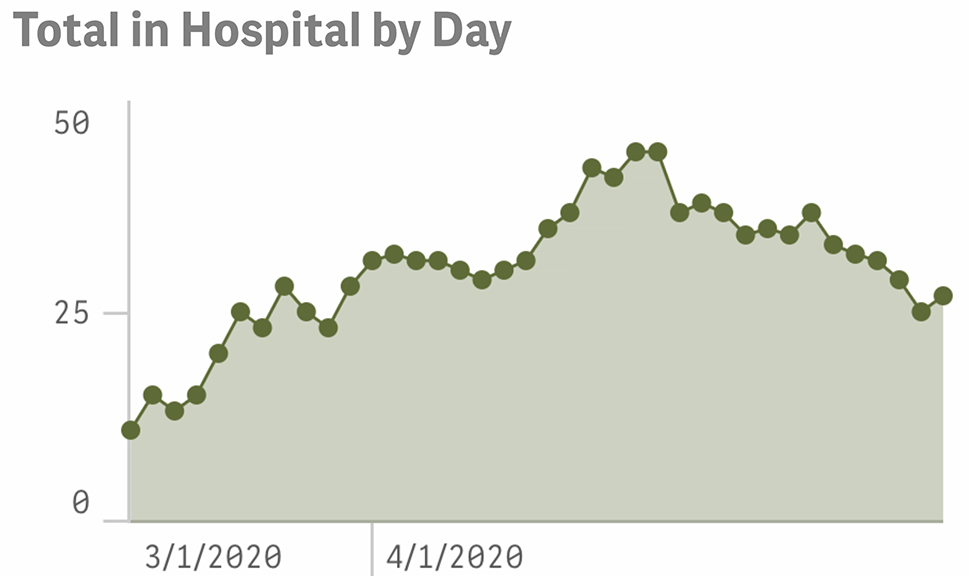
As of Tuesday, April 28, 2020 at 11:30 a.m. Contra Costa Health Services (CCHS) is reporting a total of 25 deaths in the county from the COVID-19/coronavirus. There are 27 people diagnosed with the virus currently hospitalized, an increase of one from Monday, April 27 but an overall decrease of 17 from the high of 44 on April 14.

From CCHealth Coroavirus Dashboard.

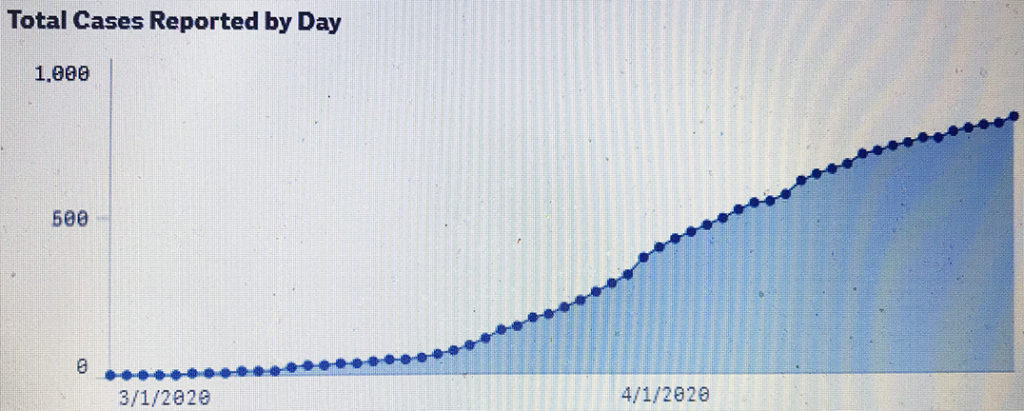
Total cases continue to increase with 842 people who have tested positive out of the county’s population of 1.14 million.

Antioch has 67 people who have tested positive for the virus.

A total of 12,406 people have been tested for the virus in the county.

The largest category of those who have been diagnosed with the virus continues to be people ages 41-60 with 298 cases.

To see the all the statistics provided by CCHS, click here.

Contra Costa, other Bay Area counties to extend Shelter-In-Place orders through end of May

Monday, April 27th, 2020

Will include limited easing of some restrictions for small number of lower-risk activities

MARTINEZ – April 27, 2020) – Later this week, the Public Health Officers of the Counties of Contra Costa, Alameda, Marin, San Francisco, San Mateo, and Santa Clara as well as the City of Berkeley will issue revised shelter-in-place orders that largely keep the current restrictions in place and extend them through May. The new order will include limited easing of specific restrictions for a small number of lower-risk activities.

The shelter-in-place orders in effect across the seven jurisdictions are set to expire on May 3, 2020. Thanks to the collective effort and sacrifice of the 7 million residents across our jurisdictions, we have made substantial progress in slowing the spread of the novel coronavirus, ensuring our local hospitals are not overwhelmed with COVID-19 cases, and saving lives. At this stage of the pandemic, however, it is critical that our collective efforts continue so that we do not lose the progress we have achieved together. Hospitalizations have leveled, but more work is needed to safely re-open our communities. Prematurely lifting restrictions could easily lead to a large surge in cases.

The Health Officers will also release a set of broad indicators that will be used to track progress in preparedness and response to COVID-19, in alignment with the framework being used by the State of California. Future easing of restrictions requires that each jurisdiction and various sectors continue to rapidly build critical infrastructure and systems to respond to and control the spread of coronavirus infections and to ensure the health care system’s ability to meet demand.

This global pandemic of COVID-19 is still in its early stages. The virus spreads easily, testing capacity is limited and expanding slowly, and vaccine development is just beginning. We expect to be responding to COVID-19 in our communities for a long time. As effective as our efforts have been, if we move too fast to ease restrictions, the potential of exponential spread could have grave impacts to health and wellness of our residents as well as the economy.

The Health Officers of these seven jurisdictions have been working closely together in leading a unified, regional approach, to protect the health and safety of our residents. Details regarding this next phase will be shared later in the week, along with the updated order.


Gov. Newsom announces plan to resume delayed health care deferred as hospitals prepared for COVID-19 surge

Thursday, April 23rd, 2020

Decision based on progress – one of California’s six indicators to gradually modify state’s stay-at-home order

State also announces plans to add at least an additional 80 testing sites, mainly in underserved communities; train up to 10,000 contact tracers

SACRAMENTO — Wednesday, April 22, 2020, California Governor Gavin Newsom announced plans to allow hospitals and health systems to resume delayed medical care for Californians – such as heart valve replacements, angioplasty and tumor removals, and key preventive care services, such as colonoscopies – which were deferred as the state’s health care delivery systems prepared for a surge of COVID-19 patients. The decision was based on progress toward preparing California hospitals and health systems for a surge in COVID-19 patients – one of the six critical indicators the governor unveiled last week as part of the state’s framework for gradually modifying California’s stay-at-home order.
As part of the Western State’s Pact, California will work with Washington and Oregon to share best practices on how our states can allow hospitals and medical providers to resume delayed medical care in areas that have sufficient hospital capacity, while ensuring the safety and health of our health care workers and patients. The Western states had previously announced a shared, science-based vision for gradually reopening their economies and controlling COVID-19 into the future.

“From the beginning, I have said California’s decisions will be guided by science, not politics, and that Californians’ health comes first,” said Governor Newsom. “Thanks to the work our health care delivery system has done expanding hospital capacity and reducing the rate of spread of COVID-19, hospitals and health systems can consider resuming medical care that residents have delayed during this crisis, such as heart valve replacements, angioplasty and tumor removals, when such care can be delivered safety and with appropriate protections for health care workers. It’s in the best interest of the overall health of our state to allow these procedures to resume when they can be done safely.”

Last week, Governor Newsom announced six indicators that would drive California’s decision to gradually modify portions of the state’s stay-at-home order. They include:

  • Expanding testing and contact tracing to be able to identify and isolate those with the virus;
  • Preventing infection in people who are most at risk;
  • Being able to handle surges in hospitals and the health care delivery system;
  • Developing therapeutics to meet demand;
  • Ensuring businesses, schools and child care facilities can support physical distancing; and
  • Determining when to reinstate certain measures like the stay-at-home order if need be.

Also today, Governor Newsom announced that President Trump has personally committed to sending the state 100,000 testing swabs next week and 250,000 swabs the following week.

Health officials also outlined progress toward the first indicator: expanding testing and contact tracing to be able to identify and isolate those with the virus.

To that end, the state announced the expansion of community testing in underserved areas. The state is contracting with Verily, an Alphabet company, in partnership with Community Organized Relief Effort (CORE) and with support from Rockefeller Foundation and an anonymous donor, to establish six new community testing sites focused on underserved communities such as farmworkers and communities of color. Additionally, the state is contracting with OptumServe, to establish an additional 80 community testing sites, which too will be focused on underserved communities.

“We know that communities of color are disproportionately affected by COVID-19,” said Governor Newsom. “We must ensure that we are deploying testing equitably in an effort to reduce the higher death rates we are seeing in African American and Latino communities.”

In addition, the state is:

  • Accelerating equitable COVID-19 testing by aiming to deploy 25,000 tests per day by April 30; establishing an additional 80-100 testing sites; and identifying five new high-throughput testing hubs.
  • Establishing a contact tracing workforce by surveying counties on their capacity; developing a statewide training academy; and training 10,000 public health connectors to conduct contact tracing.
  • Developing isolation protocols and supports by identifying regional alternate isolation sites and building private-public partnerships to support those who are isolated.
  • Deploying data management system and tools by publishing a symptom-check app; deploying a data management platform; and establishing a data dashboard for the public.

Now that testing has become more widely available across the state, California updated its testing guidance earlier this week to become the first state to recommend testing of some asymptomatic individuals such as health care workers, first responders and correctional workers. This action will better protect Californians and prevent COVID-19 spread in high-risk settings such as congregate living facilities and correctional facilities.

Face coverings now required on BART

Wednesday, April 22nd, 2020

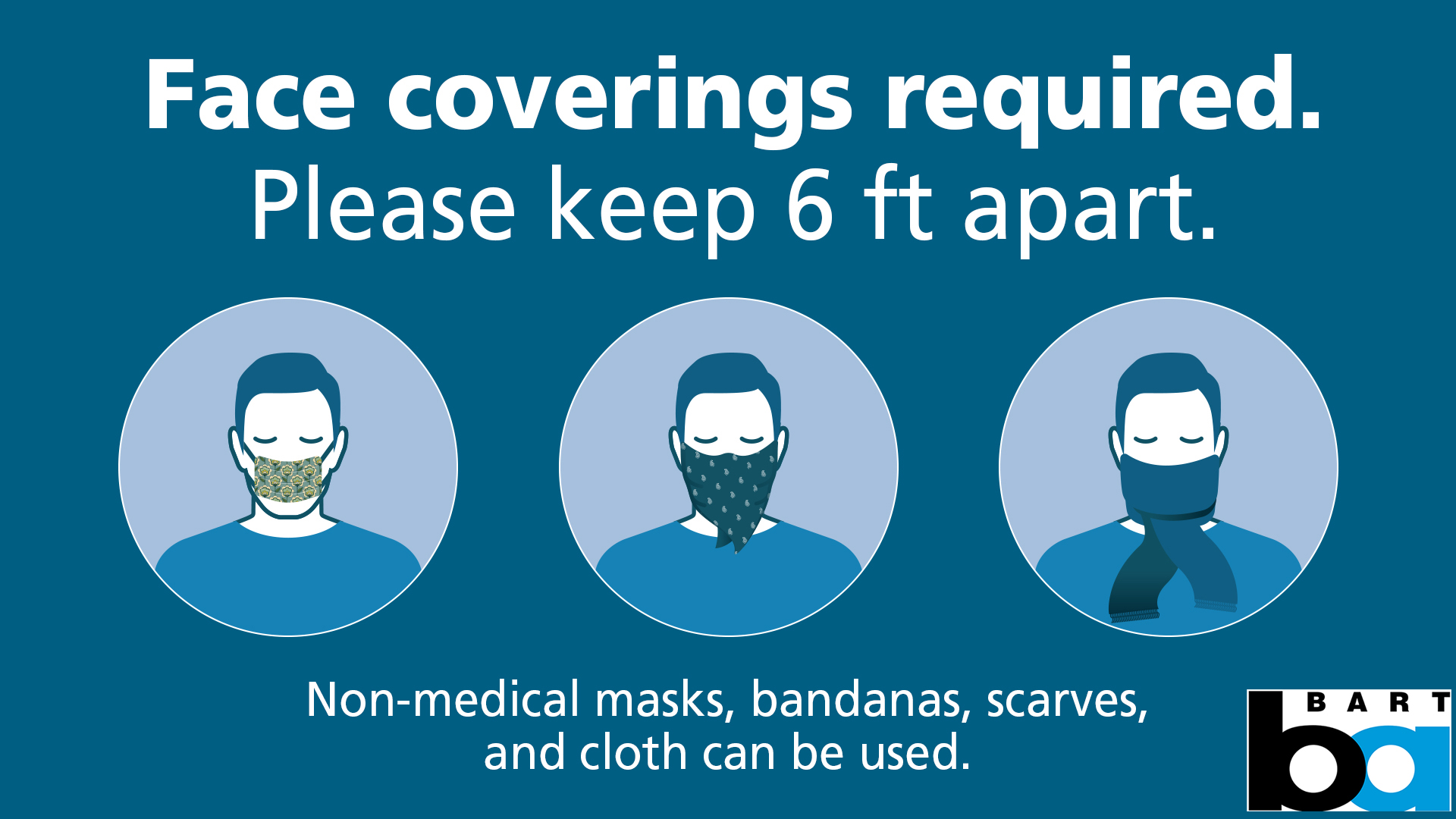
County health orders in Contra Costa, Alameda, San Francisco, and San Mateo now require all riders to wear face coverings inside BART stations and on-board trains.  The orders also require BART to take reasonable measures to remind the public that they need facing coverings and “must take all reasonable steps to prohibit any member of the public who is not wearing a face covering from entering and must not serve that person if those efforts are unsuccessful and seek to remove that person.” Failure to comply with the emergency health order is a misdemeanor.  Enforcement begins on Wednesday, April 22.

Prior to the order, most BART riders were already wearing face coverings while riding. BART will take the following steps to be compliant with the new orders:

Public Communication

  • Signs with pictograms and translations will be posted in all stations.
  • PA announcements will be made inside stations and on-board trains.
  • Platform digital signs will rotate a message.
  • Website and social media posts will be made.

BART Police Deployment and Enforcement Strategies 

BART Police Chief Ed Alvarez recently shifted deployment to focus police resources to the entrances of stations and near the faregates. This strategy was put into place to improve safety for our employees and riders and to prevent illegal behavior from occurring.  Continuing this deployment will help BART enforce the new orders.

BART Police will be responsible for reminding riders of the new requirement.  Consistent with BART’s current operating procedures, Station Agents will not be used to enforce the new public health emergency orders as they are not trained law enforcement personnel.
BART Police will give verbal reminders of the requirement to riders without face coverings when police encounter someone not covering their mouth and nose.  Police personnel will remind the rider they have the option to use any material to cover their face. Only upon refusal to cover their face with any material will an officer ask the person to leave the system.

Riders should not confront others without a face covering.  If someone isn’t wearing a face covering, riders should move away from the individual.

CDC recommends wearing cloth face coverings that can be fashioned from household items or made at home from common materials.  The cloth face coverings recommended are not surgical masks or N-95 respirators.  Those are critical supplies that must continue to be reserved for healthcare workers and other medical first responders, as recommended by current CDC guidance.

Applications for Pandemic Unemployment Assistance for business owners, self-employed and independent contractors begins April 28

Wednesday, April 22nd, 2020

Information on State and Federal Benefit Payments

From – https://edd.ca.gov/about_edd/coronavirus-2019/pandemic-unemployment-assistance.htm

As part of the federal CARES Act, the new Pandemic Unemployment Assistance (PUA) program helps unemployed Californians who are business owners, self-employed, independent contractors, have limited work history, and others not usually eligible for regular state UI benefits who are out of business or services are significantly reduced as a direct result of the pandemic. The provisions of the program once operational include:

  • Up to 39 weeks of benefits starting with weeks of unemployment beginning February 2, 2020, through the week ending December 26, 2020*, depending on when you became directly impacted by the pandemic.
  • An additional $600 to each PUA weekly benefit amount you may be eligible to receive, as part of the separate CARES Act Pandemic Additional Compensation program. Only the weeks of a claim between March 29 and July 25* are eligible for the extra $600 payments.

* Under the CARES Act of 2020, the $600 additional benefits are available through 07/31/20. However, the U.S. Department of Labor has issued guidance to clarify that, for most Californians, the last full week of benefits will end on 07/25/20. Similarly, the PUA program has a legislative end date of 12/31/20, but for Californians the last full week of benefits will end on 12/26/20.

Benefits can be retroactive to weeks starting on or after February 2, 2020, depending on your last day of work due to COVID-19 and regardless of when you submitted your claim application. The effective date of your claim will begin the Sunday of the week when you last worked and became unemployed due to reasons directly related to COVID-19.

Important Information

Note: Because this is a brand new program, each state will need time to develop all of the necessary system programming, forms, processes, and procedures. This page will be updated as information becomes available, including when and how to apply for these benefits. Once this new complex program is built and staffed, it will likely rival the size of the regular UI program the EDD already administers.

As we work to implement this new program, you can:

Eligibility

The PUA benefits are payable if you don’t qualify for regular UI benefits in California or another state and also do not qualify for State Disability Insurance or Paid Family Leave benefits. This includes:

  • Business owners
  • Self-employed individuals
  • Independent contractors

You can also be eligible if you qualified for regular UI benefits, but have collected all benefits for which they are eligible.

If you are not a citizen of the United States, you cannot be paid PUA benefits unless you were legally permitted to work in the United States at the time such services were performed. In addition, you must be authorized to work for any week of PUA benefits claimed to be eligible for payments.

You must also meet one of the following criteria:

  • You have been diagnosed with COVID-19 or are experiencing symptoms of COVID-19 and are seeking a medical diagnosis.
  • You are unable to work because a health care provider advised you to self-quarantine due to concerns related to COVID-19.
  • A member of your household has been diagnosed with COVID-19.
  • You are providing care for a family member or a member of your household who has been diagnosed with COVID-19.
  • A child or other person in the household for whom you have primary caregiving responsibility is unable to attend school or another facility that is closed as a direct result of the COVID-19 and the school or facility care is required for you to work.
  • You became the breadwinner or major support for a household because the head of the household has died as a direct result of COVID-19.
  • You have to quit your job as a direct result of COVID-19.
  • Your place of employment is closed as a direct result of COVID-19.
  • You were scheduled to start a job that is now unavailable as a direct result of the COVID-19 public health emergency.
  • You are unable to reach the place of employment as a direct result of the COVID-19 public health emergency.
  • If you work as an independent contractor with reportable income, you may also qualify for PUA benefits if you are unemployed, partially employed, or unable or unavailable to work because the COVID-19 public health emergency has severely limited your ability to continue performing your customary work activities, and has thereby forced you to stop working.

Benefit Payments

In order to provide benefits as quickly as possible, payments will be issued in phases. If you qualify for PUA, and depending on the effective date of your PUA claim, the initial payments you will receive are as follows:

  • Phase 1 – $167 per week for each week you were unemployed from February 2, 2020 to March 28, 2020 due to a COVID-19 related reason.
  • Phase 2 – $167 plus $600 per week for each week you were unemployed from March 29, 2020 to July 25, 2020, due to a COVID-19 related reason.
  • Phase 3 – $167 per week, for each week from July 26, 2020 to December 26, 2020, that you are unemployed due to a COVID-19 related reason, up to a total of 39 weeks (minus any weeks of regular UI and certain extended UI benefits that you have received).

Note: If you qualify for your claim to be backdated to an earlier PUA effective date based on your last day of work, you could receive payment for prior weeks you were unemployed due to COVID-19.

You will be required to “certify” for your benefit payment. Certifying is the process of answering basic questions every two weeks that tells us you’re still unemployed and otherwise eligible to continue receiving biweekly payments.

When to File a Claim

We have a dedicated team working around the clock with state partners to build this new program as quickly as possible. The EDD will begin accepting online applications for this program on Tuesday, April 28. This page will be updated with instructions for filing a claim for PUA benefits when details become available.

If you are unsure if you are an independent contractor or an employee who could be eligible for benefits, file for regular Unemployment Insurance benefits and we will determine your eligibility.

After you have filed, refer to our step-by-step UI claims process. You’ll learn what to expect and the actions you need to take through the course of your claim for receiving benefit payments as long as you’re eligible.

Supervisors ban evictions, rent increases during COVID-19 shelter in place with 6-month grace period

Wednesday, April 22nd, 2020

No late fees for 120 days

By Daniel Borsuk

Residential and commercial renters will get some rental and eviction relief during the COVID-19 pandemic after the Contra Costa County Board of Supervisors voted 5-0 to approve an ordinance containing a 180-day grace period, two months more than what supervisors initially had in mind, during a special meeting on Tuesday. (See entire ordinance, here).

By liberally extending the grace period an extra two months, supervisors are handing over to thousands of renters in the county more financial and housing relief during this stressful period when COVID-19 has decimated their financial livelihood. In March, the county’s unemployment rate was 4 percent and April’s unemployment rate will very likely rise sharply when it is release later on.

Instead of inserting a 120-day grace period that other counties like Santa Clara County have inserted in its COVID-19 rent control and eviction moratoria ordinance, Contra Costa County supervisors at the request of District 1 Supervisor John Gioia of Richmond convinced other supervisors that a longer grace period is needed given the uncertainty of the duration of the medical and economic repercussions from the current local and state-mandated stay-at-home orders.

Gioia said he favored the more expansive 180-day grace period because the ordinance, as it was proposed to supervisors, does not protect all tenants whether they are delinquent or current in their rent.

“You have to be up to date on rent in order to be protected by the ordinance presented by counsel,” said Gioia. “It’s very unfortunate that the governor’s order requires this. Tenants must be current on rent to qualify for the grace period.”

Supervisors listened to 45 emailed comments from county residents, most of whom were in support of at least a 120-day grace period, little knowing that Gioia would propose a more expansive 180-day grace period.

“We’re dealing with uncertain times,” said District 3 Supervisor Diane Burgis of Brentwood. “We’re dealing with people who have not paid rent. People who have lost jobs because businesses have shut down.”

District 4 Supervisor Karen Mitchoff of Pleasant Hill preferred to retain the ordinance’s 120-day grace period clause saying it was sufficient for renters, but eventually agreed to the 180-day grace period for rent and eviction moratoria purposes until May 25 when supervisors plan to revisit the issue.

Other features of the ordinance taken mainly from the Santa Clara County ordinance include countywide, no-fault evictions, definition of owner, attorney fees, and no late fees.

Public Health Ad Hoc Committee Created

While COVID-19 health measures will remain in place for the foreseeable future, Board Chair Andersen proposed the creation of an ad hoc Public Health Committee that will weekly with county health department officials.

The committee that will consist of Burgis and Board Chair and District 2 Supervisor Candace Andersen of Danville. The committee’s key role is to be advisory to supervisors and Contra Costa County Health Officer Dr. Christopher Farnitano who will retain ultimate authority on health issues.

“This is not meant to replace the health officer’s directive,” said Supervisor Mitchoff. “There’s been some concern about communication. People are getting frustrated.”

Contra Costa Coronavirus Update: 19 deaths in county, 685 cases, 51 in Antioch

Saturday, April 18th, 2020

Screenshot of CC Health Services Coronavirus Dashboard.

By Allen Payton

As of Saturday, April 18, 2020 at 11:30 a.m. Contra Costa Health Services (CCHS) is reporting a total of 685 cases of COVID-19/coronavirus, and a total of 19 deaths in the county, three more than yesterday. There are 37 people diagnosed with the virus currently hospitalized.

A total of 8,944 people have been tested for the virus in the county. There are 51 people who have tested positive for COVID-19/coronavirus in Antioch.

The county’s coronavirus dashboard also offers hospital information. It shows the daily Intensive Care Unit Occupancy Rate and Ventilator Utilization for all hospitals in the county.

The largest category of those who have been diagnosed with the virus continue to be people ages 41-60 with 251 cases.

To see the all the statistics provided by CCHS, click here.

Drive-in churches now legal in California thanks to lawsuit victory

Friday, April 17th, 2020

“But, it’s problematic because going to church still isn’t considered essential” – Attorney Harmeet Dhillon

By Allen Payton

A victory, Friday in a lawsuit on freedom of worship is forcing California to allow drive-in church services.

The lawsuit against the State of California naming Governor Gavin Newsom over his executive order, was filed by San Francisco attorney Harmeet Dhillon, founder of the non-profit Center for American Liberty and co-counsel Mark Meuser, on behalf of three southern California churches and one parishioner. (See related article)

According to twitter posts by Dhillon, a government brief filed late (Friday) morning claimed that “drive in” is a “technology” like streaming video, and now OK. In response to this executive order “clarification” by opposition brief, Riverside and San Bernardino Counties update(d) their health decrees to allow drive-in worship.

“This development is a partial victory in our lawsuit, but it still does not allow in-building services – meaning people seeking spiritual guidance and fellowship safely, are given no right to do so but the same people can visit wine, pot, food, laundry shops with a mask legally,” she tweeted.

“We continue to wait for ruling on TRO (temporary restraining order),” Dhillon continued. “People of faith may be treated no less favorably than any other people in California. Reporters, termite guys, tree trimmers, baristas, stir-fry chefs, grocery workers, and customers of all have rights – so do religious leaders & followers!”

She was asked why this applies to the entire state, when she was only representing the three churches and one parishioner in Southern California.

“But I sued the State of California over the statewide order, and the counties,” she explained.

The place where the so-called policy changes were announced are hidden in the ruling, with the state agreeing that “of course drive-in churches are a technology like streaming video,” Dhillon shared. “You and I both know that’s absurd. But, it’s problematic, because going to church still isn’t considered essential.”

There’s no requirement for the state to publicize the court’s decision.

“It’s sneaky,” she said.

Asked about her clients Dhillon said, “I’m only representing those who are socially responsible, like anyone else.”

According to their website, “The Center for American Liberty defends the Free Speech rights and Civil Liberties of Americans.”

“The non-profit hired my firm to represent the plaintiffs,” she explained.

The decision was handed down by the U.S. District Court for the Central District of California in Los Angeles, which also includes Riverside and San Bernardino Counties.

“I’m glad we were able to do this. This is a small thing,” Dhillon added. “You’re probably not going to see a lot of drive-in churches in the next week or two. But, it’s better than nothing, dressing up, driving in and seeing your friends.”