







Archive for the ‘Health’ Category

Sutter Health and affiliates to pay $90 million to settle allegations of False Claims Act violations for mischarging the Medicare Advantage Plans

Wednesday, September 1st, 2021

By U.S. Department of Justice

Sutter Health, a California-based health care services provider, and several affiliated entities including Sutter Bay Medical Foundation (dba Palo Alto Medical Foundation, Sutter East Bay Medical Foundation, and Sutter Pacific Medical Foundation) and Sutter Valley Medical Foundation (dba Sutter Gould Medical Foundation and Sutter Medical Foundation) (collectively, “Sutter Health”), have agreed to pay $90 million to resolve allegations that Sutter Health violated the False Claims Act by knowingly submitting inaccurate information about the health status of beneficiaries enrolled in Medicare Advantage Plans.

Under Medicare Advantage, also known as the Medicare Part C program, Medicare beneficiaries have the option of enrolling in managed health care insurance plans called Medicare Advantage Plans. The plans are paid a capitated, or per-person, amount to provide Medicare-covered benefits to beneficiaries who enroll in one of their plans. Payments to plans are based on demographic information and the health status of each plan beneficiary. In general, plans receive larger payments for beneficiaries with more severe diagnoses.

Sutter Health, headquartered in Sacramento, contracted to provide health care services to California beneficiaries enrolled in certain plans. In exchange, Sutter Health received a portion of the payments for treating the beneficiaries under its care.

The government alleged that Sutter Health knowingly submitted unsupported diagnosis codes for certain patient encounters for beneficiaries under its care. These unsupported diagnosis codes caused inflated payments to be made to the plans and to Sutter Health. The lawsuit further alleged that, once Sutter Health became aware of these unsupported diagnosis codes, it failed to take sufficient corrective action to identify and delete additional unsupported diagnosis codes.

“The government relies on health care providers, including those furnishing services to Medicare Part C beneficiaries, to submit accurate information to ensure proper payment,” said Deputy Assistant Attorney General Sarah E. Harrington of the Justice Department’s Civil Division. “Today’s result sends a clear message that we will hold health care providers responsible if they knowingly provide or fail to correct information that is untruthful.”

“Today’s settlement exemplifies our commitment to fighting fraud in the Medicare program,” said Acting U.S. Attorney Stephanie M. Hinds for the Northern District of California. “Health care providers who flout the law need to know that my office will hold accountable those who pad their bottom line at taxpayer expense.”

“The knowing submission of inaccurate information to Medicare diverts funds from this vital health care program, which is a disservice to patients needing care,” said Special Agent in Charge Steven J. Ryan for the Office of Inspector General of the U.S. Department of Health and Human Services. “We will continue to work with our law enforcement partners to protect the integrity of federal health care programs and hold accountable entities who engage in false claims practices.”

In connection with the settlement, Sutter Health, Sutter Bay Medical Foundation and Sutter Valley Medical Foundation entered into a five-year Corporate Integrity Agreement (CIA) with the U.S. Department of Health and Human Services, Office of Inspector General (HHS-OIG). The CIA requires, among other things, that Sutter Health implement a centralized risk assessment program as part of its compliance program and hire an Independent Review Organization to annually review a sample of Sutter Health’s Medicare Advantage patients’ medical records and associated diagnoses data.

The civil settlement includes the resolution of claims brought under the qui tam or whistleblower provisions of the False Claims Act by Kathleen Ormsby, a former employee of Palo Alto Medical Foundation. Under those provisions, a private party can file an action on behalf of the United States and receive a portion of any recovery. The Act permits the government to intervene in such lawsuits, as it has done in this case as to claims submitted for the Palo Alto Medical Foundation. Although the United States did not intervene as to claims submitted by the remaining Sutter affiliates, Ms. Ormsby continued to pursue those claims, some of which are also being resolved by this settlement. The qui tam case is captioned United States ex rel. Ormsby v. Sutter Health, et al., No. 15-CV-01062-LB (N.D. Cal.).

The resolution obtained in this matter resulted from a coordinated effort between the Justice Department’s Civil Division, Commercial Litigation Branch, Fraud Section, and the U.S. Attorney’s Office for the Northern District of California, with assistance from HHS-OIG.

The investigation and resolution of this matter illustrate the government’s emphasis on combating health care fraud. One of the most powerful tools in this effort is the False Claims Act. Tips and complaints from all sources about potential fraud, waste, abuse and mismanagement, can be reported to the Department of Health and Human Services at 800-HHS-TIPS (800-447-8477).

The matter was handled by Attorneys Olga Yevtukhova, Jennifer J. Koh, Thomas Morris and Lyle Gruby of the Civil Division’s Fraud Section and by Assistant U.S. Attorney Benjamin Wolinsky for the Northern District of California, with assistance from Jonathan Birch.

Sutter Health Responds

Sutter Health on Monday, Aug. 30, 2021 announced that it has entered into an agreement with the federal government and a private plaintiff to resolve a False Claims Act lawsuit filed in 2015 involving Medicare Advantage claims related to its medical foundation operations. The matter was partially resolved in April 2019 for $30 million (a fact not included by the U.S. Department of Justice (DOJ) in its press release regarding the settlement). Under the follow-on agreement announced today, Sutter will pay an additional $60 million (not $90 million) to fully resolve the litigation. The agreement makes clear that Sutter and its medical foundation affiliates admit no liability in agreeing to settle the matter.

As part of this resolution, Sutter has also concurrently entered into a Corporate Integrity Agreement (CIA) with the Office of Inspector General (OIG) of the U.S. Department of Health and Human Services. The CIA, Sutter’s first, is intended to promote compliance with federal healthcare program requirements over a period of five years and includes specific elements that must be in place and monitored.

Sutter’s Ethics and Compliance Services team is responsible for overseeing Sutter’s compliance with the CIA. Sutter looks forward to collaborating with OIG over the term of the agreement. In 2017, PricewaterhouseCoopers conducted a compliance program assessment finding Sutter’s program to be effective, with several areas identified as leading practices. Sutter has since maintained and enhanced these program elements and is well-prepared to implement the terms of the agreement.

Today’s agreements bring closure to a long-running dispute, allowing Sutter to avoid the uncertainty and further expense of protracted litigation, and enabling a constructive relationship with the government as we work together under the CIA.

The claims resolved by the settlement are allegations only and there has been no determination of liability.



Attorney General Bonta announces $575 Million settlement with Sutter Health on anti-competitive practices allegations

Monday, August 30th, 2021

OAKLAND – California Attorney General Rob Bonta Friday, August 27 lauded Judge Massullo’s final approval of a landmark $575 million settlement with Sutter Health (Sutter). The settlement agreement was reached in 2019, and resolves allegations by the Attorney General’s office, the United Food and Commercial Workers and Employers Benefit Trust (UEBT), and class action plaintiffs that Sutter’s anticompetitive practices led to higher healthcare costs for consumers in Northern California compared to other places in the state. The settlement requires Sutter to pay $575 million in compensation, prohibits anticompetitive conduct, and requires Sutter to follow certain practices to restore competition in California’s healthcare markets.

“This is a groundbreaking settlement and a win for Californians,” said AG Bonta. “Sutter will no longer have free rein to engage in anticompetitive practices that force patients to pay more for health services. Under the terms of our agreement, Sutter’s transparency must increase, and practices that decrease the accessibility and affordability of healthcare must end. A competitive healthcare market is essential to ensuring patients and families aren’t bearing the brunt of healthcare costs while one company dominates the market.”

Sutter is the largest hospital system in Northern California. The Sutter network consists of some 24 acute care hospitals, 36 ambulatory surgery centers, and 16 cardiac and cancer centers. It also includes some 12,000 physicians and over 53,000 employees. In addition, Sutter negotiates contracts on behalf of the Palo Alto Medical Foundation and many affiliated physician groups.

This settlement is the result of litigation that began in 2014 when UEBT filed a class action lawsuit that challenged Sutter’s practices in rendering services and setting prices. They sought compensation for and an end to what they alleged were unlawful, anticompetitive business practices, which caused them to pay more than necessary for healthcare services and products. In March 2018, the Attorney General’s office filed a similar lawsuit against Sutter on behalf of the people of California, seeking injunctive relief to compel Sutter to correct its anticompetitive business practices moving forward. The separate lawsuits were combined by the court into one case. In October 2019, one day before the trial, the parties reached an agreement to settle. The settlement was filed with the court on December 19, 2019, and in March, Judge Massullo granted preliminary approval.

Today’s finalized settlement requires Sutter to:

  • Pay $575 million to compensate employers, unions, and others covered under the class action, and to cover costs and fees associated with the legal efforts;
  • Limit what it charges patients for out-of-network services, helping ensure that patients visiting an out-of-network hospital do not face outsized, surprise medical bills;
  • Increase transparency by permitting insurers, employers, and self-funded payers to provide plan members with access to pricing, quality, and cost information, which helps patients make better care decisions;
  • Halt measures that deny patients access to lower-cost plans, thus allowing health insurers, employers, and self-funded payers to offer and direct patients to more affordable health plan options for networks or products;
  • Stop all-or-nothing contracting deals, thus allowing insurers, employers, and self-funded payers to include some but not necessarily all of Sutter’s hospitals, clinics, or other commercial products in their plans’ network.
  • Cease anticompetitive bundling of services and products which forced insurers, employers, and self-funded payers to purchase for their plan offerings more services or products from Sutter than were needed. Sutter must now offer a stand-alone price that must be lower than any bundled package price to give insurers, employers, and self-funded payers more choice;
  • Cooperate with a court-approved compliance monitor to ensure that Sutter is following the terms of the settlement for at least 10 years. The monitor will receive and investigate complaints and may present evidence to the court; and
  • Prevent anticompetitive practices by clearly defining clinical integration to include patient quality of care. The settlement makes clear that for Sutter to claim it has clinically integrated a system, it must meet strict standards beyond regional similarities or the mere sharing of an electronic health record, and must be integrating care in a manner that takes into consideration the quality of care to the patient population. This is important because clinical integration can be used to mask market consolidation efforts by hospital systems, when in fact there is no true integration of a patient’s care. For example, saying that hospitals are regionally close or that hospitals are sharing electronic health records is not enough, there must be close coordination that will lead to less costly, higher quality care for local communities.

A report by the University of California Berkeley showed that over-consolidation drives up prices for consumers. According to the study, outpatient cardiology procedures in Southern California cost nearly $18,000 compared to almost $29,000 in Northern California. For inpatient hospital procedures, the cost in Southern California is nearly $132,000 compared to more than $223,000 in Northern California, a more than $90,000 difference. A 2016 study found that a cesarean delivery in Sacramento, where Sutter is based, costs more than $27,000, nearly double what it costs in Los Angeles or New York, making Northern California one of the most expensive places in the country to have a baby.

Sutter Health offered the following response to the settlement:

“Today’s ruling brings closure to this matter, which was settled almost two years ago. This voluntary settlement enables Sutter Health to maintain our integrated network and ability to provide patients with access to affordable, high-quality care. Sutter’s quality of care is nationally recognized, with the majority of hospitals and care facilities outperforming state and national averages in many measures of quality. We look forward to continuing to work with our health plan partners at the same time we continue to care for the underserved in our communities.”

A copy of the final approval order and judgment are available here and here.

Contra Costa, Bay Area health officials issue orders requiring indoor masking beginning Tuesday

Monday, August 2nd, 2021

Graphic by State of California from Gov. Newsom’s Wear a Mask campaign.

Also includes Counties of Alameda, Marin, San Francisco, San Mateo, Santa Clara and Sonoma, and the City of Berkeley; Napa and Solano Counties not included

With the COVID-19 Delta variant now infecting a small percentage of vaccinated people as well as many unvaccinated people, eight Bay Area health officers have issued health orders requiring masks indoors in public places.

The orders require all individuals, regardless of vaccination status, to wear face coverings when indoors in public settings, with limited exceptions, starting at 12:01 a.m. on Tuesday, August 3rd.

Vaccines remain the most powerful tool in the fight against COVID-19, including the Delta variant. Nonetheless, the Delta variant is infecting a small percentage of the vaccinated in the Bay Area — who still remain strongly protected against severe illness, hospitalization, and death. In those instances of infection in a vaccinated person, a face covering prevents further spread. Bay Area health officials urge all unvaccinated residents 12 and older to get vaccinated as soon as possible.

“We must act now to protect ourselves, our loved ones and our community. If you are eligible to get a COVID-19 vaccine and have not yet done so, please do not wait any longer,” said Dr. Chris Farnitano, health officer for Contra Costa. “During July the number of hospitalized COVID-19 patients in our county increased 400%. Four out of five of the COVID patients we see are not vaccinated, even though only one out of five Contra Costa adults are not vaccinated.”

These health orders aim to reduce community transmission of COVID-19 and protect everyone. Health officials are very concerned by the substantial levels of community transmission now found across the Bay Area, especially among unvaccinated people. In part, this is due to the widespread COVID-19 Delta variant, which is substantially more transmissible than previous forms of the virus. Recent information from the Centers for Disease Control and Prevention also indicates that even fully vaccinated individuals can in some cases spread the Delta variant to others, and so indoor use of face coverings provides an important added layer of protection.

The new Health Orders require wearing a well-fitting mask indoors in public settings. Indoor settings, whether public or private, are higher risk for COVID-19 transmission, especially when you are with people you do not live with. Health officials also recommend that all employers make face coverings available to individuals entering their businesses, and businesses are required to implement the indoor face covering order.

Today’s Health Orders are consistent with guidance from the Centers for Disease Control and Prevention and the California Department of Public Health, which recommend that fully vaccinated individuals wear masks while in indoor public settings. Bay Area Health Officers will continue to monitor data, including increasing vaccination throughout the region, to determine when the Orders can be adjusted or lifted.

For more information about COVID-19, and how to get a free vaccine near you, visit cchealth.org/coronavirus.


Doctors, organizers of today’s World Ivermectin Day claim it is “The Key to End the Pandemic”

Saturday, July 24th, 2021

A day for the recognition of Ivermectin – “Covid is treatable with ivermectin and can end the pandemic”

By British Ivermectin Recommendation Development Group

An international coalition of medical professionals together with journalists, musicians, artists and others, have established World Ivermectin Day this Saturday 24 July 2021, with the aim of sharing the evidence-based message that the cheap, safe and easily-distributed medicine ivermectin can remove the fear of the covid pandemic to lives and economies. (See website with videos)

According to the National Institutes of Health, “Ivermectin is a Food and Drug Administration (FDA)-approved antiparasitic drug that is used to treat several neglected tropical diseases, including onchocerciasis, helminthiases, and scabies.

Reports from in vitro studies suggest that ivermectin acts by inhibiting the host importin alpha/beta-1 nuclear transport proteins, which are part of a key intracellular transport process that viruses hijack to enhance infection by suppressing the host’s antiviral response. In addition, ivermectin docking may interfere with the attachment of the severe acute respiratory syndrome coronavirus 2 (SARS-CoV-2) spike protein to the human cell membrane.

Some studies of ivermectin have also reported potential anti-inflammatory properties, which have been postulated to be beneficial in people with COVID-19.”

“We have an incredibly positive and uplifting message to share; Ivermectin treats and prevents covid and it is the key to unlocking the never-ending cycle of pandemic peaks and personal restrictions and will help restart economies.” states Dr. Tess Lawrie, UK-based founder of the Day and co-author of a recent peer-reviewed study that verified the efficacy of the medicine.

Created in just a few weeks by a team of volunteers, World Ivermectin Day features talks and discussions that will be available to millions online. The decentralized and grassroots nature of the day has inspired individuals to organize their own live meetings and activities across the globe from a growing list of countries including the UK, Canada, Kuala Lumpur and Japan.

The principle aim of the day is for people to encourage their own governments to join the 20 or so countries already deploying ivermectin and so help protect their nations’ health and do so at low cost.

Ahead of the day, the central website, worldivermectinday.org is filling up with written and filmed testimonials from people from all around the world; many of whom are celebrating their good health and even their lives thanks to ivermectin.

World Ivermectin Day has been endorsed by the British Ivermectin Recommendation Development (BIRD) Group and the Front Line COVID-19 Critical Care Alliance (FLCCC) in the USA, key players in campaigning for ivermectin approval.

About BIRD

The British Ivermectin Recommendation Development Group (BIRD) is a truly grassroots initiative bringing together clinicians, health researchers and patient representatives from all around the world to advocate for the use of ivermectin against covid-19. (See BIRD Affiliates)

BIRD Affiliates

About FLCCC

The FLCCC Alliance was organized in March 2020 by a group of highly published, world renowned Critical Care physician/scholars – with the academic support of allied physicians from around the world – to research and develop lifesaving protocols for the prevention and treatment of COVID-19 in all stages of illness. Their MATH+ Hospital Treatment Protocol, introduced in March 2020, has saved thousands of patients who were critically ill with COVID-19. Now, the FLCCC’s new I-MASK+ Prophylaxis and Early At-Home Outpatient Treatment Protocol with Ivermectin has been released – and is a potential solution to the global pandemic.

The doctors and volunteers behind the event have designed the day to be organic, encouraging individuals and groups worldwide to organize their own activities to mark the day. There’s no financial interest in the medicine for any of them, but they are all resolutely unified by one aim – seeing ivermectin saving lives everywhere.

Graphic by BIRD

About Ivermectin

You may not be aware that Covid can be prevented and treated with a simple low-cost, generic tablet called Ivermectin.

On World Ivermectin Day we want you, and everyone on the planet to know this so we all can look forward to a healthier, happier future and not one of fear and uncertainty.

We are joined by health professionals, lawyers, musicians and artists and people of all backgrounds and nations to spread the amazing news about ivermectin.

Ivermectin, has a successful history stretching back to 1975 with 5 billion doses given and an impeccable safety record. Its inventors even won a Nobel Prize.

Ivermectin is not even the only generic treatment for covid, but leads a number of safe, widely available medicines that are being successfully used around the world to beat covid.

Sharing Good Health Worldwide

World Ivermectin Day is encouraging all nations who haven’t yet adopted ivermectin as part of their Covid treatment plan to take a serious review of the mountain of robust clinical evidence so they too can improve their people’s health and economies.

They are sharing the good news of how it is being successfully used by thousands of doctors in multiple countries as the way to prevent, treat and beat covid and end the pandemic. It is even effective against variants.

For more information visit WorldIvermectinDay.org.

Allen Payton contributed to this report.

Frazier’s bill to dissolve Los Medanos Healthcare District fails in State Senate committee 

Friday, July 9th, 2021

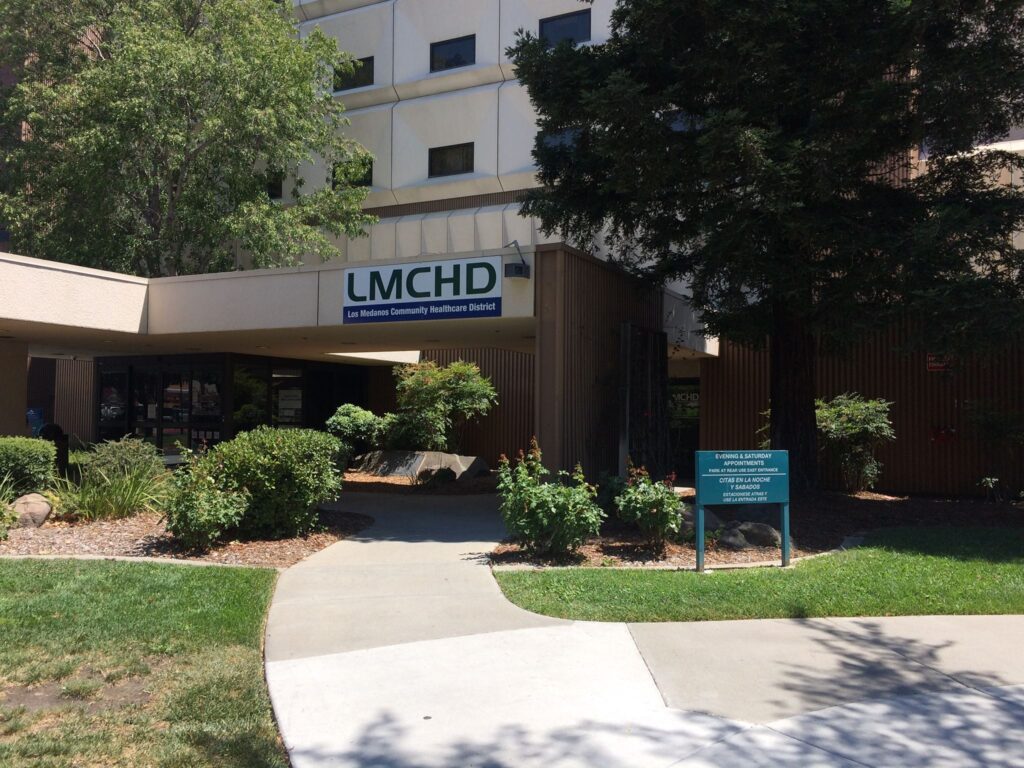
The Los Medanos Community Healthcare District building, formerly Los Medanos Hospital. Photo from the LMCHD Facebook page.

Senator Durazo raised concerns regarding the bill pitting the legislature against Pittsburg/Bay Point community; District continues fighting legal battle against County; saves Antioch mayor’s executive director job, for now

Pittsburg, Calif., (July 8, 2021) – Today, the California State Senate Governance and Finance Committee voted against further passage of AB 903. In doing so, the bill failed. The committee is chaired by State Senator Steve Glazier (D-Orinda), for whom Antioch Mayor Lamar Thorpe, the district’s executive director, served as campaign manager.

Introduced by Assemblymember Jim Frazier (D-Oakley), AB 903 would have circumvented the already established electoral process that would allow the residents living within the boundary of the Los Medanos Community Healthcare District to vote on the future of the healthcare district.

“On behalf of our constituents, I would like to thank the Senate Committee on Governance and Finance for recognizing that this bill was not a good government bill, but rather an attempt to disenfranchise our community of our right to vote,” said Thorpe, Executive Director, Los Medanos Community Health Care District. “I am proud of the work we do on a daily basis to ensure that communities often neglected by Contra Costa County are able to receive critical healthcare services because we have always been their safety-net.”

Strongly opposed by the NAACP, AB 903 was considered by many a road map to circumvent the electoral process. During today’s hearing, Senator Maria Elena Durazo (D-Los Angeles) raised concerns about the bill as it pitted the Legislature against the residents residing within the Los Medanos Community Health Care District boundaries. Additionally, she further raised concerns regarding the community’s access to the vital services provided by the Los Medanos Community Health Care District.

With AB 903 now dead, the Los Medanos Community Health Care District will continue in the litigation process initiated by Contra Costa County. Having failed on three previous attempts, Contra Costa County filed an appeal to those lost cases. It is anticipated that the legal decision will be made in 2022.

About the Los Medanos Community Healthcare District:  Each of California’s Healthcare Districts is governed by a locally elected Board of Trustees who are directly accountable to the communities they serve.

LMCHD has been serving the local community with healthcare needs since 1946. We are located at 2311 Loveridge Road, Pittsburg, CA 94565. For more information visit www.lmchd.org.

Contra Costa to remain in Orange Tier until June 15, won’t follow CDC’s new mask guidelines

Thursday, May 20th, 2021

Graphic by State of California from Gov. Newsom’s Wear a Mask campaign.

Following state’s guidelines instead; Antioch library reopening delayed until June 8

By Daniel Borsuk

Seventy percent of Contra Costa residents have received at least one dose of the COVID-19 vaccine, but  Contra Costa Health Services Director Anna Roth says that vaccination rate is still insufficient to convince state health officials to change the county current Orange Tier health restrictions to less stringent Blue health restrictions until at least June 15.

“We are accepting the state’s instructions to keep masking guidelines in place,” Roth said at Tuesday’s board of supervisors’ meeting.

Even though COVID-19 vaccines are being administered to children as young as 12 to 15, requirements remain in effect for persons to wear masks while indoor businesses, Roth said.

But CCHS Ambulatory Care Director Dr. Gabriela Diaz Sullivan presented a study’s gloomy findings about how COVID-19 pandemic has severely impacted the state’s health care delivery system.

“Since the outbreak of the pandemic in March 2020, 48,000 more Californians have died,” said Dr. Sullivan, “Heart attacks was the number one cause of death followed by cancer as number two and COVID-19 as number three.”

“Thirty-three percent of Californians had an urgent care need, unrelated to COVID-19, wanted to see a physician, but did not see a physician,” Dr. Sullivan emphasize.  She said mammograms, colorectal cancer screenings, diagnostic colonoscopies, and blood pressure procedures were all down.

In summation, the COVID-19 pandemic has eroded the state’s health care system with Californians foregoing medical care when needed in preference to staying home.

On another related matter, Contra Costa Public Health Officer Dr. Chris Farnitano denied Supervisor Candace Andersen’s statement that she has learned 3,500 people have died from taking the COVID-19 vaccine.

“There is no evidence that the COVID-19 vaccine has caused deaths,” Dr. Farnitano said.

Supervisors Approve Keller Canyon Permit

Over the objections of the City of Pittsburg’s Environmental Affairs Manager Laura Wright, who was the only opponent, supervisors unanimously approved a three-year land use permit for Republic Services to continue to operate the Keller Canyon Landfill on Bailey Road.

The supervisors’ action does require the county Department of Conservation and Development to conduct a one-year permit review of the landfill to determine if new or modified conditions should be considered.

Wright objected to the three-year permit renewal because the county did not adequately address the visual impacts by the inadequate number of trees that have been planted to block the view of the landfill and the inadequate measures undertaken to eradicate the dumping of litter outside the landfill.

Initially launching operations in 1995, the landfill has served as either an environmental irritant to residents living nearby the landfill or as a valuable source of money for numerous Pittsburg and Bay Point nonprofit organizations that Supervisor Federal Glover oversees the distributes thousands of dollars from Republic Services’ mitigation fund.

Two years ago, the landfill was the site of public concern when reports surfaced that radioactive waste from the former Hunters Point Naval Shipyard in San Francisco had been transported and deposited at the Contra Costa County landfill.  A landfill radiation study last year revealed no evidence that any radioactive material had been deposited at Keller Canyon Landfill.

Antioch Library Reopening Delayed Until June 8

Citing the need for additional time to install shelving and update computers at the Antioch Library, supervisors approved County Librarian Alison McKee’s request to extend the reopening of the library to Tuesday, June 8.

In late April, supervisors had approved a request to close the library on June Tuesday, June 1 for interior paint and the installation of new carpeting and shelving, but due to additional time needed to install shelving and update computers the reopening has been delayed by a week.

Tougher Fireworks Ordinance Proposed

Supervisors are expected to consider at the June 8 meeting a proposed ordinance toughening the law banning the possession, manufacture, sale, use and discharge of fireworks.

“The proposed ordinance would amend Chapter 44-2 (i.e., vegetation fires, structure and exterior fires, personal injury or death, and noise or other public nuisances) and authorize the Sheriff to arrest and cite a responsible party, as defined in the ordinance, for violations for Chapter 44-1.  The proposed ordinance establishes that a responsible party is required to maintain, manage, and supervise the property or vessel for which they are responsible to prevent violations of Chapter 44-2. A responsible party is liable and violates the probation on fireworks under Chapter44-2 if any person possesses, manufactures, sells, offers to sell, uses, or discharges, any fireworks at the property, or on the vessel, for which the responsible party is responsible, regardless of whether the responsible party is present when the violation occurs.

“The proposed ordinance defines a responsible party as any of the following:

  1. A person that owns, rents, leases, or otherwise has possession of, or is in immediate control of, aa residence or other private property or a vessel.
  2. A person that organizes, supervises, sponsors, conducts, allows, controls, or controls access to, the possession, manufacture, sale, offer for sale, use, or discharge of fireworks at a residence or other private property or on a vessel.

If a residence or other private property is rented or leased for a period of more than 30 consecutive days, the landlord or lessor is not a responsible party unless the landlord or lessor: has possession of, or is in immediate control of, the residence or other private property; or has knowledge of the possession, manufacture, sale, offer for sale, use, or discharge of fireworks at the residence or other private property.

The owner of a residence that is rented for a period of 30 consecutive days or less (a short-term rental) is a responsible party and is liable for violations of Chapter 44-2 if the short-term renter, or any other person, possesses, manufactures, sells, uses, or discharges, any fireworks at the residence, regardless of whether the owner of the short-term rental is present when the violation occurs.”

The proposed tougher fireworks ordinance already has won the support from the Discovery Bay Community District which released a letter from district board president stating:

“The revisions, in essence, would hold persons in control or possession of private property responsible for fireworks violations occurring on their property,” wrote board president Byron Gutow. “The discharge of fireworks is a common problem in the district, especially during celebrations of Independence Day and New Year’s.  In many cases, the fireworks are professional grade and pose a significant risk of danger to persons and properties. We support efforts to dissuade the use of illegal fireworks.”

Promote Chief Assistant to County Counsel

Chief Assistant County Counsel Mary Ann McNett Mason was promoted to County Counsel by supervisors to fill the position that became vacant when Contra Costa County Counsel Sharon Anderson died on April 30.

Ms. Mason will earn $463,000 a year of which $105,000 is pension costs.  All the costs are budgeted in the county’s General Fund within the County Counsel’s Office operating budget.

Mason, a graduate of the University of California Hastings College of Law, started to work for the county counsel’s office in 1987 as a deputy county counsel.  In 2010 she was appointed assistant county counsel and in 2016 was promoted to chief assistant county counsel.

While serving the role of chief assistant county counsel, Mason assumed the duties of the County Counsel in her absence, supervised the attorneys in the General Government Group, and assisted in management of the County Counsel’s Office. In addition to those duties, Mason has served as the county’s retirement and employee benefit counsel, is the office specialist on open meeting and conflict of interest laws and serves as General Counsel to Delta Diablo.

Mason previously served as the counsel to the Contra Costa County Board of Education and County Superintendent of Schools, the Contra Costa Superior Court, the Grand Jury, and the Assessment Appeals Board and other clients.

“I am so happy to have this opportunity to represent the board of supervisors and the county at an important time in our history and to carry on Sharon Anderson’s legacy,” Mason told the Contra Costa Herald.  “I have some big shoes to fill.”

Load Limits Imposed on Delta-Mendota Canal Bridge

In an unusual action, supervisors approved the Contra Costa County Department of Public Works request to post 23 ton per vehicle (i.e., Type 3 Truck) load limit signs for the deteriorating Delta-Mendota Canal Bridge on Lindemann Road over the Delta-Mendota Canal because of “on-going deterioration found in multiple timber columns of the bridge.”

Supervisors did not receive any public comment pro or con on the proposal for the bridge’s load limit. “This order shall remain in effect for 90 days, or until Caltrans issues a Director’s Order establishing a permanent load restriction on the bridge, whichever occurs first,” the supervisors’ resolution states.

Alamo Architect Appointed Acting Planning Commissioner

District 2 Supervisor Candace Andersen of Danville received board consent action approval on her request to appoint Alamo architect Sanjiv Bhandari to fill on an acting basis the planning commission post vacated by Rand Swenson’s resignation on April 28.

“Supervisor Andersen has been advertising the District II Commission seat since April 15, 2021 in preparation for filling the vacancy scheduled to arise at the end of Mr. Swenson’s current term on June 30, 2021.  Mr. Bhandari applied and met with Supervisor Andersen. Supervisor Andersen feels his knowledge an experience will be a positive addition to the commission,” the board agenda item report states.


Frazier bill to eliminate Los Medanos Healthcare District passes Assembly on 70-0 vote

Friday, May 14th, 2021

Source: Office of Assemblymember Jim Frazier

Would transfer tax revenue to county, eliminate Antioch Mayor Thorpe’s executive director job

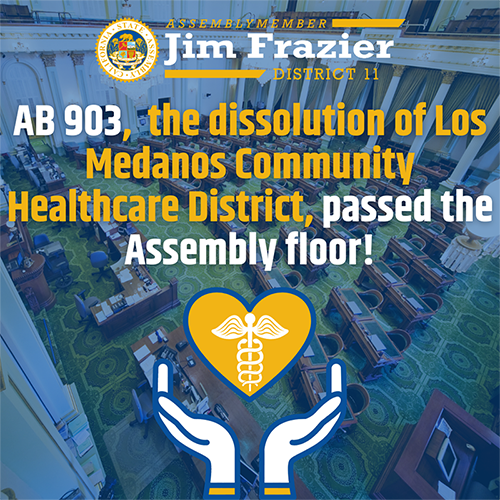
On Monday, May 10, 2021, Assemblymember Jim Frazier’s (D-Fairfield) bill, AB 903, to dissolve the Los Medanos Community Healthcare District, unanimously passed the Assembly floor on a 70-0 vote. The district serves Pittsburg and Bay Point.

AB 903 will require Contra Costa County to be the successor of all rights and responsibilities of the district. AB 903 will also require the county to complete a property tax transfer process to ensure the transfer of the district’s health-related ad valorem property tax revenues to the county in order to operate the Los Medanos Area Health Plan Grant Program.

The Los Medanos Hospital closed in 1994 but the district, covering Pittsburg and Bay Point, has continued to exist, collecting property taxes and using the funds to pay for staff and provide grants to local organizations, direct service programs including a community garden and district sponsored programs including REading ADvantage for early literacy. The district’s 2020-21 Fiscal Year budget projected $1.13 million in tax revenue and $1.3 million in expenses.

“This bill effectively creates hundreds of thousands of dollars in funding for badly needed healthcare services in the region. A lot of this funding comes from the savings on LMCHD’s extremely high administrative expenses, which topped 60% in some years,” said Frazier.

The Contra Costa Local Agency Formation Commission (LAFCO) has approved of the dissolution of the existing healthcare district, and Contra Costa County already serves the communities within district boundaries.

“The COVID-19 pandemic has exposed critical shortfalls in healthcare and health services funding across the state. Communities of color have been especially impacted by the emergency,” said Frazier. “Now more than ever, we have seen the life-changing impacts of devoting every possible dollar to serving those we represent. AB 903 effectively creates hundreds of thousands of dollars in funding for badly needed healthcare services in the region.”

“Comparable programs in the county average at about 15% admin cost, and rather than lose over half the funding to wasteful administrative expenses, AB 903 dedicates those dollars to the community,” Frazier added.

Part of the administrative expenses includes Antioch Mayor Lamar Thorpe’s executive director position which included an annual salary of $96,000 when he was hired in 2019, plus merit-based salary increases, according to the minutes of the Dec. 16, 2019 LMCHD Board meeting. He is also provided one hour of paid personal leave time for every 30 hours worked. When reached, previously about having his position eliminated if the bill is signed into law, Thorpe said he could find another job.

Previously, LMCHD Board President Patt Young challenged Frazier and his legislation, claiming he doesn’t represent but a portion of the healthcare district and that he is “taking political orders from your top political advisor in an effort to turn our district into a political slush fund for one of your top allies on the Contra Costa County Board of Supervisors.” (See related article)

However, Assemblymember Tim Grayson, whose district includes most of the healthcare district, is the Principal couthor of the bill.

The bill requires passage by the State Senate and signing by the governor before it becomes law.

Allen Payton contributed to this report.

Antioch council moves forward moratorium on oil, gas drilling in city

Wednesday, May 12th, 2021

Three oil well pumps operate at the site owned by Sunset Explorations just south of Antioch city limits on Deer Valley Road. Photo by Allen Payton

Would affect two potential wells in the city; no one from city reached out to owner for his input or to offer comments during meeting before council “consensus vote”; majority also supports county-wide moratorium

By Allen Payton

During their meeting on Tuesday night, May 11, 2021, a majority of Antioch City Council members expressed their support for a moratorium on oil and gas drilling inside the city limits. While the agenda item was only a discussion, Mayor Pro Tem Monica Wilson who proposed the matter, Council Members Tamisha Torres-Walker, Mike Barbanic and Lori Ogorchock supported directing the city attorney to return with a proposal for the council to vote on at a future meeting.

Wilson, Barbanica and Torres-Walker also expressed support for a countywide moratorium. Ogorchock was opposed. Mayor Lamar Thorpe didn’t express an opinion on either proposal.

The moratorium in Antioch would currently only affect one company, Sunset Explorations, owned by East County businessman Bob Nunn, who was not aware of Tuesday night’s agenda item until this reporter reached out to him for comment prior to the start of the meeting.

“I brought this item back up,” Wilson said. “It has two parts, first as a resolution as a city to call a moratorium and then a moratorium for the county. After hearing from many advocates in the community, I believe this is the time for it.”

In response to questions from the Herald, Nunn said he has “drilled a well in city limits a number of years ago”, but that “was a dry hole.” His company has also “filed a permit in the southeast corner of town that we have stalled,” and owns “mineral rights on FUA2 (Future Urban Area 2)” which is located north of Lone Tree Way and southwest of Highway 4, near the future extension of Laurel Road.

Nunn’s company also has a permitted site on the east side of Deer Valley Road just outside Antioch city limits, which started drilling three wells, three years ago.

Public Comments

Charles Davidson, who said he lives in Hercules, spoke about the oil drilling on Deer Valley Road. “The well’s owner denied the Air District’s inspector access to the site,” he claimed.

Antioch resident, Harry Thurston spoke in support of a county moratorium. “There has been limited oversight of this site by the Bay Area Air Quality Management District. Antioch citizens are at unacceptable risk,” he said. “It will lead to unrestricted oil drilling in East County. We should be stopping all oil extraction” and then spoke about “environmental justice”.

Another speaker, an Antioch resident who said she purchased her home in 2008, spoke against oil drilling. “I’m in an area I can breathe clean air and drink clean water,” she said. “I want to live in a place where no environmental injustices take place. We have everything in Antioch. You just need to promote the right businesses. I have seen firsthand the destruction of many places in the U.S. and around the world due to oil. It’s time to embrace wind and solar.”

Shoshana Wechsler spoke next saying, “I’m a coordinator of Sunflower Alliance…and a resident of unincorporated west county. The toxic emissions in unincorporated Contra Costa don’t stay there. They go wherever the wind blows them. The greenhouse gas emissions threaten everyone and everything on this planet. The permit application slipped through the cracks. Phase out the existing drilling on Deer Valley Road. Other cities have done that. They got it done. It’s Antioch’s chance to put the climate resiliency plans to work. Your forward momentum on this, lifts everyone up.”

Barbara Collins, a resident of East Contra Costa County wrote in favor of the moratorium.

Another public comment submitted read, “Does the city have any power to limit the mineral rights of owners in Antioch? Please stop all this posturing about oil wells.”

Council Discussion and Consensus Votes

The council then took up the matter.

“About a year ago this month, three of us voted and approved a Climate Action Resiliency Plan. This would go along with that,” Wilson stated. “We are committed to making sure we have a healthy city and are free from health risks. The action that we did a year ago moves us away from fossil fuel. We also discussed the climate in our Strategic Plan. This needs to be more than just an item we discuss. We need to call for a moratorium in our city and ask for our county to do the same.”

Asked to offer her input, the city’s Environmental Resources Coordinator, Julie Haas-Wajdowicz said, “I would definitely echo what Mayor Pro Tem Wilson says. So, I think we should support a moratorium. Additionally, I would look forward to working on a declaration of climate emergency.”

“I don’t have a whole lot of background in oil drilling,” she added.

“I would like to bring this back for council to discuss a ban on oil drilling,” Wilson said.

Thorpe then asked for a “consensus vote” of council members.

Torres-Walker, Barbanica and Ogorchock all said, “yes”.

“This is something we have to research and come back,” said City Attorney Thomas Smith. “To me it sounds like something that can go through the zoning process.”

Torres-Walker and Barbanica also added their support to Wilson’s efforts for a county-wide moratorium. When asked, Ogorchock said “no”.

Asked if they were prepared to pay Nunn for his mineral rights, Barbanica, Ogorchock and Wilson did not respond. Asked if she had reached out to Nunn or had asked city staff to, prior to the meeting, Wilson did not respond.