






Archive for 2026

Kaiser Permanente names new president of Northern California Region

Monday, February 9th, 2026
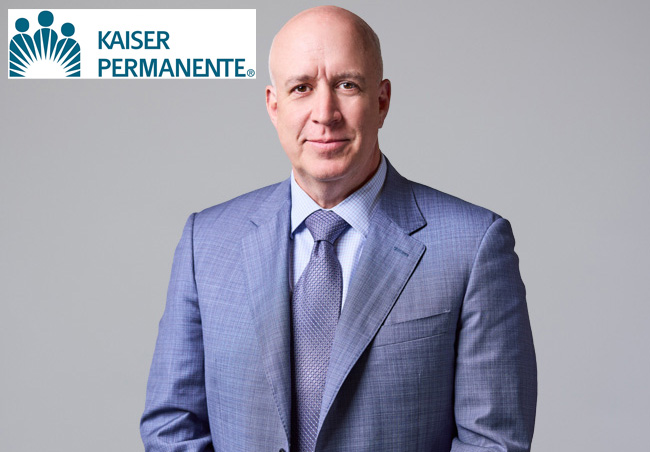
Mike Bowers has been named president of Kaiser Foundation Health Plan and Hospitals in Northern California. Photo: Kaiser Nor Cal

Mike Bowers served as interim leader since February 2025

By Elissa Harrington, Sr. Media Relations & PR Rep., Kaiser Permanente Northern California

OAKLAND, Calif.— Kaiser Permanente has named Mike Bowers as president of Kaiser Foundation Health Plan and Hospitals in Northern California.

Bowers has served as the region’s interim president since February 2025, overseeing operations for 21 hospitals and 203 medical offices, as well as the health care and coverage of 4.6 million Kaiser Permanente members.

Bowers joined Kaiser Permanente in 2022 as senior vice president for health plan and hospital operations in Northern California. Under his leadership, Northern California achieved significant improvements in care quality, patient safety, and affordability through an innovative care delivery redesign process. The region also earned national recognition, receiving seven prestigious Beacon Awards from the American Association of Critical-Care Nurses recognizing exceptional patient care and a supportive work environment.

“Mike’s leadership has strengthened our operational performance, expanded our joint efforts with The Permanente Medical Group, and elevated the experience we provide to our members,” said Craig T. Albanese, MD, president, Integrated Care and Coverage, Kaiser Permanente. “His proven ability to deliver meaningful results positions our Northern California region for continued growth and long-term success.”

Bowers brings nearly three decades of health care leadership experience to this role. Before joining Kaiser Permanente, he served as regional chief operating officer for SSM Health’s St. Louis and Southern Illinois regions, following four years as president of SSM Health St. Joseph Hospitals in St. Louis. His career has included leadership roles at Dignity Health in California’s Central Valley, Community Hospital Corporation in Dallas, and Memorial Hermann in Houston.

Bowers is a Fellow of the American College of Healthcare Executives and serves on multiple community boards. He holds both a Master of Health Administration and a Master of Business Administration from the University of Houston–Clear Lake, and a Bachelor of Science in Biological Sciences from the University of Pittsburgh.

About Kaiser Permanente

Kaiser Permanente is committed to helping shape the future of health care. We are recognized as one of America’s leading health care providers and not-for-profit health plans. Founded in 1945, Kaiser Permanente has a mission to provide high-quality, affordable health care services and to improve the health of our members and the communities we serve. We currently serve 12.6 million members in 9 states and the District of Columbia. Care for members and patients is focused on their total health and guided by their personal Permanente Medical Group physicians, specialists, and team of caregivers. Our expert and caring medical teams are empowered and supported by industry-leading technology advances and tools for health promotion, disease prevention, state-of-the-art care delivery, and world-class chronic disease management. Kaiser Permanente is dedicated to care innovations, clinical research, health education, and the support of community health. For more information, go to about.kp.org.

Candidate filing period now open for June 2, 2026 statewide direct primary election

Monday, February 9th, 2026

Includes statewide offices, Congress, State Assembly, County Supervisor and others

Deadline: March 6 unless incumbent chooses to not run for re-election

By Dawn Kruger, Community and Media Relations Coordinator, Contra Costa County Clerk-Recorder-Elections Department

Today, Monday, February 9, the Candidate Filing Period for the June 2, 2026, Statewide Direct Primary Election begins, and nomination papers will be available for candidates running for Statewide Constitutional offices, United States Representative in Congress, Member of the State Assembly, County offices and Superior Court Judges. The nomination period runs through 5:00 pm Friday, March 6, 2026, unless an incumbent chooses to not run for re-election. The deadline is then extended by five days to 5:00 pm Wednesday, March 11th.

Offices up for election include the statewide positions of Governor, Lieutenant Governor, Secretary of State, Controller, Treasurer, Attorney General, Superintendent of Public Instruction, Insurance Commissioner and Board of Equalization, District 2. Plus, elections for the House of Representatives, State Assembly, Board of Supervisors, Districts 1 and 4, Assessor, Auditor-Controller, Clerk-Recorder, Treasurer-Tax Collector and County Superintendent of Schools  will be held in June, as well.

A list of offices currently up for election can be found here: www.contracostavote.gov/wp-content/uploads/26Jun02_PositionsUpForElection_OfficeOnly.pdf

Papers for offices that are up for election will be available at the Contra Costa Elections Office, located at 555 Escobar Street, Martinez. County Elections staff are working with the City Clerk in Richmond to help implement the electoral reform passed by the voters of Richmond in 2024 requiring candidates for City Council and Mayor to file with the City of Richmond and run in the Primary.

For further information on the primary election and key dates, go to www.contracostavote.gov

“Election activities for the 2026 Primary are ramping up in Contra Costa County,” said Kristin B. Connelly, Contra Costa Registrar of Voters. “Candidate filing is an important first step in the election process, and our Candidate Services team is prepared to guide prospective candidates through key deadlines, requirements, and resources as they consider running for public office.”

Interested candidates can schedule an appointment through email at candidate.services@vote.cccounty.us or by calling 925-335-7800. Walk-ins are accepted, but subject to the availability of staff. Appointments are available on weekdays from 8:30 am to 4:30 pm. Filing documents and information will be provided to interested constituents at their appointment. The process takes approximately 20 minutes.

Allen D. Payton contributed to this report.

Contra Costa County seeks members for Solid Waste Local Enforcement Agency Independent Hearing Panel

Monday, February 9th, 2026

Application Deadline: March 6

By Contra Costa County Office of Communications & Media

(Martinez, CA) – In 2013, the Contra Costa County Board of Supervisors established an Independent Hearing Panel for the Contra Costa Solid Waste Local Enforcement Agency (LEA).

Contra Costa Health’s Environmental Health Program is certified by the California Department of Resources Recycling and Recovery (CalRecycle) as the LEA for Solid Waste in the county. The LEA ensures that all solid waste disposal facilities and medical waste generators comply with applicable local, state and federal codes and regulations.

The three-member panel hears matters related to solid waste enforcement, permits and appeals.

County residents who have an interest in public policy and solid waste management are encouraged to apply for this volunteer opportunity.  Panelists receive a stipend of $50 on those days on which the panel meets.  The County Board of Supervisors will appoint to fill three vacancies for a four-year term ending on March 31, 2030.

Application forms can be obtained from the Clerk of the Board of Supervisors by calling (925) 655-2000 or by visiting the County webpage at: https://contra-costa.granicus.com/boards/forms/321/apply/

Applications should be returned to the Clerk of the Board of Supervisors, County Administration Building, 1025 Escobar Street, Martinez, CA  94553 no later than 5 p.m. on Friday, March 6, 2026.  Applicants should plan to be available for public interviews via video conference on Monday, March 23, 2026.

For more information about the LEA Independent Hearing Panel, contact Tim Kraus, Contra Costa County Environmental Health, at (925) 608-5549 or Tim.Kraus@cchealth.org.

Allen D. Payton contributed to this report.

Guest Commentary: There are better alternatives to BART’s cutback plan

Monday, February 9th, 2026

“They should go back to the drawing board and give us a cost savings plan that demands more sacrifice from BART management, senior staff, and retirees.”

By Marc Joffe

BART has published a plan to balance its budget in the event voters reject the half-cent additional transit sales tax slated for the November 2026 ballot. BART’s plan appears to be well thought out but imposes far more inconvenience on riders than is necessary to close an expected $376 million deficit.

The most visible change is the station closures. Under its more extreme Phase 2 plan, BART would close 15 stations systemwide, including these five in Contra Costa: Orinda, North Concord, Pittsburg Bay Point, Pittsburg Center, and Antioch. Oakland Airport station would close, but SFO would stay open. Five other stations in Alameda County south of Oakland would be shuttered, as would four stations in San Mateo County south of Daly City. (See related article)

But most of these stations should not close. As BART itself recognizes, the savings from shuttering stations are not that large. And there is an alternative that would achieve a large portion of the expected savings, which is to operate the stations on an unstaffed basis. This idea may seem strange to BART riders expecting to see a station agent, but the fact is that many train stations in California operate without staff, including several on Capitol Corridor and Caltrain. Even Pittsburg Center on e-BART often operates without staff.

That said, both Pittsburg Center and North Concord have very low utilization (less than 1000 riders on an average weekday) and are reasonable candidates for closure. Indeed, BART should demolish the North Concord station and sell the parking lot to a developer for conversion to single family housing, a use consistent with the adjoining neighborhood.

Pittsburg Center, being in the median of Highway 4, does not offer a similar redevelopment option. It is one of three stations on the eBART extension connecting Antioch, Pittsburg and Bay Point using standard-gauge diesel multiple-unit trains which are incompatible with the rest of BART. The BART retrenchment plan envisions closing the whole eBART extension. A better choice would be to find a private operator to take it over.

That operator should be given discretion over fares and the option to convert the line to driverless technology in hopes of achieving a profit or at least minimizing the need for taxpayer subsidies.

As anyone who has visited an airport in the last few decades knows, driverless trains are nothing new. Outside the Bay Area, they are used for non-airport systems such as Honolulu’s Skyline and Vancouver’s Skytrain. Paris, Singapore, and other cities have successfully converted some of their lines to autonomous operation and Washington DC’s Metro is looking into doing the same thing.

Over the longer term, the entire BART system should be driverless: it could achieve large operational cost savings while maintaining or even increasing service frequency. Yet BART is not giving serious consideration to transitioning to driverless trains. When BART Director Matt Rinn spoke to CoCoTax in November I asked him about the idea and saw that he was unfamiliar with it. Staff should be discussing this option with the governing board.

They don’t do so because BART operates primarily for the benefit of staff and the labor unions that collect a portion of their salaries via dues. Riders are second, and taxpayers are a distant third.

Contra Costa taxpayers already pay plenty for transit, and, this November, it is time for us to tell BART and other agencies “no more.” They should go back to the drawing board and give us a cost savings plan that demands more sacrifice from BART management, senior staff, and retirees.

One change that should be considered is a 10% salary reduction for all BART employees receiving over $100,000 per year. Based on my analysis of 2024 wage and overtime data, this option would save $54 million. Costly overtime hours should also be limited: in 2024 alone five BART employees collected over $200,000 in overtime a piece.

BART’s plan defers advanced payments for retiree health benefits. This saves $38 million, but only by pushing the cost onto future taxpayers when the fund holding the advance retiree health funding is exhausted. Instead, the BART retiree health benefit should be eliminated just as it was for Stockton employees when that city went bankrupt in 2012. With BART facing functional bankruptcy in 2026, a similar economy is needed. Retirees can get subsidized healthcare through Covered California or Medicare just as those of us who work in the private sector usually do.

Salary and benefit cuts in addition to the layoffs BART already has planned may seem harsh, but these are the types of reductions companies have to make when they are losing money and there is less demand for their product. Because BART now needs more of our money, we have the power to veto any cost-saving plan that fails to prioritize the needs of beleaguered taxpayers and riders. Let’s exercise that veto. In November, say NO to the transit sales tax.

Marc Joffe is the President of the Contra Costa Taxpayers Association

Eagleridge Park playground closed for repairs 

Saturday, February 7th, 2026

By Antioch Recreation Department

From Tuesday, Feb. 10th to Wednesday, Feb 11th, we will be making repairs to the playground at Eagleridge Park located on Eagleridge Drive and Greystone Court. The playground will reopen on Thursday, February 12th.

Is there a park in your neighborhood that needs repairs? Let us know when you visit seeclickfix.com/antioch and submit a new request.

Antioch Raley’s store closing when lease expires April 30

Friday, February 6th, 2026
The Antioch Raley’s store on Lone Tree Way will be closing at the end of April according to social media reports. Photo source: Yelp

UPDATE: “…after careful review of the store’s performance and economic factors, we have chosen not to extend the lease.” – Carol Barsotti, Raley’s Chief Communications Officer

By Allen D. Payton

According to reports on social media by people claiming to be employees, the Antioch Raley’s store will be closing at the end of April when the lease expires. It was confirmed by corporate in Sacramento during a phone call with an Antioch resident this week.

Comments on Next Door claim an official announcement was made to store employees on Thursday but there’s been no public announcement issued by the company as of Friday night.

The store and the shopping center where it’s located on Lone Tree Way, have had problems over the years, including shoplifting, especially following the opening of the methadone clinic two blocks away next to the 7-11 Store on Sunset Lane at Davison Drive, in the late 1990’s. The City spent $800,000 fighting to prevent the clinic from locating there, but because it’s zoned for medical it couldn’t be stopped.

Questions were emailed Friday night to corporate media representatives asking for an official announcement and the reasons for the store closing other than the lease expiring. They were also asked if they know where the US Bank branch inside the store will be relocating.

2/7/26 UPDATE: In response, Carol Barsotti, Raley’s Chief Communications Officer wrote, “The Raley’s leadership team has made the difficult decision to close our Antioch store on Lone Tree Way. We have been proud to serve the community at this location since 1979. 

With the lease up for renewal and after careful review of the store’s performance and economic factors, we have chosen not to extend the lease. The store will close at the end of April. 

We are committed to supporting our team members through this transition and will work to place as many as possible at other Raley’s locations. 

At this time, I do not have information on where the US Bank branch may be relocating.

UPDATE 2: A U.S. Bank official said the branch is closing and they’re hoping to relocate but don’t know where at this point. The closest branches currently are in Brentwood and Concord.

We want to thank our loyal customers for their support over the years. While this location will close, we look forward to continuing to serve our customers at nearby locations and throughout our family of stores.”

Brentwood man’s medical emergency causes solo car collision in Antioch Friday afternoon

Friday, February 6th, 2026
Antioch Police Officers investigate the crash of a BMW on Deer Valley Road Friday afternoon, Feb. 6, 2026. Photos courtesy of a resident who chose to remain anonymous.

“He ended up driving north bound into the oncoming south bound traffic. Luckily, he walked out of it.” – Sgt. Rob Green

By Allen D. Payton

A solo car collision in Antioch Friday afternoon, Feb. 6, 2026, was caused by what appeared to be the medical emergency of a 25-year-old male from Brentwood, according to Antioch Police Sgt. Rob Green.

According to Con Fire Captain George Laing, “The call came in at 12:10 pm at Deer Valley Road near Mammoth Way” down the street from the Kaiser Permanent Antioch Medical Center.

“I can confirm that we had a response of two trucks, an engine, a medic unit, a battalion chief, a medical supervisor and a medical helicopter,” Laing shared. “There was one person who was transported to John Muir Walnut Creek but by ground.”

Asked if there were any passengers in the car Green said, “Just a driver.”

“Luckily, he walked out of it, and Con Fire took him for only the medical emergency he was suffering from,” he added.

The young man was driving a four-door BMW which was severely damaged in the crash.

“He ended up driving north bound into the oncoming south bound traffic,” Green shared. “He hit trees on both sides of the car, and the passenger side of the car was sheared off. The way the car hit the trees, the ‘A’ pillars, which hold up the roof, were sheared off and we had to pull the roof up off of his head. Fortunately, the driver’s side door was already gone so it was easier to extract him from the vehicle. The fire department had to cut off parts of the dashboard to get him out of there.”

Antioch Police Department is holding a DUI Checkpoint, February 7th

Friday, February 6th, 2026

Drivers charged with a first-time DUI face an average of $13,500 in fines and penalties, as well as a suspended license

By Antioch Police Department

On Saturday, February 7, 2026, the Antioch Police Department will conduct a driving under the influence (DUI) Checkpoint from 5pm to 11pm at an undisclosed location.

DUI checkpoint locations are determined based on data showing incidents of impaired driving-related crashes. The primary purpose of DUI checkpoints is to promote public safety by taking suspected impaired drivers off the road.

“Impaired drivers put others on the road at significant risk,” Sergeant Rob Green said. “Any prevention measures that reduce the number of impaired drivers on our roads significantly improve traffic safety.”

The Antioch Police Department reminds the public that impaired driving is not just from alcohol. Some prescription medications and over-the-counter drugs may interfere with driving. While medicinal and recreational marijuana are legal, driving under the influence of marijuana is illegal.

Drivers charged with a first-time DUI face an average of $13,500 in fines and penalties, as well as a suspended license.

Funding for this program was provided by a grant from the California Office of Traffic Safety, through the National Highway Traffic Safety Administration.