








Historic El Campanil Theatre building sold to church led by Antioch resident
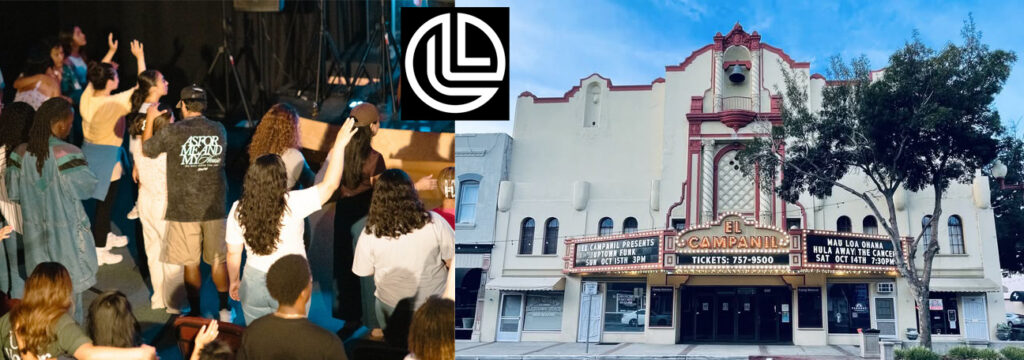
Raised enough funds for down payment
“It’s in escrow. It closes Sept. 29th. That’s the day we get the key. We don’t want to be another church in the city. We want to be a church for the city.” – Pastor Eli Herrera
Willing to work with foundation that operates theater
By Allen D. Payton
A church currently based in Pittsburg, whose lead pastor is an Antioch resident, has raised the needed funds to purchase the historic El Campanil Theatre building in the city’s downtown Rivertown. It’s in escrow and closes Sept. 29th, Lead Pastor Eli Herrera shared on Tuesday.
The fundraising effort has had board members and staff of the foundation that operates the theater, as well as Antioch residents, business owners and council members concerned that it will mean the loss of an arts and cultural center in the community.
However, Herrera said he’s willing to work with the El Campanil Theatre Preservation Foundation to continue using it for arts and entertainment.
Recent History
El Campanil was listed for sale with an asking price of $1.5 million, but it’s no longer on either Realtor.com or LoopNet.
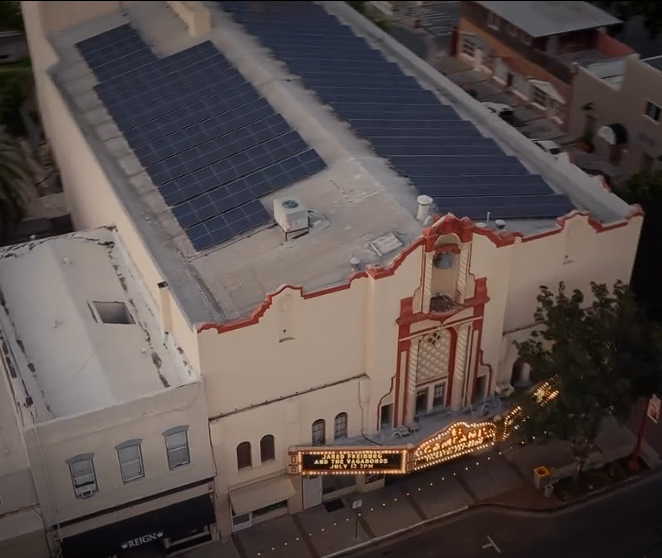
The 98-year-old theater building, which also houses two retail tenants on W. 2nd Street, was purchased by the non-profit organization, El Campanil Theatre Preservation Foundation, in 2003, with a grant of $500,000 from Calpine Corporation, an energy company with operations in Antioch and Pittsburg, which then-Mayor and now-Mayor Pro Tem Don Freitas secured. It was improved with $750,000 in City redevelopment funds and an additional $1 million raised under the leadership of then-foundation chairman Rick Carraher. But after running into financial difficulties following COVID, the building was sold a few years ago to an out-of-state buyer who continued to lease it to the foundation to operate as a theater.
New Buyer
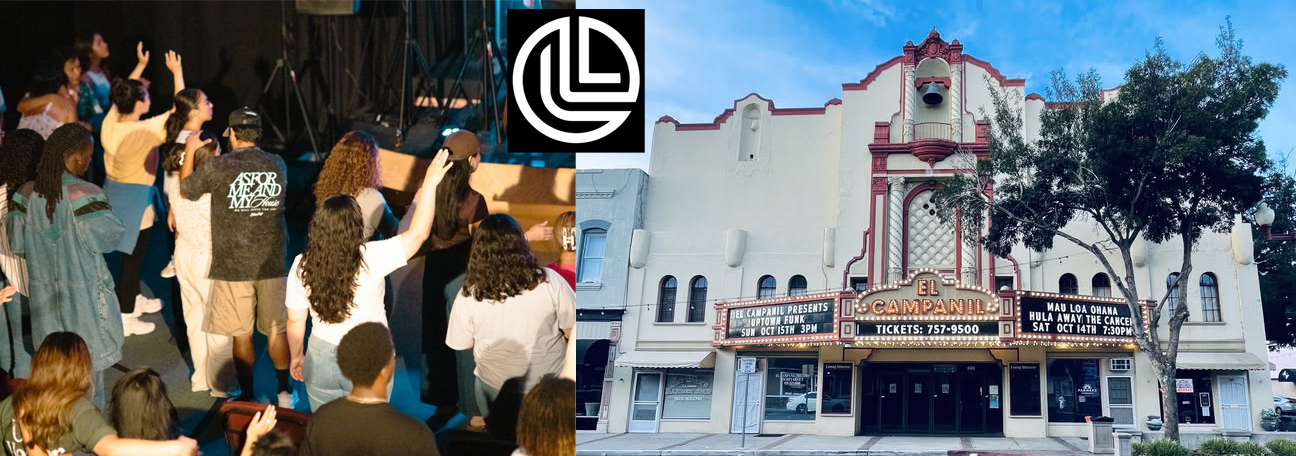
Legendary Movement Church, led by Herrera, currently holding services on Sundays at noon inside the Light the Bay Church building at 1210 Stoneman Avenue in Pittsburg.
Posts on the Legendary church’s Instagram and Facebook pages on August 18th read, “ANTIOCH, WE BELIEVE IN YOU. We believe God has given Legendary Movement an opportunity to plant roots right in the heart of the Rivertown District at 602 West 2nd Street, Antioch, California.
“But this is bigger than a building. We see a place that will bless families. A place that will serve those in need. A place that will help the homeless find hope and restoration. A place where children and young people can dream again. A place that will pour life back into our community. A place that will help bring vision, hope, and purpose back to Rivertown. We believe Rivertown can come back to life.
“Right now, we are raising funds for the down payment on what we believe will become the future home of Legendary Movement. Would you consider sowing a seed into this vision? Whether it is $10, $100, $1,000, or whatever God places on your heart, every seed matters. Every gift moves us one step closer. And every person who gives becomes part of what God is building in Antioch.
“We’re not just raising money for a building. We’re sowing into a city. We’re investing in people. We’re believing for Rivertown. We’re believing for Antioch. Let’s see Antioch Rivertown come back to life.”
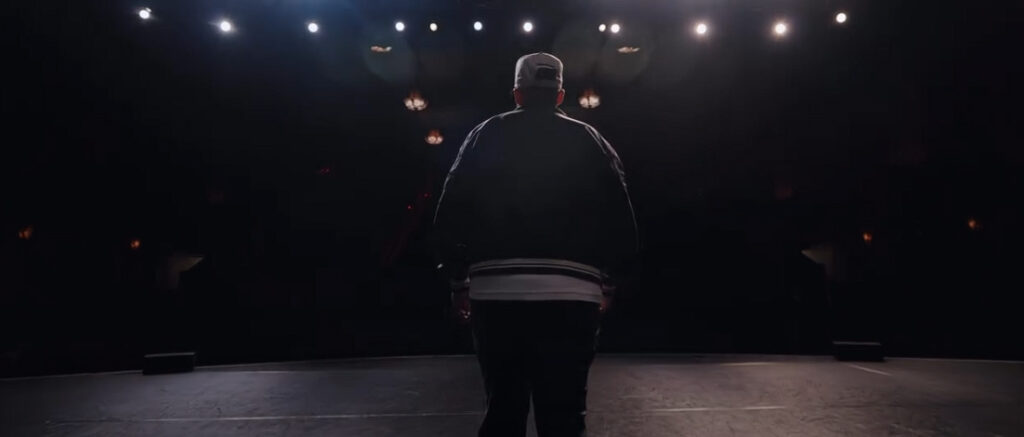
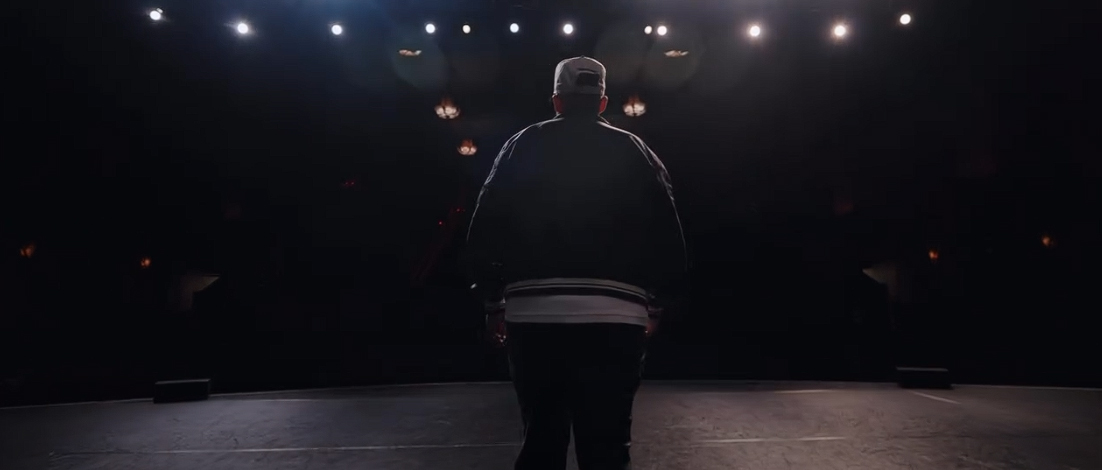
In addition, a video shows Herrera standing and sitting inside the theater saying he’s an Antioch resident and, “The owner of El Campanil Theatre has been a man who’s so gracious towards us. He’s allowed us time to go ahead and raise the funds necessary for our down payment. Currently what we’re facing is having to raise $306,500.” But Herrera didn’t say by when.
Pastor Shares Plans, Vision
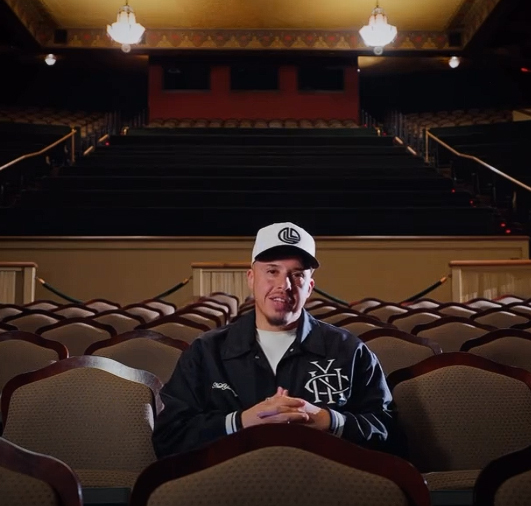
Asked about the sale, Herrera said, “I think it’s been for sale for about eight months. I began looking at it three weeks ago. We’re in escrow. It closes Sept. 29th. That’s the day we get the key.”
Asked if that’s when the church needs the down payment he responded, “We have it, the twenty percent. That’s been raised really through our ministry, not any donors. The members of our church have been very generous.”
“I heard there were two offers for the building. One was Sean McCauley and another was a ministry from Discovery Bay that serves the unhoused,” he explained. “We came with an offer the seller was looking for and he said, ‘yes.’”
“I’ve seen a lot of the comments and the criticism,” Herrera stated. “I do see the concerns and I hear the concerns. I’m a very good friend of Ron Bernal, before he was mayor. I served at Cornerstone Christian Center for about a year for their school and youth ministry.”
Herrera is also the younger brother of Pastor Ruben Herrera of Palabra de Dios Church in Antioch.
“We know it’s an historic building. But it’s not technically recorded as an historical landmark. We want to make it better. Soma paint and TLC. But changing the style and look of the theater, no,” he shared.
Asked about continuing to allow entertainment and other uses Herrera said, “I already have spoken to a few people who do Christian concerts. That’s part of our vision. We have lots of Christian artists who want to come down, whether it be country, hip-hop. A lot of them have been texting me excited about the opportunity.”
“We want to continue to open it up for graduations. My daughter has performed for Melody’s Dance Studio there. We want to have the recitals,” he added.
Asked about the use of other parts of the building he said, “The offices upstairs, we plan on making those the children’s rooms. I’ve spoken to the barber shop and Ana of Farmer’s Insurance, we are going to continue to lease to them.”
Asked if the church is willing to work with the foundation to rent it for entertainment, such as concerts and other events, Herrera said, “We have a schedule that they would have to work around. I’m not going in there and say, ‘you have to get out.’ As long as it fits around our schedule, I’m willing to.”
“I haven’t been able to have conversations with the foundation,” he continued. “One of the gentlemen there completely refuses to have a conversation with us. Another, I believe is Sharon, who put out a statement and basically said, if we buy it, they are out of business. Now, I can’t control that. The reality is we have a schedule. We have things like rehearsals, youth group, men’s breakfasts, women’s ministries.”
About its impact on the downtown, Herrera shared, “We have a church of 500 people. It’s a full English ministry. They’re talking about foot traffic. We’ll bring foot traffic to Rivertown. I shop local. I eat local at Monica’s, at Guadalajara Taqueria.”
“I’m from Antioch. I love Antioch. So many people from our church are for Antioch. The city is named Antioch after the biblical Antioch. It’s a town that’s dedicated to the Lord,” Herrera exclaimed.
“We don’t want to be another church in the city. We want to be a church for the city,” Herrera stated. “We really have a vision for Rivertown.”
In his video about the theater he said, “Our eyes see what it could become. I believe we will see families gathering, businesses thriving, homeless coming off the streets and that is what we want to do. We don’t want to just be a people in a building we want to be a people that can be outside of the four walls. Legendary Movement Church wants to give back to our community.”
“That’s the vision that we have. That’s our vision for Rivertown,” said Herrera.
“We’re willing to work with anyone in Rivertown, business owners, property owners and the community,” he added.
Residents, Business Owners Opposed – Don’t want Another Church in Antioch or Rivertown
Several residents and business owners have also been complaining in their comments on social media that neither Antioch nor Rivertown need another church. Rivertown is currently home to at least three other churches, one inside another historic former theater building.
The Restored Life Church – Iglesia Vida Restaurada occupies the former Stamm Theater on the corner of G and W. 10th Streets on the southern edge of what is considered the City’s Rivertown District. Although, technically, it only includes the area north of W. 6th Street. In 1996, when the church bought that historic theater, twenty years younger than El Campanil, some of the alfresco-style murals that lined the walls inside the building, depicting Portuguese fishing men and women, were painted over. It was named for the Stamm family, who were also partners of El Campanil with the Beede family. (That’s the same family whose member, Henry Beede owned the Antioch Lumber Company, building and the empty lot across W. 2nd Street, known as The Yard, where the Rivertown Square is proposed).
Another church, RR Ministries – Ministerios Rey de Reyes (meaning King of Kings), which had 40 laptops stolen from their RR Transitional Housing Learning Center during a June break-in, is located in one of the store fronts on W. 2nd Street between F and G Streets.
A second church, The Ship, holds services inside the Quonset hut-style building at 611 W. 3rd Street, across from the City Hall parking lot, where LaFontana Office Products was once located.
Another building, that originally housed a bank, then most recently occupied by The Worship Center church and is listed for sale at $1.295 million is located at 315 G Street on the corner of W. 4th Street.
In response to the concerns, El Campanil Theatre is hosting a community meeting entitled, “Save Our Stage: A Community Conversation” tonight at 7:00 p.m. Herrera said he does not plan to attend. (See related article)
Federal Law Protects Houses of Worship in Land Use Zoning & Regulation
Some residents were wanting the City government to step in and somehow stop the sale. However, according to the Civil Rights Division of the U.S. Department of Justice, “The land use provisions of the Religious Land Use and Institutionalized Persons Act of 2000 (RLUIPA)…protect individuals, houses of worship, and other religious institutions from discrimination in zoning and landmarking laws. RLUIPA prohibits zoning and landmarking laws that substantially burden the religious exercise of churches or other religious assemblies or institutions absent the least restrictive means of furthering a compelling governmental interest.”
The law reads, “No government shall impose or implement a land use regulation in a manner that imposes a substantial burden on the religious exercise of a person, including a religious assembly or institution, unless the government demonstrates that imposition of the burden on that person, assembly, or institution (A) is in furtherance of a compelling governmental interest; and (B) is the least restrictive means of furthering that compelling governmental interest.”
“RLUIPA prohibits zoning and landmarking laws that:
(1) treat churches or other religious assemblies or institutions on less than equal terms with nonreligious assemblies or institutions;
(2) discriminate against any assemblies or institutions on the basis of religion or religious denomination;
(3) totally exclude religious assemblies from a jurisdiction; or
(4) unreasonably limit religious assemblies, institutions, or structures within a jurisdiction.”
The U.S.D.O.J. Civil Rights Division explains further, “RLUIPA provides a number of important protections for the religious freedom of persons, places of worship, religious schools, and other religious assemblies and institutions, including:
- Protection against substantial burdens on religious exercise:
RLUIPA prohibits the implementation of any land use regulation that imposes a “substantial burden” on the religious exercise of a person or religious assembly or institution except where justified by a “compelling governmental interest” that the government pursues in the least restrictive way possible. 42 U.S.C. § 2000cc(a);
- Protection against unequal treatment for religious assemblies and institutions:
RLUIPA provides that religious assemblies and institutions must be treated at least as well as nonreligious assemblies and institutions. 42 U.S.C. § 2000cc(b)(1);
- Protection against religious or denominational discrimination:
RLUIPA prohibits discrimination “against any assembly or institution on the basis of religion or religious denomination.” 42 U.S.C. § 2000cc(b)(2);
- Protection against total exclusion of religious assemblies:
RLUIPA provides that governments must not totally exclude religious assemblies from a jurisdiction. 42 U.S.C. § 2000cc(b)(3)(A); or
- Protection against unreasonable limitation of religious assemblies:
RLUIPA states that governments must not unreasonably limit “religious assemblies, institutions, or structures within a jurisdiction.”
In addition, according to Church Law Center, RLUIPA “contains protections for a full range of religious assemblies, from churches, religious schools, cemeteries, and faith-based social services provided by religious organizations to individuals holding prayer meetings in their homes. Furthermore ‘religious exercise’ refers to any exercise of religion, whether or not it is central to a system of religious belief. As a result, religious exercise includes actual worship services and may include other religious activities, such as Bible study groups, prayers meetings, and Sunday school classes.”
Councilmembers Have Been Waiting to Learn if City Can Use Developer Fees to Purchase Theater Building
Councilwoman Tamisha Torres-Walker, in whose District 1 El Campanil Theatre is located and is up for re-election, on Monday, Aug. 24 posted a video on her official Facebook page, claiming she and Freitas started having conversations last year about cultural centers in her district. She also said they have “spent months trying to find out what’s going on with the El Campanil Theatre and how could the City step in.”
Torres-Walker then says they had conversations with City Manager Bessie Scott, the consultant, David Storer who later became the Acting Community and Economic Development Director, and Parks and Recreation Director Shahad Wright asking, “is this something we can take on?” She then claims, “we found out the City…has been sitting on millions of development impact fees…and haven’t been used or have been underutilized and we have to spend those dollars.”
“We were informed that those…fees might also be able to be spent on community spaces,” Torres-Walker stated. They asked staff, “could these…fees be used so the City of Antioch could save the El Campanil Theatre?”
“We began to have meetings with the El Campanil Theatre and we were actually trying to create a plan to see how can the City step in,” the councilwoman continued. “Those conversations have wained, and we’re still waiting for legal advice to see if these millions of dollars of impact fees can be used to buy the El Campanil Theatre.”
State Law on Development Impact Fees & Questions for City Staff
According to the California Department of Housing and Community Development, “Local governments levy development impact fees to help fund the expansion of public facilities and infrastructure needed to support new housing development. These revenues support the construction of critical facilities, such as parks, public safety facilities, other civic and community facilities, and transportation infrastructure.” Development impact fees can also be levied on commercial development, such as the regional road fee in East County which helped pay for the Highway 4 (Bypass) extension between Antioch and Balfour Road in Brentwood. But the CDHCD’s website does not offer legal limitations under the definition of “other civic and community facilities.”
Furthermore, state law requires a direct benefit to the development that pays the impact fees, which is referred to as nexus. The CDHCD explains, “Nexus studies are meant to quantify the impact of new development on public facilities and determine the cost of this impact, establishing the maximum fee amount that can be charged on the construction of new homes. They also provide the supporting documentation and justification that is used to establish the legal authority for jurisdictions to charge these fees.”
According to a report by the Kassouni Law firm, there’s a “Two-Part Nexus Test. Under Government Code section 66001, a local agency imposing an impact fee must make two findings. First, the fee must have a reasonable relationship to the burden the development places on public facilities. Second, there must be a reasonable relationship between the fee amount and the cost of the facility attributable to the development.”
Questions were sent to City Attorney Lori Asuncion and current Acting Community and Economic Development Director Kevin Scudero asking if the development impact fees can be used by the City to purchase the El Campanil Theatre building; how much in impact fees collected does the City currently have; why are they sitting there; for what were they collected; what nexus was determined in the study; and if the City can change the use of the funds after the fact. No responses were received prior to publication time. But the matter is moot at this point.
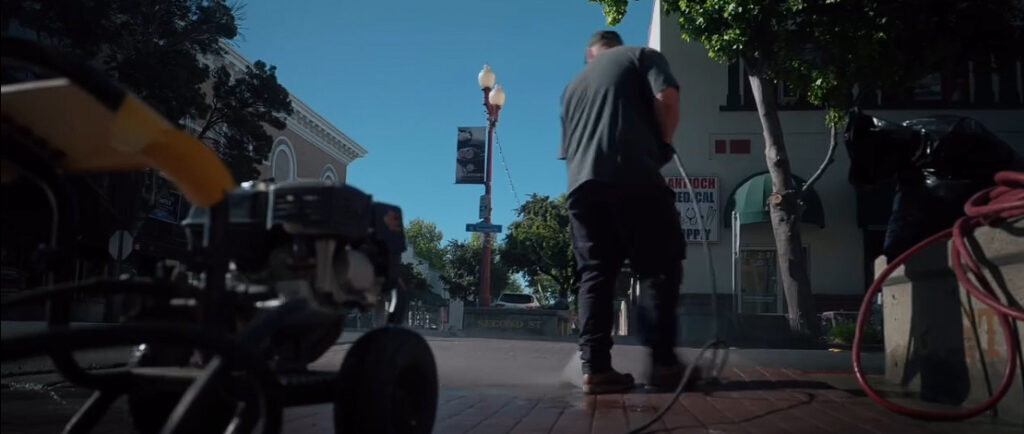
Legendary Movement Church Holds Rivertown Restoration Day
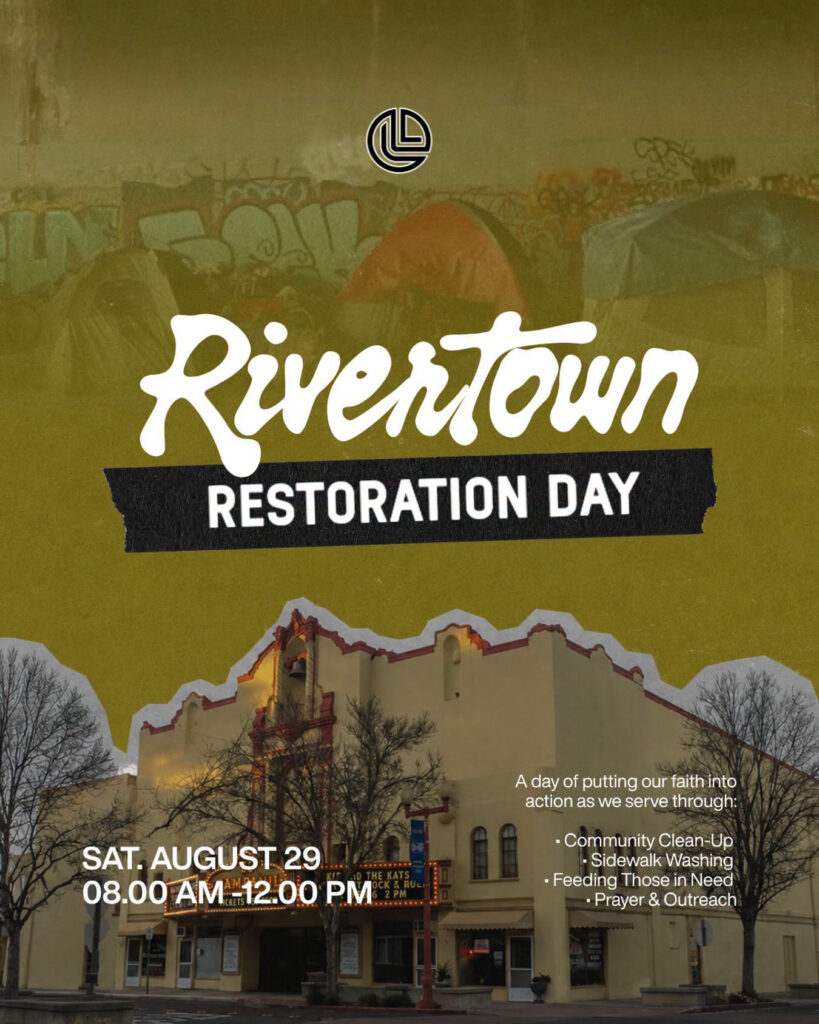
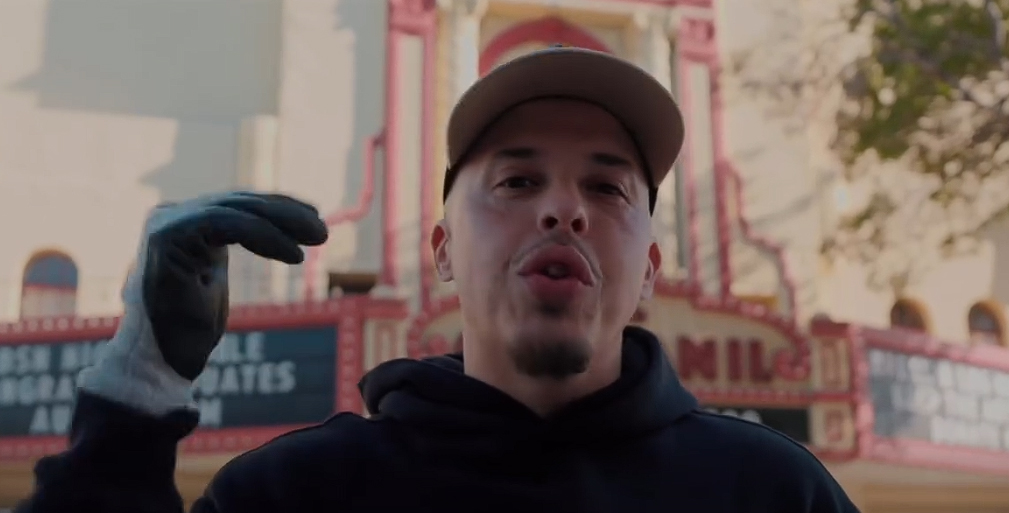
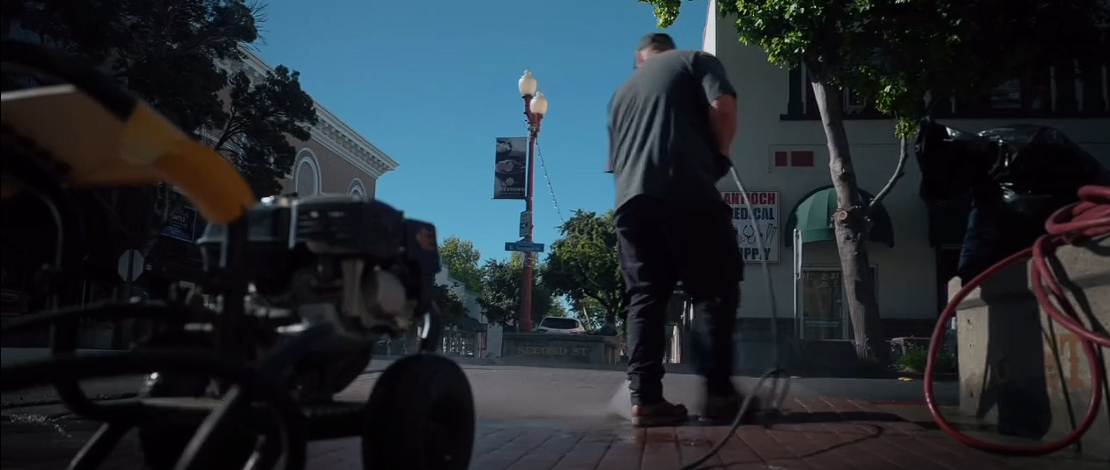
In a demonstration of their commitment to Rivertown, last Saturday, August 29th from 8:00 a.m. to 12:00 p.m., the church held a Rivertown Restoration Day, described as, “A day of putting our faith into action as we serve through: Community Clean-Up, Sidewalk Washing, Feeding Those in Need, and Prayer & Outreach.”
The message in their social media posts read, “We’re going to BE ABOUT IT Antioch. So, we’re calling EVERYBODY who truly loves this city to show up for RIVERTOWN RESTORATION DAY.
“We’re hitting the streets of Rivertown to clean, serve, restore, love on people, and remind our city that Antioch’s best days are still ahead. If you really love Antioch, I’ll see you there. Don’t just talk about change. SHOW UP and be part of it. LET’S RESTORE RIVERTOWN.” (See video of the day’s event and activities)
Older Brother, Also an Antioch Pastor Supports Effort
Asked about his brother and ministry, Pastor Ruben Herrera said, “They came out of us. They are under our church covering.”
“I actually toured the theater and considered buying it as an investment,” he shared.
“Downtown needs some life,” Ruben continued. “I believe the church will help that and be a blessing for the Rivertown area. We need people like Legendary who are not just holding their services there but building downtown.”
“Rivertown will be a better area with Legendary there,” he stated. “The business owners will see. It will grow, people will shop, people will dine.”
“They will work hand-in-hand with the City to make Rivertown a better place,” Ruben added.
He and his ministry, which Ruben says is the largest Latino church in Antioch, have their own project on Somersville Road in the same shopping center as the Bank of America and BMO branches. More about that is expected to be announced later this month.
About the Church
According to the church’s website, “Legendary Movement, as we know it, was always in God’s divine plan. But before we saw a spirit filled church, our eyes saw only a spirit filled youth group. About 25 youth gathered week after week in the back of an old church building. There was a limit on space and resources, but no limit on faith and passion. After a beautiful encounter on a mountain, God spoke the name ‘Legendary’ into existence and so we adopted the name ‘Legendary Youth’ in 2018.
“Our vision became more clear as the palpable presence of God became contagious to everyone who was present. Soon, what had been a Friday night youth group became a movement. Lives were being changed, families transformed, prodigals were coming back home. No longer could our services be restricted to only youth when it was evident that God wanted to do something greater than what we could comprehend. And so, in 2020 we changed our name to ‘Legendary Movement’, as this wave of the spirit was to exclude no one from experiencing God’s fullness.
“Our Friday night services continued to grow but still the Lord wasn’t done, the movement was just getting started. The manifest presence of God was evident but the desire to see and experience more was on the rise. God began to pour out knowledge and strategy, as the remnant interceded for confirmation and clarity. Upon God’s divine will and in his perfect time, we then launched Legendary Movement. Legendary Movement opened its doors Sunday, February 26, 2023. The grace of God has allowed this movement to continue to develop, as we expand into new territories and remain attentive to God’s direction.
“This legendary move is one that testifies to the faithfulness of Jesus Christ and his love for the Church!”
Now, the church will have a new home inside the historic, El Campanil Theatre building in Antioch.
For more information visit their website at legendarymvmnt.com.
the attachments to this post:
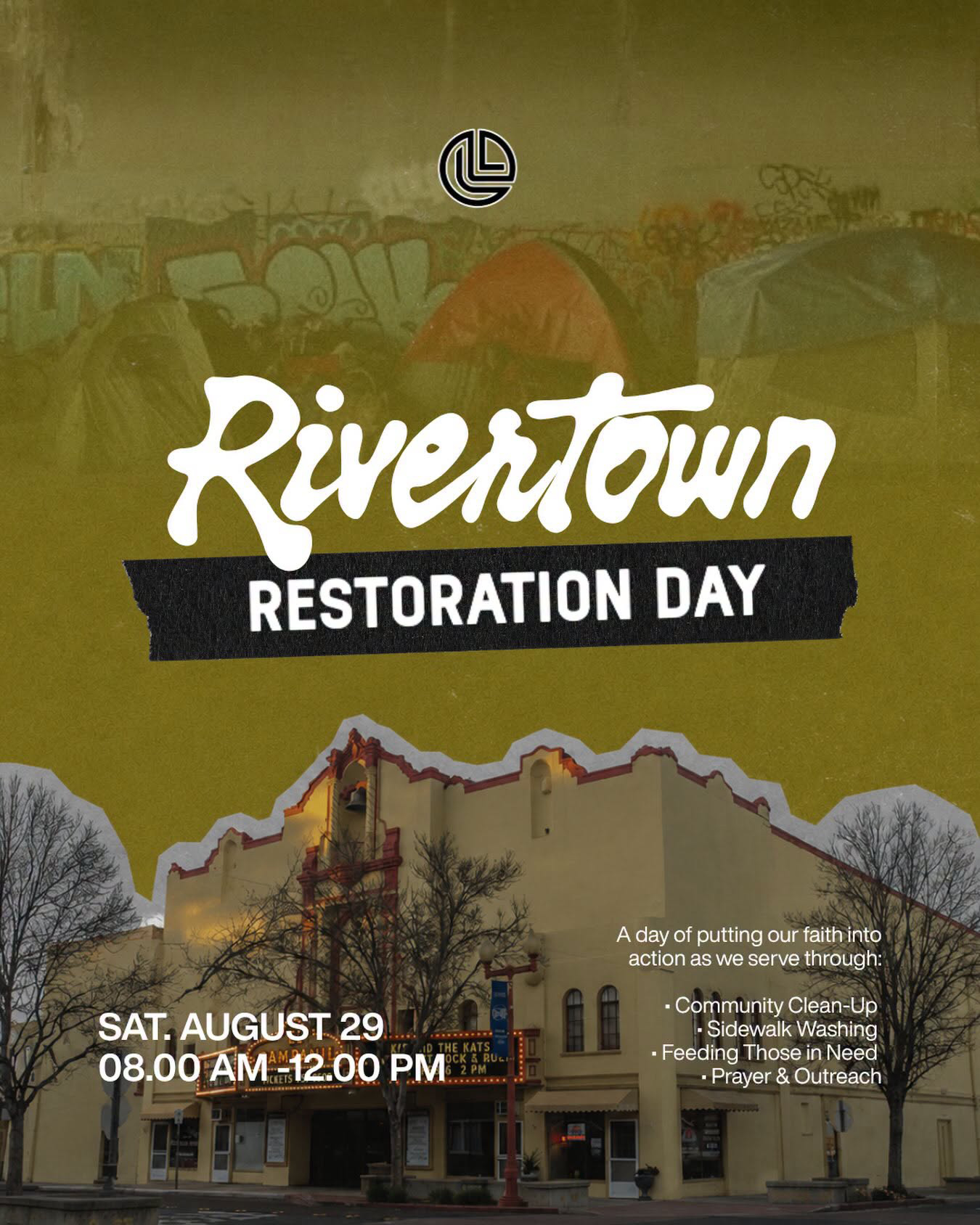
Rivertown Restoration Day flier
Pastor Herrera El Camp Rivertown Restoration 082926
LMC pressure washing Rivertown 082926
El Campanil Theatre aerial LMC video screenshot
Pastor Eli Herrera inside theatre LMC vs
Pastor Eli Herrera on theatre stage LMC vs
Legendary Movement Church & El Campanil Theatre