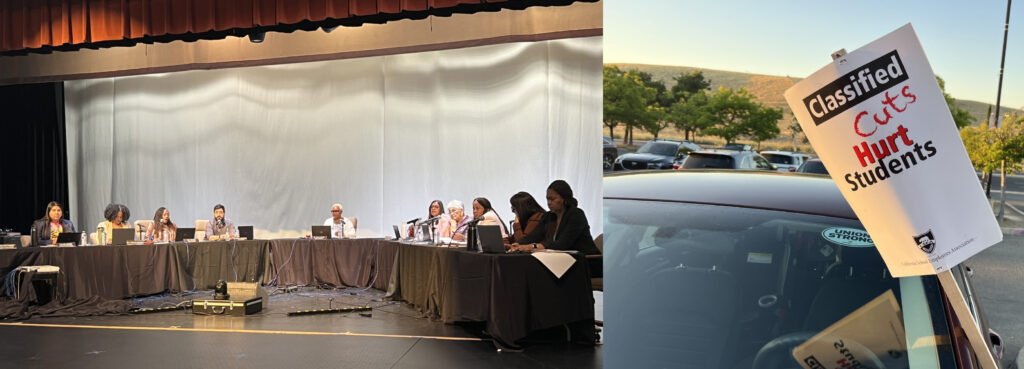
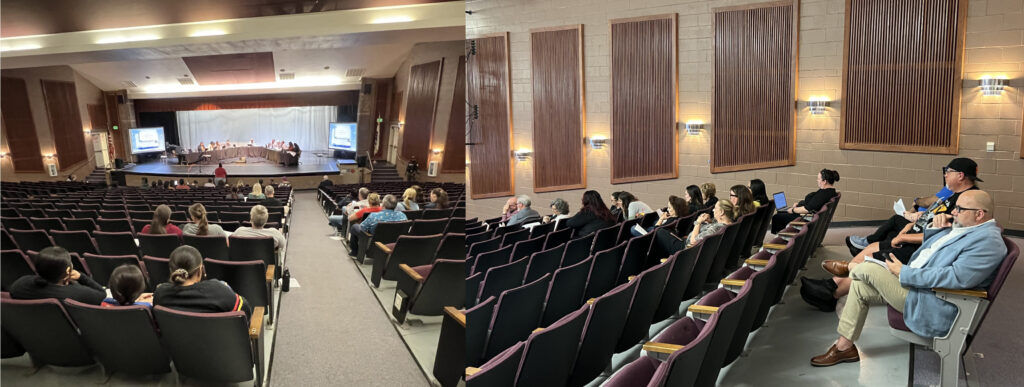
The Antioch Unified School District Board of Trustee cut the budget and 159 positions after saving 16 Classified staff positions during their meeting on Wednesday, May 13, 2026. Photos by Allen D. Payton
Over 16 positions saved at request of three trustees, but no teachers
Board first heard from state’s Fiscal Crisis & Management Assistance Team CEO
By Allen D. Payton
During another long meeting, the Antioch School Board, on Wednesday night, May 13, 2026, on split votes cut the District budget, and laid off 159 employees including 48 teachers and 30 other Certificated staff. Area 3 Trustee Dee Brown voted to abstain on all three votes. But the Board voted unanimously to accept the offer of one-day furloughs by Superintendent Dr. Darnise Williams and administrative staff, including principals. That will save the District about $117,000.
The meeting and votes followed split votes the previous Wednesday when the Board majority opposed the budget and staff cuts. The Board again met at 7:00 p.m. in the Deer Valley High School Theater with the expectation of a greater turnout than the District’s Board Room could accommodate. But that, once again, proved to be unnecessary as very few teachers, staff and members of the public attended the meeting.
The District was facing a $31.5 million budget deficit and the proposed budget cuts totaled $18.7 million. But how much was actually cut wasn’t clear due to the over 16 Classified staff positions that were saved. Also saved, was the District from a potential takeover by the State and County Offices of Education, known as receivership.
The Board faced two deadlines requiring them to vote to make the cuts that night. First, the District had to give final layoff notices to employees by Thursday, May 14th as well as submit their financial plan to the County Office of Education by Friday, May 15th.
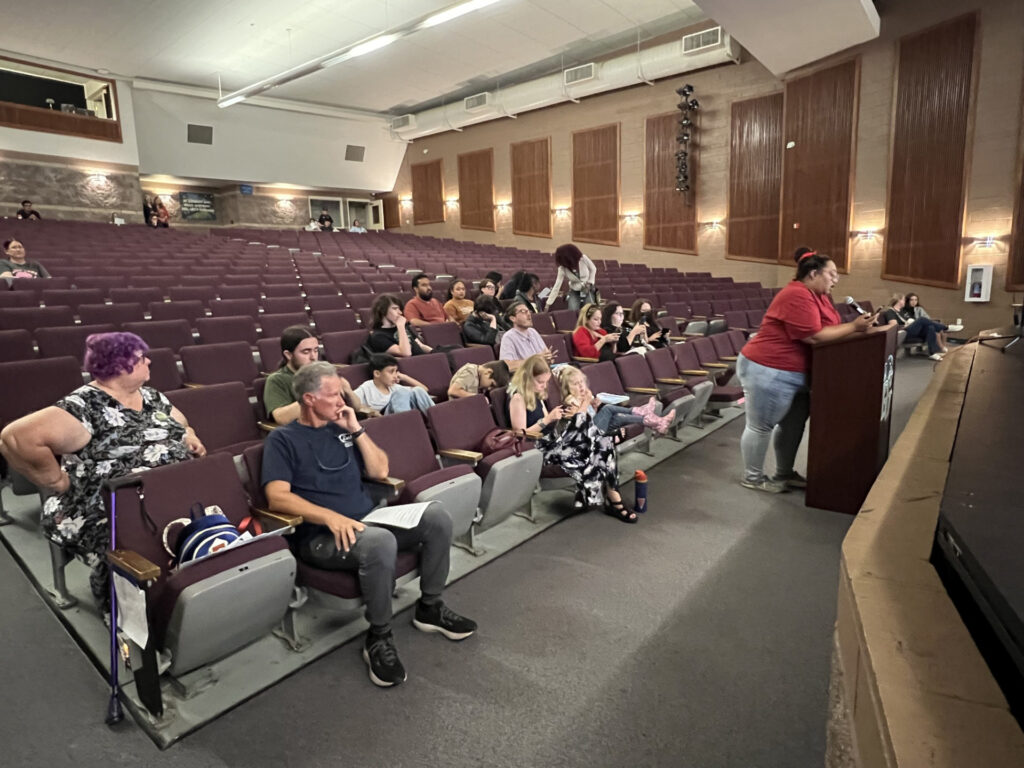
Very few District teachers, staff, parents and other members of the public attended Wednesday night’s meeting inside the Deer Valley High School Theater.
The trustees heard from District staff, including Bob Carson, president of the Antioch Education Association, the local teachers’ union, who supported the cuts to avoid the takeover and from residents who opposed them.
Then the Board was provided a presentation Regarding Projected Cash Flow by Mike Fine, the Chief Executive Officer of the California Fiscal Crisis & Management Assistance Team (FCMAT), which, “assists and provides guidance to local educational agencies in the areas of business and financial management practices.” He described his organization as “the guardian of the receivership process” but stressed to the trustees that FCMAT’s efforts were to work with financially challenged districts to avoid it.
“The majority of our work is absolutely avoiding receivership,” he added, which he estimated to be 80% of FCMAT’s work.
Fine also informed the Board and District leadership that the expected May Revised Budget from Governor Newsom on Thursday would change the financial figures being discussed and that it would be positive for the District. That turned out to possibly be true as the governor’s 2026-27 budget proposal increases spending on K-12 by $2.5 billion. (See related article)
The Antioch School Board Trustees heard impassioned pleas against the cuts by parents before the votes on May 13, 2026.
Trustee Requests & Board Votes
Following several responses to questions by District staff and requests by individual trustees to save certain jobs, including school psychiatrists and Reading Intervention Teachers by Area 5 Trustee Mary Rocha and Paraeducators by Area 3 Trustee Dee Brown, who was also unsatisfied with requests for information from District staff not being provided, the Board took three split votes.
Area 4 Trustee Olga Cobos-Smith was satisfied that the District didn’t need one psychiatrist per school because best practices only required one for every 500 to 700 students. That was enough for her to change her “no” vote on the budget from last week. After Rocha was satisfied with the explanation from District staff that they had a plan to handle the loss of the Reading Intervention Teachers, she joined the other three trustees in voting in favor of cutting the Classified staff positions.
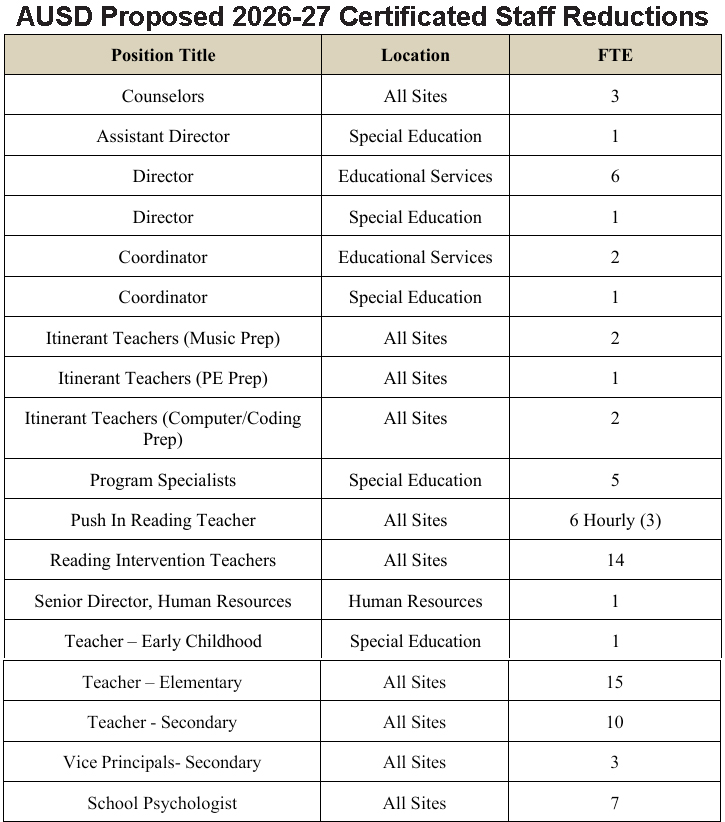
The Board approved the proposed list of 78 Certificated staff cuts. Source: AUSD
At 11:34 PM, on a vote of 3-1-1 with Rocha voting “no” and Brown voting to abstain, the Trustees approved the Budget Reduction Plan including the concessions that saved several specific jobs.
The Board the voted 3-1-1, again, on final layoffs of 78 Certificated employees which, were mainly teachers.
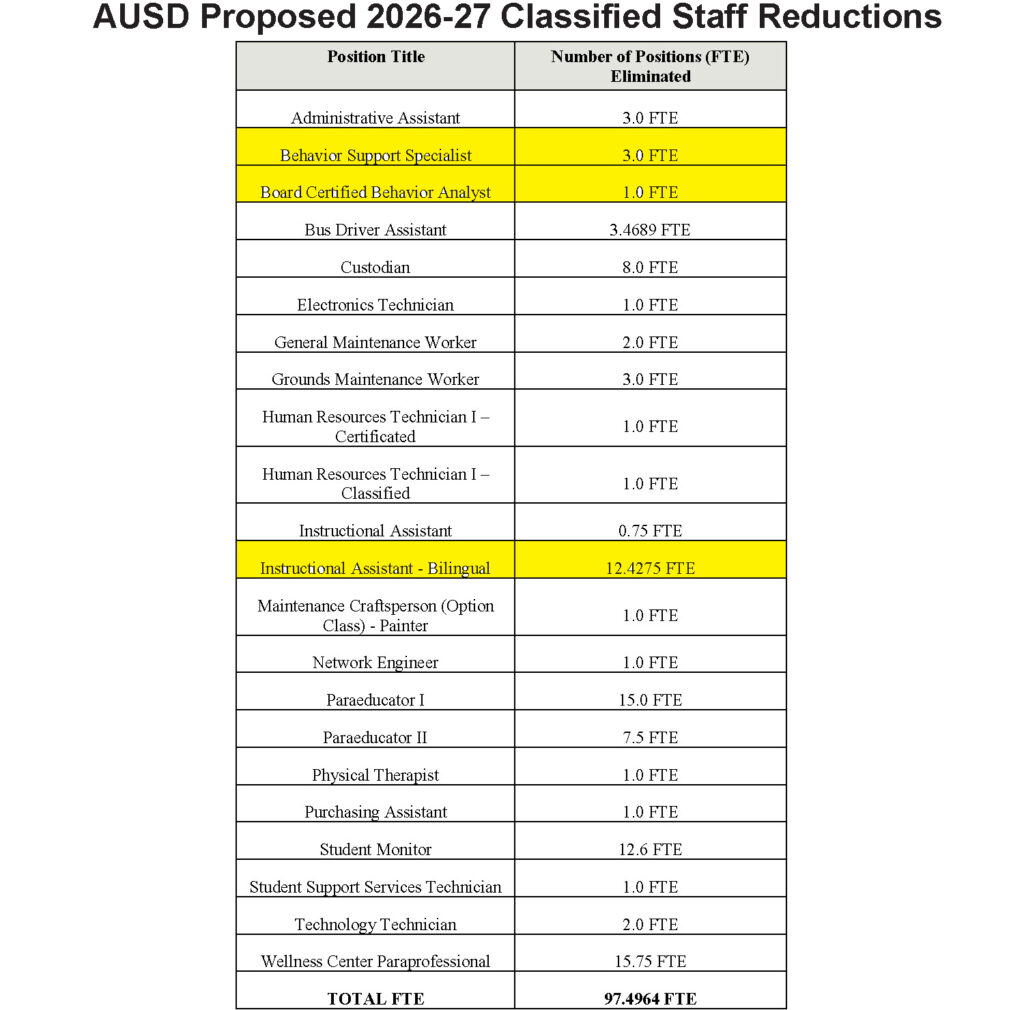
After Rocha was able to get the other board members to agree to saving the jobs of the Behavior Support Specialists (3 FTE), Board Certified Behavior Analyst (1 FTE) and Instructional Assistants – Bilingual (12.4275 FTE), the Trustees voted 4-0-1 on final layoffs of a little over 81 Full-Time Equivalent Classified Services employees. Brown again, voted to abstain.
The AUSD Board of Trustees voted to approve the proposed list of cuts to Classified staff positions except for those highlighted in yellow. Source: AUSD. Highlighted by the Herald.
The Board also voted to accept the superficial gesture of one-day furlough by the superintendent and administrative staff including principals. It means those staff members won’t be paid but also don’t have to show up for work that day. After Rocha asked about increasing it to three days, Dr. Williams said that would have to be taken to the Personnel Commission, first. The motion on the matter then passed 5-0, saving the District approximately $117,437.
The Board’s work on the budget is not over as they still face another deadline in October, Dr. Williams shared. But by then, with additional state funds, assuming the governor’s budget proposals are approved by the legislature, the Antioch trustees job may get easier.
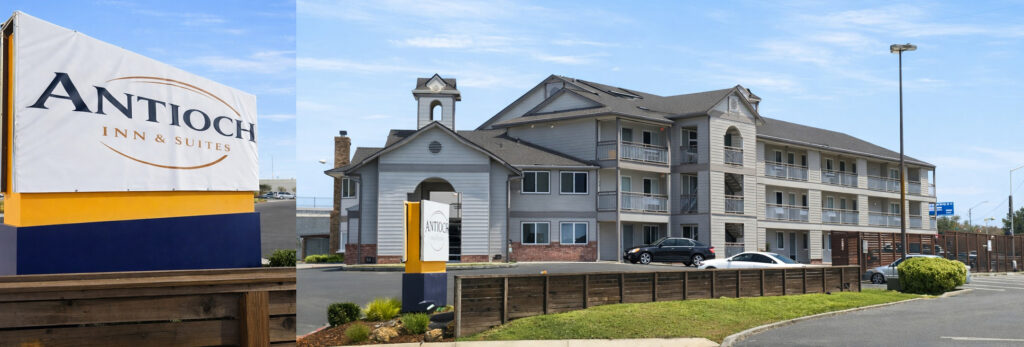
Antioch Inn & Suites formerly Comfort Inn located across from the Lowe’s store on Mahogany Way. Photos courtesy of Mike Barbanica
Governor Newsom announces $111 million in voter-approved Prop 1 funding to communities to get people off the streets and connected to mental health care
To date, Homekey+ has created 50 supportive housing projects with 2,471 affordable homes —including 620 homes for veterans
By Office of the Governor of California
SACRAMENTO – Building on California’s strategies leading to a 9% reduction of unsheltered homelessness last year, Governor Gavin Newsom today announced the award of voter-approved Proposition 1 funding to create another six affordable housing communities including one in Antioch. The communities are part of the state’s Homekey+ program to expand supportive housing and behavioral health services statewide. Today’s announcement creates 307 new permanent supportive homes to provide stability for veterans and other Californians who are experiencing or at risk of homelessness and living with behavioral health challenges.
Last year, the Antioch City Council approved purchase of the hotel, formerly the Comfort Inn, now, the Antioch Inn & Suites, “to serve as permanent housing for homeless families/individuals with prior behavioral health issues” and veterans. But it’s still operating as a hotel. Recently, the Council discussed using the location for the unhoused voucher program and a possible site for a warming center but did not pursue either use.
Our state investments have launched critical programs for local communities to help get vulnerable people off the streets and into housing and care. Together, we’re breaking cycles of homelessness that took decades to create — and we’re doing it with urgency, compassion, and accountability.
Governor Gavin Newsom
Governor Newsom is the first governor to have prioritized new housing, homeless, and mental health programs, and is turning around the impacts of this national crisis on California, leading the first reduction in unsheltered homelessness in more than 15 years.
More than 1.2 million adults in California live with a serious mental illness, and 1 in 10 residents meet the criteria for a substance use disorder, greatly increasing their odds of experiencing homelessness.
Proposition 1, advanced by the Governor in partnership with the Legislature and approved by voters in 2024, helps local communities provide vital care and housing for these vulnerable residents. Prop 1 is transforming California’s behavioral health systems with a $6.4 billion Behavioral Health Bond for housing, services, and treatment for veterans and people experiencing homelessness, including $2.25 billion through Homekey+ to serve individuals with mental health or substance use challenges and veterans.
“Proposition 1 and Homekey+ funds are supporting communities throughout California by investing in affordable homes with supportive services,” said Business, Consumer Services and Housing Agency Secretary Tomiquia Moss. “The homes created through today’s awards will provide stability and dignity to Californians most in need.”
With today’s awards, Homekey+ has so far allocated $858.8 million to support 50 permanent supportive housing projects that will create 2,471 affordable homes throughout California for individuals experiencing or at risk of homelessness with behavioral health challenges. Of these homes, 620 are reserved for veterans.
“Each new Homekey+ award means more than housing. It means stability, dignity, and a fresh start for veterans in need,” said CalVet Secretary Lindsey Sin. “With 75 more veterans’ homes in this round, and 620 total veterans’ units across 50 projects, we are seeing the real impact of strong partnerships and a shared commitment to those who served. CalVet is proud to continue working alongside the California Department of Housing and Community Development and local partners to turn these projects into places where veterans can rebuild their lives.”
Approximately $1.033 billion in Proposition 1 bond funds are currently available through Homekey+ to cities, counties, housing authorities, and tribal entities for permanent supportive housing projects serving veterans. Another $1.11 billion is available for projects serving all target populations, through a combination of Proposition 1 bond funds and Homeless Housing, Assistance, and Prevention Program (HHAP) funds.
In addition to supportive affordable housing through Homekey+ and HHAP, through Proposition 1 bonds, the state is also funding 6,800 residential treatment beds and 26,700 outpatient treatment slots for behavioral health.
“HCD is working with CalVet to advance California voters’ vision for a state in which people with mental health challenges have the services and support they need to succeed in a life lived off the streets,” said HCD Director Gustavo Velasquez. “We have reached a point where the numbers are reflecting the cumulative impact of our programs, and we look forward to building on those successes under the soon-to-be California Housing and Homeless Agency.”
The Homekey+ awards announced today total $111 million to create 307 homes across six projects, with 75 units for veterans and six manager units:
The City of Antioch in partnership with California Supportive Housing, will receive nearly $34.9 million in Homekey+ funds to acquire and rehabilitate a hotel into 85 homes, including one manager’s unit. The project will set aside 21 units for veterans and 21 units for transitional age youth. The development known as CSH Mahogany Housing is conveniently located near two bus stops and a busy commercial area that offers amenities such as a grocery store, pharmacy, restaurants, retail stores, and two major medical centers. It is located on Mahogany Way near Auto Center Drive, adjacent to Highway 4 across from Lowe’s.
The City of Cudahy in partnership with National Community Renaissance of California and Prima Development, will receive just under $8 million in Homekey+ funding to fill a financing gap for Amanda Villas. The project will have a total of 140 homes, including two manager’s units. The project dedicates 69 units to individuals experiencing chronic homelessness, 18 of which are designated as Homekey+ units for people facing a behavioral health challenge. In addition to Homekey+ funds, HCD’s Multifamily Finance Super NOFA Program awarded $6.7 million in 2023. Project-based rental subsidies of $33.1 million have been committed by the Los Angeles County Development Authority.
The County of Fresno, in partnership with UP Holdings California, LLC and RHCB Development LP, will receive just over $27 million in Homekey+ funding for Sendero Commons, a new construction project with 88 homes, including one manager’s unit. The project dedicates 45 units to veterans. HCD’s No Place Like Home program awarded $10 million in 2022. The Homekey+ award will fill the financing gap and replace the need for tax credits.
The Housing Authority of the City of Los Angeles, in partnership with The RightWay Foundation, will receive more than $12.5 million in Homekey+ funding to acquire two newly constructed buildings with a total of 33 homes, including two manager’s units, to serve youth who are experiencing or at risk of homelessness with a behavioral health challenge. All units include a kitchen and private bathroom
The City of Los Angeles, in partnership with National Community Renaissance of California, will receive $15.6 million in Homekey+ funding to rehabilitate a motel into Huntington Villas, with 52 homes for individuals experiencing homelessness with a behavioral health challenge and one manager’s unit. The project also has funding and rental subsidy commitments from Los Angeles County.
The County of Santa Barbara, in partnership with DignityMoves, will receive a Homekey+ award of just over $11.7 million to build the 30-home Calle Real Family Village to serve veterans, youth, and other Californians experiencing or at risk of homelessness, as well as one on-site manager. Nine units are dedicated for veterans, with three of those reserved for veterans aged 18-24. The project will utilize modular units and include indoor and outdoor community spaces. It is located within one-half mile of transportation stops, a medical clinic.
This adds to state investments made by the administration and Legislature since 2019 to help local communities address homelessness, including the launch of the first-in-the-nation Homekey program that has funded nearly 16,000 homes across more than 250 projects that will house an estimated 172,000 Californians over the projects’ lifetimes; $4.95 billion through current and previous rounds of the HHAP Program; $2.2 billion through Homekey+ to serve individuals with mental health or substance use challenges and veterans; $1 billion in Encampment Resolution Funds to provide services and housing to help 23,000 individuals across 120 encampment sites transition from homelessness.
The Homekey+ NOFA allocates funding by region based on a proportionate share of veterans and others experiencing homelessness, and by share of extremely low-income households whose rent is more than half of their income. There are also allocations for rural projects and for projects serving youth experiencing or at risk of homelessness. Homekey+ applications will continue to be reviewed and approved on a rolling basis.
Reversing a decades-in-the-making crisis
From the very first moments of the Newsom administration, California has approached the decades-in-the-making housing and homelessness crisis with focus and urgency. No other state has devoted as much time and attention to these twin problems – and California is a leader in producing positive results. Governor Newsom, in partnership with the Legislature, has continued to make progress in reversing decades of inaction, leading to a 9% reduction in unsheltered homelessness, a first in more than 15 years:
Expanding shelter and support — Providing funding and programs for local governments, coupled with strong accountability measures to ensure that each local government is doing its share to build housing, and create shelter and support, so that people living in encampments have a safe place to go.
Addressing mental health and its impact on homelessness — Ending a long-standing 7,000-bed shortfall in California’s behavioral health system by rapidly expanding community treatment centers and permanent supportive housing units. In 2024, voters approved Governor Newsom’s Proposition 1, which is transforming California’s behavioral health systems. It is estimated that funding from Proposition 1 will create 6,800 residential treatment beds and 26,700 outpatient treatment slots for behavioral health care.
Creating new pathways for those who need the most help — Updating conservatorship laws for the first time in 50 years to include people who are unable to provide for their personal safety or necessary medical care, in addition to food, clothing, or shelter, due to either severe substance use disorder or serious mental health illness. Creating a new CARE court system that creates court-administered plans for up to 24 months to help people struggling with schizophrenia and other psychotic disorders, often with substance use challenges, get the treatment and housing they need to recover and thrive.
Streamlining and prioritizing building of new housing — Governor Newsom made creating more housing a state priority for the first time in history. He has signed into law groundbreaking reforms to break down systemic barriers that have stood in the way of building the housing Californians need, including broad CEQA reforms.
Removing dangerous encampments — Governor Newsom has set a strong expectation for all local governments to address encampments in their communities and help connect people with support. In 2024, Governor Newsom filed an amicus brief with the Supreme Court defending communities’ authority to clear encampments. After the Supreme Court affirmed local authority, Governor Newsom issued an executive order directing state entities and urging local governments to clear encampments and connect people with support, using a state-tested model that helps ensure encampments are addressed humanely and people are given adequate notice and support.
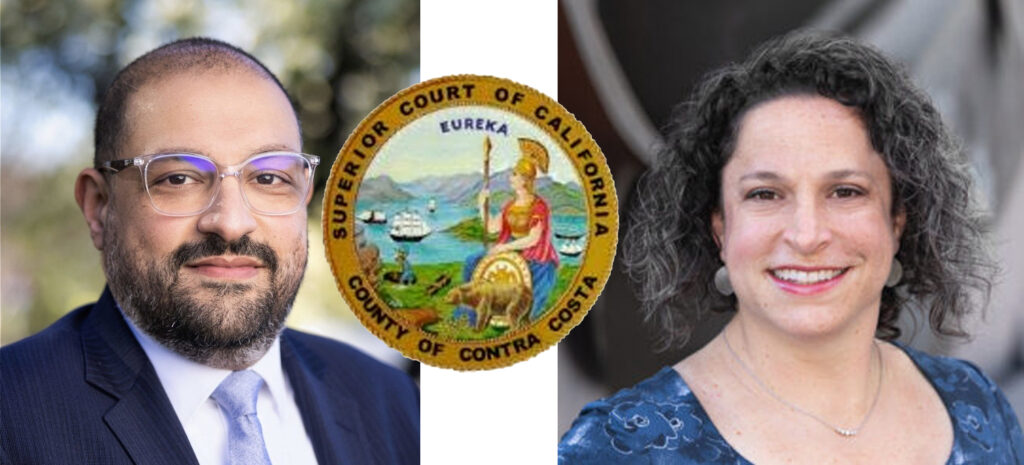
Newly apppointed Contra Costa County Superior Court Judges Hann Fakhoury and Amanda Karl. Photos: Office of the California Governor
By Office of the California Governor
Governor Gavin Newsom announced on Friday, March 27 2026, his appointment of two more Superior Court Judges in Contra Costa County, Hanni Fakhoury and Amanda Karl.
Hanni Fakhoury, of Contra Costa County, has been appointed to serve as a Judge in the Contra Costa County Superior Court. Fakhoury has worked as a Partner of Moeel Lah Fakhoury since 2021, where he works in white collar and federal criminal defense as a trial attorney and mediator. He served as an Assistant Federal Public Defender at the Federal Public Defender for Northern District of California from 2015 to 2021. Fakhoury worked as a Staff Attorney and Senior Staff Attorney at the Electronic Frontier Foundation from 2011 to 2015. He worked as a Trial Attorney at the Federal Defenders of San Diego from 2007 to 2011.
According to his Linkedin profile, “Fakhoury is an accomplished litigator who represents individuals and companies in criminal prosecutions and government and regulatory investigations. He is a Fellow of the American College of Trial Lawyers and a Northern California Super Lawyer. In addition to litigation, Hanni serves as a mediator in the Northern District of California’s ADR (Alternative Dispute Resolution) program and is a co-lecturer at UC Berkeley School of Law.
According to his bio on his law firm’s website, Fakhoury is a “Bay Area native” and “proudly serves the Northern District of California as a member of its Criminal Justice Act (CJA) trial panel, representing indigent criminal defendants. He was also selected by the Northern District bench to serve on the court’s Standing Committee on Professional Responsibility, Criminal Rules and Practice Committee, and CJA Administration Committee.”
“A sought-after teacher, Hanni…co-teaches a seminar on white collar crime. He has presented and lectured at over 100 legal conferences to wide audiences, including judges, attorneys and the public at large.”
Fakhoury received a Juris Doctor degree from the University of the Pacific, McGeorge School of Law. He fills the vacancy created by the retirement of Judge Charles S. Treat. Fakhoury is a Democrat.
Amanda Karl, of Alameda County, has also been appointed to serve as a Judge in the Contra Costa County Superior Court. Karl has worked as a Partner at Gibbs Mura since 2022, where she also worked as an Associate from 2016 to 2021. She served as a Law Clerk at the U.S. District Court for the Northern District of California from 2015 to 2016 and at the U.S. Court of Appeals for the Ninth Circuit from 2014 to 2015.
According to her profile on the Gibbs Mura website, Karl “represents consumers, employees and others who have been harmed by corporations. She has prosecuted a wide range of complex cases, including product defect, failure-to-warn, wage and hour, data breach, sexual assault, and securities cases, within a variety of industries. In 2024 she was honored as a Rising Star by Law360, a highly selective award that recognizes top attorneys under the age of 40.
Karl received a Juris Doctor degree from the University of California, Berkeley School of Law as a member of the Order of the Coif, a national honorary scholastic society, which extends invitations to the top 10% of Berkeley Law’s graduating J.D. students by grade point average. . She fills the vacancy created by the retirement of Judge Charles B. Burch. Karl is a Democrat.
The annual compensation for each of these positions is $244,727.
By Matt J. Malone, PIO, Superior Court of California, County of Contra Costa
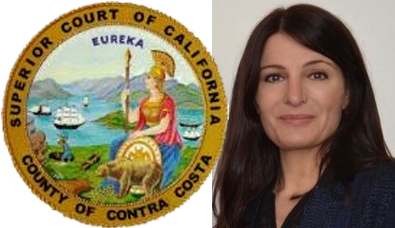
New Contra Costa Superior Court Judge Carole Bosch.Photo source: Office of the California Governor
The Contra Costa Superior Court is pleased to announce that Governor Gavin Newsom has appointed Carole Bosch as the Court’s newest judge. She took her oath on March 20, 2026, and began presiding in Department 3 on March 23, 2026.
Since 2021, Judge Bosch, of Alameda County, has served as an administrative law judge with the California Unemployment Insurance Appeals Board since 2021, an independent administrative judicial agency charged with resolving disputed unemployment, disability, and employment tax determinations from the Employment Development Department. She was Vice President and Training Committee Co-Chair for the Administrative Law Judge Association. Simultaneously, she taught as an adjunct professor of legal writing and research at Golden Gate University.
Before serving as administrative law judge, Judge Bosch worked as a civil trial lawyer, including as a managing attorney at Hildebrand, McLeod and Nelson from 2017 to 2021, a partner at Paul & Hanley from 2007 to 2011, and an attorney at Kazan McClain Satterley & Greenwood from 2013 to 2016, in cases involving complex product liability litigation and catastrophic injury. Bosch also worked as a Partner at Minnard Bosch from 2016 to 2017 and at Farrise Law Firm from 2012 to 2013. Early in her legal career, she was an annual attorney with the California Supreme Court in 2007and worked as a Clerk at Hersh & Hersh from 2005 to 2007.
Judge Bosch is graduate of Golden Gate University School of Law and received her undergraduate degree from the University of California at Santa Cruz. She also holds a master’s degree from the University of Birmingham in Great Britain. Judge Bosch fills the vacancy created by the retirement of Judge Patricia Scanlon. Bosch is a Democrat.
The annual compensation for her position is $244,727.
Will instead include proposed Inclusionary Housing Ordinance in General Plan Update process;could come back in “a year or so”
“We need to take a comprehensive view of how all these things are going to impact our community and to do this piecemeal is wrong.” – Mayor Pro Tem Freitas
“Antioch…is still the most affordable place in the East Bay and if we don’t keep it affordable then it won’t be.” – Councilwoman Torres-Walker
By Allen D. Payton
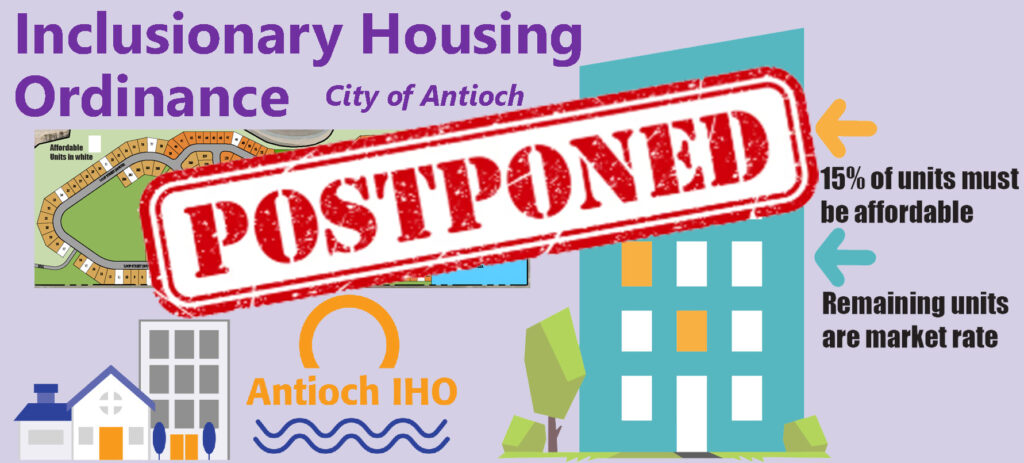
During their meeting Tuesday night, March 10, 2026, the Antioch City Council voted 4-1, with District 1 Councilwoman Tamisha Torres-Walker voting against, to postpone a decision on the proposed Inclusionary Housing Ordinance (IHO) and include it in the General Plan Update process. Since, according to City staff, that process will take one to three years, it could allow enough time for the remaining proposed, new-home subdivisions in the Sand Creek Focus Area to be approved. That’s the part of Antioch where upscale homes have been planned for more than 30 years to meet the higher-end portion of the city’s housing mix.
It’s also the part of Antioch that Mayor Pro Tem and District 3 Councilman Don Freitas said he wants excluded from the ordinance.
The expectations have been the Sand Creek area homes will attract business owners to Antioch to create local jobs and employ residents in the 200-acre East Lone Tree Specific Plan area off Laurel Road near the J.C. Penney store, and allow them to escape the commutes on Highway 4 and Vasco Road. Only four more potential developments on the west side of Deer Valley Road including the Richland Communities-Leung, Zeka Ranch and Oak Hill Park LLC/Richfield-Bridle Hills projects, and one on the east side, referred to as the Chen property, located south of the Kaiser Antioch Medical Center and west of Dozier-Libbey Medical High School, are remaining to be submitted, processed and/or approved.
In addition, two more new single-family housing projects on Somersville Road, known as Rialto Place, and on James Donlon Blvd., known as Sorrento Village, are also in process, and would probably be approved before an ordinance is adopted. That would leave mostly in-fill, single-family housing and multi-family housing projects throughout the city to which an ordinance would apply. Those include five of the 10 Commercial Infill Housing Overlay District affordable apartment projects and multiple other projects, including the currently on-hold Rancho Meadows on the north side of Antioch, that have yet to be built, as well. (See related articles here and here)
Followingan hour of the staff presentation and public input, mostly by representatives of out-of-town organizations and a few residents in support, and opposition from one resident, the council then took up the matter for another hour asking questions of staff and the consultant and discussing it before the vote. (See council meeting video beginning at the 5:27:30 mark)
Council Questions, Discussion & Comments
District 2 Councilman Louie Rocha asked if the IHO would apply to developments already approved. Planning Manager Zoe Merideth responded, “This would be for new development moving forward.”
Asked by Mayor Ron Bernal about the point in time when the ordinance would be applicable to a new housing project, she responded, “It would generally be deemed complete also under SB330 if you file a complete preliminary development application, that vests your rights at the time…which are most housing projects at this point.”
Torres-Walker, referring to the comments of local homeless and affordable housing advocate Andrew Becker, was concerned “the ordinance would essentially do nothing based on the developments that are currently in the pipeline.”
“Is it a paperweight?” she asked.
“No,” was the reply from Greg Goodfellow, Associate Principal for PlaceWorks, the consulting firm that helped develop the City’s proposed IHO. “The big picture for me, here is to think of the IHO as one tool in such a large shed of tools for affordable housing.”
“I don’t do things to be symbolic. I want this to mean something,” the councilwoman said.
“My point is it’s not going to do everything,” Goodfellow responded.
Source: City of Antioch
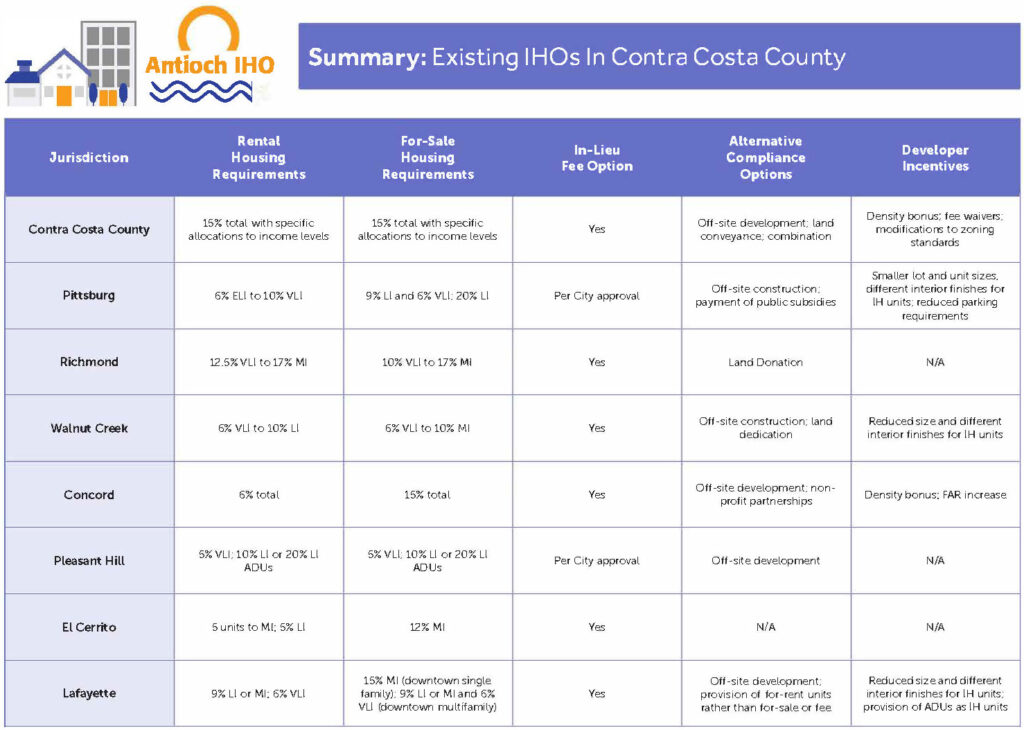
Mayor Pro Tem Freitas then asked about the chart staff provided in their presentation showing that “there are only seven cities listed” that have IHO’s and that most had much lower percentages than the 15 percent recommended by staff and 20 percent requested by some members of the public and organization representatives.
“That’s not all of them. Those were just examples,” the consultant stated. “I don’t know the exact number. I’m sorry.”
Freitas then mentioned, “The City would have to hire three to six individuals to oversee this,” and the fact the City is facing deficits this and next year. “Where would we get the money?” he asked. “Would we get it out of the (IHO) Trust? The Trust can’t pay those fees?”
“No,” Goodfellow responded. “This IHO…could be taken care of with the leadership of existing staff.”
Part of the costs of the annual review for the program would be covered by developer fees Merideth explained.
A discussion over adequate staffing for all housing programs in the city ensued.
Freitas then asked about the need outlined on page 8 of the staff report for “additional building height” to accommodate density increases “required to make rental projects feasible” and “potential parking regulation exemptions.”
“What concerns me is engineering says, even if you approve this project, you are at Level F for traffic. That’s gridlock,” the councilman stated. He was referring to, according to the U.S. Department of Transportation, the Level of service for traffic flow, which measures automobile congestion and travel time delay, on a scale of A, which is the best, to F, which is the worst.
“I’m concerned that the qualify of life in Antioch will deteriorate,” Freitas added. “The citizens of Antioch I know, they don’t want to have high-density, three- and four-story buildings. They don’t.”
“Antioch, historically, since I was born here, has always been a haven for affordable housing,” he continued. “Yes, I know it’s screwed up, now. But is it going to help us or hurt us?”
“We are now going to be doing the General Plan, number one,” Freitas stated. “Number two, we do have Senate Bill 300, Senate Bill 330 and now we have a proposal on inclusionary housing. We need to take a comprehensive view of how all these things are going to impact our community and to do this piecemeal is wrong.”
“The reality is, we do have an issue of affordability,” he said. “My feeling is, this is not the place, tonight to make that decision. Our legal requirement is to do the study. We have fulfilled that. But I believe we fold it in to the General Plan review.”
“I want staff to tell me how are we going to oversee this. How are we going to implement this. We have no plan,” Freitas continued. “It’s just a policy, let’s do it, let’s put it in. That’s irresponsible as far as I’m concerned.”
“It’s an amazing study,” he said. “I just think it would be wrong to approve this tonight.”
Freitas Says Ordinance Shouldn’t Apply to Sand Creek Area Developments
“The other problem to me is….quote, unquote, it is citywide,” Freitas said about another of his concerns with the ordinance. “I spent three years of my life doing the last General Plan (which was adopted in 2003 when he previously served as mayor)…and we consciously made a decision that there are parts of our community we don’t want high rises, we don’t want high-density. We want executive housing primarily in the area which was Urban Area number one, the Sand Creek Area. I don’t think this should be applied citywide.”
“We need to make some qualitative judgments and some areas I don’t think it should apply,” he reiterated. “Because I think cities want the whole gamut…from executive housing to absolutely affordable housing.”
“I guess I’m frustrated with this. I think it’s the wrong approach. I think we need to delay this,” Freitas stated. “I think we need to fold it into the General Plan and do a much better job of how we’re going to pay for this because it’s not here. Reading this report scares me more than anything with how we’re going to financially do it and the exemptions that are being called out.”
“Thank you for letting me rant and rave,” he concluded to laughter from Torres-Walker and others. “I’m OK. I feel good,” he said with a smile on his face.
Torres-Walker States Her Support
The District 1 councilwoman then said, “I support this. I always have. Antioch…is still the most affordable place in the East Bay and if we don’t keep it affordable then it won’t be. I know there is definitely NIMBYism (Not In My Back Yard) that exists in the city. I know there are places people do not want this kind of housing and we have to figure things out. I think this is important.”
Then speaking of the staffing issue to support the proposed IHO and City’s other housing programs Torres-Walker concluded, “I don’t think residents who are trying to afford to live in Antioch should have to suffer because we haven’t figured out our institutional challenges.”
Wilson Supports Inclusionary Housing “Whenever” Council Votes
District 4 Councilwoman Monica Wilson spoke next saying about Torres-Walker’s comments, “a lot of it I agree with.” Then to Freitas she said, “I get your frustration…but on the other hand we need affordable housing. I hear about people who are either couch surfing, living in their homes, living on the street and they have a job. We need to do something. I get we need to have a plan with programs that are going to work, be successful and be maintainable. We need to do something for housing to be affordable.”
“I support this. Regardless, if we vote on it today or whenever, I’m in support of inclusionary housing,” Wilson concluded.
Rocha Supports “the Concept” But Approving it Now Would be “Winging It”
Rocha spoke next saying, “I support the concept all along. But I have more questions and concerns about…how we do it right, how we structure it.”
“So, if we’re going to vote tonight, my answer would be ‘no’,” he stated. “If we’re going to have staff look at it, get some feedback to look at how we can make it feasible, workable for us, with staffing, with all of the questions that have come up, then I can consider that.”
“Looking at this, tonight, I can’t support this vote, tonight based on so many questions and concerns,” Rocha continued. “Otherwise, I think we’re just winging it.”
Freitas then said, “I’m generally supportive, but, you know, we have to do it right. We all support affordability. In my opinion, this is too critical to screw up.”
Staff Says General Plan Update Will Take “Two to Three Years”
Torres-Walker then asked staff, “How long is it going to take to finish the General Plan?”
Interim Community Development and Economic Development Director David Storer responded, “We’re saying anywhere from two to three years depending on the process.”
Bernal Also Supports Including IHO with General Plan Process
Mayor Bernal then weighed in saying, “My biggest concern with this…is the fact that we’ve been thrown for a loop when it comes to the housing legislation that has come out of Sacramento. We’ve only had two projects approved, we have eight or 10 in the pipeline. We have three-story units going up right in the back of residential on Golf Course Road which is going to be a nightmare firestorm.” He was referring to the Joyfield at Lakeview Center Apartments for extremely-low, very-low and low-income residents.
“So, we don’t even know the impacts of current legislation on our city let alone adding one more moving part to it that’s just going to complicate things,” the mayor continued. “The other part of this, and I keep harping on it, is we need to get our budget under control…in order to know where we’re headed as a city, how we’re going to afford to pay for things like extra staffing.”
“The other thing that has always frustrated me is RHNA (Regional Housing Needs Allocation) numbers are just dumped on us,” Bernal stated. “We’re going after these arbitrary numbers that a group in the larger Bay Area (speaking of MTC & ABAG) has come up with and I don’t know if that’s what’s best for our community.”
“I know it’s what we’re mandated to do but I don’t know if that’s best for our community. That’s where the General Plan comes in and I think that folding this in with the General Plan process…,” concurring with Freitas. “Because what the General Plan process is going to do is tell us how many units we have left in our 25-year building sphere that we’re going to be building, that then we would know how many units we’re going to get out of this. Right now, there isn’t any certainty of that.”
“My point is I think there are a lot more questions than there are answers,” he continued. “I think there are a lot of moving parts, right now, when it comes to Sacramento, development and how it’s going to impact Antioch with so much vacant land and so much residential opportunity, and I just think this would add one more element of complication to it.”
“So, I’m not going to be supportive of moving it to a date certain…because I don’t see the benefit or the purpose of it,” Bernal concluded.
Housing in Land Use Element of General Plan Update Could Be Done in “a Year or So”
Freitas then confirmed with Storer, that the first of seven issues to be dealt with during the General Plan Update is the Land Use Element, which includes housing policy, and said, “Some of the questions we’re all asking…I think we could move that forward…we could bring back the IHO within a year or so for action.”
Bernal then advocated to “bring it back organically when it’s time.”
Freitas then asked City Manager Bessie Scott, “Does the city manager want to offer any words of wisdom?” to which she simply replied, “Um, no,” to laughter from the council members and those still in the audience as it was after 11:50 p.m.
“That’s called a wise city manager,” Bernal stated in jest.
Freitas then made the motion to move the item off-calendar, “with the understanding that the General Plan will prioritize this entire discussion.” Rocha seconded the motion and it passed 4-1 with Torres-Walker voting “no”.
Sacramento, Calif. – The California Department of Real Estate (DRE) encourages seniors to be aware of real estate and mortgage fraud targeting older adults. Scammers increasingly target seniors with real estate and mortgage-related deception, exploiting their trust and financial vulnerability.
The following tips aim to help Californians safeguard themselves before harm is done, as well as how to report this type of fraud.
Fraud Avoidance Tips
Be vigilant, diligent, and suspicious, and proceed very cautiously, when contacted by strangers.
Use only licensed professionals when engaging the services of people or companies offering rental, home loan, foreclosure rescue, or other real estate services on your behalf. Check licensing at dre.ca.gov and dfpi.ca.gov.
Never pay in cash, or wire cash to anyone, in connection with real estate transactions; Also, be certain to protect your personal information, such as social security number, so scammers cannot steal your identity.
Never pay anyone for home loans or foreclosure relief services in advance of successfully completing the work you wanted them to do for you.
Never sign an agreement for a real estate transaction (including a Rental) or a home loan that you cannot afford.
Never sign a real estate (including Rental) or home loan agreement that you do not understand or have not read, or which contains blank spaces.
Anyone (including scammers without an appropriate or legitimate California license) can advertise on television or radio, in newspapers, magazines or on the Internet.
Just because someone looks professional, sounds like an expert, and/or gives you confidence in their real estate knowledge, does not mean that you can or should trust them.
Never transfer or sign your home over to any third party or anyone else who claims that such a transfer can or will help you repair your credit or keep you in your home. Also, never sign a “power of attorney” giving rights to your property or money to any individual – or any company – you do not personally know and trust.
Monitor and periodically check the title to your real estate holdings, just like you check your credit reports; and act immediately if you detect fraud.
If something sounds too good to be true, it probably is!
Current Types of Real Estate Fraud
Foreclosure Rescue Schemes
Scammers promise to save a homeowner’s property from foreclosure in exchange for fees or title transfer. Victims often lose both their homes and money when no real help is provided.
Unlicensed Prepaid Rental Listing Services Fraud
Scammers offer rental property lists for a fee without proper licensing. Victims often pay upfront but receive outdated or nonexistent listings, leaving them without a rental and no recourse.
Timeshare Resale and Rental Schemes
Fraudsters promise to sell or rent timeshares for a fee but either fail to deliver, exaggerate property value, or sell nonexistent interests, exploiting owners’ desire to liquidate or monetize their timeshare.
Online Rental Fraud
Scammers advertise fake rental properties online, often requesting deposits or personal information before disappearing, targeting people searching for homes or vacation rentals.
Unlicensed Property Managers
Individuals manage rental properties without the necessary real estate license, potentially leading to mismanagement, legal issues, or financial loss for property owners and tenants.
Real Property Recordation Fraud
Fraudsters forge or falsify deeds and record them against properties without the owner’s consent, potentially leading to disputes over property ownership.
Real Property Investment Schemes
Scammers promote high-return real estate investments that are either nonexistent or misrepresented, leading to financial losses for investors.
Reverse Mortgage Scams
Fraudulent schemes target seniors, offering reverse mortgages with misleading terms or fees, potentially leading to loss of home equity or foreclosure.
Vacant Land Scams
Scammers or bad actors posing as owners of vacant land and contact real estate agents for their assistance to sell a property they do not own.
How Consumers Can Report Suspected Fraud
If you believe you have been a victim of a mortgage crime or have a concern or complaint about a real estate salesperson or broker, you can file a complaint with DRE: https://dre.ca.gov/Consumers/FileComplaint.html
ABOUT DRE
The Department of Real Estate is the regulatory agency that enforces the Real Estate Law, Subdivided Lands Law, and Vacation Ownership and Timeshare Act. DRE oversees the licensure of approximately 434,000 licensees. The Department’s mission is to safeguard and promote the public interests in real estate matters through licensure, regulation, education, and enforcement. Consumer protection is its highest priority. For more information, visit: www.dre.ca.gov.
“Califraudia” estimated at $250 billion of fraud, waste and abuse
By Jenny Rae Le Roux
SACRAMENTO, CA — Today, CAL DOGE, the unofficial California Department of Government Efficiency, launched on Jan. 26th by candidates for governor, Steve Hilton and for state controller, Herb Morgan, announced it has untangled a web of funding from the Prop 64 (state marijuana legalization law) authorized California Cannabis Tax Fund (CCTF) – supposed to be used for substance abuse prevention – that instead is building the Democrat political machine in California.
An investigation into Elevate Youth California, which is one of the financial intermediaries that received $370M from the CCTF, found that Elevate Youth distributed 517 micro-grants, with an average grant size of $700K, to multiple organizations that do nothing related to substance abuse and instead build the Democrat voter base. These organizations explicitly fund “social justice youth development”, “civic engagement”, and “power building.”
According to Prop 64 and the supposed oversight group for Elevate Youth, The Center at Sierra Health Foundation, the tax is designated to support “funding and technical assistance for organizations that are developing or increasing community substance use disorder prevention, outreach and education focused on youth.” Instead, Elevate Youth is distributing funds to organizations – such as $1M for “civic engagement” to Young Invincibles, which has stated values of “Young Adult Power, Equity, Community, Collaboration, and Bold Ideas” but says and does nothing related to substance abuse prevention.
“After collecting $1 billion annually from the Cannabis Tax, that money should be spent on substance abuse prevention as stated in the law, not political organizing to keep Democrats in charge of California’s decline,” said Jenny Rae Le Roux, Director of CAL DOGE. “Funneling money through financial intermediaries to hundreds of non-profits that spend those funds on partisan Democrat political organizing must stop, and the age of accountability must begin.”
Other grantee organizations, such as the Jakara Movement Grant, which was provided $1M for Sikh youth empowerment and voter registration, and Asian Refugees United, which was granted $800K for LGBTQ+ Asian Storytelling, have no connection to substance abuse prevention.
Estimates $250 Billion of Fraud, Waste and Abuse
Based on a preliminary review by Hilton, and his running mate Morgan, entitled “Califraudia”, California’s exposure to fraud, waste, and abuse across major state programs is estimated at $250 billion. This estimate, based on independent analysis, underscores the urgent need for formal audits, investigations, and enforcement as a matter of basic fiscal responsibility.
Hilton added, “In seven days of work, CAL DOGE has already uncovered more fraud than Gavin Newsom and his regime have done in their seven years in power. And we’re not even elected yet! This is exactly why I set up CAL DOGE in the first place, to expose fraud and corruption in the system so we can act to stop it on day one. Democrats and their shadow network of leftist front organizations are stealing taxpayers’ money for their own partisan ends. We pay the highest taxes in the country yet get the worst results – and now we are finding out why, and where our money is really going. There is much more to come from CAL DOGE and its work will play a huge part in ending 16 years of Democrat one party rule this November.”
Following are additional details on the investigation and the team that connected the dots:
Californians Voted For the $370 Million in Cannabis Tax Dollars to Fund “Drug Prevention.” Instead, the Tax Bankrolls Leftwing Political Activism.
When California voters approved Proposition 64 in 2016, they were told cannabis tax revenue would fund youth substance abuse prevention. Six years and $370.25 million later, Rhetor’s AI-powered forensic audit — conducted in partnership with CalDOGE — reveals where that money actually went: into a sprawling network of 517 grants funding political organizing, voter registration drives and “social justice youth development,” all administered by a single nonprofit intermediary operating as a shadow agency of the state.
How the Money Moves
The California Department of Health Care Services does not distribute Proposition 64 cannabis tax funds directly to community organizations. Instead, they issue a master contract to The Center at Sierra Health Foundation, a 501(c)(3) that has become the de facto bank for the state’s equity, prevention and youth funding.
The Center at Sierra Health Foundation retains 15 to 20 percent in administrative fees then sub-grants the remaining funds to community-based organizations through its own application process.
The state does not pick who gets the grants. The intermediary does, bypassing the rigorous procurement processes mandated for direct government contracts under the Department of General Services and State Controller oversight.
The result is a three-stage pipeline — master contract to fiscal intermediary to sub-grants — that creates layers of separation between taxpayer dollars and their ultimate use.
Lining the Governor’s Pockets
The pipeline starts with the governor’s office, and the relationship between The Center at Sierra Health Foundation and the governor extends well beyond a standard contract. According to the California Fair Political Practices Commission’s Behested Payment Transparency Report (pg.19-20), in 2020 alone, Sierra Health Foundation was the third-largest payor of behested payments statewide at $14,747,724 and the single largest payee of behested payments statewide at $30,869,901 — payments Newsom solicited from private companies.
Newsom himself was the top behesting official in the state that year at $226.8 million total (pg. 20), and Sierra Health Foundation ranked among his top three financial partners in the system.
The financial trajectory of The Center at Sierra Health Foundation tracks accordingly. IRS Form 990 filings show The Center’s revenue exploded from $11.8 million in 2018 to $197 million in 2024 — with 96.5 percent of that revenue coming from government contracts. The Center’s CEO Chet Hewitt’s total compensation rose from $407,726 to $612,730 over the same period, a 50 percent increase that mirrors the growth in state contract volume almost perfectly. Behested payments are legal in California with no dollar limits, but the California Fair Political Practices Commission itself flagged the scale as concerning enough to implement new transparency regulations.
The Grants Say the Quiet Part Out Loud
The pipeline flows from the governor’s office to the The Center at Sierra Health Foundation, the fiscal intermediary, who determines grant recipients. Rather than awarding grants to recipients that qualify for Proposition 64’s original purpose — fighting substance abuse — The Center uses Prop. 64’s taxpayer dollars to fund leftwing activist organizations.
Elevate Youth, for example, the most significant vertical managed by The Center, is funded exclusively by Prop. 64 taxpayer dollars. Yet Elevate Youth’s grant application form explicitly names “social justice youth development” and “civic engagement” as criteria for grantees, terms that appear nowhere in the statutory language of Prop. 64’s Youth Education, Prevention, Early Intervention, and Treatment Account.
Similarly, grant recipients, like United Way of Santa Cruz County, which was awarded $834,075.00 from Elevate Youth, focuses on “activism” and “BILPOC (Black, Indigenous, Latino, and People of Color) and LGBTQ+ youth and families.”
Voters approved cannabis tax revenue for substance abuse prevention. DHCS redefined “prevention” to include political organizing — then buried it inside the grant criteria of a nonprofit intermediary most Californians have never heard of.
Political Activism at Clinical Prices
The math exposes the disconnect.
According to the DHCS YEPEITA report, the Elevate Youth program reached 89,727 participants. Divide $370.25 million by that figure and the cost per participant is $4,126.
Actual clinical substance abuse treatment costs between $2,000 and $5,000 per patient. Elevate Youth California is charging clinical-grade prices for non-clinical projects, including “civic engagement” workshops, leadership development seminars and “community mobilizing” training. These are not treatment programs. They are organizing programs priced like treatment programs.
The Receipts
Elevate Youth’s specific grant awards make the mislabeling undeniable.
Since 2020, the Jakara Movement has received $1.8 million for “Sikh youth empowerment and prevention.” Grant activities include voter registration drives. Under the program’s framework, registering voters is classified as substance abuse prevention.
Pacific Clinics received $1 million for its “Youth IMPACT Project” — designed to “strengthen the leadership skills” of immigrant youth and “mobilize people to achieve change.”
The Center does not hide its ideological aims. They are codified in its program descriptions. The San Joaquin Valley Health Fund lists “power building” and “civic engagement” as core pillars of its health equity strategy. The Center has funded partners to conduct door-to-door canvassing for the Census and voter registration — explicitly linking political capital to health outcomes.
Hidden in a Sea of Grants.
The $370.25 million was not distributed through a handful of large, auditable contracts. It was dispersed across 517 individual grants, averaging $716,150 each.
This fragmentation makes traditional auditing nearly impossible. No single grant is large enough to trigger intensive audit scrutiny. The dispersal prevents consolidated oversight of outcomes. And because The Center — not the state — manages the sub-granting process, no single state auditor has a comprehensive view of where the money lands or what it produces.
How Rhetor Found It
This is the kind of fraud pattern that manual auditors miss by design. When grants are deliberately fragmented across hundreds of recipients, the mislabeling only becomes visible at scale.
Rhetor’s AI analysis — deployed as part of its CAL DOGE partnership — cross-referenced RFA language, grant award descriptions, cost-per-participant calculations and program outcome reporting across the full portfolio of 517 grants. The pattern detection surfaced what no individual audit could: a systematic reclassification of political organizing as public health spending, replicated across hundreds of awards.
What This Means
Californians voted for youth drug prevention. They got a taxpayer-funded political organizing infrastructure — administered by an unelected nonprofit, shielded from procurement oversight and priced at clinical treatment rates for activities that have nothing to do with substance abuse.
The receipts are public. The grant guidelines are public. The cost-per-participant math is public. None of this was hidden. It was just fragmented enough that no one was supposed to connect the dots.
Rhetor and CAL DOGE connected them. The question now is whether Californians will act or wait until Sacramento sends the next $370 million into the same pipeline.
Note: The original figure cited for Elevate Youth’s funding for the Jakara Movement was $350,000. Our updated data found that Elevate Youth has granted $1.8 million to the Jakara Movement since 2020.
The CAL DOGE team includes investigators, tech advisors and citizen journalists. If you have a tip, send it to Califraud.com, a secure whistleblower platform, paid for by the Steve Hilton for Governor 2026 campaign, that allows current and former state employees and members of the public to report fraud, waste, abuse and systemic mismanagement without fear of retaliation.
CAL DOGE, named after Elon Musk’s DOGE which was formed and worked to find wasteful spending, fraud and abuse in the federal government and disbanded last November, is not the same as California DOGE, started in Nov. 2024. The new effort publishes findings, tracks spending at the program level, and advances reform proposals to restore trust, lower costs, and make California government work again for the people who pay for it. For more information about CAL DOGE see https://caldoge.rhetor.ai.
ANTIOCH, CA — The City of Antioch has been awarded a $2,000,000 grant through the California Violence Intervention and Prevention (CalVIP) Grant Program, administered by the Board of State and Community Corrections (BSCC), following approval at the Board’s February 12, 2026 meeting. The funding will support expanded public safety strategies and community-based initiatives focused on prevention, intervention and long-term community stability, including coordinated partnerships and evidence-based services aimed at reducing violence and improving neighborhood safety.
The grant allows the City to initiate program activities beginning April 1, 2026. City staff will work closely with the BSCC to complete the contract process and fulfill all required onboarding and compliance steps associated with the award. Implementation will include structured reporting and performance monitoring to ensure accountability and measurable outcomes.
“This $2 million investment reflects confidence in Antioch’s approach to building safer neighborhoods through collaboration, accountability and data-informed strategies,” said City Manager Bessie Marie Scott. “These funds will allow us to expand programs that address root causes and improve outcomes for our community.”
“This award enhances our ability to deploy focused prevention and intervention strategies that reduce recidivism and improve public safety,” said Chief of Police Joe Vigil. “We will align these resources with evidence-based practices and community partnerships to ensure measurable impact.”
“This grant provides critical support for sustainable, community-centered initiatives,” said Monserrat Cabral, Director of Public Safety and Community Resources. “Our priority will be transparent implementation, performance tracking, and responsible management of these resources to ensure long-term benefits for Antioch residents.”
Additional information regarding program rollout and implementation milestones will be released as the agreement is finalized.