






Archive for the ‘State of California’ Category

California State Parks awards $41.9 million in grants to create new parks across state

Saturday, December 30th, 2023
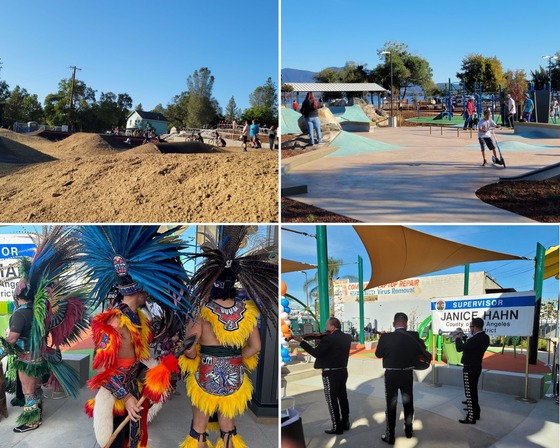
Images of previous park projects funded by the Statewide Park Development and Community Revitalization Grant Program. Top left: Old Depot Bike Park grand opening in Placerville, California. Top right: Xabatin Park grand opening in Lakeport, California. Bottom photos: Nogales Park grand opening in Walnut Park, California. Photos from California State Parks.

SACRAMENTO, Calif.— California State Parks announced Thursday, Dec. 28, 2023, $41.9 million in grant funding to support the diversity of California’s park needs. Under “Round Four” of the Statewide Park Development and Community Revitalization Grant Program, the state of California is delivering new park access to an additional eight communities across the state.

To date, the Statewide Park Development and Community Revitalization Grant Program has provided approximately $1.2 billion to California’s communities. Round Four received the highest amount requested in State Parks’ nearly 50-year history of grant administration.

“Having access to outdoor spaces is critical for all Californians and these projects will contribute to the quality of life for many people who seek local parks to improve their physical, mental and social well-being,” said California State Parks Director Armando Quintero. “State Parks is incredibly grateful to all the organizations who applied for grant funding this round.”

The eight awarded grant projects are:

Fresno County

  • Reedley: City of Reedley, Camacho Park Project: $4,049,992 to construct a new walking path, group picnic area, restroom, signage, and public art. Renovate three existing baseball/softball fields, existing restroom/storage/concession stand, and landscaping and lighting throughout the park.

Kern County

  • Bakersfield: County of Kern, Potomac Park Neighborhood Project: $7,384,000 to construct a new soccer field with lighting, splash pad with shade, dog park, basketball court with lighting, three shade structures over existing picnic tables, walkways with lighting, parking lot with lighting, and restroom. Renovate the existing group picnic pavilion, basketball court with lighting, inclusive playground with lighting, and landscaping throughout the park.

Los Angeles County

  • Hawthorne: Los Angeles Neighborhood Land Trust, Zela Davis Park Renovation: $963,060 to construct a new playground with shade, basketball court, picnic area with shade, walking path and hardscape elements, exercise equipment, public art, restroom building, and landscaping and lighting throughout the park.
  • Los Angeles: Los Angeles Neighborhood Land Trust, Jefferson Park Project: $5,800,000 to create a new park which will include a new playground with shade, sand and water play area, picnic area with shade, exercise area, public art, skate spot, walking path, and lighting and landscaping throughout the park.
  • Paramount: City of Paramount, Paramount Park Community Center Expansion: $7,372,213 to construct a new expansion of an overused Center’s Senior Center and renovate existing building spaces to create dedicated senior activity spaces. The expansion and renovations would include fitness, music, craft, billiards, card, and conference rooms, two screened outdoor lounge areas, reconfiguration of the stage area to make it fully accessible and viewable from the auditorium/dining space, and installation of landscaping along the exterior of the center.

Sacramento County

  • Sacramento: Southgate R.P.D., Jack N. Sheldon Park & Florin Creek Trail: $8,500,000 to acquire approximately 8.77 acres and construct a new dog park with lighting, disc golf course, basketball court, exercise equipment stations, four pickleball courts with lighting, gazebo and BBQ area, practice wall, playground, soccer field with lighting, multiuse trails, informal trails, electric vehicle charging stations, ping-pong with shade cover, educational arboretum, pathways with lighting, two shade structures with picnic tables, public art, and lighting and landscaping throughout the park. Renovate six tennis courts with lighting, a multiuse trail, playground, soccer field and parking with lighting.

San Joaquin County

  • Stockton: City of Stockton, Van Buskirk Park Renovation: $7,016,086 to construct a new skate park, two full-size basketball courts, and BMX/Bike Trails with lighting and landscaping.

Yolo County

  • Knight’s Landing: County of Yolo, Knights Landing Community Park: $814,649 to create a new park which will include a new soccer field, little league/softball field, full-size basketball court, ball wall, children’s playground, perimeter 6’ wide walking/jogging path, shaded picnic and BBQ area, open natural grass area, parking lot, plaza area with picnic tables, shade trees, and farmers market/food truck areas for community gathering space. Renovate the existing restroom.

On March 21, 2021, California State Parks’ Office of Grants and Local Services (OGALS) received $2.42 billion in grant requests for Round 4 of the Statewide Park Program. The department was able to award $548.3 million to projects throughout California; however, approximately, $1.87 billion in requests were left unfunded. An additional appropriation of $41.9 million was provided through the 2023/2024 State Budget. This additional funding is now being awarded to unfunded Round 4 applications.

Funding for the grant program was first made available through Proposition 84 (2006 Bond Act) Sustainable Communities and Climate Change Reduction. Proposition 68 (2018 Bond Act) and additional general fund money continue this program’s legacy.

Since 2000, California State Parks’ OGALS has administered more than $3 billion in local assistance grants from a variety of funding sources. The funding has established indoor and outdoor recreation in every corner of the state, built trails, acquired and restored sensitive habitat, built natural and cultural interpretative facilities, and fostered outdoor natural experiences for thousands of children, youth and families. Approximately 8,000 California parks have been created or improved through these grant programs. To view previous park projects created through OGALS, visit this link.

The California Department of Parks and Recreation, popularly known as State Parks, and the programs supported by its Office of Historic Preservation and divisions of Boating and Waterways and Off-Highway Motor Vehicle Recreation provide for the health, inspiration and education of the people of California by helping to preserve the state’s extraordinary biological diversity, protecting its most valued natural and cultural resources, and creating opportunities for high-quality outdoor recreation. Learn more at parks.ca.gov.
MTC’s Chief Deputy Executive Director appointed to state Transit Transformation Task Force

Saturday, December 30th, 2023
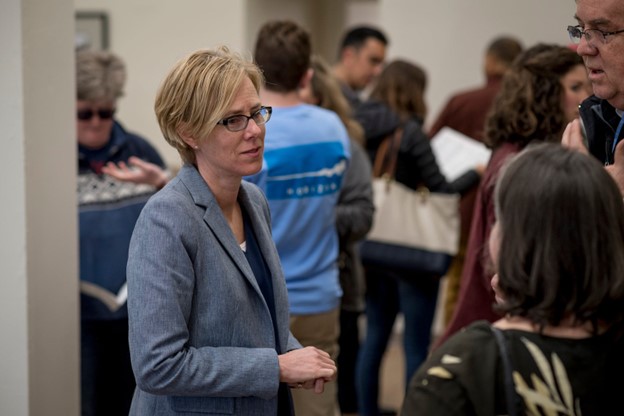
Alix Bockelman. Photo source: MTC. Credit: Karl Nielsen

Joins Tri Delta Transit’s Executive Director to grow ridership, improve experience

California State Transportation Agency (CalSTA) Transportation Secretary Toks Omishakin last week appointed Metropolitan Transportation Commission’s Chief Deputy Executive Director Alix Bockelman to the state’s Transit Transformation Task Force, which will be charged with developing policy recommendations to grow transit ridership, improve the transit experience for riders and address long-term operational funding needs throughout California.

The 25-member task force represents state government, local agencies, academic institutions and advocacy organizations. Bockelman will be joined by other Bay Area representatives, including the executive directors of Eastern Contra Costa Transit Authority (ECCTA/Tri Delta Transit), Napa Valley Transportation (NVTA/Vine Transit), the San Francisco Bay Area Rapid Transit District (BART) and the San Francisco Bay Water Emergency Transportation Authority (WETA/SF Bay Ferry), as well as policy directors from Seamless Bay Area, SPUR and the Bay Area Council. Review the complete roster of task force appointees in the CalSTA news release(link is external).

Established by Senate Bill 125 and signed by Governor Gavin Newsom in the transit recovery package as part of the 2023-24 state budget, the task force will kick off with a virtual meeting on Dec. 19 and then will meet in person every two months beginning in Feb. 2024. Agendas, meeting materials and other task force information will be available on the CalSTA website’s Senate Bill 125 Transit Program page(link is external).

CalSTA will prepare a report of findings and policy recommendations based on the task force’s efforts and submit it to the Legislature by October 2025.

CA Secretary of State rejects Lt. Governor’s request to remove Trump from ballot

Friday, December 29th, 2023

“As California’s chief elections officer…I must place the sanctity of these elections above partisan politics.” – Secretary of State Shirley Weber

Issues list of candidates including the former president but leaves option open pending any decision by the U.S. Supreme Court

By Allen D. Payton

Sacramento, CA – California Secretary of State Shirley N. Weber, Ph.D. responded on Friday, Dec. 22 to the letter from California Lt. Governor Eleni Kounalakis requesting the removal of former President Donald Trump from California’s 2024 presidential primary ballot. (See related article)

In her letter, Weber reinforced that, because this is an issue of particular concern to the public, she is obligated to address it within legal parameters and in the best interests of all California voters.

“It is incumbent upon my office to ensure that any action undertaken regarding any candidate’s inclusion or omission from our ballots be grounded firmly in the laws and processes in place in California and our Constitution,” she wrote.

“As California’s chief elections officer, I am a steward of free and fair elections and the democratic process. I must place the sanctity of these elections above partisan politics,” Weber continued. “Removing a candidate from the ballot under Section Three of the Fourteenth Amendment is not something my office takes lightly and is not as simple as the requirement be at least 35 years old to be president.”

“I am guided by my commitment to follow the rule of law,” she added.

While Trump is on the March 5 primary election ballot, Weber concluded her letter with, “My office will continue to assess all our options, including those that may arise as a result of any action taken by the United States Supreme Court or other changing circumstances.”

The full text of her response letter can be found here

On Thursday, Dec. 28, Weber issued the Certified List of Candidates for the March 5, 2024 Presidential Primary Election which included Trump as one of the nine Republicans on the state’s primary ballot. The list also includes eight Democrats, with President Biden at the top of the alphabetical list.

The list of presidential candidates includes three Peace and Freedom party candidates, with Cornel West the most well-known among them, as well as one candidate each from the American Independent Party, Green Party and Libertarian Party.

Independent candidate Robert F. Kennedy, Jr.’s name will not appear on the state’s presidential primary ballot. When asked the reason his campaign explained, “Robert F. Kennedy, Jr. is running as an independent candidate for the presidency and therefore will not be participating in any primary elections, including the California March 5 Presidential Primary. As an independent, he will be working towards securing a place on the ballot for the general election in November 2024 by collecting the necessary signatures and meeting state requirements.”

Moraga company hired for Pigeon Point Lighthouse rehabilitation project

Thursday, December 21st, 2023
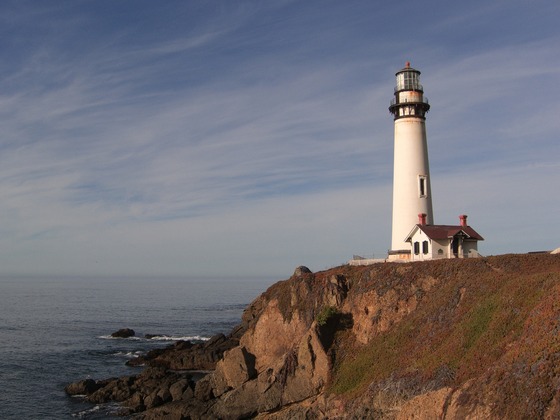
Pigeon Point Lighthouse at night. Photo by California State Parks using Fresnel lens.

To begin in early 2024

PESCADERO, Calif.— California State Parks today announced the selection of a contractor to rehabilitate the Pigeon Point Lighthouse, located within Pigeon Point Light Station State Historic Park. The $16 million rehabilitation project will start construction in early 2024 and is expected to be completed within two years.

Named for the 1853 wreck of the clipper ship Carrier Pigeon, Pigeon Point Lighthouse was first lit on Nov. 15, 1872. The 115-foot structure is the tallest operating lighthouse on the West Coast. Pigeon Point Light Station is listed on the National Register of Historic Places—a reminder of the days when whalers and Gold Rush-era clipper ships fought gales, stiff seas, jagged coastal rocks, and unforgiving fog. The lighthouse has been closed to the public since late 2001, when it was deemed unsafe after two large pieces of brick and iron fell from the top of the building. Funding issues, COVID-19 and a thoughtful process to ensure a contractor with the special skills to work on a lighthouse was selected have been the reasons for the continued closure of this historic building.

“California State Parks looks forward to once again providing public access to this historic landmark that continues to guide mariners along the rocky San Mateo County coast,” stated Santa Cruz District Superintendent Chris Spohrer. “Thank you to our partners for their support over the years and the public for their patience.”

Pigeon Point Lighthouse during the day. Photo from California State Parks by J. Barrow

Sustainable Group, Inc. of Moraga, CA, and subcontractor ICC Commonwealth of North Tonawanda, New York, have extensive experience in lighthouse rehabilitation and restoration in the United States. Jointly, they have worked on nearly 100 lighthouses, including several built to the same blueprints as Pigeon Point, including Bodie Island, North Carolina; Currituck Beach, North Carolina; and Yaquina Head, Oregon, as well as numerous other tall lighthouses. For the Pigeon Point Lighthouse, the contractors will refurbish or replace all the ironwork throughout the building. Masonry elements will also be repaired or replaced as needed. A major focus of the project will be the upper belt course or cast-iron ring where two large pieces broke away in late 2001, compromising the building’s structural integrity.

Pigeon Point Light Station State Historic Park relies upon its collaborative relationships with its nonprofit partners, including Coastside State Parks Association, California State Parks Foundation and Friends of Santa Cruz State Parks. These organizations provide support for the tower restoration, the operation of the park and the development of visitor-serving programs and amenities.

To learn how the public can support the Pigeon Point Lighthouse Restoration project or enhance the visitor experience at Pigeon Point Light Station State Historic Park, please visit CoastSideStateParks.org. Restoration project updates are available at parks.ca.gov/PigeonPointLighthouseRestoration.

The California Department of Parks and Recreation, popularly known as State Parks, and the programs supported by its Office of Historic Preservation and divisions of Boating and Waterways and Off-Highway Motor Vehicle Recreation provide for the health, inspiration and education of the people of California by helping to preserve the state’s extraordinary biological diversity, protecting its most valued natural and cultural resources, and creating opportunities for high-quality outdoor recreation. Learn more at parks.ca.gov.

CA Lt. Governor asks Secretary of State to explore legal options to remove Trump from ballot 

Wednesday, December 20th, 2023
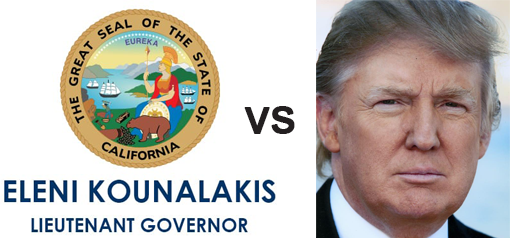
Photo source: Trump for President Facebook page

The state’s presidential primary is on March 5, 2024

By Allen D. Payton

Today, Wednesday, Dec. 20, 2023, California Lieutenant Governor Eleni Kounalakis sent a letter to Secretary of State, Dr. Shirley Weber, urging her to explore legal options to remove former President Donald Trump from California’s 2024 presidential primary ballot following the Colorado Supreme Court’s ruling in Anderson v. Griswold (2023 CO 63). The Colorado Supreme Court held that Trump’s role in inciting the actions at the U.S. Capitol Building on January 6, 2021, disqualifies him from standing for presidential election under section three of the Fourteenth Amendment.

The Lt. Governor claims the riot at the U.S. Capitol was an insurrection. However, as reported elsewhere, the former president has not been convicted of insurrection nor inciting one.

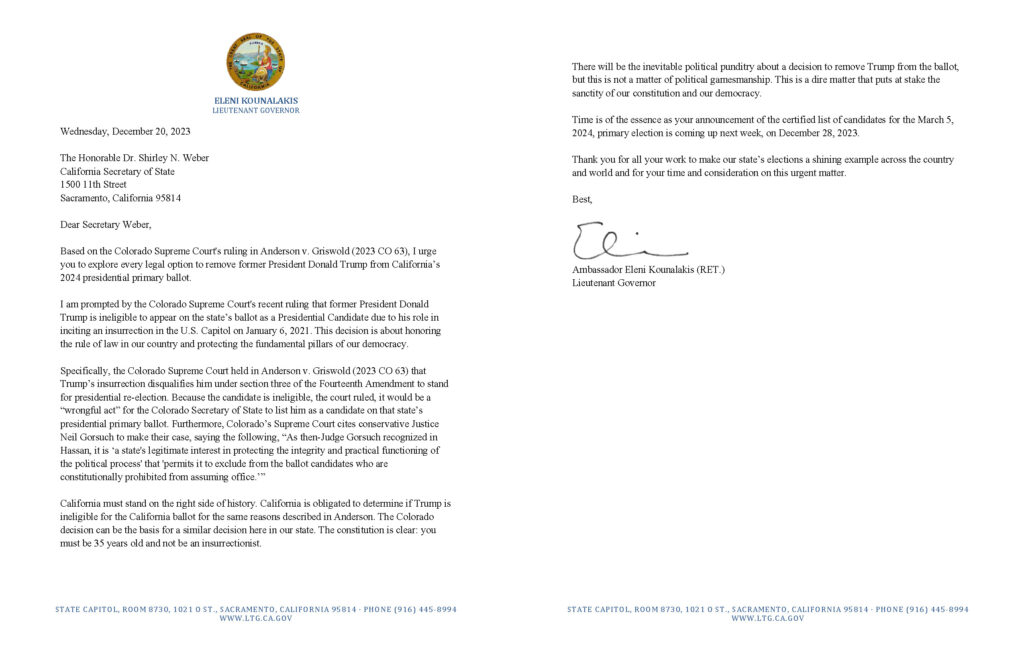
Copy of Lt. Gov . Kounalakis’ letter to Secretary of State Weber dated Dec. 20, 2023.

Kounalakis’ letter reads:

Dear Secretary Weber,

Based on the Colorado Supreme Court’s ruling in Anderson v. Griswold (2023 CO 63), I urge you to explore every legal option to remove former President Donald Trump from California’s 2024 presidential primary ballot.

I am prompted by the Colorado Supreme Court’s recent ruling that former President Donald Trump is ineligible to appear on the state’s ballot as a Presidential Candidate due to his role in inciting an insurrection in the U.S. Capitol on January 6, 2021. This decision is about honoring the rule of law in our country and protecting the fundamental pillars of our democracy.

Specifically, the Colorado Supreme Court held in Anderson v. Griswold (2023 CO 63) that Trump’s insurrection disqualifies him under section three of the Fourteenth Amendment to stand for presidential re-election. Because the candidate is ineligible, the court ruled, it would be a “wrongful act” for the Colorado Secretary of State to list him as a candidate on that state’s presidential primary ballot. Furthermore, Colorado’s Supreme Court cites conservative Justice Neil Gorsuch to make their case, saying the following, “As then-Judge Gorsuch recognized in Hassan, it is ‘a state’s legitimate interest in protecting the integrity and practical functioning of the political process’ that ‘permits it to exclude from the ballot candidates who are constitutionally prohibited from assuming office.’”

California must stand on the right side of history. California is obligated to determine if Trump is ineligible for the California ballot for the same reasons described in Anderson. The Colorado decision can be the basis for a similar decision here in our state. The constitution is clear: you must be 35 years old and not be an insurrectionist.

There will be the inevitable political punditry about a decision to remove Trump from the ballot, but this is not a matter of political gamesmanship. This is a dire matter that puts at stake the sanctity of our constitution and our democracy.

Time is of the essence as your announcement of the certified list of candidates for the March 5, 2024, primary election is coming up next week, on December 28, 2023.

Thank you for all your work to make our state’s elections a shining example across the country and world and for your time and consideration on this urgent matter.

————-

However, Trump’s lawyer, Alina Habba, said on Wednesday, she expects the Colorado state Supreme Court’s ruling will be overturned by the U.S. Supreme Court.

Opinion: Will California’s budget woes impact tax reform?

Wednesday, December 20th, 2023

By Jon Coupal, President, Howard Jarvis Taxpayers Association

The Taxpayer Protection and Government Accountability Act (TPA) is a proposed constitutional amendment which has already qualified for the November 2024 ballot. It is sponsored by taxpayer and business organizations to restore key provisions of Proposition 13 and other pro-taxpayer laws that give voters more control over when and how new tax revenue is raised.

Although TPA, unlike previous tax reform measures, doesn’t reduce or eliminate any state or local tax, it does impose both enhanced voter approval requirements for fee and tax increases as well as robust accountability and transparency provisions.

For obvious reasons, tax-and-spend interests hate TPA and have launched a multi-front assault hoping to either defeat it or keep it off the ballot entirely.

The motivation for these schemes is that politicians and their enablers are fully aware that TPA is highly likely to pass if it stays on the ballot. Californians are sick and tired of having the nation’s highest tax rates jammed down their throats, especially when these heavy tax burdens are not accompanied by higher levels of public services; in fact, the opposite is true, as evidenced by California’s high cost of living, crime, homelessness, hostile business climate, and other ills.

But now, there may be another reason why anti-taxpayer interests are waging this war on TPA. A recent report by the California Legislative Analyst’s office threw a bucket of cold water on progressives’ plans to continue to increase taxes with virtually no restraint. The LAO now estimates “2022-23 revenues to be $26 billion below Budget Act projections. Historical experience suggests this weakness is likely to carry into this fiscal year and next. Overall, our updated revenue outlook anticipates collections to come in $58 billion below Budget Act projections across 2022-23 to 2024-25.” (Note that in less than a week after this news, the LAO upped the shortfall from $58 billion to $68 billion).

If there is any saving grace to the current financial situation it is that California still has substantial budget reserves. That, plus some creative accounting, can probably blunt the negative impacts of a severe drop in revenues – at least for a while.

Nonetheless, if California’s tax revenue spigot is curtailed any significant amount, will the enemies of the Taxpayer Protection Act argue that this provides another justification for removing all restraints on raising taxes?

Economic growth in Texas and Florida is outpacing that in California, due in part to a top marginal income tax rate of zero. What is happening in other smaller states is less well known. The smart move would be to follow the lead of other states which are aggressively pursuing pro-growth strategies which in turn lead to more tax revenue.

Take Iowa for example. Defying critics who claimed that tax reductions would crush the state budget, Iowa’s Governor Kim Reynolds slashed top marginal tax rates, previously some of the highest in the nation. Not only did revenues not crash, but they shot up by huge percentage points. According to a report in Center Square, “Iowa led the ‘tax-cutting wave’ in 2022, with the most comprehensive and aggressive tax reform in the United States. This will gradually replace the nine-bracket, progressive income tax with a flat tax, bringing the top rate, which was close to 9 percent, down to a flat 3.9 percent by 2026.”

Other states have provided California with a roadmap for economic growth and healthy budgets by cutting taxes and pursuing other pro-freedom policies. However, the political realities in this one-party state – governed by hardcore progressives – render the odds of politicians even looking at the roadmap extremely slight.

That being said, if the Governor and the Legislature won’t do what’s necessary to prevent a budget disaster, the least they can do is get out of the way of those who have offered the Taxpayer Protection Act to the voters so that ordinary citizens can do what politicians won’t: impose fiscal discipline on a fiscally reckless state.

This column originally appeared in the Orange County Register. Republished with permission.

CA State Parks offers new reservation drawing pilot program for Mount Tamalpais cabins

Wednesday, December 20th, 2023
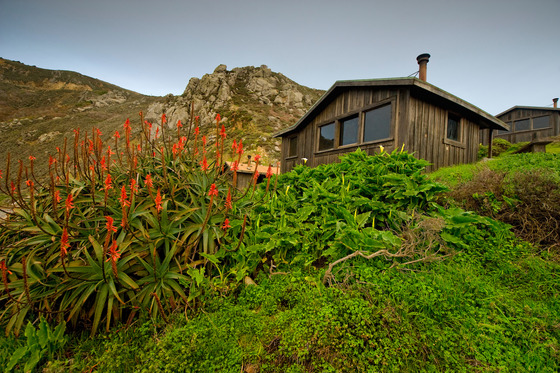
Steep Ravine Cabins, perched on the cliffs of Mount Tamalpais, are now part of the lottery-style reservation at Mount Tamalpais State Park ©2011, California State Parks. Photo by Brian Baer

SACRAMENTO, Calif.— California State Parks announced on Tuesday, Dec. 19, 2023, a new approach to reserving the highly sought after Steep Ravine Cabins at Mount Tamalpais State Park.  Using a lottery-style system to make a reservation, the department’s new pilot program aims to enhance access and equity by allowing outdoor enthusiasts to apply for free for a reservation drawing up to eight months in advance. The drawings are selected randomly and conducted seven months ahead of the reservation dates through California’s state park reservation system, ReserveCalifornia.

Just north of San Francisco’s Golden Gate Bridge, Mount Tamalpais State Park rises majestically from the heart of Marin County. The park offers hiking, picnicking, wildlife watching and camping opportunities. Perched on the cliffs of Mount Tamalpais, the Steep Ravine Cabins have long been a cherished destination for outdoor enthusiasts seeking a unique camping experience. Each cabin has a small wood stove, picnic table, sleeping platforms, and an outdoors barbecue, but no running water.

Launched in October of this year, the reservation lottery system ensures a fair and equitable distribution of reservations. Guests interested in reserving one of these iconic cabins will have the opportunity to enter the free drawing for a chance to secure their stay. This approach eliminates the rush and competition that often accompanies traditional booking processes, allowing more individuals and families to access the cabins at the park. If a visitor is awarded their reservation choice, they must claim and pay for the reservation within 30 days to keep it. Any unclaimed inventory will be released for reservation six months in advance.

Some key features of the pilot program at the Steep Ravine Cabins include:

  • Equal Opportunity: The lottery system provides an equal opportunity for anyone interested to secure a reservation, regardless of their location or previous booking history.
  • Transparency: The drawing process will be conducted, ensuring transparency and fairness in cabin allocation.
  • Accessible Information: Detailed instructions on how to participate in the drawings are available on ReserveCalifornia website, making it easy for anyone to enter.

Thus far, close to 3,400 applicants have signed up for the drawings. The pilot program is part of the department’s ongoing efforts to enhance accessibility, preserve its natural resources, and promote outdoor experiences for all.

The public can learn more about the reservation drawing pilot program by visiting the Frequently Asked Questions or ReserveCalifornia.com.

The California Department of Parks and Recreation, popularly known as State Parks, and the programs supported by its Office of Historic Preservation and divisions of Boating and Waterways and Off-Highway Motor Vehicle Recreation provide for the health, inspiration and education of the people of California by helping to preserve the state’s extraordinary biological diversity, protecting its most valued natural and cultural resources, and creating opportunities for high-quality outdoor recreation. Learn more at parks.ca.gov.

CA State Controller responds to Legislative Analyst’s projected $68 billion budget deficit

Tuesday, December 19th, 2023

Says state can borrow over $91 billion

By Allen D. Payton

The California Legislative Analyst’s Office issued a report on Dec. 7, 2023, that the state faces a $68 billion budget deficit for the 2024-25 Fiscal Year. Entitled, “The 2024-25 Budget: California’s Fiscal Outlook”, the report’s Executive Summary read as follows:

California Faces a $68 Billion Deficit.

Largely as a result of a severe revenue decline in 2022-23, the state faces a serious budget deficit. Specifically, under the state’s current law and policy, we estimate the Legislature will need to solve a budget problem of $68 billion in the upcoming budget process.

Unprecedented Prior-Year Revenue Shortfall Creates Unique Challenges.

Typically, the budget process does not involve large changes in revenue in the prior year (in this case, 2022-23). This is because prior-year taxes usually have been filed and associated revenues collected. Due to the state conforming to federal tax filing extensions, however, the Legislature is gaining a complete picture of 2022-23 tax collections after the fiscal year has already ended. Specifically, we estimate that 2022-23 revenue will be $26 billion below budget act estimates. This creates unique and difficult challenges—including limiting the Legislature’s options for addressing the budget problem.

Legislature Has Multiple Tools Available to Address Budget Problem.

While addressing a deficit of this scope will be challenging, the Legislature has a number of options available to do so. In particular, the state has nearly $24 billion in reserves to address the budget problem. In addition, there are options to reduce spending on schools and community colleges that could address nearly $17 billion of the budget problem. Further adjustments to other areas of the budget, such as reductions to one-time spending, could address at least an additional $10 billion or so. These options and some others, like cost shifts, would allow the Legislature to solve most of the deficit largely without impacting the state’s core ongoing service level.

Legislature Will Have Fewer Options to Address Multiyear Deficits in the Coming Years.

Given the state faces a serious budget problem, using general purpose reserves this year is merited. That said, we suggest the Legislature exercise some caution when deploying tools like reserves and cost shifts. The state’s reserves are unlikely to be sufficient to cover the state’s multiyear deficits—which average $30 billion per year under our estimates. These deficits likely necessitate ongoing spending reductions, revenue increases, or both. As a result, preserving a substantial portion—potentially up to half—of reserves would provide a helpful cushion in light of the anticipated shortfalls that lie ahead.”

Controller Cohen Calls for Calm

In a press release issued Tuesday, Dec. 19, State Controller Malia M. Cohen calls for calm in the wake of recent budget deficit announcements and issued the following statement after releasing the recent Cash Report on December 8:

“Despite reports from various sources indicating a budgetary deficit of approximately $68 billion, the state’s cash position remains strong, and, absent any unforeseen circumstances, the state has sufficient cash to pay its bills and meet its financial obligations through the end of the fiscal year.”

“As chief fiscal officer, one of my duties is to track and report on the state’s actual cash balance,” she continued. “In that regard, the state currently has more than $91.4 billion in available borrowable resources, due in large part to the Governor’s and Legislature’s foresight in building prudent rainy-day reserves in the Budget Stabilization Account. While legislators will have difficult choices to make in the new year, I am confident they will be deliberate in addressing the budget challenges before them, and I urge them to protect, to the extent possible, the health and social service programs designed to benefit those who are displaced, without shelter, or otherwise economically disadvantaged.”

About Controller Cohen

As the chief fiscal officer of California, Controller Cohen is responsible for accountability and disbursement of the state’s financial resources. The Controller has independent auditing authority over government agencies that spend state funds. She is a member of numerous financing authorities, and fiscal and financial oversight entities including the Franchise Tax Board. She also serves on the boards for the nation’s two largest public pension funds. Follow the Controller on X at @CAController and on Facebook at California State Controller’s Office.

About the Legislative Analyst’s Office

The Legislative Analyst’s Office (LAO) has provided fiscal and policy advice to the Legislature for 75 years. It is known for its fiscal and programmatic expertise and nonpartisan analyses of the state budget. The office serves as the “eyes and ears” for the Legislature to ensure that the executive branch is implementing legislative policy in a cost efficient and effective manner.

Organization

The office is overseen by the Joint Legislative Budget Committee (JLBC), a 16-member bipartisan committee. Currently, the office has a staff of 43 analysts and approximately 13 support staff. The analytical staff cover several budget and policy areas: Criminal JusticeState FinanceEducation (including K-12 and Higher Education), Health and Human ServicesNatural Resources and EnvironmentGeneral Government (including Local Government), Transportation, and Capital Outlay and Infrastructure.