Archive for the ‘Politics & Elections’ Category

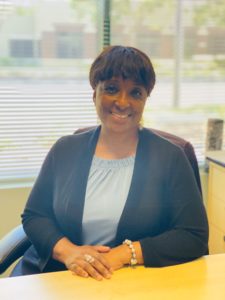
Antioch Police Crime Prevention Commission Chair Sandra White announces run against incumbent Councilwoman Wilson

Thursday, June 25th, 2020

Courtesy of Sandra White for Antioch City Council 2020.

Citizens of Antioch,

Over the past four years, I have been fortunate to be able to work in the community as the Police Crime Prevention Commission Chair. Now I am ready to take the next steps to serve our community . So, today I announce my candidacy for Antioch City Council to represent District 4 in the upcoming election.

I commit to continue to conduct myself with the same manner of respect I have used being a Police Commissioner. This has helped bridge some of the gaps that our divisive party lines have created. I will run my campaign with the same integrity and honesty I live my life by so I can prove that I am the best Candidate for the task at hand.

As a resident of Antioch for the past decade, I’ve seen the assets and trials of our community. I guarantee to do my best to celebrate these assets while at the same time digging into the trials our community faces. My background, as a professional businesswoman with experience working for both for profit and nonprofit organizations in technology, mental health, and social services, coupled with my masters degree in Counseling Psychology, has given me the experience to be successful as the next city council member for District 4. In this role, I will be able to dive into the City budget and have comprehensive discussions with City staff regarding initiatives that are important to all of us.

Those are: Safety, Infrastructure, Community Services, Business Development and Allocation of City funds.

I am looking forward to earning the right to represent you in District 4 on the Antioch City Council. Most importantly, I want to be that person you count on to have your voice heard as your representative to the City.

Respectfully Submitted,

Sandra White

Who wants to run for office? Candidate filing for November elections begins July 13th

Monday, June 22nd, 2020

For school, community college and special districts in Contra Costa County

By Scott O. Konopasek, Assistant Registrar of Voters, Contra Costa County Elections Division

The candidate filing period for offices in school, community college and special districts is from July 13 to August 7, 2020 in order to appear on the November 2020 ballot. If an incumbent does not file by the August 7 nomination deadline, the seat is extended five calendar days until August 12, to non-incumbents only. The same dates apply to candidates for city offices who will file in their respective city, as usual.

In the past, filing for office has been conducted in the Elections Division office. This election however, as a result of COVID and social distancing requirements, filing for office will be conducted at the County Administration Building at 651 Pine Street in the Chambers of the Board of Supervisors.

Elections staff will issue documents and accept filings from 8:30 am – 4:30 pm daily. Appointments for filing the Declaration of Candidacy will be made at the time papers are issued.

“This is a safety measure to protect our staff and the public as the November election gets into gear. It is an example of the types of common sense protective measures we will employ throughout this election cycle.” said Debi Cooper, County Clerk-Recorder and Registrar.

To ensure the safety of all, candidates will wear face coverings and abide by social distancing protocols. Entourages will not be permitted into the Board Chambers, but may congregate outside or in the lobby of the Admin Building as long as public health rules are respected.

Download and view the Candidate’s Guide which gives you vital information on running for office, filing requirements, qualifications, deadlines, and more. The guide is for general information only and does not have the force and effect of law, regulation or rule.

To see the list of all offices up for election in November, including mayors, council members, city clerks and city treasurers, click here. Lists of candidates filing for office will be published twice daily at www.cocovote.us, at noon and at the end of each day. For more details on the November election schedule click, here.

Allen Payton contributed to this report.

DA charges former Contra Costa County Clerk Canciamilla with 34 felonies for perjury & grand theft related to campaign accounts

Wednesday, June 17th, 2020

By Scott Alonso, Public Information Officer, Contra Costa District Attorney

Joe Canciamilla.

Martinez, Calif. — Today, Wednesday, June 17, 2020, the Contra Costa County District Attorney’s Office filed a criminal complaint of 34 felonies against defendant Joseph Canciamilla of Pittsburg. Canciamilla is the former Contra Costa County Clerk-Recorder and a former county supervisor and assemblymember. He also created a campaign account for Contra Costa County Superior Court Judge. Canciamilla is also a licensed member of the California State Bar. Canciamilla’s first court appearance will be on July 27 at 8:30 a.m. in Department 31.

Canciamilla is accused of 30 felony counts of perjury for his alleged misstatements on 30 separate campaign disclosure statements (Form 460s). Canciamilla signed these campaign finance statements under the penalty of perjury. The additional four felony counts relate to personal grand theft of campaign funds for his personal use, totaling $261,800.68. The allegations span conduct from 2010 to 2016.

The personal expenditures made by Canciamilla’s campaign committees for the defendant’s own use were for various purposes, such as:

  • Personal vacation to Asia
  • Restaurants
  • Airfare via Southwest Airlines and American Airlines
  • Repayment of a Personal Loan
  • Transfers from his Campaign Bank Accounts to his Personal Accounts

All of these campaign statements started initially in 2010 with Canciamilla not reporting investment gains in a campaign bank account. While this practice is permissible, using the proceeds of any stock gains for personal use is prohibited. Canciamilla concealed from his Form 460s the gains and losses associated with this investment account. Ultimately, Canciamilla spent more on personal expenses than the unreported investment gains. He therefore had to then transfer personal funds into this campaign bank account to make up the difference.

“In total, the false statements signed by Canciamilla omitted critical information from the campaign finance disclosures. The information left off these forms left the public in the dark about how a candidate and then county-wide elected official spent campaign funds. Given the recent history of misconduct by various elected officials in Contra Costa County, Canciamilla’s behavior is troubling and he must be held accountable,” stated Contra Costa County District Attorney Diana Becton.

The DA’s Office was notified of possible criminal activity associated with Canciamilla’s campaign accounts in early 2017 by the Franchise Tax Board. The criminal investigation by the DA’s Office included hundreds of hours examining seven different bank accounts held by the defendant. The two primary financial institutions Canciamilla used were Contra Costa Federal Credit Union and Charles Schwab.

Ultimately, Canciamilla was fined $150,000 by the California Fair Political Practices Commission in a civil stipulation for the multiple errors in his campaign finance statements, which concealed the personal use of campaign funds for his own benefit.

The statements signed by Canciamilla included various campaign accounts, such as his campaign account for judge (“Friends of Joe Canciamilla for Judge 2012” and campaign account for clerk-recorder (“Joe Canciamilla Canciamilla for Contra Costa County Clerk/Recorder”).

See related articles on this matter, here and here.


Antioch Council approves new way to choose mayor pro tem, makes it a one-year term

Monday, June 15th, 2020

By Allen Payton

During their meeting on Tuesday, June 9, 2020 the Antioch City Council voted unanimously to change the way the mayor pro tem is selected, in response to the new district elections that will go into effect in November, and limit it to just a one year term. In other cities the position has the title of vice mayor and the holder acts in place of the mayor, represents the city and chairs the council meetings when the mayor is absent or unavailable.

Currently the highest vote-getter in the most recent council election has served as mayor pro tem for the following two years.

But, now, according to the language in the new ordinance, “the Mayor Pro Tempore shall serve a one-year term at the pleasure of the Council and until his or her successor qualifies for office. No Council member shall serve consecutive terms as Mayor Pro Tempore unless no other Council member eligible in accordance with section 2-1.401 is willing to serve as Mayor Pro Tempore.”

In addition the new ordinance reads, “If all Council members have previously served as mayor pro tempore, or if the Council members eligible…decline, the City Council shall select the Council member who received the highest percentage of votes in his or her district in the most recent general municipal election at which the Council member was elected.”

So, the position will still be given to the highest vote getter for the year following the most recent election. But, during the second year the position will be decided by a vote of the city council.

The change is “to conform with the by-district election process commencing at the November 2020 general municipal election so Council members from all districts have the opportunity to serve as Mayor Pro Tempore.”

Antioch’s current mayor pro tem is Joy Motts who has held the position since being elected in 2018 but, ends this year along with her council term. The next mayor pro tem will take their position most likely during the council reorganization meeting on the second Tuesday of December.

Council places “flawed” Sand Creek “Let Antioch Voters Decide” initiative on November ballot

Tuesday, June 9th, 2020

Will cost city $100,000; could face pre- and post-election legal challenges due to new legislation possibly making the initiative moot and costing city even more.

By Allen Payton

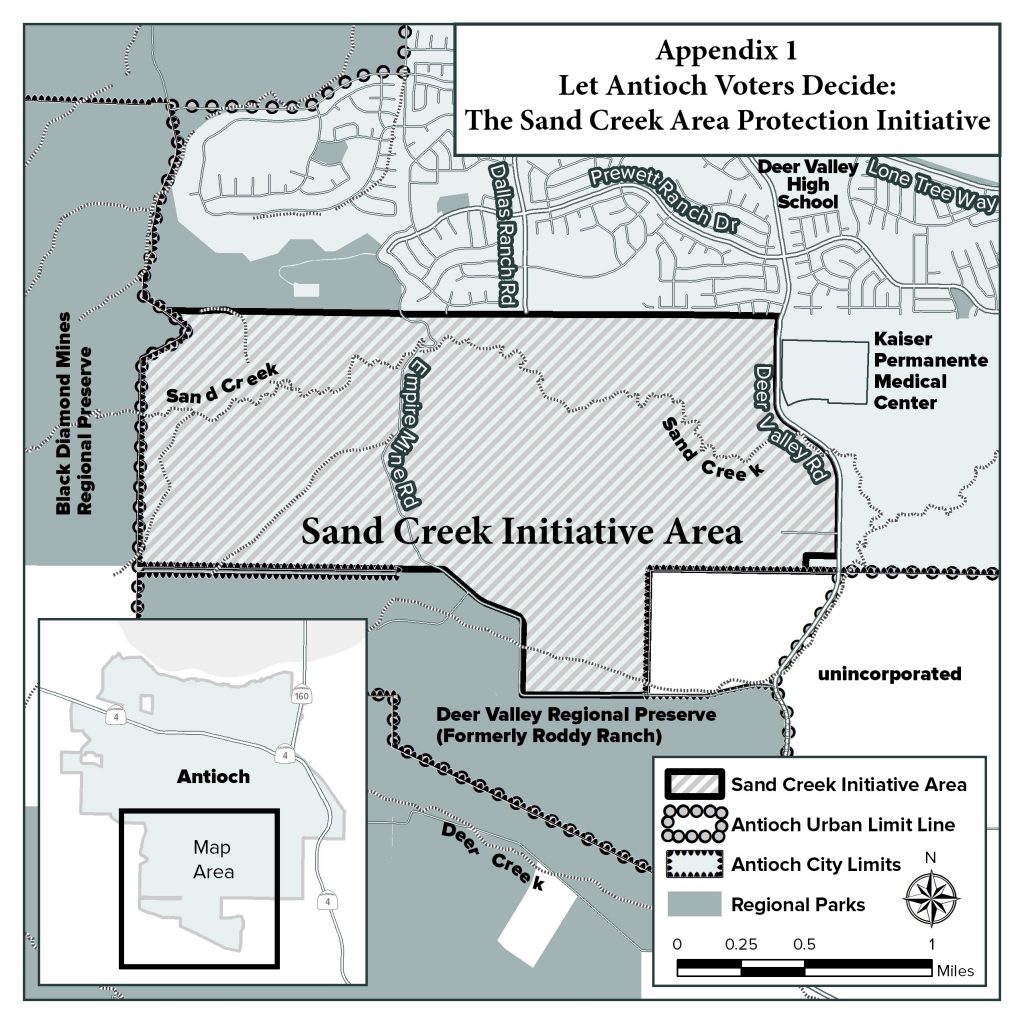
In response to the direction given by a judge in a court case over two initiatives affecting new home development in the Sand Creek Focus Area that the council adopted in 2018, the Antioch City Council voted 5-0 to place the one initiative sponsored by the environmental community on the November 2020 ballot.

That court case resulted in the judge tossing out the council’s adoption of the environmentalist-backed Let Antioch Voters Decide (LAVD) initiative. It also invalidated both the initiative sponsored by Richland Communities, the developer of the 1,100-home project known as The Ranch, as well as their development agreement. In his ruling, the judge also ordered the city council place the LAVD initiative on the ballot. However, the decisions in the lawsuits by adjacent property owners The Zeka Group owners of Zeka Ranch, and the Oak Hill Park Company are still being appealed by the backers of the LAVD initiative. (See related articles here, and here)

According to a previous Herald news report, following a 30-day study by city staff, their report found the initiative limited the total number of housing units to 2,100 in the entire Sand Creek Area. Since the past and current councils had already approved more than 2,300 homes, then no more homes could be built, including the proposed 301-unit, gated senior home community east of Deer Valley Road, known as The Olive Groves on the Albers Ranch property. However, both Seth Adams of Save Mount Diablo and the attorney for Richland said that the intent of each initiative was to only affect property on the west side of Deer Valley Road.

The LAVD initiative will directly impact the proposed Zeka Ranch project (see related article), west of The Ranch project, on the west side of Empire Mine Road, as well as three other properties directly south of Richland property, including Oak Hill’s. Zeka’s proposed number of homes would be reduced from 300 to 400, down to just one home per 80 acres, resulting in just a total of eight homes.

In addition, since the judge’s decisions, new legislation, SB330, was passed by the state legislature and signed into law by Gov. Newsom, last year which prevents cities from downzoning land already zoned residential, either by council action or through the initiative process.

Yet, according to Derek Cole, the city’s contract attorney working on matters dealing with the Sand Creek initiative, “cities have mandatory duties whenever proposed ballot measures receive the signatures necessary to qualify for the ballot.  In this case, because the ‘9212’ report and approval of the initiative are no longer options, the City can only take action to call an election as to the initiative.  City staff is aware of the SB 330 legislation that took effect this year, but as the Staff Report explains, the City Council cannot assume the role of the courts in deciding any legal issues associated with the measure.  The State Supreme Court made very clear in a 2017 decision that the duty to call an election on an initiative is mandatory, even when an initiative’s legality is questioned.”

“The council could adopt an argument against the initiative,” added City Attorney Thomas Smith.

During public comments Joanna Garaventa, with the East Bay Chapter of the California Native Plant Society, spoke in favor of the initiative. She submitted a letter to the council, but when speaking it was difficult to understand her for the purpose of adding her comments to this report.

Andrew Bassak, an attorney with Hanson Bridgett, representing The Zeka Group, opposed the placement of the initiative on the ballot as “it would negatively affect the development that’s been planned for the past 30 years.”

He referred to SB330, the new residential development law.

“The city lacks authority to place the initiative on the ballot…under the California Elections Code. That passed years ago,” Bassak explained. “There is no authority under the stayed Superior Court ruling. That judgement is currently subject to appeal, by one of the proponents of the initiative. Save Mt. Diablo wants to have its cake and eat it, too.”

“The cost of putting it on the ballot will be over $100,000,” he stated. “Placing it on the ballot will result in more litigation” both before…and after the November election. Those litigations could easily double the $100,000 amount. This is just squandering resources that could be spent elsewhere. The city should wait until the court of appeals decision is over.”

Bassak submitted a letter to the mayor and council before the meeting. In it he wrote, “the Initiative is fundamentally flawed and, if placed on the ballot, will be subject to avoidable costly pre-election litigation.” 06-09-20 Zeka Group Attorney Letter to Antioch re LAVD Initiative

Seth Adams, the Land Conservation Director for Save Mt. Diablo, which sponsored the LAVD initiative said, “Please move forward with placing our initiative on the ballot and please formally endorse the initiative.”

“Over 9,000 citizens signed the petition to place the initiative on the ballot,” he continued. “The courts said to place the initiative on the ballot. It did not invalidate the initiative.”

“Our attorneys have provided information to the city that explains why they can place the initiative on the ballot,” Adams added. Emails from Save Mt. Diablo’s attorney to City of Antioch re LAVD Initiative

All the other thirteen public comments were in favor of placing the initiative on the ballot.

Councilwoman Lori Ogorchock then asked about how SB 330 affected the initiative.

“SB330 is legislation…that became effective in January of this year and is retroactive two years,” Smith said. “Under the new regulation any affected city is precluded from adopting policy…of lesser standard. It is preventing the downzoning of land, from residential to something that would not allow development.”

“It is one of the factors that would have to be taken into consideration if the initiative passed,” he continued. “However, at this time, the council can move forward.”

“There may be a pre-election challenge or a post-election challenge,” Smith added. “SB330 could affect it in determining if the initiative is valid.”

“Not only did 9,000 of our citizens sign petitions to place this on the ballot, but the courts directed the council to place it on the ballot,” said Mayor Pro Tem Joy Motts. “I believe it’s an environmentally sensitive, efficient development. So, I am in favor of moving the initiative forward and placing it on the November ballot.”

Ogorchock then moved to place the initiative on the ballot. Councilwoman Monica Wilson seconded the motion.

Smith then asked if the two actions could be separated, with the council deciding if they want to include a ballot argument against the measure.

Ogorchock then shortened her motion to not include a ballot argument.

Thorpe then asked staff to come back with something at a future council meeting, for council to decide whether or not to endorse or oppose the initiative.

However, the council can only submit an argument against the initiative, Smith explained.

Ogorchock and Wilson withdrew their motion and Ogorchock made a new motion and Thorpe seconded it.

“Do we want to make an argument against the initiative?” she asked. Wilson, Thorpe and Motts all said “no”.

“I just need you to make a motion that you do not want to make an argument against the initiative,” Smith explained.

Ogorchock then made a friendly amendment to her own motion that the council will not include an argument against the initiative. Thorpe accepted the amendment to the motion.

That motion passed on a 5-0 vote, that the council will not include a ballot argument against the initiative.

Then Ogorchock returned to her original motion to place the initiative on the November ballot. It was seconded by Wilson and the motion also passed 5-0.

Efforts to reach Seth Adams and city staff to obtain a copy of the letter sent to the City from Save Mt. Diablo’s attorney before the meeting, were unsuccessful prior to publication time. Please check back later for any updates to this report.


Council candidate says Antioch councilman’s police reform efforts grandstanding for political gain

Monday, June 8th, 2020

Claims Thorpe knew Antioch Police already implementing five of eight reforms before releasing his proposal

Mike Barbanica.

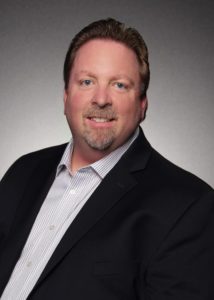
In a press release on Monday evening, Antioch City Council candidate Mike Barbanica slammed Antioch Council Member Lamar Thorpe, who is up for re-election in November, for his proposal to call for an ad hoc committee to deal with what he labels “so-called reforms at the Antioch Police Department”. Thorpe listed eight reforms endorsed by the national 8 Can’t Wait Campaign and four actions the council can take promoted by the Obama Foundation on its website. (See related article)

“Antioch residents want change – real change – so we can honestly address racism in our community,” said Barbanica, candidate for city council in District 2. “We don’t need another Antioch bureaucracy led by politicians who claim to know what’s best for our community.”

Barbanica stated that the Antioch Police Department has already implemented five of the eight reforms advocated by 8 Can’t Wait and is in the process of reviewing the other three for possible implementation.

He added that Thorpe was advised of this information by the APD before he sent out his press release.

“Shame on Mr. Thorpe for grandstanding on this issue for his own political gain,” Barbanica said. “What we need is more ongoing thoughtful communication between our police officers, our community, Antioch’s faith leaders and business owners – not the establishment of some shill of a committee that exists for the purpose of promoting a politician’s own political agenda.”

Barbanica, a longtime Antioch resident, local business owner and retired police lieutenant from the neighboring City of Pittsburg, said he is proud of the hard work and dedication of Antioch’s police officers, noting that, under Police Chief Tammany Brooks, Antioch PD has been responsive to the needs of our community.

“Can we do better? We can always do better and we need to come together, as a community, to better understand the needs of our African American and Latino residents,” he said. “But establishing a committee of politicians who will use it as a pedestal to pontificate about the causes of racism is not the answer.”

Barbanica added that George Floyd’s murder, and the protests that have followed, have awakened all of us to the need for social justice reform that can only begin in earnest by us initiating honest dialogue, by our listening and communicating with one another, so we can re-create a society that is fair and just for all persons who live here.

6/9/20 UPDATE:  When reached for comment, Councilman Thorpe said “what I knew was that I asked the chief to get clarity on this, and he sent me an email response and he said ‘in spirit we do some of these. We have officially two on the books so far. But I can look into and we can do these things in spirit.’”

“He had some concerns about other ones,” he continued. “What I did was call on the chief to adopt all of them. The issue is not whether not I knew. The fact of the matter is they’re not written in our policies. There’s a difference between researching and considering adopting them.”

“I’m calling for the remaining six to be implemented,” Thorpe stated. “Let’s make it about policy. Five of them doesn’t complete the eight. I’m saying all of them.”

Allen Payton contributed to this report.

Contra Costa District Attorney, others want to prevent police unions from contributing to DA candidates during elections

Monday, June 1st, 2020

Call on state bar to create a new ethics rule claiming it “would help restore the independence, integrity, and trust of elected prosecutors by preventing them from taking donations from police unions.”

“They’re trying to hamper pro-law enforcement candidates who will run against them” – law enforcement official (who chose to remain anonymous)

Contra Costa District Attorney Diana Becton. From CCC website.

SAN FRANCISCO – Today, Monday, June 1, 2020, in the wake of mass protests following the killing of George Floyd by a Minneapolis police officer, a coalition of current and former elected prosecutors representing millions of Californians in diverse counties banded together to call on the California State Bar to cure the conflict of interest created by police unions’ outsized influence in local elections.  The new rule would explicitly preclude elected prosecutors – or prosecutors seeking election – from seeking or accepting political or financial support from law enforcement unions. (Read letter, here).

“The legal representation of an accused officer is generally financed by their law enforcement union,” said Contra Costa District Attorney Diana Becton.  “It is illogical that the rules prohibit prosecutors from soliciting and benefiting from financial and political support from an accused officer’s advocate in court, while enabling the prosecutor to benefit financially and politically from the accused’s advocate in public.”

“District Attorneys will undoubtedly review use of force incidents involving police officers,” said San Francisco District Attorney Chesa Boudin. “When they do, the financial and political support of these unions should not be allowed to influence that decision making.”

“When videos emerge like the one depicting the killing of George Floyd or Ahmaud Arbery, the damage it does to the entire criminal justice system cannot be overstated,” said former San Francisco District Attorney George Gascón. “That damage, however, is further compounded by delays in the condemnation, arrest, and charging of the involved law enforcement officers. These feelings, these protests, and the pain we’re seeing, would not be as raw and widespread if we had seen police held accountable by local prosecutors quickly and with regularity.  An important step in curing this pain is curing the conflict of interest that gives, at minimum, the appearance that police do not face consequences swiftly – or at all – due to the proximity and political influence of their union.”

“We have a tremendous amount of work ahead of us to restore trust in our profession, but trust must be earned, it cannot be demanded,” said San Joaquin County District Attorney Tori Verber Salazar.  “The first step to earning that trust back is ensuring the independence of county prosecutors is beyond reproach.”

Prosecutors are in a unique position of having to work closely with law enforcement and simultaneously evaluate whether crimes have been committed by these same officers.  Recent events involving police misconduct in which prosecutors either delayed or failed to file charges have shined a light on the importance of prosecutors making decisions regarding law enforcement officers’ conduct without any undue influence or bias.  Yet when prosecutors initiate an investigation or prosecution of an officer, the law enforcement unions often finance the legal representation of the accused officer. Prosecutors who have received an endorsement from the entity that is funding the defense of the officers being investigated or prosecuted creates, at a minimum, the appearance of a conflict of interest for elected prosecutors.

By precluding elected prosecutors—or prosecutors seeking election—from seeking or accepting political or financial support from law enforcement unions, the State Bar will reduce the presence of conflicts of interest and ensure independence on the part of elected prosecutors.  This proposal also aspires to help reestablish community trust in the integrity of prosecutors at a time when national events have damaged that trust.

For more information, follow #CureTheConflict.

In response, the following questions were sent to Becton’s public information officer, Scott Alonso:

“Is she saying that currently a prosecutor cannot solicit and benefit from financial and political support from an attorney representing a police officer accused of a crime while in court or during the court case? But the police officer’s attorney can support the prosecutor financially and politically when not in court or during the court case?

Please clarify who the accused is in her comment about the ‘accused’s advocate’. I assume it’s the same accused officer she refers to twice before in her comment. But, not sure.

Also, are she and the rest of the DA’s willing to forgo any financial contributions from criminal defense attorneys and public defenders? How about no financial support from any organization and only from individuals who live within their counties? How far should this go to ensure fairness in prosecutions? Isn’t this really one-sided? Also, if the police unions have so much influence in our county and they all backed Becton’s opponent in the last election how did she still win? Isn’t she in effect attempting to violate the free speech rights – which political campaign contributions have been defined as by the courts – of the police unions?

June 2 UPDATE: Alonso responded with, “Any questions about political contributions I cannot answer as a public employee. You would need to direct those to DA Becton’s campaign.”

This reporter then emailed him, “Please pass on my questions to DA Becton. I’m not asking you to answer them. I’m asking for her to.”

Alonso responded, “Her statement speaks for itself. Not sure what else to provide. Her reference to the advocate is the law enforcement union.”

A further email was sent to him with, “Her statement and the effort is clearly one sided and doesn’t answer my questions that I emailed you. Did you pass on my questions to her?  If not can you, please? I really don’t want to have to write that she’s refusing to answer them. Surely neither you nor she expects the media to just run press releases on controversial matters unchallenged and without question.

Thanks for the partial answer to my one question. But it still doesn’t clarify what she’s saying in that quote. How would a prosecutor solicit and benefit from financial and political support of a law enforcement union in court? I seriously don’t understand that.

I really need to hear back from her on the questions I sent. I don’t want to just write she refused to respond.”

Alonso responded with, “With all respect we do answer your questions. Your comment that this ‘effort is one side’ is odd. Not sure what you mean by that. There are standards in place for prosecutors in terms of receiving or benefitting from opposing defense counsel. This is outlined in the letter that you were provided. In terms of any questions on donations I cannot answer that as I have said.”

This reporter further responded by email with, “Yes, in the past you’ve answered my questions and I appreciate that. But I’m talking about this press release on a very controversial, political issue, which is rare if not the only one I recall ever receiving from you.

About the effort being one sided, that’s because all the DA’s and former DA quoted in the press release are attempting to silence one side in the political battle for who should be elected DA. Diana wasn’t backed by any of the police unions in the county, if I recall. They backed her opponent, DDA Paul Graves. Now she’s trying to prevent police unions from contributing to her potential opponents in future elections in effectively silencing their voice during a political campaign. Yet, I don’t see anything in the press release in which she or the other DA’s call for limiting the contributions to candidates from those on the criminal defense side.

Again, I’m not asking you to answer my questions. I’m asking you to pass along my questions to DA Becton, who as an elected official can answer them and should. You sent out on official CCDA letterhead a press release about a political matter. Frankly, that should have gone out on her campaign letterhead if you or she aren’t going to answer questions about it.

Now, please quit being a gatekeeper for her and pass on my questions to her. Another day has passed since you sent me the press release and I still don’t have but one question answered.

I’m trying not to go around you. I do have her cell phone number and have called her before when it was after hours. But I am avoiding calling her. I guess I’ll have to if I can’t get you to simply forward my questions to her.

So, let’s please stop the back and forth. I’m not asking you any questions about a political matter. I’m asking her.”

No response to that email was received.

When reached for comment, Becton said she was in a meeting and to “send questions to Scott.”

Please check back later for any updates to this report and responses from the DA.

Antioch Mayor asks commission chair to resign for controversial coronavirus comments, refuses, special meeting called for removal

Thursday, April 30th, 2020

Turnage may first be censured and given opportunity to publicly apologize

Antioch Planning Commission Chair Ken Turnage, II has served as the voice of the parade for both the Antioch July 4th and Holiday DeLites celebrations. Herald file photo.

By Allen Payton

In response to the controversial comments on Facebook by Antioch Planning Commission Chair Ken Turnage, II about ending the shelter-in-place, Mayor Sean Wright has joined with Council Member Monica Wilson who called for Turnage’s removal during Tuesday night’s regular council meeting. (See related article).

In a Thursday press release from City of Antioch Public Information Officer Rolando Bonilla, it states, “Recently, the Chair of the City of Antioch Planning Commission posted a social media communication that does not represent the City of Antioch or the City Council.  The City Council and the public, through comments, emails and phone calls, have questioned the ability of the Chair of the Antioch Planning Commission to represent them and many Antioch residents have called for the commissioner’s resignation or removal.

Mayor Sean Wright spoke to the Chair of the Planning Commission and asked for his resignation from the City of Antioch Planning Commission.  Upon his refusal to resign, Mayor Wright called for a special meeting of the Antioch City Council to discuss the immediate removal of the commissioner from the Planning Commission.

In the City of Antioch, the City Council is committed to maintaining public confidence and trust in our city government.  As public officials in one of the largest and most diverse cities in Contra Costa County, we are called to serve all residents of Antioch; whether young or old, rich or poor, healthy or unhealthy, housed or unhoused.

We wish to emphasize that we remain committed to listening to the public’s concerns, and we recognize that we have an obligation to the residents of the City of Antioch to act swiftly to respond to their concerns.”

Turnage, who it has been rumored was considering running against  Wilson in the November election, responded Thursday morning to her call for his removal with, “I’m not going to step down over a personal opinion that has nothing to do with the City or an opinion that has nothing to do with being a planning commissioner. My opinion isn’t liked, which is fine. But I do find very petty and disheartening that at every opportunity someone like Councilmember Wilson will try and use race! It’s a baiting tactic and is very petty.”

“I’m sorry that this country has the history it does but I don’t see how a virus has anything to do with race, slavery or oppression of any kind. It just shows a low level of mentality that the only thing in someone’s arsenal is the race card,” he added.

When was asked if the council should first vote to censure Turnage and give him the opportunity to apologize before removing him, Wright said he would be speaking with the city attorney about what would be placed on the meeting agenda.

The same question was posed to Councilwoman Lori Ogorchock. She responded “I don’t know. I was just given the invitation for a special meeting. I did speak with Sean earlier and he told me there would be a special meeting.”

When pressed further, she stated, “Not sure at this point if that is a viable solution. The news media has picked it up, Channel 2 reported on it. When you talk about the things that he said, the seniors, the frail, and the weak. Not sure how you can look past that.”

Council Member Lamar Thorpe, who was removed from the Economic Development Commission in 2016 for working against a local business with the card room ballot measure that past that year (see related article), was asked the same question. He responded, “That’s the mayor’s plan.”

“Kenny, as you’ve seen is’nt apologizing for anything as he stands by his comments,” Thorpe added.

Mayor Pro Tem Joy Motts responded to the same question with, “The mayor spoke with him, apparently he will not back down.”

When asked if she was willing to consider censuring Turnage and giving him an opportunity to apologize, first Motts responded, “I am still deliberating on this. Ken has made no attempt to apologize, to the contrary he has doubled down on his comments.”

Wilson was asked the same question about a vote on censure, but she did not respond.

The special meeting will be held Friday, May 1 at 7:00 p.m. and can be viewed on the city’s website by clicking here.