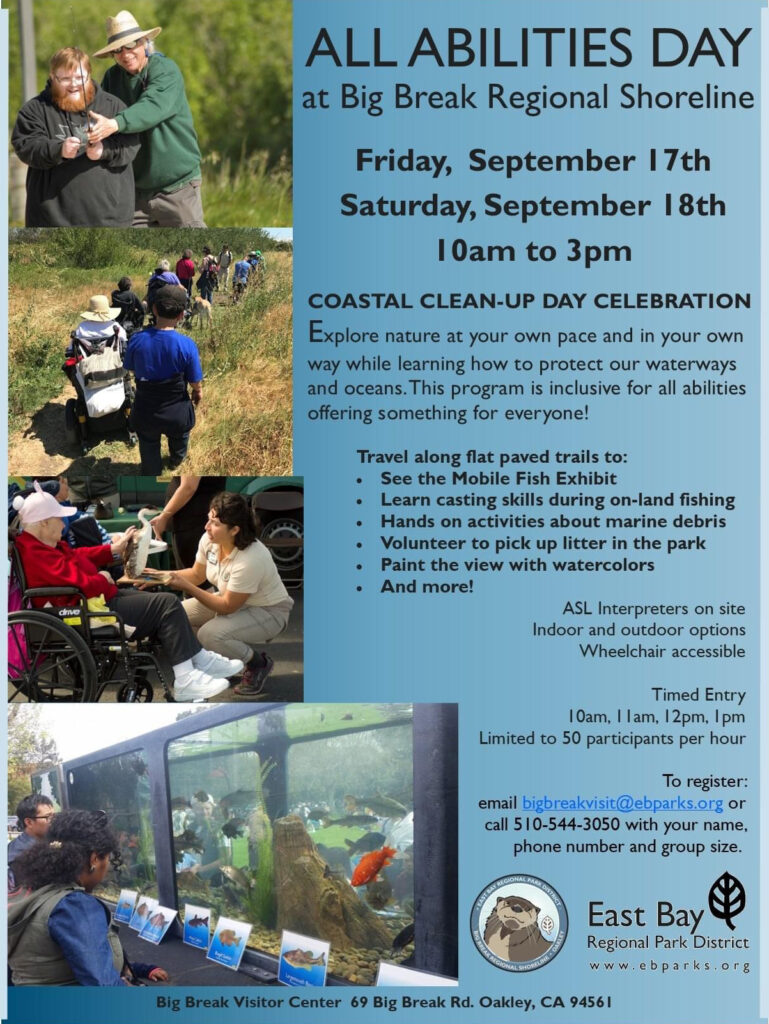
All Abilities and Coastal Clean-Up Days at Big Break Regional Shoreline in Oakley Sept. 17 & 18
Friday, September 10th, 2021


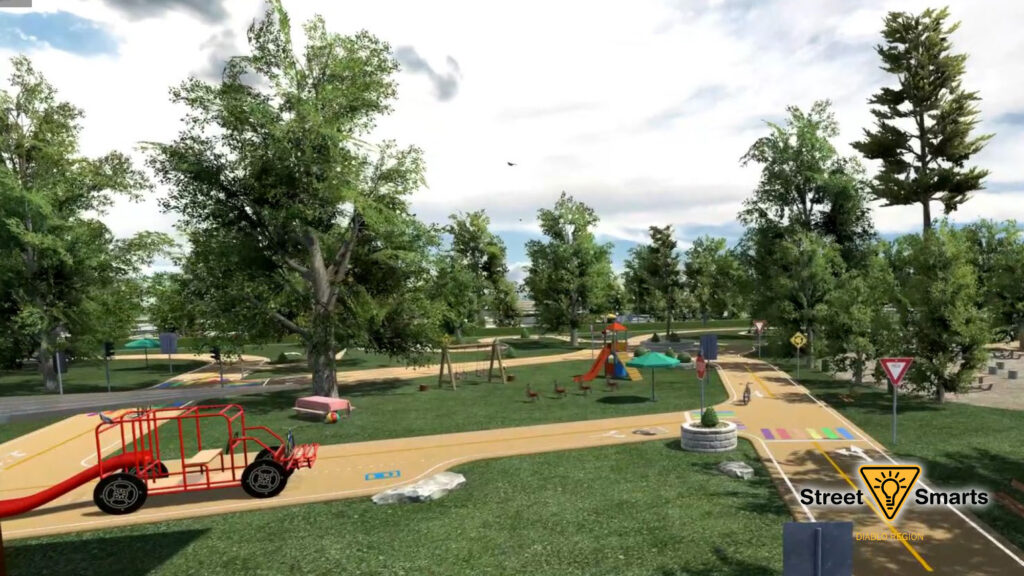
Screenshot of Bicycle Garden concept video.
By Allen Payton
During their regular meeting on Tuesday, May 25, 2021 the Antioch City Council will once again deal with 14 agenda items, as they did during last week’s special meeting. They include a study session on the 5-Year Capital Improvement Program beginning at 5:00 p.m., followed by a presentation on marketing for the new Rivertown Dining District, adopting a water shortage contingency plan, plus multiple youth development programs.
The council will also consider easing restrictions on home-based businesses, allowing for light manufacturing, such as crafts and other items that are sold on websites such as Etsy, as well as expanding the ban on smoking to include e-cigarettes. Finally, the council will consider increasing City Manager Ron Bernal’s annual salary by 15% to $293,712 which “reflects a positive review”, according to the staff report.
Water Management
The council will consider adopting a Water Shortage Contingency Plan (WSCP) as part of the 2020 Urban Water Management Plan Update which will be submitted to the California Department of Water Resources. According to the city staff report, while the WSCP is done each year, this year the city must now provide information not previously required. That includes a description of the process for an annual water supply reliability assessment, five-year drought risk assessment, six water shortage levels and a seismic risk and assessment plan, among others.

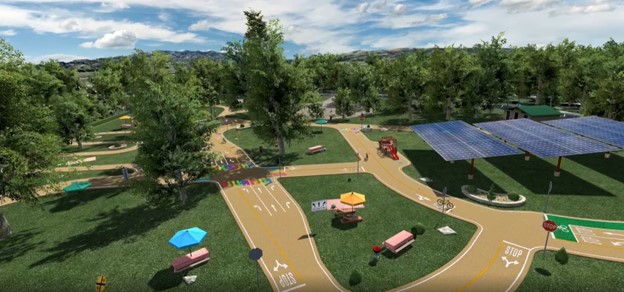
Bicycle Garden rendering. From council presentation by CCTA and Safe Streets.
Bicycle Garden
The youth development programs the council will be discussing include a Bicycle Garden, in coordination with the Contra Costa Transportation Authority and the Street Smarts Diablo Region Safe Routes to Schools program. (See concept video) Bicycle Garden presentation
According to the city staff report the proposed development of a state-of-the-art Bicycle Garden in Antioch would be the first of its kind in the region and is expected to be completed via public-private partnership funding. The Bicycle Garden would be a permanent, hands-on bicycle training facility fully contained within an existing Antioch park.

Bicycle Garden rendering.
Designed like a miniature city streetscape, the Garden would provide a safe place for youth and adults to ride bikes and learn the rules-of-the-road. The park would consist of small roads that weave in and around landscaped areas with smaller scaled versions of real-life traffic features including signals, traffic signs, road markings, bus stops, bike lanes, train tracks, etc.
In addition to open and free public use by individuals and families, the Bicycle Garden could provide a variety of programming opportunities for the City of Antioch: school field trips, classes for children, teens, and adults of all ages and abilities; summer camp modules, community biking and safety events, private party rentals, and more.
The Antioch Bicycle Garden will serve four goals:

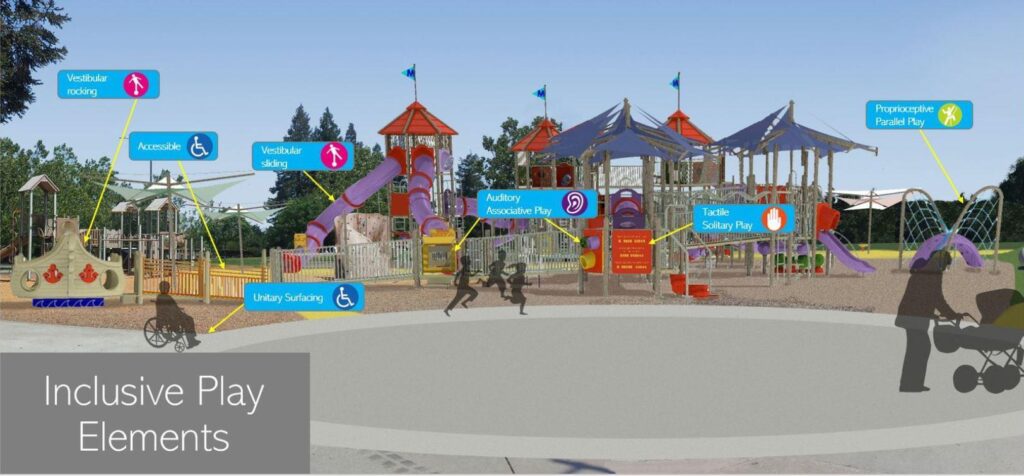
From Antioch City Council presentation by Gates + Associates.
All Inclusive Parks
The council will also be provided a presentation on All Inclusive Parks, expanding on the All Abilities Playground at Prewett Family Park. They will then discuss and provide direction to staff on a park design policy. All Inclusive Parks presentation
The regular council meeting begins at 7:00 p.m. See the complete agenda.
Public Comments
Members of the public wishing to provide public comment may do so by 5:00 p.m. the day of the Council Meeting in the following ways (#2 pertains to the Zoom Webinar):

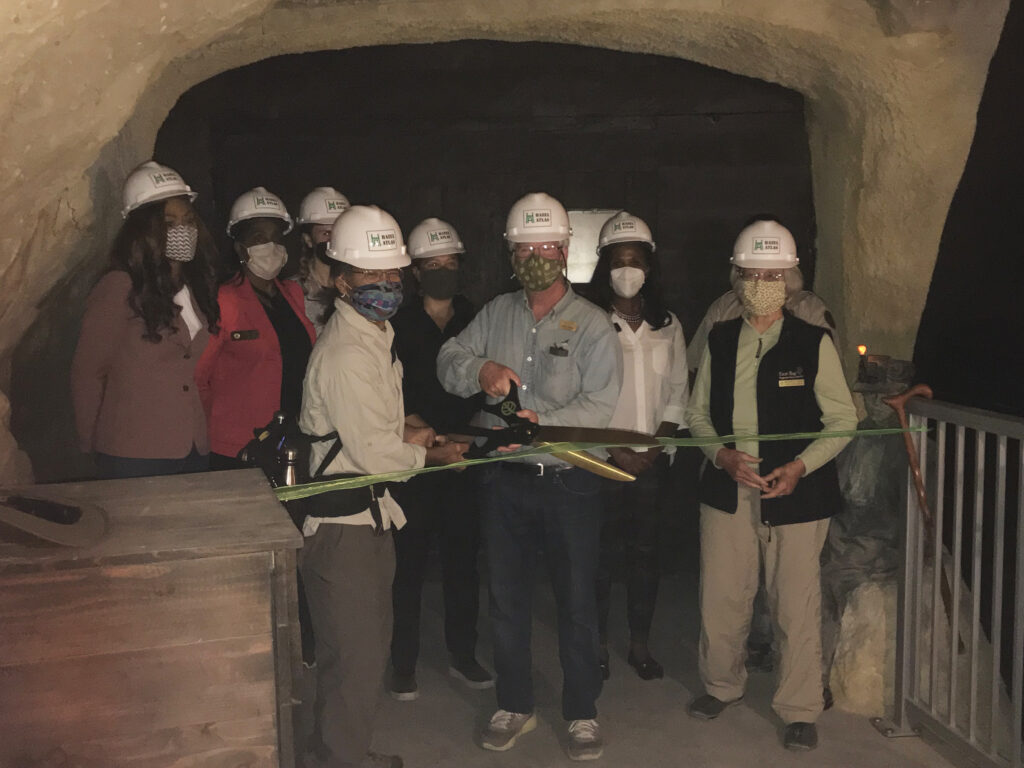
Parks District Board V.P. Colin Coffey (center) and President Dee Rosario (left) prepare to cut the ribbon for the new coal mine exhibit. They were joined by Pittsburg Councilwoman Shanelle Scales-Preston (far left) G.M. Sabrina Landreth (between Rosario and Coffey), Antioch Mayor Pro Tem Monica Wilson, Director Beverly Lane and representatives of Congressman Mark DeSaulnier and Assemblyman Tim Grayson.

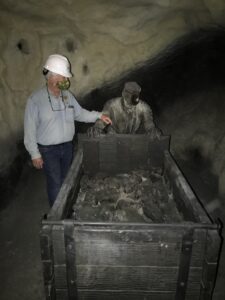
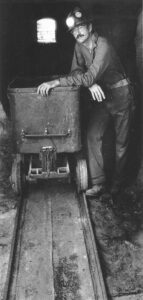
Director Colin Coffey next to the coal car and miner inside the exhibit.
By Allen Payton
On Thursday, May 20, 2021 officials and staff of the East Bay Regional Parks District (EBRPD) were joined by local officials to celebrate the opening of the new coal mine exhibit inside the old Hazel Atlas sand mine at the Black Diamond Mines Regional Preserve. Following speeches of gratitude and congratulations attendees held a ribbon cutting inside the mine in front of the entrance to the new exhibit.
It will take visitors back in time to a realistic 1870’s-era coal mine, complete with sights and sounds. The immersive educational experience will allow for greater understanding and appreciation of the area’s coal mining past.
Ira Bletz, Regional Manager, Interpretive & Recreation Services for EBRPD said the whole effort took two years, including carving out the area inside the mine and the development of the display. While the mine was being worked on to make room for the exhibit, the display was being developed at another location. It was then disassembled, brought to the mine and reassembled for the exhibit. The fake rock was bolted to the real rock.

Another part of the coal mine exhibit.
New district general manager, Sabrina Landreth said, about her staff, “it’s a joy to see the fruits of their labor”.
“The parks district has delivered wonderful amenities to the people of East Contra Costa County,” she added.
Board of Directors Vice President Colin Coffey, who represents East County, said, “the exhibit shows what it was like working in the mine in the early 20th Century.”
“You are the first public visitors in the mine since 2019,” he stated. “As of today, Black Diamond Mines is happy to welcome guests, here.
Coffey spoke of and thanked the Wayne and Gladys Valley Foundation which contributed $1 million to the Regional Parks Foundation for five visitor center projects, including the coal mine exhibit.

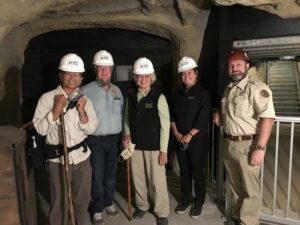
EBRPD Directors, General Manager Sabrina Landreth and Kevin Damstra (right) Supervising Naturalist in charge of the exhibit and park.
Director Beverly Lane and Board president, Dee Rosario were also in attendance for the event.
Antioch Mayor Pro Tem Monica Wilson and Councilwoman Lori Ogorchock, as well as city manager Ron Bernal, and Parks & Rec Commission Chair Marie Arce attended.
Wilson spoke, recognizing “the East Bay Regional Parks District for their commitment to the community” and thanked them for keeping parks open during COVID-19.
“Thank you for sharing our history and stories of our rich heritage,” she added. “I’m really happy this is going to be available to our residents, our youth.”
During her remarks, Pittsburg Councilwoman Shanelle Scales-Preston shared the fact that “Pittsburg was first named Black Diamond because of the coal mines.”

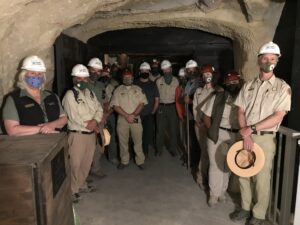
EBRPD staff with former General Manager Bob Doyle (blue shirt, right) at the entrance of the new exhibit.
Representatives from Congressman Mark DeSaulnier and Assemblyman Tim Grayson read letters from them and Assemblyman Jim Frazier, congratulating the parks district for the opening of the exhibit.
Former General Manager Bob Doyle spoke about the background of the new exhibit and his own experience in one of the now closed coal mines.
“It was John Waters’ vision. He came up with this idea,” Doyle stated.
According to the display inside the mine, “the Hazel-Atlas Mining Museum and Greathouse Visitor Center are two of the many accomplishments of Waters,” who “began his career with the East Bay Regional Park District in 1968 as a Park Ranger. Later, as Resource Analyst, he designed Black Diamond’s parking lot, picnic areas and water system. John eventually became Black Diamond Park Supervisor, and later served as the Preserve’s first Mine Manager, a position he held until his retirement in 2006.”

John Waters. Photo: EBRPD
“I was privileged in 1977 to actually go into the last open coal mine…in Nortonville,” Doyle shared. “The exhibit has the photos from the actual coal miners. No one had been in there for 110 years. It had the corral for the animals that were used to haul the coal. The middle of the track was worn out from the animals pulling the coal mine.”
“Our gas meters went off and we took as many photos, and got out. That has been permanently closed off. Four boys snuck in and died about four years, later,” he continued. “It’s important we recognize the safety by the parks district and the hard, hard life the early workers had, here.”
“This is an incredibly huge, 6,000-acre park and someday there will be an entrance from the Nortonville side, which was the largest town in the area,” Doyle added
“It’s a history that’s often hidden and one we take great pleasure in sharing with you,” said Kevin Damstra, Supervising Naturalist in charge of both the exhibit and the Black Diamond Mines park.
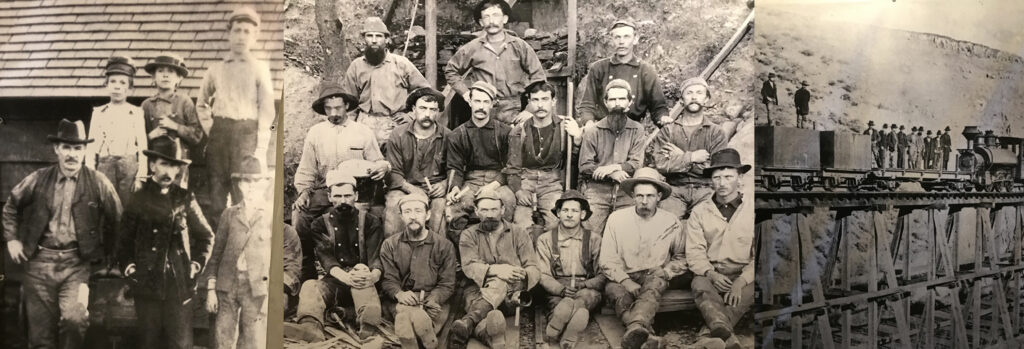
The exhibit includes background noise of coal mining including voices of Welsh and Welsh accented English,” he shared. “There were also Irish, Italian and Chinese miners, out here, for a while.”
The coal mining lasted from 1865 to 1908 and then the sand mining from 1920 to 1945,” Damstra shared.

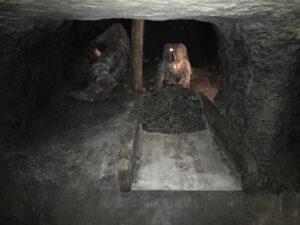
A few photos of the coal miners who were as young as eight years old, coal train and trestle inside the exhibit.
The Black Diamond Mines Hazel Atlas Mine is located at the south end of the Somersville Road in Antioch. The exhibit is open for four tours each Saturday and Sunday beginning tomorrow, May 22. To schedule yours contact the parks district at (510) 544-2750 or toll free: 888-EBPARKS (888-327-2757), option 3, extension 4506, or visit www.ebparks.org/parks/black_diamond/. The sand mine will not be open until June. It’s cold inside the mine and wearing something warm is recommended.

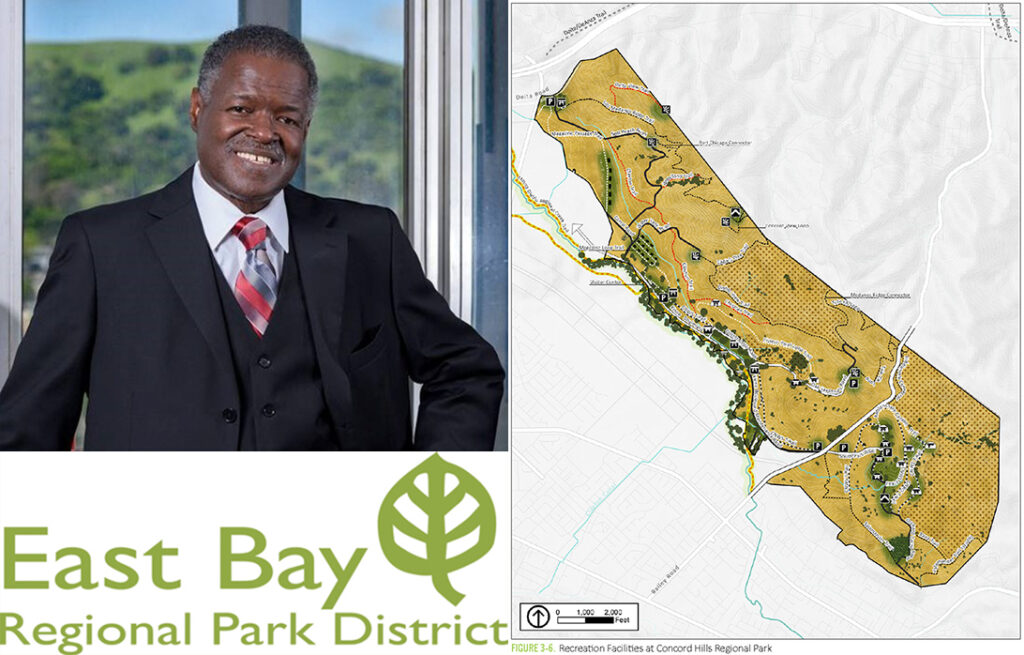
Contra Costa County Supervisor Federal Glover and map of new regional park in Concord.
By Allen Payton, Publisher

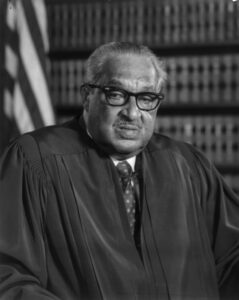
Justice Thurgood Marshall. Official portrait 1976
An effort, launched last fall, is underway asking the East Bay Regional Park District (EBRPD) Board of Directors to name their newest park, in Concord, after the late U.S. Supreme Court Justice Thurgood Marshall rather than for the Chupcan tribe of the Bay Miwok, who inhabited the area in the 1700’s, as had been planned. This past week, Antioch Mayor Lamar Thorpe announced his support for the effort.
Now, district staff is recommending that name without any general public outreach to seek input on possible names, other than comments made during board meetings. The board’s Executive Committee will consider the matter during their meeting this next Tuesday, May 11. (See agenda item #3 and process for public comment at the end of this editorial)
The 2,540-acre, temporarily named Concord Hills Regional Park, located on the south side of Highway 4 and encompassing most of the former Concord Naval Weapons Station land, was slated to be named Chupcan Territories Regional Park. But last year, during a Sept. 3 EBRPD Board meeting public comment, Lewis Thrower, a spokesman for Citizens for Historical Equity proposed naming it for Justice Marshall because there are no regional parks in Contra Costa County named after African Americans. Marshall’s local connection is, as an attorney, due to his representation of the Port Chicago 50, the name given to the 50 Black sailors, during their mutiny trial. They defied orders of their Navy commanders to return to work after the disaster that took the lives of 320 sailors and civilians and injuring 390 others on July 17, 1944 during World War II. That occurred while the stevedors were loading 5,000 tons of ammunition onto ships. The 50 sailors refused to return to work until safety measures had been put in place. They were each convicted on the charge of mutiny and given a sentence of up to 15 years imprisonment and dishonorable discharge from the Navy.
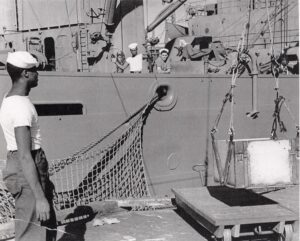
Port Chicago stevedores. Source: NPS
According to a NY Times report, almost all the sailors were released at the end of the war, including “47 who were paroled to active duty aboard Navy vessels in the Pacific Theater. Two of the 50 prisoners remained in the prison’s hospital for additional months recuperating from injuries, and one was not released because of a bad conduct record. Those of the 50 who had not committed later offenses were given a general discharge from the Navy ‘under honorable conditions’.”
According to the EBRPD Board meeting minutes, several other members of the public spoke in support of the naming proposal including Royle Roberts of Black Democrats, Willie Mims of the Black Political Association and Mable Minney of the Martin Luther King Jr. Freedom Center. A white paper and an addendum on Thurgood Marshall, and a petition with over 700 signatures were cited, as well.
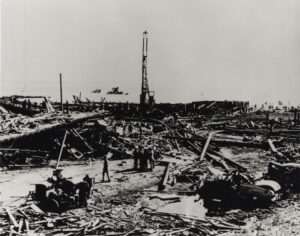
Port Chicago disaster damage. Source: NPS
Thorpe wrote on his mayor’s Facebook page on Thursday, May 6, “he has endorsed naming Contra Costa’s newest regional park– Thurgood Marshall Regional Park-Home of the Port Chicago 50.” The reason he gave is because, “the proposed name would be a major step towards expanding a county narrative that includes the contributions made by Contra Costa’s African American community.” He claimed that there were now 880 signatures of people in support of the effort.
Thrower and Citizens for Historical Equity recommended one or more neighboring parks be named Chupcan Territories Regional Park, instead. Thorpe reiterated that in a comment below his Facebook post, which has since been deleted.
During the meeting, Diana McDaniel from the Friends of the Port Chicago National Memorial suggested the name be Port Chicago Memorial Regional Park so people don’t forget.
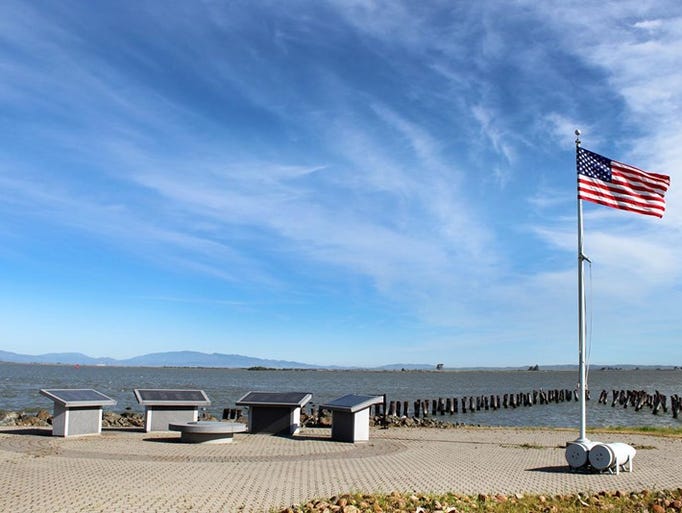
Port Chicago National Memorial. Source: National Parks Service
However, as the name of her organization demonstrates, there already is recognition with the Port Chicago Naval Magazine National Memorial which was established in 1994 at the site and on the 50th anniversary of the disaster to honor those who lost their lives. Then, in 2019, on the 75th anniversary of the tragedy, Representatives Mark DeSaulnier and Barbara Lee reintroduced a resolution, HR 49, which states its purpose in the first paragraph as, “Recognizing the victims of the Port Chicago explosion of July 17, 1944, the 75th anniversary of the greatest homeland loss of life of World War II, and exonerating the 50 African-American sailors unjustly court-martialed by the Navy.” It passed the House in December 2019 as part of the National Defense Authorization Act (S.1790) listed in Sec. 540N as “Sense of Congress on the Port Chicago 50”. But the exoneration of the sailors was removed by the Senate before it was signed into law by President Trump on Dec. 20.
According to the memorial’s Wikipedia page, “the Port Chicago Committee is working to expand the current memorial to encompass 250 acres of the former Port Chicago waterfront.” Recognition of the Port Chicago 50 and Justice Marshall could be included there.
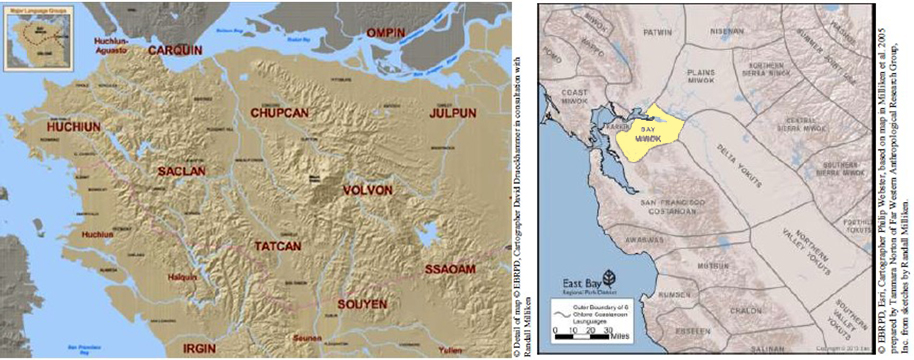
Bay Miwok tribes map and SF Bay Area tribe maps. Source: EBRPD
Bay Miwok Chupcan Tribe
According to ConcordHistory.com, “a small tribelet of Chupcan (Bay Miwok) Indians composed the first inhabitants of our valley. Dominated by a great mountain to their south, the Chupcan lived along the valley’s streams which flowed north to the wide tule marshes on the edge of the Bay.”
According to the Bay Miwok Content by Beverly R. Ortiz, Ph.D. on the EBRPD website, there were about 1,800 to 2,000 Bay Miwoks living in the area in six different tribes before 1770. According to the Museum of the San Ramon Valley, “One of those tribes, or tribelets as scholars call them, were the Chupcan of Diablo Valley.”
While Marshall was the first Black U.S. Supreme Court Justice and represented the Port Chicago 50 while an attorney, he wasn’t from Contra Costa County and to honor him by naming a regional park for justice does not expand “a county narrative that includes the contributions made by Contra Costa’s African American community.”
A more appropriate place to honor the Port Chicago 50 would be at the national memorial by adding each of the sailors’ names, now that they’ve been exonerated. Justice Marshall’s name could be added to it, as well for his efforts in defending them at trial. Their names should be listed on the National Parks Service website for the memorial, as well.
Federal Glover or Bay Miwok Chupcan Regional Park
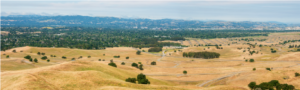
Concord Hills Regional Park. Photo by Stephen Joseph Fine Art Photography. Courtesy of EBRPD.
If the goal is to honor contributions made by Contra Costa’s African American community, then I think a more appropriate name would be the Federal Glover Regional Park, for the first African American to serve our county on the Board of Supervisors and who has done so for over 20 years. In addition, he served the City of Pittsburg, East County and the county on transportation boards while a council member, prior to that. I would say Federal is the African American who has contributed more to our county than any other and should be recognized instead of the former justice who had a fleeting connection.
If not, then it should be named for the historic tribe that inhabited that part of our county. Since it’s doubtful that even those familiar with the history of the native peoples of Contra Costa would recognize the tribal name of Chupcan – it was news to me – Bay Miwok should be included in the name. If that’s the direction, then the new park should be named the Bay Miwok Chupcan Regional Park.
Roddy Ranch Regional Park
Also, while the Board is considering names for the district’s regional parks, instead of Deer Valley Regional Park, the newest one planned for East County, on the land owned and sold to the district by long-time rancher Jack Roddy, it should instead be named the Roddy Ranch Regional Park to keep the historical significance.
Public Comments
Members of the public can listen to and view the EBRPD Board Executive Committee meeting on Tuesday, May 11 in the following way: Via the Park District’s live video stream, on the Park District’s YouTube channel, which can be found at https://youtu.be/pvK6M5XWBPI (The YouTube link may not function properly when using Internet Explorer. The optimal browser for viewing the live stream of the meeting is Chrome.)
Public comments may be submitted:

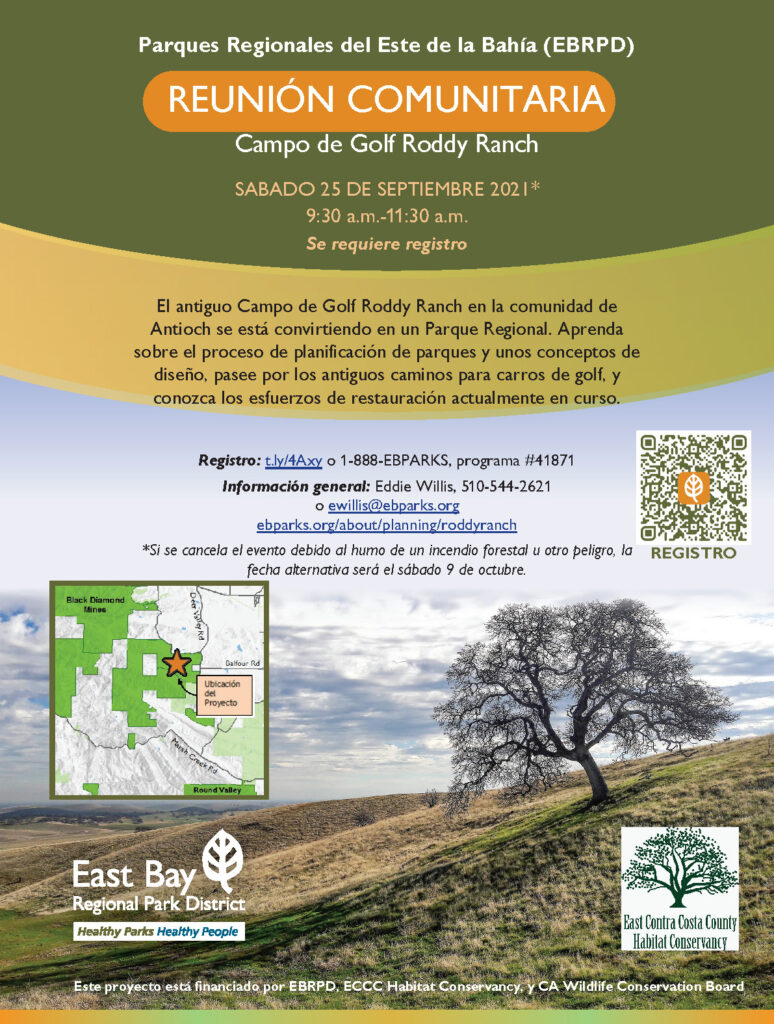
The East Bay Regional Park District is developing a new Regional Park at the former Roddy Ranch Golf Course in Antioch. The plan being developed will restore native grassland habitat and include paths and facilities for walking, jogging, and picnicking. The former golf course property will be a part of the larger 3,500-acre future Deer Valley Regional Park.
Date: Thursday, March 11, 2021
Time: 6:30-7:30 P.M.
Meeting Zoom link: https://ebparks.zoom.us/j/93304942688
Meeting ID: 933 0494 2688
Join us via Zoom for the first public meeting and learn about:
• Habitat restoration, recreation, and public access planning
• A summary of existing conditions, constraints, and opportunities
• Project timeline and other opportunities to be involved

Project Site map of former Roddy Ranch Golf Course parking lot. Source: EBRPD
See Existing Conditions Report and Attachments.
The park district, in partnership with the East Contra Costa County Habitat Conservancy, began purchasing land in 2009 that would become the future Deer Valley Regional Park. Jack Roddy sold his ranch to the park district, including the now-closed golf course, in various transactions from 2014 – 2018. Due to habitat concerns and other considerations, Deer Valley Regional Park will remain in “landbank” status and closed to the public, for the foreseeable future. The 230-acre former golf course is anticipated to be the first part of the future Deer Valley Regional Park to open for public access. (See related article)

Ridgeline between the former Roddy Ranch Golf Course (left) and Deer Valley (right), Photo: Stephen Joseph.
Learn more about the project history on Roddy Ranch – Restoring Habitat and Public Access on a Former Golf Course.
By Dave Mason, Public Information Supervisor, East Bay Regional Park District

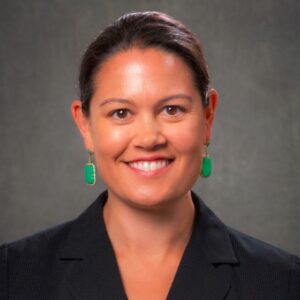
Sabrina Landreth. Source: EBRPD
The East Bay Regional Park District’s Board of Directors today approved the appointment of Sabrina Landreth as General Manager. She is the first female and the tenth General Manager appointed in the Park District’s 87-year history.
“Our Board is thrilled to have Sabrina join our organization,” said Dee Rosario, President of Park District Board of Directors. “She has all the right elements of urban public sector leadership experience and especially understands the diversity of the East Bay communities we serve.”
Ms. Landreth has deep roots in the East Bay as a fifth generation native who has held the top executive leadership positions managing the cities of Oakland and Emeryville. She is a U.C. Berkeley graduate with a master’s degree in Public Policy, in addition to receiving a B.S. in Mechanical Engineering from the Massachusetts Institute of Technology (MIT).
“I am honored to be appointed by the Board as the District’s next General Manager,” Landreth said. “I look forward to continuing to build upon the great work the District does to improve the quality of life for our East Bay community, while adhering to its social and environmental responsibilities.”
Most recently Ms. Landreth served as City Administrator in Oakland from 2015- 2020, where she is credited with strong fiscal management and developing a capital improvement program that included community equity goals and has become a model program for local governments around the country. She also worked for Oakland as Deputy City Administrator, Budget Director, and Legislative Analyst to the City’s Finance Committee.
Previously Ms. Landreth served as City Manager of Emeryville and as staff in the California State Assembly advancing state and local legislative initiatives.
Ms. Landreth succeeds Robert Doyle, who retired as General Manager after a 47-year career with the Park District. She will begin her new position at the Park District on Monday, March 15 just four days after her 45th birthday.
Allen Payton contributed to this report.

Sand and water dredged from the San Joaquin River are pumped onto Antioch Dunes National Wildlife Refuge in October. The water will return to the river through outfall pipes, leaving the sand behind. Credit: Mark Hayes/USFWS
By Brandon Honig, External Affairs Specialist, U.S. Fish and Wildlife Service
Over thousands of years, the shifting sands of time built dunes that reached 120 feet high and stretched for two miles along the San Joaquin River, about 35 miles east of San Francisco. Isolated from similar habitats, the Antioch Dunes slowly developed species found nowhere else in the world.
The gradual shifting of sand, however, was replaced by a rapid effort to turn it into bricks in 1906, after a devastating earthquake and fires demolished buildings in San Francisco. As industry depleted the sand over the next 70 years, the dunes’ unique species struggled to survive on dunes that eventually topped out at 50 feet.
Now the U.S. Fish and Wildlife Service (USFW) and Port of Stockton are trying to turn back the clock, one load of sand at a time. Since 2013, the Port has pumped nearly 92,000 cubic yards of sand — enough to fill more than 6,500 dump trucks — onto the dunes to support three endangered species: the Lange’s metalmark butterfly, Antioch Dunes evening primrose and Contra Costa wallflower.

There may be fewer than 50 Lange’s metalmark butterflies remaining today, down from an estimated 25,000 between 50 and 100 years ago. The butterfly is only found at Antioch Dunes National Wildlife Refuge. Credit: Steve Martarano/USFWS
“The population of Lange’s has been trending downward for a couple of decades now,” said Mark Hayes, a biologist with the Service’s San Francisco Bay-Delta Office. “We counted about 10 butterflies in 2020, and the total population is very likely less than 50 currently. This is precariously low.”
The orange, black and white butterfly with a wingspan of 1 to 1.5 inches, whose population likely numbered 25,000 less than a century ago, was listed as endangered in 1976. The white-petaled primrose and yellow-petaled wallflower followed with listings in 1978.
The Service established Antioch Dunes National Wildlife Refuge for the three species in 1980, making it the first national refuge for insects and plants. At the time, the 55-acre urban refuge with two non-adjacent units was also the nation’s smallest.

Wildlife resource specialist Louis Terrazas inspects sand placed on Antioch Dunes National Wildlife Refuge through a partnership with the Port of Stockton. The landscape to the right shows refuge land that has not yet been restored with sand. Credit: Brandon Honig/USFWS
“This is a very industrial neighborhood we’re tucked into,” Louis Terrazas, a wildlife resource specialist for the refuge, said of Antioch Dunes. “There’s a shipyard on one side, a gypsum-processing plant, an old water-treatment facility over there and two strips of land owned by Pacific Gas and Electric.”
As sand disappeared in the 20th century, non-native grasses and plants took hold, crowding out the primrose, the wallflower and the Antioch Dunes buckwheat, which is the only plant where the Lange’s butterfly will lay its eggs. In the early 2000s, a series of wildfires further cut the butterfly population, leaving only about 100 alive in 2010 — all on the refuge’s 14-acre eastern unit.
With no butterflies to protect on the western unit, the Service decided to overhaul that site and try to restore the conditions that had once enabled the dunes’ endangered species to thrive. Refuge staff began looking for sources of sand in 2012 and were soon contacted by the Port of Stockton.

Beachgoers lounge on an Antioch, California, sand dune in the early 1900s, before much of the sand was mined for building materials. Credit: Contra Costa County Historical Society
The Army Corps of Engineers dredges sand from the San Joaquin River each year to clear passage for cargo ships, and the Port is responsible for finding sites to place the sand. The Port typically sent sand to nearby Sherman Island, but saw an opportunity to make a real impact at Antioch Dunes.
“Our board has been pushing us to reach out and find projects like this — ways we can go above and beyond the normal regulations to try to have a beneficial impact on the [Sacramento-San Joaquin River] Delta,” said Jeff Wingfield, the Port of Stockton’s director of environmental and public affairs. “It costs us a little extra in time and prepping the site and some other little work, but for us it’s important to beneficially reuse the material.”
Since the Port’s first delivery in 2013, the evening primrose has experienced a huge jump in numbers, Terrazas said, and the wallflower and buckwheat are also reappearing. Eventually the refuge hopes to re-establish the Lange’s butterfly on the western unit as well.

The Contra Costa Wallflower, right, and Antioch Dunes evening primrose live side by side at Antioch Dunes National Wildlife Refuge, the only national refuge established to protect plants and insects. Credit: Susan Euing/USFWS
To fully restore the refuge’s dune system, the Service could continue taking sand deposits for a couple of decades, Terrazas said, which might not be possible without the Port partnership.
“We bought some sand from another site in 2009, but it was really expensive, and the sand material had some non-native species in it,” he said. “We decided it was not the best method of restoring the site.”

The endangered Antioch Dunes evening primrose has shown a huge jump in numbers since dune-restoration began in 2013. Credit: Steve Martarano/USFWS
Under the current method, the Port provides and delivers clean sand, and it doesn’t cost the Service a dollar. USFW staff devotes a great deal of time to this project, but the sand itself and the labor to place it at the Antioch Dunes are donated.
“Restoring the dunes is vitally important to the refuge’s ecosystem and could be the key to long-term preservation of its endangered species,” Hayes said. “We value our partnership with the Port and hope this continues as we implement our restoration plan.”

Photos by EBRPD.
By Dave Mason, Public Information Supervisor, East Bay Regional Park District
Effective 6:00 p.m. Sunday, December 6, 2020, all campgrounds, outdoor museums (visitor centers), and children’s playgrounds at East Bay Regional Park District locations will be closed until further notice as mandated by the six Bay Area county regional health officers’ order announced yesterday.
Facility Closures Include:
Campgrounds Closures Include:
Future camp reservations through made through January 4 will be cancelled, including for the Sibley backpack camp, and customers will receive full refunds.
Outdoor activity is encouraged by health officials during the new Regional Stay Home Order. The Park District reminds visitors that spending time in nature is important for mental and physical health and wellbeing. To keep yourselves and Park District staff safe when visiting regional parks and trails, please wear masks when within six feet of others and recreate responsibly. Please keep parks safe for everyone by following all COVID-19 safety requirements.
The California sector closures and restrictions on activity under the State’s Regional Stay Home Order are described here.