







Archive for the ‘News’ Category

Antioch’s Pinky’s Klassy Kar Wash honored as “Small Business of the Year” for the 11th Assembly District

Wednesday, June 12th, 2013

Assemblyman Jim Frazier (D-Oakley) recognized Pinky’s Klassy Kar Wash of Antioch as the “Small Business of the Year” for the 11th Assembly District in a ceremony at the Sacramento Convention Center on Monday, June 10th.

Each year, the California State Assembly recognizes the contributions of small businesses in each Assembly district and their important role in the creation of jobs and growth for the California economy. The day began with workshops coordinated by the California Small Business Association, followed by a Salute to Small Businesses awards luncheon.

Juan Chen-Olsen and her husband, Dave Olsen, took over Pinky’s Klassy Kar Wash and have since become passionate environmental advocates for the Delta. Upon taking ownership of the small business, Juan discovered that the car wash had not been recycling its water, which she said smelled of residual grime, gasoline, and grease from the cars that had been serviced. When the couple began researching solutions to resolve their water issue, they discovered that repercussions of using non-recycled water had a devastating effect on local rivers and the Delta.

The two invested in updated, eco-friendly equipment to develop a 75 percent recycling wash facility that both maximized the use of clean recycled water and minimized the amount of pollutants going into the local waste water treatment plant.

“Pinky’s Klassy Kar Wash is a prime example of how a small business can be both successful and environmentally friendly,” said Assemblymember Frazier. “I applaud Juan and Dave for their enthusiasm in preserving the Delta and for their admirable commitment to improving the community of Contra Costa County.”

The couple has also dedicated much of their time to educating the local community. Juan is known for bringing a ‘jug of sludge’ to local schools to educate children about the effects of dirty water flowing into storm drains. She also utilizes her business to assist non-profit organizations in car wash events so that they don’t have to resort to ‘parking lot fundraisers’ that could cause harmful pollution to the Delta.

“I am thrilled and grateful for Mr. Frazier’s nomination,” said Juan. “I immediately gathered all my employees together and shared the news with them because I feel I would never get here without them. I feel finally somebody recognized the importance of the green car wash business and the positive impact it can have on our Delta waterway.”

To contact Assemblymember Jim Frazier please visit his website at www.asmdc.org/members/a11/ or call his District Office at 707-399-3011.

Follow Assemblymember Jim Frazier on Facebook and “Like” him for updates on events and happenings in the 11th AD.

Frazier votes to allow boys to shower in girls’ locker rooms, and vice versa in California schools

Monday, June 10th, 2013

By Allen Payton

When the California State Assembly voted on Assembly Bill 1266, which allows boys to play on girls sports teams and shower in girls locker rooms and vice versa, based on their gender identity, not the gender listed on the student’s records, Jim Frazier, who represents Antioch in the Assembly, voted in favor of the bill.

On May 9, 2013, the vote passed the Assembly 45 to 24, with all the yes votes coming from Democrats.

According to the legislation, sponsored by Tom Ammiano (D-San Francisco), “AB 1266, as amended, Ammiano. Pupil rights: sex-segregated school programsand activities.

Existing law prohibits public schools from discriminating on the basis of specified characteristics, including gender, gender identity, and gender expression, and specifies various statements of legislative intent and the policies of the state in that regard. Existing law requires that participation in a particular physical education activity or sport, if required of pupils of one sex, be available to pupils of each sex.

This bill would require that a pupil be permitted to participate in sex-segregated school programs,and activities, and facilities, including athletic teams and competitions,and use facilities consistent with his or her gender identity, irrespective of the gender listed on the pupil’s records.”

For complete information on the legislation, click here.

Highway 4 full freeway closure at Loveridge Road tonight

Friday, June 7th, 2013

As part of the Highway 4 (SR-4) widening construction work, the contractor will be shifting eastbound SR-4 traffic onto a portion of the recently completed pavement in the vicinity of Loveridge Road. In order to ensure crew and public safety during this work, the contractor will close all lanes of SR-4 in the eastbound direction at Loveridge Road on Saturday morning June 8 from 1:30 am to 7:00 am.

The detour for this work will be as follows:

o Eastbound motorists will be directed off the highway at Loveridge Road and immediately back on the highway at the eastbound SR-4 on-ramp from Loveridge Road. For detour map, please click here: SR-4TRAFFIC ADVISORY FULL CLOSURE AT LOVERIDGE JUN 7-8 2013

The Highway 4 projects include improvements to the entire project corridor that will help revitalize eastern Contra Costa County. The projects expand Highway 4 from four to eight lanes between Loveridge Road and SR-160, and add a BART extension from Pittsburg to Antioch (eBART). The projects will also expand the highway from two to four lanes from Lone Tree Way to Sand Creek Road.

This will greatly improve transit accessibility for the region and help reduce traffic congestion and enhance the quality of life for the more than 250,000 residents of eastern Contra Costa County. The projects have been carefully staged to keep 130,000 vehicles per day moving as major construction and demolition work continue, and include over $1.3 billion in State, Federal, Regional Bridge Toll, and Contra Costa Measures C & J sales tax funds.

Caltrans and CCTA appreciate your patience as we work to improve the highways. For the most current information on all SR-4 corridor closures please visit our website at: http://4eastcounty.org.

McNerney’s plan to address backlog of veterans’ claims included in House Appropriations bill

Friday, June 7th, 2013

Washington, D.C. – Late Tuesday night, June 4, 2013, the U.S. House of Representatives passed H.R. 2216, the Military Construction and Veterans Affairs and Related Agencies Appropriations Act, 2014.  Included in the bill was Congressman Jerry McNerney’s (D-Stockton) recommended action to direct the U.S. Department of Veterans Affairs (VA) to address the backlog of disability claims at its regional offices across the country.  Congressman McNerney asked that the VA issue quarterly reports for any regional office where the average days pending for a disability claim is 200 or more. This will increase oversight and accountability for reducing the backlogs of claims. 

“The current wait times veterans across the country are experiencing for the benefits they have earned and deserve are unacceptable.  We have to continue to hold the VA accountable so that we see real results.  Accountability and oversight are crucial to ensuring the backlog of veterans’ claims is reduced,” said Congressman McNerney. 

Congressman McNerney originally wrote to the U.S. House Appropriations Subcommittee on Military Construction, Veterans Affairs and Related Agencies to request this action.  Congressman McNerney’s recommended language was then approved by the House Appropriations Committee before it headed to the House floor for last night’s vote.

“Just as I have continued to hold the VA responsible for taking action to address the backlogs at its regional offices, I am determined to see this plan through to the end.  I take my responsibility to provide for our nation’s veterans very seriously, and I thank my colleagues for supporting this important provision through the appropriations process,” said McNerney.

The portion of the accompanying committee report to H.R. 2216 related to Congressman McNerney’s request reads:

—The Committee finds the VBA back-log in processing disability compensation claims unacceptable. Although for years the Committee has fully funded the President’s budget request for additional staffing and increased information technology funding for the Veterans Benefits Management System (VBMS), the claims backlog continues to grow. Backlog as defined by the Department is the number of claims taking more than 125 days to process. The most recent data indicate that the average number of days to process a claim is 292, with averages in some regional offices exceeding 450 days. Currently, 69 percent of the VA compensation caseload is backlogged, although VA estimated in its 2013 budget the percentage in backlog would be 40 percent in 2013. The Committee understands the VA believes the agency will be able to process claims within 125 days by 2015 when the VBMS is fully operational. While the Committee supports the use of technology to improve performance, the Committee is highly skeptical that the VBMS system will be able to eliminate these enormous backlogs by 2015. Therefore, the Committee intends to initiate a new level of oversight to ensure that it has monthly information identifying the changes in timeliness occurring at each of the 56 regional offices. As of the date of the publication of this House report, the Department is instructed to provide the Committee each month, ten days after the prior month has ended, a report that identifies for each month cumulatively throughout the fiscal year, both nationally and for each regional office: (1) the average number of days disability compensation claims are pending; (2) the share of the rating inventory that has been pending more than 125 days; (3) the rating claims accuracy on a three-month average; and (4) the month-to-month change in these indices, both by numeric value and percentage. The report may be in spreadsheet format. In addition, for each regional office with an average number of days pending for disability claims in excess of 200 days, the Department shall report to the Committee on a quarterly basis the actions taken, such as increases in claims processor FTE, staffing transfers, additional training, and technology adaptations, within the last quarter to reduce the backlog. While these reports are for the use of the Appropriations Committee, they are to be made available by the VA Office of Congressional and Legislative Affairs to any Member of the House of Representatives upon request.

The letter Congressman McNerney sent to the Appropriations Subcommittee on Military Construction, Veterans Affairs and Related Agencies can be read by clicking here: 4.23.13 VA Oversight McNerney

Assemblyman Jim Frazier honors Antioch’s Chuck Billy of thrash metal band Testament

Friday, June 7th, 2013

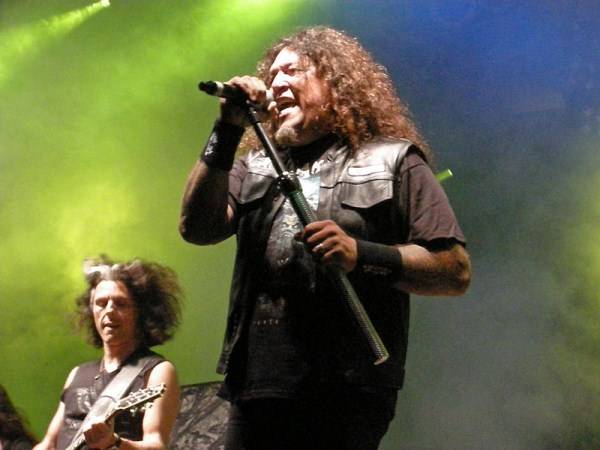
Chuck Billy, courtesy of the Native American Encyclopedia

Chuck Billy, courtesy of the Native American Encyclopedia

Sacramento, CA – On Thursday, June 6, 2013, Assemblyman Jim Frazier (D-Oakley) honored musician Chuck Billy of Antioch on the State Assembly floor for the positive influence he has made in the Native American community and on the general public.

On January 14, 2013, Chuck Billy earned the distinction as the first Native American entertainer to be permanently featured in the memorabilia display at the Hard Rock Hotel and Casino in Albuquerque, New Mexico. Chuck was also among those recognized in the Smithsonian National Museum of the American Indian’s exhibit, Up Where We Belong: Native Musicians in Popular Culture.

“The world of music is inhabited by creative and talented individuals whose work enhances the quality of life for all who are fortunate enough to have entered their sphere of influence,” said Jim Frazier. “Not only does Chuck Billy embody all of these admirable qualities, he also personifies the strength and enduring spirit of Native Americans.”

Chuck Billy, a descendent of the Pomo Native Americans, was born in Oakland and spent much of his youth on the Hopland Indian Reservation north of San Francisco. He is best known as the vocalist and guitarist for Testament, where he plays several songs including Trail of Tears, Allegiance, and Native Blood, in honor of his ancestral lineage.

To contact Assemblymember Jim Frazier please visit his website at http://www.asmdc.org/members/a11/ or call his District Office at 707-399-3011.

Follow Assemblymember Jim Frazier on Facebook and “Like” him for updates on events and happenings in the 11th AD.
Gov. Brown’s Bay Delta Conservation Plan Cost $54.1 Billion: Simple Math – It’s Not Worth It

Thursday, June 6th, 2013

By Restore the Delta

Sacramento, CA – Restore the Delta, opponents of Gov. Jerry Brown’s rush to build Peripheral Tunnels that would drain the Delta and doom salmon and other Pacific fisheries today released its “Simple Math” total of costs.

“The Brown Administration has released tens of thousands of pages but not one single, simple accounting of the costs,” said Barbara Barrigan-Parrilla, executive director of Restore the Delta. “They are hiding the math because the cost keeps escalating and the benefits diminishing,”

Cost of Peripheral Tunnels:

Construction $14.5 billion

Operations & Maintenance $ 1.5 billion

Interest on Tunnel Revenue Bonds $26.3 billion

Habitat and Conservation $ 7.0 billion

Interest on General Obligation Bonds $ 3.2 billion

Administration and Research $ 1.6 billion

TOTAL $54.1 billion

All costs drawn from BDCP documents.

Restore the Delta is working everyday through public education and citizen activism to ensure the restoration and future sustainability of the California Delta. Your general contribution can help us sponsor outreach events, enable us to educate Californians on what makes the Delta so special, and assist us in building a coalition that will be recognized by government water agencies as they make water management decisions. Restore the Delta is a charitable 501(c)3 organization. Donations are tax deductible. For more information visit www.RestoretheDelta.org.

California Members of Congress blast Bay Delta Conservation Plan and process

Friday, May 31st, 2013

Call BDCP a disaster for the Bay-Delta region and urge officials to halt process and consider the concerns raised by northern California stakeholders

SACRAMENTO, CA – On Thursday, May 30, 2013, several Members of Congress from the Sacramento-San Joaquin Bay-Delta region spoke out against the current Bay Delta Conservation Plan (BDCP) and the lack of input afforded their constituents at a press conference in Sacramento.  The current BDCP proposed by Governor Brown, the U.S. Department of Interior and south of the Delta interests would devastate the Delta region and ignores the concerns repeatedly raised by stakeholders in the Bay-Delta region.

Recently, the State of California released a 20,000 page long Administrative Draft Environmental Impact Report/Environmental Impact Statement (EIR/EIS) for the BDCP.  Chapters 1-7 of the plan were released in the last few months and Chapters 8-12, which include the financing mechanism, were released yesterday.

Rep. Jerry McNerney, who represents most of Antioch, said, “The Governor recently released additional information on his deeply-flawed plan for the Delta region, which further proves he is intent on forcing this plan forward without any regard for the farmers, families and small business owners who rely upon a healthy Delta for their livelihoods, or for the incredible environmental damage that will result. As it stands, the plan will cost billions of dollars, devastate the most valuable water resource we have in California, and ultimately create no new water. There is a better way forward, and it must include the input of the people who stand to lose the most if the Delta is destroyed.”

Rep. George Miller, who represents the other portion of Antioch, commented, “Governor Brown and his administration officials have failed to demonstrate that they are taking into account the real physical and financial harm that can come to Bay-Delta communities if a BDCP plan is pushed through without the proper cost benefit analysis of alternatives, an adequate finance plan, or without acknowledging the best available science—science that has pointed to the real possibility that this plan could overtax our water resources and devastate the Bay-Delta region. Without doing so the BDCP is further than ever from a sustainable policy. It is time to seriously reevaluate this plan to ensure it fulfills the co-equal goals that it is mandated to adhere to, and takes into consideration the concerns of the businesses, families and communities that rely on a viable, healthy Bay-Delta region for their livelihoods.”

Other Members of Congress from Northern California added their thoughts, as well:

“The State of California, in partnership with the federal government, is on the verge of recommending a plan for California’s water future that does nothing to solve California’s water problems and is a disaster for northern California.  For more than six years the BDCP has ploughed its way ahead led by a very small group of individuals, none of whom represent northern California.  Our constituents and stakeholders in the Bay-Delta region have been shut out of the process.  To find a long-term solution all of the stakeholders, not just the beneficiaries of the project, must have a seat at the decision-making table.  We can and we must do better for California.  Unfortunately, the current BDCP falls far short.” – Rep. Doris Matsui (CA-6)

“The proposed BDCP is not a workable solution. It puts the interests of South-of-Delta water contractors ahead of the Delta’s and North-of-Delta’s farmers, fishers and small business owners. Livelihoods are at stake. Until we have a plan that is transparent, based on sound science and developed with all stake-holders at the table, then any process that moves us closer to building these tunnels will recklessly risk billions of California tax dollars and thousands of jobs. Let’s take the time to get this right.” – Rep. Mike Thompson (CA-5)

“The California water system is under enormous stress from a growing population and climate change. The proposed peripheral tunnel plan fails to deliver a real solution for this fundamental problem. Without adding a single drop of new water to the state’s supply, the tunnels would deliver massive amounts of water from Northern to Southern California, destroying the Sacramento Delta in the process. Instead of wreaking havoc on the Delta region with a massive, expensive plumbing system, we need a cost-effective, comprehensive water plan. I have outlined a strategy that would add to our water supply through conservation, recycling, storage, and improvements to our levees while respecting water rights and using the best science. It’s time for a midstream correction to the BDCP: let’s bring everyone to the table and develop a plan that meets the needs of all Californians.” – Rep. John Garamendi (CA-3)

“All of us here understand that water is critical in our state and that there needs to be a bay delta solution that does not put south-of-delta water contractors ahead of everyone in or north-of-delta. It’s vital for our health, our environment, and our wallets that we have a comprehensive, long-term plan for securing water access and storage that’s based on sound science. The livelihoods of our local farmers, anglers, and small business owners are at stake, and the potential risk to jobs and billions of California tax dollars is too big to ignore. Continuing with this plan, without getting input from all stakeholders, and without considering other alternatives is a bad idea for Sacramento County families.” – Rep. Ami Bera (CA-7)

Somersville Road/Auto Center Drive closure for Highway 4 work June 3 – 9

Friday, May 31st, 2013

As part of this construction work on Highway 4 (SR-4), the contractor will be removing the temporary supports from the eBART bridge and the Highway 4 bridge over Somersville Road/Auto Center Drive. In order to ensure crew and public safety during this work, the contractor will close all lanes of Somersville Road/Auto Center Drive in the northbound and southbound directions between the westbound SR-4 onramp and the eastbound SR-4 on-ramp on Monday through Friday evenings, June 3-7 from 10:00 pm to 5:00 am, and if necessary Saturday and Sunday evenings, June 8-9 from 10:00 pm to 5:00 am.

The detours for this work will be as follows:

o Southbound motorists will be directed right on Century Boulevard, left on Delta Fair Boulevard

to Somersville Road. For detour map, please see attachment.

o Northbound motorists will be directed left on Delta Fair Boulevard, right on Century Boulevard to

Auto Center Drive. For detour map, please see attachment.

The SR-4 Widening Project includes over $540 million in State, Federal, and Contra Costa Measure J sales tax, and other local funds to widen SR-4 from four to eight lanes between Loveridge Road and SR-160. The combined effort of Caltrans and the Contra Costa Transportation Authority on projects in the SR-4 corridor will reduce congestion, create a safer roadway, improve operations, and reduce traffic

delays on this important east-west connector. When completed, the SR-4 highway median will be used to extend BART service from Pittsburg/Bay Point to a new Antioch station at Hillcrest Avenue.

Caltrans and CCTA appreciate your patience as we work to improve the highways. For the most current

information on all SR-4 corridor closures please visit our website at: http://4eastcounty.org.