







Archive for the ‘News’ Category

County to refund $8.8 million in excessive Juvenile Hall housing, electronic monitoring fees

Wednesday, December 13th, 2017

Example of an ankle monitor. By securitycameraking.com

By Daniel Borsuk

Beginning next month, 6,000 and as many as 12,000 Contra Costa County residents will receive letters from the county that they could be entitled to refunds to be disbursed because the county Probation Department overcharged them fees for Juvenile Cost of Care and Cost of Electronic Surveillance of Minors. (See agenda item,  here.)

County Supervisors initiated the notification process at Tuesday’s board meeting on a 4-0 vote.  Letters printed in English and Spanish will be mailed to up to 6,000 individuals who may be due a refund because they may have been overcharged when they had a juvenile housed at a county juvenile hall facility from 2010 to 2016.  The county ceased assessing the fees in 2016.  The letters will instruct the recipients how to file for a claim.

District 2 Supervisor Candace Andersen of Danville was absent for the vote.

The county estimates parents of juveniles held in county juvenile hall facilities were overcharged $8.8 million dating back to 1990.

The board’s Public Safety Committee will review whether another 6,000 residents living in the county between 1990 and 2010 might be eligible for refunds.  Supervisors would also establish a procedure whereby residents could claim money that was improperly withheld when youths were detained in juvenile hall facilities.  Supervisors will determine if the county improperly overcharged for electronic monitoring fees.

Assistant County Administrator Timothy Ewell told supervisors there are about 12,000 cases that the county has identified from 1990 to 2016 that might be entitled to refund checks averaging $262 per account because of the work by Contra Costa supervisors did, and support from citizen organizations like the Racial Justice Coalition, statewide to make juvenile hall housing fees illegal on racial and financial hardship grounds.

Contra Costa is the first county in the state to begin the procedure of refunding money to parents or guardians of juveniles who were held in juvenile hall facility and were overcharged.

“No one is expecting a mad rush of people to file claims,” said District 1 Supervisor John Gioia of Richmond, who was a key player at the county and state level in igniting the juvenile hall overcharge refund movement.

District 4 Supervisor Karen Mitchoff said it should be up to the claimants to show proof in the form of canceled checks, bank statements or some other proof of payment when filing a claim.

“Family members should never have been penalized,” admonished Willie Mims of the East County Branch of the NAACP.  “You should have the records and not lay that responsibility on the persons who might receive these letters.”

The fiscal impact to the General Fund is projected to be $136,000.

Supervisors OK Bonds for Multi-Family Housing Projects
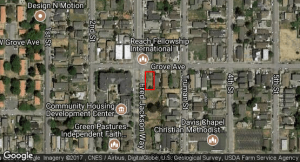
Site of the approved Heritage Point Senior Apartments in North Richmond.

On a 5-0 vote, supervisors flashed the green light for construction to get underway for a $27 million senior housing project in North Richmond fronting the east side of Fred Jackson Way between Grove Avenue and Chelsey Avenue.  The 42-unit, Heritage Point Senior Apartments will be financed by the county with up to $17 million in Multifamily Housing Revenue Bonds.

It is a project of the Community Housing and Development Corporation of North Richmond (CHDC). According to their website, the organization was “founded in 1990 by local leaders…to eliminate blight, improve housing opportunities for current and future residents, and create better economic conditions.” It has since “added over 200 owner-occupied homes to the Richmond area along with street improvements, public services, senior and family rental housing.”

According to the staff report, there is “No impact to the General Fund. At the closing for the Bonds, the County is reimbursed for costs incurred in the issuance process. Annual expenses for monitoring of Regulatory Agreement provisions ensuring units in the Development will be rented to low income households will be reimbursed through issuer fees established in the documents for the Bonds. The Bonds will be solely secured by and payable from revenues (e.g. Development rents, reserves, etc.) pledged under the Bond documents. No County funds are pledged to secure the Bonds.”

Supervisors were informed that financing for the Heritage Point development is secure.  However, future affordable housing developments might be in jeopardy depending how the 2018 United States budget reform bill shapes up. Contra Costa County could potentially lose $3.5 million in bond financing for the North Richmond project if the budget reform bill is passed by Congress, said Maureen Toms of the Contra Costa County Conservation and Development Department.  Fortunately, the county has enough money in reserves to fill in funding gaps for projects like the Heritage Point development, she added.

“This could be the tip of the iceberg on the potential elimination of public funding for future affordable housing developments,” Gioia warned.

Riviera Family Apartments. Rendering by RCD.

In addition, the board approved converting $1.6 million in taxable bonds into tax-exempt bonds for a 58-unit, multi-family affordable housing apartment project in Walnut Creek. The Riviera Family Apartments will be located on two separate parcels, at 1515 and 1738 Rivera Avenue. The County had previously approved $19.2 million in tax-exempt bonds for the development in May 2016. The developer is Resources for Community Development in Berkeley. According to the staff report, no County funds are pledged to secure the bonds.

Honor 35-Year County Employee

In other action, the board honored Carmen Piña-Delgado who is the Supervising Real Property Agent with the Public Works Department in the Real Estate Division for her 35 years as a county employee. She started her career with the County Administrator’s Office as a Clerk-Experienced Level under the Affirmative Action Officer and due to budget cuts was let go. But, then in October, Piña-Delgado was rehired by the Health Services Department as a Clerk-Experienced Level in the Public Health Division.

In January 1992 she was promoted to the position of Real Property Technical Assistant in the Real Estate Division, where she has worked for the remainder of her career. In May 2001, Piña-Delgado graduated from Los Medanos College completing the Associate of Science Degree in Real Estate in order to qualify for advancement into the Real Property Agent Series. The resolution adopted by the Board recognizing her service states, she “has a great work ethic and has made a difference in the Public Works Department by delivering quality services in each division, County-wide, and with outside agencies/consultants.”

Allen Payton contributed to this report.
 

Antioch police arrest “prime suspect” in 37-year-old Bombardier murder case Monday

Tuesday, December 12th, 2017

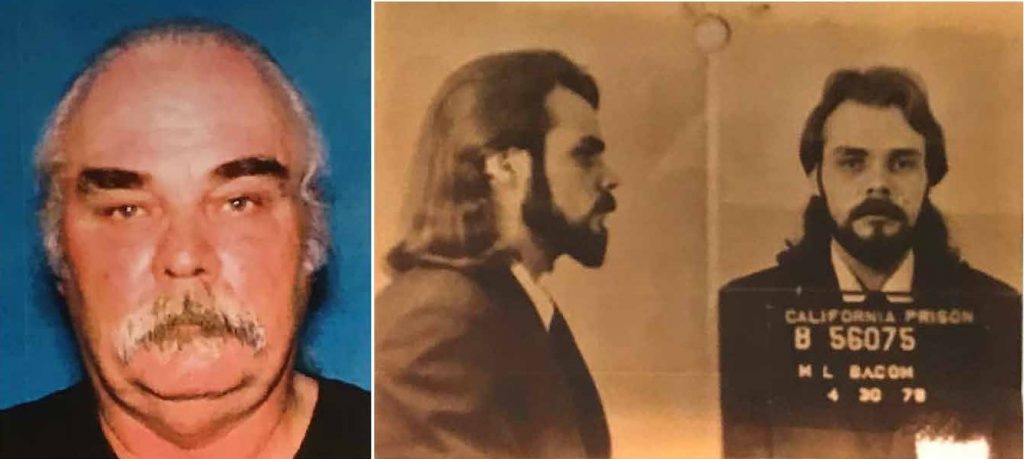
Mitchell Lynn Bacom, now and as he looked in the 1980’s. Photos courtesy of APD

“Justice for Suzanne” means “Antioch is safer, tonight”

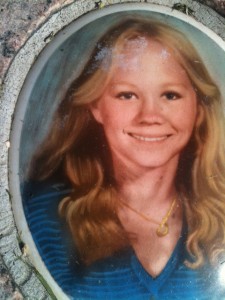
Suzanne Bombardier. Herald file photo.

By Allen Payton

At around 5:00 p.m. Monday evening, the family of Suzanne Bombardier whose kidnapping, rape and murder had gone unsolved for 37 years, finally had closure when Antioch police arrested 63-year-old Mitchell Lynn Bacom at his home in Antioch. During a press conference Monday night, Antioch Police Chief Tammany Brooks announced the arrest saying he was “ecstatic” and credited retired Captain Leonard Orman, DNA testing by the San Mateo County Sheriff’s Office Forensic Lab and the Contra Costa District Attorney’s Office.

Bacom, an Antioch resident, was arrested without incident in front of his house in the 300 block of West Madill.

“This closes the oldest, open cold case homicide on record with the Antioch Police Department,” Brooks stated, and then thanked “Suzanne Bombardier’s family for not giving up hope,” although “it would not bring Suzanne back.” He further said it was solved through “patience and persistence.”

Orman was brought back to work on the case, earlier this year after the DNA was sent to the crime lab two years ago and got a hit by CODIS, the FBI’s Combined DNA Index System, in May. Interim DA Diana Becton gave credit to Paul Holes, her office’s Cold Case Investigator and Chief of Forensic and the Safe Streets Task Force.

“Justice may not have come as swiftly as we would like,” she stated, and said her office will be filing charges against Bacom tomorrow of “murder with use of a deadly weapon and additional charges, as well.”

Bombardier was taken in the middle of the night from her sister’s home at 3421 Hudson Court in Antioch while babysitting. She was missing for approximately five days and eventually found deceased in the San Joaquin River near the Antioch Bridge. Her cause of death was determined to be one stab wound to the chest which penetrated her heart. Evidence at the time indicated she had been sexually assaulted.

Numerous suspects and persons of interest were developed and investigated over the years. Some were eliminated while others remained unresolved until recently. Bacom was one of the original suspects in the case, “the prime suspect” according to former Antioch Detective Greg Glod who worked the case, along with retired Detective Ron Rackley who first took the report that initiated the investigation in 1980.

Two years ago, during the 35th anniversary of the murder, they and retired Antioch Sgt. Larry Hopwood asked then Chief Allan Cantando to reopen the case and offered to serve as a volunteer cold case squad. They launched a media campaign to raise awareness of the cold case. (See related article). Later that year the DNA was sent to the crime lab for testing.

Through that DNA testing, one of the suspects, 63-year-old Mitchell Lynn Bacom of Antioch, has been determined to be responsible for these heinous crimes. He is currently being held on the charges of murder, kidnapping, rape and oral copulation.

“He was never off the suspect list,” Brooks stated, and that “he was known to Suzanne and the family.”

“That’s who we always suspected,” Rackley stated, when reached for comment following the press conference. “We can finally sleep again.”

“I knew this all along,” Glod said when reached at his home in the Washington, D.C. area, where he now works for the U.S. Secret Service as an instructor at their academy. “He was clearly the prime suspect, clearly in my mind, from the beginning.”

Antioch Police Chief Tammany Brooks was joined by (L-R) Antioch Police Captain Diane Aguinaga and retired Captain Leonard Orman, as well as Paul Holes, the Contra Costa District Attorney’s Office Cold Case Investigator and Chief of Forensics, and Interim Contra Costa DA Diana Becton.

Suspect Had History of Violent Crime

In 1973, Bacom was arrested in Mountain View, California for rape, robbery, assault with intent to commit murder and oral copulation. As a result of that investigation, he was convicted in 1974 of first and second-degree burglary, assault with intent to murder and sodomy. He was sentenced to five years to life.

In February of 1981, Bacom was arrested for robbery and rape in Isleton, California. As a result of that case, he was convicted of first degree burglary, robbery, rape and sodomy. He was sentenced to 24 years in prison.

In 2002, Bacom was convicted in Contra Costa County of failing to properly register as a sex offender and sentenced to four years in prison. This conviction was the result of a Pittsburg Police Department investigation.

When the biological evidence was originally collected in this case, DNA testing did not exist as a method of determining guilt in our justice system. Over the years, the Antioch Police Department and the Contra Costa County District Attorney’s Office have monitored developments in DNA testing in the hopes that advancements would be made allowing this evidence to be processed and a DNA profile developed. In 2015, the decision was made to submit the biological evidence to the San Mateo County Sheriff’s Office Forensic Laboratory in an effort to develop a DNA profile. This lab was equipped to conduct some of the most advanced available DNA testing. In early 2017, the department was notified that a CODIS hit was made tentatively identifying Mitchell Lynn Bacom as the perpetrator. Additional testing was required in order to confirm the identification.

Glod spoke about Bacom’s history of crime, saying, “I’m amazed how he got out of prison on the first one” and that “he was on parole when this took place,” referring to the Bombardier murder.

He gave credit to former Antioch Detective Guy Worth, who is currently battling cancer, and “is probably dancing, right now. He was instrumental…he did all he could to keep this case alive, in spite of all he’s going through.”

Glod also thanked the media for their articles and TV news segments in 2015 and 2016.

“I appreciate people like you (referring to the Herald), Henry Lee from KTVU, the Contra Costa Times and Jennifer Gibbbons, the author who wouldn’t let this go,” he stated.

“Although we are ecstatic an arrest has been made in this case it will not bring Suzanne back into her family’s lives,” Brooks said. “Our thoughts and prayers are with Suzanne Bombardier’s family and we hope this mystery being solved offers some level of comfort for them.”

Media from throughout the Bay Area was in attendance for the Tammany Brooks’ first press conference as Antioch Police Chief.

“Although in recent years there was some question relative to our commitment regarding this investigation, we never gave up on bringing this case to a resolution,” he shared. “The reality was that science had to make advances in order for a positive identification of the killer to be made. It was through patience, persistence, networking, modern investigative techniques and scientific advances that this case was solved.”

“I’m glad that people didn’t forget, the Antioch Police Department and District Attorney’s Office,” Glod said. “They were instrumental in solving this. It’s a good day for Antioch. Antioch did not forget their citizen. It’s great news for the family and all the friends who have been traumatized by this. We finally got some justice for Suzanne Bombardier.”

“It’s bringing some closure for me in my life,” he added. “This is a great moment for me. I’m glad to see it was him they arrested. This is big news.”

More Work Still To Be Done

When reached for comment, Orman said, “It was good to see it to this point,” knowing that there is still more work to be done following the arrest. “Antioch is safer tonight and that’s what matters,” he added.

“This does not constitute the end,” Brooks confirmed during his first press conference since becoming Chief in May, stating that the department needed to determine if Bacom has been involved in any other crimes.

As such, the Antioch Police Department will be networking with other law enforcement agencies in an effort to determine if Mitchell Lynn Bacom has been involved in other murders and/or sexual assaults. We encourage anyone with information regarding this case to contact the Antioch Police Department. Additionally, we are hoping to hear from any of Mitchell Lynn Bacom’s past victims, including those who may have never made reports to law enforcement.

Anyone wanting to provide information relative to Mitchell Lynn Bacom’s criminal conduct may contact Detective Leonard Orman at (925) 779-6918. Any further information or additional press releases will be provided by the Lt. Tarra Mendes at (925) 779-6946. You may also text a tip to 274637 (CRIMES) using key word ANTIOCH.

The Old Garage becomes Rivertown Business Plaza indicating growth, affordable office space in Antioch

Monday, December 11th, 2017

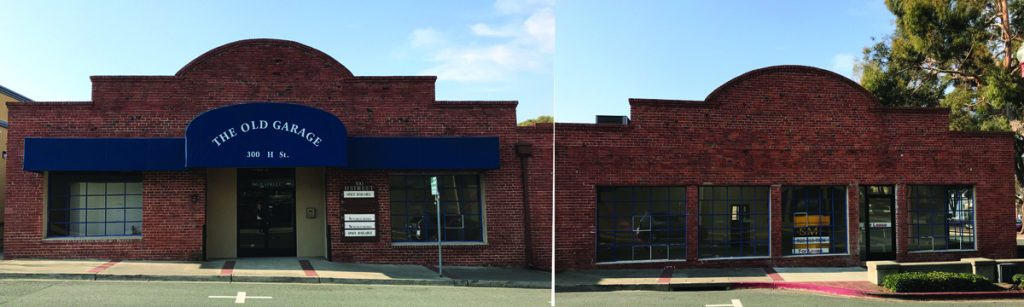
The building formerly known as The Old Garage in Antioch’s historic downtown will become the Rivertown Business Plaza under new ownership. Photos by Allen Payton

Owner of the Old Casino Building, and new owner of the former Humphrey’s location, Sean McCauley Investments acquires another historic downtown landmark

If you have been paying attention to the news lately, you have noticed a surge in commercial property acquisitions in Antioch.  This is good news for business owners small and large alike as leasing rates in the city are some of the most affordable in Contra Costa County. It is also an opportunity to fill many of the backlogged needs for office space in the region.

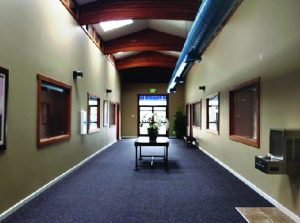
Rivertown Business Plaza interior main hallway. Photo by SMI

One of the prime spots recently acquired and ready for tenants is The Rivertown Business Plaza located at 300 H street in Antioch’s historic, downtown, known as Rivertown.

Known as the Old Garage, the landmark 10,000-square foot, brick building includes the former offices of a new home builder which owned and renovated it. These suites are ideal workplaces for anyone from freelancers to fully formed startups, and everyone in between. The staff of Sean McCauley Investments (SMI) are excited to welcome these new tenants and look forward to supporting other companies looking for affordable, quality office space. Available suites range from 1,300-1,600 square feet, are value-priced, fully built-out.

The building is located directly across the street from Antioch City Hall, two blocks from the Antioch Chamber of Commerce office and three blocks from the river.

The Rivertown area is accessible to major business centers, provides a solid customer base for retail, ready to spend their money for services close to their workspace. Plus, the area includes a variety of restaurants within walking distance of the building or a short drive, including one on the water and another one coming soon at the Antioch marina, which was also recently acquired by SMI.

Rivertown Business Plaza interior office space available. Photo by SMI

The company is familiar with Rivertown having owned and leased the Old Casino Building, where the Chamber has their office, for several years.

“We’re committed to Antioch’s downtown Rivertown and providing quality, affordable office space to those businesses who need it, have expanded beyond the ability to be home-based or have grown out of their existing space,” McCauley shared.

“We’re glad to have Sean and SMI in Antioch’s downtown,” said Mayor Sean Wright, the former Chamber of Commerce CEO. “This is just one of many exciting things happening in Rivertown. It’s a great place to have an office and run a business.”

If you or your company has an interest in leasing office space, call (925) 513-7336 today and ask for Diane.

Antioch Council approves incentives for recruiting police officers from other agencies

Monday, December 11th, 2017

By John Crowder

At the November 28 meeting of the Antioch City Council, the last item on the agenda was the authorization of an employee referral and recruitment signing bonus/incentives for qualified lateral police officers.

According to Antioch Police Chief Tammany Brooks, since the passage of Measure C was approved by voters in November 2013, Police Department staff has worked with Human Resources to hire 50 sworn officers.  During the same period, Brooks said that 35 officers have separated employment, resulting in a net gain of only fifteen sworn officers.

Brooks stated that the number of sworn staff currently sits at 97, while the City Council has authorized a staffing level of 103. With five more separations anticipated in the near future, he said, “We are having a problem trying to recruit a number of lateral applicants.”  On that point, according to the staff report submitted by Brooks to the Mayor and City Council on this item, “The recruitment of qualified lateral applicants for the position of police officer is becoming increasingly difficult, as the job market is very open and competitive. Recently, the department scheduled interviews for five lateral officers from four different agencies, and none of them showed up.  Additionally, we had two recent lateral hires (from Oakland PD) that quit and returned back to their agency in large part due to financial incentives Oakland offered for them to return.”

In 2013, with 89 sworn officers on the force, the mayor and council members promised the hiring of 22 additional officers, if the voters approved the Measure C half-cent sales tax. That would increase the force to a total of 111 sworn officers.

The only speaker to address the issue from the public was local real estate broker Mark Jordan.  “We’re kind of in a quandary here,” said Jordan, “Yes, we did have this program previously, then about a year ago we gave the police officers a very nice raise that we don’t have the money to pay for, that will be extremely difficult to pay for if Measure C is not renewed…From the general public’s perspective, this is just more and more and more…I understand they’re having a problem.  All the cities are having a problem.”

Jordan went on to say that, while he was not “100% opposed,” it might be better to provide bonuses to officers who choose to reside in Antioch.

Following Jordan’s remarks, Council Member Tony Tiscareno asked Brooks for a comparison of cost savings associated with hiring a lateral transfer as opposed to a new hire from the Police Academy.

Brooks responded, in part, by relating two examples, one a recent hire as a lateral, and the other explaining an offer made for a new hire earlier in the day.

He had addressed the idea of cost saving in the staff report, stating, “When a lateral police officer is hired, the average time it takes for him/her to begin working in a solo officer capacity is generally between two to three months.  When an entry level police trainee is hired, the average time it takes for him/her to begin working in a solo officer capacity is generally between twelve and fourteen months.”

The report continues, “The reduced amount of time it takes a lateral to become a solo officer actually amounts to a cost savings to the City. This is due to the elimination of all costs associated with the police academy, salary for the trainee while attending the police academy, and salary/benefits of the trainee during the lengthened field training program.  In some cases, this can amount to a savings of approximately $60,000.”

Following Brooks’ explanation, Tiscareno expressed that he was in favor of the program.

“I like the fact that they’re incremental payments,” he said, noting that an Officer, in order to get the full bonus, would have to be with the Antioch Police Department for three years.

“I think it makes sense, particularly when we are hiring, we’re gonna hire, we’ve been authorized to hire…I think if we do the laterals you are going to have some kind of cost savings,” Tiscareno added. “I’m very supportive of this.”

Brooks then interjected that he felt that something that a previous City Council had done to encourage recruitment of lateral officers, extending reciprocity for the “three at 50,” helped to bring in many lateral transfers since implementation of Measure C. He was referring to the retirement benefit in which an officer can retire at age 50 with 3% of their highest earned salary, multiplied by the number of years of service.

“We saw an influx of lateral officers at that time,” Brooks stated. He also referenced new pension laws that came into effect in 2013 and resulted in a “less expensive PERS system,” and that many of the officers they would be hiring would fall under that less expensive system. That includes the retirement benefit for new hires, not including laterals, of 2.5% at age 55 approved by the council in 2012.

Council Member Lori Ogorchock commented favorably about the $60,000 cost savings, and added, “plus it puts an officer on the streets a lot quicker by getting the laterals over.”

Mayor Sean Wright stated, “I’ve been very forward with my goal to get to 104 police officers, and I’ve asked the Chief quite a bit what do we need to do make that happen.”

“I like the idea…I’m in favor,” he stated.

Mayor Pro Tem Lamar Thorpe began his comments by asking, “So, we’re still (one of) the top three paid police departments in Contra Costa County?”

“Yes,” Brooks responded.

Thorpe continued by stating that an educational incentive for police officers was approved a year ago that went from $2,500 to 5% of salary.

He then stated, “When I first read this my initial reaction was, before I got to the end, was, I’m not supporting this.  But, I thought you came up with some very reasonable numbers. My own concern is that we’ve hovered at this 95 to 97 number.”

After further explaining that he wanted the public to be aware that everything possible was being done to increase the number of police officers in Antioch, Thorpe said, “I’m all for this.”

Council Member Monica Wilson remarked that she also viewed the incremental aspect of the bonus favorably. She then discussed the 3% at 50 retirement program for laterals, noting she was on the City Council when it was implemented.

“At the time, there were a lot of people in the community very unsure about it,” Wilson explained, sharing that it resulted in a lot of lateral officers being hired. She also stated that she was happy with Brooks’ involvement in hiring each officer, in order to ensure Antioch hired officers who are good and of high quality.

Thorpe made the motion to approve the Referral/Recruitment Signing Bonus, Wilson seconded it, and the motion was approved on a 5-0 vote.

Hiring Incentive Program Details

The details of the program, in the staff report, reads as follows:

Recommended Program Details for the Antioch Police Department Recruitment Bonus Incentive Guidelines (open to all lateral police officers hired after November 25, 2017):

To qualify for the bonus/incentives, the applicant must: 1. Be currently employed as a police officer within a California law enforcement agency. 2. Have two (2) years of experience and have successfully completed a probationary period. 3. Possess a Basic California POST Certificate. 4. If the applicant is a former Antioch officer who wishes to return to the department, his/her separation of employment must be at least eighteen (18) months to qualify.

The bonus/incentives will consist of the following: 1. Applicant will be allowed to carry over up to 200 hours of accrued sick leave from his/her department. 2. Prior law enforcement service seniority will be used to determine vacation accrual rate of the applicant. 3. Automatic credit of 40 hours vacation upon employment. 4. Signing bonus of $10,000 with payments in the following increments: a. $2,500 – upon employment b. $2,500 – upon successful completion of probation c. $5,000 – upon three (3) years of service 5. Any current Antioch employee who recruits a lateral officer will receive his/her choice of $1,000 or 20 hours of Comp Time upon the lateral’s successful completion of the field training program.

The next Antioch Council meeting will be held Tuesday, Dec. 12 at 7:00 p.m. in the Council Chambers at City Hall, located at 200 H Street. The meeting can also be viewed on local cable access Channel 24 or via livestream on the City’s website at http://www.ci.antioch.ca.us/CityGov/citycouncilmeetings.htm.

Sheriff boycotts county Public Protection Committee meeting on threats of $25 million loss in federal DOJ funds

Friday, December 8th, 2017

Due to state sanctuary policies; county policy to go into effect next year; response due today

By Daniel Borsuk

With neither Sheriff-Coroner David Livingston nor one of his representatives in attendance at a meeting of the Contra Costa County Board of Supervisors’ Public Protection Committee on Thursday, there was more concern as to why the sheriff wasn’t in attendance than the topic at hand:  the possibility the county could lose up to $24.7 million in federal assistance.

Representatives from the District Attorney’s Office, Public Defender’s Office, Probation, Employment and Human Services, and County Administrator were present at the committee meeting conducted by Supervisor John Gioia of Richmond and attended by Supervisor Federal Glover of Pittsburg.

Without Livingston or his representative at the committee table, supervisors and citizens serving on the committee could not get a proper read on the status of the sheriff’s policy on the arrest and detention of undocumented immigrants primarily at West County Jail, and how well deputies interface with Immigration and Customs Enforcement agents and United States Marshals.

Some $19.8 million of the $24.7 million in federal aid that the county receives from the federal government is allocated to the Sheriff-Coroner Office.  Employment and Human Services receives $1.9 million in federal aid, Probation pulls in $1.1 million, the County Administrator draws $983,971, the District Attorney gets $563,848, and the Public Defender collects $180,412.

“I am surprised and disappointed that the sheriff is not here,” said Supervisor Gioia.  “I don’t know if this has ever happened before where the sheriff has not appeared at a Public Protection Committee meeting.”

“I’m shocked and dismayed that no one from the Sheriff’s Office is here,” said Renee Zeimer representing Organizing for Contra Costa Action.  “How is the sheriff held accountable to the public?”

About four other also persons complained that the sheriff or a representative should have been in attendance at the committee meeting.

The fate of federal money that California cities and 58 counties receive will probably be decided in United States District Court on Wednesday, Dec. 13, when U.S. District Judge William Orrick is expected to rule on whether California Senate Bill 54 or “the Sanctuary State Bill” that was recently signed by Gov. Jerry Brown and goes into effect Jan. 1 conflicts with Executive Order 1373 that President Donald J. Trump inked on Jan. 25, 2017.

Executive Order 1373 assigns broad powers to the U.S. Department of Justice, Immigration and Customs Enforcement (ICE) and U.S. Marshalls to investigate, arrest, and deport undocumented immigrants in order to secure the safety of the interior of the nation.  The executive order also gives the DOJ investigative power to determine if states, cities, and counties are in compliance with Executive Order 1373.

In Sanctuary States like California, Contra Costa County and other counties are aligning policies to conform with SB 54 unaware how Judge Orrick will rule.

When asked if the county has a Plan B should the U.S. District Court strikes down SB 54 and uphold Executive Order 1373, Supervisor Gioia remarked, “That’ll be an issue for the state and every city and county effected by SB54.”

Sheriff Receives DOJ Letter

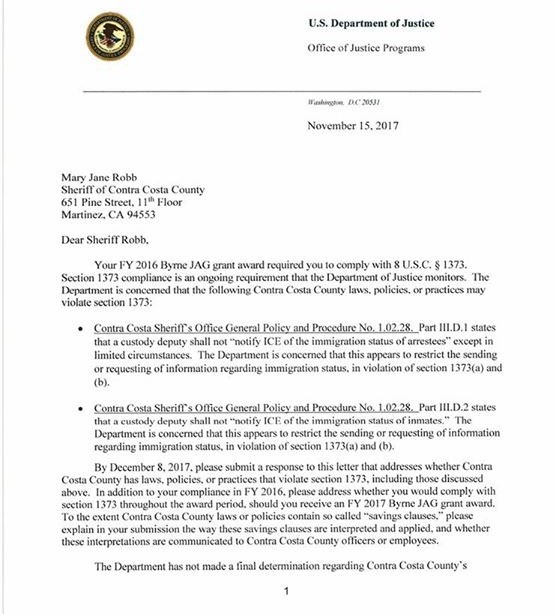
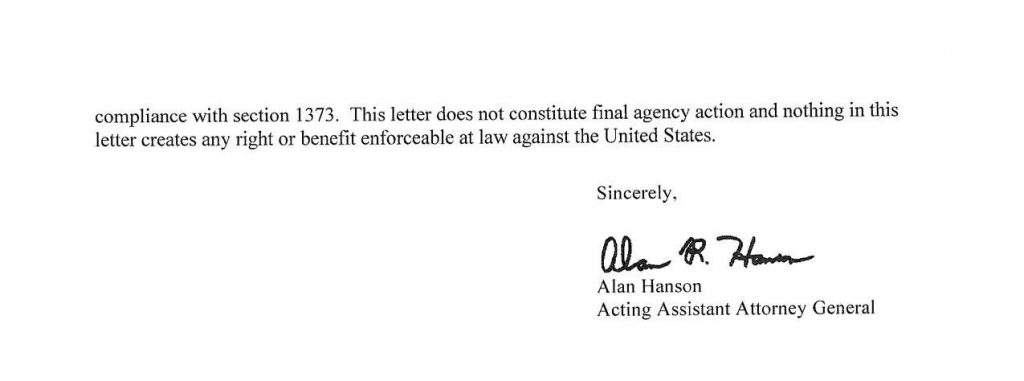
The Sheriff-Coroner Office received on November 15 a letter from U.S. Department of Justice Acting Assistant Attorney General Alan Hansen inquiring whether the sheriff office is in conflict with Executive Order 1373 if a custody deputy does not inform ICE of the immigration status of inmates. “The department is concerned that this appears to restrict the sending or requesting of information regarding immigration status in violation of section 1373 (a) and (b),” wrote Hansen.

The letter was directed to Mary Jay Robb, the Chief for Management Services in the Sheriff’s Office.

Livingston would not respond to calls from the Herald with questions about the letter. The Sheriff’s Public Information Officer Jimmy Lee instead referred calls to County Administrator David Twa.

One program that wasn’t included in the DOJ inquiry is the Stand Together CoCo program, which the Board of Supervisors approved in September with $500,000 in state AB 109 funds to help launch the program.  The Public Defender’s Office is overseeing the program.

Twa confirmed that the DOJ letter is about the state’s sanctuary policies, not the county’s new policy that will not go into effect until next year.

County Has Until Today to Respond to DOJ

The county needs to respond to the DOJ inquiry by today, Friday, Dec. 8.

The Stand Together program will monitor ICE arrests of undocumented immigrants in the county.  The program that is also funded through private sources will have counselors visiting undocumented immigrants held at West County Jail.  The Stand Together CoCo program expects to counsel up to 180 undocumented immigrants held at the jail during the first six months of the program.  The program gets underway January 1, 2018.

Olympic Gold Medalist Eddie Hart to sign his book about tragedy and triumph at the ’72 games in Antioch, Dec. 18

Thursday, December 7th, 2017

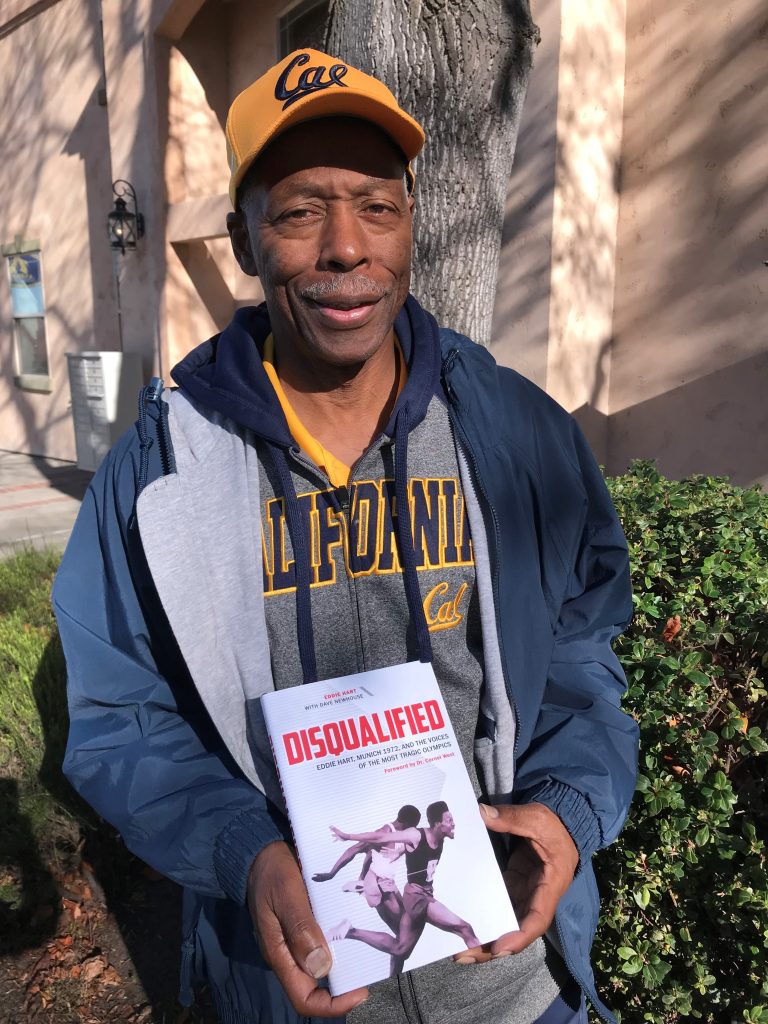
Eddie Hart with his new book entitled “Disqualified”.

Meet the two-time World Record-holder at Barnes & Noble

By Allen Payton

Having previously equaled the World Record, Martinez-born and Pittsburg-raised Eddie Hart was a strong favorite to win the 100-Meter Dash at the 1972 Olympics in Munich, Germany. The inexplicable happened, he was disqualified for arriving seconds after his quarterfinal heat. Ten years of training to become the “World’s Fastest Human.” The title attached to the Olympic 100-meter champion was lost in a heartbeat. How could this have possibly happened on athletics’ biggest stage, the Olympic Games?

Hart provides his story in a new book he’s written with the help of friend and former Oakland Tribune sports reporter, Dave Newhouse, entitled “Disqualified – Eddie Hart, Munich 1972, and the Voices of The Most Tragic Olympics.”

A Champion Since High School

Hart moved to Pittsburg when he was eight years old, and attended Village Elementary and Central Junior High. He graduated from Pittsburg High in 1967 where he lettered every year as a member of the track team, in the 100, 200 and long jump. He won “the conference in four events, including the 4×100 relay in 1966, then he repeated in the 100 and 200 in 1967,” Hart shared.

He then went on to attend Contra Costa College in San Pablo.

“That’s where I really blossomed,” Hart said.

It’s where he won the 100 and 200 at the junior college state meet in 1969.

Hart then transferred to U.C. Berkeley where he majored in Physical Education, because he wanted to be a track coach. In his first year, he won the 100-meter race at the PAC-8 championships and placed second in the 200.

Then at the NCAA national championships that year, Hart won the 100 and running anchor, helped his team win the 4×100 relay, as well.

One of his teammates, Isaac Curtis, who went on to play wide receiver for the Cincinnati Bengals, came in second in that same 100-meter race, making it the only time in NCAA history that teammates from the same school placed first and second in the championship race.

“At the end of that year I made the U.S. national team and toured Europe for six weeks competing in various meets,” Hart shared. “We competed in France, in Russia and Oslo, and Sweden, also.”

Champion in the 5,000-meter Steve Prefontaine was on that same team.

“I knew Pre, well,” Hart said.

First Major Challenge

Then in 1971 he placed second in the 100 and third in the 200 at the NCAA Championships due to an injury earlier in the year, having missed half the season and not even competing in the conference championships.

First Comeback

Hart withdrew from school to train for the Olympics and became an assistant to the head track coach in 1972, at the same time. He entered open competition that year and during the meets Hart made the qualifying times in the 100. In fact, he missed the World Record by just 1/10th of a second running 10 flat at the West Coast Relays in Fresno.

Second Major Challenge

Three weeks before the Olympic trials Hart injured his right hamstring while running in the 200 at the U.S. Championships in Seattle. He couldn’t do any starts between that injury and his first race at the Olympic trials in Eugene, Oregon.

“It was terrifying,” he said. “It was tough.”

Then at the trials, “It was a nightmare,” Hart said. “Each race, everyone was ahead of me.  I just kept pulling up.”

Asked if he was hesitant, he replied, “Oh, very much so. I was afraid I was going to reinjure myself.”

“You have to run four races,” Hart explained.  “A heat, a quarterfinal, a semi-final and then the final.”

Second Comeback

In the semifinal I was fourth and they only took four to the final. “I barely made it,” he stated.

“It was a wind-aided race and the first five guys ran a 9.9 in the 100 meters and the fifth-place guy didn’t even qualify,” Hart continued. “I was the fourth guy and I was scared to death, because from the finals they only took the top three.”

In the blocks at the starting line, he was still thinking about his leg, which was bothering him.

“This was all the marbles right here, there was nothing to save,” he shared.

“The gun went off and I was in a dream,” Hart explained. “I ran the best race of my life.”

Before or after, “Ever,” he said. “That was it.”

“I was an Olympian, an Olympic trials champion and the World Record holder at 9.9,” Hart stated proudly.

“It was legal, not wind-aided,” he added.

Hart had equaled the World Record in the 100-meter dash, which had been achieved by only two others before. It wasn’t broken until 1991 when Carl Lewis ran it in 9.86.

He also qualified for the Olympics as the anchor for the U.S. Men’s 4×100 relay team, which was made up of the four finalists in the 100-meter race.

From Triumph to Tragedy

About a month later he was with the U.S. Olympic Team in Boden, Maine for a few weeks to train in similar weather as Munich, Germany. They then competed in Oslo, Norway, France and Italy before arriving in the Olympic Village just a few days before the Opening Ceremony.

A few days later he ran and won his heat.

“It was easier to make it to the finals at the Olympic games than it was to make the finals at the Olympic trials,” Hart shared. “Of the top 10 to 15 sprinters in the world, the top 10 were in the  U.S. at that time.”

After all three U.S. sprinters had won their heats, the coach said “let’s go back to the Olympic Village and rest” Hart explained, “because there was so much time between races. But, that was his schedule.”

The Village was only about a mile or less away from the Olympic Stadium. But, the coach had the incorrect time for the start of the quarterfinals.

They rushed back to the stadium, but it was too late for Hart.  He had missed his race and was disqualified. Thus, the title of his book.

Tragedy Ends in Triumph

Hart’s Olympic story didn’t end there. The following week after the tragic murder of the 11 Israeli team members had halted the games for a day for the memorial, Hart once again ran anchor for the U.S. 4×100 relay team. They won that race in World Record time and he became an Olympic Gold Medalist and a World Record holder, once again. See video of Hart’s leg of the race here.

Returning to Pittsburg he was met with celebrations by the Mayor of Pittsburg and the city.

Hart returned to college to complete his degree, and became a paid assistant track coach at Cal Berkeley. He has since started his philanthropic efforts through his Eddie Hart All In One Foundation which holds an Olympian Track Education Clinic at Pittsburg High, each year.

Faith has been a big part of his life, all of his life. Hart has been a member of Stewart Memorial Methodist Church in Pittsburg since elementary school. He’s taught Sunday School for 35 years and for the past 20 years he’s taught the men’s class.

Asked if faith played a part in his Olympic journey, Hart responded, “In every aspect. I grew up in the church, it couldn’t have been any other way.”

“I never prayed to God for success in track,” he shared. “I asked God to give me strength in life to face the challenges as they come.”

“My prayer is that His will be done. God is interested in spiritual things, in our soul not our flesh,” Hart continued. “Ultimately at the end of the day whatever physical things we’ve accomplished here will be left here. It’s about our souls which are eternal. Our flesh is going to burn up. The Bible is clear.”

Asked if his story will become a movie, Hart said, “We’re working on it.”

But, he has to think about who will play the part of him, he shared with a laugh.

His book includes a foreword by Harvard professor Dr. Cornel West who has been a friend since high school, and whose brother Cliff was Hart’s roommate at Cal.

See Eddie Hart and get your copy of his book signed on Monday, Dec. 18 at 7:00 p.m. at Barnes & Noble book store in Antioch at 5709 Lone Tree Way.

Interim Contra Costa District Attorney Becton announces she will run in next year’s election

Wednesday, December 6th, 2017

Board of Supervisors Chairman Federal Glover with Interim D.A. Diana Becton following her oath of office ceremony on Sept. 18, 2017. Photo by David Fraser, Office of Supervisor Federal Glover

Today, Wednesday, December 6, 2017, District Attorney Diana Becton issued the following statement:

“It’s official: today, I filed my papers to run for District Attorney of Contra Costa County.

“I was selected as District Attorney by the Board of Supervisors to restore faith and trust in the District Attorney’s Office in the wake of scandal. I have rolled up my sleeves and I am hard at work. I am committing to restoring integrity to the office. I am confident that I will succeed. I am a collaborative leader who knows how to get things done.

“We cannot continue to look at the criminal justice system in a vacuum. We need a broad, universal approach to how we prevent crime, make our communities safe, and treat everyone fairly.

“As a longtime judge of the Superior Court in Contra Costa County, I am proud of my reputation for hard work, fairness, and integrity. I will bring these qualities to the campaign trail – and to the job.”

In September, Becton was appointed by the Board of Supervisors to fill the position made vacant by the resignation of Mark Peterson. She joins Contra Costa County Senior Assistant District Attorney Paul Graves and Santa Clara County Supervising Deputy District Attorney Patrick Vanier who announced their campaigns and entered the race prior to Peterson’s resignation. The Primary Election will be held June 4, 2018. If no candidate receives a majority of vote, the top two candidates will face off in the General Election in November.

Allen Payton contributed to this report.
Dallas Ranch Middle School receives grant from Giants, Wells Fargo for high tech equipment

Monday, December 4th, 2017

SF Giants shortstop Brandon Crawford, with DRMS Principal Bridget Spires, student Joshua Pese, computer teacher Max Bridges and Jim Foley of Wells Fargo with the replica check. Photo courtesy of AUSD

Last week, San Francisco Giant Brandon Crawford and Jim Foley, Executive Vice president and President of Wells Fargo’s Pacific North Region presented checks to recipients of the KNBR Step Up to the Plate for Education grants program funded by Wells Fargo at AT&T Park. Through an open nomination process, schools applied to receive grants and winners were selected. Thirty-one Bay Area schools received $100,000 in grants to support their sports, musical, art and education programs.

Dallas Ranch Middle School received a $4,817.00 grant to purchase high-tech tools such as a Makerbot 3D printer, a video capable drone, and 3 Go-Pro cameras for students to create presentations, design products, and share digital videos using the school’s website and social media.