Archive for the ‘News’ Category

Reminder: Federal income tax filing and payment deadline extended to July 15, 2020

Wednesday, April 15th, 2020

The Treasury Department and the Internal Revenue Service are providing special tax filing and payment relief to individuals and businesses in response to the COVID-19 Outbreak. The filing deadline for tax returns has been extended from April 15 to July 15, 2020. The IRS urges taxpayers who are owed a refund to file as quickly as possible. For those who can’t file by the July 15, 2020 deadline, the IRS reminds individual taxpayers that everyone is eligible to request an extension to file their return.

This filing and payment relief includes:

The 2019 income tax filing and payment deadlines for all taxpayers who file and pay their Federal income taxes on April 15, 2020, are automatically extended until July 15, 2020. This relief applies to all individual returns, trusts, and corporations. This relief is automatic, taxpayers do not need to file any additional forms or call the IRS to qualify.

This relief also includes estimated tax payments for tax year 2020 that are due on April 15, 2020.

Penalties and interest will begin to accrue on any remaining unpaid balances as of July 16, 2020. You will automatically avoid interest and penalties on the taxes paid by July 15.

Individual taxpayers who need additional time to file beyond the July 15 deadline can request a filing extension by filing Form 4868 through their tax professional, tax software or using the Free File link on IRS.gov. Businesses who need additional time must file Form 7004.

State tax returns

This relief only applies to federal income returns and tax (including tax on self-employment income) payments otherwise due April 15, 2020, not state tax payments or deposits or payments of any other type of federal tax. Taxpayers also will need to file income tax returns in 42 states plus the District of Columbia. State filing and payment deadlines vary and are not always the same as the federal filing deadline. The IRS urges taxpayers to check with their state tax agencies for those details. More information is available at https://www.taxadmin.org/state-tax-agencies.


Antioch Council given two mid-year budget projections with reduced revenues due to coronavirus

Tuesday, April 14th, 2020

While both budgets project a healthy reserve with a transfer in from the Stabilization Fund, one budget projects the city “will completely run out of money in Fiscal Year ‘25”

By Allen Payton

During their meeting on Tuesday night, the Antioch City Council was presented with two proposed mid-year budgets for Fiscal Years 2019-21 for them to review and give input for a final vote on April 28. Both budgets show a deficit in Fiscal Year ‘19-20 of approximately $4 million mostly from a previous legal settlement and re-appropriated funds from the previous fiscal year. The results of the coronavirus pandemic is projected to have an impact on the proposed FY ‘20-21 budgets. See complete agenda item, here: 2019-21 Mid-Year Budget Review ACC041420

“This budget report is unique, as we are three to four weeks into the COVID-19 pandemic. It’s having an impact on revenue,” said City Manager Ron Bernal.

“We’ve prepared two budgets for council, tonight. We’ll come back on April 28 for a final, Mid-Year Budget that we’ll ask you to adopt. Then have us come back in August with a study session with a better idea of impacts of COVID-19,” he continued. “Fortunately, for the City of Antioch, our property taxes are well diversified. Antioch is in a good position. But what we want to do is make you aware that there is a possibility we could be running into difficulties.” See budget details, here: 2019-21 Mid-Year Budget Comparisons

According to the staff report, both budgets project healthy reserves at the end of each fiscal year and reflect a transfer in from the Stabilization Fund to balance the budget.

“The CAL-PERS (state’s public employee retirement) fund has lost a great amount of its value. So, that will have impacts for years to come,” Bernal explained. “There’s a lot of uncertainties in this budget. But we have enough certainties to ask for your input.”

“We really do not know how this is going to roll down to the City of Antioch. We have best projections on sales tax revenues,” said City Finance Director Dawn Merchant. “We are fortunate to have a Costco, Walmart and Target, all three businesses that are operating during this time.”

“The city could have a $4 million short fall in sales tax, next year. It will be a deferral. But, that’s only if all businesses take the sales tax deferral” being offered by the state, she explained.

Merchant said the budget version one expects that “sales tax will start to rebound in Fiscal Year ’22.”

In version two “the city completely runs out of money in Fiscal Year ’25,” she explained. “We don’t know where we’re going to lie. I don’t want to be too optimistic. But we want to be fiscally prudent, at this time.”

Mayor Sean Wright and the council members then offered direction to staff.

Wright proposed holding off on contributions to OPEB (Other Postemployment Benefits for retired city employees) of $1.3 million and $500,000 in one-time expenditures to “allow us to go into ‘20-21 without a deficit.”

His suggestions include the public information officer and risk manager positions.

“I’m a stickler on the OPEB,” said Council Member Lori Ogorchock. “On the other ones you mentioned, I don’t have a problem,” except for cutting the funds for median improvements.

“Related to the PIO…the current contract extension is through September ’20,” said Bernal. “So, we will have a $24,000 commitment to complete the contract.”

“It may be something to come back and consider in September, depending on how hard COVID hits us,” Wright responded.

“What if we look at version one and we come back closer to August and consider the changes we’re going to make?” asked Ogorchock “Do we have to before August or can we wait until August?”

“You can give direction to the city manager with positions and hold off on any definitive hiring. You do have that alternative…to stall on the hiring until we know more,” Merchant responded.

“I’m OK on holding off, that includes holding off on some of these projects, like the utility box (painting),” Wright said.

“We’re not going to get all these positions hired before April 28, not even until August,” Ogorchock responded. “I think if we go with version one…we are moving in a positive direction. Like Ron said, we are in a good position. Property taxes still have to be paid and the property values haven’t gone down.”

“Some of these have already gone out, correct?” Council Member Monica Wilson asked.

“We have the artists lined up, but we haven’t given them the work to do, yet,” Bernal explained. “What we have listed here are things we haven’t committed to, yet.”

“I’m OK with going forward with version one…if that’s what council wants to do,” Wright stated.

“I just want to make sure is we do include the $75,000 for the part-time unhoused resident coordinator for FY 20-21,” said Mayor Pro Tem Joy Motts. “I’m OK with going forward with versions one and two and reviewing it in August.”

“I’m OK with version one then going forward to August,” Wilson stated.

“I’m not for stopping anything. Let’s keep the ball rolling, particularly with OPEB,” Council Member Lamar Thorpe said.

“For the $850,000 in OPEB for Fiscal Year 2020, we have to put it in the budget by June 30th,” Merchant explained.

“If we have to do it by the final June meeting, we can hold off,” Ogorchock said.

“The direction I heard, Dawn was that we would keep rolling forward with the OPEB,” Wright stated.

Regarding the parking abatement team, “they’re pulling all those cars off our streets,” Ogorchock said.

“It’s not included in either budget version, so, it will add approximately $21,000,” Merchant said. “Council Member Thorpe said he was fine holding off on it.”

“We can hold off on deciding on it,” Motts said.

Merchant asked about Motts’ proposal to add in $75,000 for the unhoused resident coordinator.

“Let’s hold off on that so we can talk with our consultants,” Thorpe said.

The council held off making any cuts or additions to the proposed budgets, for now.

Approves $27 Million Settlement with Department of Water Resources

In other action, on a unanimous vote the city council approved the settlement agreement with the Department of Water Resources (“DWR”) of $27 million, replacing the 1968 agreement over the city’s pre-1914 rights to the river water. (See related article)

Approves Urgency Ordinance on Land Use, Subdivision and Zoning Applications

In addition, in response to the Emergency Declaration by City Manager Bernal on March 17, the council approved an “Urgency Ordinance Suspending Automatic Deemed Complete and Approval Deadlines for all Land Use, Subdivision, and Zoning Applications”.

According to the staff report by Forrest Ebbs, Community Development Director, “Both state and local land use laws impose a variety of timelines for the review and action on land use applications. Failure to comply with these timelines can lead to applications being deemed incomplete at the front end of the process or actually not being deemed approved at the back end. In either event, the impact of failing to meet these timelines is limit on the City’s (and the public’s) ability to review and comment on pending land use applications.”

Due to the current situation “it is difficult or impossible for the City of Antioch to process land use applications within normal time limits imposed by state and local laws,” Ebbs added in his report.

Formed Transitional Housing Ad Hoc Committee

In the council’s final action of the meeting, they approved the formation of a Transitional Housing Ad Hoc Committee. Motts and Thorpe want the City Council to continue their work helping the homeless, now that the Homeless Encampment Ad Hoc Committee was dissolved, earlier this year.

The committee will “explore transitional housing opportunities, which are designed to provide homeless individuals and families with the interim stability and support to successfully move to and maintain independent permanent housing, and support services for unhoused residents of the City of Antioch.”

The council approved a motion to form the committee for six months and appoint Motts and Thorpe to serve on it.

The meeting was adjourned at 9:03 p.m.

Antioch Council recognizes REACH Project’s 50th anniversary

Tuesday, April 14th, 2020

REACH Project’s Antioch office on D Street. Photo from rehabreviews.com.

By Allen Payton

During their meeting on Tuesday night, April 14, 2020, the Antioch City Council approved a resolution recognizing the 50th anniversary of the REACH Project, which helps youth experiencing drug and alcohol abuse.

“It’s really amazing. Thank you so much for the proclamation,” said Shirley Marchetti, the founder of the REACH Program. “It’s amazing to be talking to the council tonight. Fifty years ago, I stood there with Chief Carlson and mayor that night, sharing our concerns about youth and drugs. We did what the council told us. Thank you for still being there and supporting us. The proclamation simply shows how blessed I am…someone took the chance on me and the mission we were on.”

“I need to thank my family, all of them have worked with me,” she continued. “Now, my son Mickey works with me and is the Executive Director allowing me to retire.”

She also thanked “Betty Inzerillo, who is still connected to REACH.”

“This type of thing just wasn’t done, where cities, law enforcement, schools and citizens took on the responsibility to work together,” Marchetti stated. “So, I’m thankful for all the workers…and those who are there, now risking their lives. I would be there, too but my son, Mickey and Chief Brooks has me locked down.”

“I want to thank the mother of Joy Motts. I don’t know what we would have done without here. I thank Mary Rocha. I thank you all for me being this blessed,” she added.

“It was an honor be part of the inception of REACH,” said Mayor Pro Tem Motts. “I’m proud my mom was able to be part of it.”

“Congratulations, Shirley,” added Mayor Sean Wright.

On April 1st the following message was posted on the Antioch Police Department’s Facebook page:

“In some happy news, the REACH Project is celebrating 50 years of service to the youth and families in our community. Here is a message from REACH Director, Mickie Marchetti, about this milestone:

‘April 1, 1970 – April 1, 2020

In 1968 a small group of Antioch parents, led by Shirley Marchetti, created REACH Project in response to the damages of alcohol and other drug abuse experienced among youth in the community.

The mission began through an Antioch City Council report issued by Police Chief E. A. Carlson illustrating the needs for community-based prevention, intervention and treatment.

With initial funding acquired in 1970 and in conjunction with Antioch Police Department, Antioch Unified School District and Contra Costa Health Services Department, REACH Project established a “Linking Model” of innovative community-based programs.

REACH Project has delivered educational, counseling and treatment services for Antioch youths, adults and their families including first of its kind programs such as the Youth Intervention Program as a family-based alternative to the Juvenile Justice System, REACH Within School for severely high-risk teen girls and Grandparents raising grandchildren.

On April 1, 2020, REACH Project and Shirley Marchetti celebrate 50 years of community work joining local law enforcement, education, health services, businesses and parent groups into a shared responsibility model of long-standing and community relevant family-based services.

Thank you, REACH, for your years of service to this community and congratulations!’”

Following is the Proclamation approved by the city council:

IN HONOR OF

REACH Project 50 Year Anniversary

WHEREAS, in 1968 a small group of Antioch parents, led by Shirley Marchetti,

created REACH Project in response to the damages of alcohol and other

drug abuse experienced among youth in the community;

WHEREAS, the mission began through an Antioch City Council report issued by

Police Chief E. A. Carlson illustrating the needs for community-based

prevention, intervention and treatment;

WHEREAS, with initial funding acquired in 1970 and in conjunction with the

Antioch Police Department, Antioch Unified School District and Contra

Costa Health Services Department, REACH Project established a

“Linking Model” of innovative community-based programs;

WHEREAS, REACH Project has delivered educational, counseling and treatment

services for Antioch youths, adults and their families including first of its kind

programs such as the Youth Intervention Program as a family-based

alternative to the Juvenile Justice System, REACH Within School

for severely high-risk teen girls and Grandparents Raising

Grandchildren; and

WHEREAS, April 1, 2020, REACH Project and Shirley Marchetti celebrated 50

years of community work, joining local law enforcement, education, health

services, businesses and parent groups into a shared responsibility model

of long-standing and community-relevant family-based services.

NOW, THEREFORE, I, SEAN WRIGHT, Mayor of the City of Antioch,

do hereby salute REACH Project for its long-standing dedication, support and

positive influence on the City of Antioch.

County health officer suspends intakes, orders social distancing at homeless shelters

Tuesday, April 14th, 2020

ORDER OF THE HEALTH OFFICER OF THE COUNTY OF CONTRA COSTA

No. HO-COVID19-07

SUSPENDING INTAKES AT HOMELESS SHELTERS

SOCIAL DISTANCING AT HOMELESS SHELTERS

DATE OF ORDER: April 14, 2020   Please read this Order carefully. Violation of or failure to comply with this Order is a misdemeanor punishable by fine, imprisonment, or both. (California Health and Safety Code, § 120295.)
SUMMARY OF THE ORDER California is in a State of Emergency because of the Coronavirus Disease 2019 (COVID-19) pandemic. The spread of the novel coronavirus that causes COVID-19 is a substantial danger to the health of the public within the County of Contra Costa (“County”). COVID-19 can easily spread between people who are in close contact with one another. This Order is issued based on scientific evidence and best practices as currently known and available to protect vulnerable members of the public from avoidable risk of serious illness or death resulting from exposure to COVID-19. The age, condition, and health of a significant portion of the population of the County place it at risk for serious health complications, including death, from COVID-19. There is growing evidence of transmission risk from infected persons before the onset of symptoms. Thus, all individuals who contract COVID-19, regardless of their level of symptoms (none, mild or severe), may place other vulnerable members of the public at significant risk. Currently, there is no vaccine available to protect against COVID-19 and no specific treatment. The Health Officer of the County of Contra Costa has determined that there is an increased risk of COVID-19 among persons living in large homeless shelters, and that the shelters must be depopulated temporarily to help slow COVID-19’s spread and prevent the healthcare system in the County from being overwhelmed. On April 14, 2020, the depopulation of Bay Area Rescue Mission located at 200 Macdonald Avenue, Richmond CA 94801 (“the Shelter”), will commence.

UNDER THE AUTHORITY OF SECTIONS 101040 AND 120175 OF THE CALIFORNIA HEALTH AND SAFETY CODE, THE HEALTH OFFICER OF THE COUNTY OF CONTRA COSTA (“HEALTH OFFICER”) ORDERS:

  1. Commencing on April 14, 2020 at 2:00 p.m., the owner and operator of the Shelter (collectively “Shelter Operator”) and all staff members and volunteers who work in the Shelter shall suspend the intake of persons to reside at the Shelter, including but not limited to accepting applications, conducting interviews and background checks, or otherwise authorizing any person to stay overnight at the Shelter if the person is not a resident of the Shelter as of the time and date set forth above.
  2. To the extent that the Shelter Operator currently provides or arranges for services to be provided to residents of the Shelter or other homeless persons, other than providing space for overnight stays, those services may continue to be offered, but only on the condition that all participants practice social distancing as set forth in Paragraph 3.
  3. All residents of and other persons who enter the Shelter shall practice social distancing by remaining at least 6 feet away from all other persons while in the Shelter.
  4. This Order shall become effective at 2:00 p.m. on April 14, 2020 and will continue to be in effect until it is extended, rescinded, superseded, or amended in writing by the Health Officer.
  5. Copies of this Order shall promptly be: (1) made available at the Office of the Director of Contra Costa Health Services, 1220 Morello Avenue, Suite 200, Martinez, CA 94553; (2) posted on the Contra Costa Health Services website (https://www.cchealth.org); and (3) provided to any member of the public requesting a copy.
  6. If any provision of this Order or its application to any person or circumstance is held to be invalid, then the reminder of the Order, including the application of such part or provision to other persons or circumstances, shall not be affected and shall continue in full force and effect. To this end, the provisions of this Order are severable.
  7. Questions or comments regarding this Order may be directed to Contra Costa Health Services at (844) 729-8410.

IT IS SO ORDERED:

Chris Farnitano, M.D. Health Officer of the County of Contra Costa   Dated: April 14, 2020

Gov. Newsom unveils six indicators he will consider before modifying stay-at-home order

Tuesday, April 14th, 2020

SACRAMENTO (April 14, 2020) – Governor Gavin Newsom today unveiled six key indicators that will guide California’s thinking for when and how to modify the stay-at-home and other orders during the COVID-19 pandemic. (View presentation here)

The Governor noted that the progress in flattening the curve, increased preparedness of our health care delivery system and the effects of other COVID-19 interventions have yielded positive results. However, these actions have also impacted the economy, poverty and overall health care in California. Any consideration of modifying the stay-at-home order must be done using a gradual, science-based and data-driven framework.

“While Californians have stepped up in a big way to flatten the curve and buy us time to prepare to fight the virus, at some point in the future we will need to modify our stay-at-home order,” said Governor Newsom. “As we contemplate reopening parts of our state, we must be guided by science and data, and we must understand that things will look different than before.”

Until we build immunity, our actions will be aligned to achieve the following:

  • Ensure our ability to care for the sick within our hospitals;
  • Prevent infection in people who are at high risk for severe disease;
  • Build the capacity to protect the health and well-being of the public; and
  • Reduce social, emotional and economic disruptions

California’s six indicators for modifying the stay-at-home order are:

  • The ability to monitor and protect our communities through testing, contact tracing, isolating, and supporting those who are positive or exposed;
  • The ability to prevent infection in people who are at risk for more severe COVID-19;
  • The ability of the hospital and health systems to handle surges;
  • The ability to develop therapeutics to meet the demand;
  • The ability for businesses, schools, and childcare facilities to support physical distancing; and
  • The ability to determine when to reinstitute certain measures, such as the stay-at-home orders, if necessary.

The Governor said there is not a precise timeline for modifying the stay-at-home order, but that these six indicators will serve as the framework for making that decision.

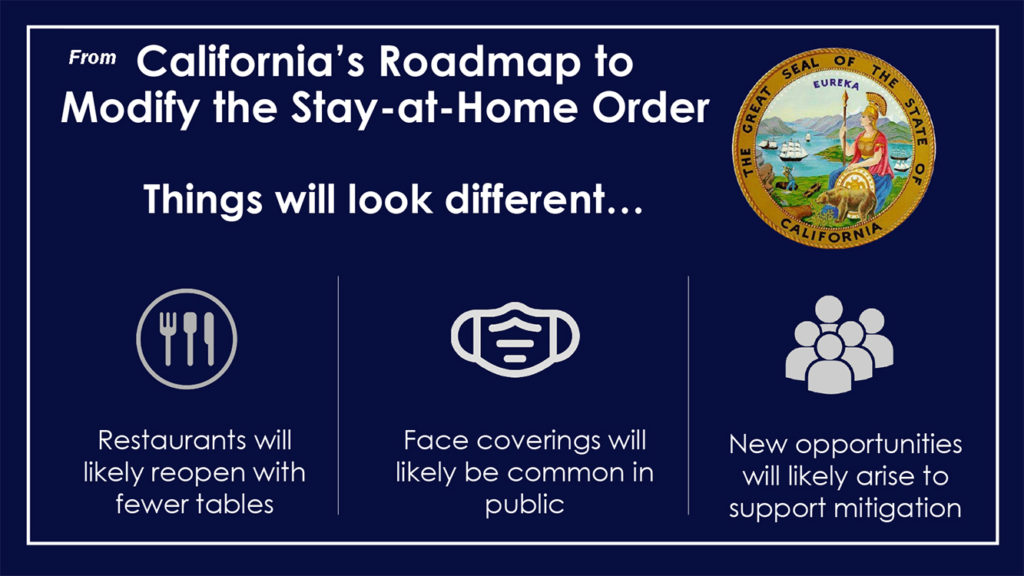
He also noted that things will look different as California makes modifications. For example, restaurants will have fewer tables and classrooms will be reconfigured.

For more information on California’s response, visit covid19.ca.gov.

Rep. DeSaulnier’s sons announce he’s out of intensive care

Tuesday, April 14th, 2020

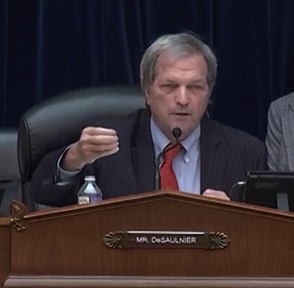
YouTube video screenshot of Rep. Mark DeSaulnier (D-CA7) speaking during July 2019 House Oversight and Reform Committee Hearing.

Washington, D.C. (April 13, 2020) – “Our dad is a fighter, he has made good progress, and today he moved out of the intensive care unit and will continue to be treated in the hospital for non-COVID pneumonia, and begin a journey towards recovery,” said Tristan and Tucker DeSaulnier, Congressman Mark DeSaulnier’s sons. “This would be difficult enough at any time, but given the daily dangers we all face from the coronavirus, his path ahead is especially complicated.”

“Heartfelt concerns and well-wishes from the community, for whom he cares so deeply, have kept dad going, and we can’t thank everyone enough,” they continued. “We appreciate the kindness during this difficult time, and we hope that you can continue to offer support and time as he heals.

“We are incredibly grateful for the tireless efforts of the ICU doctors, nurses, and hospital staff who cared for our dad and go above and beyond for everyone who enters their doors,” Desaulnier’s sons added.

On Friday night, March 13, DeSaulnier “was admitted to a local hospital to treat complications of pneumonia from a traumatic rib fracture that occurred after falling during a run,” according to a previous report. His health then deteriorated according to a subsequent report.

DeSaulnier represents California’s 11th Congressional District which includes parts of Antioch and most of Contra Costa County, in the U.S. House of Representatives.

Allen Payton contributed to this report.

Newsom, Oregon and Washington governors announce western states pact for reopening economies

Monday, April 13th, 2020

States agree region will move toward reopening based on health outcomes

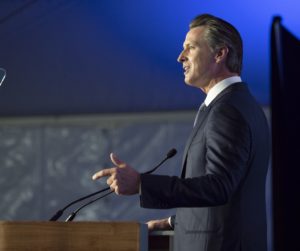
Gov. Newsom. Photo: Office of the California Governor.

SACRAMENTO (April 13, 2020) — Today, California Governor Gavin Newsom, Oregon Governor Kate Brown and Washington Governor Jay Inslee announced an agreement on a shared vision for reopening their economies and controlling COVID-19 into the future.

Joint statement from the Governors:

“COVID-19 has preyed upon our interconnectedness. In the coming weeks, the West Coast will flip the script on COVID-19 – with our states acting in close coordination and collaboration to ensure the virus can never spread wildly in our communities.

We are announcing that California, Oregon and Washington have agreed to work together on a shared approach for reopening our economies – one that identifies clear indicators for communities to restart public life and business.

While each state is building a state-specific plan, our states have agreed to the following principles as we build out a West Coast framework:

–Our residents’ health comes first. As home to one in six Americans and gateway to the rest of the world, the West Coast has an outsized stake in controlling and ultimately defeating COVID-19.

–Health outcomes and science – not politics – will guide these decisions. Modifications to our states’ stay at home orders must be made based off our understanding of the total health impacts of COVID-19, including: the direct impact of the disease on our communities; the health impact of measures introduced to control the spread in communities —particularly felt by those already experiencing social disadvantage prior to COVID-19; and our health care systems’ ability to ensure care for those who may become sick with COVID-19 and other conditions. This effort will be guided by data. We need to see a decline in the rate of spread of the virus before large-scale reopening, and we will be working in coordination to identify the best metrics to guide this.

–Our states will only be effective by working together. Each state will work with its local leaders and communities within its borders to understand what’s happening on the ground and adhere to our agreed upon approach.

Through quick and decisive action, each of our states has made significant progress in flattening the curve and slowing the spread of COVID-19 among the broader public. Now, our public health leaders will focus on four goals that will be critical for controlling the virus in the future.

  • Protecting vulnerable populations at risk for severe disease if infected. This includes a concerted effort to prevent and fight outbreaks in nursing homes and other long-term care facilities.
  • Ensuring an ability to care for those who may become sick with COVID-19 and other conditions. This will require adequate hospital surge capacity and supplies of personal protective equipment.
  • Mitigating the non-direct COVID-19 health impacts, particularly on disadvantaged communities.
  • Protecting the general public by ensuring any successful lifting of interventions includes the development of a system for testing, tracking and isolating. The states will work together to share best practices.

COVID-19 doesn’t follow state or national boundaries. It will take every level of government, working together, and a full picture of what’s happening on the ground.

In the coming days the governors, their staff and health officials will continue conversations about this regional pact to recovery.”

Contra Costa Health order requires masks, temperature checks for health facility visitors

Monday, April 13th, 2020

By Kim McCarl, Assistant to the Director, Communications, Contra Costa Health Services

Residential care and other licensed healthcare facilities in Contra Costa County must screen all staff and visitors for signs of illness and adhere to a strict masking policy, according to a new health officer order that begins Tuesday.

The order is intended to protect medically vulnerable patients and reduce the spread of COVID-19 within the facilities that care for them, Contra Costa Health Officer Dr. Chris Farnitano said.

“The age and health of many county residents, particularly those living in congregate care settings, places them at higher risk of serious health complications, including death, from COVID-19,” Farnitano said. “This order is another precaution we can take as a community to protect our vulnerable residents.”

The order applies to licensed residential care facilities, including nursing and senior care facilities, psychiatric facilities, group homes, residential recovery houses and homeless shelters.

Beginning Tuesday, April 14, anyone who is not a patient or resident at an applicable facility must submit to temperature and symptom screening, and facilities must exclude anyone who has had symptoms of respiratory illness or fever in the past seven days, or a temperature of 100 degrees Fahrenheit or higher.

The order does not apply to facility patients or residents, or people seeking care for their symptoms.

Facilities must now log screenings of staff and visitors, and staff and visitors must wear surgical masks, or cloth masks if surgical masks are not available, and practice physical distancing at the facility.

Facilities with known or suspected COVID-19 cases must notify emergency dispatchers and ambulance transporters of the presence of the virus at the facility, and the COVID-19 status of any patient transported to or from the facility.

Licensed care facilities are also now required to minimize the staffing of employees working at multiple facilities, and to keep records of any employees who worked at another healthcare facility during the previous 14 days.

Visit cchealth.org/coronavirus to read the order or for more information about COVID-19.