







Archive for the ‘News’ Category

Contra Costa Supervisors move forward half-cent sales tax increase for November ballot, extend rental eviction moratorium

Thursday, July 16th, 2020

Andersen only one to vote against tax increase measure; support Martizians for Black Lives and mural; approve Grand Jury report on wildfire preparedness; finalize recruitment process for new County Administrator

By Daniel Borsuk

Just as Contra Costa County’s top public health official Anna Roth informed the Contra Costa County Board of Supervisors  on Tuesday the number of COVID-19 positive cases has risen to 2,586 cases, an increase from 92 cases three weeks earlier, and with 79  COVID -19 stricken patients in county hospitals, up from 35 patients in county hospital six weeks previously, Supervisors reacted swiftly by extending a county-wide ordinance prohibiting rental evictions and rental increases until September 30.

Supervisors received overwhelming telephone citizen support to extend the ordinance’s benefits to renters and small businessowners two and half months during Tuesday’s teleconference meeting.  The ordinance that had protected tenants from evictions and rent increases would have expired on Wednesday, July 15.

The new ordinance won unanimous support from supervisors.

“The emergency is not over with the COVID 19 pandemic.  The economic impact our residents face has not subsided, said Board Chair Candace Andersen in a statement.  “We sincerely hope passage of this new ordinance to extend the eviction protection of rent freeze will continue to protect renters and small businesses even as landlords and renters work together to have tenants pay what they can over a longer period of time.

The ordinance contains a no-fault provision that landlords cannot increase the rent on a residential property until Sept. 30, Andersen said in her statement. It applies to all 19 cities in the county as well as all unincorporated areas.

Support Placing Half-Cent Sales Tax Increase on Ballot on Split Vote

The Supervisors, on a 4-1 vote, also flashed the green light to allow county officials to proceed in drafting a county-wide ballot measure possibly for the November election for a half-cent sales tax increase to support county services.

Supervisors reviewed findings from a poll that cost $10,000 and conducted by FM3 Research that found  among 666 persons who were polled, “To keep Contra Costa’s regional hospital open and staff; fund community health centers; provide timely fire and emergency response; support crucial safety-net services; invest in early childhood services; protect vulnerable populations; and for other essential county services, shall the Contra Costa County measure levying a half-cent sales tax, exempting food sales, providing an estimated $81,000,000 annually that the State cannot take, requiring fiscal accountability, with funds benefitting County residents, be adopted?”

The FM3 Research poll found that 62 percent of the respondents would possibly support a tax measure, 31 percent oppose, and 7 percent had no response.

Board Chair Candace Andersen, who represents District 2, cast the lone no vote against the sales tax proposal saying she had “serious concerns” about the measure.  The supervisor from Danville said “it would add further tax burdens to families now stressed by the economic impacts of the  COVID 19 pandemic restrictions.”

“A sales tax is the most regressive form of taxation for those who can least afford it. I think the timing is really, really off,” she added.

But District 1 Supervisor John Gioia of Richmond, who has constantly defended the need for a countywide sales tax to support county services, said, “The need is more apparent now that county services are underfunded and need additional tax support.”


The tax increase would require support of a 50% plus one simple majority of voters to pass. The Supervisors have until August 7 to place the measure on the November ballot. According to the Contra Costa County Elections website, supporters and opponents would have until August 19 to file Arguments in Favor or Against and until August 24 to file rebuttals.

Support Martizians for Black Lives & Mural

Supervisors approved, without opposition, a resolution “supporting Martizians for Black Lives in their legal public commentary through their ‘Blacks Lives Matter’ mural, and strongly condemns those who illegally deface this mural as a racist and illegal act.”  The resolution is in reference to the Black Lives Matter mural that was painted and temporarily defaced in front of the Martinez court house with black paint by a woman and assisted by a man, who said they were defacing the mural with comments such as “Racism is a lie,” “There is no racism,” “This is not happening in my town, “ “No one wants Black Lives Matter,” and “All lives matter.”

Contra Costa District Attorney Diana Becton stated, “The mural completed last weekend was a peaceful and powerful way to communicate the importance of Black lives in Contra Costa County and the country.  We must continue to elevate discussions and actually listen to one another in an effort to heal our community and country.”

Grand Jury Report on Wildfire Preparedness

A Grand Jury Report, “Wildfire Preparedness in Contra Costa County,” was approved as a consent item, but among the panel’s recommendations were:

“The Board of Directors of Contra Costa County Fire Protection District, East Contra Costa Fire Protection District, Rodeo-Hercules Fire Protection District, and San Ramon Valley Fire Protection District should consider directing their Fire Chief to update wildfire evacuation plans and incorporate pre-determined polygons and advanced routing technology, by June 30, 2021.”

The Grand Jury Report also states directors of the five county fire districts “should consider identifying funds to adopt or expand the use of new technologies, such as ground sensors, drones, satellites, and fire spotting cameras, to help detect fires in high-risk areas by June 30, 2021.”

Additionally, the report recommends that directors of the Contra Costa County Fire Protection District, East Contra Costa Fire Protection District, Moraga-Orinda Fire Protection District and Rodeo-Hercules Fire Protection District should review and consider an ordinance similar to the one the San Ramon Valley Fire Protection District passed that would enable their fire district to recover labor and equipment costs from PG&E for overseeing electrical utility work that presents a high fire risk by June 30, 2021. “

In other action, supervisors approved the sale of two parcels of county owned land at 1750 Oak Park Blvd. and 75 Santa Barbara Road, that is the site of the former Pleasant Hill Library, for $13.8 million to developer Davidon Homes. The site is part of a proposed development calling for the construction of a new City-owned library, 34 single-family homes, and open space.  No one spoke either in opposition or in favor of the sale.

Finalize Recruitment Process for New County Administrator

Supervisors also authorized recruitment consultant Peckham & McKenney, a Sacramento firm that supervisors had hired to recruit a new County Administrator to replace David Twa, who will retire at the end of this year to begin the recruitment process.  The supervisors had approved a $30,500 contract last month with Peckham & McKenney.

The successful candidate could earn an annual salary of as much as $381,000.

The recruiter has proposed a schedule that includes resume deadline of Sept. 22, preliminary interview running from Sept. 23 through Oct. 9, Recommendations of Candidates on Oct. 13, Interview – First Round the week of Oct. 26 and Second Round the week of Nov. 2.

The recruiters work is slated to be completed with the successful replacement of a new county administrator before Jan. 31, 2021, the end of the contract with Peckham & McKenney.

Antioch adds officer to police force from Alameda County Sheriff’s Office

Thursday, July 16th, 2020

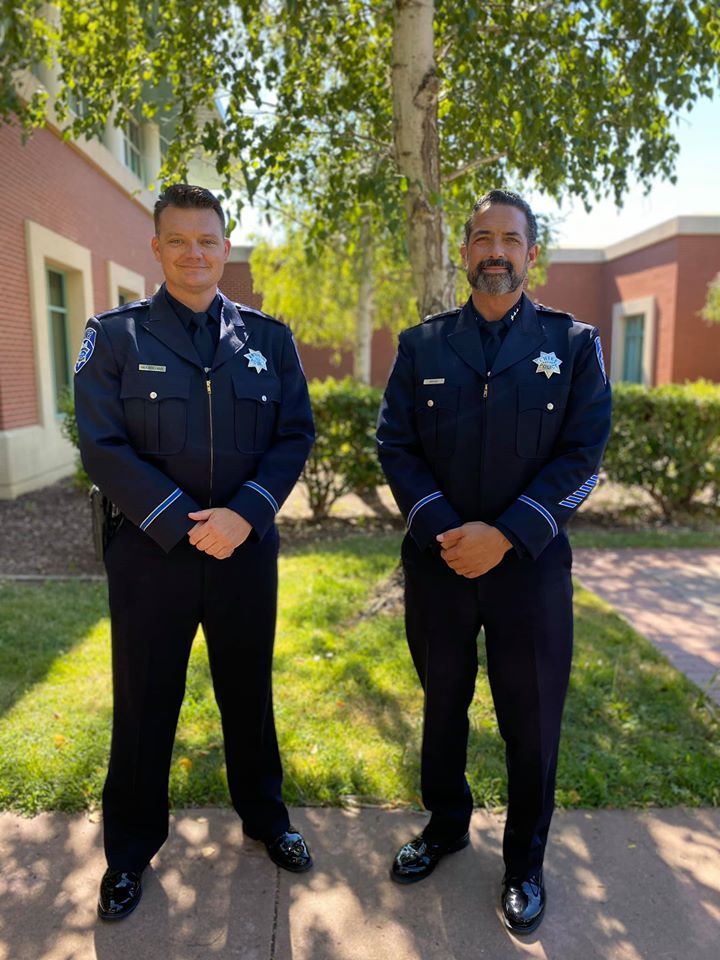
New Antioch Police Officer Matthew Mulholland with Chief T Brooks following his oath of office ceremony on Tuesday, July 14, 2020. Photo by APD.

By Antioch Police Department

On Tuesday, July 14, 2020, we welcomed Officer Matthew Mulholland!

Matt was born and raised in the Bay Area and graduated from California High School, where he played football. Matt graduated with a bachelor’s degree from California State University, Chico and joined the US Army Reserve. Matt is an Operation Enduring Freedom veteran and has served 12 years in the Army Reserve. Matt began his law enforcement career with the Alameda County Sheriff’s Office in 2013. While a Deputy Sheriff, Matt was assigned to security and classification in Santa Rita Jail and has spent the last 5 years assigned to patrol at both the Eden Township and Tri-Valley substations.

Matt is an avid Niners and Warriors fan and routinely attends games with family and friends. Matt loves to cook, hike, golf, and spend time with his daughter, girlfriend, and dog “Dude”. Matt enjoys traveling and has been to 27 states and 16 countries.

We were not able to hold our normal swearing-in for Matt due to still practicing social distancing. If you happen to see Matt patrolling our streets, please say hello.

Welcome to Antioch, Matt!

Pittsburg man identified in fatal stabbing following shooting of other man in Antioch last Wednesday

Thursday, July 16th, 2020

By Allen Payton

The Contra Costa County Coroner’s Office has identified the man who died from multiple stab wounds after shooting another man in a fight in Antioch, last Wednesday, July 8, as “Richie Asidanya, a 35-year-old black male out of Pittsburg.”

The man who was shot by Asidany and stabbed him multiple times was not identified by Antioch Police.

“Right now, it’s a self-defense case from what we’re getting so far,” said Lt. John Fortner. “We’re confirming all the information and everything we have corroborates that. Richie Asidanya is known in the area and not in a good way. He was a drug dealer. But we don’t know the connection with the victim. The investigation is still ongoing.”

Original Antioch Police Press Release:

On July 8th, 2020 at 9:08 AM, Antioch Police Department patrol officers were dispatched to the area of Cavallo Road and E. 18th Street for a shooting. Upon arrival, officers located a 35-year-old male (Asidanya) in front of the Romi’s Liquor & Food at 418 E 18th Street. That male was suffering from multiple stab wounds and despite lifesaving efforts by officers and the fire department, he succumbed to his injuries and was pronounced deceased at the scene. Officers also located a 48-year-old male lying in the intersection of Cavallo Road and E 18th Street with multiple gunshot wounds.

It was determined through the preliminary investigation that the 35-year-old male and the 48-year-old male were involved in a verbal and physical altercation with each other in the 1800 block of Cavallo Road, during which the 35-year-old male shot the 48-year-old male and the 48-year-old male stabbed the 35-year-old male. The 35-year-old male died at the scene and the 48-year-old male was transported to a local hospital and is currently in stable condition. The investigation is ongoing.

No further information will be released regarding this case at this time.

Anyone with information is asked to call Detective Cox at (925) 779-6866, or the Antioch Police Department non-emergency line at (925) 778-2441. You may also text-a-tip to 274637 (CRIMES) using the key word ANTIOCH.

Contra Costa Supervisors extend eviction protection, rent freeze through Sept. 30

Thursday, July 16th, 2020

Antioch real estate broker challenges legality

By Susan Shiu, Director, Office of Communications and Media, Contra Costa County

(Martinez, CA) – At a special Board meeting on July 14, 2020, the Contra Costa County Board of Supervisors unanimously passed an urgency ordinance that continues an eviction moratorium for residential tenants and small businesses in the County through September 30, 2020. The urgency ordinance also continues a moratorium on certain residential rent increases through September 30, 2020.

The new ordinance temporarily prohibits evictions of residential tenants in Contra Costa County impacted by the COVID-19 pandemic. The eviction moratorium also applies to tenants who are small businesses or non-profit organizations. A small business is an independently owned and operated business that is not dominant in its field of operation, has its principal office in California, has 100 or fewer employees, and has average annual gross receipts of $15 million or less over the previous three years.

“The emergency is not over with the COVID-19 pandemic. The economic impact our residents face has not subsided,” said Supervisor Candace Andersen, Board Chair. “We sincerely hope passage of this new ordinance to extend the eviction protection and rent freeze will continue to protect renters and small businesses, even as landlords and renters work together to have tenants pay what they can over a longer period of time.”

This law applies to properties in all 19 cities in the County and in all unincorporated areas. To the extent that a city has adopted a law on the same subject matter, then the city’s provisions would apply in that city.

Protections granted to residential renters and small businesses include:

  • Prohibition on Evictions Due to Unpaid Rent – A property owner cannot evict a residential tenant or small business tenant for failure to pay rent if a tenant demonstrates loss of income or out-of-pocket medical expenses related to COVID-19. This prohibition lasts through September 30, 2020.
  • Ban on No-Fault Evictions – A property owner cannot evict a residential tenant or small business tenant for any “no-fault” reason except to protect the health and safety of the owner or another tenant, to allow the owner or their immediate family to move into the residential unit or to remove the unit from the rental market. This ban lasts through September 30, 2020.
  • Grace Period to Pay Back Rent – Residential tenants or small business tenants who demonstrate loss of income or out-of-pocket medical expenses related to COVID-19 have until January 31, 2021 to pay past due rent. This does not relieve a tenant of their obligation to pay rent.
  • No Late Fees – A property owner may not charge or collect late fees for unpaid rent from a residential tenant or small business tenant who demonstrates loss of income or out-of-pocket medical expenses related to COVID-19. This ban on late fees extends until January 31, 2021.
  • Moratorium on Residential Rent Increases – A property owner may not increase rent on a residential property through September 30, 2020. State law prevents this freeze from applying to commercial tenancies and to certain residential properties, including residences built within the last 15 years and single family homes.

Read the full document Ordinance No. 2020-20 (PDF). Answers to Frequently Asked Questions (FAQs) regarding this ordinance will be available and updated on the County website soon.

Mark Jordan, an Antioch real estate broker who is suing the City of Antioch over their rent moratorium, emailed the Supervisors on Monday.

On 7/13/20, 12:52 PM, he wrote:

“Supervisors of the County of Contra Costa,

I am informed that on July 14, 2020 you as a Board shall consider if the Urgency Ordinance No. 2020-20 should be extended.

YOU SHOULD NOT EXTEND THIS URGENCY ORDINANCE.

  1. You have made no adjustments or given consideration to the damage done to landlords. You have not offered any tax relief. There exist significant questions of “equal protection under the law”.
  2. There is abuse of the situation by tenants not directly effected (sic) by the underlying pandemic.
  3. Courts are not open to Landlords to remove tenants for any matter. See California Judicial Council Directive. Other protections exist for maintaining “Shelter in Place”.
  4. The Urgency Ordinance is not specific enough as to what is a tenant “demonstration” or “substantial loss of income”.
    5. While your Counsel notes “Pending Legislation” your attorney does not inform you of the numerous filed lawsuits against the California Judicial Council, Counties and or Municipalities. There exist significant questions of “due process” and “equal protection”” both as to the Federal and State Constitutions.

Therefore, it would be a prudent decision to allow the Urgency Ordinance No. 2020-20 to expire and that the Ordinance be concluded with the grace period beginning on July 15th.

Sincerely,
Mark Jordan”

In response, Supervisor Karen Mitchoff who represents Central County in District 4 wrote,

“Dear Mr. Jordan,

Thank you for your email regarding the extension of the Rent increase and Eviction moratorium. Yesterday, the Board of Supervisors unanimously passed ordinance 2020-20, which continues the eviction moratorium for residential tenants and small businesses in Contra Costa County through September 30th, 2020. This urgency ordinance also continues a moratorium on certain residential rent increases through the same date.”

She then listed and repeated the various parts of the ordinance.

“This law applies to properties in all 19 cities in the County and in all unincorporated areas.

As we get closer to September 30, the Board of Supervisors will re-evaluate the moratorium given the changing dynamics presented by the COVID-19 pandemic, as well as pending legislation on a state and federal level relative to this topic. We continue to share with our state and federal partners the diversity of resources needed in our communities across the county.

While there were calls to extend the moratorium to 90 days after the Governor’s state of emergency has ended, we still have many small landlords throughout Contra Costa County. I have continually advocated to limit the grace period for repayment to 120 days because we must balance the needs of both landlords as well as renters. Additionally, in protecting tenants across the county, we have been advised by County Counsel that providing specific dates for expiry of the ordinance and for repayment makes our moratorium more readily defensible against potential legal challenges brought against it. With the rise in community spread of COVID-19, the Board of Supervisors are doing all we can to support struggling families and individuals across the county.

I hope you and your family are safe and healthy.

Sincerely,
Karen Mitchoff”

For information and resources, visit Contra Costa County at www.contracosta.ca.gov. For COVID-19 updates, visit Contra Costa Health Services at https://cchealth.org/coronavirus. If you have questions about the coronavirus, contact the multilingual Call Center 1-844-729-8410, open daily from 8 am to 5 pm (available in English and Spanish). For assistance after hours in multiple languages, please call 211 or 800-833-2900 or text HOPE to 20121.

President Trump announces modernized environmental review process for infrastructure projects

Wednesday, July 15th, 2020

https://www.youtube.com/watch?v=VIjnkkZQWhU

Start video at the 58 minutes mark.

Delivers Remarks on the Rebuilding of America’s Infrastructure: Faster, Better, Stronger

For the first time in 40 years, President Trump is taking action to right-size the Federal Government’s environmental review process to accelerate America’s infrastructure development

“By streamlining infrastructure approvals, we’ll further expand America’s unprecedented economic boom.” – President Donald J. Trump

On Wednesday, July 15, 2020 at the UPS Hapeville Airport Hub in Atlanta, Georgia, President Donald Trump offered the following remarks announcing a streamlined, modernized environmental review process to accelerate infrastructure projects in America.

Pres. Trump and the environmental review process charts, old on the right and the new, One Federal Decision policy process on the left. Video screenshot of his remarks July 15, 2020.

“For decades, the single biggest obstacle to building a modern transportation system has been the mountains and mountains of bureaucratic red tape in Washington, D.C.  Before I took office, reviews for highways ballooned to an average of nearly 750 pages in length.  And they were the good ones; they were the short ones.

And I know because I was in business for a long time, and I had to go through a process that was so ridiculous.  It was so ridiculous.  We went through a process for building buildings, usually.  It would take forever.  By the time you’d start building, the market changed.  You said, “You know, the market was good when we started; now the market is lousy.”  So you’d say, “The hell with it.  We won’t build.”  Sometimes you’d start building and you’d say, “That was a mistake.”

But we went through years and years of litigation and tumult, and it was just not good.  But you go through it to an even greater extent.

The maze-like approval process represented lobbyists that were very rich; they were making a lot of money.  I remember I’d go up to Albany, New York, and I’d see my lobbyists up there.  I said, “What are you doing here?”  I knew what they were doing.  They were trying to make it more difficult.  So you had to hire them for more and more work, spend millions and millions of dollars for nothing.

But too often, they caused massive delays, on top of everything else.  And that way, they got their fees over a longer period of time.  It’s one of the reasons why, for example, the average Atlanta driver spends an incredible 77 hours in traffic during a short period of time.

But all of that ends today.  We’re doing something very dramatic.  (Applause.)  We just completed an unprecedented — and I don’t want to say it’s absolutely unprecedented — top-to- bottom overhaul — should have been done years ago — of the infrastructure approval process; this approval process that has cost trillions of dollars over the years for our country and delays like you wouldn’t believe.

This is a truly historic breakthrough, which means better roads, bridges, tunnels, and highways for every UPS driver and every citizen all across our land.  Together, we’re reclaiming America’s proud heritage as a nation of builders and a nation that can get things done, because with these horrible roadblocks that were put in front of us, you couldn’t get it done.  No matter how good you were, you couldn’t get it done.  You’d wait and wait.  You’d go to the next step.  You’d say, ‘You can’t start the next step until you finish the first.’”

“Today’s action is part of my administration’s fierce commitment to slashing the web of needless bureaucracy that is holding back our citizens.  I’ve been wanting to do this from day one.  And we started it on day one — literally, on day one — but it takes a long time.  You have statutory requirements; you have a lot of different roadblocks even to changing it.  But the change you’ll be hearing about in a minute.  And it’s one of the biggest things we can be doing for our country.

The last administration increased the Federal Register by 16,000 pages of job-killing regulations.  Under my administration, we have cut the Federal Register by nearly 25,000 pages, more than any President in history, whether it’s four years, eight years, or in one case, more.  And we, frankly — this, I would think, is maybe the biggest of all.  We did the U.S. Waters — you saw that.  The U.S. Waters Act.  That was a big one.  That was a big one.  (Applause.)

I thought I was going to take a lot of heat when I did that, and instead it was just the opposite.  People came up — grown men that had never cried, even when they were a baby — they were standing behind me when I signed that bill at the White House, and they were crying.  They were crying — because we gave their life back to them.  That took their life away.  It took their livelihood away.  It was a big, big moment.

But this is a big moment today too — probably, possibly equally as big.  Today’s action completely modernizes the environmental review process under the National Environmental Policy Act of 1969.  We are cutting the federal permitting timeline from a staggering 10 years, 15 years, 18 years, 21 years — you know the story; you’ve seen it — projects that start out.  A young guy heads the project.  By the time it gets approved or disapproved — in many cases, disapproved; usually disapproved — he’s getting ready to retire.

‘So what did you do for your life?’  ‘I worked on one project.  We didn’t get it through in the end.’  No, we won’t get certain projects through for environmental reasons; they have to be environmentally sound.  But you know what?  We’re going to know in a year.  We’re going to know in a year and a half.  We’re not going to know in 20 years.

So we’re cutting the federal permitting timeline for a major project from up to 20 years or more — hard to believe — down to two years or less.  So we have it down to about two years right now, Elaine, and I think two years or less.  And our goal is one year.  And you may get disapproved.  It may — they may vote, at the end, they didn’t like something environmentally or safety-wise, and I’m all for that, but you’re not going to devote a lifetime to doing a project that doesn’t get approved or that gets approved.

And oftentimes, when it gets approved, it comes in at 10, 20, 30 times the cost.  There’s a highway in a certain state — a short road, not even a highway, I guess; more of a roadway.  And they put in.  It was a straight line from point to point.  By the time they finished it, 18 years later, it was this.  It cost tens of times.  It cost many, many, many times more than the original.  It’s a dangerous roadway because there’s turns.  You got to be in good shape.  You got to be wide awake to make those turns.  You got to see those things.  You have to see the guardrails.  Bom.  They had a simple, straight roadway, and now they build it — they end up — it took 17 years to get it approved.  Ended up costing many, many times what the original estimates were, and it’s no good.  It’s not good.

Under the last administration, a mere 7 percent of reviews for federal highways were processed within two years.  Now what we’re doing is the two years won’t be the exception; it’ll be the rule.  So what we’re doing is, we’re going to have that coming down at a much steeper rate.  This will reduce approval times for highways alone by at least 70 percent.  But the 70 percent is a very unambitious number because the number is going to be actually much lower than that.

At the heart of the reforms is the One Federal Decision policy.  It really spells it out when you hear that name: One Federal Decision.  Before, applicants for infrastructure permits were forced to spend years and years navigating a labyrinth of federal agencies, and every single one had a power to stop a project.  Anytime you went to an agency, they had a power to stop it.  And it would stop the project — not only stop it; but right in its tracks it would stop it.

With our reforms, there will be one quick and fair decision.  We’re going to give every project a clear answer: Yes or no.  Yes or no.  The two-year process, where just to submit is two years, is not acceptable.  It’s going to be a very quick ‘yes’ or ‘no,’ after study, but the studies are going to go quickly and they’re going to go simultaneously.

Close up of the two environmental review process charts

So if you’re in numerous agencies, you’re all going at the same time.  Instead of waiting for one, for two, for three — and oftentimes, you’d go through one, it would take you six months, and then you have to wait 90 days, and then you have a review period, and then you start the second one.  And now you go for another four months, and then you wait 90 days, and you have a review period.  And sometimes you had to go through 9, 10, 12 different agencies.  So even if you did absolute rapid, it was many, many years before you could even think about starting it.

We have up here, by the way — that’s a chart of the old system and the new system.  And I think the new system is better.  (Applause.)  I think it’s better not only in time; I think it’s better in terms of the process, and I think it’s better in terms of the importance from an environmental and a safety standpoint.

But take a look at that.  This is what you had to go through.  In fact, it was much more dramatic when I first came up with this about a year ago.  We took that and we rolled it out.  It was so dramatic.  And it just kept going and going.  So the difference is that.  And many of those steps, you had to wait before you could even think about going to the next one, and you had to get full approvals.

Any one of those colors, where there was a problem or a rejection, meant it was dead.  And now you go through this very simple, but very comprehensive solution.  And it’s a beautiful thing, especially if you understand construction and building, and other things beyond building, like I do.

At the same time, we’ll maintain America’s gold standard environmental protections.  The United States will continue to have among the very cleanest air and cleanest water on Earth — which we do now.”

MODERNIZING ENVIRONMENTAL REVIEWS: For the first time in 40 years, President Donald J. Trump is taking action to right-size the Federal Government’s environmental review process.

  • The Trump Administration is issuing a final rule that will modernize and accelerate environmental reviews under the National Environmental Policy Act (NEPA), so that infrastructure can be built in a timely, efficient, and affordable manner.
  • This marks the end of a multi-year review, which produced more than 1.1 million public comments and involved a broad range of stakeholders.
  • The final rule modernizes Federal NEPA regulations, including by codifying certain court decisions to clarify NEPA’s application and by expanding public involvement in NEPA reviews through the use of modern technology.
  • The rule also improves management by incorporating President Trump’s One Federal Decision policy, establishing time limits of two years for completion of environmental impact statements, when required, and one year for completion of environmental assessments.
  • Together, these common sense reforms will slash unnecessary government bureaucracy and accelerate important infrastructure projects all across the Nation.

STREAMLINING INFRASTRUCTURE APPROVALS: The Federal environmental review process has historically been far too complex, costly, and time consuming.

  • Since NEPA’s enactment, the environmental review process has been burdensome for both Federal agencies conducting reviews and Americans seeking permits or approvals.
  • Environmental impact statements average over 650 pages, and it takes Federal agencies on average four and a half years to conduct required reviews.
  • According to the Council on Environmental Quality, environmental impact statements for highway projects take more than seven years on average and often take a decade or more.
  • NEPA reviews are also frequently challenged in court, making it very challenging for businesses and communities to plan, finance, and build projects in the United States.

CUTTING RED TAPE: President Trump is reversing years of burdensome overregulation and administrative abuse, simultaneously ensuring meaningful environmental reviews and spurring economic growth.

  • President Trump is making good on his promise to conduct historic deregulation, removing job killing regulations that have stifled economic growth for far too long.
  • Already the President has reversed burdensome regulations like the Obama Administration’s Waters of the United States rule and Corporate Average Fuel Economy (CAFE) standards.
  • President Trump also did away with the Obama Administration’s expensive, heavy handed, and job-killing Clean Power Plan, replacing it with the much improved Affordable Clean Energy (ACE) Rule.
  • The President launched his Governors’ Initiative on Regulatory Innovation to cut outdated regulations, put people over paperwork, and align Federal and State regulations.
  • Under President Trump, the United States has remained a world leader in protecting the environment and reducing greenhouse gas emissions, while becoming the largest producer of oil and natural gas in the world.


Antioch Councilmembers Ogorchock, Thorpe to face off for re-election

Wednesday, July 15th, 2020

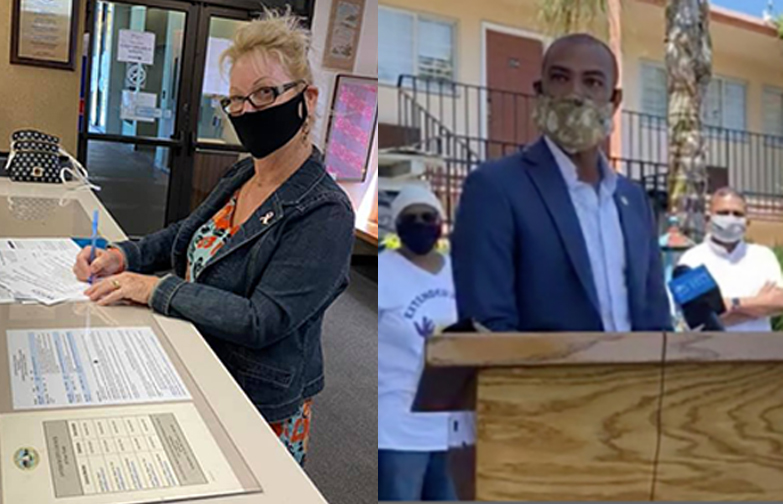
Councilmembers Lori Ogorchock and Lamar Thorpe on July 14, 2020. Photos from their Facebook pages.

By Allen Payton

Ending rumors that he might run for mayor, Antioch Councilman Lamar Thorpe pulled his nomination papers on Wednesday to run for reelection to the City Council, according to a report issued by City Clerk Arne Simonsen. It had been speculated for months by Antioch residents that Thorpe might choose to take on Mayor Sean Wright.

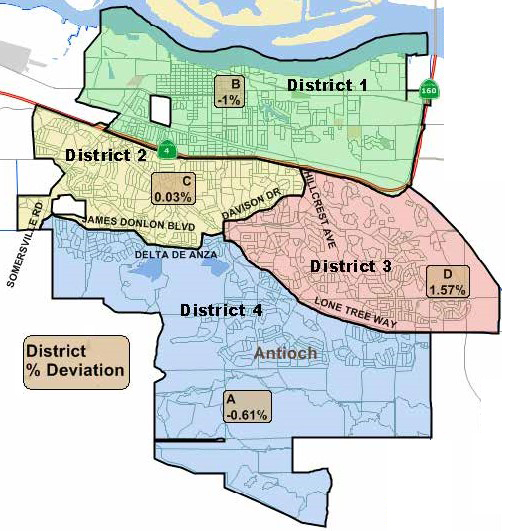
Instead he will be facing Councilwoman Lori Ogorchock, who already pulled papers, in the city’s new district-based election in November, as they both live in District 3.

The only council incumbent who has yet to pull nomination papers is Councilwoman Monica Wilson, who if she decides to run again, will face two potential challengers, including Police Crime Prevention Commission Chairman Sandra White.

As of Wednesday, no candidates for the three seats on Antioch Unified School District Board of Trustees in Areas 1, 3 and 4, have pulled their nomination papers, yet. Filing for city council, clerk and treasurer, as well as the three seats on the Antioch School Board are open until August 7.

Three possible challengers for Antioch mayor including former Planning Commission chairman

Tuesday, July 14th, 2020

Antioch City Council Districts 2020 Map.

Two possible challengers to face Mayor Pro Tem Joy Motts for council, including  former Mayor Pro Tem, Councilman and current Planning Commission Member Manny Soliz, Jr.

By Antioch City Clerk Arne Simonsen

The following Antioch residents have taken out Nomination Papers as of 5 p.m. July 14th for the following City offices:

Mayor

Sean Wright – Mayor of Antioch

Julio Mendez

Rakesh Kumar Christian – 2014 candidate for Governor of California

Kenneth Turnage II – former Antioch Planning Commission Chairman

Council District 1

Joyann Motts – Antioch Mayor Pro Tem

Manuel Soliz – former Antioch Mayor Pro Tem, Councilman and current Planning Commission Member.

Fernando Navarrete

Council District 2

Tony Tiscareno – former Antioch City Council Member

Michael Barbanica

Council District 3

Lori Ogorchock – Antioch City Council Member, former Mayor Pro Tem

Council District 4

Alex Astorga

Sandra White – Antioch Police Crime Prevention Commission Chairman

City Treasurer

None

City Clerk

None

This list will be updated when additional registered Antioch voters take out Nomination Papers. Filing closes August 7th and candidates have until then to turn in their completed paperwork.

Allen Payton contributed to this report.

Councilmembers propose leasing Antioch motel for homeless, possible FEMA trailer site

Tuesday, July 14th, 2020

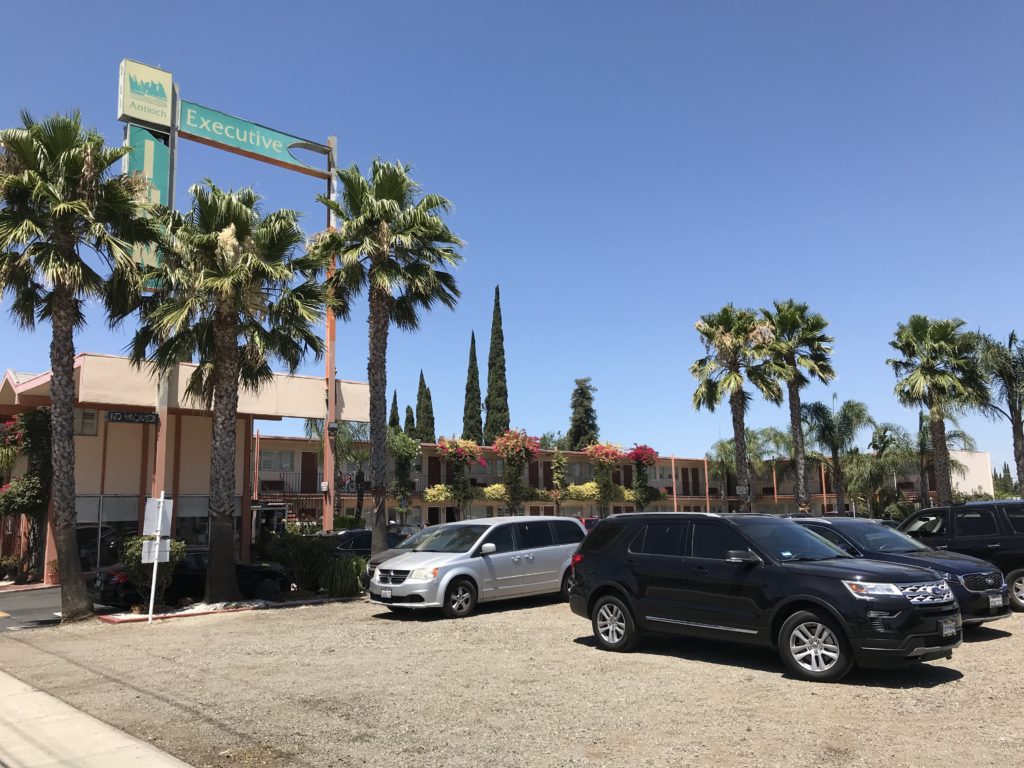
The Executive Inn on E. 18th Street. Photos by Allen Payton

Up to $1 million annual price tag

By Allen Payton

An idea first proposed seven years ago, by a then-homeless Antioch man, Rafael Scott and the late Mike Pollard, of the Golden Hills Community Church’s Community Outreach Center (COC) to use the unrented motel rooms at the Executive Inn, located next door at 515 E. 18th Street, received a breath of new life, Tuesday. Antioch Councilman Lamar Thorpe and Mayor Pro Tem Joy Motts, joined by advocates and representatives of ministries and other non-profit organizations serving the homeless in Antioch, announced on Tuesday a proposal to have the city lease the entire 32-room motel to serve as transitional housing.

Antioch Mayor Pro Tem Joy Motts speaks during the press conference.

Thorpe said he was making the proposal “as a member of the transitional housing task force (the new name for the Antioch City Council’s Homeless Encampment Task Force), with Mayor Pro Tem Joy Motts” and “working with our business community.”

“It was her vision, her idea,” he said. “So, she’s the reason we are here, today.”

“We started this journey almost two years ago. We really didn’t have any idea what we were getting into,” Motts said. “Homelessness is a very complex issues affecting many, many people. We did much, much research.”

“We were spending millions and millions of dollars moving people from one place to the next,” Motts stated. “It’s affecting our commercial businesses and our quality of life. We received trailers from the state we’re still trying to find a location for. I’m so thankful to the owners of the Executive Inn…to provide transitional housing…to get people off the streets. 97% who get into housing stay there.”

We are very fortunate to have a local hotel willing to work with the city to house people on a transitional basis,” Thorpe said.

Owner Summer Desai interviewed by a KPFA radio reporter in one of the rooms with a single king-size bed.

Summer and Jyoti Desai have owned the motel since 2004.

“The county voucher program lasts 16 days at a discounted rate year-round,” Summer shared. “The voucher is good for 16 days once a year. It’s mainly for jobless and homeless. It’s only temporary.”

They Desais work with the county’s action team for mental health services, with Red Cross and the Contra Costa Crisis Center, for people in crisis due to a fire or flooding of their home. They also work with Shelter, Inc.

“A lot of churches place their people, here,” he said. They work with the Golden Hills’ COC, next door to temporarily place people in the motel rooms, and allow them use the lot for parking.

A few years ago, Golden Hills Community Church expressed an interest in buying the motel, but the asking price of $3 million was too much. When asked if he knew about the councilmembers’ proposal, Scott said, “No. I just wish Mike were here to know about it.” Pollard passed away on Monday, July 6th. But, his and Scott’s idea may just soon be more than realized depending upon the vote of the city council. Their three-page plan proposed using the unrented rooms, which at that time were running about 40% of the motel’s occupancy, at a discounted rate for homeless individuals, as long as they were in a program at the COC to help them with such things as substance abuse problems.

The plan now is for the city to rent all the rooms at a discount, and connect those staying there with programs and services to help get them into permanent housing and mainstreamed back into society. Those staying at the motel could be there for as long as six months, Thorpe stated.

“I don’t have any problem people, here,” Summer shared. They pay a daily rate. We provide them service every day cleaning the rooms and beds. We are the only hotel that is pet friendly.”

Thorpe introduced others in attendance at the press conference. Including “our friends from Shelter, Inc. We have Love Never Fails. We have Michael Gabriel representing the downtown businesses that have been affected; Nichole Gardner, a leading advocate for homelessness in Antioch, Extended Hands Ministry, Patrice Guillory from Health Right 360 for people who have been previously incarcerated.

“This is a call to action to all East County cities. We can’t rely on the county to do all of this work,” Thorpe stated.

Nichole Gardner of Facing Homelessness in Antioch said, “I’m excited to see the city trying to do something for our homeless out on the streets. We need to get people off the streets and be productive members of society. She thanked the council members and motel owners. Mariah Williams was also in attendance representing Facing Homelessness in Antioch.

Vanessa Russell, the founder and executive director of Love Never Fails which focuses on human trafficking in Northern California, spoke next.

“Human trafficking is coming to Antioch,” she stated. “To get people housing is the right thing. Many men and women are sold online. We came into contact with two people who were being sold right here, in this area out of their hotel room.”

Russell spoke of the effort, “to come to these specific areas where people are being exploited…to provide them food, stabilization, counseling, services. IT training to give them sustainable jobs. Not giving them fish but teaching them to fish on a daily basis.”

“She has made a commitment that she will provide some sort of wrap around services,” Thorpe shared.

Patrice Guillory of HealthRIGHT360 which focuses on health, housing and services for homeless and those who are formerly incarcerated, spoke next, saying “Our mission is to give hope and change lives.”

They’ve helped 120 people this year struggling with homelessness and other challenges.

One of the rooms with two queen size beds.

“There’s no greater time than now to tackle the problem of homelessness in Antioch,” she said. “Individuals with a history of incarceration are 10 times more likely to be homeless. Our over reliance on law enforcement is not only ineffective but wholly inefficient.”

Long time resident of Antioch and downtown business owner, Michael Gabrielson said, “We’ve been there for almost five years…we’ve seen the despair of homelessness in Antioch. This will be an improvement not only in their lives but in the community’s lives.”

“This type of transitional housing will give them support, reestablish themselves and get into permanent housing,” he continued. “If each city would take an initiative like this it would have a huge impact on our community.”

“We’re taking this to the city council, to give direction to our city manager for the potential long term lease of the entire building, all 32 rooms, plus the suites…so the homeless providers can work,” Thorpe explained. “Summer is also offering to allow the five FEMA trailers to be located on the property.”

“The initial costs are a little north of $1 million,” he shared. “But that is nothing compared to what we spend chasing people from corner to corner. It’s not working. So, we’re proposing this.”

Asked about the 16-day limit for vouchers from the county Thorpe responded, “Our goal, in generalities and principles…everyone is on a different path. Some people may be here for only a week before they find housing with relatives. What we don’t want to do is have a set policy of 16 days and tell them to get their life together overnight.”

Asked how many homeless we have in Antioch Motts said, “the last count we had 300 but with all the students and families we probably have 600.”

The Golden Hills COC, located next door, has been working with homeless and those in need in Antioch for the past 20 years. Asked why no one from the COC was included in the press conference, Motts said, “We’re going to be working with them, the pastor here already serves meals in the community for the unhoused. We’re also speaking with Loaves and Fishes. Sutter Delta is fully committed to helping.”

“This is like the governor’s turnkey program,” she explained. “We’re hoping the state will support it.”

Asked about a budget that could be approved on July 28 so the program can immediately move forward, Thorpe responded, “we can set a cap of how much.”

The next council meeting will be held online on Tuesday, July 28 beginning at 7:00 p.m. Watch it via livestream on the city’s website or on Comcast cable Channel 24 or AT&T U-verse channel 99.

If you wish to make a public comment, you may do so any of the following ways: (1) by filling out an online speaker card, located at https://www.antiochca.gov/speaker_card, (2) by emailing the City Clerk prior to or during the meeting at cityclerk@ci.antioch.ca.us, or (3) by dialing (925) 776-3057 during the meeting.