Archive for the ‘News’ Category

City of Antioch breaks ground on historic, first desalination project in Delta 

Saturday, February 20th, 2021

Antioch City Council members and staff gather for the groundbreaking of the new Brackish Water Desalination Plant next to the Antioch Water Treatment Plant on Friday, Feb. 19, 2021. Photo: City of Antioch

$110 million Brackish Water Desalination plant made possible by State and City partnership 

By Rolando Bonilla, Public Information Officer, City of Antioch

On Friday, Feb. 19, Antioch City Councilmembers and staff, along with state dignitaries, broke ground on the city’s new and historic Brackish Water Desalination Plant. At a price of $110 million, the project was made possible with $93 million in funding from the State, and $17 million from the City of Antioch.

It will be the first one in the entire California Delta and second in the Bay Area, in addition to the brackish water desalination plant built in Newark by the Alameda County Water District in 2003.

“Through this project, Antioch continues establishing itself as both a state and regional leader on environmental best practices,” said Mayor Lamar Thorpe. “I would like to thank Governor Newsom for California’s investment in making our Brackish Water Desalination Plant a reality. By working together, we exemplify the very best of our state and our city.”

It is a resiliency project that will mitigate the impacts of reduced fresh water flow and accomplish drought reliability improvements.  The use and redirection of fresh water upstream has reduced the pressure on and caused intrusion of saltwater from the ocean. Antioch’s intake pumps, located at the end of Fulton Shipyard Road, are at the lowest point on the river. The situation will only worsen should the Delta Conveyance project (tunnel) be built and redirect more fresh water from north of the Delta, south, near the Clifton Court Forebay. (See related articles here and here)

Once completed, Antioch will be firmly positioned to preserve its pre-1914 water rights and provide the City with a reliable source of drinking water for generations.

“Water is the most precious of resources,” said City Manager Ron Bernal. “This is not only important for Antioch but also others who can become part of this project in the future.”

The City could sell some of the water from the plant to industrial users and other agencies.

The Antioch Brackish Water Desalination Project will utilize existing infrastructure to the extent possible and construct new desalination facilities and associated infrastructure to improve the city’s water supply reliability and operational flexibility. Once constructed, the desalination facility, located at the existing water treatment plant at 401 Putnam Street, will provide for 6 million gallons per day (mgd) of capacity (producing up to 5,500-acre feet per year (ac-ft/yr).

The Antioch Brackish Water Desalination Project consists of the following components:

  •  New river intake pump station to replace the existing San Joaquin River intake pump station. The pump station will consist of three 8 mgd pumps (16 mgd firm capacity), each with a fish screen that meets the protective criteria of the California Department of Fish and Wildlife and National Marine Fisheries Service.
  •  New 3,000-foot pipeline connecting the City’s existing raw water pipeline to the City’s Water Treatment Plant to allow a direct connection and maximize the use of existing infrastructure
  •  New 6 mgd desalination facility (reverse osmosis, post-treatment systems, chemical feed and storage facilities, brine conveyance facilities, and other associated non-process facilities).
  •  Approximately 4.3 miles of a new brine disposal pipeline to convey discharge brine to the Delta Diablo Wastewater Treatment Plant for disposal into the San Joaquin River through an existing outfall. Discharge of brine water into the San Joaquin River will result in minor local increases in salinities that are within the tolerance range of native species.

Antioch is located along the San Joaquin River where it meets and mixes with the Sacramento River at the entrance to the Delta in Northern California, just off of Highway 4 in Contra Costa County.

Allen Payton contributed to this report.

Two arrested in Antioch for outstanding felony warrants: one hiding in a garbage bag, then wrong-way Hwy 4 driver in stolen truck

Saturday, February 20th, 2021

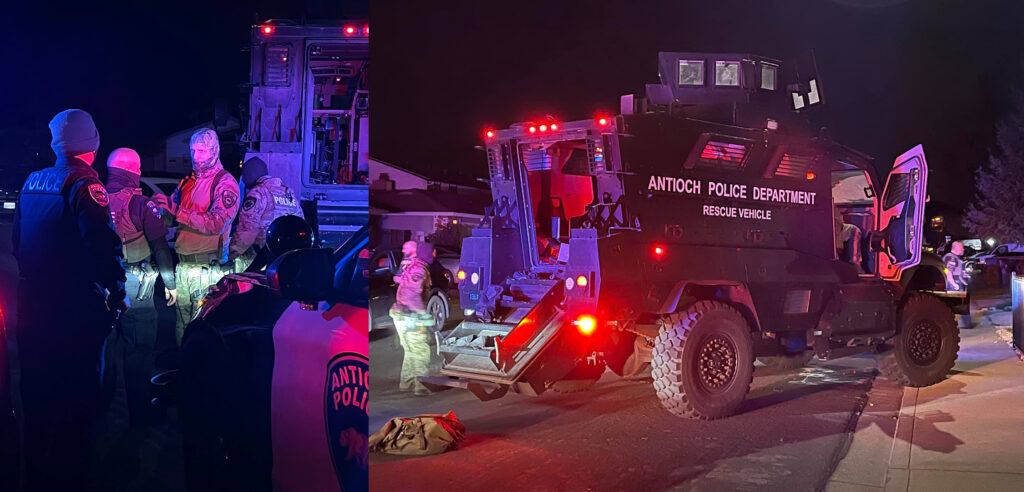
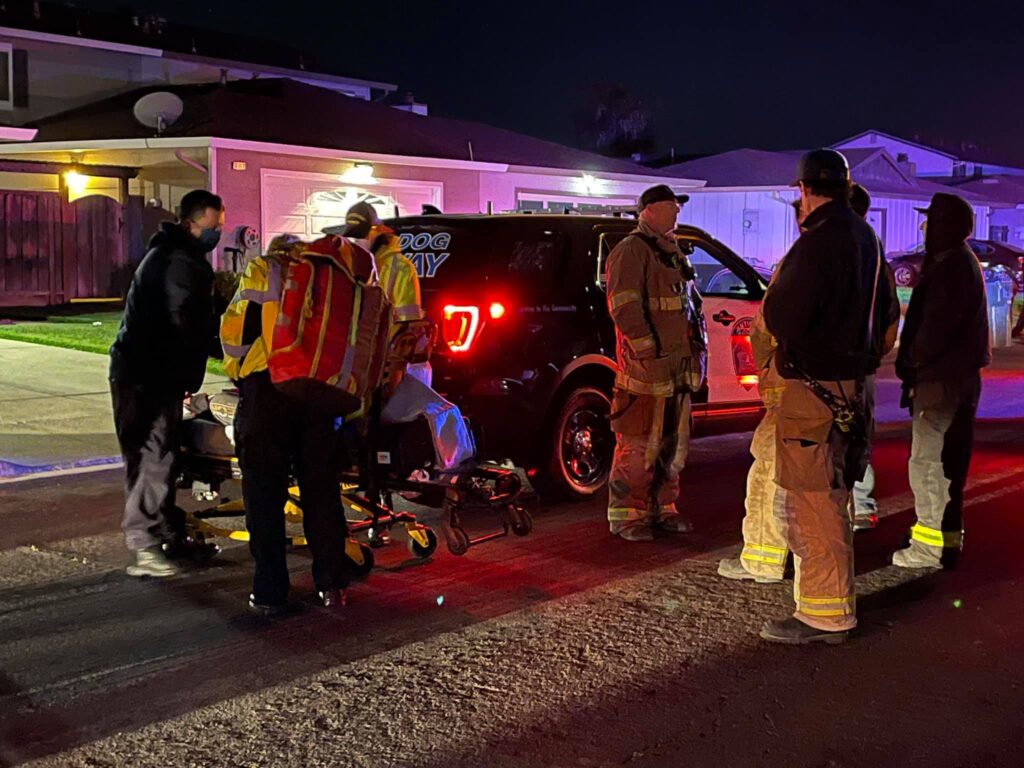
Antioch Police chase of suspect ends at a home on Spaulding Street on Friday, Feb. 19, 2021. Photo: APD

By Antioch Police Department

You can run , but you can’t hide from APD dayshift….

Today at about 9:40 am, Officer Hill attempted to stop a car for vehicle code violations, but the driver failed to stop, and continued a slow roll to a residence on Spaulding Street. He fled into the house, but the entire dayshift had him surrounded in seconds. Officers found him hiding inside of a large garbage bag underneath a pile of clothes in a child’s bedroom (we can’t make this stuff up ). Turns out he had warrants for felony aggravated assault and resisting an officer, so we sent him to County Jail to face a judge to explain his behavior.

Thanks to the awesome residents on Spaulding Street for their patience and assistance!

Wrong-way stolen truck abandoned on Hwy 4 in Brentwood and suspect’s discarded gun found following police chase on Friday, Feb. 19, 2021. Photos: APD

Later on (around 1:30 pm), Officer Ewart spotted a Ford F250 stolen from Martinez getting onto Highway 4 from L Street. Officers attempted to stop him, but he immediately fled, exited the freeway, and re-entered the wrong way. Officers decided not to chase him, and instead coordinated with other officers over the police radio (you can’t outrun a Motorola) to monitor all of the freeway exits. Officer Rodriguez spotted the Ford going eastbound on the shoulder of westbound Highway 4 near Laurel Road. She watched him abandon the vehicle on an embankment near the Jeffrey Way onramp.

Officer Morris was waiting near the Taco Bell on Jeffery Way and caught the fleeing felon as he tried to hop away with his foot in a cast. His flight path was retraced and a discarded semi-automatic pistol was found in a planter box. The driver was found to have a felony warrant for violation of his post release community supervision, and we sent him back to jail so he could join the other guy in telling people not to run from APD.

We would like to thank the Brentwood Police Department and CHP – Contra Costa for their assistance with this incident. Fortunately, nobody was injured from his wrong-way shenanigans.


Antioch, Walnut Creek among 12 Nor Cal Kaiser hospitals rated best in nation for maternity care

Friday, February 19th, 2021

Included in Newsweek’s “Best Maternity Hospitals 2021” report for providing high-quality care to mothers, babies and families

By Kerri Leedy, PR and Media Relations Manager, Kaiser Permanente Northern California 

Kaiser Permanente Northern California hospitals are among the top hospitals in the nation for excellence in maternity care, according to Newsweek magazine’s “Best Maternity Hospitals 2021” report.

Twelve Northern California Medical Centers earned top marks for providing safe, high-quality care to moms and their new babies. This is the second consecutive year Kaiser Permanente Northern California hospitals have been recognized for meeting rigorous standards for maternity care, including low C-section rates, elective early deliveries and for following important protocols to safely protect new moms and their babies. Last year, 43,534 babies were delivered at Kaiser Permanente Northern California hospitals.

The following Kaiser Permanente hospitals received the “Best Maternity Hospitals 2021” designation: Antioch, Walnut Creek, Modesto, Redwood City, Roseville, San Francisco, San Jose, Santa Clara, Santa Rosa, South Sacramento, Vacaville, Vallejo and.

The national designation, awarded to only 217 hospitals in the United States, and only 34 in California, identifies leading maternity care programs that have met or exceeded rigorous quality and safety standards. Kaiser Permanente has a total of 20 hospitals that received the elite designation, representing nearly 10% of those named to the prestigious list — and nearly 60% of those listed in California.

“This recognition acknowledges our commitment to exceeding the standards for excellence in maternity care as we keep our patients healthy and safe while delivering personalized care,” said Carrie Owen Plietz, FACHE, president of Kaiser Permanente’s Northern California region. “Our highly skilled care teams and integrated care delivery system allow us to provide the best experience and outcomes for new parents and their babies.”

“Our care teams put moms’ and babies’ well-being at the center of every decision we make, ensuring they are provided with the safest care possible,” said Richard S. Isaacs, MD, CEO and executive director of The Permanente Medical Group. “We are proud of this recognition and the commitment by our physicians and staff who help ensure that our parents and their babies receive the highest standard in maternity care.”

Kaiser Permanente Northern California hospitals have been a leader in providing innovative approaches to maternal care, including our Supporting Vaginal Birth Program that resulted in marked decreases in cesarean birth for first-time moms, and the Enhanced Recovery After Surgery Program, which helps new mothers recover more quickly after delivering by cesarean section with enhanced early mobility and improved pain control minimizing the use of narcotics. A focus on breastfeeding is also integral to Kaiser Permanente’s maternity care, which has proven health benefits for both baby and mom.

Newsweek’s Best Maternity Care Hospitals demonstrate the highest performance in the United States as verified by the 2020 Leapfrog Hospital SurveyDesignated hospitals meet Leapfrog’s rigorous standards for excellence in maternity care — including low rates of C-section, episiotomy (an incision to enlarge the vaginal opening for childbirth) and early elective delivery — and follow important protocols to protect moms and babies, among other measures. Additionally, all honored hospitals must have earned either an A, B or not scored on the Fall 2020 Leapfrog Hospital Safety Grade.

For more detail on methodology and a complete list of designated maternity care programs, visit Newsweek’s “Best Maternity Hospitals 2021.”

About Kaiser Permanente

For 75 years, Kaiser Permanente has been committed to shaping the future of health and health care — and helping our members, patients and communities experience more healthy years. We are recognized as one of America’s leading health care providers and not-for-profit health plans. Since July 21, 1945, Kaiser Permanente’s mission has been to provide high-quality, affordable health care services and to improve the health of our members and the communities we serve. We currently serve 12.4 million members in eight states and the District of Columbia. Care for members and patients is focused on their total health and guided by their personal Permanente Medical Group physicians, specialists and team of caregivers. Our expert and caring medical teams are empowered and supported by industry-leading technology advances and tools for health promotion, disease prevention, state-of-the-art care delivery and world-class chronic disease management. Kaiser Permanente is dedicated to care innovations, clinical research, health education and the support of community health. http://about.kaiserpermanente.org

Following pursuit and use of K9, teen, man arrested in Pittsburg for armed robbery of woman at Antioch ATM

Thursday, February 18th, 2021

Suspect drove faster than 100 MPH on Hwy 4

By Sergeant Brian Rose #4309, Antioch Police Field Services Bureau

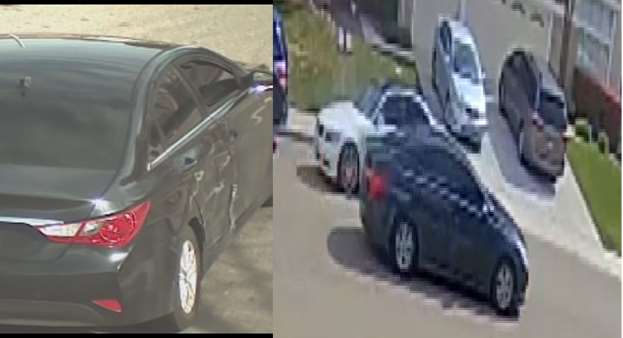
Antioch Police Officers responded to the report of an armed robbery at the Wells Fargo Bank located at 5859 Lone Tree Way at 12:18 AM Tuesday morning. The victim, a 33-year-old female, was making a cash deposit at the outdoor ATM when two suspects, males age 17 and 21, approached with guns and demanded her money. After the suspects took the victim’s money, they fled the scene in a 4-door dark gray Infiniti. A couple of minutes after the robbery, an officer spotted the suspect vehicle travelling westbound on Highway 4 at a high rate of speed. Officers attempted to catch up to the vehicle but were unable to do so based on the fact it was travelling more than 100 miles per hour.

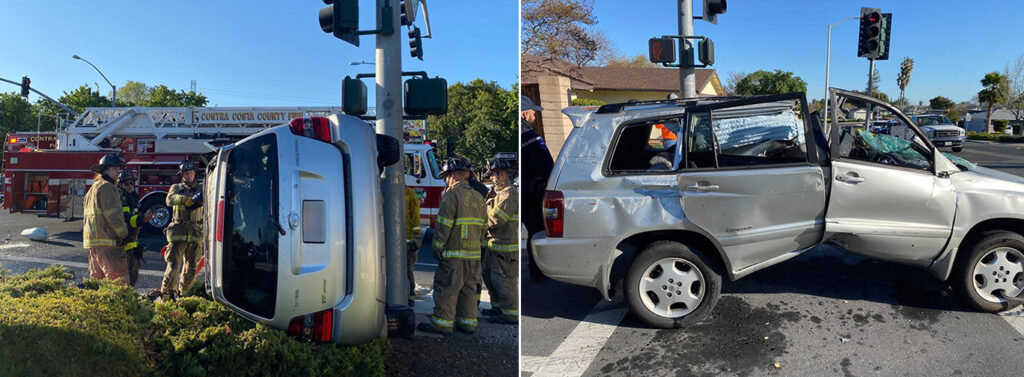
A few minutes later, the suspect vehicle was located near Los Medanos College in Pittsburg by officers from the Pittsburg Police Department. Officers pursued the vehicle and attempted to disable it using spike strips at the intersection of East Leland Road and Harbor Street. The suspect vehicle swerved to avoid the spike strips and collided with two uninvolved civilian vehicles at the intersection. After the collision, the suspect vehicle continued driving recklessly with no regard for the public and the driver eventually lost control at the intersection of West Leland Road and William Way. The suspect vehicle collided into a power pole. The two suspects subsequently fled from the vehicle on foot. One suspect was taken into custody by use of a police K-9 and the other was apprehended while hiding in the rear yard of a residence near the area of the second accident scene. All involved parties received medical treatment for their injuries.

No officers or civilians were injured during this incident.

The Antioch Police Department would like to extend its gratitude to the Pittsburg Police Department for their assistance during this volatile incident.

This preliminary information is made available by the Field Services Bureau. There will be no further information released regarding this case at this time.

Anyone with information is encouraged to call the Antioch Police Department non-emergency line at (925) 778-2441. You may also text-a-tip to 274637 (CRIMES) using the key word ANTIOCH.

Contra Costa extends COVID-19 vaccine eligibility to essential workers

Thursday, February 18th, 2021

Teachers, grocery workers and other frontline essential workers who live in Contra Costa County can now sign up to receive safe, effective COVID-19 vaccine at no cost to them.

Contra Costa Health Services (CCHS) today updated its eligibility policy for COVID-19 vaccine to extend vaccination eligibility to residents who work in the education and childcare sector, food and agriculture workers, and emergency services workers as defined by Phase 1B of California’s vaccination plan.

“We are committed to protecting all of our educators by ensuring they can access the COVID-19 vaccine,” said Diane Burgis, chair of the Contra Costa Board of Supervisors. “It is critical that we prioritize the health and well-being of all the essential workers who have cared for us and our families throughout the pandemic.”

Residents in these groups, as well as county residents who are 65 years and older who have not yet been vaccinated, can sign up to access state and federal sites through MyTurn (myturn.ca.gov) or by calling 1-833-422-4255.

Essential workers and residents 65 years and older can also request immunization appointments through CCHS and join the county waiting list for COVID-19 vaccine. However, due to a temporary reduction in vaccine supply from the state, all appointments at county sites are filled through the next two weeks at least.

People who need to cancel an existing appointment or who received a first dose of vaccine through CCHS and need to make a second-dose appointment should call 1-833-829-2626.

When more appointments do become available, CCHS will continue to prioritize county residents who are 65 or older as well as eligible essential workers, particularly those who live or work in the local communities most heavily affected by the pandemic.

CCHS continues to move forward with a workplace-based outreach effort to immunize essential workers in high-risk jobs in the county’s hardest-hit communities, including food and agriculture workers. Workers at sites selected for the program will be contacted by their employers.

For more information about Contra Costa’s response to the COVID-19 pandemic including information about COVID-19 vaccine eligibility and appointments, visit cchealth.org/coronavirus.


Cancer Support Community SF Bay Area awarded grant from Stanford to address impact of cancer on underserved populations

Thursday, February 18th, 2021

Black cancer patients of Antioch satellite center opened last year will benefit

By Alexandra Rubin, Director of Communications

Walnut Creek-based Cancer Support Community San Francisco Bay Area (CSC) is honored to be awarded a Community Partnership Seed Grant from the Stanford Cancer Institute.

CSC staff, along with CSC board member and Stanford physician, Anjali Sibley, MD, MPH, will conduct a qualitative needs assessment identifying the psychosocial needs of Black cancer patients and their families and barriers to accessing services.

“We are so grateful to the Stanford Cancer Institute for their generosity in making this important work possible,” says Dr. Sibley.

Rob Tufel, MSW, MPH, Chief Executive Officer of Cancer Support Community said, “This project is just part of CSC’s efforts to better meet the needs of cancer patients in underserved communities. Racial health disparities have long been known, but it’s time for everyone working in the cancer community to redouble our efforts to reduce cancer inequities for people of color facing cancer.”

CSC also opened a satellite center in Antioch, last year, at 3505 Lone Tree Way, Suite 3, as part of their ongoing efforts to provide support directly to cancer patients and their families in underserved communities.

The ultimate goal of this project is to use the results to develop programs that better meet the needs of Black cancer patients and their families. This information will also be shared with the community and the CSC network of 39 affiliates across the United States as part of CSC’s efforts to address racial inequities in supportive cancer care.

About Cancer Support Community San Francisco Bay Area

Cancer Support Community provides comprehensive, integrative care – including counseling, support groups, nutrition training, exercise classes, emergency financial assistance, and patient education programs – for people with cancer, their caregivers, and their families. Our evidence-based services enable cancer patients to partner with their medical teams to manage their treatment and recovery most effectively, increase their chances for survival, reduce their chances of recurrence, and provide for the highest possible quality of life. All CSC services are always provided free of charge and are being offered virtually during the pandemic. With services provided at our Walnut Creek center, in local medical centers throughout the Bay Area, and now in Antioch, we serve more than 2,200 people annually. Visit www.cancersupport.net for more information.

Moody’s upgrades Contra Costa County’s Issue Rating to Aa1 reducing cost for floating bonds

Wednesday, February 17th, 2021

Also upgrades LRBs’ to Aa2 and POBs to Aa3; assigned Aa2 to 2021 LRBs; outlook is stable

By Susan Shiu, Contra Costa County Office of Communications & Media

On Tuesday, February 16, 2021, Moody’s Investors Service upgraded the Issuer Rating, an indicator of general creditworthiness, of Contra Costa County from “Aa2” to “Aa1”. In its press release, Moody’s cites the County’s “…strong and sustained financial position supported by robust reserves and liquidity.” On Moody’s credit scale, “Aa1” is just one notch below the coveted “Aaa” credit rating.

The rating upgrade is especially complementary of the County’s efforts since Moody’s has placed the U.S. Local Government sector, as a whole, on negative outlook due to the coronavirus pandemic. The upgrade comes in advance of the County’s planned issuance of lease revenue bonds for the construction of an aviation terminal, fire stations, and a new office complex. In addition, the County will be refunding existing bonds for an estimated net present value savings of $7.8 million, or 16.2%.

Board of Supervisors Chair Diane Burgis (District 3) commented that “The upgrade from Moody’s is a testament to the strong financial management practices that have become a tradition in Contra Costa County.”

County Administrator Monica Nino stated that “Contra Costa County has been a leader throughout the State in prudent financial and budget management, and we plan to continue that into the future.”

Complete Press Release

New York, February 16, 2021 — Moody’s Investors Service has upgraded Contra Costa County’s (CA) issuer rating to Aa1 from Aa2, lease revenue bond rating to Aa2 from Aa3 and pension obligation bond rating to Aa3 from A1. The amount of debt affected is $232.4 million and $85.7 million, respectively. We also assigned a Aa2 rating to the Contra Costa County Public Financing Authority’s $62.4 million Lease Revenue Bonds (Capital Projects and Refunding) 2021 Series A (Capital Projects) and $37.2 million 2021 Series B (Refunding). The outlook is stable.

RATINGS RATIONALE

The upgrade to Aa1 incorporates the county’s strong and sustained financial position supported by robust reserves and liquidity. The Aa1 rating incorporates the county’s large and diverse tax base poised for ongoing solid growth, residents’ favorable income levels and moderate long-term liabilities. The rating also factors the recent increased general fund subsidy for the county’s hospital enterprise because of higher operating costs unrelated to the pandemic. The subsidy will remain manageable when compared to the county’s operating revenue. In addition, the county will benefit from a recently approved sales tax measure that expires in March 2041. These funds can be used to support general operations, providing additional financial flexibility. The county’s strong governance, as demonstrated by management’s prudent fiscal practices and adopted policies, is also factored into the rating.

The Aa2 ratings on the county’s lease revenue bonds are one notch lower than the county’s Aa1 issuer rating, reflecting both the absence of California GO (General Obligation) bond security features, which provide uplift to the GO rating, and the weaker legal structure of standard abatement leases, despite the “more essential” nature of the pledged asset, which is the Contra Costa Regional Medical Center.

The legal provisions for the Lease Revenue Bonds, 2021 Series A and 2021 Series B include that the city will provide rental interruption insurance for 24 months, title insurance, and will not require a debt service reserve fund, which is a negative credit factor. This negative credit factor is mitigated by the county having earthquake insurance that covers the pledged asset, a protective feature that is rare for California abatement leases. The county is not legally obligated to have earthquake insurance, however management expects to renew its policy when it expires next month.

The Aa3 rating on the county’s pension obligations bonds is two notches lower than the county’s issuer rating, reflecting the lack of strong legal features of California GO Bonds. The notching also reflects the relatively poor performance of POBs in Chapter 9 bankruptcies compared to other types of municipal obligations. The POBs are unsecured debt paid by general operating revenues.

RATING OUTLOOK

The stable outlook reflects our expectation that the county will maintain a strong financial position supported by management’s prudent fiscal practices. In addition, we expect that the county will continue to navigate through the economic, operational and financial challenges caused by the coronavirus without materially impacting its long-term credit quality.

FACTORS THAT COULD LEAD TO AN UPGRADE OF THE RATINGS

– Improved income and wealth levels

– Material reduction in long-term liabilities and fixed costs

FACTORS THAT COULD LEAD TO A DOWNGRADE OF THE RATINGS

– Sizeable reduction in reserves and liquidity

– Material increase in long-term liabilities and fixed costs

LEGAL SECURITY

The issuer rating is equivalent to what would be the county’s general obligation bond rating. In California, GO bonds are secured by the levy of ad valorem taxes, unlimited as to rate or amount, upon all taxable property within the county.

The lease revenue bonds are secured by lease payments made by the county for use and occupancy of various leased assets which we view “more essential”. Lease rental payments are payable from any source of legally available funds of the county.

The county’s obligation to make all POB payments of interest and principal are imposed by law and are absolute and unconditional. The POBs are payable from any source of legally available funds of the county, including the county’s general fund.

USE OF PROCEEDS 2021

Series A bonds will finance improvements at the county’s Buchanan Field Airport, the construction of two fire stations and a new county office building. 2021 Series B will refund outstanding lease revenue bonds for savings and there is no extension in maturity.

PROFILE

Contra Costa County is located in the eastern portion of the San Francisco Bay Area, just east of Berkeley and Oakland in northern California. The county seat of Martinez is approximately 24 miles northeast of downtown San Francisco. The county has a population of 1.1 million and the largest industry sectors that drive the local economy are health services, retail trade, and professional/scientific/technical services.

METHODOLOGY

The principal methodology used in the issuer rating was US Local Government General Obligation Debt published in January 2021 and available at https://www.moodys.com/researchdocumentcontentpage.aspx? docid=PBM_1260094. The principal methodology used in the lease and pension obligation bond ratings was Lease, Appropriation, Moral Obligation and Comparable Debt of US State and Local Governments published in January 2021 and available at https://www.moodys.com/researchdocumentcontentpage.aspx? docid=PBM_1260202. Alternatively, please see the Rating Methodologies page on www.moodys.com for a copy of these methodologies.

REGULATORY DISCLOSURES

For further specification of Moody’s key rating assumptions and sensitivity analysis, see the sections Methodology Assumptions and Sensitivity to Assumptions in the disclosure form. Moody’s Rating Symbols and Definitions can be found at: https://www.moodys.com/researchdocumentcontentpage.aspx? docid=PBC_79004.

For ratings issued on a program, series, category/class of debt or security this announcement provides certain regulatory disclosures in relation to each rating of a subsequently issued bond or note of the same series, category/class of debt, security or pursuant to a program for which the ratings are derived exclusively from existing ratings in accordance with Moody’s rating practices. For ratings issued on a support provider, this announcement provides certain regulatory disclosures in relation to the credit rating action on the support provider and in relation to each particular credit rating action for securities that derive their credit ratings from the support provider’s credit rating. For provisional ratings, this announcement provides certain regulatory disclosures in relation to the provisional rating assigned, and in relation to a definitive rating that may be assigned subsequent to the final issuance of the debt, in each case where the transaction structure and terms have not changed prior to the assignment of the definitive rating in a manner that would have affected the rating. For further information please see the ratings tab on the issuer/entity page for the respective issuer on www.moodys.com.

Regulatory disclosures contained in this press release apply to the credit rating and, if applicable, the related rating outlook or rating review.

Moody’s general principles for assessing environmental, social and governance (ESG) risks in our credit analysis can be found at https://www.moodys.com/researchdocumentcontentpage.aspx?docid=PBC_1243406.

Please see www.moodys.com for any updates on changes to the lead rating analyst and to the Moody’s legal entity that has issued the rating.

Please see the ratings tab on the issuer/entity page on www.moodys.com for additional regulatory disclosures for each credit rating.

Antioch Council members push for more spending, programs and “equity” during Vision and Strategy Planning sessions

Tuesday, February 16th, 2021

Antioch Councilmembers and city staff participated in Vision and Strategic Planning sessions under the guidance of a facilitator on Friday and Saturday, Feb. 12 & 13, 2021. Video screenshot.

By Allen Payton

During their Vision and Strategy Planning sessions Friday night and Saturday morning, Feb. 12 and 13, the Antioch City Council members proposed spending more on current programs, creating new ones and spoke of including “equity” in their plans. Mayor Lamar Thorpe wants youth programs, not just youth recreation, funded; Mayor Pro Tem Monica Wilson wants a youth representative on each city commission; District 1 Councilwoman Tamisha Torres-Walker pushed to include equity in the City’s goals and wants the city to pay for cleaning up trash and ensure food security in her district; District 2 Councilman Mike Barbanica wants to double the size of Code Enforcement; and Councilwoman Lori Ogorchock proposed more senior housing projects.

They also heard from several members of the public, including residents of other cities, the word “equity” multiple times and that it isn’t but should be included in the City’s vision statement. One speaker used Oakland as the example of a city with the word equity in their vision statement. (See the City’s adopted 2019 Strategic-Plan-for-Antioch)

Friday Night Session (View here)

Much of Friday night’s session was devoted to the hired facilitator, Patrick Ibarra, laying the ground for their work on Saturday. But it also included the opportunity for council members to define their roles and those of the city manager and department directors. All the members but Torres-Walker offered their comments on those matters. However, she was much more vocal during Saturday’s session.

City Manager Ron Bernal also gave an overview of the city council’s accomplishments and actions over the past three years.

The session concluded with public comments. In addition to racial, social and gender equity, comments either submitted in writing or called in were about racial and housing justice, as well as downtown revitalization and taking advantage of the city’s waterfront.

Saturday Session (View here)

At the beginning of Saturday morning’s session, the consultant asked the council members for input on the vision and mission of the city.

“Local government isn’t to just sit there and move public policy but to give services,” said Torres-Walker “What services do we have the authority to do and advocate for? So, I’ve been appreciative of that type of my thinking because I’m new here. Being able to challenge those things we can’t do or don’t have the political will to do.”

“There’s been some shifts in who we say we are,” she continued. “People are demanding more dialogues around race and equity. It’s been a great demand. I think people are demanding a more robust conversation about those things especially here, in Antioch.”

“I also want to bring up another thing and that is we are volunteering,” Torres-Walker said, although council members now each receive $1,600 per month stipend plus medical benefits. “Most of work full time. It’s a thankless job, sometime. We are volunteering, trust me. People who are serving…are volunteering. Staff are being paid, and paid well in this city, to serve residents. And it’s our job as a council to work with Ron to make sure morale is up. Not everybody is here volunteering. Some people are here being paid and paid well to serve our community. I just wanted to make sure that was clear.”

“I want to make clear that most of us have been open to change,” Thorpe said. “Most of us don’t get caught up in the social media, stuff. We’ve gone directly to the public on certain issues. We’ve had opinion polls. That’s how we found out homelessness was a top issue with the public.”

“One of the things I use social media for is to get public input,” Barbanica said. “I ended up getting pages from people. It was at that point a tool to get input from people.”

“I saw that. Some of us do that, as well. I hope you don’t take that comment. The social media nonsense. He blogs and the newspaper articles and comments on there,” Thorpe said.

“I want to point out…Facebook. Not every resident can be engaged on Facebook,” Torres-Walker then said. “That doesn’t capture the entire need. It doesn’t capture the story of the entire community. Older people don’t use social media. And young people don’t use Facebook. Sometimes it just looks like getting out there in the streets and talking to people.”

“Like my teenage niece tells me, Facebook is for old people,” Wilson. “And social media is a double edged sword. Sometimes you have people attacking you and they’re from a city 50 miles away. You have to make sure you’re communicating with the community. Social media, yes, I agree, it’s important, but we have to learn how to use it. People use it more times than not to attack you. But you have to be careful with it because it’s a double-edged sword.”

“Cities are revisiting the content and the delivery system,” said the consultant. “Both in print. People still read that. How people are gathering their information and on all the different platforms. We’re way past websites. Some are conventional.”

“All those points are great points. What’s interesting is people want to hear from their elected officials. And it’s amazing when the city has a meeting about a particular issue, we had

“When council members had ad hoc meetings, I was blown away by the participation. Because council members were promoting their meetings,” Thorpe said.

“One thing I want to bring up is technology and service delivery. Since COVID, now we’re more proactive. More services are available online,” Ogorchock said.

Current Role of the Council

Ibarra then asked about “the current role of this council as a community builder. Is it just the continuation of the past? Are residents’ expectations rising or falling?”

“They’re rising. In the past it’s always been reactionary,” Barbanica said. “When you have businesses come into the community I thought never would. But cannabis businesses…had a tax base there that got us through this time. What is the forward-looking vision of this city with the participation of the community?”

“There are great roles for the council, at this time. There’s a great demand for advocacy…for resources. From that silent majority, from those who feel like they’re not heard,” Torres-Walker said. “It’s become more of a demand in Antioch over the past two to three years.”

“Local government is by nature a demand-based business,” said Ibarra. “Sometimes it was functional, water, sewer, roads. But…you also have an infrastructure…which is outside the traditional local government role.”

“Looking at the things we’ve been doing, I think we’ve been on a continual change. I’ve not been an advocate for cannabis. Is that on a money thing? No.  I don’t think we sit on our laurels,” Ogorchock said. “We’ve had influencers from outside our city. We need to find a way to get more involvement from our community. Council meetings people don’t attend… is it because us council members are pushing them more on social media? Advocacy. I think we’re starting that. It’s an exciting time. I think it’s a difficult time.” Ogorchock

“We definitely need to keep the out of the box thinking…finding comfort in discomfort,” Wilson said. Then referring to cannabis businesses she said. “at a time we received a bunch of push back. But pushing things people aren’t thinking about. Have we thought about hydro energy. We are at a time we have to push the envelope and thing outside the box. I would like to keep going in the direction…take the chance of moving our community in a positive direction.”

“Now everyone is jumping on the cannabis bandwagon,” she said.

“Too late for them,” Thorpe interjected.

“Why don’t we try to be a leader in the next industry?” Wilson asked.

“It’s not a bottomless checkbook. So, we have to prioritize those things with what’s going to benefit the community,” Barbanica said. “The pie is only so big.”

“I like that point…because it isn’t a bottomless checkbook,” Thorpe said. “But I feel our role changed post-Measure W. We took a mind shift that we’re not just going to fund one department. It allowed council members to start looking at…homeless services and youth programs. Not just parks and recreation. The community was already there. It just took time for government to catch up.” (But what has the city actually done for either the homeless or youth programs?)

Vision Statement

The City’s current Vision Statement reads, “Antioch is a desired destination in the Bay Area: Building on our historic legacy, creating bright opportunities for families to grow, offering places to play, enabling businesses to thrive and cultivating a unique downtown experience.”

Speaking about it, Barbanica said that, while the downtown area is important. “We have a broader city”.

“I don’t see anything in there about building healthy communities,” said Torres-Walker. “It felt like a hotel commercial. It is kind of dry. But I know everyone did the best that they could.”

“I remember when we were doing this…someone told me a camel is a horse built by a committee,” Wilson said. “I don’t know our vision by heart. We were using the Chamber’s vision. It can be more inviting.” But she wanted more public input, first.

“I kinda just went back to the first page of the Strategic Plan…opportunity lives here, enhance, transform, revitalize,” Torres-Walker said. “I’m wondering if that’s what drove the words going into the mission. The whole opportunity lives here means something and I’m hoping to hear from council members who’ve been here, longer and could the vision expand on what that means. We can’t wordsmith, today but

“Opportunity actually came from the community, from focus groups,” Thorpe said. “Some people had more of an opinion about our vision than others.”

“There’s an actual intro to the actual mission and vision…and it actually has words…thriving community…bright future…high quality of life,” Torres-Walker pointed out. “I think, yeah…some of those words…a community where you want to be could trickle down to be the words of a new vision statement.”

“Maybe use this as a baseline, or starting from scratch,” said the consultant. “There are a lot of ways communities create visions…rather than checking boxes.”

“If you look at the efforts under our branding…it required people to look introspectively,” Thorpe said. “So, it’s something around this word opportunity…things that already exist that we could work with.”

“Your brand is your reputation and what you’re trying to aspire to,” the consultant said. “Maybe we could have more opportunity to do outreach.”

Mission

The City’s current Mission Statement is, “To deliver quality services with integrity, excellence and innovation.”

“The vision is where you’re going the mission is how you get there,” said the consultant.

“A suggestion…would be to have some kind of competition,” Ogorchock said. “Wouldn’t it be fun to adopt it from some kind of competition? It’s not about us five but the community.”

“Isn’t a mission statement longer than a vision statement?” she asked.

“Less is more…it should be compelling. If people can’t remember it then it’s less effective,” the consultant.

“I personally don’t see a problem…I think it’s clear,” Torres-Walker said. “What I want to get into is the values.”

Values

The council then discussed the City’s values. Currently they are listed as, Integrity, Honesty, Respect, Diversity, Transparency, Innovation, Fiscal Responsibility and Accountability.

“We draw strength from these in our personal lives…they are the thread that binds us, together,” Ibarra said.

“A lot came up around the county’s commission on Racial Equity,” said Torres-Walker. “So, I was just looking at these values and think racial values or at least equity should be in there. Stuff like belonging came up, justice came up. Just a couple words. Equity is not in the strategic plan. I don’t think it’s in there, once.”

“I would say that values like integrity, honesty and respect all mean the same,” Thorpe said. “I don’t recall why we called them out like that. And transparency. You can’t be transparent without integrity. I think we need to call out things like the environment, as well…environmental sustainability.”

Equity Defined

“When we’re looking at this and saying racial equity, how does that change from equality for everybody,” Barbanica asked Torres-Walker.

“Equality doesn’t always mean equity,” she responded. “A difference between inclusion…for those who have not had access whether to service or rooms…like BIPOC, Black, indigenous, people of color community. And I want to point out poor people, as well. Poor people need to know they have equity. If you’ve ever done educational organizing…there are two children both trying to see a game…behind this fence. The taller child has a better view. What does society do? We give a crate to each. But the short child still can’t see over the fence. Then we have equity, and we give the shorter child two or three crates so the shorter child can have the same view. So, that’s the difference between equality and equity.”

“On the equity, it’s kind of open, so wouldn’t it be more fair to say racial and social equity?” Ogorchock asked. “Equity is very open. Two words I’ve also written down are diverse and inclusionary.”

“I would say that diversity and inclusion are included in equity,” Thorpe said. “But when you stop short at diversity…you miss the mark on equity and who has access to what. Who has access to community parks? Who has access to participate in the astronomical costs of our parks and recreation programs? So, diversity can almost be dangerous as it hides what is systemically wrong in some of our institutions.”

Hot Topics

“These are issues brought up to me by the mayor and council in our pre-session phone calls…to ask your perspective. You’re not voting on these,” said Ibarra. “Some of these were mentioned by several of you.”

Youth Programs and Services

“Being very inclusionary…when youth are voicing their opinions…making sure their voices are heard,” Wilson said. “I’ve said we should have youth voices on all of our commissions.”

“Youth programming, we shouldn’t cconfuse it with some sort of parks and recreation. What we wanted is a city that’s meeting the needs of all of our youth at all levels,” Thorpe said. “This has to do when police interact with our youth. When we do summer hiring of youth.”

“Youth development is totally different than providing a program that youth can go to…it’s about next generation leadership in the city,” said Torres-Walker. “And when young people own the community they live in, they protect it and aspire to lead it, someday. So, it’s about who we invite in the community. We have high population of foster youth in the community. We have a lot of youth who have experienced trauma. We have homeless youth. You may not see them but they’re there. We have a lot of youth in Antioch affected by the justice system. So, I think that it’s a bigger discussion than just programs. And I’m hoping we can get more youth voice involved in the process.”

“I agree, we need to do something in our community, if you look back years ago, we always had something for the youth to do,” Barbanica said. He spoke about the Youth Center in Concord, funded by developer Ken Hoffman that included activities and tutoring. “We have CVS on Somersville that’s been empty forever. A lot of these kids didn’t have funds for these programs. But there was enough money for them. Why can’t we have things like that?”

“You have capacity issues, time, staff and money,” Ibarra said. “You have partners. Some of these are your role. Is it about expanding the role going forward?”

“So that there’s context, the city has been working on this issue and we’ve been putting the pedal to the metal as hard as we can,” Thorpe shared. “We’ve hired a youth services network manager…we passed Measure W. So, the city is dedicated to youth programs. It was a clear mandate by the citizens of Antioch. This is a citywide effort that we’re committed to youth development in coordination with the school district.”

“I just want to caution us to be careful…when we create programs and services, we sit down with youth and ask them what they want,” Wilson added.

“We want to make sure…the services are so important for our youth, to make sure they have WiFi,” Ogorchock added. “We have good number of group homes. How can we be of help to the youth in those group homes? We need to make sure they continue after COVID.”

Downtown

“People have called the downtown the living room of the community,” Ibarra said.

The council then discussed what they defined as downtown.

“I think it as the waterfront,” Barbanica said.

“For me there’s the downtown and then there’s the waterfront,” Wilson said. “The waterfront runs from Oakley to Bay Point.”

“When I think of downtown, I think of Rivertown,” she added.

“Me being an old timer, here, it’s 10th Street north to the water from L Street to A,” Ogorchock said.

“The Downtown Strategic Plan, it’s what Lori said,” Community Development Director Forrest Ebbs said. “From 10th Street north, and Auto Center Drive to A Street.”

“We’ve heard things in the past like ‘a destination’, ‘an experience’,” Thorpe said. “I’m not always clear that we’re clear about the policies that need to be enacted.”

“I would love to see more use of the river,” Barbanica said. “We have this huge resource. We could have a river walk down there. A beach has been proposed. My thought is we drive shops and businesses down there. But we have a night life…where people can walk and there’s dining and entertainment.”

The city’s current riverwalk, known as the promenade and approved by the city council in the 1980’s, runs from the circle at the end of G Street to the circle next to the Veterans Memorial at the end of L Street, and includes the zig zag into the circle at Waldie Plaza. It also runs from E Street toward A Street where the white metal barrier runs next to the sidewalk.

“The river is a gem. The downtown is a gem,” Ogorchock said. “We need to do infill projects down there. Things are happening down there. You can see the change. You can feel the change. I enjoy being down there and walking around. It’s just a huge asset and one we need to monopolize on.”

“There was some confusion,” Wilson said. “Maybe even four or five years ago, there was a push of being the antique destination. Some are still there but most have moved on. The dining district that’s being created…we’re starting to see some livelihood down there. That seems to be the target industry. We also need to hear from people who live there, from District 1, what you want to see. We don’t want to put a dining district down there and not have people come, they can’t afford. We want it to be somewhere everyone can go. Some of our brokers are working, some are just sitting on the property. We also need…the properties owned by outside folks, we need to light a fire underneath them.”

“I just would like to acknowledge everything 10th Street north is downtown…is set for revitalization,” Tamisha-Walker said. “We have a document here that seems to be hyper-focused on housing development, recreation centers, walkability, WIFI accessibility, where people can go, have coffee and hang out. I’d like a place like that so I can stop having to go to Walnut Creek. Safety…it’s not a consensus that it’s safe down there.”

“There’s areas with trash, blight and folks not feeling safe. It’s not the revitalization of the entire downtown,” she continued. “It’s good to have that geographic context. What is the trickle-down effect? In order to get to the waterfront, you have to drive through Cavallo, East 18th Street, you have to pass by the Sycamore corridor. You have to feel safe doing it.”

“I see Sycamore in there, but nothing about E. 18th, Cavallo,” Torres-Walker continued.

“There needs to be more intentionality, because these are commercial zones,” Thorpe said. “I think in the past we’ve just waited for the private sector to come along and fix some of these issues. I think it would be nice…that we dig up some of those old reports and maybe go through them as a community, as a council, what are opportunities…that we can invest in, that we can prioritize? There are policies like form-based zoning that will cut through the red tape. We have to be intentional about them. We can’t just keep saying them.”

“Under the Goal 6…there is a line where it says the waterfront offers an opportunity for growth,” Torres-Walker said. “For the entire city?”

“When we say growth, I think we mean economic growth,” Thorpe responded.

Homeless

“There were funds a couple years ago that were dedicated to help folks get off the street. Those funds are just now starting to be used,” Barbanica said on the issue of homeless. “Do we have programs where we provide vouchers…or bridge housing?”

“When I’m looking at the current, strategic plan, homelessness is mentioned once, in the downtown revitalization” Torres-Walker said. “It should be under public safety. It’s a safety issue. It’s a public health issue. When we only put it in downtown it seems like it’s not an issue throughout the city.”

“For a long time, we believed homelessness was an issue the county needed to deal with,” Thorpe responded. “There was a lot of concern that unhoused residents impeded on economic growth. It was the wrong approach. We were naïve in our thinking. Demands from the public around homelessness…we are in a different place, today.

“When you take the entranceways to our downtown, you literally have to drive over homeless encampments,” he added.

“If we’re going to update this…it will help staff if things are placed where they need to be,” Torres-Walker said.

“We need to be clear about public safety. Some folks think it’s only about police, and some are asking ‘why are we criminalizing homeless,’” Thorpe said.

“I agree we do need to expand the definition of public safety,” Torres-Walker said. “We have mismanaged the police department and have criminalized homeless and used enforcement tactics.”

“There’s a lot of compounding issues going on with homeless residents,” Wilson said. “We need to make sure the right resources and individuals are going out.”

“I’d like to see the city continue involvement with the county mental health evaluation team…to help people get into programs that they need,” Barbanica said.

“That goes back to having the 2-11 program, so people don’t have to wait,” Ogorchock said.

Senior Housing

“Currently, in the city we don’t have a lot of senior or affordable housing,” she then said. “We have two housing projects within the city that are based upon their aggregate income. Housing for seniors are going up like our mobile home parks. The rent is going up and astronomical. They have to think about other things other than paying for their housing. They’re the number one residents becoming homeless, right now.”

“Investment in some sustainable, anti-displacement policies might benefit this city,” Torres-Walker said. “Seniors are becoming a large part of the homeless population and affordability is an issue. Anti-displacement policies help keep people in their homes, for fixed and low-income residents.”

“Housing overall is an issue,” Thorpe said.

Beautification

“The next issue is beautification. Several of you brought that up. It was brought up, last night…the condition of parts of town,” said consultant Ibarra.

“A lot of that is being worked on…they’re doing a phenomenal job,” Ogorchock said. “We’re doing the murals. We’ve done the art on the utility boxes.”

“Hopefully we can get all the parks up to where they need to be,” Barbanica said.

“The way your community looks and feels has a lot to do with if you feel safe,” Torres-Walker said. “You can  hit the corner and there’s trash and abandoned cars that have been there for weeks. Then on another corner it’s cleaned. Do we have street sweeping in this city? Do we have garbage cans on the corner somewhere? We have illegal dumping. There needs to be policy on that. We also need to have parking enforcement, in real time to get some of the abandoned vehicles.”

“But, I think beautification can be a source of community pride, particularly in my district,” she continued.

“When you exit some of our freeways it looks terrible. I think we’ve done minimal. I would never give anyone a high-five, yet,” Thorpe said. “I appreciate it. But we can do a lot more. The issue of the cars is very frustrating.”

“In fairness to staff, we have a Code Enforcement team that is reactive,” he continued. “We are complaint-driven. We need to have a serious conversation on prioritization. I hate when people come here for the first time and people see trash on A Street…and on the way to Lone Tree Golf Course they see broke down cars on Lone Tree.”

“We do have street cleaners. But we don’t have notices that says don’t park here on particular days,” Thorpe said.

“There has to be ways to hold property owners accountable,” Torres-Walker said. “There’s just some nuisance properties. I’ve actually had questions around, who in the city meets with property owners. Properties where there’s always trash. You have absentee owners…and then you have property owners who don’t mind paying a fine.”

Code Enforcement

“On those things we’ve just raised, you have to have community buy in or it’s not going to change,” Ogorchock said. “Those street sweepers are not out there to pick up people’s garbage. If council wants to bring back during budget time to have more parking enforcement, I’m the first to say, ‘hell yeah’.”

“You’re going to have people who do dumping,” she continued. “I’ve had to call Republic Services. We need

“We are the second-largest city in the county, and we have seven people who are out for 114,000 residents…in Code Enforcement,” Barbanica said. “I believe over the next 14 months double the size of Code Enforcement…to be proactive.”

“Give the Code Enforcement officers a tablet so they can stay out in the field and do their reports instead of having to come back to the office,” he continued. “We are undersized and understaffed.”

“We need to take another look at ‘See, Click, Fix,’” Wilson said. “I think we’re having trouble with the real-time with that. Maybe we have to look at another program…take a second look at that technology.”

“There was a church or small organization going around and cleaning up the trash,” Torres-Walker said. “There are other communities with these streets teams…which the city pays. It provides a handful of jobs, job training…cleaning up the community. They could also just show some folks that we are being…proactive and not just reactive.”

“We used to have under Code Enforcement a housing officer…I think it was a HUD officer,” Ogorchock said.

“We used to use HUD funding for Code Enforcement,” said Ebbs. “We now have funding from Measure C.”

“If we had just a couple housing officers dedicated, just doing housing issues,” Ogorchock said.

“Parking enforcement is a contract, but they don’t have tablets in the cars,” she continued.

“Paying people to pick up the trash, it’s still not teaching the homeowners or the tenants to be responsible for their trash,” Ogorchock stated. “If you pay someone to do it, people are going to continue to throw trash. The church groups go out on Saturday. By Sunday the place is a mess. They go out,  out of the kindness of their heart. If you don’t change the mindset you won’t change the mindset.

“I don’t think it’s an either or, I think it’s a both and,” Torres-Walker responded. “Correct me if I’m wrong, but you all participate in the clean ups each year. These are just some ideas. But continuing to volunteer to pick up after people…there is a benefit. You have to create that environment to understand Republic Services. Some people don’t know what pickup services they have available to them. There’s a disparity, if I’m a renter and want to get rid of a large couch. These multi-family residents don’t have the same access to services.”

“If graffiti is called in through See, Click, Fix, I want it cleaned up within 24 hours,” Barbanica said. “If you leave graffiti up there, more is coming.”

“We’re already paying people to pick up trash. We have an Abatement Team,” Thorpe said. “We have four people on our Abatement Team.”

He then suggested looking at the contract with Republic Services about service for multi-family residents.

Zoning

“In looking for more mixed-use development…in looking for ways to grow up not grow up,” Thorpe said, as the only council member

“I think economic growth is tied into downtown revitalization, and into beautification and the zoning I was talking about,” Thorpe said.

“We have it on the south side of town,” Ogorchock mentioned.

“We have a lot of property in southeast…that’s zoned incorrectly, and mainly zoned commercial,” Thorpe added.

Somersville Corridor

“We’re going to have to repurpose a lot of this land,” Barbanic said. “That area draws in more of a dumping ground. We need to rethink what are we going to do with these shopping centers. We have a great location…for senior housing.”

“I don’t think we’re going to see a rush to bring back a mall,” he continued. “I’m not talking about high-density housing. There would be less of a footprint in there. We just let this land sit, and sit, and sit and it’s attracted a lot of dumping. That area needs to be repurposed.”

“Since we don’t own those properties, it’s kind of hard to put into play, but we can go back to the owners and encourage them to do it,” Ogorchock said. “There was a housing project…on the Chiu property. That was voted down. We need to go back to the table and meet with these owners and see what we can do to spur growth in that area.”

“I know we don’t own the land. So, if we have a developer who could look at that…and see if they are interested in working with the city to develop that,” Barbanica said.

“Kaiser has that medical facility over there and how do we work with that?” Wilson asked. “How do we take advantage of that in talking with potential brokers. Maybe we look at some dual benefit…working with the senior community.”

“We control the zoning, the five of us,” Thorpe pointed out. “For a developer to have to go through a process to get final approval, that’s a risky proposition. So, if we want to look at things…we have to look at form-based zoning…to eliminate the red tape. There are housing bonuses that we can look at to incentivize developers.”

“We are about to embark on a General Plan update that will encompass everything that’s been brought up,” Ebbs said. “We anticipate this to be a two- to three-year process. It will be about infill and reinvestment. This is number one on the Planning Divisions workplan, right now.”

Before taking a lunch break Ogorchock asked that public safety be added to the list of issues to discuss.

“Also, access to healthy and affordable food options…in my district,” Torres-Walker said as another issue to be added to the list.

Partnership With Schools

“I would say expand it and I think we have new, strong leaders at the school district, and we’ll be able to work more on that,” Thorpe said.

“To date I don’t think they have anyone assigned to that committee,” Ogorchock said. “I’m just waiting for the school board to appoint two trustees.”

Torres-Walker asked about the purpose and role of the City-Schools Committee.

“I felt like the city had no authority to addressing school policy, that’s the authority of the school board,” she said. “We are two separate powers, and we can work together…what are safe schools. But as far as policy and budget those are two separate things.”

“Some of us don’t know what you mean by school policy,” Thorpe said.

“In most recently, it was with the SRO’s. I don’t think it was the city’s role to vote. It should be the school board to go after funding. Not necessarily us taking the lead on that as a council,” Torres-Walker responded.

“I’m not necessarily sure how you’re describing events…as what happened,” Thorpe said. “In the past we’ve had a majority of council members who supported SRO’s…and that was the sentiment among a majority of school board members. So, we didn’t just go out and do it.”

“I do think the timing…that’s how I mean about administrative decisions having political impact and that was horrible,” Thorpe said.

“It started out as an ad hoc committee, then became a standing committee,” Ogorchock said. “We want to work with the district. Now we have Tasha Johnson working on youth programs. So, we need to work with the district on that.”

“We have nothing to do with their policy and they have nothing to do with our policy,” she added.

“When I was first on the council I was appointed to that committee and really it’s just about how the two entities can work together,” Wilson said. “Because there was a lot of miscommunication and misfires.”

“I was supportive of creating this committee…but I had some hesitations because I wasn’t sure what the outcomes and the goals were,” Thorpe added. “So, I’m hoping there will be a greater focus on that.”

Public Safety

“Community cameras, tasers, cameras on the cars,” Ogorchock mentioned.

“I could email my comments if that’s helpful.

“I want to go back up to police reform is not the same as public safety. We so far have talked about the training side of things. Public safety is more about keeping the community safe. There are more that makes a community safe. Like food safety. Like green space.

I want to push back on public safety, it doesn’t just mean policing,” she added.

Food Security

“When I first moved here we had two grocery stores within a 10 to 15 minute walking distance,” Torres-Walker said. “Food should be a priority for the city, not just in my district. What is the commitment? I can go to three or four liquor stores. But only Dollar General for food.”

She asked about a farmer’s market and what the city can do about the issue.

“We need to look at this in a totality in how we create a healthy environment,” Wilson said, also mentioning health.

Environment

“We should have added the environment. Shame on us,” Thorpe said. “We should always be talking about the environment. Every decision we make should take into account the environment. And equity, frankly. Just to get everyone thinking about these things…and our General Plan update the environment has to be central to that.”

Seven Goals & Specific Objectives

“Who else is addressing these issues besides the city? You have capacity issues,” Ibarra said. “Who else might be positioned? We have talked about what more we want the city to do and haven’t talked about what less we want the city to do.”

“That will be brought back to you at a future council meeting. The seven goals you have…are pretty solid,” he continued. “The master list of potential objectives. What do you think needs to be added or given more emphasis?”

“On financial stability I would like to hear from our City Treasurer Lauren Posada,” Wilson said.

“I think the main thing that’s been discussed is the partnerships” in getting others to help pay for services, Posada offered.

“I would like a Youth Center, Somersville/Buchanan senior housing,” Barbanica said. Regarding a youth center he said, “we’d have to fund that, the majority, from the outside. I’d love to see that in the Somersville area.”

“I don’t believe the best days of that part of town are in our rearview mirror,” he continued. “I think there are things we can do in that area.”

“The growth of Code Enforcement over the next 12 to 18 months. I’d like to see we double that,” Barbanica stated.

“More youth involvement on our boards and commissions, between the ages of 16 and 24,” Wilson said.

“I’d like to invest in a mental health team…to go out and know how to work with someone who is working with trauma and mental illness, but that person would still have a line of communication with our police department,” she continued.

“This seems like it’s all over the place,” Thorpe interjected. “Are you asking for us to fit things into the seven goals or additional goals?”

“Potential objectives underneath those goals,” Ibarra responded. “Instead of trying to shoehorn it in, right now, I would work on it and (City Manager) Ron (Bernal) would work on it, then polish it up and bring it back to you.”

“Some of these are policy areas,” he continued. “What we’re trying to do is put it up on the list…to have a broader discussion, later. Talking about it, now doesn’t mean something is going to be done about it.”

“I want to go over the goals, first and make sure there’s consensus for these things,” Thorpe then said.

On the goal of Ensuring Financial Stability Thorpe said, “I think we still need this.”

“I’m good with this document,” Ogorchock said.

“I’m fine with it. I read through all of it,” Barbanica said.

Goal #2 – Public Safety – Law Enforcement, Water System

“I’m fine with it,” Barbanica said.

“I’m good with it,” Ogorchock added.

“I think I made it clear, previously that public safety encompasses a lot more than just law enforcement,” Torres-Walker said. “We talked about housing. We talked about access to food. We talked about environment and racial equity. All of those things contribute to making people feel safe. When I look at this document it centers around police. Just maybe expanding what public safety means, expanding on this.”

Goal #3 – Support Sustainable Economic Development

“I’ll just add that one of the things missing in economic development is the word invest,” Thorpe said. “If these things are going to happen, we have to invest. This assumes the private sector is magically going to get here and it just hasn’t. It can be a host of things, bond measures…we have to look at all these things. Unless we’re going to invest in them, they’re not going to happen.”

Goal #4 – Promote Community Pride

“When I looked through this, it sounded more like PR,” Torres-Walker said. “I saw one bullet point on community engagement. Events was in there. I like the idea of murals and what they can mean for culture and around community pride. They can also allow for cultural content.”

“Maybe bullet point four can be encompassing of arts and culture to help build community pride,” Thorpe said.

Goal #5 – Strive to Be a Healthy Community

“Can I offer a healthy community framework?” Torres-Walker said. “It’s a lot different than recreation.”

“It encompasses safe and healthy homes, adequate employment, transportation, physical activity and nutrition,” she continued. “In this strategic plan it seems to be more inclusive of…like recreation programs, parks and trails and those things. There seems to be things that are missing. Maybe we could expand on this goal, as well.”

Goal #6 – Support Historic Downtown Revitalization

Wilson reiterated Torres-Walker’s call to improve the entrances to the waterfront. “Some of the areas we drive through to get to downtown and the inclusivity with that,” she said.

“Yeah, just some intention to make sure that the development of the waterfront that some of that equity or you know whatever revenue generation is spent to also revitalize some other parts of District 1, which I guess is old Antioch. Especially the Cavallo and Wilbur, East 18th and A Streets, the Sycamore corridor,” Torres-Walker responded. “There’s just a lot that we need to consider investing in the whole downtown rather than just near the water.”

Goal #7 – Promote Sustainable Development

None of the council members commented on this goal.

More Ideas

The council members then revisited the issues they previously discussed to add to them.

Barbanica spoke about job training and developing a program that incentives business to employ unhoused residents. “Maybe with business licenses,” he said.

“What I would like to see is clear community benefits agreements with developers and partner. Clear local hire guidelines and commitments in all city contracts,” Torres-Walker said. “I would like to see us explicitly and clearly take on race and racial equity in this city and I already proposed us look into the establishment of a human rights and racial equity commission…hopefully we can discuss where it might fit in our new-found goal to address racial and social equity as city leaders.”

However, her proposed goals, as with the goals and vision, have yet to be adopted by the council.

“I would like to see us work with our partners, labor unions,” Torres-Walker said. “How do we work with labor partners and our potentially our neighbor, Pittsburg and their free apprenticeship program, and how our residents and the next generation of labor can still access those jobs that are still good jobs? And some anti-displacement policies around keeping in their homes, their apartments and community.”

During a break the online video feed had cut out. When it started again Torres-Walker could be heard halfway through some remarks saying, “Antioch does not have its own fire department. So, I’m interested in exploring that conversation.”

“We dropped off of Comcast,” Bernal then said. At City Attorney Smith’s urging, the council decided to wait until it was back on before beginning again, so the public could watch.

The council and staff then resumed their meeting about 15 minutes later at 2:00 p.m. and spent another hour discussing matters and hearing more public comments.

Please check back later for more information from the final hour of the session.