Archive for the ‘Legislation’ Category

Governor signs Senator Glazer’s key local proposals

Friday, October 8th, 2021

Small wineries can open two off-site tasting rooms     

Local governments gain new tools for overseeing short-term rentals

Thousands of acres of East Bay wilderness to be preserved

By Steven Harmon, Policy Analyst/Communications, Office of Sen. Steve Glazer

State Senator Steve Glazer. (D-7-Orinda)

Governor Gavin Newsom has signed three long-standing proposals advanced by Senator Steve Glazer, (D-7-Orinda), that will have a direct impact on residents of Contra Costa and Alameda counties.

“It’s very gratifying to see important legislative priorities for my district signed into law,” Senator Glazer said. “These are bills and proposals that I’ve been working on with partners, in some cases, for years. I’m thankful to Governor Newsom for ushering them across the finish line with his signature, a nice reward for all the hard work put in by key allies and friends.”

The three proposals that Gov. Newsom signed were:

Winegrowers: Offsite Tasting Rooms (SB 19)

SB 19 will allow licensed winegrowers or brandy manufacturers to operate two off-site tasting rooms under their winegrower licenses. This bill will particularly help small and family-owned wineries to operate as California continues to recover from the Pandemic.

Approximately 55 wineries are located in Senator Glazer’s district, including in Livermore, Oakley, Brentwood, Byron and Moraga.

“Small and family-owned wineries have struggled the most among wineries, because they rely heavily on visitors and direct sales,” said Senator Glazer. “With tourism taking a terrible hit from the pandemic and consequences of the wildfires, I’m glad that Governor Newsom recognized that these wineries are in need of that additional outlet to provide tastings and sales to their customers.”

Prior to the current tasting room closures caused by the COVID-19 pandemic, many wineries viewed additional off-site tasting rooms as a significant benefit. This was even more pressing for many small wineries looking to expand business opportunities, especially those wineries that produce their wine in an agreement to use the facility and equipment of a second (usually larger) winery.

Steven Kent Mirassou, owner and winemaker of Steven Kent winery, part of the Livermore Valley Wine Country Association, said SB 19 will make a difference to the industry, but also to wine enthusiasts.

“The ability to take care of people – which is the true center of hospitality and wine – is important at all times,” Kent Mirassou said. “It is especially crucial during the pandemic when we are all striving to maintain connections with our larger circle of friends and patrons, that small wineries remain open and thriving. I am so appreciative of the hard work and perseverance that Senator Glazer and his staff have shown in helping us continue to add joy and richness to peoples’ lives.”

With the COVID-19 pandemic, tasting rooms have been required to either close or significantly alter their operations for tastings, but can continue to operate sales for curbside pickup or delivery. Tourism has become almost nonexistent and is not expected to recover for several years. As a result, the impact from COVID-19 to the wine industry is estimated to be $5.9 billon, with a $3 billion loss in tasting room sales.

In addition, the 2020 wildfires had a substantial impact on the wine industry. According to the Wine Institute, the estimate of damage from 2020 wildfires amounts to $3.7 billion, including a loss of $41 million in tasting room sales and $57.6 million in lost winery structures.

Allows Increased Fines on Short Term Rental Violations – to Rein in House Parties (SB 60)

Under SB 60, cities and counties can now impose increased penalties on short-term rental hosts who violate local property rental laws – an attempt to rein in house parties, sometimes violent, that have been occurring at short term rentals because of lax oversight of these properties. SB 60, which took effect immediately, authorizes localities to impose fines up to $5,000 for a violation of a short-term ordinance.

“These large gatherings have made some short-term rental properties the sites of underage drinking, brawls, noise complaints, and violence,” Senator Glazer said. “I’m grateful to Governor Newsom for signing this bill so that local governments have the tools to ensure the safety of those who want to continue to use short-term rentals, and of our residents who live nearby these properties.”

The legislation was sparked by a spate of violence at short-term rental properties, most notably a mass shooting in Orinda, where five people were killed. Other abuses at short-term rentals occurred in Los Angeles and other locales in Northern California, including a party at a Sunnyvale rental where a teenager was shot and killed in August after violence erupted at the gathering. (See related articles, here, here, here and here)

Smaller fines were proving to be ineffective in deterring violations. Hosts were able to charge so much rent for big houses that the fines, if they occurred, were just seen as a cost of doing business.

“Violence and destructive behavior at short term rentals has become a true public safety issue in cities throughout California, as residents of Orinda know all too well,” Orinda Mayor Amy Worth said. “I am thankful that mayors like me will now have the ability to impose fines at a level high enough to get the attention of property owners who operate short term rentals to ensure the safety of our residents. Senator Glazer has been a true champion of this issue, and we are thankful for his hard work on making this California law.”

The use of short-term rentals has skyrocketed by 105 percent over just the past three years, according to vacation rental data compiled by AirDNA. Though short-term rentals offer a way to improve tourism and earn owners some extra money, their recent proliferation has allowed bad actors to use the platform to advertise and secure homes for large parties, oftentimes in violation of local ordinances.

The Covid-19 pandemic led to an increase in people using short-term rentals to evade public health restrictions on large public gatherings. Noise complaints as a result of parties have tripled since the start of the pandemic, according to Host Compliance, which tracks legal compliance among short-term rentals for 350 cities and counties in the U.S.

In the last half of 2019, 42 people were shot inside or just outside a short-term rental property nationwide and 17 people died.

East Bay Regional Park District 2013 Master Plan Map designating Tesla site (yellow area) as a potential regional preserve. Source: EBRPD

Tesla Land Preservation (Budget)

Thousands of acres of East Bay wilderness threatened by the expansion of an off-highway vehicle park will instead be preserved. (See related article)

The legislation, approved in the Governor’s recent budget bills and took effect immediately, ends plans to expand the Carnegie State Vehicular Recreation Area into the 3,100-acre Tesla parcel in the southeast corner of Alameda County, which scientists have described as a biologically unique habitat and Native Americans have long considered to be a sensitive historical site.

That land will now become a new state park closed to motorized recreation. The state will reimburse the Off-Highway Vehicle fund for the purchase price of the land, its appreciation in value, and the money spent planning the expansion, which was opposed from the start 20 years ago by nearby residents and public agencies. That money will go toward the purchase and development of an off-road park at another location.

“Our community and region will preserve this natural and cultural treasure, leaving it pristine for future generations to enjoy,” Senator Glazer said. “Meanwhile, off-road enthusiasts will be able to keep their current park and receive funding to develop another park on land that’s more suitable to that kind of recreation. I appreciate the hard work that so many key individuals played in moving this critical environmental and cultural issue to the Governor’s desk, and, of course, for the Governor to work with all the players to sign this important agreement.”

Senator Glazer partnered with Assembly member Rebecca Bauer-Kahan, the Sierra Club, Friends of Tesla Park and other environmental organizations and individuals in getting the final approval from the governor’s office. Earlier, former Assembly member Catharine Baker worked with Senator Glazer on the same issue.

Nancy Rodrigue, a leading member of the Friends of Tesla Park steering committee and Livermore resident, said she was proud that years of hard work and persistence paid off.

“A very special thank you goes to Senator Glazer and Assembly member Rebecca Bauer-Kahan for the many years of work on this special project,” Rodrigue said. “Tesla Park will now be a reserve with no motorized recreation. Instead, the future holds Tesla as a protected native landscape for hikers, history buffs, nature lovers, researchers and educators.

“Saving Tesla Park has been a long, difficult, and now a rewarding journey, and we are grateful for the tremendous work of so many for saving Tesla as a legacy for future generations,” Rodrigue continued. “We are looking forward to planning the next phase of Tesla Park as a nature and cultural preserve, providing passive recreation and education to the community of the Bay area, the San Joaquin Valley, and Northern California.”


‘Absurd’ pro-abortion laws in California highlight need for parent-child communication, policy expert says

Tuesday, October 5th, 2021

State Legislators representing Contra Costa County: Senators Steve Glazer, Nancy Skinner and Bill Dodd (top row), and Assemblymembers Tim Grayson, Jim Frazier, Rebecca Bauer-Kahan and Buffy Wicks (bottom row) voted for the two bills.

All seven state legislators representing portions of Contra Costa County voted for both bills

By Jonah McKeown | Catholic News Agency

California Governor Gavin Newsom signed a pair of bills Sept. 22 that relate to privacy surrounding abortion, and a policy expert commented to CNA that the laws highlight the importance of parent-child communication regarding difficult topics such as abortion.

All seven state legislators representing portions of Contra Costa County voted for both bills, including Senators Steve Glazer, Nancy Skinner and Bill Dodd, and Assemblymembers Tim Grayson, Jim Frazier, Rebecca Bauer-Kahan and Buffy Wicks.

Kathleen Domingo, Executive Director of the California Catholic Conference, told CNA that the new laws, while “absurd” and harmful, are just the latest in a pattern of performative pro-abortion actions taken by California lawmakers over a period of decades.

“The reality is that this isn’t really anything new, and I think this is important for people to know…this has been the agenda of California for decades,” she said.

AB 1184 allows insured individuals, including minors, to keep “sensitive services” confidential from the insurance policyholder, generally their parents.

The law requires insurance companies to “accommodate requests for confidential communication of medical information” regardless of whether “disclosure would endanger the individual.” Set to take effect in July 2022, the law specifically mentions “sexual and reproductive health” and “gender affirming care” as potentially “sensitive services.”

California has a parental consent law for minors seeking abortions on the books, but the law is permanently enjoined by court order, meaning minors in California can seek abortions without their parents’ knowledge or permission. Planned Parenthood provides resources instructing teens how to hide abortions from their parents, Domingo noted.

Also signed Sept. 22 was AB 1356, which makes it illegal to film or photograph patients or employees within 100 feet of an abortion clinic “with the specific intent to intimidate a person from becoming or remaining a reproductive health services patient, provider, or assistant.” Domingo said this law could affect pro-life campaigners and sidewalk counselors, who may merely want to film or photograph themselves and their work outside abortion clinics.

Domingo said laws of this kind reinforce the importance of parents and guardians talking to and building trust with their children, and encouraging them to seek their parents’ advice in difficult situations.

“It really comes down to having conversations in your own families, and making sure that your children understand what your values are, and understand that they can come and talk to you if they have situations that are difficult,” Domingo said.

“If they know of someone who has a situation, if they themselves get into a situation where they need help, I think more than anything it’s just continuing that conversation and making sure are families are equipped to know what to do in those moments, that our parishes are equipped to know what to do, so that if you have a situation where a young woman finds herself in need, she knows who to talk to: our pregnancy resource centers and our pro-life pregnancy clinics up and down the state.”

Domingo said while performative pro-abortion laws will likely continue to be passed in California, supporting pro-life alternatives is the best way to combat them.

“That truly is the work that is needed. We can’t necessarily combat these laws that keep compounding abortion in California, but we can do the grassroots efforts that we have been doing for almost 50 years in California of helping people one at a time and saving families one at a time.”

A group of Republican lawmakers wrote to Newsom before he signed the bills into law, urging him to veto them instead.

“We should be encouraging parents and family to be involved in their children’s lives, not removing them further from it,” the letter reads, which was signed by nine state senators.

They also argued, in a more pragmatic vein, that AB 1184 would put policyholders in the “impossible position” of being financially responsible for bills incurred by their dependent children, but which they have no means of verifying because of the new confidentiality rules.

Newsom’s office heralded the laws as a strengthening of California’s status as a “haven” for women seeking abortions.

“This action comes in the wake of attacks on sexual health care and reproductive rights around the country, including the U.S. Supreme Court’s failure to block Texas’ ban on abortion after six weeks,” a statement from Newsom’s office reads, referring to a pro-life law in that state that took effect Sept. 1.

“California is a national leader on reproductive and sexual health protections and rights, and Governor Newsom’s actions today make clear that the state will remain a haven for all Californians, and for those coming from out-of-state seeking reproductive health services here.”

Allen Payton contributed to this report.

Feinstein introduces bill requiring COVID-19 vaccine, negative test or recovery documentation for domestic air travel

Friday, October 1st, 2021

U.S. Senator Dianne Feinstein. Official photo

Washington—Senator Dianne Feinstein (D-Calif.), on Wednesday, introduced the U.S. Air Travel Public Safety Act, a bill that would require all passengers on domestic airline flights to either be fully vaccinated, have recently tested negative for COVID-19 or have fully recovered from COVID-19.

The bill would require the Secretary of Health and Human Services, in consultation with the Federal Aviation Administration, to develop national vaccination standards and procedures related to COVID-19 and domestic air travel in order to prevent future outbreaks of the disease.

The bill would also require the CDC’s Advisory Committee on Immunization Practices to make recommendations for COVID-19 vaccine use in health care settings and among health care personnel in other settings.

The legislation builds on a current CDC requirement that all air passengers traveling to the United States from a foreign country must provide proof of a negative COVID-19 test result or documentation of recovery from COVID-19. Last week, the Biden administration announced it will work with airlines to implement additional protocols to prevent the spread of COVID-19 on international flights.

“We know that air travel during the 2020 holiday season contributed to last winter’s devastating COVID-19 surge. We simply cannot allow that to happen again,” Feinstein said.

“Ensuring that air travelers protect themselves and their destination communities from this disease is critical to prevent the next surge, particularly if we confront new, more virulent variants of COVID-19. This bill complements similar travel requirements already in place for all air passengers – including Americans – who fly to the United States from foreign countries. This includes flights from foreign countries with lower COVID-19 rates than many U.S. states.

“It only makes sense that we also ensure the millions of airline passengers that crisscross our country aren’t contributing to further transmission, especially as young children remain ineligible to be vaccinated.”

The bill is supported by the Infectious Diseases Society of America and the American Public Health Association.

Dr. Barbara D. Alexander, president of the Infectious Diseases Society of America and professor of medicine and pathology at Duke University School of Medicine said: “Vaccination is a critical strategy to end the COVID-19 pandemic, and vaccination requirements in multiple settings are an important mechanism to boost vaccination rates, prevent infections and hospitalizations and save lives. The Infectious Diseases Society of America supports Senator Feinstein’s legislation to require vaccination for domestic air travel as part of our nation’s broader COVID-19 vaccination strategy.”

Background

  • According to a study by the Centers for Disease Control and Prevention, COVID-19 vaccines continued to offer strong protection after the Delta variant became predominant over the summer. People who were fully vaccinated were five times less likely to be infected and more than 10 times less likely to be admitted to the hospital or die compared to those who were unvaccinated.
  • According to the American Academy of Pediatrics, the United States is seeing its highest weekly totals of pediatric COVID-19 cases since the pandemic began. The CDC also found that in August, emergency department visits and hospital admissions among children were higher in states with lower vaccine rates and lower in states with higher vaccine rates.
  • According to a study published in the Proceedings of the National Academy of Sciences, people traveling to other counties or states last year contributed to higher COVID-19 case numbers in their destination communities. Authors of the study later observed that this was especially true during the 2020 summer and winter holidays.
  • According to a Mayo Clinic Proceedings study, COVID-19 testing requirements for airline passengers could have a meaningful effect on detecting active infections either immediately before or after a flight.
  • According to a poll by the Kaiser Family Foundation, about three in 10 people surveyed who were waiting to be vaccinated said they would be more likely to get vaccinated if airlines required passengers to be vaccinated. This number increased to about four in 10 among unvaccinated individuals who said they would only get the vaccine if required.

To contact the senator’s office, visit Contact – United States Senator for California (senate.gov).

State Senate Election Committee Chair Glazer calls for recall system reform

Friday, September 17th, 2021

Senator Glazer calls it “flawed” “broken” in spite of only two recalls of governor in state history; joins Assembly member Berman, Assembly Election Committee Chair to hold hearings to examine needed changes in wake of recently concluded recall election

By Scott Harmon, Policy Analyst/Communications, Office of Sen. Steve Glazer

State Senator Steve Glazer. (D-7-Orinda)

Sacramento – Following Tuesday night’s recall election of the governor, only the second one to qualify for the ballot in state history, the California Legislature’s two leading members on election issues on Wednesday announced a coordinated effort to examine reforms to California’s recall election system.

Senator Steve Glazer (D – Contra Costa) and Assemblymember Marc Berman (D – Menlo Park) and said they are determined to fix a broken system in the wake of the 2021 gubernatorial recall election, which raised questions about whether a system designed in the early 20th century has enough checks and balances to ensure democratic and fair elections.

Berman, Chairman of the Assembly Committee on Elections, and Glazer, Chairman of the Senate Committee on Elections and Constitutional Amendments, will hold a series of bipartisan joint hearings in the coming months to begin a statewide discussion regarding potential improvements to California’s recall laws. The intent is to produce a proposal that will be taken up in the Legislature during the 2022 legislative session.

“Now that the recall is over, I believe it is time to re-evaluate and update California’s recall process,” said Senator Glazer.  “The voters want to see a more democratic process put in place that keeps elected officials accountable but, prevents political gamesmanship of the rules.  We hope to work with policy experts and stakeholders of different political perspectives on a viable solution that ultimately makes sense for a modern-day California.”

The recall process is one of four ways the state’s voters can have direct impact on the legislative and governing process, which also include electing representatives, as well as the referendum and initiative. (See CA Constitution Article II) Under the leadership of then Gov. Hiram Johnson came into office proposing the three major populist changes, bringing direct democracy to California. According to Ballotpedia, “Johnson and the new Progressive majority in the legislature made the most sweeping governmental changes ever seen in the history of California. Among these were the introduction of initiativereferendum, and recall at both the state and local levels. Voters ratified these amendments in a special election on October 10, 1911.”

At that time, Johnson said, “they do give to the electorate the power of action when desired, and they do place in the hands of the people the means by which they may protect themselves.”

According to the Secretary of State’s website, “Since 1913, there have been 179 recall attempts of state elected officials in California. Eleven recall efforts collected enough signatures to qualify for the ballot and of those, the elected official was recalled in six instances.” Of those 179, 55 were attempted recalls of the governor, two qualified for the ballot, Grey Davis and Newsom, and only Davis was successfully recalled.

The committees will evaluate recall laws in other states, and will invite experts to examine California’s recall process, including issues such as grounds for removal; signature gathering requirements; process of succession if a governor is recalled; and other issues. The process will be open to the public in an effort to maintain the utmost transparency, and the committees also hope to include the expertise of elections officials, political scientists, legal experts, and others.

“While the recall is an important tool for voters to address misconduct or corruption by elected officials, yesterday’s election highlighted the fundamentally undemocratic nature of California’s existing recall process,” said Assemblymember Berman. “California law should not allow someone else to be recalled and replaced by a candidate who receives far fewer votes. I look forward to hearing from a bipartisan group of experts about how California’s recall process should be reformed.”

Senate President pro Tempore Toni G. Atkins said that she supports examining recall reform.

“A thorough review of California’s recall law is timely and worthy of debate, and I would like to thank Senator Glazer and Assemblymember Berman for spearheading the efforts to start this important conversation,” Atkins said.

Assembly Speaker Anthony Rendon said, “It is totally appropriate to begin discussion of reforming the recall process. We came far too close to having a governor elected by a tiny fraction of eligible voters. While that is no way to pick the leader of the most populous state in the nation, it would be equally wrong to make any changes without a thorough study of alternatives. I look forward to hearing the discussion.”

The recall process was adopted in California almost 110 years ago but, has been used sparingly for most of the state’s history. More than 70% of the attempts to recall elected state officials that have qualified for the ballot, including the only two statewide recall elections in California history, have occurred in the last 27 years. Each of California’s last nine Governors has faced multiple recall attempts, though only two of those attempts have qualified for the ballot.

Two recent polls, conducted by the Public Policy Institute of California and by the Institute of Government Studies at the University of California, Berkeley, have found that a majority of voters favor keeping but reforming the recall process.

Allen Payton contributed to this report.

OP-ED: Wildfires aren’t the only things burning in California

Thursday, September 9th, 2021

Every year seems to bring one challenge after another, and in California, we’re used to tackling them head-on. But while Californians have become accustomed to wildfire season and the unpredictability it brings, patients in Contra Costa County have unfortunately also become accustomed to their quality of emergency medical services (EMS) going up in flames. To make matters worse, our state officials are considering legislation that would guarantee this inadequate patient care continues.

As many Contra Costa residents are well aware, the county fire departments have absorbed ambulance services – previously provided by private operators at a lower cost to taxpayers – to pad their already bloated pensions since 2016. What many residents probably don’t know, is that 60 to 80 percent of the fire department’s budget goes to paying off their pension obligations. The California Pension Tracker notes that the market basis pension liability per household is $81,634. That sum surpasses many residents’ annual income. To fund upcoming pension payments that are currently underfunded, fire unions have called for additional tax measures and service redistribution that ultimately leaves county residents at a disadvantage. So, while residents are seeing costs go up, they’re seeing EMS response times and quality of care diminish. That’s just not right.

In Contra Costa, our ambulance services are dictated by something deemed the Alliance model. This is where the fire department is given complete control of all emergency services, without the typical oversight of an EMS agency. This type of model breeds misbehavior because oversight is virtually non-existent, and the fire department can run ambulance services as they see fit. It’s no wonder that in 2018 the California Emergency Medical Services Authority (CEMSA) suspected that Costa Costa’s largest fire department, ConFire, colluded with the county’s local EMS Agency to rig bidding on contracts that supported public-private partnerships in ambulance services. They simply want the services for themselves, while subcontracting it to a private company for cheap. A win-win for ConFire, but a loss for everyone else.

Assemblyman Tim Grayson introduced legislation that would codify this backwards EMS services model at the state level, and Contra Costa’s misbehavior will become commonplace. Assembly Bill 389 (AB 389) allows a county to develop an EMS program where the fire department holds all decision-making power regarding ambulance services. AB 389 not only hurts the patients EMS programs serve, but it also hurts the programs’ workers too. This legislation hinders the worker’s ability to bargain over working conditions, like fatigue relief, and is one of the many reasons both AFSCME and SEIU have publicly opposed it.

As healthcare workers are already facing higher levels of burnout and exhaustion, now is not the time to diminish what benefits they are rightfully given. Instead of championing measures that support high-functioning workers and elevated patient care, state officials are being hoodwinked by fire unions to further their own agendas. I find it troubling that ConFire gave themselves a 15 percent raise in the middle of a pandemic, rather than putting money towards community services. Yet, state officials still think they are the poster child of success and other counties should follow their lead.

Our elected officials should support legislation where quality care for patients and quality pay for EMS workers are the foundation, not inflating pensions to keep with the current status quo. Fires are raging across our great state, and that’s where fire unions should keep their focus.

Mark Fernwood

Danville

Frazier’s bill to dissolve Los Medanos Healthcare District fails in State Senate committee 

Friday, July 9th, 2021

The Los Medanos Community Healthcare District building, formerly Los Medanos Hospital. Photo from the LMCHD Facebook page.

Senator Durazo raised concerns regarding the bill pitting the legislature against Pittsburg/Bay Point community; District continues fighting legal battle against County; saves Antioch mayor’s executive director job, for now

Pittsburg, Calif., (July 8, 2021) – Today, the California State Senate Governance and Finance Committee voted against further passage of AB 903. In doing so, the bill failed. The committee is chaired by State Senator Steve Glazier (D-Orinda), for whom Antioch Mayor Lamar Thorpe, the district’s executive director, served as campaign manager.

Introduced by Assemblymember Jim Frazier (D-Oakley), AB 903 would have circumvented the already established electoral process that would allow the residents living within the boundary of the Los Medanos Community Healthcare District to vote on the future of the healthcare district.

“On behalf of our constituents, I would like to thank the Senate Committee on Governance and Finance for recognizing that this bill was not a good government bill, but rather an attempt to disenfranchise our community of our right to vote,” said Thorpe, Executive Director, Los Medanos Community Health Care District. “I am proud of the work we do on a daily basis to ensure that communities often neglected by Contra Costa County are able to receive critical healthcare services because we have always been their safety-net.”

Strongly opposed by the NAACP, AB 903 was considered by many a road map to circumvent the electoral process. During today’s hearing, Senator Maria Elena Durazo (D-Los Angeles) raised concerns about the bill as it pitted the Legislature against the residents residing within the Los Medanos Community Health Care District boundaries. Additionally, she further raised concerns regarding the community’s access to the vital services provided by the Los Medanos Community Health Care District.

With AB 903 now dead, the Los Medanos Community Health Care District will continue in the litigation process initiated by Contra Costa County. Having failed on three previous attempts, Contra Costa County filed an appeal to those lost cases. It is anticipated that the legal decision will be made in 2022.

About the Los Medanos Community Healthcare District:  Each of California’s Healthcare Districts is governed by a locally elected Board of Trustees who are directly accountable to the communities they serve.

LMCHD has been serving the local community with healthcare needs since 1946. We are located at 2311 Loveridge Road, Pittsburg, CA 94565. For more information visit www.lmchd.org.

DeSaulnier-authored initiatives in infrastructure bill to improve access to sustainable, reliable transportation pass House

Thursday, July 1st, 2021

Source: The House Committee on Transportation and Infrastructure

13 provisions included in the INVEST in America Act

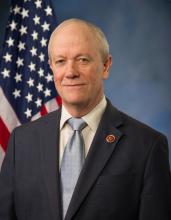
Rep. Mark DeSaulnier.

Washington, DC – Today, July 1, 2021, 13 initiatives authored by Congressman Mark DeSaulnier (D, CA-11) and aimed at promoting sustainable transportation and improving access to safe and reliable public transit were included in the INVEST in America Act (H.R. 3684), which passed the U.S. House of Representatives by a vote of 221-to-201. The INVEST in America Act is a $715 billion surface transportation reauthorization and water infrastructure bill that will create good-paying jobs to rebuild and reimagine America’s surface transportation infrastructure, with investments in roads, bridges, transit, rail, and drinking water and wastewater infrastructure. 2021 Fact Sheet for INVEST in America Act“California has long been a model for the country in the transportation space, particularly when it comes to reducing greenhouse gas emissions and investing in public transportation. The INVEST in America Act aligns with and furthers California’s goals through bold, innovative legislation that would put millions of Americans to work, speed up our economic recovery, and follow through on our commitment to reduce emissions with transformative investments in cleaner transportation,” said DeSaulnier.

DeSaulnier’s measures included in the bill would aid the transition to environmentally clean modes of transportation, improve accessibility of reliable and efficient public transit, increase road safety, and save taxpayer money. Among those provisions are:

  • Electric Vehicle (EV) Infrastructure Enhancement:Based on Congressman DeSaulnier’s Clean Corridors Act (H.R. 2012), the bill would quickly build out EV charging infrastructure nationwide to allow more Americans to shift to environmentally-friendly modes of transportation, saving gas money and our planet, while also creating jobs. The Biden Administration has signaled that this is a top priority.
  • Improved Transportation System Connectivity:Would provide grants to implement better public transportation investment allowing us to create a more interconnected, innovative, and efficient public transportation system that will in turn get more cars off the road, reduce congestion, create more equity, and help fight climate change. This language is part of Congressman DeSaulnier’s Jobs for a Carbon Free Transportation System Act and Incentivizing Value Capture for Greener Transportation Act (H.R. 2205).
  • Greater Transportation Accessibility:Originally included in Congressman DeSaulnier’s COMMUTE Act (H.R. 3581), this provision would enhance transportation planning and equity by improving access to essential services like jobs, health care and childcare facilities, and affordable housing.
  • Enhanced Trucking Safety and Oversight: The bill includes requirements that enhance motor carrier compliance with labor and workplace safety laws, ensuring that our truckers and other road users remain safe on the roads and that motor carriers are held accountable when they violate these protective laws.
  • Transportation Safety Improvement:Based on the Stop Underrides Act (H.R. 1622), co-led by Congressmen Cohen and DeSaulnier, the package directs the Department of Transportation to enhance underride guard protections to prevent deadly truck underride collisions.
  • Efficient Infrastructure Project Delivery:The bill would increase oversight of large infrastructure projects to minimize megaproject cost overruns, delays, and reduced construction quality. Based on Congressman DeSaulnier’s Megaprojects Accountability and Oversight Act (H.R. 2204), this measure would reduce waste, save taxpayer money, and ensure vital infrastructure projects are completed safely and without delay.

The bill still requires approval by the U.S. Senate.

Congressman DeSaulnier is a member of the House Committee on Transportation and Infrastructure. He previously served as Chair of the California State Senate Transportation and Housing Committee as well as the California Assembly Transportation Committee. He is also a former member of the California Air Resources Board (CARB) and has been a longtime leader in advocating for sustainable transportation as well as safe and efficient public transportation systems.

Allen Payton contributed to this report.

Frazier bill to eliminate Los Medanos Healthcare District passes Assembly on 70-0 vote

Friday, May 14th, 2021

Source: Office of Assemblymember Jim Frazier

Would transfer tax revenue to county, eliminate Antioch Mayor Thorpe’s executive director job

On Monday, May 10, 2021, Assemblymember Jim Frazier’s (D-Fairfield) bill, AB 903, to dissolve the Los Medanos Community Healthcare District, unanimously passed the Assembly floor on a 70-0 vote. The district serves Pittsburg and Bay Point.

AB 903 will require Contra Costa County to be the successor of all rights and responsibilities of the district. AB 903 will also require the county to complete a property tax transfer process to ensure the transfer of the district’s health-related ad valorem property tax revenues to the county in order to operate the Los Medanos Area Health Plan Grant Program.

The Los Medanos Hospital closed in 1994 but the district, covering Pittsburg and Bay Point, has continued to exist, collecting property taxes and using the funds to pay for staff and provide grants to local organizations, direct service programs including a community garden and district sponsored programs including REading ADvantage for early literacy. The district’s 2020-21 Fiscal Year budget projected $1.13 million in tax revenue and $1.3 million in expenses.

“This bill effectively creates hundreds of thousands of dollars in funding for badly needed healthcare services in the region. A lot of this funding comes from the savings on LMCHD’s extremely high administrative expenses, which topped 60% in some years,” said Frazier.

The Contra Costa Local Agency Formation Commission (LAFCO) has approved of the dissolution of the existing healthcare district, and Contra Costa County already serves the communities within district boundaries.

“The COVID-19 pandemic has exposed critical shortfalls in healthcare and health services funding across the state. Communities of color have been especially impacted by the emergency,” said Frazier. “Now more than ever, we have seen the life-changing impacts of devoting every possible dollar to serving those we represent. AB 903 effectively creates hundreds of thousands of dollars in funding for badly needed healthcare services in the region.”

“Comparable programs in the county average at about 15% admin cost, and rather than lose over half the funding to wasteful administrative expenses, AB 903 dedicates those dollars to the community,” Frazier added.

Part of the administrative expenses includes Antioch Mayor Lamar Thorpe’s executive director position which included an annual salary of $96,000 when he was hired in 2019, plus merit-based salary increases, according to the minutes of the Dec. 16, 2019 LMCHD Board meeting. He is also provided one hour of paid personal leave time for every 30 hours worked. When reached, previously about having his position eliminated if the bill is signed into law, Thorpe said he could find another job.

Previously, LMCHD Board President Patt Young challenged Frazier and his legislation, claiming he doesn’t represent but a portion of the healthcare district and that he is “taking political orders from your top political advisor in an effort to turn our district into a political slush fund for one of your top allies on the Contra Costa County Board of Supervisors.” (See related article)

However, Assemblymember Tim Grayson, whose district includes most of the healthcare district, is the Principal couthor of the bill.

The bill requires passage by the State Senate and signing by the governor before it becomes law.

Allen Payton contributed to this report.