Archive for the ‘Health’ Category

County’s coronavirus/COVID-19 dashboard shows 24 cases in Antioch

Sunday, April 5th, 2020

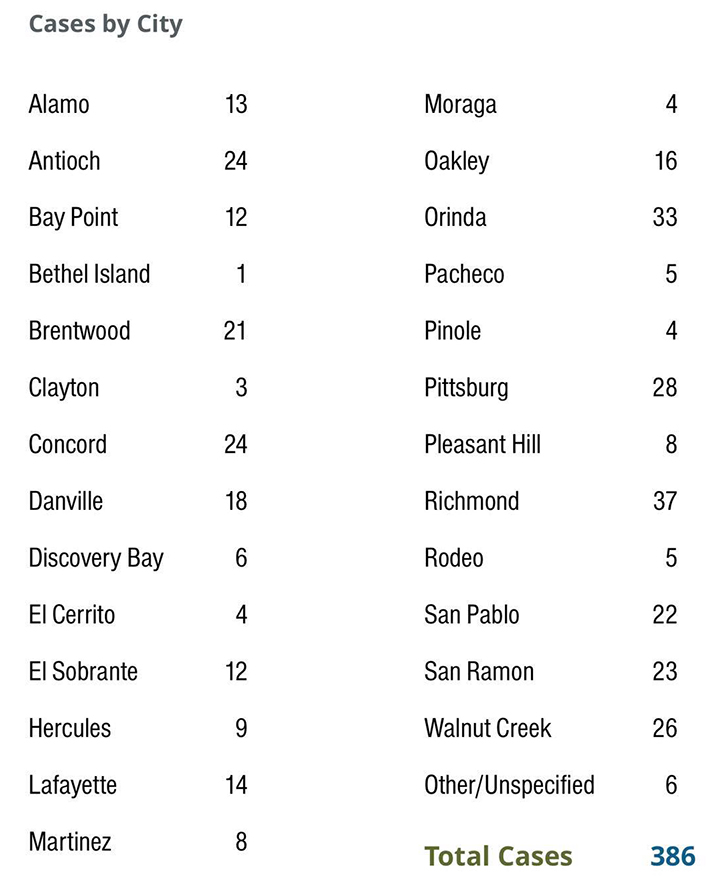
CCHS COVID-19 cases by city or community 04-05-20

By Allen Payton

As of Sunday, April 5, 2020 at 11:30 a.m. Antioch has 24 of the 386 cases of coronavirus/COVID-19 in the county, according to the Contra Costa Health Services new coronavirus dashboard on their website. Antioch is tied with Concord for the fifth most out of the 19 cities and seven communities included in the list, followed next by San Ramon with 23, San Pablo with 22 and Brentwood with 21 cases.

In a post on Sunday, Chair of the Contra Costa County Board off Supervisors Candace Andersen shared the following information: “Contra Costa County Health’s Dashboard is now breaking down COVID-19 cases by city. Please keep in mind that this is not per capita, and our cities all have different sized populations. It shows there is “community spread” throughout the County. Please continue to Shelter in Home, and put on a mask or face covering those limited times you are out in public.”  So far 5,240 people have been tested

UPDATE: the dashboard now provides a statistic showing cases per 100,000 population for each city and community, with a countywide average of 33.

Contra Costa issues mass isolation and quarantine orders for people with COVID-19 and their close contacts

Saturday, April 4th, 2020

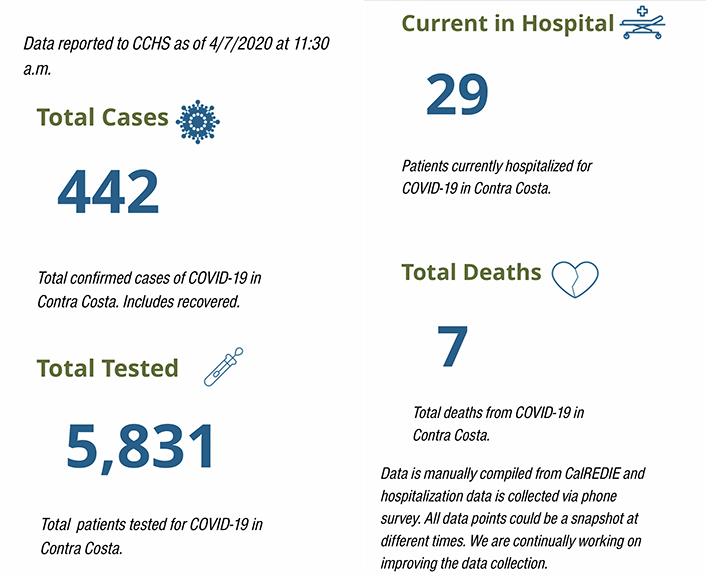
Latest county stats: 4,929 tested, 353 cases, 31 currently hospitalized, 5 deaths as of Saturday morning, April 4

“Our resources are stretched extremely thin and business as usual is not an option.” – Health Officer Dr. Chris Farnitano

From Contra Costa Health Services

Contra Costa County Health Officer Dr. Chris Farnitano announced Friday evening that the county is issuing a mass order for residents with COVID-19 and their close contacts to isolate and quarantine themselves.

The mass order is being issued to help slow COVID-19’s spread, protect vulnerable individuals, and prevent the healthcare system in the County from being overwhelmed. The county’s public health staff no longer have the capacity to individually notify and track everyone with COVID-19 and their close contacts who may have been exposed to the virus.  

As of Friday, 307 county residents have tested positive for COVID-19 and five people have died from the virus. Contra Costa County had no local cases at the beginning of March.

“We’ve reached a critical point in the COVID-19 crisis here in Contra Costa,” Dr. Farnitano said. “Our resources are stretched extremely thin and business as usual is not an option. We believe this mass order is a creative and effective way of getting the job done to keep the sick isolated from others.”

Residents must isolate themselves in their home or another residence if they test positive for COVID-19. They may not leave their home except to receive necessary medical care or during an emergency that requires evacuation.  

COVID-positive individuals without symptoms must isolate for 7 days from the date of a positive test. Those with symptoms must isolate at least 7 days have passed since their symptoms started. Initially symptomatic people must also wait at least 72 hours have passed since after symptoms go away. Symptoms of COVID-19 include fever, coughing and shortness of breath.

County residents who test positive for COVID-19 will now be required to tell their close contacts that they need to quarantine themselves if they may have been exposed. Close contacts must then remain at home or another residence for 14 days from the last date that they were in contact with the person infected or with COVID-19.

People considered “close contacts” are persons who, during the sick individual’s infectious period, live in, or have stayed overnight, at the individual’s residence; are intimate sexual partners of the individual; or provided care to the individual without wearing a mask, gown, and gloves.

People can access instructions on how to isolate and quarantine themselves at cchealth.org/coronavirus.

Antioch School Board to hold first virtual meeting Wednesday night

Saturday, April 4th, 2020

By Allen Payton

Due to the current shelter in place order, the Antioch Unified School District Board of Trustees will hold its regular Board of Education meeting of April 8, 2020, at 7:00 p.m. online via teleconference.

There are no items for information, discussion or action on the agenda. Only essential items will be placed on the agenda until the shelter in place is lifted.

But there is one resolution for immediate action on the agenda. Although the board didn’t have to vote to close the schools, since the superintendent already has that authority form previous board policy, the trustees will discuss and decide how to vote on “Resolution No. 2019-20-38 Designating Certain District Construction Projects as an Essential Governmental Function and Delegating Authority for the Superintendent or her Designee to Make Such Determinations on Such Construction Projects as are Necessary to Comply with State and Local Health & Safety Orders Issued in Response to COVID-19.”

Before the regular board meeting, they will hold a closed session to discuss the discipline, dismissal or release of a public employee. Because it’s a personnel matter details are not available to the public.

The board will also discuss and decide on a variety of Consent calendar items, including:

  1. Award of Bid and Contract for Wide Area Network Services
  2. Award of Bid and Contract to Company for Wide Area Network Services (Month-to-Month)
  3. Award of Bid and Contract for New Wireless Network Controllers
  4. Notice of Completion with S+B James Construction Management Company for the Heating, Ventilation and Air Conditioning (HVAC) Replacement Project at Mission Elementary School
  5. Services Agreement with Learned and Associates
  6. Addendum to Services Agreement with Marzano Resources
  7. Contra Costa County Office of Education Medi-Cal Administrative Claiming Agreement
  8. Master Contract with Cinnamon Hills Youth Crisis Center
  9. Services Agreement with California Emerging Technology Fund (CETF)

You may refer to the district’s website  http://www.boarddocs.com/ca/ausd/Board.nsf/Public to view the Board agenda in its entirety. Or view it, here:

This meeting can be viewed on livestream video on the district’s YouTube channel at https://youtu.be/GLTJ1Hx9vHI.

Contra Costa COVID-19 Update: Now 305 cases, two more deaths

Friday, April 3rd, 2020

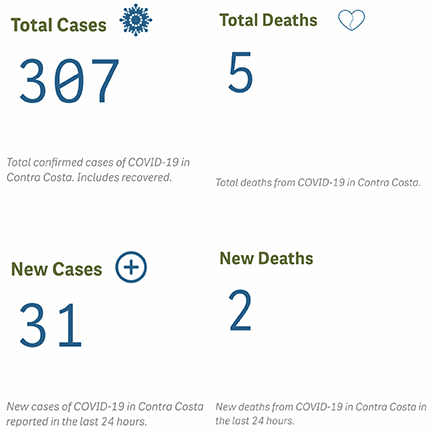
ases and deaths from COVID-19 in Contra Costa County from the CCHS dashboard.

As of Friday, April 3, 2020 at 2:00 p.m. Contra Costa Health Services (CCHS) is reporting 31 more cases of COVID-19/coronavirus for a total of 305, and two more deaths in the county. There are 32 people diagnosed with the virus currently hospitalized, an increase of just one from Thursday’s update.

27 of the new cases are from the senior care home in Orinda. (See related article)

To see the all the statistics provided by CCHS, click here.

Google releases Mobility Reports collected from cell phone data on social distancing, activities

Friday, April 3rd, 2020

By Allen Payton

Google released a treasure trove of information, Friday labeled Mobility Reports, based on cell phone users’ movements, during the coronavirus pandemic, that includes statistics showing activities such as shopping, use of parks, and going to work.

“Each Community Mobility Report is broken down by location and displays the change in visits to places like grocery stores and parks. This is an early release and reports will be updated regularly”, Google shared on their website.

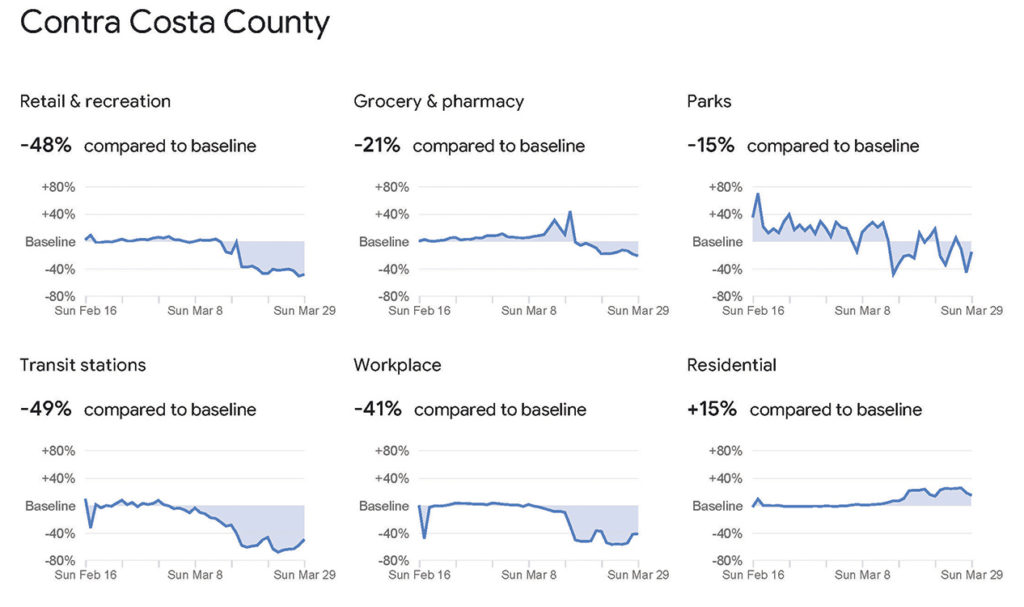
In California, from February 16 through March 29, the data show a 50% drop in retail and recreation, a 24% decrease in grocery shopping and pharmacy visits, a 38% drop in visits to parks, a 54% decrease in use of public transit, but only a 39% drop in going to work. An even more interesting statistic is the data show only a 15% increase in going to places of residence.

The stats for Contra Costa County were similar, with a 48% drop in retail and recreation, a 21% decrease in grocery shopping and pharmacy visits, a 49% drop in using public transit, a 41% decrease in going to work, as well as the same 15% increase in visits to home. But there was only a 15% decrease in visits to parks.

Under the title “Helping public health officials combat COVID-19”,  Jen Fitzpatrick, SVP, Geo and Google Health’s Chief Health Officer, Karen DeSalvo, MD, M.P.H. issued the following statement, today, Friday, April 3:

“As global communities respond to the COVID-19 pandemic, there has been an increasing emphasis on public health strategies, like social distancing measures, to slow the rate of transmission. In Google Maps, we use aggregated, anonymized data showing how busy certain types of places are—helping identify when a local business tends to be the most crowded. We have heard from public health officials that this same type of aggregated, anonymized data could be helpful as they make critical decisions to combat COVID-19.

Starting today we’re publishing an early release of our COVID-19 Community Mobility Reports to provide insights into what has changed in response to work from home, shelter in place, and other policies aimed at flattening the curve of this pandemic. These reports have been developed to be helpful while adhering to our stringent privacy protocols and policies.

The reports use aggregated, anonymized data to chart movement trends over time by geography, across different high-level categories of places such as retail and recreation, groceries and pharmacies, parks, transit stations, workplaces, and residential. We’ll show trends over several weeks, with the most recent information representing 48-to-72 hours prior. While we display a percentage point increase or decrease in visits, we do not share the absolute number of visits. To protect people’s privacy, no personally identifiable information, like an individual’s location, contacts or movement, is made available at any point.

We will release these reports globally, initially covering 131 countries and regions. Given the urgent need for this information, where possible we will also provide insights at the regional level. In the coming weeks, we will work to add additional countries and regions to ensure these reports remain helpful to public health officials across the globe looking to protect people from the spread of COVID-19.”

Google also provided additional information about their reports, how they gathered the data and what they’re doing with it:

Preserving privacy

The Community Mobility Reports were developed to be helpful while adhering to our stringent privacy protocols and protecting people’s privacy. No personally identifiable information, such as an individual’s location, contacts or movement, will be made available at any point.

Insights in these reports are created with aggregated, anonymized sets of data from users who have turned on the Location History setting, which is off by default. People who have Location History turned on can choose to turn it off at any time from their Google Account and can always delete Location History data directly from their Timeline.

We also use the same world-class anonymization technology used in our products every day to keep your activity data private and secure. This includes differential privacy, which adds artificial noise to our datasets, enabling us to generate insights while preventing the identification of any individual person.

Visit Google’s Privacy Policy to learn more about how we keep your data private, safe and secure.

How long will these reports be available?

These reports will be available for a limited time, so long as public health officials find them useful in their work to stop the spread of COVID-19.


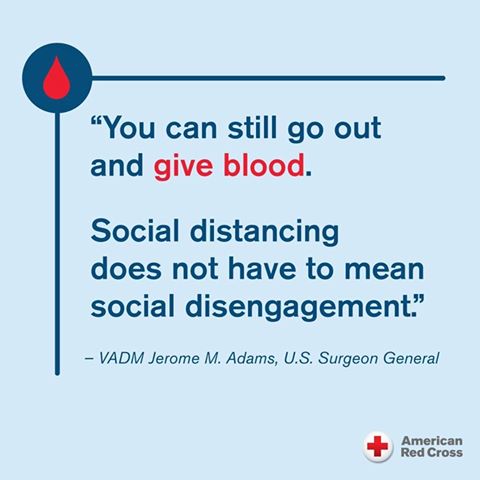
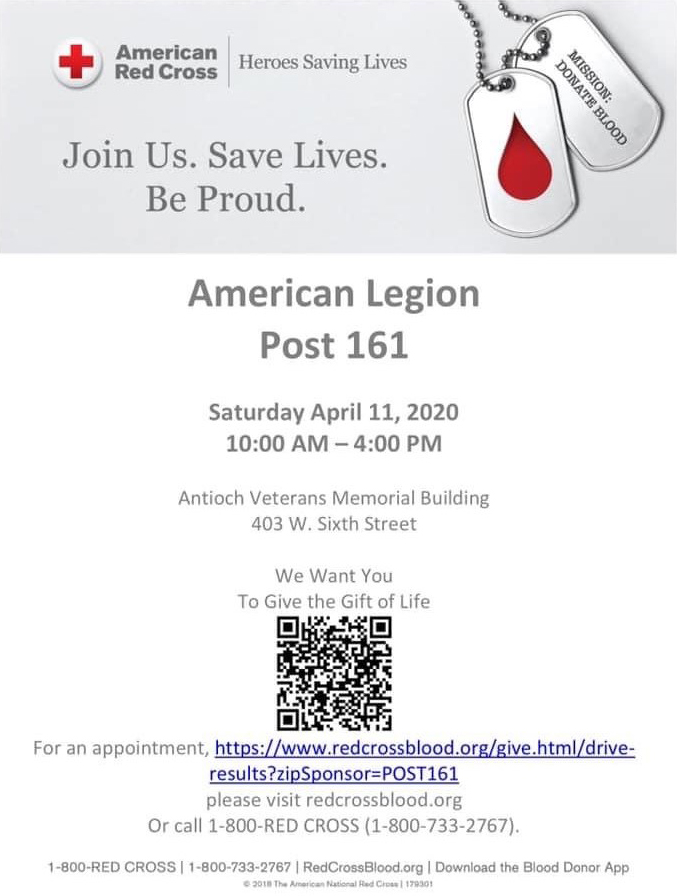
American Legion Post 161 to hold blood drive in Antioch Saturday, April 11

Friday, April 3rd, 2020


Contra Costa Health Services adds more statistics, data to their coronavirus webpage

Thursday, April 2nd, 2020

Only 31 currently hospitalized out of 276 confirmed cases in the county

By Allen Payton

After requests by the public and the Herald, on readers’ behalf, the Contra Costa Health Services updated their webpage, today and are now reporting more statistics and information on what they refer to as the “dashboard.”

The only statistic not included that the public has been requesting, is the number of people diagnosed with the virus who have recovered.

“We’re working to get additional information to the public, as much as possible,” said Will Harper, Contra Costa Health Services spokesperson.

One bright spot in the additional statistics is that out of 276 confirmed cases in Contra Costa County, only 31 are currently hospitalized, which is a little over 11%, as of 1:00 a.m. Thursday morning, April 2. That’s out of 4,083 people who have been tested.

While the statistics show a greater number of people age 41-60 that have been diagnosed with COVID-19 than those age 61-100, which goes against international statistics, “What it doesn’t show is the severity of the cases,” Harper explained.

“We’re trying to prepare people for the fact that we haven’t seen the worst of it, yet,” he added.

Gov. Newsom launches campaign to protect health of older Californians during COVID-19 pandemic

Wednesday, April 1st, 2020

To combat social isolation, ‘Stay Home. Save Lives. Check In.’ campaign urges all Californians to check in on vulnerable neighbors with a call, text or physically-distanced door knock.

In coordination with non-profit local 2-1-1 systems, California also launches hotline to help Californians answer questions.

SACRAMENTO – Governor Gavin Newsom today announced the “Stay Home. Save Lives. Check In.” campaign urging Californians to help combat social isolation and food insecurity among Californians who are over the age of 65 – a community that is uniquely vulnerable to COVID-19.

During California’s stay at home order, older Californians may need friends and neighbors to help them obtain basic necessities like groceries and prescriptions.

“The most important way for older Californians to stay safe is to stay at home,” said Governor Newsom. “No older Californian should be forced to go outside to get groceries or their medication. It’s on all of us across the state to check in on the older adults in our lives – our friends, family and neighbors – to help them during this outbreak. Each and every one of us must reach out in a safe way to make sure our older neighbors have someone to talk to and have enough food to eat during these difficult times.”

The campaign urges all Californians to check in on their older neighbors with a call, text or physically-distanced door knock to make sure they’re ok. In addition, the state is urging local non-profits and faith-based organizations to call to check in on all of the older Californians in their networks.

The Governor also announced the creation of a statewide hotline — 833-544-2374 — in coordination with the non-profit local 2-1-1 systems, so that Californians have a one-stop shop to answer their questions and get assistance during this crisis. For example, the 2-1-1 system is able to help older Californians access grocery and medication delivery while staying at home.

The state, in partnership with AARP, will also send a mailer to older residents, 65 and older, with useful resources and information to help adapt to the stay at home order.

“Social isolation can be difficult for older Californians even in the best of times,” said Kim McCoy Wade, director of the California Department of Aging. “We have to help aging Californians feel connected – and we must ensure we all have access to any needed services right now. This work will save lives.”

The campaign builds on existing efforts by California Volunteers and Community Emergency Response Teams (CERT) to help older Californians and those who need food assistance.

California Volunteers has launched their Neighbor-to-Neighbor campaign, which calls on neighbors to be the first line of support for California’s most vulnerable residents who have been advised to stay at home during the COVID-19 pandemic. The Neighbor-to-Neighbor campaign is focused on older adults and promotes ways to safely check on your neighbors, family and friends.

To make the most vulnerable Californians more resilient to disasters, Listos California has pivoted to helping these communities stay safe during the pandemic. Leading the charge statewide are Community Emergency Response Teams (CERT) comprised of volunteers with at least 20 hours of FEMA preparedness training. These teams are conducting welfare checks on seniors, as well as distributing essential food and supplies in Sacramento, San Diego, San Bernardino, San Francisco, Los Angeles and Napa counties to help them through the pandemic. Listos California has also partnered with trusted community-based organizations across the state and programs like Meals on Wheels and other local senior-serving non-profits to deliver services and preparedness resources.