







Archive for the ‘Health’ Category

Bay Area Stay-At-Home order extended indefinitely

Saturday, January 9th, 2021
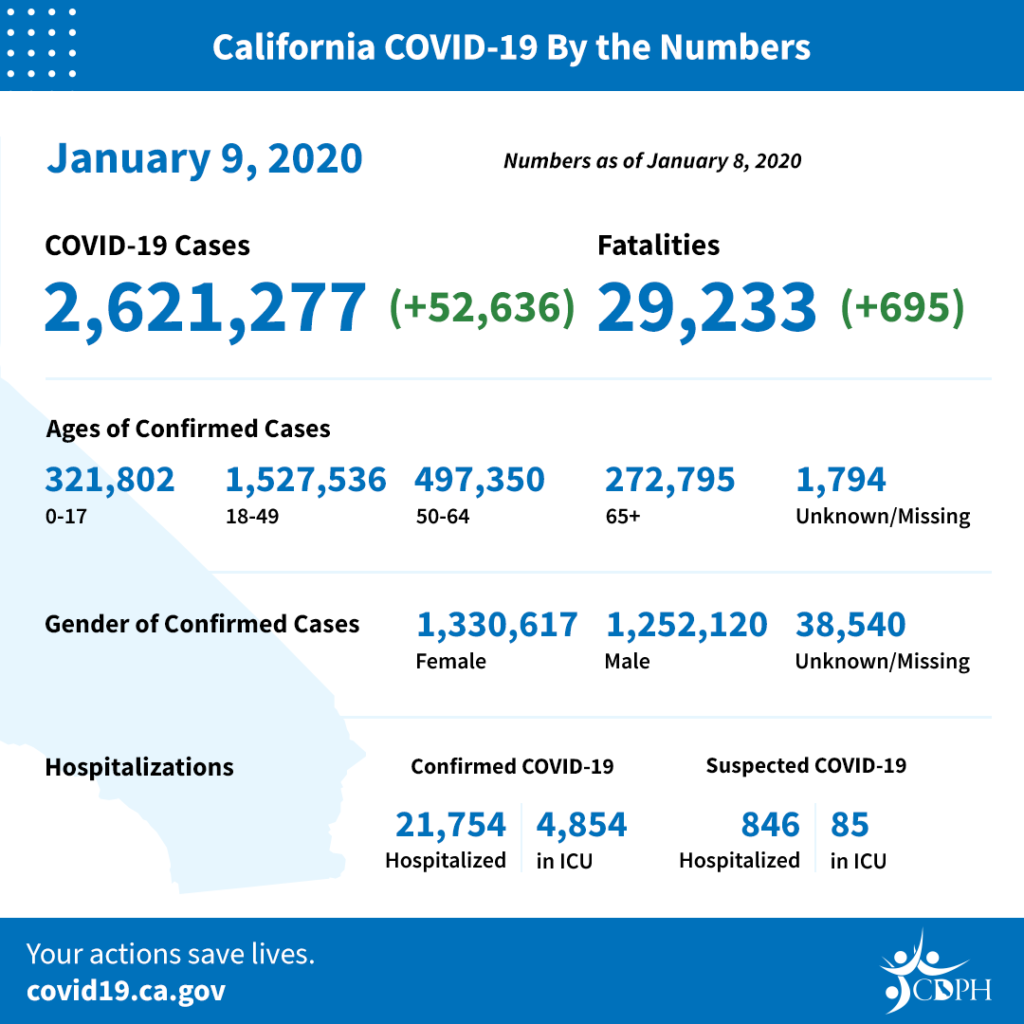
From www.cdph.ca.gov.

  • Until a region’s four-week ICU projection shows a capacity of greater than or equal to 15%

  • The extended order, directs residents to stay at home except for work, shopping or other essential activities, such as medical appointments. Gov. recommends no non-essential travel more than 120 miles from home.

  • Latest total numbers for Contra Costa County: 46,618 cases, 389 deaths

In announcing the most recent statistics on COVID-19, including data on intensive care unit (ICU) capacity across the state, today, Saturday, Jan. 9, 2021 the California Department of Public Health (CDPH) extended the Stay-At-Home order indefinitely. That’s based on the latest ICU data showing 3.0% of current available ICU capacity.

Once a region’s four-week ICU projection shows a capacity of greater than or equal to 15%, the order will be lifted for that area. The state will assess the region’s ICU projections in the coming days and announce a formal decision on whether Bay Area meets criteria to exit the order.

Current Available ICU Capacity by Region

  • Bay Area: 3.0%
  • Greater Sacramento: 6.4%
  • Northern California: 27.5%
  • San Joaquin Valley: 0.0%
  • Southern California: 0.0%

* Today’s current available ICU capacity is based on numbers reported as of January 8, 2021.

Current Status of Regional Stay at Home Order in Affected Regions

  • Bay Area: Remains under order; The region’s four-week ICU projections will be assessed in the coming days.
  • San Joaquin Valley: Remains under order; four-week ICU capacity projections do not meet criteria to exit order.
  • Southern California: Remains under order; four-week ICU capacity projections do not meet criteria to exit order.
  • Greater Sacramento: Remains under order; four-week ICU capacity projections do not meet criteria to exit order.

ICU capacity projections for regions that are eligible to exit the order are calculated daily based on four factors: current estimated regional ICU capacity available, measure of current community transmission, current regional case rates and the proportion of ICU cases being admitted. Decreasing community transmission and increasing the health system capacity can help a region’s projected ICU capacity so they can exit the order. Read the full Regional Stay Home Order, Supplement to the Order, and frequently asked questions.

Due to high rates of COVID-19 hospitalizations impacting the health care system, California is also under a Limited Stay at Home Order. The order applies to all counties that are currently under the Regional Stay at Home Order and those in Tier One (Purple) of the Blueprint for a Safer Economy. The Limited Stay at Home Order will expire after the Regional Stay At Home Order has been terminated in all regions of the state.

Hospital Surge Order

On January 5, CDPH issued a public health order to reduce pressure on strained hospital systems. To preserve services for the sickest patients, the hospital surge order requires some non-essential and non-life-threatening surgeries to be delayed in counties with 10% or less of ICU capacity under the Regional Stay at Home Order where the regional ICU capacity is at 0%. Examples of procedures that may be delayed include carpal tunnel release and non-urgent spine surgeries. Surgeries for patients who have serious and urgent medical conditions will continue. Examples of procedures that will continue include serious cancer removal and necessary heart surgeries. The order will remain in effect for at least three weeks and will continue until rescinded.

The order requires hospitals statewide to accept patient transfers from facilities that have implemented contingency or crisis care guidelines as long as those transfers can be done capably and safely. On December 28, 2020 CDPH provided guidance to health care facilities on implementing the Crisis Care Continuum Guidelines issued in June 2020.

Counties Currently Impacted by the Hospital Surge Order:

San Joaquin Valley: Fresno, Kern, Kings, Madera, Merced, San Benito, San Joaquin, and Stanislaus

Southern California: Imperial, Los Angeles, Orange, Riverside, San Bernardino, San Diego, and Ventura

Statewide COVID-19 Data as of Today

  • California has 2,621,277 confirmed cases to date. Numbers may not represent true day-over-day change as reporting of test results can be delayed.
  • There were 52,636 newly recorded confirmed cases Friday.
  • The 7-day positivity rate is 14.0% and the 14-day positivity rate is 14.0%.
  • There have been 35,353,748 tests conducted in California. This represents an increase of 326,418 during the prior 24-hour reporting period.
  • As case numbers continue to rise in California, the total number of individuals who will have serious outcomes will also increase. There have been 29,233 COVID-19 deaths since the start of the pandemic.
  • As of January 9, a total of 734,405 vaccine doses have been administered statewide. As of January 8, a total of 2,060,800 vaccine doses, which includes the first and second dose, have been shipped to local health departments and health care systems that have facilities in multiple counties.

Tracking COVID-19 in California

State Dashboard – Daily COVID-19 data
County Map – Local data, including tier status and ICU capacity
Data and Tools – Models and dashboards for researchers, scientists and the public
Blueprint for a Safer Economy – Data for establishing tier status

ADDITIONAL DATA & UPDATES

Updated Travel Advisory

CDPH has issued an updated travel advisory. Except in connection with essential travel, Californians should avoid non-essential travel to any part of California more than 120 miles from one’s place of residence, or to other states or countries. Avoiding travel reduces the risk of virus transmission, including by reducing the risk that new sources of infection and, potentially, new virus strains will be introduced to California. Postponing travel and staying home is the best way to protect yourself and others from COVID-19. Non-essential travelers from other states or countries are strongly discouraged from entering California and should adhere to the state’s self-quarantine procedures for 10 days

Safe Schools for All Plan

Governor Newsom released his California’s Safe Schools for All plan, California’s framework to support schools to continue operating safely in person and to expand the number of schools safely resuming in-person instruction.

Vaccinate All 58

The COVID-19 vaccination is one of the most important tools to end the pandemic. California will distribute a safe and effective COVID-19 vaccine in a fair way to everyone who wants it in all 58 counties. Visit the Vaccinate All 58 webpage.

Health Care Workers

As of January 8, local health departments have reported 74,589 confirmed positive cases in health care workers and 281 deaths statewide.

Health Equity

The COVID-19 pandemic has highlighted existing inequities in health that are the result of structural racism and poverty, and the disproportionate prevalence of underlying conditions such as asthma and heart disease among Latinos and African Americans. California is committed to understanding these inequities to help ensure the best health outcomes for all Californians. View COVID-19 Race & Ethnicity Data and Cases and Deaths by Age Group. Visit the new Health Equity Dashboard.

Testing Turnaround Time

The testing turnaround time dashboard reports how long California patients are waiting for COVID-19 test results. During the week of December 27 to January 2, the average time patients waited for test results was 1.4 days. During this same time period, 60% of patients received test results in one day and 87% received them within two days.

Multisystem Inflammatory Syndrome in Children (MIS-C)

As of January 4, 161 cases of Multisystem Inflammatory Syndrome in Children (MIS-C) have been reported statewide. MIS-C is a rare inflammatory condition associated with COVID-19 that can damage multiple organ systems. MIS-C can require hospitalization and be life threatening.

Your Actions Save Lives

Protect yourself, family, friends and your community by following these prevention measures:

  • If you are experiencing symptoms of COVID-19 (fever, cough, shortness of breath, fatigue, muscle or body aches), call your health care provider.
  • If you believe you have been exposed, get tested. Free, confidential testing is available statewide.
  • Stay home except for essential activities and follow local public health guidance.
  • Keep interactions to people who live in your household.
  • Wear a cloth face mask when out in public.
  • Avoid non-essential travel and stay close to home; self-quarantine for 10 days after arrival if you leave the state.
  • Wash hands with soap and water for at least 20 seconds.
  • Avoid close contact with people who are sick and stay home from work, school or other people if you feel ill.
  • Add your phone to the fight by signing up for COVID-19 exposure notifications from CA Notify.
  • Answer the call if a contact tracer from the CA COVID Team or local health department tries to connect.
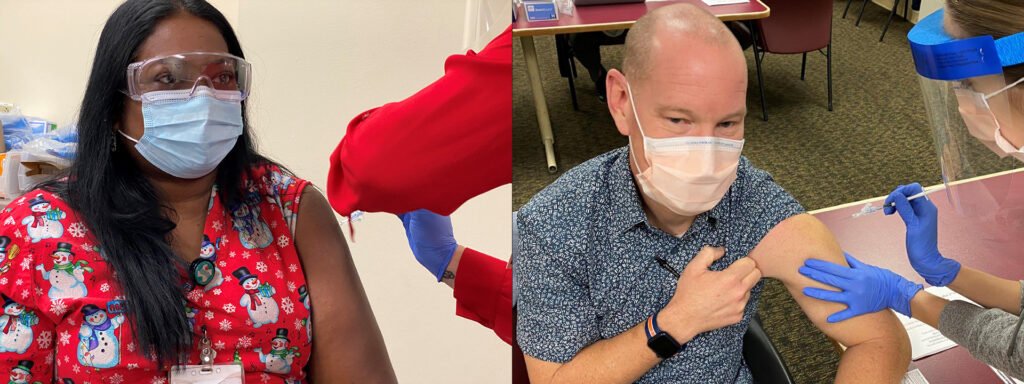
Sutter Delta Medical Center staff among first to receive COVID-19 vaccine

Friday, December 18th, 2020

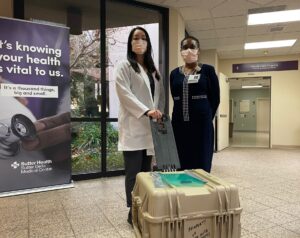
On December 17, Sarah Fernando, RN, telemetry unit, and Dr. Josh Sheridan, medical director of Sutter Delta’s emergency department were among the first frontline healthcare workers to receive the Pfizer COVID-19 vaccine. Photos: Sutter Health

By Monique Binkley Smith, Media Relations Manager, Sutter Health

Jane Han, pharmacy director at Sutter Delta Medical Center and CEO Sherie Hickman, with the first delivery of Pfizer COVID-19 vaccine on Wednesday, Dec. 16, 2020. Photo: Sutter Health

Across the Sutter Health integrated network of care, we share the excitement and hope that comes with the first allocation and distribution of the Pfizer COVID-19 vaccine. We have begun vaccinating frontline healthcare workers at our acute care hospitals, including Sutter Delta Medical Center where vaccination began on Thursday, December 17. Sutter requested the maximum allotment for our frontline healthcare workers and we will distribute the vaccine to them based on what we receive from the public health officials.

We have been actively working on plans for overall vaccine distribution, which includes infrastructure, staffing, equipment and supplies. We have assembled a task force of experts to work with state and local public health officials and plan for a staged approach to vaccine distribution across our integrated network, as manufacturing and distribution scales to meet vaccination needs across the U.S.

This first, very limited allocation of the Pfizer vaccine is being directed by county health officials, who are working closely with our local clinical and operational teams to plan for the allocation and distribution of vaccine at our acute sites.

Vaccination is voluntary and is offered at no cost to frontline workers. Frontline healthcare workers who are treating COVID-19 patients and high-risk groups will be prioritized. Generally, during this first phase, in accordance with guidance from public health officials, we will be offering vaccine first to frontline healthcare workers who are at the highest risk for exposure based on the care environment in which they work and the nature of their contact with patients.

Following death threat, protests Supervisor Mitchoff drops COVID-19 business fines hike proposal

Wednesday, December 16th, 2020

Reads unedited profanity laced email during Tuesday meeting

Unlikely radioactive material dumped at Keller Canyon Landfill in Pittsburg

Prioritize teachers for COVID-19 vaccine

By Daniel Borsuk

Supervisor Karen Mitchoff, choking back tears after receiving an emailed death threat and listening to an avalanche of protests to her proposal to boost county public health fines on small businesses violating COVID-19 orders, requested the idea be dropped at Tuesday’s Contra Costa County Board of Supervisors meeting.

Supervisors earlier heard from a number of anonymous callers, presumably restaurant owners largely hit by county health inspections and penalty fines.  Most of the speakers protested that the current fines of $250 for the first offense, $500 for the second offense and $1,000 for each additional violation within one year of the initial violation were too extreme.  If a violation continues for more than one day, each day is treated as a separate violation.

At the Board’s December 8 meeting, Mitchoff had proposed the county dramatically increase fines in order to send a message to businessowners thinking of violating county ordinances.  At that meeting the supervisor had said, “I would like to see, $10,000, $15,000, and $20,000 fines.  We have to do something different.  If they want to stay open and spread COVID they have to pay the price.”

Prior to receiving the threatening email or listening to anonymous businessowners torpedo her proposal Tuesday, Mitchoff said “If we do not do something, we’ll lose credibility.  I see many businesses in Concord and Pleasant Hill obey county orders and are closed, but restaurants in Danville are open.”

A group of Danville and San Ramon restaurant owners have stirred up most of the protests.

“We receive 13 complaints a day including customers not wearing masks or not social distancing,” Contra Costa County District Attorney Dianna Becton told the supervisors.  The DA has assigned two inspectors for health code violations.

“Small businesses are really suffering,” said Supervisor Diane Burgis of Brentwood, who said one small busines owner pleaded with her for help because he had difficulty paying his property taxes.  “I am not going to support higher fines.  I am not in support of higher taxes. It won’t work.”

Later, Mitchoff caved into the public protests and especially upon receiving a sort of “interesting”, profanity-laced message during the meeting that she received from Ricky Gunz and read verbatimm:

“F— you Bi—. Sleep lightly. There are some bad people out there.  Karma is a motherf—r.  Keep trying to fine business and see what happens.”

“We hear the pain and the frustration,” said Supervisor John Gioia of Richmond. “It is all about saving lives and slowing the spread of COVID-19 to the 15 percent intensive care unit (ICU) capacity level.  We’re trying to save ICU capacity.”

Earlier supervisors learned from Contra Costa County Public Health Officer Dr. Chris Farnitano that Contra Costa had 181 COVID-19 patients in local hospitals, but more crucially, 133 patients were occupying ICU beds.  There are a total of 183 ICU beds in the county.

“That’s a significant increase,” said Farnitano. “Our case rate is 36 cases per day.  December will be our deadliest month.  Of 500 patients, five will die of COVID19,” he warned.

Keller Canyon Landfill Probe: “Unlikely that radiological materials were disposed of at Keller Canyon”

Supervisors also voted 5-0 to accept a two-page report on an investigation whether any radioactive materials from the Hunters Point Naval Shipyard were transported to the Keller Canyon Landfill in Pittsburg.  The report, prepared by TRC Solutions, Inc. was initiated after news reports initially published on April 21, 2018 in the San Francisco Chronicle and later picked up by other news outlets including the Contra Costa Herald about allegations of improper dumping of radioactive materials had occurred in the landfill.

“TRC’s forensic audit started in October 2018 and concluded in May 2019.  Documents reviewed by TRC included special waste authorizations, soil analytical data reports, Hunters Point work plans and reports, Standard Operating Procedures, portal monitor calibration records, and landfill data to ascertain if radiologically contaminated materials were received by KCL from Hunters Point Naval Shipyard.  In addition, site visits were performed at both KCL and HPNS in April 2019,” the report stated.

“Based on this review, of data, reports, logs, interviews, and site visits, it is concluded that it is very unlikely that radiological materials of concern (i.e., radionuclides specific to Hunters Point contaminations and in exceedance of background) were disposed of at Keller Canyon. To obtain certainty that no radiologically contaminated material from Hunters Point was received at Keller Canyon, limited environmental field sampling could be performed at Keller Canyon.”  Republic Services of Contra Costa operates the landfill.

Pittsburg City Manager Garret Evans said the city will continue to monitor the landfill based on the history of landfill’s previous issues about allegedly poor inaccurate data about air monitors and lead.

“Keller Canyon has been very cooperative.  This has been an important and thorough study that has gone through several community meetings, “said Supervisor Federal Glover of Pittsburg, whose District 5 includes the landfill.

Resolution Prioritizes Private and Public Teacher Receive COVID-19 Vaccines

Supervisors passed a resolution urging Gov. Gavin Newsom, the California Department of Public Health and all other state health officials to ensure that all public, parochial and private classroom teachers and staff receive the COVID-19 vaccine at no cost in order to assist school officials to reopen schools when it becomes safe to do so.

Two Cannabis Community Benefit Agreements Approved

Supervisors approved the community benefit agreements with two cannabis retail outlets – The Artist Tree V storefront commercial cannabis dispensary in El Sobrante and the Authentic 925 in Pacheco.  The two items acted on consent items.

The actions mean applicants for the two businesses are nearing approval of use permits whereby the owners will be required to pay the county community benefit taxes based on prospective retail sales.  In the case of SGI Pacheco, doing business as Authentic 925, the county will receive on an annual basis, $150,000 or 1.5 percent of the business’s gross profits, whichever is greater.

In the case of The Artist Tree V, the community benefit is based on percentages of annual gross sales of 2 percent or 3 percent depending on whatever will be gross sales during the operating year.


Contra Costa Health Officer shortens quarantine period to 10 days

Thursday, December 10th, 2020

Today, Thursday, December 10, 2020, the Contra Costa Health Officer, Dr. Chris Farnitano, shortened the time for quarantines from 14 days to 10.


Following is the updated Mass Quarantine Order:

Date of Order: 12/10/2020

This order supersedes HO-COVID19-32 (October 8), the order requiring the quarantine of persons exposed to a person diagnosed with COVID-19. Quarantine separates individuals who were exposed to COVID-19 from others until it is determined that they are not at risk for spreading the disease.

Based on updated guidance from the Centers for Disease Control and Prevention (CDC), this order shortens the quarantine period for most individuals from 14 to 10 days. This order also prohibits employees of detention facilities and long-term care facilities from returning to work for four days after completion of the 10-day quarantine requirement.

See the complete order, here.


Co Co Cafe Lunch Program for seniors continues in Antioch by delivery

Tuesday, December 8th, 2020

Eating healthy is the best way to maintain your strength, energy and immune system. If you know a senior who needs food delivered directly to their home, please contact Meals-On-Wheels at 925-937-8311 to be added to one of the routes in Antioch.

The Antioch Senior Center can also link seniors to other resources for transportation & essential needs. Call 925-776-7076 or 757-5236 and leave a message with your name and phone number. Staff will get back to you!!

Kaiser Permanente awards $1.1 million in grants to non-profits, to improve community health

Monday, December 7th, 2020

Antioch’s Brighter Beginnings, Opportunity Junction and school district among recipients

Grants increase access to health care, improve economic security and address mental health and wellness

By Kerri Leedy, PR and Media Relations Manager, Kaiser Permanente Northern California

WALNUT CREEK, Calif., Dec. 7, 2020 – To address the health needs of the community, Kaiser Permanente in the Diablo Area has awarded $1.1 million in grants focused on increasing access to health care and coverage, improving economic security and addressing mental health and wellness.

The Kaiser Permanente funding to 28 non-profit organizations will help low-income, at-risk communities in Central and East Contra Costa County, and the Tri-Valley area of Alameda County. The Antioch Unified School District, as well as Brighter Beginnings and Opportunity Junction, both located in Antioch, were among the recipients of the grants.

The 28 grants are aligned with Kaiser Permanente’s mission of improving the health of our members and the communities we serve. Kaiser Permanente recognizes that many factors impact health including social, economic and environmental conditions in the community. Through support of local non-profit organizations, Kaiser Permanente is working toward improving health for all.

“Our communities are facing significant and unprecedented challenges,” said Marty Ardron, Senior Vice President and Area Manager for Kaiser Permanente’s Diablo Service Area. “These organizations are committed to helping by providing vital health and mental health care, housing, and food assistance. We are proud to support them.”

The following nonprofit organizations received support from Kaiser Permanente:

Increasing Access to Care:

Axis Community Health Supporting Complex Patients with Case Management Services
Brighter Beginnings Increasing Access to Healthcare in Antioch
Contra Costa County COVID-19 Ambassadors Project
District Council Contra Costa County Society of St. Vincent de Paul RotaCare Pittsburg Free Medical Clinic at St. Vincent de Paul
La Clinica de La Raza, Inc. Connecting Families to Health Care
Planned Parenthood: Shasta Diablo Inc., DBA Planned Parenthood Northern California (PPNC) Promotores: Increasing Access to Health Care
RotaCare Bay Area Provision of Healthcare to Contra Costa County’s Uninsured Population

Improving Economic Security:

Alameda County Community Food Bank Farm Fresh Produce Program
Contra Costa Crisis Center Thrive Local Contra Costa: Follow up services for homeless 211 callers
Food Bank of Contra Costa and Solano Food Distribution in Contra Costa County
FRESH APPROACH Access to Nutritious Foods in East Contra Costa County
Hope Solutions (formerly Contra Costa Interfaith Transitional Housing, Inc.) Key steps: Path to Permanent Housing and Healing
Loaves and Fishes of Contra Costa Nourishing Lives Through Food
Monument Crisis Center Ingredients for a Healthy 2020-21
Open Heart Kitchen of Livermore Inc Hot Meals Program
Opportunity Junction, Inc. Administrative Careers Training to Improve Economic Security for Low Income Adults
SHELTER, Inc. Supporting the Behavioral Health of Homeless Families
Trinity Center Walnut Creek Youth Wellness Advocacy

Addressing Mental Health and Wellness:

Family Justice Center of Contra Costa Thrive Local Contra Costa
Antioch Unified School District Mental Health & Wellness Initiative
Counseling Options & Parent Education, (C.O.P.E.) Road to Recovery
Fred Finch Youth Center Contra Costa County School Based Services
Lincoln Trauma-Informed Care
Livermore Valley Joint Unified School District Parent Outreach Coordinator
Mindful Life Project Countering ACE’s with Innovative Mindfulness Programming in East Contra Costa County
Monument Impact Mentes Positivas En Acción
Rainbow Community Center of Contra Costa Educating the ARC of ACEs within out LGBTQ+ Communities through and Intersectional Lens
Rubicon Programs Inc. Wellness, Work, and Mobility

About Kaiser Permanente

For 75 years, Kaiser Permanente has been committed to shaping the future of health and health care — and helping our members, patients and communities experience more healthy years. We are recognized as one of America’s leading health care providers and not-for-profit health plans. Since July 21, 1945, Kaiser Permanente’s mission has been to provide high-quality, affordable health care services and to improve the health of our members and the communities we serve. We currently serve 12.4 million members in eight states and the District of Columbia. Care for members and patients is focused on their total health and guided by their personal Permanente Medical Group physicians, specialists and team of caregivers. Our expert and caring medical teams are empowered and supported by industry-leading technology advances and tools for health promotion, disease prevention, state-of-the-art care delivery and world-class chronic disease management. Kaiser Permanente is dedicated to care innovations, clinical research, health education and the support of community health. http://about.kaiserpermanente.org.


East Bay Regional Park District facilities closing Dec. 6 due to rise in COVID-19 cases

Saturday, December 5th, 2020

Photos by EBRPD.

By Dave Mason, Public Information Supervisor, East Bay Regional Park District

Effective 6:00 p.m. Sunday, December 6, 2020, all campgrounds, outdoor museums (visitor centers), and children’s playgrounds at East Bay Regional Park District locations will be closed until further notice as mandated by the six Bay Area county regional health officers’ order announced yesterday.

Facility Closures Include:

  • Ardenwood Historic Farm
  • Regional Parks Botanic Garden
  • Regional Park visitor centers remain closed, including Black Diamond, Big Break, Coyote Hills, Crab Cove, Sunol and Tilden

Campgrounds Closures Include:

  • Del Valle Regional Park (Livermore)
  • Anthony Chabot Regional Park (Oakland)
  • Robert Sibley Regional Preserve Backpack Campground (Oakland)

Future camp reservations through made through January 4 will be cancelled, including for the Sibley backpack camp, and customers will receive full refunds.

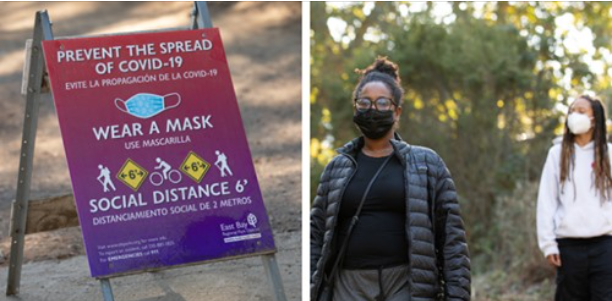
Outdoor activity is encouraged by health officials during the new Regional Stay Home Order. The Park District reminds visitors that spending time in nature is important for mental and physical health and wellbeing. To keep yourselves and Park District staff safe when visiting regional parks and trails, please wear masks when within six feet of others and recreate responsibly. Please keep parks safe for everyone by following all COVID-19 safety requirements.

The California sector closures and restrictions on activity under the State’s Regional Stay Home Order are described here.

Limited Contra Costa Superior Court closure beginning Monday, Dec. 7

Saturday, December 5th, 2020

By Matt Malone, Public Information Officer, Superior Court of California, Contra Costa County

COVID-19 cases have spiked, resulting in a new stay-at-home order for the county effective this weekend. To limit the risk of COVID-19 transmission, the Court will enact a LIMITED COURT CLOSURE effective Monday, December 7, 2020, and until further notice.



THE COURT WILL BE CLOSED TO THE PUBLIC. Exceptions are criminal preliminary hearing witnesses, attorneys, and defendants in matters with time not waived. Masks are required for entry.

JURY TRIALS ARE SUSPENDED. Criminal preliminary hearings with time not waived will proceed.

JURY SERVICE. Jurors summonsed to report on or before January 11, 2021: Your service has been completed. You do not need to call or report for jury duty.

THE COURT WILL NOTIFY YOU OF RESET HEARINGS. If your matter is to be reset, the Court will notify you of the new date, with hearings to be by Zoom or CourtCall. Instructions and links for Zoom/CourtCall, public access to audio streaming where available, and court calendars may be found on our Court Calendar webpage.

ALL CLERK’S OFFICES WILL BE CLOSED TO THE PUBLIC. FILINGS WILL BE ACCEPTED BY MAIL OR DROP BOX ONLY. The limited closure is NOT a Court holiday for filing deadlines. Drop boxes will be available from 8 A.M. – 4 P.M at the following locations:

Civil: Main Street entrance of the Wakefield Taylor Courthouse in Martinez. o Criminal: Main Street entrance of the Wakefield Taylor Courthouse in Martinez.

  • Family: Main entrance of Family Law building in Martinez.
  • Juvenile: Main entrance of the Walnut Creek Courthouse.
  • Probate: Main Street entrance of the Wakefield Taylor Courthouse in Martinez.
  • Pittsburg and Richmond courthouses: These drop boxes are available only for filings in case types heard at those locations.

ALL COURT RECORDS OFFICES WILL BE CLOSED. See the Criminal Records and Civil Records webpages for the process for records requests by mail.

This public health situation is urgent and constantly changing. Accordingly, the Court anticipates further press releases providing more details on Court operations over the next 30-60 days. Please visit the Court website for updated information.