







Archive for the ‘Growth & Development’ Category

Council places “flawed” Sand Creek “Let Antioch Voters Decide” initiative on November ballot

Tuesday, June 9th, 2020

Will cost city $100,000; could face pre- and post-election legal challenges due to new legislation possibly making the initiative moot and costing city even more.

By Allen Payton

In response to the direction given by a judge in a court case over two initiatives affecting new home development in the Sand Creek Focus Area that the council adopted in 2018, the Antioch City Council voted 5-0 to place the one initiative sponsored by the environmental community on the November 2020 ballot.

That court case resulted in the judge tossing out the council’s adoption of the environmentalist-backed Let Antioch Voters Decide (LAVD) initiative. It also invalidated both the initiative sponsored by Richland Communities, the developer of the 1,100-home project known as The Ranch, as well as their development agreement. In his ruling, the judge also ordered the city council place the LAVD initiative on the ballot. However, the decisions in the lawsuits by adjacent property owners The Zeka Group owners of Zeka Ranch, and the Oak Hill Park Company are still being appealed by the backers of the LAVD initiative. (See related articles here, and here)

According to a previous Herald news report, following a 30-day study by city staff, their report found the initiative limited the total number of housing units to 2,100 in the entire Sand Creek Area. Since the past and current councils had already approved more than 2,300 homes, then no more homes could be built, including the proposed 301-unit, gated senior home community east of Deer Valley Road, known as The Olive Groves on the Albers Ranch property. However, both Seth Adams of Save Mount Diablo and the attorney for Richland said that the intent of each initiative was to only affect property on the west side of Deer Valley Road.

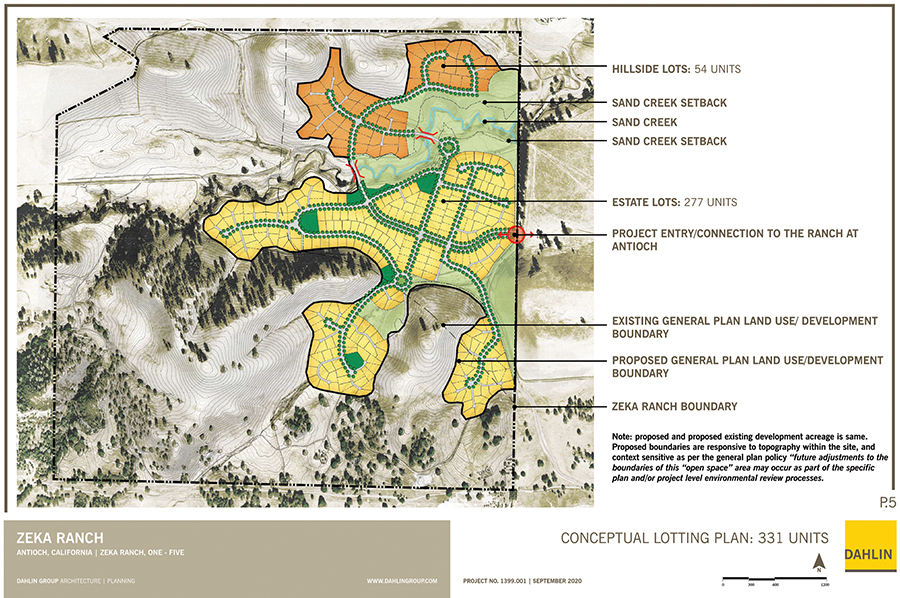
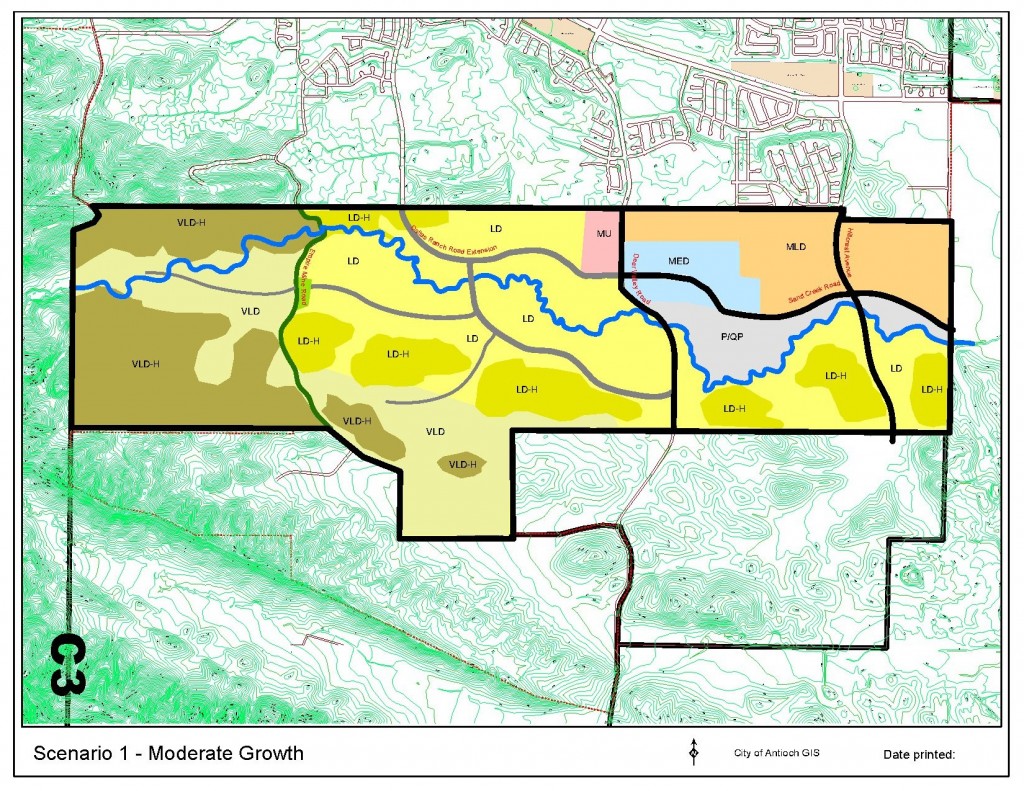
The LAVD initiative will directly impact the proposed Zeka Ranch project (see related article), west of The Ranch project, on the west side of Empire Mine Road, as well as three other properties directly south of Richland property, including Oak Hill’s. Zeka’s proposed number of homes would be reduced from 300 to 400, down to just one home per 80 acres, resulting in just a total of eight homes.

In addition, since the judge’s decisions, new legislation, SB330, was passed by the state legislature and signed into law by Gov. Newsom, last year which prevents cities from downzoning land already zoned residential, either by council action or through the initiative process.

Yet, according to Derek Cole, the city’s contract attorney working on matters dealing with the Sand Creek initiative, “cities have mandatory duties whenever proposed ballot measures receive the signatures necessary to qualify for the ballot.  In this case, because the ‘9212’ report and approval of the initiative are no longer options, the City can only take action to call an election as to the initiative.  City staff is aware of the SB 330 legislation that took effect this year, but as the Staff Report explains, the City Council cannot assume the role of the courts in deciding any legal issues associated with the measure.  The State Supreme Court made very clear in a 2017 decision that the duty to call an election on an initiative is mandatory, even when an initiative’s legality is questioned.”

“The council could adopt an argument against the initiative,” added City Attorney Thomas Smith.

During public comments Joanna Garaventa, with the East Bay Chapter of the California Native Plant Society, spoke in favor of the initiative. She submitted a letter to the council, but when speaking it was difficult to understand her for the purpose of adding her comments to this report.

Andrew Bassak, an attorney with Hanson Bridgett, representing The Zeka Group, opposed the placement of the initiative on the ballot as “it would negatively affect the development that’s been planned for the past 30 years.”

He referred to SB330, the new residential development law.

“The city lacks authority to place the initiative on the ballot…under the California Elections Code. That passed years ago,” Bassak explained. “There is no authority under the stayed Superior Court ruling. That judgement is currently subject to appeal, by one of the proponents of the initiative. Save Mt. Diablo wants to have its cake and eat it, too.”

“The cost of putting it on the ballot will be over $100,000,” he stated. “Placing it on the ballot will result in more litigation” both before…and after the November election. Those litigations could easily double the $100,000 amount. This is just squandering resources that could be spent elsewhere. The city should wait until the court of appeals decision is over.”

Bassak submitted a letter to the mayor and council before the meeting. In it he wrote, “the Initiative is fundamentally flawed and, if placed on the ballot, will be subject to avoidable costly pre-election litigation.” 06-09-20 Zeka Group Attorney Letter to Antioch re LAVD Initiative

Seth Adams, the Land Conservation Director for Save Mt. Diablo, which sponsored the LAVD initiative said, “Please move forward with placing our initiative on the ballot and please formally endorse the initiative.”

“Over 9,000 citizens signed the petition to place the initiative on the ballot,” he continued. “The courts said to place the initiative on the ballot. It did not invalidate the initiative.”

“Our attorneys have provided information to the city that explains why they can place the initiative on the ballot,” Adams added. Emails from Save Mt. Diablo’s attorney to City of Antioch re LAVD Initiative

All the other thirteen public comments were in favor of placing the initiative on the ballot.

Councilwoman Lori Ogorchock then asked about how SB 330 affected the initiative.

“SB330 is legislation…that became effective in January of this year and is retroactive two years,” Smith said. “Under the new regulation any affected city is precluded from adopting policy…of lesser standard. It is preventing the downzoning of land, from residential to something that would not allow development.”

“It is one of the factors that would have to be taken into consideration if the initiative passed,” he continued. “However, at this time, the council can move forward.”

“There may be a pre-election challenge or a post-election challenge,” Smith added. “SB330 could affect it in determining if the initiative is valid.”

“Not only did 9,000 of our citizens sign petitions to place this on the ballot, but the courts directed the council to place it on the ballot,” said Mayor Pro Tem Joy Motts. “I believe it’s an environmentally sensitive, efficient development. So, I am in favor of moving the initiative forward and placing it on the November ballot.”

Ogorchock then moved to place the initiative on the ballot. Councilwoman Monica Wilson seconded the motion.

Smith then asked if the two actions could be separated, with the council deciding if they want to include a ballot argument against the measure.

Ogorchock then shortened her motion to not include a ballot argument.

Thorpe then asked staff to come back with something at a future council meeting, for council to decide whether or not to endorse or oppose the initiative.

However, the council can only submit an argument against the initiative, Smith explained.

Ogorchock and Wilson withdrew their motion and Ogorchock made a new motion and Thorpe seconded it.

“Do we want to make an argument against the initiative?” she asked. Wilson, Thorpe and Motts all said “no”.

“I just need you to make a motion that you do not want to make an argument against the initiative,” Smith explained.

Ogorchock then made a friendly amendment to her own motion that the council will not include an argument against the initiative. Thorpe accepted the amendment to the motion.

That motion passed on a 5-0 vote, that the council will not include a ballot argument against the initiative.

Then Ogorchock returned to her original motion to place the initiative on the November ballot. It was seconded by Wilson and the motion also passed 5-0.

Efforts to reach Seth Adams and city staff to obtain a copy of the letter sent to the City from Save Mt. Diablo’s attorney before the meeting, were unsuccessful prior to publication time. Please check back later for any updates to this report.

Antioch Council approves changes to home sizes and designs in Sand Creek development

Wednesday, May 27th, 2020

Requires all-ability playground, option for community garden if residents want it

By Allen Payton

During their regular meeting on Tuesday night, May 26, 2020 the Antioch City Council unanimously approved changes to the designs and sizes for the homes in the new home subdivision in Sand Creek, but spent most of their discussion ensuring an all-abilities playground in the park and a possible community garden, should the future homeowners want it.

The city had high hopes for a senior housing community by Century Communities in the Sand Creek area. “Unfortunately, that project did not sell as well as we thought it would,” said City Manager Ron Bernal.

Jose Cortez, Associate Planner in the Community Development Department provided the staff presentation.

“The 10 new designs fit on the existing lot sizes,” he said. “Sizes range from 1,500 square feet to 2,700 square feet. Changes…should not have any adverse effects to what was approved for size.”

The Planning Commission approved the changes and staff recommended the council adopt the changes.

No member of the public spoke on the matter, not even the developer who, as the proponent

“In the removing of certain items from the active adult community…I would ask the community garden be put back in. That’s unique,” said Councilwoman Lori Ogorchock. “The park, I believe all parks built in the city, should be all abilities. Wheelchair can get in there. But we should not allow parks where children cannot get in there.”

Phase map of the Cielo at Sand Creek development.

A representative from Cielo was on the phone, named, Jeff Inabmnit, representing Century Communities.

“These changes will make a real positive impact on the project,” he said. “The project is focused on the family buyer profile.”

“A private garden is for high-density projects,” Inabmnit said. “The homes have 21-foot back yards which should be adequate. If a community garden isn’t supported, it becomes an eyesore.”

Thorpe then said, “Aren’t all we really doing tonight is looking at home size and designs?”

“Any modifications to the parks and recreation amenities go back to the Planning Commission,” said City Planner Alexis Morris. “Any changes to the homes go to the council.”

Mayor Pro Tem Joy Motts wanted the developer to set keep the community garden that was in the development’s originally approved plans.

“As much as I like a community garden, I’d leave that up to the residents, if the HOA wants that,” Councilwoman Monica Wilson said. “If they don’t want it, it becomes an eyesore.”

Councilman Lamar Thorpe then made the motion to approve the modifications to the home designs and sizes.

“You’re talking about 5,000 square foot lots or less,” Ogorchock pointed out.

“Just like my community,” interjected Wilson.

Ogorchock continued to argue in favor of the community garden and pushing for an all-ability park for the children.

Thorpe then said, “On the community garden side, this is going to return to staff. Volunteers don’t suffice. I’m not for this community garden idea. This was going to be a retirement community of 55 plus.”

“In terms of it being an all-abilities park you guys are still open to that,” he asked.

“We’ve added the play equipment recommended by the Parks and Recreation Department, which is an acceptable structure with paths to get to it,” Iabmnit responded.

“I would still like to see you go ahead with the waterline in case the homeowners’ association would like to do the community garden, if you’re amenable to that,” Motts said.

“Yeah. I’m fine with that,” Inabmnit said.

“Jeff has said they will build the pipe…if the people want it they want it,” Thorpe said. But he and Wilson accepted the amendment to their motion.

They then also added language to the motion to ensure the park was all-abilities.

The council then voted unanimously to approve the motion and changes to the design and sizes of the homes.

Council approves smaller designs for Sand Creek area new home project

Tuesday, March 24th, 2020

By Allen Payton

At their March 10th Antioch City Council meeting, they unanimously approved four new, smaller designs for the Aviano homes project in the Sand Creek area next to Kaiser hospital and Dozier Libbey Medical High School. The project was approved by the council in 2015. (See related article)

City Manager Ron Bernal said, “Aviano homes requested the city council approve four new designs for their 533-unit development.”

City staff provided the report stating, “the applicant is requesting home size modification. The application is proposing four new plans, two that are one-story and can fit on all 530 parcels. The Planning Commission unanimously recommended approval to the City Council.

The project currently has twelve approved plans, each with three elevations per floor plan. The square footages of these approved homes range from 1,804 sq. ft. to 3,758 sq. ft. The applicant is proposing to introduce four new plans with three elevations per plan with square footages ranging from 1,449 sq. ft. to 2,179 sq. ft. The applicant is requesting approval of the four new plans in order to bring more diversity of housing types into the community while meeting current market needs and demands.

During the public hearing portion, only the applicant spoke.

Trent Sanson spoke on behalf of DeNova Homes the developer for the Aviano project, which was founded by his parents Dave and Lori, about 30 years ago, he said.

The new designs are for the 5,000-square foot lots. They want the changes, introducing two new single-story homes for “the opportunity to meet current market demands and needs for growing households, first-time home buyers, empty nesters trying to move down a bit” with three bedrooms, two baths, one design with four bedrooms, two baths, and two more two-story, four-bedroom, three bath designs.

DeNova expected to begin construction in early April.

Councilwoman Monica Wilson said, “I’m glad that you’re adding more single stories…because not everyone who wants a new house wants a two-story home.”

Councilwoman Lori Ogorchock agreed with Wilson.

“You’re doing a great job,” she said regarding DeNova Homes’ other project in Antioch known as Wildflower Station, at Hillcrest and Wildflower Drive.

“We’re currently targeting low- to mid-$500,000’s,” Sanson said in response to questions from Mayor Pro Tem Joy Motts and Ogorchock. “That’s just the starting point.”

“We need more Wildflower Stations,” Thorpe said, and then made the motion to approve the addition of four new, smaller home designs.

“We’re looking at a two-and-half-year build out” on the first phase, Sanson added.

He mentioned another developer that is interested in building some of the units, which would speed up the build-out.

The council then approved the motion on a unanimous vote.


Neighboring developers win again as judge invalidates Richland’s Initiative for The Ranch development

Tuesday, November 26th, 2019

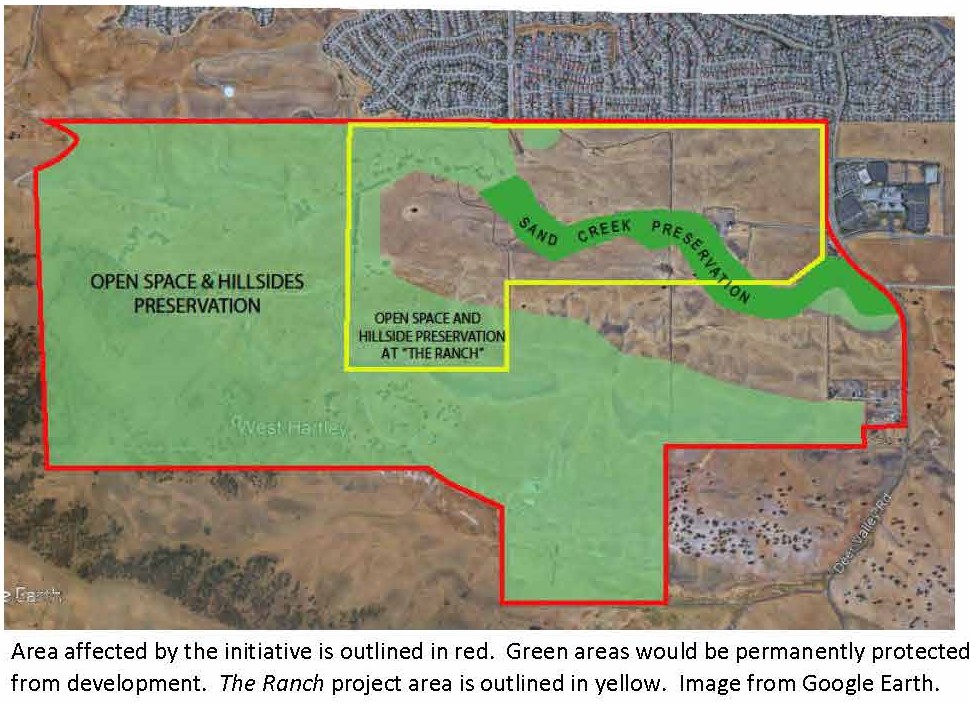
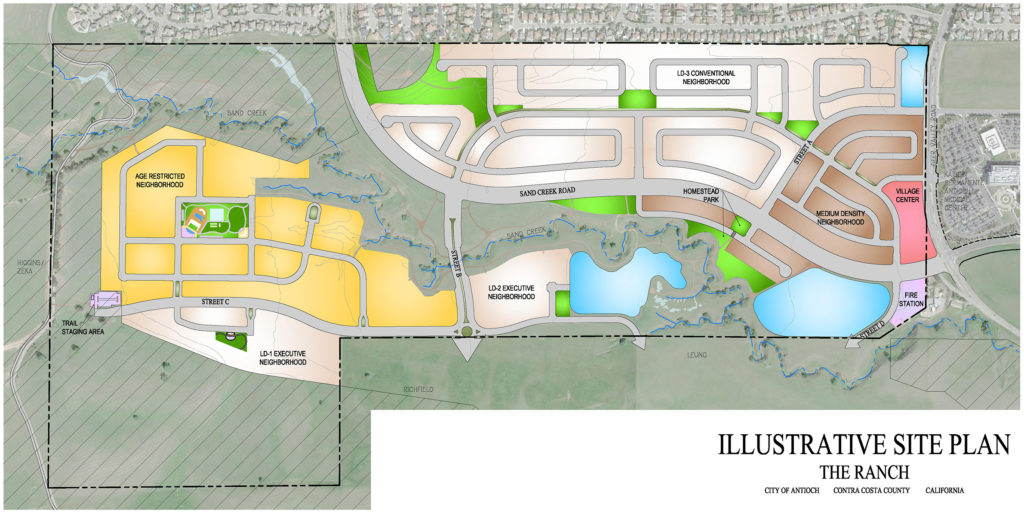
Map of area covered by the Richland Communities’ alternative initiative, and The Ranch 1,177-home project that was ruled invalid by a Superior Court judge. Herald file graphic.

By Allen Payton

On Friday, November 22, 2019 Contra Costa County Superior Court Judge Edward G. Weil issued the final ruling in the lawsuits brought by Oak Hill Partners and Zeka Ranch against the City of Antioch and developer Richland Communities, that “the entire Richland Initiative is invalid”. Richland Initiative final court ruling 11-22-19

In July 2018 the Antioch City Council adopted a voter initiative sponsored by Richland Communities that approved Richland’s development called “The Ranch”, while at the same time downzoning Oak Hill’s, Zeka’s, and other neighboring properties to just one home per 80 acres. In August 2018, the City Council followed up by adopting a second voter initiative sponsored by environmental groups to limit growth in the Sand Creek Focus Area, the so-called Let Antioch Voters Decide Initiative. Earlier this year, the Court ruled that the City’s adoption of the environmental groups’ initiative was invalid, and ordered the City to put that initiative on the November 2020 ballot. The earlier order also found that Richland’s inclusion of a Development Agreement between Richland and the City for The Ranch development was unlawful and invalid. (See related article).

In the 23-page November 22 ruling, the issue before the Court was whether Richland’s invalid Development Agreement for The Ranch could be “severed” from the initiative to allow the initiative to survive without the unlawful Development Agreement. The Court found Richland’s Development Agreement not to be “volitionally” severable from the rest of the initiative. Because the invalid Development Agreement is not severable from the balance of Richland’s initiative, the bottom line of the Court’s ruling is that the entire Richland Initiative is invalid.

According to the ruling, “The Court of Appeal has described the test for volitional severability as follows: The volitional requirement concerns whether the voters would have adopted the initiative without the invalid provisions.” Because the initiative was adopted by the City Council instead of submitting it to the voters, the Court focused on the “volition” or decision of the City Council in enacting the Richland Initiative. “The Court concludes that it is the volition of the City Council members who voted on the initiative that matters.”

The judge then reviewed the substantial, valuable community benefits promised by Richland in the Development Agreement if it proceeded with The Ranch development. These benefits included at least $1.2 million for improvements to Deer Valley High School, cost free land for a new fire station, land for an East Bay Regional Park trailhead, fees to support Antioch police, and other community benefits. In the absence of the Development Agreement, Richland would not be legally obligated to provide those benefits to the City as part of The Ranch development.

The judge found that Richland’s PowerPoint presentation shown to the City Council, at the meeting where the City Council adopted the initiative, was relevant and persuasive evidence provided by Oak Hill and Zeka.

In that presentation, it showed the Development Agreement included “Communitywide Benefits” such as the $1.2 million for Deer Valley High School facility improvements, and “Public Safety Benefits” such as the annual per home police fee.

The judge determined that “There is no guaranty that a different developer would agree to give the school district as much money as Richland agreed to give, just as there is no guaranty that a different developer would agree to devote 44% of its land to open space and parks, etc.” If the Development Agreement “were not approved, there would be no certainty as to when another willing developer might come along, and no certainty that the new developer would offer the City as good a deal.”

“The totality of the evidence persuades the Court that the Richland Initiative was a package deal, with the City agreeing to certain General Plan and Municipal Code amendments in exchange for the benefits specified in the Development Agreement.”

The judge’s ruling further determined that the initiative “imposed substantial development restrictions on other parts of the Sand Creek Focus Area including those owned by Zeka Ranch and Oak Hill” as part of a package with development of Richland’s The Ranch project. The Court found that those “development restrictions are not volitionally severable.”

Finally, the Court found that the General Plan and Zoning Code amendments that remained in the initiative outside of the Development Agreement could not be considered “standalone benefits independent of the Development Agreement.”

“Why would the City Council have wished to enact these amendments, if the City was not going to receive the benefits of the Development Agreement?” the judge asked rhetorically in his ruling. “This is another factor supporting the Court’s ruling on volitional severability.”

The result of the ruling means Richland must pursue its development through the development process with the City. The ruling also allows both Zeka Ranch and Oak Hill Partners to purse their development projects, as well.

Governor signs tax credit bill to promote historic preservation, affordable housing

Wednesday, October 16th, 2019

Will create $800 million in economic activity and 1,300 construction jobs; Antioch city staff checking to see if program can benefit the Hard House, home of the city’s first mayor.

Sacramento, CA: On Tuesday, October 9th, Governor Gavin Newsom signed SB 451, the California Historic Rehabilitation Tax Credit, adding California to the list of more than 35 states that have passed such incentives. The bill, which passed both the Senate and the Assembly with unanimous approval, will enable the renewal of aging structures and communities throughout the state, and promote the development of affordable housing.

The bill will create a 20% state tax credit for the rehabilitation of historic structures listed on the California Register of Historic Places.  An additional 5% bonus can be granted for certain projects, such as affordable housing for lower-income households and projects in transit-oriented developments or regions with high unemployment and poverty rates. All projects must be approved by the California Office of Historic Preservation and the California Tax Credit Allocation Committee to determine if a project qualifies. The tax credit goes into effect on January 1, 2021.

“The California State Historic Tax Credit is an important tool that we can use to revitalize communities throughout California,” said Cindy Heitzman, Executive Director, California Preservation Foundation. “This is a major victory for every Californian who believes that our architectural and cultural heritage is worth protecting.”

The State Historic Tax Credit will help to address the critical need for affordable housing in underutilized historic buildings by providing an important financial incentive. Between 2007 and 2017 over 38% of all federal historic tax credit projects in California created new housing units or improved existing units. Of that amount over half were affordable housing projects, and SB 451 will make even more of these projects feasible.

Since February, the California Preservation Foundation (CPF) and the American Institute of Architects, California Council have led a major coalition to shepherd the bill through the legislature, working directly with California Senate President pro Tempore Toni G. Atkins. The bill received broad support from organized labor, affordable housing groups, historic preservation organizations and local governments.  This effort built on the work CPF did in 2014 to pass AB 1999, the first version of this legislation. While it passed both houses of the California legislature, it was ultimately vetoed by then Governor Jerry Brown.

“This legislation will breathe new life into the buildings that give our cities and communities character and charm…Further, the Historic Tax Credit will increase the supply of affordable housing, support growth through infill development and encourage property rehabilitation and maintenance in economically depressed areas,” said Senator Atkins.

The Cannery Lady statue across W. First Street from the Roswell Butler Hard House. Photo courtesy of NoeHill Travels in California.

When asked if this is something that could benefit Antioch’s Roswell Butler Hard House, the home of the city’s first mayor, located at 815 West First Street, City Manager Ron Bernal asked Community Development Director Forrest Ebbs to look into it. The home is #93001020 on the National Register of Historic Places. For more information about the Hard House, visit the Wikipedia page or the Facebook page.

About the Federal Tax Credit

Since 1976, the Federal Historic Tax Credit (HTC) has offered tax credits equal to 20 percent of the qualified rehabilitation expenditures (QRE) for the rehabilitation of certified historic buildings, such as those listed on the National Register of Historic Places or architecturally contributing to a National Register district. Over the last 4 decades, more than 35 states have passed their own bills to boost this tax credit, making thousands of projects financially feasible.

From 2002 to 2016, $468.1 million in Federal Historic Tax Credits catalyzed 169 projects in California, totaling $2.8 billion in qualifying rehabilitation expenditures. This activity has generated:

  • 39,279 jobs
  • $2.8 billion in Gross State Product
  • $160 million in state and local taxes
  • $493.3 million in federal taxes
  • $468.1 million in federal tax credits

SB 451 will provide further incentive for historic rehabilitation, increase the supply of affordable housing, support growth through infill development, and encourage property rehabilitation and maintenance in economically depressed areas. Below are a few examples of the types of projects that will benefit from SB 451, but there are hundreds more stories just like these throughout California. The tax credit will make these kinds of projects more feasible, and will encourage meaningful investments in communities across the state.

For more information:

Bill Text: https://leginfo.legislature.ca.gov/faces/billTextClient.xhtml?bill_id=201920200SB451

Images and additional information: https://californiapreservation.org/tax-credit-press/

Press Release from Senator Toni Atkins on the passage of SB 451: https://sd39.senate.ca.gov/news/20190912-press-release-atkins%E2%80%99-tax-credit-historic-preservation-passes-assembly

Preservation & State Historic Tax Credits overview from the National Trust for Historic Preservation: https://forum.savingplaces.org/learn/fundamentals/economics/tax-credits/state-htc

2017 Report from the National Park Service on the Federal Historic Preservation Tax Credit’s impact: https://www.nps.gov/orgs/1207/htc2017.htm

Case Statement: https://californiapreservation.org/wp-content/uploads/2019/09/Case-Statement.pdf

Allen Payton contributed to this report. 

On split vote by Supervisors county to temporarily stop collecting “discriminatory” adult criminal justice fees

Thursday, September 19th, 2019

At former Antioch Councilman’s urging, Supervisors direct DA’s office to reopen 2005 Lafayette murder case; approve new land development fees

By Daniel Borsuk

On a thin 3-2 vote, the Contra Costa County Board of Supervisors on Tuesday slapped a temporary moratorium on the County’s collection and assessment of 14 Adult Criminal Justice Fees that will cost the county $1.8 million in revenue a year should the moratorium become permanent.

During Public Safety Committee meetings, Chairperson John Gioia of Richmond and Supervisor Federal Glover of Pittsburg agreed with citizen committee members the fees are discriminatory to persons of color and likely result in longtime economic or financial hardship for persons who had a criminal record.

An “aye” vote from District 3 Supervisor Diane Burgis of Brentwood meant the county will temporarily stop the collection of fees, including the Sheriff Central Administration’s Booking Fee that will generate about $40,000 in 2019/2020, and the Adult Probation Supervision Fee that potentially could have generated nearly $1.8 million in 2019/2020 revenue.

The temporary moratorium will be effective immediately with the Board expecting to reevaluate the moratorium’s progress no later than Dec. 31, 2019. Supervisors will reassess the value of the moratorium at a December meeting.

Even though the county’s coffers are plentiful, with supervisors also officially adopting on a 5-0 vote the county’s $3.6 billion 2019-2020 final budget, the county is spending funds at a rapid pace through newly inked employee-union labor agreements like a 3.44 percent pay hike for social workers, an 8 percent salary raise for county supervisors that went into effect in July, and tacking on an additional $7.5 million in costs to the new Administration Building and new Emergency Operations Center/Public Safety Building to improve the security and communication capabilities during emergencies.

During a three-hour discussion on the item, Board Vice Chair Candace Andersen consistently opposed the moratorium on grounds that by dropping the fees for all persons, individual with the financial resources will benefit the most. “There are a lot of people who are committing these crimes who have the ability to pay these fees,” said the supervisor from Danville. “There is no reason why we shouldn’t be assessing these fees.”

In arguing against the proposal, District 4 Supervisor Karen Mitchoff said the elimination of $1.8 million of criminal justice fees could financially impact social and health programs such as drug diversion programs that assist persons with criminal records. “I cannot support the moratorium at this time,” the supervisor from Pleasant Hill declared.

But there were a number of citizens in support of the proposal to eliminate the fees.

“There are many people I have represented who 15 to 20 years later did not know that they’d have their wages garnished or face the ongoing inability to pay even though they have jobs and families,” said Mary Sylla, an attorney at Rubicon Programs.

“We urge you to do the right thing,” pleaded Ali Saidi, head of the Contra Costa Public Defenders Association, “These fees impact people of color.”

Request to Reopen Lafayette Murder Case Referred to DA’s Unit

Antioch private investigator and former Antioch Councilman Ralph Hernandez’s pitch, to have the 2005 murder case of Pamela Vitale of Lafayette reopened, got the thumbs up from the board of supervisors. The case was referred to Contra Costa District Attorney’s newly created conviction integrity unit. In this instance, Scott Dyleski, who Hernandez represents, was convicted for the October 2005 murder of Vitale.

“Your assistance in directing such from your two agencies (D.A.’s Office and Public Defender’s Office) is more than warranted,” Hernandez said. “Fourteen years of Scott’s youth has already been denied him and he still faces many more if this very serious matter is just ignored by all. Pamela Vitale’s memory deserves that the truth be determined, not ignored.”

Supervisors did not comment openly about the case, but Gioia consented that at least the DA’s new conviction integrity unit review the case.

New Land Development Fees Approved

Without opposition from either supervisors or the public, supervisors unanimously approved new land development fees charged for services performed by the Department of Conservation and Development and the Public Works Department starting March 1, 2020.

Some fees like encroachment fees have not been adjusted since 1995 and in many instances, rates are decreasing “due to economy of scale,” John Kopchik, director of the Contra Costa County Department of Conservation and Development told the Contra Costa Herald.

Supervisors withheld action on a proposal to charge a $1,000 fee for the time and materials needed to submit and process applications for nomination of a building or cultural resource for consideration before the Historical Landmarks Advisory Committee.

“The Historical Landmarks Advisory Committee believes that the current and proposed fees of $1,000 deposit and time and materials required to submit and process applications to nominate historical and cultural resources to the County’s Historic Resources Inventory (HRI) are a deterrent to public participation in the program.

“The HLAC voted at their meeting held on August 8, 2019 to make a formal recommendation to the Board of Supervisors to reduce these fees to encourage organizations or individuals to nominate potential resources to be designated to the HRI,” Historic Landmark Advisory Committee staff member Dominique Vogelpohl wrote on August 26.

Judge tosses out Antioch Council’s adoption of environmental group’s Sand Creek initiative and The Ranch development agreement

Monday, July 15th, 2019

Herald file graphic.

Let Antioch Voters Decide initiative must go to Nov. 2020 ballot; Richland must produce new Environmental Impact Report

By Allen Payton

On May 31, Contra Costa County Superior Court Judge Edward Weil tossed out the Antioch City Council’s adoption of the initiative sponsored by environmental groups to limit growth in the Sand Creek Focus Area, as well as the development agreement for The Ranch project, contained in the competing initiative sponsored by Richland Communities. That agreement approved 1,177 homes on their property. (See related articles, here and here.) See judge’s ruling, here: Judge’s Order on initiatives lawsuits 05-31-19

As a result of the adoption by the Antioch Council of the two initiatives, last year, four lawsuits were filed against the City of Antioch, two each by The Zeka Group and Oak Hill Park Company, challenging both initiatives. The Zeka Group owns the 640-acre Zeka Ranch property on Old Empire Mine Road at the west end of the Sand Creek Focus Area, and according to the court documents, “which Zeka Group purchased in 1989. Prior to purchase, the City’s planning development manager, Raymond Vignola, assured Zeka Group that the property was and would continue to be designated for residential development of 1000+ units. The City’s 2003 General Plan called for 4,000+ units in the Sand Creek Focus Area, and Zeka Ranch was to develop the executive housing stock.” That resulted in a reduction of the number of housing units on the property that can be built. Zeka’s plans are to build 340 homes on their property.

Oak Hill “owns roughly 419 acres in three parcels” directly south of The Ranch project, “designated for a golf course and senior housing in the 2003 General Plan.”

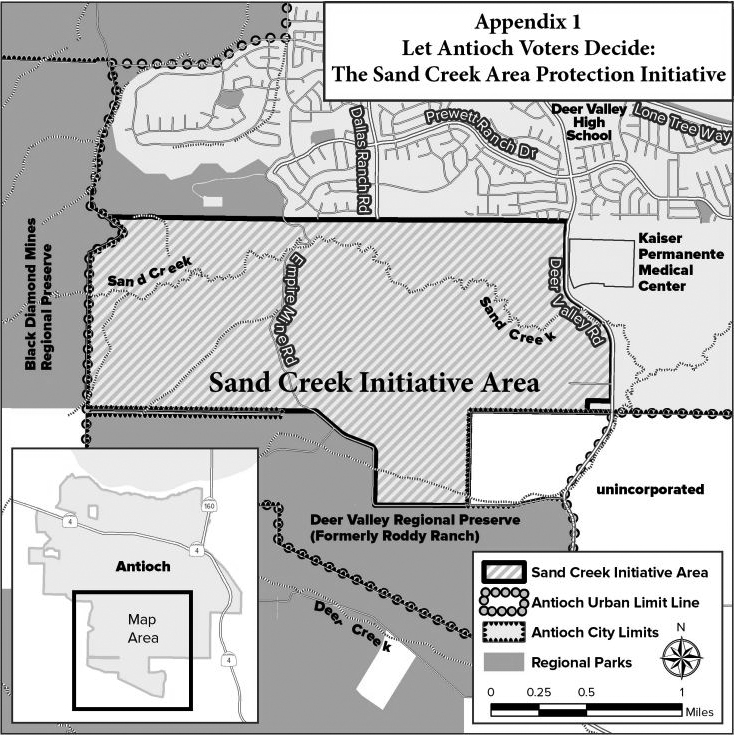
The city council adopted both initiatives instead of placing either on the ballot, as the council had the option of doing. First, they adopted the one sponsored by Richland on July 11, 2018, which also resulted in the adoption of the development agreement 30 days later. The other initiative, entitled Let Antioch Voters Decide: The Sand Creek Area Protection Initiative (LAVD) sponsored by Save Mount Diablo and other environmental groups in the county, was adopted by the council on August 28, after the council had sent it back for more study and a report by city staff, which was also one of the options the council had.

Both initiatives downgraded the development potential on the Zeka Ranch, Oak Hill and other properties in the Sand Creek area west of Deer Valley Road to just one home per 80 acres, the same level as land outside the city’s and county’s Urban Limit Lines. The entire Sand Creek area is inside the city’s voter approved ULL. That would allow only eight homes on Zeka’s property and only five homes on the Oak Hill property.

The Ranch Development Agreement Unlawfully Included In Initiative, Requires EIR

In the decision, “the Court finds that the Richland Initiative unlawfully includes the Development Agreement between Richland and the City…but it may be severed from the remainder of the Richland Initiative.” The court also found that “The Development Agreement cannot be approved by initiative and requires compliance with CEQA” (the California Environmental Quality Act).

The decision means the development agreement is invalid and Richland must go through CEQA’s Environmental Impact Report (EIR) process in order to obtain approval of their development agreement. Whether or not the development agreement can be separated from the initiative has yet to be determined. If the judge finds that it can’t be, that will result in the entire initiative being invalidated.

Voids Let Antioch Voters Decide Initiative

In addition, the court found, “The LAVD Initiative is void as an improperly-adopted amendment to the Richland Initiative. The…question is whether the LAVD Initiative improperly amended the Richland Initiative. The Court concludes that it did. Under Elections Code section 9217, the City could not adopt the LAVD Initiative on its own. A vote of the people was required. This renders the LAVD Initiative void.”

The Council Must Place the LAVD Initiative On The Ballot

The court further finds, “Since the LAVD Initiative amends the Richland Initiative, the City had no choice but to put the LAVD Initiative before the voters. It would be manifestly unfair to the supporters of the LAVD Initiative to start the process over because the City instead adopted it. So, the Court is inclined to order the LAVD Initiative to a vote. The Court is unconvinced that the Richland Initiative is somehow immune from challenge by initiative amendment.”

The court prohibits “the City from enforcing the LAVD Initiative.” The judge then ordered the city council to place the environmental groups’ initiative on the November 2020 ballot. City Clerk Arne Simonsen said he has sufficient funds to include the ballot measure on the November 2020 election ballot.

Zoning For Zeka Ranch’s Property Couldn’t Be Changed By Initiative

In an additional decision, the judge ruled that the city council couldn’t change the designation of executive housing for the Zeka Ranch property.

“A city may not adopt ordinances and regulations which conflict with the state Planning and Zoning Law,” the ruling quoted from a previous court case. The judge further wrote, “Government Code section 65913.1 provides that a city ‘shall designate and zone sufficient vacant land for residential use with appropriate standards, in relation to zoning for nonresidential use, and in relation to growth projections of the general plan to meet housing needs for all income categories as identified in the housing element of the general plan.’

Zeka Ranch claims…that the Richland Initiative violated the code by restricting development in a manner that makes it impossible to meet the City’s housing needs allocation, particularly for the kind of executive housing Zeka Ranch was to build.

In fact, Zeka Ranch pleads that the General Plan called for allocation of one-to-two units per developable acre and contained a housing element specifically calling for residential development appropriate for executives of businesses seeking relocation to the City. Accepting this as true, Zeka Ranch properly pleads this claim.”

Legal Process Continues

The legal process continues over the two initiatives. To conclude his ruling the judge wrote, “The remaining challenges to the Richland Initiative will be resolved in a further phase.” Furthermore, the judge wrote, “Parties shall appear to discuss the proper remedy as to the LAVD Initiative and any further orders that may be necessary, as well as a schedule for briefing the remaining matters related to the Richland Initiative.”

In addition, the judge gave the parties in the lawsuits until June 24 to file amended pleadings. Both Zeka and Oak Hill submitted them by the deadline.

The case numbers are MSN-18-2228, 2229, 2231 and 2232.

Antioch Council adopts environmental groups’ Sand Creek initiative on 3-1 vote

Wednesday, September 12th, 2018

Map of the area included in the environmental groups’ initiative showing projects already approved and The Ranch and Zeka Ranch projects they were working to stop.

Publisher’s Note: This article was published in the September 2018 issue of the Herald but, was not posted on this website, until now. Apologies for the oversight.

By Allen Payton

After sending to staff to study for 30 days and return with a report on the “Let Antioch Voters Decide: The Sand Creek Area Protection Initiative”, the Antioch City Council on a 3-1 vote chose instead to adopt the initiative. Councilwoman Lori Ogorchock voted no, preferring to send it to the ballot, and Councilman Tony Tiscareno was out of town on vacation. The initiative was backed by Save Mount Diablo, and other environmental groups in the county. (See related article)

The council had already adopted the West Sand Creek Initiative backed by landowner and developer Richland Communities on July 24. Conflicting language between it and what is in the environmental groups’ initiative will have to be worked out, later by council. Both restrict growth in the Sand Creek Area west of Deer Valley Road.

The staff report said the environmental groups’ initiative limited the total number of housing units to 2,100 in the entire Sand Creek Area. Since the past and current councils had already approved more than 2,300 homes, then no more homes could be built, including the proposed 301-unit, gated senior home community east of Deer Valley Road, known as The Olive Groves on the Albers Ranch property. However, both Seth Adams of Save Mount Diablo and the attorney for Richland said that the intent of each initiative was to only affect property on the west side of Deer Valley Road.

Both initiatives directly impact the proposed Zeka Ranch project (see related article), west of Richland’s The Ranch project, on the west side of Empire Mine Road, as well as three other properties directly south of Richland property. Each of the owners of those properties can either appeal to the city council for a finding of “takings” of their property and still be allowed to build some homes on their property. They can also sue the city within 90 days of the July 24th adoption of Richland’s initiative or possibly pursue their own initiatives to obtain voter approvals.