Archive for the ‘Delta & Environment’ Category

Frazier not happy So Cal water district voted to fund Delta twin tunnels plan

Wednesday, April 11th, 2018

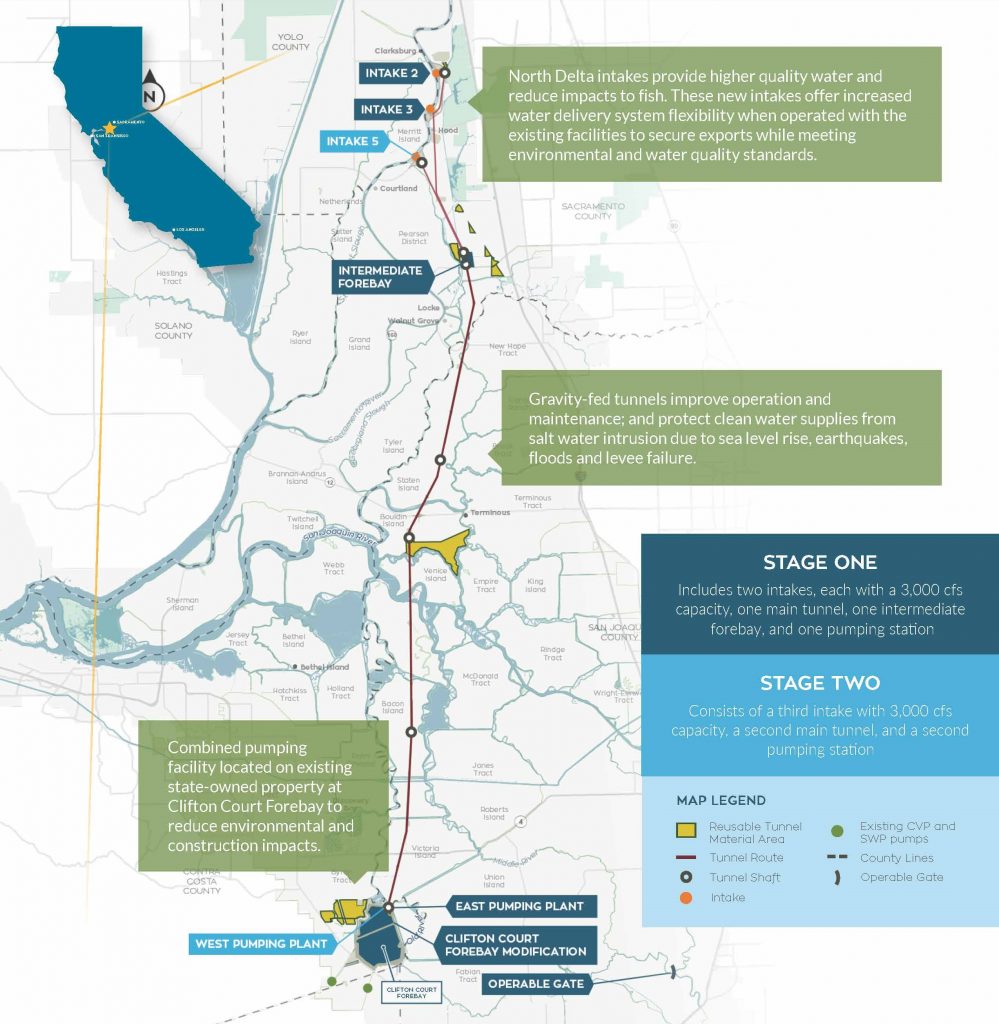
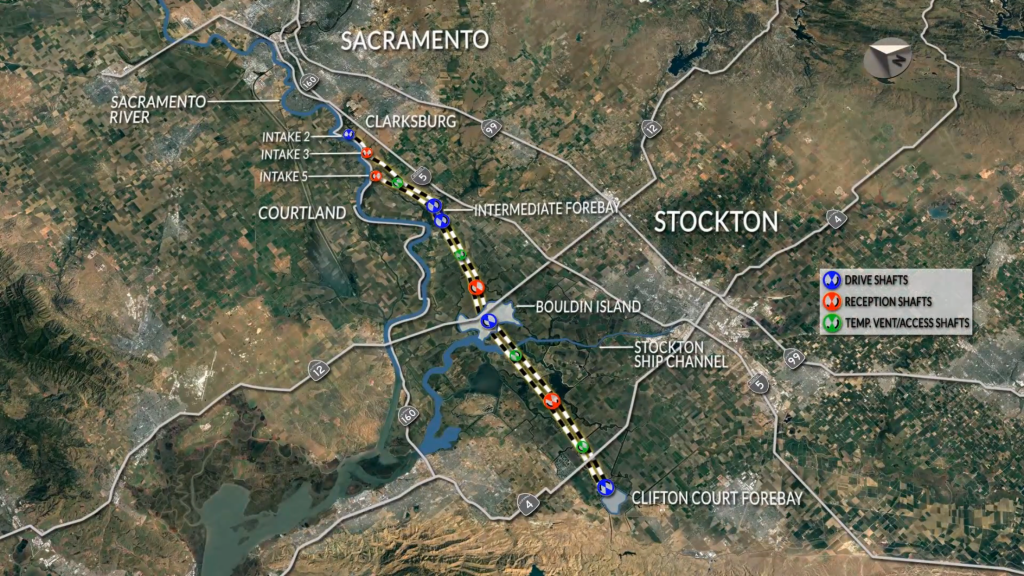
California WaterFix Delta bypass twin tunnels route map. From californiawaterfix.com.

SACRAMENTO – Assemblymember Jim Frazier (D-Discovery Bay) issued the following statement on Wednesday, April 11 after the Metropolitan Water District of Southern California’s Board of Directors voted to finance the majority of the proposed $11 billion Delta twin tunnels plan,  known as the California WaterFix:

“Californians deserve comprehensive 21st century water management solutions in light of climate change and more frequent and devastating droughts, not a decades old plan that creates no benefit and picks the pockets of hard-working people.

The vote by the Metropolitan Water District of Southern California shows that proponents of this project have been deceitful the whole time. There’s never been a “statewide” approach as they’ve claimed. It’s never been about sustainability but a foolhardy plan to overdraw the Delta to sell a limited and precious natural resource to the highest bidder.

This boondoggle uses antiquated methods for water delivery to degrade the water quality for all Californians and places greater burdens farmers in the Delta and Central Valley.

Just like the Colorado River Compact, this project is built on false pretenses of water availability. Met has already proven they are bad actors by overcharging San Diego for water many times. Given this history, my concern is Met may try to overcharge Central Valley farmers too.”

A press release issued Tuesday explaining their action, it stated, the board of directors of the Metropolitan Water District of Southern California voted today to provide the additional financing necessary to allow for the construction of the full California WaterFix project.

The board authorized $10.8 billion for the project to modernize the state’s aging water delivery system, making Metropolitan the primary investor in the project and more than doubling the agency’s initially planned investment to ensure the project is completed as originally proposed and studied.  “For decades, we have sought a solution to the problems of the Bay Delta, problems that put Southern California’s water supply at risk,” Metropolitan board Chairman Randy Record said. “We finally have that solution, California WaterFix. We simply could not jeopardize the opportunity to move this long-sought and much-needed project forward.”

WaterFix will be paid for by the people and businesses that use the water it helps deliver via the retail water agencies and cities that serve those customers. Metropolitan’s financing of the full project is expected to cost households on average up to $4.80 a month, though that average cost would be reduced as Metropolitan recoups some of its investments from the agricultural sector. Metropolitan will be selling or leasing capacity in the tunnels to allow water deliveries or exchanges for other parties.

About 30 percent of the water that flows out of taps in Southern California comes from Northern California via the Sacramento-San Joaquin Delta. But the Delta’s delivery system is badly outdated, its ecosystem is in decline and its 1,100-mile levee system is increasingly vulnerable to earthquakes, flooding, saltwater intrusion, sea level rise and environmental degradation.

Attempts to help the Delta have led to regulatory restrictions that have reduced water exports from the region. California WaterFix would modernize the state’s water delivery system by building three new water intakes in the northern Delta and two tunnels to carry the water under the Delta to the existing aqueduct systems in the southern Delta that deliver water to cities and farms.

In October 2017, Metropolitan’s board initially voted to participate in WaterFix and contribute up to 26 percent of its $17 billion cost, or about $4.3 billion.  But the majority of federal agricultural contractors who also import supplies via the Delta have yet to commit to investing in the project, leaving part of the project’s costs unfunded. In February, the state proposed building the project in stages instead–starting with two intakes and one tunnel, with a capacity of 6,000 cubic feet per second. An additional intake and tunnel would be added when funding allowed.

In today’s action, Metropolitan’s board chose between supporting this staged construction of the project or helping finance the full 9,000 cfs project all at once, with the hope of recouping the investment from agricultural interests once the project is completed. Staging the project also would result in potential permitting delays associated with the change in approach.

Under the staged approach, the cost of building one tunnel would be about $11.1 billion, with Metropolitan’s share of those capital costs coming in at $5.2 billion. The board ultimately voted to support building the full project all at once at an estimated cost of $16.7 billion, with Metropolitan’s investment at about  $10.8 billion in today’s dollars.

“Two tunnels better accomplishes WaterFix’s co-equal goals of improving the environment and securing supply reliability,” said Metropolitan General Manager Jeffrey Kightlinger. “With them, we’re better able to capture the high flows of big storms that climate change is expected to bring. We’ll better address the reverse flows that disrupt the Delta’s ecology. And we’ll have more flexibility to operate the water delivery system.”

Kightlinger added that investing in WaterFix does not change Metropolitan’s commitment to local supply development and conservation.

“This investment is just one part of ensuring Southern California and its $1.3 trillion economy has a reliable water supply in the age of climate change,” he said. “We need a diverse portfolio, including water recycling, storm-water capture, and increased conservation. We will continue to work hard and invest in those projects.”

The Metropolitan Water District of Southern California is a state-established cooperative of 26 cities and water agencies serving nearly 19 million people in six counties. The district imports water from the Colorado River and Northern California to supplement local supplies, and helps its members to develop increased water conservation, recycling, storage and other resource-management programs.


Call for Applications: San Francisco Bay Restoration Authority, Independent Citizens Oversight Committee

Thursday, April 5th, 2018

Deadline Extended – Due April 18, 2018
Measure AA is expected to generate $25 million annually for San Francisco Bay restoration over the next 20 years. Funding from this voter-approved measure will allow for the restoration of thousands of acres of natural habitat for wildlife, support our local economy, improve access to public lands, address flooding issues, and create thousands of new jobs.

The San Francisco Bay Restoration Authority’s Governing Board seeks six individuals to serve on the Independent Citizens Oversight Committee. The Committee has three main roles:

  1. Annually review the Authority’s conformance with Measure AA.
  2. Review the Authority’s audits and expenditure and financial reports.
  3. Publish an annual report of its findings, which will be posted on the Authority’s website.

The Board seeks committee members from all four Bay Area regions (North Bay, East Bay, South Bay and West Bay) with special subject matter expertise. Each member of the Independent Citizens Oversight Committee must possess expertise in one or more of the following:

  • Water quality
  • Pollution reduction
  • Habitat restoration
  • Flood protection
  • Improvement of public access to the San Francisco Bay
  • Financing of these objectives.

Ineligibility Factors for Membership

No person may serve on the Independent Citizens Oversight Committee who:

  • Is an elected official or government employee;
  • Has had or could have a financial interest in a decision of the Authority; or
  • Is affiliated with an organization associated with a member of the Governing Board.

Apply to serve on the Independent Citizens Oversight Committee by April 18, 2018.

Application Submittal, Materials, and Deadline

Send your application to karen.mcdowell@sfestuary.org by April 18, 2018. Electronic signatures and scanned signatures will be accepted.

For more information, visit the SF Bay Restoration Authority’s website or contact Karen McDowell, Project Manager, SF Bay Restoration Authority or 415-778-6685.

Frazier: One Delta tunnel is a deception

Sunday, February 11th, 2018

California WaterFix (i.e. Delta Twin Tunnels) route. From californiawaterfix.com

SACRAMENTO – Assemblymember Jim Frazier, D-Discovery Bay, issued a statement on Thursday, after the Department of Water Resources (DWR) announced it is significantly altering the proposed WaterFix project to construct one larger tunnel first and build a second tunnel later.

Assemblyman Jim Frazier

On Wednesday, the DWR sent a memo to the local public water agencies participating in the development and construction of California WaterFix and issued the following statement from DWR Director Karla Nemeth.

“WaterFix is a long-overdue infrastructure upgrade that will maintain a reliable water supply for 25 million Californians while also protecting the Delta ecosystem. With the current stated support of the participating public water agencies, the state is proposing to pursue WaterFix as planned, but also explore an option to implement construction in stages. This prudent approach aligns the urgent statewide need for action with the project’s current support. We are eager to move forward with WaterFix to protect the Delta and water supplies.”

The memo further states “The option for a first stage includes two intakes…one tunnel, one intermediate forebay, and one pumping station.”

Frazier responded with the following statement:

“The Department of Water Resources is trying to sell its latest WaterFix revision as a one-tunnel plan, but that is smoke and mirrors,” Frazier stated. “Their plan still calls for two tunnels. The new plan still poses the same threat to the Delta’s environment, agricultural economy and way of life. There still is no cost-benefit analysis or economic justification for the project.  The project still does not create a single ounce of new water.

DWR has shape-shifted the size of the tunnels. This is now an entirely new project. The process must start over from the beginning, with an entirely new Environmental Impact Report.  The proposed new and even larger tunnel will have even greater ecological and economic impacts on the Delta.

DWR can’t just amend the EIR and biological opinions and pass it off as legitimate. The size and scope of a project this size demands a thorough process and the ability for the people of the Delta to voice their concerns.

DWR’s method for estimating the cost of its revised plan is also curious. Instead of doing a comprehensive cost analysis for the revised proposal, they gave us lazy math. They just took $16.3 billion cost estimate they have been using and chopped it into thirds.

When I was a construction contractor, I couldn’t just change my building plans without bringing it back for review. DWR and the Administration should not be exempt from process that all building projects are subject to in California, especially on one of the biggest infrastructure projects in the state’s history.”

Republic Services offers tips to make the holiday season more environmentally friendly

Thursday, December 21st, 2017

This holiday season, Republic Services, Inc. (NYSE: RSG) encourages consumers across the country to incorporate environmentally responsible practices into celebrations and family gatherings with five simple tips.
“The holiday season can be a hectic time of year for just about everyone,” said Pete Keller, vice president of recycling and sustainability at Republic Services. “Many of us want to be more sustainable during the holidays, but we aren’t sure how or we just don’t have the time. These five easy tips can help each of us to do our part to make environmentally responsible choices throughout the holiday season and help make a positive impact in our communities for generations to come.”

Republic’s Five Holiday Sustainability Tips:

  1. When giving holiday gifts, commit to reusing laminated bags and recycling those made of paper.
  2. Shipping gifts? Make shredded paper out of old newspapers and be sure to reuse last year’s bubble wrap and Styrofoam peanuts.
  3. After opening gifts, remember to recycle the wrapping paper – even the shiny stuff – but save and reuse the ribbons and bows.
  4. Getting a new device this holiday season? Make sure your old phone or tablet does not get tossed in with the recycling. Check with your local service provider on any special instructions or electronics recycling options.
  5. Enjoy that holiday latte, just remember the paper cup, plastic lid and paper sleeve should be Empty, Clean & Dry before tossing them into the recycling container.

Click here to view Republic’s 2017 holiday recycling video.

With parties, decorations, gift giving and travel, Americans waste generation per household increases 25 percent, or almost 1,000 pounds of trash, between Thanksgiving and New Year’s Day. Remarkably, roughly 80 percent of what is thrown away during the holidays could be recycled or repurposed, according to the U. S. Environmental Protection Agency.

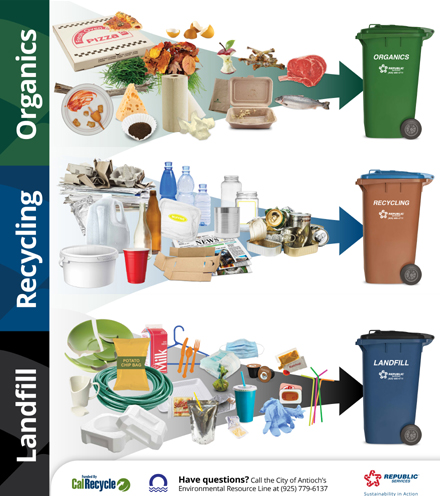
The most common non-recyclables contaminating the recycling waste stream during the holiday season include: bubble wrap, cellophane, string/rope, ribbons and bows, batteries, food, clothing, cell phones and Styrofoam and other forms of polystyrene foam.

Remember that when it comes to toy packaging, both the cardboard and the plastic are recyclable, but they must be separated from one another. That includes the plastic window on the box of a doll or action figure. Sticky gift tags are not recyclable by themselves, but they are acceptable if fixed to an envelope or wrapping paper.

Check with your local recycling and waste collection service provider or solid waste authority to confirm what items can be recycled curbside or through the community drop-off this season. Republic also recommends checking in advance on any changes to your holiday collection date or time and special instructions for disposing of Christmas trees.

About Republic Services

Republic Services, Inc. is an industry leader in U.S. recycling and non-hazardous solid waste disposal. Through its subsidiaries, Republic’s collection companies, recycling centers, transfer stations and landfills focus on providing effective solutions to make proper waste disposal effortless for its 14 million customers. We’ll handle it from here.®, the brand’s promise, lets customers know they can count on Republic to provide a superior experience while fostering a sustainable Blue Planet for future generations to enjoy a cleaner, safer and healthier world.

For more information, visit the Republic Services website at RepublicServices.com. “Like” Republic on Facebook at www.facebook.com/RepublicServices and follow on Twitter @RepublicService.


FOG – the unwelcome guest in your home this holiday season

Monday, November 27th, 2017

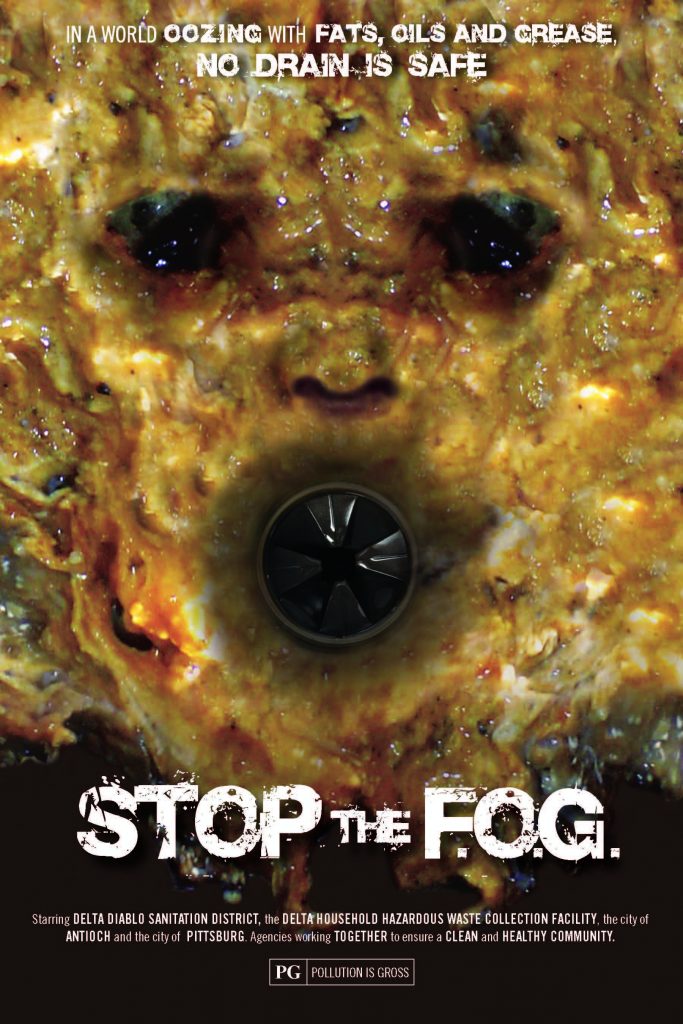
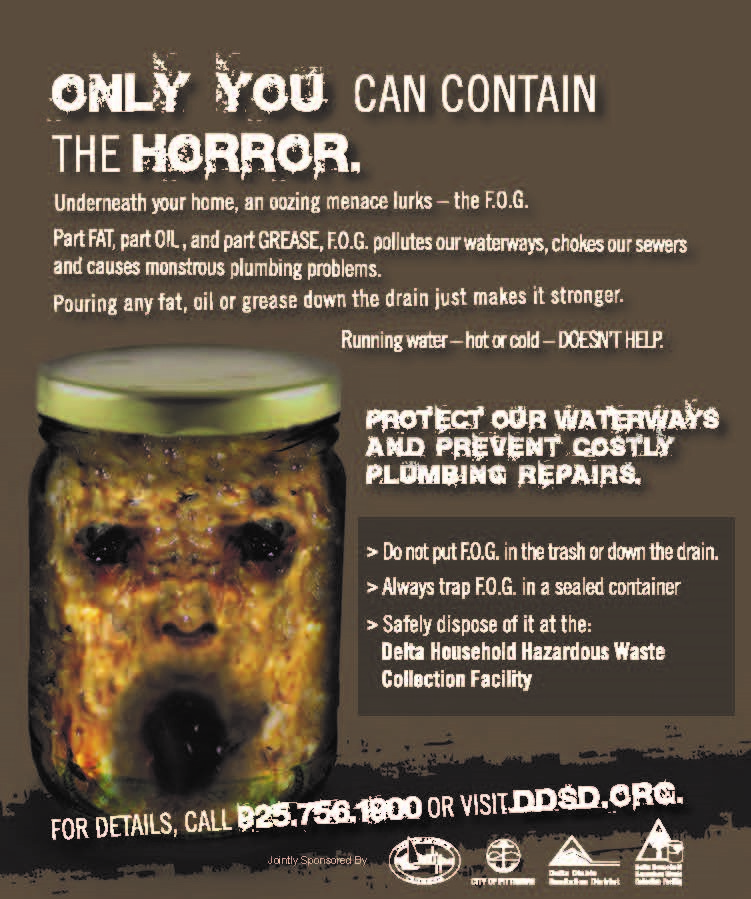
With the holiday season upon us, it is a good time to remember the only people we want visiting our homes are family and friends – not plumbers and wastewater professionals. Disposal of unwanted food waste and fats, oils and grease (FOG) down your kitchen drain, dishwasher and garbage disposal can lead to overflowing pipes, sewage spills, and emergency calls to plumbers.

Traditional holiday foods such as turkey, ham, meats, gravy, potatoes, sauces, vegetable or olive oils, salad dressings, baked goods and dairy products are sources of FOG. With family and friends celebrating together, it often means bigger meal preparation and cleanup with a lot of scraps incorrectly disposed of though pipes that may already be partially clogged and go unnoticed until guests overload the system.

People mistakenly believe their garbage disposal and dishwasher are effective methods of dealing with food and FOG; however, these devices only shred it into smaller pieces or wash it further down pipelines where it hardens in areas which require professional plumbers or wastewater professionals to remove safely.

Grease is one of the leading causes of residential sewer blockages. These blockages can cause costly, unpleasant sewage overflows that can damage our homes, and potentially find its way into our local waterways damaging local fish and wildlife habitat.

Delta Diablo reminds customers that prevention is the best way to tackle an unpleasant FOG experience in your home, and offers tips for this holiday season and throughout the year to reduce overflows, backups and clogs:

•Never pour FOG down kitchen sinks, garbage disposals or into toilets.

•Keep a heat-proof container in your kitchen to capture all FOG after cooking. When cooled, safely secure it and bring it for proper disposal at the Delta Household Hazardous Waste Collection Facility.

•Scrape grease and food scraps from plates, pots, pans, utensils and grills into a compost receptacle or the regular trash before washing.

•Wipe pots, pans and plates with paper towels to capture any leftover grease before handwashing or placing into dishwasher.

•Use a strainer or place paper towels over the kitchen drain to help keep grease and food scraps out of your plumbing system. Home garbage disposals and dishwashers do not help, not even with running hot water.

For more information about safely disposing of FOG, or services provided by the Delta Household Hazardous Waste Collection Facility, please visit www.DeltaDiablo.org or call 925-756-1990.


State Legislative Delta Caucus to hold public hearing on WaterFix proposal Nov. 30

Tuesday, November 21st, 2017

State Auditor to present findings of cost over-runs, mismanagement of project; Dep’t of Water Resources to also make presentation

SACRAMENTO – Assemblyman Jim Frazier (D-Discovery Bay) and State Sen. Bill Dodd (D-Napa), co-chairs of the California Legislative Delta Caucus, announce they will hold a public hearing on Thursday, Nov. 30 to examine mounting financial concerns connected to the proposed WaterFix project.

The hearing will be held in the Delta, at the Jean Harvie Community Center, 14273 River Road, in Walnut Grove, from 10 am. to noon. Members of the public are invited to attend.

“WaterFix is one of the largest, most costly public works project ever proposed in California,” said Frazier, who represents the heart of the Delta region in the Assembly. “There are a number of growing concerns surrounding the project’s financials. The recent state audit cited cost over-runs that are out of control. The audit also found the Department of Water Resources failed to complete a basic cost-benefit analysis and has mismanaged the project. The Delta Caucus decided to hold an informational hearing accessible to the public where these concerns can be thoroughly examined.”

The office of State Auditor Elaine M. Howle will present the findings of the recent audit: “Department of Water Resources: The Unexpected Complexity of the California WaterFix Project Has Resulted in Significant Cost Increases and Delays.”

Dr. Jeffrey Michael, executive director of the Center for Business & Policy Research at the University of the Pacific, will present the Center’s recent report, “Benefit-Cost Analysis of the proposed California WaterFix.”

The State Department of Water Resources, which is managing the proposed WaterFix project, has also committed to making a presentation.

Other presentations may be added to the agenda as the hearing date approaches. Members of the public will have an opportunity to comment during a public comment period at the end of the hearing.

“Ensuring a vibrant and sustainable Delta is absolutely essential for our region and our entire state,” said Senator Dodd. “I encourage Delta residents to join us and hear from the State Auditor’s Office regarding their recent findings. The Delta Caucus is working to educate the public and fighting to protect the Delta for our residents, visitors and wildlife.”

The Delta Caucus is a bipartisan mix of 12 members of the Assembly and Senate who represent the Delta region. The Caucus is co-chaired by Assemblymember Frazier and Sen. Dodd. Other members are Senators Cathleen Galgiani (D-Stockton), Steve Glazer (D-Orinda), Dr. Richard Pan (D-Sacramento) and Assemblymembers Cecilia Aguiar-Curry (D-Winters), Kevin McCarty (D-Sacramento), Jim Cooper (D-Elk Grove), Heath Flora (R-Ripon), Susan Talamantes Eggman (D-Stockton), Timothy S. Grayson (D-Concord) and Catharine Baker (R-Dublin).

For more information about the Delta Caucus, contact Adam Horn at (916) 319-2011.

Annual Antioch Coastal Cleanup this Saturday, Sept. 16

Tuesday, September 12th, 2017

Looking for volunteers

The 33rd Annual California Coastal Cleanup Day, the state’s largest volunteer event, is going to take place this Saturday, September 16, 2017 from 9 AM to Noon. The Kayak trip will be on Friday, September 15 (Click here for details).

The event is expected to draw more than 70,000 volunteers who will combat marine debris at over 800 locations throughout the state by removing the trash that has accumulated on California’s beaches and inland shorelines over the past year.

Get out there, join the effort in Antioch. There are three locations to choose from: Antioch Marina, Prewett Park and Fulton Shipyard. Select your location when you complete your registration on the City’s website

4th Annual Kayak Cleanup this Friday, September 15, 2017 at the Antioch waterfront

Tuesday, September 12th, 2017