








Open-Road Tolling on Bay Area bridges to debut next year at Richmond-San Rafael Bridge

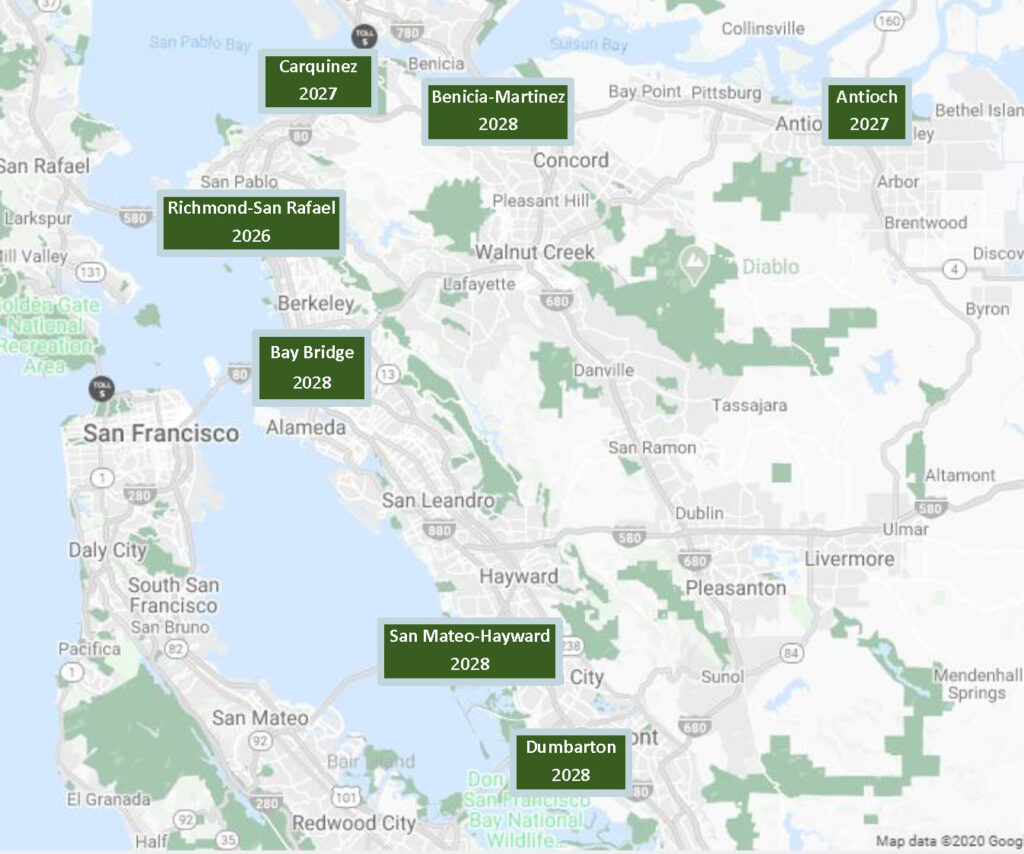
Then expand to Antioch, Benicia-Martinez and Carquinez Bridges in 2027-28; San Francisco-Oakland Bay Bridge, San Mateo-Hayward and Dumbarton Bridges in 2028
Offers high-speed toll collection system; see how an ORT gantry works
By Bay Area Toll Authority

Acting Caltrans District 4 Director and Bay Area Toll Authority (BATA) Commissioner Doanh Nguyen reminds drivers that the toll booths at the Bay Bridge and other state-owned toll bridges will soon be a thing of the past. “The transition to open-road tolling already is underway, with the new system set to debut next year at the Richmond-San Rafael Bridge.”
The Open Road Tolling (ORT) Program will streamline the driver experience when the toll booths are removed from the seven state-owned toll bridges which currently use All-Electronic Tolling (AET). They will, over time, be converted to ORT.
Why Do We Need the Open Road Tolling (ORT) Program?
The ORT Program will replace the current, aging toll system with newer “toll gantry” technology that will be optimized to process all tolls electronically.
These days, it is not necessary for drivers to stop at toll booths to pay the toll. The ORT Program will remove the toll booths and update the roadway through the toll plaza area, improving safety and highway operations.
Project Benefits
The implementation of ORT will result in more efficient tolling, increased safety at toll plazas and provide a consistent regional experience to Bay Area travelers. Implementing ORT has also been shown in other regions to improve traffic flow and reduce vehicle emissions.
What’s a Toll Gantry?
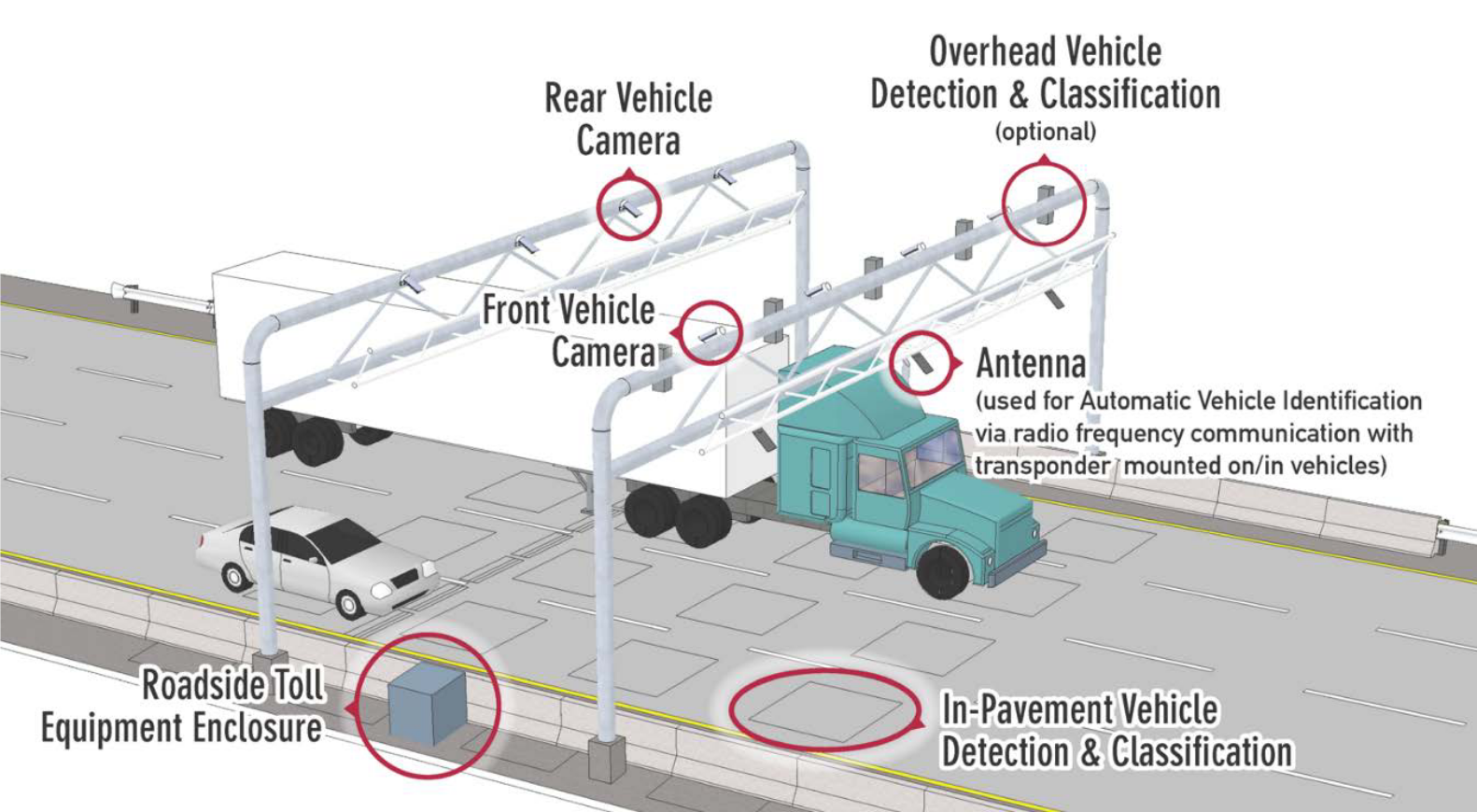
A toll gantry is an overhead structure with mounted toll readers.
Bay Area Express Lanes use gantries above part of the roadway. In the former toll plazas, the ORT Program will install gantries that cross the entire roadway.
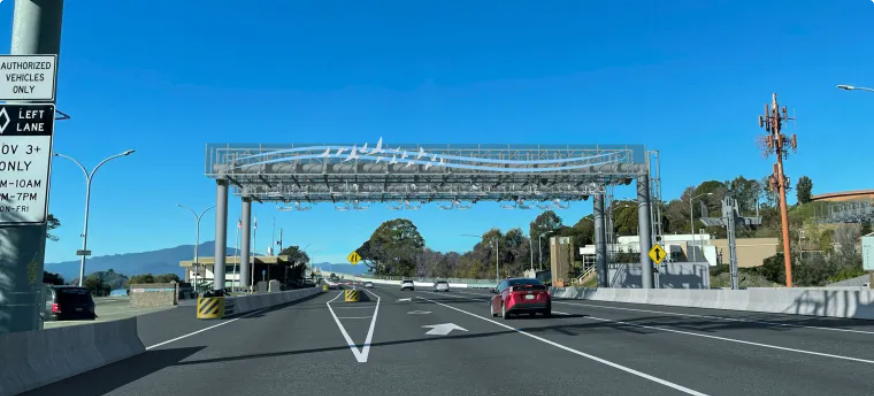
In the illustration at the top of this page, a conceptual toll gantry design is shown at the Richmond-San Rafael Bridge. A The toll plaza has been removed and replaced with toll equipment centered over the lanes.

How Does ORT Work?
The ORT toll system is a roadside system that detects vehicle information as drivers pass through the toll zone.
A typical ORT roadside system is shown in the figure above. Overhead cameras, antennae and associated toll equipment are mounted on gantries that span the entire width of the roadway. This equipment captures toll tag and license plate information. Inductance loops are embedded in the pavement and centered on the travel lanes. These loops are used to count the number of axles to assign the right toll rate. The Roadside Toll Equipment Enclosure houses computer processors that package the pieces of information into a single toll transaction. This data is transmitted to the FasTrak Customer Service Center to collect the toll from customers
Construction Period
Construction began in spring 2026 on the Richmond-San Rafael Bridge, the first of the Bay Area’s state-owned bridges to convert to open road tolling.
Before, during and after construction, the collection of tolls will be seamless to the customer. Customers will continue to be able to use their FasTrak toll tag or use their license plate to get an invoice in the mail. While this program will shift the location where tolls are collected from the traditional toll plaza to a gantry over the road, the toll collection process is unchanged.
How Do Drivers Pay Tolls?

Toll payment options will be no different under the ORT Program. Drivers can set up a FasTrak account or a Pay By License Plate account to pre-pay tolls. Vehicles without pre-paid accounts will receive an invoice in the mail. A FasTrak toll tag in the designated HOV lane with the required occupancy is required to receive HOV discounts. For more information visit the FasTrak website.
No More Cash Collection
The toll plazas in use today were designed for both cash and electronic payment.
In response to the COVID-19 pandemic, Governor Newsom removed the cash toll booth collectors from the toll plazas on March 21, 2020. This is a permanent change, so there will be no more cash collection at Bay Area toll booths. This effectively changed the toll collection system to operate as an all-electronic system.
Notice of Exemption for Antioch, Benicia-Martinez & Carquinez Bridges
In September 2025, a Notice of Exemption was issued by the Bay Area Toll Authority (BATA) on the California Environmental Quality Act website for the ORT Conversion Northern Bridges Project specifically for the Antioch Bridge, Benicia-Martinez Bridge and Carquinez Bridge toll plazas. The project would replace existing toll booths with new toll gantries, which will serve the same purpose and capacity as the toll booths without expanding the use of existing highways or streets, nor create additional automobile lanes.
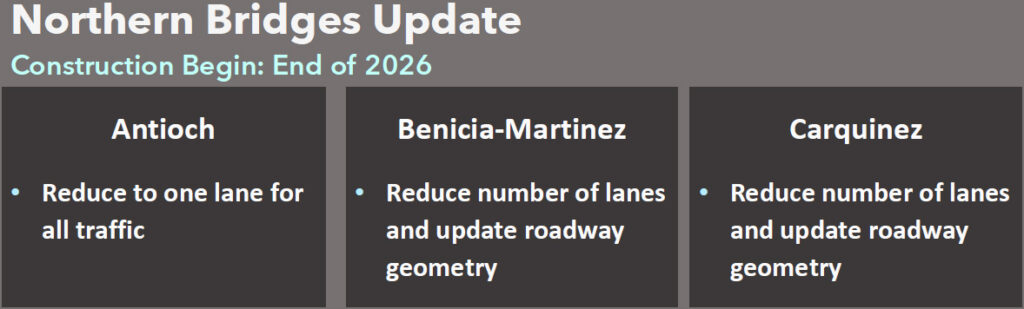
BATA, in coordination with the California Department of Transportation (Caltrans), proposes Open Road Tolling (ORT) systems at the Antioch Bridge (State Route-160 [SR-160]), Benicia-Martinez Bridge (Interstate 680 [I-680]), and Carquinez Bridge (Interstate 80 [I-80]) toll plazas in Contra Costa and Solano counties.
The purpose of the project is to replace aging tolling system infrastructure to improve operational efficiency through bridge toll plazas and improve safety by eliminating the need to pass through existing toll booths. The project is needed to address operational and safety deficiencies for vehicles traveling through the Antioch Bridge, Benicia-Martinez Bridge, and Carquinez Bridge toll plazas.
The existing toll collection system is aging and needs to be replaced. The existing toll collection booths and other civil infrastructure are physical barriers that act as fixed objects within the travel way of the road. The existing fanning and merging of travel lanes near the toll plazas increase the potential for collisions.

The proposed project would remove and replace existing toll booths, toll equipment, and canopies with ORT systems at the Antioch Bridge, Benicia-Martinez Bridge, and Carquinez Bridge toll plazas. This includes the construction of new ORT gantries and the installation of toll equipment buildings along SR-160, I-680, and I-80. Northbound I-680 and eastbound I-80 would be restriped to four general purpose lanes and one high-occupancy vehicle (HOV) lane through the toll plazas. Northbound SR-160 would be restriped to one lane through the toll plaza. Entrance and exit ramps to and from toll administration buildings and parking lots would be modified. Existing roadway signs would be removed, replaced, or relocated at all three bridge locations, as needed.
BATA’s Toll Policy will provide toll discounts to HOVs with FasTrak® Flex tag. All project activities are within State right-of-way, except for minor widening on the maintenance ramp for Bridgehead Road, which lies within City of Oakley right-of way. Construction is planned to begin in 2026 and is anticipated to take approximately 20 months.

Public Comment
Staff updates on the program will be provided during BATA Oversight Committee meetings. Members of the public are invited to comment during these meetings.
Comments and questions may also be directed to info@bayareametro.gov with the subject line “ORT Webpage Comment.”
the attachments to this post:
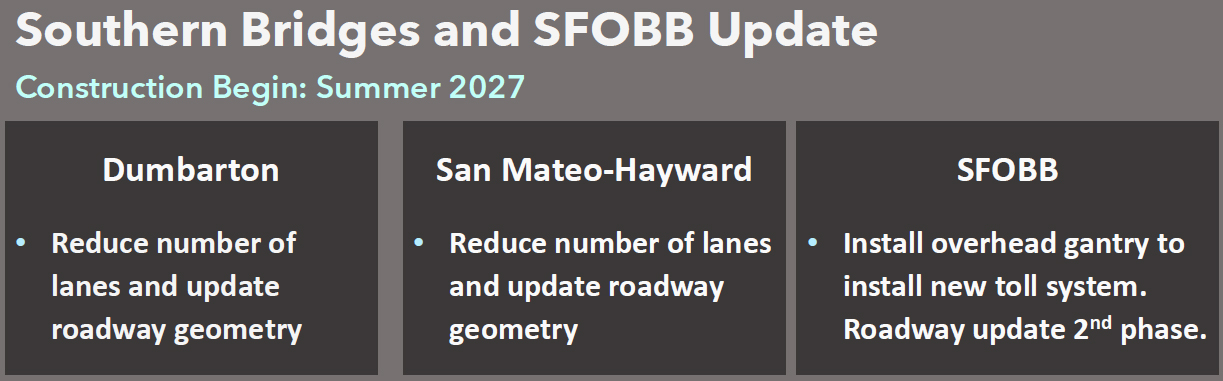
Southern Bridges & SFOBB Update
Richmond-San Rafael Bridge ORT

Carquinez Bridge ORT Toll Gantry
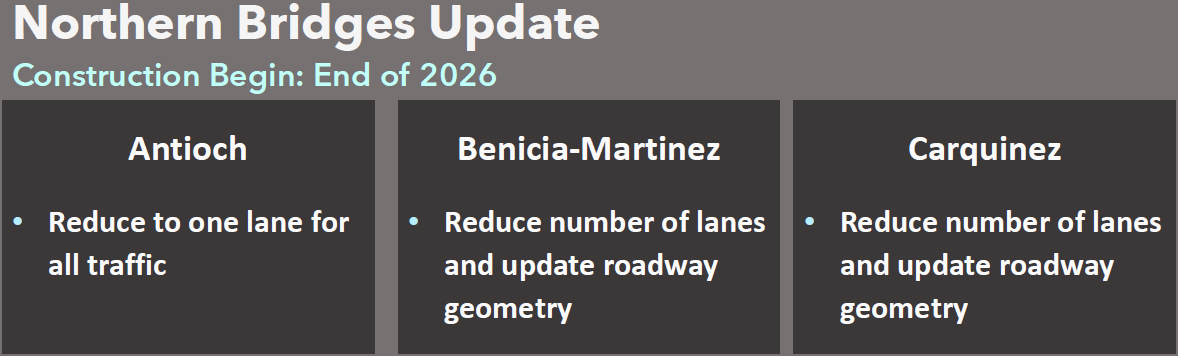
Northern Bridges Update

FasTrak logo
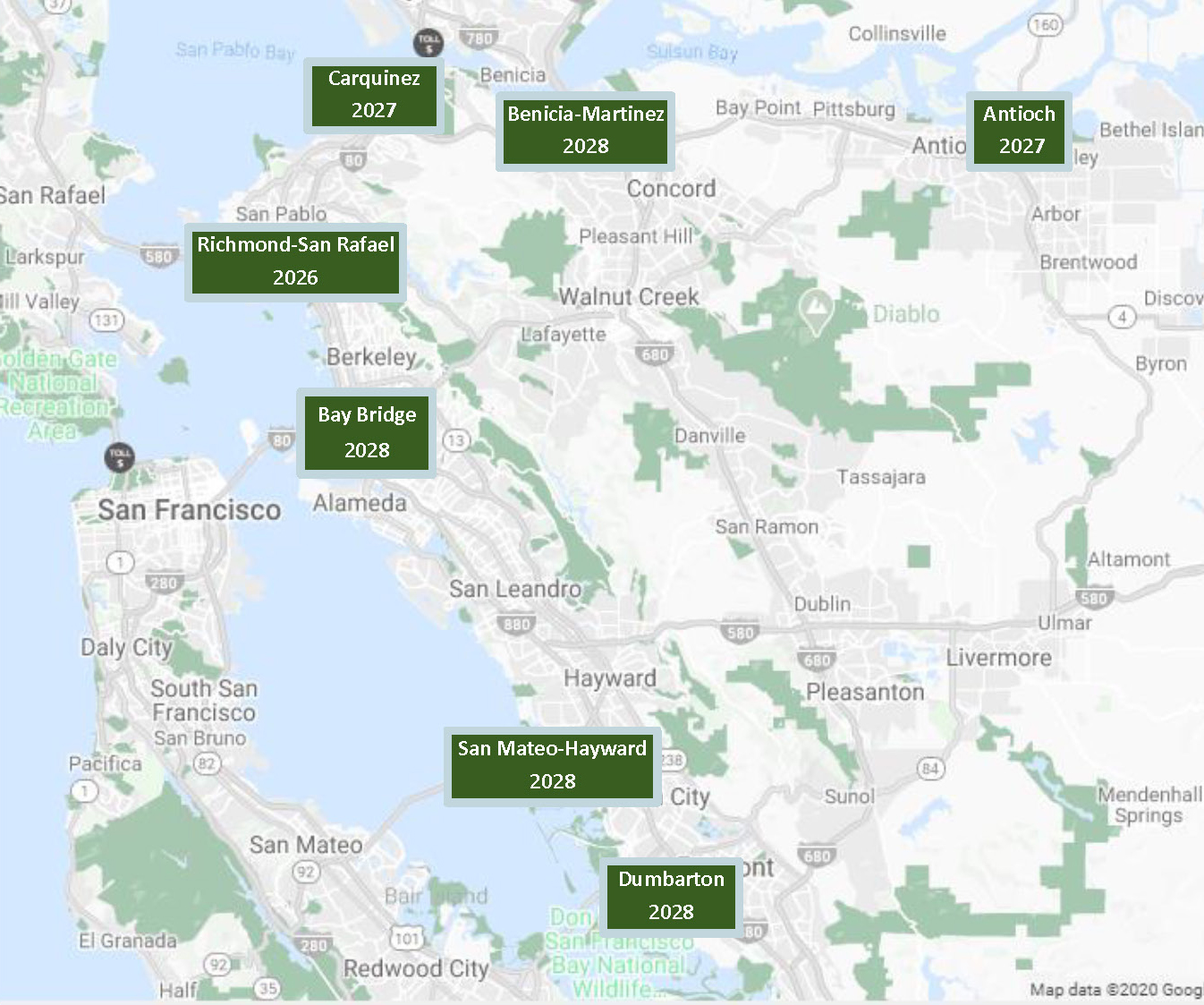
Map with Bridge locations & shedule BATA
ORT Toll Gantry illustration MTC
Bay Area Toll Authority BATA logo