Archive for 2012

Philippine Heritage Celebration at East County Shared Ministry

Monday, May 28th, 2012

East County Shared Ministry will celebrate Philippine Heritage at a special worship service on Sunday, June 3, at 10 a.m. This is one of several culture-specific celebrations, both recent and looking forward, as the ministry honors its global heritage.

The guest speaker will be Rev. Israel Alvaran, an ordained minister in the United Methodist Church who is assigned as national organizer for economic justice of its General Board of Church and Society. An activist for social justice since his seminary days, he has served with the church in various settings: as pastor, youth minister, university chaplain, and social justice community organizer. Born and raised in Manila, Philippines, he came to the United States to pursue graduate studies in 2003.

The political situation in the Philippines changed a few years later, with the abductions and murders of progressive leaders, union activists, community organizers, and even clergy. Alvaran, with approval from his bishop in the Philippines, was granted political asylum. He later earned his Doctor of Ministry degree from Pacific School of Religion in Berkeley in 2010. More recently, he worked as interfaith community organizer in San Francisco, supporting worker justice and immigrant rights concerns.

“Unity in diversity is the foundation of the shared ministry,” commented Rev. Christy Parks-Ramage. “As we celebrate our diversity, we strengthen our commitment to social justice which unites us.”

Everyone is invited to join in the celebration of Philippine Heritage particularly those who share this connection. San Francisco alone is home to 40,072 Filipinos, by the estimate of the 2000 U.S. Census. Many Filipinos also live in the counties surrounding the San Francisco Bay Area, with 68,680 in Alameda County, 34,436 in Contra Costa County, 60,144 in San Mateo County, 77,815 in Santa Clara County, and 35,862 in Solano County.

About East County Shared Ministry

East County Shared Ministry comprises Community Presbyterian Church of Pittsburg (PCUSA) and First Congregational Church of Antioch (UCC) who have embarked on a continued exploration of shared ministry that will enrich, enhance and strengthen their collective progressive ministry to the congregations, the community and the world at large. ECSM recognizes, celebrates and gives thanks for the many diverse gifts of God among us. All are invited to participate in their community and worship life including, but not limited to, believers, seekers, agnostics, women and men, those of all sexual orientations and gender identities and expressions, those of all races and cultures, those of all classes and abilities, those who hope for a better world and those who have lost hope. For more information visit the website at www.cpcpittsburg.org.

Century Blvd Undercrossing Closure in Pittsburg and Antioch May 30 – June 1

Monday, May 28th, 2012

The California Department of Transportation (Caltrans) and the Contra Costa Transportation Authority (CCTA) are widening State Route 4 (SR-4) through Pittsburg and Antioch. As part of this construction work, the contractor will be closing a portion of Century Boulevard in Pittsburg and Antioch where it crosses under SR-4 from 5:30 pm on May 30, 2012 through 5:30 pm on June 1, 2012.

This 48-hour closure will allow for demolition of the abandoned bridge. During this phase of construction, the Century Boulevard undercrossing will be closed to all vehicular, bike, and pedestrian traffic. Signs will be in place to direct traffic around the work site. Please see attached map for detours. Once demolition is completed, the contractor will begin construction of a new highway bridge and an eBART bridge over Century Boulevard.

For more information on the Highway 4 widening, visit http://widensr4.org.

Dow Donates Dozens of Bikes to Delta 2000

Friday, May 25th, 2012

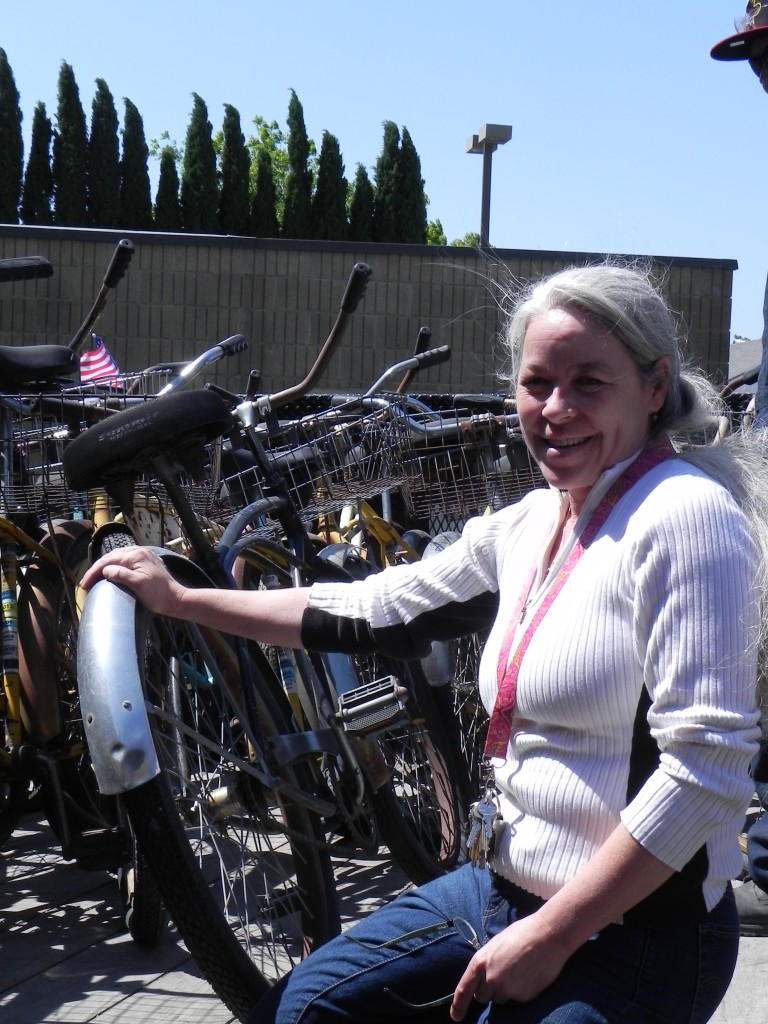
Susie Dove of Delta 2000 with Dow's donated bikes

As the saying goes “When life gives you lemons, make lemonade.”  A recent decision to ban bicycles on the Dow Pittsburg site has resulted in a boon for a local nonprofit.

For decades, old bikes have been used to traverse Dow’s 500-acre property, allowing employees to easily move from plant to plant without using their cars.  Maintained annually to ensure safety and functionality, a recent injury at Dow Pittsburg when a worker fell off his bike and broke his arm while commuting prompted leadership to take a close look at bicycle usage at the manufacturing site.  It was decided to eliminate all bicycles and, instead, purchase new tricycles that provide better stability.

What to do with more than 100 old bikes?  Dow put out an announcement early this year to see if any local non-profits were interested.  The response was overwhelming.

Susie Dove, Executive Director for Delta 2000 responded quickly with the idea for a new program – providing second-hand bikes to low-income and disadvantaged youth who need a way to get to school or work.  Focused on creating a community of volunteers, youth will learn how to maintain and build their own bicycles.  “Working with their hands on something of their very own will create pride in their work and what they have learned in owning a bike,” said Dove.

“Our mission with this program,” Dove explained, “ is to promote bicycles as a fun, safe and accessible form of transportation, to foster a healthy community and to provide a welcome space for youth to learn about building, maintaining and riding bicycles.”  Her hope is that the youth will also choose to spend their community service time – something all high school students are required to have before graduating – teaching other students about bike repair or fixing up bikes for other youth to use.

Though Dow is happily donating the bikes, there are other needs associated with this program.  According to Dove, the program will need all sorts of tools and equipment including bike stands.  “We’ve got lots of interest, just not lots of capital.  Anyone who wants to be involved can donate money, tools – we’ll even take old tool kits gathering cobwebs in your basement or garage.”

Dow chose Delta 2000 from dozens of interested organizations for several reasons.  They had a plan to use all the bikes, even the ones that might not be in the best of shape – or look great.  “This is a win-win situation by Dow’s standards,” said Dow spokesperson Patty Deutsche.  “We love the idea that the bikes are going to kids who need to go to school or work.  But we especially like the idea that the kids will be learning at the same time – not just maintenance but responsibility and maybe even the skill of teaching others.  The fact that this is all right in our backyard was a bonus.”

Bikes were delivered to Delta 2000 on Thursday, May 24, 2012.

About Dow’s Pittsburg Operations

The Dow Chemical Company purchased the Pittsburg facility in 1939 from the Great Western Electrochemical Company. It is one of more than 150 manufacturing sites located in 37 countries around the world and supports two of Dow’s eight global businesses – Dow AgroSciences and Performance Chemicals.  The Pittsburg facility produces a variety of products used in personal care products as well as a variety of crop protection products and intermediates. www.dowpittsburg.com

About Delta 2000

For more than 26 years, Delta 2000 Rivertown Resource Center has provided service to residents of Contra Costa County.  With 28 non-profits and social service organizations under one roof, help can be found for everything from prenatal care to senior services.  For more information about Delta 2000 contact Susie Dove at 925-779-1404 or Susie.dove@yahoo.com.

School Board Trustee Advocates for Antioch’s Measure J

Friday, May 25th, 2012

I generally subscribe to Barbara Zivica’s tight-fisted prudence. I, too, pride myself on fiscal integrity. For the record, I, like Barbara, disagreed with extending the Mello-Roos tax, the Antioch sales tax, and the recent water tax in its’ convoluted packaging.

On her recent column, though, regarding Measure J  (renovation of the going on sixty-year Antioch High School, the only school in Contra Costa of that era that has not been restored), Barbara simply barked up the wrong tree as a watchdog.

Even though AHS is sandwiched by stunning Heritage High, college-campus looking Deer Valley, and Pittsburg High, which had a gorgeous makeover keeping its’ old bone structure, I can respectfully differ with Barbara’s opinion that it’s O.K. for our downtown school to stand out like a sore thumb.

Opinion and facts are two things, though. I am not here to argue the ballot merits as the voters will determine whether our kids deserve second rate perimeter security; cracking walls and sidewalks; dark classrooms, outmoded heating, air and technology; an unusable pool and track; and a cafeteria that can’t fit them all in rainy weather. It is the citizens who will decide what an equitable facility would or would not do for downtown morale and property value.

Being, though, that I apparently surprise Barbara in  living one block over in the non-Mello-Roos area, and would, in fact, pay the tax should it pass, I am compelled, as a private citizen, to fact check.

As a soon-to-be sixty-six year old who will start collecting social security June 13th, I, too, would love, both personally and philosophically, to see seniors exempted for the $4.52 per $100,000 assessed value.  Even though it amounts to a tenth or twentieth of what Mello-Roos owners pay, seniors have truly done so much for our community and deserve a break.

Unfortunately, under the law of construction bonds, there is so no such possible exemption. It is simply legally verboten. There seems, then, to be some confusion about the provisions of bonds and parcel taxes, where exemptions can and can not be allowed.

As to the argument that Antioch has properties up the kazoo, I don’t get it. Firstly, precisely because we have received hardship monies to build, the sobering reality is that any properties we sold would be monies given back the state. Secondly, paint this a favorable climate for construction, a dreadful time to sell. Thirdly, even if we were hypothetically able to sell off everything we had, hold nothing for future growth, and be allowed to keep the money, it would be at best a few million rendered, hardly a dime on the dollar of what 21st century modernization will cost.

Fact is, A.U.S.D. has been cut $74 million in state funding over the last four years. Due to the bloodletting, like other districts, we have been given a state exemption on putting away 3% for deferred maintenance and we have stopped putting into long term retirement liability fund.  Plain and simple, there is no golden goose to raid for this remodernization.

Is it true, as has been stated, that we are counting on matching money back from the State? Hoping, of course, but not counting, on it. It would be gravy and no, we never bet the ranch on hypotheticals.

As to the argument that we stopped the last Bond dead in its tracks, leaving some twenty one million dollars unbonded, agreed. Gosh, it feels odd, though, to be criticized for not not taking everything we could have grabbed. Shouldn’t public entities be applauded for  disciplined frugality and turning back money?  We were, in deed, the good stewards we promised to be.

Fact is, we completed most all our list, getting very favorable results from the competitive construction climate.  On top of that we received some $16 million back in saved interest  from the Quality Construction Act. Most of our bonding came in at an incredibly low 2% interest rate. Credit the penny-pinching Scottishness of Tim Forrester, Executive Director of Operations for putting this together.

The loan formulas changed on us and for the small scope of unfinished projects left we would have had to pay $80 to $90 million interest on $20 million bonding. We wisely decided not to.

Unlike my friend Barbara, I was not surprised that the City Council unanimously supported the bond. They, like I, expect that with a mandated build out checklist, a citizens’ oversight committee,  a vigilant administrative team and a fiscally sound Board that has put away $27 million in ending fund balance despite massive state cuts,  we would see the same positive results as Measure C should Measure J Pass. Its all up to the voters.

Walter Ruehlig, Trustee, A.U.S.D.

Columnist Opposes Antioch’s Measure J

Friday, May 25th, 2012

I won’t be supporting Measure J, the Antioch Unified School District’s $59,500,00 bond measure on the June 5th ballot.

Why? Several reasons. For starters, I’ve been told that the district only used approximately $40 million of the $61,600,000 former bond measure which was structured to affect the older NON Mello Roos districts as will the new bond. (Two school board members, Walter Ruehlig and Diane Gibson Gray are Mello Roos taxpayers.) Incidentally, the new bond measure will not include a senior citizen exemption nor did the former bond measure which was one of five at the time. The other four school districts bonds did contain senior citizen exemptions..

Additionally, according to County Counsel’s impartial analysis,, the school district assumes it will receive matching state funds to construct the improvements specified in the bond Measure (NO guarantee) and the District estimates that the highest tax rate required to fund the bonds is $52 per $100,000 of assessed valuation in fiscal year 2012-2013. (If your accessed property value goes up each year you’ll be paying more annually for the life of the bond.)

Secondly, the school district has a huge portfolio of surplus properties which could be used for “one time” costs e.g. renovation of Antioch High School.

I’m disappointed but not surprised that the Antioch City Council just endorsed Measure J but it isn’t surprising since Gary Agopian, Wade Harper and Councilwoman Mary Rocha were former AUSD board members. ( Mary Rocha’s son is the principal of Antioch High) It’s also no surprise that Antioch resident Greg Feere, Contra Costa Building and Trades Council chief, publicly announced his support of Measure J to the press while not revealing his union affiliation.

Antioch Council Votes Unanimously Against Renaming L Street to Marina Parkway

Friday, May 25th, 2012

Holds Budget Study Session, Hears of $52.5 Million Five-Year Capital Improvement Plan

By James T. Ott

Potential new names proposed included “Marina Plaza Parkway” and “Marina Parkway” but in the end city council voted 4 to 0 – Mayor Pro-Tem Wade Harper was absent – in favor of keeping L Street’s current name, for now.

Members of the public spoke for and against the issue. Proponents said that renaming L Street something like “Marina Way” or “Marina Parkway” would help promote Antioch’s historic downtown and waterfront. Former Councilman Allen Payton (and publisher of the Herald) spoke in favor of the change and presented petitions signed by about 50 patrons of Humphrey’s, mostly from Antioch, supporting the renaming.

Opponents disliked the idea, saying that it flew in the face of downtown Antioch’s traditional alphabetical and numerical street names and that the estimated $40,000 needed to change freeway and road signs were sorely needed by the struggling city in other areas.

The idea of renaming L Street to Marina Way or Blvd., and A Street to Rivertown Drive, was first proposed in 1996 as part of the city’s adopted Economic Development Plan because it would help promote Antioch’s historic downtown and waterfront.

Harper requested the issue be brought before council after the Planning Commission reviewed it and unanimously recommended the renaming to Marina Parkway at their May 16 meeting.

Staff said that if the name-change was going to be made, that now might be the most opportune time due to the Highway 4 widening project under way because CalTrans will be replacing freeway signs anyway.

Staff also said that 107 properties and businesses, including the Antioch Police Department would be affected and that they had notified them all.

The police as well as the fire district must approve the name change. At the meeting staff said that the police department had approved the name change and that they expected a reply from the fire department “within another week or so.”

According to staff, the fire district has a policy against similar street names when they are nearby one-another as it could confuse police and fire crews and reduce response time in an emergency.

So because Pittsburg already has a Marina Boulevard and because businesses near the new Marina such as Humphrey’s use “Marina Plaza” in their addresses, staff suggested “Marina Plaza Parkway” as a good compromise.

The estimated $40,000 project cost – which staff admitted might be a little high – would go toward paying for one new freeway sign plus changing signs all along L Street as well as paying for the police department to change stationary to the new address.

City Manager Jim Jakel said that if they waited to make the change later that those costs could potentially go up to $100,000 or $150,000. In the past, the city spent $90,000 to change the freeway signs when it changed the name of the north side of Somersville Road to Auto Center Drive.

Council Member Brian Kalinowski was the first member of council to express his disapproval of changing the name of L Street. He scoffed at the idea and said he did not want to change the name when so much needed to be done along the street to clean it up first, especially along the notoriously crime riddled “Sycamore” section of the street near the freeway.

I don’t want to just slap a new name on it,” said Kalinowski. “First we need to ask what conceptually we need to [change about L Street] to improve access to downtown and the riverfront.”

Kalinowski went on to call Sycamore a “shooting gallery” and joked that “we can change Sycamore to Elm Street.”

He also suggested renaming L Street instead of A Street to Rivertown Drive, as it will be more of a main entrance to downtown, but quickly dropped the idea.

The other present council members agreed with most of what Kalinowski said and voted down the name change.

Council Member Gary Agopian suggested the parkway concept be pursued as part of the city’s Capital Improvement Budget in 2017 or 2018 and that they city wait to change the street name as part of a future vision.

Mayor Jim Davis weighed in, after suggesting the council postpone the matter until they heard back from the fire department. But, then decided to vote against the idea.

We can have the best businesses in town but what good is it if no-one is safe to use them,” said Mayor Jim Davis. “Besides, this money, although not much, could go a little way toward helping improve public safety.”

Also at the meeting:

During a study session on the budget prior to the meeting, the Council was presented with the Five-Year Capital Improvement budget and plan, with a total of $52.5 million for community facilities, road improvements, traffic signals, wastewater and storm drain systems and water systems.

The community facilities include the Marina Boat Launch Ramp restroom and third boarding float, as well as the turf fields at Antioch Community Park.

Keep Antioch Beautiful celebrated the success of their cleanup efforts at the city council meeting Tuesday. Antioch Unified School District Board Vice President Joy Motts said that more than 200 volunteers showed up on the April 21 cleanup day and together picked up 4.88 tons of trash.

She also announced the individual school winners based on which student body picked up the most trash:

High School Winners

First Place – $500 reward: Antioch High

Second Place – $300 prize: Deer Valley

Third Place – $200 prize: Dozier Libbey

Middle School Winners

First Place – $500 reward: Park Middle

Second Place – $300 prize: Dallas Ranch Middle

Third Place – $200 prize: Antioch Middle

Elementary School Winners

First Place – $500 reward: Antioch Charter Academy

Second Place – $300 prize: Holy Rosary

Third Place – $200 prize: Belshaw

The council received an update on what Code Enforcement is doing to prevent and remove squatters from occupying vacant homes.

:

 

Antioch Auto Center Owner, Tom Nokes, Donates $100,000 to City for Police

Friday, May 25th, 2012

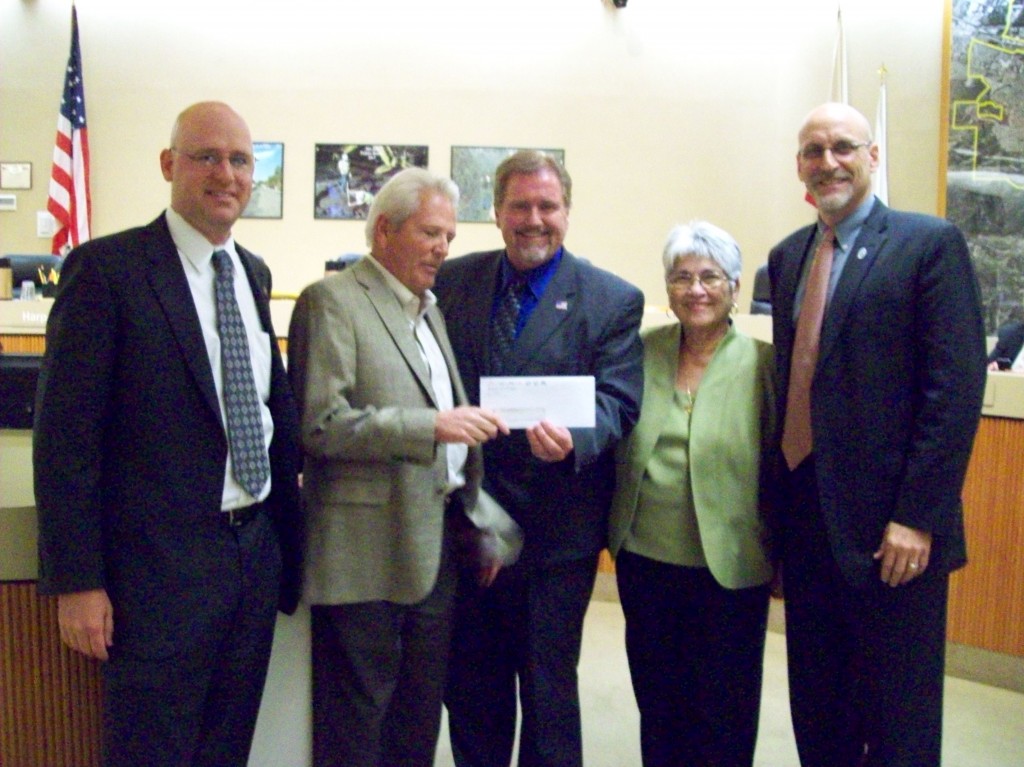
Antioch Auto Center Tom Nokes presents a check for $100,000 to Mayor Jim Davis and Councilmembers

By James T. Ott

Tom Nokes, owner of the Antioch Auto Center presented the City Council with a $100,000 check at the Tuesday, May 22, 2012 council meeting as part of a promise to match the city’s fundraising efforts.

Although the city did not raise quite the $100,000 that Nokes and his son Brian Nokes pledged to match – Tom said they would support the city any way they could and presented the full $100,000 anyway.

City Council Members were heavy in praise for all that Nokes and the Auto Center had done for the city.

Kalinowski said he thought the Auto Center single handedly kept Antioch out of bankruptcy during the last few troubled years and said that the best way for residences to support the city was to shop at the Auto Center.

Mayor Davis said “we appreciate everything you do,” and Council Member Mary Rocha said Nokes “represents the spirit of Antioch.”


Council Distributes Federal Funds to City Programs and Non-Profit Groups

Friday, May 25th, 2012

By James T. Ott

When it came time to approve the spending of Community Development Block Grants, (CDBG), at Tuesday’s City Council Meeting, council members found themselves having to do more with less.

Despite over $2 million in applications from non-profits and programs, in the end the council only had about $763,000 to work with and in the end approved $531,897 in block grants to go toward city code enforcement, housing rehabilitation, downtown curb cuts, job placement and training and small business training.

The council faced losses that could have been utilized for these programs, such as $143,000 in funding the city lost this year when the state eliminated redevelopment agencies. In fact, according to a staff report, the city lost 11 similar grants when the Antioch Development Agency was cut by the state.

CDBG consultant Teri House said that the loss of such redevelopment funds created a “huge impact on [city] programs.”

As a result of decreases in funding and increases in applications, the city said it had a, “very painful decision-making process,” and had to deny many programs this year that it has supported for years such as the Child Abuse Prevention Council, the Contra Costa Food Bank, and the Community Housing Development Corporation.

CDBG consultant Teri House said that the loss of such redevelopment funds created a “huge impact on [city] programs.”

The city allocated $131,897 toward code enforcement to hire its first code enforcement officer since 2009 when budget cuts eliminated the position. The main focus of the officer will be the abandoned/foreclosed homes in Antioch. The city has had an epidemic of squatters of late stemming from the housing crash. This Code Enforcement Officer will help Deputy Director of Community Development Ryan Graham who currently only has the ability to help with the very worst cases in Antioch.

$200,000 will go toward single and multi-family rehabilitation services such as loans to assist in fixing dilapidated buildings, tenant-landlord counseling and infrastructure improvements all in an effort to clean up lower-income areas of Antioch.

$135,000 was set aside for curb cuts to provide easier access for the handicapped.

$50,000 will go toward job training at and placement for struggling residents via Opportunity Junction who are having trouble finding work and $15,000 will be allocated to the Antioch Chamber to fund small business training for Antioch residents who own, or are looking to own a business.

Also at the meeting:

The city council decided Tuesday to table the decision on proposed changes to components of it’s Master Fee Schedule until next city council meeting due to council indecision as to whether or not the changes were currently necessary.

Most of the proposed changes in the schedule were to fees associated with the Police Department and Animal Services, Community Development and Public Works, and a majority of them were slight increases.

The changes are to go mainly toward capital improvement projects and also for a repair and replacement fund for the city’s water and sewer districts, said Antioch Finance Director Dawn Merchant.

The proposed adjustments were made according to a 2010 report by consultants Black and Veatch – a report that Merchant said city staff still felt was valid.

According to a city staff report, Police fees in general are set to go up about 5 percent and city water and sewer rates will increase 8 percent and 4 percent, respectively – changes that were already approved in resolutions back in 2010.

Merchant said that the proposed increases were in accordance with the standard increases according to the Consumer Price Index, which is where the main sticking point for the council seemed to come from.

Councilmember Agopian protested raising fees just because the Consumer Price Index said it could or should be done. Agopian said that it makes it more expensive to live and do business in Antioch and so he is apposed to raising such fees seemingly arbitrarily.

City Manager Jim Jakel said that most of the increases are negligible and most amount to $2 to $6 increases. Jakel and Merchant both said that the fees were made to recoup increased city costs due to things such as rate increases, and may indeed be necessary.

Council Member Brian Kalinowski pointed out that some fees in the proposal don’t increase at all, such as some animal fees that used to require a ten day minimum and now can be paid day by day, potentially saving Antioch residents hundreds.

In the end Kalinowski and the other council members agreed that they would postpone the decision until they could hear more from residents and get more details from staff on the changes.

If the changes are approved they are currently set to go into effect July 1, 2012.

Any changes to the master fee schedule are also set to be brought before city council for review in two years.