Archive for the ‘Transportation’ Category

Letter writer supports Frazier transportation bill

Wednesday, August 31st, 2016

Editor:

Thank you to the Antioch Herald for its recent coverage of the Frazier-Beall transportation plan, a smart, sensible bill that addresses our state’s transportation issues and provides a fair approach to funding provisions that will fix our roads and strengthen California’s economy. It is inarguable that our transportation infrastructure is rapidly deteriorating under the pressure of population growth that puts more vehicles on the road than the system was designed to manage safely.

The transportation funding plan put forth by Assemblyman Jim Frazier and Sen. Jim Beall offers a practical solution. It calls for an equitable distribution of funding responsibility among multiple sources, including gas and diesel tax increases and an annual fee for zero-emission vehicles. The bill encourages the use of public transit and other transportation alternatives. Frazier and Beall exhibit a commendable vision by balancing modes, understanding their net positive impact on relieving congestion and carbon emissions while off setting their impact on a corresponding net loss of gas tax receipts under the current program.

California’s transportation network serves as the lifeline for our personal mobility as well as an economic engine that makes the state the preferred originating point to move goods throughout the U.S.  We must fund consistent, long-term maintenance and expansion now to keep our lifeline open and ensure a safe, reliable transportation system that we can count on.

Art Hadnett

President, West Division at HNTB Corporation

San Francisco

Frazier, Beall introduce bills to fund $7.4 billion transportation plan

Monday, August 29th, 2016

On Thursday, August 25, 2016, Assemblymember Jim Frazier (D – Oakley) and Senator Jim Beall (D – San Jose) introduced companion bills – ABX1 26 and SBX1 1 – in the 1st Extraordinary Session to address California’s transportation funding crisis. As mentioned in a previous article, the plan includes increases to the tax on gas by 17 cents per gallon and on diesel by 30 cents per gallon, as well as a $165 annual fee on electric vehicles.

“Over the past year, I’ve worked with my colleagues, local communities and industry experts to develop an all-inclusive plan that makes necessary improvements to our transportation system. These conversations resulted in ABX1 26,” stated Frazier. “The package that Senator Jim Beall and I put forth provides vital tools to ensure California remains economically competitive. By strengthening our trade corridors and accelerating the movement of goods, this proposal keeps business in California while simultaneously creating jobs through the advancement of crucial road maintenance and enhancement projects.”

 The joint proposal provides an additional $7.4 billion annually across California’s transportation system: highways, local streets, transit, bikes and pedestrians. The plan utilizes a portfolio approach in addressing a multitude of funding needs, ensuring that everyone benefiting from California’s transportation infrastructure contributes to its continual maintenance and improvement. Additionally, important systemic reforms are included to ensure transparency and accountability in the use of funds.

“Assemblymember Jim Frazier and I have met with scores of legislators and stakeholders to craft an equitable solution that calls for everyone who drives to pay their fair share toward repairing California’s crumbling roads, bridges and trade corridors,” said Senator Jim Beall, chairman of the Senate Transportation Committee. “Our plan includes bipartisan recommendations to increase efficiency and accountability to taxpayers.  By choosing to repair our transportation system now, we will have smoother and safer roads, generate jobs, and also save billions of dollars in future maintenance and construction costs.’’

The breakdown of new annual funding includes $2.9 billion for state highway maintenance, $2.5 billion for the upkeep of local streets and roads, $534 million to help regions restore cuts to the State Transportation Improvement Program, $516 million for transit capital projects and operations, $900 million to enhance goods movement, $80 million for active transportation projects and up to $150 million possible through Caltrans efficiencies for bicycle and pedestrian projects.

“This new proposal demonstrates real progress in the fight to secure needed transportation funding,” stated Bob Alvarado, Executive Officer of the Northern California Carpenters Regional Council. “Many in the labor community are already supportive of these efforts and look forward to helping secure the success of a funding package so we can put people to work.”

Asked if he and Beall had considered reallocating current spending to pay for their plan instead of the tax increases, Frazier responded with the following:

“In most circumstances, transportation funding has always come from a user-pay system. The General Fund is an unsteady and unpredictable source of revenue with regular fluctuations, resulting in constant funding and defunding of state-run programs. Therefore, this is not an ideal candidate for transportation projects, which can take years to plan and complete. Imagine the disappointment of developing a project only to have it cancelled last minute and without warning because state revenues are down and other programs were considered more important.”

“The proposal I laid out in ABX1-26 fixes the current transportation funding structure while still following the guiding principle of a user-pay system. This new plan utilizes a portfolio approach to diversify the collection of funds, ensuring that everyone benefiting from California’s transportation system is contributing to its maintenance and overall improvement. Additionally, the plan fixes the gas tax’s current structure, ending the instability and uncertainty of available revenues. It does this by resetting the revenue source to where it was before being altered in 2010. It then indexes it to keep pace with inflation so we can be confident that its buying power will remain strong into the future.”

The 1st Extraordinary Session was called by the Governor in June of 2015. The bills have until November 30th to be taken up for a vote before the session expires. To see the complete text of the bill, please click here.

Assemblymember Frazier represents the 11th Assembly District, which includes the communities of Antioch, Bethel Island, Birds Landing, Brentwood, Byron, Collinsville, Discovery Bay, Fairfield, Isleton, Knightsen, Locke, Oakley, Pittsburg (partial), Rio Vista, Suisun City, Travis AFB, Vacaville and Walnut Grove.

Transportation commission seeks Bay Area residents to fill vacancies on key advisory committee

Thursday, August 25th, 2016
Individuals Sought for Four Seats

The Metropolitan Transportation Commission – the Bay Area’s transportation planning, financing and coordinating agency – is recruiting interested Bay Area residents to fill four vacancies on its Policy Advisory Council. There are two openings for residents of Napa County: one for an individual representing the interests of people with disabilities, and one for an individual representing the interests of the county’s minority residents. In addition, there are two at-large seats available on the Council, which can be filled by individuals who would represent either the economy or the environment from any of the nine Bay Area counties. The Council normally meets the second Wednesday of each month from 1:30 p.m. to 3:30 p.m. at the MTC offices in San Francisco, and advisors are reimbursed for their transportation to and from the meeting.

Created by the Commission in November 2009 to advise MTC on transportation policies in the San Francisco Bay Area, the Policy Advisory Council incorporates diverse perspectives relating to the environment, the economy and social equity. The Council advises MTC on a range of topics, including:

  • Regional planning efforts linking transportation, housing and land-use plans to reduce greenhouse gas emissions;
  • Public transit productivity improvements; and
  • Pursuit of new revenues to support a transportation system that better serves all Bay Area residents.

“The Commission wants and needs to hear various viewpoints when making transportation policy and investment decisions,” said MTC Chair Dave Cortese. “Incorporating different perspectives enhances our decision-making process.”

Applications for the four vacancies will be accepted through September 9, 2016. No specific educational background is needed for most seats – just a background in the specific application category, and an interest in transportation and how it affects residents in the nine Bay Area counties. Experience working on public policy issues or community-related issues is desirable. Appointed advisors are expected to attend monthly meetings at MTC’s offices in San Francisco and will serve through the term ending in July 2017. While positions are voluntary, advisors do receive a small stipend for their attendance at certain meetings.

MTC’s appointing Commissioners will review the applications, and the full Commission is scheduled to approve the selections in October. The selected applicants will attend their first meeting on November 9, 2016. To apply for a vacant position or to learn more about the Policy Advisory Council, visit http://mtc.ca.gov/about-mtc/what-mtc/mtc-organization/policy-advisory-council or call 415.778.6706.

Assembly candidate Miller opposes Frazier’s gas tax increase proposal

Thursday, August 18th, 2016

Dave Miller who is challenging incumbent Assemblyman Jim Frazier in his race for re-election in the 11th Assembly District, issued a statement opposing Frazier’s proposal for an increase in the gas tax.

Following is Miller’s statement:

There are two undisputed facts that everyone should know: California has the highest Gas Prices of any state that is not an island. There are a number of reasons for this and all of them originated in our legislature.

Gas and Diesel taxes hurt the working poor more than any other group.  The working poor are more likely to commute farther for work -that alone is enough of a burden, they have to drive more.  In addition to that, increasing the Diesel tax means that it costs more to deliver goods and services.  Businesses pass along the higher delivery cost to customers in the form of higher prices.  Which means our dollars don’t go as far as they used to.

Assemblyman Frazier, the chairman of the Transportation Committee, knows this.  He just doesn’t care.  He knows that the people that will be the most affected by this are too busy trying as hard as they can to eek out a living that they don’t have the time or money to pay attention.

Knowing that, yesterday Assemblyman Frazier joined with State Senator Jim Beall, according to the LA Times, to unveil their new gas tax plan.  Here are some highlights:

  • Additional 17 cent per gallon tax on gasoline.
  • Additional 30 cent per gallon tax on diesel.
  • $165 annual fee added to the registration fees for electric cars.

The creation of a new political bureaucracy – The Office of Transportation Inspector General. (I wonder how much of the new gas tax will have to be used to pay for that…)

Assemblyman Frazier is hoping that no one notices another key point of his tax plan.  It is designed to increase inflation annually thus triggering a higher tax on gasoline automatically.   Inflation is calculated by looking at the Consumer Price Index.  The more things cost – the higher inflation is.  So he is going to increase the costs of all goods and services by increasing the cost of fuel.  By tying his tax to inflation Assemblyman Frazier is taking his planned price increases for all goods and services -caused by his tax plan- and turning them into a self-fulfilling prophecy of ever increasing gas taxes and higher inflation.

This is not his first attempt to increase the tax on each gallon of gasoline. On January 6th of 2016 Assemblyman Frazier introduced AB-1591 which would have increased the tax on gasoline by 22.5 cents per gallon and 30 cents per gallon of diesel.  In addition to the new gas tax AB-1591 would have increased the cost of annual vehicle registration from $38 to $165 depending on your vehicle.  Like his current proposal AB-1591 would have also been tied to inflation and automatically increased annually.  AB-1591 died in committee.  But Assemblyman Frazier told the L.A. Times that he would try to push for a lame duck session to get his new bill passed.

The big issue with trying to force it though a lame duck session is that you may end up with enough legislators that lost their elections, or decided to retire, that might vote for something that their constituencies do not want since there is no political consequence.   What Assemblyman Frazier is doing here is putting politics before people.

As many of you know Jim has skipped out on 2 scheduled debates with me.  The most recent he had a fellow democrat try to come to his aide by saying that he was stuck in a committee hearing.  When the truth is that he had an hour and 45 minutes after the conclusion of his meeting to get just 35 miles.  Even if he hadn’t left the capitol for 30 minutes after his hearing AND got caught in traffic, and hit every red light, he still would have been able to make it to the debate.

So, I have issued a challenge, anytime, anywhere. I will debate Mr. Frazier anytime, anywhere. But, he is too scared to debate a serious contender that knows the Assemblyman’s record better than the Assemblyman himself does.

Frazier is seeking his third term in the Assembly. The 11th District includes all of Antioch. For more information about Miller, visit his website at www.electdavemiller.com. The election is on Tuesday, November 8.

Frazier proposes gas tax increase to fund new transportation plan

Thursday, August 18th, 2016

By Allen Payton

According to an article in the L.A. Times, State Assemblyman Jim Frazier (D-Oakley) and State Senator Jim Beall (D-San Jose) presented a $7.4-billion transportation plan late Wednesday, which includes an increase of 17 cents per gallon in the state gas tax, to help pay for it. The plan would also increase the tax on diesel by 30 cents per gallon and introduce a $165 annual fee on electric cars.

The Frazier-Beall plan also includes streamlining the environmental process for repairing existing transportation infrastructure and a new Office of Transportation inspector general to oversee spending.

The pair’s proposal is in response to a report about the condition of California’s roads, highways and bridges, also released on Wednesday. See the entire report, here – TRIP_Report_August_2016

Frazier issued the following statement on Thursday:

Yesterday, The Road Information Program (TRIP) released a report detailing the current status of California’s transportation system, confirming Assemblymember Frazier’s (D – Oakley) claims that road conditions will continue to worsen without passing a transportation funding plan.

“The information released in yesterday’s report further demonstrates the desperate need to repair California’s transportation system,” stated Frazier. “This cannot be accomplished without fixing the current, outdated funding structure.”

The report details the existing condition of California’s transportation infrastructure and examines future mobility needs with an increase in population and goods movement. Included in the study is the vital role our roads, highways and bridges have on economic growth and overall quality of life. The report uncovered that deteriorating roads cost Californians $56.6 billion annually in the form of additional vehicle operating costs, congestion-related delays and traffic crashes.

“I’ve spent the past year calling for a comprehensive funding fix. If we fail to act on this now, the condition of our roads will continue on this downward trajectory,” stated Frazier. “Our residents deserve a transportation system that works for all Californians. It’s time that the Legislature comes together to pass a thoughtful, sustainable plan. To that end, I’ve worked with Senator Beall to put forth a plan that will address these concerns.”

The report concluded that addressing these significant transportation issues is essential for California to remain competitive and accommodate the demands of a modern society.

Assemblymember Frazier represents the 11th Assembly District, which includes the communities of Antioch, Bethel Island, Birds Landing, Brentwood, Byron, Collinsville, Discovery Bay, Fairfield, Isleton, Knightsen, Locke, Oakley, Pittsburg (partial), Rio Vista, Suisun City, Travis AFB, Vacaville and Walnut Grove.

Tri Delta Transit bus schedule to change, effective September 4, 2016

Wednesday, August 17th, 2016

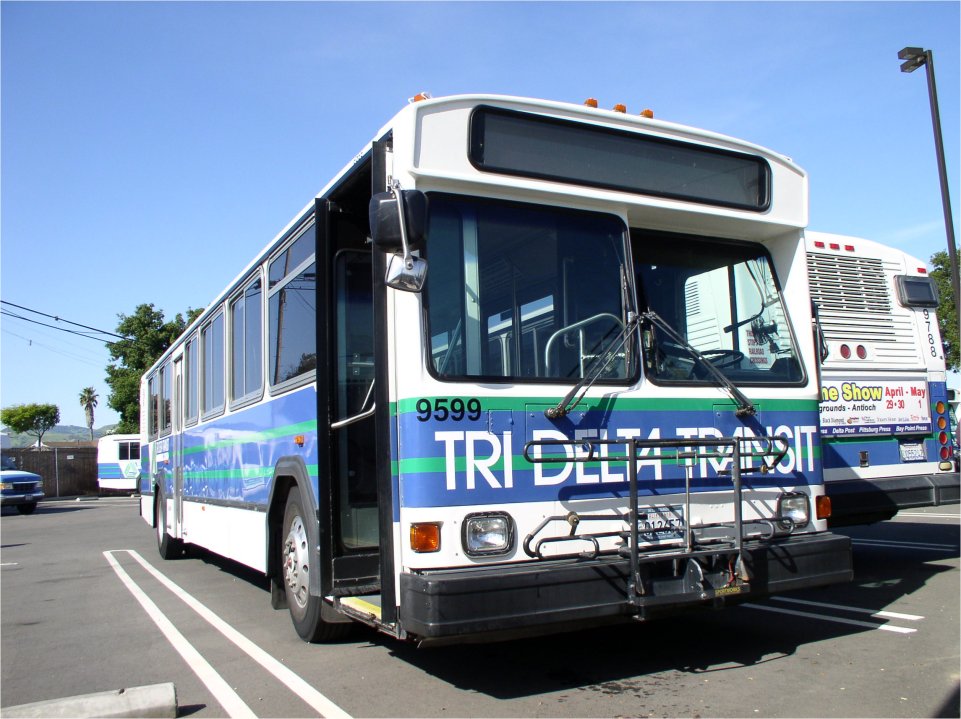
TriDelta9599

Their TV commercial jingle states they “go everywhere, man.” But, to respond to changing traffic patterns associated with the completion of the Highway 4 widening project, Eastern Contra Costa Transit Authority (Tri Delta Transit) is making changes to their current bus schedule. Changes will take effect Sunday, September 4, 2016. All current routes will be in operation with the new schedule; select times only have been changed on seven routes: Route 200, Route 300, Route 380, Route 385, Route 386 Route 391, and Route 392.

“A minimum of three notices were placed on every bus one month in advance to inform our customers about this upcoming change,” said Mike Furnary, Director of Marketing. Notices have also been placed at several bus stops, online, on our mobile app, as well as social media and traditional media channels.

“To assist our customers to prepare for the changes, a preview of the revised schedule is currently available on Tri Delta Transit’s web site at www.TriDeltaTransit.com,” he said.

Tri Delta Transit was named small bus operator of the year in 2014 by the American Public Transportation Association, the national representative for public transportation in Washington DC. They provide over 3,000,000 trips each year to a population of over 250,000 residents in the 225 square miles of Eastern Contra Costa County. They operate 13 local bus routes Monday – Friday, 4 local bus routes on weekends, door-to-door bus service for senior citizens and people with disabilities, and shuttle services to community events.

For additional information about Tri Delta Transit, please visit www.trideltatransit.com.

Contra Costa Transportation Authority adopts 30-year plan, places $2.9 billion sales tax measure on November ballot

Thursday, July 28th, 2016

Half-cent sales tax in addition to Measure J

The Contra Costa Transportation Authority (CCTA) believes that the future success of Contra Costa County includes offering safe, reliable mobility for all. To provide funding for this goal, on Wednesday, July 20th, the Contra Costa Transportation Authority board – which includes representatives from all parts of the County – voted unanimously to put a tax measure on the November 8 ballot. If approved by voters, the ballot measure will fund transportation improvements throughout Contra Costa County, for the next 30 years. The details are outlined in CCTA’s Transportation Expenditure Plan.

The measure, which will appear on the November 8 ballot, will ask Contra Costa voters to approve a new half-cent sales tax that will generate $2.9 billion in revenues over 30 years to continue to improve the transportation system in Contra Costa. The tax will be in addition to the current half-cent sales tax for transportation in the county. If passed, the sales tax will increase to 9.5 percent in Antioch.

The proposed Transportation Expenditure Plan (TEP) is the culmination of months of extensive public outreach, stakeholder engagement, and advocate input. The TEP has also been approved by all of Contra Costa’s 19 cities and towns, as well as the Contra Costa County Board of Supervisors. The plan focuses on innovative strategies and new technologies to promote a strong economy, protect the environment, and enhance the quality of life for all of Contra Costa’s diverse communities.

“The CCTA Board is incredibly proud of the TEP,” said Authority Board Special Meeting Chair Don Tatzin. “This is a transportation plan that reflects the values of our diverse region, has garnered broad support across the county, and will guide the next 30 years of transportation planning. If a super majority of voters approve the tax measure in November, the tax revenue will provide necessary funding for the transportation improvements included in the TEP.”
Contra Costa residents have made significant contributions to their transportation infrastructure since 1988, when voters passed Measure C, a half-cent sales tax dedicated to maintaining the ability of residents to travel safely and conveniently throughout the county. Measure C helped fund the BART extension to Pittsburg/Bay Point, built the Richmond Parkway, improved bicycle and pedestrian trails in the county, and invested more than $30 million in senior and disabled transit services.

In 2004, voters passed Measure J, which renewed the half-cent sales tax through 2034. Measure J has helped deliver the Fourth Bore of the Caldecott Tunnel, generated $1.3 billion dollars of investments to Highway 4 in Eastern Contra Costa County, including a BART extension to Antioch, and combined with Measure C has provided $286 million to Contra Costa’s cities and towns to maintain and repair local streets.

The TEP includes plans to reduce congestion and smooth traffic; improve BART, bus, ferry, and train service; and fix local streets and roads. It also dedicates unprecedented funding to new technologies and bicycle and pedestrian improvements in every part of the county, to give commuters viable alternatives to driving and in the process help get them out of traffic.

The TEP builds on CCTA’s strong record of fiscal responsibility and includes strong taxpayer protections and accountability. A public oversight committee will provide independent review of all funds raised and spent. It will ensure that funds are spent only in accordance with the voter-approved plan and only to benefit Contra Costa County.

“As we move into the future, Contra Costa’s economic strength is going to depend on people being able to travel quickly and conveniently throughout the county – to jobs, shopping and entertainment destinations, and everywhere else they need to go. This plan – and the measure that will fund the improvements it describes – helps make sure that is a reality in years to come,” said Tatzin.

To find out more information about the transportation improvements planned for the next 30 years – including projects in each of Contra Costa’s 19 cities and towns – and the tax measure, which will fund those plans if approved by voters on November 8, 2016, visit KeepContraCostaMoving.net.
About The Contra Costa Transportation Authority

The Contra Costa Transportation Authority (CCTA) is a public agency formed by Contra Costa voters in 1988 to manage the county’s transportation sales tax program and oversee countywide transportation planning efforts. CCTA is responsible for planning, funding and delivering critical transportation infrastructure projects and programs that connect our communities, foster a strong economy, increase sustainability, and safely and efficiently get people where they need to go. CCTA also serves as the county’s designated Congestion Management Agency, responsible for putting programs in place to keep traffic levels manageable. More information about CCTA is available at ccta.net.

Highway 4 construction related lane closures, week of July 16-22, 2016

Saturday, July 16th, 2016

HIGHWAY LANE CLOSURES:

There will be highway lane closures in the westbound direction of State Route 4 between Somersville Road/ Auto Center Drive and Railroad Ave. on Monday through Friday from 11:00 am to 7:00 pm.

There will be highway lane closures in the eastbound direction of State Route 4 between Bailey Road and the State Route 4 / State Route 160 connector ramp on Monday through Friday from 4:30 am to 12:00 pm.

There will be highway lane closures in the eastbound direction of State Route 4 between L Street / Contra Loma Boulevard and the State Route 4 / State Route 160 connector ramp on Monday through Friday from 11:00 pm to 6:00 am.

There will be highway lane closures in the westbound direction of State Route 4 between L Street / Contra Loma Boulevard and the State Route 4 / State Route 160 connector ramp on Monday through Friday from 9:00 pm to 4:00 am.

LOCAL STREET CLOSURES:

There will be lane closures in the eastbound and westbound directions of Larkspur Drive between Hillcrest Avenue and Wildflower Drive on Saturday through Friday from 9:00 am to 3:00 pm and 7:00 pm to 6:00 am.

There will be lane closures in the northbound and southbound directions of Hillcrest Avenue between Larkspur Drive and Sunset Drive on Saturday through Friday from 9:00 am to 3:00 pm and 7:00 pm to 6:00 am.

There will be lane closures in the northbound and southbound directions of A Street/Lone Tree Way between Rossi Avenue and E. Tregallas Road on Saturday through Friday from 9:00 am to 3:00 pm and 7:00 pm to 6:00 am.

There will be lane closures in the northbound and southbound directions of Somersville Road / Auto Center Drive between Delta Fair Boulevard and Century Boulevard on Saturday through Friday from 9:00 am to 3:00 pm.

For questions or comments please send e-mail to info@4eastcounty.org.