







Archive for the ‘Politics & Elections’ Category

From the Publisher – Redistricting Facts & Fear

Monday, May 16th, 2011

I just read a column written by Samuel Walton and Michelle Romero, dated February 15, 2011 and published in an independent, Southern California newspaper, the Pasadena/San Gabriel Valley Journal, regarding this year’s redistricting process and felt it necessary to respond to the vitriolic diatribe.

The commentary contained some seriously egregious, fallacious allegations, full of fear tactics. For example, one statement made is: “State legislatures in many states have used redistricting to minimize and/or deny racial and ethnic minorities their right to representation. They do this by drawing lines through a given community to disable that group’s collective voting power, or by packing them into as few districts as possible to ensure their voice is small in Sacramento and Washington. In these cases, we end up not much better off than when we didn’t have the right to vote at all.”

While that may have happened in the past in other states, and perhaps might still, unfortunately be happening this year, can the writers cite when the last time it was done in California?

The writers then stated “In California, Propositions 11 and 20 recognized the abuses by the California Legislature and reassigned the responsibility for legislative and congressional redistricting to an independent Citizens Redistricting Commission.”

That was not the reason those propositions were written. It was because of the gaming by the Democrat majority over the Republican minority and all other minor parties in this state, to gerrymander districts to pack as many Republicans into as few districts as possible to ensure their voice is small in Sacramento and Washington.

For example, the 1981 redistricting process, Bruce Cain, the U.C. Berkeley professor and co-owner of Q2, the contractor that the Commission hired this year, (although he was specifically required to be separated from his partner, Karin MacDonald, and prevented from being involved in their company’s work during the process), was brought in by the Democrat leadership to draw lines to minimize the number of Republicans in the State Legislature.

It was only in 1991 that we had a fair redistricting, in the time I’ve been voting. That was because Governor Wilson, whether you like him or not, vetoed the Democrats’ gerrymandered redistricting plan and the responsibility to redraw the new district lines was handed off to three retired judges know as “the Three Masters”.

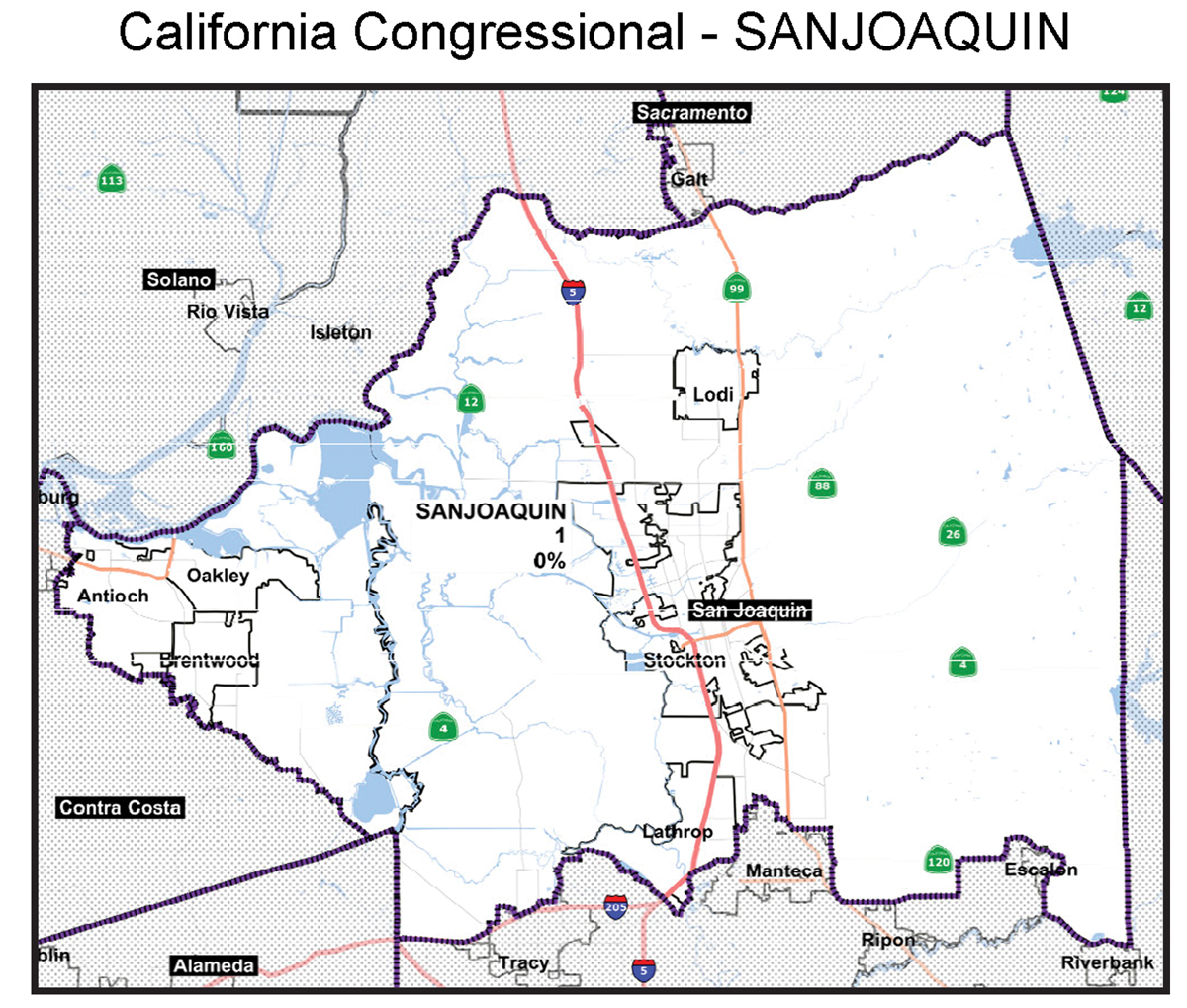
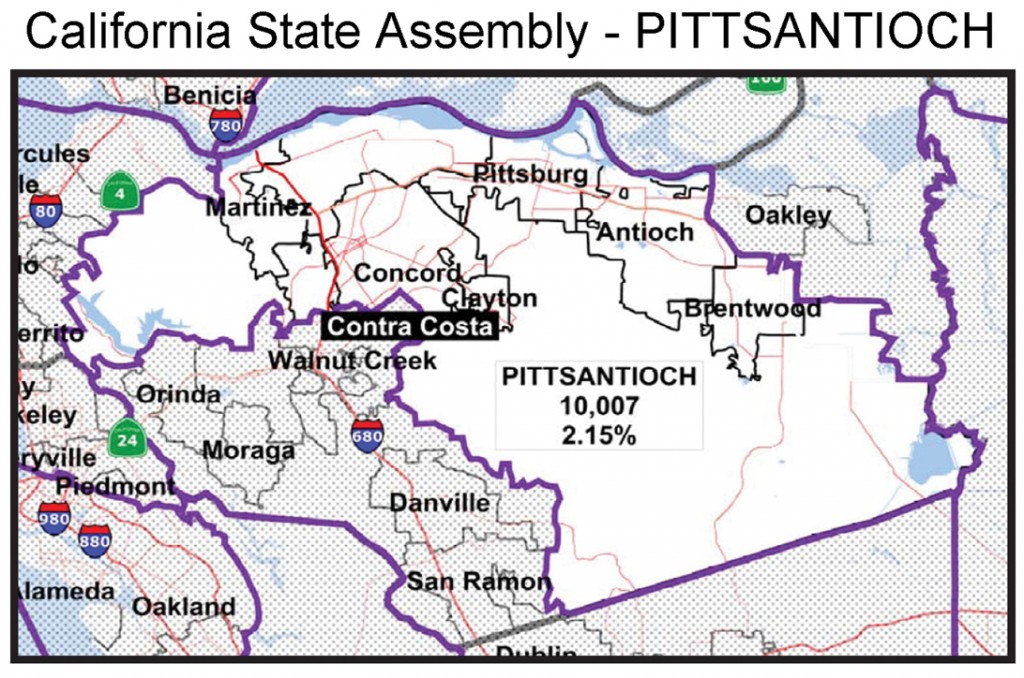
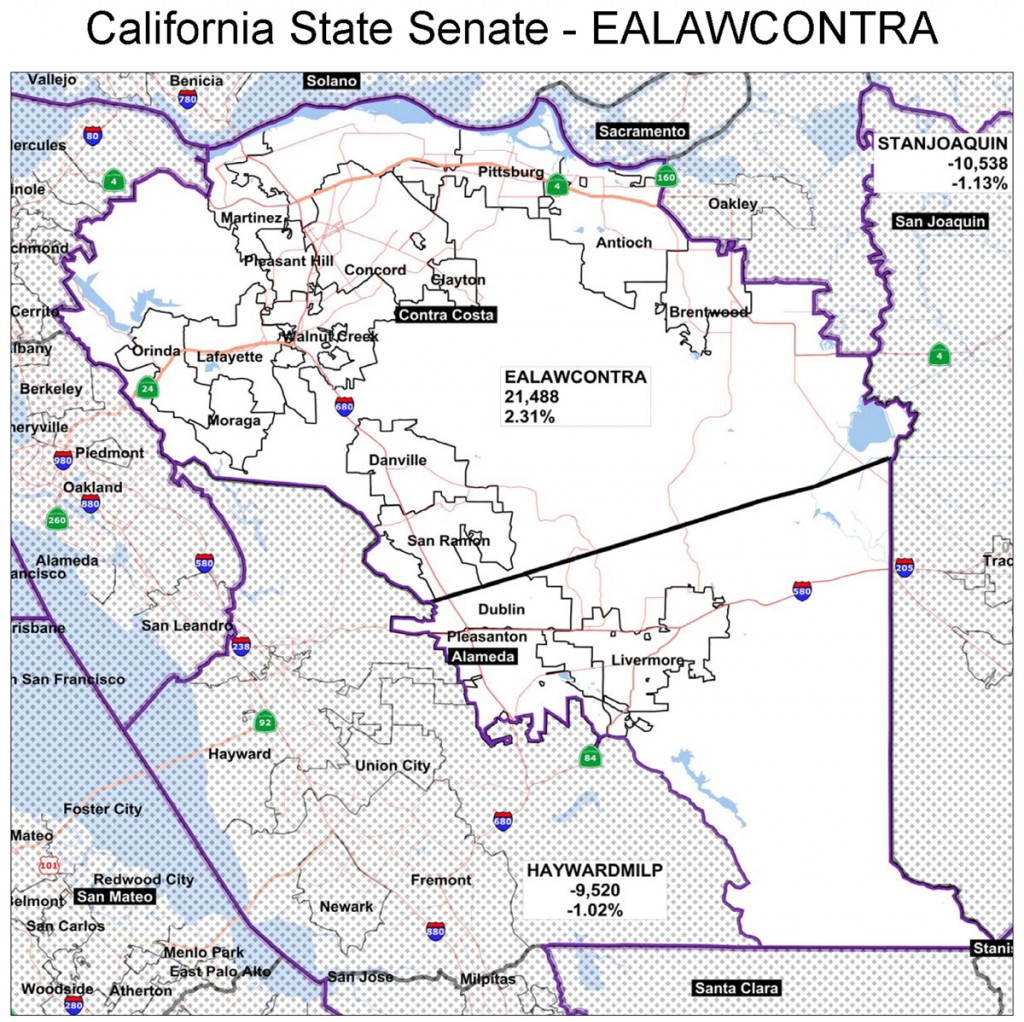
But, then the Democrats in the legislature drew some seriously gerrymandered districts again, in 2001 and Governor Grey Davis signed it into law. Just look at the current map of State Assembly, State Senate and Congressional districts. They’re ridiculous in their shapes, with one that looks like a seahorse and others like a Rorschach test.

Prop’s 11 and 20 are all about letting the people choose their representatives, not the other way around and the Commission agrees. They all nodded their heads in agreement when I made that statement at their hearing on February 26 in Sacramento. Yes, the criteria in Prop 11 contains the criteria that the new districts “Comply with Federal Voting Rights Act” , which ranks second in order, that’s only one of six criteria, which also includes (in rank order): 1. Equal Population, 3. District Contiguity, 4. Keep cities, communities and neighborhoods intact as much as possible, 5. Compactness, 6. Nesting (applies to State Assembly inside Senate Districts).

The column then made an even more outlandish, fear-based statement: “Think about what might happen to our communities if we were to be silenced again. If low and moderate income voters were silenced, politicians could stop funding public education, affordable housing, or social services altogether.”

In California? Does anyone seriously believe that?

Then the icing on the cake was the writers’ statement: “Or imagine what could happen to Latinos if their communities were divided and their votes no longer counted. We could have an Arizona-style ‘papers please’ law in a heartbeat, turning anyone who looks ‘foreign’ into second-class citizens. Or perhaps politicians’ pandering to public fear would have them all put into concentration camps. That may sound far-fetched, but it actually happened to Japanese Americans during World War II.”

Like they say during the “Weekend Update” segment of Saturday Night Live – Really? I mean really? In California, where no racial group has a majority?

As a member of my local NAACP branch, I recognize there are still challenges facing both the black community and other racial minorities, today that need watchdogs and vigilance. But what was written in that column is not the kind of baseless argument that’s needed to rally those of us concerned about fair representation, and equal rights and opportunity. Providing people with the facts, not false fear, is the way to responsibly get people involved.

So, be involved in the redistricting process, this year, to ensure the number one voting principle of our democratic republic is respected, and that is “one person, one vote” which is why equal population is the top criteria in the process. But, let’s also ensure the VRA is respected as well as the rest of the criteria from the propositions that we the people passed.

For more information, please read the RedistrictingCA Pocket Guide which can be downloaded from their site at http://www.redistrictingca.org/more-info/ It’s published by an Alliance of non-profit organizations funded by The James Irvine Foundation to ensure the 2011 redistricting is fair and inclusive. The 12 organizations are: Asian Pacific American Legal Center, California Common Cause, California NAACP, Center for Governmental Studies, Central Coast Alliance United for a Sustainable Economy, League of Women Voters of California, Los Angeles Urban League, Mexican American Legal Defense and Educational Fund, National Association of Latino Elected and Appointed Officials Educational Fund, Rose Institute of State and Local Government, Statewide Database at Berkeley, and the Greenlining Institute.

To read the entire column, click here.

For more information on the state redistricting process visit www.wedrawthelines.com.

Allen Payton, Publisher

Chairman, Contra Costa Citizens Redistricting Task Force

County Redistricting Workshop Schedule

Thursday, May 12th, 2011

A variety of workshops will be held throughout the county seeking community input on how to redraw the county district boundaries to reflect the county’s eastward population shift.

Council Prefers East County Supervisor District

Wednesday, May 11th, 2011

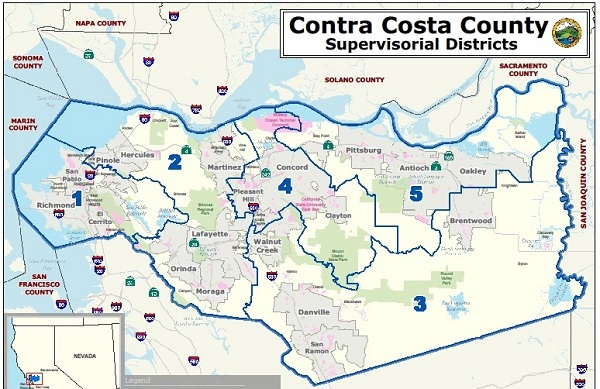
Antioch is currently in the county's 5th supervisorial district.

By Dave Roberts

Antioch and far East County’s philosophical break with Pittsburg over transportation projects may soon become a geopolitical break as well if Antioch’s council members get their wish to no longer share a county supervisorial district with Pittsburg.

On Tuesday night the Antioch council unanimously agreed to leave the county’s 5th supervisorial district, which has included Bethel Island, Oakley, Pittsburg and Bay Point, when new county district lines are drawn to reflect the county’s population shift eastward in the last decade.

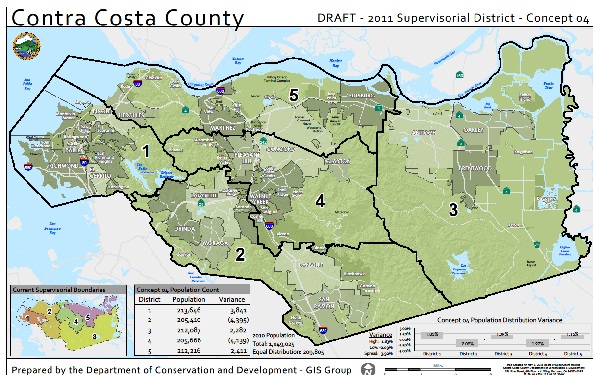
Antioch would prefer to be in the 3rd District with far East County. Concept by county staff.

Instead Antioch’s council prefers to join a proposed District 3 alignment that would include Oakley, Bethel Island, Knightsen, Brentwood, Discovery Bay and Byron.

That would place Antioch in a district with a far East County group that has pretty much seen eye-to-eye on funding for transportation projects such as the Highway 4 Bypass, Vasco Road safety improvements, the widening of Highway 4 through Antioch and the extension of an eBART line in the highway median.

That group has also agreed to sue Pittsburg, which has withheld funding for those projects. Pittsburg officials argue that the money should instead go for a western extension of James Donlon Boulevard.

If Antioch’s redistricting wish is granted, it will also portend a significant political change for Antioch residents and their politically ambitious leaders.

District 5 has been governed since 2000 by Supervisor Federal Glover. Now in his third term, Glover, of Pittsburg, has beaten off challenges by Antioch Councilwoman Mary Rocha in 2000, former Oakley Planning Commissioner Erik Nunn in 2004 and Antioch Councilman Gary Agopian in 2008.

District 3 is governed by Mary Nejedly Piepho, of Discovery Bay, who won office in 2004 over the incumbent, Millie Greenberg, and beat off a challenge in 2008 by former Assemblyman Guy Houston. It remains to be seen whether Piepho will run for a third term next year, and if so, whether she’ll be challenged by Agopian or perhaps Brentwood Mayor Bob Taylor or Oakley Mayor Jim Frazier, assuming the 3rd District is redrawn the way Antioch prefers.

Antioch Councilman Brian Kalinowski, who also may have supervisorial ambitions, having run last year unsuccessfully for county sheriff, and who represents Antioch on Transplan, cited the transportation funding agreements with far East County cities as a reason to join them in District 3.

“The transportation improvements and projects that we see over the next 10 years fall largely within that geography,” he said. “We also know that Pittsburg in the transportation world doesn’t want to be a regional partner. You want to be partners on regional issues. That makes sense to me.”

Kalinowski and other council members agreed that it also makes geographical sense for Pittsburg to be in a northern county district that extends west to Martinez, Port Costa and Crockett, sharing the waterfront.

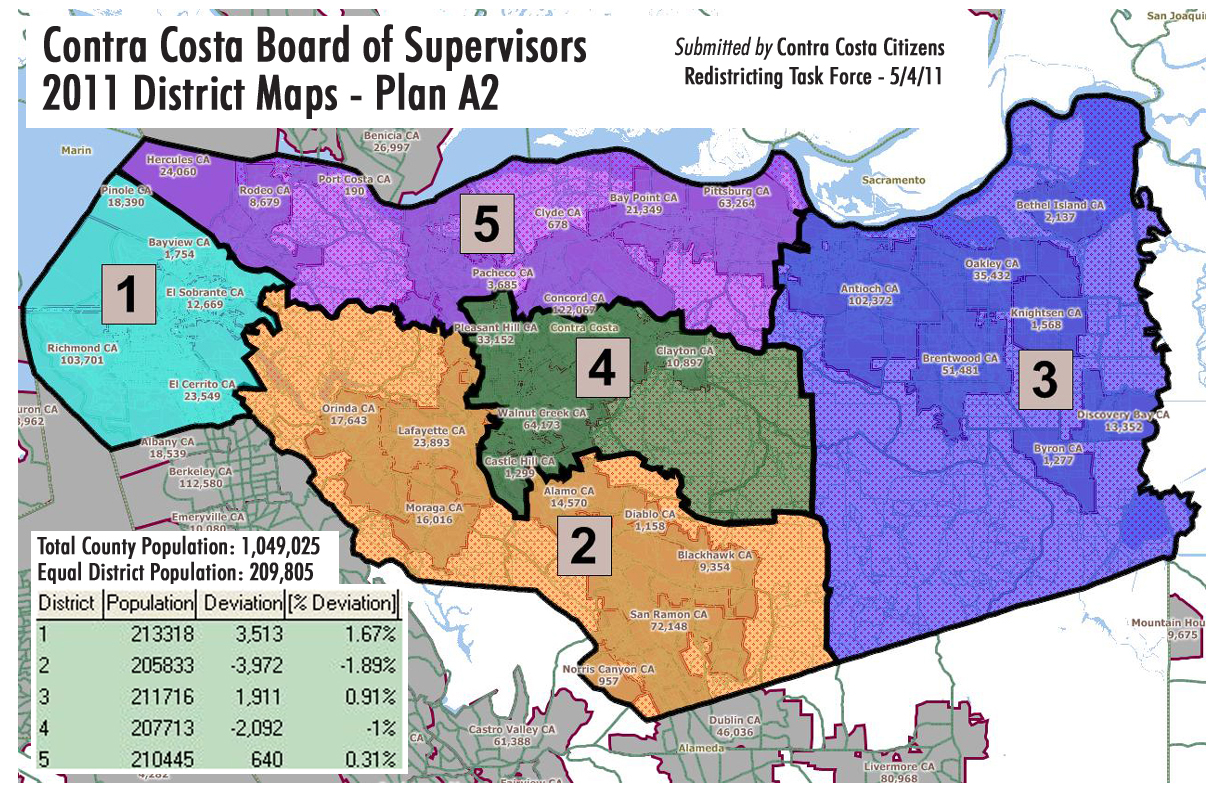
The council was also presented with maps developed by the Contra Costa Citizens Redistricting Task Force, chaired by the publisher of the Herald, Allen Payton.  He pointed out that their plan, labeled A2, is the only one that keeps 18 of the 19 cities and 52 of the 53 Census Designated Places, such as Alamo, Bethel Island and Bay Point, whole. Only Concord, the county’s largest city, is split.  He also told the council that the Board of Supervisors, earlier that day, had voted to include the group’s plan in the presentations at the public workshops to be held throughout the county, starting next week.

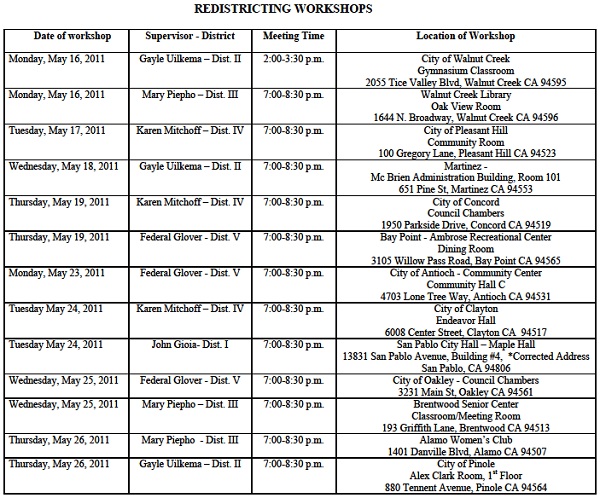
Antioch’s meeting will be held on Monday, May 23 from 7:00 to 8:30 p.m. at the Antioch Community Center at Prewett Park in Community Hall C, 4703 Lone Tree Way, across from Deer Valley High.

Agopian said he appreciated the citizen involvement and that any of the proposed maps, whether it be Concept 4 or the citizens’ plan, that places Antioch in an East County district would be acceptable.

On a unanimous vote the council directed staff to send a letter to the Board of Supervisors expressing their desires to keep Antioch whole and in a district with other East County communities of Oakley, Brentwood and Discovery Bay, as Concept 4 and the citizens task force map show. (To view the task force’s map and all four of the county staff’s concept maps,  they’re can be downloaded at the county’s redistricting website, www.ccredistricting.org. Click on either Maps or Public Input).

In other action, the council:

• Agreed to limit funding for arts and cultural activities to the $18,000 (perhaps less) that comes in from the hotel tax, eliminate funding for watering the lawn at the Antioch Historical Society Museum and to meet with the Lone Tree Golf Course nonprofit board to discuss the $391,000 debt that the board owes and for which the city is obligated.

• Approved federal Community Development Block Grant funding for a variety of local nonprofit social service organizations.

• Gave the thumbs up to an 85-unit senior affordable housing project at James Donlon Boulevard and Tabora Drive.

County Redistricting Webinar on Monday

Friday, May 6th, 2011

On May 3, 2011 the Board of Supervisors accepted a report from the Department of Conservation and Development. The Board approved release of four draft concept maps to be presented in public workshops scheduled from May 16-26. In addition, the Board agreed to include a map prepared by Contra Costa Times for the public workshops.

The County also announced the launch of DistrictBuilder – a web application that allows members of the public to create and share redistricting proposals. We are very excited to offer this new technology for the redistricting process.

We have scheduled a webinar for next Monday, May 9, 2011 at 12:30 pm (PST) until 2 pm. The webinar will provide information about basic redistricing guidelines for Contra Costa County, how to set up an account, how to create and edit your own district plan, and how to share and export your plans. We plan on recording the webinar and posting it to our website to allow those who are unable to attend to view online.

Contra Costa County Redistricting: District Builder Redistricting Website Training

Join us for a Webinar on May 9

Space is limited.
Reserve your Webinar seat now at:
https://www3.gotomeeting.com/register/242916862

Welcome to the District Builder training. Topics we will cover in the training:
– Basic redistricting guidelines for Contra Costa County
– How to set up an account
– How to create and edit your own district plans.
– How to share and export your plans.
Title: Contra Costa County Redistricting: District Builder Redistricting Website Training
Date: Monday, May 9, 2011
Time: 12:30 PM – 2:00 PM PDT
After registering you will receive a confirmation email containing information about joining the Webinar.
System Requirements
PC-based attendees
Required: Windows® 7, Vista, XP or 2003 Server
Macintosh®-based attendees
Required: Mac OS® X 10.4.11 (Tiger®) or newer

Also of interest, the following information has been uploaded to the website dedicated to the 2011 redistricting effort at www.ccredistricting.org:
A copy of the May 3rd Board presentation is available online under the category “Timeline and Events”
A copy of the proposal submitted at the May 3rd Board meeting by Contra Costa Citizens Redistricting Task Force under the category “Public Input”

Board of Supes to Decide Redistricting Process on Tuesday

Friday, May 6th, 2011

Public Workshops to be Held Later This Month

By Allen Payton, Publisher

The Contra Costa Board of Supervisors will finalize the process for obtaining public input in this year’s decennial redistricting process, at its regular meeting, Tuesday, May 10, 2011.

Every 10 years, based on the new census data, the Supervisors get to redraw their own district lines. This year, unlike 10 years ago, they are seeking greater public input in the process. A variety of public workshops will be held the last two weeks of May throughout the county, at least two in each supervisorial district.

To date, eight plans have been submitted for review, including four concept maps by county staff, one by Dan Borenstein of the Contra Costa Times, and three by the Contra Costa Citizens Redistricting Task Force. However, only the staff’s four plans and the Borenstein/Times plan have been included for display and discussion at the public workshops.

The task force is seeking inclusion of their Plan A2, which can be viewed along with the staff’s plans and supporting data, at the county’s redistricting website at www.ccredistricting.org. It is the only plan submitted so far, that keeps 18 of the 19 cities and 52 of the 53 Census Designated Places whole. Only Concord, the county’s largest city, is split. See the map above.

In addition, county staff led by Director of the Department of Conservation & Development, Catherine Kutsuris and Principal Planner Patrick Roche, have created a mapping tool for anyone to use, who would like to create their own maps, for submission and consideration during the process. That also is available on the county’s redistricting website.

The agenda item for Tuesday’s meeting is D1 and will be heard at 1:00 p.m. The agenda can be viewed by clicking here.

County Redistricting Meetings Set

Wednesday, May 4th, 2011

A series of workshops will be conducted to gather public input to the redrawing of the districts represented by Contra Costa County’s five supervisors.

“Everywhere I go, people keep asking about how the district will look,” said Supervisor Federal Glover, who represents District V. “It is a topic that is generating a lot of interest.”

Every ten years, the county is mandated to realign the districts so that each supervisor represents about the same number of people.

The 2010 Census shows that Contra Costa has grown to 1.2 million people with most of the growth occurring in the eastern portion of the county represented by Districts V and III. Slower growth occurred in the other three districts.

The District V workshops will be:

• Bay Point/Pittsburg, 7 p.m., May 19 at the Ambrose Community Center, 3105 Willow Pass Road in Bay Point.

• Antioch, 7 p.m., May 23 at the Antioch Community Center, 4701 Lone Tree Way.

• Far East County, 7 p.m. May 25 at Oakley City Hall, 3231 Main Street, Oakley.

DeSaulnier Initiative Reform Measures Approved by Committee

Tuesday, May 3rd, 2011

Today, by a partisan 3-2 vote, the Senate Committee on Elections and Constitutional Amendments approved three Sen. Mark DeSaulnier (D-Concord) measures that help address serious abuses of the initiative process and give the public critical information they need when casting their ballot.

“California’s initiative process is broken,” said DeSaulnier. “The measures approved today attempt to restore the initiative process to what Governor Hiram Johnson intended in 1911. “Governor Johnson never envisioned that his initiative process would be dominated as it is today by special interests that often mislead voters.

“Simply stated, voters need to be better informed when they cast their votes. Voters need to know who is behind the initiatives and who is opposed to them. Petition circulators need to disclose whether they are being paid to gather signatures or are volunteers. It also only makes sense to require that initiatives be fiscally responsible and include funding when they create public costs.”

Below are summaries of the three legislative measures:

Senate Constitutional Amendment 4 prohibits initiative measures that increase state and local government costs from taking effect, unless the measure provides for the funding required to cover its costs.

Senate Bill 334 requires the Secretary of State’s ballot pamphlet to include a list of the five highest contributors of $50,000 or more in support of or opposed to each ballot measure.

Senate Bill 448 requires individual who circulate an initiative, referendum, or recall petition to wear a badge identifying him or her as a “paid signature gatherer” or “volunteer signature gatherer” and identifies if and where he or she is registered to vote.

James Madison wrote, “A people who mean to be their own Governors must arm themselves with the power knowledge gives.”

Secretary of State Debra Bowen, California State PTA, Ballot Initiative Strategy Center, and California State Association of Counties support one or more of these measures. SB 448 will next be heard by the full Senate and the remaining two bills will be heard in Senate Appropriations Committee within the next few weeks.

DeSaulnier represents the Seventh Senate District, which includes Antioch and most of Contra Costa County.

Have Breakfast with State Senator DeSaulnier

Monday, April 25th, 2011